Interviews are more than just a Q&A session—they’re a chance to prove your worth. This blog dives into essential FirstIn, FirstOut (FIFO) Management interview questions and expert tips to help you align your answers with what hiring managers are looking for. Start preparing to shine!
Questions Asked in FirstIn, FirstOut (FIFO) Management Interview
Q 1. Explain the FIFO method in inventory management.
FIFO, or First-In, First-Out, is an inventory management method that assumes the oldest items in your inventory are sold first. Imagine a bakery; the croissants baked first are the ones sold first, not the ones freshly made. This method tracks the flow of inventory chronologically, making it relatively straightforward to account for.
For example, let’s say a company receives 100 units of product A at $10 each on January 1st and another 100 units at $12 each on January 15th. Using FIFO, if they sell 80 units in January, the cost of goods sold would be calculated based on the 80 units purchased at $10 each, reflecting the earlier purchase.
Q 2. What are the advantages of using FIFO?
FIFO offers several key advantages. Firstly, it aligns well with the actual physical flow of goods in many industries, making it easy to understand and implement. This simplifies inventory management and reduces the risk of errors. Secondly, it tends to result in a more accurate valuation of ending inventory, as the cost of the remaining goods more closely reflects current market prices. This is particularly useful for businesses that experience fluctuating costs for their inventory. Finally, because it uses the older costs for COGS, during periods of inflation, this can result in lower reported profits, leading to lower tax liabilities.
Q 3. What are the disadvantages of using FIFO?
While FIFO is widely used, it also has drawbacks. One significant disadvantage is that it can inflate the cost of goods sold during periods of inflation. This is because older, cheaper inventory is expensed first, while newer, more expensive inventory remains on the balance sheet. This can potentially lower reported profits and earnings. Another potential disadvantage is the administrative burden. While generally straightforward, accurate tracking of inventory dates and costs is essential for FIFO accuracy. Any error in the data can affect the COGS and ending inventory values.
Q 4. When is FIFO most suitable?
FIFO is most suitable for businesses where the inventory is perishable or has a short shelf life, such as food products or pharmaceuticals. In these cases, it’s crucial to sell the oldest items first to minimize waste and spoilage. FIFO is also a good choice for businesses that want a simple and easy-to-understand inventory management system and for businesses that want to minimize their tax liability during inflationary periods.
Q 5. When is FIFO least suitable?
FIFO is least suitable when the inventory doesn’t have a clear expiration date and the cost of the items does not change significantly. In these cases, other inventory methods, such as LIFO (Last-In, First-Out) or weighted-average cost, might be more appropriate and easier to manage. For example, a company selling durable goods with stable prices might find FIFO’s additional record-keeping unnecessary.
Q 6. How does FIFO impact cost of goods sold (COGS)?
FIFO significantly impacts the cost of goods sold (COGS). Since the oldest inventory is assumed to be sold first, the COGS calculation reflects the cost of those older items. This means that during inflationary periods, the COGS will be lower compared to LIFO, resulting in higher net income. Conversely, during deflationary periods, FIFO will result in a higher COGS and lower net income. Remember, the impact of FIFO on COGS directly affects the gross profit margin and ultimately, the overall profitability reported on the income statement.
Example: If a company had 10 units at $5 and 10 units at $7, and sold 15 units, under FIFO the COGS would be (10 * $5) + (5 * $7) = $95.
Q 7. How does FIFO impact the balance sheet?
FIFO’s impact on the balance sheet is primarily reflected in the value of ending inventory. Because FIFO assumes the oldest inventory is sold first, the value of the remaining inventory on the balance sheet reflects the cost of the most recently purchased items. During inflationary periods, this means the ending inventory value will be higher under FIFO, increasing the company’s asset value. In deflationary periods, the opposite will occur.
Q 8. How does FIFO impact the income statement?
FIFO, or First-In, First-Out, significantly impacts the income statement by influencing the cost of goods sold (COGS) and, consequently, the gross profit and net income. Under FIFO, the oldest inventory items are assumed to be sold first. This means that during periods of inflation (rising prices), the COGS will reflect the lower costs of older inventory, resulting in a higher gross profit and net income compared to other inventory costing methods like LIFO.
Example: Imagine a bakery that baked 100 loaves of bread on Monday at $1 each and another 100 loaves on Tuesday at $1.20 each. If they sell 150 loaves, under FIFO, the COGS would be calculated as (100 loaves * $1) + (50 loaves * $1.20) = $160. The remaining inventory value would be (50 loaves * $1.20) = $60. This contrasts with LIFO, where the COGS would be higher, and the net income lower.
Q 9. How does FIFO affect tax liabilities?
FIFO’s impact on tax liabilities is directly linked to its effect on the income statement. Because FIFO generally leads to higher net income during periods of inflation, it also results in higher taxable income. This means higher tax liabilities compared to using LIFO. In periods of deflation (falling prices), the opposite is true; FIFO would lead to lower taxable income and lower tax liabilities. However, it’s important to note that tax laws and regulations often influence the allowed inventory costing methods, so the availability of FIFO might be restricted in certain jurisdictions.
Q 10. Compare FIFO with LIFO (Last-In, First-Out).
FIFO (First-In, First-Out) and LIFO (Last-In, First-Out) are two contrasting inventory costing methods. FIFO assumes that the oldest inventory items are sold first, while LIFO assumes the newest items are sold first. This difference significantly impacts financial statements, particularly during periods of inflation or deflation.
- FIFO: During inflation, FIFO reports a higher net income because the cost of goods sold is lower (based on older, cheaper inventory). This also leads to a higher valuation of ending inventory on the balance sheet. During deflation, the opposite is true.
- LIFO: During inflation, LIFO reports a lower net income because the cost of goods sold is higher (based on newer, more expensive inventory). This also leads to a lower valuation of ending inventory. During deflation, the opposite is true.
The choice between FIFO and LIFO depends on various factors including industry regulations, tax implications, and management’s desired presentation of financial performance. FIFO is generally preferred for its simplicity and its better alignment with the actual physical flow of goods in many industries.
Q 11. Describe a situation where you implemented or managed a FIFO system.
In my previous role at a large-scale distribution center managing perishable goods, we implemented a rigorous FIFO system to minimize waste and ensure product freshness. We used a combination of barcode scanning, a dedicated inventory management software, and a clearly defined stock rotation strategy. The software automatically tracked the date of arrival of each product batch. Pickers were trained to retrieve the oldest items first, guided by the software’s ‘first in’ prioritization. We regularly conducted physical inventory counts to reconcile the system data and identify discrepancies. This FIFO system reduced our waste significantly and improved our overall efficiency.
Q 12. How do you ensure accuracy in maintaining a FIFO inventory system?
Maintaining accuracy in a FIFO inventory system requires a multi-faceted approach. Firstly, accurate data entry is crucial. This means meticulously recording the quantity, cost, and date of receipt for each inventory item upon arrival. Secondly, we need a robust inventory management system, either software-based or a well-structured manual system. This system should provide real-time tracking of inventory levels, dates, and costs. Regular physical inventory counts (cycle counting) are also essential to compare the physical count against the system records and identify any discrepancies. Furthermore, training staff on proper inventory handling procedures, including proper stock rotation, is crucial for maintaining accuracy.
Q 13. How would you handle discrepancies in a FIFO inventory system?
Discrepancies in a FIFO system need to be investigated thoroughly to identify their root cause. This involves a step-by-step approach:
- Identify the discrepancy: Compare the physical inventory count to the system’s record. Note the size and nature of the difference.
- Investigate potential causes: Possible causes include data entry errors, theft, damage, or improper stock rotation. Review security footage, check employee procedures, and inspect the affected inventory area.
- Quantify the impact: Determine the financial impact of the discrepancy on the COGS, inventory valuation, and profit margins.
- Implement corrective actions: Adjust the inventory system accordingly, implement stricter controls to prevent future discrepancies, and potentially provide additional training to staff.
- Document the entire process: Maintain detailed records of the discrepancy investigation, corrective actions, and any changes made to the system.
Q 14. Explain how FIFO is used in different industries (e.g., food, manufacturing).
FIFO is widely used across numerous industries due to its simplicity and its relevance to the physical flow of goods. Here are some examples:
- Food Industry: Grocery stores, bakeries, and restaurants rely heavily on FIFO to manage perishable goods. Older products are sold first to prevent spoilage and maintain product quality. Expiration dates are crucial in this context.
- Manufacturing: Manufacturing companies use FIFO to manage raw materials and work-in-progress (WIP) inventory. This helps track the cost of production and ensures that older materials are used first to prevent obsolescence.
- Pharmaceuticals: FIFO is critical in the pharmaceutical industry to ensure the use of older batches before newer ones, especially with drugs that have shorter shelf lives.
- Retail: Retailers often utilize FIFO to manage seasonal items, ensuring that older seasonal products are sold before they become outdated.
In essence, FIFO’s application hinges on the need to manage the movement of goods to minimize waste, maintain quality, and accurately reflect the cost of goods sold.
Q 15. How do you track FIFO inventory in a warehouse setting?
Tracking FIFO inventory in a warehouse involves meticulously recording the arrival and departure of each batch of goods. Think of it like a queue – the first items in are the first items out. We don’t just track the total quantity; we track each batch individually, noting its arrival date, quantity, and a unique identifier. This can be done manually using spreadsheets or, more effectively, with inventory management software.
For example, imagine we receive 100 widgets on Monday, 50 on Wednesday, and another 100 on Friday. When we fulfill an order for 80 widgets, we first deplete the Monday batch (100), leaving 20, then take 60 from the Wednesday batch, leaving none. Our records would reflect this detailed batch movement.
- Batch Tracking: Assign unique IDs to each incoming batch.
- First-In, First-Out Documentation: Maintain a detailed log of each batch’s arrival, quantity, and departure.
- Physical Location Tracking (Optional but Recommended): Know exactly where each batch is stored in the warehouse for easy retrieval.
Career Expert Tips:
- Ace those interviews! Prepare effectively by reviewing the Top 50 Most Common Interview Questions on ResumeGemini.
- Navigate your job search with confidence! Explore a wide range of Career Tips on ResumeGemini. Learn about common challenges and recommendations to overcome them.
- Craft the perfect resume! Master the Art of Resume Writing with ResumeGemini’s guide. Showcase your unique qualifications and achievements effectively.
- Don’t miss out on holiday savings! Build your dream resume with ResumeGemini’s ATS optimized templates.
Q 16. What software or tools are commonly used for FIFO inventory management?
Many software solutions and tools facilitate FIFO inventory management. These range from simple spreadsheets to sophisticated Enterprise Resource Planning (ERP) systems. The choice depends on the scale and complexity of your operation.
- Spreadsheets (e.g., Excel, Google Sheets): Suitable for smaller businesses with simpler inventory needs. However, prone to human error and difficult to scale.
- Inventory Management Software (e.g., Zoho Inventory, Fishbowl Inventory): Offer automated tracking, reporting, and integration with other business systems. They typically provide features for managing multiple locations and generating reports.
- Enterprise Resource Planning (ERP) Systems (e.g., SAP, Oracle NetSuite): Comprehensive solutions integrating inventory management with other business functions like finance, sales, and manufacturing. Best suited for large enterprises.
- Barcode and RFID Systems: Enhance efficiency by automating tracking and reducing manual data entry. These work seamlessly with most inventory management software.
The key feature to look for is the ability to track inventory by batch and automatically apply the FIFO method when goods are shipped or used.
Q 17. How do you reconcile physical inventory counts with FIFO records?
Reconciling physical inventory counts with FIFO records is crucial for accuracy. Discrepancies can signal losses, errors in record-keeping, or theft. This process typically involves a physical count of all inventory items, comparing these counts to the inventory levels shown in the FIFO system.
Steps for Reconciliation:
- Conduct a Physical Inventory Count: Carefully count every item in the warehouse, ideally using barcode scanners or RFID readers for efficiency.
- Compare to FIFO Records: Match the physical counts with the quantities recorded in your FIFO system for each batch.
- Investigate Discrepancies: Any differences need investigation. Possible causes include data entry errors, theft, damage, or spoilage. Thorough investigation is crucial to pinpoint the root cause and prevent future errors.
- Adjust Records: Once discrepancies are understood, adjust the inventory records accordingly to accurately reflect the physical count. This might involve making adjustments to your FIFO software or spreadsheet.
- Regular Reconciliation: Regular physical inventory counts and reconciliation are crucial, ideally on a monthly or quarterly basis, depending on the inventory turnover rate.
Q 18. How can you prevent stock loss or spoilage using FIFO?
FIFO helps prevent stock loss and spoilage primarily by ensuring that older inventory is used or sold first. Perishable goods are prioritized, reducing the risk of expiration and waste. This also helps reduce the overall carrying costs of maintaining older stock.
Strategies to enhance this:
- Clear Labeling and Rotation: Clearly label each batch with its arrival date. Use a system for rotating stock (like rotating items on shelves), ensuring that older items are moved to the front.
- Regular Stock Checks: Conduct regular checks to identify nearing expiration items. This allows for timely adjustments in pricing, promotional offers, or even disposal.
- Effective Storage Practices: Proper storage, including temperature and humidity control (for perishable items), is essential to prolong shelf life.
- Inventory Management Software: Leverage software to generate alerts for near-expiration items, allowing for proactive action.
Think of it like your refrigerator—you use the older items first to minimize spoilage. FIFO does the same for your warehouse.
Q 19. How does FIFO impact inventory turnover?
FIFO generally leads to a higher inventory turnover rate. Inventory turnover is the number of times inventory is sold or used during a given period. By selling older inventory first, FIFO reduces the time items sit on shelves, therefore increasing the turnover rate.
Example: Imagine a bakery using FIFO for its flour. Older flour is used before newer flour. This means fewer chances of the flour expiring, and more consistent sales, leading to higher turnover.
A higher turnover rate is generally positive, indicating efficient inventory management and potentially higher profitability. However, it’s crucial to balance turnover with meeting customer demand. An extremely high turnover might suggest insufficient inventory levels.
Q 20. Explain the impact of seasonality on FIFO inventory management.
Seasonality significantly impacts FIFO inventory management. During peak seasons, demand increases, requiring accurate forecasting to avoid stockouts. In off-seasons, managing excess inventory efficiently to minimize spoilage and holding costs becomes critical.
Strategies for managing seasonality:
- Demand Forecasting: Accurately predict demand to avoid overstocking or understocking during peak seasons.
- Strategic Ordering: Adjust order quantities based on seasonal demand fluctuations. This might involve ordering smaller batches more frequently during peak seasons and larger batches less frequently during off-seasons.
- Promotional Strategies: Offer promotions or discounts during off-seasons to reduce excess inventory.
- Flexible Storage Solutions: Consider flexible storage solutions to accommodate seasonal fluctuations in inventory levels.
For instance, a retailer selling winter coats needs to forecast demand carefully to order appropriately in the summer months to avoid excess stock during warmer seasons, and potentially running out during winter.
Q 21. How do you manage FIFO in a multi-location inventory system?
Managing FIFO in a multi-location inventory system requires a robust inventory management system capable of tracking inventory at each location separately. Each location will maintain its own FIFO queue. The system must also accommodate transfers between locations.
Key Considerations:
- Centralized System: Implement a centralized inventory management system with visibility across all locations.
- Location-Specific Tracking: Track FIFO for each location separately, recording batch movements within and between locations.
- Transfer Management: Manage inter-location transfers efficiently, updating FIFO records accurately in both locations.
- Reporting and Analysis: Generate reports providing an overview of inventory levels across all locations.
Imagine a clothing retailer with multiple stores. A central system tracks each store’s inventory, and when one store runs low on a specific item, the system can manage a transfer from a store with surplus inventory, updating FIFO records for both locations.
Q 22. How can you optimize a FIFO system for efficiency?
Optimizing a FIFO (First-In, First-Out) system for efficiency involves streamlining the entire process, from receiving goods to their eventual sale or use. This encompasses both technological and procedural improvements.
- Improved Inventory Tracking: Implementing a robust inventory management system (IMS) with real-time tracking capabilities is crucial. This allows for accurate monitoring of stock levels, preventing stockouts and overstocking. Barcoding or RFID tagging can automate this process significantly.
- Efficient Storage and Organization: Logical storage arrangements are key. Items should be easily accessible based on their arrival date, minimizing search time. Consider dedicated zones for different product types and regular stock rotation.
- Automated Processes: Automating tasks like receiving, picking, and packing can drastically improve efficiency. Conveyor belts, automated storage and retrieval systems (AS/RS), and warehouse management systems (WMS) are valuable tools for large-scale operations.
- Regular Audits and Cycle Counts: Regularly auditing your inventory helps identify discrepancies and ensures the accuracy of your FIFO system. Cycle counting—counting a smaller portion of inventory regularly—is more efficient than a complete annual count.
- Employee Training: Thorough training for all staff involved in inventory management is essential. Employees should understand FIFO principles, proper procedures for handling inventory, and how to use the inventory management system effectively.
For example, a bakery might use a FIFO system to ensure that older bread is sold first, minimizing waste. Optimizing their system could involve a better labeling system, designating specific shelves for bread based on baking date, and training staff to always sell the oldest loaves first.
Q 23. What metrics do you use to measure the effectiveness of a FIFO system?
Measuring the effectiveness of a FIFO system requires a multifaceted approach, using key performance indicators (KPIs) to track efficiency, accuracy, and cost-effectiveness.
- Inventory Turnover Rate: This measures how quickly inventory is sold and replenished. A higher turnover rate indicates efficient inventory management.
- Inventory Accuracy: This represents how closely the physical inventory matches the recorded inventory. High accuracy ensures the FIFO system’s reliability.
- Stockout Rate: This shows the percentage of times an item is out of stock. A low stockout rate indicates effective demand forecasting and inventory control.
- Waste Reduction: Tracking waste due to expiration or spoilage directly reflects the efficacy of FIFO in minimizing losses.
- Order Fulfillment Time: This KPI measures the time taken to fulfill customer orders. FIFO can contribute to faster fulfillment by ensuring readily available stock.
- Storage Costs: Effective FIFO can help reduce storage costs by minimizing the amount of time items spend in storage.
By monitoring these metrics, businesses can identify areas for improvement and fine-tune their FIFO system for optimal performance. For instance, a consistently high stockout rate might suggest a need for better demand forecasting or increased safety stock.
Q 24. How do you handle returns or damaged goods under a FIFO system?
Handling returns and damaged goods within a FIFO system requires careful attention to detail to maintain inventory accuracy and prevent discrepancies.
- Clear Return Procedures: Establish a clear procedure for processing returns, including documentation of the reason for return and the item’s condition.
- Segregation of Returned Goods: Returned items should be clearly marked and segregated from the main inventory to prevent accidental inclusion in future sales.
- Inspection and Quality Control: Before returning an item to inventory, inspect it thoroughly to confirm its condition and quality. Damaged goods may require disposal or special handling.
- Adjusting Inventory Records: Update inventory records immediately to reflect the return or disposal of goods. The system should track the item’s original entry date to maintain FIFO integrity.
- Separate Tracking for Damaged Goods: Maintain a separate record for damaged goods, including the reason for damage and any associated costs.
Imagine a grocery store receiving a return of a slightly damaged box of cereal. Following FIFO, the store would inspect the cereal; if salvageable, it would be placed in a separate area to be sold at a discount, recording its status and new FIFO position. This prevents mixing it with newer, undamaged stock.
Q 25. Describe a challenge you faced while implementing or managing a FIFO system and how you resolved it.
In a previous role, we implemented a new WMS to improve our FIFO system for a large distribution center. A significant challenge arose when integrating the new system with our existing ERP (Enterprise Resource Planning) system. Data discrepancies and system incompatibility led to delays and inaccuracies in inventory tracking.
To resolve this, we adopted a phased approach. We first focused on a pilot program, implementing the new WMS in a small section of the warehouse. This allowed us to identify and resolve integration issues before a full-scale rollout. Simultaneously, we enhanced our data cleansing process to ensure the accuracy of our existing inventory data. We also increased training for our staff, focusing on proper data entry and usage of the new system’s features. This phased implementation minimized disruption, allowed for continuous improvement, and successfully integrated the new system without significant downtime or data loss.
Q 26. How would you explain FIFO to someone with no inventory management experience?
Imagine a stack of plates. FIFO is like using the plates at the bottom of the stack first, then working your way up. The first plates you put on the stack are the first ones you use. In inventory management, this means that the oldest items are sold or used before the newer ones.
This prevents older items from expiring or becoming obsolete. Think of a grocery store: they want to sell the milk that’s expiring soonest first, so they stock newer milk behind older milk. That’s FIFO in action! It’s a simple but effective way to manage inventory and minimize waste.
Q 27. How does FIFO relate to the overall business strategy?
FIFO aligns directly with the overall business strategy by impacting several key areas.
- Profitability: By minimizing waste and spoilage (especially for perishable goods), FIFO contributes directly to improved profit margins.
- Customer Satisfaction: Ensuring that customers receive fresh, high-quality products enhances their experience and builds loyalty.
- Cash Flow: Efficient inventory management through FIFO leads to better cash flow by reducing write-offs due to obsolescence or spoilage.
- Compliance: In some industries, FIFO is a regulatory requirement for accurate financial reporting and tracking of inventory.
- Operational Efficiency: Well-managed FIFO systems contribute to streamlined operations and reduce the risk of inventory-related disruptions.
For example, a restaurant using FIFO for ingredients ensures food quality and minimizes waste, directly impacting customer satisfaction and cost control, thus aligning with its overall profitability goal.
Q 28. What are some potential risks associated with using FIFO, and how can they be mitigated?
While FIFO offers many benefits, potential risks exist, and proactive mitigation is crucial.
- Increased Cost of Goods Sold: If prices are rising, FIFO can inflate the cost of goods sold, potentially impacting profitability calculations in financial statements.
- Inventory Obsolescence: Even with FIFO, there’s still a risk of obsolescence, especially with rapidly changing technology or fashion trends. Careful forecasting and demand planning can mitigate this risk.
- Inaccurate Inventory Records: Errors in inventory tracking or data entry can compromise the accuracy of the FIFO system, leading to incorrect financial reporting and operational inefficiencies. Regular audits and system checks prevent this.
- Lack of Flexibility: Strict adherence to FIFO might not always be ideal in situations requiring flexibility. For instance, prioritizing the sale of specific items due to promotional offers might necessitate some deviation from strict FIFO principles.
Mitigation strategies involve meticulous record-keeping, regular inventory audits, employing robust inventory management software, and implementing strong internal controls. Furthermore, continuous monitoring of key performance indicators and adapting the system based on market changes and business needs are key elements to manage these risks effectively.
Key Topics to Learn for FirstIn, FirstOut (FIFO) Management Interview
- Understanding FIFO Methodology: Grasp the core principles of FIFO – what it is, how it works, and its fundamental advantages and disadvantages.
- Inventory Management Applications: Explore how FIFO is implemented in inventory management, including tracking stock levels, calculating costs of goods sold (COGS), and managing potential obsolescence.
- Accounting and Financial Reporting: Learn how FIFO impacts financial statements, specifically the balance sheet and income statement, and understand its implications for profitability and tax calculations.
- Implementation and Software: Familiarize yourself with different software and systems used to manage FIFO inventory, and understand the practical challenges and solutions involved in implementation.
- FIFO vs. Other Inventory Methods: Compare and contrast FIFO with other inventory costing methods such as LIFO and weighted-average cost, highlighting the strengths and weaknesses of each approach.
- Process Optimization and Efficiency: Understand how to optimize the FIFO process to minimize waste, improve efficiency, and reduce operational costs. This includes analyzing workflows and identifying areas for improvement.
- Scenario-Based Problem Solving: Practice solving realistic problems involving FIFO inventory management, such as calculating COGS, adjusting for shrinkage, and managing stock turnover.
- Ethical Considerations: Understand the ethical implications of choosing a specific inventory method, and be prepared to discuss situations where transparency and accuracy are critical.
Next Steps
Mastering FirstIn, FirstOut (FIFO) Management demonstrates valuable skills in inventory control, financial reporting, and operational efficiency—highly sought-after qualities in many industries. This knowledge significantly boosts your career prospects, opening doors to exciting opportunities. To maximize your chances, create a compelling, ATS-friendly resume that showcases your FIFO expertise. ResumeGemini is a trusted resource that can help you build a professional and impactful resume, highlighting your skills and experience effectively. Examples of resumes tailored to FirstIn, FirstOut (FIFO) Management are available to guide you.
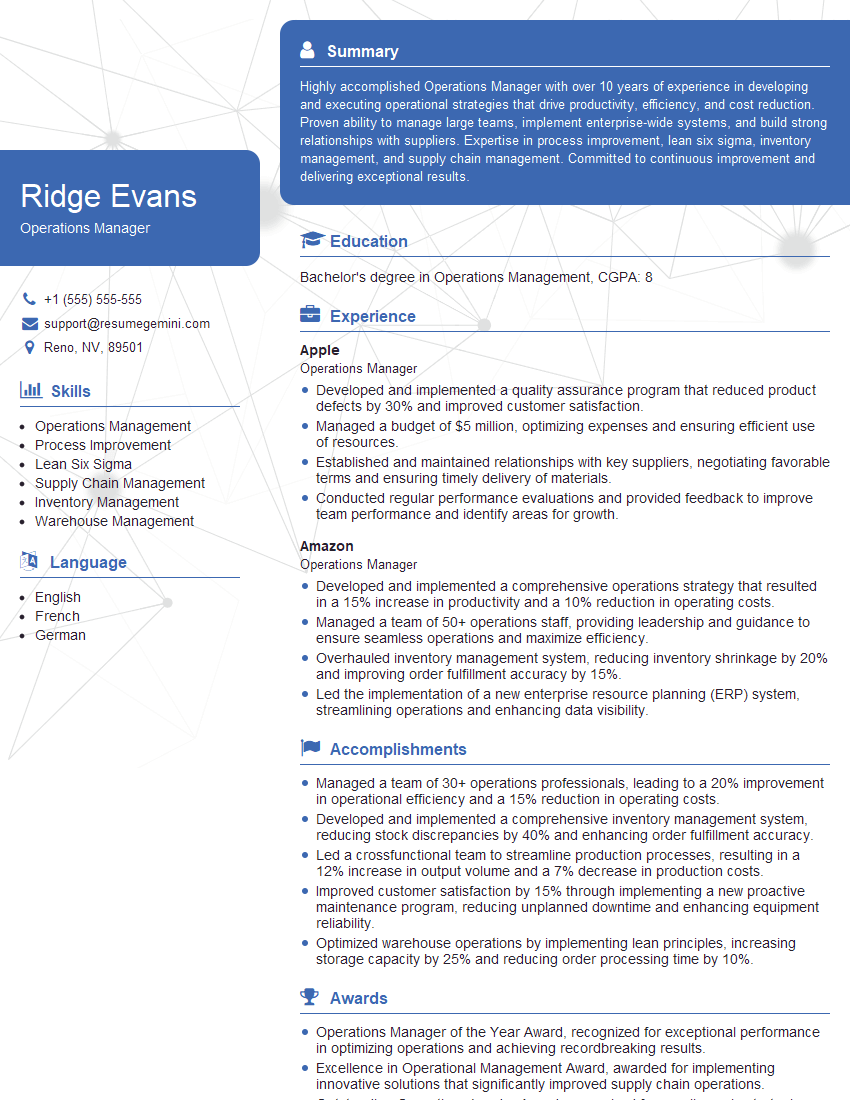
Operations Manager Resume Sample
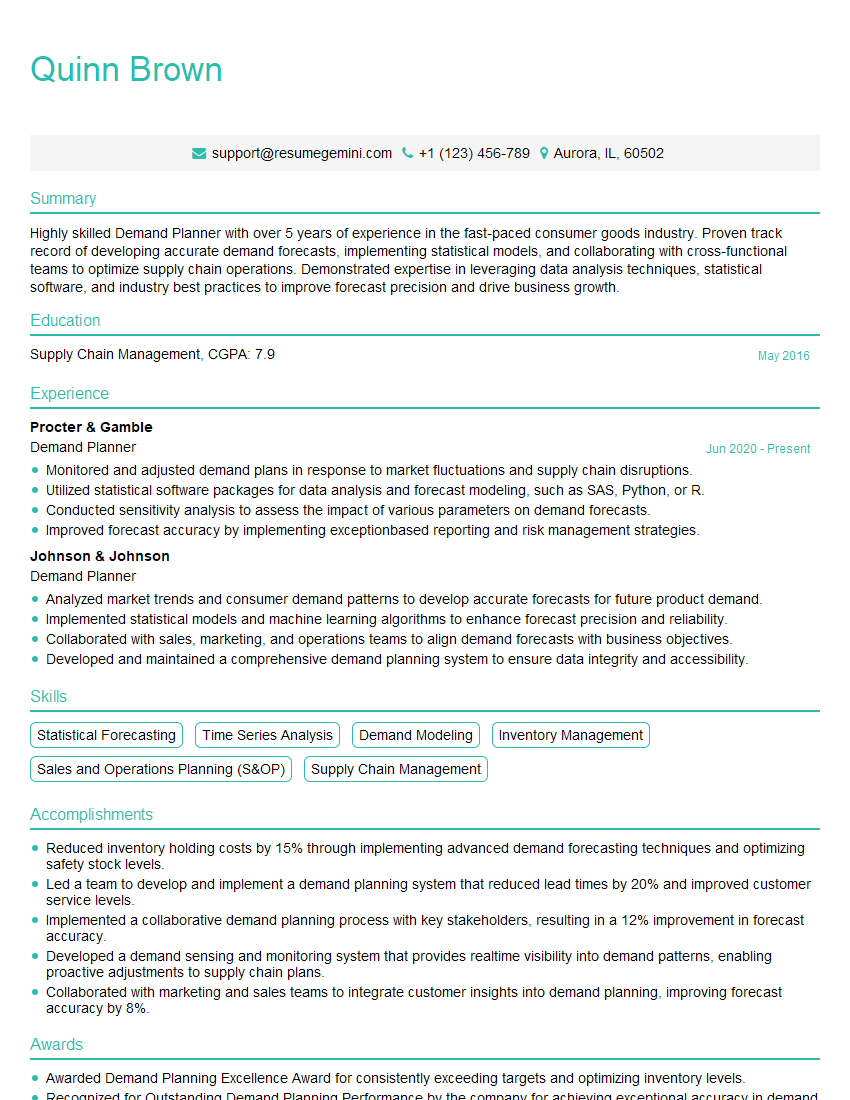
Demand Planner Resume Sample
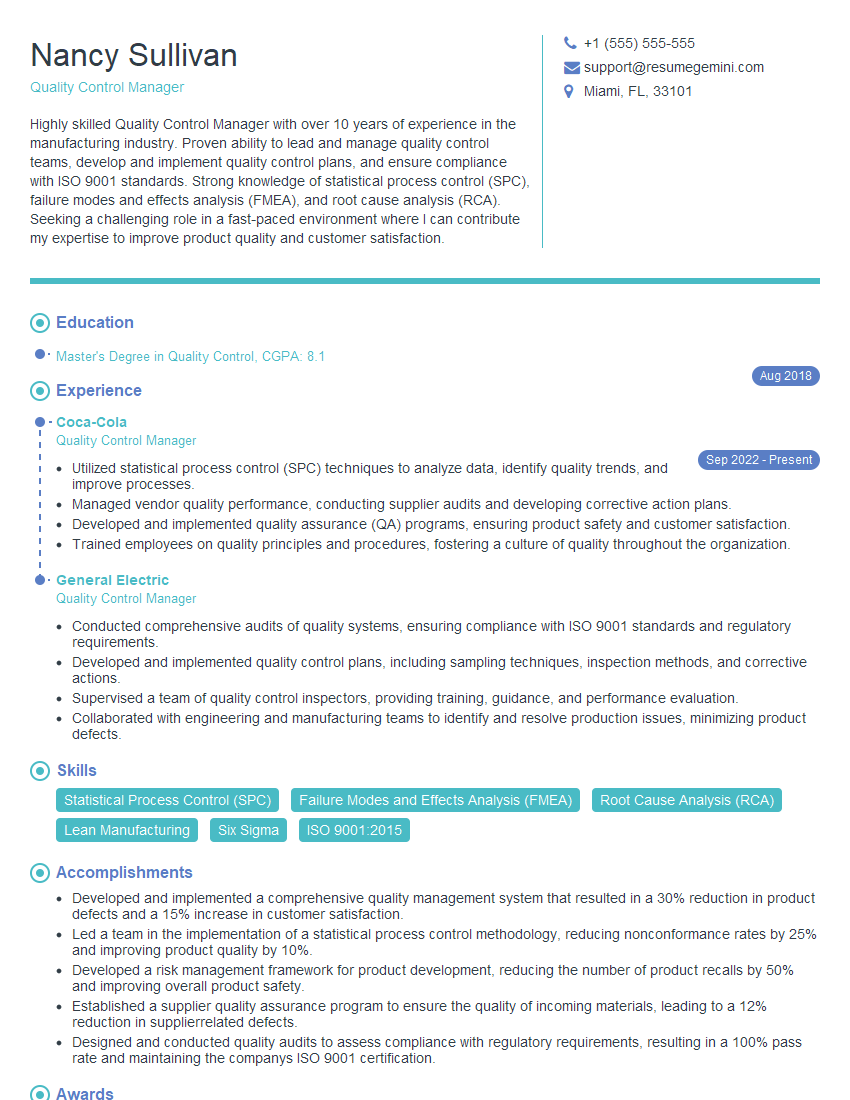
Quality Control Manager Resume Sample
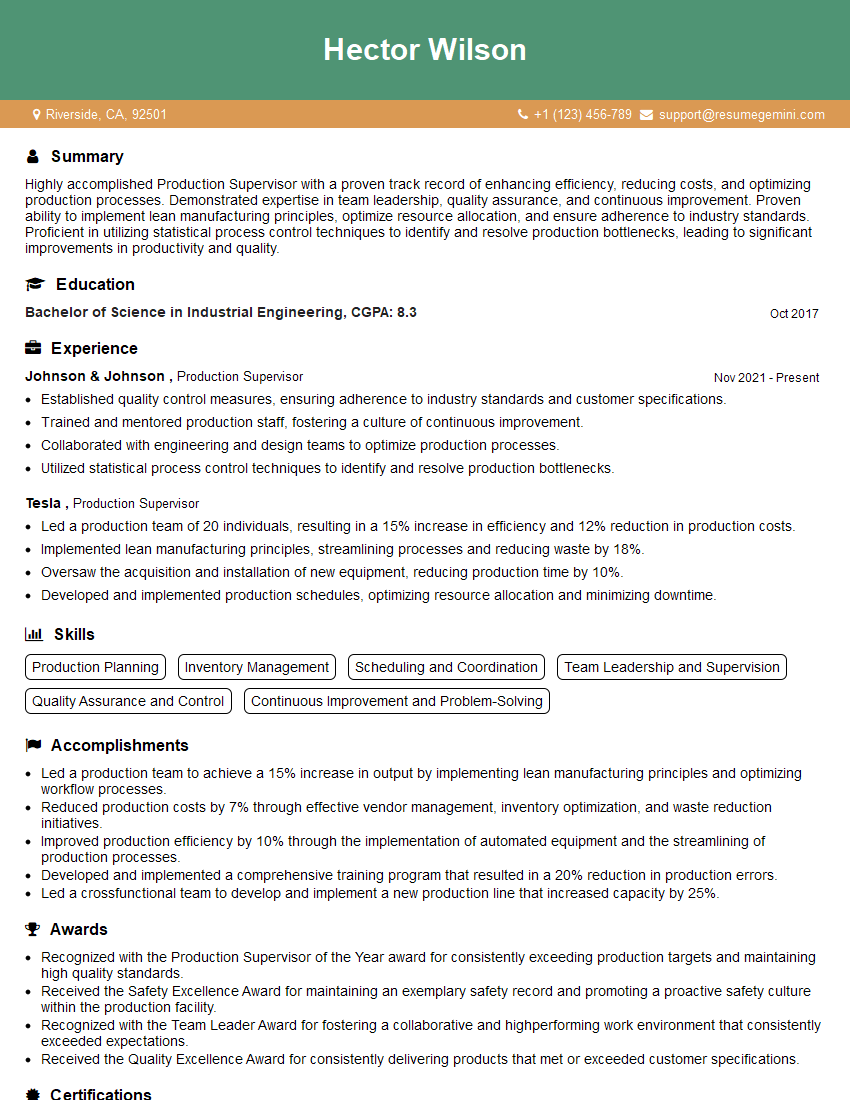
Production Supervisor Resume Sample
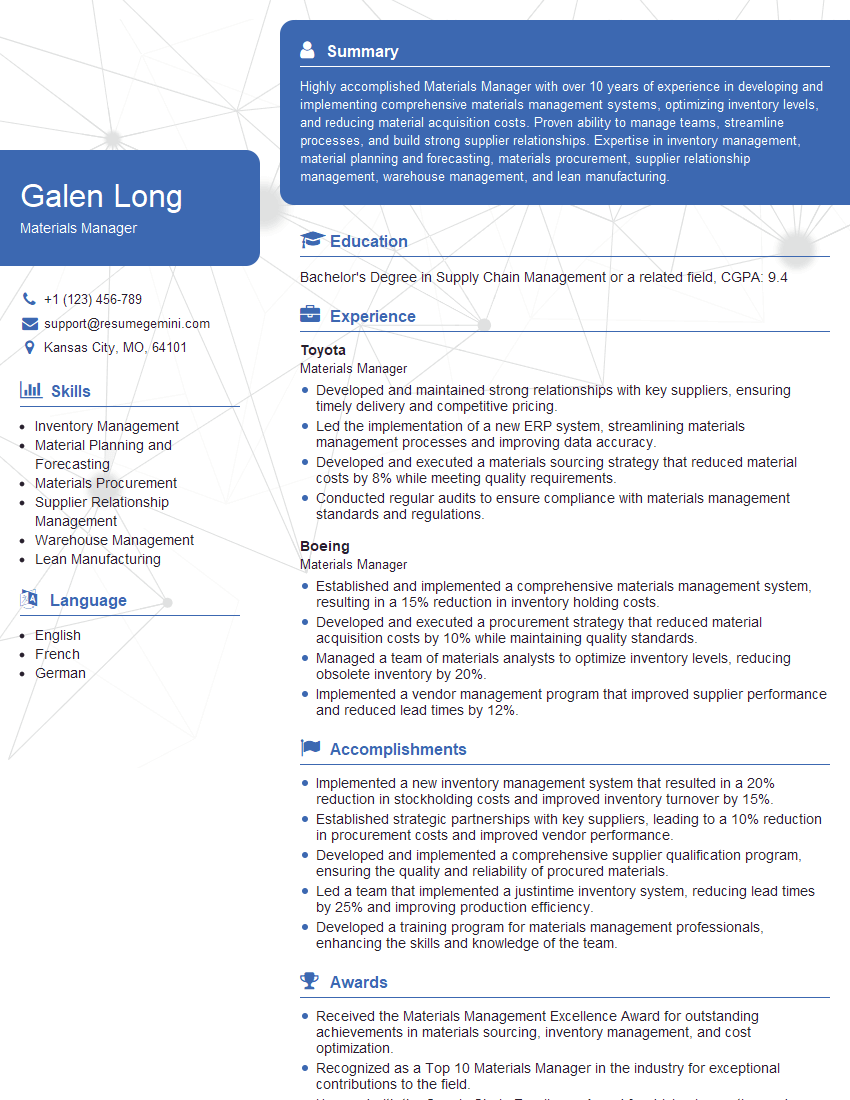
Materials Manager Resume Sample

Procurement Manager Resume Sample
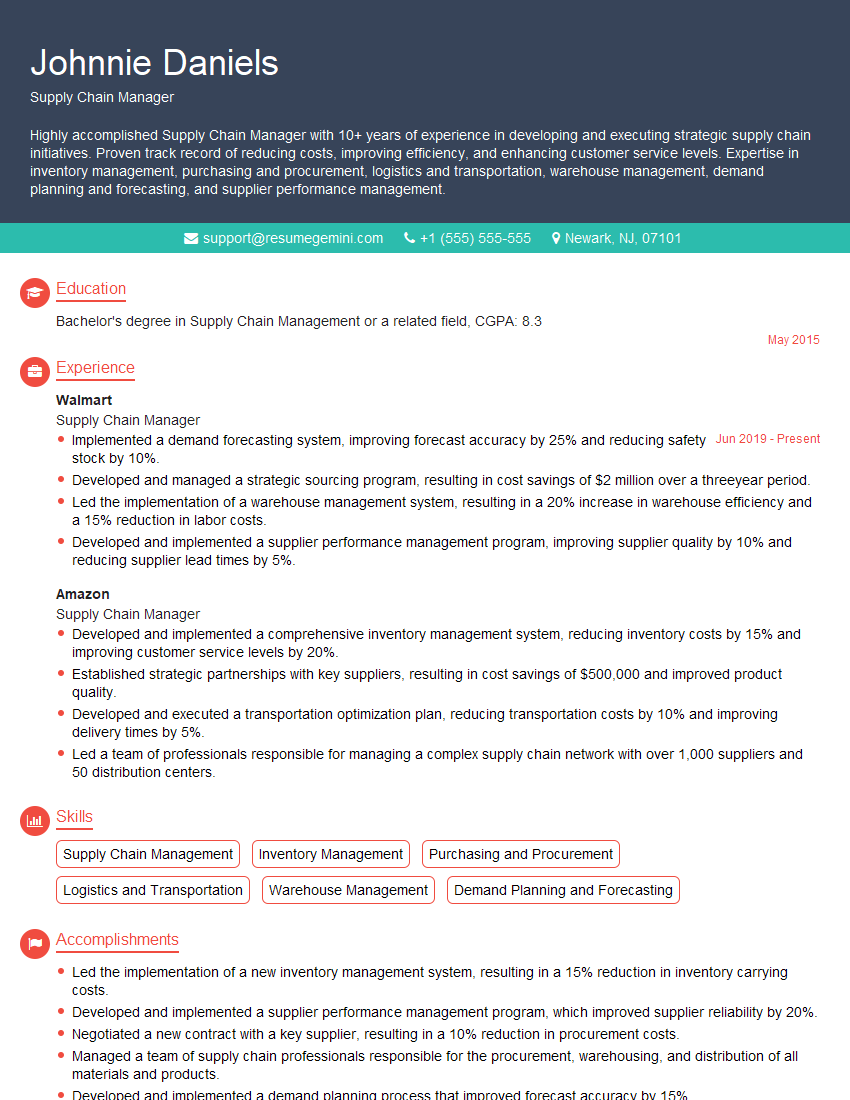
Supply Chain Manager Resume Sample
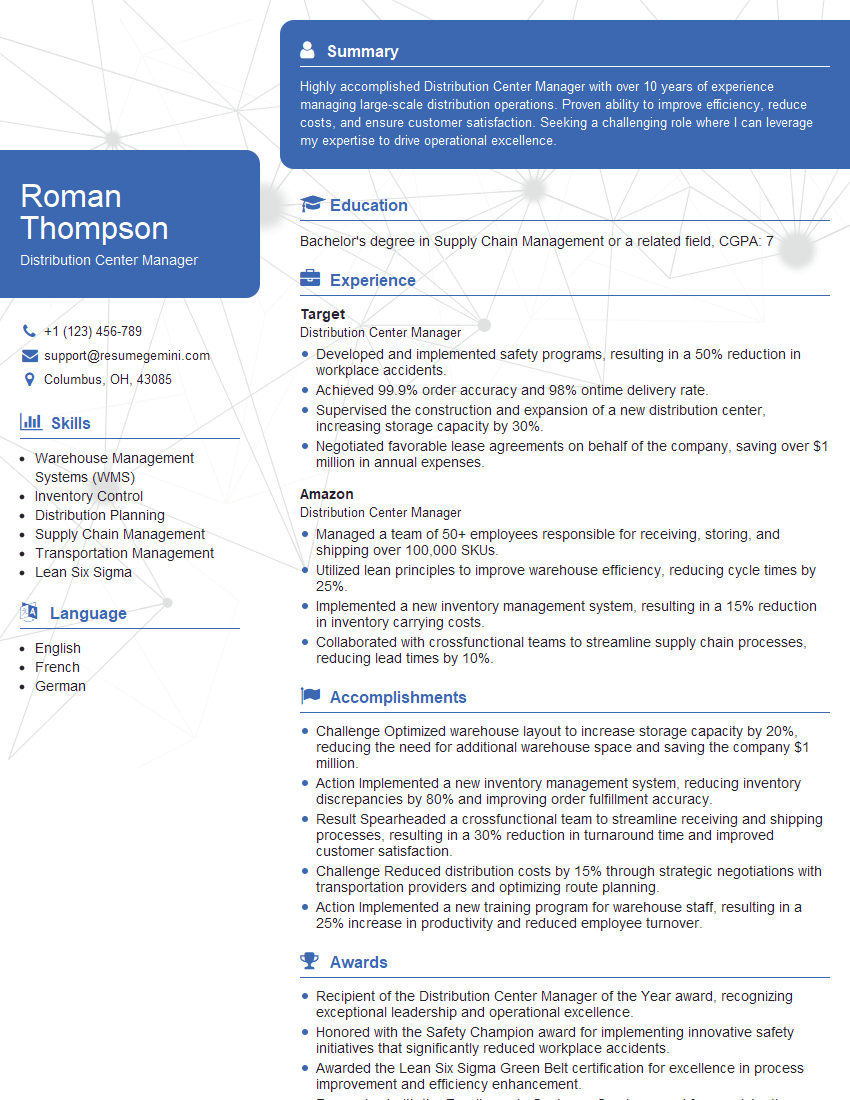
Distribution Center Manager Resume Sample
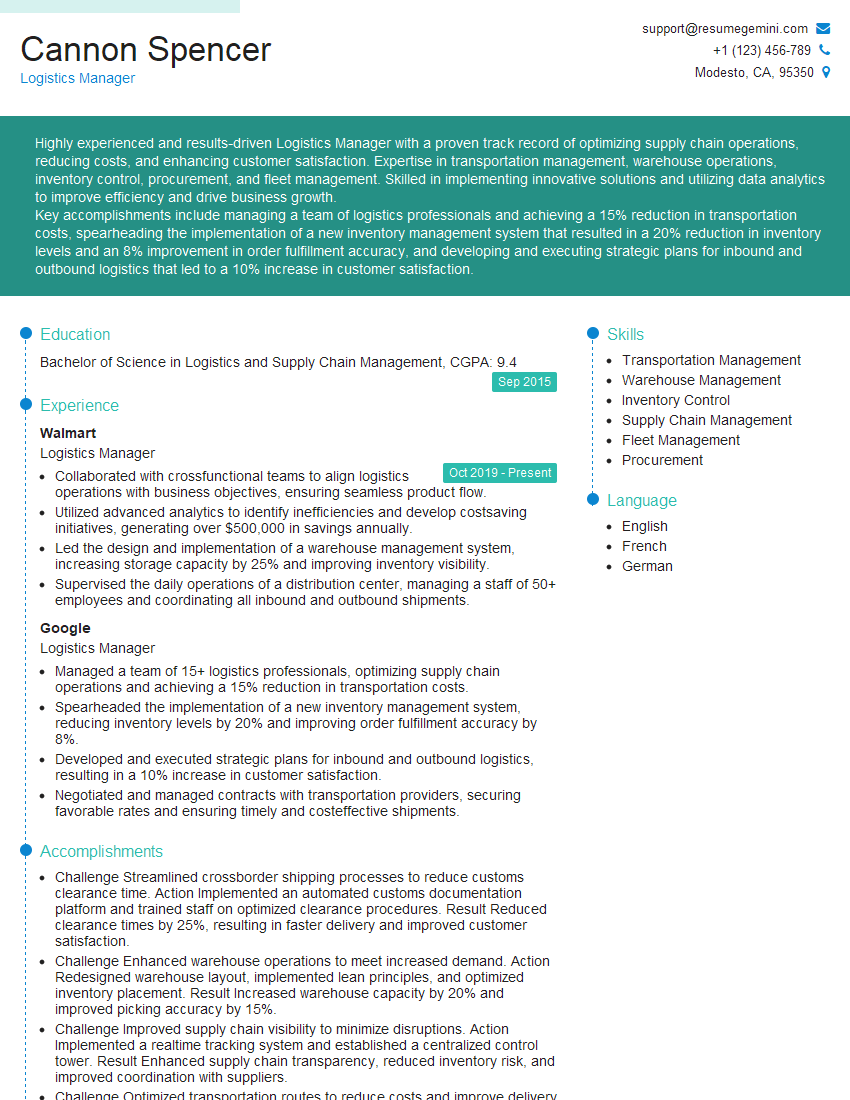
Logistics Manager Resume Sample
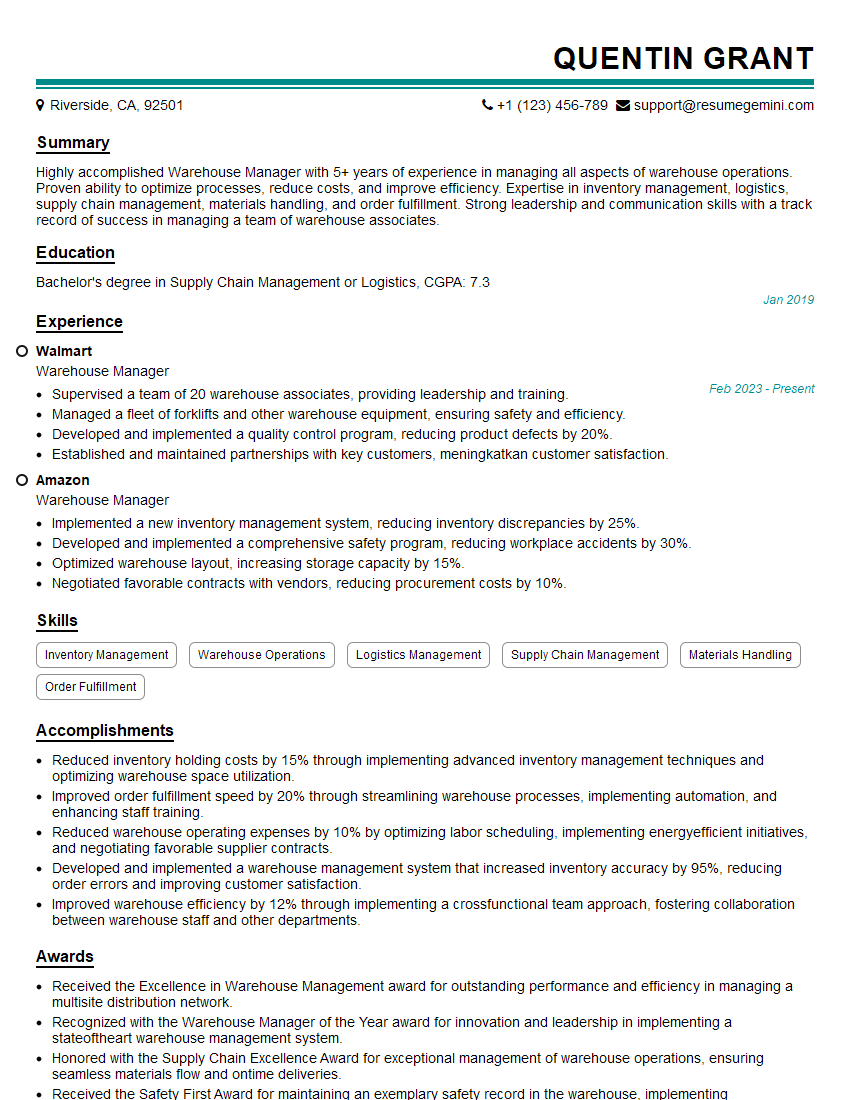
Warehouse Manager Resume Sample
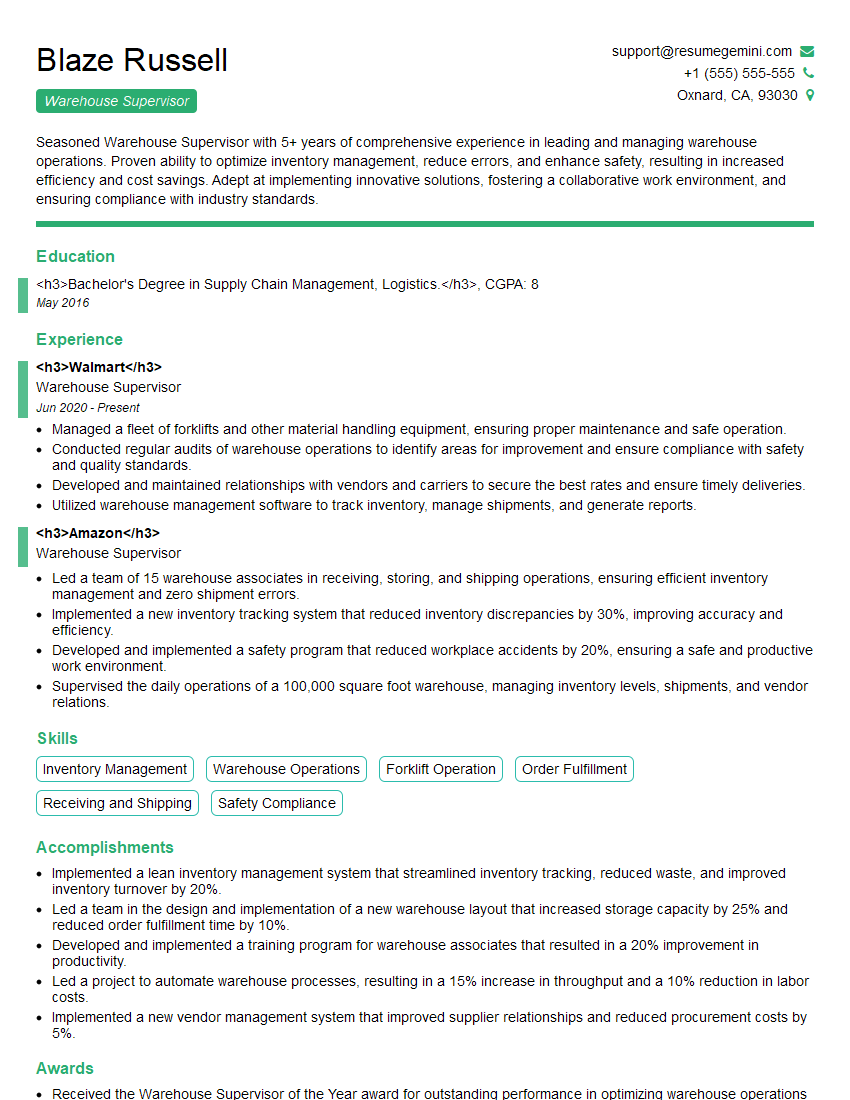
Warehouse Supervisor Resume Sample
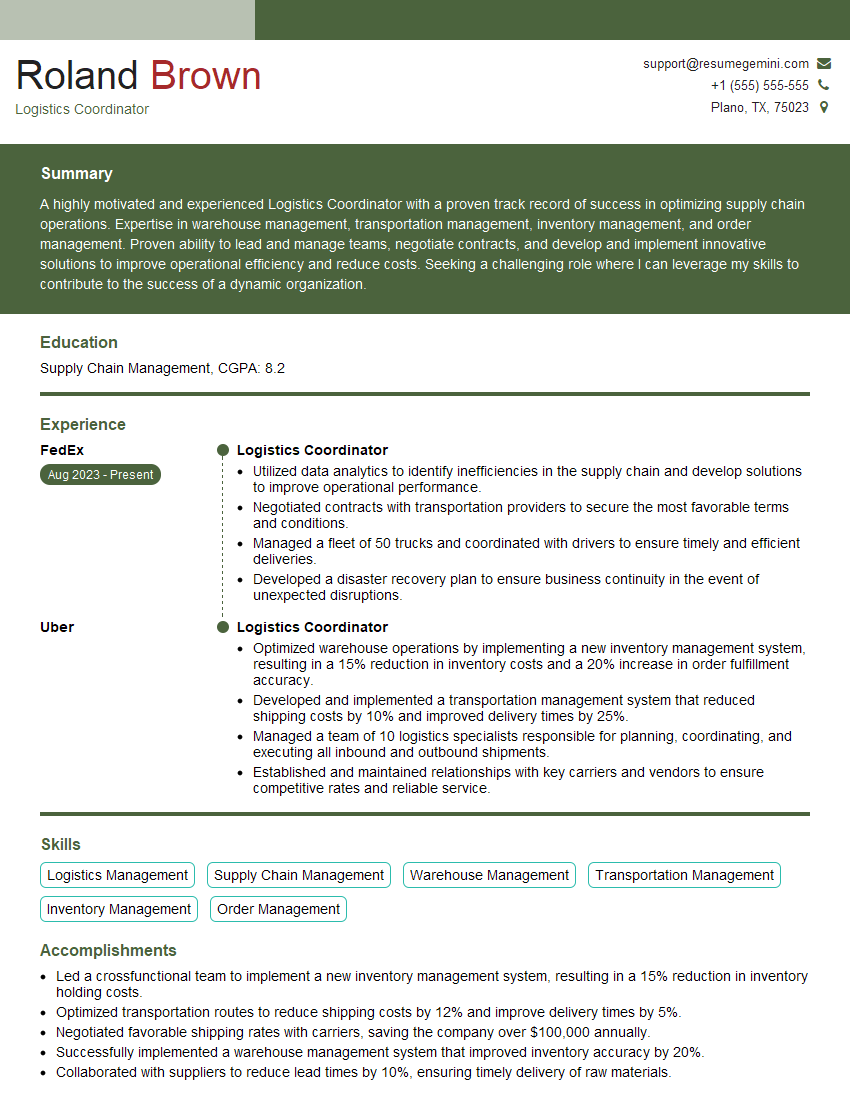
Logistics Coordinator Resume Sample
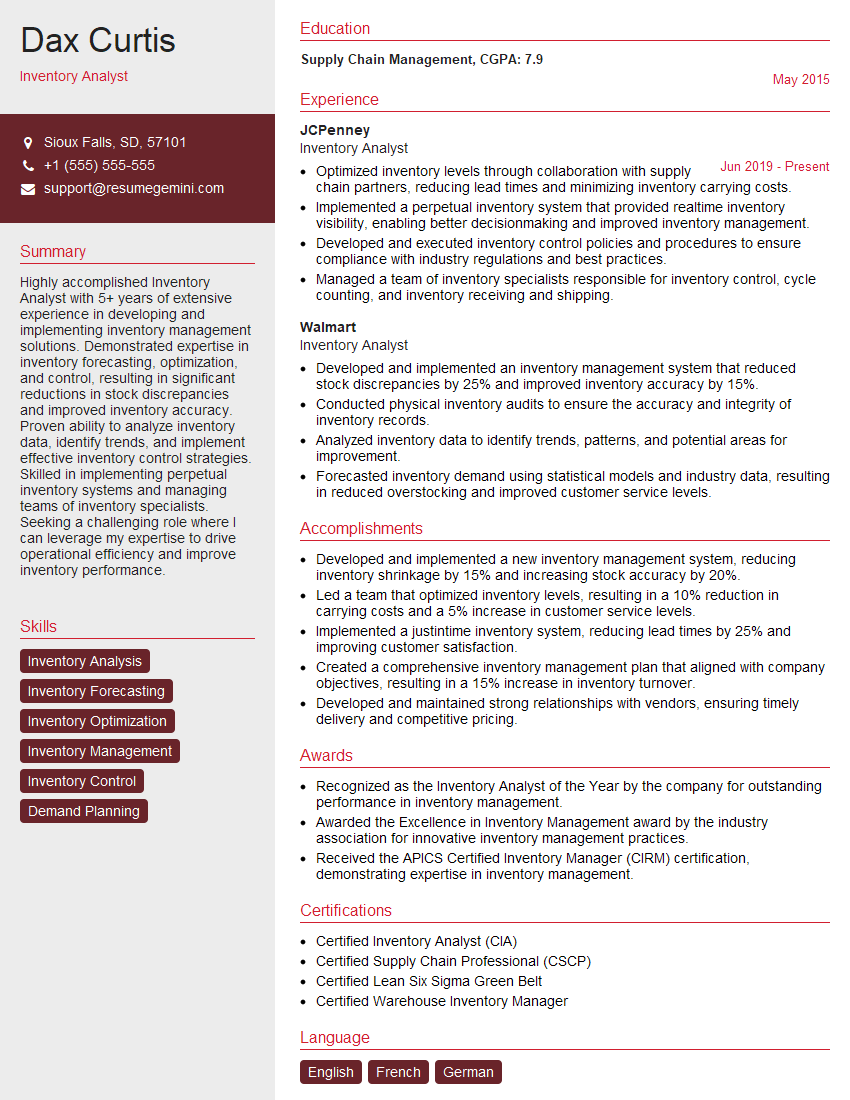
Inventory Analyst Resume Sample
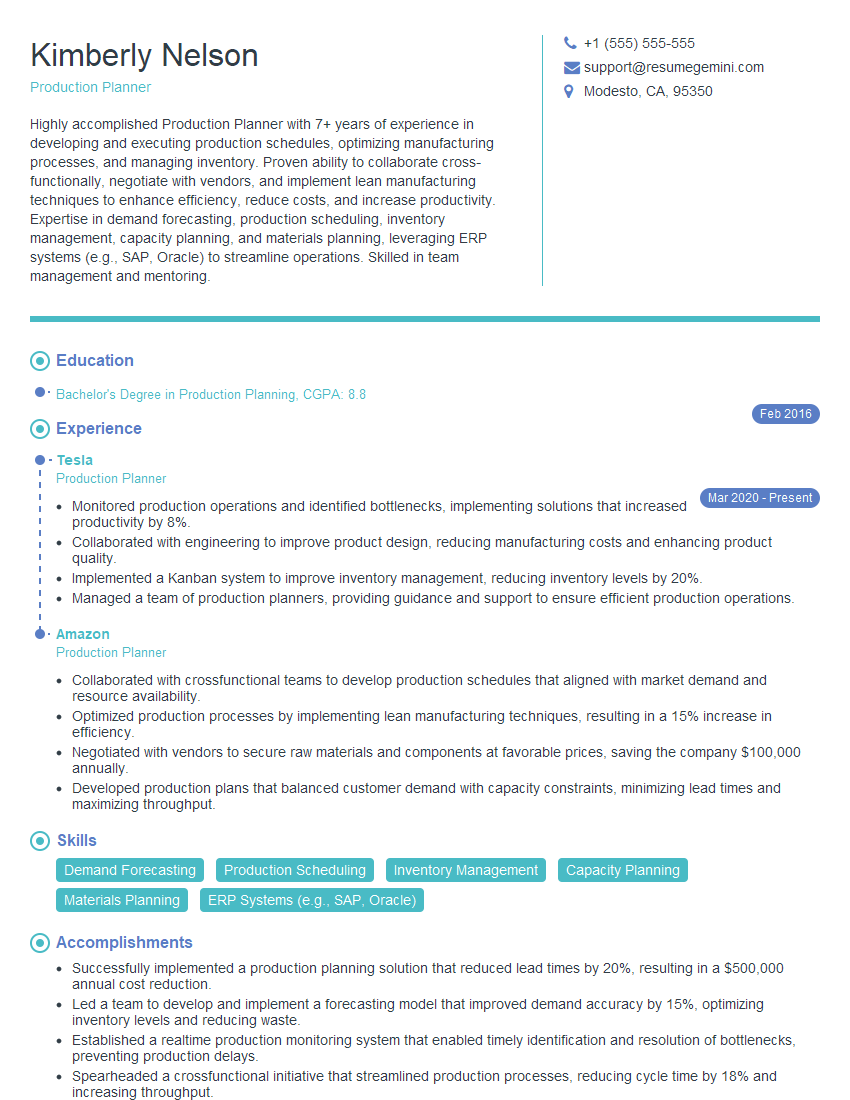
Production Planner Resume Sample
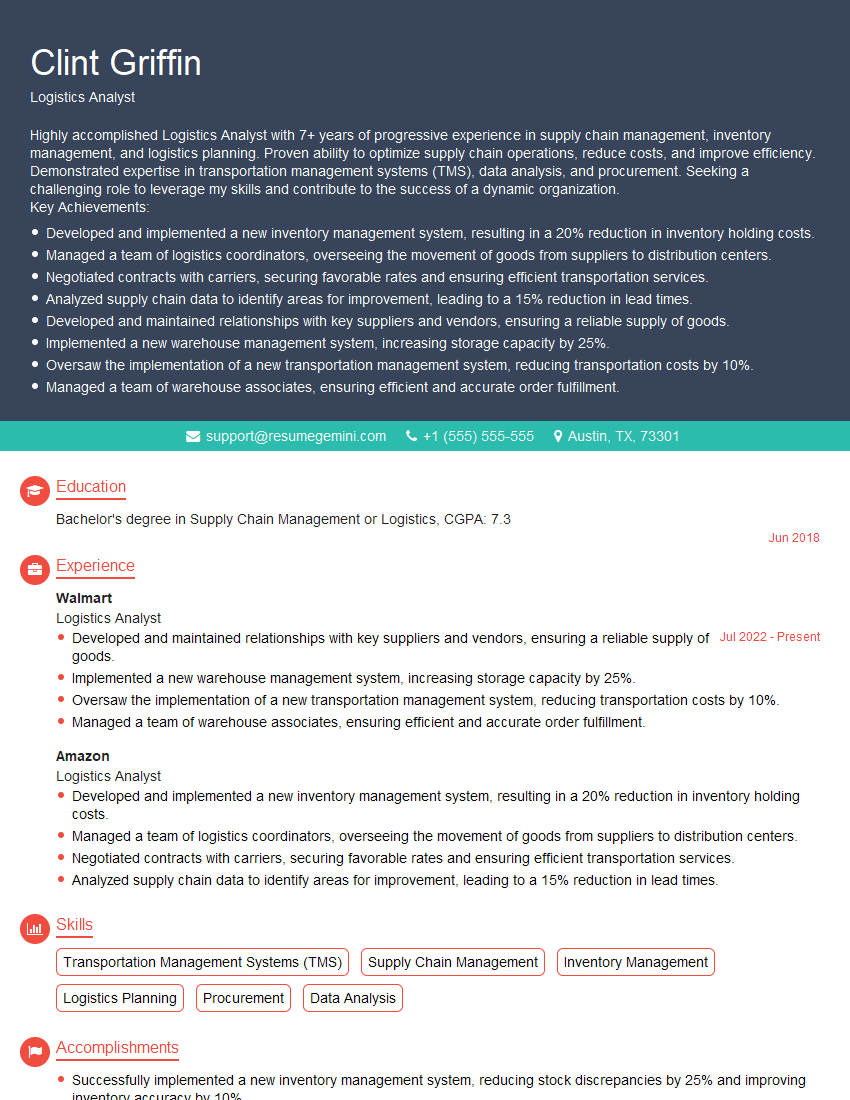
Logistics Analyst Resume Sample
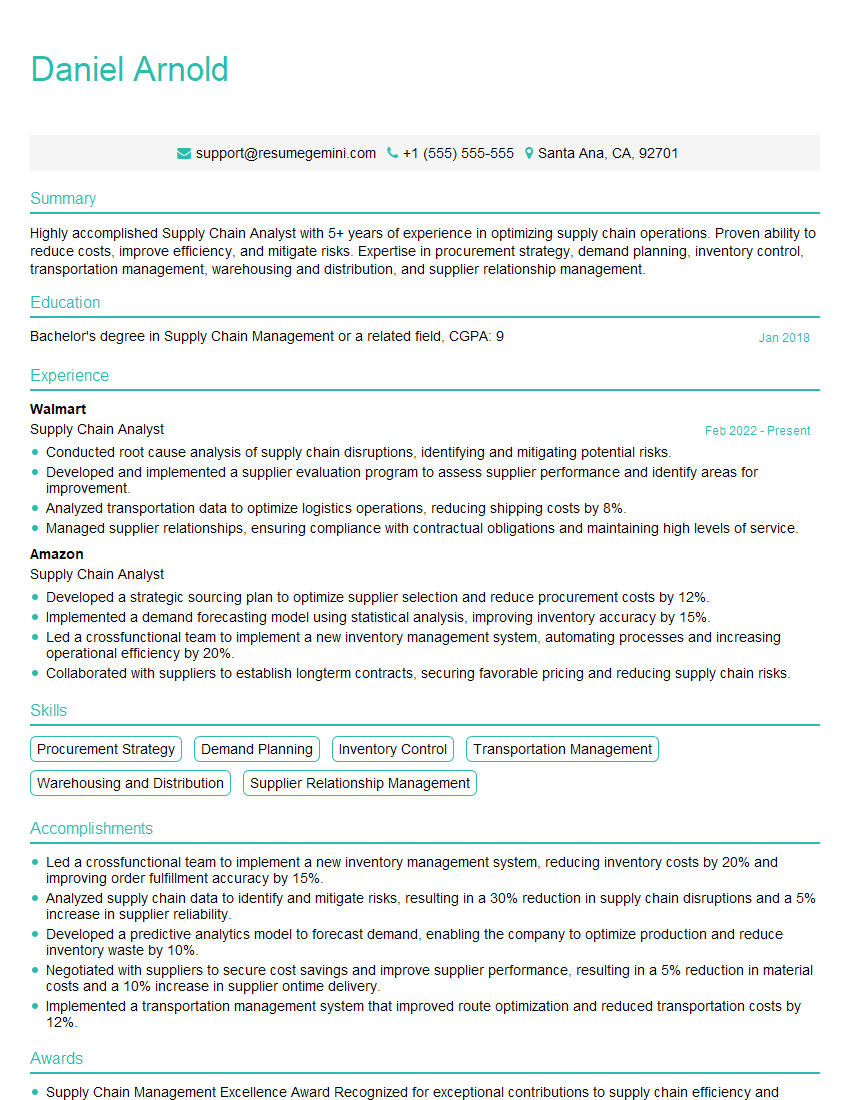
Supply Chain Analyst Resume Sample
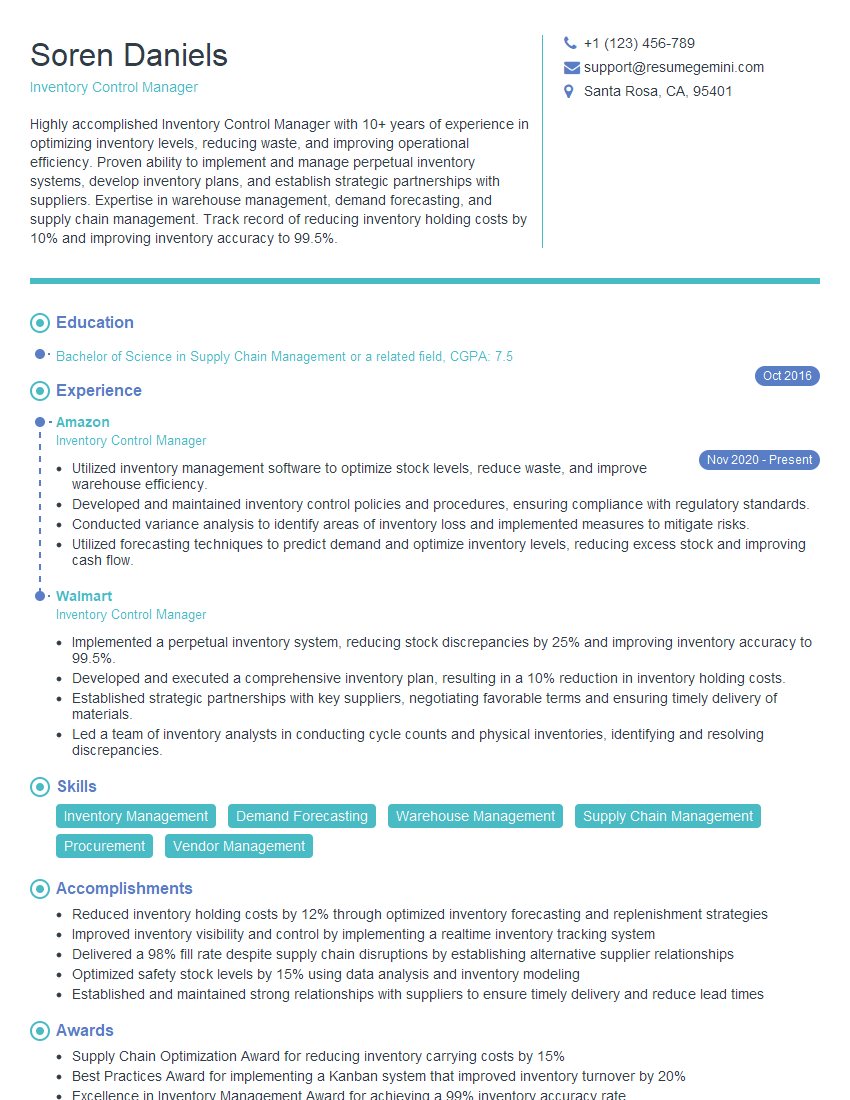
Inventory Control Manager Resume Sample
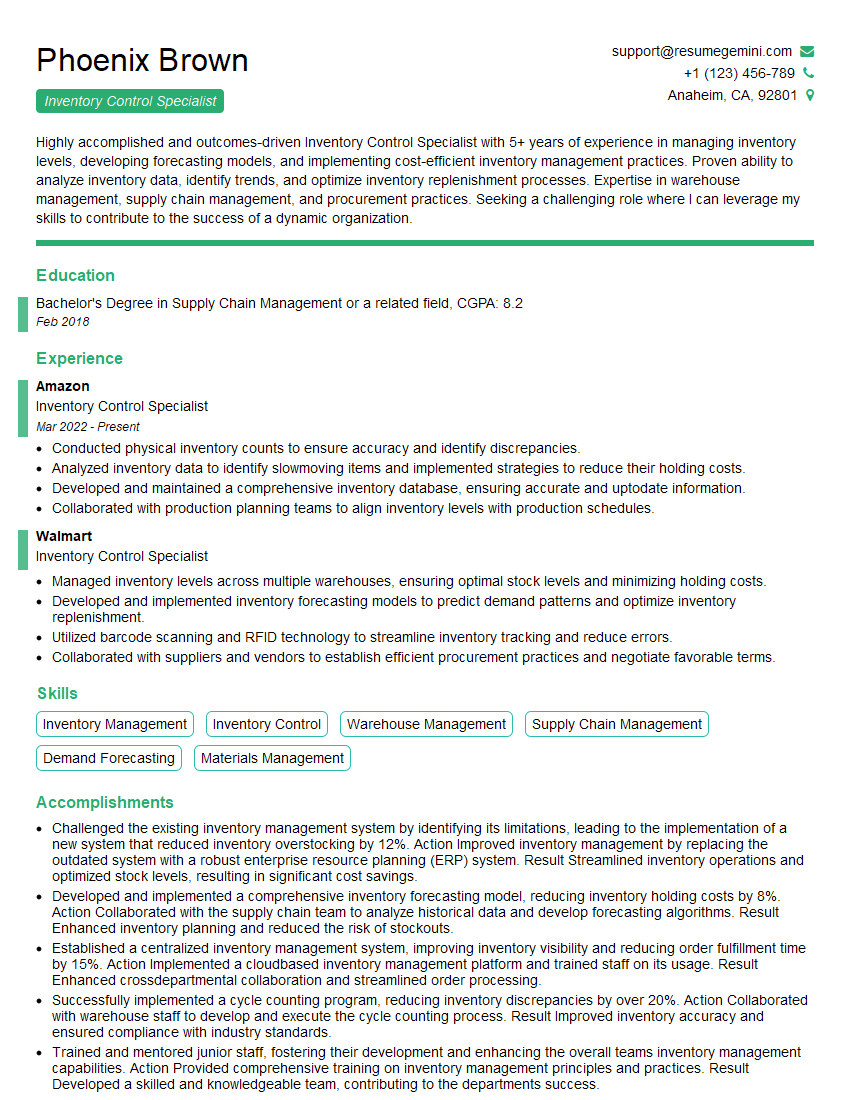
Inventory Control Specialist Resume Sample
- Operations Manager
- Demand Planner
- Quality Control Manager
- Production Supervisor
- Materials Manager
- Procurement Manager
- Supply Chain Manager
- Distribution Center Manager
- Logistics Manager
- Warehouse Manager
- Warehouse Supervisor
- Logistics Coordinator
- Inventory Analyst
- Production Planner
- Logistics Analyst
- Supply Chain Analyst
- Inventory Control Manager
- Inventory Control Specialist
Explore more articles
Users Rating of Our Blogs
Share Your Experience
We value your feedback! Please rate our content and share your thoughts (optional).
What Readers Say About Our Blog
Very informative content, great job.
good