The thought of an interview can be nerve-wracking, but the right preparation can make all the difference. Explore this comprehensive guide to Crimping and Wire Stripping interview questions and gain the confidence you need to showcase your abilities and secure the role.
Questions Asked in Crimping and Wire Stripping Interview
Q 1. What types of crimping tools are you familiar with?
Crimping tools come in various forms, each designed for specific applications and wire sizes. I’m familiar with hand crimpers, ratchet crimpers, and automated crimping machines.
- Hand crimpers: These are manually operated and are ideal for low-volume applications or field work where portability is key. They’re usually affordable but require more user skill to ensure consistent crimp quality.
- Ratchet crimpers: These tools offer a more controlled and consistent crimp. The ratchet mechanism ensures complete crimping before releasing, reducing the risk of incomplete connections. They’re widely used in professional settings.
- Automated crimping machines: These are used in high-volume manufacturing environments. They ensure consistent crimp quality and speed up the process significantly. They are often integrated into automated assembly lines.
Choosing the right tool depends on factors like the volume of crimps required, the wire gauge, connector type, and the desired level of quality control. For instance, I’d use a hand crimper for a quick fix on a single wire in the field, but I’d choose a ratchet crimper for a larger project needing consistent, reliable results.
Q 2. Explain the process of selecting the correct crimp die for a specific wire gauge.
Selecting the correct crimp die is crucial for a successful and reliable crimp. The die must match the wire gauge and connector type precisely. Using the wrong die can lead to a poor connection, potentially resulting in intermittent signals or complete failure.
The process usually involves referring to the manufacturer’s specifications for both the connector and the crimping tool. The documentation will clearly specify the appropriate die for different wire gauges. For example, a 22 AWG wire will require a specific die size; using a die meant for 18 AWG will likely result in a crushed or poorly formed crimp. Similarly, different connector types (e.g., insulated terminals, non-insulated terminals) will necessitate different dies.
I always double-check the die markings to ensure it’s appropriate for the wire and connector I’m using. A mismatch can cause damage to the wire, the connector, or even the crimping tool itself. It’s vital to check that the die is properly seated in the crimper before proceeding. In short, selecting the right crimp die is a fundamental step in ensuring the integrity of the connection.
Q 3. Describe the different types of wire strippers and their applications.
Wire strippers are essential tools for removing insulation from wires without damaging the conductor. Several types are available, each with unique applications:
- Automatic wire strippers: These tools automatically adjust to different wire gauges, making them efficient and precise. They are often used in high-volume applications where speed and consistency are paramount.
- Adjustable wire strippers: These allow manual adjustment of the stripping length and are suitable for a variety of wire gauges. They offer more control than automatic strippers but require more user skill.
- Fixed-gauge wire strippers: These are designed for specific wire gauges and offer excellent precision for that particular size. They are generally less versatile but very precise for the gauge they were designed for.
- Knives (e.g., utility knives): While not strictly a wire stripper, a very sharp utility knife can be used carefully to strip insulation, but it requires significantly more skill and precision to avoid nicking the conductor.
The choice of wire stripper depends largely on the application. For example, I would use an automatic stripper for mass production, whereas an adjustable stripper would be suitable for a variety of wire gauges in a workshop setting. For delicate work or smaller wires, I might opt for a very sharp pair of diagonal cutters that can cut the wire insulation precisely while preserving the conductor’s integrity.
Q 4. How do you determine the proper wire stripping length?
Determining the proper wire stripping length is critical. Stripping too much insulation exposes the conductor to damage and creates a risk of short circuits. Stripping too little insulation results in poor connection and can lead to a weak or unreliable crimp.
The required length is dictated by the connector’s specifications. Always consult the connector’s datasheet or marking for the recommended stripping length. It’s typically printed on the connector packaging or available in the manufacturer’s documentation. This will avoid potential problems. For example, stripping too little insulation can lead to a poor electrical connection, while stripping too much can cause a short circuit or make the connection unstable. Careful attention to this detail is essential for reliable electrical connections. In some instances, this length may be represented visually as a line etched on the connector itself as a guide.
Q 5. What are the common causes of crimping errors and how do you prevent them?
Crimping errors can stem from various causes, leading to unreliable connections. Common issues include:
- Incorrect die selection: Using a die that doesn’t match the wire gauge or connector type is a primary culprit.
- Insufficient crimp force: Not applying enough pressure during crimping results in a loose connection.
- Misaligned wire or connector: Improper alignment can lead to a poorly formed crimp.
- Damaged or worn dies: Dies with burrs or damage can produce inconsistent crimps.
- Using the wrong crimping tool: Some hand crimpers lack the power for large gauge wires, for example.
Preventing these errors involves careful attention to detail: always select the correct die, use a tool appropriate for the wire gauge, ensure proper alignment, and regularly inspect the dies for wear. Proper training and adherence to manufacturer’s instructions are also critical. It is good practice to perform a test crimp on a scrap piece of wire and connector first to check that the die is making an appropriate connection before starting the main work.
Q 6. How do you inspect a crimped connection for quality?
Inspecting a crimped connection involves visual and sometimes physical checks. Visually inspect the crimp for any signs of damage, such as misalignment, deformation, or a lack of proper barrel formation (for example, a poorly crimped terminal will show a ‘gap’ in the metal around the insulation). Ensure the insulation is not damaged or overly compressed near the crimp.
For a more rigorous check, gently try to pull on the wire to test the crimp’s strength. It should not easily pull out from the connector, indicating a secure connection. It is also possible to test the electrical continuity using a multimeter to verify that the electrical pathway is present and correctly formed. If there is any doubt over the quality of the crimped connection, it should be discarded and redone. Quality control is crucial to ensuring reliable operation and the safety of the electrical circuit.
Q 7. What are the safety precautions associated with crimping and wire stripping?
Crimping and wire stripping can pose several safety hazards if not handled correctly:
- Sharp tools: Wire strippers and crimpers have sharp edges and moving parts; handle them with care and always use appropriate personal protective equipment (PPE).
- Wire cuts: Exposed wires can cause cuts. Use caution while handling wires and wear gloves.
- Electrical shock: Work on de-energized circuits whenever possible. If this is not possible, use appropriate insulation and follow strict safety procedures.
- Eye injuries: Flying debris from crimping or wire stripping can injure your eyes. Always wear safety glasses.
It’s crucial to always wear appropriate PPE (safety glasses, gloves) and follow the manufacturer’s instructions for both the tools and the components being used. Regular maintenance of the tools and workspace can also improve safety and reduce risks. Never rush the process; take your time and ensure each connection is safe and secure before moving on.
Q 8. Explain the importance of proper wire preparation before crimping.
Proper wire preparation is paramount to a successful and reliable crimp connection. Think of it like building a house – a weak foundation leads to a weak structure. Similarly, a poorly prepared wire will result in a crimp that’s prone to failure. Before crimping, you need to ensure the wire is stripped to the correct length, the insulation is cleanly removed, and the conductor is free from any nicks or damage that could compromise the connection. This involves choosing the right wire stripping tool for the wire gauge and insulation type to avoid damaging the conductor strands.
For instance, if you’re working with stranded wire, you must ensure that the strands are neatly bundled and not frayed. Frayed strands will lead to uneven pressure distribution during crimping and weaken the connection. For solid core wire, a clean, even strip is essential to prevent the insulation from interfering with the crimp.
Q 9. How do you handle different types of wire insulation during stripping?
Different wire insulation types require different stripping techniques. Some insulations are easily stripped with a simple wire stripper, while others require more specialized tools. For example, Teflon insulation is tough and requires a sharp, precise blade to avoid tearing the conductor. PVC insulation is more forgiving but can still be easily damaged if excessive force is used.
Here’s a breakdown:
- PVC (Polyvinyl Chloride): Common and relatively easy to strip with standard strippers.
- Teflon (PTFE): Requires a sharper blade and careful technique to avoid damaging the wire.
- Silicone: Very flexible and can be tricky to strip cleanly; specialized strippers are often preferred.
- Nylon: Tough and requires a sharp blade, similar to Teflon.
In all cases, selecting the right stripping tool for the wire gauge and insulation type is critical. Using the incorrect tool can lead to nicked conductors, uneven stripping, and ultimately, unreliable crimps.
Q 10. What are the consequences of improper crimping or stripping?
Improper crimping or stripping can have severe consequences, ranging from intermittent connections to complete circuit failures. These failures can lead to malfunctioning equipment, safety hazards, and costly repairs.
- Intermittent Connections: A poorly crimped connection might work initially, but vibration or movement can cause it to lose contact, leading to intermittent failures.
- Open Circuits: Insufficient crimp force, damaged conductors, or improperly stripped wires can lead to open circuits, completely preventing current flow.
- Short Circuits: If the insulation isn’t properly stripped or the crimp is too tight, it can create a short circuit between conductors, causing overheating and potential fire hazards.
- Signal Degradation: In high-frequency applications, even a slightly imperfect crimp can lead to signal degradation.
In a real-world example, imagine a poorly crimped connection in the wiring harness of an aircraft. This could lead to system failure, putting lives at risk. The importance of proper techniques cannot be overstated.
Q 11. How do you troubleshoot a faulty crimped connection?
Troubleshooting a faulty crimped connection requires a systematic approach. Begin by visually inspecting the crimp for obvious signs of damage, such as crushed conductors, incomplete crimp, or protruding insulation. Use a multimeter to check the continuity of the connection. A low or no reading indicates a poor connection or open circuit.
If the visual inspection is inconclusive, consider these steps:
- Visual Inspection: Carefully examine the crimp for any obvious defects.
- Continuity Test: Use a multimeter to check for continuity between the wires.
- Wire Stripping Re-check: Verify if the wire stripping was done correctly. If not, correct the stripping and re-crimp.
- Crimp Force Check: If using a manual crimper, ensure sufficient force was applied. A crimping tool that doesn’t fully crimp can be a problem.
- Crimp Quality Check: Compare the crimp with a known good crimp to assess the quality.
- Replacement: If the crimp is severely damaged or the wire is compromised, replace the entire wire and connector.
Remember, safety is key. Always disconnect power before working on any electrical connections.
Q 12. What are the different types of crimps (e.g., insulation displacement, compression)?
There are several types of crimping processes, each with its own advantages and disadvantages:
- Insulation Displacement Crimping (IDC): This method uses a special connector that forces the wire insulation apart, making contact with the conductor. It’s fast and efficient but may not be suitable for all wire types and gauges. Often used in ribbon cables.
- Compression Crimping: This is the most common type, where a die compresses the connector onto the wire, creating a strong mechanical connection. This is highly reliable and adaptable to various wire types and gauges.
- Crimp-on Terminals: These pre-made terminals are crimped onto the wire. It’s easy and efficient for most applications.
- Solderless Connectors: A variant of crimp-on, these connectors can have other securing features beyond just a simple crimp.
The choice of crimping method depends on the application, wire type, and connector type. For example, IDC connectors are ideal for high-density applications, while compression crimping provides a strong, reliable connection for heavier-duty applications.
Q 13. Describe the difference between a good and a bad crimp.
The difference between a good and a bad crimp is primarily determined by the quality of the mechanical connection. A good crimp exhibits complete metal-to-metal contact between the conductor and the connector, resulting in a secure and reliable connection with no visible defects.
Good Crimp:
- Complete Metal-to-Metal Contact: The conductor is fully embedded within the connector terminal, with no gaps or voids.
- No Damage to the Conductor: The wire strands are not damaged, crushed or broken.
- No Protruding Insulation: The insulation is neatly seated within the connector.
- Solid and Uniform Appearance: The crimp is evenly compressed and lacks any visible defects.
Bad Crimp:
- Incomplete Metal-to-Metal Contact: Gaps or voids between the conductor and the connector.
- Crushed or Broken Conductor: The wire strands are damaged, resulting in reduced conductivity.
- Protruding Insulation: Insulation is within the crimp area, preventing proper connection.
- Uneven or Deformed Appearance: The crimp exhibits irregularities in shape or uneven compression.
A visual inspection, combined with a continuity test, can easily distinguish between the two. A bad crimp will usually show reduced conductivity or even an open circuit.
Q 14. What are the various types of wire used in electrical assemblies, and how does it impact crimping?
Various wire types are used in electrical assemblies, and their properties significantly impact crimping. The choice of crimping technique and tools must match the wire type for optimal results.
- Solid Core Wire: Usually copper or aluminum, characterized by a single solid conductor. Easier to crimp, as it offers even contact. However, more prone to breakage if over-bent. Requires a precise stripping technique.
- Stranded Wire: Composed of multiple smaller wires twisted together. This is more flexible than solid core wire. Requires attention to strand integrity during stripping and crimping. The strands need to be uniformly bundled to ensure complete contact.
- Copper Wire: The most common type, offering excellent conductivity and workability. Standard crimping methods and tools are applicable.
- Aluminum Wire: Commonly used in high-power applications. Softer than copper and more susceptible to cold flow, requiring specialized crimping techniques and tools to avoid damage. Also prone to oxidation.
- Multi-conductor Cable: Contains several individual wires within a single jacket. The crimp type and technique may vary based on the number and gauge of the internal conductors.
Different wire gauges also influence crimping. Thicker wires require more force and potentially specialized tools, unlike thinner wires that can be crimped using smaller hand tools.
Q 15. How do you deal with stranded vs. solid core wire when crimping?
Crimping stranded and solid core wires requires different techniques because of their structural differences. Solid core wire is a single, unbroken conductor, while stranded wire consists of many smaller wires twisted together.
Solid Core: Crimping solid core wire is relatively straightforward. You need to ensure the wire is properly inserted into the crimp connector, and the crimp tool applies sufficient force to create a secure connection. Improper crimping can lead to a loose connection or wire breakage. Imagine trying to squeeze a single piece of clay – you need firm, even pressure.
Stranded Core: Crimping stranded wire is more complex. The individual strands can spread out during crimping, resulting in an uneven or weak connection. To prevent this, you often need to use a connector designed specifically for stranded wire or incorporate a ferrule (a small metal sleeve) to consolidate the strands before crimping. Think of it like trying to squeeze a handful of loose threads – you need to bind them together first for a strong result. Using the right crimp tool with the correct die for the wire gauge is crucial for success.
In both cases, visual inspection after crimping is essential to ensure a proper connection. A poorly crimped connection can result in intermittent faults, signal loss, and even fire hazards.
Career Expert Tips:
- Ace those interviews! Prepare effectively by reviewing the Top 50 Most Common Interview Questions on ResumeGemini.
- Navigate your job search with confidence! Explore a wide range of Career Tips on ResumeGemini. Learn about common challenges and recommendations to overcome them.
- Craft the perfect resume! Master the Art of Resume Writing with ResumeGemini’s guide. Showcase your unique qualifications and achievements effectively.
- Don’t miss out on holiday savings! Build your dream resume with ResumeGemini’s ATS optimized templates.
Q 16. What are the common standards or specifications related to crimping and wire stripping?
Several standards govern crimping and wire stripping, ensuring consistent quality and safety. These standards often vary depending on the industry and application but frequently referenced ones include:
- MIL-STD-22885: Provides detailed specifications for crimping and other electrical connection processes, extensively used in military applications.
- IPC-A-610: This standard defines the acceptability of electronic assemblies, including the criteria for proper wire preparation and crimping.
- TIA/EIA standards: Various standards from the Telecommunications Industry Association/Electronic Industries Alliance cover specific aspects of wire termination and connectorization in telecommunications and networking. For example, standards related to cabling systems specify acceptable crimp methods and quality checks.
- Manufacturer’s specifications: Crimp tools and connectors often come with specifications indicating the compatible wire gauges and the required crimping force. Always refer to these to ensure optimal results.
Adhering to these standards is crucial for ensuring reliable connections and meeting industry best practices.
Q 17. Explain the importance of maintaining crimping tools.
Maintaining crimping tools is paramount for consistent crimp quality and tool longevity. A poorly maintained tool can lead to inconsistent crimps, damaged wires, and ultimately, unreliable connections. This is especially important in high-volume production environments.
- Regular Cleaning: Clean the dies and jaws of the crimping tool regularly using a suitable cleaning agent and brush. Accumulated debris can interfere with the crimping process and affect the crimp quality.
- Calibration: Periodically calibrate your crimping tool to ensure it’s applying the correct crimping force. Many tools have a mechanism for checking calibration. Improper force can lead to poorly crimped connections.
- Inspection: Regularly inspect the crimping dies for wear and tear. Damaged or worn dies should be replaced to maintain crimp integrity. Dies that are even slightly worn can create loose crimps or damage the wire.
- Lubrication: Some crimping tools benefit from periodic lubrication according to the manufacturer’s instructions, which can reduce friction and improve tool life.
Think of your crimping tool like a precision instrument. Proper maintenance translates to consistent, high-quality work and minimizes the chance of costly rework.
Q 18. How do you identify different wire gauges?
Wire gauges indicate the diameter of a wire, typically expressed using the American Wire Gauge (AWG) system. Smaller AWG numbers indicate thicker wires, while larger numbers indicate thinner wires.
- Wire Gauge Chart: The most reliable way to identify a wire gauge is by referring to a wire gauge chart. These charts provide the exact diameter in mils (thousandths of an inch) or millimeters for each AWG number.
- Wire Strippers: Many wire strippers have markings that indicate the range of AWG sizes they are designed to handle.
- Digital Calipers: Precise measurements can be obtained using digital calipers, which can measure the wire’s diameter directly.
- Wire Identification Codes: Some wires have printed markings or color codes to indicate their gauge and other specifications.
Knowing the wire gauge is crucial in selecting the appropriate crimping tool, connector, and wire stripper. Using the incorrect tools will either damage the wire or result in a poor crimp.
Q 19. How do you ensure consistent crimp quality in high-volume production?
Achieving consistent crimp quality in high-volume production involves a multifaceted approach.
- Automated Crimping Machines: Utilizing automated crimping machines ensures consistent crimp force and speed. These machines provide more consistent results compared to manual crimping.
- Regular Tool Maintenance: As mentioned earlier, rigorous tool maintenance is essential. This includes regular cleaning, calibration, and die replacement.
- Operator Training: Properly trained operators are crucial for ensuring consistent processes even with automated systems. They need to know how to set up the machines correctly and troubleshoot potential issues.
- Quality Control Checks: Implement a robust quality control system, including regular sampling and testing of crimped connections. This allows for early detection and correction of inconsistencies. Visual inspection and potentially destructive testing (e.g., pull tests) are used.
- Statistical Process Control (SPC): Implement SPC techniques to monitor and control the crimping process. SPC can help identify potential variations and trends before they result in defective crimps. This can be done by recording crimping parameters like force and time.
A combination of these strategies can deliver reliable and consistent crimp quality in high-volume settings.
Q 20. What are some common problems encountered during mass crimping?
Several common problems arise during mass crimping.
- Inconsistent Crimp Force: This often stems from worn or improperly calibrated tools. This leads to loose or crushed crimps, resulting in unreliable connections.
- Mismatched Connectors and Wire Gauges: Using the wrong connector for the wire gauge can cause damaged wires or insufficient crimp integrity.
- Improper Wire Preparation: Inadequate wire stripping or nicked wires will negatively impact crimp quality. A burr on the wire can impede the crimp process.
- Machine Malfunction: In automated systems, mechanical issues like faulty dies or inconsistent feeding mechanisms can affect the quality of the crimps.
- Operator Error: Even with automated systems, human error can introduce inconsistencies. Inconsistent wire placement can lead to problems.
Solving these issues requires a combination of preventative maintenance, operator training, and quality control processes.
Q 21. Explain how to properly label and document wire connections.
Proper labeling and documentation of wire connections are crucial for maintenance and troubleshooting. Clear identification saves time and prevents errors.
- Wire Markers: Use heat-shrink tubing or adhesive labels to identify wires with clear and concise information. This could include wire gauge, wire color code, and connection point (e.g., terminal number, device name).
- Schematic Diagrams: Maintain detailed schematic diagrams showing the wiring layout and connection points. These diagrams serve as a visual guide for technicians.
- Database Tracking: For larger projects, consider using a database system to track wiring configurations. This system can be easily searchable and updated.
- Color Coding: Use a consistent color-coding system to quickly identify different wires based on their function or location. Ensure that the color codes align with industry standards or internal guidelines. Use color-coded labels for added clarity.
Think of proper labeling as insurance against future problems. A well-labeled system makes maintenance and repairs significantly easier, minimizing downtime and potential safety hazards.
Q 22. How do you handle damaged or defective wires?
Handling damaged or defective wires requires careful attention to safety and quality. First, always visually inspect the wire for any obvious damage like cuts, abrasions, or kinks. If damage is present, the wire must be discarded and replaced. Don’t attempt to repair a damaged wire, as this can compromise the entire connection and potentially lead to electrical hazards or system failure. The decision to replace a wire shouldn’t be taken lightly. For instance, in a critical application such as aircraft wiring, even a small nick can lead to catastrophic failure. The replacement wire should be of the same gauge, material, and insulation type to ensure consistent performance.
For defective wires exhibiting poor conductivity or intermittent connections (e.g., internal breaks not easily visible), use a multimeter to check continuity. If the wire fails the continuity test, replacement is necessary. Remember, safety first! Always disconnect power before working with any wiring.
Q 23. What is the difference between coaxial cable crimping and standard wire crimping?
While both involve connecting wires, coaxial cable crimping and standard wire crimping differ significantly due to the unique structure of coaxial cables. Standard wire crimping typically involves joining solid or stranded wires using crimp connectors designed to create a secure mechanical connection. The crimp connector compresses around the wire, creating a strong and reliable electrical contact.
Coaxial cable crimping, however, is more complex. Coaxial cables consist of an inner conductor, dielectric insulation, a braided shield, and an outer jacket. Crimping a coaxial cable requires specialized tools and connectors that carefully compress the shield and outer conductor, ensuring a good electrical connection while maintaining the cable’s impedance (resistance to electrical signals). Poor crimping on a coaxial cable can lead to signal loss, interference, or complete signal failure, particularly critical in high-frequency applications such as television or internet connections. Think of it like this: standard crimping is like joining two pieces of rope, while coaxial crimping is like meticulously sealing a pipe to ensure no leaks.
Q 24. How do you choose the correct size of heat shrink tubing for a crimped connection?
Choosing the correct heat shrink tubing size is crucial for a professional-looking and reliable crimped connection. The tubing needs to be large enough to comfortably fit over the connector and the wire, but not so large that it’s loose and ineffective. The tubing’s diameter should be slightly smaller than the connector’s diameter before shrinking. After heating, the tubing should firmly grip the connection, providing strain relief and insulation. Always check the manufacturer’s specifications for both the connector and the heat shrink tubing. They usually provide size charts and recommendations. It’s also good practice to test-fit the tubing before applying heat, to ensure proper fit. A too-small tubing can damage the connection when shrinking, while too large tubing provides little protection.
Q 25. How do you ensure proper grounding and shielding during crimping and wiring?
Ensuring proper grounding and shielding is vital, especially in sensitive electronic applications. Grounding involves connecting the metallic parts of a system to earth ground, providing a path for stray currents to safely dissipate, preventing potential damage and electrical shocks. Shielding protects sensitive circuits from electromagnetic interference (EMI). During crimping, grounding usually involves using a dedicated ground wire and connector, ensuring a low-impedance path to ground. In a car’s electrical system, for example, the chassis acts as the ground. Shielding, often achieved with braided metal shielding on cables, requires careful attention during crimping, making sure the shield is properly connected to the ground, often via a dedicated connection point in the connector.
For instance, in audio equipment, proper grounding prevents hum and noise. In data transmission, proper shielding minimizes interference and ensures data integrity. Always refer to the specific circuit diagrams and design specifications to determine the best grounding and shielding methods.
Q 26. What is the significance of color coding in wire harnesses?
Color coding in wire harnesses is essential for efficient identification and troubleshooting. Each wire is assigned a specific color (or combination of colors) according to its function within the system. This allows technicians to quickly identify and trace wires, which is crucial during installation, maintenance, or repairs. Standardized color codes exist (e.g., those defined by automotive or aviation standards), simplifying the process. Improper color coding can lead to misconnections, system failures, or even safety hazards. Imagine trying to troubleshoot a complex system with hundreds of wires—color coding makes it manageable.
For example, in a car’s electrical system, a consistent color code ensures that mechanics can quickly identify the positive, negative, and various signal wires. Properly labeled and color-coded wires are crucial in any complex electrical system for efficient and safe operation.
Q 27. Explain the process of termination of wire to a connector
Wire termination to a connector involves preparing the wire and securely attaching it to a connector for a reliable electrical and mechanical connection. The process typically includes several steps:
- Wire Preparation: Strip the wire insulation to the correct length specified for the connector. Be careful not to nick the conductor. For stranded wire, use a wire crimper to properly prepare the wire for insertion into the connector.
- Insertion: Carefully insert the prepared wire into the connector. Ensure proper alignment and seating. For some connectors, special insertion tools may be needed.
- Crimping: Securely crimp the connector using the appropriate crimping tool. The crimping process creates a secure mechanical and electrical connection. Incorrect crimping can lead to loose connections and system failures. The crimping tool’s jaws must match the connector’s type and size.
- Testing: After crimping, test the connection using a multimeter to ensure continuity and proper electrical connection. Inspect the crimp for signs of damage or incomplete contact.
Proper termination is crucial for reliable operation and safety. A poorly terminated connection can lead to intermittent faults, signal loss, or even a fire hazard.
Q 28. Describe the different types of wire connectors and their applications.
Various wire connectors serve different purposes and applications. Some common types include:
- Crimp Connectors: These are versatile connectors that mechanically connect wires via crimping. They come in various sizes and styles for different wire gauges and applications. Common types include insulated butt connectors, spade connectors, and ring terminals.
- Screw Terminals: These connectors secure wires using screws, providing a robust connection, often used in higher current applications. They’re very common in power distribution applications.
- Solderless Connectors: These are quick and easy to use connectors often ideal for smaller wire sizes that don’t require high current.
- Wire Nuts: These are twist-on connectors used to join multiple wires of the same size together. Usually only suitable for low-voltage and low-current applications.
- Connectors with locking mechanisms: Many connectors include locking features (bayonet, latching, screw-on) to ensure a secure and reliable connection. Such features are needed in areas subject to vibration (automotive, aerospace) where secure contacts are critical.
- Specialized Connectors: Applications like automotive, aerospace, and telecommunications utilize specialized connectors designed for specific needs. For instance, fiber optic connectors, D-subminiature connectors, and various military-grade connectors. The choice of connector will depend on the application’s specifications, required current, and voltage rating.
Selecting the correct connector type depends on factors like the wire gauge, current carrying capacity, application environment, and the desired level of reliability. Always consult the relevant specifications and standards.
Key Topics to Learn for Your Crimping and Wire Stripping Interview
- Crimping Techniques: Understanding different crimping methods (e.g., hand crimping, automated crimping), choosing the right crimp tool for specific wire gauges and connector types, and identifying a properly crimped connection.
- Wire Stripping Techniques: Mastering various wire stripping methods (e.g., using strippers, knives), understanding the importance of precise stripping to avoid damaging the wire, and recognizing signs of improper stripping.
- Connector Types and Applications: Familiarity with various connector types (e.g., RJ45, terminal blocks, solderless connectors) and their appropriate applications in different industries and projects. Knowing the limitations of each connector type is crucial.
- Safety Procedures: Understanding and adhering to relevant safety regulations and best practices for handling tools and materials, including personal protective equipment (PPE) usage. This is a critical aspect in any interview.
- Troubleshooting Common Issues: Identifying and resolving common problems encountered during crimping and wire stripping, such as poor connections, damaged wires, and tool malfunctions. Be prepared to discuss your problem-solving approach.
- Quality Control and Inspection: Understanding the importance of quality control and inspection techniques to ensure reliable connections and prevent future failures. Methods for testing the integrity of crimped connections are key.
- Material Selection: Knowledge of different wire types (e.g., solid core, stranded wire) and their suitability for various applications. Understanding the impact of wire gauge on crimping and stripping techniques is essential.
Next Steps
Mastering crimping and wire stripping is vital for a successful career in many technical fields, opening doors to diverse and rewarding opportunities. A well-crafted resume is your first impression – make it count! An ATS-friendly resume significantly increases your chances of getting noticed by potential employers. To build a professional and effective resume that highlights your skills and experience, consider using ResumeGemini. ResumeGemini provides a streamlined process and offers examples of resumes tailored to Crimping and Wire Stripping roles, ensuring your application stands out.

Maintenance Technician Resume Sample
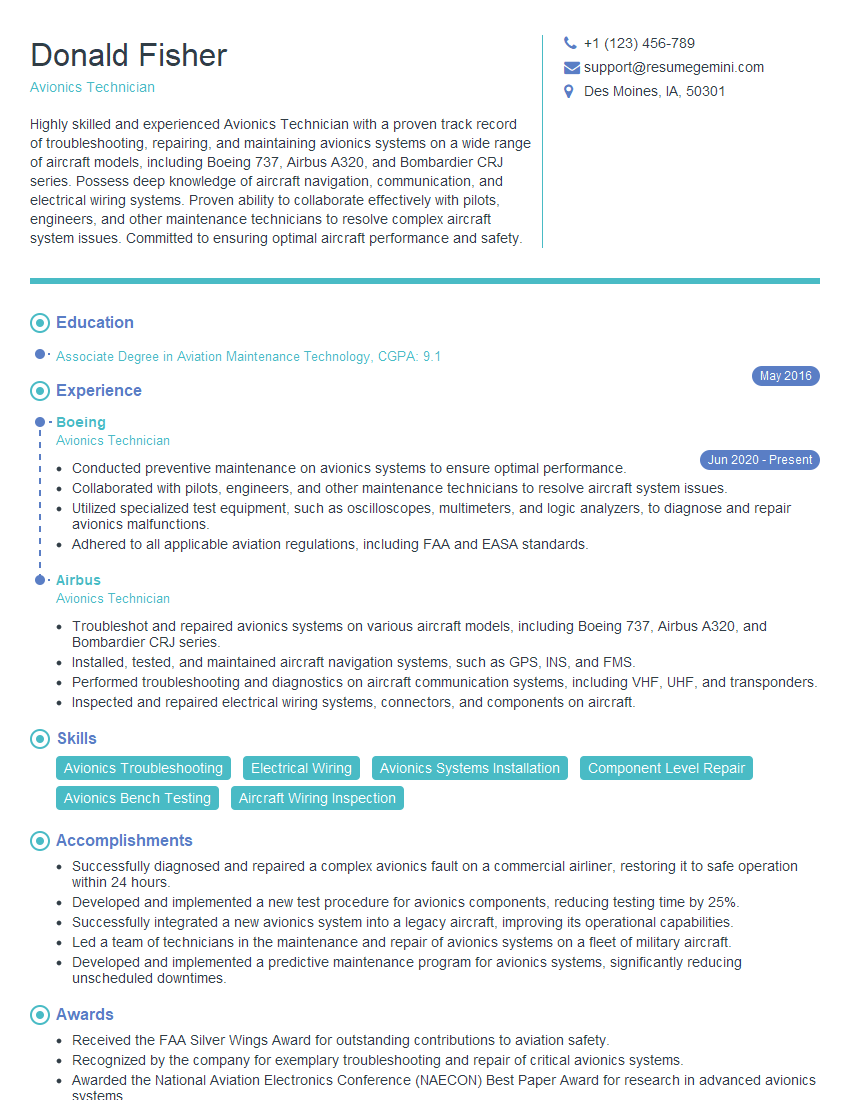
Avionics Technician Resume Sample

Electronics Technician Resume Sample
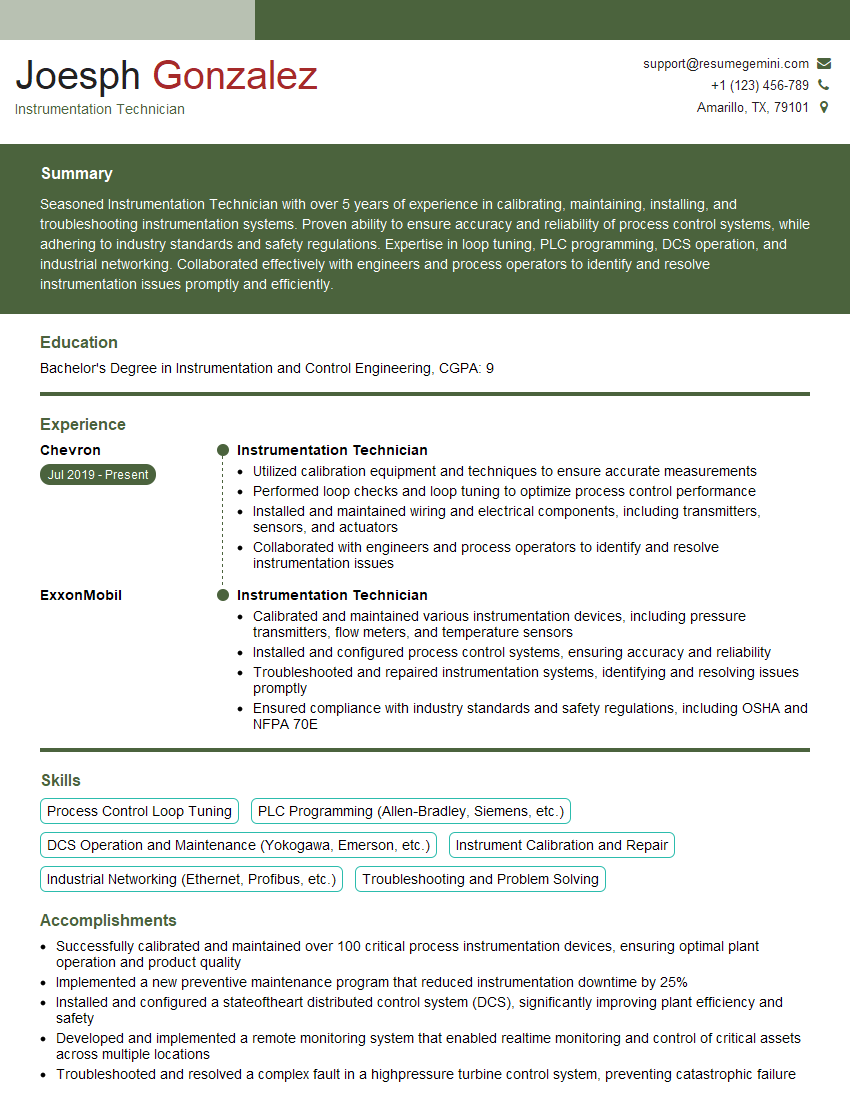
Instrumentation Technician Resume Sample

Test Technician Resume Sample
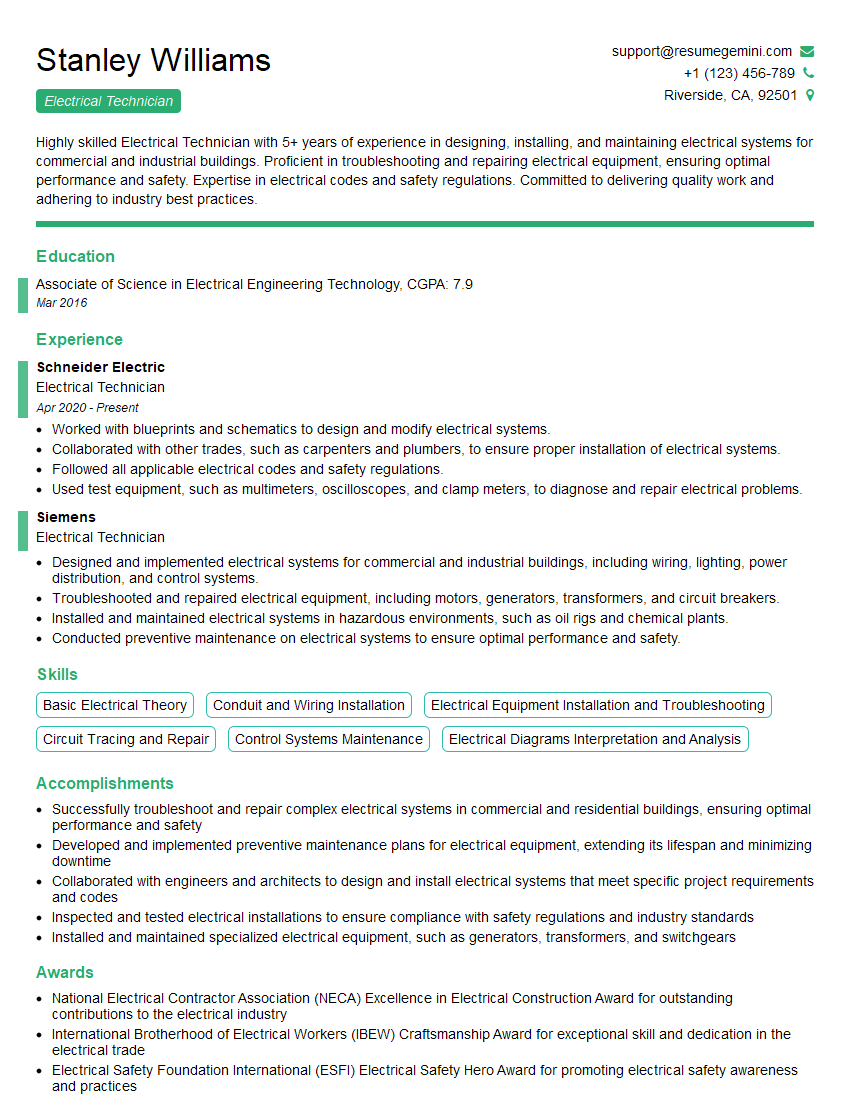
Electrical Technician Resume Sample

Field Service Technician Resume Sample
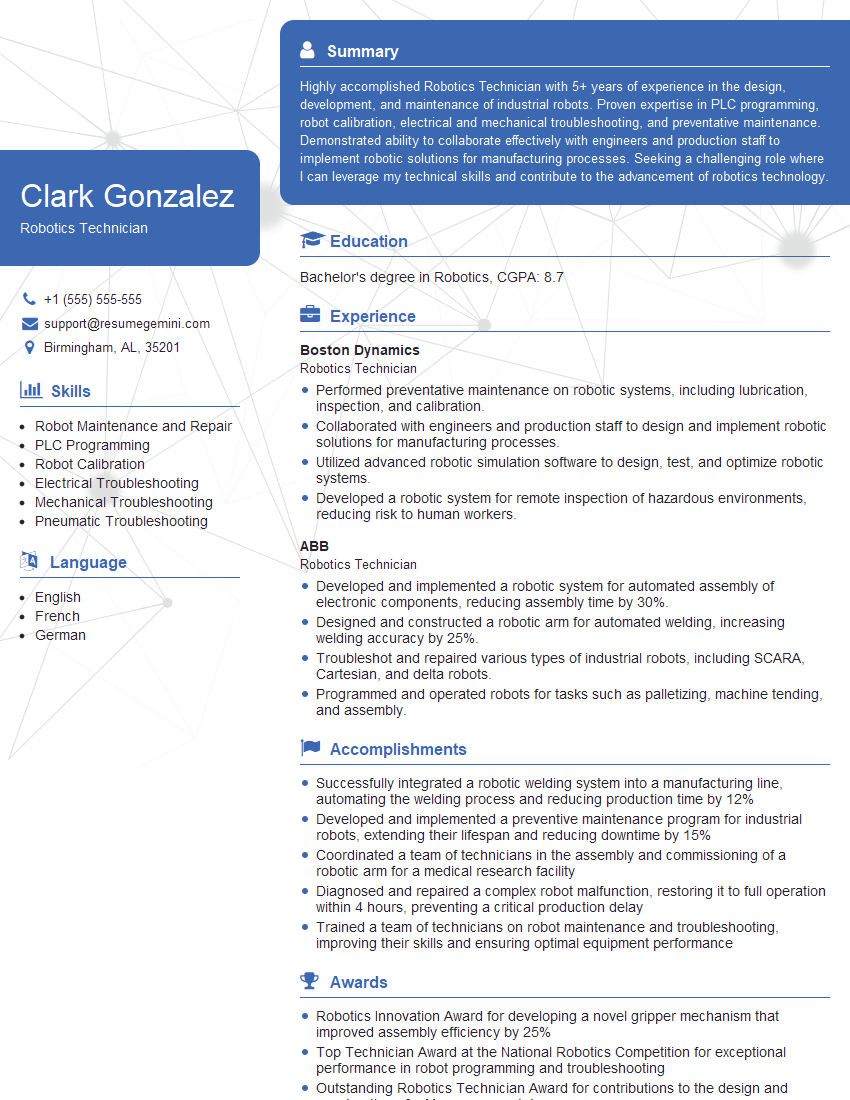
Robotics Technician Resume Sample

Manufacturing Technician Resume Sample

Fiber Optic Technician Resume Sample

Production Technician Resume Sample
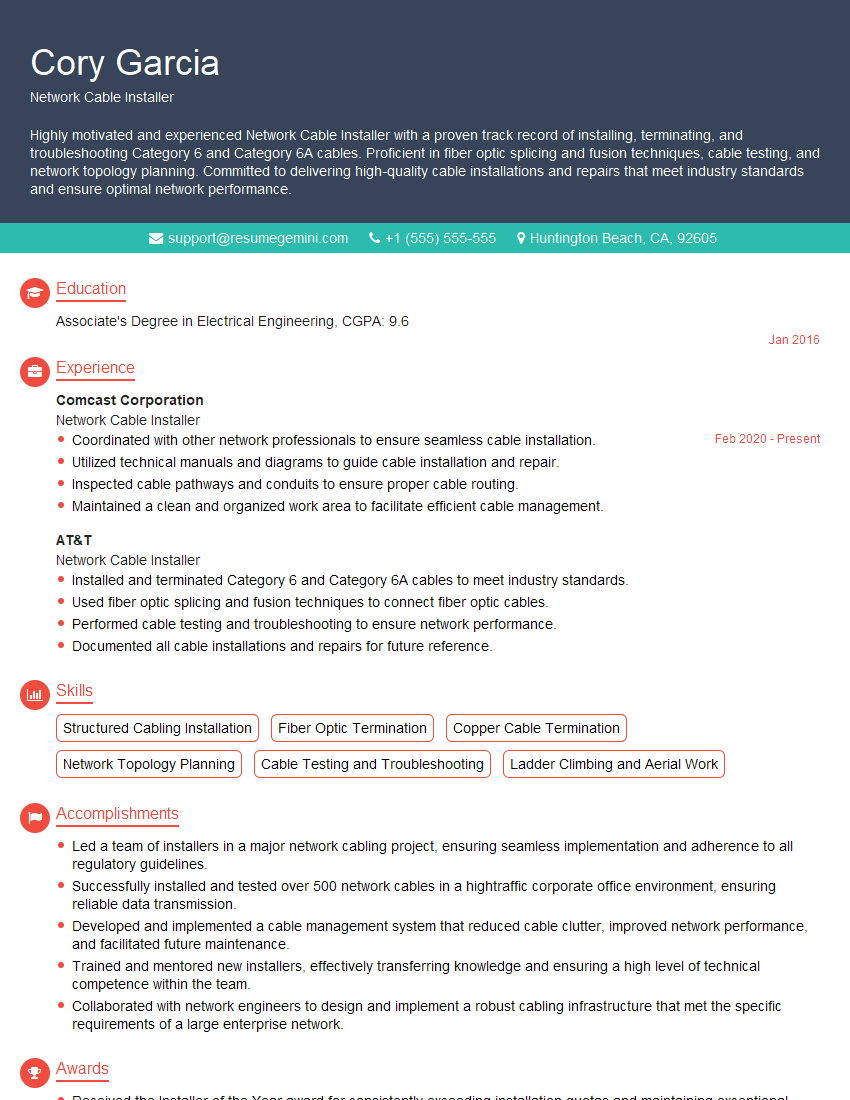
Network Cable Installer Resume Sample
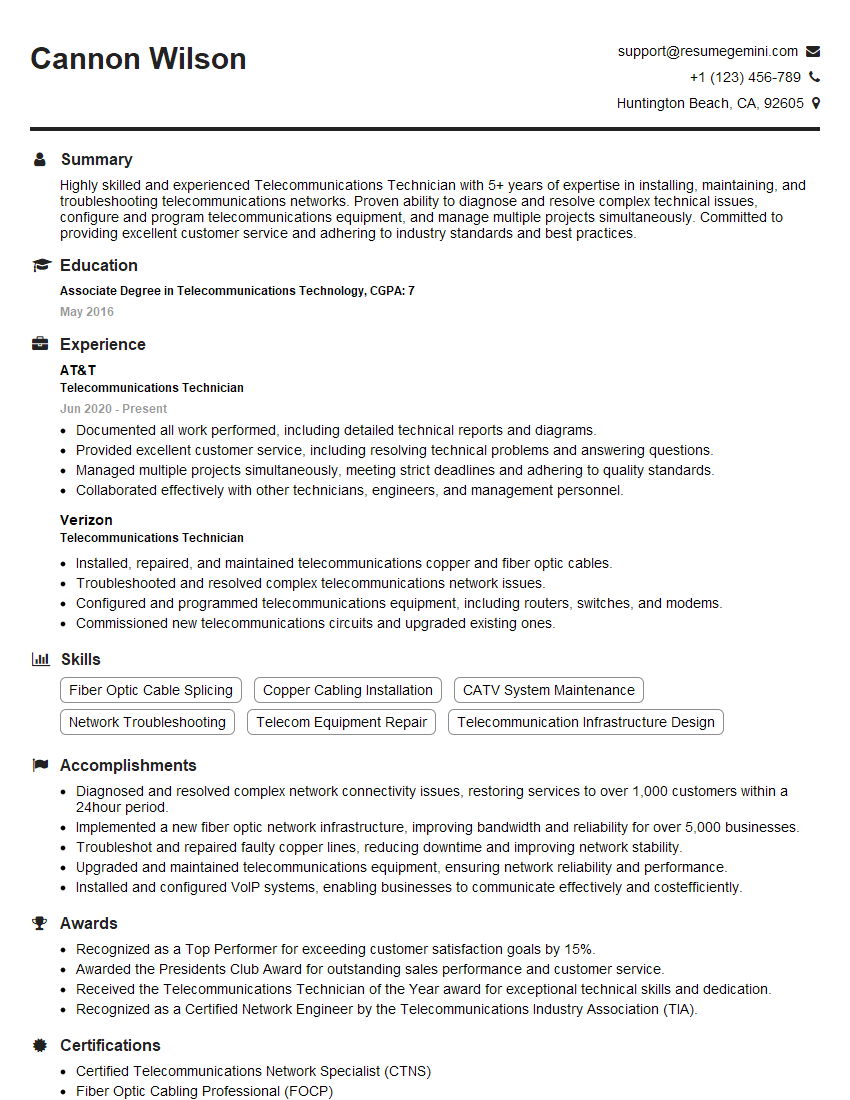
Telecommunications Technician Resume Sample

Control Systems Technician Resume Sample
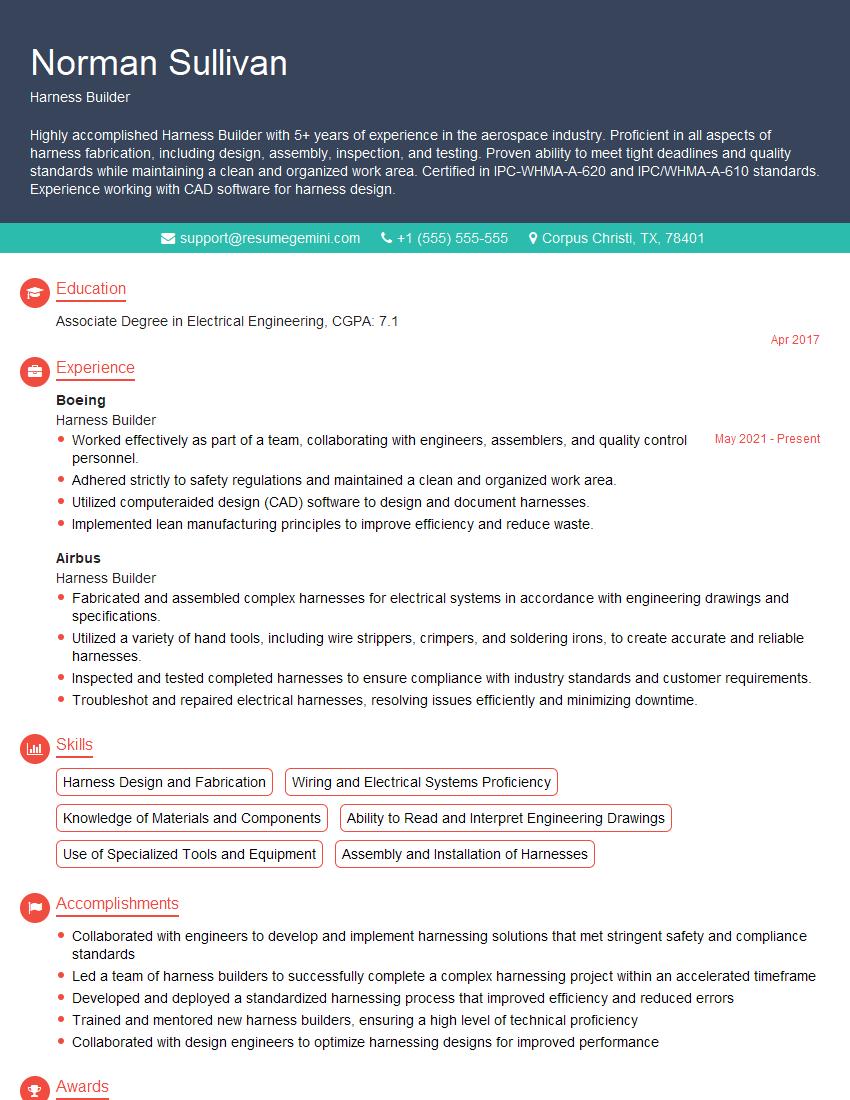
Harness Builder Resume Sample
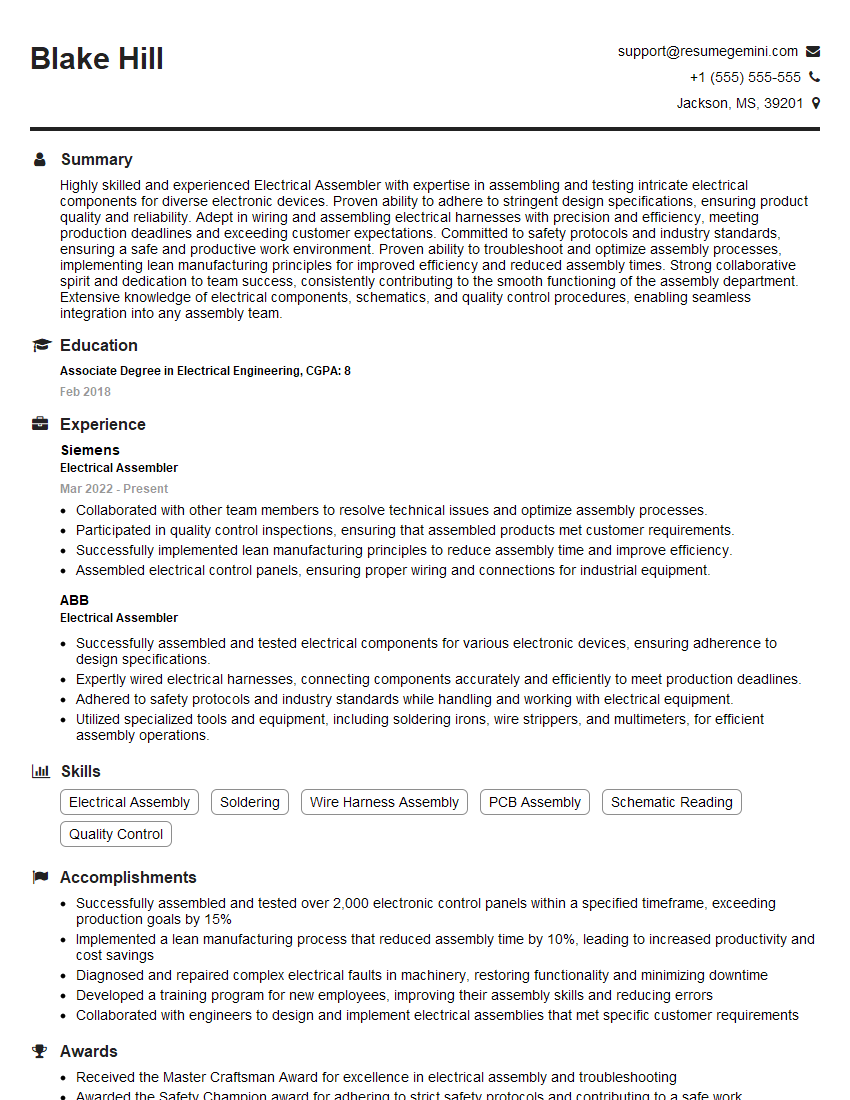
Electrical Assembler Resume Sample

Electronics Assembler Resume Sample

Soldering Technician Resume Sample

Quality Control Inspector Resume Sample
- Maintenance Technician
- Avionics Technician
- Electronics Technician
- Instrumentation Technician
- Test Technician
- Electrical Technician
- Field Service Technician
- Robotics Technician
- Manufacturing Technician
- Fiber Optic Technician
- Production Technician
- Network Cable Installer
- Telecommunications Technician
- Control Systems Technician
- Harness Builder
- Electrical Assembler
- Electronics Assembler
- Soldering Technician
- Quality Control Inspector
Explore more articles
Users Rating of Our Blogs
Share Your Experience
We value your feedback! Please rate our content and share your thoughts (optional).
What Readers Say About Our Blog
Very informative content, great job.
good