Unlock your full potential by mastering the most common Record keeping and documentation of grading results interview questions. This blog offers a deep dive into the critical topics, ensuring you’re not only prepared to answer but to excel. With these insights, you’ll approach your interview with clarity and confidence.
Questions Asked in Record keeping and documentation of grading results Interview
Q 1. Describe your experience with different gradebook systems.
Throughout my career, I’ve worked extensively with various gradebook systems, from simple spreadsheet-based solutions to sophisticated Learning Management Systems (LMS). My experience encompasses both commercially available software like PowerSchool, Canvas, and Blackboard, and custom-built systems designed to meet specific institutional needs. I’m proficient in utilizing features such as automated calculations, weighted grading, curve adjustments, and the generation of reports. For example, in my previous role at XYZ High School, I managed the transition from a paper-based system to PowerSchool, training faculty on the new software and troubleshooting any issues that arose. This involved not only learning the software’s functionalities but also understanding the diverse grading practices of different instructors and translating them into the system’s logic.
My experience also includes working with smaller, more specialized gradebook systems. One such system focused on project-based learning, allowing for more nuanced assessment and feedback tracking beyond simple numerical grades. This experience broadened my understanding of how different grading systems can support various pedagogical approaches.
Q 2. How do you ensure the accuracy and integrity of grading data?
Ensuring the accuracy and integrity of grading data is paramount. My approach is multi-faceted and involves several key steps. Firstly, I emphasize meticulous data entry, often employing double-entry methods where a second person independently verifies the data. This acts as a crucial check against human error. Secondly, I regularly audit the gradebook for inconsistencies or anomalies. This includes checking for missing grades, illogical scores, and discrepancies between different data points. For instance, if a student’s overall grade doesn’t match the weighted average of their individual assignment scores, I investigate immediately to find and correct the error.
Furthermore, I leverage the system’s built-in validation features, such as data type checks and range limits, to prevent incorrect data from being entered in the first place. Finally, I maintain detailed documentation of any changes made to the grading data, including the date, time, user, and reason for the modification. This comprehensive audit trail allows for easy tracing of any adjustments and ensures accountability.
Q 3. What methods do you use to maintain confidentiality of student records?
Maintaining student confidentiality is an absolute priority. I adhere strictly to all relevant data privacy regulations and institutional policies. This includes using secure access control mechanisms to restrict access to grading data only to authorized personnel. Passwords are regularly changed, and access logs are regularly monitored for any suspicious activity. I also ensure that all grading data is stored securely, both electronically and physically, utilizing encryption and other security measures as necessary.
Furthermore, I never discuss student grades with unauthorized individuals, and I ensure all printed materials containing student information are securely disposed of. In cases where I need to share data with colleagues (e.g., for collaborative grading), I only share what is absolutely necessary on a need-to-know basis. For example, if discussing student performance in a team meeting, I’d use aggregate data instead of naming specific students.
Q 4. Explain your experience with data entry and verification procedures.
My experience with data entry and verification is extensive. I’m highly proficient in accurately and efficiently entering data into various gradebook systems, employing keyboard shortcuts and other techniques to maximize speed and minimize errors. I regularly use data import/export features to streamline the process, ensuring consistency and reducing manual entry. For large datasets, I validate the imported data by comparing it to the original source to identify any discrepancies.
My verification procedures are thorough. I routinely perform checksums or other validation techniques to ensure data integrity, especially when importing or exporting data. I also use data validation rules within the gradebook system to ensure that only valid data is entered. For example, ensuring a score doesn’t exceed the maximum points possible for an assignment.
Q 5. How do you handle discrepancies or errors in grading data?
Handling discrepancies or errors in grading data requires a methodical approach. Upon discovering an error, the first step is to carefully document the issue, including the nature of the error, the affected student(s), and the source of the error if identifiable. Then, I investigate the cause of the discrepancy. This may involve reviewing original assignment submissions, checking calculations, or consulting with other faculty members involved in the grading process.
Once the cause is understood, I correct the error, ensuring that all affected data is updated accurately. I then document the correction, including the date, time, and nature of the change. Finally, I inform any affected parties (e.g., students, instructors) of the correction and the reasons behind it. Transparency is key to maintain trust and credibility.
Q 6. What experience do you have with data analysis related to grading results?
My data analysis experience extends to extracting meaningful insights from grading data to improve teaching and learning. I’m proficient in using various statistical methods and software tools to analyze trends and patterns in student performance. For instance, I might analyze class-wide performance on specific assessment types to identify areas where students are struggling and adjust my teaching accordingly. This could involve creating graphs and charts to visualize data trends.
I also use data analysis to identify at-risk students who may require additional support. For example, consistently low scores on quizzes could signal a need for extra tutoring or different learning strategies. This proactive approach allows for timely interventions to improve student outcomes.
Q 7. How do you manage large volumes of grading data efficiently?
Managing large volumes of grading data efficiently requires a strategic approach combining technological solutions and organizational strategies. I leverage the features offered by the gradebook system, such as automated calculations, batch updates, and reporting tools, to minimize manual effort. I also utilize data import/export features to streamline data transfer between different systems. For example, I might import scores from a spreadsheet directly into the LMS gradebook instead of manually entering each score.
Beyond technology, efficient organization is crucial. I use clear and consistent naming conventions for files and folders, maintain a well-organized gradebook, and regularly back up data to prevent loss or corruption. I also utilize filtering and sorting functions within the gradebook to locate specific information quickly. This systematic approach ensures I can manage substantial data volumes while maintaining accuracy and efficiency.
Q 8. Describe your experience with archiving and retrieving student records.
Archiving and retrieving student records is a crucial aspect of maintaining academic integrity and ensuring data accessibility. My experience involves implementing robust systems that prioritize both secure storage and efficient retrieval. This includes utilizing both physical and digital archiving methods. For physical records, I’ve managed the organization of files using a meticulously designed filing system with clear labeling and indexing, allowing for quick location of specific records. For digital records, I’ve implemented and managed database systems, employing strong search functionalities to locate student information quickly and accurately. For example, at my previous institution, we transitioned from a manual filing system to a cloud-based system, which improved retrieval time from an average of 15 minutes to under 2 minutes.
My process ensures data integrity through regular backups and version control, minimizing the risk of data loss or corruption. I also implement stringent access controls to prevent unauthorized access to sensitive student information. A key aspect is regularly auditing the archiving system to ensure its effectiveness and to identify any areas for improvement.
Q 9. What is your proficiency with database software for managing grades?
I possess extensive proficiency in various database software for managing grades, including SQL-based systems like MySQL and PostgreSQL, as well as user-friendly interfaces like Microsoft Access and dedicated education management systems (EMS). I am comfortable designing database schemas, creating queries to extract specific grade information, and implementing data validation rules to ensure data accuracy. For instance, I’ve developed custom SQL queries to generate reports summarizing student performance across different courses and identifying trends in academic achievement. This included creating stored procedures for automated report generation, significantly reducing manual effort.
Beyond technical proficiency, I understand the importance of data normalization to avoid redundancy and ensure data consistency. My skills extend to data cleaning and transformation, ensuring that the data stored is accurate, complete, and reliable for analysis and reporting.
Q 10. How do you ensure compliance with relevant data privacy regulations?
Data privacy is paramount in handling student records. My approach to ensuring compliance with regulations like FERPA (Family Educational Rights and Privacy Act) and GDPR (General Data Protection Regulation) involves a multi-layered strategy. This includes implementing robust access control measures, limiting access to authorized personnel only, encrypting sensitive data both in transit and at rest, and adhering to strict data retention policies. Regular staff training on data privacy best practices is also critical.
I’ve implemented systems for data anonymization when necessary for research or statistical analysis, while maintaining the integrity of aggregated data. Furthermore, I meticulously document all data processing activities and maintain a detailed audit trail to demonstrate compliance and facilitate investigations if needed. Think of it like a well-guarded vault: multiple layers of security to protect the valuable assets within.
Q 11. How do you handle requests for student records from various stakeholders?
Handling requests for student records requires a balanced approach that ensures compliance with privacy regulations while meeting the legitimate needs of stakeholders. My process involves verifying the identity and authority of the requester before releasing any information. This often involves requesting proper identification and authorization forms. Different stakeholders, such as parents, students (once they reach the age of majority), and authorized school officials, have varying levels of access to information.
I meticulously document each request, including the date, the requester’s identity, the type of information requested, and the date of fulfillment. This detailed record-keeping is crucial for auditing and ensuring accountability. In cases of complex requests or those involving sensitive information, I consult with legal counsel to ensure adherence to all relevant regulations.
Q 12. Explain your experience with report generation using grading data.
Generating reports using grading data is a key part of my role, providing valuable insights into student performance and program effectiveness. I utilize various reporting tools and techniques, including database query languages (SQL) and report generation software (e.g., Crystal Reports, Power BI). I am adept at creating various report types, from simple grade summaries to complex statistical analyses.
For example, I’ve created reports showing grade distributions by course, identifying areas where students may be struggling. I’ve also generated reports showing student progress over time, highlighting improvements or areas needing further attention. The reports I create are customized to meet the specific needs of the stakeholders, whether it’s individual student progress for parents or overall program performance for administrators.
Q 13. Describe your process for quality control in data entry and grading.
Quality control is essential for maintaining the accuracy and reliability of grading data. My process involves multiple layers of checks and balances. First, I implement data validation rules within the database to prevent invalid data entry, such as grades outside the acceptable range (e.g., 0-100%). Second, I conduct regular audits of the grading data to identify any inconsistencies or errors. This could involve comparing data entered by different graders or comparing grades against expected performance levels.
Third, I use data visualization techniques to identify outliers or unusual patterns in the data, which could signal errors. For example, a sudden drop in average scores for a particular class might indicate a data entry error or a need for further investigation. Finally, I document all quality control procedures and findings to ensure transparency and accountability.
Q 14. What strategies do you use to improve the efficiency of grading processes?
Improving the efficiency of grading processes involves a combination of technological and procedural improvements. On the technology side, I advocate for utilizing automated grading tools where applicable, such as those used for multiple-choice assessments. This reduces the manual effort required and minimizes human error. I also encourage the use of online gradebooks and learning management systems (LMS) to streamline the workflow and improve communication between instructors and students.
On the procedural side, I recommend implementing clear grading rubrics and standardizing grading practices to ensure consistency and fairness. Regular training for instructors on effective grading techniques and the use of available technologies can also greatly improve efficiency. Furthermore, optimizing the workflow by automating tasks like grade calculations and report generation can significantly reduce the overall time spent on grading.
Q 15. How familiar are you with different data formats (CSV, XML, etc.)?
I’m highly proficient in various data formats commonly used in record-keeping, particularly CSV, XML, and JSON. CSV (Comma Separated Values) is excellent for simple, tabular data like grade lists – easy to import and export across different systems. XML (Extensible Markup Language) offers a more structured approach, ideal for complex scenarios involving multiple data types and hierarchical relationships, although it can be more verbose. JSON (JavaScript Object Notation) is lightweight and human-readable, making it increasingly popular for data exchange and web applications. My experience spans working with these formats in various contexts, from importing raw grade data from assessment platforms into spreadsheets for analysis to generating customized reports in XML for external stakeholders.
For example, I’ve used CSV to efficiently manage large datasets of student grades and assignments. Each row represents a student, and columns represent different assessment scores. This simplicity allows for easy sorting, filtering, and analysis in spreadsheet software. In contrast, I’ve used XML to represent more complex grading schemas that incorporate weighted assignments, different grading scales, and student demographic data – ensuring data integrity and consistency.
Career Expert Tips:
- Ace those interviews! Prepare effectively by reviewing the Top 50 Most Common Interview Questions on ResumeGemini.
- Navigate your job search with confidence! Explore a wide range of Career Tips on ResumeGemini. Learn about common challenges and recommendations to overcome them.
- Craft the perfect resume! Master the Art of Resume Writing with ResumeGemini’s guide. Showcase your unique qualifications and achievements effectively.
- Don’t miss out on holiday savings! Build your dream resume with ResumeGemini’s ATS optimized templates.
Q 16. How do you prioritize tasks when dealing with multiple deadlines for grading data?
Prioritizing tasks with multiple grading deadlines involves a strategic approach. I utilize a project management methodology, often employing a combination of Eisenhower Matrix (urgent/important) and prioritization techniques like MoSCoW (Must have, Should have, Could have, Won’t have). This ensures I focus on the most critical tasks first, meeting essential deadlines while strategically managing less urgent but still important work.
For instance, if I have several deadlines, I’d first identify assignments with the closest deadlines and highest impact (e.g., major exams). Then, I break down each task into smaller, manageable units to stay organized. Regular time-blocking and checkpoint reviews are crucial to maintaining this schedule and adapting as needed. Effective communication with colleagues and supervisors is also vital to ensuring everyone is informed about progress and any potential roadblocks.
Q 17. Describe a time you had to troubleshoot a problem with grading data.
In a previous role, I encountered a significant problem with corrupted grading data. A system failure resulted in inconsistencies and missing grades for a large cohort of students. My troubleshooting involved a systematic approach. First, I verified the data source identifying the extent of the corruption and assessing data backup options. Secondly, I explored data recovery solutions; manually reconstructing the missing data using available records like backup files or alternative grade books. Finally, I implemented improved data validation and backup procedures to prevent future occurrences. The key was meticulous record-keeping, enabling me to piece together enough information to recover most of the lost data and avoid significant delays in reporting.
Q 18. What is your experience with data backup and recovery procedures?
Data backup and recovery procedures are critical for ensuring data integrity. My experience includes implementing and maintaining robust backup strategies across multiple systems. I’m familiar with various backup methods, including local backups, cloud-based solutions, and version control systems. I understand the importance of regular backups, data redundancy, and disaster recovery plans. In a previous role, I implemented a three-tiered backup system: daily local backups, weekly offsite backups, and monthly cloud backups. This approach minimized data loss risk and ensured quick recovery in case of a system failure or other unforeseen events.
Q 19. How do you ensure the security of electronic grading records?
Ensuring the security of electronic grading records is paramount. This involves a multi-layered approach including access control mechanisms such as strong passwords, role-based permissions, and multi-factor authentication. Data encryption, both in transit and at rest, is essential to protect sensitive information from unauthorized access. Regular security audits and penetration testing help identify and address vulnerabilities. Compliance with relevant data privacy regulations such as FERPA (Family Educational Rights and Privacy Act) or GDPR (General Data Protection Regulation) is vital, depending on the jurisdiction. Employee training is also crucial to ensure all personnel understand their responsibilities in maintaining data security.
Q 20. Explain your experience with using spreadsheet software (e.g., Excel) for grade management.
I have extensive experience using spreadsheet software like Microsoft Excel for grade management. I’m proficient in creating and managing complex spreadsheets for tracking student grades, calculating weighted averages, generating reports, and visualizing performance trends. I’m adept at using formulas and functions for automating calculations, such as conditional formatting to highlight failing grades or pivot tables to summarize and analyze data. This allows for efficient data analysis, identification of trends in student performance and timely intervention when necessary. Furthermore, I can create custom templates to standardize grading procedures, ensuring consistency and reducing manual error. For example, I’ve used Excel to develop templates for different types of assessments (e.g., quizzes, exams, projects) which automatically calculate weighted grades based on pre-defined parameters.
Q 21. What experience do you have with reporting on student performance based on grading data?
Reporting on student performance is a core aspect of my role. I use grading data to generate various reports – from simple grade summaries to more complex analyses of student progress. I employ various tools and techniques to create these reports including spreadsheet software (Excel, Google Sheets), database query languages (SQL), and reporting software. I am adept at visualizing data using charts and graphs to clearly communicate key insights. My reports have included analyses of student performance by demographic groups, identification of at-risk students, and tracking of overall class performance over time. These reports are often used for informing instruction, identifying areas for improvement in curriculum or teaching methods, and providing feedback to students and parents.
Q 22. How do you handle sensitive data related to student grades and performance?
Handling sensitive student data like grades requires a multi-layered approach prioritizing confidentiality and compliance with regulations like FERPA (Family Educational Rights and Privacy Act) in the US or equivalent laws in other countries. This involves several key strategies:
- Secure Storage: Grades are stored in password-protected databases or secured file servers, accessible only to authorized personnel. Physical security of these systems is also paramount.
- Access Control: We implement role-based access control, meaning individuals only see data relevant to their roles. For example, a teacher has access to their students’ grades, while an administrator might have access to aggregate data across the school but not individual student records unless there is a specific need and proper authorization.
- Data Encryption: Data both in transit and at rest is encrypted to prevent unauthorized access even if a breach occurs. This ensures that even if someone gains access, the data remains unreadable without the decryption key.
- Regular Audits: We conduct regular security audits and penetration testing to identify and address vulnerabilities. This proactive approach helps prevent potential data breaches.
- Employee Training: All staff handling student data receive regular training on data security best practices, including password management, phishing awareness, and responsible data handling.
For example, in a previous role, we implemented two-factor authentication for all access to the grading system, significantly reducing the risk of unauthorized access. We also conducted annual security awareness training for all staff, reinforcing the importance of protecting student data.
Q 23. Describe your experience with automated grading systems.
I have extensive experience with automated grading systems, ranging from simple online quizzes to sophisticated platforms that integrate with learning management systems (LMS). My experience includes:
- Using platforms like Canvas, Blackboard, and Moodle: I’m proficient in configuring these systems to automate the grading of objective assessments like multiple-choice quizzes and automated essay scoring tools.
- Integrating automated feedback mechanisms: I’ve utilized systems that provide instant feedback to students, improving their learning experience and reducing the time spent on manual grading.
- Analyzing automated grading reports: I’m skilled in interpreting the data generated by these systems to identify trends in student performance and inform instructional decisions.
- Managing the limitations of automated systems: I understand that automated systems aren’t perfect and require careful monitoring. I know how to identify cases where manual review is necessary, particularly for subjective assessments like essays or projects.
For instance, in a previous project, we implemented an automated essay scoring tool alongside human grading for a large introductory course. This allowed for faster feedback to students while ensuring the accuracy of grading. The data from both systems was then compared and analyzed to improve the effectiveness of the automated tool and overall grading practices.
Q 24. How do you contribute to the continuous improvement of grading and record-keeping processes?
Continuous improvement of grading and record-keeping is crucial for maintaining data accuracy and efficiency. My contribution involves:
- Regular process review: I participate in regular meetings to analyze current processes, identify bottlenecks, and propose improvements. This might involve streamlining workflows or exploring new technologies.
- Data analysis for identifying trends: I use data analysis techniques to identify patterns in grading data that might indicate areas needing attention, such as consistently low performance on specific assessment types.
- Suggesting and implementing technological solutions: I explore and recommend new software or tools that can automate tasks, improve data accuracy, and enhance efficiency. This includes researching and implementing new grading software or upgrading existing systems.
- Participating in professional development: I actively seek out professional development opportunities to stay updated on best practices in record-keeping and grading.
- Providing training for colleagues: I train colleagues on new systems and processes to ensure everyone is proficient and contributes to consistent high-quality record-keeping.
In one instance, by analyzing grading data, we discovered a significant discrepancy in grading consistency among instructors teaching the same course. This led to a faculty development workshop focused on standardized rubrics and grading practices, resulting in improved fairness and consistency.
Q 25. What are your skills in using data visualization tools to present grading data?
I’m proficient in using various data visualization tools to present grading data effectively. This includes:
- Spreadsheet software (Excel, Google Sheets): I can create charts and graphs to visually represent grade distributions, student progress, and other key metrics.
- Data visualization software (Tableau, Power BI): I’m experienced in using these tools to create more complex and interactive dashboards to present grading data in a user-friendly manner, enabling stakeholders to easily grasp trends and patterns.
- Custom code for visualization (Python with libraries like Matplotlib, Seaborn): For more advanced visualizations or specific needs, I can utilize programming to create customized charts and graphs.
For example, I’ve created interactive dashboards that allowed administrators to easily track student progress across different courses and identify at-risk students needing extra support. This data-driven approach led to more targeted interventions and improved student outcomes.
Q 26. How familiar are you with different types of assessment data (e.g., formative, summative)?
I have a thorough understanding of different assessment data types and their roles in evaluating student learning. This includes:
- Formative Assessment: This type of assessment, such as quizzes or in-class activities, is used to monitor student learning *during* the instructional process. This data helps inform teaching practices and adjust instruction based on student needs.
- Summative Assessment: This type of assessment, like exams or final projects, is used to evaluate student learning at the *end* of an instructional unit or course. This data provides a summary of student achievement.
- Diagnostic Assessment: This assessment helps identify students’ pre-existing knowledge and skills before instruction begins, enabling teachers to tailor their instruction to meet individual needs.
My experience involves managing and integrating all these data types to create a comprehensive picture of student learning. This helps me make informed decisions about teaching strategies and overall curriculum improvement.
Q 27. How do you ensure the timely completion of grading and record-keeping tasks?
Ensuring timely completion of grading and record-keeping involves careful planning, efficient processes, and proactive management. My strategies include:
- Setting realistic deadlines: I work with instructors to establish achievable timelines for grading, considering the volume of work and complexity of assessments.
- Utilizing time management techniques: I use various techniques like time blocking and prioritization to ensure efficient task completion.
- Implementing automated processes: Leveraging technology, such as automated grading tools and efficient data entry systems, reduces manual workload and accelerates the process.
- Regular progress monitoring: I actively monitor the progress of grading and record-keeping throughout the process, identifying any potential delays and taking corrective action.
- Communicating effectively: Open communication with instructors and administrators keeps everyone informed of progress and any potential challenges.
In a previous role, we implemented a staggered grading schedule that prevented a huge backlog at the end of the term, significantly improving the timeliness of grade reporting.
Q 28. What software or tools do you find most effective for managing grading data?
The most effective software and tools for managing grading data vary depending on the specific needs and context. However, I have extensive experience with and strong preference for:
- Learning Management Systems (LMS): Platforms like Canvas, Blackboard, and Moodle integrate assessment tools, gradebooks, and communication features, making them highly effective for managing all aspects of grading.
- Spreadsheet software (Excel, Google Sheets): These tools are indispensable for organizing and analyzing grading data, especially for tasks that require custom calculations or analysis.
- Database management systems (e.g., SQL): For large-scale data management, relational databases offer robust solutions for storing, retrieving, and manipulating grading data.
- Automated grading tools (e.g., essay scoring software): These tools can significantly reduce the time spent on grading objective and subjective assessments while maintaining consistent standards.
The choice of tools often depends on the specific needs of the institution and the types of assessments being used. I am adaptable and can effectively utilize a range of technologies to optimize the grading and record-keeping process.
Key Topics to Learn for Record Keeping and Documentation of Grading Results Interview
- Data Integrity and Accuracy: Understanding the critical importance of maintaining accurate and reliable grading data. This includes exploring methods for error detection and correction.
- Data Security and Confidentiality: Learning about best practices for protecting sensitive student information, complying with relevant privacy regulations (like FERPA if applicable), and implementing secure data storage and access controls.
- Record-Keeping Systems and Software: Familiarity with various record-keeping systems (e.g., spreadsheets, databases, specialized grading software) and their effective use in managing grading data efficiently.
- Documentation Procedures and Standards: Mastering the creation of clear, consistent, and auditable documentation of grading processes, including procedures for handling discrepancies and appeals.
- Data Analysis and Reporting: Understanding how to analyze grading data to identify trends, generate reports, and communicate findings effectively to stakeholders (teachers, administrators, parents).
- Compliance and Auditing: Knowing the importance of adhering to institutional policies and regulatory requirements related to record-keeping and the potential for audits.
- Practical Application: Thinking through scenarios involving data entry errors, resolving discrepancies, handling late submissions, and managing large datasets effectively.
- Problem-Solving: Developing strategies to troubleshoot technical issues, address data inconsistencies, and improve overall efficiency of the grading and record-keeping process.
Next Steps
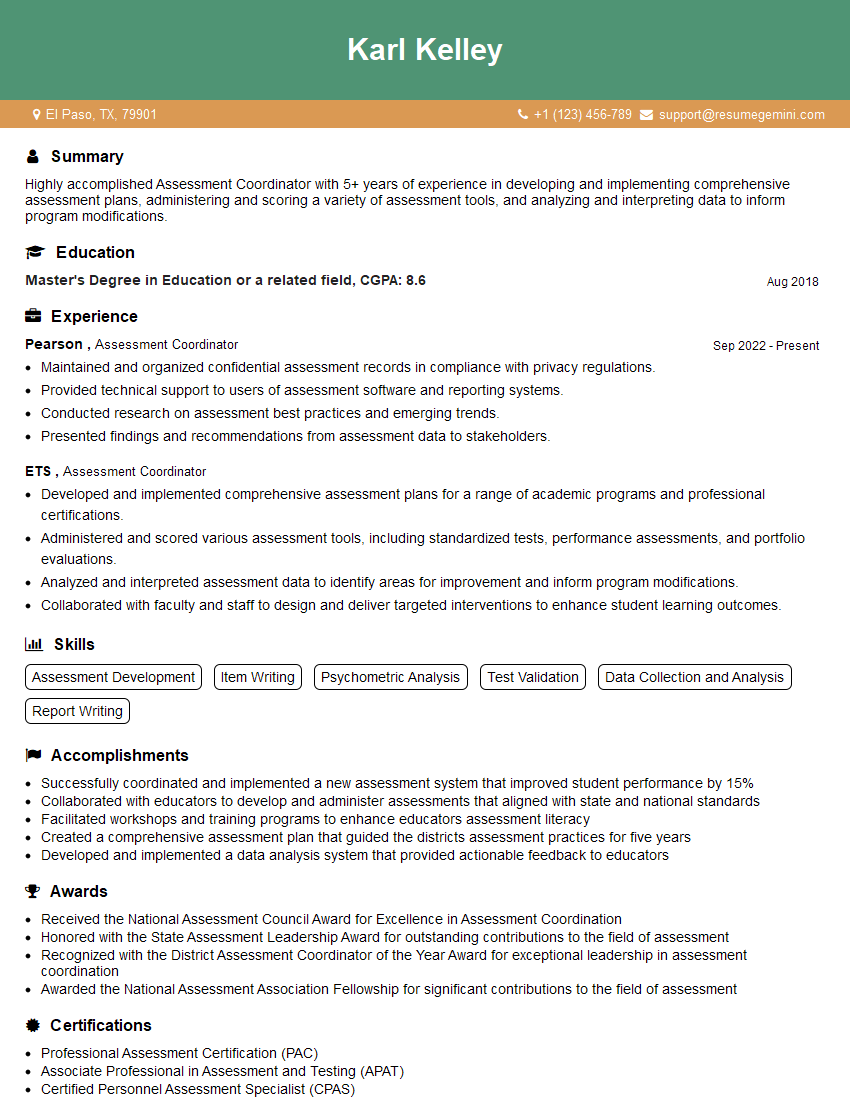
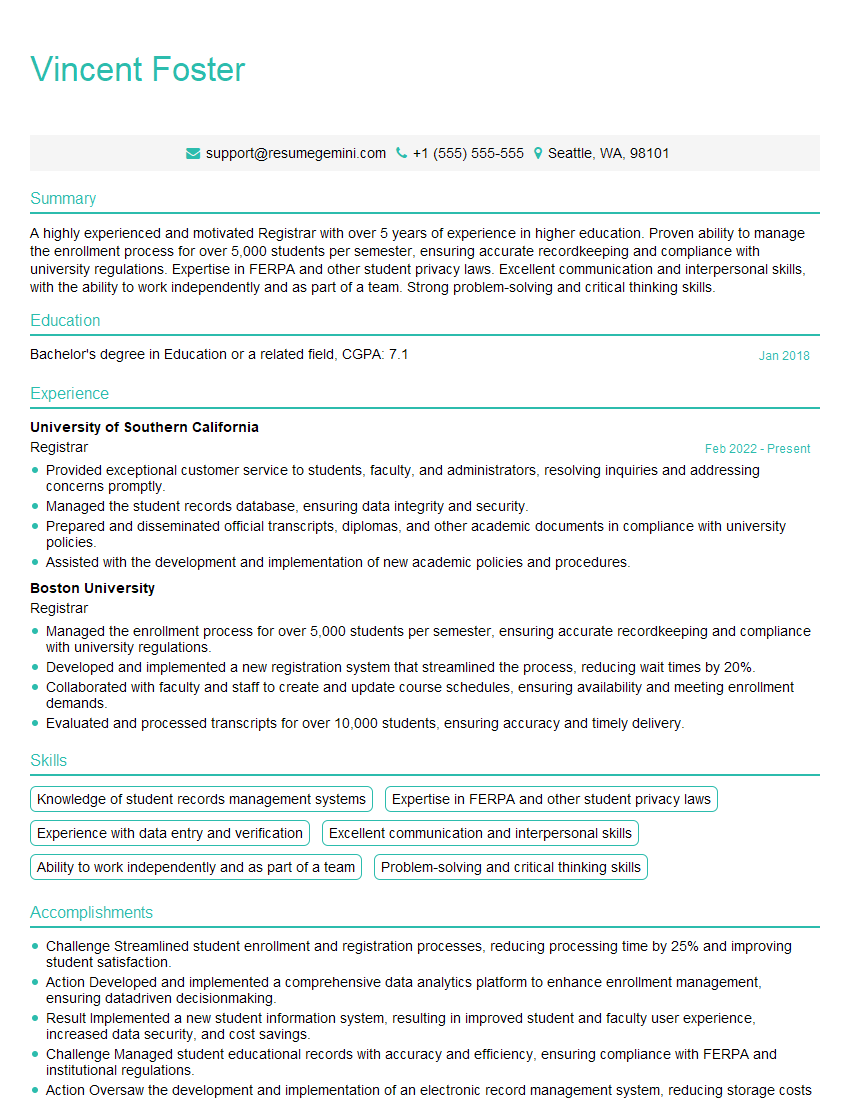
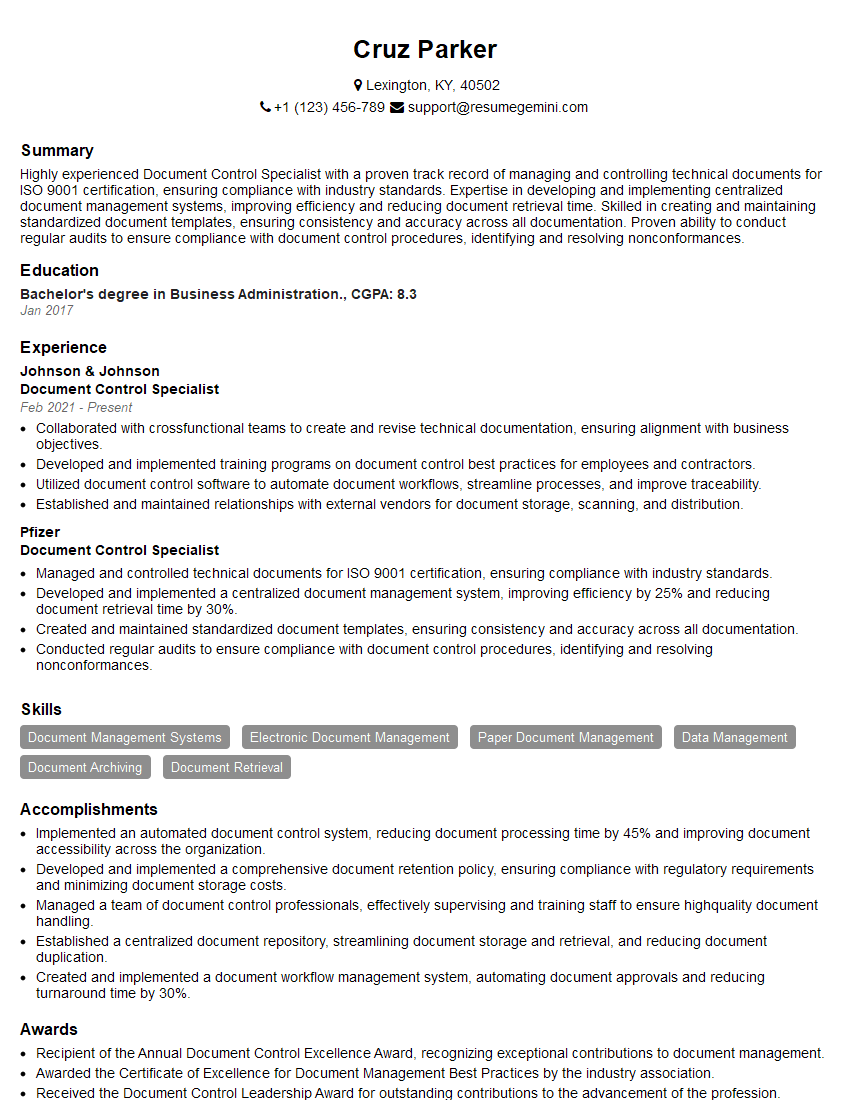
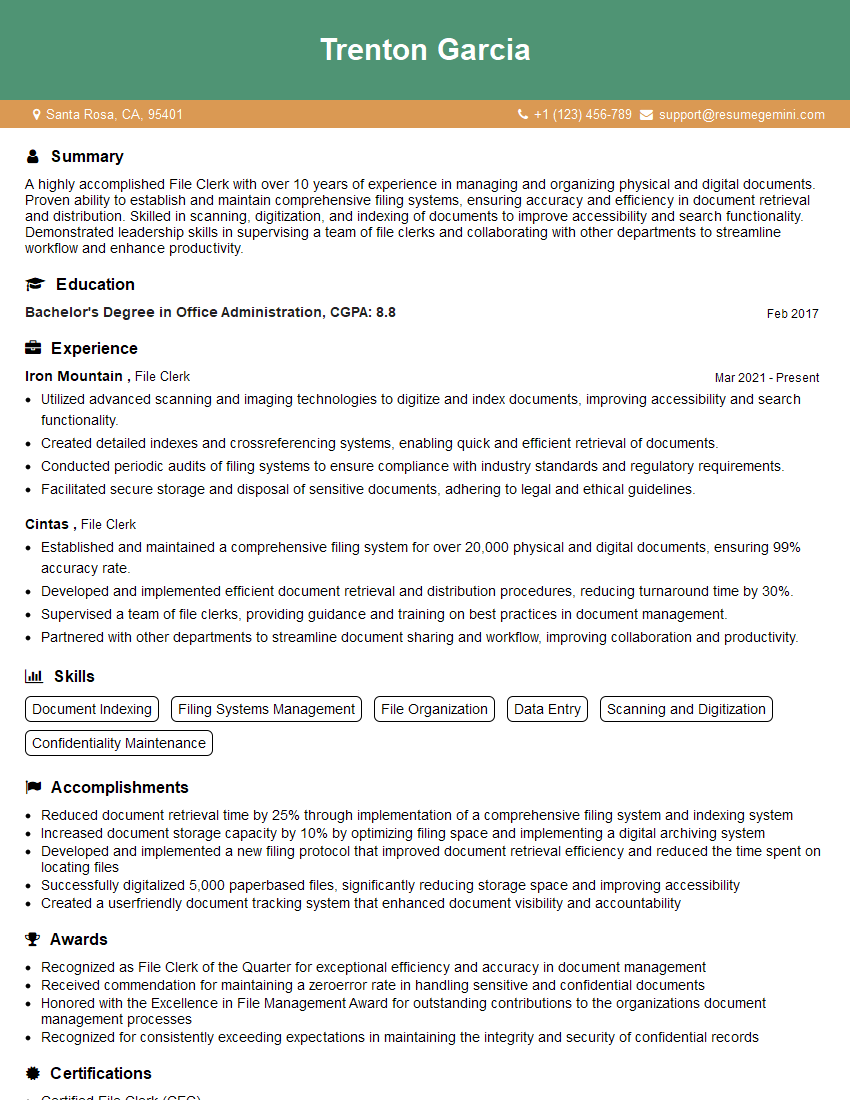
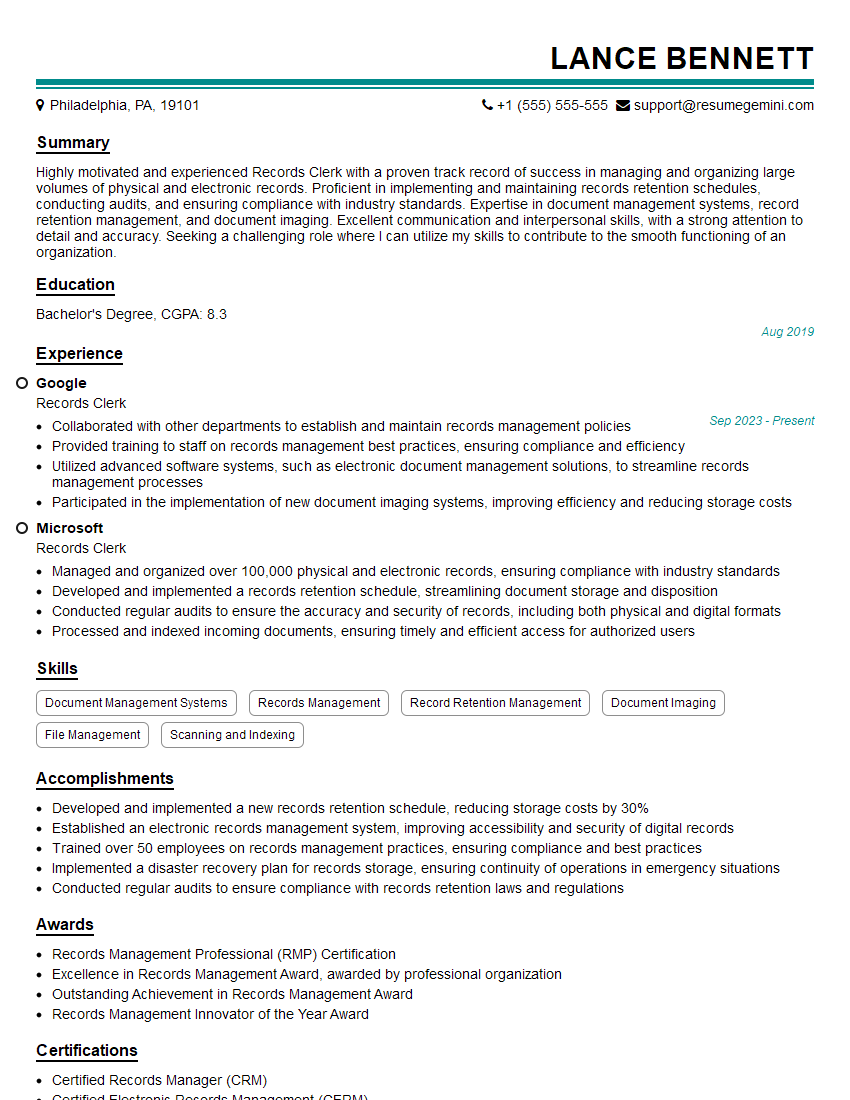
Mastering record keeping and documentation of grading results is crucial for career advancement in education and related fields. Strong organizational skills, attention to detail, and proficiency in data management are highly valued. To significantly boost your job prospects, it’s essential to create a compelling and ATS-friendly resume that highlights these skills. ResumeGemini is a trusted resource that can help you build a professional resume tailored to showcase your expertise. Examples of resumes specifically designed for candidates in record keeping and documentation of grading results are available to help you build your own impactful application.
Explore more articles
Users Rating of Our Blogs
Share Your Experience
We value your feedback! Please rate our content and share your thoughts (optional).
What Readers Say About Our Blog
Very informative content, great job.
good