The thought of an interview can be nerve-wracking, but the right preparation can make all the difference. Explore this comprehensive guide to Operating Inspection Equipment interview questions and gain the confidence you need to showcase your abilities and secure the role.
Questions Asked in Operating Inspection Equipment Interview
Q 1. Describe your experience with different types of inspection equipment.
My experience encompasses a wide range of inspection equipment, from traditional methods like visual inspection tools (borescopes, magnifying glasses) to advanced Non-Destructive Testing (NDT) technologies. I’ve extensively used ultrasonic testing (UT) equipment for detecting internal flaws in welds and castings, magnetic particle inspection (MPI) systems for identifying surface cracks in ferromagnetic materials, and liquid penetrant testing (LPT) for detecting surface-breaking defects in various materials. I’m also proficient with radiographic testing (RT) equipment, interpreting radiographs to identify internal flaws. My experience extends to using eddy current testing (ECT) for detecting flaws in conductive materials and infrared thermography (IRT) for detecting thermal anomalies indicative of defects. Finally, I’ve worked with advanced digital imaging systems for capturing and analyzing inspection data.
For example, in one project involving a large pressure vessel, I used a combination of UT and RT to thoroughly inspect welds for critical flaws, ensuring the vessel’s structural integrity. In another instance, I employed MPI to detect fatigue cracks in a critical aircraft component, preventing a potential catastrophic failure.
Q 2. Explain the principles of Non-Destructive Testing (NDT).
Non-Destructive Testing (NDT) involves evaluating the properties of a material, component, or system without causing damage. The core principle is to apply various techniques that interact with the material in a way that reveals internal structures, defects, or properties without altering its functionality. These interactions might involve sound waves (ultrasonic testing), electromagnetic fields (eddy current testing), X-rays (radiographic testing), or visual examination. The results then indicate the material’s integrity and suitability for its intended purpose. Think of it like a medical checkup – we want to diagnose problems without harming the patient.
Q 3. What are the common NDT methods and their applications?
Common NDT methods include:
- Ultrasonic Testing (UT): Uses high-frequency sound waves to detect internal flaws. Applications include inspecting welds, castings, and pipes for cracks, voids, and inclusions. Think of it like sonar for materials.
- Radiographic Testing (RT): Employs X-rays or gamma rays to penetrate materials and create images revealing internal defects. Used for inspecting welds, castings, and other components for internal flaws. Similar to medical X-rays.
- Magnetic Particle Inspection (MPI): Detects surface and near-surface flaws in ferromagnetic materials. A magnetic field is applied, and magnetic particles are used to highlight discontinuities in the field lines. Excellent for finding cracks.
- Liquid Penetrant Testing (LPT): Locates surface-breaking flaws in various materials. A dye penetrant is applied, followed by a developer to draw the penetrant out of the crack, making it visible. Ideal for surface cracks.
- Eddy Current Testing (ECT): Uses electromagnetic induction to detect surface and subsurface flaws in conductive materials. Often used for inspecting tubing and wire for defects.
- Infrared Thermography (IRT): Detects temperature variations on the surface of a component, indicating potential internal defects or faulty components. Helpful for identifying hot spots or insulation failures.
The choice of method depends on the material, the type of defect being sought, and the accessibility of the component being inspected.
Q 4. How do you ensure the accuracy and reliability of inspection equipment?
Ensuring accuracy and reliability involves a multi-faceted approach. First, equipment calibration is paramount. Each device needs regular calibration against traceable standards to confirm its accuracy. This often involves using standardized test blocks with known defects. Second, meticulous adherence to established procedures is crucial. This includes proper setup, consistent operation, and appropriate environmental controls. Third, regular maintenance, including cleaning, lubrication, and replacement of worn parts, is essential. Fourth, thorough documentation of all procedures, calibration results, and maintenance activities, is vital for traceability and accountability. Finally, the operator’s skill and experience plays a significant role, ensuring proper interpretation and reporting of the inspection data.
For instance, in ultrasonic testing, using a standardized test block with known flaws helps verify the accuracy of the equipment’s measurements, ensuring consistent and reliable readings.
Q 5. Describe your experience with calibrating and maintaining inspection equipment.
My experience with calibrating and maintaining inspection equipment is extensive. I’m proficient in performing calibrations using traceable standards, following manufacturer’s guidelines and relevant industry standards. This involves adjusting settings, verifying readings against known values, and documenting the entire process. Maintenance typically includes cleaning probes and sensors, checking for wear and tear, and replacing components as necessary. I am also experienced in troubleshooting equipment malfunctions, conducting preventative maintenance, and keeping detailed records of all calibration and maintenance activities.
For example, in calibrating an ultrasonic testing device, I’d use standardized test blocks with known artificial flaws to ensure the accuracy of its measurements of material thickness and defect size.
Q 6. How do you interpret inspection data and generate reports?
Interpreting inspection data involves analyzing the results from the chosen NDT method. This might involve visually examining radiographs for indications of cracks or voids, analyzing ultrasonic waveforms for indications of flaws, or interpreting magnetic particle patterns. The interpretation is often aided by software that helps quantify and analyze data. Once the data is interpreted, a comprehensive report is generated, detailing the inspection methods used, the findings (including location, size, and type of any defects identified), and a conclusion regarding the component’s integrity. This report includes photographic or digital imaging evidence and follows specific formatting standards to ensure clarity and easy understanding for stakeholders.
For example, an ultrasonic inspection report might include A-scans and B-scans of welds, with specific callouts and measurements of any discovered flaws. A radiographic report would include the radiographs themselves, with clear annotations identifying any detected discontinuities.
Q 7. Explain your understanding of safety procedures related to operating inspection equipment.
Safety is paramount when operating inspection equipment. Procedures vary depending on the specific equipment, but general safety practices include wearing appropriate Personal Protective Equipment (PPE), such as safety glasses, hearing protection (for loud equipment), and radiation shielding (for radiographic testing). Understanding the specific hazards of each technique is critical. For example, in radiographic testing, strict adherence to radiation safety protocols is essential, including minimizing exposure time, maximizing distance from the radiation source, and using shielding. Furthermore, proper handling and storage of hazardous materials, like penetrant fluids, are also critical safety aspects. Following established safety protocols minimizes risks and ensures a safe working environment.
Regular safety training and refresher courses reinforce safe practices and ensure up-to-date knowledge of safety regulations.
Q 8. What are the limitations of different inspection techniques?
Different inspection techniques, while powerful, each have limitations. Think of it like having a toolbox – each tool is great for certain jobs but not all. For example, ultrasonic testing (UT) excels at detecting internal flaws in metals but struggles with rough surfaces or complex geometries. The sound waves might scatter, making accurate interpretation difficult. Radiographic testing (RT), using X-rays or gamma rays, can image internal structures beautifully, but it’s less sensitive to small cracks and requires careful shielding for operator safety. Magnetic particle inspection (MPI) is superb for surface and near-surface cracks in ferromagnetic materials, but it can’t inspect non-magnetic materials like aluminum or plastics. Liquid penetrant testing (LPT) is excellent for detecting surface-breaking flaws, but it’s limited to surface inspection and requires careful cleaning for accurate results. The choice of technique depends entirely on the material being inspected, the type of flaw expected, and the accessibility of the component.
- UT limitations: Surface roughness, complex geometries, attenuation of sound waves.
- RT limitations: Sensitivity to small flaws, safety concerns, cost.
- MPI limitations: Limited to ferromagnetic materials, surface and near-surface flaws only.
- LPT limitations: Surface inspection only, requires meticulous cleaning.
Q 9. How do you handle discrepancies or inconsistencies in inspection results?
Discrepancies in inspection results are a common occurrence and require a systematic approach. Imagine a detective investigating a crime scene – they meticulously examine evidence, looking for clues and patterns. We do the same. First, we carefully review the inspection procedures followed, ensuring adherence to standards and best practices. Next, we re-examine the data, comparing results from different techniques or inspectors. We may look for patterns or trends to pinpoint potential sources of error. A discrepancy could arise from calibration errors, operator technique, or even limitations of the equipment itself. Sometimes, further investigation is necessary, which could involve repeating the inspection, using different techniques or equipment, or even destructive testing in extreme cases. If the cause is identified as a flaw in the equipment or an operator error, appropriate corrective actions are taken, including recalibration, retraining, or equipment repair.
For instance, if UT and RT results on the same weld disagree, we wouldn’t jump to conclusions. We’d double-check the UT settings, repeat the tests, and consider if the RT image was affected by geometry or other factors. Ultimately, a thorough investigation and reasoned judgment are crucial in resolving inconsistencies.
Q 10. Describe your experience with specific inspection equipment (e.g., ultrasonic testing, radiographic testing).
I have extensive experience with both ultrasonic and radiographic testing. In UT, I’ve used various techniques including pulse-echo, through-transmission, and phased array methods for inspecting welds, castings, and pipelines. I’m proficient in interpreting UT waveforms, identifying different types of flaws (like cracks, porosity, and inclusions), and creating comprehensive inspection reports. My experience with RT includes film-based and digital radiography, involving both X-ray and gamma-ray sources. I’m skilled in selecting the appropriate technique and parameters for different materials and component thicknesses, as well as interpreting radiographs to identify flaws. I have also worked with computed tomography (CT) scanning for three-dimensional imaging.
In one project involving a critical pressure vessel, UT revealed inconsistencies in the weld quality. Through careful analysis of the waveforms and by combining the UT results with RT data, we were able to pinpoint and quantify the defects, leading to timely corrective actions and preventing potential catastrophic failure. This experience highlighted the importance of selecting the right technique for the job and also the effectiveness of using multiple methods to verify results.
Q 11. How do you troubleshoot malfunctions in inspection equipment?
Troubleshooting equipment malfunctions starts with a systematic approach. It’s like diagnosing a car problem – you don’t start replacing parts randomly. First, I verify the basic operational checks, making sure the equipment is properly calibrated, powered correctly, and the probes or transducers are properly connected. I then look for error messages or indicators provided by the equipment itself. Many devices have built-in diagnostic tools that can pinpoint the source of a problem. For UT equipment, for example, we’d check the pulse generator, receiver, and transducer, making sure we get a clear and consistent signal. With RT, we’d ensure the X-ray tube is functioning correctly, the exposure time is appropriate, and the film is properly developed. If these basic checks fail to identify the issue, then we have to troubleshoot systematically, isolating potential issues in stages. Sometimes, a call to the manufacturer’s support team may be needed to address more complicated problems.
Q 12. What are the common causes of inspection equipment errors?
Inspection equipment errors can stem from various sources. Calibration errors are a major culprit; equipment needs regular calibration to ensure accurate readings. Operator error is also significant; improper technique, incorrect settings, or misinterpretation of results can lead to inaccuracies. Environmental factors such as temperature, humidity, and electromagnetic interference can affect equipment performance. Equipment wear and tear can also cause problems – transducers or probes can degrade over time leading to reduced sensitivity. Finally, inadequate maintenance, such as neglecting regular cleaning or inspection of the equipment, can contribute to errors.
For example, a poorly calibrated ultrasonic transducer might not accurately measure the depth or size of a flaw. Likewise, improper radiographic exposure settings could lead to under- or overexposed films, making it difficult to detect flaws. Preventing these errors requires rigorous calibration procedures, comprehensive operator training, regular equipment maintenance and environmental control.
Q 13. Describe your experience with data analysis related to inspection results.
Data analysis is a crucial part of the inspection process. We don’t just collect data; we interpret it to derive meaningful insights. I use various software packages to analyze inspection data, often creating visualizations such as graphs and charts to identify trends and patterns. In UT, for example, I might analyze the amplitude and time-of-flight of ultrasonic signals to characterize flaws. In RT, I’d measure the density and size of flaws on the radiographs. Statistical analysis techniques can help determine if defects are clustered in certain areas or if their sizes follow a particular distribution. This helps us understand the overall condition of the inspected component and identify potential areas for improvement in manufacturing or maintenance processes. For example, analyzing defect data from a batch of castings can reveal underlying issues in the manufacturing process, leading to preventative measures.
Q 14. How do you ensure the integrity of the inspection process?
Ensuring the integrity of the inspection process involves a multi-faceted approach. It starts with qualified personnel – inspectors need to be properly trained and certified to use the equipment and interpret the results. Next, we must follow strict procedures, adhering to relevant codes and standards such as ASME, API, or ISO. Regular equipment calibration and maintenance are essential, ensuring equipment accuracy and reliability. Quality control measures should be implemented at every step, including verification of inspection plans, data recording, and report generation. Furthermore, independent verification of inspection results can further increase confidence in the process. Think of it as a chain – each link must be strong for the whole chain to hold. We employ rigorous procedures to ensure the reliability and integrity of the inspection process so we can confidently assess the safety and reliability of inspected components.
Q 15. Explain your understanding of relevant industry standards and regulations.
Understanding and adhering to relevant industry standards and regulations is paramount in operating inspection equipment. This ensures safety, accuracy, and compliance. These standards vary depending on the industry and the specific equipment being inspected, but common themes include safety protocols, calibration procedures, and reporting requirements.
- API (American Petroleum Institute) Standards: These are crucial for inspections in the oil and gas industry, covering everything from pipeline integrity to pressure vessel inspection. For example, API 510 covers pressure vessel inspection.
- ASME (American Society of Mechanical Engineers) Codes and Standards: ASME codes like Section VIII (pressure vessels) and Section IX (welding qualifications) are vital for ensuring the safe operation of equipment in various sectors including power generation and manufacturing.
- ISO (International Organization for Standardization) Standards: ISO standards provide a framework for quality management and maintenance, ensuring consistent inspection practices globally. ISO 9001, for instance, deals with quality management systems.
- OSHA (Occupational Safety and Health Administration) Regulations: These regulations prioritize worker safety and dictate safe operating procedures for equipment, including lockout/tagout procedures and personal protective equipment (PPE) requirements.
My experience encompasses a thorough understanding and application of these standards across various projects. For instance, during a recent pipeline inspection, strict adherence to API 1160 ensured the integrity assessment was performed accurately and safely.
Career Expert Tips:
- Ace those interviews! Prepare effectively by reviewing the Top 50 Most Common Interview Questions on ResumeGemini.
- Navigate your job search with confidence! Explore a wide range of Career Tips on ResumeGemini. Learn about common challenges and recommendations to overcome them.
- Craft the perfect resume! Master the Art of Resume Writing with ResumeGemini’s guide. Showcase your unique qualifications and achievements effectively.
- Don’t miss out on holiday savings! Build your dream resume with ResumeGemini’s ATS optimized templates.
Q 16. How do you manage your time effectively during an inspection?
Effective time management during an inspection is crucial for completing the task efficiently and accurately. My approach involves a structured methodology:
- Pre-Inspection Planning: This stage is key. It includes reviewing inspection plans, familiarizing myself with the equipment, and gathering necessary tools and documentation. A checklist is invaluable here.
- Prioritization: I identify critical areas requiring immediate attention based on risk assessment and potential safety hazards. This might involve focusing on components showing signs of wear or stress first.
- Time Allocation: Based on the complexity and scope of the inspection, I allocate specific time slots for each task. This helps maintain a steady pace and prevents rushing.
- Systematic Approach: I follow a defined inspection route, systematically checking every component and recording findings. This prevents overlooking crucial details.
- Concise Documentation: Accurate and concise documentation saves time during the reporting phase. I use digital tools to streamline this process.
For example, during a recent inspection of a large industrial boiler, prioritizing the inspection of critical pressure relief valves and safety interlocks ensured early detection of any potential issues.
Q 17. Describe your experience with working in a team environment during inspections.
Teamwork is essential in complex inspections. I’ve been part of numerous teams where effective communication and collaboration were key to successful outcomes. My role often involves coordinating efforts, sharing information, and ensuring everyone is on the same page.
- Clear Roles and Responsibilities: A well-defined structure with clear roles ensures efficient task allocation and avoids duplication of effort.
- Open Communication: Regular communication, including pre-inspection briefings and debriefings, keeps the team informed and aligned.
- Shared Knowledge and Expertise: Team members often possess unique skills and expertise. Leveraging this collective knowledge leads to more comprehensive inspections.
- Conflict Resolution: Addressing disagreements or differing opinions constructively through open discussions contributes to better decision-making.
In one project involving the inspection of a refinery’s process units, collaborative efforts between inspectors, engineers, and operations personnel resulted in the early detection and mitigation of a potential process upset. Our team’s combined expertise ensured comprehensive coverage and faster resolution.
Q 18. How do you prioritize tasks during an inspection?
Prioritization during an inspection involves a systematic approach that considers several factors:
- Safety: Addressing potential safety hazards is always the top priority. This might include inspecting components that pose immediate risks of failure.
- Criticality: Components crucial for the safe operation of the equipment are prioritized. For instance, pressure relief valves and safety interlocks are inspected first.
- Regulatory Compliance: Inspection activities needed to meet regulatory requirements are prioritized to ensure compliance.
- Cost of Repair: Inspecting high-cost components or those whose failure would lead to significant downtime receives higher priority.
- Risk-Based Inspection: This technique systematically analyzes the risk associated with each component and prioritizes those with the highest risk of failure.
I use a combination of risk matrices and checklists to prioritize tasks. For example, during a bridge inspection, elements crucial for structural integrity (e.g., main support beams) would be prioritized over less critical components.
Q 19. What is your experience with different types of materials inspection?
My experience spans a wide range of materials used in industrial equipment. I’m proficient in inspecting various materials using different Non-Destructive Testing (NDT) methods.
- Metals: I have extensive experience inspecting ferrous and non-ferrous metals (steel, aluminum, etc.) using methods like visual inspection, magnetic particle testing, liquid penetrant testing, ultrasonic testing, and radiographic testing.
- Composites: I have experience inspecting composite materials (fiber-reinforced polymers) using ultrasonic testing and visual inspection techniques.
- Ceramics: While less frequent, I’ve conducted visual and dimensional inspections on ceramic components.
- Plastics: I’m experienced in inspecting plastic components for cracks, degradation, and dimensional accuracy through visual and dimensional inspection methods.
For example, during the inspection of a pressure vessel made of stainless steel, ultrasonic testing was used to detect internal flaws that might not be visible through other methods.
Q 20. How do you document your inspection findings?
Thorough documentation is essential for capturing inspection findings accurately. My approach involves a multi-pronged strategy:
- Detailed Inspection Reports: These reports include all relevant information, such as date, time, location, equipment details, inspection methods used, observations, and any identified defects.
- Digital Imaging and Video: Photographs and videos are invaluable for documenting the condition of the equipment and any defects identified. This provides visual evidence to support the findings.
- Data Logging: Using data loggers allows for the precise recording of readings from various instruments. This eliminates potential errors associated with manual recording.
- Software and Databases: Employing specialized inspection software helps streamline the process and facilitates efficient data analysis and report generation.
- Calibration Records: Maintaining records of all calibration activities for the equipment used is essential.
For example, a recent pipeline inspection involved using specialized software to map corrosion defects, generating detailed reports with location coordinates and severity assessments for each defect.
Q 21. How do you communicate inspection results to stakeholders?
Communicating inspection results effectively is critical for ensuring appropriate actions are taken. My communication strategy involves:
- Clear and Concise Reporting: Reports are written in a clear and concise manner, avoiding technical jargon whenever possible. Key findings are highlighted.
- Visual Aids: Using charts, graphs, and images to visually present the findings enhances understanding.
- Verbal Presentation: Presenting findings verbally to stakeholders allows for direct interaction and clarification of any questions or concerns.
- Targeted Communication: Tailoring the communication to the specific audience ensures the message is effectively conveyed.
- Recommendations: Providing clear and actionable recommendations based on the inspection results ensures appropriate corrective actions are taken.
For example, when presenting results from a building inspection that showed structural damage, I used visuals to demonstrate the severity of the issues and provided specific recommendations to the building owners on how to address them.
Q 22. Describe a challenging inspection situation you faced and how you resolved it.
One of the most challenging inspection situations I faced involved a critical pipeline inspection using a remotely operated vehicle (ROV) in a highly corrosive environment. The ROV’s camera system malfunctioned mid-inspection, obscuring crucial data about potential pipeline damage. This was particularly challenging because the pipeline transported highly volatile materials, and any undetected damage could have catastrophic consequences.
My resolution involved a multi-pronged approach. First, I immediately switched to the ROV’s secondary camera system, which, although offering lower resolution, still provided sufficient imagery to assess the immediate area of concern. Simultaneously, I initiated communication with the support team to troubleshoot the primary camera issue remotely. We diagnosed a loose connection and were able to guide the technicians on-site through a repair procedure. Finally, we developed a detailed post-inspection report that included both the primary (repaired) and secondary camera footage, along with a thorough analysis of the findings and mitigating recommendations.
This experience highlighted the importance of redundancy in equipment and effective communication during critical inspections. It also reinforced the need for comprehensive post-inspection reporting to ensure thorough documentation and informed decision-making.
Q 23. What are your strengths and weaknesses related to operating inspection equipment?
My strengths lie in my meticulous attention to detail and my ability to troubleshoot complex equipment problems. I’m highly proficient in operating various inspection technologies, including ultrasonic testing (UT), magnetic particle inspection (MPI), liquid penetrant inspection (LPI), and ROV operations. I’m also adept at interpreting inspection data and generating comprehensive reports that clearly communicate findings and recommendations. I am comfortable working independently but also thrive in team environments, collaborating effectively with colleagues and supervisors to achieve inspection goals.
A weakness I’m actively working on is improving my proficiency in the newest advanced laser scanning technologies. While I understand the theory and have some practical experience, I’m aiming to gain more hands-on experience to become fully proficient. I’m currently pursuing online courses and attending industry workshops to address this.
Q 24. How do you stay updated on the latest advancements in inspection technology?
Staying current with advancements in inspection technology is crucial in this field. I utilize several strategies to achieve this. I regularly subscribe to and actively read industry publications, such as [Insert relevant industry journals/magazines] and attend professional conferences like [Insert relevant conferences/trade shows]. These events offer invaluable opportunities to learn about the latest innovations and network with experts. Furthermore, I actively participate in online forums and professional networking groups, engaging in discussions with peers and accessing valuable resources shared by other practitioners. Finally, I regularly research and trial new inspection software and data analysis tools to expand my skills and stay at the forefront of industry best practices.
Q 25. What are your salary expectations?
My salary expectations are commensurate with my experience and skills, and aligned with the industry standard for a professional with my background in operating inspection equipment. I am flexible and open to discussion based on the complete compensation package and the specifics of the role.
Q 26. Why are you interested in this position?
I’m highly interested in this position because it offers a unique opportunity to leverage my expertise in operating inspection equipment within a challenging and dynamic environment. The opportunity to contribute to [Company Name]’s mission of [mention company’s mission or relevant project] is particularly appealing. I am also impressed by [Company Name]’s commitment to [mention company values or initiatives relevant to the role], which aligns strongly with my professional values.
Q 27. Where do you see yourself in five years?
In five years, I envision myself as a highly respected and experienced member of your team, potentially leading inspection projects and mentoring junior colleagues. I aim to have mastered the newest advanced laser scanning technologies and to have significantly contributed to the success of [Company Name]’s inspection program. I am also eager to pursue further professional development opportunities, possibly obtaining certifications in specialized inspection techniques to further broaden my expertise and career prospects.
Q 28. Do you have any questions for me?
I have a few questions for you. First, could you elaborate on the specific types of inspection equipment used in this role? Second, what are the company’s training and development opportunities for employees? Finally, what are the typical career progression paths for someone in this position?
Key Topics to Learn for Operating Inspection Equipment Interview
- Equipment Operation & Maintenance: Understanding the practical operation of various inspection equipment, including calibration procedures, preventative maintenance schedules, and troubleshooting common malfunctions.
- Data Acquisition & Analysis: Mastering data acquisition techniques, interpreting results, and identifying trends or anomalies within inspection data. This includes familiarity with relevant software and reporting methods.
- Safety Procedures & Regulations: Demonstrating a thorough understanding of relevant safety protocols, industry regulations, and best practices for operating inspection equipment in various environments.
- Quality Control & Assurance: Knowing how inspection equipment contributes to maintaining quality standards and identifying defects. Understanding the impact of accurate and reliable inspection data on overall product/process quality.
- Specific Equipment Types: Develop expertise in the operation and application of specific inspection equipment relevant to your target roles (e.g., ultrasonic testing, X-ray inspection, visual inspection tools). Be prepared to discuss your experience with specific models or brands.
- Problem-Solving & Troubleshooting: Showcase your ability to diagnose and resolve equipment issues, from minor malfunctions to complex system failures. Prepare examples demonstrating your analytical and problem-solving skills in a practical setting.
- Technical Reporting & Documentation: Practice creating clear, concise, and accurate reports documenting inspection procedures, findings, and recommendations. This includes familiarity with relevant documentation templates and software.
Next Steps
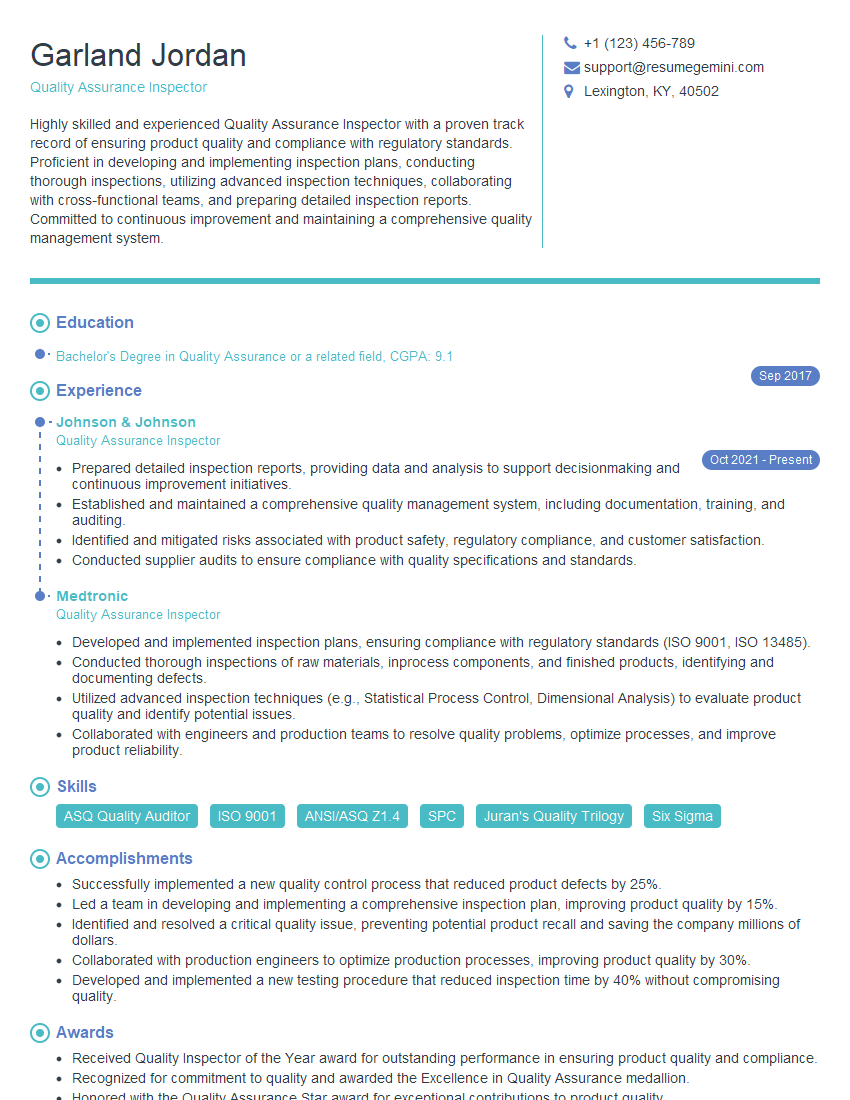
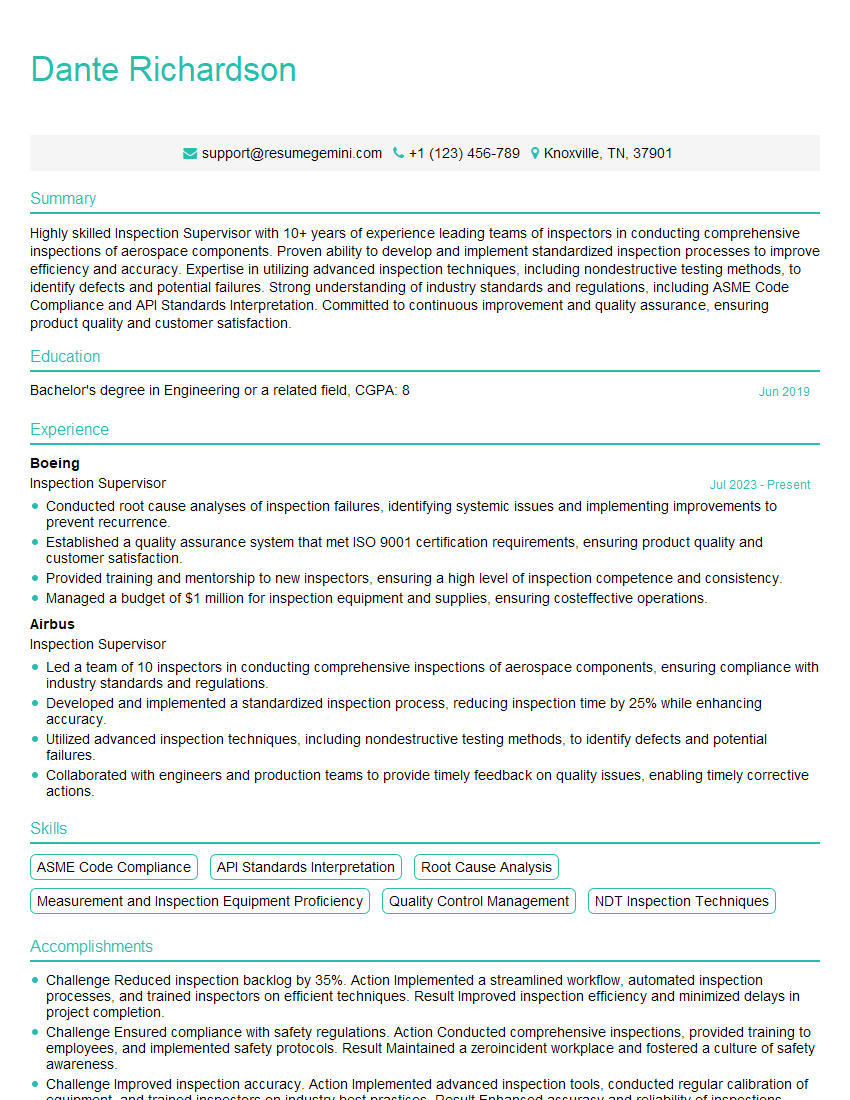
Mastering Operating Inspection Equipment opens doors to exciting career advancements and higher earning potential within diverse industries. A strong understanding of this field showcases your technical expertise and problem-solving abilities, making you a highly valuable asset to any organization. To significantly improve your chances of landing your dream role, it’s crucial to present your skills effectively. Creating an ATS-friendly resume is paramount for ensuring your application reaches the hiring manager. We highly recommend utilizing ResumeGemini to build a professional and impactful resume tailored to your experience with Operating Inspection Equipment. ResumeGemini provides examples of resumes specifically designed for this field, helping you showcase your qualifications in the best possible light. Invest in crafting a strong resume – it’s your first impression and your key to unlocking success.


Explore more articles
Users Rating of Our Blogs
Share Your Experience
We value your feedback! Please rate our content and share your thoughts (optional).
What Readers Say About Our Blog
Very informative content, great job.
good