The thought of an interview can be nerve-wracking, but the right preparation can make all the difference. Explore this comprehensive guide to Quality Management Systems (ISO 9001, AS9100, IATF 16949) interview questions and gain the confidence you need to showcase your abilities and secure the role.
Questions Asked in Quality Management Systems (ISO 9001, AS9100, IATF 16949) Interview
Q 1. Explain the core principles of ISO 9001.
ISO 9001 is a globally recognized standard that outlines requirements for a Quality Management System (QMS). Its core principles revolve around customer focus, leadership, engagement of people, process approach, improvement, evidence-based decision making, and relationship management. Let’s break this down:
- Customer Focus: Understanding and meeting customer needs and expectations is paramount. This involves actively seeking feedback and ensuring products and services consistently meet those needs.
- Leadership: Top management must demonstrate commitment to the QMS, setting objectives and ensuring resources are available. Leaders create a culture of quality throughout the organization.
- Engagement of People: Empowering employees at all levels to contribute to quality improvement is crucial. This involves training, communication, and creating an environment where people feel valued and their input is sought.
- Process Approach: Managing activities as interrelated processes improves efficiency and effectiveness. This means defining processes, monitoring their performance, and continually improving them.
- Improvement: Continuously striving for improvement is essential. This involves using data to identify areas for improvement and implementing corrective and preventive actions.
- Evidence-based Decision Making: Decisions should be based on data and analysis, not assumptions. This requires collecting, analyzing, and interpreting data to understand performance and inform improvements.
- Relationship Management: Building and maintaining positive relationships with suppliers and other stakeholders is crucial for a robust QMS. Effective communication and collaboration are key.
For example, a manufacturing company might use customer surveys to understand needs, implement a process map to visualize its production process, and regularly review key performance indicators (KPIs) to identify areas for improvement.
Q 2. Describe the differences between ISO 9001, AS9100, and IATF 16949.
While all three standards – ISO 9001, AS9100, and IATF 16949 – build upon a foundation of quality management principles, they cater to different industries and have specific requirements:
- ISO 9001: This is the most general standard, applicable to virtually any organization regardless of size or industry. It focuses on establishing and maintaining a QMS that consistently meets customer requirements and regulatory compliance.
- AS9100: This standard is specifically tailored for the aerospace industry. It builds upon ISO 9001 and adds requirements related to safety, reliability, and the unique challenges of aerospace manufacturing, including traceability and risk management for highly regulated products.
- IATF 16949: This standard applies to the automotive industry and its supply chain. It’s built on ISO 9001 and focuses on customer-specific requirements, process control, and continuous improvement within the demanding context of automotive manufacturing. It emphasizes defect prevention and reduction.
The key difference lies in the specific requirements each standard adds to the core ISO 9001 principles. Imagine building a house: ISO 9001 provides the foundation, AS9100 adds specialized materials and construction methods for a skyscraper, and IATF 16949 adapts the foundation and building methods for a high-speed automotive assembly line.
Q 3. What is a Quality Management System (QMS)?
A Quality Management System (QMS) is a structured set of processes and procedures designed to ensure that an organization consistently meets its quality objectives. Think of it as a roadmap for achieving quality. It involves every aspect of the business, from design and development to production, delivery, and customer service. A robust QMS aims to minimize errors, improve efficiency, and enhance customer satisfaction.
A well-defined QMS typically includes:
- Documented Procedures: Clear instructions and guidelines for performing various tasks.
- Internal Audits: Regular checks to ensure conformity to the QMS.
- Management Review: Periodic assessment of the QMS’s effectiveness.
- Corrective and Preventive Actions: Systems to address nonconformities and prevent recurrence.
- Continuous Improvement: Ongoing efforts to improve processes and performance.
For instance, a software company’s QMS might involve specific coding standards, rigorous testing protocols, and a system for tracking and resolving software bugs.
Q 4. How would you conduct an internal audit of a QMS?
Conducting an internal audit of a QMS involves a systematic examination of the organization’s processes and procedures to ensure they comply with the relevant standards (e.g., ISO 9001, AS9100, IATF 16949) and internal requirements. Here’s a step-by-step approach:
- Planning: Define the scope of the audit, including the processes and areas to be audited, and establish a timeline.
- Preparation: Review relevant documentation, including the QMS manual, procedures, and records. Select auditors with appropriate knowledge and experience.
- On-site Audit: Conduct interviews, observe processes, review records, and collect evidence to assess conformity.
- Reporting: Document audit findings, including nonconformities and areas for improvement. Prepare a formal audit report.
- Follow-up: Verify that corrective actions are implemented effectively and that the identified nonconformities are resolved.
During the on-site audit, auditors would use checklists, sampling techniques, and observation to gather evidence. For example, in a manufacturing setting, they might examine production records, inspect finished goods, and interview operators to assess process control and product quality.
Q 5. What are the key elements of a corrective action report?
A corrective action report (CAR) documents the investigation and resolution of a nonconformity. Its key elements include:
- Description of the Nonconformity: A clear and concise statement of the problem, including date, time, location, and any associated impact.
- Root Cause Analysis: Identification of the underlying cause(s) of the nonconformity. This often requires using tools like the 5 Whys or fishbone diagrams.
- Corrective Action: The specific steps taken to correct the immediate problem.
- Preventive Action: Measures implemented to prevent recurrence of the same or similar nonconformity.
- Verification: Evidence that the corrective and preventive actions were effective.
- Responsible Party: Individual(s) accountable for implementing and verifying the actions.
- Closure Date: Date when all actions are completed and verified.
For example, if a batch of products fails a quality test, the CAR would describe the failure, identify the root cause (e.g., faulty equipment), outline the steps to fix the immediate batch, detail improvements to the equipment to prevent future failures, verify the effectiveness of these actions, and assign responsibility for each step.
Q 6. Explain the concept of root cause analysis.
Root cause analysis (RCA) is a systematic process for identifying the underlying cause(s) of a problem, rather than just addressing its symptoms. It’s crucial for effective corrective and preventive action. Several techniques can be used:
- 5 Whys: Repeatedly asking ‘why’ to drill down to the root cause. This is a simple but effective method.
- Fishbone Diagram (Ishikawa Diagram): A visual tool to brainstorm potential causes categorized by category (e.g., manpower, materials, methods, machinery, environment, measurement).
- Fault Tree Analysis (FTA): A deductive technique to graphically represent the events leading to a failure.
Imagine a car consistently failing its emissions test. Simply replacing parts wouldn’t be RCA. RCA would investigate why the emissions are failing (e.g., faulty sensor, incorrect fuel mixture), thereby identifying the root cause that needs addressing to resolve the problem permanently.
Effective RCA is critical for long-term problem resolution; addressing only symptoms leads to recurring issues and wasted resources.
Q 7. Describe your experience with implementing a QMS.
I have extensive experience in implementing QMS across various sectors, including manufacturing and software development. In one project, we implemented ISO 9001 in a small manufacturing company. This involved:
- Gap Analysis: Assessing the existing processes against ISO 9001 requirements to identify areas needing improvement.
- Documentation Development: Creating and updating the QMS documentation, including the quality manual, procedures, and work instructions.
- Training: Providing training to employees on the new QMS and their roles within it.
- Implementation: Rolling out the new QMS, monitoring its effectiveness, and providing ongoing support.
- Internal Audits: Conducting internal audits to assess conformity and identify areas for improvement.
- Management Review: Regularly reviewing the QMS’s performance and making necessary adjustments.
The key to successful implementation is strong leadership commitment, effective communication, employee involvement, and a focus on continuous improvement. The project resulted in improved process efficiency, reduced waste, increased customer satisfaction, and ultimately, certification to ISO 9001.
Q 8. How do you ensure compliance with regulatory requirements?
Ensuring compliance with regulatory requirements is paramount in any industry. It involves a proactive and systematic approach that goes beyond simply meeting the minimum requirements. We begin by identifying all applicable regulations, standards, and legal obligations relevant to our operations and products. This involves thorough research using resources such as government websites, industry associations, and standard-setting bodies. We then integrate these requirements into our Quality Management System (QMS). This often entails updating our procedures, work instructions, and training materials to reflect the new requirements.
Next, we implement controls to monitor and verify compliance. This might involve regular internal audits, periodic management reviews, and ongoing monitoring of key performance indicators (KPIs). For instance, if we’re dealing with medical device manufacturing (subject to FDA regulations), we’d meticulously track and document every step of the production process, ensuring traceability and compliance with Good Manufacturing Practices (GMP). Any deviation is addressed promptly through a robust corrective and preventive action (CAPA) process.
Finally, we maintain comprehensive records to demonstrate our ongoing compliance. These records serve as evidence during audits by regulatory bodies, demonstrating a commitment to meeting all requirements.
Q 9. What are your experiences with different auditing techniques?
My experience spans a variety of auditing techniques, both internal and external. I’m proficient in conducting first-party audits (internal audits) using a systematic approach based on the ISO 19011 standard. This involves pre-audit planning, on-site observation, document review, and interviews with personnel. I’ve also performed second-party audits (supplier audits) to assess the quality management systems of our suppliers, ensuring they meet our requirements. These often incorporate aspects of risk-based auditing, focusing on critical processes and potential failure points.
Furthermore, I have experience with third-party audits (certification audits), where external auditors assess our QMS against standards such as ISO 9001, AS9100, or IATF 16949. I’ve actively participated in these audits, providing documentation, facilitating the audit process, and responding to auditor findings. My experience includes both conformance and non-conformance audits, allowing me to effectively address observations and implement corrective actions. The various audit techniques, including sampling methods and process mapping, are crucial for assessing the effectiveness of a QMS.
Q 10. Explain the PDCA cycle (Plan-Do-Check-Act).
The PDCA cycle, or Plan-Do-Check-Act cycle, is a four-step iterative process for continuous improvement. Think of it as a continuous feedback loop that drives ongoing refinement and enhancement.
- Plan: This involves defining objectives, identifying the necessary resources, and developing a detailed plan to achieve the objectives. For instance, if our objective is to reduce defect rates, we might plan a training program for operators on a specific machine.
- Do: This phase entails implementing the plan. In our example, we’d conduct the operator training.
- Check: This involves monitoring the results of the implemented plan and comparing them to the objectives. We’d track the defect rate post-training and compare it to the pre-training rate.
- Act: Based on the results of the ‘check’ phase, we take corrective action or standardize the improved process if the plan was successful. If the defect rate didn’t improve, we’d analyze why and revise our plan accordingly.
The PDCA cycle is not a one-time activity; it’s a continuous loop. We constantly evaluate our processes, identify areas for improvement, and implement changes using this iterative process.
Q 11. How do you handle nonconformances?
Handling nonconformances requires a systematic approach that ensures prompt resolution and prevents recurrence. The process starts with identifying the nonconformity, which could be anything from a defect in a product to a deviation from a procedure. Once identified, we conduct a thorough investigation to understand the root cause. This might involve reviewing documentation, interviewing personnel, and analyzing data. We then implement corrective actions to address the immediate problem. For example, if a batch of products fails a quality inspection, we’d isolate and rectify the issue, potentially scrapping defective units.
Crucially, we also implement preventive actions to prevent the nonconformity from recurring. This might involve revising procedures, upgrading equipment, or enhancing operator training. We meticulously document all steps of the process, including the nonconformity, root cause analysis, corrective and preventive actions, and verification that these actions were effective. This comprehensive documentation is crucial for continuous improvement and demonstrating compliance during audits.
Q 12. Describe your experience with FMEA (Failure Mode and Effects Analysis).
Failure Mode and Effects Analysis (FMEA) is a proactive risk assessment technique used to identify potential failure modes in a system or process and evaluate their severity, occurrence, and detectability. My experience involves facilitating FMEA workshops, leading cross-functional teams through the process of identifying potential failures, assessing their impact, and implementing controls to mitigate risks.
For example, in a manufacturing environment, we might conduct an FMEA on an assembly process. We’d brainstorm potential failure modes, such as a missing component or a faulty weld. For each failure mode, we’d assess its severity (how bad would the failure be?), occurrence (how likely is the failure to happen?), and detectability (how likely is the failure to be detected before reaching the customer?). The Severity, Occurrence, and Detection (S, O, D) ratings are then multiplied to generate a Risk Priority Number (RPN). High RPN values indicate areas requiring immediate attention and mitigation through implementing corrective actions, such as improved work instructions, additional inspections, or process automation.
Q 13. What is your experience with SPC (Statistical Process Control)?
Statistical Process Control (SPC) is a powerful tool for monitoring and controlling process variation. My experience encompasses the application of various SPC tools, such as control charts (e.g., X-bar and R charts, p-charts, c-charts), to monitor key process parameters. This allows for early detection of process shifts or trends indicating potential problems. For example, we might use an X-bar and R chart to monitor the diameter of a machined part. The chart helps us visually identify if the process is stable or if there’s an upward or downward trend in the average diameter or an increase in process variation.
Beyond simple monitoring, SPC enables data-driven decision-making. By analyzing control chart data, we can identify the root cause of process variation and implement corrective actions. Furthermore, SPC is crucial for demonstrating process capability, ensuring that the process consistently produces products within specified limits. This is particularly relevant for meeting customer requirements and achieving consistent product quality.
Q 14. How do you measure the effectiveness of a QMS?
Measuring the effectiveness of a QMS is an ongoing process that involves several key metrics and approaches. We utilize a combination of quantitative and qualitative methods.
Quantitative Measures: These include metrics like defect rates, customer complaints, internal audit findings, and the number of corrective and preventive actions (CAPAs). A decrease in defect rates, for example, indicates improved process control and effectiveness. We also track metrics related to customer satisfaction, such as on-time delivery and customer feedback scores.
Qualitative Measures: These involve assessments of employee satisfaction, management commitment, and the overall effectiveness of our internal audit program. This could involve surveys, interviews, and observations to gauge employee understanding and engagement with the QMS. Management review meetings provide a critical forum to evaluate the effectiveness of the QMS, discuss performance against objectives, and identify areas for improvement.
By combining both quantitative and qualitative data, we gain a comprehensive understanding of the QMS’s effectiveness and identify areas for improvement. This data-driven approach helps to ensure the QMS remains a dynamic and effective system, constantly adapting to changing business needs and regulatory requirements.
Q 15. What are key performance indicators (KPIs) you would use in a QMS?
Key Performance Indicators (KPIs) are crucial for monitoring the effectiveness of a Quality Management System (QMS). They provide measurable data to track progress towards quality objectives and identify areas needing improvement. The specific KPIs will vary depending on the industry and the organization’s context, but some common examples across ISO 9001, AS9100, and IATF 16949 include:
- Customer Satisfaction: Measured through surveys, feedback forms, and Net Promoter Score (NPS) to gauge customer happiness with products/services.
- Defect Rate: The percentage of non-conforming products or services produced, a direct measure of process effectiveness. For example, a manufacturing company might track the number of defective units per 1000 produced.
- On-Time Delivery Rate: The percentage of orders delivered on or before the agreed-upon date, crucial for customer relations and supply chain management.
- Process Yield: The ratio of good output to total input, representing efficiency and waste reduction. For instance, a chemical process might measure the yield of the desired product versus the amount of raw materials consumed.
- Lead Time: The time taken to complete a process, from order placement to delivery or completion. Reducing lead time enhances efficiency and customer responsiveness.
- Internal Audit Effectiveness: Tracks the percentage of identified non-conformances that are effectively addressed and closed. This demonstrates the efficacy of the internal audit process itself.
- Corrective Action Effectiveness: Measures the success rate of implemented corrective actions in preventing recurrence of identified issues. This shows that the QMS is preventing problems, not just identifying them.
- Employee Training Completion Rate: Measures the percentage of employees who have completed required training, indicating the effectiveness of the training program and staff competency.
Selecting the right KPIs involves careful consideration of your organization’s strategic goals, operational processes, and customer requirements. Regular monitoring and review of these KPIs ensure that the QMS is continually improving and meeting its intended purpose.
Career Expert Tips:
- Ace those interviews! Prepare effectively by reviewing the Top 50 Most Common Interview Questions on ResumeGemini.
- Navigate your job search with confidence! Explore a wide range of Career Tips on ResumeGemini. Learn about common challenges and recommendations to overcome them.
- Craft the perfect resume! Master the Art of Resume Writing with ResumeGemini’s guide. Showcase your unique qualifications and achievements effectively.
- Don’t miss out on holiday savings! Build your dream resume with ResumeGemini’s ATS optimized templates.
Q 16. Explain the importance of document control in a QMS.
Document control is the backbone of any effective QMS. It ensures that all documents relevant to the QMS are readily available, accurate, current, and accessible only to authorized personnel. Poor document control can lead to confusion, errors, non-compliance, and ultimately, product or service defects.
Effective document control involves several key elements:
- Identification and Control of Documents: Each document must be uniquely identified (e.g., using document numbers and revision levels), reviewed and approved by relevant personnel, and stored securely.
- Document Issue and Distribution: A controlled process for distributing documents to the relevant personnel ensures everyone uses the latest version. Obsolete documents should be clearly marked and removed from circulation.
- Document Change Control: Procedures must be in place for proposing, reviewing, approving, implementing, and communicating changes to existing documents. This usually involves a formal change request process.
- Document Review and Update: Regular review of documents to ensure their continued accuracy, relevance, and effectiveness is vital to maintaining a robust QMS. This could involve scheduled reviews or triggers based on events (e.g., process changes).
- Document Storage and Retrieval: Documents must be stored securely and systematically, allowing for easy retrieval when needed. This could be a physical filing system or a digital document management system.
For example, imagine a manufacturing company with outdated process instructions. Workers following the outdated instructions could produce non-conforming products, leading to wasted materials, customer complaints, and potential legal issues. Robust document control prevents this scenario.
Q 17. How do you manage changes to a QMS?
Managing changes to a QMS requires a structured approach to ensure that changes are implemented effectively and don’t negatively impact the system’s integrity. A typical process might include:
- Identifying the Need for Change: This could stem from internal audits, management review, customer feedback, or regulatory changes. The need should be clearly documented, highlighting the impact and potential risks.
- Proposing the Change: A formal change request should be submitted, detailing the proposed changes, the justification for the change, and the potential impact.
- Review and Approval: The change request is reviewed by relevant personnel, including those with expertise in the affected areas. Approval should be documented and formally authorized.
- Implementation of the Change: The change is implemented according to a defined plan, potentially involving training, updates to procedures, and verification of effectiveness.
- Verification and Validation: The effectiveness of the implemented change is verified to ensure it meets the intended objectives and doesn’t introduce new problems. This might involve audits or process monitoring.
- Communication and Documentation: All stakeholders need to be informed about the change. Documentation should be updated to reflect the implemented change.
Think of this like updating software. You wouldn’t just release a new version without testing it thoroughly! A controlled change management process is essential for maintaining the effectiveness and integrity of the QMS.
Q 18. Describe your experience with risk assessment and mitigation.
Risk assessment and mitigation are fundamental to a robust QMS. It’s a proactive approach to identifying potential problems and implementing strategies to prevent or minimize their impact. My experience involves utilizing established methodologies like Failure Mode and Effects Analysis (FMEA) and risk matrices.
In a typical risk assessment, we would:
- Identify Potential Risks: This involves brainstorming possible failures, considering factors like process steps, equipment, materials, and human error. For example, in a manufacturing setting, a risk might be a machine malfunction leading to production delays.
- Analyze the Likelihood and Severity of Each Risk: We would assess the probability of each risk occurring and the severity of its impact if it does. A risk matrix visually represents the likelihood versus severity.
- Develop Mitigation Strategies: Based on the risk assessment, we would develop strategies to eliminate or reduce the likelihood and impact of each risk. This could include preventative maintenance, improved training, redundancies, or alternative procedures.
- Implement and Monitor Mitigation Strategies: The mitigation strategies are implemented, and their effectiveness is monitored to ensure they are working as intended. Regular reviews are needed to adapt to changing conditions.
For example, during a project involving the design of a new aircraft component (AS9100 context), we identified a risk of material fatigue causing failure. Our mitigation strategy involved robust material testing, design modifications to reduce stress, and implementation of non-destructive testing procedures during manufacturing.
Q 19. What is your understanding of internal and external audits?
Internal and external audits are essential components of a QMS, used to verify the effectiveness of the system and its conformance to the relevant standards (ISO 9001, AS9100, IATF 16949 etc.).
Internal Audits: These are conducted by internal personnel (or contracted personnel with appropriate expertise) to evaluate the QMS against the standard requirements and the organization’s own quality objectives. They provide an opportunity to identify areas of strength and weakness within the system. They are crucial for ongoing improvement and early detection of potential problems. Internal audit findings are used to drive corrective and preventive actions.
External Audits: These are conducted by independent, qualified auditors from certification bodies. They verify that the QMS conforms to the relevant standard and that the organization is operating according to the documented system. Successful completion of an external audit results in certification to the standard, demonstrating compliance to stakeholders.
Both types of audits follow a structured approach, typically involving planning, conducting the audit (including document review and on-site observations), reporting findings, and implementing corrective actions. A key difference lies in the level of impartiality. Internal audits help the organization identify internal improvements, while external audits provide a third-party verification of compliance, offering a more objective perspective.
Q 20. How do you ensure traceability within a QMS?
Traceability within a QMS is the ability to trace the history, application, or location of a product, process, or service. This is crucial for several reasons, including identifying and correcting defects, managing recalls, complying with regulatory requirements, and ensuring product quality and safety. Methods to ensure traceability include:
- Unique Identification: Each product, component, or process should have a unique identifier (e.g., serial number, batch number, lot number) that can be tracked throughout its lifecycle.
- Document Control: The documentation associated with each product or process should be clearly linked to the unique identifier, allowing the history of the product to be traced.
- Record Keeping: Detailed records should be maintained throughout the process, documenting key events, measurements, and decisions. This could include production records, test results, and inspection reports.
- Material Traceability: The origin and handling of materials used in the production process should be tracked to identify potential sources of defects or contamination.
- Supply Chain Management: Effective management of the supply chain is vital for traceability, requiring clear communication and collaboration with suppliers.
For example, in the automotive industry (IATF 16949), traceability is critical for identifying defective parts and recalling affected vehicles quickly and efficiently. A robust traceability system allows manufacturers to pinpoint the source of a defect, rectify the problem, and prevent future occurrences.
Q 21. Explain the concept of continuous improvement.
Continuous improvement is a fundamental principle of any effective QMS. It’s an ongoing process of enhancing the QMS to improve its effectiveness and efficiency. It’s not a one-time event but rather a commitment to ongoing refinement and optimization.
The Plan-Do-Check-Act (PDCA) cycle is commonly used to drive continuous improvement:
- Plan: Identify areas for improvement, set objectives, and develop a plan to address the identified issues. This might involve analyzing data, conducting root cause analysis, and defining improvement goals.
- Do: Implement the planned changes and monitor their effects. This could involve pilot programs or small-scale implementations before wider rollout.
- Check: Evaluate the results of the implemented changes to assess their effectiveness in achieving the objectives. Data analysis is crucial for objective assessment.
- Act: Based on the results of the evaluation, either standardize the changes if successful or revise the plan if necessary. Successful changes should be documented and incorporated into the QMS.
Continuous improvement is not just about fixing problems; it’s also about proactively seeking opportunities to enhance processes, improve efficiency, increase customer satisfaction, and reduce waste. It’s a mindset that permeates all aspects of the organization, fostering a culture of learning and improvement.
Q 22. How familiar are you with the 8D problem-solving methodology?
The 8D problem-solving methodology is a structured approach to resolving quality issues, focusing on identifying the root cause and implementing corrective actions to prevent recurrence. It’s widely used across various industries adhering to ISO 9001, AS9100, and IATF 16949. Think of it as a systematic investigation, rather than a fire-fighting approach.
- D1: Describe the problem: Clearly define the problem, including its impact and severity. For example, ‘A significant number of widgets are failing the final dimensional inspection, resulting in a 15% scrap rate and delays in customer shipments.’
- D2: Set up a team: Assemble a cross-functional team with the necessary expertise to analyze the problem effectively. This ensures diverse perspectives and avoids siloed thinking.
- D3: Contain the problem: Implement immediate actions to prevent further defects or issues. This might involve stopping production of the faulty widgets and segregating affected inventory.
- D4: Identify and verify the root cause(s): This is crucial. Use tools like fishbone diagrams, 5 Whys, and data analysis to determine the underlying cause(s). For example, a faulty calibration of the production machine might be identified.
- D5: Choose and verify permanent corrective actions: Develop and implement solutions to address the root cause(s). This might involve recalibrating the machine, improving operator training, or redesigning the widget.
- D6: Implement corrective actions: Implement the chosen solutions thoroughly and monitor their effectiveness. This step often requires monitoring key process indicators (KPIs) to measure success.
- D7: Prevent recurrence: Implement preventative measures to ensure the problem doesn’t reappear. This could include implementing new process controls or improving preventive maintenance schedules.
- D8: Congratulate the team: Recognize and reward the team’s efforts for their success in problem-solving. This fosters a culture of continuous improvement.
In my previous role, we used 8D to address a recurring issue with a critical component failing early in the field. By diligently following the steps, we pinpointed a supplier’s material inconsistency as the root cause and implemented changes to their process, resulting in a significant reduction in failures.
Q 23. What is your experience with customer complaint handling?
Customer complaint handling is critical for maintaining customer satisfaction and continuous improvement within a QMS. My experience involves a systematic approach encompassing prompt acknowledgement, thorough investigation, root cause analysis, corrective action implementation, and customer communication throughout the process. It’s about turning a negative experience into an opportunity to strengthen relationships and improve processes.
I’ve managed customer complaints across various platforms – phone calls, emails, and formal complaints. I typically follow these steps:
- Acknowledge the complaint promptly: Let the customer know their issue has been received and is being addressed.
- Gather information: Collect detailed information about the complaint including product details, dates, and specifics of the issue.
- Investigate the root cause: Use appropriate tools and techniques (e.g., 8D) to identify the underlying cause of the problem.
- Implement corrective actions: Develop and implement solutions to address the root cause and prevent recurrence.
- Communicate the resolution: Keep the customer informed of the progress and the final resolution. A sincere apology is often necessary.
- Close the loop: Follow up to ensure customer satisfaction and identify potential areas for improvement within the QMS.
In one instance, a customer reported a defect in a high-value product. Through careful investigation, we found a flaw in our assembly process. We not only rectified the customer’s specific problem but also implemented a new, more robust assembly procedure, preventing similar issues in the future.
Q 24. How do you ensure the effectiveness of training within a QMS?
Ensuring the effectiveness of training within a QMS requires a structured approach that goes beyond simply delivering the training. It’s about verifying knowledge retention, measuring competency, and ensuring the training remains relevant and aligned with business objectives and the QMS itself. Think of it as a closed-loop system with ongoing improvement.
- Needs Assessment: Identify training gaps and tailor the training content accordingly. This can be done through competency assessments, employee feedback, and process analysis.
- Training Delivery: Use a variety of methods (e.g., classroom training, e-learning, on-the-job training) to suit different learning styles and ensure engagement.
- Competency Verification: Assess learners’ understanding and abilities after the training. This could involve tests, practical exercises, or observation.
- Documentation: Maintain detailed records of all training activities, including attendance, training materials, and competency verification results.
- Training Effectiveness Review: Regularly review the effectiveness of the training program to ensure it remains relevant and meets the needs of the organization. Measure metrics such as reduction in errors or improved process efficiency.
- Continuous Improvement: Regularly update training materials and methods based on feedback, evolving needs and technological advancements.
In a previous role, we implemented a competency-based training program for our manufacturing technicians. By tracking key metrics (e.g., defect rates, production yields) before and after the training, we demonstrated a significant improvement in performance, proving the effectiveness of our training investment.
Q 25. Describe your experience with process mapping.
Process mapping is a powerful tool for visualizing and analyzing processes within a QMS. It provides a clear picture of how work flows through an organization, allowing for identification of inefficiencies, bottlenecks, and areas for improvement. Think of it as a blueprint of your operational processes.
My experience involves using various process mapping techniques, including flowcharts, swim lane diagrams, and value stream mapping, depending on the complexity and objective of the mapping exercise. I’m proficient in using software tools like Visio to create and maintain process maps.
For example, in one project, we used a swim lane diagram to map the customer complaint handling process. This highlighted handoffs between different departments and revealed delays caused by unclear responsibilities. By optimizing the process flow, we reduced the average complaint resolution time by 30%.
Process mapping helps in:
- Identifying bottlenecks and inefficiencies: Pinpointing areas where improvements can be made.
- Improving communication and understanding: Providing a shared visual representation of the process for all stakeholders.
- Identifying process owners and responsibilities: Clearly defining who is accountable for each step.
- Supporting process improvement initiatives: Providing a baseline for measuring the effectiveness of improvements.
Q 26. What is your understanding of supplier quality management?
Supplier Quality Management (SQM) is a critical component of any robust QMS. It’s about ensuring that the quality of purchased goods and services meets the organization’s requirements. This isn’t just about receiving acceptable products; it’s about establishing a collaborative relationship with suppliers to continuously improve quality and reduce risks. Think of it as extending your QMS beyond your own four walls.
Effective SQM involves:
- Supplier Selection: Choosing suppliers based on their capabilities, quality systems, and past performance.
- Supplier Evaluation: Regularly assessing supplier performance against pre-defined criteria (e.g., quality, delivery, price).
- Supplier Audits: Conducting audits to verify the supplier’s quality management system and processes.
- Continuous Improvement: Working collaboratively with suppliers to identify and address areas for improvement.
- Collaboration: Building strong, trust-based relationships with suppliers based on open communication and mutual goals.
My experience includes developing and implementing supplier performance metrics, conducting supplier audits, and collaborating with suppliers on corrective actions to address quality issues. The ultimate goal is to create a collaborative supply chain where quality is a shared responsibility.
Q 27. How would you address a situation where a supplier fails to meet quality standards?
Addressing a situation where a supplier fails to meet quality standards requires a structured and collaborative approach, focusing on corrective action and preventative measures. It’s crucial to maintain a professional, yet firm, stance while preserving the relationship where possible. It’s about collaboration, not confrontation.
My approach would be:
- Immediate Action: If the non-conformance poses an immediate risk, immediately halt the use of the non-conforming material or service. This is often a critical first step to protect against further damage.
- Communication: Immediately inform the supplier about the non-conformance and request a thorough explanation. Collect all necessary documentation.
- Root Cause Analysis: Collaborate with the supplier to conduct a root cause analysis to identify the underlying causes of the non-conformance. This is a joint effort, not a blame game.
- Corrective Actions: Require the supplier to implement corrective actions to address the root cause and prevent recurrence. This might include process improvements, employee training, or equipment upgrades.
- Verification: Verify the effectiveness of the supplier’s corrective actions through audits, inspections, or other means. Ensure the problem has truly been fixed.
- Preventive Actions: Work with the supplier to implement preventive actions to avoid future non-conformances. This could include implementing new quality control procedures or improving communication channels.
- Performance Monitoring: Continuously monitor the supplier’s performance against agreed-upon metrics to ensure they are consistently meeting quality standards. This involves reviewing their corrective and preventative action reports.
- Escalation: If the supplier fails to meet agreed-upon corrective actions, escalate the issue to higher management for potential alternative sourcing or contractual consequences.
In the past, I successfully navigated a situation where a key supplier experienced a production issue leading to inconsistent product quality. By working closely with their team, we pinpointed the problem (a machine malfunction) and implemented corrective actions. We also implemented new preventive measures resulting in improved supplier performance and strengthening of our collaborative relationship.
Key Topics to Learn for Quality Management Systems (ISO 9001, AS9100, IATF 16949) Interview
- Understanding ISO 9001 Fundamentals: The core principles, clauses, and their practical implications in various organizational settings. Focus on the Plan-Do-Check-Act (PDCA) cycle and its application.
- ISO 9001:2015 vs. Previous Versions: Key changes and updates, and how to demonstrate your understanding of the latest standard’s requirements and their impact on quality management systems.
- Internal Audits and Corrective Actions: Methods for conducting effective internal audits, identifying nonconformances, and implementing corrective and preventive actions (CAPA).
- Document Control and Record Management: Best practices for managing documents and records within a Quality Management System, ensuring version control and accessibility.
- AS9100 Specifics (Aerospace): If applying for aerospace roles, delve into the unique requirements of AS9100, including aspects like traceability, risk management, and supplier management within the aerospace context.
- IATF 16949 Specifics (Automotive): For automotive roles, focus on the specific requirements of IATF 16949, emphasizing areas like process control, continuous improvement, and customer-focused quality management.
- Risk-Based Thinking: Understanding and applying risk-based thinking to identify and mitigate potential quality issues proactively.
- Continuous Improvement methodologies (e.g., Lean, Six Sigma): Demonstrate your knowledge of continuous improvement tools and techniques and how they integrate with the QMS.
- Problem-Solving Techniques (e.g., 5 Whys, 8D): Practice applying various problem-solving methodologies to illustrate your analytical and critical-thinking skills.
- Practical Application of Quality Tools: Prepare examples showcasing your experience using quality tools such as control charts, Pareto diagrams, and FMEAs (Failure Mode and Effects Analysis).
Next Steps
Mastering Quality Management Systems (ISO 9001, AS9100, IATF 16949) is crucial for career advancement in many industries, opening doors to higher-level roles with increased responsibility and earning potential. An ATS-friendly resume is your key to unlocking these opportunities. To make sure your skills and experience shine, consider using ResumeGemini to craft a professional and impactful resume tailored to highlight your QMS expertise. ResumeGemini offers examples of resumes specifically designed for professionals in Quality Management Systems (ISO 9001, AS9100, IATF 16949), providing you with valuable templates and guidance.
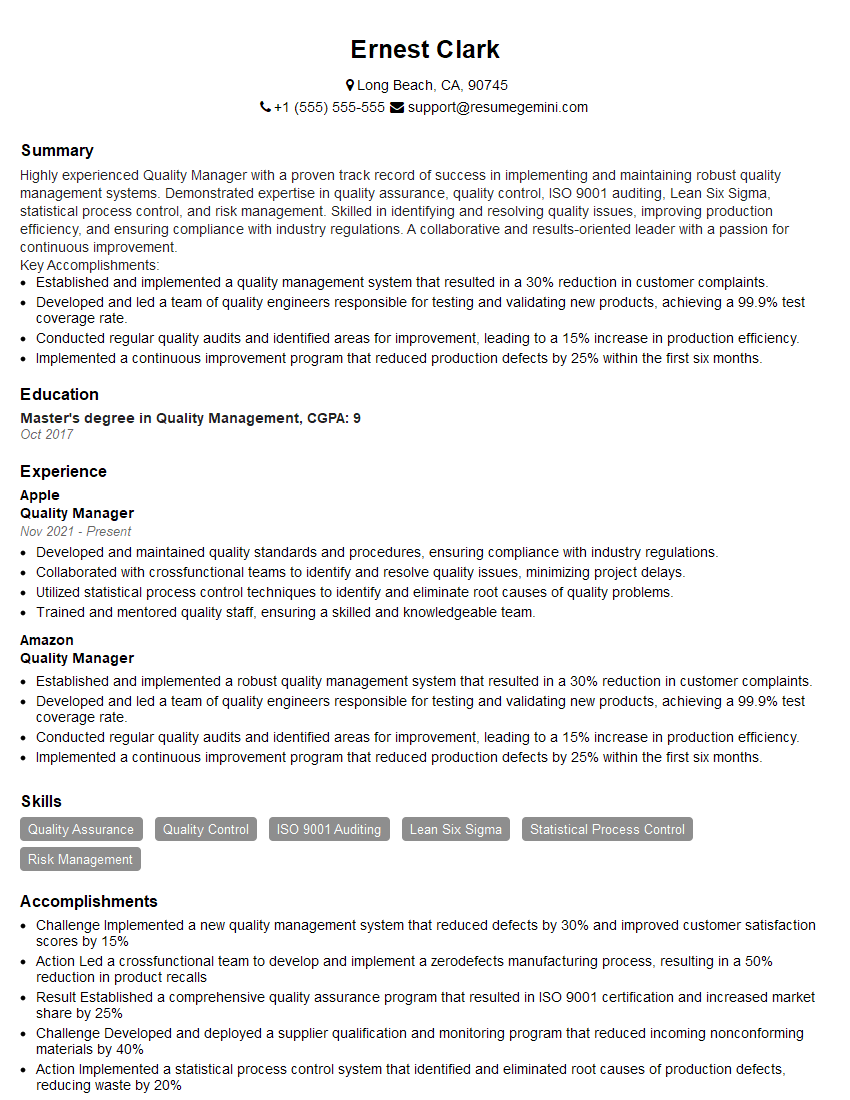
Quality Manager Resume Sample
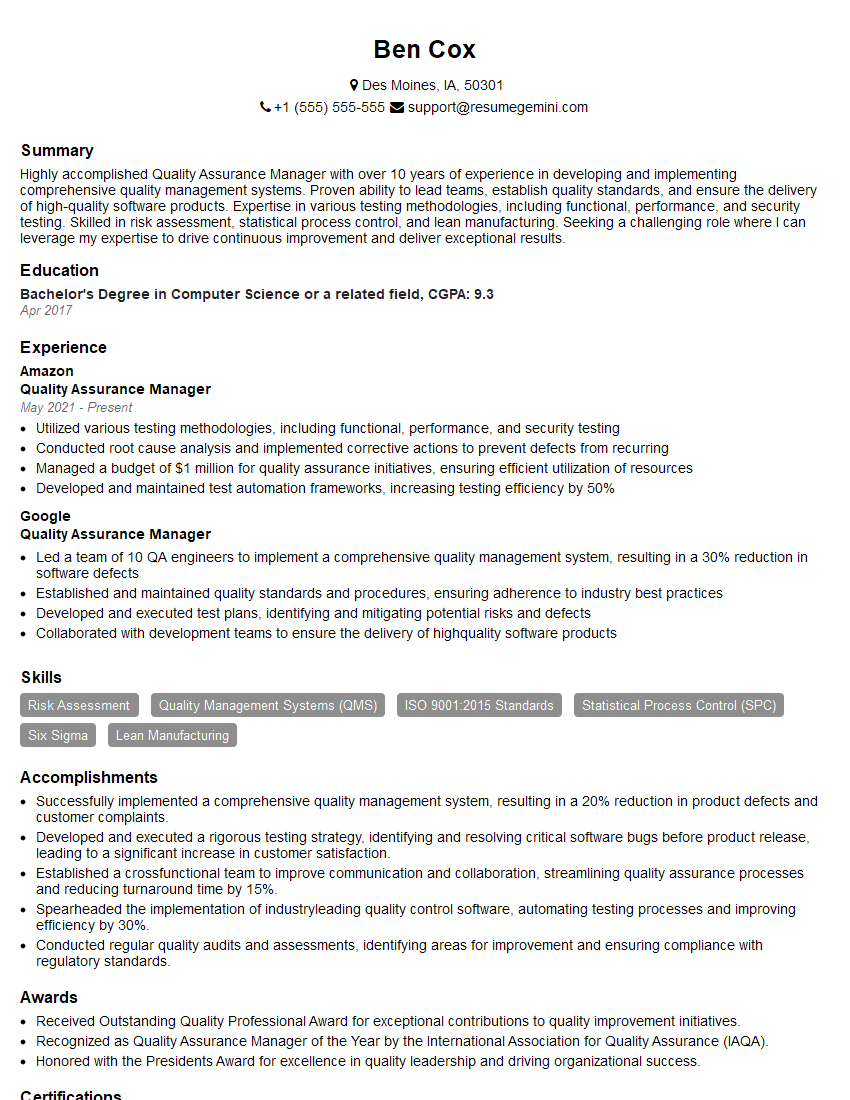
Quality Assurance Manager Resume Sample
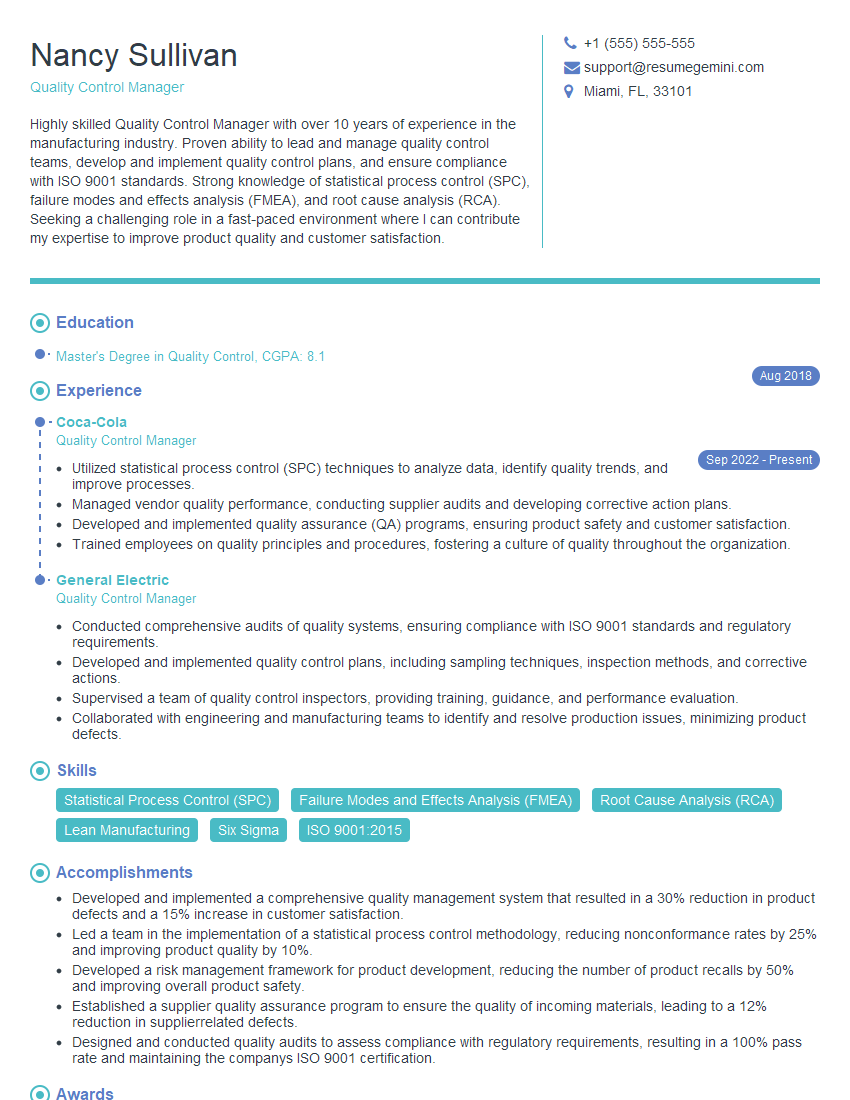
Quality Control Manager Resume Sample
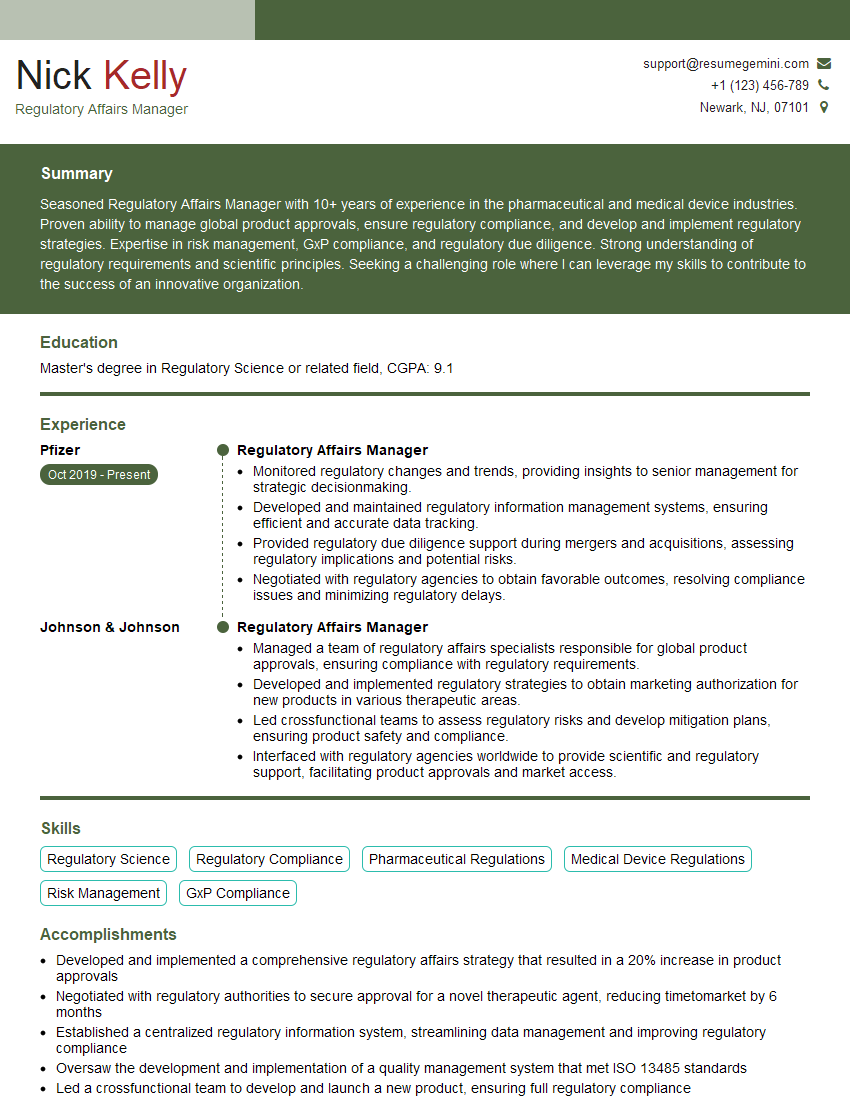
Regulatory Affairs Manager Resume Sample
Compliance Manager Resume Sample
Quality Assurance Specialist Resume Sample
Reliability Engineer Resume Sample
Internal Auditor Resume Sample
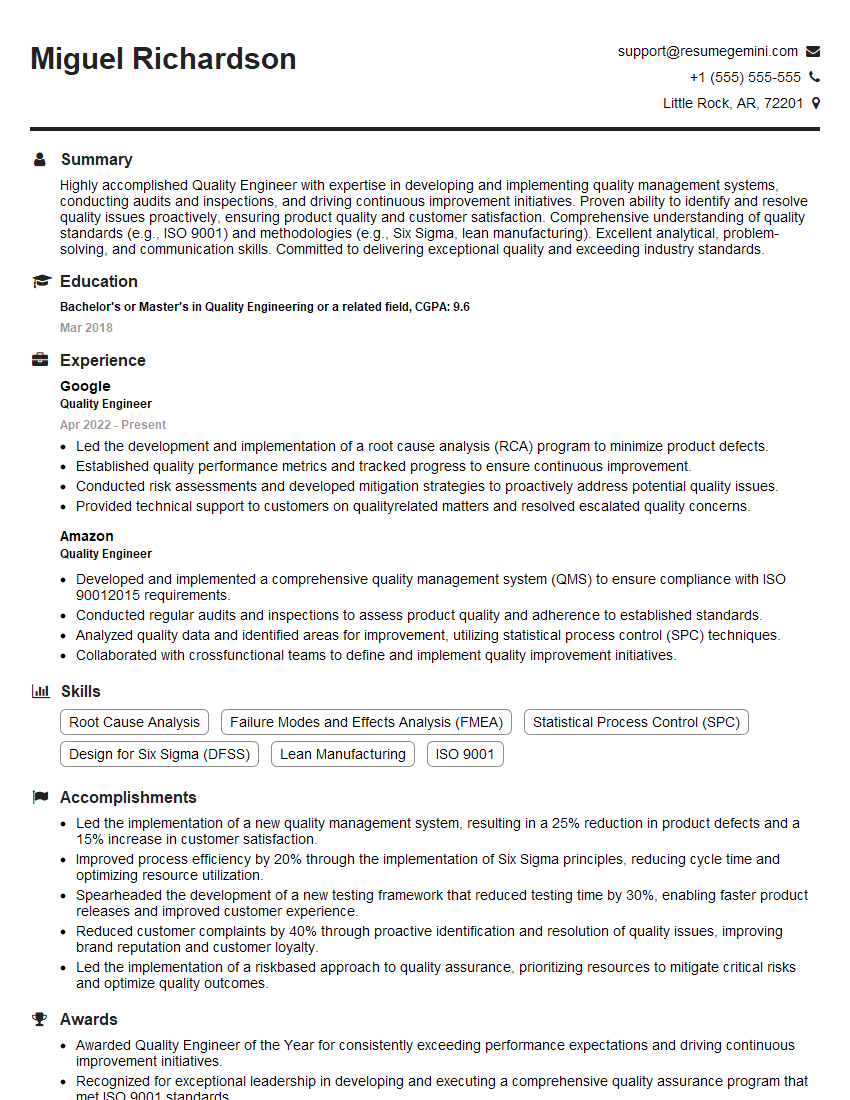
Quality Engineer Resume Sample
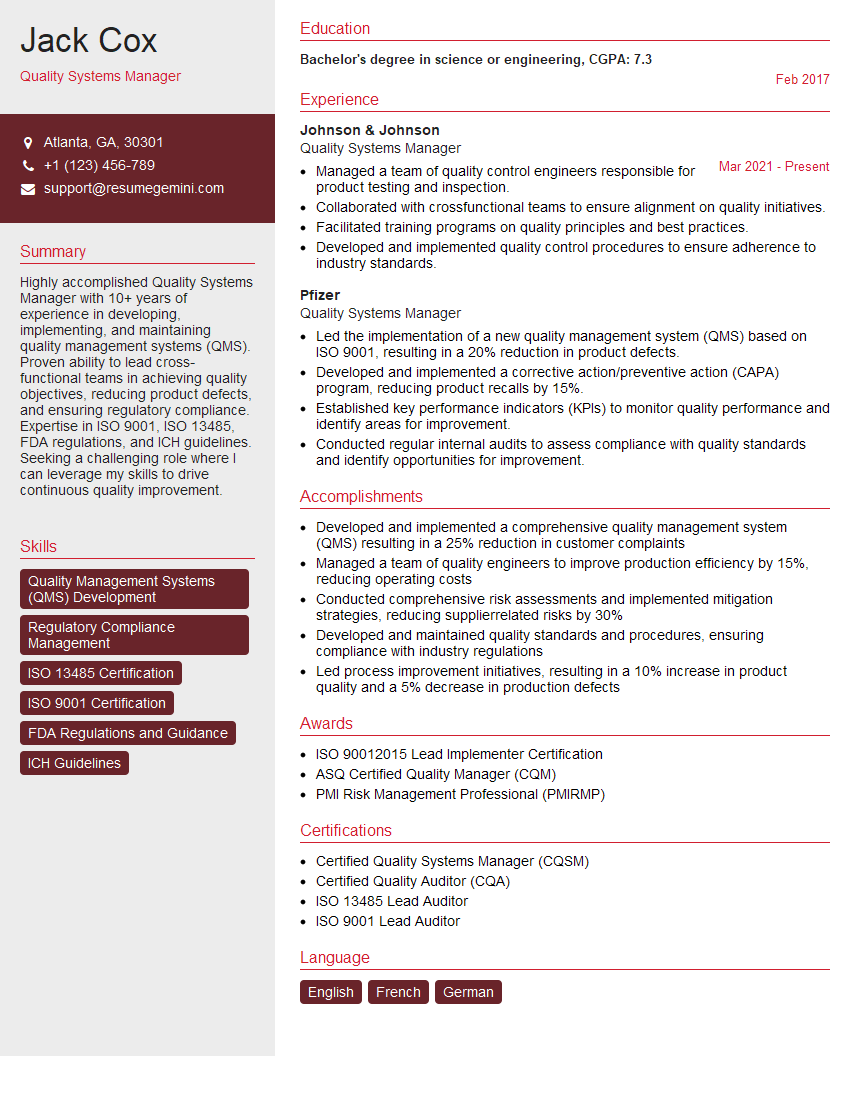
Quality Systems Manager Resume Sample
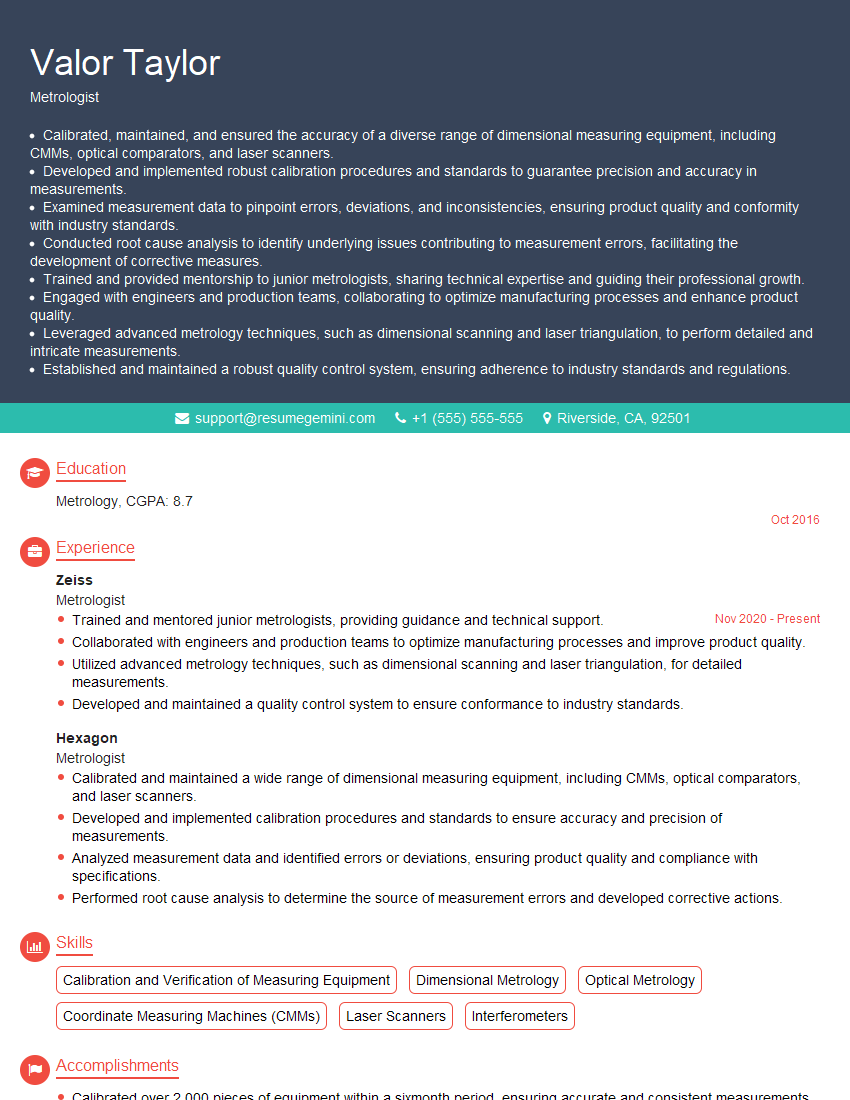
Metrologist Resume Sample
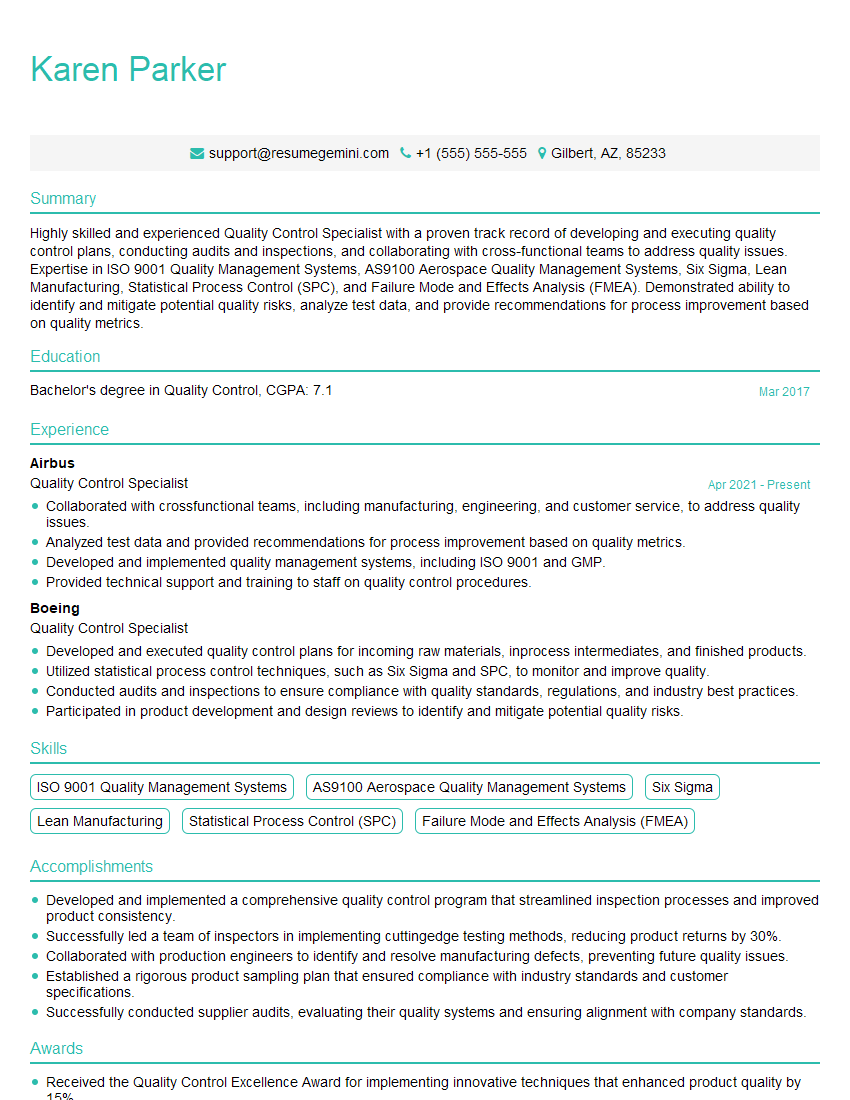
Quality Control Specialist Resume Sample
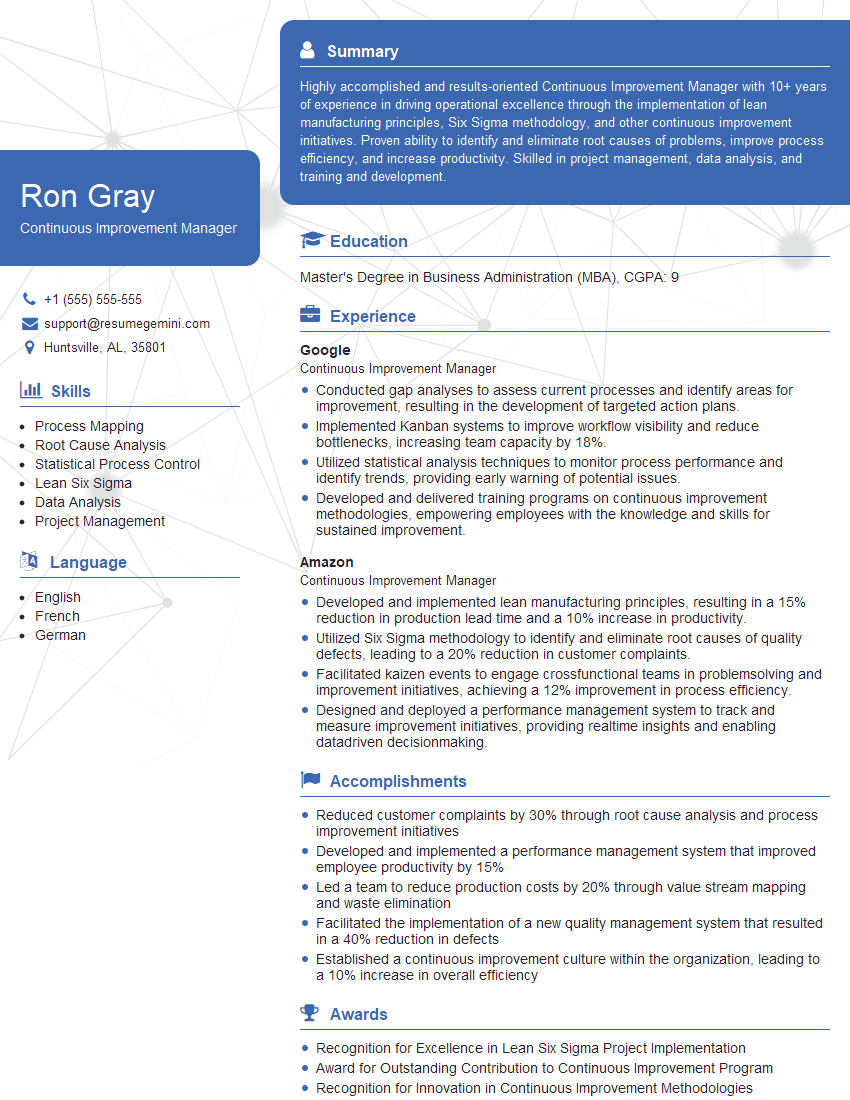
Continuous Improvement Manager Resume Sample
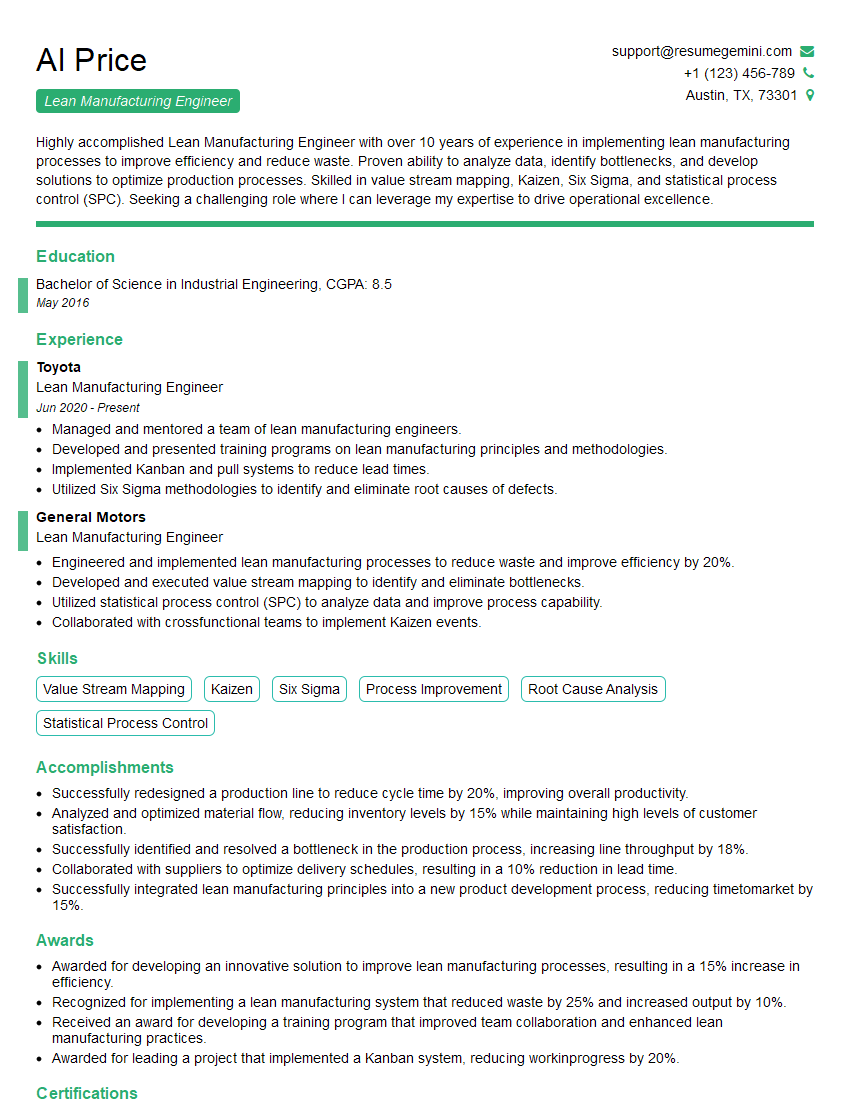
Lean Manufacturing Engineer Resume Sample
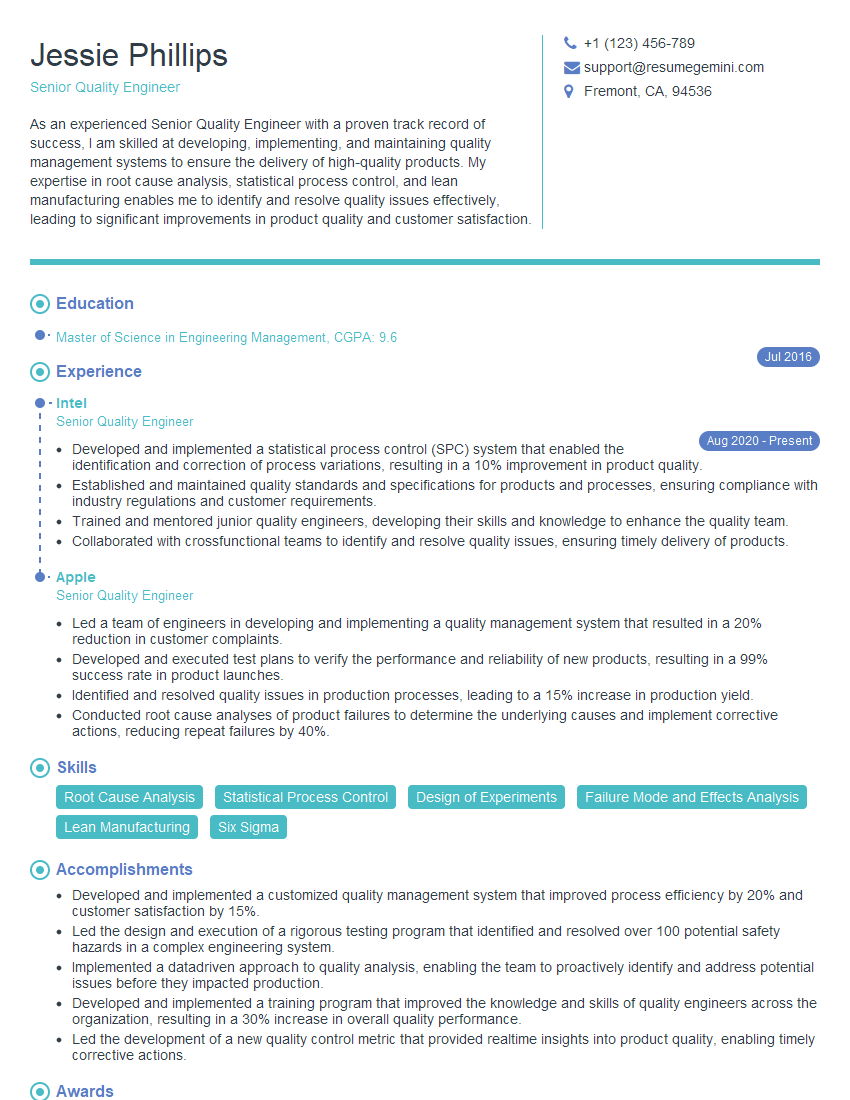
Senior Quality Engineer Resume Sample
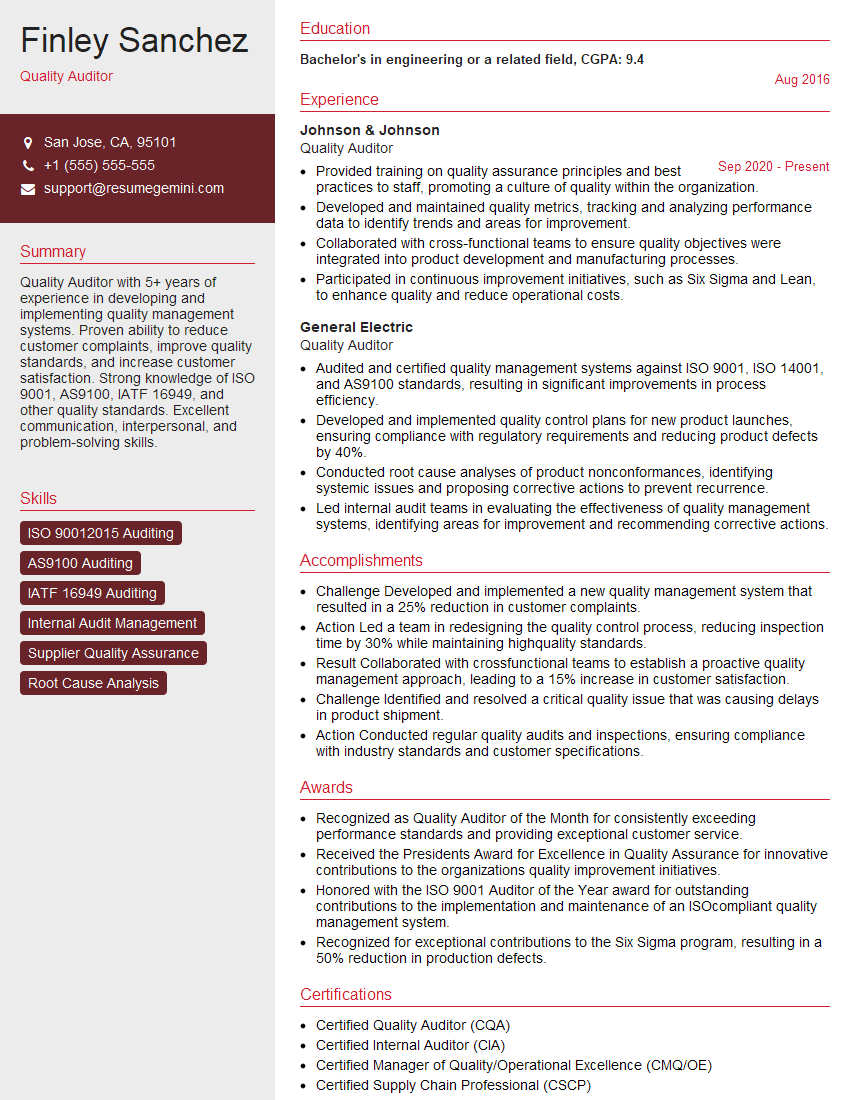
Quality Auditor Resume Sample
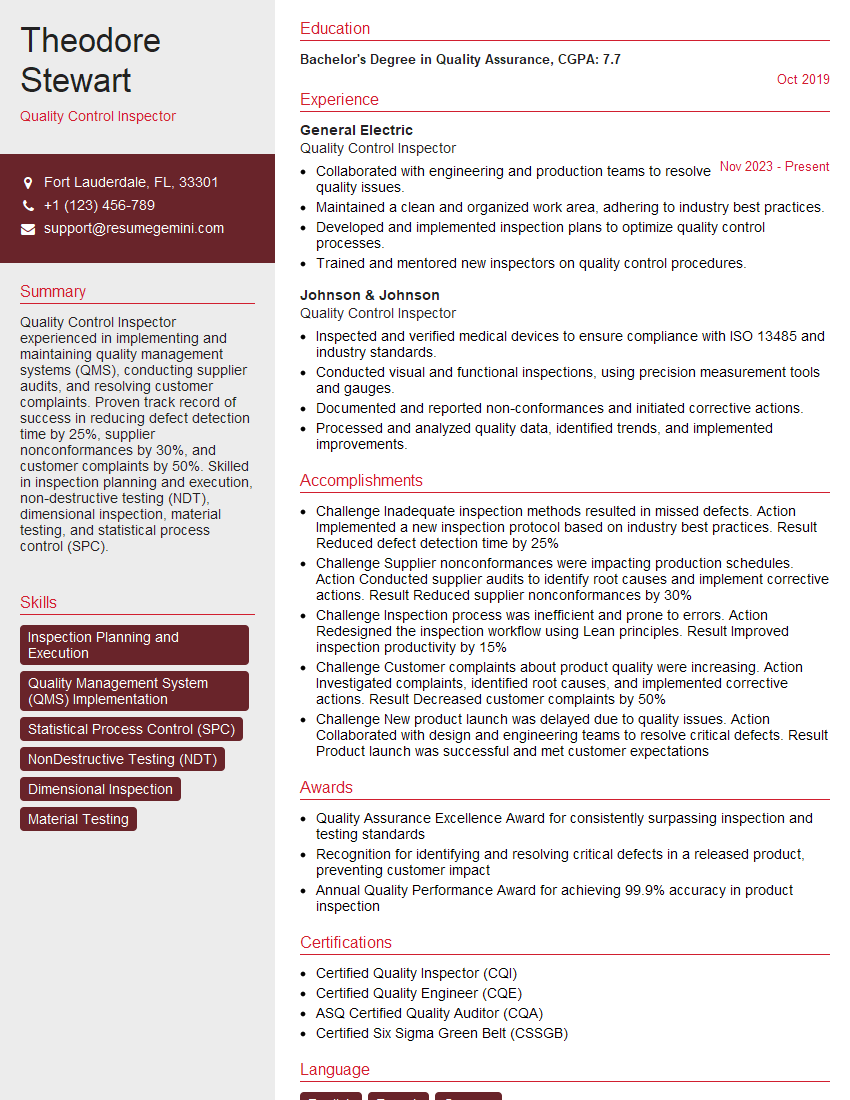
Quality Control Inspector Resume Sample
- Quality Manager
- Quality Assurance Manager
- Quality Control Manager
- Regulatory Affairs Manager
- Compliance Manager
- Quality Assurance Specialist
- Reliability Engineer
- Internal Auditor
- Quality Engineer
- Quality Systems Manager
- Metrologist
- Quality Control Specialist
- Continuous Improvement Manager
- Lean Manufacturing Engineer
- Senior Quality Engineer
- Quality Auditor
- Quality Control Inspector
Explore more articles
Users Rating of Our Blogs
Share Your Experience
We value your feedback! Please rate our content and share your thoughts (optional).
What Readers Say About Our Blog
Attention music lovers!
Wow, All the best Sax Summer music !!!
Spotify: https://open.spotify.com/artist/6ShcdIT7rPVVaFEpgZQbUk
Apple Music: https://music.apple.com/fr/artist/jimmy-sax-black/1530501936
YouTube: https://music.youtube.com/browse/VLOLAK5uy_noClmC7abM6YpZsnySxRqt3LoalPf88No
Other Platforms and Free Downloads : https://fanlink.tv/jimmysaxblack
on google : https://www.google.com/search?q=22+AND+22+AND+22
on ChatGPT : https://chat.openai.com?q=who20jlJimmy20Black20Sax20Producer
Get back into the groove with Jimmy sax Black
Best regards,
Jimmy sax Black
www.jimmysaxblack.com
Hi I am a troller at The aquatic interview center and I suddenly went so fast in Roblox and it was gone when I reset.
Hi,
Business owners spend hours every week worrying about their website—or avoiding it because it feels overwhelming.
We’d like to take that off your plate:
$69/month. Everything handled.
Our team will:
Design a custom website—or completely overhaul your current one
Take care of hosting as an option
Handle edits and improvements—up to 60 minutes of work included every month
No setup fees, no annual commitments. Just a site that makes a strong first impression.
Find out if it’s right for you:
https://websolutionsgenius.com/awardwinningwebsites
Hello,
we currently offer a complimentary backlink and URL indexing test for search engine optimization professionals.
You can get complimentary indexing credits to test how link discovery works in practice.
No credit card is required and there is no recurring fee.
You can find details here:
https://wikipedia-backlinks.com/indexing/
Regards
NICE RESPONSE TO Q & A
hi
The aim of this message is regarding an unclaimed deposit of a deceased nationale that bears the same name as you. You are not relate to him as there are millions of people answering the names across around the world. But i will use my position to influence the release of the deposit to you for our mutual benefit.
Respond for full details and how to claim the deposit. This is 100% risk free. Send hello to my email id: lukachachibaialuka@gmail.com
Luka Chachibaialuka
Hey interviewgemini.com, just wanted to follow up on my last email.
We just launched Call the Monster, an parenting app that lets you summon friendly ‘monsters’ kids actually listen to.
We’re also running a giveaway for everyone who downloads the app. Since it’s brand new, there aren’t many users yet, which means you’ve got a much better chance of winning some great prizes.
You can check it out here: https://bit.ly/callamonsterapp
Or follow us on Instagram: https://www.instagram.com/callamonsterapp
Thanks,
Ryan
CEO – Call the Monster App
Hey interviewgemini.com, I saw your website and love your approach.
I just want this to look like spam email, but want to share something important to you. We just launched Call the Monster, a parenting app that lets you summon friendly ‘monsters’ kids actually listen to.
Parents are loving it for calming chaos before bedtime. Thought you might want to try it: https://bit.ly/callamonsterapp or just follow our fun monster lore on Instagram: https://www.instagram.com/callamonsterapp
Thanks,
Ryan
CEO – Call A Monster APP
To the interviewgemini.com Owner.
Dear interviewgemini.com Webmaster!
Hi interviewgemini.com Webmaster!
Dear interviewgemini.com Webmaster!
excellent
Hello,
We found issues with your domain’s email setup that may be sending your messages to spam or blocking them completely. InboxShield Mini shows you how to fix it in minutes — no tech skills required.
Scan your domain now for details: https://inboxshield-mini.com/
— Adam @ InboxShield Mini
support@inboxshield-mini.com
Reply STOP to unsubscribe
Hi, are you owner of interviewgemini.com? What if I told you I could help you find extra time in your schedule, reconnect with leads you didn’t even realize you missed, and bring in more “I want to work with you” conversations, without increasing your ad spend or hiring a full-time employee?
All with a flexible, budget-friendly service that could easily pay for itself. Sounds good?
Would it be nice to jump on a quick 10-minute call so I can show you exactly how we make this work?
Best,
Hapei
Marketing Director
Hey, I know you’re the owner of interviewgemini.com. I’ll be quick.
Fundraising for your business is tough and time-consuming. We make it easier by guaranteeing two private investor meetings each month, for six months. No demos, no pitch events – just direct introductions to active investors matched to your startup.
If youR17;re raising, this could help you build real momentum. Want me to send more info?
Hi, I represent an SEO company that specialises in getting you AI citations and higher rankings on Google. I’d like to offer you a 100% free SEO audit for your website. Would you be interested?
Hi, I represent an SEO company that specialises in getting you AI citations and higher rankings on Google. I’d like to offer you a 100% free SEO audit for your website. Would you be interested?