Cracking a skill-specific interview, like one for Sample and Prototyping Development, requires understanding the nuances of the role. In this blog, we present the questions you’re most likely to encounter, along with insights into how to answer them effectively. Let’s ensure you’re ready to make a strong impression.
Questions Asked in Sample and Prototyping Development Interview
Q 1. Describe your experience with different rapid prototyping techniques (e.g., 3D printing, CNC machining, injection molding).
My experience spans a wide range of rapid prototyping techniques, each offering unique advantages depending on the project requirements. I’ve extensively used 3D printing for creating complex geometries and rapid iterations, particularly with Fused Deposition Modeling (FDM) and Stereolithography (SLA) technologies. FDM is excellent for functional prototypes requiring strength, while SLA excels in producing high-resolution, detailed parts. CNC machining provides superior surface finish and dimensional accuracy, ideal for prototypes requiring precise tolerances and robust mechanical properties. This is often my go-to for metal or high-strength plastic prototypes. I’ve also worked with injection molding, a crucial step in the manufacturing process, allowing for high-volume production of consistent parts, but it requires significant upfront tooling investment. My experience includes designing molds and overseeing the production process to ensure the final parts meet the specifications.
For example, during the development of a new medical device, we used 3D printing to iterate quickly through different ergonomic designs, then moved to CNC machining to create a robust prototype for functional testing, before finally transitioning to injection molding for mass production. This approach allowed for incremental improvements, reducing the risk and cost of developing the final product.
Q 2. Explain the design for manufacturing (DFM) process and how you incorporate it into prototype development.
Design for Manufacturing (DFM) is a critical process that integrates manufacturing considerations into the design phase to ensure that the final product is cost-effective, manufacturable, and meets quality standards. It’s not just about making something that looks good, but something that can be efficiently produced at scale. I incorporate DFM into every stage of prototype development, starting from the initial concept.
My approach involves:
- Material Selection: Choosing materials readily available and suitable for chosen manufacturing methods.
- Simplification of Design: Reducing the number of parts and complexities in the design to streamline assembly and manufacturing.
- Tolerance Analysis: Defining acceptable ranges of variation in dimensions to ensure parts fit and function correctly during production.
- Manufacturing Process Optimization: Selecting the best manufacturing process based on cost, material properties, and required tolerances.
- Assembly Considerations: Designing for ease of assembly to reduce production time and cost.
For instance, if a design requires intricate internal features, I’ll consider whether 3D printing offers a more feasible and cost-effective approach than machining. Alternatively, if high volumes are anticipated, I’ll design the part to be suitable for injection molding from the beginning.
Q 3. How do you select appropriate materials for a prototype, considering factors like cost, durability, and functionality?
Material selection is a crucial step that significantly impacts prototype performance, cost, and longevity. My decision-making process considers several factors:
- Functionality: What mechanical, thermal, or chemical properties are required?
- Durability: How much stress will the prototype endure? Will it need to withstand extreme temperatures or harsh environments?
- Cost: What’s the budget, and what materials align with that constraint? Some materials are significantly more expensive than others.
- Aesthetics: Will the material’s appearance impact the final product’s appeal?
- Machinability/Processability: How easily can the chosen material be fabricated using the selected prototyping method?
For example, when creating a prototype for a high-impact application, I might choose a durable material like ABS or polycarbonate. If the focus is primarily on aesthetics and rapid iteration, I’d likely use a material compatible with 3D printing like PLA or resin. If cost is a primary constraint, I might opt for less expensive materials like acrylic or wood.
Q 4. What are your preferred CAD/CAM software packages and your proficiency level with each?
I am proficient in several CAD/CAM software packages. My primary software is SolidWorks, which I use for creating 3D models, generating manufacturing drawings, and performing finite element analysis (FEA). I also possess experience with Autodesk Inventor and Fusion 360, which I utilize for specific projects depending on their unique requirements. Fusion 360’s integrated CAM capabilities are particularly useful for rapid prototyping. My proficiency level in these packages is advanced, allowing me to handle complex designs and implement advanced modeling techniques efficiently.
Q 5. Describe a challenging prototype project you worked on and how you overcame the obstacles.
One challenging project involved developing a prototype for a miniature, high-precision robotic gripper for use in micro-assembly. The key challenge was achieving the required level of dexterity and precision within such a small form factor. Initial designs proved too fragile and lacked the necessary gripping strength.
To overcome this, I implemented several strategies:
- Finite Element Analysis (FEA): I used FEA simulations to identify stress concentrations and optimize the design for strength and durability.
- Iterative Prototyping: We iterated through several design variations using 3D printing, allowing for rapid testing and refinement of the mechanical design.
- Material Selection: We ultimately selected a high-strength, lightweight polymer that offered a good balance between strength and flexibility.
- Precision Machining: We used high-precision CNC machining for the final functional prototype to achieve the necessary tolerances.
This iterative process, combined with advanced analysis and precise manufacturing techniques, resulted in a successful prototype that met all performance requirements. The learning from this project solidified the importance of rigorous analysis and iterative prototyping in tackling complex design challenges.
Q 6. How do you manage tolerances and specifications during prototype development?
Managing tolerances and specifications is paramount in prototype development, directly impacting the functionality and manufacturability of the final product. My approach involves several steps:
- Clear Specification Definition: Thorough definition of all relevant dimensions, tolerances, surface finishes, and material properties early in the design process.
- Tolerance Stack-up Analysis: Analyzing how individual component tolerances accumulate to impact the overall assembly functionality, preventing costly issues down the line.
- Geometric Dimensioning and Tolerancing (GD&T): Applying GD&T standards to design drawings for unambiguous communication of tolerances to manufacturers and ensuring consistent interpretation.
- Inspection and Measurement: Using appropriate measurement tools, such as CMMs (Coordinate Measuring Machines) or optical comparators to verify that the prototype meets the specified tolerances.
- Design for Manufacturing (DFM) considerations: Incorporating DFM principles to ensure tolerances are achievable using the selected manufacturing process.
For example, in a project involving a precisely fitting assembly, I carefully analyzed the tolerance stack-up to ensure that the parts would reliably assemble without interference or excessive looseness.
Q 7. Explain your understanding of different prototyping methodologies (e.g., iterative, evolutionary, incremental).
Prototyping methodologies guide the approach to developing prototypes. I often utilize a combination of approaches depending on the project’s specific needs and characteristics:
- Iterative Prototyping: This involves creating a series of prototypes, each refining the previous one based on testing and feedback. It’s ideal for projects with high uncertainty, allowing for continuous learning and improvement. Think of it like sculpting – you start with a rough form and iteratively refine it.
- Evolutionary Prototyping: This approach focuses on a gradual evolution of a prototype, incrementally adding features and functionality. It is suitable for complex products where it’s difficult to define all aspects upfront. Imagine building a house, adding rooms one by one.
- Incremental Prototyping: This involves breaking down the design into smaller, manageable modules, prototyping each individually before integrating them. This reduces complexity and allows for parallel development. Think of building with Lego blocks.
Often, a hybrid approach combining these methodologies is most effective, taking advantage of the strengths of each method. The chosen methodology significantly impacts the project’s timeline, resource allocation, and overall success. A well-chosen strategy ensures a robust and efficient prototype development process.
Q 8. How do you ensure the quality and reliability of your prototypes?
Ensuring prototype quality and reliability is paramount. It’s not just about building something that looks good; it’s about creating a functional representation that accurately reflects the intended product. My approach is multifaceted and involves several key steps:
- Detailed Design Specifications: Before even touching a tool, I ensure we have comprehensive design specifications that detail functionality, performance requirements, and acceptance criteria. This is like having a blueprint before constructing a house.
- Material Selection: Choosing the right materials is crucial. For example, if testing for durability, I might select materials that closely mimic the final product’s material properties, even if it means slightly higher costs upfront. Using cheap substitutes can lead to misleading results.
- Modular Design: I design prototypes with modularity in mind. This allows for easy replacement or modification of individual components, simplifying testing and iteration. It’s like using LEGOs – you can easily swap out pieces to test different features.
- Rigorous Testing: This includes functional testing (does it work as intended?), performance testing (how fast and efficient is it?), and usability testing (how easy is it to use?). We utilize a mix of automated and manual tests, depending on the complexity and requirements.
- Version Control: Every iteration of the prototype is meticulously documented and tracked using a version control system (like Git). This allows us to easily revert to previous versions if necessary and track changes over time.
For instance, while prototyping a new smart lock, we used a 3D-printed casing to test the mechanism, then later swapped it for a more realistic injection-molded casing for the final usability testing phase.
Q 9. How do you collaborate with cross-functional teams during the prototyping process?
Collaboration is the cornerstone of successful prototyping. I leverage several techniques to foster effective communication and teamwork across different departments:
- Regular Meetings: We hold frequent meetings – daily stand-ups and weekly progress reviews – to ensure everyone is on the same page and address any roadblocks promptly. This keeps the momentum going and minimizes delays.
- Shared Documentation: We utilize collaborative platforms (like Confluence or Google Workspace) to share design specifications, test results, and meeting minutes. This ensures transparent communication and easy access to information for everyone involved.
- Prototyping Workshops: When possible, we hold design workshops bringing together engineers, designers, and even potential users. This interactive approach allows us to gather diverse feedback and incorporate it directly into the prototype design. This fosters a shared understanding and collective ownership of the outcome.
- Feedback Mechanisms: We establish clear channels for feedback, utilizing tools like online surveys or feedback forms. This allows us to incorporate user input efficiently and iteratively improve the prototype.
For example, during the development of a new medical device, regular collaboration with regulatory affairs specialists ensured that our prototype met all safety and compliance standards from the outset, significantly reducing potential issues later on.
Q 10. What are your experiences with testing and validating prototypes?
Testing and validating prototypes are integral to the process. It’s an iterative cycle, starting with simple tests and gradually increasing complexity. My experience includes:
- Unit Testing: Testing individual components or modules independently ensures they work correctly before integration.
- Integration Testing: Testing the interaction between different components to identify any integration issues.
- System Testing: Testing the entire system as a whole to verify its functionality, performance, and reliability.
- Usability Testing: Observing real users interacting with the prototype to identify areas for improvement in terms of user experience.
- Performance Testing: Measuring the speed, responsiveness, and stability of the prototype under various conditions.
- Stress Testing: Pushing the prototype to its limits to determine its breaking point and identify potential failure points.
In one instance, we discovered a critical flaw in the software of a new robotic arm during system testing, a flaw that would have only been apparent in the final integrated system, saving significant time and resources later on.
Q 11. Describe your approach to documenting the prototyping process and sharing information with stakeholders.
Effective documentation and information sharing are vital for transparency and collaboration. My approach involves:
- Version Control System (VCS): Using a VCS like Git to track all changes made to the prototype design and code. This provides an audit trail and allows easy rollback to previous versions.
- Detailed Design Documents: Creating comprehensive design documents that include sketches, diagrams, specifications, and test results. This serves as a reference for the entire team and stakeholders.
- Progress Reports: Regularly preparing progress reports highlighting key milestones achieved, challenges faced, and plans for the future. These are shared with relevant stakeholders to keep them informed.
- Presentation of Findings: Preparing clear and concise presentations summarizing the testing results and findings. This helps to visualize the outcome and facilitate informed decision-making.
- Interactive Dashboards: In complex projects, using interactive dashboards to visualize key metrics and track progress in real-time, especially useful for communicating to non-technical stakeholders.
For example, a well-documented prototype development process allowed us to easily onboard new team members mid-project, resulting in seamless integration and minimal disruption. Clear, concise documentation also greatly facilitated the transfer of knowledge to the manufacturing team.
Q 12. How familiar are you with different types of testing (functional, performance, stress)?
I am very familiar with various types of testing:
- Functional Testing: Verifies if the prototype performs its intended functions correctly. This includes testing individual features, integration between different parts and overall system functionality.
- Performance Testing: Evaluates the system’s speed, efficiency, responsiveness, and stability under different loads. This involves aspects like load testing, stress testing, and endurance testing.
- Stress Testing: Pushes the prototype beyond its normal operating limits to identify its breaking point and vulnerabilities. This helps determine the system’s robustness and resilience.
- Usability Testing: Focuses on how easy it is for users to interact with the prototype, and how intuitive and user-friendly the design is.
- Security Testing: Examines the prototype’s vulnerability to security threats and potential breaches. This is often critical for applications that handle sensitive data.
For example, in the development of a high-traffic website, I used load testing to determine how many concurrent users the system could handle without performance degradation. Stress testing helped to identify potential bottlenecks and areas for improvement.
Q 13. Explain your understanding of intellectual property rights and how you protect prototype designs.
Understanding and protecting intellectual property (IP) rights is crucial in prototype development. My approach involves:
- Non-Disclosure Agreements (NDAs): Ensuring all individuals involved in the prototyping process sign NDAs to protect confidential information.
- Secure Storage: Storing prototypes and design documents in secure locations with limited access.
- Patent Applications: If the prototype represents a novel invention, we explore filing for patent protection to safeguard our IP rights. This is especially critical for inventions with market potential.
- Copyright Protection: Protecting software code, design drawings, and documentation through copyright registration.
- Trademark Registration: Registering any unique brand names or logos associated with the prototype.
- Regular IP Audits: Conducting regular internal IP audits to ensure our compliance with relevant laws and regulations and prevent any accidental disclosure of confidential information.
In a past project involving a groundbreaking new sensor technology, we proactively filed a patent application to protect our invention, and this has proven vital in securing licensing agreements and establishing a strong market position.
Q 14. How do you balance speed and quality in prototype development?
Balancing speed and quality is a delicate act in prototype development. It’s not a trade-off, but rather a careful orchestration of priorities. My approach involves:
- Agile Methodology: Employing an agile approach, breaking down the development process into smaller, manageable iterations, allowing for rapid prototyping and quick feedback. This keeps the project on schedule and allows for changes based on user feedback.
- Prioritization: Focusing on the core functionalities first, developing a minimum viable product (MVP) that demonstrates the key features. Then expanding upon this core in subsequent iterations.
- Smart Material and Tool Selection: Choosing materials and tools that optimize the speed of construction without compromising quality. 3D printing, for example, can be faster than traditional machining, while still providing an accurate representation.
- Automated Testing: Automating as much of the testing process as possible to save time and ensure consistency.
- Iteration and Refinement: Accepting that early prototypes might have imperfections and focusing on iterative improvement based on testing and feedback. We don’t aim for perfection in the first attempt, but for a progressively improved product over time.
For instance, when developing a quick prototype for a client presentation, we prioritized the visual aspects, using readily available materials to ensure a compelling demonstration, whilst knowing that the final product would use more sophisticated materials.
Q 15. What metrics do you use to assess the success of a prototype?
Assessing prototype success goes beyond simply checking if it works. We need a multifaceted approach, using metrics that align with the prototype’s goals. These metrics fall broadly into three categories: functionality, usability, and manufacturability.
Functionality: Does the prototype perform its intended function? Metrics here could include speed, accuracy, power consumption, or any other relevant performance indicators. For example, if prototyping a new drone, we’d measure flight time, distance, and stability. We might even set benchmark targets against existing models.
Usability: Is the prototype easy and intuitive to use? For a physical prototype, this could involve user feedback surveys, assessing ease of assembly or operation. For software, we’d use metrics like task completion time and error rates. Think of usability testing for a new mobile app – we’d measure how quickly users can complete specific tasks and the number of errors they encounter.
Manufacturability: Can the prototype be efficiently and cost-effectively produced? Here, we consider factors like material cost, assembly time, complexity, and potential for automation. For instance, a prototype using highly specialized and expensive materials might fail this metric, even if functionality and usability are excellent.
The specific metrics used will always depend on the project’s unique goals and constraints. A well-defined set of metrics from the outset ensures we have clear success criteria and avoid ambiguity.
Career Expert Tips:
- Ace those interviews! Prepare effectively by reviewing the Top 50 Most Common Interview Questions on ResumeGemini.
- Navigate your job search with confidence! Explore a wide range of Career Tips on ResumeGemini. Learn about common challenges and recommendations to overcome them.
- Craft the perfect resume! Master the Art of Resume Writing with ResumeGemini’s guide. Showcase your unique qualifications and achievements effectively.
- Don’t miss out on holiday savings! Build your dream resume with ResumeGemini’s ATS optimized templates.
Q 16. How do you handle design changes during the prototyping phase?
Design changes during prototyping are inevitable and, in fact, expected. They are a crucial part of the iterative design process. My approach involves a structured process to manage these changes effectively:
Impact Assessment: Every design change request is carefully evaluated for its impact on existing functionality, cost, and schedule. This involves discussions with the engineering team, designers, and stakeholders to fully understand the implications.
Documentation: All design changes are meticulously documented, including reasons for the change, proposed modifications, and any associated risks or challenges. This prevents confusion and allows for traceability.
Version Control: We use a version control system (e.g., Git) to track design iterations and ensure that we can revert to previous versions if needed. This is especially important for software prototypes but also applicable to physical prototypes through meticulous documentation and revision tracking.
Testing: After implementing a design change, rigorous testing is conducted to verify that the change hasn’t introduced any new problems or compromised existing functionality.
Communication: Keeping all stakeholders informed of the design changes and their impact is vital for success. Regular updates and meetings ensure transparency and collaboration.
By following this structured approach, we can minimize disruption caused by design changes and ensure that the final prototype meets its objectives.
Q 17. How do you estimate time and resources required for prototyping projects?
Estimating time and resources for prototyping is a critical aspect of project planning. I typically employ a combination of top-down and bottom-up estimation techniques:
Top-Down Estimation: This involves breaking down the project into major phases (e.g., design, material selection, fabrication, testing) and estimating the time and resources needed for each phase based on past experience and similar projects. This provides a high-level overview.
Bottom-Up Estimation: This involves detailed task breakdown. Each individual task is estimated, and these estimates are then aggregated to determine the overall project timeline and resource requirements. This provides a more granular level of detail.
Analogous Estimation: This involves comparing the current project to similar projects completed in the past. By analyzing the time and resources used in those projects, we can get a reasonable initial estimate.
In addition to these techniques, I use various project management tools (e.g., Microsoft Project, Jira) to track progress, manage resources, and identify potential risks or delays. Contingency time is also built into the schedule to account for unexpected issues or design changes.
Finally, regular review meetings with the team help to refine the estimates and ensure that the project remains on track. This iterative approach ensures accurate estimations and effective resource allocation.
Q 18. Describe your experience with different prototyping materials (plastics, metals, composites).
My experience encompasses a wide range of prototyping materials, each with its own advantages and disadvantages:
Plastics: I’ve extensively worked with various plastics, including ABS, PLA, and nylon, using techniques like 3D printing, injection molding, and CNC machining. Plastics are versatile, relatively inexpensive, and easy to process, making them ideal for rapid prototyping. However, their strength and durability can be limiting for some applications.
Metals: Experience with metals includes aluminum, steel, and brass, utilizing methods like CNC machining, casting, and sheet metal fabrication. Metals offer high strength and durability, but they are generally more expensive and time-consuming to process than plastics.
Composites: My experience with composites includes carbon fiber reinforced polymers (CFRP) and fiberglass. These materials offer a high strength-to-weight ratio, making them ideal for lightweight applications. However, they are often more complex and expensive to process, requiring specialized equipment and expertise.
Material selection is a critical decision, as it significantly impacts the prototype’s performance, cost, and manufacturability. The choice depends on factors such as the prototype’s intended function, required properties, budget, and desired manufacturing scale.
Q 19. How do you manage risks and uncertainties in prototype development?
Risk management is paramount in prototype development. We use a proactive approach that involves:
Risk Identification: At the project’s outset, we identify potential risks through brainstorming sessions, failure mode and effects analysis (FMEA), and reviewing similar projects. Examples include material availability, unexpected design challenges, and testing difficulties.
Risk Assessment: Each identified risk is assessed based on its likelihood and potential impact on the project. This prioritizes risks that require immediate attention.
Risk Mitigation: For high-priority risks, we develop mitigation strategies, such as procuring backup materials, developing contingency plans, or using robust testing methods. For example, if a specific material has supply chain issues, we might identify a suitable alternative early on.
Monitoring and Control: Throughout the prototyping process, we continuously monitor risks and adjust our mitigation strategies as needed. Regular progress reviews help to track potential issues and make informed decisions.
By proactively identifying and managing risks, we increase the likelihood of a successful prototype development project, minimizing delays and cost overruns.
Q 20. Explain your experience with creating and maintaining detailed documentation for prototypes.
Detailed documentation is crucial for effective prototype development and future product development. My approach involves a multi-stage process:
Design Specifications: Comprehensive documentation begins with clear design specifications, including detailed drawings, material lists, and assembly instructions. This ensures everyone understands the design intent.
Manufacturing Processes: Detailed documentation of the manufacturing processes used is vital for reproducibility. This includes machine settings, parameters, and any specific techniques employed.
Testing Procedures: Testing procedures, including test setups, methodologies, and results, are meticulously documented. This allows for validation of design changes and improvements.
Revision Control: A robust version control system ensures that all changes and modifications to the prototype are tracked and documented. This traceability prevents confusion and ensures accountability.
Final Report: A comprehensive final report summarizes the entire prototyping process, including design iterations, challenges encountered, and lessons learned. This knowledge base is invaluable for future projects.
This detailed documentation serves as a valuable asset for future development, allowing for efficient replication, modification, and further refinement of the prototype. It also aids in knowledge transfer and collaborative efforts among team members.
Q 21. How familiar are you with different manufacturing processes?
My familiarity with manufacturing processes is extensive and spans a range of techniques. This includes:
Additive Manufacturing (3D Printing): Experience with various 3D printing technologies, such as FDM, SLA, and SLS, enables the creation of complex geometries and rapid prototyping.
Subtractive Manufacturing (Machining): Proficient in CNC machining (milling, turning, routing), enabling the creation of precise and high-tolerance parts from various materials.
Casting: Experience with investment casting and die casting for high-volume production and the creation of complex shapes.
Injection Molding: Familiar with the design and manufacturing process of injection molded parts, allowing for high-volume, cost-effective production.
Sheet Metal Fabrication: Experienced in various sheet metal processes, including punching, bending, and welding, to create lightweight and robust components.
Understanding these processes allows me to make informed decisions during the design phase, selecting appropriate materials and manufacturing techniques to ensure that the prototype is both feasible and cost-effective to produce.
Q 22. What is your experience with Finite Element Analysis (FEA) in prototype validation?
Finite Element Analysis (FEA) is a powerful computational method used to predict how a product reacts to real-world forces, vibration, heat, fluid flow, and other physical effects. In prototype validation, FEA allows us to virtually test the prototype’s structural integrity, performance, and durability before committing to expensive physical testing. For instance, imagine designing a new bicycle frame. Before building multiple prototypes, we can use FEA software to simulate the stresses on the frame under various riding conditions (like bumpy roads or aggressive maneuvers). This helps identify potential weak points and optimize the design for strength and weight. I’ve extensively used ANSYS and Abaqus for FEA, generating models, defining material properties, applying loads and boundary conditions, and analyzing the results – including stress, strain, and displacement – to inform design iterations. This reduces the need for extensive physical prototyping, saving time and resources.
Q 23. How do you incorporate user feedback into the iterative prototype development process?
Incorporating user feedback is crucial for successful prototype development. We employ a cyclical, iterative process. Firstly, we gather feedback through various methods – usability testing sessions, surveys, interviews, and focus groups. During usability testing, for example, we observe users interacting with the prototype, noting their struggles, frustrations, and positive experiences. We carefully document all feedback, categorizing it by type (e.g., usability issues, aesthetic preferences, functionality suggestions). Secondly, we analyze this feedback to prioritize improvements. This often involves creating affinity diagrams or prioritizing issues based on severity and frequency. Then, we iterate on the design, addressing the most critical feedback points. For example, if users consistently struggle with a particular button’s placement, we’d redesign that element based on the feedback. This iterative process continues until we achieve a level of user satisfaction that meets our project goals. This iterative approach ensures the final product aligns perfectly with the target user’s needs and expectations.
Q 24. Explain your understanding of tolerance stack-up analysis.
Tolerance stack-up analysis is the process of determining the cumulative effect of individual component tolerances on the overall assembly dimensions and performance. Every manufactured part has inherent variations in dimensions due to manufacturing processes. Tolerance stack-up analysis helps us predict the worst-case scenario of these variations accumulating and impacting the functionality. Think of building a clock; each gear has a tolerance. If the tolerances aren’t carefully considered, the gears might not mesh properly, and the clock might not work. We use statistical methods to determine the probability of assembly failures due to tolerance accumulation. Tools like Monte Carlo simulations are frequently used to predict the distribution of assembly dimensions and identify critical tolerances. This allows us to specify tighter tolerances where necessary, thereby ensuring the assembly functions correctly even with manufacturing variations.
Q 25. Describe your experience with reverse engineering existing products.
Reverse engineering involves disassembling and analyzing an existing product to understand its design, functionality, and manufacturing processes. I have experience reverse engineering various products, from mechanical assemblies to electronic devices. This usually starts with a thorough physical inspection, documenting dimensions, material properties, and assembly methods. Next, we employ 3D scanning techniques (like laser scanning or structured light scanning) to create a digital 3D model of the product. This digital model is then analyzed using CAD software to recreate the design. Finally, we analyze the manufacturing process by examining features like tolerances, surface finishes, and joining methods. For example, I once reverse-engineered a competitor’s product to understand their design choices and identify potential areas for improvement in our own products. This allowed us to improve our designs and identify areas where we could enhance efficiency or reduce costs.
Q 26. What software do you use for data analysis related to prototypes?
For data analysis related to prototypes, I commonly use several software packages depending on the data type and analysis needed. For statistical analysis of user feedback or testing results, I utilize SPSS or R. For data visualization, I rely on tools like Tableau or Python’s matplotlib and seaborn libraries. When analyzing FEA results, I typically use the post-processing capabilities built into ANSYS or Abaqus. Finally, I often use spreadsheet software like Microsoft Excel or Google Sheets for initial data organization and simple calculations. The choice of software depends on the specific project and the complexity of the data analysis required.
Q 27. How do you ensure prototypes meet safety and regulatory requirements?
Ensuring prototypes meet safety and regulatory requirements is paramount. This involves thorough research and documentation. We identify all applicable safety standards and regulations early in the design process. For example, if designing a medical device, we need to comply with ISO 13485 and other relevant regulations. We then integrate safety considerations into every stage of the prototype development cycle. This includes selecting appropriate materials, implementing robust designs, and conducting rigorous testing – both physical and virtual (like FEA) – to verify that the prototype meets the necessary safety standards. We maintain detailed documentation of all testing and analysis, ensuring a comprehensive audit trail. Non-compliance can lead to significant legal and financial repercussions, therefore proactive attention to regulations is crucial.
Q 28. How do you troubleshoot and resolve issues that arise during prototyping?
Troubleshooting during prototyping is an iterative process. The first step is thorough investigation – identifying the root cause of the problem. This often involves carefully examining the prototype, reviewing design specifications, and analyzing test data. If a mechanical component fails, for instance, we use root cause analysis techniques, like the 5 Whys, to determine why the failure occurred. Once the root cause is identified, we brainstorm and evaluate solutions. This might involve redesigning a component, modifying manufacturing processes, or selecting different materials. The solution is then implemented, and the prototype is retested to ensure the problem is resolved. We meticulously document every step of the troubleshooting process, to prevent similar issues in the future. A systematic approach, combined with careful analysis, is vital for efficient and effective troubleshooting.
Key Topics to Learn for Sample and Prototyping Development Interview
- Understanding Design Thinking: Explore the iterative process of design thinking, from initial ideation and user research to prototyping and testing. Consider how this methodology informs your approach to sample and prototype development.
- Material Selection and Properties: Gain a deep understanding of various materials and their properties (strength, durability, cost-effectiveness, etc.) relevant to your prototyping needs. Be prepared to discuss trade-offs between different material choices.
- Rapid Prototyping Techniques: Familiarize yourself with various rapid prototyping methods (3D printing, laser cutting, CNC machining, etc.) and their applications. Be ready to discuss the advantages and limitations of each technique.
- Prototyping Tools and Software: Showcase your proficiency with relevant software (CAD, CAM, design software) and tools used in the prototyping process. Understand the workflow and capabilities of these tools.
- Testing and Iteration: Discuss the importance of rigorous testing and iterative refinement in the development of samples and prototypes. Explain how feedback informs design improvements.
- Documentation and Communication: Master the art of clearly documenting your design process, including material specifications, fabrication methods, and test results. Practice effectively communicating your ideas and findings to both technical and non-technical audiences.
- Cost Analysis and Manufacturing Considerations: Understand the cost implications of different prototyping methods and materials. Be prepared to discuss how to optimize for cost-effectiveness without compromising quality.
Next Steps
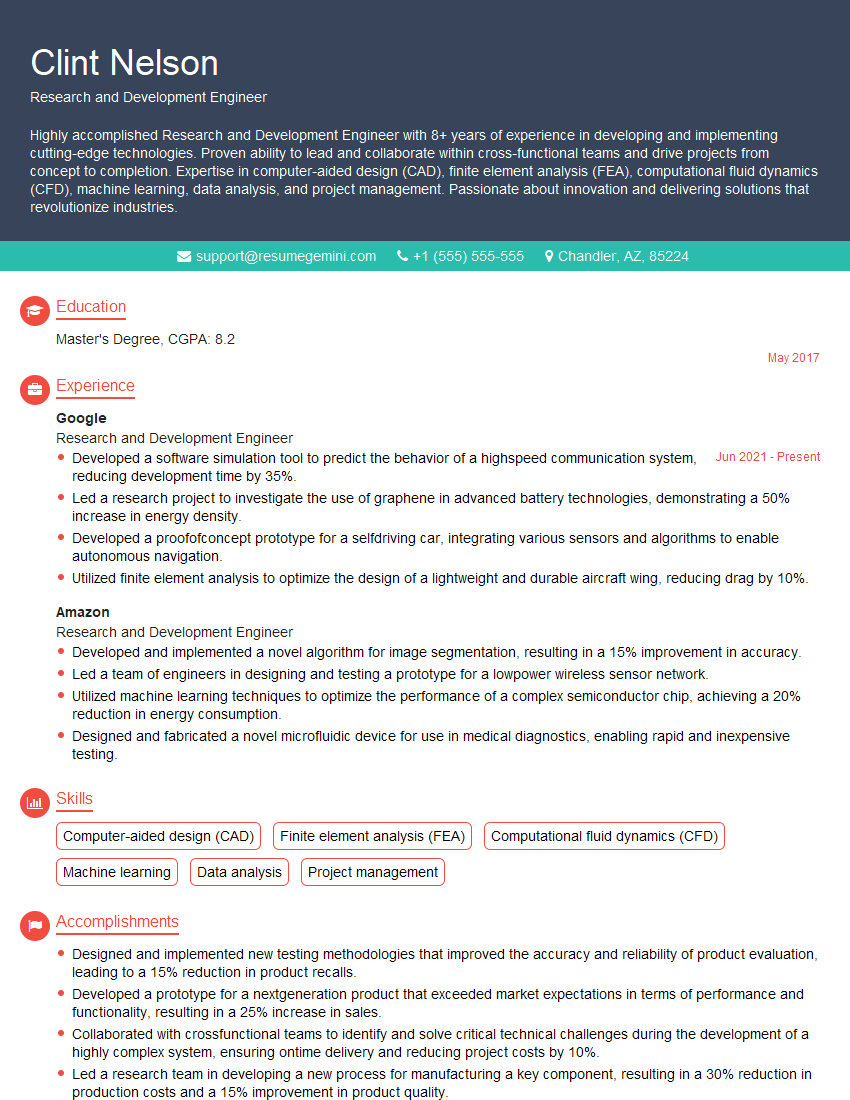
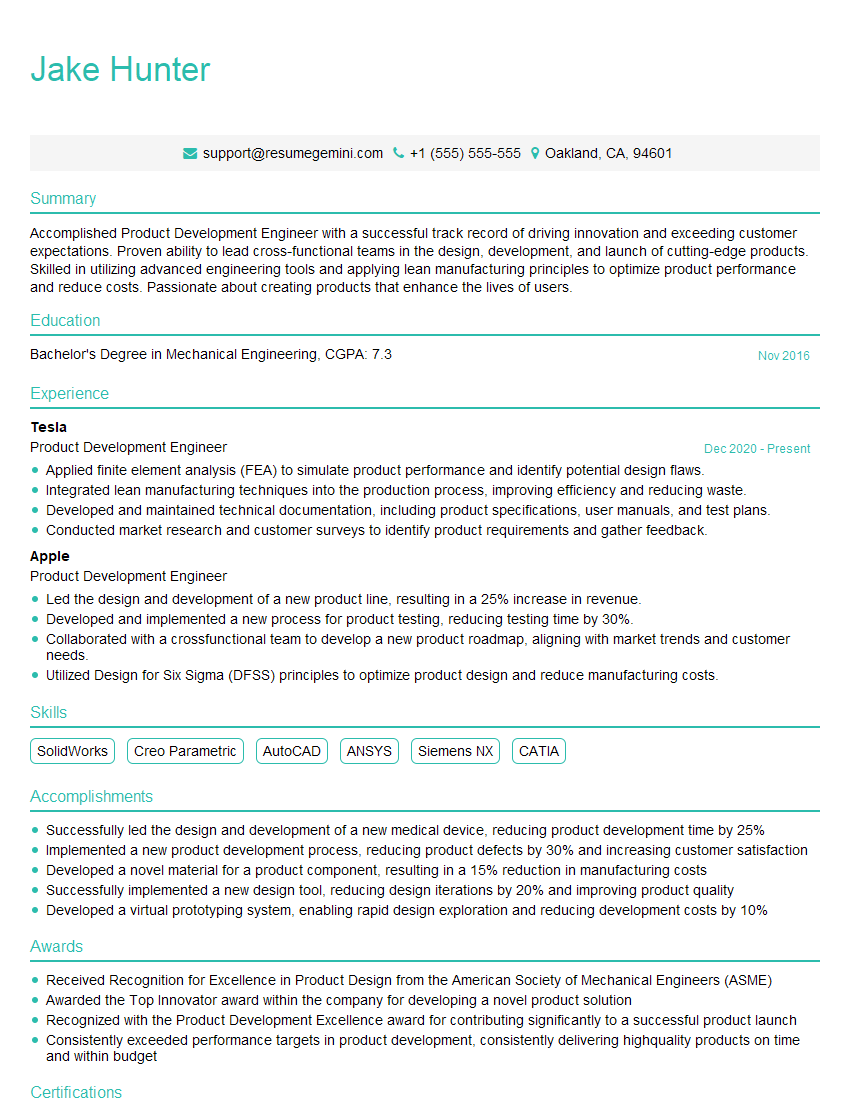
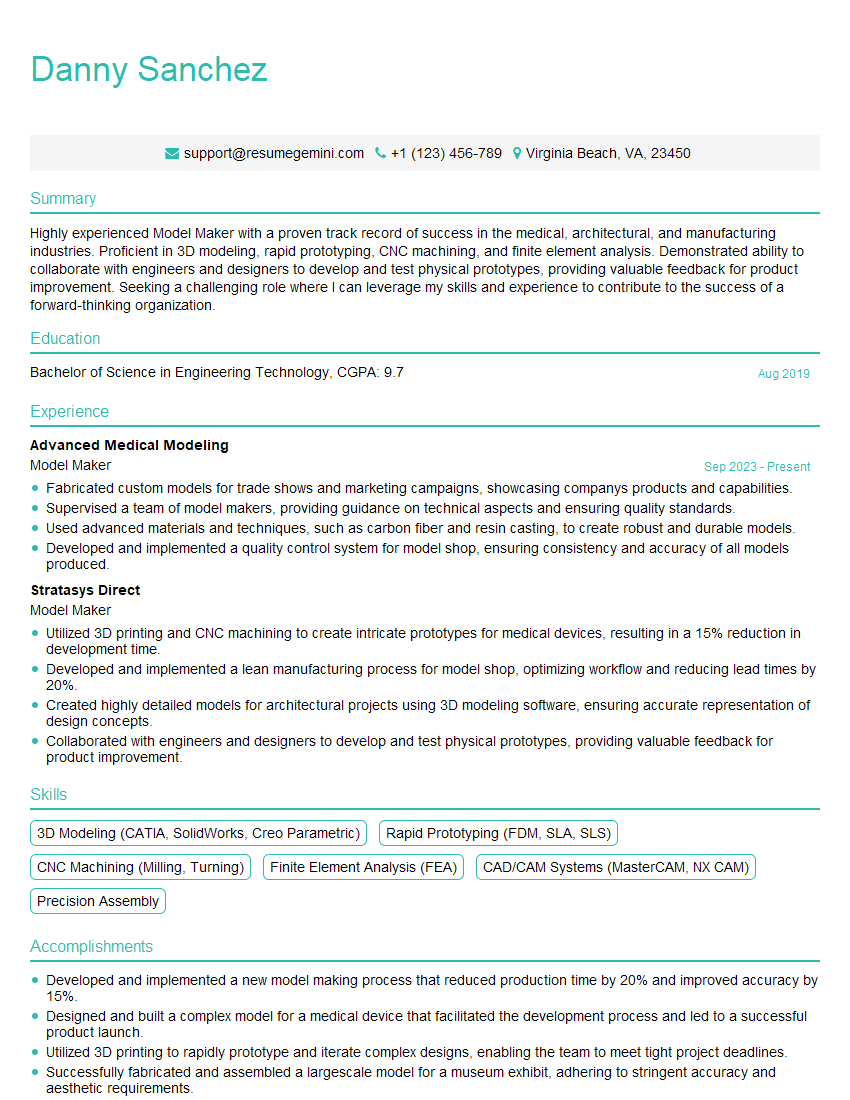
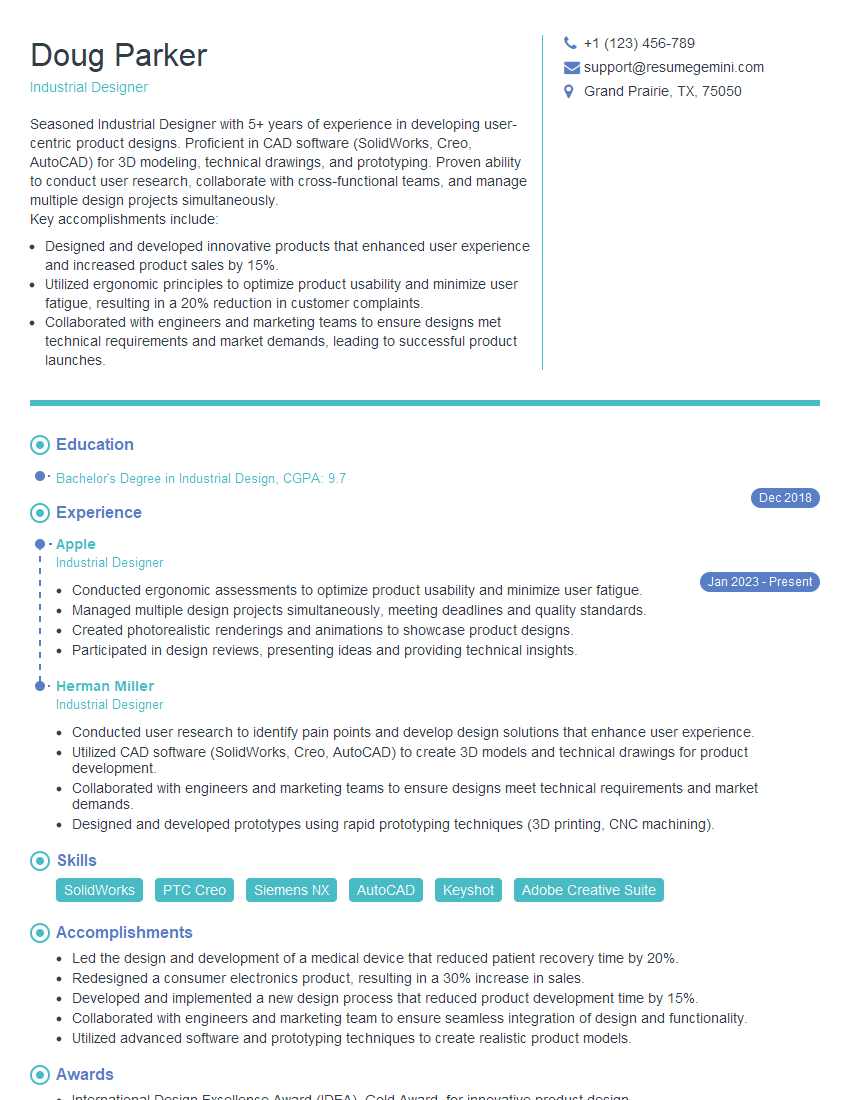
Mastering Sample and Prototyping Development is crucial for career advancement in many innovative fields. Strong skills in this area demonstrate problem-solving abilities, creativity, and a practical understanding of bringing ideas to life. To maximize your job prospects, it’s vital to create a compelling and ATS-friendly resume that highlights your key skills and accomplishments. ResumeGemini is a trusted resource to help you build a professional and impactful resume. Examples of resumes tailored to Sample and Prototyping Development are available, allowing you to see successful strategies in action and build your own compelling narrative.
Explore more articles
Users Rating of Our Blogs
Share Your Experience
We value your feedback! Please rate our content and share your thoughts (optional).
What Readers Say About Our Blog
Very informative content, great job.
good