Every successful interview starts with knowing what to expect. In this blog, we’ll take you through the top Robot Programming and Automation interview questions, breaking them down with expert tips to help you deliver impactful answers. Step into your next interview fully prepared and ready to succeed.
Questions Asked in Robot Programming and Automation Interview
Q 1. Explain the difference between a robot controller and a PLC.
While both robot controllers and Programmable Logic Controllers (PLCs) are crucial components in automation systems, they serve distinct purposes. Think of a robot controller as the brain specifically designed for a robot, managing its movements, sensors, and interactions with its environment. A PLC, on the other hand, is a more general-purpose programmable device often used for managing entire production lines, controlling various machines and processes, including robots.
A robot controller focuses on real-time control of complex robotic movements, often incorporating advanced features like path planning, collision avoidance, and sophisticated sensor integration. PLCs, while capable of controlling robotic motion, typically lack the specialized features and processing power of a dedicated robot controller. They excel in managing discrete logic, timers, counters, and supervisory control of multiple devices in a larger system. For example, a PLC might oversee the entire assembly line, triggering the robot controller at the appropriate moment, managing conveyors, and ensuring overall system synchronization. The PLC might also handle safety interlocks and emergency stop functions for the entire system.
In essence, robot controllers are specialized for robots, whereas PLCs are general-purpose controllers suitable for broader industrial automation tasks. Often, they work together harmoniously in a complete automation solution.
Q 2. Describe your experience with different robot programming languages (e.g., RAPID, KRL, etc.).
My experience encompasses several prominent robot programming languages. I’ve extensively used RAPID, the language for ABB robots, which is known for its structured approach and powerful features for motion control, especially for complex path planning using its TP (Task Planning) features. I’ve found it particularly efficient for handling intricate assembly tasks and complex movements requiring high precision.
I’m also proficient in KRL (KUKA Robot Language), utilized in KUKA robots. KRL’s syntax, while different from RAPID, is equally powerful and well-suited for handling complex tasks. I’ve used it in projects requiring extensive sensor integration and intricate logic handling during welding and painting applications. The use of data structures and subroutines in KRL are a key feature for creating reusable code modules.
Furthermore, I have experience with simpler languages like those found in smaller collaborative robots (cobots), often using Python-based scripting or even graphical programming interfaces. These languages streamline the programming process for simpler tasks, but often lack the advanced capabilities of RAPID or KRL. For example, I used Python scripting to control a cobot arm used in a pick-and-place operation within a laboratory setting. Choosing the appropriate language is always crucial and directly related to the robot’s capabilities and the complexity of the task.
Q 3. How do you troubleshoot a robot malfunction?
Troubleshooting a robot malfunction requires a systematic approach. It starts with a thorough assessment of the symptoms – is the robot completely unresponsive, showing erratic movements, or encountering specific errors? My first step is always to review the robot’s error logs and system diagnostics. These logs provide valuable clues, pinpointing potential issues such as sensor failures, communication problems, or mechanical problems.
Next, I’d visually inspect the robot and its peripherals for any obvious problems such as loose connections, damaged cables, or obstructions in its path. For example, if a robot is unexpectedly stopping, it might be caused by a safety sensor trigger or a physical blockage. If the issue is electrical, using a multimeter to check voltages and signal levels is vital.
If the issue persists, a more in-depth investigation might involve checking the robot’s program code for errors, testing the robot’s sensors individually, and verifying the integrity of the controller’s software. In some cases, working with the manufacturer’s technical support or consulting specialized robot technicians will be necessary. It’s important to document every step of the troubleshooting process, to ensure the problem is solved efficiently and can be traced easily if it recurs.
Q 4. What are the safety considerations when working with industrial robots?
Safety is paramount when working with industrial robots. These robots operate with considerable power and speed, and neglecting safety measures can lead to serious accidents. Therefore, all work must adhere to strict safety protocols. Key safety considerations include:
- Emergency Stop Systems: Ensuring that easily accessible and reliable emergency stop buttons are installed and regularly tested is critical.
- Safety Fencing and Light Curtains: Implementing appropriate safety fencing or light curtains around the robot’s work area creates a physical or optical barrier to prevent accidental entry while the robot is operating.
- Robot Speed and Motion Monitoring: Limiting the robot’s speed to safe levels and using sensors to monitor its position and motion will drastically mitigate the risk of collisions.
- Risk Assessment and Safety Training: Thoroughly understanding the robot’s capabilities and limitations through a risk assessment, as well as providing comprehensive safety training for all personnel, is essential.
- Lockout/Tagout Procedures: Implementing lockout/tagout procedures to isolate power and prevent unintended robot operation during maintenance or repairs is a standard safety measure.
Beyond these standard procedures, each application needs a specific safety analysis, taking into account the particular risks and developing appropriate measures to minimize them. Compliance with relevant safety standards and regulations is also mandatory.
Q 5. Explain the concept of robot kinematics and its importance in robot programming.
Robot kinematics is the study of robot motion, specifically the relationship between the robot’s joint angles (its configuration) and the position and orientation of its end-effector (the tool at the end of the arm) in space. It’s crucial because it forms the foundation for robot programming and control.
Understanding robot kinematics allows us to calculate the joint angles required to achieve a desired position and orientation of the end-effector – this is called forward kinematics. The reverse process, calculating the joint angles from a desired end-effector position and orientation, is called inverse kinematics. This is often more complex and crucial for robot programming as it’s how we tell the robot *how* to get to a specific point.
For example, imagine a robotic arm tasked with welding a seam on a car body. Inverse kinematics allows us to specify the path of the welding torch in Cartesian coordinates (x, y, z, orientation), and the robot controller will calculate the precise joint angles needed to follow that path. Accurate kinematics modeling is crucial for ensuring that the robot moves precisely and avoids collisions. Incorrect kinematics can lead to inaccurate movements, collisions, or even damage to the robot itself.
Q 6. Describe your experience with different types of robot end-effectors.
My experience encompasses a variety of robot end-effectors, each designed for specific tasks. I’ve worked with:
- Grippers: These are commonly used for grasping and manipulating objects. I’ve used both parallel and angle grippers, choosing the appropriate type depending on the shape and size of the objects being handled. For instance, parallel grippers are ideal for handling rectangular objects, while angle grippers are suited for cylindrical ones.
- Welding Torches: These specialized end-effectors are used for arc welding, and I’ve programmed robots to execute precise welding paths using various types of torches. Understanding the capabilities and limitations of different welding torches, like the travel speed and amperage range, was critical for successful welding operations.
- Spray Guns: These are essential for painting applications, and I’ve worked with robots programmed to achieve consistent paint coatings, requiring precise control of speed, distance, and angle.
- Custom End-Effectors: I’ve been involved in designing and integrating custom end-effectors for specialized tasks, such as those involving delicate assembly or handling uniquely shaped components. This often involves close collaboration with mechanical engineers to ensure the correct design and functionality.
The selection of the correct end-effector is vital for successful automation. The wrong choice can compromise efficiency, safety, and even the quality of the final product.
Q 7. How do you perform robot calibration and teach pendant programming?
Robot calibration and teach pendant programming are integral parts of setting up and operating industrial robots. Calibration ensures the robot’s movements are accurate and precise, while teach pendant programming allows the user to guide the robot through its intended movements.
Robot Calibration: This process involves precisely measuring and adjusting the robot’s physical parameters, such as joint angles and link lengths, to match the robot’s kinematic model. Inaccurate calibration can result in positioning errors and decreased performance. Calibration procedures vary depending on the robot model, but typically involve using specialized calibration tools and software. For example, ABB robots use a process involving measuring the position of a probe at multiple points. This data is then used to correct any offsets between the actual and modeled robot geometry.
Teach Pendant Programming: The teach pendant is a handheld device used to control and program the robot. This usually involves manually moving the robot arm to the desired positions, recording these positions in the robot’s memory, and then programming the robot to move between these points in a specific sequence. Teach pendant programming is often used for simple tasks or for quickly creating initial programs. More complex programs and sophisticated control systems often require using offline programming software.
Both calibration and teach pendant programming are crucial for ensuring the accurate and reliable operation of a robot system. Neglecting either can lead to inaccurate positioning, poor performance, and even collisions or safety hazards.
Q 8. What are the different types of robot sensors and their applications?
Robot sensors are crucial for enabling robots to perceive their environment and interact with it effectively. Different types of sensors provide different kinds of information. Think of them as a robot’s senses!
- Proximity Sensors: Detect the presence of an object without requiring physical contact. Ultrasonic sensors use sound waves, while infrared sensors use infrared light. These are frequently used for obstacle avoidance in mobile robots or for ensuring a robot arm doesn’t collide with its surroundings. Imagine a Roomba using ultrasonic sensors to avoid bumping into your furniture.
- Force/Torque Sensors: Measure the forces and torques applied to the robot’s end effector (the tool or hand at the end of the arm). This is essential for tasks requiring precise manipulation, such as assembling delicate parts or performing surgery. A robotic arm assembling a watch would use force sensors to delicately place components without damaging them.
- Vision Systems (Cameras): Provide visual information about the environment, allowing the robot to ‘see’. These range from simple monochrome cameras to sophisticated 3D vision systems. Industrial robots often use vision systems to locate and identify parts on a conveyor belt before picking them up. Think of Amazon’s automated warehouses!
- Laser Scanners (LIDAR): Create a 3D map of the environment using laser beams. These are often used in autonomous vehicles and mobile robots for navigation and mapping. Self-driving cars rely heavily on LIDAR to understand their surroundings.
- Encoders (Position Sensors): Measure the angular position or linear displacement of joints in robotic arms. This feedback is crucial for precise control of the robot’s movements. These are like the robot’s proprioceptive sense (knowing where its body parts are).
- Tactile Sensors: Provide information about the texture, pressure, and temperature of objects the robot is interacting with. These are more advanced and are used in applications requiring delicate manipulation or interaction with humans.
The choice of sensor depends entirely on the application. A simple pick-and-place robot might only need proximity and vision sensors, while a surgical robot would require many more sophisticated sensors, including force/torque and tactile sensors.
Q 9. Explain the concept of path planning in robotics.
Path planning is the process of finding a collision-free path for a robot to move from a starting point to a goal point. It’s like creating directions for the robot, considering obstacles and constraints. Imagine trying to navigate a crowded room—path planning does the same for robots.
Different algorithms exist, each with its own strengths and weaknesses. Some common approaches include:
- A* Search: A graph search algorithm that efficiently finds the shortest path between two nodes, considering obstacles and costs.
- RRT (Rapidly-exploring Random Tree): A probabilistic algorithm that explores the configuration space randomly to find a path. It’s particularly useful for high-dimensional spaces and complex environments.
- Potential Fields: Uses attractive and repulsive forces to guide the robot toward the goal while avoiding obstacles. Think of it like navigating a landscape with hills (obstacles) and a valley (goal).
Path planning often involves considerations like:
- Obstacle avoidance: The path must avoid collisions with obstacles in the environment.
- Kinematic constraints: The path must be physically feasible for the robot to execute, considering its joint limits and reach.
- Dynamic constraints: The robot’s speed and acceleration must be considered to ensure smooth and safe movement.
The complexity of path planning increases with the complexity of the environment and the robot’s capabilities. Advanced path planning algorithms incorporate factors like dynamic obstacles and uncertainty in the robot’s sensing.
Q 10. Describe your experience with vision systems and their integration with robots.
I have extensive experience integrating vision systems with robots, primarily using industrial cameras and various processing software. My work has involved everything from simple object recognition tasks to complex 3D scene understanding.
In one project, we used a vision system to guide a robotic arm in picking and placing parts in an automated assembly line. The vision system identified the parts using a combination of color and shape recognition, and then calculated the precise position and orientation of each part relative to the robot’s coordinate system. This information was then used to generate the robot’s trajectory, ensuring accurate and consistent placement.
Another project involved using 3D vision to inspect products for defects. The 3D vision system created a point cloud of the product, which was then compared to a CAD model. Any deviations indicated defects, and the system could identify the location and type of defect. This significantly increased efficiency and accuracy compared to manual inspection.
My experience encompasses working with various vision libraries and programming languages such as OpenCV (using Python and C++) and ROS (Robot Operating System). Successful integration requires careful calibration of the camera and robot coordinate systems, robust error handling, and real-time image processing capabilities. Understanding the limitations of the vision system is also vital for designing robust and reliable robot applications.
Q 11. How do you handle robot singularities?
Robot singularities are configurations where the robot loses one or more degrees of freedom, meaning it can’t move in certain directions even if the motors are working. Imagine trying to touch your shoulder blades with your fingers—there are certain positions where your arm is ‘locked’ and you can’t move freely. This is analogous to a robot singularity.
Handling singularities requires a multi-pronged approach:
- Singularity Avoidance: The most common method is to plan paths that avoid these configurations altogether. This can be achieved using advanced path planning algorithms that explicitly consider the robot’s kinematic limitations.
- Redundancy Resolution: For robots with redundant degrees of freedom (more joints than necessary for the task), one can use redundancy resolution techniques to find alternative configurations that avoid the singularity. It’s like having extra joints that can compensate for limited movement in others.
- Singularity Robust Control: Advanced control techniques can be implemented to handle singularities gracefully. These methods might involve modifying the robot’s control law near a singularity or using adaptive control schemes that learn the robot’s behavior.
- Careful Workspace Design: In some cases, designing the robot’s workspace carefully can minimize or eliminate the possibility of encountering singularities.
The best approach depends on the specific robot and application. In some cases, complete singularity avoidance is impossible, and robust control strategies are necessary.
Q 12. What are the advantages and disadvantages of different robot configurations (e.g., articulated, SCARA, delta)?
Different robot configurations offer trade-offs in terms of reach, speed, payload capacity, and accuracy. The best choice depends on the specific application.
- Articulated Robots: These are the most common type, resembling a human arm with multiple rotary joints. They offer high dexterity and a large workspace, but can be more complex to program and control. They are widely used in industrial applications like welding and painting.
- SCARA (Selective Compliance Assembly Robot Arm): These robots have two parallel rotary joints and one vertical joint. They are well-suited for assembly tasks requiring high speed and precision in a horizontal plane. Think of them as efficient and fast for tasks like placing components on a circuit board.
- Delta Robots: These are parallel robots with three arms connected to a common platform. They offer extremely high speed and accuracy, but a limited workspace. They are frequently used in high-speed pick-and-place applications, such as packaging food items.
Advantages and Disadvantages Summary:
| Configuration | Advantages | Disadvantages |
|---|---|---|
| Articulated | High dexterity, large workspace | Complex control, potential singularities |
| SCARA | High speed, good precision in horizontal plane | Limited workspace, less dexterity than articulated |
| Delta | Very high speed, high accuracy | Limited workspace, lower payload capacity |
Choosing the right robot configuration requires careful consideration of the application requirements. Factors such as payload capacity, speed, accuracy, workspace size, and dexterity all play a role in making the optimal selection.
Q 13. Explain the concept of robot work envelope.
The robot work envelope, also known as the workspace, is the three-dimensional space within which the robot’s end effector can reach. It’s the area a robot can physically access. Think of it as the area a robot arm can reach in all directions.
The shape and size of the work envelope depend on the robot’s configuration, joint limits, and any physical constraints, such as obstacles in the environment. It’s crucial to understand the work envelope when designing a robotic system to ensure the robot can reach all necessary points within its operating area. For example, if a robotic arm needs to reach a specific location on a conveyor belt, that location must fall within the robot’s work envelope.
Accurately defining the work envelope requires detailed knowledge of the robot’s kinematic parameters and taking into account the limits of each joint. Software tools and simulations are often used to visualize and verify the work envelope before deploying the robot in a real-world application. Miscalculations here can lead to the robot being incapable of performing its intended tasks.
Q 14. What is the difference between on-line and off-line robot programming?
On-line and off-line robot programming differ significantly in how the robot program is created and executed. It’s like the difference between writing a script and rehearsing it before the show (off-line) versus improvising on stage (on-line).
Off-line Programming: The robot program is created using a computer simulation of the robot and its environment. This allows programmers to develop and test programs without needing to physically interact with the robot. This method is often faster, safer, and more efficient for complex tasks. Changes can be made before the actual robot is affected. Popular software for this includes RoboDK and others.
On-line Programming: The robot program is created by directly interacting with the robot using a teach pendant (a handheld device) or other programming interface. The programmer manually guides the robot through its motions, recording the positions and movements for later execution. This approach is usually simpler for simple tasks but less efficient for complex ones and can be time-consuming and error-prone.
Key Differences Summarized:
| Feature | Off-line Programming | On-line Programming |
|---|---|---|
| Program Creation | Computer simulation | Direct interaction with robot |
| Efficiency | Highly efficient, especially for complex tasks | Less efficient for complex tasks |
| Safety | Safer, as testing occurs in simulation | Potential for safety risks during programming |
| Cost | Requires specialized software and expertise | Requires less specialized equipment |
The choice between on-line and off-line programming depends on factors like the complexity of the task, the available resources, and the level of safety required.
Q 15. Describe your experience with robot simulation software.
Robot simulation software is crucial for offline programming, testing, and optimization of robot programs before deployment in the real world. This significantly reduces downtime and risk associated with physical robot programming. My experience encompasses several leading simulation platforms, including RoboDK, ABB RobotStudio, and Siemens Process Simulate. I’ve used these tools to create and verify robot programs for various applications, from pick-and-place operations to complex welding tasks.
For instance, in a recent project involving a palletizing robot, I used RoboDK to simulate the entire process, including robot movements, pallet configurations, and gripper interactions. This allowed me to identify and resolve potential collisions and optimize the robot’s path for maximum efficiency before deploying the program to the actual robot. Another example is using RobotStudio to simulate a welding robot’s path, optimizing the weld speed and torch angle to ensure consistent weld quality. This dramatically reduced the time required for real-world testing and adjustment. My proficiency extends beyond basic simulation; I’m experienced in integrating simulated sensors and incorporating digital twins of the actual production environment for highly realistic simulations.
Career Expert Tips:
- Ace those interviews! Prepare effectively by reviewing the Top 50 Most Common Interview Questions on ResumeGemini.
- Navigate your job search with confidence! Explore a wide range of Career Tips on ResumeGemini. Learn about common challenges and recommendations to overcome them.
- Craft the perfect resume! Master the Art of Resume Writing with ResumeGemini’s guide. Showcase your unique qualifications and achievements effectively.
- Don’t miss out on holiday savings! Build your dream resume with ResumeGemini’s ATS optimized templates.
Q 16. How do you ensure the safety of robots operating in collaborative environments?
Safety is paramount when robots operate alongside humans. Ensuring collaborative robot (cobot) safety involves a multi-layered approach, combining hardware and software solutions. Key strategies include:
- Safety-rated sensors: These include laser scanners, pressure sensors, and vision systems that detect human presence and trigger robot stops or speed reductions. For example, a laser scanner can create a safety zone around the robot, halting its movements if a human enters that zone.
- Reduced speed and power: Cobots are designed with inherent safety features like force and torque limiting. If a human makes contact with the robot, these limits prevent serious injuries.
- Safety-rated controllers and PLCs: These control systems are certified to meet specific safety standards (e.g., ISO 13849) and ensure the robot’s safe operation.
- Emergency stop buttons and light curtains: These provide immediate shut-off mechanisms in case of unexpected events.
- Proper risk assessment and safety procedures: A thorough risk assessment identifies potential hazards and determines appropriate safety measures. This involves analyzing the robot’s movements, the work environment, and the potential for human-robot interaction.
Beyond these technical aspects, operator training and clear safety protocols are essential for maintaining a safe collaborative environment.
Q 17. Explain your understanding of different robot communication protocols (e.g., Ethernet/IP, Profibus).
Robot communication protocols are essential for integrating robots into larger automation systems. I’m proficient with several protocols, including Ethernet/IP, Profibus, and Profinet.
Ethernet/IP is a common industrial Ethernet protocol known for its open architecture and ability to handle large amounts of data. It’s often used in the context of Allen-Bradley PLCs and provides a robust communication backbone for industrial automation.
Profibus is another widely used fieldbus protocol that offers high-speed communication and deterministic performance. Its ability to handle a large number of nodes and its real-time capabilities make it ideal for applications requiring precise synchronization, such as in coordinated robot control systems.
Understanding these protocols involves knowledge of data structures, communication topologies, and error handling mechanisms. This knowledge is crucial for effective robot integration, ensuring reliable and efficient data exchange between robots, PLCs, and other automation devices. For example, I’ve used Ethernet/IP to integrate a Fanuc robot with a Rockwell Automation PLC to control a complex material handling system. My experience also includes integrating robots within Profibus networks using Siemens controllers for automated assembly lines.
Q 18. How do you optimize robot programs for speed and efficiency?
Optimizing robot programs for speed and efficiency involves several strategies:
- Path planning optimization: Selecting efficient robot paths minimizes travel time and energy consumption. Algorithms like RapidPlanner (often built into robot controllers) calculate optimal trajectories, avoiding singularities and minimizing joint movements.
- Motion profile tuning: Adjusting acceleration and deceleration parameters can significantly impact cycle time. A carefully chosen profile maximizes speed without compromising precision or safety.
- Joint interpolation and coordinated motion: Using advanced interpolation techniques allows smoother and faster movements. For example, coordinated motion between multiple axes optimizes synchronization, enhancing overall efficiency.
- Minimizing I/O operations: Reducing the number of input/output operations minimizes communication overhead, improving program execution speed.
- Code optimization: Efficient coding practices—including using loops, subroutines, and minimizing redundant calculations—enhance program efficiency. This also improves the readability and maintainability of the code.
I’ve used these techniques to reduce cycle times by as much as 20% in various applications. For example, in a pick-and-place application, I optimized the robot’s path and motion profile to reduce cycle time from 10 seconds to 8 seconds, leading to a significant increase in throughput.
Q 19. Describe your experience with industrial automation systems and their integration.
My experience with industrial automation systems spans a wide range, from simple machine automation to complex integrated production lines. I’ve worked on projects involving PLC programming (using various brands like Allen-Bradley, Siemens, and Omron), SCADA system integration, vision systems, and industrial communication networks.
For example, I was involved in a project where I integrated a robotic welding cell into an existing production line. This required extensive knowledge of PLC programming to synchronize the robot’s actions with the conveyor system and other automation components. It also involved configuring the safety systems, ensuring seamless integration and safe operation. Another project involved developing a custom SCADA system to monitor and control a complex automated storage and retrieval system (AS/RS) using data from multiple robots, conveyors, and sensors. This required a strong understanding of database management, HMI design, and industrial communication protocols.
My expertise lies in understanding the overall system architecture, coordinating various automation components, and designing robust and maintainable automation solutions.
Q 20. What is your experience with different types of industrial robots (e.g., articulated arm, Cartesian, cylindrical)?
I’ve worked extensively with various types of industrial robots:
- Articulated arm robots: These are the most common type, offering a high degree of flexibility and reach. I’ve programmed these robots for tasks such as welding, painting, and material handling, utilizing their multiple axes of motion for complex tasks.
- Cartesian robots (gantry robots): Ideal for precise movements in a three-dimensional space, I’ve used them in pick-and-place applications, particularly where high accuracy and repeatability are essential.
- Cylindrical robots: These robots offer a combination of rotational and linear movements and are well-suited to tasks involving circular or cylindrical workpieces. I’ve programmed them for tasks such as machine tending and assembly operations.
- SCARA robots: These are suitable for high-speed pick-and-place applications, particularly in electronics assembly. Their design allows for fast and precise movements in a horizontal plane.
My experience includes selecting the appropriate robot type for a given application based on factors like payload capacity, reach, speed, accuracy, and the specific task requirements. Selecting the correct robot is a crucial step for maximizing productivity and efficiency in any industrial automation setting.
Q 21. Explain the concept of a robot’s degrees of freedom.
A robot’s degrees of freedom (DOF) refer to the number of independent movements it can make. Each DOF represents one axis of motion. A simple robot might have only two DOFs (e.g., a simple XY table), while a sophisticated articulated arm robot can have six or more DOFs.
For example:
- A 2-DOF robot can move along the X and Y axes.
- A 3-DOF robot can move along X, Y, and Z axes.
- A 6-DOF robot can move along X, Y, and Z axes and also rotate around these axes (roll, pitch, yaw). This allows the robot to reach any point in its workspace and orient its end-effector in any direction.
The number of DOFs directly influences the robot’s dexterity and its ability to perform complex tasks. A higher number of DOFs usually equates to greater flexibility but also increases the complexity of programming and control. The selection of a robot with the appropriate number of DOFs is crucial for successfully completing specific tasks.
Q 22. How do you design and implement a robot cell layout?
Designing and implementing a robot cell layout is a crucial step in robotic automation. It’s like designing a well-oiled machine where every component works in harmony. The process involves several key steps:
- Needs Assessment: First, we define the task the robot needs to perform. This includes identifying the parts to be handled, the process steps, cycle time requirements, and production volume. For example, in a car manufacturing plant, this could be welding car bodies.
- Robot Selection: Choosing the right robot is paramount. Factors include payload capacity (how much weight it can lift), reach (how far its arm can extend), degrees of freedom (the number of axes of movement), and speed. A delicate assembly task requires a robot with high precision and dexterity, unlike a heavy-duty welding application.
- Cell Layout Design: This involves arranging the robot, end-effector (gripper or tool), workpieces, and other peripherals (conveyors, vision systems, etc.) optimally. We consider factors like minimizing robot travel distance, optimizing workflow, and ensuring safety. Using simulation software helps visualize and optimize the layout before physical implementation.
- Safety Considerations: Implementing safety features like light curtains, emergency stop buttons, and safety fences is vital. A well-designed safety system prevents accidents and protects personnel.
- Programming and Integration: This involves programming the robot’s movements and actions, integrating it with other equipment, and testing the entire cell to ensure reliable operation. This step often involves using specialized robot programming languages like RAPID (ABB) or KRL (KUKA).
- Validation and Optimization: After implementation, we validate the cell’s performance against the defined requirements. This often involves collecting data, analyzing it, and making adjustments to optimize efficiency and throughput.
For instance, in a recent project involving palletizing boxes, we optimized the cell layout by using a conveyor system to feed boxes to the robot, minimizing idle time and maximizing throughput. We also incorporated a vision system to ensure accurate box placement, improving the overall efficiency of the process.
Q 23. What are the common challenges faced in robotics integration projects?
Robotics integration projects present numerous challenges. These can range from technical hurdles to project management issues. Some common challenges include:
- Integration Complexity: Integrating robots with existing manufacturing systems can be complex, especially if these systems are outdated or lack standardized interfaces. This requires careful planning, skilled integration engineers, and potentially significant modifications to existing infrastructure.
- Programming and Debugging: Robot programming can be intricate, and debugging complex robot programs can be time-consuming. Errors can be difficult to pinpoint, requiring a deep understanding of both robotic and automation principles.
- Cost and Time Overruns: Robotics projects can often exceed initial budget and time estimates due to unforeseen technical challenges, integration difficulties, or changes in project scope.
- Safety Concerns: Ensuring the safety of both the robot and human operators is paramount. Designing and implementing robust safety systems can be complex and expensive. This is where risk assessments and safety protocols are essential.
- Lack of Skilled Personnel: A successful integration requires a team with expertise in robotics, automation, programming, and mechanical engineering. A shortage of skilled workers can delay projects and increase costs.
- Maintenance and Support: Robots require regular maintenance and occasional repairs. Ensuring adequate maintenance plans and access to support services is essential for long-term reliability.
One project I worked on encountered unexpected delays due to compatibility issues between the robot’s control system and the existing PLC (Programmable Logic Controller) in the factory. We overcame this by developing custom software interfaces to bridge the communication gap.
Q 24. Describe your experience with robotic grippers and their selection criteria.
Robotic grippers are the robot’s hands, essential for interacting with objects. Selecting the right gripper depends on the application. Key selection criteria include:
- Payload Capacity: The weight the gripper can handle.
- Grip Force: The force needed to securely grasp objects. This needs to be sufficient to prevent slippage but gentle enough to avoid damaging delicate items.
- Object Geometry and Material: Gripper design must suit the shape and material of the objects it will handle. A parallel gripper is suitable for rectangular objects, whereas a vacuum gripper is ideal for smooth, flat surfaces.
- Repeatability and Accuracy: How consistently the gripper grasps and releases objects.
- Speed and Cycle Time: Gripper speed directly impacts the overall production rate.
- Interface Compatibility: The gripper must integrate seamlessly with the robot’s end-of-arm tooling (EOAT) interface.
I have extensive experience with various gripper types, including pneumatic, electric, and vacuum grippers. In one project involving handling fragile glass components, we used a soft robotic gripper with adaptive gripping force to prevent breakage. For a heavy-duty automotive part handling project, we opted for a robust pneumatic gripper with high payload capacity.
Q 25. Explain your understanding of different motion control techniques for robots (e.g., point-to-point, continuous path).
Robot motion control techniques dictate how a robot moves. Two primary techniques are:
- Point-to-Point (PTP) Control: The robot moves from one designated point to another in a straight line. It doesn’t control the path between points, only the start and end positions. This is efficient for tasks like pick-and-place operations where the exact path isn’t critical.
- Continuous Path (CP) Control: The robot follows a predefined path, controlling both position and orientation. It’s used for tasks requiring precise trajectory control, like welding or painting. CP control often involves using spline interpolation to create smooth movements.
Other techniques include Joint Interpolation (controlling individual joint angles) and Cartesian Interpolation (controlling the end-effector’s position and orientation in Cartesian space). The choice of technique depends entirely on the application requirements. For instance, in arc welding, continuous path control is essential for maintaining a consistent weld bead. In a simple pick-and-place operation, point-to-point control suffices.
Q 26. How do you ensure the accuracy and repeatability of robot movements?
Accuracy and repeatability are critical for robot performance. We ensure these through several strategies:
- Calibration: Regularly calibrating the robot’s kinematic model ensures that the robot’s actual movements match the programmed ones. This typically involves precise measurements and adjustments.
- High-Precision Components: Using high-quality motors, encoders, and other components reduces mechanical errors. Precisely manufactured components contribute to the overall accuracy.
- Proper Maintenance: Regular maintenance, including lubrication and cleaning, keeps the robot in optimal working condition. Maintaining robot components minimises mechanical wear and tear.
- Environmental Control: Controlling environmental factors like temperature and humidity reduces thermal drift and other environmental effects on robot accuracy. Stable environmental conditions improve repeatability.
- Advanced Control Algorithms: Using sophisticated control algorithms, like adaptive control or force/torque control, helps compensate for external disturbances and improves the accuracy and precision of movements.
For example, in a precision assembly application, we employed a laser tracking system to monitor and correct minute deviations in the robot’s movements during operation, boosting both accuracy and repeatability.
Q 27. What is your experience with robotic vision guided systems?
Robotic vision guided systems enhance robot capabilities by enabling them to ‘see’ and react to their environment. This involves integrating cameras and image processing software to provide real-time feedback to the robot controller. My experience includes using vision systems for various tasks:
- Object Recognition: Identifying and locating parts on a conveyor belt or in a bin.
- Pose Estimation: Determining the position and orientation of objects in 3D space.
- Guidance and Navigation: Guiding robots through complex environments or to specific locations.
- Quality Inspection: Inspecting parts for defects or inconsistencies.
In one project, we integrated a 3D vision system with a robot to pick and place randomly oriented parts from a bin. The vision system identified the parts, determined their pose, and sent this information to the robot controller, which then planned the appropriate grasping motion. This eliminated the need for precise part orientation, significantly improving efficiency.
Q 28. Describe your experience with implementing safety features in robotic systems.
Safety is paramount in robotics. Implementing safety features is crucial to prevent accidents and protect personnel. My approach involves a multi-layered strategy:
- Risk Assessment: A thorough risk assessment identifies potential hazards associated with the robot system. This forms the basis for selecting appropriate safety measures.
- Hardware Safety Devices: Using safety devices like light curtains, laser scanners, emergency stop buttons, and safety fences creates physical barriers and detection mechanisms to prevent accidents. These devices interrupt the robot’s operation when a hazard is detected.
- Software Safety Measures: Implementing software-based safety measures such as speed and torque limiting, collision detection, and zone monitoring provides additional layers of protection. Software measures can also dynamically adjust robot behavior based on detected risks.
- Safety Training: Providing comprehensive safety training to personnel interacting with the robot system is crucial. Training is critical to ensure awareness of safety procedures and safe operation.
- Compliance with Standards: Adhering to relevant safety standards, such as ISO 10218 and RIA R15.06, ensures that the system meets minimum safety requirements. Adherence to safety standards is vital for compliance and risk mitigation.
In a recent project, we implemented a dual-channel safety system with redundant sensors and controllers, ensuring that if one system failed, the other would still provide adequate protection. This resulted in a highly reliable safety system.
Key Topics to Learn for Your Robot Programming and Automation Interview
- Robot Programming Languages: Understand the fundamentals of at least one common robot programming language (e.g., RAPID, KRL, etc.). Practice writing simple programs and debugging common errors.
- Robotics Kinematics and Dynamics: Grasp the concepts of forward and inverse kinematics, robot workspace, and trajectory planning. Be prepared to discuss how these principles apply to real-world robotic applications.
- Sensors and Actuators: Familiarize yourself with various types of sensors used in robotics (e.g., vision systems, force sensors, proximity sensors) and their integration with robotic systems. Understand the role of actuators in enabling robot movement and manipulation.
- Robot Control Systems: Learn about different robot control architectures (e.g., PID control, trajectory control) and their implementation. Be able to explain the principles behind closed-loop control and its importance in achieving precise and repeatable movements.
- Robot Safety and Risk Assessment: Understand the safety standards and regulations related to robotic systems. Be prepared to discuss risk assessment methodologies and safety protocols to ensure safe operation.
- Industrial Automation Applications: Explore various applications of robotics in industrial settings, such as welding, painting, assembly, and material handling. Be ready to discuss the advantages and challenges of using robots in these contexts.
- Troubleshooting and Maintenance: Develop your problem-solving skills related to identifying and resolving common robotic system issues. Be prepared to discuss preventative maintenance strategies and troubleshooting techniques.
- Programming for Industrial Automation: Understand concepts like PLC programming, SCADA systems, and their interaction with robotic systems in an automated production line.
Next Steps
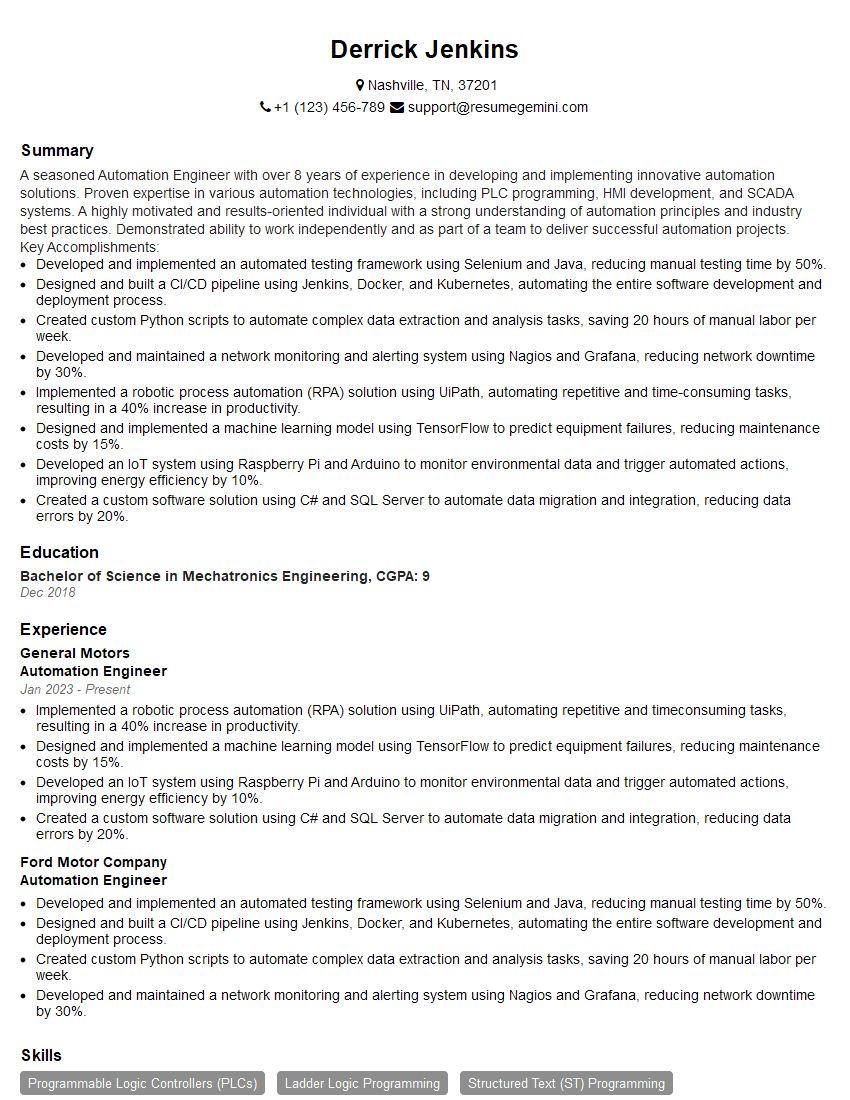
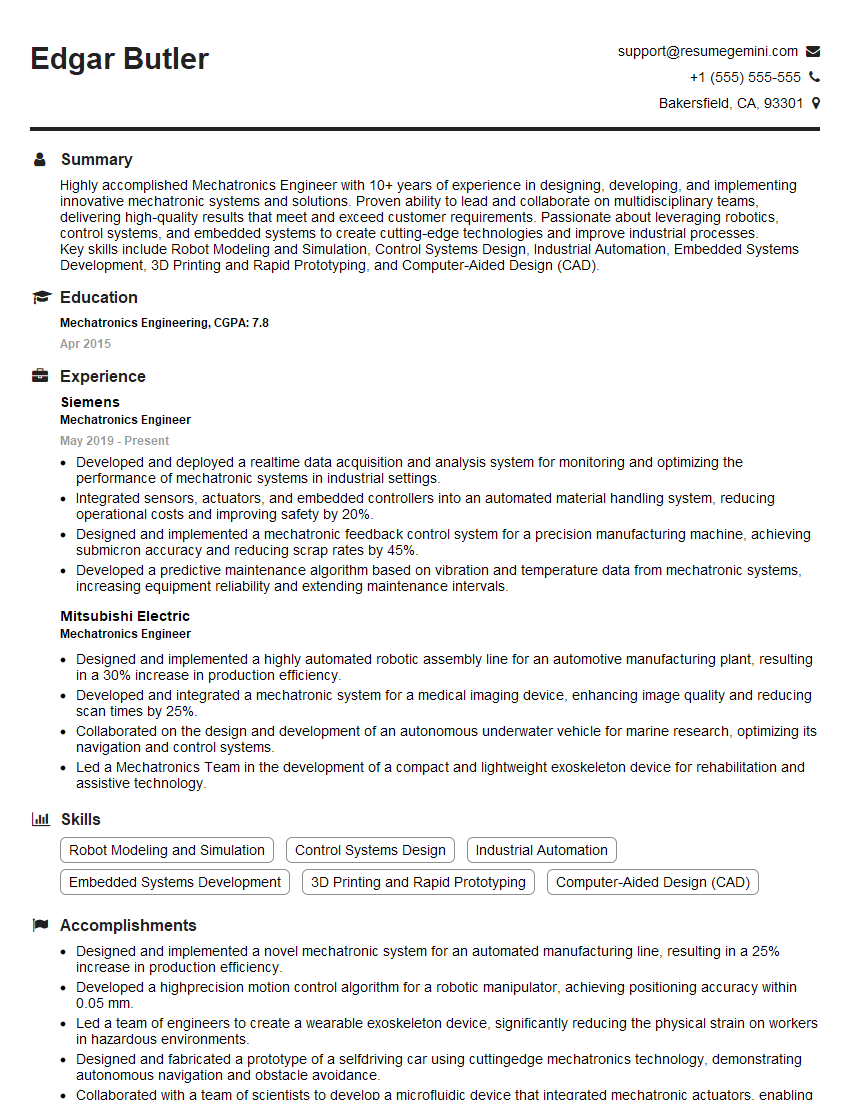
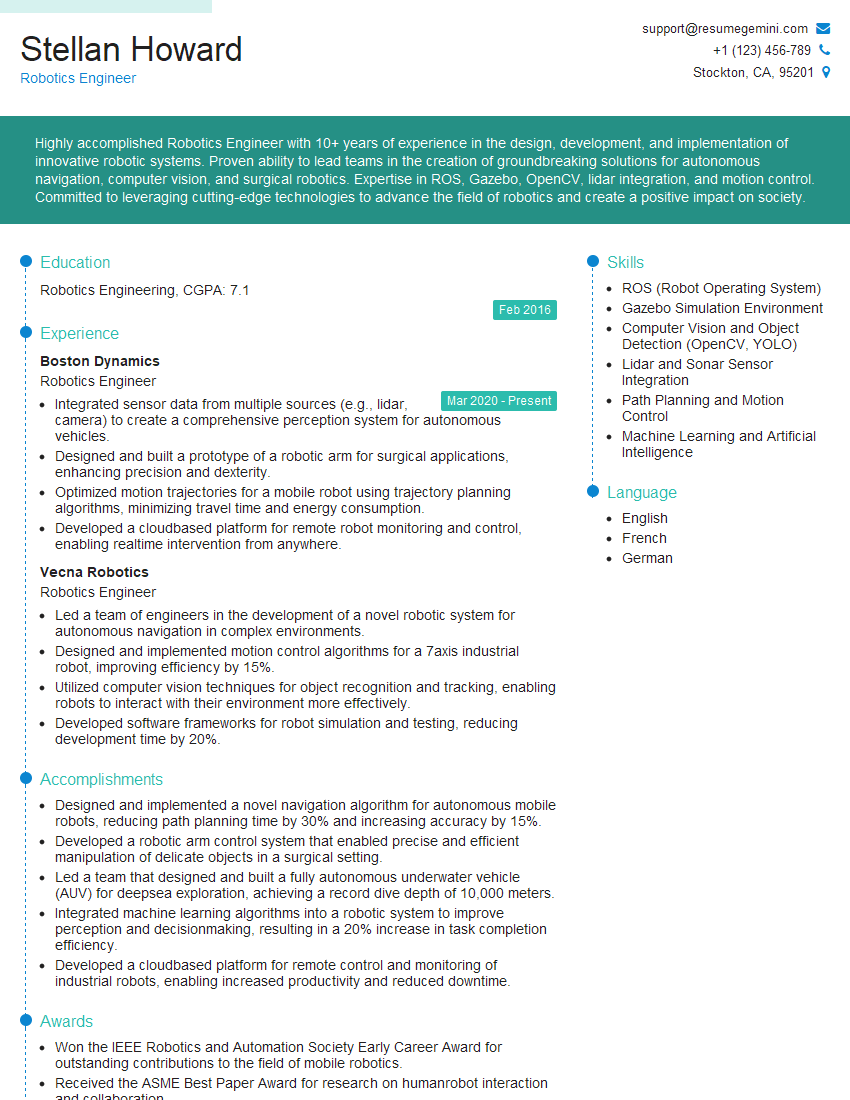
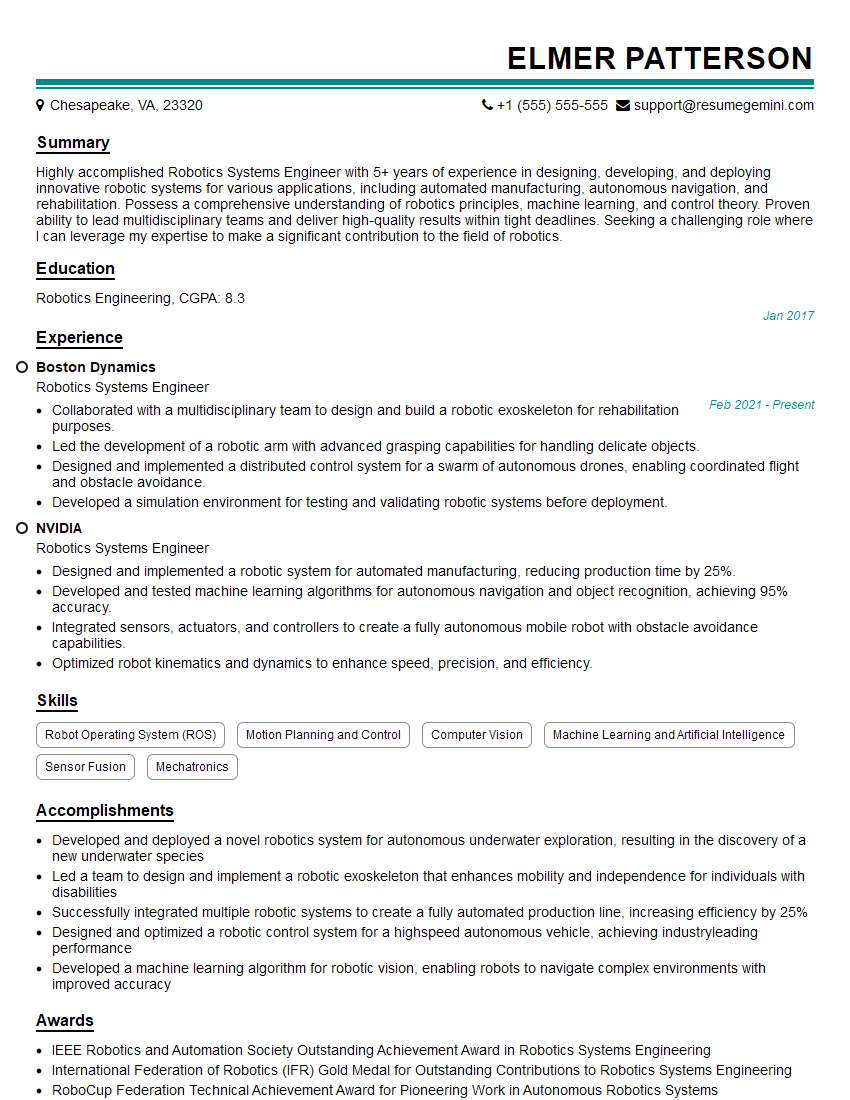
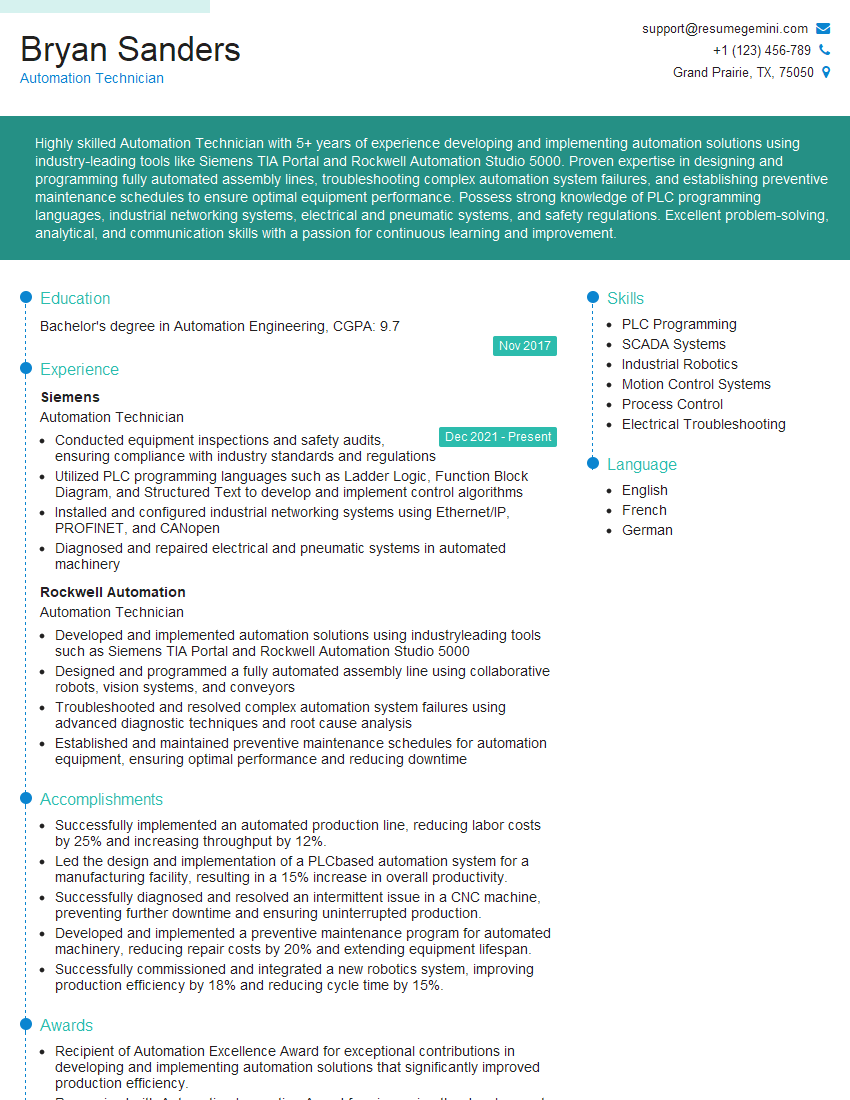
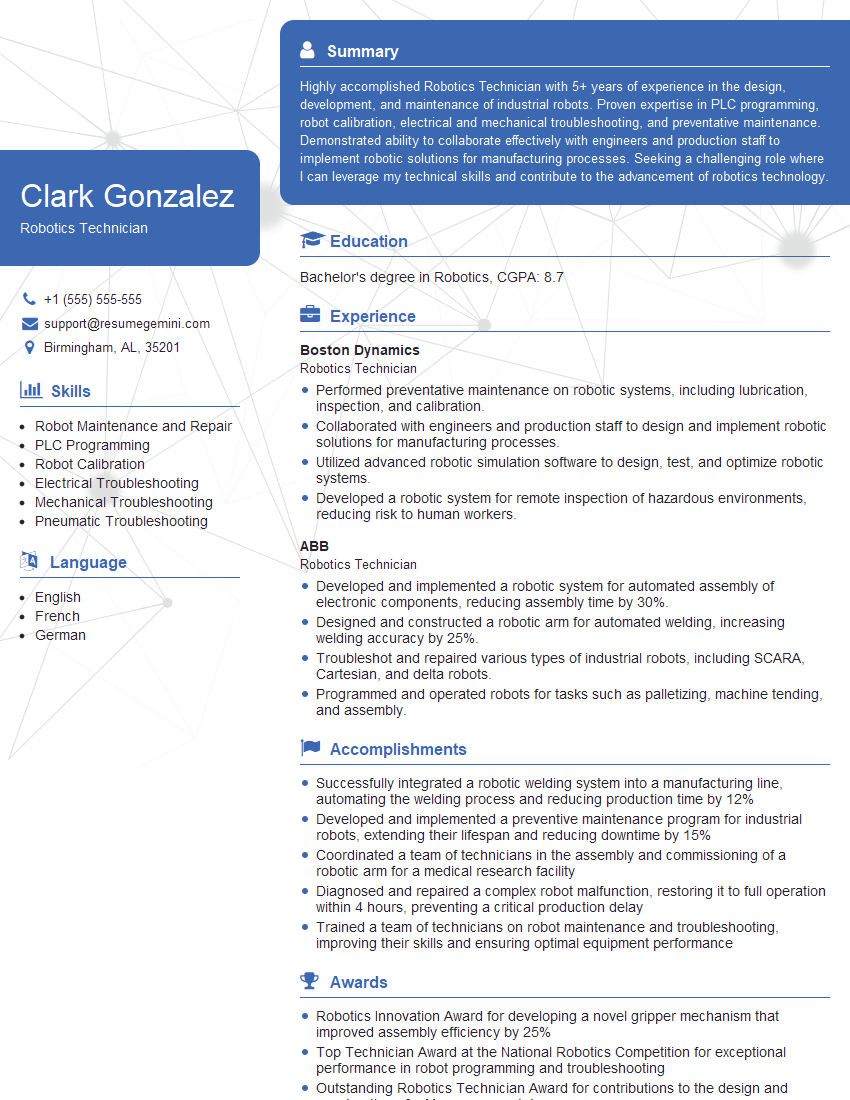
Mastering Robot Programming and Automation opens doors to exciting and rewarding careers in a rapidly growing field. To maximize your job prospects, it’s crucial to present your skills effectively. Creating an ATS-friendly resume is key to getting your application noticed by recruiters. ResumeGemini is a trusted resource that can help you build a professional and impactful resume tailored to the specifics of your experience. Examples of resumes tailored to Robot Programming and Automation are available to help guide you. Invest the time to craft a strong resume – it’s your first impression and a critical step in landing your dream job.

Explore more articles
Users Rating of Our Blogs
Share Your Experience
We value your feedback! Please rate our content and share your thoughts (optional).
What Readers Say About Our Blog
Hello,
we currently offer a complimentary backlink and URL indexing test for search engine optimization professionals.
You can get complimentary indexing credits to test how link discovery works in practice.
No credit card is required and there is no recurring fee.
You can find details here:
https://wikipedia-backlinks.com/indexing/
Regards
NICE RESPONSE TO Q & A
hi
The aim of this message is regarding an unclaimed deposit of a deceased nationale that bears the same name as you. You are not relate to him as there are millions of people answering the names across around the world. But i will use my position to influence the release of the deposit to you for our mutual benefit.
Respond for full details and how to claim the deposit. This is 100% risk free. Send hello to my email id: [email protected]
Luka Chachibaialuka
Hey interviewgemini.com, just wanted to follow up on my last email.
We just launched Call the Monster, an parenting app that lets you summon friendly ‘monsters’ kids actually listen to.
We’re also running a giveaway for everyone who downloads the app. Since it’s brand new, there aren’t many users yet, which means you’ve got a much better chance of winning some great prizes.
You can check it out here: https://bit.ly/callamonsterapp
Or follow us on Instagram: https://www.instagram.com/callamonsterapp
Thanks,
Ryan
CEO – Call the Monster App
Hey interviewgemini.com, I saw your website and love your approach.
I just want this to look like spam email, but want to share something important to you. We just launched Call the Monster, a parenting app that lets you summon friendly ‘monsters’ kids actually listen to.
Parents are loving it for calming chaos before bedtime. Thought you might want to try it: https://bit.ly/callamonsterapp or just follow our fun monster lore on Instagram: https://www.instagram.com/callamonsterapp
Thanks,
Ryan
CEO – Call A Monster APP
To the interviewgemini.com Owner.
Dear interviewgemini.com Webmaster!
Hi interviewgemini.com Webmaster!
Dear interviewgemini.com Webmaster!
excellent
Hello,
We found issues with your domain’s email setup that may be sending your messages to spam or blocking them completely. InboxShield Mini shows you how to fix it in minutes — no tech skills required.
Scan your domain now for details: https://inboxshield-mini.com/
— Adam @ InboxShield Mini
Reply STOP to unsubscribe
Hi, are you owner of interviewgemini.com? What if I told you I could help you find extra time in your schedule, reconnect with leads you didn’t even realize you missed, and bring in more “I want to work with you” conversations, without increasing your ad spend or hiring a full-time employee?
All with a flexible, budget-friendly service that could easily pay for itself. Sounds good?
Would it be nice to jump on a quick 10-minute call so I can show you exactly how we make this work?
Best,
Hapei
Marketing Director
Hey, I know you’re the owner of interviewgemini.com. I’ll be quick.
Fundraising for your business is tough and time-consuming. We make it easier by guaranteeing two private investor meetings each month, for six months. No demos, no pitch events – just direct introductions to active investors matched to your startup.
If youR17;re raising, this could help you build real momentum. Want me to send more info?
Hi, I represent an SEO company that specialises in getting you AI citations and higher rankings on Google. I’d like to offer you a 100% free SEO audit for your website. Would you be interested?
Hi, I represent an SEO company that specialises in getting you AI citations and higher rankings on Google. I’d like to offer you a 100% free SEO audit for your website. Would you be interested?
good