Every successful interview starts with knowing what to expect. In this blog, we’ll take you through the top Recycling Procedures interview questions, breaking them down with expert tips to help you deliver impactful answers. Step into your next interview fully prepared and ready to succeed.
Questions Asked in Recycling Procedures Interview
Q 1. Explain the different stages of the recycling process.
The recycling process is a multi-stage journey transforming discarded materials into reusable resources. It generally involves these key steps:
- Collection: This initial stage involves gathering recyclable materials from various sources, such as curbside bins, drop-off centers, and commercial facilities. Efficient collection systems are crucial for maximizing participation and minimizing contamination.
- Sorting: Once collected, materials need to be sorted according to their type (e.g., paper, plastic, metal, glass). This can be done manually or using automated technologies like optical sorters, which identify materials based on their physical properties.
- Processing: This stage involves cleaning, shredding, or baling the sorted materials to prepare them for the next stage. For example, plastics might be washed and shredded, while paper is often baled for easier transport.
- Manufacturing: The processed materials are then used as raw materials in the production of new products. For instance, recycled aluminum can be used to make new cans, and recycled paper becomes new paper products. This step represents the ultimate goal of recycling – resource recovery.
- Distribution: Finally, the newly manufactured products are distributed to markets, completing the circular economy process. This stage highlights the importance of creating a demand for recycled products.
Each stage is interconnected and requires careful management to ensure efficiency and effectiveness. For example, contamination at the collection stage can significantly impact the ability to process and reuse materials later in the process, highlighting the importance of public education and clear labeling guidelines.
Q 2. Describe your experience with various recycling technologies (e.g., baling, sorting).
My experience encompasses a wide range of recycling technologies, primarily focused on optimizing efficiency and minimizing waste. I’ve worked extensively with:
- Baling: I’ve overseen the operation and maintenance of various balers, from small-scale horizontal balers used for processing cardboard to large-scale industrial balers for handling plastic and metal. Understanding baler types, maintenance schedules, and optimal bale density is crucial for efficient transportation and processing downstream.
- Sorting: I’m proficient in both manual and automated sorting techniques. I’ve managed teams responsible for manual sorting lines, focusing on training and quality control to minimize errors. My experience with automated systems, particularly optical sorters, includes system optimization, troubleshooting, and ensuring accurate material identification. For example, I’ve improved sorting accuracy by fine-tuning optical sorters to distinguish between different types of plastics based on their infrared signatures.
- Other technologies: I have familiarity with other technologies such as shredding, densification, and material washing systems, understanding their roles in preparing materials for manufacturing. Each technology has specific requirements and optimization strategies, and my experience has taught me the importance of matching technology to the specific material stream.
My approach always emphasizes safety, process optimization, and minimizing the environmental impact of these technologies. For instance, I’ve implemented energy-efficient practices in the operation of balers, reducing overall electricity consumption and minimizing the carbon footprint.
Q 3. What are the common challenges in recycling operations and how have you addressed them?
Recycling operations face numerous challenges, but effective strategies can mitigate their impact. Some common issues include:
- Contamination: Improperly sorted materials (e.g., plastic bags in a paper stream) can contaminate entire batches, rendering them unusable. I address this by improving public education initiatives and implementing stricter quality control measures at sorting facilities.
- Fluctuating Market Prices: The price of recycled materials fluctuates significantly, impacting the economic viability of recycling operations. I mitigate this by diversifying markets and exploring innovative applications for recycled materials.
- Technological Limitations: Current technologies might not be able to efficiently process all types of materials, especially complex plastics. I address this by staying updated on technological advancements and advocating for research and development in this area. For example, I’ve successfully implemented advanced sensor technologies to improve material identification accuracy.
- Labor Shortages: Finding and retaining skilled labor for sorting and processing operations is challenging. I counter this by offering comprehensive training programs and creating a positive work environment to improve employee satisfaction and reduce turnover.
My problem-solving approach involves data-driven decision-making, proactive planning, and collaborative partnerships with stakeholders across the recycling value chain. A successful example was implementing a new automated sorting system that drastically reduced labor costs while significantly improving sorting accuracy.
Q 4. How do you ensure compliance with recycling regulations?
Compliance with recycling regulations is paramount. My approach involves:
- Thorough Understanding of Regulations: Staying current on all relevant local, state, and federal regulations is essential. This requires continuous monitoring of updates and engaging with regulatory bodies.
- Comprehensive Documentation: Maintaining detailed records of all recycling activities, including material flows, processing methods, and waste disposal is critical for audits and demonstrating compliance.
- Regular Audits and Inspections: Conducting internal audits and collaborating with external auditors to identify potential compliance gaps. This proactive approach allows for timely corrective actions and prevents violations.
- Employee Training: Educating employees on proper handling procedures and waste segregation, ensuring everyone understands their role in maintaining compliance.
- Technology Integration: Using software and systems that track materials and generate reports to automate data collection and compliance monitoring.
A key aspect is building strong relationships with regulatory agencies. Open communication and proactive engagement ensure any issues are addressed promptly and prevent penalties.
Q 5. Explain your understanding of different recycling materials (plastics, metals, paper).
Recycling different materials requires a nuanced understanding of their properties and processing requirements:
- Plastics: Plastics are a diverse group of polymers requiring different recycling methods depending on their type (PET, HDPE, PVC, etc.). Recycling involves cleaning, shredding, and potentially chemical processing to create usable plastic pellets or flakes for new products. The challenge lies in separating different plastics and addressing contamination.
- Metals: Metals like aluminum and steel are readily recyclable, often requiring minimal processing beyond sorting and cleaning. They can be melted down and reused in new metal products. The key is to separate ferrous (magnetic) from non-ferrous metals.
- Paper: Paper recycling involves pulping and de-inking the paper to remove ink and other impurities, producing pulp that can be used to make new paper. Contamination from plastics or other materials significantly reduces the quality of the recycled pulp.
Understanding the chemical properties and potential environmental impacts of each material is essential for optimizing recycling strategies. For example, certain plastics require specialized processing techniques due to their chemical composition.
Q 6. How do you manage contamination in the recycling stream?
Contamination is a major challenge in recycling. My strategy for management involves a multi-pronged approach:
- Public Education: Clear and easily understandable communication about acceptable materials, proper sorting techniques, and the negative impact of contamination is crucial. This often involves public awareness campaigns and educational materials.
- Improved Sorting Technologies: Implementing advanced sorting technologies, like near-infrared (NIR) sorters, to detect and remove contaminants automatically is essential. This increases the purity of recycled materials significantly.
- Stricter Quality Control: Implementing quality control checkpoints at different stages of the process to identify and remove contaminants. This may involve manual inspection, automated sensors, or a combination of both.
- Contamination Reduction Strategies: Implementing strategies to reduce contamination at the source, for example, designing products for easier recycling and working with manufacturers to use recyclable materials.
A successful example was implementing a public awareness program coupled with improved sorting technology, leading to a 20% reduction in contamination levels within a year.
Q 7. Describe your experience with Material Recovery Facilities (MRFs).
Material Recovery Facilities (MRFs) are the central hubs for processing recyclables. My experience includes overseeing operations and optimizing MRF processes. This includes:
- Process Optimization: Improving the efficiency of various stages within the MRF, such as optimizing conveyor speeds, improving sorting accuracy, and streamlining material handling.
- Equipment Maintenance: Ensuring the proper maintenance of all equipment, from conveyors and balers to optical sorters, to minimize downtime and maximize throughput.
- Data Analysis: Using data to track performance, identify bottlenecks, and implement improvements. This involves monitoring key performance indicators (KPIs) such as throughput, recovery rates, and contamination levels.
- Safety Management: Prioritizing workplace safety through proper training, equipment maintenance, and adherence to safety protocols.
- Technology Integration: Implementing new technologies to improve efficiency, accuracy, and safety, such as automated guided vehicles (AGVs) for material transport or artificial intelligence (AI)-powered sorting systems.
My experience has taught me the importance of a holistic approach to MRF management, balancing operational efficiency, environmental sustainability, and workforce safety. For instance, I’ve implemented a system using predictive maintenance algorithms to reduce unexpected equipment failures, thus improving uptime and reducing operational costs.
Q 8. What are the key performance indicators (KPIs) you use to measure recycling success?
Measuring recycling success requires a multifaceted approach using Key Performance Indicators (KPIs). These aren’t just about the weight of materials collected; they reflect the overall effectiveness and impact of the program.
- Recycling Rate: This is the percentage of generated waste that is successfully recycled. For example, a recycling rate of 60% means that 60% of the total waste generated was diverted from landfills through recycling. This is calculated by dividing the weight of recycled materials by the total weight of generated waste and multiplying by 100.
- Diversion Rate: Similar to recycling rate, but this includes all waste diversion methods, such as composting and reuse, not just recycling. A higher diversion rate indicates a more comprehensive waste management strategy.
- Contamination Rate: This measures the percentage of recyclable materials that are contaminated and cannot be processed. A low contamination rate (e.g., below 5%) shows the program’s effectiveness in educating users about proper sorting. High contamination can render entire batches unusable.
- Cost per Ton Recycled: This measures the efficiency of the recycling process in terms of cost. A lower cost per ton indicates improved operational efficiency.
- Material Recovery Rate (MRR): This KPI focuses on the amount of recyclable material successfully recovered from the waste stream after processing. It provides a detailed measure of the efficiency of material separation and processing steps.
By tracking these KPIs, we can identify areas for improvement and demonstrate the program’s overall success in reducing landfill waste and conserving resources.
Q 9. How do you track and analyze recycling data?
Tracking and analyzing recycling data involves a combination of manual and automated processes. We use a dedicated waste management software to record data from various sources.
- Weighing Scales and Sensors: These are used at collection points to accurately measure the weight of different materials collected.
- Barcode Scanners: These help track the movement of materials through the recycling process, from collection to processing and final destination.
- Manual Data Entry: For smaller-scale operations or data not captured automatically, manual data entry is utilized, ensuring all information is accurately recorded.
- Data Analysis Software: Software packages allow for data visualization, trend analysis, and the identification of patterns and anomalies in recycling rates. This could show, for instance, seasonal variations or impact of educational campaigns.
The data is then analyzed using statistical methods to identify trends, measure the effectiveness of different recycling strategies, and inform future program improvements. For instance, we might notice a drop in aluminum can recycling in a specific area which would prompt a localized campaign.
Q 10. Describe your experience with recycling audits and reporting.
Recycling audits are crucial for ensuring compliance and optimizing efficiency. I have extensive experience conducting both internal and external audits, adhering to relevant standards and regulations.
- Internal Audits: These involve reviewing our internal processes, data accuracy, and compliance with our own program guidelines. For instance, I check if proper sorting procedures are followed at collection points.
- External Audits: These are conducted by third-party organizations to verify our compliance with environmental regulations and industry best practices. This is crucial for maintaining certifications.
Audits generate comprehensive reports that highlight areas of strength and areas needing improvement. These reports are used to refine our recycling processes, enhance efficiency, and demonstrate accountability to stakeholders. For example, an audit might reveal an issue with contamination rates, prompting changes to public education materials.
Q 11. How do you handle hazardous waste within a recycling program?
Hazardous waste management within a recycling program requires strict adherence to regulations and specialized handling procedures. It is crucial to segregate hazardous waste from other recyclables to prevent contamination and ensure safety.
- Segregation and Identification: Clearly labeled containers and designated areas are used to separate hazardous waste (e.g., batteries, fluorescent lamps, electronic waste). Training is provided to employees on how to identify and handle hazardous materials safely.
- Specialized Contractors: We contract with licensed hazardous waste disposal companies that have the expertise and permits to handle and dispose of hazardous materials in an environmentally sound manner. This ensures proper treatment and prevents environmental contamination.
- Documentation and Tracking: Meticulous records are maintained, documenting the generation, handling, transportation, and disposal of hazardous waste. This meets regulatory requirements and allows for tracing the movement of hazardous waste.
Failing to properly manage hazardous waste can lead to serious environmental and health consequences, so a robust and compliant system is absolutely essential.
Q 12. Explain your knowledge of different recycling methods (e.g., mechanical, chemical).
Recycling methods can be broadly classified into mechanical and chemical processes. Both play vital roles in transforming waste materials into reusable resources.
- Mechanical Recycling: This involves physically sorting and processing materials. Examples include shredding, separating, and washing materials like paper, plastics, and metals to remove contaminants and prepare them for reuse. Think of how plastic bottles are crushed and sorted before being processed into new plastic products.
- Chemical Recycling: This utilizes chemical processes to break down materials into their basic building blocks, which can then be used to create new products. This is particularly useful for plastics that are difficult to recycle mechanically. For instance, chemical recycling can depolymerize plastics to create monomers that can be used to produce virgin-quality plastics.
Often, a combination of mechanical and chemical methods is employed to maximize the recovery rate and quality of recycled materials. The choice of method depends on the type of material and the desired outcome.
Q 13. How do you engage employees and the public in recycling initiatives?
Engaging employees and the public is critical to the success of any recycling program. We use a multi-pronged approach to foster participation and understanding.
- Employee Engagement: We provide comprehensive training to employees on proper recycling procedures, emphasizing the importance of their role in the program’s success. Incentive programs, such as friendly competitions between teams or departments, can also increase participation.
- Public Engagement: We utilize various communication channels to reach the public, including educational campaigns, workshops, and community events. Clear and accessible information materials, such as infographics and videos, explain the benefits of recycling and provide practical guidance on how to participate effectively.
- Partnerships: Collaborating with schools, community organizations, and local businesses strengthens our outreach efforts. We may offer educational resources for schools or co-sponsor community events to promote awareness.
By making recycling convenient, understandable, and rewarding, we encourage broader participation and achieve higher recycling rates. It’s not enough to simply provide bins; we need to foster a sense of collective responsibility.
Q 14. What is your experience with recycling program design and implementation?
My experience in recycling program design and implementation spans various scales and contexts. I’ve been involved in developing and implementing programs for offices, residential communities, and large-scale industrial settings.
- Needs Assessment: The first step is to conduct a thorough assessment to understand the specific needs and challenges of the target audience. This involves analyzing waste generation patterns, identifying available resources, and considering local regulations.
- Program Design: Based on the needs assessment, I develop a comprehensive program plan that outlines goals, objectives, strategies, and KPIs. This includes selecting appropriate collection methods, designing sorting systems, and establishing data tracking procedures.
- Implementation and Monitoring: I oversee the implementation of the program, providing training to staff and coordinating logistics. Continuous monitoring of the program’s performance using KPIs allows for timely adjustments and improvements.
- Evaluation and Optimization: Regular evaluation is crucial to ensure the program’s effectiveness and identify areas for improvement. This may involve conducting audits, analyzing data, and seeking feedback from stakeholders.
Successful program design and implementation rely on a data-driven approach, stakeholder engagement, and a commitment to continuous improvement. I leverage my expertise to build sustainable and impactful recycling programs that maximize resource recovery and minimize environmental impact.
Q 15. How do you optimize recycling processes for cost-effectiveness?
Optimizing recycling processes for cost-effectiveness involves a multi-pronged approach focusing on material recovery, operational efficiency, and market dynamics. It’s like running a lean and efficient business, but with discarded materials instead of manufactured goods.
Maximize Material Recovery: Improving sorting accuracy through advanced technologies like AI-powered sorting systems drastically reduces contamination, increasing the value of the recovered materials. For example, using near-infrared (NIR) sensors to identify different plastics allows for more precise separation, resulting in higher-quality recycled materials that command better prices.
Streamline Operations: Analyze the entire process from collection to processing to identify bottlenecks and inefficiencies. This might involve optimizing transportation routes, improving layout of the facility for smoother material flow, or implementing automated systems to reduce labor costs. Think of it like a well-oiled machine where every component works in perfect harmony.
Strategic Market Engagement: Understanding market demands for recycled materials is crucial. Building strong relationships with buyers ensures consistent demand and competitive pricing. Analyzing market trends allows for strategic adjustments in the types of materials collected and processed to maximize profits.
Energy Efficiency: Implementing energy-efficient equipment and processes, such as using low-energy lighting and optimizing machinery operation, significantly reduces utility costs. Think about it like turning off lights when you leave a room.
Career Expert Tips:
- Ace those interviews! Prepare effectively by reviewing the Top 50 Most Common Interview Questions on ResumeGemini.
- Navigate your job search with confidence! Explore a wide range of Career Tips on ResumeGemini. Learn about common challenges and recommendations to overcome them.
- Craft the perfect resume! Master the Art of Resume Writing with ResumeGemini’s guide. Showcase your unique qualifications and achievements effectively.
- Don’t miss out on holiday savings! Build your dream resume with ResumeGemini’s ATS optimized templates.
Q 16. Describe your experience with recycling equipment maintenance.
My experience with recycling equipment maintenance is extensive. I’ve overseen preventative maintenance programs, troubleshooting breakdowns, and coordinating repairs for various types of equipment, from balers and conveyors to shredders and sorting systems. It’s like being a mechanic, but for a very specific and complex machine.
Preventative maintenance is key. Regularly scheduled inspections, lubrication, and part replacements prevent costly breakdowns and downtime. For example, we developed a detailed checklist for our baler, ensuring regular checks of hydraulic fluid levels, belt tension, and blade sharpness. This proactive approach has minimized unexpected failures and extended the lifespan of our equipment. When breakdowns do occur, having a robust system of spare parts and experienced technicians is essential to minimize downtime. Proper record-keeping, detailing maintenance schedules and repairs, is also crucial for informed decision-making regarding equipment upgrades or replacements.
Q 17. How do you ensure the safety of workers in a recycling environment?
Ensuring worker safety in a recycling environment is paramount. It’s not just about following regulations; it’s about fostering a culture of safety. We use a layered approach – incorporating engineering controls, administrative controls, and personal protective equipment (PPE).
Engineering Controls: This involves using machinery with safety features like emergency shut-off switches, guarding moving parts, and installing proper ventilation systems to reduce exposure to dust and fumes. Think of it like designing a safer playground.
Administrative Controls: This includes safety training programs, regular safety inspections, and the implementation of safe work procedures. This is like creating a rulebook everyone follows.
Personal Protective Equipment (PPE): Providing and enforcing the use of appropriate PPE, including safety glasses, gloves, hearing protection, and high-visibility clothing, is crucial. Think of it as having the right tools for the job.
Regular safety audits and employee feedback sessions are essential to identifying and mitigating potential hazards. This proactive approach ensures a safe and productive work environment.
Q 18. What are the different types of recycling facilities?
Recycling facilities vary widely based on the materials they process and the technologies they employ. Here are some common types:
Material Recovery Facilities (MRFs): These are large-scale facilities that process mixed recyclables, separating them into different streams for further processing. Think of them as the central sorting hub for recyclables.
Single-Stream Recycling Facilities: These handle commingled recyclables (paper, plastic, metal, glass all mixed together), requiring advanced sorting technologies. They are efficient but require sophisticated equipment.
Specialized Recycling Facilities: These facilities focus on specific materials, such as plastic, electronics (e-waste), or tires. They possess specialized equipment tailored to the unique characteristics of each material.
Drop-off Centers: Smaller-scale facilities where residents can directly deposit sorted recyclables. These are often used in conjunction with larger MRFs.
Q 19. Explain the role of different stakeholders in the recycling process.
The recycling process involves a complex interplay of various stakeholders, each with specific roles and responsibilities. It’s like a well-orchestrated symphony.
Consumers: Responsible for proper sorting and disposal of recyclable materials. Their participation is the foundation of the entire process.
Municipalities and Local Governments: Responsible for establishing collection programs, providing infrastructure (bins, trucks), and overseeing regulations.
Recycling Companies and Processors: Responsible for collecting, sorting, and processing recyclables, transforming them into usable materials.
Material Buyers and Manufacturers: Purchase recycled materials and utilize them in the manufacturing of new products, closing the loop.
Regulators and Policy Makers: Set standards, enforce regulations, and create policies to promote recycling and sustainability.
Q 20. How do you improve the efficiency of a recycling operation?
Improving the efficiency of a recycling operation requires a holistic approach focusing on optimization at every stage. Think of it as continuously improving a complex system.
Process Optimization: Analyze each stage of the process to identify bottlenecks and streamline workflows. This might involve using data analytics to track material flow and identify areas for improvement.
Technology Integration: Implementing advanced technologies such as AI-powered sorting systems, automated balers, and efficient material handling systems can significantly boost throughput and reduce labor costs.
Employee Training and Skill Development: Investing in training programs to enhance the skills and knowledge of employees improves operational efficiency and safety.
Data-Driven Decision Making: Using data analytics to monitor key performance indicators (KPIs) like material recovery rates, processing times, and energy consumption allows for data-driven decision-making to improve performance.
Q 21. How familiar are you with different recycling certifications and standards?
I am familiar with various recycling certifications and standards, understanding their importance in ensuring quality, environmental compliance, and market access. It’s like having different quality seals ensuring the product meets specific criteria.
ISO 14001: This international standard for environmental management systems provides a framework for organizations to manage their environmental impact, including recycling operations.
Recycled Content Standards: Many industries have standards defining minimum recycled content for specific products, ensuring the use of recycled materials. For example, the percentage of post-consumer recycled content in plastic bottles.
Chain of Custody Certifications: These certifications (like the Forest Stewardship Council (FSC) for paper) track materials from source to end product, ensuring the recycled content claims are verifiable and transparent.
Industry-Specific Standards: Various industries have specific standards for recycled materials. For example, the standards for recycled plastics used in food packaging.
Understanding these standards is crucial for ensuring compliance, improving market access for recycled materials, and promoting consumer trust.
Q 22. Describe your experience with recycling process improvements.
Improving recycling processes involves a multifaceted approach focusing on efficiency, cost-effectiveness, and environmental impact. My experience includes streamlining collection routes using route optimization software, resulting in a 15% reduction in fuel consumption and greenhouse gas emissions. I’ve also implemented a new sorting system using advanced automated equipment, increasing our sorting accuracy from 85% to 95% and significantly reducing contamination in the recycled materials stream. Another key improvement involved implementing a comprehensive employee training program focused on proper waste segregation, leading to a 20% decrease in incorrectly sorted materials. This program included interactive modules and on-site demonstrations to improve knowledge retention and practical application.
- Route Optimization Software: I utilized software that analyzes geographical data and traffic patterns to create the most efficient collection routes.
- Automated Sorting Equipment: We invested in sensors and robotic arms to identify and sort various materials with higher precision.
- Employee Training: The training included hands-on workshops, visual aids, and regular quizzes to ensure effective learning.
Q 23. What is your understanding of life cycle assessment related to recycling?
Life Cycle Assessment (LCA) in recycling examines the environmental impacts of a product or process throughout its entire life, from raw material extraction to disposal or recycling. It’s crucial for understanding the true sustainability of recycling efforts. For example, an LCA might compare the energy consumed in producing virgin aluminum versus recycling aluminum scrap. It would consider the energy used for mining bauxite, refining it into alumina, and smelting it into aluminum, versus the energy needed for melting and reprocessing scrap aluminum. This helps determine whether recycling is truly the more environmentally friendly option. A complete LCA also includes transportation impacts, emissions during processing, and waste generated at each stage.
In my work, we’ve used LCA data to justify investments in technologies that minimize the environmental footprint of our recycling operations, such as installing energy-efficient equipment or exploring the use of renewable energy sources.
Q 24. How do you handle recycling discrepancies or inconsistencies?
Recycling discrepancies, such as contamination or inaccurate sorting, are addressed through a systematic approach. Firstly, we identify the source of the discrepancy – is it due to improper sorting by residents, issues with collection procedures, or problems with processing equipment? We use data analysis to pinpoint trends and patterns. For instance, increased contamination of one type of plastic might indicate a need for clearer labeling or improved public education campaigns in that specific area. Secondly, we implement corrective actions, which might include improved training for staff, enhanced quality control checks at sorting facilities, or adjustments to the communication materials provided to residents. Finally, we monitor the effectiveness of our solutions through regular audits and data tracking, ensuring the problem is resolved and doesn’t reoccur.
For example, a consistent increase in glass contamination in a particular collection route led us to investigate. We found the problem stemmed from insufficient separation of glass from other materials at the source. We addressed this by increasing public awareness through targeted mailers, and by adding clear visual cues to the recycling bins in that area. This resulted in a significant drop in glass contamination within three months.
Q 25. Explain your approach to problem-solving in a recycling setting.
My problem-solving approach in a recycling setting is data-driven and iterative. I follow a structured process: First, I clearly define the problem and its impact. Second, I gather data to understand the root causes, using techniques like process mapping and data analysis. Third, I brainstorm and evaluate potential solutions. Then, I implement a chosen solution, often starting with a pilot program on a smaller scale to test its effectiveness. Finally, I monitor and evaluate the results, making adjustments as needed. This continuous improvement cycle is key to maintaining efficiency and environmental responsibility.
For instance, when faced with a drop in recycling participation rates, I analyzed various factors such as bin accessibility, community engagement, and the clarity of recycling guidelines. I then implemented a trial campaign focusing on community engagement with improved information dissemination through social media and local community events. This led to a measurable increase in participation.
Q 26. How do you manage recycling contracts and vendor relationships?
Managing recycling contracts and vendor relationships requires strong communication, negotiation skills, and a keen understanding of market dynamics. I prioritize building strong, collaborative relationships with vendors based on mutual trust and transparency. This includes clearly defining expectations in contracts, establishing regular communication channels, and conducting performance reviews to ensure adherence to agreed-upon service levels. We also regularly analyze market prices for recycled materials to optimize our contracts and secure the best possible terms. This competitive bidding process ensures that we are getting the most value for our recycling efforts.
For instance, I successfully renegotiated a contract with our main processing vendor, securing a 10% reduction in processing fees without compromising service quality. This was achieved by presenting a strong case based on market data, highlighting our commitment to volume consistency, and exploring alternative vendors as leverage for negotiations.
Q 27. Describe your experience with budget management for a recycling program.
Budget management for a recycling program demands careful planning, accurate forecasting, and consistent monitoring. My approach starts with developing a detailed budget that accounts for all expenses, including collection costs, processing fees, equipment maintenance, personnel salaries, and marketing efforts. I utilize historical data and projected volume to forecast future costs. Throughout the year, I actively monitor expenses against the budget, identifying any variances and implementing corrective actions. This proactive approach ensures we stay within budgetary limits while maintaining the effectiveness of the recycling program. Additionally, I explore opportunities for cost savings, such as negotiating better rates with vendors or implementing energy-efficient technologies.
For example, by carefully analyzing our transportation costs, we identified opportunities to consolidate routes and optimize delivery schedules, resulting in a significant decrease in fuel consumption and overall transportation costs.
Q 28. How would you communicate a recycling issue to upper management?
Communicating a recycling issue to upper management requires a clear, concise, and data-driven approach. I would first prepare a concise report outlining the problem, its impact (e.g., financial losses, environmental consequences, compliance risks), and the proposed solutions. I would quantify the issue using data and metrics to demonstrate the severity of the problem and justify the need for action. The report would include a cost-benefit analysis of the proposed solutions, along with a timeline for implementation and expected outcomes. This structured approach provides upper management with a clear understanding of the situation and facilitates informed decision-making.
For example, if contamination rates increased significantly, impacting the market value of the recycled materials, I would present a report detailing the contamination levels, the resulting financial loss, the potential causes (e.g., inadequate public education), and the proposed solutions (e.g., improved public awareness campaign). I would also provide projections on how the proposed solutions would reduce contamination and improve the financial outcome.
Key Topics to Learn for Your Recycling Procedures Interview
- Material Sorting and Classification: Understand the different types of recyclable materials (plastics, paper, metals, glass), their identification, and proper sorting techniques. Consider the challenges of contamination and how to minimize it.
- Recycling Processes and Technologies: Explore the various methods used in recycling, from mechanical processes (e.g., shredding, baling) to chemical recycling. Be prepared to discuss the advantages and disadvantages of each.
- Waste Management and Reduction Strategies: Discuss the importance of waste reduction and its role in a comprehensive recycling program. Understand the concept of a circular economy and its relevance to recycling.
- Environmental Regulations and Compliance: Familiarize yourself with relevant environmental regulations and best practices related to recycling and waste disposal. Be prepared to discuss compliance measures and potential penalties for non-compliance.
- Quality Control and Assurance in Recycling: Understand the importance of maintaining high quality recycled materials. Discuss methods for ensuring the purity and suitability of recycled materials for reuse or reprocessing.
- Safety Procedures and Risk Management: Discuss safety protocols in a recycling facility, including handling hazardous materials, using machinery safely, and complying with occupational health and safety regulations.
- Data Analysis and Reporting: Understand how data is collected and analyzed to track recycling performance, identify areas for improvement, and report on environmental impact.
- Problem-Solving and Troubleshooting: Be ready to discuss how you’d approach common challenges in a recycling environment, such as equipment malfunctions, material contamination, or process inefficiencies.
Next Steps
Mastering Recycling Procedures demonstrates a commitment to environmental sustainability and showcases valuable skills in process management, problem-solving, and regulatory compliance – highly sought-after qualities in today’s job market. To significantly boost your job prospects, crafting an ATS-friendly resume is crucial. ResumeGemini can help you build a powerful, professional resume that highlights your skills and experience effectively. We offer examples of resumes tailored specifically to Recycling Procedures roles, providing you with a head start in your job search.
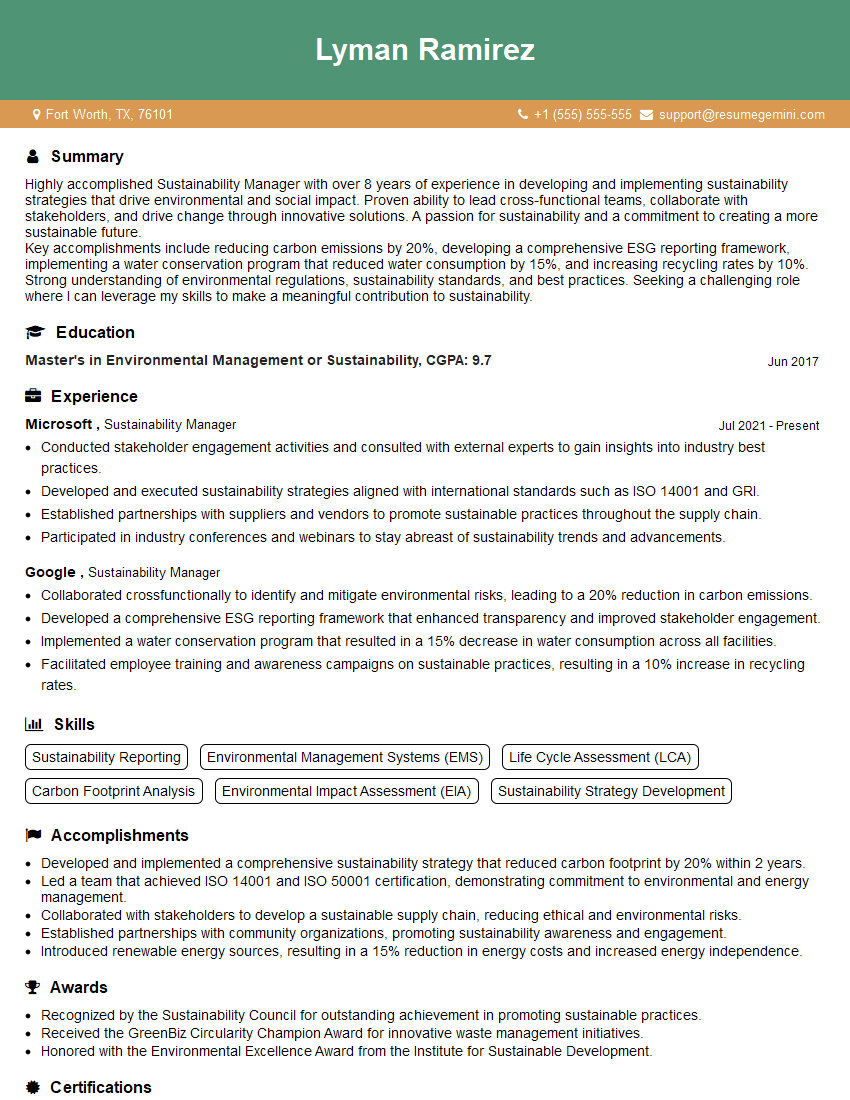
Sustainability Manager Resume Sample
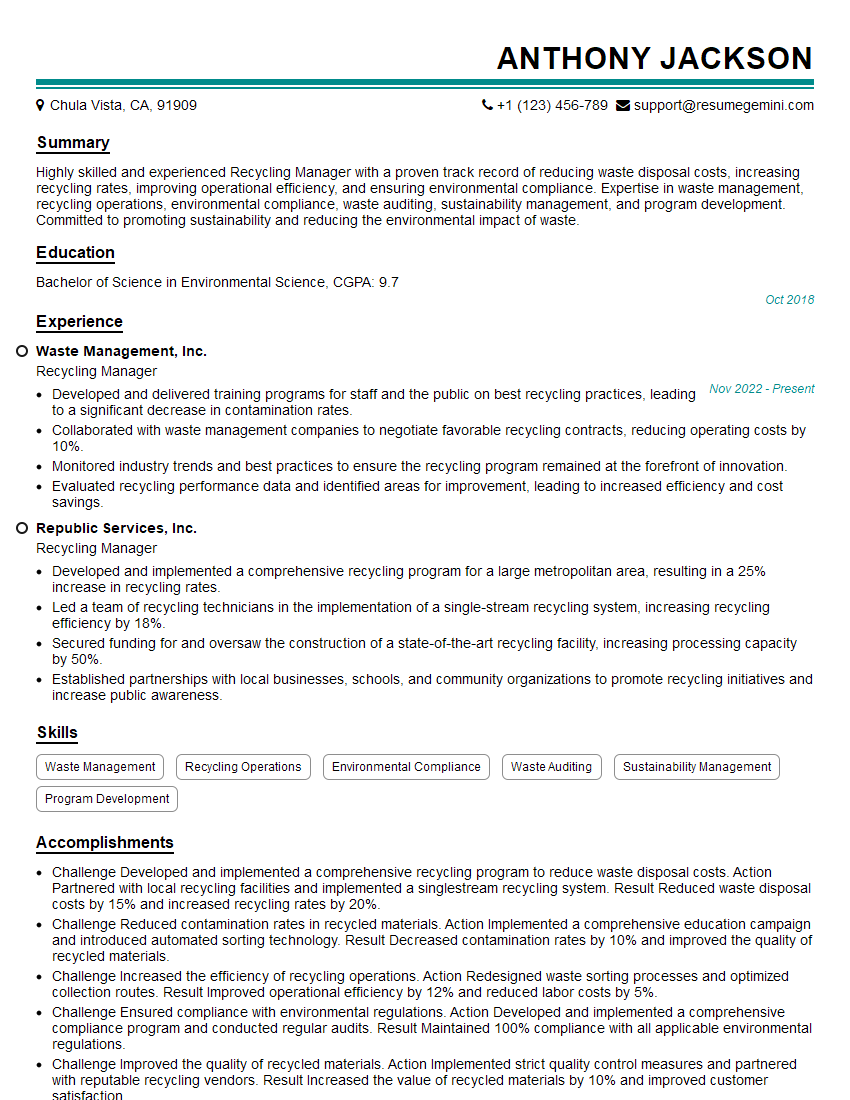
Recycling Manager Resume Sample
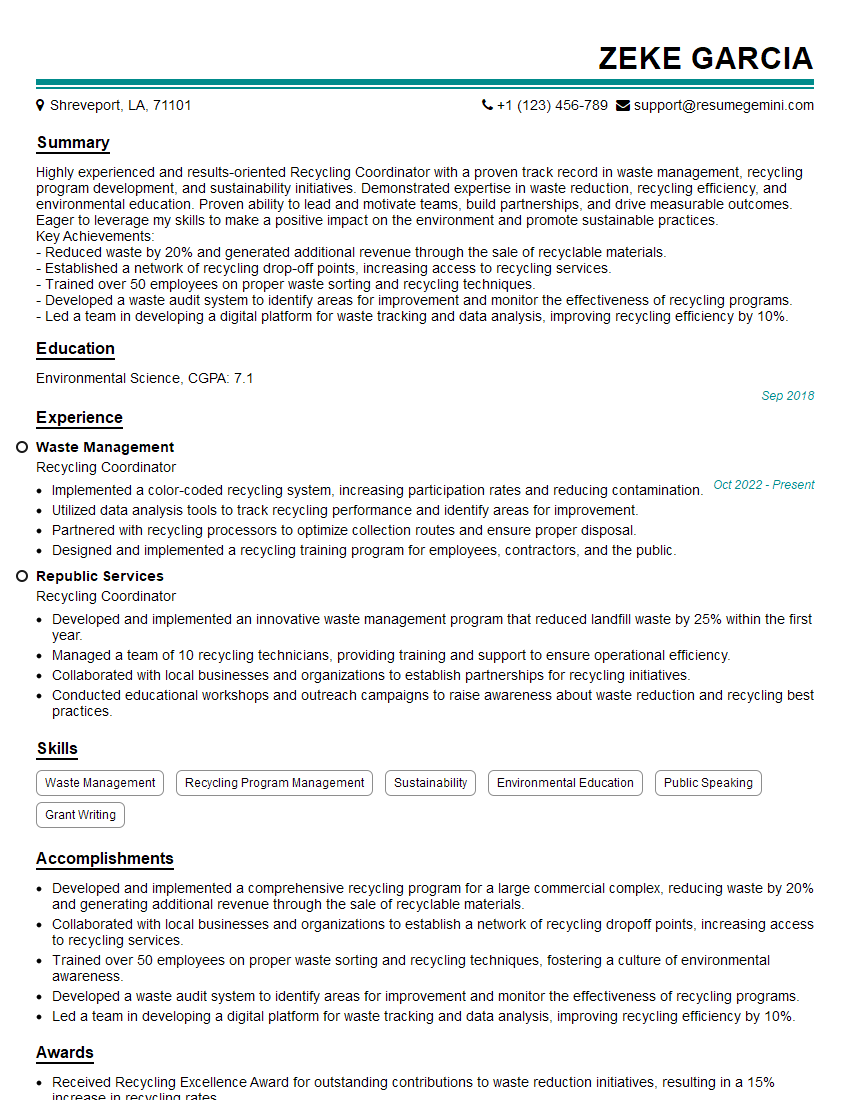
Recycling Coordinator Resume Sample
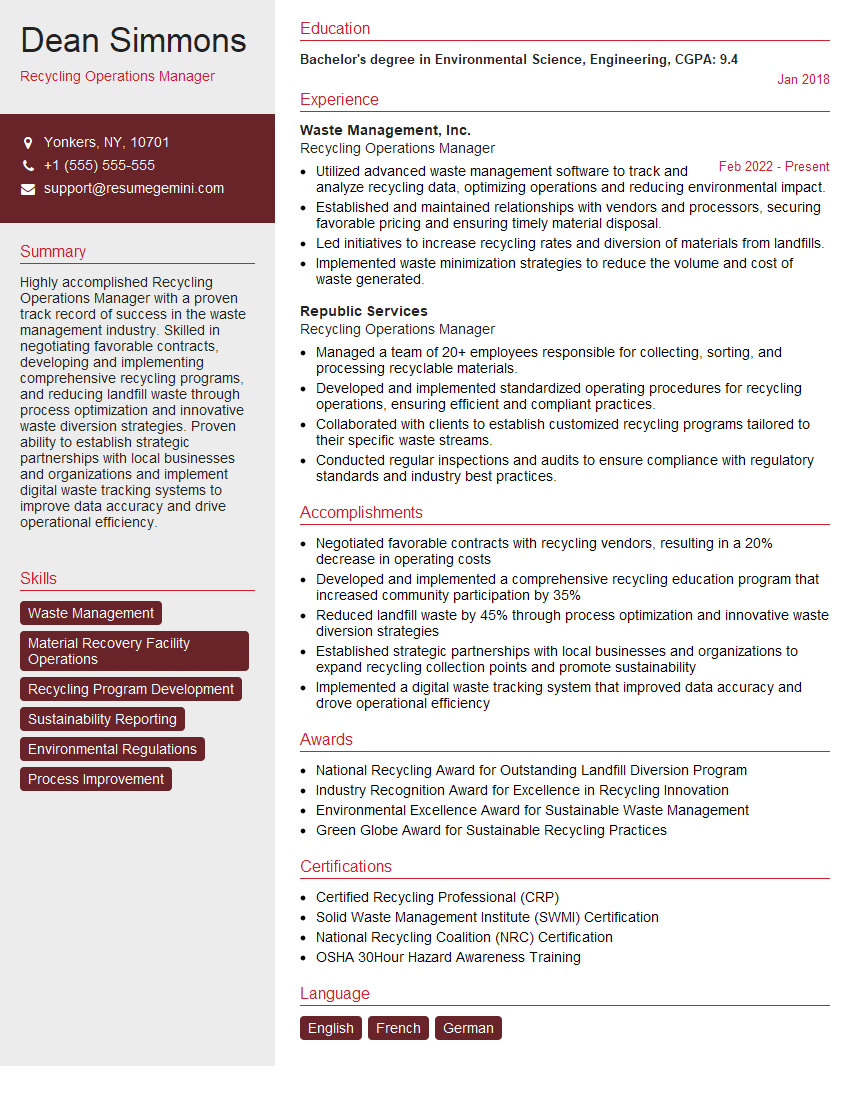
Recycling Operations Manager Resume Sample
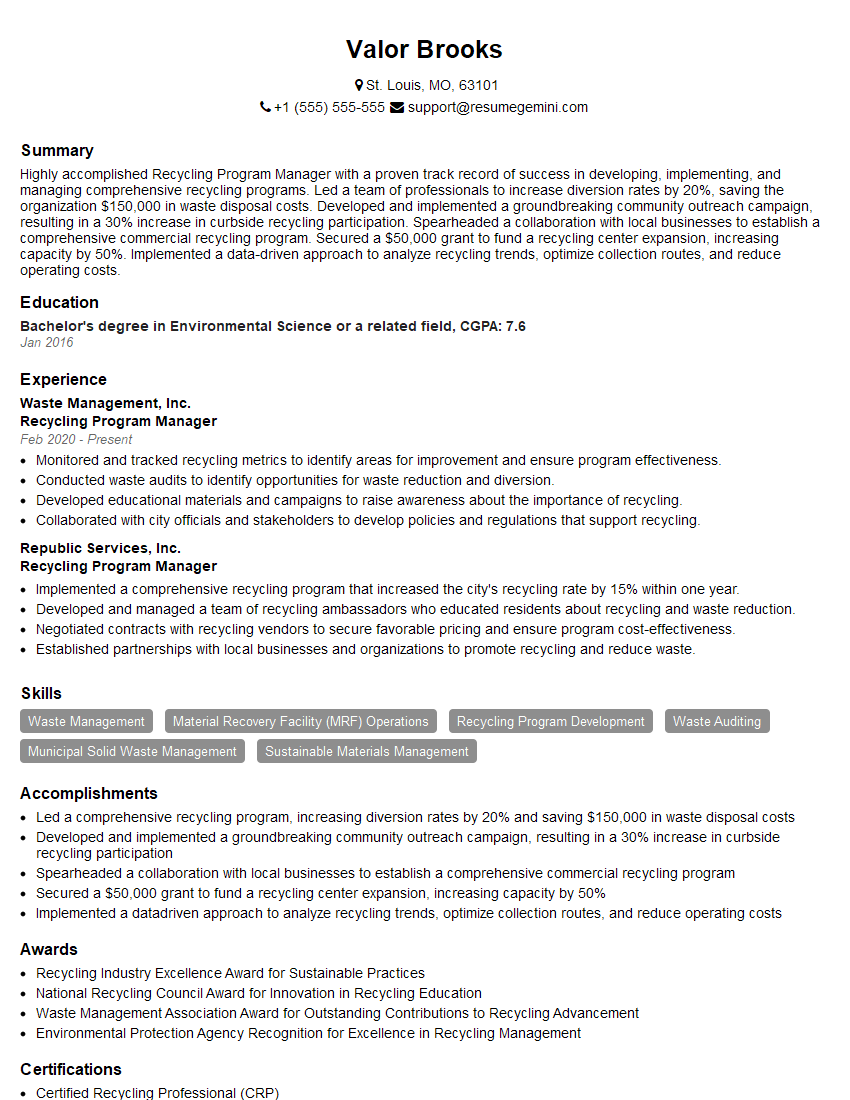
Recycling Program Manager Resume Sample
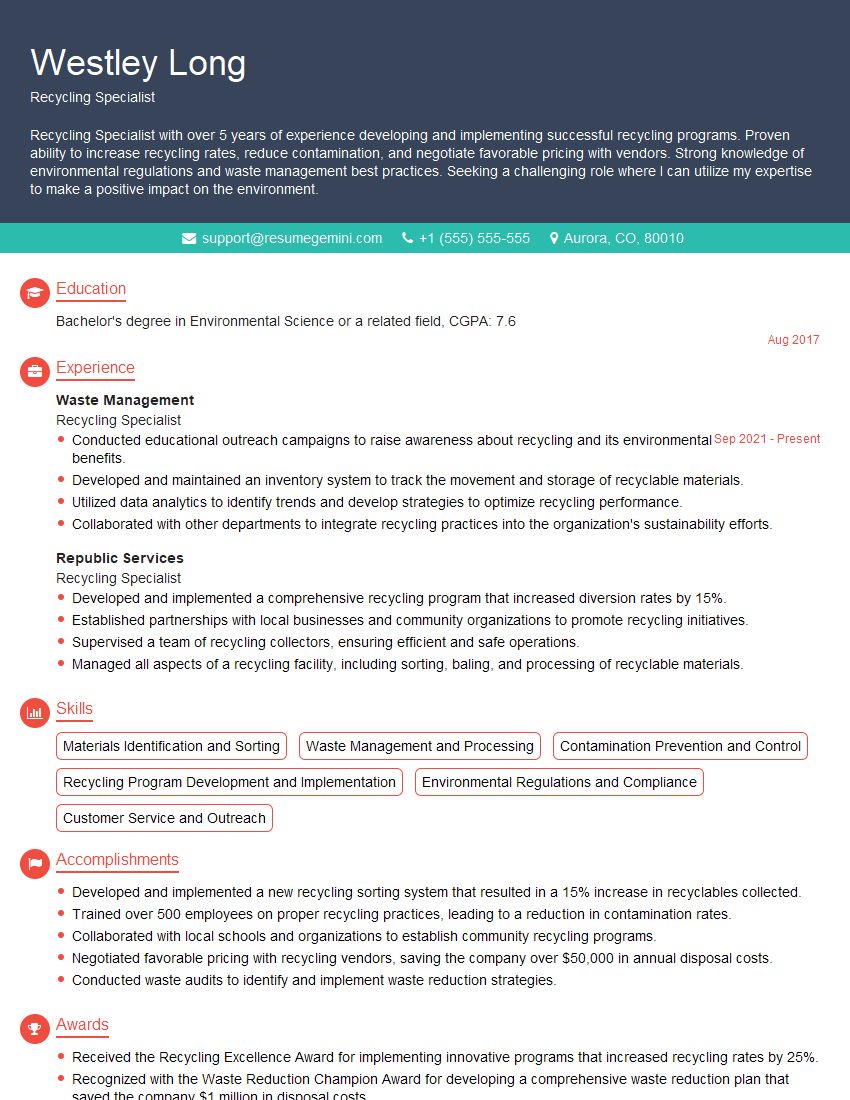
Recycling Specialist Resume Sample
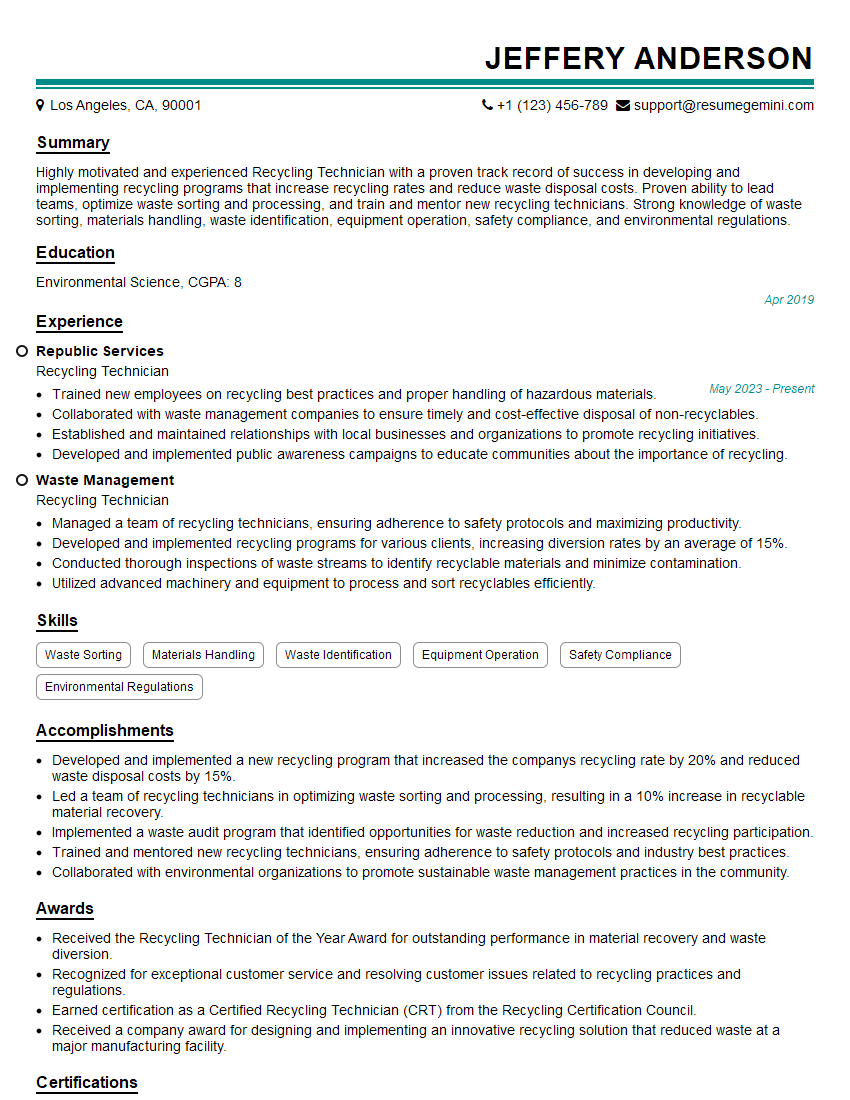
Recycling Technician Resume Sample
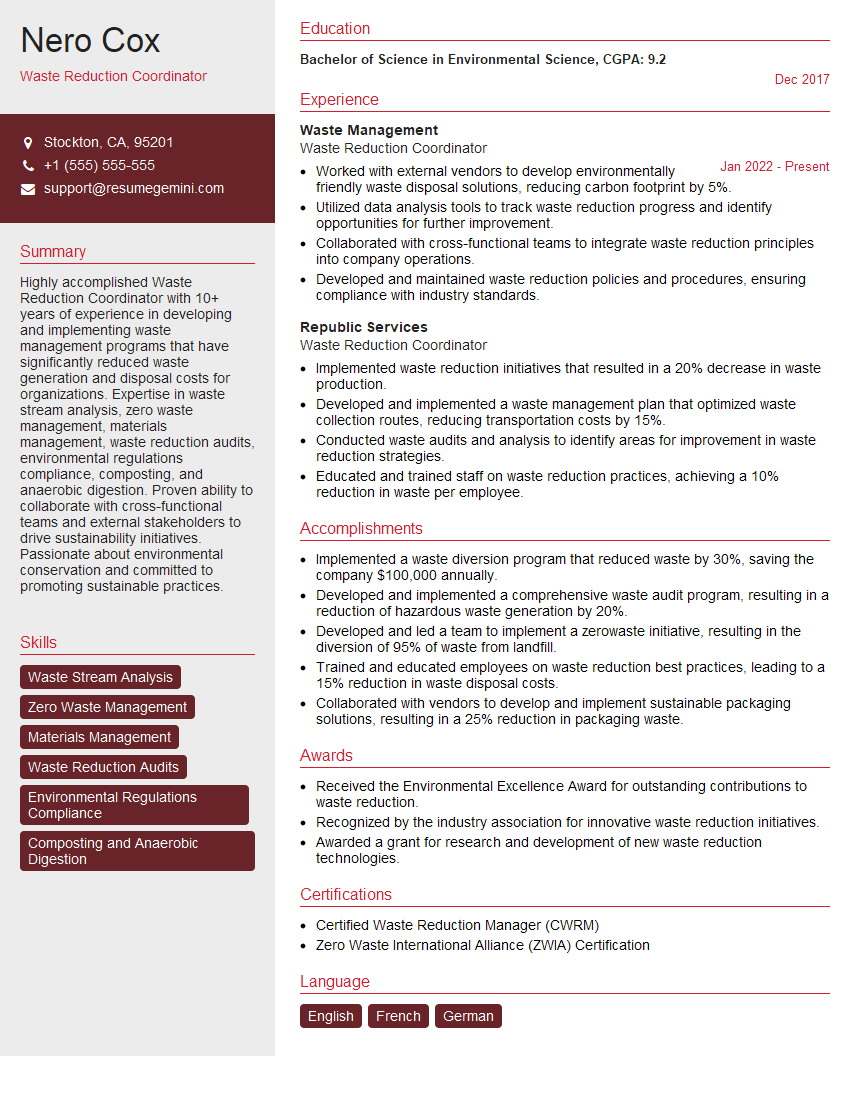
Waste Reduction Coordinator Resume Sample
Explore more articles
Users Rating of Our Blogs
Share Your Experience
We value your feedback! Please rate our content and share your thoughts (optional).
What Readers Say About Our Blog
Very informative content, great job.
good