Cracking a skill-specific interview, like one for Public Speaking and Floral Education, requires understanding the nuances of the role. In this blog, we present the questions you’re most likely to encounter, along with insights into how to answer them effectively. Let’s ensure you’re ready to make a strong impression.
Questions Asked in Public Speaking and Floral Education Interview
Q 1. Describe your experience in designing floral arrangements for various events.
My experience in floral design spans over a decade, encompassing a wide range of events. From intimate weddings with a rustic charm to large-scale corporate galas demanding modern elegance, I’ve crafted arrangements to perfectly complement the occasion’s theme and ambiance. For example, I designed a whimsical, cascading floral installation for a fairytale-themed wedding, using soft pastel tones and an abundance of flowing greenery. In contrast, for a tech company’s anniversary celebration, I created sleek, minimalist arrangements featuring orchids and geometric shapes in cool metallic tones. Each project involves a thorough consultation to understand the client’s vision, the venue’s style, and the event’s overall atmosphere, ensuring a seamless integration of floral artistry with the event’s aesthetic.
I’ve worked with diverse floral materials, from locally sourced wildflowers to exotic imported blooms, always prioritizing sustainability and seasonality whenever possible. My portfolio showcases my adaptability in different floral mediums, including hand-tied bouquets, centerpieces, arches, and even large-scale installations. I’m deeply passionate about creating unique and memorable experiences through my floral designs.
Q 2. Explain your understanding of different floral design styles.
My understanding of floral design styles encompasses a broad spectrum, from classic and traditional arrangements to contemporary and avant-garde designs. I’m well-versed in various styles, including:
- Classic: Characterized by symmetrical shapes, balanced arrangements, and a focus on traditional flower types.
- Romantic: Features soft color palettes, cascading blooms, and flowing lines, often incorporating lush greenery and delicate textures.
- Modern: Emphasizes clean lines, geometric shapes, and a more minimalist approach, often using bold color contrasts and unexpected combinations of flowers and materials.
- Bohemian: Incorporates a relaxed, free-flowing style with a mix of wildflowers, greenery, and textures, often featuring earthy tones and a slightly unruly aesthetic.
- Avant-garde: Pushes the boundaries of traditional floral design, using unexpected materials and techniques to create bold and artistic statements.
I believe that a true understanding of these styles enables me to blend and adapt them to create truly personalized and unique designs for each client, ensuring that the final product reflects their individual taste and the event’s specific needs.
Q 3. How do you handle difficult clients or challenging design requests?
Handling difficult clients or challenging design requests requires a combination of patience, empathy, and strong communication skills. My approach involves active listening, seeking to fully understand the client’s concerns and preferences, even if they seem initially unrealistic or contradictory. I try to reframe their requests, offering alternative suggestions while respecting their initial vision. For example, if a client requests a specific out-of-season flower, I may suggest similar flowers that are readily available and visually appealing, explaining the reasons for the substitution professionally and tactfully.
I use visual aids like mood boards and sketches to ensure that we’re on the same page throughout the design process. Open and honest communication is key. By actively soliciting feedback and explaining the technical aspects of floral design, I can manage expectations and find mutually agreeable solutions. In situations where a compromise is impossible, I offer a transparent explanation of the limitations and potential risks, empowering the client to make an informed decision.
Q 4. What software or tools are you proficient in for floral design?
I’m proficient in several software and tools used in floral design. My expertise includes:
- Floral design software: I utilize programs that assist in creating digital renderings of floral arrangements, allowing clients to visualize the final product before execution. This helps mitigate surprises and refine the design collaboratively.
- Adobe Photoshop and Illustrator: These programs are invaluable for creating mood boards, refining color palettes, and designing marketing materials.
- Project management tools: I use tools like Asana or Trello to efficiently manage multiple projects simultaneously, ensuring seamless coordination and timely delivery.
Beyond software, I possess advanced skills in hand sketching and watercolor painting, which allow me to quickly translate initial concepts and client feedback into tangible visual representations.
Q 5. Describe your experience in public speaking engagements.
My public speaking experience is extensive, encompassing workshops, conferences, and corporate presentations focused on floral design and the art of public speaking itself. I’ve presented at numerous industry events, sharing my expertise on various topics, including sustainable floral practices, innovative design techniques, and the business aspects of the floral industry. I’ve also led workshops teaching aspiring florists about floral arrangement techniques and business development strategies.
I’ve consistently received positive feedback for my engaging and informative presentations, characterized by clear communication, visual aids, and interactive elements. I’m adept at delivering compelling narratives, using storytelling to connect with the audience on a personal level.
Q 6. How do you adapt your presentation style to different audiences?
Adapting my presentation style to different audiences is crucial for effective communication. I consider several factors when tailoring my approach, including the audience’s background knowledge, their level of interest in the subject, and the overall event’s context.
For example, when presenting to experienced florists, I might focus on more technical details and advanced techniques, engaging them in a discussion format. However, when speaking to a general audience, I would prioritize clear and concise explanations, using relatable analogies and visual aids to simplify complex concepts. The language used, the tone, and the level of detail are carefully adjusted to suit the specific audience and their needs.
Q 7. What techniques do you use to engage your audience during a presentation?
Engaging my audience during a presentation involves a multi-faceted approach, blending various techniques to maintain interest and foster interaction. I incorporate:
- Visual aids: High-quality images, videos, and demonstrations significantly enhance audience engagement, making abstract concepts more tangible and memorable.
- Interactive elements: Polls, Q&A sessions, and short group activities encourage active participation and create a more dynamic learning experience.
- Storytelling: Weaving personal anecdotes and real-life examples into my presentations helps to humanize the subject matter and create a more relatable connection with the audience.
- Humor: Appropriate humor can lighten the mood and help retain audience attention, making the presentation more enjoyable and memorable.
- Body language and tone: Using confident body language, maintaining eye contact, and modulating my tone helps maintain audience interest and convey enthusiasm for the subject matter.
Ultimately, my goal is to create a conversational and interactive atmosphere, where the audience feels involved and valued, rather than passively receiving information.
Q 8. How do you handle unexpected questions or interruptions during a speech?
Handling unexpected questions or interruptions during a speech requires grace and preparedness. My approach is threefold: Acknowledge, Address, and Transition.
Acknowledge: I briefly acknowledge the interruption with a calm and reassuring gesture or phrase, such as, “That’s an excellent question,” or, “I appreciate your input.” This shows respect and buys me a moment to compose my thoughts.
Address: If the question is short and directly relevant to my current point, I’ll answer it concisely before smoothly returning to my main topic. If it’s a lengthy question or significantly diverts from my speech, I might politely say, “Let’s address that after the presentation,” or, “That’s a great point; we can discuss it during the Q&A session.”
Transition: After addressing the interruption (or deferring it), I smoothly transition back to my planned speech using connecting phrases. For example, “Now, as I was saying…” or “To return to the main point…” This maintains the flow and minimizes disruption.
For example, during a floral arrangement demonstration, if someone asks about a specific flower’s care, I might briefly address its needs before seamlessly transitioning back to demonstrating the next step in the arrangement process. Practicing my speech and anticipating potential questions are key to handling interruptions effectively.
Q 9. Describe your experience in teaching or instructing others.
My experience in teaching spans both public speaking and floral design. In public speaking workshops, I’ve guided participants through various techniques, from crafting compelling narratives to managing stage fright. I use a combination of lectures, interactive exercises, and personalized feedback to foster a supportive learning environment. I’ve witnessed the transformation of shy individuals into confident speakers, boosting their self-assurance and communication skills.
In floral design classes, I’ve taught students of all skill levels, from beginners to professionals. My approach emphasizes hands-on learning, demonstrating techniques and allowing students ample time for practice. I focus not only on the technical aspects of floral arrangement, but also on the creative and artistic components, encouraging students to explore their unique styles. I provide individualized feedback, tailoring my instruction to each student’s learning style and pace. I’ve seen students develop a passion for floral design and transform their understanding of color, form, and texture into breathtaking arrangements.
Q 10. What methods do you employ to effectively communicate complex information?
Communicating complex information effectively requires a multi-faceted approach. I employ several methods to ensure clarity and understanding:
Simplification: I break down complex concepts into smaller, more digestible parts. I avoid jargon whenever possible and use analogies or relatable examples to illustrate abstract ideas. For instance, when explaining the concept of ‘line’ in floral design, I might compare it to the lines in a painting.
Visual Aids: Visual aids such as diagrams, charts, or even physical demonstrations are invaluable. In floral design, a demonstration is essential to show techniques. In public speaking, slides or props can enhance understanding.
Interactive Engagement: I actively engage my audience through questions, discussions, and interactive exercises. This ensures they’re actively processing information and not just passively receiving it. I check for comprehension frequently.
Storytelling: Weaving in relevant stories and anecdotes helps to make complex information relatable and memorable. A story about a successful public speaking experience or a challenging floral design project can create a powerful connection.
For example, when discussing the psychological impact of color in floral arrangements, I use real-world examples of how different color palettes evoke specific moods and emotions, illustrating how color theory can be applied practically.
Q 11. How do you maintain a professional demeanor under pressure?
Maintaining a professional demeanor under pressure involves preparation, mindfulness, and self-regulation. My strategy hinges on these key elements:
Thorough Preparation: Extensive preparation eliminates many sources of stress. Knowing my material well, anticipating potential challenges, and having backup plans reduces anxiety significantly.
Mindfulness Techniques: I practice mindfulness techniques, such as deep breathing exercises, to manage stress in the moment. These techniques help me center myself and regain composure.
Positive Self-Talk: I consciously engage in positive self-talk, focusing on my strengths and past successes. This reinforces confidence and helps manage negative thoughts.
Professional Appearance and Posture: Maintaining a professional appearance and projecting confident body language contributes to a calm and controlled demeanor, even in stressful circumstances.
For instance, if a technical issue arises during a presentation, I use deep breathing to remain calm while troubleshooting or asking for assistance. My focus remains on maintaining a professional attitude and reassuring the audience that I’m handling the situation effectively.
Q 12. How do you manage your time and prioritize tasks effectively?
Effective time management and task prioritization are crucial for juggling the demands of public speaking and floral education. I employ a combination of techniques:
Planning and Scheduling: I use a digital calendar to meticulously plan my schedule, allocating specific time blocks for different tasks, including lesson preparation, speech writing, administrative work, and client meetings.
Prioritization Matrix: I utilize a prioritization matrix (like the Eisenhower Matrix) to categorize tasks based on urgency and importance. This helps me focus on high-impact activities and delegate or eliminate less crucial tasks.
Time Blocking: I dedicate specific blocks of time to focused work, minimizing distractions and maximizing productivity. This allows me to make significant progress on important tasks.
Regular Review and Adjustment: I regularly review my schedule and priorities, adjusting my plan as needed based on changing circumstances or unexpected demands. Flexibility is key.
This structured approach ensures I dedicate sufficient time to each project, avoiding feeling overwhelmed and ensuring that deadlines are met efficiently.
Q 13. Explain your understanding of color theory in floral design.
Color theory is fundamental to floral design. My understanding encompasses the color wheel, color harmonies, and the psychological impact of color. The color wheel demonstrates the relationships between colors: primary (red, yellow, blue), secondary (green, orange, violet), and tertiary colors.
Color Harmonies: I utilize various color harmonies to create different moods and effects. These include:
Monochromatic:Using different shades and tints of a single color.Analogous:Using colors adjacent to each other on the color wheel (e.g., blue, blue-green, green).Complementary:Using colors opposite each other on the color wheel (e.g., red and green).Triadic:Using three colors evenly spaced on the color wheel (e.g., red, yellow, blue).
Psychological Impact: I consider the psychological associations of colors. For example, red evokes excitement, while blue conveys calmness. This allows me to design arrangements that evoke specific emotions or suit the occasion.
For instance, a wedding arrangement might use a pastel analogous harmony for a soft, romantic feel, while a funeral arrangement might utilize a monochromatic scheme in muted tones to convey solemnity.
Q 14. How do you select appropriate flowers and foliage for specific occasions?
Selecting appropriate flowers and foliage for specific occasions involves considering several factors:
Occasion: The type of event dictates the overall style and mood. A wedding requires a different aesthetic than a funeral.
Color Palette: The color scheme should complement the overall theme and evoke the desired emotions. Referencing color theory is critical.
Flower Types and Meanings: Certain flowers carry symbolic meanings. Lilies often represent purity, while roses symbolize love. Understanding these meanings enhances the arrangement’s impact.
Seasonality and Availability: Choosing seasonal flowers ensures freshness, affordability, and sustainability. Availability dictates practical choices.
Recipient’s Preferences: If designing for a specific person, considering their favorite colors and flower types adds a personal touch.
For example, for a vibrant birthday celebration, I might choose sunflowers, gerberas, and bright foliage. In contrast, for a somber memorial service, I would select white lilies, white roses, and other flowers representing peace and remembrance.
Q 15. Describe your process for creating a floral design from concept to completion.
Creating a floral design is a multi-step process that blends artistry with technical skill. It begins with a deep understanding of the client’s needs and vision, whether it’s for a wedding, corporate event, or personal expression. I start by engaging in a thorough consultation, actively listening to their preferences regarding color palettes, style, and overall message they want to convey. This initial phase is crucial for establishing a strong foundation for the design.
- Concept Development: Once I understand their vision, I sketch initial concepts, considering factors like flower types, textures, and vessel choices. This is where I brainstorm different arrangements, ensuring they align with the event’s theme and aesthetic. I might create mood boards using images for inspiration.
- Material Selection: I select the floral materials based on the design concept, considering factors such as seasonality, availability, and budget. This involves selecting the right flowers, foliage, and other decorative elements.
- Arrangement Construction: This is where the technical skills come into play. I carefully prepare the flowers (conditioning, cutting stems etc.), and arrange them strategically to create balance, harmony, and visual interest. I consider factors like line, form, color, and texture.
- Final Touches & Delivery: The final touches involve adding any finishing elements (like ribbons or candles), ensuring the arrangement is properly presented, and delivering it to the intended location.
For example, designing a wedding bouquet requires a different approach than creating a centerpiece for a corporate event. A wedding bouquet might prioritize a romantic, cascading style using delicate flowers, while a corporate centerpiece might necessitate a more structured, modern design with bolder colors and textures. The entire process is iterative, involving adjustments and refinements at every stage until the final vision is achieved.
Career Expert Tips:
- Ace those interviews! Prepare effectively by reviewing the Top 50 Most Common Interview Questions on ResumeGemini.
- Navigate your job search with confidence! Explore a wide range of Career Tips on ResumeGemini. Learn about common challenges and recommendations to overcome them.
- Craft the perfect resume! Master the Art of Resume Writing with ResumeGemini’s guide. Showcase your unique qualifications and achievements effectively.
- Don’t miss out on holiday savings! Build your dream resume with ResumeGemini’s ATS optimized templates.
Q 16. What is your experience with sustainable floral practices?
Sustainability is paramount in my floral practice. I prioritize sourcing locally grown flowers whenever possible, reducing the carbon footprint associated with long-distance transportation. I also work with growers who employ sustainable farming practices, minimizing the use of pesticides and harmful chemicals. Furthermore, I encourage clients to select seasonal flowers, reducing the demand for out-of-season blooms that often require energy-intensive greenhouse cultivation. I actively seek out suppliers committed to responsible water management and waste reduction.
I also incorporate recycled materials into my designs whenever possible, using reclaimed containers and repurposing elements from previous arrangements. I educate my clients about the importance of sustainable practices and offer guidance on how to make environmentally conscious choices when selecting flowers and arrangements. For example, I might suggest using compostable materials for wrapping instead of traditional plastics.
Q 17. How do you source your floral materials?
My sourcing strategy focuses on building strong relationships with local flower farms and wholesalers. I personally visit these farms whenever possible to witness their growing practices and ensure they align with my sustainability standards. I believe in supporting local economies and building direct relationships to guarantee the freshness and quality of the flowers. I also work with a network of trusted wholesalers who share my commitment to sustainable practices. This allows me access to a wider variety of flowers, particularly those not readily available locally.
For specialty flowers or unique varieties, I may occasionally need to source from further afield but always ensure that transportation is as efficient and low-impact as possible. Transparency is key; I inform clients about the origins of their flowers and the associated environmental impacts.
Q 18. How do you deal with flower preservation and storage?
Proper flower preservation and storage are crucial for maintaining the longevity and quality of floral arrangements. Immediately upon receiving flowers, I process them by removing lower leaves that would sit below the waterline, recutting the stems at an angle to maximize water uptake, and placing them in appropriate containers filled with clean, fresh water and flower food. This hydration process helps to revitalize the flowers and extend their lifespan.
I store flowers in a cool, dark environment, away from direct sunlight and drafts. For long-term storage, I may use techniques like refrigeration or dehydration for specific types of flowers. I also carefully consider the types of flowers in an arrangement and their sensitivity to temperature fluctuations. For instance, some flowers require higher humidity than others.
Q 19. What are your strengths in communication, both written and verbal?
My communication skills are a vital part of my success in both floral design and public speaking. Verbally, I’m adept at actively listening to understand client needs, explaining complex concepts in simple terms, and building rapport with diverse audiences. I’m able to adapt my communication style to suit different situations, whether it’s a formal presentation or a casual conversation with a client. My public speaking experience has significantly honed my ability to deliver clear, concise, and engaging messages.
Written communication is equally important. I craft professional and informative proposals, invoices, and correspondence. I’m proficient in using various communication platforms (email, social media) to interact effectively with clients and build a strong online presence. I also regularly write blog posts and articles for my website related to floral design and event planning. I strive for clarity, accuracy, and engaging storytelling.
Q 20. How do you handle criticism and feedback constructively?
Constructive criticism is invaluable for growth and improvement. I approach feedback as an opportunity to learn and refine my skills. I actively listen to the criticism, clarifying any points that I don’t fully understand. I avoid becoming defensive and try to understand the perspective of the person providing the feedback. I objectively assess the validity of the critique, identifying areas where I can improve my techniques or approach. This may involve seeking further training or experimenting with new methods.
I appreciate both positive and negative feedback. Positive feedback reinforces what I’m doing well, while constructive criticism guides my growth. If appropriate, I’ll follow up with the person who provided the feedback to show that I’ve heard and considered their input.
Q 21. Describe a time you had to overcome a significant challenge in a project.
One significant challenge I faced was during a large-scale wedding event. A major thunderstorm hit just hours before the ceremony, damaging a significant portion of the outdoor floral arrangements. The rain had soaked many of the flowers, causing wilting and damage. This required immediate action and creative problem-solving.
I immediately rallied my team, prioritizing salvage of what could be saved. We worked rapidly to replace damaged flowers with readily available alternatives from our backup stock. We re-arranged some elements, focusing on showcasing the least damaged parts of the original designs, and using additional greenery to camouflage the affected areas. The entire team collaborated efficiently, working under pressure to deliver a stunning result despite the unexpected circumstances. The wedding ultimately went off without a hitch, and the client was very pleased with our swift and effective response to the crisis. The experience highlighted the importance of meticulous planning, resourcefulness, and teamwork under pressure.
Q 22. What are your salary expectations for this role?
My salary expectations for this role are in the range of $80,000 to $95,000 annually. This is based on my extensive experience in both public speaking and floral education, my advanced qualifications, and the competitive salary range for similar positions in this market. I am open to discussing this further based on the specifics of the benefits package and the overall compensation structure.
Q 23. Why are you interested in this specific position?
I am incredibly interested in this position because it uniquely combines my two passions: public speaking and floral design. For years, I’ve delivered engaging presentations on floral arranging techniques to diverse audiences, ranging from novice hobbyists to experienced professionals. This role offers the chance to leverage my expertise in both areas, contributing significantly to a dynamic and educational environment. I’m particularly drawn to [mention specific aspects of the job description that excite you, e.g., the opportunity to develop new curriculum, work with a specific team, or contribute to a particular project].
Q 24. What are your long-term career goals?
My long-term career goals center around establishing myself as a leading authority in the intersection of floral design and effective communication. I envision developing and delivering high-impact workshops and seminars nationally and potentially internationally. I also aspire to author a comprehensive book or develop an online course that combines practical floral techniques with effective presentation skills, empowering others to confidently share their expertise.
Q 25. How would you describe your teaching philosophy?
My teaching philosophy is rooted in experiential learning and fostering a supportive environment. I believe that true understanding comes from actively engaging with the material, not just passively receiving information. My approach incorporates a blend of demonstrations, hands-on activities, interactive discussions, and personalized feedback. I strive to create a classroom atmosphere where students feel comfortable asking questions, experimenting with different techniques, and celebrating their individual successes. For instance, when teaching floral arrangement, I don’t just lecture on design principles; I guide students through creating their own arrangements, providing constructive criticism and celebrating their unique styles.
Q 26. What are your strengths and weaknesses as a public speaker?
My strengths as a public speaker include clear and concise communication, the ability to connect with audiences on an emotional level, and incorporating engaging visual aids to enhance understanding. I’m adept at adapting my presentation style to suit different audiences and settings. One example is my recent presentation on sustainable floral design practices at a horticultural conference; I tailored my approach to the audience’s pre-existing knowledge and incorporated compelling data to support my points. A weakness I’m actively working on is managing nerves in high-pressure situations, though I’ve found techniques like deep breathing and thorough preparation significantly mitigate this.
Q 27. How do you assess the effectiveness of your presentations?
I assess the effectiveness of my presentations using a multi-faceted approach. Post-presentation surveys provide valuable audience feedback on content clarity, engagement level, and overall satisfaction. I also actively observe audience participation during the presentation, noting questions, comments, and overall body language. Finally, I review my own performance, identifying areas for improvement in delivery, pacing, and visual aids. For example, after a recent workshop, audience feedback highlighted a need for more detailed instructions on a specific technique, leading me to revise the relevant section of my presentation.
Q 28. Describe your experience with event planning and management.
My experience with event planning and management is extensive, stemming from organizing and executing numerous workshops and floral design demonstrations. This includes tasks such as venue selection, budget management, material sourcing, scheduling, and marketing. For example, I successfully planned and managed a large-scale floral design competition, coordinating with sponsors, judges, and participants to ensure a seamless and enjoyable event. This experience has honed my organizational skills, problem-solving abilities, and attention to detail, ensuring that every event runs smoothly and achieves its objectives.
Key Topics to Learn for Public Speaking and Floral Education Interview
- Public Speaking Fundamentals: Understanding audience analysis, crafting compelling narratives, effective delivery techniques (vocal projection, body language, eye contact), and managing Q&A sessions.
- Floral Design Principles: Knowledge of color theory, floral arrangement techniques (line, form, mass, etc.), understanding different flower types and their care, and creating visually appealing and balanced designs.
- Pedagogical Approaches: Effective teaching methodologies for floral education, including lesson planning, demonstration techniques, assessment strategies, and adapting instruction to diverse learning styles.
- Practical Application: Be prepared to discuss specific examples of how you’ve applied your public speaking skills in educational or professional settings. Showcase your ability to translate theoretical floral design knowledge into practical arrangements. Describe a time you successfully addressed a challenge in teaching or designing.
- Problem-Solving in Floral Education: Discuss approaches to troubleshooting common problems encountered in floral design (e.g., wilting flowers, design challenges) and student learning (e.g., addressing misconceptions, adapting to individual needs).
- Industry Knowledge: Demonstrate awareness of current trends in both public speaking and the floral design industry. This includes understanding different styles, techniques, and market demands.
- Communication & Collaboration: Highlight your ability to communicate effectively with diverse audiences (students, colleagues, clients) and collaborate within a team environment.
Next Steps
Mastering both public speaking and floral education opens doors to exciting career opportunities in teaching, event planning, floral design studios, and more. A strong resume is crucial for showcasing your skills and experience to potential employers. Creating an ATS-friendly resume increases your chances of getting your application noticed. We highly recommend using ResumeGemini to build a professional and impactful resume that effectively highlights your unique qualifications.
ResumeGemini provides examples of resumes tailored to Public Speaking and Floral Education, offering valuable templates and guidance to help you create a compelling application. Take the next step in your career journey – build your best resume yet with ResumeGemini!

Communications Director Resume Sample
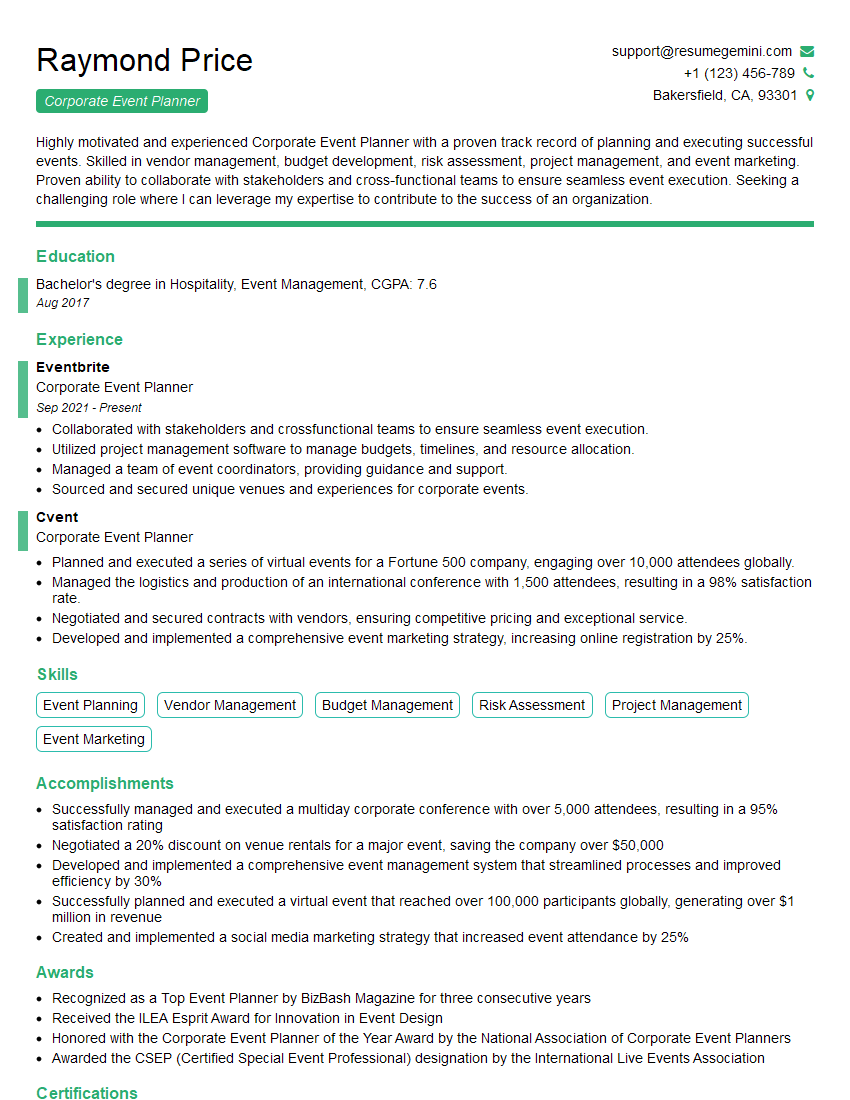
Corporate Event Planner Resume Sample
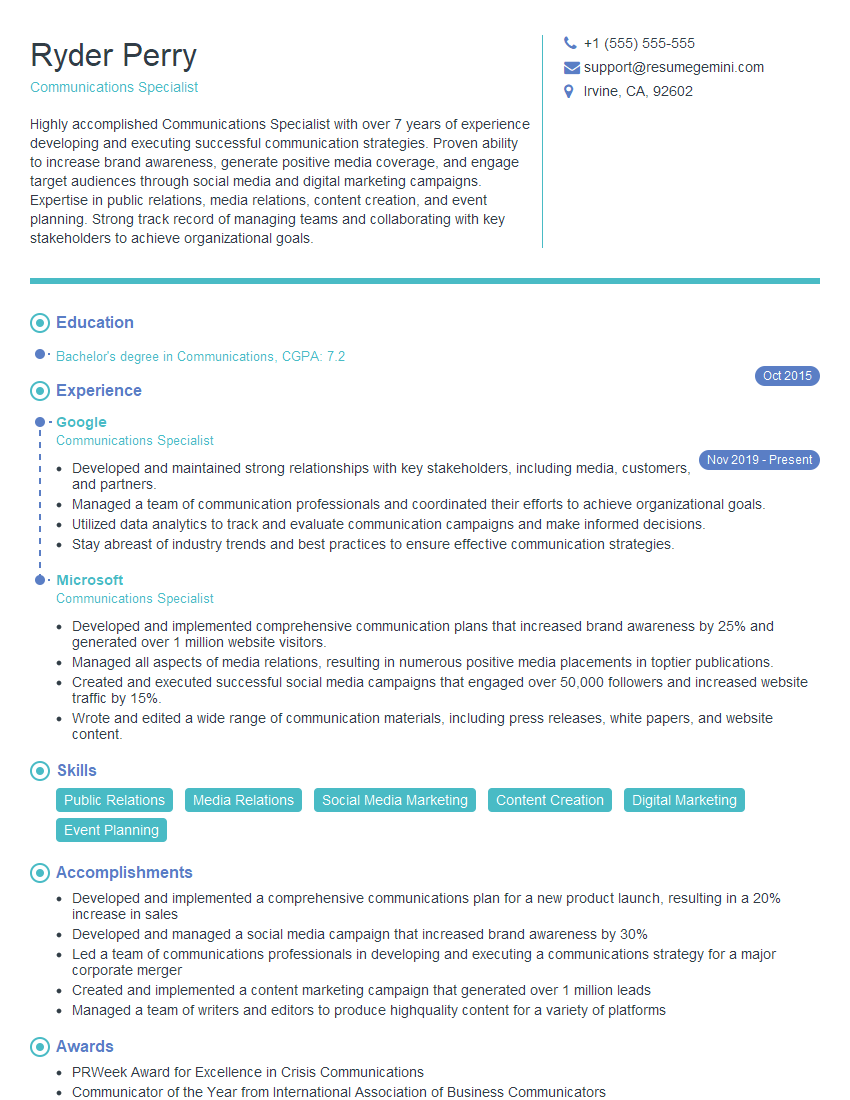
Communications Specialist Resume Sample
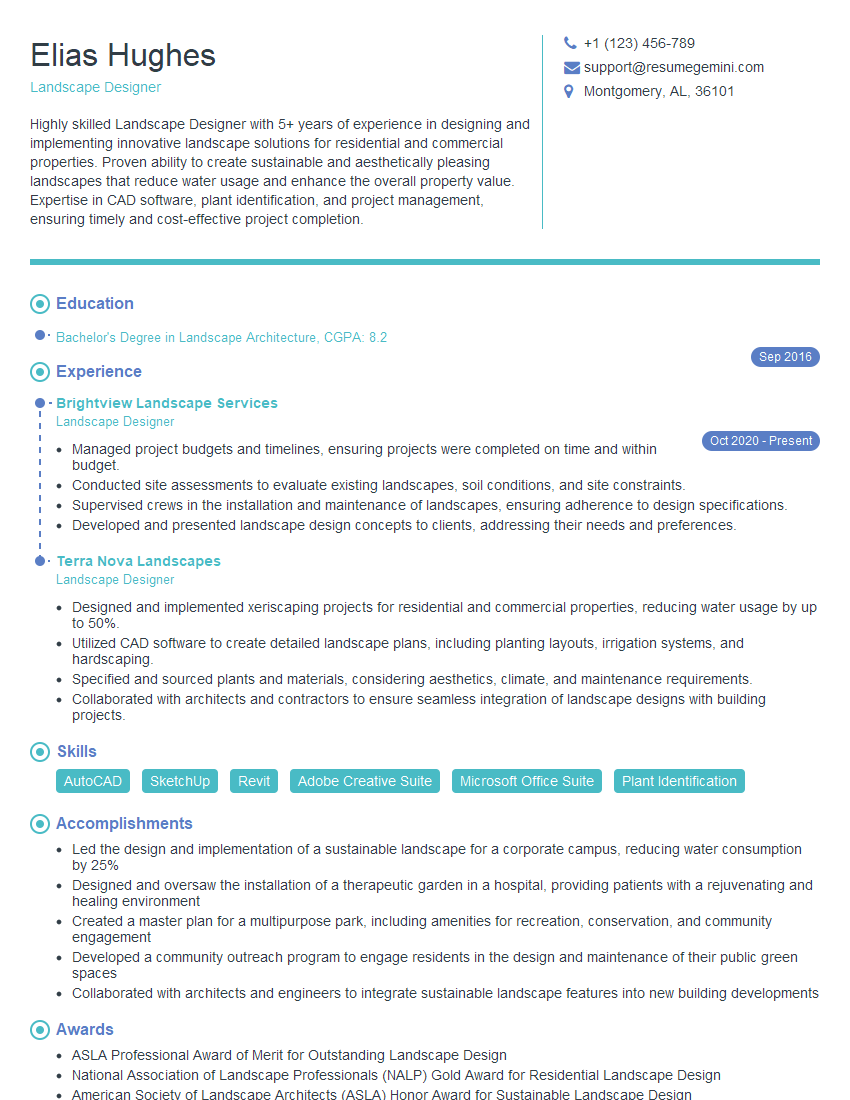
Landscape Designer Resume Sample
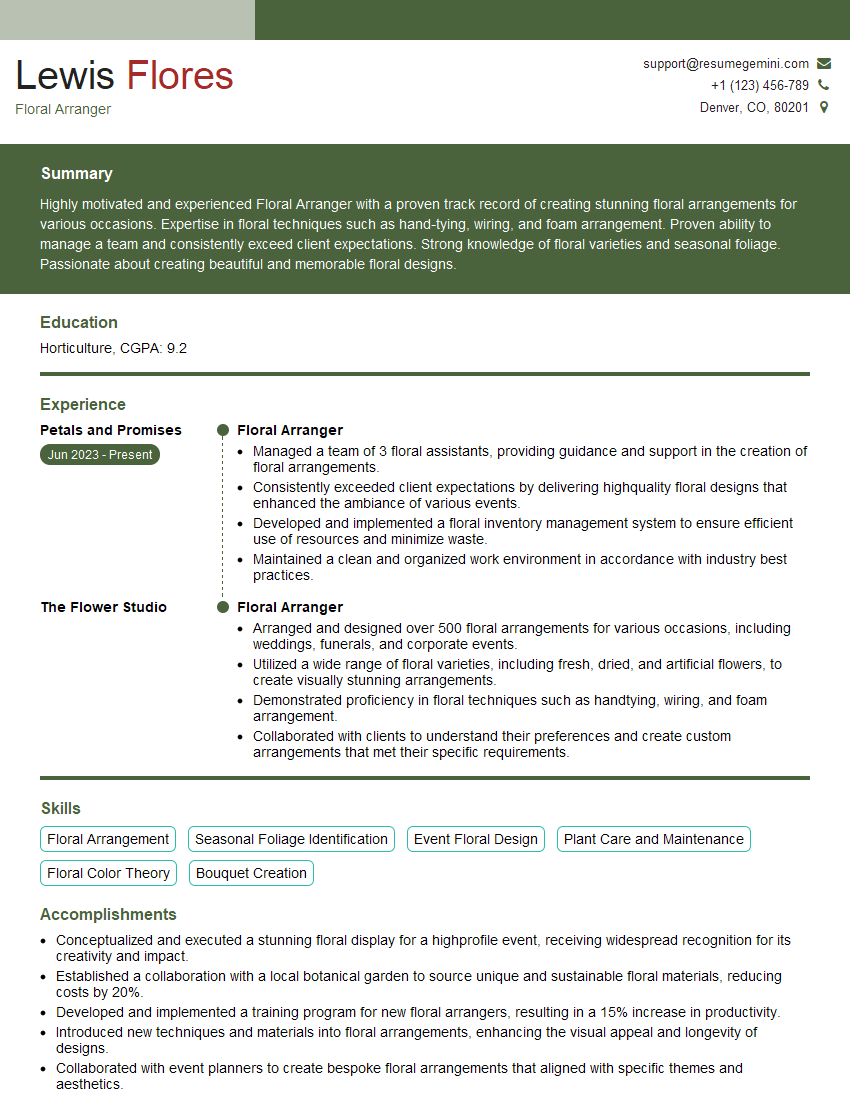
Floral Arranger Resume Sample
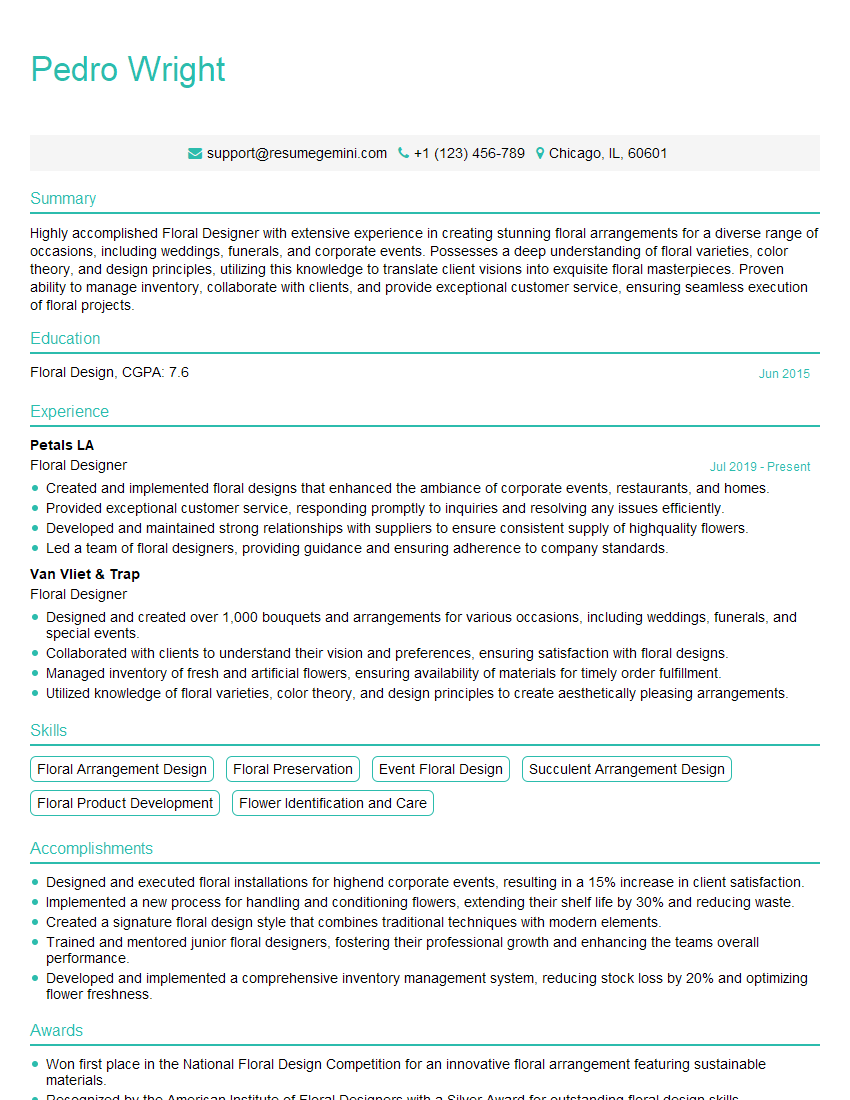
Floral Designer Resume Sample
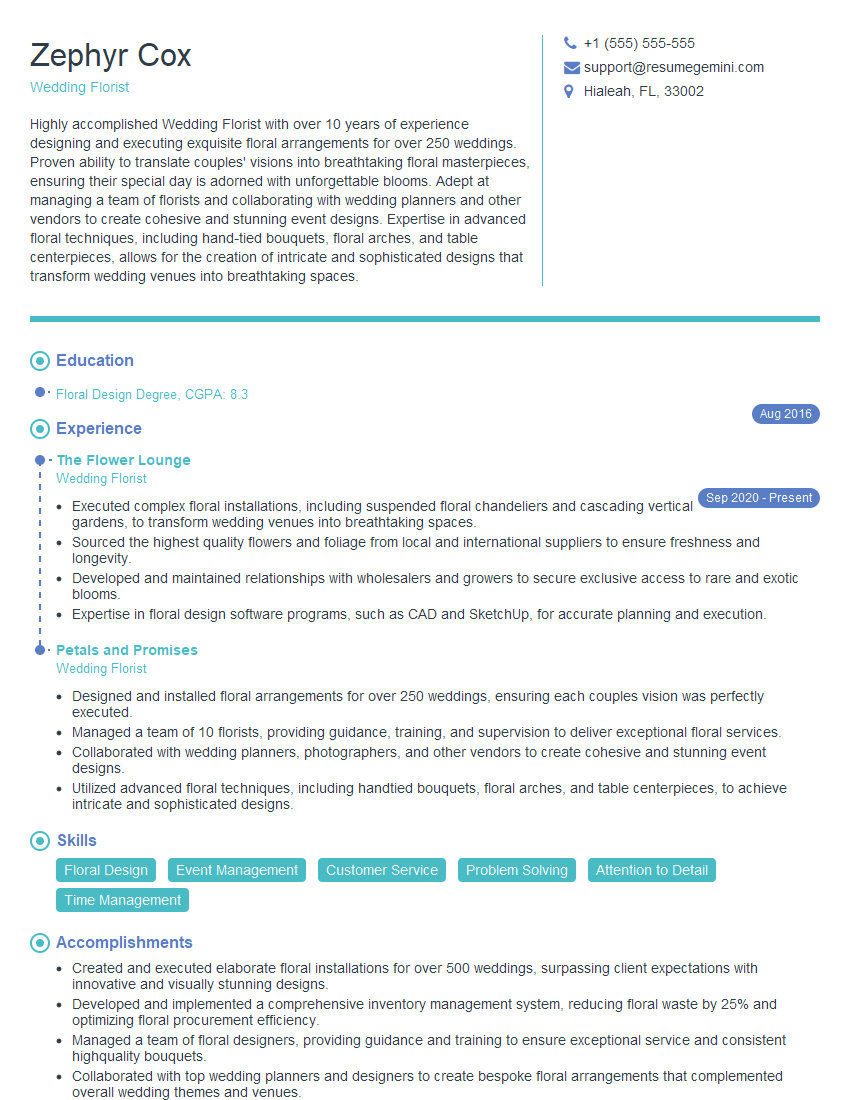
Wedding Florist Resume Sample
Public Relations Manager Resume Sample
Horticultural Therapist Resume Sample
Explore more articles
Users Rating of Our Blogs
Share Your Experience
We value your feedback! Please rate our content and share your thoughts (optional).
What Readers Say About Our Blog
Very informative content, great job.
good