Interviews are opportunities to demonstrate your expertise, and this guide is here to help you shine. Explore the essential Communication with Quality Control Engineers interview questions that employers frequently ask, paired with strategies for crafting responses that set you apart from the competition.
Questions Asked in Communication with Quality Control Engineers Interview
Q 1. Describe your experience communicating complex technical information to non-technical audiences.
Communicating complex technical information to non-technical audiences requires a strategic approach focused on simplification and clarity. I avoid jargon and technical terms whenever possible, instead opting for plain language and relatable analogies. For instance, explaining a statistical process control chart (SPC chart) to a manager unfamiliar with statistics, I would compare it to a car’s dashboard—the chart shows how the ‘car’ (production process) is performing, highlighting potential issues before they escalate into major problems. I also break down complex concepts into smaller, digestible chunks using visual aids like flowcharts or infographics to improve understanding and engagement.
In one project, I was explaining the intricacies of a failure mode and effects analysis (FMEA) to a group of executives. Instead of diving into detailed risk matrices, I started with a simple narrative about identifying potential problems in a household appliance, relating each step of the FMEA to a common household scenario. This approach made the process much more understandable and accessible. I also utilize storytelling; by embedding technical information within a real-world story, I can make it memorable and easier to grasp.
Q 2. How do you handle disagreements with engineers about quality control procedures?
Disagreements with engineers regarding quality control procedures are inevitable, but they are opportunities for improvement. My approach focuses on collaborative problem-solving, not confrontation. I start by actively listening to the engineer’s perspective and understanding their rationale. I then present my own viewpoint clearly and respectfully, providing data and evidence to support my position. If the disagreement persists, I suggest a structured approach, such as a formal review or a trial period to test different methods. The goal isn’t to ‘win’ the argument, but to find the optimal solution that ensures quality and efficiency. Compromise and finding common ground are key elements in these situations. Documentation of the discussion and the agreed-upon solution is crucial.
For example, in one instance, there was a disagreement about the level of testing required for a particular component. After discussions, we decided to conduct a small-scale pilot test using both methods to compare results objectively. This data-driven approach resolved the disagreement and led to improved efficiency.
Q 3. Explain your approach to delivering critical quality control information during a project deadline.
Delivering critical quality control information during a project deadline requires a highly organized and efficient approach. I prioritize information clarity and urgency. I use clear, concise language and avoid unnecessary details. I focus on the most critical information, highlighting any potential risks or impacts. I often use a prioritized list or bullet points for easy assimilation of information under pressure. I also communicate frequently and proactively; providing regular updates prevents surprises and keeps stakeholders informed. I would use a combination of written reports (clearly summarizing findings) and brief, targeted verbal updates to keep everyone on the same page.
For instance, if a critical defect is discovered just before a launch, I would immediately inform the project manager and relevant stakeholders, providing a concise summary of the issue, its potential impact, and the proposed solution with a realistic timeline for mitigation.
Q 4. How do you effectively communicate quality control issues to upper management?
Communicating quality control issues to upper management requires a professional, objective, and results-oriented approach. I present the information in a clear, concise manner, focusing on the impact of the issues on business objectives. I avoid technical jargon and instead use plain language that highlights the consequences of the issues, such as financial losses, reputational damage, or safety concerns. I provide data-driven evidence to support my claims, including metrics, charts, and other visual aids. I also propose concrete solutions and mitigation strategies along with potential associated costs and resource requirements.
For example, I might present a report showing a rise in customer complaints linked to a specific product defect, quantifying the cost of returns, warranty repairs, and loss of customer loyalty. This data-driven approach helps upper management to understand the urgency and seriousness of the issue and facilitates decision-making.
Q 5. How would you explain a complex quality control metric to a client?
Explaining a complex quality control metric to a client requires a tailored approach based on their level of technical expertise. I start by defining the metric in plain language, using relatable analogies whenever possible. Then, I explain its significance and relevance to the client’s interests. For example, if explaining a metric like ‘defect rate’, I would avoid saying ‘PPM’ (parts per million) initially. Instead, I would explain it as ‘the number of defective units out of every 1000 units produced’. I then focus on the impact of this rate on the client’s products, such as increased costs, warranty claims or reduced customer satisfaction. I would use visual aids like graphs or charts to illustrate trends and provide a clear picture of the metric’s performance.
For example, to explain the ‘Six Sigma’ metric, I would explain it as a target to reduce defects so dramatically that only 3.4 defects per million opportunities exist. This illustrates the high standard of quality being aimed for in a language easily understandable even to a non-technical client.
Q 6. What methods do you use to ensure clear and concise communication within a quality control team?
Ensuring clear and concise communication within a quality control team requires a combination of structured processes and open communication channels. Regular team meetings, preferably short and focused, help to address immediate issues and share updates. We use a combination of written reports (for formal documentation) and informal communication channels (such as instant messaging) for quicker updates. A shared online platform or project management software can enhance information sharing and collaboration. Clear roles and responsibilities and standardized reporting formats (using templates and checklists) help to improve the consistency and clarity of communication within the team. We also regularly conduct training sessions to ensure that everyone understands the communication protocols and reporting standards.
For example, we use a project management software where each team member can update the status of their tasks, ensuring that everyone knows the progress of the overall project. This approach also helps to identify and address potential bottlenecks promptly.
Q 7. How do you use visual aids to improve the communication of quality control data?
Visual aids are incredibly effective in improving the communication of quality control data. I use various visual tools, such as charts (bar graphs, line graphs, pie charts), histograms, scatter plots, control charts, and dashboards to represent complex data in a digestible and readily understandable format. The choice of visual aid depends on the specific data and the intended audience. For instance, control charts are perfect for showcasing process stability over time, while Pareto charts highlight the most significant contributors to defects. Infographics can effectively communicate complex information to a broad audience. Interactive dashboards allow users to explore the data at their own pace, making it easier to identify trends and patterns.
For example, a control chart clearly shows whether a process is stable and within acceptable limits, allowing quick identification of any deviations or outliers which a table of data would obscure. This helps engineers to focus their efforts on the most important areas needing improvement. Similarly, a well-designed dashboard can provide a holistic overview of the quality performance across different projects, aiding in efficient decision-making.
Q 8. How do you handle situations where communication breakdowns lead to quality control issues?
Communication breakdowns are a major risk in quality control, often leading to defects, rework, and even project failures. When these occur, my approach is systematic and focuses on identifying the root cause, restoring clear communication, and implementing preventative measures.
- Identify the Breakdown: First, I carefully analyze what went wrong. Was there a lack of clarity in instructions? Was crucial information not shared? Did a communication channel fail? I often use a ‘5 Whys’ analysis to drill down to the root cause.
- Restore Communication: I then facilitate open and honest dialogue between all involved parties – engineers, managers, and clients. This involves active listening, clarifying misunderstandings, and ensuring everyone is on the same page.
- Implement Preventative Measures: This could involve improving documentation, implementing clearer communication protocols (e.g., using standardized reporting templates), or utilizing more effective communication tools (project management software). Regular check-ins and feedback sessions are crucial.
- Example: In a previous project, a misunderstanding between the design and manufacturing teams regarding tolerances led to a batch of faulty products. By holding a joint meeting, clarifying the specifications, and creating a visual guide, we resolved the issue and prevented future occurrences.
Q 9. Describe a time you had to explain a quality control failure to a client or stakeholder.
Explaining a quality control failure to a client or stakeholder requires sensitivity, transparency, and a solution-oriented approach. My strategy focuses on owning the problem, clearly outlining the root cause, and demonstrating our commitment to rectifying the situation and preventing recurrence.
- Acknowledge and Apologize: Begin by acknowledging the failure and sincerely apologizing for any inconvenience or impact it caused.
- Clearly Explain the Root Cause: Provide a factual and detailed explanation of what went wrong, avoiding technical jargon whenever possible. Use visuals (charts, diagrams) where appropriate.
- Outline Corrective Actions: Detail the steps being taken to address the immediate issue, such as rework, replacement, or repair.
- Present Preventative Measures: Explain how we’re preventing similar failures in the future. This builds trust and demonstrates proactivity.
- Example: Once, a batch of products had a higher-than-acceptable defect rate due to a calibration issue with a key piece of testing equipment. In my communication with the client, I explained the root cause, presented data showing the corrective actions (recalibration, retesting, and replacement of affected units), and detailed the implemented preventative measures (a revised calibration schedule and additional quality checks).
Q 10. What strategies do you employ to actively listen and understand concerns regarding quality control?
Active listening is crucial in quality control. It’s about understanding not just the words spoken but also the underlying concerns and emotions.
- Non-Verbal Cues: Pay close attention to body language, facial expressions, and tone of voice. These can often reveal unspoken concerns.
- Paraphrasing: Regularly summarize what you’ve heard to ensure understanding and clarify any ambiguity. For example, ‘So, if I understand correctly, your main concern is that the delayed testing is impacting the project timeline?’
- Open-Ended Questions: Ask open-ended questions that encourage detailed responses, rather than simple yes/no answers. For instance, instead of asking ‘Is the process satisfactory?’, ask ‘What aspects of the process are working well, and what areas could be improved?’
- Empathy: Try to understand the situation from their perspective. Acknowledge their feelings and concerns, even if you don’t necessarily agree with them.
Q 11. How do you ensure all stakeholders receive relevant quality control updates in a timely manner?
Timely and relevant updates are essential. My approach relies on a combination of proactive communication and customized delivery methods.
- Centralized Communication Platform: Employing a project management tool (e.g., Jira, Asana) allows for centralized updates, notifications, and document sharing.
- Regular Reporting: Schedule regular reports (daily, weekly, or monthly) tailored to different stakeholders’ needs. Executives need high-level summaries, while engineers might require detailed technical reports.
- Customized Communication Channels: Use appropriate channels – email for formal updates, instant messaging for quick questions, and project meetings for complex discussions.
- Proactive Communication: Don’t wait for problems to arise; proactively communicate potential issues and planned solutions.
- Escalation Protocol: Establish a clear escalation protocol for critical issues that require immediate attention from senior management or clients.
Q 12. How do you adapt your communication style to different audiences (e.g., engineers, executives, clients)?
Adapting communication style is vital. I tailor my approach to the audience’s technical expertise, their preferred communication style, and the context of the information.
- Engineers: Communicate using precise technical language, focus on data and evidence, and encourage collaborative problem-solving.
- Executives: Present high-level summaries, emphasizing key performance indicators (KPIs) and the overall impact on business goals. Use visuals to communicate complex information effectively.
- Clients: Use clear, concise language, focusing on the value and benefits of quality control efforts. Address their specific concerns and expectations.
- Example: When presenting a quality control report to engineers, I would focus on detailed data analysis and technical specifications. When presenting the same information to executives, I would highlight the overall project success rate, cost savings due to reduced defects, and overall impact on customer satisfaction.
Q 13. How do you use data and reports to effectively communicate quality control performance?
Data and reports are powerful tools for communicating quality control performance. Visualizations are crucial to effectively convey complex information.
- Key Performance Indicators (KPIs): Track and report key metrics, such as defect rates, yield rates, and process capability indices (Cp, Cpk).
- Data Visualization: Use charts, graphs, and dashboards to visualize trends, patterns, and anomalies in quality data. For example, a control chart can clearly show whether a process is in control or out of control.
- Reporting Tools: Utilize specialized software (e.g., Tableau, Power BI) to create interactive and visually appealing reports.
- Storytelling with Data: Don’t just present the numbers; tell a story about the quality control performance. Highlight successes, identify areas for improvement, and connect the data to business outcomes.
Q 14. What tools or software do you use for effective communication in quality control?
Effective communication in quality control relies on leveraging various tools and software.
- Project Management Software (Jira, Asana, Trello): For task management, progress tracking, and team communication.
- Data Visualization Tools (Tableau, Power BI): To create impactful reports and dashboards.
- Instant Messaging Platforms (Slack, Microsoft Teams): For quick communication and real-time updates.
- Document Management Systems (SharePoint, Google Drive): For centralized storage and access to quality control documents.
- Email: For formal communication and distribution of reports.
- Video Conferencing Tools (Zoom, Microsoft Teams): For remote meetings and collaboration.
Q 15. Describe your experience creating and delivering presentations on quality control topics.
Creating and delivering presentations on quality control is crucial for disseminating information and ensuring everyone is on the same page. My approach involves a structured process: I begin by identifying the target audience (e.g., engineers, management, clients) and tailoring the content to their level of understanding. I then organize the information logically, using clear headings, concise bullet points, and visual aids like charts and graphs to make complex data easily digestible. For example, when presenting on a new statistical process control (SPC) implementation, I’d start with the problem the SPC solves, then explain the methodology, and finally showcase real-world results demonstrating its effectiveness. I always incorporate interactive elements, such as Q&A sessions or polls, to encourage engagement and gather feedback. In the past, I presented on topics like root cause analysis using the 5 Whys method and the implementation of ISO 9001 standards, always ensuring the information was practical and actionable.
Career Expert Tips:
- Ace those interviews! Prepare effectively by reviewing the Top 50 Most Common Interview Questions on ResumeGemini.
- Navigate your job search with confidence! Explore a wide range of Career Tips on ResumeGemini. Learn about common challenges and recommendations to overcome them.
- Craft the perfect resume! Master the Art of Resume Writing with ResumeGemini’s guide. Showcase your unique qualifications and achievements effectively.
- Don’t miss out on holiday savings! Build your dream resume with ResumeGemini’s ATS optimized templates.
Q 16. How do you use written communication (reports, emails, etc.) to document quality control processes?
Written communication is the backbone of quality control documentation. I meticulously document every stage of a process using clear, concise language and standardized formats. For instance, I utilize detailed reports to document inspection findings, including specific defects, their severity, and corrective actions taken. Email communication is used for prompt updates, sharing relevant data, and requesting clarifications. For example, I might email the production team about a deviation from the established process, providing specific data and asking them to investigate and provide a report. These reports and emails always follow a template to maintain consistency and ensure all crucial information is included. The use of consistent formatting and terminology helps streamline communication and ensures everyone understands the information easily. I also employ version control for all documents to track changes and maintain accountability.
Q 17. How do you handle conflicting information received from different sources regarding quality control?
Conflicting information is a common challenge in quality control. My approach involves a systematic investigation to resolve discrepancies. First, I verify the source and credibility of each piece of information, checking for potential biases or errors. Then, I gather additional data from reliable sources to cross-reference and validate the claims. For example, if I receive conflicting data on the defect rate from two different inspection teams, I’ll analyze the inspection methods, sample sizes, and the experience levels of the inspectors to determine the root cause of the discrepancy. Finally, I consolidate the verified information and document my findings, clearly outlining the reasons for any discrepancies and arriving at a consensus through a collaborative discussion with the involved parties. This objective approach ensures that decisions are based on factual, reliable information.
Q 18. What are your strategies for identifying and addressing communication barriers in quality control teams?
Identifying and addressing communication barriers is critical for efficient quality control. I actively listen to my team members, observing their communication styles and identifying any potential obstacles. Common barriers include jargon, unclear instructions, and ineffective feedback mechanisms. To mitigate these, I promote open communication, actively seeking feedback and addressing concerns promptly. I encourage the use of visual aids and simplified language to make complex information easily understandable. Regular team meetings, including informal brainstorming sessions, foster a collaborative environment where everyone feels comfortable voicing opinions and concerns. Furthermore, I ensure everyone is familiar with standard operating procedures and communication protocols, reducing misunderstandings.
Q 19. How do you contribute to a positive and collaborative communication environment within your team?
Contributing to a positive and collaborative communication environment requires active engagement and empathy. I foster a culture of respect by valuing every team member’s input, even when it differs from my own. I actively encourage open dialogue, ensuring everyone feels heard and their opinions are valued. Regular team building activities, both formal and informal, help strengthen bonds and improve communication. I provide constructive feedback, focusing on solutions rather than blame, and actively celebrate successes as a team. This approach creates a supportive and inclusive atmosphere where everyone feels empowered to contribute their best work, leading to improved communication and overall team performance. A positive team environment naturally leads to less conflict and improved problem-solving skills.
Q 20. Describe your experience working with cross-functional teams on quality control projects.
My experience working with cross-functional teams on quality control projects has been extensive. Successful collaboration requires effective communication and a clear understanding of each team’s roles and responsibilities. I’ve worked on projects where I’ve coordinated with engineering, manufacturing, and marketing teams to ensure product quality from design to delivery. For example, I worked with a team to identify a recurring defect in a product. This involved collaborating with engineers to understand the design specifications, manufacturing to pinpoint the process flaw, and marketing to manage customer expectations and communication during the rectification phase. This collaborative approach is crucial to pinpoint the root cause and implement comprehensive solutions effectively and efficiently. I consistently use collaborative tools like shared documents and project management software to ensure everyone is on the same page.
Q 21. How do you ensure quality control documentation is readily accessible and easy to understand?
Ensuring readily accessible and understandable quality control documentation is paramount. I utilize a centralized document management system, accessible to all authorized personnel. The system is organized logically, with clear naming conventions and a robust search function. All documents are written using plain language, avoiding technical jargon unless absolutely necessary. I also create visual summaries and flowcharts to simplify complex processes, making them more digestible for a wider audience. Regular reviews and updates of the documentation are carried out to maintain accuracy and relevance. Furthermore, I conduct training sessions on the use of the system and the interpretation of the documents, ensuring everyone has the necessary skills to utilize the information effectively. This systematic approach guarantees that vital quality control information is always available and easily understandable by all stakeholders.
Q 22. How would you propose a solution to a quality control issue with limited communication time?
When time is limited, efficient communication is paramount. My approach focuses on prioritization and clarity. First, I’d identify the most critical aspects of the quality control issue – the impact, the urgency, and the necessary actions. Then, I’d utilize concise, direct communication methods like a short, prioritized email or a quick, focused phone call, ensuring all stakeholders receive the most vital information immediately. For example, instead of a long email detailing the entire process and problem, I’d send a concise summary focusing on the defect, its severity, and the immediate steps to mitigate further issues. I would also schedule a brief follow-up meeting to address any remaining questions or concerns.
Think of it like sending a distress signal – you want to get the core message across quickly and efficiently so that immediate action can be taken.
Q 23. How do you prioritize critical quality control information amidst a high volume of communication?
Prioritizing critical information in a high-volume environment requires a robust system. I utilize a combination of techniques including color-coding, flagging, and employing a system for categorizing alerts. For instance, critical failures might be flagged as red, requiring immediate attention, while minor anomalies could be yellow and addressed later. Categorizing by impact (safety, cost, production) and urgency allows me to instantly prioritize. Further, tools like project management software with features for task prioritization and notification systems are invaluable. These systems allow for efficient filtering, sorting, and rapid response to the most critical situations, ensuring that the most important information is never missed.
Imagine it as a triage system in a hospital—the most critically injured patients are treated first.
Q 24. What are some potential communication pitfalls in quality control, and how do you avoid them?
Communication pitfalls in quality control often stem from ambiguity, lack of context, or ineffective channels. For instance, unclear instructions can lead to errors, while using informal communication for critical issues can result in misinterpretations. To avoid these, I emphasize clear, concise language; utilize visual aids like diagrams or charts when necessary; and stick to documented communication channels. For example, I use email for formal records, instant messaging for quick clarifications, and meetings for complex discussions, ensuring each channel is used appropriately for the context. Regular calibration meetings where team members review processes and clarify misunderstandings are essential to maintain consistency and prevent miscommunication.
It’s like building a house – you wouldn’t use nails to build the foundation; you need the right tools for the job.
Q 25. Explain your understanding of effective feedback mechanisms in quality control processes.
Effective feedback mechanisms are critical for continuous improvement. I advocate for a multi-pronged approach involving both formal and informal feedback loops. Formal feedback might include regular performance reviews, incident reports, or structured surveys. Informal feedback can involve daily stand-up meetings, casual conversations, or suggestion boxes. Critically, feedback should be both timely and actionable. This means providing specific examples of what needs improvement and suggesting solutions, rather than just offering generic criticism. Regularly reviewing collected data and using it to implement process improvements is also crucial. For example, identifying patterns in customer complaints, analyzing root causes of defects, and using this information to update procedures.
Think of it like a steering wheel – constant adjustments ensure you stay on course.
Q 26. How would you present a cost-benefit analysis for improving communication within a quality control department?
A cost-benefit analysis for improved communication centers on quantifying the losses caused by poor communication versus the investment in improving it. On the cost side, you would calculate the losses from defects, rework, customer complaints, and delays attributable to communication failures. On the benefit side, you would project the gains from reduced errors, improved efficiency, increased customer satisfaction, and faster problem resolution. Data analysis is vital here. For example, you might compare the cost of reworking defective products versus the cost of implementing a new communication system. A clear ROI calculation, presenting both tangible and intangible benefits, helps justify the investment to management. This showcases the financial advantage of prioritizing clear, efficient communication within the department.
It’s like investing in preventative maintenance for a machine – it’s less costly in the long run than fixing frequent breakdowns.
Q 27. How do you maintain a professional demeanor while communicating difficult quality control news?
Maintaining a professional demeanor while delivering difficult news involves empathy, transparency, and clear communication. I begin by acknowledging the situation’s gravity and then presenting the facts objectively and without emotional bias. I would actively listen to concerns, address questions directly, and offer potential solutions or support. It’s important to avoid assigning blame or making excuses, focusing instead on collaborative problem-solving. For example, I might state the issue clearly, acknowledge its impact, outline the steps being taken to address it, and then offer to answer any questions.
Think of it like delivering bad news to a close friend – honesty and empathy are key.
Q 28. Describe your experience in conflict resolution regarding quality control disagreements.
Conflict resolution in quality control often involves disagreements over procedures, interpretations of data, or responsibility for errors. My approach focuses on active listening, seeking common ground, and finding solutions that satisfy all parties. I would first allow each party to express their perspective, ensuring everyone feels heard. Then, I would attempt to identify the root cause of the disagreement, often by clarifying misunderstandings or gathering additional data. Once the core issue is understood, I would work collaboratively to develop a mutually acceptable solution. Mediation, if necessary, involves facilitating a neutral discussion where parties reach a compromise. Documenting the resolution is also important to prevent similar conflicts in the future.
It’s similar to being a referee in a game – ensuring fairness and a resolution that keeps the game going.
Key Topics to Learn for Communication with Quality Control Engineers Interview
- Understanding Quality Control Processes: Familiarize yourself with common QC methodologies (e.g., Six Sigma, statistical process control) and their communication implications. This includes understanding the language and terminology used within these frameworks.
- Effective Data Presentation: Practice concisely presenting complex data (e.g., defect rates, process capability indices) to a technical audience. Consider various methods like charts, graphs, and tables to effectively communicate key findings.
- Problem Solving & Collaboration: Develop your ability to clearly articulate technical problems and collaboratively brainstorm solutions with QC engineers. Practice active listening and constructive feedback techniques.
- Technical Report Writing & Documentation: Hone your skills in writing clear, concise, and accurate technical reports, detailing QC findings, analyses, and recommendations. This includes understanding different report formats and audiences.
- Conflict Resolution & Negotiation: Prepare to discuss how you would handle disagreements or conflicts regarding quality standards or interpretations of data. Practice assertive yet respectful communication strategies.
- Risk Communication & Mitigation: Learn to effectively communicate potential risks associated with quality issues and propose mitigation strategies. Practice clearly explaining complex technical issues in a way that is understandable to diverse audiences.
- Using Visual Aids Effectively: Understand how different visual aids (e.g., flowcharts, diagrams) can enhance communication of complex technical information to QC engineers. Practice creating clear and concise visuals.
Next Steps
Mastering communication with Quality Control Engineers is crucial for career advancement in many technical fields. Effective communication ensures smooth collaboration, efficient problem-solving, and ultimately, higher-quality products or services. To maximize your job prospects, focus on building an ATS-friendly resume that highlights your relevant skills and experience. ResumeGemini is a trusted resource that can help you create a professional and impactful resume tailored to your specific career goals. Examples of resumes tailored to Communication with Quality Control Engineers are available to guide you through this process.
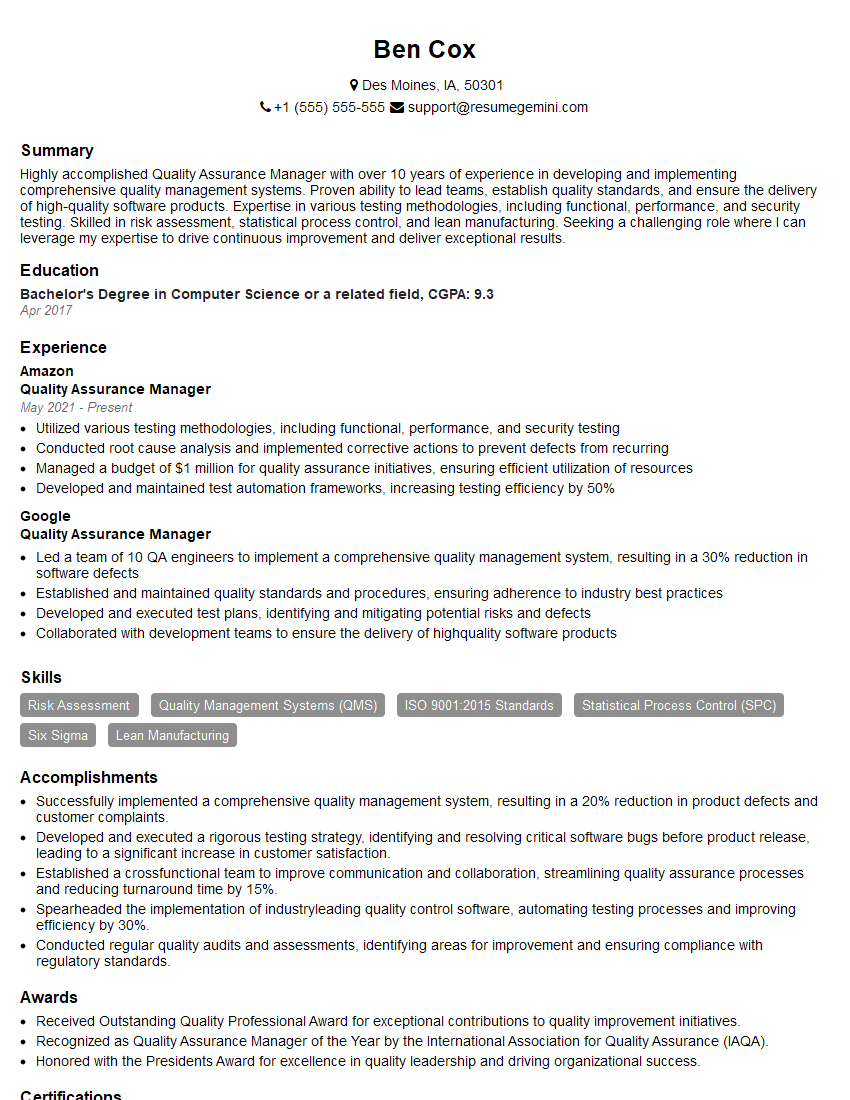
Quality Assurance Manager Resume Sample
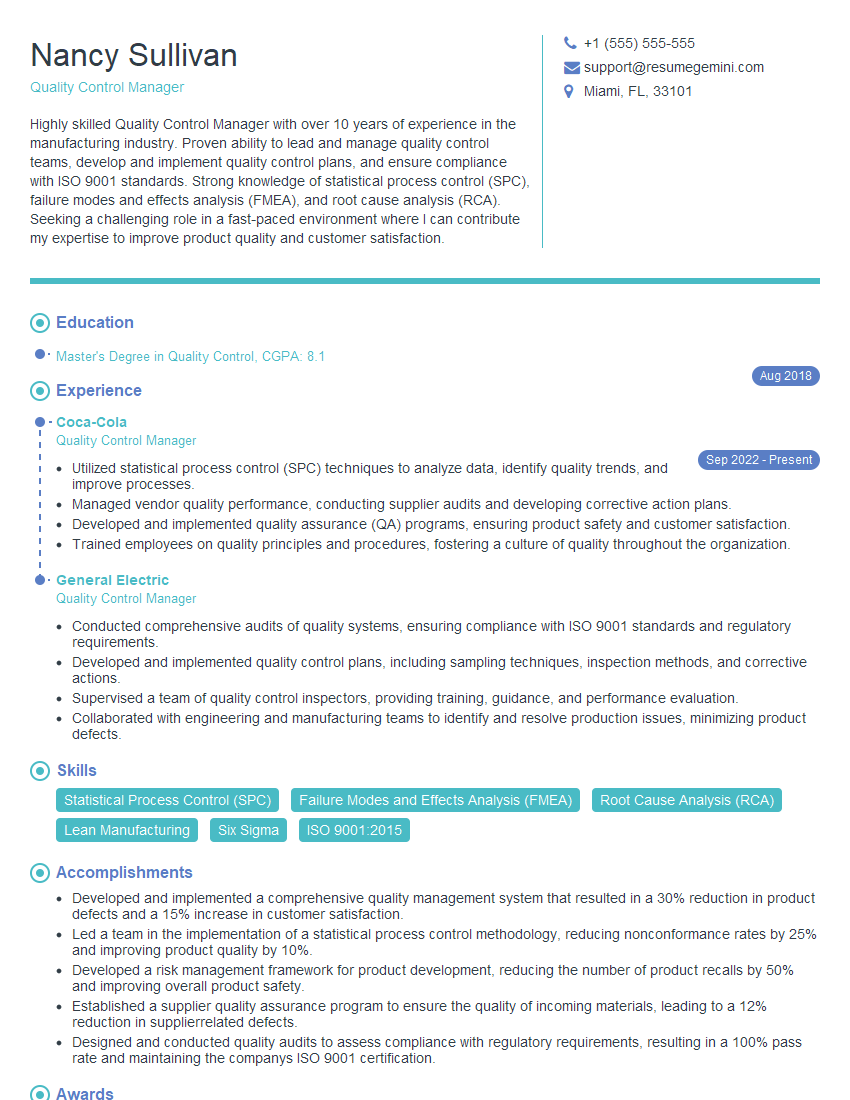
Quality Control Manager Resume Sample
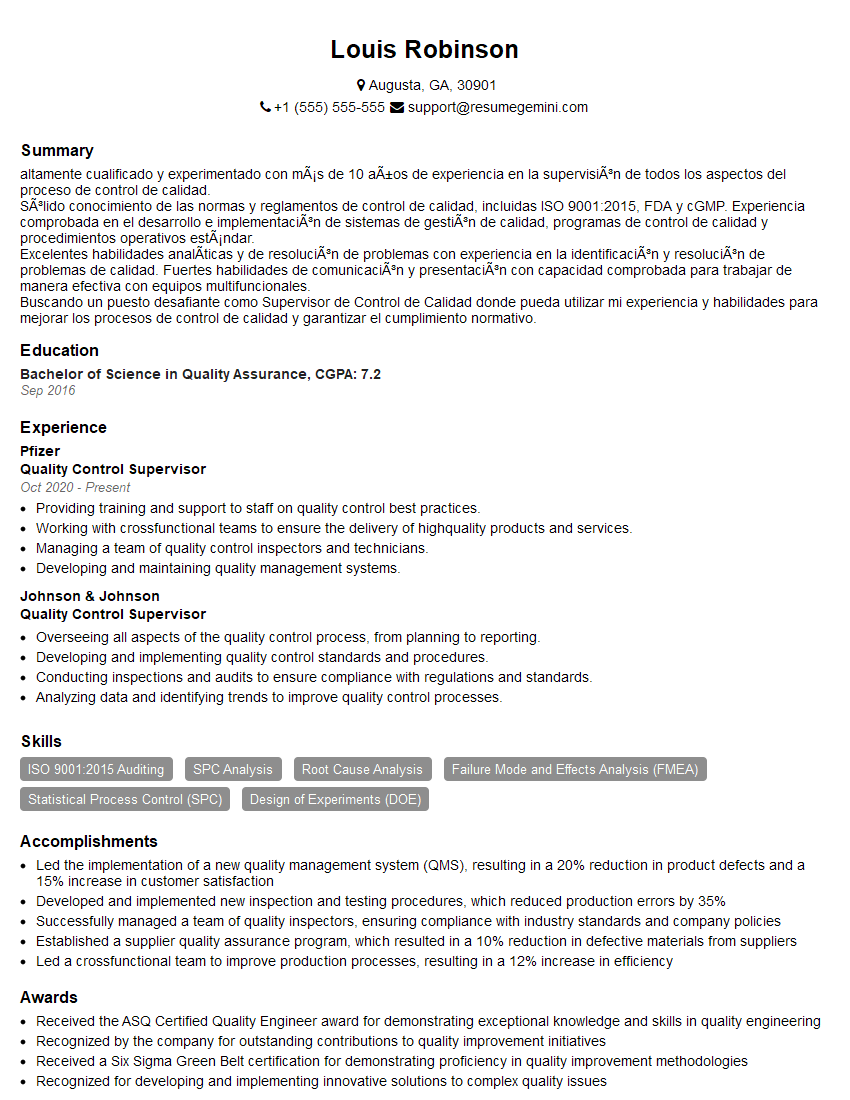
Quality Control Supervisor Resume Sample
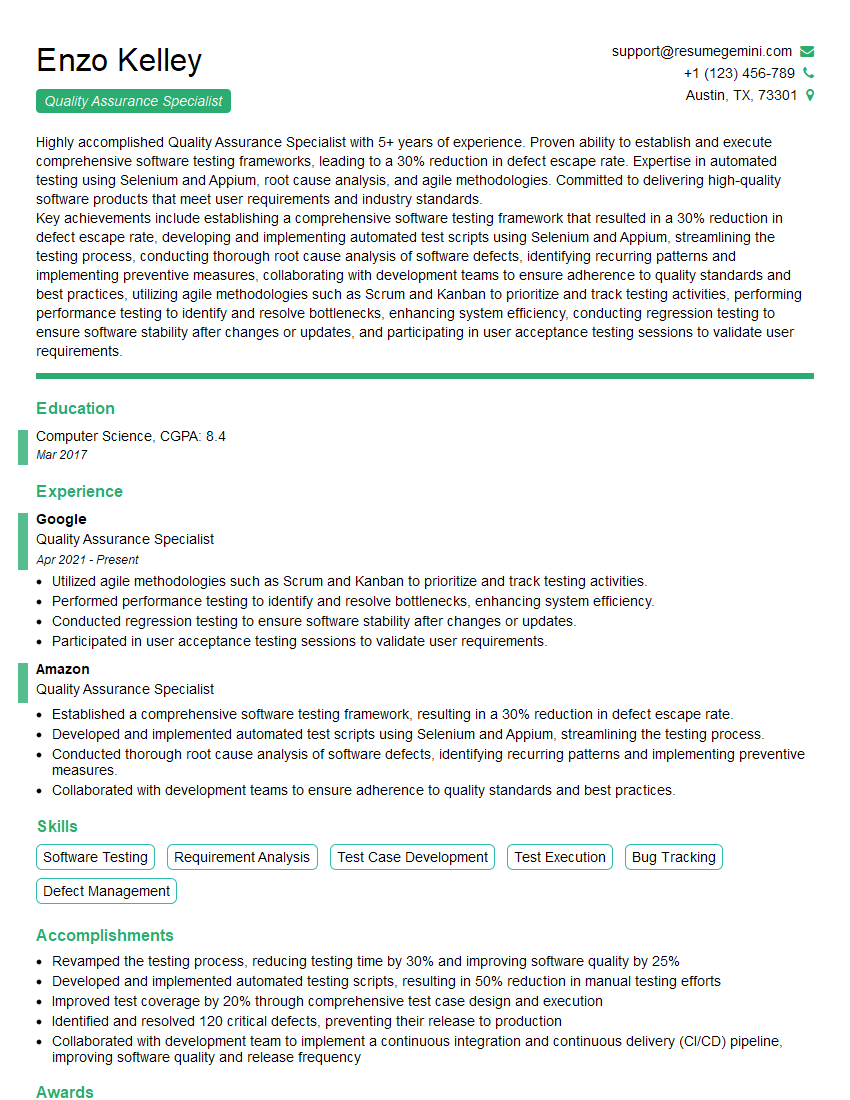
Quality Assurance Specialist Resume Sample
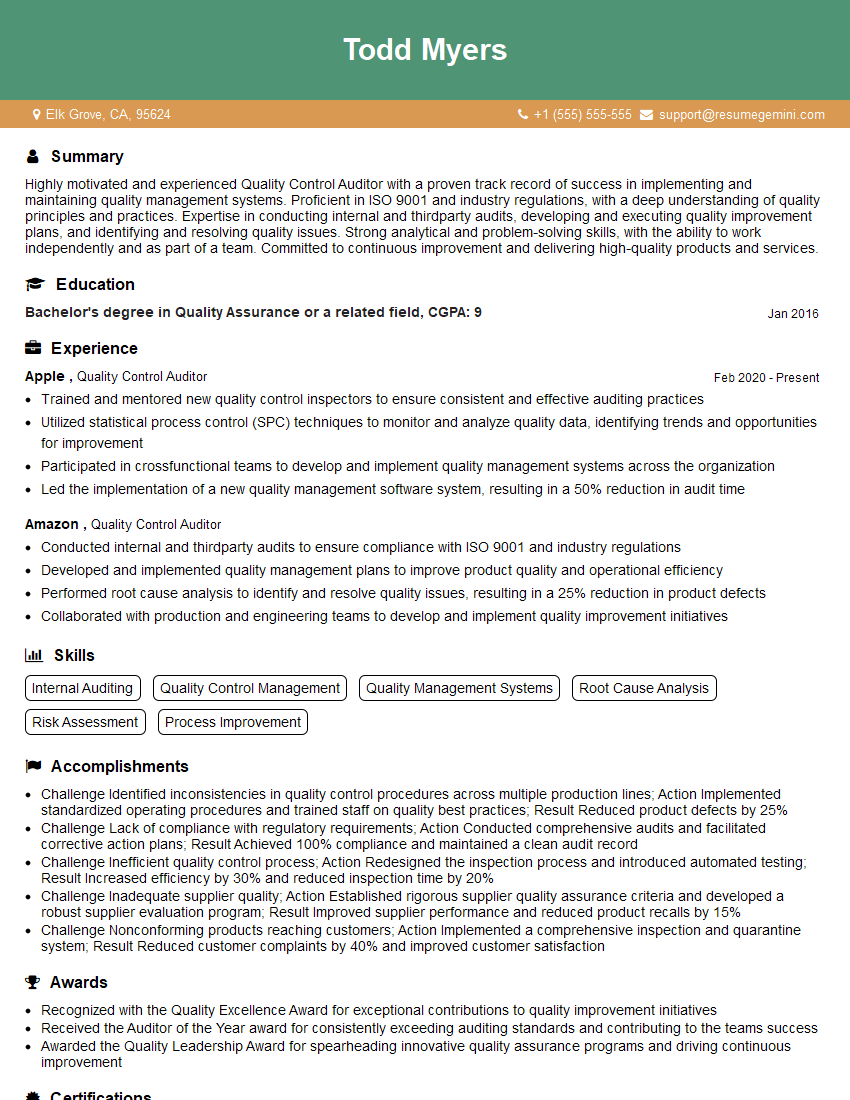
Quality Control Auditor Resume Sample
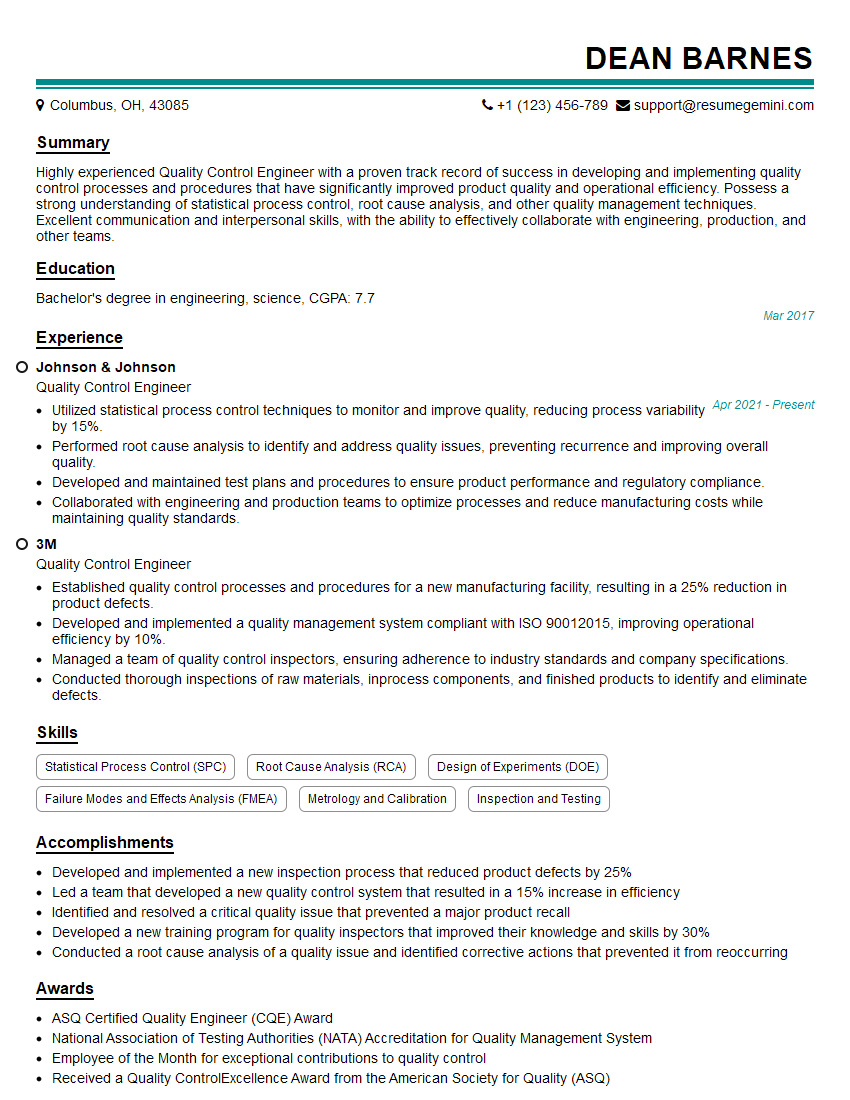
Quality Control Engineer Resume Sample
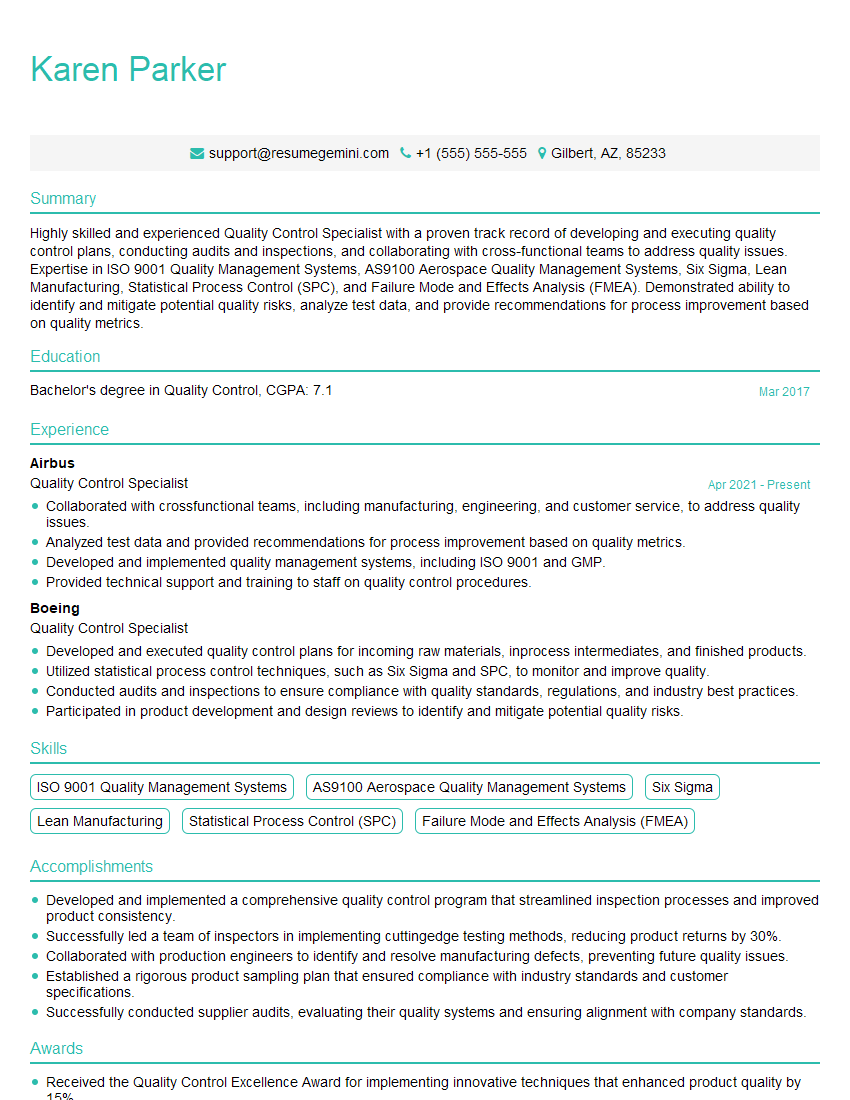
Quality Control Specialist Resume Sample
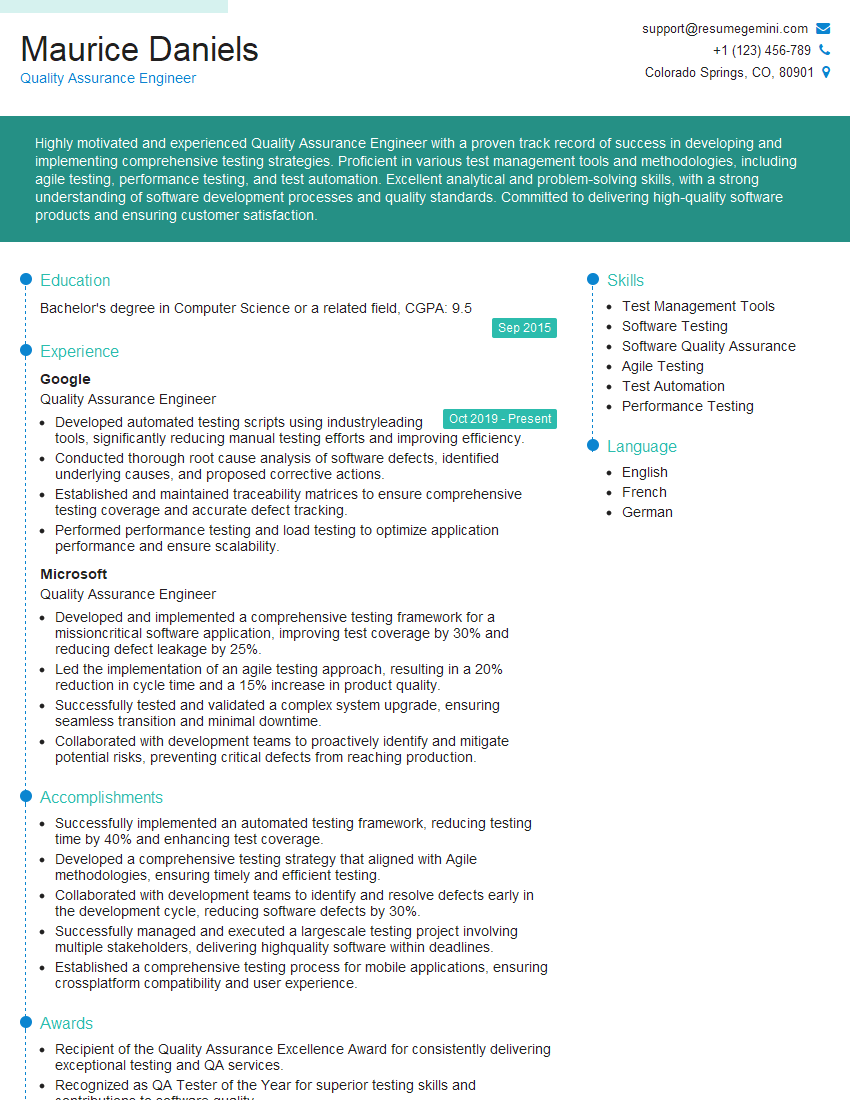
Quality Assurance Engineer Resume Sample
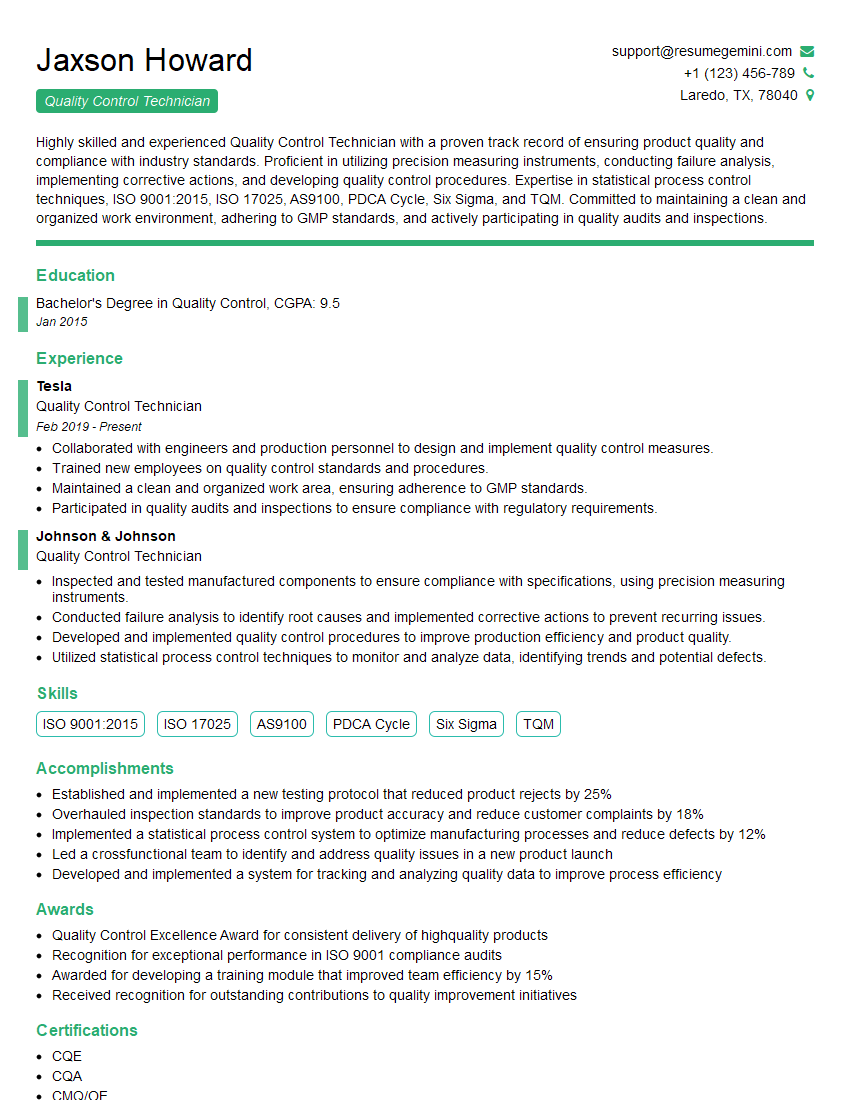
Quality Control Technician Resume Sample
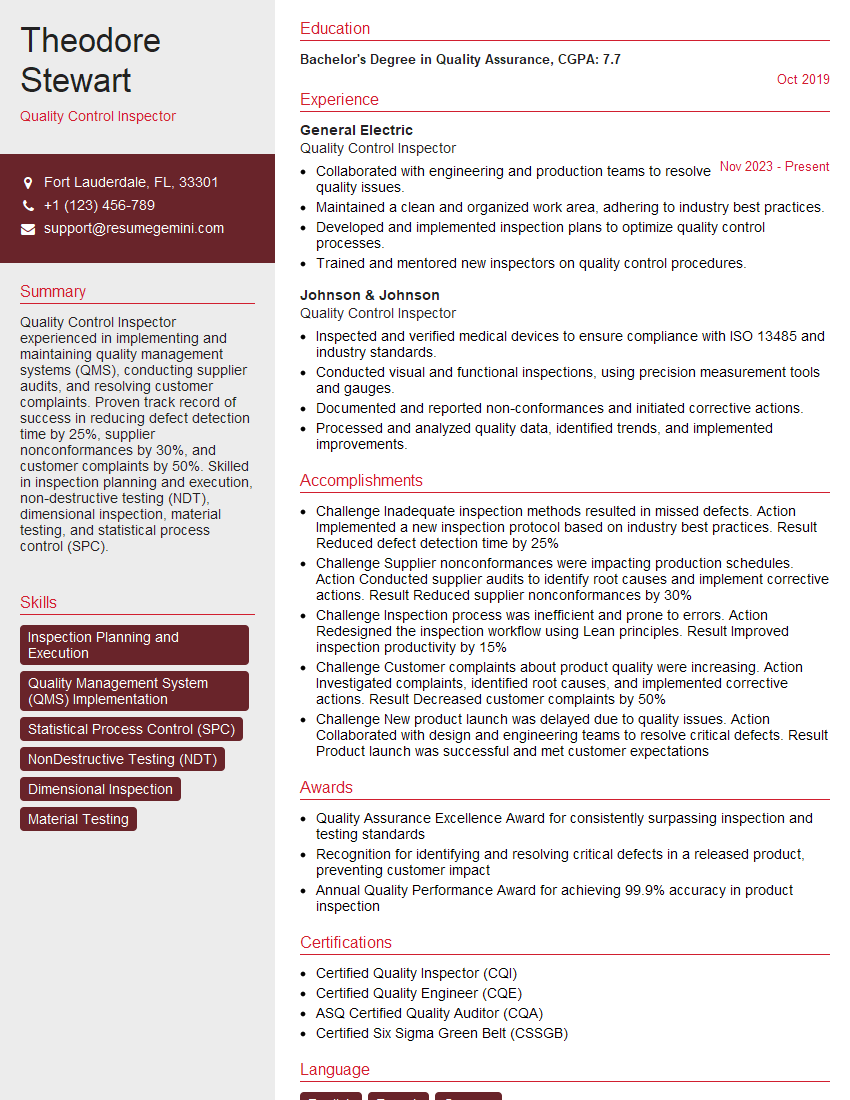
Quality Control Inspector Resume Sample
Explore more articles
Users Rating of Our Blogs
Share Your Experience
We value your feedback! Please rate our content and share your thoughts (optional).
What Readers Say About Our Blog
Very informative content, great job.
good