Cracking a skill-specific interview, like one for Farm Vehicle Operation, requires understanding the nuances of the role. In this blog, we present the questions you’re most likely to encounter, along with insights into how to answer them effectively. Let’s ensure you’re ready to make a strong impression.
Questions Asked in Farm Vehicle Operation Interview
Q 1. Describe your experience operating different types of tractors.
My experience encompasses a wide range of tractors, from smaller, versatile utility tractors ideal for tasks like mowing and spraying, to larger, high-horsepower models designed for heavy-duty fieldwork such as plowing and cultivating. I’ve operated both two-wheel-drive and four-wheel-drive tractors, each suited to different terrain and workloads. For instance, a two-wheel-drive tractor is perfectly adequate for relatively flat and dry fields, whereas a four-wheel-drive is essential for navigating challenging conditions like steep slopes or muddy fields, minimizing wheel slip and maximizing traction. I’m proficient with various transmission types, including manual, semi-automatic, and fully automatic transmissions, and am comfortable using different implements like loaders, tillers, and mowers with each.
For example, on one farm, I primarily used a 100hp four-wheel-drive tractor with a front-end loader for moving hay bales and manure. On another, I worked extensively with a smaller, more maneuverable utility tractor equipped with a spray boom for herbicide application. This flexibility and adaptability to different machines is crucial for optimizing efficiency across a diverse range of farming operations.
Q 2. Explain the process of pre-operational checks for a combine harvester.
Pre-operational checks for a combine harvester are critical for safety and efficiency. They should be performed meticulously before every use, regardless of the duration of inactivity. I always follow a standardized checklist, which includes:
- Visual Inspection: A thorough examination of the machine for any visible damage, leaks, or loose parts. This includes checking belts, hoses, and chains for wear and tear.
- Fluid Levels: Checking and topping off engine oil, hydraulic fluid, coolant, and fuel levels. Low levels can lead to overheating or mechanical failure.
- Safety Systems: Ensuring all safety devices, such as emergency stops, shields, and lights are functional and in good working order.
- Auger and Concaves: Inspecting the augers and concaves for obstructions, wear, or damage. Foreign objects in these components can cause blockages or damage to the machine.
- Grain Tank and Cleaning System: Checking that the grain tank is empty and the cleaning system is clear of debris. This prevents contamination and ensures smooth operation.
- Header: A thorough inspection of the header, ensuring its proper alignment and function. This might include checking the knives, reel, and feeding mechanism.
- Engine Start-up: Performing a gradual start-up of the engine, monitoring for any unusual noises or vibrations.
Think of it like a pre-flight check for an airplane – thorough checks are essential before operating any complex machinery. Skipping even one step can lead to costly breakdowns, reduced yields, and potentially dangerous situations.
Q 3. How do you maintain optimal tire pressure for different field conditions?
Maintaining optimal tire pressure is crucial for fuel efficiency, traction, and minimizing soil compaction. The ideal pressure varies significantly depending on the field conditions and the type of work being performed. I always consult the manufacturer’s recommendations for the specific tractor and tire type as a starting point, but then adjust based on the conditions:
- Dry, Hard Ground: Higher tire pressure is generally used for better fuel efficiency and less slippage. This reduces the tire’s contact patch with the ground.
- Wet or Soft Ground: Lower tire pressure increases the contact patch, providing better traction and reducing the risk of compaction damage. This distributes the weight of the machine more effectively.
- Heavy Loads: Increased tire pressure is often needed when hauling heavy loads, such as grain or manure, to prevent overloading and tire damage.
- Row Crops: Reduced tire pressure minimizes soil compaction between rows.
I use a reliable tire pressure gauge to regularly check and adjust the pressure. I often keep a log of tire pressures for various field conditions to help guide future decisions. For example, I might note that 32 psi works well in dry conditions, but I need to reduce the pressure to 28 psi in wet, clay soils. This data-driven approach ensures consistent performance and long-term tire health.
Q 4. What safety procedures do you follow when operating farm machinery?
Safety is paramount when operating farm machinery. My safety procedures are meticulous and consistent, encompassing all aspects of operation:
- Pre-Operational Checks: As mentioned earlier, a thorough pre-operational check is the first line of defense. This includes checking all safety systems and fluid levels.
- Personal Protective Equipment (PPE): Always wearing appropriate PPE, including hearing protection, safety glasses, and sturdy work boots.
- Awareness of Surroundings: Maintaining constant awareness of the surroundings, including other workers, livestock, and obstacles.
- Communication: Using clear communication methods, such as hand signals or radios, when working with others.
- Proper Operation: Operating the machinery according to the manufacturer’s instructions and adhering to all relevant safety regulations.
- Regular Maintenance: Keeping machinery in good working condition through regular maintenance, reducing the risk of mechanical failures.
- Emergency Procedures: Knowing the location of and how to operate all emergency shut-off switches and emergency exits.
A near miss once really highlighted the importance of safety for me. A PTO shield was slightly loose, and if I hadn’t caught it before starting, it could have easily resulted in a serious injury. That reinforced the importance of thorough pre-operational checks.
Q 5. Describe your experience with GPS-guided agricultural machinery.
I have extensive experience using GPS-guided agricultural machinery. This technology has significantly improved my efficiency and precision in farming operations. I’m proficient in using both RTK (Real-Time Kinematic) and other GPS guidance systems for tasks like planting, spraying, and harvesting. This involves programming the machine with field boundaries, setting the desired spacing and depth for operations, and monitoring the GPS system’s real-time position.
The benefits are numerous. For example, GPS guidance minimizes overlaps and skips, reducing waste of inputs such as seeds, fertilizers, and pesticides. It also enables consistent planting depths and spacing, improving crop uniformity and yields. Further, the data collected from GPS systems can be used for detailed field mapping and analysis, providing valuable insights for future decision-making. I often use this data to optimize field layouts and tailor practices to individual field characteristics.
Q 6. How do you troubleshoot common mechanical issues in farm equipment?
Troubleshooting mechanical issues is a regular part of farm work. My approach is systematic and relies on a combination of experience, knowledge of the machinery, and diagnostic tools. I typically follow these steps:
- Identify the Problem: Carefully observe the problem and note any unusual noises, vibrations, or performance issues.
- Gather Information: Consider factors such as the recent operating conditions, any maintenance performed, and the history of the equipment.
- Visual Inspection: Thoroughly inspect the relevant components for signs of wear, damage, leaks, or obstructions.
- Consult Manuals and Resources: Refer to the operator’s manual and other available resources, such as online forums or technical documentation.
- Use Diagnostic Tools: Employ diagnostic tools such as pressure gauges, multimeters, and other specialized equipment to pinpoint the problem.
- Testing and Verification: After making repairs or adjustments, thoroughly test the equipment to ensure the issue has been resolved.
For example, if a tractor experiences a loss of power, I would systematically check the fuel system, the electrical system, and the engine components to identify the root cause. This methodical approach ensures that problems are addressed efficiently and effectively, minimizing downtime.
Q 7. Explain your understanding of different types of tillage equipment.
Tillage equipment is used to prepare the soil for planting. There’s a wide range, each suited to specific soil types and farming practices. I’m familiar with many types including:
- Moldboard Plows: These are traditional plows that invert the soil, burying crop residue and weeds deeply. They are energy-intensive and can lead to soil compaction. I use this for heavy clay soils that need deep tillage.
- Disc Harrows: These use rotating discs to cut and pulverize the soil, creating a relatively fine seedbed. They are more fuel-efficient than moldboard plows and cause less compaction.
- Chisel Plows: These have shanks that penetrate the soil to break up compaction layers without fully inverting the soil. This is good for minimal tillage practices.
- Vertical Tillage Tools: These tools, such as subsoilers, aim to break up compacted soil layers without extensive soil inversion, improving soil drainage and root penetration. This is popular for conserving soil health and reducing erosion.
- Rotary Tillers: These use rapidly rotating blades to finely pulverize the soil, creating a very smooth seedbed. These are energy-intensive and often cause increased soil erosion if used incorrectly.
The choice of tillage equipment depends on several factors, including soil type, climate, crop requirements, and the farmer’s tillage philosophy. No-till farming, for example, relies on minimal soil disturbance, preserving soil structure and organic matter. Understanding these factors is essential for selecting the most appropriate equipment and implementing sustainable soil management practices.
Q 8. Describe your experience with fertilizer application equipment.
My experience with fertilizer application equipment spans over 15 years, encompassing various types, from simple spreaders to sophisticated GPS-guided systems. I’m proficient in calibrating and operating both granular and liquid fertilizer applicators. I’ve worked with centrifugal spreaders for broadcasting fertilizers across large fields, and also with precise placement systems for row crops, ensuring optimal nutrient distribution and minimizing waste. For example, on one farm, we transitioned from a broadcast spreader to a variable rate application system. This resulted in a 15% reduction in fertilizer costs by applying precisely the amount needed based on soil testing data and yield maps. This not only saved money but also minimized environmental impact. I’m also familiar with the safety regulations and maintenance procedures for all types of fertilizer application equipment.
Q 9. How do you ensure the safe and efficient operation of sprayers?
Safe and efficient sprayer operation hinges on meticulous preparation and adherence to safety protocols. Before starting, I always inspect the sprayer thoroughly, checking for leaks, worn parts, and proper functioning of all safety devices. Calibration is crucial to ensure accurate application rates, preventing over- or under-application. I utilize personal protective equipment (PPE) consistently, including chemical-resistant suits, gloves, and goggles. This protects me from potential exposure to harmful chemicals. When operating the sprayer, I maintain a safe distance from waterways and sensitive areas to prevent environmental contamination. Furthermore, I always follow the manufacturer’s instructions and any relevant pesticide application regulations. For instance, I’ve successfully managed multiple spraying operations across various crops while maintaining stringent safety standards, avoiding accidents or environmental incidents. Proper record-keeping of all applications is another critical aspect.
Q 10. What are the key factors to consider when selecting the appropriate farm equipment for a specific task?
Selecting the right farm equipment is a crucial decision impacting efficiency and profitability. Key factors to consider include the specific task (e.g., plowing, planting, harvesting), field size and topography, the type of crop, budget constraints, and available labor. For example, a small-scale farmer might opt for a compact tractor with multiple implements, whereas a large-scale operation would likely invest in specialized machinery for each task. The soil type also plays a vital role. Heavy clay soils might necessitate more powerful tractors and specialized tillage equipment. Assessing the long-term costs, including fuel consumption, maintenance, and repairs, is equally important. Finally, understanding the technological advancements available, such as GPS guidance and automated systems, can significantly improve efficiency and precision.
Q 11. Explain your knowledge of different harvesting techniques and related equipment.
My knowledge of harvesting techniques encompasses various methods depending on the crop. For grains like wheat and barley, I’m experienced with combine harvesters, understanding the intricacies of header selection, threshing, separation, and cleaning processes. I’ve worked with different types of combines, from conventional to self-propelled models, adjusting settings based on crop conditions and yield. For fruits and vegetables, harvesting often involves manual labor or specialized machinery such as potato harvesters, grape harvesters, or mechanical picking systems. I understand the importance of minimizing damage during harvest to maintain product quality and maximize yields. For example, adjusting the combine’s settings for damp conditions to reduce grain loss and maintain quality is critical. Knowing the optimal harvest time for each crop to ensure maximum yield and quality is another key component of efficient harvesting.
Q 12. How do you perform preventative maintenance on farm machinery?
Preventative maintenance is paramount for extending the lifespan and ensuring the reliable operation of farm machinery. My approach involves a regular schedule of inspections and servicing. This includes checking fluid levels (engine oil, hydraulic fluid, coolant), lubricating moving parts, inspecting belts and hoses for wear and tear, and replacing worn components before they cause major breakdowns. I also conduct thorough cleaning of the equipment after each use, removing mud, debris, and crop residue to prevent corrosion. I maintain detailed records of all maintenance activities, noting dates, services performed, and any issues encountered. This proactive approach significantly reduces downtime and prevents costly repairs down the line. I am also familiar with the use of diagnostic tools for early detection of potential problems.
Q 13. Describe your experience with irrigation systems and their operation.
My experience with irrigation systems includes both surface and subsurface irrigation methods. I’m familiar with the operation and maintenance of center pivot systems, drip irrigation systems, and flood irrigation systems. This involves understanding water sources, pump operation, pressure regulation, and scheduling of irrigation cycles based on soil moisture levels and crop needs. I’ve worked with various types of control systems, from simple timers to sophisticated computer-controlled systems with sensors that monitor soil moisture and weather conditions. For example, implementing a drip irrigation system on a vineyard significantly improved water use efficiency compared to traditional flood irrigation, reducing water waste and saving costs. Understanding the principles of water management and appropriate irrigation techniques is critical for maximizing yields while conserving resources and preventing soil erosion.
Q 14. How do you handle equipment malfunctions in the field?
Handling equipment malfunctions in the field requires a systematic approach. First, I ensure the safety of myself and others in the vicinity. Then, I attempt to diagnose the problem using my knowledge of the equipment and troubleshooting skills. This often involves checking for obvious issues like fuel leaks, loose connections, or broken parts. If the problem is beyond my immediate capabilities, I contact a qualified mechanic or use online resources and manuals to guide the repair. In the meantime, I take steps to minimize further damage or loss, such as moving the equipment to a safe location. For instance, when a combine’s header became jammed during harvest, I calmly followed the troubleshooting steps in the manual, clearing the blockage and getting the combine back in operation with minimal downtime. Detailed record-keeping of these malfunctions and their solutions is crucial for future reference and preventative measures.
Q 15. Explain your experience with different types of planting equipment.
My experience encompasses a wide range of planting equipment, from conventional planters to precision planting systems. I’m proficient with various planter types, including air seeders, grain drills, and precision planters utilizing GPS guidance.
- Conventional Planters: I’ve extensively operated row crop planters, adjusting seed spacing, depth, and down pressure to optimize planting in varying soil conditions. For example, I adjusted a John Deere 7200 planter’s settings to achieve optimal seed depth in heavy clay soils by increasing down pressure and slowing ground speed.
- Air Seeders: My experience includes using air seeders for large-scale planting of small grains and cover crops. Understanding air flow, seed metering, and maintaining even distribution across varying terrain is crucial. I successfully used a Bourgault air seeder to plant 1000 acres of wheat with remarkable uniformity.
- Precision Planters: I’m skilled in operating precision planting systems integrated with GPS technology. This enables precise seed placement, variable rate planting, and real-time monitoring of planting parameters, leading to enhanced efficiency and yield. I utilized a Kinze planter with a precision metering system to optimize fertilizer application based on soil nutrient levels mapped with a yield monitor.
Career Expert Tips:
- Ace those interviews! Prepare effectively by reviewing the Top 50 Most Common Interview Questions on ResumeGemini.
- Navigate your job search with confidence! Explore a wide range of Career Tips on ResumeGemini. Learn about common challenges and recommendations to overcome them.
- Craft the perfect resume! Master the Art of Resume Writing with ResumeGemini’s guide. Showcase your unique qualifications and achievements effectively.
- Don’t miss out on holiday savings! Build your dream resume with ResumeGemini’s ATS optimized templates.
Q 16. Describe your understanding of hydraulic systems in farm vehicles.
Hydraulic systems are the backbone of most modern farm vehicles, providing power for various functions like steering, lifting, and controlling implements. My understanding encompasses the entire system, including pumps, valves, cylinders, and hoses.
- Components: I understand the function of each component and can troubleshoot common problems. For instance, I’ve diagnosed and repaired hydraulic leaks by identifying faulty seals and replacing them.
- Troubleshooting: I’m adept at diagnosing hydraulic issues, from simple leaks to complex system malfunctions. I often use a pressure gauge to check system pressure and pinpoint the location of leaks or blockages.
- Maintenance: Regular maintenance is crucial for preventing hydraulic system failures. This includes checking fluid levels, monitoring for leaks, and replacing filters regularly. I’ve developed a comprehensive maintenance schedule to keep the hydraulic systems on all the machinery I operate in peak condition.
Q 17. How do you ensure compliance with safety regulations during equipment operation?
Safety is paramount in farm vehicle operation. I always prioritize adherence to safety regulations and best practices.
- Pre-Operational Checks: Before operating any equipment, I conduct thorough pre-operational checks, ensuring all safety devices are functioning correctly (e.g., PTO shields, lights, brakes). This prevents potential accidents stemming from mechanical failures.
- Personal Protective Equipment (PPE): I always wear appropriate PPE, including safety glasses, hearing protection, and sturdy work boots. I also understand and comply with the specific PPE requirements for different pieces of machinery.
- Awareness of Surroundings: Maintaining awareness of my surroundings is crucial, especially when operating large equipment near roads or other people. I communicate effectively with others in the field to ensure everyone’s safety.
- Regular Maintenance: Regular equipment maintenance ensures the safety and reliability of machinery. Malfunctioning equipment can lead to accidents, and maintaining a regular maintenance schedule drastically reduces this risk.
Q 18. Explain your experience with loading and unloading agricultural products.
My experience includes loading and unloading a variety of agricultural products using different methods.
- Grain Handling: I’m proficient in operating grain augers, conveyors, and grain carts for efficient grain handling. This includes ensuring proper grain flow to avoid blockages and damage. For example, I optimized grain unloading using a telescopic auger to minimize spillage and time.
- Hay and Forage: I’ve used various methods for handling hay and forage, including bale loaders, stackers, and trailers. Safe and efficient loading and unloading are crucial to prevent damage and injuries.
- Other Products: My experience extends to handling other agricultural products, adapting techniques based on the product’s characteristics (e.g., potatoes, vegetables). I am skilled in adapting practices to handle the diverse range of produce found on modern farms.
Q 19. How do you manage fuel efficiency while operating farm machinery?
Fuel efficiency is a significant concern in farm operations. I employ several strategies to minimize fuel consumption.
- Proper Maintenance: Well-maintained engines operate more efficiently. Regular servicing, including tune-ups and filter changes, significantly reduces fuel consumption.
- Optimal Operating Techniques: I avoid harsh acceleration and braking, and I maintain appropriate engine RPM for the task. Driving at the proper speed for the implement being used also plays a key role.
- Terrain Management: Choosing appropriate routes and avoiding unnecessary idling saves fuel. I plan my routes carefully to minimize travel time and fuel usage.
- Technology: Many modern tractors and combines have fuel monitoring systems that provide real-time data on fuel consumption, allowing for adjustments in operating techniques for greater efficiency.
Q 20. Describe your experience with different types of farm implements.
My experience encompasses a broad range of farm implements used for various operations.
- Tillage Implements: I’ve operated various tillage implements, including plows, disks, harrows, and cultivators, understanding their functions and appropriate use in different soil types. Proper selection and use of tillage equipment is critical for soil health.
- Planting Equipment (as detailed in Question 1): This includes various types of planters for different crops and seeding methods.
- Harvesting Equipment: My experience includes operating combines, balers, and other harvesting machinery for various crops. Each type requires knowledge of specific settings and procedures to achieve optimal results.
- Sprayers: I am experienced in operating sprayers, calibrating them correctly to ensure even application of pesticides, fertilizers, and herbicides, protecting crops and preserving the environment.
Q 21. Explain your understanding of the principles of soil conservation and their impact on equipment operation.
Understanding soil conservation principles is crucial for sustainable farming practices. These principles directly influence equipment operation and choices.
- No-Till Farming: I’m experienced in no-till farming techniques, which minimize soil disturbance, reducing erosion and improving soil health. This means using specialized equipment designed for no-till planting and minimizing passes across the field.
- Conservation Tillage: I understand and utilize conservation tillage techniques, such as strip-till or ridge-till, which reduce soil erosion while maintaining adequate seedbed preparation. These practices often involve specific tillage implements and careful management.
- Cover Cropping: I’m familiar with the use of cover crops to protect the soil from erosion, improve soil fertility, and improve water infiltration. This involves using specialized planting equipment for cover crop establishment.
- Crop Rotation: Crop rotation is a key soil conservation practice that helps to maintain soil fertility and reduce pest and disease pressure. Understanding the rotation schedule helps in selecting the proper equipment for each crop.
By adopting soil conservation practices, we reduce soil erosion, improve water infiltration, and enhance the overall productivity and sustainability of the farm. These practices directly inform the equipment choices and operational methods used.
Q 22. How do you adapt your operation techniques to different soil types and weather conditions?
Adapting farm operation techniques to varying soil types and weather conditions is crucial for efficiency and yield. It involves understanding the impact of these factors on traction, soil compaction, and plant health.
- Soil Type: For example, clay soils, when wet, become extremely sticky and can cause significant wheel slippage. In this case, I’d use wider tires to distribute weight and reduce ground pressure, possibly employing a different tillage technique like reduced tillage to minimize soil disturbance. Conversely, sandy soils require different approaches; they’re prone to erosion and may necessitate heavier equipment or no-till methods to conserve moisture and topsoil.
- Weather Conditions: Heavy rainfall can lead to waterlogging, making fields impassable. I would postpone operations until the soil dries sufficiently. Conversely, excessively dry conditions can increase soil erosion and lead to poor seed germination. In this scenario, I’d consider adjusting planting depths or implementing conservation tillage practices.
- Equipment Adjustments: I regularly adjust tire pressure based on soil conditions to optimize traction and minimize compaction. For instance, lowering tire pressure on softer soils improves the footprint and prevents sinking, while higher pressure is used on harder ground for better stability.
It’s about knowing your equipment and understanding how it interacts with the environment to get the best results. It’s a bit like adapting a recipe – you need to make adjustments based on the ingredients (soil) and oven temperature (weather).
Q 23. Describe your experience with using diagnostic tools for farm equipment.
My experience with diagnostic tools is extensive. Modern farm equipment is incredibly sophisticated, often equipped with onboard computer systems that provide real-time data on various parameters. These systems are invaluable for preventative maintenance and troubleshooting.
- OBD-II Systems (On-Board Diagnostics): Many tractors and harvesters utilize OBD-II-like systems. I’m proficient in using these systems to retrieve diagnostic trouble codes (DTCs) that pinpoint specific issues, whether it’s a faulty sensor, a hydraulic leak, or a problem with the engine control module.
- Dedicated Diagnostic Software: Beyond OBD-II, manufacturers often provide specialized software and hardware interfaces to access more detailed information from the machine’s control units. I’m familiar with several such systems, allowing me to perform in-depth diagnostics and adjust parameters.
- Data Logging: The diagnostic tools often record operational data, enabling me to track performance over time and identify potential issues before they become major problems. This proactive approach helps optimize maintenance scheduling and avoids costly downtime.
For example, if the fuel efficiency of a tractor suddenly drops, I can use the diagnostic software to check fuel injector performance, air intake restrictions, and other potential causes. This avoids guesswork and allows for targeted repairs.
Q 24. How do you maintain accurate records of equipment operation and maintenance?
Maintaining accurate equipment records is crucial for maximizing efficiency and minimizing costs. I use a combination of digital and paper-based systems to track everything.
- Digital Record Keeping: I utilize farm management software that allows me to record all maintenance activities, fuel consumption, operational hours, and repair costs. This software often integrates with the equipment’s onboard diagnostic systems for automated data entry.
- Paper-Based Logs: While relying heavily on digital systems, I also maintain physical logs for certain tasks – this serves as a backup and helps in situations where digital access is unavailable.
- Preventive Maintenance Schedules: I create and adhere to strict preventative maintenance schedules for all equipment. This includes regular oil changes, filter replacements, and inspections to catch small problems before they escalate. These schedules are meticulously tracked in both digital and paper records.
Having accurate records helps optimize budgeting, facilitates insurance claims, and ensures compliance with regulatory requirements. It’s like a well-organized financial statement for your equipment.
Q 25. Explain your experience working with different types of farm animals and associated equipment.
My experience encompasses working with a variety of farm animals and their associated equipment. This includes livestock handling and milking systems for dairy cattle, feeding systems for poultry and swine, and equipment for managing pasture and hay.
- Dairy Cattle: I have extensive experience operating milking machines, maintaining the cleaning and sanitation protocols, and troubleshooting malfunctions. I understand the importance of animal welfare in dairy farming and ensure equipment is operated safely and efficiently.
- Poultry and Swine: I’m familiar with automated feeding systems, environmental control systems (ventilation, temperature), and waste management equipment for these operations. Proper functioning of these systems is critical for animal health and productivity.
- Pasture and Hay Management: I’m skilled in operating equipment such as hay balers, mowers, and tractors for pasture maintenance and hay production. The efficiency of this equipment directly impacts the quality and yield of feed for the animals.
Working with animals requires a responsible and considerate approach. Understanding animal behavior and ensuring the equipment is used appropriately is essential for both animal welfare and operational success.
Q 26. How do you handle emergency situations while operating farm machinery?
Handling emergencies while operating farm machinery demands quick thinking and a structured approach. Safety is paramount.
- Preemptive Measures: Before starting any operation, I conduct a thorough safety check of the equipment, including checking fluid levels, tire pressure, and safety features. I also inform someone of my work location and anticipated return time.
- Responding to Incidents: In case of equipment malfunction, I immediately turn off the machine and assess the situation. If there’s a risk of injury or further damage, I’ll secure the area and contact the necessary support – mechanic, supervisor, or emergency services, as appropriate.
- First Aid and Emergency Procedures: I possess a valid first aid certification and am familiar with emergency response procedures. I’m prepared to administer first aid if needed, while ensuring the safety of myself and others.
For example, if a tractor experiences a sudden hydraulic failure, my immediate priority is to bring the machine to a safe stop, preventing further damage or injury. Then I contact support for assistance with repairs.
Q 27. Describe your understanding of the impact of technology on modern farm vehicle operation.
Technology has revolutionized farm vehicle operation, enhancing efficiency, precision, and sustainability.
- GPS and Precision Farming: GPS-guided tractors and implements allow for automated steering and precise application of inputs like fertilizers and pesticides. This reduces overlaps, minimizes waste, and improves yield.
- Telematics and Data Monitoring: Telematics systems provide real-time data on equipment performance, location, and operational parameters. This allows for remote monitoring, proactive maintenance, and improved decision-making.
- Autonomous Vehicles: While still evolving, autonomous tractors and harvesters are becoming increasingly prevalent. These machines can operate without human intervention, reducing labor costs and improving efficiency, particularly during peak seasons.
Think of it as the difference between driving with a map and using GPS navigation. Modern technology enables us to work smarter, not harder, and increase productivity while optimizing resource use.
Q 28. What are your strategies for ensuring the longevity and optimal performance of farm equipment?
Ensuring the longevity and optimal performance of farm equipment requires a proactive and comprehensive approach.
- Preventive Maintenance: Adhering to strict preventative maintenance schedules is paramount. This includes regular inspections, oil changes, filter replacements, and lubrication to prevent wear and tear. I use checklists to ensure thoroughness.
- Proper Storage: During periods of inactivity, equipment should be stored properly in a sheltered location to protect it from the elements. This involves cleaning and covering machines to prevent corrosion and damage.
- Operator Training: Proper operator training is essential to prevent misuse and damage. Training emphasizes safe operating procedures, preventative maintenance, and recognizing early signs of malfunction.
- Regular Inspections: Conducting regular visual inspections before and after each use is vital to spot potential problems early on.
By adopting these practices, we can significantly extend the lifespan of the equipment, reducing replacement costs and maintaining productivity. It’s similar to properly maintaining a car – regular care prevents costly repairs down the line.
Key Topics to Learn for Farm Vehicle Operation Interview
- Vehicle Maintenance & Safety: Understanding preventative maintenance schedules, recognizing potential mechanical issues, and adhering to strict safety protocols for operating various farm vehicles.
- Operational Techniques: Mastering efficient and safe operation of tractors, harvesters, sprayers, and other specialized farm equipment; including maneuvering in diverse terrains and varying weather conditions.
- GPS & Precision Farming: Knowledge of GPS-guided machinery, understanding data acquisition and its application in optimizing farming practices, and familiarity with precision agriculture technologies.
- Crop Handling & Transportation: Safe and efficient loading, unloading, and transportation of harvested crops; understanding the importance of minimizing crop damage during transit.
- Regulations & Compliance: Familiarity with relevant safety regulations, environmental protection measures, and adherence to industry best practices for responsible farm vehicle operation.
- Problem-Solving & Troubleshooting: Diagnosing and resolving common mechanical issues, understanding the importance of preventative maintenance, and using problem-solving skills to overcome operational challenges.
- Fuel Efficiency & Optimization: Understanding techniques for maximizing fuel efficiency in farm vehicles, reducing operational costs, and contributing to environmentally responsible farming.
Next Steps
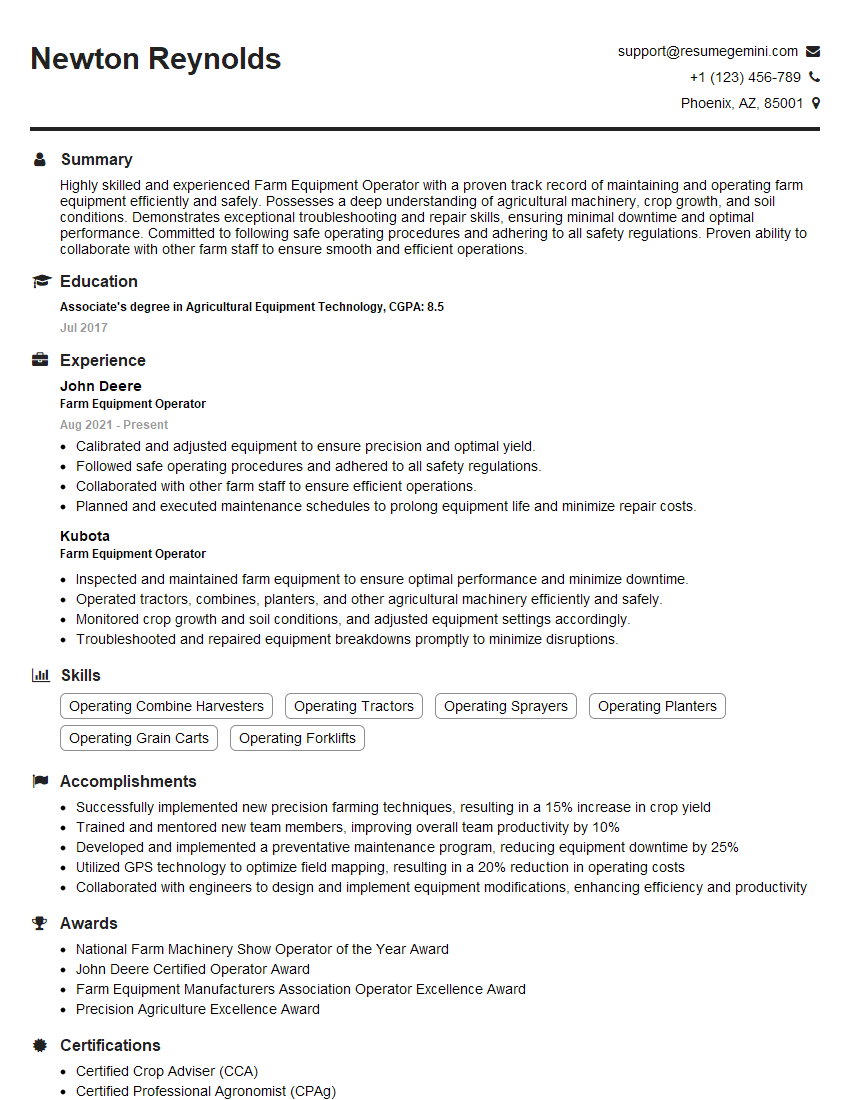
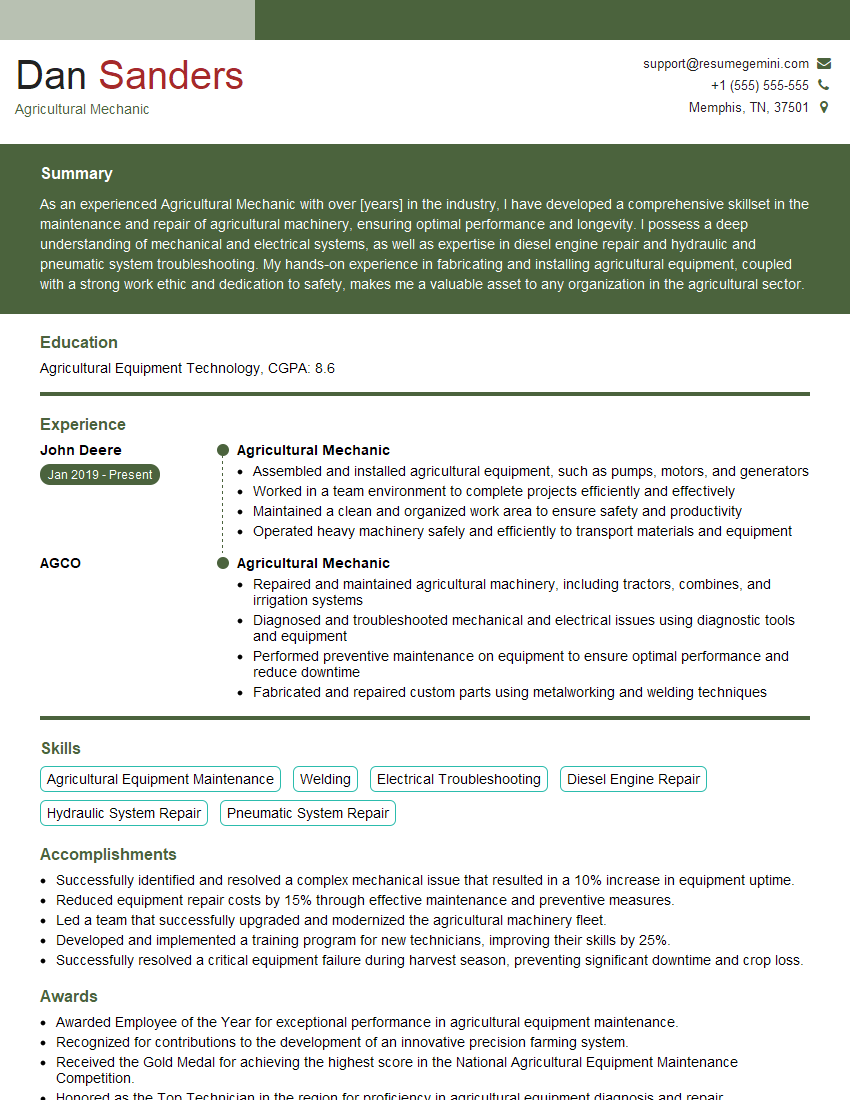
Mastering Farm Vehicle Operation is crucial for a successful and rewarding career in agriculture. Proficiency in this area opens doors to a wide range of opportunities, from entry-level positions to specialized roles requiring advanced technical skills. To significantly improve your job prospects, it’s essential to create an ATS-friendly resume that highlights your skills and experience effectively. We highly recommend using ResumeGemini, a trusted resource for building professional resumes. ResumeGemini offers a streamlined process and provides examples of resumes tailored to Farm Vehicle Operation to help you showcase your qualifications and land your dream job. Explore the examples provided to build a compelling resume that stands out!





Explore more articles
Users Rating of Our Blogs
Share Your Experience
We value your feedback! Please rate our content and share your thoughts (optional).
What Readers Say About Our Blog
Very informative content, great job.
good