Unlock your full potential by mastering the most common Basic Plant Science and Botany interview questions. This blog offers a deep dive into the critical topics, ensuring you’re not only prepared to answer but to excel. With these insights, you’ll approach your interview with clarity and confidence.
Questions Asked in Basic Plant Science and Botany Interview
Q 1. Explain the process of photosynthesis in detail.
Photosynthesis is the remarkable process by which green plants and some other organisms use sunlight to synthesize foods from carbon dioxide and water. It’s essentially the foundation of most food chains on Earth. Think of it as nature’s way of converting solar energy into chemical energy stored in sugars.
The process can be broken down into two main stages:
- Light-dependent reactions: These occur in the thylakoid membranes within chloroplasts. Sunlight’s energy excites electrons in chlorophyll, leading to the production of ATP (energy currency) and NADPH (reducing power). Water is split (photolysis) to replace the excited electrons, releasing oxygen as a byproduct. This is why plants are vital for our oxygen-rich atmosphere.
- Light-independent reactions (Calvin cycle): These take place in the stroma of the chloroplast. Here, the ATP and NADPH generated in the light-dependent reactions power the fixation of carbon dioxide from the atmosphere. Through a series of enzyme-catalyzed reactions, CO2 is incorporated into organic molecules, ultimately forming glucose (a simple sugar) which can be used for energy or building plant structures.
Imagine a solar panel (chlorophyll) capturing sunlight, which then powers a factory (chloroplast) that manufactures sugar (glucose) from carbon dioxide and water, releasing oxygen as waste.
Q 2. Describe the different types of plant tissues and their functions.
Plants are made up of various tissues, each with a specialized function. These are broadly categorized as:
- Meristematic tissue: This is the ‘growth tissue,’ composed of undifferentiated cells capable of continuous division. Apical meristems are located at the tips of roots and shoots, responsible for primary growth (lengthening). Lateral meristems (like the vascular cambium) are responsible for secondary growth (increase in girth).
- Ground tissue: This forms the bulk of the plant body and includes three types:
- Parenchyma: Thin-walled cells involved in storage, photosynthesis, and wound healing.
- Collenchyma: Elongated cells with unevenly thickened walls, providing support to young stems and leaves.
- Sclerenchyma: Cells with thick, lignified walls, providing structural support to mature plants. Examples include fibers and sclereids (stone cells in pears).
- Vascular tissue: This transports water, minerals, and sugars throughout the plant. It consists of:
- Xylem: Conducts water and minerals from roots to shoots. Cells are dead at maturity, forming hollow tubes.
- Phloem: Transports sugars (produced during photosynthesis) from leaves to other parts of the plant. Cells are alive at maturity.
- Dermal tissue: This forms the outer protective layer of the plant. The epidermis covers leaves and stems, and in woody plants, it’s replaced by the periderm (bark). Stomata, tiny pores in the epidermis, regulate gas exchange.
Consider a tree: its wood is primarily sclerenchyma, its bark is periderm, and the sap flowing through it is carried by xylem and phloem.
Q 3. What are the major plant hormones and their roles in plant growth and development?
Plant hormones, or phytohormones, are chemical messengers that regulate various aspects of plant growth and development. They act in concert, often exhibiting synergistic or antagonistic effects. Key plant hormones include:
- Auxins (e.g., IAA): Promote cell elongation, apical dominance (suppression of lateral bud growth), and root formation.
- Gibberellins (GAs): Stimulate stem elongation, seed germination, and flowering.
- Cytokinins: Promote cell division, delay senescence (aging), and influence apical dominance (opposite to auxins).
- Abscisic acid (ABA): Induces seed dormancy, stomatal closure (during drought), and stress tolerance.
- Ethylene: Promotes fruit ripening, leaf abscission (shedding), and senescence.
For example, applying auxins to cuttings promotes root development, while gibberellins are used commercially to increase fruit size in seedless grapes. ABA helps plants cope with drought by closing stomata to conserve water.
Q 4. Explain the difference between C3, C4, and CAM photosynthesis.
These three pathways represent different adaptations for photosynthesis, particularly in dealing with water loss and carbon dioxide uptake in varying environmental conditions:
- C3 photosynthesis: This is the most common pathway, where CO2 is directly fixed into a three-carbon compound (3-PGA) during the Calvin cycle. It’s efficient in moderate temperatures and light but susceptible to photorespiration (a wasteful process) in hot, dry conditions, where stomata close to conserve water.
- C4 photosynthesis: This pathway minimizes photorespiration by initially fixing CO2 into a four-carbon compound (oxaloacetate) in mesophyll cells, then transporting it to bundle sheath cells where the Calvin cycle occurs. This spatial separation keeps CO2 concentrations high around Rubisco, the enzyme that catalyzes the first step of the Calvin cycle, reducing photorespiration. Examples include maize and sugarcane.
- CAM photosynthesis: This is an adaptation for arid environments. CO2 is fixed at night (when stomata open) into a four-carbon compound, which is then stored. During the day, when stomata are closed to reduce water loss, the stored CO2 is released and used in the Calvin cycle. Examples include cacti and succulents.
Think of it this way: C3 is the basic, C4 is like a pre-processing step to optimize for hot conditions, and CAM is like storing CO2 overnight to use during the day when it’s too hot to keep the stomata open.
Q 5. Discuss the various methods of plant propagation.
Plant propagation involves creating new plants from existing ones. Methods can be broadly classified as sexual or asexual:
- Sexual propagation: This involves using seeds, which are formed through sexual reproduction. It leads to genetic variation in the offspring. Seeds can be sown directly or started in seedbeds.
- Asexual propagation (vegetative propagation): This involves using vegetative parts of the plant (stems, leaves, roots) to generate new plants. Offspring are genetically identical to the parent plant (clones). Methods include:
- Cuttings: Stem, leaf, or root cuttings are planted to develop roots and shoots.
- Layering: A stem is bent and buried to promote root formation before detaching it.
- Grafting: Joining a scion (desired variety) onto a rootstock (provides root system).
- Budding: Similar to grafting, but using a bud instead of a scion.
- Tissue culture: Growing plants from small pieces of tissue in a sterile environment.
- Runners/Stolons: Plants producing horizontal stems that develop roots and new plants at nodes (e.g., strawberries).
- Rhizomes: Underground stems that produce new plants at nodes (e.g., ginger).
- Tubers: Swollen underground stems that can give rise to new plants (e.g., potatoes).
- Bulbs: Underground storage organs with fleshy leaves that can produce new plants (e.g., onions).
A gardener might use cuttings to propagate roses, grafting to produce fruit trees with specific traits, or tissue culture to mass-produce orchids.
Q 6. Describe the different types of plant cell organelles and their functions.
Plant cells, like animal cells, contain various organelles, each with a specific function:
- Cell wall: A rigid outer layer providing structural support and protection.
- Cell membrane: A selectively permeable membrane controlling the movement of substances in and out of the cell.
- Nucleus: Contains the genetic material (DNA).
- Chloroplasts: Sites of photosynthesis.
- Mitochondria: The ‘powerhouses’ of the cell, generating ATP through cellular respiration.
- Vacuole: A large, fluid-filled sac involved in storage, turgor pressure (maintaining cell shape), and waste disposal.
- Endoplasmic reticulum (ER): A network of membranes involved in protein synthesis and transport.
- Golgi apparatus: Modifies, sorts, and packages proteins.
- Ribosomes: Sites of protein synthesis.
Think of a factory: the cell wall is the building, the nucleus is the control center, chloroplasts are the solar energy collectors, mitochondria are the power generators, and the ER and Golgi are the assembly and shipping departments.
Q 7. Explain the concept of transpiration and its importance in plants.
Transpiration is the process of water movement through a plant and its evaporation from aerial parts, such as leaves, stems, and flowers. It’s like the plant’s ‘sweating.’ Water is drawn up from the roots through the xylem to the leaves, where it evaporates from the stomata. This creates a ‘pull’ or tension that helps to draw more water upwards from the roots.
Transpiration is crucial for:
- Water transport: It’s the driving force for water movement from roots to leaves, supplying water essential for photosynthesis and other metabolic processes.
- Nutrient transport: Dissolved minerals are carried along with the water stream in the xylem.
- Cooling: Evaporation of water from the leaves helps to cool the plant, preventing overheating, especially in hot, sunny conditions.
- Stomatal regulation: The rate of transpiration influences stomatal opening and closing, affecting gas exchange for photosynthesis and respiration.
Imagine a straw; the water is drawn upwards by the transpiration pull, just as water is drawn up a straw by the negative pressure in our mouths. The extent of transpiration can even influence the overall growth rate and yield of crops.
Q 8. What are the major factors affecting plant growth?
Plant growth is a complex process influenced by a multitude of interacting factors. We can broadly categorize these into:
- Environmental Factors: These include light intensity, duration (photoperiod), temperature, water availability, humidity, and soil conditions (pH, nutrient content, aeration). Think of it like a recipe – each ingredient (factor) plays a vital role in the final product (plant growth). Insufficient light, for example, can lead to etiolation (weak, leggy growth), while extreme temperatures can damage plant tissues and halt growth.
- Genetic Factors: The plant’s genetic makeup determines its inherent growth potential, its response to environmental cues, and its susceptibility to diseases. A fast-growing cultivar will generally grow faster than a slower-growing one, even under identical conditions. This is similar to human genetics, where some individuals are naturally taller or shorter.
- Nutritional Factors: The availability of essential nutrients, such as nitrogen, phosphorus, potassium, and micronutrients (iron, zinc, etc.), directly impacts plant growth and development. Deficiencies can lead to stunted growth, chlorosis (yellowing of leaves), or other abnormalities.
- Biological Factors: Interactions with other organisms, such as beneficial microbes (mycorrhizae) or harmful pathogens (fungi, bacteria, viruses), also play a crucial role. Mycorrhizae enhance nutrient uptake, while pathogens can severely impede growth.
Understanding these factors is crucial for optimizing plant growth in agriculture, horticulture, and forestry. For instance, a farmer might choose cultivars adapted to the local climate, adjust irrigation practices based on rainfall, and implement fertilization strategies to address nutrient deficiencies.
Q 9. Describe the different types of plant diseases and their causes.
Plant diseases are broadly classified based on their causative agents:
- Fungal Diseases: Caused by fungi, these diseases often manifest as leaf spots, wilting, root rot, and blights. Examples include powdery mildew on roses and late blight on potatoes.
- Bacterial Diseases: Caused by bacteria, these diseases often lead to wilting, leaf spots, galls, and soft rots. Fire blight in apple trees is a classic example.
- Viral Diseases: Caused by viruses, these diseases often result in stunted growth, mosaic patterns on leaves, and deformed fruits. Tobacco mosaic virus is a well-known example.
- Nematode Diseases: Caused by microscopic worms called nematodes, these diseases can damage roots, leading to stunted growth and reduced yield. Root-knot nematodes are common culprits.
The causes of plant diseases are multifactorial, involving the pathogen’s virulence, the plant’s susceptibility, and environmental conditions (temperature, humidity, rainfall). Managing plant diseases often involves a combination of cultural practices (crop rotation, sanitation), chemical control (pesticides), and biological control (using beneficial microorganisms).
Q 10. Explain the principles of plant breeding and genetic modification.
Plant breeding and genetic modification are both aimed at improving plant characteristics, but they differ significantly in their approaches:
- Plant Breeding: This involves selecting and crossing plants with desirable traits (e.g., high yield, disease resistance, improved nutritional content) to create new varieties. This is a traditional method, relying on natural sexual reproduction. It’s like selecting the best-tasting apples from your orchard and planting their seeds, hoping the offspring inherit those traits.
- Genetic Modification (GM): This involves directly altering a plant’s genetic material using biotechnology techniques, such as inserting genes from other organisms to confer specific traits (e.g., herbicide resistance, pest resistance, enhanced nutritional value). This approach allows for precise and targeted improvements that may be difficult or impossible to achieve through traditional breeding. It’s like precisely editing the recipe for an apple to improve its flavor or nutritional content.
Both approaches have played significant roles in agricultural advancements, leading to increased crop yields, enhanced nutritional quality, and reduced reliance on pesticides. However, GM technology has faced ethical and regulatory debates, particularly regarding the potential environmental and health impacts.
Q 11. How do plants respond to environmental stress (e.g., drought, salinity, temperature)?
Plants have evolved sophisticated mechanisms to cope with environmental stress. Their responses are often complex and involve changes at the physiological, biochemical, and molecular levels:
- Drought: Plants may reduce transpiration by closing stomata (pores on leaves), reduce leaf area, and accumulate osmoprotectants (substances that help maintain cell turgor pressure). Some plants develop deeper root systems to access groundwater.
- Salinity: Plants may exclude salt ions from their roots or compartmentalize them in vacuoles (cell compartments). They may also accumulate compatible solutes to maintain osmotic balance.
- Temperature: Plants may alter their photosynthetic pathways (e.g., C4 photosynthesis in hot, dry environments), produce heat-shock proteins (proteins that protect cells from heat damage), or alter their growth patterns (e.g., slower growth in extreme cold).
These adaptations are crucial for plant survival and productivity in challenging environments. For instance, drought-tolerant crops are essential in arid regions, while salt-tolerant plants are crucial for agriculture in saline soils.
Q 12. What are the different types of plant nutrient deficiencies and their symptoms?
Plant nutrient deficiencies manifest as specific visual symptoms that often indicate the missing nutrient:
- Nitrogen (N): Stunted growth, pale green or yellowish leaves (chlorosis), especially older leaves. Nitrogen is crucial for chlorophyll synthesis.
- Phosphorus (P): Dark green or purplish leaves, stunted growth, delayed maturity, poor root development. Phosphorus is essential for energy transfer and root growth.
- Potassium (K): Yellowing or browning of leaf margins (necrosis), weak stems, reduced fruit size. Potassium is crucial for water regulation and enzyme activation.
- Iron (Fe): Interveinal chlorosis (yellowing between leaf veins), especially in young leaves. Iron is vital for chlorophyll synthesis.
- Magnesium (Mg): Interveinal chlorosis, especially in older leaves. Magnesium is a component of chlorophyll.
Diagnosing nutrient deficiencies involves observing visual symptoms, soil testing, and leaf analysis. Addressing these deficiencies requires applying appropriate fertilizers, ensuring proper soil pH, and improving soil drainage.
Q 13. Describe the role of mycorrhizae in plant nutrition.
Mycorrhizae are symbiotic relationships between plant roots and fungi. The fungi colonize the roots, extending their reach into the soil and enhancing the plant’s ability to absorb nutrients, particularly phosphorus and other micronutrients. It’s like having an underground network of nutrient gatherers working for the plant.
The fungi benefit by receiving carbohydrates from the plant, which they cannot produce themselves through photosynthesis. The plant gains access to a larger volume of soil, improving nutrient and water uptake. This symbiotic relationship is particularly important in nutrient-poor soils. Many agricultural practices, such as no-till farming, aim to preserve and promote mycorrhizal fungi to enhance plant health and nutrient uptake, reducing the need for fertilizers.
Q 14. Explain the process of seed germination.
Seed germination is a complex process involving the resumption of growth from a dormant embryo. The process typically involves several stages:
- Imbibition: The seed absorbs water, causing the seed coat to swell and soften. This activates enzymes within the seed.
- Enzyme Activation: Imbibition triggers the activation of various enzymes, which break down stored food reserves (starch, proteins, lipids) into usable forms.
- Mobilization of Food Reserves: The breakdown products of stored food reserves are transported to the growing embryo, providing energy and building blocks for growth.
- Radicle Emergence: The radicle (embryonic root) emerges from the seed, anchoring the seedling and beginning the process of nutrient and water absorption.
- Shoot Emergence: The plumule (embryonic shoot) emerges from the seed, forming the stem and leaves. This marks the transition from germination to seedling establishment.
Factors affecting germination include temperature, water availability, oxygen levels, light (for some seeds), and the presence of germination inhibitors (substances that prevent premature germination).
Q 15. What are the different types of plant reproductive strategies?
Plants employ diverse reproductive strategies, broadly categorized as sexual and asexual. Sexual reproduction involves the fusion of gametes (sperm and egg) resulting in genetically diverse offspring, enhancing adaptability. This often involves pollination, a process where pollen (containing sperm) is transferred from the anther to the stigma, facilitating fertilization. Pollination can be achieved through various agents such as wind (anemophily), insects (entomophily), birds (ornithophily), or water (hydrophily). The resulting seed then germinates to produce a new plant.
Asexual reproduction, on the other hand, produces genetically identical offspring from a single parent. Common methods include vegetative propagation (e.g., runners in strawberries, bulbs in tulips, tubers in potatoes), where new plants develop from vegetative parts. Other asexual methods involve apomixis (seed production without fertilization) and fragmentation (a parent plant breaking into parts that develop into new plants). Asexual reproduction is advantageous in stable environments because it ensures the propagation of successful genotypes. However, it lacks the genetic diversity that is crucial for adaptation to changing conditions. Choosing the appropriate strategy depends on environmental factors and the plant species’ life history.
Career Expert Tips:
- Ace those interviews! Prepare effectively by reviewing the Top 50 Most Common Interview Questions on ResumeGemini.
- Navigate your job search with confidence! Explore a wide range of Career Tips on ResumeGemini. Learn about common challenges and recommendations to overcome them.
- Craft the perfect resume! Master the Art of Resume Writing with ResumeGemini’s guide. Showcase your unique qualifications and achievements effectively.
- Don’t miss out on holiday savings! Build your dream resume with ResumeGemini’s ATS optimized templates.
Q 16. Describe the different types of plant classification systems.
Plant classification systems aim to organize the vast diversity of plant life into hierarchical groups reflecting evolutionary relationships. Historically, the most influential system was the Linnaean system, based on morphological characteristics (visible features). This system utilizes binomial nomenclature, assigning each species a unique two-part name (genus and species – for example, Homo sapiens). While valuable, morphology alone doesn’t always reflect evolutionary history accurately.
Modern classification systems, particularly phylogenetic systems, utilize molecular data (DNA sequences) in addition to morphology to construct evolutionary trees (phylogenies). These systems attempt to group plants based on shared ancestry, reflecting evolutionary relationships more precisely. Cladistics, a widely used phylogenetic method, focuses on shared derived characteristics (synapomorphies) to establish evolutionary lineages. For example, the presence of flowers is a synapomorphy for angiosperms (flowering plants) distinguishing them from gymnosperms (conifers and related plants).
Various systems exist, each with nuances in its approach, but all strive to create a comprehensive and accurate representation of plant evolutionary relationships. The ongoing development of DNA sequencing technologies leads to continuous refinements in these systems.
Q 17. What are the major components of soil and their importance for plant growth?
Soil is a complex mixture of inorganic and organic components crucial for plant growth. The inorganic fraction primarily consists of mineral particles derived from the weathering of rocks. These particles are categorized by size into sand, silt, and clay, influencing soil texture and drainage. The proportion of these particles determines the soil type (e.g., sandy loam, clay loam). Soil texture significantly impacts water retention, aeration, and nutrient availability.
The organic fraction, or soil organic matter (SOM), comprises decomposed plant and animal residues, microbes, and their byproducts. SOM enhances soil structure, improving water holding capacity and aeration. It also acts as a reservoir of essential nutrients, gradually releasing them for plant uptake. Furthermore, SOM plays a vital role in supporting soil microbial communities, which contribute significantly to nutrient cycling.
Soil water, a critical component, dissolves and transports nutrients to plant roots. Soil air, present in the pore spaces between soil particles, provides oxygen for root respiration. Nutrients, such as nitrogen (N), phosphorus (P), and potassium (K), are essential for plant growth and are often obtained from the soil. The balance of these components determines soil fertility and its capacity to support plant life. Maintaining a healthy soil profile is crucial for sustainable agriculture and environmental health.
Q 18. Explain the role of soil microorganisms in plant health.
Soil microorganisms, including bacteria, fungi, actinomycetes, and protozoa, play a multifaceted role in plant health. They contribute significantly to nutrient cycling, making essential nutrients like nitrogen, phosphorus, and sulfur available to plants. Nitrogen-fixing bacteria, for example, convert atmospheric nitrogen into forms usable by plants, a process crucial for plant growth and overall ecosystem productivity.
Mycorrhizal fungi form symbiotic relationships with plant roots, extending the root system’s reach and enhancing nutrient and water uptake. They also produce growth hormones that benefit plant health. Other microorganisms decompose organic matter, releasing nutrients and improving soil structure. These beneficial microbes also suppress plant diseases by competing with pathogens for resources or producing antibiotics. A healthy soil microbial community is essential for maintaining plant health and resilience to diseases and stress.
Conversely, some microorganisms can be pathogenic, causing diseases that harm plants. Maintaining a balance between beneficial and pathogenic microorganisms is critical for optimal plant health. Practices like crop rotation, cover cropping, and the use of organic amendments can help promote a healthy soil microbiome, enhancing plant health and reducing the need for chemical inputs.
Q 19. Describe the different types of plant pests and their control methods.
Plant pests encompass a wide range of organisms that damage or destroy plants. These include insects (e.g., aphids, caterpillars, beetles), mites, nematodes (microscopic worms), fungi, bacteria, viruses, and weeds (competing plants).
Insect pests often damage plants by feeding on leaves, stems, roots, or fruits. Methods to control insect pests include biological control (introducing natural enemies like ladybugs), cultural control (crop rotation, sanitation), and chemical control (insecticides). Chemical control should be used judiciously to minimize environmental impact.
Diseases caused by fungi, bacteria, and viruses can also severely impact plant health. Control measures include resistant varieties, sanitation, and the application of fungicides or bactericides. Nematodes can damage roots, affecting nutrient and water uptake. Control methods may include resistant cultivars, soil fumigation, or biological control.
Weeds compete with crops for resources, reducing yield and quality. Weed control involves mechanical methods (e.g., weeding, tillage), chemical methods (herbicides), and biological control (e.g., introducing specific insects that feed on weeds).
Integrated pest management (IPM) is a holistic approach that combines multiple control methods to minimize pest damage while minimizing environmental risks and promoting long-term sustainability.
Q 20. How do you identify different plant species?
Plant identification relies on a combination of observational skills and knowledge of plant characteristics. Begin by observing the overall plant habit (e.g., tree, shrub, herb) and its size and growth form. Detailed examination of leaves, stems, flowers, and fruits is crucial. Leaf characteristics such as shape, margin (edge), venation (veining pattern), and arrangement on the stem are key identifiers.
Flower morphology, including symmetry, number and arrangement of petals, sepals, stamens, and pistils, provides valuable clues. Fruit type (e.g., berry, drupe, capsule) and seed characteristics are also important. In addition to morphological features, habitat and geographic location are significant factors in plant identification. Using field guides and taxonomic keys is essential. Keys are structured systems that guide users through a series of choices based on observed characteristics to arrive at a species identification.
For challenging identifications, especially at the species level, comparing features to images in field guides, utilizing online databases, and seeking advice from botanical experts are often necessary.
Molecular techniques like DNA barcoding are increasingly used for plant identification, particularly for cryptic species or species that are difficult to distinguish using morphological features alone.
Q 21. Explain the principles of sustainable agriculture.
Sustainable agriculture aims to produce food and fiber while minimizing environmental impact and ensuring long-term productivity. Key principles include:
- Soil health: Maintaining soil fertility through practices like cover cropping, crop rotation, and reduced tillage to improve soil structure, water retention, and nutrient cycling.
- Water conservation: Efficient irrigation techniques, drought-tolerant crops, and water harvesting to reduce water consumption.
- Biodiversity: Maintaining crop diversity and integrating agroforestry systems to increase resilience to pests and diseases and enhance ecosystem services.
- Pest and disease management: Integrated pest management (IPM) strategies to minimize reliance on chemical pesticides.
- Nutrient management: Optimizing nutrient application, reducing reliance on synthetic fertilizers, and utilizing organic sources of nutrients.
- Energy efficiency: Minimizing energy use in agricultural operations through efficient machinery and renewable energy sources.
- Social equity: Ensuring fair labor practices, supporting local economies, and promoting access to healthy food for all.
Implementing these principles requires a holistic approach, integrating ecological, economic, and social considerations. Sustainable agriculture strives to balance productivity with environmental stewardship, ensuring food security for future generations.
Q 22. Describe your experience with plant tissue culture techniques.
My experience with plant tissue culture spans several years and encompasses various techniques, from micropropagation to somatic embryogenesis. Micropropagation, for instance, involves growing numerous plants from a small tissue sample, like a single leaf or stem segment. This is incredibly useful for rapidly multiplying rare or endangered species, or for generating disease-free clones of superior plant varieties. I’ve successfully micropropagated orchids using a Murashige and Skoog (MS) basal medium supplemented with plant growth regulators like cytokinins and auxins to promote shoot proliferation and rooting, respectively. Somatic embryogenesis, another key technique I’ve utilized, involves inducing the formation of embryos from somatic cells – non-reproductive cells – allowing us to bypass sexual reproduction and generate genetically identical plants. I’ve also worked extensively with callus cultures, undifferentiated masses of cells, which serve as a starting point for many tissue culture protocols. Careful monitoring of environmental factors such as light, temperature, and humidity is critical to success in plant tissue culture, as is maintaining strict sterile conditions to prevent contamination by fungi or bacteria. Data analysis, such as tracking growth rates and contamination rates, is an essential part of the process, contributing to optimization and refinement of the protocols.
Q 23. What are the ethical considerations of genetic modification in plants?
The ethical considerations surrounding genetically modified (GM) plants are multifaceted and complex. A major concern revolves around potential environmental impacts. For example, the unintended transfer of transgenes to wild relatives could lead to the emergence of herbicide-resistant weeds or the disruption of ecological balances. Another ethical concern relates to the potential risks to human health. While rigorous testing is conducted, there are ongoing debates regarding the long-term effects of consuming GM foods. Moreover, issues of socioeconomic equity arise as GM technology is often controlled by large corporations, potentially widening the gap between developed and developing countries. Concerns about intellectual property rights and the potential for monopolization of the food supply are also significant. There’s also a crucial ethical dimension concerning informed consent; consumers should have the right to choose whether or not to consume GM foods, necessitating clear and accessible labeling. A balanced approach necessitates careful risk assessment, transparent communication, and the development of regulatory frameworks that prioritize both innovation and public safety. Public discourse and engagement are vital to ensuring responsible development and deployment of GM technologies.
Q 24. How do you use microscopy to study plant cells and tissues?
Microscopy is an indispensable tool in plant biology, allowing us to visualize the intricate structures of plant cells and tissues at various magnifications. I frequently use light microscopy for observing general cell morphology, including features like chloroplasts, cell walls, and nuclei. For higher resolution imaging of subcellular structures, I employ electron microscopy, specifically transmission electron microscopy (TEM) to examine the internal ultrastructure of cells, and scanning electron microscopy (SEM) to observe the three-dimensional surface features. Specific staining techniques are crucial to enhance contrast and visibility; for instance, I use iodine staining to visualize starch granules in chloroplasts. Image analysis software allows for quantitative data acquisition, such as measuring cell size or organelle density. For example, to study the effect of drought stress on leaf cells, I might use light microscopy to observe changes in cell turgor and employ SEM to analyze stomata closure. Furthermore, confocal microscopy offers the capability to generate detailed three-dimensional images of tissues, revealing intricate details of cell arrangements and interactions. The choice of microscopy technique depends on the specific research question and the resolution required.
Q 25. Explain the principles of plant molecular biology.
Plant molecular biology explores the molecular mechanisms underlying plant growth, development, and response to the environment. It utilizes techniques like polymerase chain reaction (PCR) to amplify specific DNA sequences, allowing for gene cloning and analysis. This technique is fundamental in identifying genes involved in crucial processes such as photosynthesis or disease resistance. Other techniques, such as gene expression analysis (using methods like RT-qPCR), help quantify the amount of mRNA produced from a specific gene, providing insights into gene function under varying conditions. Furthermore, gene editing technologies, including CRISPR-Cas9, are revolutionizing plant biology by enabling precise modification of plant genomes, leading to improvements in crop yield, nutritional value, or stress tolerance. Techniques such as transformation (introducing foreign DNA into a plant’s genome) and gene silencing are also routinely used to study gene function. For example, I have utilized these techniques to investigate the molecular mechanisms of drought tolerance in a specific plant species, identifying genes that are upregulated under water stress conditions. The overarching goal is to understand the complex interactions between genes, proteins, and environmental factors that shape plant life.
Q 26. Describe your experience with field research in plant science.
My field research experience extensively involves ecological studies of plant communities in diverse ecosystems. One particular project focused on assessing the impact of climate change on alpine meadow vegetation. This entailed establishing permanent plots at various altitudes, measuring plant diversity, biomass, and phenology (seasonal timing of life cycle events) over several years. Data collection included detailed species identification, vegetation cover measurements using quadrats, and environmental monitoring (temperature, precipitation, soil moisture). Another significant field project involved studying the effects of grazing intensity on grassland plant communities. This involved working with ranchers and land managers to establish controlled grazing experiments and using remote sensing techniques, such as drone imagery, to assess vegetation cover across large areas. Data analysis involved statistical methods to detect significant trends and correlations between environmental factors and plant community responses. This kind of fieldwork demands meticulous planning, adaptability, and a strong understanding of ecological principles. Safety considerations, such as awareness of weather conditions and potential hazards in the field, are always paramount.
Q 27. What software or tools are you proficient in for analyzing plant data?
My proficiency in plant data analysis encompasses a range of software and tools. For statistical analysis, I’m highly skilled in R, utilizing packages like ‘ggplot2’ for data visualization and ‘lme4’ for mixed-effects models. I also use Python with libraries like ‘pandas’ and ‘scikit-learn’ for data manipulation and machine learning applications. Image analysis software, such as ImageJ/Fiji, is crucial for processing microscopic images and extracting quantitative data. For sequence analysis in molecular biology, I utilize bioinformatics tools like BLAST for sequence alignment and comparison. Furthermore, geographic information systems (GIS) software, such as ArcGIS, is essential for spatial data analysis in field studies, allowing me to map vegetation patterns and analyze spatial relationships between plant communities and environmental gradients. Proficiency in these tools is essential for effectively managing, analyzing, and interpreting the complex datasets generated in plant science research.
Q 28. Explain a time you had to troubleshoot a plant-related problem.
During a tissue culture experiment involving the micropropagation of a rare orchid species, I encountered unusually high contamination rates in my culture vessels. Initially, I suspected contamination from the growth medium, so I meticulously sterilized all components and prepared fresh media. However, the problem persisted. I systematically investigated each step of the procedure, carefully examining my aseptic techniques and the sterilization of the laminar flow hood. I realized the source of the contamination wasn’t the media, but rather the use of a slightly dampened alcohol swab to sterilize the surface of the explants (tissue samples). This dampness provided a micro-environment for bacterial growth, allowing the bacteria to survive sterilization and contaminate the cultures. I resolved the issue by switching to sterile forceps and using a 70% ethanol solution directly on the explants, ensuring a quick and thorough sterilization without excess moisture. This experience emphasized the importance of meticulously reviewing each step of a protocol and highlights the need for careful observation and systematic troubleshooting in experimental plant science.
Key Topics to Learn for Basic Plant Science and Botany Interview
- Plant Cell Structure and Function: Understand the unique features of plant cells, including cell walls, chloroplasts, and vacuoles, and how these structures contribute to plant life processes. Consider practical applications in plant breeding and genetic modification.
- Photosynthesis and Respiration: Master the processes of photosynthesis and respiration, including the light-dependent and light-independent reactions, and their importance in plant energy production. Explore the impact of environmental factors on these processes and their relevance to crop yield.
- Plant Physiology: Grasp fundamental concepts such as transpiration, water transport, nutrient uptake, and hormonal regulation. Relate these concepts to practical applications like irrigation management and fertilizer optimization.
- Plant Morphology and Anatomy: Develop a thorough understanding of plant organs (roots, stems, leaves, flowers, fruits, seeds), their structures, and functions. Consider applications in plant identification, taxonomy, and horticulture.
- Plant Genetics and Breeding: Familiarize yourself with basic principles of plant genetics, including Mendelian inheritance, gene expression, and genetic variation. Explore the role of plant breeding in crop improvement and addressing food security challenges.
- Plant Pathology and Disease Management: Understand common plant diseases, their causal agents, and effective management strategies. Consider integrating this knowledge with sustainable agriculture practices.
- Plant Ecology and Biodiversity: Explore the interactions between plants and their environment, including concepts like ecological succession, biodiversity, and conservation. This area is vital for understanding ecosystem services and environmental sustainability.
- Problem-Solving and Critical Thinking: Practice analyzing plant-related problems using a scientific approach. Develop your ability to interpret data, draw conclusions, and propose solutions based on your understanding of plant science principles.
Next Steps
Mastering Basic Plant Science and Botany is crucial for career advancement in various fields, including agriculture, horticulture, environmental science, and biotechnology. A strong understanding of these fundamentals will significantly enhance your job prospects and allow you to contribute effectively to innovative solutions in these crucial sectors. To maximize your chances of landing your dream role, it’s vital to present your skills and experience in a compelling and efficient manner. Creating an ATS-friendly resume is key to getting noticed by employers and recruiters. ResumeGemini is a trusted resource to help you build a professional and impactful resume tailored to your specific qualifications. Examples of resumes tailored to Basic Plant Science and Botany are available to guide you through the process. Invest time in crafting a strong resume; it’s your first impression on potential employers.

Farm Manager Resume Sample

Greenhouse Manager Resume Sample

Horticulturist Resume Sample

Nursery Manager Resume Sample

Landscape Architect Resume Sample

Agronomist Resume Sample

Arborist Resume Sample
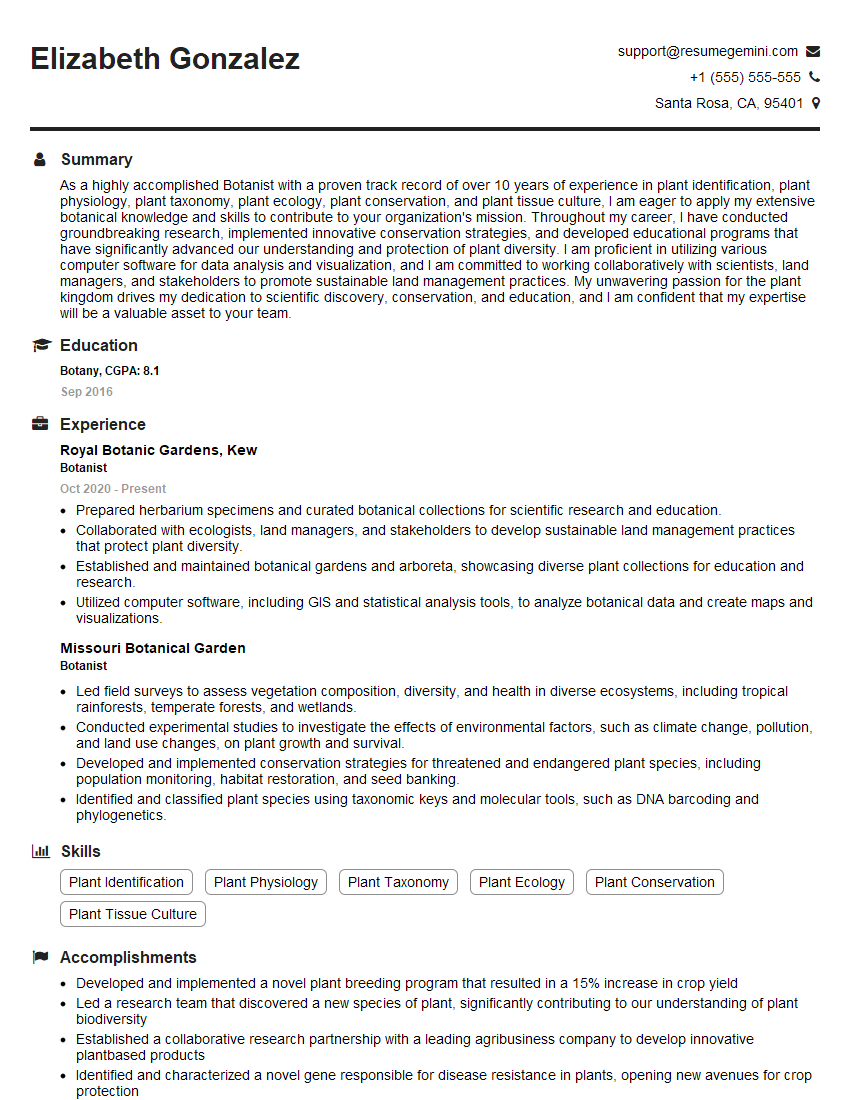
Botanist Resume Sample

Plant Breeder Resume Sample

Plant Pathologist Resume Sample

Plant Physiologist Resume Sample
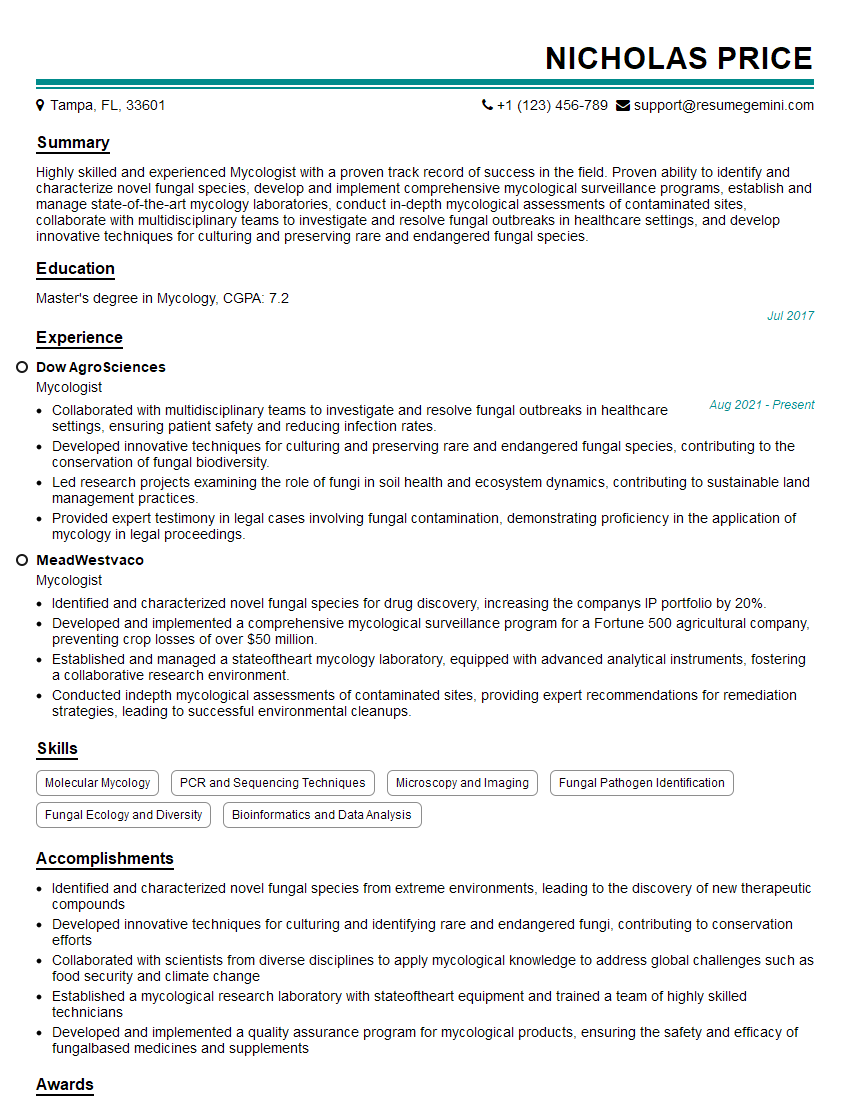
Mycologist Resume Sample

Ecologist Resume Sample

Bryologist Resume Sample

Horticultural Therapist Resume Sample
Explore more articles
Users Rating of Our Blogs
Share Your Experience
We value your feedback! Please rate our content and share your thoughts (optional).
What Readers Say About Our Blog
Very informative content, great job.
good