The right preparation can turn an interview into an opportunity to showcase your expertise. This guide to Environmental Legal Framework and Enforcement interview questions is your ultimate resource, providing key insights and tips to help you ace your responses and stand out as a top candidate.
Questions Asked in Environmental Legal Framework and Enforcement Interview
Q 1. Explain the key provisions of the Clean Water Act.
The Clean Water Act (CWA) is the cornerstone of federal water pollution control in the United States. Its key provisions aim to restore and maintain the chemical, physical, and biological integrity of the nation’s waters. This is achieved through several mechanisms:
- Setting Water Quality Standards: States establish water quality standards based on designated uses (e.g., drinking water, recreation, aquatic life). These standards define acceptable levels of pollutants.
- National Pollutant Discharge Elimination System (NPDES): This permit program regulates point source pollution—discharges from specific locations like pipes or ditches. Industries and municipalities must obtain permits detailing the types and amounts of pollutants they can discharge. This is arguably the CWA’s most impactful provision.
- Nonpoint Source Pollution Management: The CWA also addresses nonpoint source pollution, which comes from diffuse sources like agricultural runoff or urban stormwater. While less directly regulated than point sources, the CWA mandates efforts to reduce these pollutants through various state and federal programs.
- Wetlands Protection: The CWA protects wetlands, crucial ecosystems that filter pollutants and support biodiversity. The permitting process often involves careful consideration of wetland impacts.
- Enforcement Mechanisms: The EPA and states have significant enforcement power, including fines, penalties, and even criminal prosecution for serious violations.
For example, a factory discharging wastewater into a river must obtain an NPDES permit limiting the amount of heavy metals it releases. Failure to comply could result in significant fines and legal action.
Q 2. Describe the process for obtaining an environmental permit.
Obtaining an environmental permit is a complex process that varies depending on the type of permit and the regulating agency (often the EPA at the federal level, or a state agency). Generally, it involves these steps:
- Identify the Applicable Permits: Determine which permits are required based on the project’s nature and location. This often necessitates consulting various environmental regulations and guidelines.
- Prepare the Permit Application: This typically involves a detailed description of the project, potential environmental impacts, and proposed mitigation measures. It might include environmental impact assessments, detailed engineering plans, and other supporting documents.
- Submit the Application: The application is submitted to the appropriate agency.
- Agency Review: The agency reviews the application, often requesting additional information or clarification. This review can take months or even years depending on the project’s complexity and the agency’s workload.
- Public Comment Period: Many permits are subject to a public comment period, allowing stakeholders to voice their concerns.
- Permit Issuance or Denial: After review and consideration of public comments, the agency either issues the permit with specific conditions or denies the application. A denied application can often be resubmitted after addressing the agency’s concerns.
- Compliance Monitoring: Once a permit is issued, compliance is monitored through regular reporting, inspections, and potential enforcement actions.
Think of it like getting a building permit – you need to demonstrate that your project meets all safety and environmental regulations before you can proceed.
Q 3. What are the main differences between NEPA and CEQA?
Both the National Environmental Policy Act (NEPA) and the California Environmental Quality Act (CEQA) are landmark environmental laws, but they operate at different levels and with some key differences:
- Scope: NEPA is a federal law applying to all federal agencies and actions. CEQA is a California state law applying to state and local agencies within California.
- Purpose: Both aim to integrate environmental considerations into decision-making processes, but their approaches differ slightly. NEPA focuses on the federal government’s role in protecting the environment while CEQA aims to inform California’s land-use planning and development.
- Environmental Impact Statements (EIS) vs. Environmental Impact Reports (EIR): NEPA requires federal agencies to prepare EISs for major federal actions significantly affecting the environment. CEQA requires EIRs for projects that may have significant environmental impacts under California’s regulations.
- Enforcement: NEPA enforcement is primarily through litigation, while CEQA allows for both judicial and administrative review.
In essence, NEPA sets a national framework for environmental review, while CEQA provides a more specific, state-level implementation tailored to California’s unique environmental challenges.
Q 4. How do you handle an environmental violation?
Handling an environmental violation involves a multi-step process requiring careful investigation, documentation, and potential enforcement actions. The specific steps may vary depending on the nature of the violation, the severity, and the regulating agency.
- Investigation: A thorough investigation is crucial to determine the extent of the violation, the responsible party, and the potential environmental harm. This could involve site visits, data analysis, and interviews.
- Notice of Violation: Once a violation is confirmed, the agency typically issues a Notice of Violation (NOV) to the responsible party, outlining the specific violation and demanding corrective action.
- Corrective Action: The violator must take steps to rectify the violation and prevent future occurrences. This could involve cleanup efforts, equipment upgrades, or process modifications.
- Enforcement Actions: Depending on the severity of the violation and the violator’s response, the agency may pursue various enforcement actions. These could range from administrative penalties (fines) to civil or even criminal prosecution in severe cases.
- Negotiation and Settlement: Often, agencies will work with violators to reach a negotiated settlement, potentially involving a combination of fines, corrective actions, and environmental projects.
For example, if a company illegally discharges pollutants, the EPA could issue an NOV, fine the company, and require cleanup actions. Repeated or severe violations could lead to more stringent penalties, including facility closure.
Q 5. Explain the concept of ‘due diligence’ in environmental law.
Due diligence in environmental law refers to the comprehensive investigation and assessment of environmental risks and liabilities associated with a property or business transaction. It’s a proactive approach to minimizing potential future environmental problems. The goal is to identify and address potential environmental hazards before they become costly legal or financial issues.
Think of buying a house. Due diligence might include reviewing environmental reports, testing for hazardous substances (like lead paint or asbestos), and investigating the property’s history for any past environmental contamination. Similarly, in a business acquisition, due diligence would explore the target company’s environmental compliance history, potential liabilities from past operations, and the existence of any environmental permits or regulatory issues.
Failing to conduct adequate due diligence can lead to unexpected and substantial costs. A purchaser might unknowingly inherit significant environmental cleanup liabilities, or a business might face penalties for environmental violations inherited from a previous owner. Therefore, comprehensive due diligence is crucial for mitigating risk in almost any transaction involving land or businesses with environmental impacts.
Q 6. What is the significance of the Endangered Species Act?
The Endangered Species Act (ESA) is a landmark piece of legislation aimed at protecting and recovering imperiled species and their ecosystems. Its significance lies in its powerful mandate to prevent extinctions. Key aspects include:
- Listing Species: The ESA empowers the U.S. Fish and Wildlife Service and the National Marine Fisheries Service to list species as endangered or threatened based on scientific assessments of their status.
- Habitat Protection: The Act mandates protection of critical habitat for listed species, which requires federal agencies to avoid actions that would jeopardize the existence of these species or their habitats.
- Recovery Plans: The agencies develop recovery plans outlining actions needed to bring listed species back to a stable population level.
- Enforcement: The ESA includes strong enforcement mechanisms, including penalties for harming listed species or their habitats. This can impact land development, resource extraction, and other activities.
The ESA’s significance extends beyond protecting individual species. By focusing on preserving critical habitats, it protects biodiversity and ecosystem services that benefit all of humanity. The protection of the California Condor, brought back from the brink of extinction through extensive ESA-driven conservation efforts, is a prime example of the Act’s success.
Q 7. Describe your experience with environmental impact assessments.
Throughout my career, I’ve been extensively involved in various environmental impact assessments (EIAs), ranging from small-scale projects to large-scale developments. My experience encompasses all phases of the EIA process, from initial scoping and data collection to report writing and stakeholder engagement.
For example, I was part of a team conducting an EIA for a proposed highway expansion. This involved analyzing potential impacts on air quality, water resources, noise levels, and wildlife habitats. We used sophisticated modeling software to predict these impacts and developed mitigation strategies to minimize negative effects, such as installing sound barriers or creating wildlife corridors. My role specifically focused on the assessment of impacts to wetlands and the development of compensatory mitigation plans.
In another project, I led the preparation of an EIA for a wind farm development, focusing on the potential impact on bird populations and the visual landscape. The thoroughness of these assessments is crucial in informing decision-making, balancing economic development with environmental protection. I have consistently prioritized transparency and stakeholder participation in my EIA work.
Q 8. How do you stay updated on changes in environmental regulations?
Staying current in the dynamic field of environmental law requires a multi-pronged approach. It’s not enough to rely on a single source; a diverse strategy ensures comprehensive coverage.
Subscription to Legal Databases and Journals: I regularly access platforms like LexisNexis and Westlaw to track legislative updates, judicial decisions, and regulatory changes at the federal, state, and sometimes even local levels. This allows me to be alerted to new laws, amended regulations, and significant court rulings impacting environmental law.
Professional Organizations and Networking: Active participation in organizations like the Environmental Law Institute (ELI) provides access to conferences, webinars, and publications that offer in-depth analyses of emerging trends and regulatory developments. Networking with fellow professionals at these events keeps me informed about real-world application and interpretation of environmental laws.
Government Agency Websites: I consistently monitor the websites of key regulatory agencies such as the Environmental Protection Agency (EPA), state environmental departments, and relevant international bodies. These sites provide official announcements, rulemaking processes, and guidance documents.
Legal News and Newsletters: I subscribe to several legal news services and newsletters that focus on environmental law. This keeps me abreast of the latest developments through concise summaries and insightful commentary.
This combination of methods allows me to develop a complete understanding of evolving environmental regulations, ensuring my advice remains current and effective.
Q 9. Explain your understanding of environmental liabilities.
Environmental liabilities represent the potential financial and legal responsibilities associated with environmental contamination or non-compliance. Think of it like this: if your actions cause pollution, you could be on the hook for cleaning it up and paying associated fines and damages.
These liabilities can stem from various sources, including:
Past actions: A company might discover contamination on a site it acquired years ago, potentially leading to costly remediation efforts and legal battles.
Current operations: Ongoing operations could inadvertently release pollutants, resulting in fines and cleanup costs. A manufacturing facility discharging excess chemicals into a waterway is a prime example.
Third-party actions: Even if your company acted responsibly, you might still be held liable for environmental damage caused by a third party on your property. Imagine a tenant contaminating soil with hazardous waste, leaving the property owner responsible.
Understanding and managing environmental liabilities is crucial for businesses. Failing to do so can lead to significant financial losses, reputational damage, and even criminal prosecution. A proactive approach involving thorough site assessments, robust environmental management systems, and comprehensive insurance is key.
Q 10. What are the key elements of a successful environmental compliance program?
A successful environmental compliance program isn’t just about checking boxes; it’s about embedding environmental stewardship into the very core of an organization’s culture. Key elements include:
Clear Policy and Procedures: A well-defined environmental policy sets the tone and expectations. Detailed procedures must outline specific steps for handling various environmental aspects, like waste management and emissions control. This should be easily accessible to all employees.
Employee Training: Regular and comprehensive training programs ensure everyone understands their responsibilities and the importance of compliance. Tailoring training to specific roles and responsibilities maximizes effectiveness.
Regular Audits and Monitoring: Routine internal audits help identify weaknesses and areas for improvement. This proactive approach prevents minor issues from escalating into major problems. Continuous monitoring of environmental parameters (like air and water quality) is essential for early detection.
Record-Keeping and Documentation: Meticulous record-keeping is vital for demonstrating compliance to regulators. Maintaining accurate logs, permits, and inspection reports provides a verifiable audit trail.
Communication and Reporting: Open communication channels ensure prompt reporting of environmental incidents and near misses. This fosters a culture of transparency and accountability.
Management Commitment: Strong commitment from top management is crucial for fostering a culture of compliance. Leaders must demonstrate a genuine commitment to environmental responsibility.
Think of it as a robust safety net: each element reinforces the others, ensuring comprehensive protection against environmental incidents and penalties.
Q 11. Describe your experience with environmental audits.
I have extensive experience conducting and overseeing environmental audits, ranging from Phase I Environmental Site Assessments (ESAs) to comprehensive compliance audits for various industries. My approach is systematic and thorough.
A typical audit involves:
Planning and Scoping: Defining the scope of the audit, identifying key environmental aspects, and establishing audit objectives.
Data Collection: Reviewing relevant permits, licenses, and operational records. Conducting site visits and interviews with personnel to gather firsthand information.
Analysis and Evaluation: Comparing findings against regulatory requirements and industry best practices to identify non-compliances and areas for improvement.
Reporting: Preparing a comprehensive report detailing audit findings, conclusions, and recommendations for corrective actions. This report often includes a prioritized list of actions needed to address identified deficiencies.
Follow-up: Verifying that corrective actions have been implemented effectively.
For example, I recently conducted a compliance audit for a manufacturing plant. We uncovered inconsistencies in their hazardous waste management practices. The audit report detailed these discrepancies, provided recommendations for improvement, and helped the plant implement a corrective action plan to bring their practices into full compliance with applicable regulations.
Q 12. How do you prioritize multiple environmental compliance tasks?
Prioritizing environmental compliance tasks requires a strategic approach. I utilize a risk-based prioritization framework that considers several factors.
Severity of Potential Environmental Harm: Tasks with the highest potential for significant environmental damage (e.g., preventing a major oil spill) are prioritized first.
Likelihood of Non-Compliance: Tasks related to areas with a higher probability of non-compliance (e.g., areas with a history of violations) are given higher priority.
Regulatory Deadlines: Compliance tasks with imminent deadlines are prioritized to avoid penalties.
Resource Availability: Considering available resources (budget, personnel, time) to ensure realistic prioritization.
A matrix or scoring system can be used to visually represent these factors. For example, assigning weights to each factor (severity, likelihood, etc.) and calculating a total score for each task helps in objectively ranking them.
This method allows for a flexible and adaptable approach, ensuring resources are focused where they are most needed.
Q 13. What is your approach to resolving environmental disputes?
My approach to resolving environmental disputes emphasizes collaboration and efficient, cost-effective solutions. It begins with a thorough understanding of the situation, which includes careful review of all relevant documents, scientific data, and regulatory requirements.
Steps involved usually include:
Negotiation and Mediation: Attempting to find a mutually acceptable resolution through direct negotiation or mediation. This approach minimizes time and cost compared to litigation.
Arbitration: If negotiation fails, resorting to arbitration, where a neutral third party renders a binding decision.
Litigation: As a last resort, pursuing litigation, but only after exploring all other options. This involves preparation of legal documents, presentations of scientific evidence, and expert witness testimony.
Throughout the process, I focus on clear communication with all parties involved, seeking to preserve positive relationships wherever possible. The goal is always to achieve a fair and equitable outcome that addresses environmental concerns effectively and efficiently.
Q 14. Explain the concept of ‘environmental justice’.
Environmental justice is the fair treatment and meaningful involvement of all people regardless of race, color, national origin, or income, with respect to the development, implementation, and enforcement of environmental laws, regulations, and policies.
It recognizes that certain communities, often low-income communities and communities of color, disproportionately bear the burden of environmental hazards – from polluted air and water to proximity to hazardous waste sites. This inequitable distribution of environmental risks is a critical social justice issue.
The core principles of environmental justice include:
Prevention: Proactive measures to prevent environmental harm, rather than reacting to existing problems.
Fairness: Ensuring that environmental burdens and benefits are distributed equitably among all populations.
Participation: Meaningful involvement of affected communities in decision-making processes that impact their environment.
Redress: Providing remedies and compensation for past environmental injustices.
Achieving environmental justice requires addressing systemic inequalities and ensuring that environmental policies and regulations promote equity and fairness for all.
Q 15. Describe your experience with environmental remediation projects.
My experience with environmental remediation projects spans over a decade, encompassing various contaminated sites ranging from former industrial facilities to agricultural lands impacted by pesticide runoff. I’ve been involved in all phases, from initial site assessment and characterization (including soil and groundwater sampling, and risk assessment) to the design and implementation of remediation strategies. This includes overseeing the execution of technologies like bioremediation, phytoremediation, and pump-and-treat systems. For example, I led a team that successfully remediated a site contaminated with heavy metals using a combination of soil excavation and phytoextraction, resulting in a significant reduction in environmental risk and the site’s subsequent redevelopment into a park. Another project involved negotiating with responsible parties to secure funding for a complex groundwater remediation effort, demonstrating my ability to navigate the legal and financial aspects of these projects.
In each project, rigorous documentation and reporting were critical, ensuring compliance with all applicable regulations and the protection of public health and the environment. This includes generating detailed technical reports, managing project budgets, and communicating effectively with regulatory agencies, stakeholders, and the public. My focus is always on selecting the most cost-effective and environmentally sound remediation approach, balanced with regulatory requirements.
Career Expert Tips:
- Ace those interviews! Prepare effectively by reviewing the Top 50 Most Common Interview Questions on ResumeGemini.
- Navigate your job search with confidence! Explore a wide range of Career Tips on ResumeGemini. Learn about common challenges and recommendations to overcome them.
- Craft the perfect resume! Master the Art of Resume Writing with ResumeGemini’s guide. Showcase your unique qualifications and achievements effectively.
- Don’t miss out on holiday savings! Build your dream resume with ResumeGemini’s ATS optimized templates.
Q 16. What are the main challenges in enforcing environmental regulations?
Enforcing environmental regulations presents numerous challenges. Resource constraints are a major factor; agencies often face limited budgets and staffing, hindering their ability to conduct thorough inspections and investigations. Another challenge lies in the complexity of environmental regulations themselves. The sheer volume and intricate nature of laws, coupled with frequent amendments, make compliance and enforcement difficult. Furthermore, proving a violation can be extremely challenging. It often requires extensive scientific data, expert testimony, and detailed analysis, which can be both time-consuming and costly. This is further compounded by political pressures and lobbying efforts from regulated industries which can sometimes lead to weakened enforcement.
Another significant hurdle is the lack of public awareness and the difficulty in achieving widespread compliance. Many violations stem from unintentional mistakes or a lack of understanding of environmental regulations. This necessitates a strong emphasis on education and outreach programs.
Finally, transboundary pollution adds another layer of complexity. Pollution doesn’t respect political boundaries, requiring international cooperation and harmonization of environmental laws, which can be a slow and intricate process.
Q 17. How do you handle conflicting environmental regulations?
Conflicting environmental regulations are a common occurrence, often arising from overlapping jurisdictions (e.g., federal, state, and local) or differing interpretations of the same law. Resolving these conflicts requires a systematic approach. First, I identify all applicable regulations and carefully analyze their provisions, paying close attention to any potentially conflicting requirements. A hierarchical approach is typically applied, where the stricter or more specific regulation takes precedence. For example, if a state regulation imposes stricter emission limits than a federal regulation, the state regulation would govern.
Where conflicts persist despite a hierarchical analysis, I explore opportunities for collaboration and negotiation between involved agencies. This might involve seeking clarification from regulatory bodies or initiating a formal process for resolving inter-agency disputes. In some cases, seeking legal counsel to interpret the regulations and advocate for a balanced and legally sound solution may be necessary. Ultimately, my goal is to find a feasible and legally compliant solution that achieves the overall environmental protection goals.
Q 18. Explain your understanding of international environmental law.
International environmental law governs transboundary environmental issues, aiming to protect the global environment from pollution and degradation. Key principles include the precautionary principle (acting to prevent harm even without complete scientific certainty), the polluter-pays principle (holding those responsible for pollution accountable for its cleanup), and the principle of sustainable development (balancing economic growth with environmental protection). Major international agreements, such as the United Nations Framework Convention on Climate Change (UNFCCC) and the Convention on Biological Diversity (CBD), establish frameworks for international cooperation and set targets for emissions reductions and biodiversity conservation.
My understanding of international environmental law extends to understanding the legal mechanisms for enforcement, including dispute resolution mechanisms and the role of international organizations like the UNEP (United Nations Environment Programme) in monitoring compliance and promoting international cooperation. This knowledge is crucial for addressing global environmental challenges that transcend national boundaries, such as climate change and ocean pollution.
Q 19. Describe your experience with environmental litigation.
My experience with environmental litigation includes both representing clients and working with opposing counsel. I have assisted in preparing and filing lawsuits involving claims of environmental contamination, violations of environmental permits, and challenges to regulatory decisions. This involved gathering and analyzing evidence, preparing expert reports, conducting depositions, and participating in settlement negotiations and court proceedings. One case involved defending a client accused of violating water quality standards. Through rigorous analysis of data and expert testimony, we successfully demonstrated that the alleged violations were not due to negligence on the part of our client but rather resulted from extreme weather events. This case highlighted the importance of meticulous data collection and the strategic use of scientific evidence in environmental litigation.
I understand the complexities of environmental litigation, including the high cost and lengthy duration, and the importance of strategic planning to achieve the best possible outcome. I also have experience working with mediators to achieve out-of-court settlements, often a more cost-effective and timely way to resolve disputes.
Q 20. What is your experience with environmental monitoring and reporting?
Environmental monitoring and reporting are essential for ensuring compliance with environmental regulations and assessing the effectiveness of pollution control measures. My experience includes designing and implementing environmental monitoring programs, collecting and analyzing data from various sources (air, water, soil samples), and preparing comprehensive reports for regulatory agencies. This includes using various analytical techniques and sophisticated software for data management and visualization. For example, I developed a GIS-based system for tracking and analyzing air quality data across a large industrial region, which helped identify pollution hotspots and enabled more targeted enforcement actions.
Accurate and timely reporting is crucial, both for demonstrating compliance and for informing future management decisions. My experience includes using various reporting formats, adhering to strict regulatory requirements, and presenting complex environmental data in a clear and understandable manner for both technical and non-technical audiences.
Q 21. How do you assess environmental risks?
Assessing environmental risks involves a systematic process of identifying, analyzing, and evaluating potential hazards to human health and the environment. This typically begins with a thorough site assessment and characterization to identify potential contaminants and their concentrations. Next, exposure pathways are determined – how humans and the environment might come into contact with these contaminants. This could involve the ingestion of contaminated water, inhalation of air pollutants, or dermal contact with contaminated soil. Finally, hazard characterization utilizes toxicological data to determine the potential adverse effects associated with exposure to identified contaminants.
Quantitative risk assessment employs mathematical models to estimate the probability and severity of potential health and ecological effects, allowing for a comparison of various management options. Qualitative assessments consider factors that might be difficult to quantify, such as uncertainty in data and the potential for synergistic effects between different contaminants. The chosen approach depends on the specific context, the available data, and the objectives of the assessment. For example, during the assessment of a proposed industrial facility, I would utilize a quantitative risk assessment to model the potential impact on air and water quality, incorporating both modeling and monitoring data. This would inform mitigation strategies and permit application decisions.
Q 22. Explain the role of citizen suits in environmental enforcement.
Citizen suits play a crucial role in environmental enforcement by empowering individuals and organizations to take legal action against polluters or government agencies that fail to uphold environmental laws. Essentially, they allow private citizens to act as ‘private attorneys general,’ filling gaps in enforcement capacity and promoting environmental accountability.
These suits are typically based on violations of specific environmental statutes, which often contain ‘citizen suit’ provisions explicitly granting this right. For instance, the Clean Water Act in the US allows citizens to sue polluters discharging pollutants into waterways without a permit, or even government agencies failing to enforce the Act effectively.
The success of a citizen suit hinges on demonstrating a violation of the law and standing—meaning the plaintiff must show they have suffered or will suffer direct harm from the violation. The potential for fines and court-ordered remediation provides a powerful incentive for polluters to comply with environmental regulations, supplementing the enforcement efforts of government agencies. Think of it like a community watch program, but with legal teeth.
A successful example involves a group of citizens who sued a factory for illegal dumping, ultimately leading to a significant cleanup effort and stricter regulatory oversight.
Q 23. How do you ensure compliance with environmental regulations in a cost-effective manner?
Ensuring environmental compliance cost-effectively requires a multi-pronged approach focusing on prevention, proactive monitoring, and strategic enforcement. It’s not just about responding to violations but building a culture of compliance.
- Prevention through robust EMS implementation: Investing in a well-designed Environmental Management System (EMS) helps organizations identify and mitigate potential environmental risks proactively, minimizing the chances of violations and associated costs. This includes regular environmental audits, training programs for employees, and procedures to ensure adherence to all environmental regulations.
- Proactive Monitoring and Auditing: Regular self-audits, coupled with effective monitoring technologies, can identify potential problems before they escalate into major violations. Early detection allows for timely corrective actions, saving costs associated with fines, remediation, and legal battles.
- Prioritization and Targeted Enforcement: Not all violations are created equal. Resources should be allocated strategically, focusing on high-risk activities or areas with a greater likelihood of significant environmental harm. Prioritizing areas with the highest probability of causing harm is more cost-effective than a scattergun approach.
- Collaboration and Partnerships: Engaging with environmental agencies and industry peers to share best practices and knowledge reduces costs associated with reinventing the wheel and allows for leveraging collective expertise.
For example, a company might invest in advanced emission monitoring technology that allows for real-time detection and adjustment of industrial processes, preventing exceeding emission limits and avoiding costly fines. This is far more cost-effective than waiting for a regulatory agency to detect the problem and levy a penalty.
Q 24. Describe your experience with environmental management systems (EMS).
My experience with Environmental Management Systems (EMS) spans over [Number] years, encompassing implementation, auditing, and improvement across various sectors including [Mention Sectors]. I’ve worked with organizations of different sizes and complexities, guiding them through the entire process, from initial gap analysis and policy development to certification (e.g., ISO 14001).
My approach is always holistic, focusing on integrating environmental considerations into core business operations. This goes beyond simply checking boxes for compliance. I leverage stakeholder engagement, data-driven decision-making, and continuous improvement principles to build effective and sustainable EMS. A key aspect of my work involves training employees on environmental regulations and procedures, fostering a culture of environmental responsibility within the organization.
In one particular engagement with a manufacturing facility, we identified significant opportunities for waste reduction through process optimization. Implementing these changes not only improved their environmental performance but also generated cost savings through reduced waste disposal and resource consumption. This demonstrates that a well-designed EMS is not just about compliance but can contribute significantly to the bottom line.
Q 25. What is your understanding of corporate social responsibility (CSR) related to the environment?
Corporate Social Responsibility (CSR) related to the environment encompasses a company’s commitment to minimizing its environmental footprint and contributing to environmental sustainability beyond what is legally mandated. It’s about going the extra mile to be a good environmental steward.
This involves a wide range of actions including:
- Reducing greenhouse gas emissions: Implementing energy-efficient technologies, investing in renewable energy sources, and improving supply chain sustainability.
- Minimizing waste and pollution: Implementing robust waste management programs, reducing water consumption, and preventing pollution through effective process controls.
- Protecting biodiversity: Supporting conservation efforts, promoting sustainable land use practices, and minimizing impacts on ecosystems.
- Transparency and accountability: Publicly reporting environmental performance, engaging with stakeholders, and adhering to high ethical standards.
For example, a company might invest in carbon offsetting projects to compensate for its unavoidable emissions, demonstrating a commitment to environmental stewardship beyond regulatory requirements. This proactive approach enhances a company’s reputation, attracts investors concerned about environmental, social, and governance (ESG) factors, and contributes to a more sustainable future.
Q 26. Explain the role of technology in environmental compliance.
Technology plays a pivotal role in enhancing environmental compliance and enforcement. It enables more efficient monitoring, data analysis, and enforcement actions.
- Remote Sensing and Monitoring: Satellites, drones, and other remote sensing technologies provide real-time data on pollution levels, deforestation, and other environmental parameters, allowing for early detection of violations and more effective monitoring.
- Data Analytics and Modeling: Sophisticated software and algorithms can analyze large datasets to identify pollution hotspots, predict environmental risks, and optimize enforcement strategies. This allows agencies to focus their resources effectively.
- GIS and Mapping: Geographic Information Systems (GIS) are crucial for visualizing environmental data, mapping pollution sources, and identifying vulnerable areas. This helps in targeted enforcement and remediation efforts.
- Environmental Monitoring Equipment: Advanced sensors and monitoring equipment enable precise measurement of pollutants, facilitating compliance verification and supporting enforcement actions.
For example, the use of drones equipped with sensors to monitor illegal logging activities in remote areas has proven highly effective in increasing enforcement and reducing deforestation. Similarly, the use of sophisticated air quality monitoring networks, coupled with data analytics, can help pinpoint pollution sources and implement targeted control measures.
Q 27. Describe a situation where you had to deal with an environmental emergency.
During my time at [Previous Company/Organization], we faced an environmental emergency involving a significant chemical spill at a manufacturing plant. The spill threatened to contaminate a nearby river, impacting local wildlife and potentially drinking water sources.
My immediate actions involved coordinating with the emergency response team, environmental agencies, and local authorities. We followed a well-defined emergency response plan, prioritizing the containment and cleanup of the spill, assessing the extent of environmental damage, and ensuring the safety of personnel and the public.
This required rapid decision-making, clear communication, and close collaboration with multiple stakeholders. We utilized specialized equipment and techniques to contain the spill, prevent further contamination, and remediate the affected area. Post-incident, a comprehensive investigation was launched to determine the root cause of the accident, implement corrective measures, and improve our emergency preparedness plans. This incident highlighted the critical importance of robust emergency response planning, effective communication protocols, and the necessity for rapid and decisive action in managing environmental emergencies.
Q 28. How do you communicate complex environmental issues to non-technical audiences?
Communicating complex environmental issues to non-technical audiences requires simplification, visualization, and storytelling. Jargon should be avoided, and technical terms should be clearly defined.
- Use analogies and relatable examples: Explaining complex concepts using everyday analogies makes them easier to understand. For example, comparing the impact of greenhouse gases on the atmosphere to a blanket trapping heat is a simple and effective way to illustrate a complex phenomenon.
- Visual aids: Charts, graphs, and infographics can help visualize data and make complex information more accessible. Pictures are worth a thousand words, especially when explaining environmental impacts.
- Storytelling: Sharing real-life stories or case studies can make abstract concepts more relatable and impactful. This helps to connect with the audience on an emotional level.
- Focus on impacts and relevance: Highlighting the practical consequences of environmental problems, such as their impacts on health, economy, or quality of life, makes the issues more relevant and engaging for non-technical audiences.
For instance, when explaining climate change to a community group, I might start by sharing stories of local impacts, such as increased flooding or changes in agricultural yields. I’d then use visuals to illustrate the trends in global temperature and sea level rise, connecting these larger trends to the local experiences. This approach ensures that the information is both understandable and relevant to the audience.
Key Topics to Learn for Environmental Legal Framework and Enforcement Interview
- National Environmental Policy Act (NEPA) and its implementation: Understand the core principles of NEPA, including environmental impact assessments and their practical application in project development.
- Clean Air Act (CAA) and Clean Water Act (CWA): Analyze the key provisions of these landmark acts, focusing on permit requirements, enforcement mechanisms, and citizen suits.
- Endangered Species Act (ESA): Explore the complexities of habitat protection, critical habitat designation, and the consultation process under the ESA. Consider practical scenarios involving development projects and endangered species.
- Superfund (CERCLA) and Brownfields: Learn about liability, remediation, and the intricacies of environmental cleanup processes under these programs. Understand the different approaches to site assessment and remediation.
- Environmental Permitting: Gain familiarity with various permit types (e.g., air permits, water discharge permits) and the processes for obtaining and maintaining compliance.
- Environmental Enforcement Strategies: Examine various enforcement approaches, including administrative orders, civil penalties, and criminal prosecution. Understand the role of agencies like the EPA.
- International Environmental Law: Explore key international agreements and their influence on national environmental policy and enforcement (e.g., climate change agreements).
- Environmental Justice and Equity: Understand the principles of environmental justice and how they impact environmental law and enforcement. Be prepared to discuss relevant case studies and policy considerations.
- Climate Change Litigation and Policy: Familiarize yourself with the legal frameworks surrounding climate change, including litigation strategies and the role of environmental regulations in mitigation and adaptation.
- Problem-Solving and Analytical Skills: Practice analyzing complex environmental scenarios, identifying legal issues, and developing effective solutions. This includes interpreting regulations and applying them to real-world situations.
Next Steps
Mastering Environmental Legal Framework and Enforcement is crucial for a successful and impactful career in environmental protection and advocacy. A strong understanding of these concepts positions you for leadership roles in government, non-profit organizations, and private sector firms. To significantly enhance your job prospects, focus on building an ATS-friendly resume that highlights your relevant skills and experience. ResumeGemini is a trusted resource for creating professional and effective resumes. Use it to craft a compelling narrative showcasing your expertise. Examples of resumes tailored to Environmental Legal Framework and Enforcement are available to help guide you.
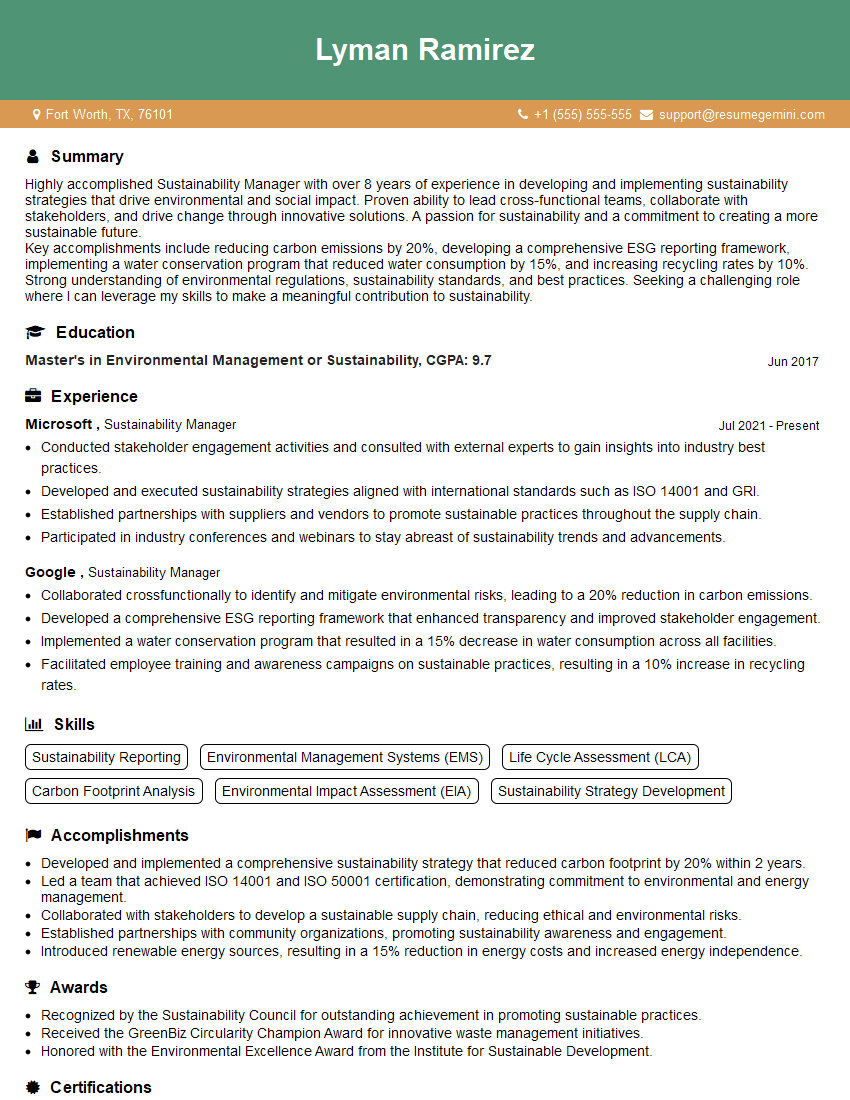
Sustainability Manager Resume Sample
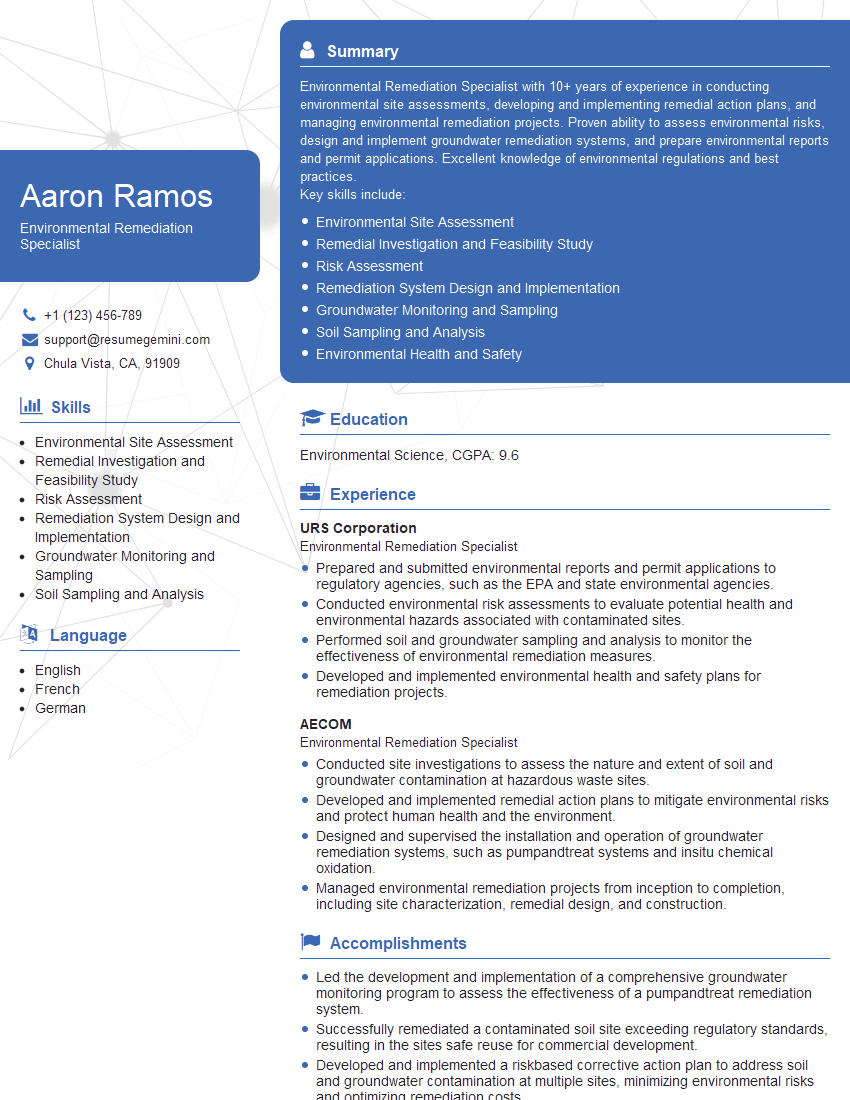
Environmental Remediation Specialist Resume Sample
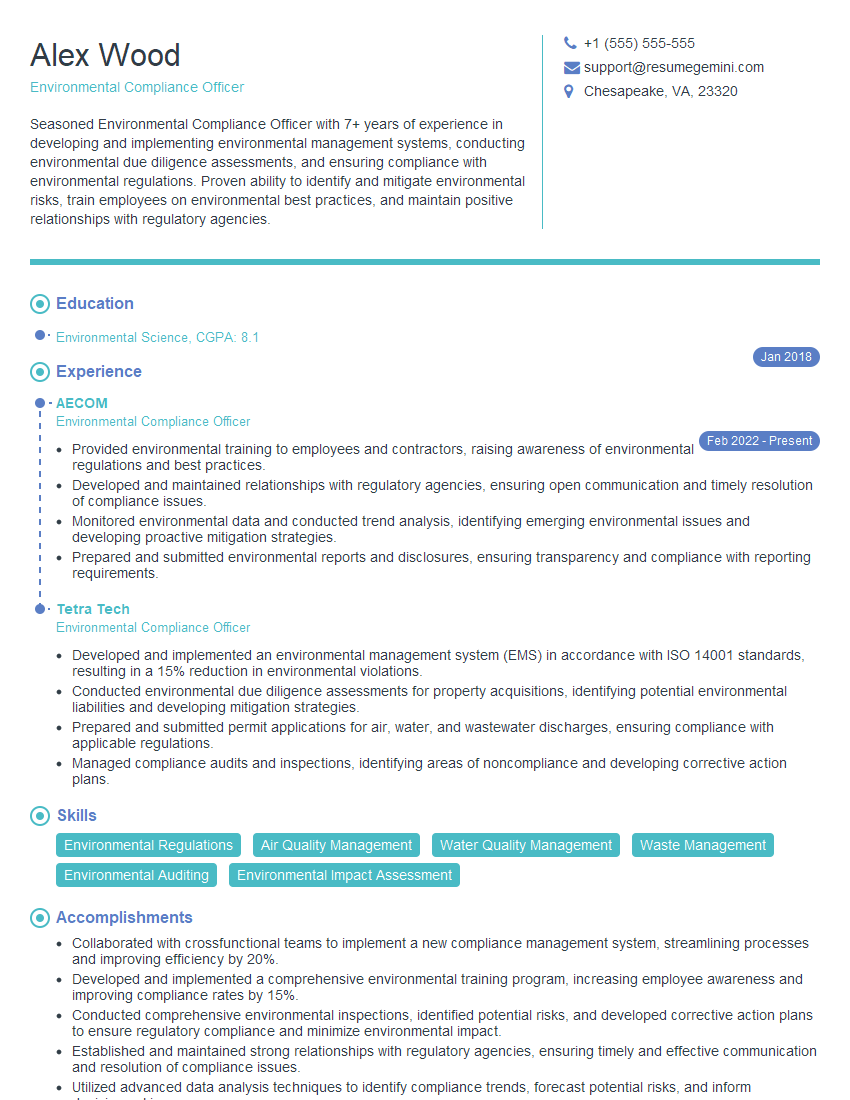
Environmental Compliance Officer Resume Sample
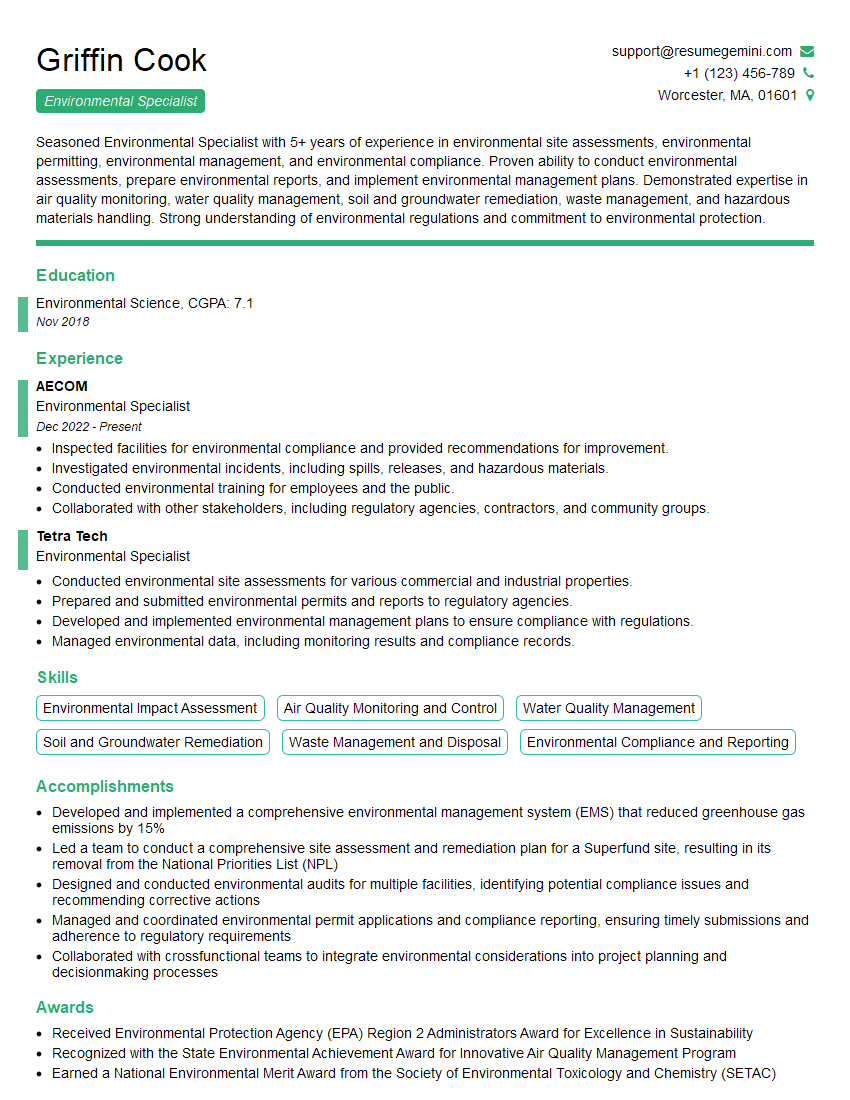
Environmental Specialist Resume Sample
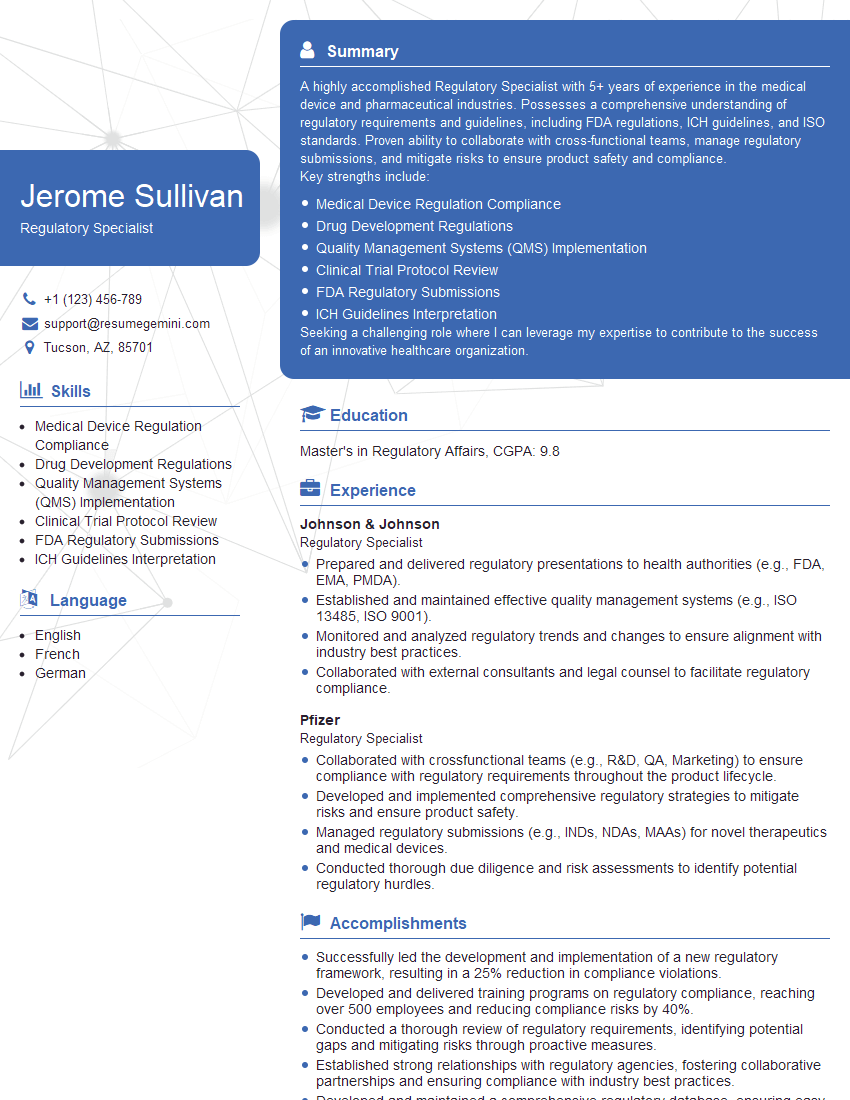
Regulatory Specialist Resume Sample

Sustainability Consultant Resume Sample
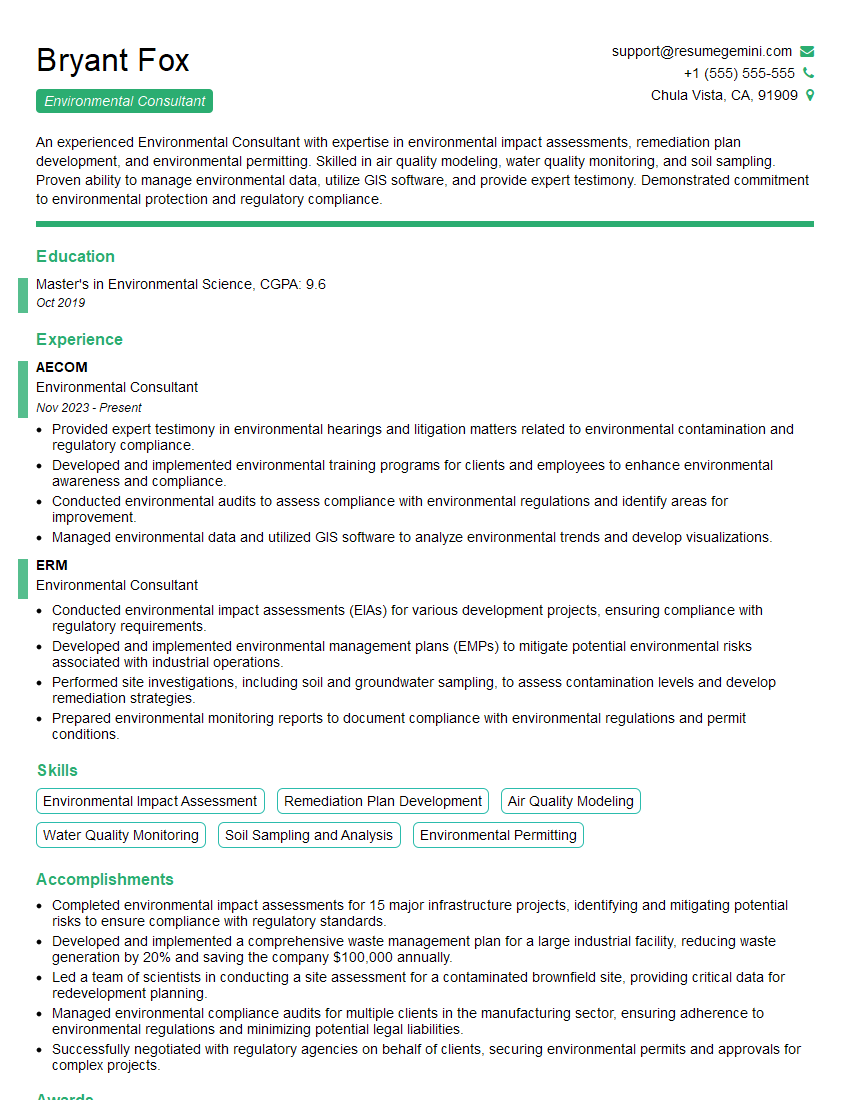
Environmental Consultant Resume Sample
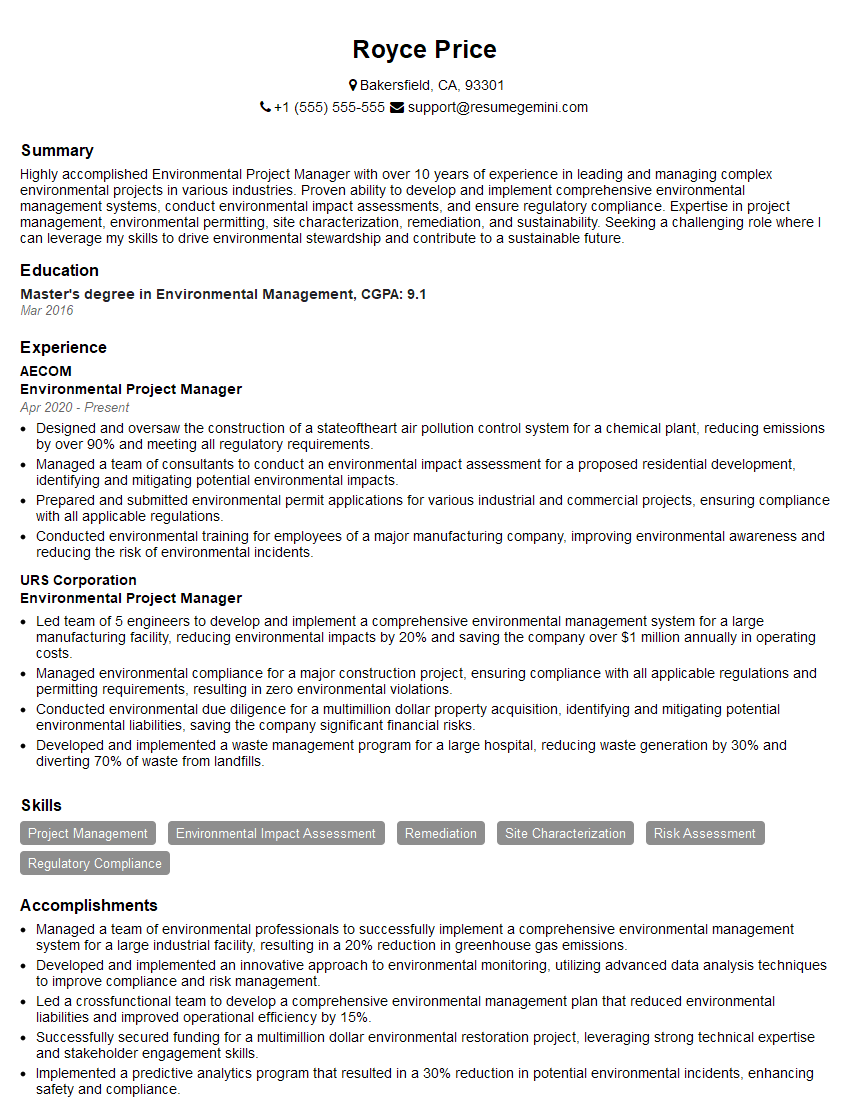
Environmental Project Manager Resume Sample
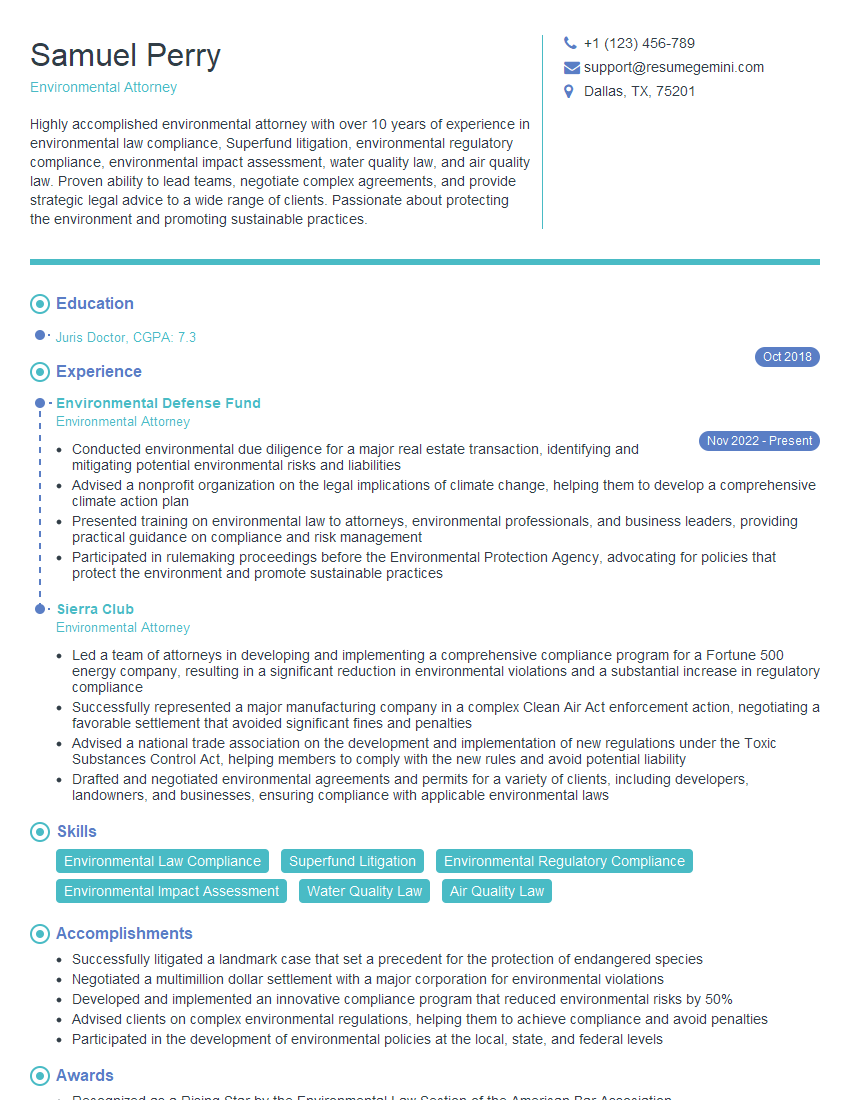
Environmental Attorney Resume Sample
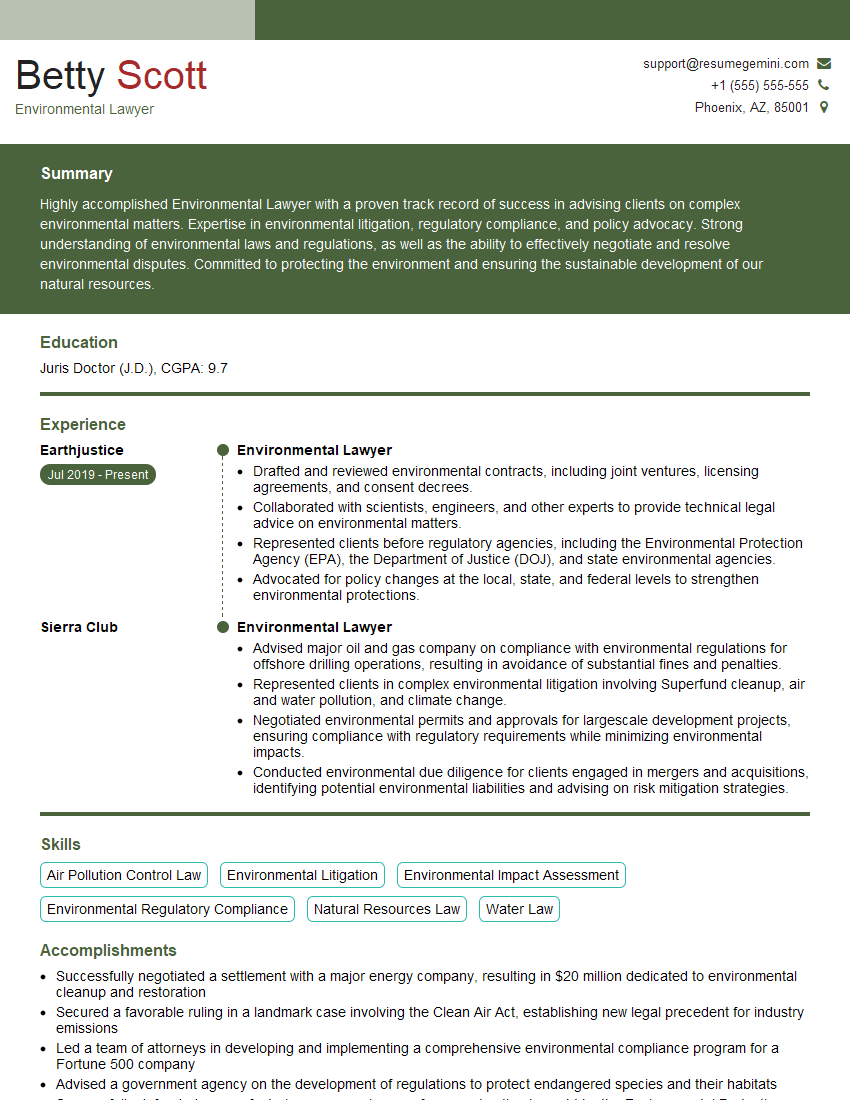
Environmental Lawyer Resume Sample
Explore more articles
Users Rating of Our Blogs
Share Your Experience
We value your feedback! Please rate our content and share your thoughts (optional).
What Readers Say About Our Blog
Very informative content, great job.
good