Feeling uncertain about what to expect in your upcoming interview? We’ve got you covered! This blog highlights the most important Vegetable Harvesting Machine Operation interview questions and provides actionable advice to help you stand out as the ideal candidate. Let’s pave the way for your success.
Questions Asked in Vegetable Harvesting Machine Operation Interview
Q 1. Describe your experience operating different types of vegetable harvesting machines.
My experience spans a wide range of vegetable harvesting machines, from simple hand-guided harvesters for delicate crops like lettuce and spinach to sophisticated self-propelled machines for larger-scale operations with crops like potatoes and carrots. I’ve operated both mechanical harvesters, which utilize various cutting, digging, and conveying mechanisms, and robotic harvesters that employ computer vision and AI for precise harvesting and sorting. For instance, I’ve worked extensively with a self-propelled potato harvester, using its various settings to adjust for different soil conditions and tuber sizes. In contrast, I’ve also fine-tuned a lettuce harvesting machine’s cutting height and speed to minimize damage and maximize yield. The experience working with these diverse machines has allowed me to develop a keen understanding of their unique capabilities and limitations.
- Mechanical Harvesters: Experience operating various makes and models, including those designed for root vegetables, leafy greens, and fruiting vegetables.
- Robotic Harvesters: Proficiency in operating and calibrating automated systems incorporating GPS, sensors, and AI for precise harvesting.
Q 2. Explain the process of pre-harvest machine setup and calibration.
Pre-harvest machine setup and calibration are crucial for maximizing efficiency and minimizing yield losses. It’s like preparing your kitchen before cooking a complex dish—you need all the right ingredients (settings) in the right proportions. The process typically involves several steps:
- Pre-inspection: A thorough check of the machine’s components for wear and tear, ensuring everything functions correctly before entering the field. This includes checking belts, chains, cutting blades, and sensors.
- Ground preparation: The field itself needs to be prepared to meet the machine’s requirements. This might involve leveling, removing debris, or ensuring sufficient row spacing, depending on the type of vegetable and harvester.
- Calibration of Harvesting Parameters: This is highly crop-specific. For example, with a potato harvester, the digging depth, conveyor speed, and cleaning system need adjustment based on soil type and potato size. With a lettuce harvester, the cutting height needs precise setting to avoid damage to the crop. Often this involves adjusting various settings on the control panel.
- Test Run: A small-scale test run in a section of the field allows for fine-tuning of parameters and identification of potential issues before full-scale operation. You’re basically doing a trial run to ensure everything runs smoothly and to fine-tune all the settings.
Q 3. How do you ensure the optimal performance and efficiency of a vegetable harvesting machine?
Optimal performance and efficiency hinge on several factors. Think of it as maintaining a high-performance car – regular servicing and the right driving conditions are essential. First, preventative maintenance is critical. Regular lubrication, cleaning, and inspections prevent costly breakdowns. Second, operator skill plays a significant role; understanding the machine’s capabilities and limitations, and adapting to changing field conditions (e.g., soil type, crop density) is vital. Third, correct parameter settings are paramount. For example, incorrect cutting height on a lettuce harvester can lead to damaged produce or missed yield. Finally, using the right machine for the job is essential. You wouldn’t use a potato harvester to pick strawberries.
Q 4. What are the common maintenance tasks for vegetable harvesting machines?
Common maintenance tasks vary depending on the machine, but generally include:
- Daily Checks: Inspection of belts, chains, blades, and other wear parts; checking fluid levels (hydraulic oil, etc.); cleaning the machine to prevent build-up of debris.
- Regular Servicing: More in-depth checks and maintenance every few weeks or months, depending on usage. This may involve replacing worn parts, lubricating moving components, and checking for leaks.
- Seasonal Maintenance: More extensive maintenance at the end of the harvesting season to prepare the machine for storage. This may include a thorough cleaning, lubrication, and repair of any damaged components.
- Record Keeping: Maintaining detailed records of maintenance performed is crucial for tracking machine health and planning future maintenance.
Q 5. How do you troubleshoot malfunctions in a vegetable harvesting machine?
Troubleshooting is a systematic process. I approach it using a combination of diagnostic tools and my experience. First, I’ll identify the symptom – e.g., the machine is not moving, the cutting mechanism is malfunctioning, or the yield is lower than expected. Then, I consult the machine’s manual for troubleshooting guides. I use diagnostic tools like pressure gauges, multimeters, and specialized diagnostic software to pinpoint the problem. I then systematically check components, starting with the most likely causes based on my experience and the diagnostic information. For example, if the harvester isn’t moving, I’d check the engine, transmission, and hydraulic systems before looking at more complex issues. Simple issues like clogged filters or loose connections are often the culprit.
Q 6. Describe your experience with different harvesting techniques for various vegetables.
My experience encompasses diverse harvesting techniques for various vegetables. For example, potatoes are harvested using specialized harvesters that dig, lift, clean, and sort the tubers. Leafy greens like lettuce may be harvested using either mechanical cutters or hand-harvesting, depending on the scale and type of operation. Root vegetables like carrots utilize specialized harvesting systems that lift and clean the roots from the soil. Fruiting vegetables like tomatoes may involve mechanical harvesters that shake the plants to dislodge the fruit, or manual picking. The choice of technique depends on factors like crop type, yield, labor costs, and desired quality.
Q 7. How do you manage yield losses during the harvesting process?
Minimizing yield losses requires a multifaceted approach. Firstly, proper machine operation and calibration are crucial. For example, incorrect cutting height can lead to damaged produce or missed yield. Secondly, timely harvesting is essential – harvesting too early or too late can negatively impact yield. Thirdly, careful handling of the harvested produce minimizes damage during transport and storage. Losses can also occur due to soil conditions, crop diseases, or pest infestations; therefore, good agricultural practices play a significant role. Finally, regular maintenance of the harvester ensures it operates optimally, minimizing losses due to machine malfunctions.
Q 8. What safety procedures do you follow while operating vegetable harvesting machinery?
Safety is paramount when operating vegetable harvesting machinery. My routine begins with a thorough pre-operational inspection, checking all moving parts, hydraulic systems, and safety mechanisms like emergency stops and guards. I always wear appropriate personal protective equipment (PPE), including safety glasses, hearing protection, gloves, and sturdy footwear. Before starting the machine, I ensure the area is clear of personnel and obstacles. During operation, I maintain a safe speed, remain vigilant for any unexpected issues, and regularly check the machine’s functionality. I never attempt repairs while the machine is running. If I encounter a problem, I immediately shut down the machine and address it before resuming operations. Think of it like driving a car – regular maintenance, attention to surroundings, and adherence to traffic rules are essential for preventing accidents. Similarly, careful preparation and consistent vigilance are crucial when handling powerful machinery.
Q 9. Explain your understanding of the different types of harvesting heads and their applications.
Vegetable harvesting heads vary significantly depending on the crop. For example, a spinner head is excellent for harvesting delicate crops like lettuce or spinach, gently lifting and separating the plants from the soil. A conveyor head, common for harvesting root vegetables like carrots or potatoes, uses rotating belts to lift produce and separate it from soil and debris. Rotary heads are suitable for harvesting crops like tomatoes, cutting the stem and delivering the produce to a collection bin. The choice of harvesting head hinges on the crop’s characteristics: its growth habit, fragility, and root system. Using the wrong head can lead to significant yield losses and damage to the produce. For instance, using a rotary head on delicate lettuce would result in crushed leaves and significant quality loss. Careful consideration of the crop and selection of appropriate equipment are crucial for optimization.
Q 10. How do you adjust machine settings based on varying field conditions?
Field conditions significantly impact harvesting efficiency and produce quality. I adjust machine settings based on factors like soil type, crop density, and crop maturity. For instance, in rocky soil, I’ll reduce the ground speed and adjust the cutting depth to avoid damage to the harvesting mechanism. If the crop is densely packed, I may slightly reduce the speed and adjust the header settings to prevent clogging. Likewise, for more mature and larger crops, I might adjust the harvesting height and conveyor speed to accommodate the increased size. This involves using the machine’s control panel to fine-tune parameters like cutting height, ground speed, and conveyor speed. Regular monitoring of the harvested produce ensures these adjustments are effective. Imagine trying to cut a dense loaf of bread versus a single slice – you’d need to adjust the cutting technique and pressure accordingly. This translates directly to adjusting settings in the harvesting machine.
Q 11. Describe your experience with GPS-guided harvesting systems.
My experience with GPS-guided harvesting systems has been transformative. These systems significantly improve efficiency and minimize crop losses. GPS allows for precise navigation, ensuring that the machine follows a predetermined path, reducing overlaps and gaps in harvesting. This is especially valuable on large fields. Real-time data visualization allows for monitoring of harvesting progress and identification of areas needing attention. Furthermore, data on yield and other parameters can be collected and analyzed for future improvements in farming practices. In one instance, using a GPS-guided system reduced our overlap by 15%, resulting in significant cost savings and improved yield efficiency. It’s like having a highly skilled navigator on board, ensuring optimized harvesting routes and minimizing waste.
Q 12. How do you ensure the quality of harvested vegetables during operation?
Maintaining the quality of harvested vegetables is crucial. I regularly inspect the harvested produce during operation to ensure gentle handling and minimal damage. This includes monitoring the machine’s settings and making adjustments as needed. Gentle conveying speeds are crucial to avoid bruising or damage. Proper cleaning and maintenance of the harvesting equipment help to prevent contamination. Rapid post-harvest cooling also plays a vital role in maintaining quality, especially for temperature-sensitive vegetables. Think of it like handling delicate eggs – careful handling ensures their integrity. The same applies to harvested produce; gentle treatment is critical for preserving quality.
Q 13. What are the common causes of machine breakdowns and how do you prevent them?
Common causes of breakdowns include wear and tear of moving parts, hydraulic system failures, and issues with the power transmission system. Preventive maintenance is essential. I perform regular inspections and lubrications to minimize the risk of breakdowns. This includes checking belts, hoses, and other critical components. I also ensure timely repairs or replacements of worn-out parts. Proactive maintenance is much more cost-effective than emergency repairs. A well-maintained machine is like a well-maintained car – regular servicing prevents major issues down the line. Neglecting maintenance can lead to costly repairs and downtime.
Q 14. Explain your knowledge of post-harvest handling and storage procedures.
Post-harvest handling and storage procedures are critical for maintaining the quality and extending the shelf life of harvested vegetables. This involves careful cleaning, grading, and sorting of the produce to remove any damaged or substandard items. Proper cooling and storage conditions are paramount. Refrigeration and controlled atmosphere storage are commonly employed to slow down respiration and prevent spoilage. Understanding the specific requirements of each vegetable type is crucial for optimal storage. For instance, leafy greens require higher humidity levels than root vegetables. Efficient post-harvest handling helps prevent waste and ensures optimal quality for consumers. It’s like preserving food at home – appropriate methods ensure its longevity and quality.
Q 15. How do you maintain accurate records of harvesting data?
Maintaining accurate harvesting data is crucial for optimizing efficiency and profitability. We use a combination of methods to ensure data integrity. This starts with pre-harvest planning where we define the fields, expected yields based on historical data and current crop conditions, and the specific harvesting parameters for each machine. During harvesting, each machine is equipped with a GPS-enabled data logger that records the location, time, yield per area (e.g., tons per hectare), and any machine performance metrics such as fuel consumption and operational hours.
This data is then automatically uploaded to a central database at the end of each day. We regularly cross-check this data with manual counts and visual inspections to identify any discrepancies. This ensures that the automated data collection is accurate and reliable. Finally, we use this compiled data for generating detailed reports which inform future planting and harvesting decisions.
For example, if we notice consistently lower yields in a particular section of a field, we can investigate the reason — it could be soil quality, irrigation issues, or even machine malfunction — and take corrective measures for the next season. The data also allows us to calculate our operational costs accurately and improve our overall farm management strategies.
Career Expert Tips:
- Ace those interviews! Prepare effectively by reviewing the Top 50 Most Common Interview Questions on ResumeGemini.
- Navigate your job search with confidence! Explore a wide range of Career Tips on ResumeGemini. Learn about common challenges and recommendations to overcome them.
- Craft the perfect resume! Master the Art of Resume Writing with ResumeGemini’s guide. Showcase your unique qualifications and achievements effectively.
- Don’t miss out on holiday savings! Build your dream resume with ResumeGemini’s ATS optimized templates.
Q 16. How do you communicate effectively with other members of the harvesting team?
Effective communication within a harvesting team is essential for smooth operations and safety. We use a multi-pronged approach. Before each harvesting session, we hold a brief meeting to review the day’s plan, assign roles and responsibilities (e.g., machine operators, loaders, transporters), and discuss potential hazards or challenges. During harvesting, we maintain constant communication through two-way radios. This allows for immediate problem-solving, coordination between machines, and quick responses to unexpected events such as equipment malfunctions or weather changes.
We also use a visual communication system with flags or hand signals to supplement radio communication, especially in noisy environments. After each harvesting session, we hold a debriefing meeting to share feedback, identify areas for improvement, and address any concerns raised by team members. This fosters a culture of open communication and teamwork, leading to increased efficiency and better overall outcomes. For instance, if a specific machine requires more frequent maintenance, we can adjust our schedule or allocate more resources to prevent downtime.
Q 17. Describe your experience with different types of vegetable harvesting machine sensors.
My experience encompasses various sensors used in vegetable harvesting machines. These sensors are critical for optimizing harvesting performance and minimizing crop damage. Common types include:
- GPS sensors: Used for precise location tracking, allowing for automated guidance systems and accurate yield mapping.
- Yield sensors: These measure the amount of harvested produce in real-time, providing valuable data for yield estimation and machine optimization.
- Soil moisture sensors: These monitor soil conditions, helping to prevent damage to crops and optimize harvesting efficiency by adjusting the machine’s depth and speed.
- Optical sensors (e.g., color cameras): Used for identifying ripe produce, differentiating between weeds and crops, and enabling robotic harvesting systems to select only mature vegetables.
- Force sensors: These measure the force applied by the harvesting mechanism, helping to prevent damage to the crop and the machine itself by automatically adjusting the grip pressure.
For example, I’ve worked with machines equipped with optical sensors that differentiate between ripe and unripe tomatoes, significantly reducing waste and improving the quality of the harvested produce. The use of these sensors and related machine learning algorithms has steadily increased the precision of the harvest, especially in crops which exhibit a large variation in ripening time.
Q 18. How do you handle unexpected challenges or emergencies during harvesting?
Handling unexpected challenges during harvesting requires a proactive and methodical approach. We develop a pre-harvest plan that includes contingency strategies for common issues, such as equipment malfunctions, adverse weather conditions, or unexpected crop variability. This involves having spare parts readily available, establishing communication protocols for emergencies, and identifying backup harvesting routes or alternative harvesting methods.
When an unexpected challenge arises, our first step is to ensure the safety of the team. Then, we assess the situation, determine the root cause of the problem, and implement the most appropriate solution. If it’s a machine malfunction, we troubleshoot the issue, and if necessary, we repair or replace the faulty component. If it’s a weather-related issue, we may temporarily halt operations and resume when conditions improve. If it’s a problem with crop quality, we may adjust our harvesting parameters to minimize losses. Through accurate record-keeping and post-harvest analysis, we constantly refine our protocols to prevent similar incidents from happening again. For example, if a belt breaks repeatedly on a specific machine, we might upgrade to a stronger belt or re-evaluate the tension settings.
Q 19. Explain your understanding of the environmental impact of harvesting practices.
Understanding the environmental impact of harvesting practices is crucial for sustainable agriculture. Minimizing soil compaction, reducing fuel consumption, and optimizing water usage are key aspects. We employ practices that minimize soil disturbance. For example, using machines with wider tracks distributes the weight more effectively. This reduces compaction compared to using equipment with narrower wheels.
We also focus on optimizing machine performance to minimize fuel consumption. Regular maintenance, proper operation techniques, and the use of fuel-efficient equipment are all crucial. Furthermore, precision harvesting techniques, enabled by sensors, help reduce waste and minimize the environmental impact associated with discarding unripe or damaged produce. We are also exploring the adoption of electric or hybrid harvesting equipment to further reduce our carbon footprint. For example, we may choose harvesting schedules that avoid working during peak heat periods to conserve energy. Continuous evaluation of the environmental impact and adoption of newer technologies are crucial in the pursuit of sustainable harvesting.
Q 20. Describe your experience working with different types of soil conditions.
Experience with diverse soil conditions is essential for effective harvesting. Soil type significantly influences machine selection and operational parameters. Clay soils, for instance, can be highly compacted, requiring machines with stronger traction and potentially lower ground pressure to prevent damage to both the soil and the crop. Sandy soils, on the other hand, may require different harvesting techniques to prevent excessive digging or loss of produce. We adapt our machinery and techniques accordingly. This may involve selecting machines with different tire types or adjusting the depth and speed of the harvesting equipment. It also includes careful monitoring of soil moisture levels to prevent damage and optimize harvesting efficiency. For instance, we use different cutting depths for harvesting potatoes depending on the soil type: a shallower depth in sandy soil to avoid digging up too much sand and a slightly deeper depth in clay to ensure complete harvesting.
Q 21. How do you adapt your operation to changing weather conditions?
Adapting to changing weather conditions is crucial for successful harvesting. Extreme heat can reduce machine efficiency and damage crops, while heavy rain can make fields inaccessible. We utilize weather forecasts to plan harvesting schedules and optimize our operations. If rain is expected, we prioritize harvesting in fields that are less susceptible to water damage. During periods of extreme heat, we may adjust harvesting schedules to avoid peak temperatures, utilizing the cooler parts of the day for operation, allowing machines to operate at their optimal temperatures and reducing stress on the crops.
In case of unexpected severe weather, we have established procedures to secure equipment and protect the harvest. This includes using tarpaulins to protect harvested produce from rain and relocating equipment to safe locations. We use the same communication strategies described in question 2 to communicate any weather-related changes or urgent situations. We also have procedures to ensure timely repair of any equipment affected by adverse weather conditions.
Q 22. How do you perform preventative maintenance on a vegetable harvesting machine?
Preventative maintenance is crucial for maximizing the lifespan and efficiency of a vegetable harvesting machine. Think of it like regular check-ups for your car – it prevents major breakdowns and keeps things running smoothly.
- Daily Checks: Before each operation, I inspect all moving parts for wear and tear, checking fluid levels (hydraulic oil, engine oil), and ensuring belts are properly tensioned. I also look for any loose bolts, leaks, or damage to the harvesting heads.
- Weekly Checks: More thorough checks are performed weekly. This includes lubricating moving parts, cleaning the machine thoroughly to remove debris, inspecting the cutting blades for sharpness and damage, and checking the functionality of sensors and electronics.
- Monthly Checks: Monthly maintenance involves more in-depth inspections, possibly including filter changes (air, fuel, hydraulic), checking the condition of the conveyor belts, and ensuring proper functioning of the cleaning and sorting systems.
- Seasonal Maintenance: Before and after each harvesting season, a comprehensive maintenance schedule is followed. This includes a thorough cleaning, lubrication, component replacements as needed (e.g., worn blades, belts), and a full system check to prepare the machine for the next season’s workload.
For instance, during a recent seasonal maintenance, we discovered a small crack in a hydraulic line. Early detection prevented a major hydraulic fluid leak that could have caused downtime and damage to the machine.
Q 23. What are the key performance indicators (KPIs) you monitor during harvesting?
Key Performance Indicators (KPIs) during harvesting are essential for optimizing efficiency and yield. We constantly monitor several factors, including:
- Harvesting Rate (tons/hour): This measures the speed and efficiency of the harvesting process. A lower-than-expected rate might indicate mechanical issues or operator skill needing improvement.
- Yield (tons/acre): This tells us the total amount of harvested vegetables per unit of land area. This can highlight variations in crop growth and helps in adjusting farming practices.
- Crop Damage Rate (%): This is a crucial KPI. A high damage rate suggests issues with machine settings, operator skill, or field conditions.
- Machine Uptime (%): The percentage of time the machine is actively harvesting versus being down for repairs or maintenance. This indicates overall machine reliability and maintenance effectiveness.
- Fuel Consumption (liters/hour or gallons/hour): Monitoring fuel consumption helps us identify potential mechanical problems (e.g., engine inefficiency) or areas for optimization.
- Labor Productivity (tons/person-hour): This helps evaluate the effectiveness of the harvesting team and identifies areas for improved coordination.
For example, a sudden drop in harvesting rate and a simultaneous increase in crop damage might indicate a problem with the harvesting head, requiring immediate attention and adjustment.
Q 24. How do you ensure compliance with safety regulations and industry standards?
Safety is paramount. Compliance with safety regulations and industry standards is not just a rule; it’s a fundamental principle.
- Regular Safety Training: All operators undergo comprehensive training on safe operating procedures, emergency shutdown procedures, and the use of personal protective equipment (PPE).
- Machine Guarding: We ensure all moving parts have appropriate guards to prevent accidental contact. Regular inspections verify the effectiveness of these guards.
- Lockout/Tagout Procedures: Strict lockout/tagout procedures are followed during maintenance or repairs to prevent accidental starts and injuries.
- Emergency Shutdowns: Multiple emergency stop mechanisms are in place, easily accessible to the operator.
- PPE Provision: Appropriate PPE, including safety glasses, gloves, hearing protection, and sturdy footwear, is provided and mandatory for all operators.
- Regular Inspections: We conduct regular safety inspections to identify and rectify any potential hazards.
We document all safety training and inspections meticulously. For instance, we recently implemented a new safety training module on recognizing and responding to electrical hazards, reflecting updated industry best practices.
Q 25. Describe your experience with data analysis related to harvesting operations.
Data analysis is integral to improving harvesting operations. We collect data from various sources, including the machine’s onboard computer, GPS trackers, and manual records.
- Data Collection: We use sensors and data loggers to capture data on harvesting rates, yield, fuel consumption, and machine uptime.
- Data Analysis: We employ statistical software to analyze this data, identifying trends, patterns, and anomalies.
- Performance Improvement: Data analysis provides valuable insights for improving machine efficiency, operator training, and overall farm management. For example, analyzing yield data across different fields can highlight variations in soil conditions or fertilizer application.
- Predictive Maintenance: By analyzing data on machine performance, we can predict potential failures and perform maintenance proactively, minimizing downtime.
In one instance, by analyzing fuel consumption data, we identified a specific field where fuel consumption was consistently higher than average. Further investigation revealed uneven terrain causing increased engine strain. We adjusted our harvesting strategy for that field to improve fuel efficiency.
Q 26. How do you identify and resolve issues related to machine accuracy and precision?
Maintaining machine accuracy and precision requires a multi-faceted approach.
- Calibration: Regular calibration of sensors and harvesting heads is vital. This ensures the machine accurately measures yield and avoids over- or under-harvesting.
- Blade Sharpness: Dull blades can lead to inconsistent cuts and damage to the crop. We maintain a sharp blade schedule for optimal performance.
- Sensor Cleaning: Sensors can become clogged with debris, affecting their accuracy. Regular cleaning ensures accurate readings.
- Software Updates: Keeping the machine’s software updated ensures that we have the latest algorithms and optimizations for accuracy.
- Operator Training: Experienced operators are crucial. Proper training ensures they can adjust the machine settings to optimize precision based on crop conditions.
Recently, we experienced lower-than-expected yield in a specific field. Analysis revealed that sensor readings were slightly off due to accumulated dust. A thorough cleaning resolved the issue, restoring accuracy and increasing yield.
Q 27. Explain your knowledge of different vegetable varieties and their harvesting requirements.
Understanding the nuances of different vegetable varieties and their specific harvesting requirements is essential. This knowledge is applied when configuring the machine for optimal harvesting performance.
- Lettuce: Requires gentle handling to avoid leaf damage. Machine settings need adjustments to minimize bruising.
- Carrots: Requires precise digging and lifting mechanisms to avoid damage to roots. Soil conditions also influence harvesting parameters.
- Tomatoes: Require careful harvesting to avoid stem breakage and fruit damage. Gentle handling is crucial.
- Potatoes: Need specialized harvesting machinery designed to minimize soil clods and damage to tubers. Soil conditions play a significant role.
For example, when harvesting delicate lettuce, we use softer harvesting heads and slower harvesting speeds compared to harvesting robust vegetables like potatoes.
Q 28. How do you contribute to improving the efficiency and productivity of the harvesting process?
Improving harvesting efficiency and productivity is an ongoing process. My contributions include:
- Process Optimization: I analyze harvesting data to identify bottlenecks and implement process improvements, such as optimizing harvesting routes or adjusting machine settings.
- Operator Training: I provide ongoing training to operators to improve their skills and efficiency. This includes best practices and techniques for efficient and safe operation.
- Preventative Maintenance: My rigorous preventative maintenance schedule ensures that the harvesting machine operates at peak efficiency, minimizing downtime.
- Technology Integration: I am actively involved in exploring and implementing new technologies that can enhance efficiency, such as GPS-guided harvesting and automated quality control systems.
- Data-Driven Decision Making: I use data analysis to inform harvesting strategies, allowing for proactive adjustments based on real-time information and insights.
For instance, by implementing a new GPS-guided harvesting system, we reduced fuel consumption by 15% and improved harvesting time by 10%, significantly boosting overall productivity.
Key Topics to Learn for Vegetable Harvesting Machine Operation Interview
- Machine Mechanics: Understanding the basic mechanical components of various harvesting machines (e.g., conveyor belts, cutting mechanisms, sorting systems). Consider the principles of operation and potential points of failure.
- Operational Procedures: Mastering the safe and efficient operation of different harvesting machines, including pre-operation checks, adjustments during operation, and post-operation maintenance.
- Crop-Specific Techniques: Familiarize yourself with the nuances of harvesting different vegetable types (e.g., tomatoes, lettuce, potatoes). Each crop may require different machine settings and handling techniques.
- Safety Regulations and Procedures: Demonstrate a strong understanding of all relevant safety protocols, including personal protective equipment (PPE) usage and emergency response procedures. Knowing relevant industry standards is crucial.
- Troubleshooting and Maintenance: Develop the ability to identify common machine malfunctions, perform basic troubleshooting, and understand preventative maintenance schedules. Be prepared to discuss your problem-solving approach.
- Yield Optimization: Understand strategies for maximizing harvesting efficiency and minimizing crop damage. This includes knowledge of optimal machine settings and techniques for various field conditions.
- Data Interpretation and Reporting: Familiarity with recording harvest data (yield, quality, etc.) and interpreting this information to improve future harvesting operations. Being able to use this data to improve efficiency is a valuable skill.
Next Steps
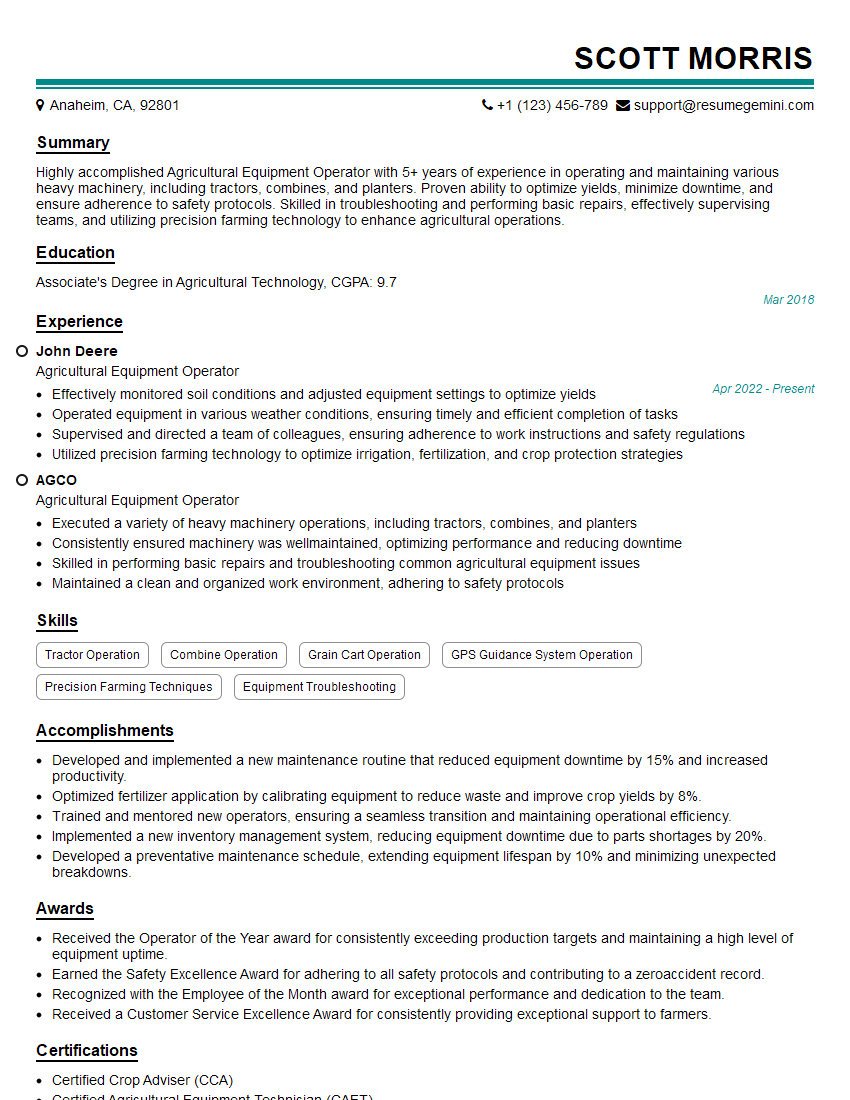
Mastering Vegetable Harvesting Machine Operation opens doors to a rewarding career with excellent growth potential in the agricultural technology sector. Demand for skilled operators is high, and continuous learning in this field is highly valued. To increase your chances of landing your dream job, creating a strong, ATS-friendly resume is essential. ResumeGemini can help you craft a compelling and effective resume tailored to this specific role. Take advantage of their resources and access examples of resumes specifically designed for Vegetable Harvesting Machine Operation positions to showcase your skills and experience effectively.

Explore more articles
Users Rating of Our Blogs
Share Your Experience
We value your feedback! Please rate our content and share your thoughts (optional).
What Readers Say About Our Blog
Very informative content, great job.
good