Preparation is the key to success in any interview. In this post, we’ll explore crucial Crop Yield Optimization interview questions and equip you with strategies to craft impactful answers. Whether you’re a beginner or a pro, these tips will elevate your preparation.
Questions Asked in Crop Yield Optimization Interview
Q 1. Explain the concept of precision agriculture and its role in crop yield optimization.
Precision agriculture is like giving your crops a tailored suit instead of a one-size-fits-all outfit. It involves using technology to understand the unique needs of every part of your field, allowing for targeted interventions that boost efficiency and yield.
Instead of applying the same amount of fertilizer or water across the entire field, precision agriculture allows us to vary these inputs based on real-time data. This could involve using GPS-guided machinery for variable-rate application of fertilizer or pesticides, based on soil analysis or sensor readings that pinpoint areas needing more or less input. For example, a sensor network might detect areas of water stress, allowing for targeted irrigation only to those specific areas, thus saving water and maximizing yield.
The role of precision agriculture in crop yield optimization is significant. By optimizing resource allocation and reducing waste, it directly improves profitability and sustainability. Reduced chemical use also minimizes environmental impact.
Q 2. Describe different methods for assessing soil health and its impact on yield.
Assessing soil health is fundamental for maximizing crop yield. It’s like understanding the foundation of your house before you start building. Several methods can be employed, each offering a different perspective on soil quality.
- Visual observation: Observing soil color, texture, and structure provides a preliminary assessment of its health.
- Soil sampling and laboratory analysis: This involves collecting soil samples at different depths and analyzing them for parameters like organic matter content, nutrient levels (nitrogen, phosphorus, potassium), pH, and microbial biomass. This is the most accurate method but requires more time and resources.
- Near-infrared spectroscopy (NIRS): NIRS uses light to analyze the chemical composition of the soil rapidly, giving an instant snapshot of nutrient levels and other key properties.
- Soil sensors: Sensors can be installed in the field to continuously monitor soil moisture, temperature, and nutrient levels, providing real-time data for informed decision-making.
The impact of soil health on yield is direct. Healthy soil with ample organic matter, good structure, and balanced nutrient levels promotes strong root development, better nutrient and water uptake, and enhanced disease resistance, ultimately leading to higher crop yields and greater resilience to stress.
Q 3. How do you analyze data from various sources (sensors, satellite imagery, etc.) to optimize crop yields?
Analyzing data from various sources is like putting together a puzzle to get a complete picture of your field’s health. Integrating data from different sources allows for a more comprehensive and accurate assessment, leading to better decision-making.
We start by collecting data from multiple sources: sensors measuring soil moisture and nutrient levels, satellite imagery providing information on plant health and growth stages, weather stations providing climate data, and yield monitors collecting data during harvest.
Data analysis usually involves using Geographic Information Systems (GIS) and data analytics tools. This allows us to create maps visualizing variations in soil properties, plant health, and yield across the field. Machine learning algorithms are then employed to identify patterns and predict yield based on various factors. This allows for the implementation of site-specific management practices. For example, we could use this analysis to identify areas requiring additional irrigation or targeted fertilization.
Example: A simple code snippet for analyzing sensor data could look like this (Python example - simplified for illustration):
import pandas as pd
data = pd.read_csv('sensor_data.csv')
average_moisture = data['moisture'].mean()
print(f'Average soil moisture: {average_moisture}')
Q 4. What are the key factors influencing crop yield, and how can they be managed?
Crop yield is a complex interplay of various factors, much like a finely tuned orchestra. Each instrument (factor) plays its part, and imbalances can disrupt the harmony.
- Climate: Temperature, rainfall, sunlight, and extreme weather events significantly impact crop growth and yield.
- Soil: Soil health, including fertility, structure, water-holding capacity, and pH, is fundamental for nutrient and water uptake.
- Genetics: Choosing appropriate crop varieties adapted to the specific environment and possessing traits like disease resistance or high yield potential is crucial.
- Nutrient management: Providing the right amount of essential nutrients (N, P, K, and micronutrients) at the right time ensures optimal plant growth.
- Pest and weed control: Effective management of pests and weeds minimizes crop damage and competition for resources.
- Water management: Efficient irrigation schedules ensure adequate water availability without over-irrigation or water stress.
Managing these factors involves a holistic approach. This could include using drought-resistant varieties, employing precision irrigation, implementing integrated pest management strategies, and using data-driven decision-making to optimize resource allocation.
Q 5. Explain the principles of irrigation scheduling for optimal crop growth.
Irrigation scheduling is about giving your crops a drink when they need it, not too much and not too little. It’s like keeping your house plants watered just enough so they don’t wilt.
The principles of optimal irrigation scheduling involve considering various factors:
- Crop water requirements: Different crops have different water needs at different growth stages. This information is usually available from agricultural resources.
- Soil characteristics: Soil type, texture, and water-holding capacity affect how much water is available to plants.
- Weather conditions: Temperature, rainfall, wind speed, and humidity influence evapotranspiration (water loss from plants and soil).
- Plant water status: Monitoring plant water stress using methods like stem water potential measurements or plant canopy temperature can guide irrigation decisions.
Efficient irrigation scheduling techniques include using soil moisture sensors, weather-based irrigation models, and remote sensing technologies to determine when and how much water to apply, thus maximizing water-use efficiency and minimizing water waste.
Q 6. Discuss different strategies for nutrient management to maximize yield and minimize environmental impact.
Nutrient management is like providing a balanced diet for your crops. It aims to supply the necessary nutrients for optimal growth while minimizing environmental risks.
Strategies for effective nutrient management include:
- Soil testing: Regularly testing soil nutrient levels helps determine the type and amount of fertilizer needed.
- Precision nutrient application: Using technology like GPS-guided spreaders allows for variable-rate fertilization, applying more nutrients where needed and less where sufficient.
- Integrated nutrient management: Combining organic amendments (like compost or manure) with inorganic fertilizers enhances soil health and reduces reliance on synthetic inputs. This reduces the environmental footprint.
- Nutrient use efficiency: Selecting nutrient-efficient crop varieties, employing efficient irrigation techniques, and optimizing planting density contribute to improved nutrient uptake and reduced losses.
- Cover cropping: Planting cover crops between main crops improves soil health, increases organic matter, and reduces nutrient runoff.
Minimizing the environmental impact involves reducing synthetic fertilizer use, promoting soil health, and preventing nutrient runoff into water bodies. This is done through careful planning and the adoption of sustainable practices.
Q 7. How do you integrate pest and weed management strategies into a comprehensive yield optimization plan?
Integrating pest and weed management into a yield optimization plan is like having a security system for your crops, preventing damage and protecting the harvest.
Effective strategies for integrated pest and weed management include:
- Monitoring: Regularly scouting for pests and weeds helps detect infestations early and prevents widespread damage.
- Cultural control: Practices such as crop rotation, appropriate planting density, and weed suppression through cultivation can reduce pest and weed pressure.
- Biological control: Utilizing beneficial insects or other biological agents to control pests can reduce reliance on chemical pesticides. This is an environmentally friendly approach.
- Chemical control: Using pesticides and herbicides judiciously, only when necessary, minimizes environmental impact. Precision application technologies allow for targeted treatment.
A comprehensive yield optimization plan incorporates these strategies in an integrated manner, prioritizing preventative measures and minimizing reliance on chemical interventions to maintain ecological balance and maximize yield.
Q 8. Describe your experience with different types of agricultural sensors and their applications.
Agricultural sensors are crucial for gathering real-time data on various crop parameters, enabling precision farming. My experience encompasses a wide range, including:
- Soil sensors: These measure soil moisture, temperature, nutrient levels (e.g., nitrogen, phosphorus, potassium), and salinity. For example, I’ve used soil moisture sensors to optimize irrigation scheduling, leading to significant water savings and improved yield in a corn field. The data informed a variable rate irrigation strategy, ensuring optimal moisture for each zone within the field.
- Plant sensors: These monitor plant health indicators like chlorophyll content (using NDVI sensors), leaf area index (LAI), and plant height. I’ve worked with hyperspectral cameras to assess the overall health of a vineyard, identifying early signs of stress due to disease or nutrient deficiency. This allowed for targeted interventions, preventing widespread damage.
- Weather stations: These provide data on temperature, humidity, rainfall, wind speed, and solar radiation, which are essential for predicting crop growth and potential yield. In one project, integrating weather data with soil moisture predictions enabled us to forecast irrigation needs a week in advance, allowing for more efficient water resource management.
- Yield monitors: These are attached to harvesters to measure yield in real-time, providing valuable data for analyzing harvest variability and optimizing future planting strategies. I’ve used this data to create yield maps, visualizing areas of high and low yield. This helped determine the spatial variability of yield which is critical for variable rate fertilization strategies.
Each sensor type offers unique insights, and integrating data from multiple sources provides a more comprehensive understanding of the crop’s status and needs.
Q 9. What are the benefits and limitations of using crop models for yield prediction?
Crop models are powerful tools for simulating crop growth and predicting yields under various scenarios. They consider factors like weather, soil conditions, genetics, and management practices. However, it’s important to understand their strengths and limitations:
- Benefits: Crop models allow for ‘what-if’ scenarios, exploring the impact of different management strategies. They can help optimize planting dates, fertilization rates, and irrigation schedules. For instance, I’ve used a DSSAT model to explore different planting densities in soybean, identifying the density that optimized yield given specific environmental constraints. Further, they enable us to assess the impact of climate change on crop production.
- Limitations: Model accuracy depends heavily on the quality of input data and the model’s parameters. There is inherent uncertainty associated with weather predictions, soil variability, and pest/disease outbreaks. Oversimplification of complex biological processes can also lead to inaccuracies. Calibration and validation against real-world data are critical for reliable predictions.
Therefore, crop models are best used as decision-support tools in conjunction with other data sources, like remote sensing and field measurements.
Q 10. How do you interpret satellite imagery and other remote sensing data for agricultural applications?
Interpreting satellite imagery and remote sensing data involves several steps. I typically start by processing raw data to correct for atmospheric and geometric distortions. Then, I use various spectral indices to extract meaningful information about the crops. For example:
- NDVI (Normalized Difference Vegetation Index): This index uses the red and near-infrared bands to assess vegetation health and biomass. High NDVI values indicate healthy, vigorous vegetation, while low values indicate stress.
- EVI (Enhanced Vegetation Index): EVI is less sensitive to atmospheric effects than NDVI and is better suited for high-biomass situations.
- Other Indices: Specific indices exist for detecting certain crop diseases or nutrient deficiencies. For example, specific wavelengths can indicate nitrogen stress in wheat.
I then use GIS software to overlay this information onto maps, creating spatial visualizations of crop conditions. This allows for identifying problem areas within a field and implementing targeted interventions. For example, I’ve identified areas of water stress in a large field of rice using NDVI time series data from Landsat imagery, enabling timely irrigation decisions.
Q 11. Describe your experience with GIS software and its applications in agriculture.
GIS (Geographic Information System) software is indispensable for spatial data analysis in agriculture. My experience includes using ArcGIS and QGIS to:
- Create yield maps: Combining yield monitor data with GPS coordinates to visualize yield variability across a field.
- Overlay spatial data: Integrating soil maps, elevation data, and remote sensing data to analyze the factors influencing crop yields.
- Develop precision farming plans: Using GIS to design variable rate application maps for fertilizers, pesticides, and irrigation.
- Monitor crop health: Mapping NDVI values over time to track crop growth and identify areas requiring attention.
- Analyze field boundaries: Optimizing field layouts for efficient machinery operations. This analysis can identify areas where headlands are oversized, thereby improving operational efficiency.
GIS provides a powerful platform for integrating diverse datasets, enabling data-driven decision making in agricultural management. For example, using GIS we created a detailed plan for a farm showing the optimal placement of irrigation pivots and water allocation to account for elevation differences within the field.
Q 12. Explain your understanding of variable rate technology and its use in precision farming.
Variable rate technology (VRT) is a cornerstone of precision farming, enabling the application of inputs (fertilizers, pesticides, seeds, irrigation) at varying rates across a field based on site-specific needs. This contrasts with traditional uniform application methods. The key is using spatial data to create prescription maps.
My experience shows VRT’s value in maximizing efficiency and minimizing environmental impact. For example, using yield maps from previous seasons along with soil tests I develop prescription maps to apply fertilizer at variable rates. In areas with low yield history and poor soil fertility, more fertilizer is applied, increasing yield potential there, and applying less to higher yield zones that already have good fertility. This practice optimizes nutrient use, reduces fertilizer costs, and minimizes environmental pollution from excess nutrients.
VRT also applies to other inputs like herbicides. By identifying weed patches using imagery analysis, we only treat affected areas, reducing herbicide usage and associated environmental concerns. Similarly, VRT is also crucial for optimizing seeding rates, which allows the farmer to plant at the optimal density to maximize yield, given site-specific conditions.
Q 13. How do you address challenges related to data variability and accuracy in crop yield optimization?
Data variability and accuracy are significant challenges in crop yield optimization. Addressing these requires a multi-pronged approach:
- Data Quality Control: Implementing rigorous quality control measures to ensure accuracy and consistency in data collection. This involves regular calibration of sensors, using robust data processing techniques, and careful handling of data.
- Spatial Statistics: Employing geostatistical techniques like kriging to interpolate data and account for spatial autocorrelation, creating more accurate maps of variables like soil properties or yield.
- Data Fusion: Integrating data from multiple sources (sensors, remote sensing, historical records) to reduce uncertainty and improve the reliability of predictions. For example, we integrate data from soil sensors, weather stations and remote sensing to produce a better estimate of irrigation need.
- Robust Statistical Modeling: Utilizing statistical models that account for data uncertainty and variability. This includes error modeling and uncertainty propagation in yield prediction models.
- Field Validation: Regularly validating model predictions and spatial maps through ground-truthing and on-site data collection. This feedback loop is crucial for improving the accuracy of models and ensuring the reliability of decisions.
By carefully considering these aspects, we can mitigate the impact of data variability and increase the reliability of crop yield optimization strategies.
Q 14. Discuss your experience with data analysis techniques used in agriculture (e.g., statistical analysis, machine learning).
Data analysis is fundamental to my work. I utilize a range of techniques, including:
- Descriptive Statistics: Calculating means, standard deviations, and other descriptive statistics to summarize data and identify trends. This helps to understand the distribution of variables, such as soil pH, nutrient levels, or yields across a field.
- Regression Analysis: Building models to predict yield based on various factors like weather, soil conditions, and management practices. This allows identification of the most influential factors and the determination of optimal levels of input.
- Time Series Analysis: Analyzing data collected over time (e.g., NDVI values from satellite imagery) to track crop growth and identify potential problems. For example, a decrease in the NDVI time series could signal a plant stress condition.
- Machine Learning: Utilizing algorithms such as random forests, support vector machines, or neural networks to build more complex predictive models. This can account for non-linear relationships between variables and improve the accuracy of yield predictions. For example, using machine learning, we built a model to identify disease outbreaks in a vineyard earlier than previously possible using more traditional methods.
Choosing the appropriate technique depends on the specific research question and the nature of the data. The key is to be able to interpret the results appropriately and translate findings into actionable insights for improved crop management.
Q 15. How do you evaluate the economic feasibility of different yield optimization strategies?
Evaluating the economic feasibility of yield optimization strategies requires a comprehensive cost-benefit analysis. We need to carefully consider all the inputs and outputs involved.
- Fixed Costs: These are costs that remain relatively constant regardless of the yield, such as land rent, machinery depreciation, and labor costs for tasks unrelated to yield-enhancing activities.
- Variable Costs: These are costs directly related to the yield optimization strategy, such as the cost of improved seeds, fertilizers, pesticides, irrigation, and additional labor specifically for implementing the strategy.
- Revenue: This is the income generated from the increased yield resulting from the implemented strategy. We need accurate estimates of market prices for the harvested crop.
The process usually involves:
- Estimating increased yield: This is done through field trials, simulations, or historical data analysis specific to the implemented strategy.
- Calculating incremental revenue: Multiply the estimated increase in yield by the expected market price of the crop.
- Determining incremental costs: Calculate the difference in total costs between the chosen strategy and the baseline (conventional) method.
- Calculating Net Present Value (NPV): This is crucial for long-term strategies. NPV considers the time value of money and helps determine if the investment is worthwhile. A positive NPV suggests the strategy is economically viable.
- Sensitivity Analysis: We should perform a sensitivity analysis to test how changes in key variables (e.g., crop price, yield) affect the overall profitability. This helps identify risks and uncertainties.
Example: Let’s say a new irrigation system costs $10,000, and it’s projected to increase yield by 15%, leading to an additional $12,000 in revenue over the next year. The NPV, considering the cost and future revenue stream, would determine if this is a sound investment.
Career Expert Tips:
- Ace those interviews! Prepare effectively by reviewing the Top 50 Most Common Interview Questions on ResumeGemini.
- Navigate your job search with confidence! Explore a wide range of Career Tips on ResumeGemini. Learn about common challenges and recommendations to overcome them.
- Craft the perfect resume! Master the Art of Resume Writing with ResumeGemini’s guide. Showcase your unique qualifications and achievements effectively.
- Don’t miss out on holiday savings! Build your dream resume with ResumeGemini’s ATS optimized templates.
Q 16. What are the key sustainability considerations in crop yield optimization?
Sustainability in crop yield optimization goes beyond simply maximizing output. It encompasses environmental, social, and economic considerations to ensure long-term viability and resilience.
- Environmental Sustainability: This focuses on minimizing the negative impact of farming practices on the environment. Key aspects include reducing reliance on synthetic fertilizers and pesticides, conserving water resources through efficient irrigation techniques, promoting soil health by implementing no-till or cover cropping practices, and mitigating greenhouse gas emissions.
- Social Sustainability: This considers the impact on farmworkers, local communities, and broader society. Fair labor practices, community engagement, and ensuring food security are critical aspects.
- Economic Sustainability: This ensures that farming practices are economically viable for farmers in the long term, avoiding practices that might lead to unsustainable debt or resource depletion. Diversification of crops, resilient farming systems, and fair market pricing are crucial factors.
Example: Implementing integrated pest management (IPM) reduces pesticide use, protecting biodiversity and human health while potentially lowering costs. Using cover crops improves soil health, reducing the need for synthetic fertilizers and enhancing water retention, benefiting both the environment and the farmer’s bottom line.
Q 17. Describe your experience with different types of farming systems (e.g., conventional, organic, no-till).
My experience encompasses diverse farming systems, each presenting unique challenges and opportunities for yield optimization.
- Conventional Farming: This system relies heavily on synthetic inputs like fertilizers and pesticides to maximize yields. My experience includes optimizing nutrient management strategies and precision application techniques to improve efficiency and reduce environmental impact within this system.
- Organic Farming: This system prohibits the use of synthetic inputs, relying on natural methods to maintain soil health and pest control. My work in this area involved optimizing cover cropping strategies, crop rotation, and bio-control agents to maintain high yields while adhering to organic standards.
- No-Till Farming: This system minimizes soil disturbance, protecting soil structure and improving water retention. My experience includes optimizing planting techniques, cover crop selection, and weed management strategies for no-till systems to achieve high yields and soil health.
In each system, data analysis plays a crucial role in understanding the limiting factors for yield and tailoring management strategies for optimal results. For instance, soil testing in conventional farming informs fertilizer application, while careful observation and monitoring are critical for pest management in organic systems.
Q 18. How do you communicate complex technical information to non-technical audiences?
Communicating complex technical information to non-technical audiences requires careful planning and skillful delivery. I employ several strategies to ensure effective communication.
- Analogies and metaphors: I use relatable examples and comparisons to simplify complex concepts. For instance, explaining the concept of soil nutrient cycling using the analogy of a city’s water and waste management system.
- Visual aids: Charts, graphs, and images help to convey data and illustrate complex relationships more effectively than lengthy explanations alone.
- Storytelling: Incorporating narratives and real-world examples makes the information more engaging and memorable. I use case studies to illustrate the successes and challenges of specific yield optimization strategies.
- Active listening and feedback: I encourage questions and actively seek feedback to gauge understanding and address any misconceptions.
- Plain language: Avoiding jargon and using simple, clear language is paramount.
The key is to tailor the message to the specific audience’s level of understanding and interests.
Q 19. What are your strategies for problem-solving in a dynamic agricultural environment?
Problem-solving in agriculture requires adaptability and a systematic approach. I typically follow these steps:
- Problem definition: Clearly identifying the problem and its scope is the first step. This involves gathering data from various sources, including field observations, yield records, and weather data.
- Hypothesis generation: Developing potential explanations for the problem based on my knowledge and the collected data. This often involves considering multiple factors that could be contributing to the issue.
- Data collection and analysis: Designing experiments or analyzing existing data to test the hypotheses. This might involve conducting soil tests, analyzing plant tissue samples, or using remote sensing data.
- Solution implementation: Based on the analysis, I develop and implement appropriate solutions, carefully monitoring their effectiveness.
- Evaluation and adaptation: Regularly monitoring the results and making adjustments as needed. This iterative process ensures continuous improvement and adaptation to changing conditions.
Example: If crop yields are unexpectedly low, I would investigate potential causes such as nutrient deficiencies, pest infestations, water stress, or disease, and implement targeted solutions like fertilizer application, pest control, irrigation adjustments, or disease management.
Q 20. Describe a time you had to make a critical decision under pressure related to crop production.
During a severe drought, we faced a critical decision regarding irrigation allocation for our corn crop. We had limited water resources, and delaying irrigation could significantly reduce yields, while over-irrigation could deplete our water supply for the entire season.
Using weather forecasts, soil moisture data, and crop growth models, we developed several scenarios to determine the optimal irrigation strategy. The decision involved balancing the risk of yield loss with the need for long-term water sustainability. We opted for a targeted irrigation approach, prioritizing areas with the greatest need and adjusting irrigation schedules based on daily weather updates.
Though the yields were lower than expected due to the drought, our measured approach prevented a catastrophic loss, ensuring we had enough water for subsequent crops. This experience highlighted the importance of data-driven decision-making and risk assessment in managing uncertainties in crop production.
Q 21. How do you manage risk and uncertainty in crop production?
Managing risk and uncertainty in crop production requires a multi-pronged approach.
- Diversification: Growing a variety of crops reduces the impact of potential losses from crop failure or price fluctuations in a single crop.
- Crop insurance: Protecting against unforeseen events like hailstorms, droughts, or floods through crop insurance is crucial.
- Risk assessment and planning: Identifying potential risks (e.g., pests, diseases, weather events) and developing mitigation strategies before the growing season is important. This often involves reviewing historical data and utilizing climate predictions.
- Data-driven decision making: Using precise data from soil testing, remote sensing, and weather forecasts to inform decisions regarding irrigation, fertilization, and pest control minimizes uncertainty.
- Adaptive management: Being flexible and adjusting management strategies in response to changing conditions (e.g., weather, pest outbreaks) is crucial for resilience.
By implementing these strategies, farmers can build more robust and resilient production systems that can better withstand the uncertainties inherent in agriculture.
Q 22. What are your strategies for continuous improvement in crop yield optimization?
Continuous improvement in crop yield optimization is a dynamic process, not a destination. It requires a commitment to data-driven decision-making, iterative learning, and a willingness to adapt. My strategies revolve around several key pillars:
- Data Analysis and Monitoring: Regularly collecting and analyzing data from various sources – soil sensors, yield monitors, weather stations, drone imagery – allows for precise identification of bottlenecks and areas for improvement. For example, analyzing yield maps from previous seasons helps pinpoint areas with lower yields, leading to targeted interventions like soil amendment or irrigation adjustments.
- Precision Agriculture Techniques: Implementing technologies like variable rate fertilization and irrigation, based on data analysis, ensures that resources are used efficiently, maximizing yield while minimizing waste and environmental impact. For instance, applying nitrogen fertilizer only where and when it’s needed, based on real-time soil nutrient readings, enhances efficiency and reduces environmental runoff.
- Experimentation and A/B Testing: Conducting small-scale experiments with different crop varieties, planting densities, or management practices allows for the identification of optimal strategies for specific fields and environmental conditions. Comparing the results of different approaches through A/B testing provides clear evidence for what works best.
- Knowledge Sharing and Collaboration: Staying connected with research institutions, agricultural extension services, and fellow farmers fosters a continuous learning environment. Sharing best practices and learning from others’ successes and failures accelerates the improvement process.
- Adaptive Management: Agriculture is inherently unpredictable; weather patterns, pest pressures, and market conditions can all impact yields. An adaptive management approach involves flexible strategies, allowing for adjustments based on real-time observations and feedback loops. For instance, quickly modifying irrigation schedules in response to unexpected heatwaves ensures crops don’t suffer from stress.
Q 23. Explain your understanding of the various stages of crop growth and their impact on yield.
Understanding the various stages of crop growth is crucial for optimizing yield. Each stage has specific needs and vulnerabilities that significantly impact the final outcome. These stages broadly include:
- Germination and Emergence: This initial phase is critical for establishing a strong root system. Sufficient moisture, optimal soil temperature, and proper seed depth are vital for successful emergence.
- Vegetative Growth: During this period, the plant focuses on developing leaves and stems, building the foundation for subsequent reproductive stages. Adequate nutrients and water are essential for vigorous growth.
- Reproductive Growth (Flowering and Fruiting): This phase involves flower formation, pollination, fertilization, and fruit development. Stress during this period, such as water deficiency or nutrient imbalance, can severely impact the number and quality of fruits or grains.
- Maturation and Senescence: The final stage involves the ripening and maturation of fruits or grains, followed by senescence (aging) and eventual death of the plant. Proper management during this stage, such as timely harvesting, ensures optimal yield and quality.
Impact on Yield: Any limitations or stress during any of these stages can significantly reduce yield. For example, insufficient water during flowering can lead to fewer flowers and reduced fruit set, directly affecting the final yield. Similarly, nutrient deficiencies during vegetative growth can limit plant size and reproductive capacity, hindering yield potential.
Q 24. How do you adapt your strategies to different climates and soil conditions?
Adapting strategies to different climates and soil conditions is paramount for successful crop production. My approach involves a combination of:
- Climate-Specific Crop Selection: Choosing crop varieties adapted to the specific climate, including temperature, rainfall, and sunlight duration, is crucial. For example, selecting drought-tolerant varieties in arid regions or frost-resistant varieties in regions with cold snaps ensures better survival and yield.
- Soil Testing and Amendment: Conducting regular soil tests to determine nutrient levels, pH, and texture is essential for tailoring fertilization and soil management practices. Amendments such as lime (to raise pH) or organic matter (to improve soil structure) can be implemented to optimize soil health and nutrient availability for specific crops and soil types.
- Irrigation Management: Efficient irrigation strategies are crucial, especially in regions with limited rainfall. Techniques such as drip irrigation or micro-sprinklers deliver water directly to the plant roots, reducing water waste and improving water use efficiency. In regions with abundant rainfall, drainage systems might be necessary to prevent waterlogging.
- Pest and Disease Management: Climatic conditions and soil type can influence pest and disease pressure. Implementing integrated pest management (IPM) strategies, which involve a combination of biological, cultural, and chemical controls, allows for targeted and environmentally friendly pest management tailored to specific conditions.
For example, a farm in a hot, arid climate might require drought-tolerant crops, efficient irrigation systems, and strategies to minimize water loss through evaporation, while a farm in a humid region might prioritize disease management and drainage to avoid waterlogged soils.
Q 25. What are the latest technological advancements in crop yield optimization that you are familiar with?
Technological advancements are revolutionizing crop yield optimization. I’m particularly familiar with:
- Precision Agriculture Technologies: This encompasses GPS-guided machinery for precise planting, fertilization, and spraying, ensuring optimal resource use and minimizing waste. Variable rate technology allows for tailored application of inputs based on site-specific needs.
- Remote Sensing and Drone Technology: Drones equipped with multispectral or hyperspectral cameras provide real-time data on crop health, allowing for early detection of stress and disease. This data enables timely interventions and reduces losses.
- Artificial Intelligence (AI) and Machine Learning (ML): AI and ML algorithms are used for predictive modeling, analyzing large datasets to forecast yields, optimize resource allocation, and predict pest outbreaks, enhancing efficiency and proactive decision-making.
- Robotics and Automation: Robotic systems are increasingly being used for tasks like planting, harvesting, and weeding, increasing efficiency and reducing labor costs. Autonomous tractors are becoming more prevalent.
- Internet of Things (IoT) Sensors: Sensors embedded in the soil, plants, and irrigation systems provide continuous data on soil moisture, temperature, nutrient levels, and other parameters, allowing for real-time monitoring and adaptive management.
For instance, using drone imagery to detect nutrient deficiencies allows for targeted fertilizer application, improving yield while minimizing environmental impact. Similarly, AI-powered predictive models can forecast yields based on historical data and weather predictions, aiding in planning and resource management.
Q 26. Describe your experience with developing and implementing farm management plans.
My experience in developing and implementing farm management plans involves a systematic approach. I begin with a thorough assessment of the farm’s resources and constraints, including soil type, climate, available water, and labor resources. This is followed by:
- Setting Clear Goals and Objectives: Defining specific, measurable, achievable, relevant, and time-bound (SMART) goals is critical, such as achieving a 10% increase in yield within the next three years or reducing water consumption by 15%.
- Crop Selection and Planning: Selecting appropriate crops based on climate, soil conditions, and market demand is crucial. A detailed planting schedule, considering crop rotation and diversification strategies, is essential.
- Nutrient Management Plan: Developing a plan for optimizing nutrient application based on soil testing and crop needs minimizes nutrient deficiencies while reducing environmental impact.
- Irrigation Management Plan: Designing an irrigation strategy that ensures efficient water use, considering factors like water availability, soil type, and crop water requirements, is vital. This includes selection of appropriate irrigation methods.
- Pest and Disease Management Plan: Implementing an IPM strategy tailored to the specific farm conditions, using a combination of cultural, biological, and chemical controls, minimizes crop losses and promotes environmental sustainability.
- Harvesting and Post-Harvest Management: Planning for timely and efficient harvesting, including storage and transportation, ensures optimal product quality and minimizes losses.
- Record Keeping and Monitoring: Maintaining accurate records of all farm operations, including yields, expenses, and inputs, allows for continuous monitoring and improvement.
I have successfully implemented plans on various farms, resulting in demonstrable improvements in yield, resource efficiency, and profitability. One notable example involved a farm experiencing consistent yield limitations due to poor soil health. By implementing a comprehensive soil health improvement plan, including cover cropping and organic matter addition, we achieved a 20% increase in yield within two years.
Q 27. How do you prioritize tasks and manage competing demands in a fast-paced agricultural setting?
Prioritizing tasks and managing competing demands in a fast-paced agricultural setting requires a structured approach. I utilize several strategies:
- Prioritization Matrix: Employing a matrix that considers the urgency and importance of tasks (e.g., Eisenhower Matrix) allows for effective allocation of time and resources. Critical tasks with immediate deadlines are prioritized over less urgent ones.
- Time Management Techniques: Techniques such as time blocking and Pomodoro technique enhance focus and productivity by allocating specific time slots for different tasks.
- Delegation and Teamwork: Delegating tasks where possible allows for efficient use of available labor and expertise. Collaborative work with other farm personnel ensures that everyone is working towards common goals.
- Regular Planning and Review: Regularly reviewing progress against planned activities and adjusting schedules based on changing conditions ensures that the farm remains on track.
- Contingency Planning: Anticipating potential challenges and developing backup plans allows for quick responses to unexpected events, such as equipment failures or weather changes, minimizing disruptions.
For example, during the crucial harvesting period, prioritizing tasks based on their impact on yield and perishability is critical. Tasks that directly impact the preservation of harvested crops take precedence. Effective delegation and teamwork ensure that the harvesting process is completed efficiently and effectively, minimizing losses.
Q 28. How do you stay current with the latest research and developments in crop yield optimization?
Staying current with the latest research and developments in crop yield optimization is an ongoing process. My strategies include:
- Subscription to Journals and Publications: Subscribing to relevant scientific journals, industry magazines, and online publications keeps me abreast of the latest research findings and technological advancements.
- Attendance at Conferences and Workshops: Attending conferences and workshops organized by agricultural organizations and research institutions provides opportunities to learn from experts and network with fellow professionals.
- Online Courses and Webinars: Participating in online courses and webinars offered by universities and professional organizations provides access to up-to-date information and training.
- Networking with Experts: Connecting with researchers, extension agents, and other professionals in the field allows for the exchange of knowledge and insights.
- Monitoring Industry News and Reports: Following industry news and reports from government agencies and research institutions helps to identify emerging trends and challenges.
For instance, regularly reading research papers on new crop varieties and precision agriculture techniques helps me to stay informed about innovations that can improve yield and efficiency on the farms I manage. Participation in conferences and workshops provides opportunities to discuss challenges and best practices with other professionals, enriching my understanding of the field.
Key Topics to Learn for Crop Yield Optimization Interview
- Soil Science Fundamentals: Understanding soil composition, nutrient availability, and water retention’s impact on crop growth. Practical application: Analyzing soil samples to recommend tailored fertilization strategies.
- Crop Physiology and Genetics: Knowledge of plant growth stages, nutrient uptake mechanisms, and the genetic basis for yield variation. Practical application: Selecting high-yielding crop varieties suitable for specific environmental conditions.
- Precision Agriculture Technologies: Familiarity with GPS-guided machinery, remote sensing, and data analytics for optimizing resource allocation. Practical application: Implementing variable rate fertilization based on field-specific data analysis.
- Pest and Disease Management: Understanding integrated pest management (IPM) strategies and their impact on yield. Practical application: Developing sustainable pest control strategies minimizing environmental impact and maximizing crop yield.
- Water Management Strategies: Efficient irrigation techniques and their role in maximizing water use efficiency. Practical application: Designing and implementing drip irrigation systems to optimize water usage and reduce water stress on crops.
- Data Analysis and Modeling: Utilizing statistical methods and data visualization to analyze yield data and predict future outcomes. Practical application: Building predictive models to optimize planting density and harvest timing based on historical and current data.
- Sustainable Agricultural Practices: Understanding the principles of sustainable agriculture and their role in long-term yield optimization and environmental protection. Practical application: Implementing cover cropping to improve soil health and reduce erosion.
Next Steps
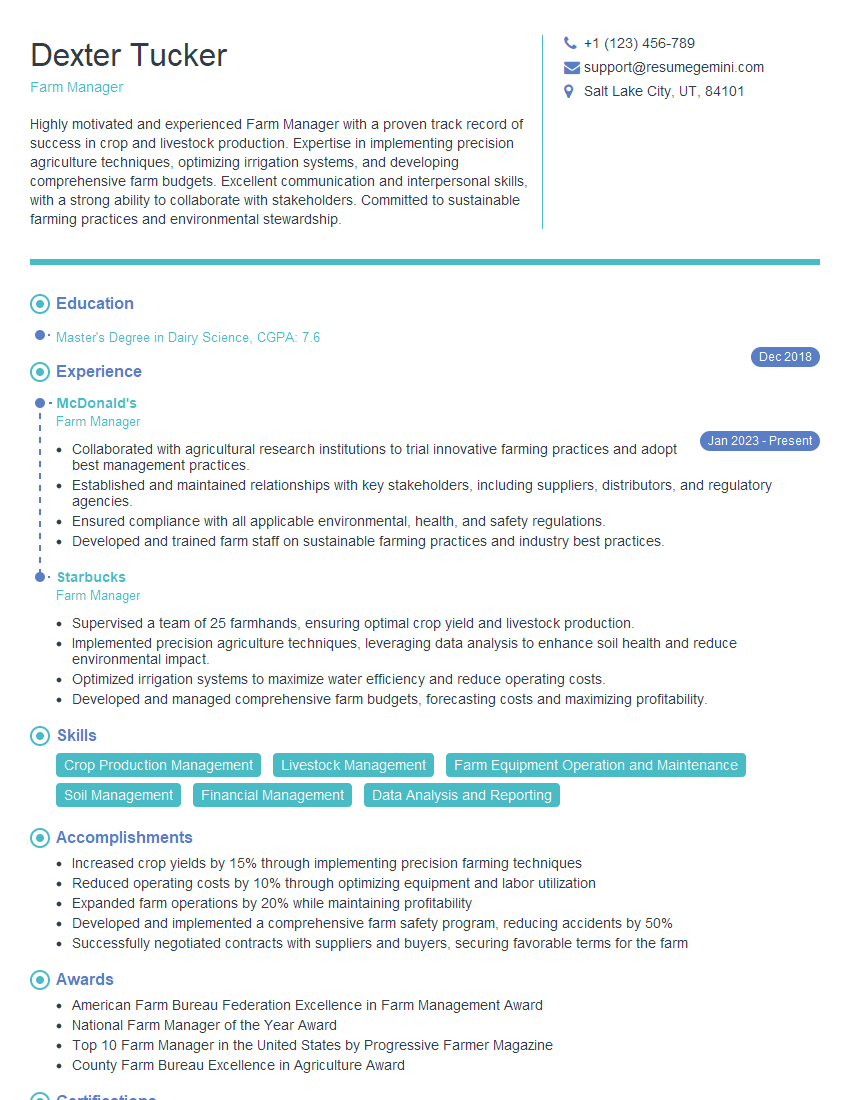
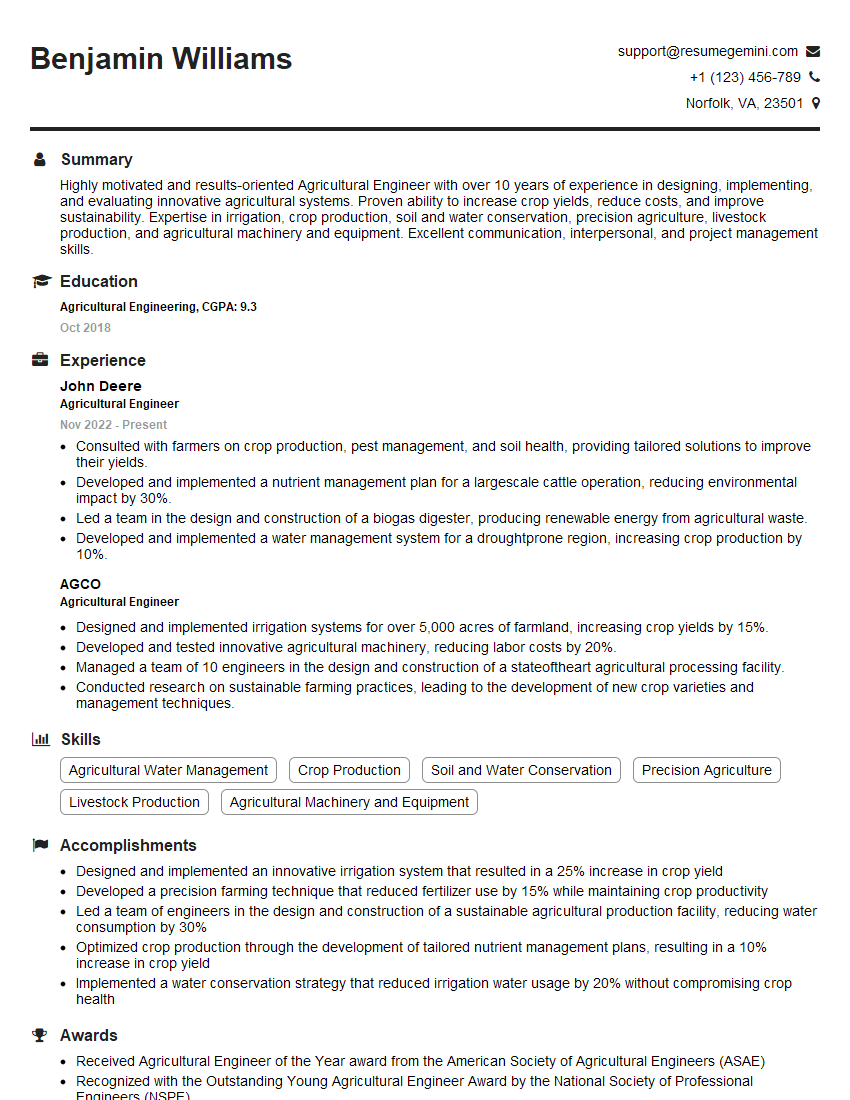
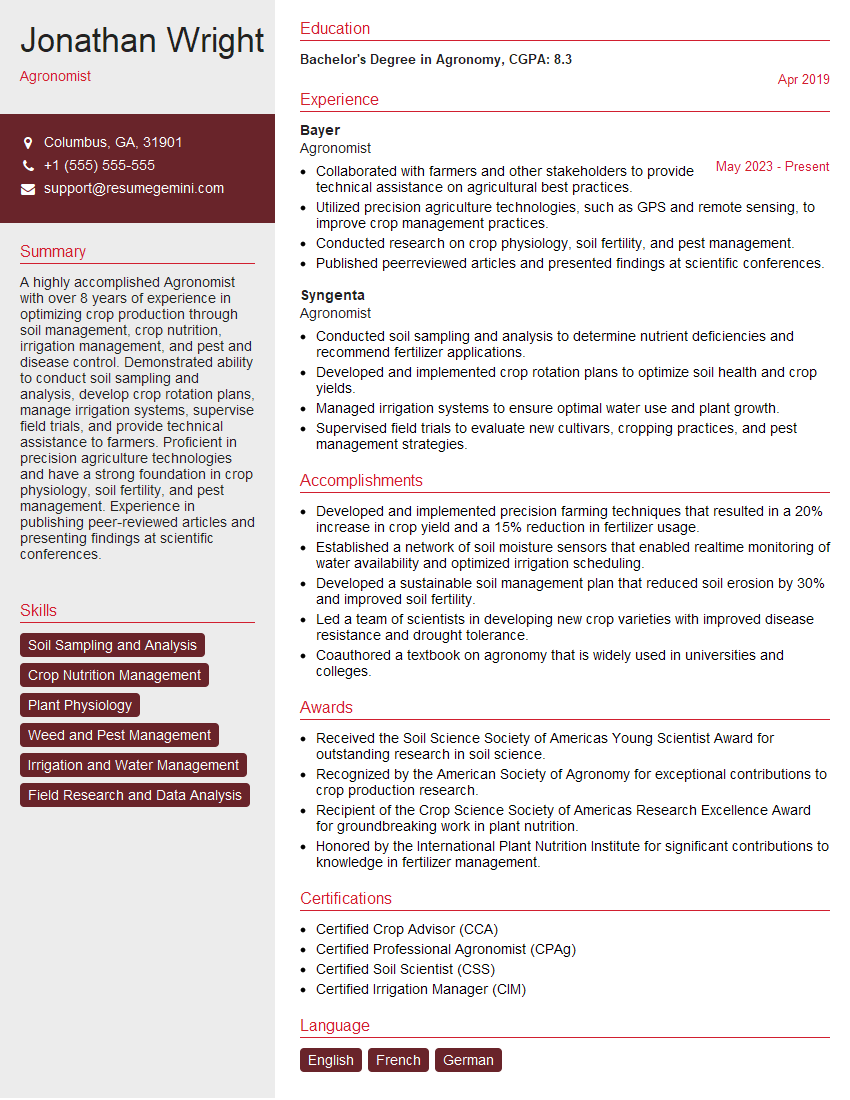
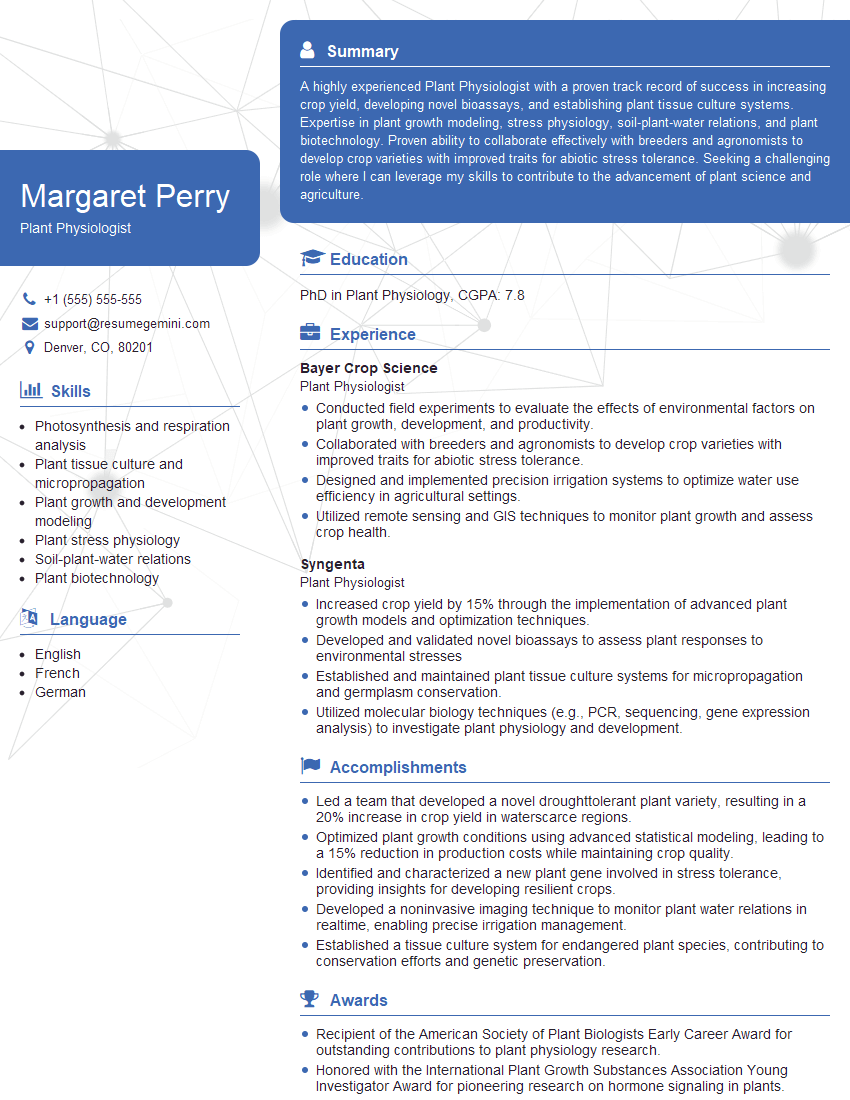
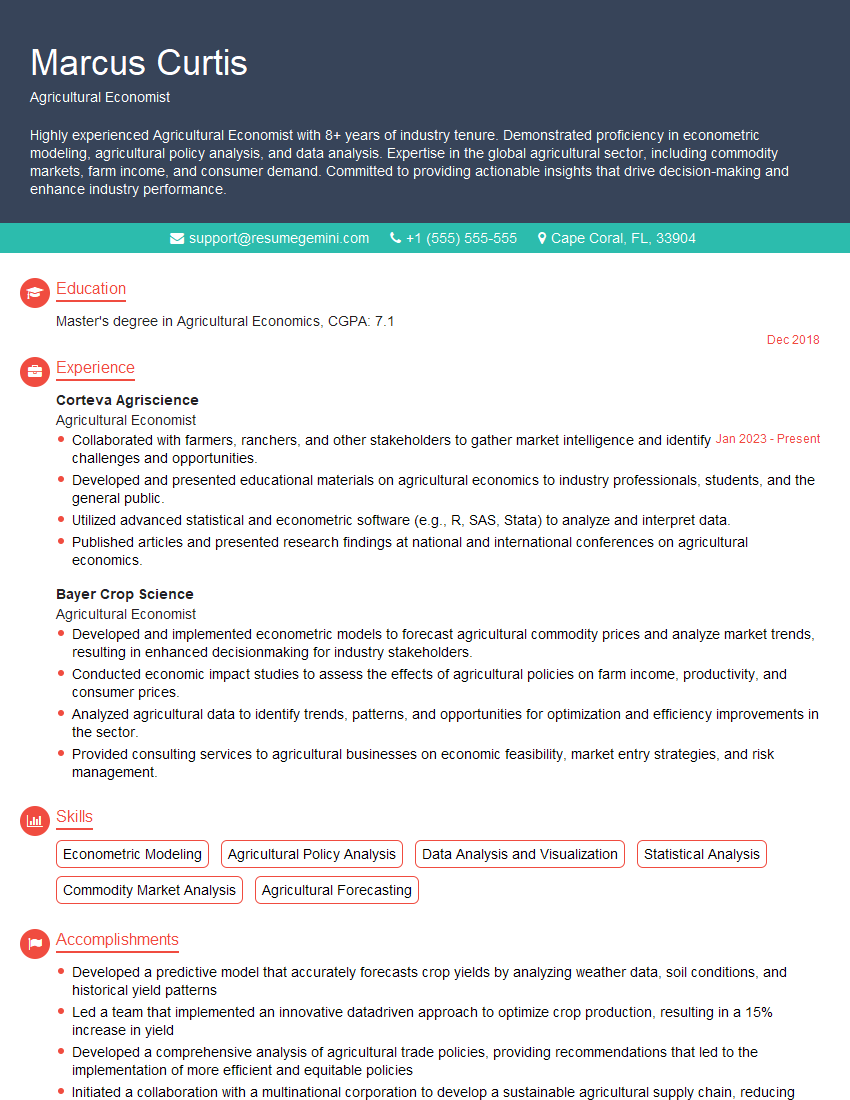
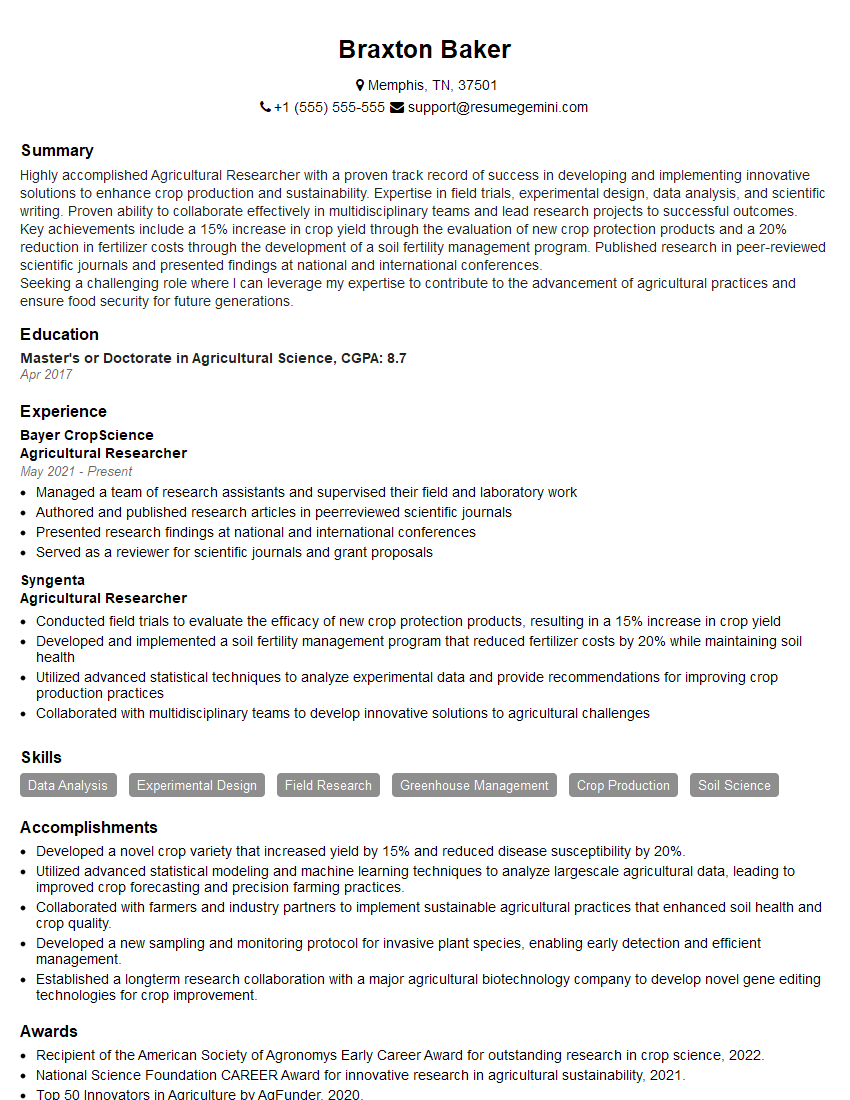
Mastering Crop Yield Optimization is crucial for a successful career in agriculture, opening doors to exciting opportunities in research, technology, and management. A strong resume is your key to unlocking these opportunities. Creating an ATS-friendly resume is essential to ensure your application gets noticed by recruiters. ResumeGemini is a trusted resource to help you build a compelling and effective resume that highlights your skills and experience. Take advantage of the examples of resumes tailored to Crop Yield Optimization provided to craft a document that showcases your expertise and secures your next interview.

Explore more articles
Users Rating of Our Blogs
Share Your Experience
We value your feedback! Please rate our content and share your thoughts (optional).
What Readers Say About Our Blog
Very informative content, great job.
good