Unlock your full potential by mastering the most common Radiation Protection Management Systems interview questions. This blog offers a deep dive into the critical topics, ensuring you’re not only prepared to answer but to excel. With these insights, you’ll approach your interview with clarity and confidence.
Questions Asked in Radiation Protection Management Systems Interview
Q 1. Describe the ALARA principle and its application in radiation protection.
The ALARA principle, which stands for As Low As Reasonably Achievable, is a fundamental concept in radiation protection. It emphasizes that all exposures to ionizing radiation should be kept as far below regulatory limits as is reasonably achievable, taking into account economic and societal factors. It’s not about achieving zero radiation exposure, which is often impossible, but about minimizing exposure to the lowest practical level.
Application: ALARA is applied across all aspects of radiation work. For example, in a hospital using medical X-rays, ALARA might involve using the lowest possible radiation dose for a diagnostic image, optimizing imaging techniques, using appropriate shielding, and ensuring proper training for staff. In an industrial setting involving radioactive materials, ALARA would include using robotic handling systems, minimizing time spent near sources, and implementing robust safety procedures.
Imagine a scenario where a technician needs to work near a radiation source. Applying ALARA would mean using time optimization (minimize the time spent near the source), distance optimization (maximize the distance from the source), and shielding optimization (using appropriate lead shielding or other protective barriers).
Q 2. Explain the different types of radiation and their associated hazards.
Ionizing radiation is energy that can remove electrons from atoms, creating ions. This process can damage biological molecules and lead to health issues. There are several types:
- Alpha particles: Large, heavy, positively charged particles. They have a short range in air and are easily stopped by a sheet of paper or skin. However, if ingested or inhaled, they can be very harmful.
- Beta particles: Lighter, negatively charged particles. They penetrate further than alpha particles, requiring thicker shielding like aluminum or plastic. They can also be hazardous if ingested or inhaled.
- Gamma rays: High-energy electromagnetic radiation. They penetrate deeply into matter and require dense shielding like lead or concrete. They are very dangerous as they can easily damage internal organs.
- X-rays: Similar to gamma rays, they are high-energy electromagnetic radiation, but produced by electron transitions within atoms. They are commonly used in medical imaging and industrial applications.
- Neutrons: Neutral particles that are highly penetrating and require specialized shielding materials like hydrogenous materials (water, polyethylene).
Associated Hazards: The hazards depend on the type and energy of the radiation, the dose received, and the duration of exposure. Potential hazards include radiation burns, acute radiation sickness, long-term health effects like cancer, and genetic damage.
Q 3. What are the key components of a comprehensive Radiation Protection Management System?
A comprehensive Radiation Protection Management System (RPMS) has several key components:
- Radiation Safety Officer (RSO): Responsible for overseeing the RPMS and ensuring compliance.
- Radiation Safety Plan: A detailed document outlining procedures and responsibilities for radiation safety.
- Radiation Surveys and Monitoring: Regular monitoring of radiation levels to identify and mitigate hazards.
- Personnel Monitoring: Tracking individual radiation doses using dosimeters.
- Emergency Preparedness and Response: Plans and procedures to handle radiation accidents or incidents.
- Training and Education: Ensuring all personnel working with radiation are adequately trained.
- Record Keeping: Maintaining accurate records of radiation levels, personnel doses, and safety procedures.
- Quality Assurance Program: Regular audits and inspections to confirm the effectiveness of the RPMS.
A strong RPMS is essential to protect workers and the public from the hazards of ionizing radiation.
Q 4. How do you perform a radiation survey and interpret the results?
A radiation survey involves using instruments to measure radiation levels in a specific area. The process typically involves:
- Planning: Identifying areas to survey, selecting appropriate instruments, and determining survey procedures.
- Measurement: Using instruments like Geiger counters, ionization chambers, or survey meters to measure radiation levels.
- Data Recording: Recording the measurements with location information, date, and time.
- Interpretation: Analyzing the data to determine whether radiation levels are within acceptable limits and identifying potential hazards.
Instrument Selection: The choice of instrument depends on the type and energy of radiation being measured. For instance, a Geiger-Müller counter is suitable for detecting beta and gamma radiation, while a neutron survey meter is used for neutron detection.
Interpreting Results: Results are compared to regulatory limits and safety guidelines. High readings necessitate investigation to identify the source and implement corrective actions. For example, elevated readings near an X-ray machine might indicate a malfunction or need for improved shielding.
Q 5. What are the regulatory requirements for radiation safety in your area?
Regulatory requirements for radiation safety vary by location. However, common elements generally include:
- Licensing and registration: Organizations using radioactive materials or operating radiation-producing devices typically require licenses or registrations.
- Dose limits: Regulatory bodies set limits on the amount of radiation exposure permitted to workers and the public.
- Safety standards: Regulations specify safety standards for radiation protection, including equipment design, facility design, operational procedures, and emergency preparedness.
- Reporting requirements: Incidents involving radiation exposure or spills must be reported to regulatory agencies.
- Inspections and audits: Regulatory agencies conduct regular inspections and audits to ensure compliance with radiation safety regulations.
Specific regulations vary by country and jurisdiction. In the US, for instance, the Nuclear Regulatory Commission (NRC) and state agencies oversee radiation safety. It’s crucial to be aware of and comply with the regulations applicable in your specific area.
Q 6. Explain the concept of effective dose and equivalent dose.
Effective dose is a measure of the overall risk of harm from exposure to ionizing radiation, considering the different sensitivities of various organs and tissues to radiation. It combines the equivalent dose in each organ or tissue with a weighting factor that reflects the relative risk of cancer or other harmful effects from irradiation of that organ or tissue. It’s expressed in Sieverts (Sv).
Equivalent dose represents the biological effect of different types of radiation on a specific tissue or organ. It takes into account the type of radiation by using radiation weighting factors (wr) that reflect the different biological effectiveness of various types of radiation. For example, alpha particles have a higher weighting factor than gamma rays, reflecting their greater ability to cause damage at the cellular level. Equivalent dose is expressed in Sieverts (Sv).
In essence, equivalent dose considers the type of radiation, while effective dose considers both the type of radiation and the organ or tissue affected, thus providing a more comprehensive assessment of the overall health risk.
Q 7. Describe different types of radiation detection instruments and their applications.
Various radiation detection instruments are used depending on the type of radiation and the application. Here are some examples:
- Geiger-Müller (GM) counters: Detect beta and gamma radiation. They are portable, relatively inexpensive, and widely used for radiation surveys. They are good for detecting presence of radiation, but less accurate for precise measurements of dose.
- Ionization chambers: Measure the ionization produced by radiation. They offer more accurate dose measurements than GM counters but are often less portable and more expensive.
- Scintillation detectors: Detect various types of radiation, including alpha, beta, and gamma. They offer high sensitivity and are often used in more complex applications such as nuclear medicine.
- Proportional counters: Distinguish different types of radiation based on the amount of ionization produced. They are often used in research and specialized applications.
- Neutron detectors: Specifically designed to detect neutrons. Types include BF3 proportional counters and helium-3 detectors.
- Dosimeters: These are personal monitoring devices that measure the cumulative radiation dose received by an individual. They are worn by radiation workers to track their exposures.
The choice of instrument depends on factors such as the type and energy of radiation, the required accuracy, the portability needed, and the cost.
Q 8. How do you manage radioactive waste according to regulations?
Managing radioactive waste involves a multi-step process designed to minimize environmental and human health risks, strictly adhering to national and international regulations. This begins with proper segregation and classification of waste based on its radioactivity level (e.g., low-level, intermediate-level, high-level). Low-level waste, often contaminated clothing or tools, might be compacted and disposed of in designated landfills with specific lining and monitoring systems. Intermediate-level and high-level wastes, including spent nuclear fuel, require more complex treatments like vitrification (solidification into a glass matrix) and then long-term storage in specialized facilities – usually deep geological repositories for high-level waste – ensuring minimal leaching into the environment. Throughout the process, meticulous record-keeping and regular inspections are essential to demonstrate compliance and track the waste’s journey. For example, a hospital managing radioactive sources used in medical procedures would follow rigorous protocols for waste collection, packaging, and transportation to licensed disposal facilities, maintaining detailed logs throughout.
The regulations often mandate specific container types, labelling, and transportation methods to prevent accidental releases during handling and transport. Furthermore, ongoing monitoring of the disposal sites is crucial to detect any potential leakage or environmental contamination.
Q 9. What are the common sources of radiation exposure in a workplace?
Radiation exposure in the workplace can stem from various sources. Sealed sources, such as those used in industrial gauges or medical equipment, can expose workers if shielding fails or the source is damaged. Unsealed sources, including radioactive materials used in research or medical procedures, pose a higher risk of ingestion, inhalation, or skin contamination if proper safety protocols aren’t followed. X-ray machines and particle accelerators are also common sources, especially for healthcare and research personnel. Naturally occurring radioactive materials (NORM) in certain industries, like mining or oil extraction, can also contribute to workplace exposure. For instance, a technician working with an X-ray fluorescence spectrometer needs to be vigilant about proper shielding and distance from the source. Similarly, a researcher handling radioactive isotopes must employ appropriate containment and personal protective equipment (PPE).
- Sealed Sources: Gamma cameras, industrial gauges
- Unsealed Sources: Radioactive tracers in research, radiopharmaceuticals
- X-ray & Particle Accelerators: Medical imaging, research facilities
- Naturally Occurring Radioactive Materials (NORM): Mining, oil & gas extraction
Q 10. Explain the process of personnel dosimetry and interpretation of results.
Personnel dosimetry is the process of measuring the radiation dose received by individuals working in radiation environments. This is typically done using dosimeters, devices that measure radiation exposure. These can range from film badges (now largely replaced) to thermoluminescent dosimeters (TLDs) and electronic personal dosimeters (EPDs). TLDs store energy from radiation exposure and release it as light when heated, allowing for dose measurement. EPDs provide real-time readings and often allow for immediate feedback on accumulated dose.
The interpretation of dosimetry results is crucial. The reported dose is compared against regulatory limits, and any exceedances trigger investigations. These investigations could involve reviewing work practices, equipment performance, and environmental monitoring data to identify the cause of the higher-than-expected dose. For example, a consistently higher-than-average dose for a particular worker might indicate a problem with their work practices or a malfunction in the equipment they use. The results are typically recorded and stored for future reference, contributing to the radiation protection program’s overall effectiveness. Action levels are often predefined to trigger specific actions, such as additional training or further investigation.
Q 11. What are the emergency procedures in case of a radiation incident?
Emergency procedures for radiation incidents are designed to minimize exposure and mitigate consequences. These procedures are highly site-specific and should be tailored to the type of radioactive materials and processes involved. They typically include immediate actions like evacuation of personnel from the affected area, establishing a control zone to limit access, and contacting emergency responders. Detailed site-specific plans should be in place and regularly practiced through drills. These plans will specify roles and responsibilities, communication channels, and procedures for decontamination of personnel and equipment. A key aspect includes the use of radiation detection instruments to assess the extent of the contamination or radiation release.
For example, in a scenario involving a spill of radioactive material, the emergency response team would first prioritize the safety of personnel by evacuating the area. Next, they would use radiation detection equipment to delineate the affected zone and then implement decontamination procedures to prevent further spread of contamination. Following the immediate response, a thorough investigation would take place to determine the cause of the incident, and preventive measures would be implemented to prevent future occurrences.
Q 12. How do you ensure compliance with radiation safety regulations?
Ensuring compliance with radiation safety regulations requires a multi-faceted approach that goes beyond simply following the rules. It involves a robust Radiation Protection Management System (RPMS) implementing a culture of safety at all levels. This starts with a comprehensive radiation safety program that includes written procedures, training programs, and emergency response plans. Regular internal audits and inspections are necessary to ensure all procedures are followed and equipment is functioning correctly. External audits by regulatory bodies are an essential part of the process. Compliance also involves maintaining meticulous records of radiation sources, worker doses, and any incidents. Data analysis will reveal trends and assist in identifying potential weaknesses in the system. For example, a company may use a software system to track radiation exposure for each employee, automatically alerting management if anyone exceeds pre-defined thresholds.
Moreover, continuous improvement is crucial. This means regularly reviewing and updating the RPMS based on emerging best practices, lessons learned from incidents (even near misses), and advancements in technology. The commitment to compliance should come from the top management and be embraced by all staff.
Q 13. Describe the different types of radiation shielding materials and their effectiveness.
Radiation shielding materials are chosen based on the type and energy of the radiation they are designed to attenuate. Lead is a common choice for shielding against gamma rays and X-rays due to its high density, which reduces the probability of photons interacting with the material. Concrete is also effective for these types of radiation, and its availability and lower cost make it a preferred option for large-scale shielding structures. For neutron radiation, materials rich in hydrogen, such as water and polyethylene, are effective because they slow down neutrons through elastic scattering. Boron, either in its elemental form or incorporated in materials, is crucial for absorbing thermal neutrons. The effectiveness of any shielding material is usually expressed in terms of half-value layer (HVL), which is the thickness of the material required to reduce the radiation intensity by half. The optimal shielding design often involves combining different materials to efficiently attenuate all types of radiation present.
- Lead: Effective against gamma and X-rays
- Concrete: Cost-effective for gamma and X-rays
- Water & Polyethylene: Effective against neutrons
- Boron: Absorbs thermal neutrons
Q 14. What are the limitations of various radiation detection instruments?
Radiation detection instruments, while crucial for radiation protection, have limitations. Geiger-Müller counters, for example, are highly sensitive to beta and gamma radiation but don’t provide accurate energy measurements, making it challenging to determine the type of radiation or its intensity. Scintillation detectors offer better energy resolution but can be more complex to operate and calibrate. Proportional counters excel in detecting low-energy radiation but have a limited range. Many instruments may be sensitive to environmental factors such as temperature and humidity, potentially affecting their accuracy. The detection efficiency also varies depending on the type of radiation and the instrument’s design. For instance, a Geiger counter might easily miss a low-energy beta particle while a scintillation detector would be better at detecting it, but both might be challenged when confronted with a high-energy gamma-ray source. Calibration and regular maintenance are critical to ensure accurate measurements and prevent false readings.
Q 15. How do you assess and mitigate radiation risks in a specific work environment?
Assessing and mitigating radiation risks in a work environment involves a systematic approach. It begins with a thorough radiation survey to identify sources and levels of radiation present. This might involve using various instruments like Geiger counters, survey meters, and dosimeters, depending on the type of radiation and the energy levels involved. We then determine the potential exposure pathways – how workers might be exposed, whether through direct radiation, inhalation of radioactive materials, or skin contamination.
Next, we establish control measures based on the ALARA principle (As Low As Reasonably Achievable). This includes engineering controls like shielding (lead, concrete), distance (maximizing the distance between the worker and the source), and time (limiting the duration of exposure). Administrative controls include work procedures, access restrictions, and the use of warning signs. Finally, we implement personal protective equipment (PPE) such as lead aprons, gloves, and respirators as a last line of defense. Regular monitoring of worker dose and environmental levels ensures the effectiveness of our strategies.
Example: In a hospital’s radiology department, we’d assess the radiation levels from X-ray machines and implement shielding in walls, use lead aprons for staff and patients, optimize exposure techniques to minimize radiation doses, and establish strict protocols for handling radioactive materials. We would also regularly calibrate and maintain all monitoring equipment.
Career Expert Tips:
- Ace those interviews! Prepare effectively by reviewing the Top 50 Most Common Interview Questions on ResumeGemini.
- Navigate your job search with confidence! Explore a wide range of Career Tips on ResumeGemini. Learn about common challenges and recommendations to overcome them.
- Craft the perfect resume! Master the Art of Resume Writing with ResumeGemini’s guide. Showcase your unique qualifications and achievements effectively.
- Don’t miss out on holiday savings! Build your dream resume with ResumeGemini’s ATS optimized templates.
Q 16. Explain the importance of radiation safety training for personnel.
Radiation safety training is paramount for personnel working with ionizing radiation. Untrained individuals risk significant health consequences. Effective training covers the fundamental principles of radiation physics, biology, and protection. It must be tailored to the specific work tasks, detailing potential hazards and appropriate safety measures. Training should include hands-on practice with radiation detection instruments and the safe handling of radioactive materials.
The training should also cover emergency procedures, incident reporting protocols, and the proper use of personal protective equipment (PPE). Regular refresher courses and competency assessments ensure that personnel remain proficient and aware of the latest safety practices. This is not just about compliance; it’s about building a safety-conscious culture where workers feel empowered to identify and report potential hazards.
Example: Training for a nuclear medicine technician would involve detailed instruction on handling radioactive pharmaceuticals, using radiation shielding, and following strict protocols for disposal of waste. They would also undergo extensive training on the use and calibration of radiation detection equipment.
Q 17. How do you develop and implement a radiation safety program?
Developing and implementing a robust radiation safety program involves several key steps. It begins with a comprehensive assessment of radiation sources and potential exposure pathways within the facility. We then identify the relevant regulations and standards applicable to the specific work environment. A written radiation safety program, approved by management, is essential. This program outlines the roles and responsibilities of personnel, detailed safety procedures, and emergency response plans.
The program should clearly define exposure limits and monitoring requirements. It needs to include a system for tracking worker doses and performing regular audits and inspections. Training programs, as mentioned earlier, are a critical component. Effective communication channels to disseminate safety information are equally important. The program should also define procedures for investigating and reporting incidents, and maintaining radiation monitoring equipment.
Example: A research laboratory working with radioactive isotopes needs a comprehensive program outlining protocols for handling the isotopes, waste management procedures, and the use of specialized equipment like fume hoods and glove boxes. Regular audits ensure compliance with these protocols and ongoing effectiveness.
Q 18. How do you investigate and report radiation incidents or accidents?
Investigating and reporting radiation incidents or accidents requires a swift and systematic approach. The immediate priority is to ensure the safety of all personnel. Once the situation is secured, a detailed investigation begins. This involves collecting data from various sources: witness statements, radiation monitoring equipment readings, and analysis of the events leading up to the incident.
The investigation aims to identify the root cause of the incident, determine the extent of radiation exposure to personnel and the environment, and evaluate the effectiveness of existing safety measures. A comprehensive report documenting the incident, its causes, consequences, and corrective actions is prepared and submitted to relevant regulatory authorities. This report helps improve safety procedures and prevents similar incidents from occurring in the future.
Example: If a spill of radioactive material occurs, the immediate response would involve evacuating the area, containing the spill, and monitoring radiation levels. The subsequent investigation would analyze how the spill happened, the levels of contamination, the effectiveness of the emergency response, and any necessary changes to procedures or training.
Q 19. Describe your experience with radiation safety audits and inspections.
My experience with radiation safety audits and inspections includes both conducting them and undergoing them in various settings. These audits are not simply compliance exercises; they are opportunities to identify areas for improvement in a radiation protection program. A thorough audit reviews all aspects of the program – documentation, procedures, training, equipment calibration, and monitoring data.
Inspections involve a visual examination of the work environment, verification of safety procedures, and assessment of the effectiveness of control measures. I’ve been involved in audits at hospitals, research facilities, and industrial settings. The findings are documented in a report detailing any non-compliances or areas needing improvement. The process leads to the development of corrective action plans. I approach audits with a focus on collaborative problem-solving, working with the facility to ensure they maintain a high standard of radiation safety.
Example: In a recent audit of a nuclear power plant, we identified a minor discrepancy in record-keeping related to radiation monitoring. While not a significant safety issue, this highlighted the need for improved training and procedures for record management. We worked with the plant to develop a corrective action plan to address this issue.
Q 20. What is your experience with radiation monitoring equipment calibration and maintenance?
Calibration and maintenance of radiation monitoring equipment are critical to ensuring accurate and reliable measurements. Regular calibration, traceable to national standards, guarantees the accuracy of dosimeters, survey meters, and other instruments. This involves comparing the instrument’s readings to known radiation sources. Without proper calibration, dose measurements might be inaccurate, potentially leading to underestimation or overestimation of radiation exposure.
Maintenance involves regular checks of the instruments’ functionality, including battery checks, detector integrity, and the overall condition of the equipment. We use standardized procedures for calibration and maintenance, and maintain detailed records of all activities. This ensures the long-term reliability of the equipment and the quality of radiation monitoring data.
Example: We routinely calibrate our Geiger counters using certified radiation sources. We also maintain a detailed log of these calibrations, including the date, results, and any necessary adjustments to the equipment. This ensures that the data collected using these instruments is accurate and reliable.
Q 21. How do you communicate radiation safety information effectively to workers?
Effective communication is the cornerstone of a successful radiation safety program. It’s not enough to simply post safety rules; workers need to understand the ‘why’ behind the procedures. We use various methods to communicate information effectively – regular safety meetings, training sessions, written materials, and visual aids (posters, diagrams).
The communication should be clear, concise, and tailored to the audience’s level of understanding, avoiding jargon whenever possible. Using real-world examples and case studies enhances engagement and understanding. We also encourage open communication – workers should feel comfortable asking questions and reporting concerns without fear of reprisal. Regular feedback mechanisms, such as surveys or informal discussions, allow for evaluating the effectiveness of the communication strategies.
Example: Instead of simply stating ‘wear lead aprons during X-ray procedures,’ we explain the biological effects of radiation and demonstrate how lead aprons reduce exposure, showing visuals of the protection they provide. This makes the reason for the procedure clearer and increases compliance.
Q 22. Explain the role of the Radiation Safety Officer in an organization.
The Radiation Safety Officer (RSO) is the cornerstone of a robust radiation protection management system. Their role is multifaceted, encompassing the responsibility for ensuring the safety of all personnel and the environment from the harmful effects of ionizing radiation. This involves developing and implementing radiation safety programs, providing training, conducting radiation surveys, managing radiation exposure records, and ensuring compliance with all applicable regulations and standards.
- Program Development and Implementation: The RSO designs and implements comprehensive radiation safety programs tailored to the specific needs and hazards of the organization. This includes establishing procedures for handling radioactive materials, using radiation-producing equipment, and responding to radiation emergencies.
- Training and Education: They deliver regular training to staff on radiation safety principles, practices, and emergency procedures, ensuring everyone understands the risks and how to mitigate them. This might range from basic awareness training for all staff to specialized training for individuals working directly with radiation sources.
- Radiation Surveys and Monitoring: The RSO conducts regular surveys to measure radiation levels in work areas, ensuring they remain within acceptable limits. They also monitor the performance of radiation safety equipment and ensure its proper calibration.
- Compliance and Reporting: A critical aspect is ensuring compliance with all relevant regulations and reporting requirements. This includes submitting reports to regulatory bodies, maintaining accurate records, and responding to audits.
- Emergency Response: The RSO plays a vital role in developing and practicing emergency response plans for radiation incidents, ensuring a coordinated and effective response to minimize potential harm.
Q 23. How do you manage radiation exposure records and reports?
Managing radiation exposure records and reports involves meticulous record-keeping and adherence to strict protocols. This is crucial for demonstrating compliance, tracking individual exposure, and identifying any potential trends or areas needing improvement.
- Individual Monitoring: Personnel dosimeters (e.g., thermoluminescent dosimeters or optically stimulated luminescence dosimeters) are used to track individual exposure. The RSO oversees the distribution, collection, and processing of these dosimeters, ensuring accurate readings.
- Record Keeping: All radiation exposure data, including dosimeter readings, survey results, and any other relevant information, is meticulously documented and maintained in a secure database. This often includes software specifically designed for radiation safety management.
- Reporting: Regular reports summarizing individual and collective doses are generated, typically on a monthly or annual basis. These reports are used for internal monitoring and compliance reporting to regulatory agencies. Any exposures exceeding regulatory limits are immediately investigated.
- Data Analysis: The RSO analyzes the collected data to identify trends and potential areas for improvement in radiation safety practices. This data-driven approach allows for proactive measures to reduce exposures and enhance safety.
- Data Security: Protecting the confidentiality and integrity of radiation exposure records is paramount. Strict access controls and data security measures are employed to ensure compliance with data protection regulations.
Q 24. What are your experiences with different radiation safety software or systems?
Throughout my career, I’ve worked with various radiation safety software and systems, each with its strengths and weaknesses. Some notable examples include:
- Radiation Safety Information System (RSIS): This type of software typically manages personnel dosimetry data, including assigning dosimeters, recording readings, and generating reports. I’ve used several RSIS platforms, including [mention specific software if comfortable, e.g., ‘RADOS’ or ‘a proprietary system used by my previous employer’]. Features like automated reporting and dose aggregation are key advantages.
- Survey Meter Data Management Software: Many software packages are designed to record and manage data from radiation survey meters. These help track survey locations, readings, and dates, ensuring comprehensive documentation. This kind of system is particularly useful when you have multiple survey meters in use across a large facility.
- Emergency Response Software: Some systems support emergency response planning and coordination. These systems can aid in response planning, personnel tracking, and communication during radiation incidents.
Choosing the right software is crucial. Key considerations include the software’s ability to handle the specific needs of the organization, its compliance with relevant regulations, and its user-friendliness.
Q 25. Describe a situation where you had to solve a complex radiation safety problem.
In a previous role, we faced a complex situation involving a suspected leak of a radioactive source in a research laboratory. A higher-than-normal radiation reading was detected during a routine survey. Here’s how we addressed the issue:
- Immediate Actions: We immediately cordoned off the area to restrict access and prevent further potential exposure. Personnel were evacuated from the immediate vicinity.
- Thorough Investigation: We conducted a thorough investigation using specialized radiation detection equipment to pinpoint the source of the leak. This involved detailed surveys of the laboratory, including air sampling and surface contamination checks.
- Source Identification and Containment: Once the source was identified (a damaged sealed source), we implemented procedures for its safe containment and retrieval. This involved using specialized handling equipment and following strict protocols to minimize risk.
- Decontamination: Following source containment, we initiated a thorough decontamination process of the affected area. This involved cleaning and monitoring until radiation levels returned to background.
- Root Cause Analysis: A thorough investigation was conducted to determine the root cause of the leak. It was determined to be due to accidental damage during transportation. This led to changes in handling procedures.
- Reporting and Corrective Actions: The incident was fully documented and reported to the appropriate regulatory bodies. Corrective actions, including improved training and updated handling protocols, were implemented to prevent future occurrences.
This incident highlighted the importance of meticulous record-keeping, rigorous training, and robust emergency response protocols in maintaining radiation safety.
Q 26. What are the differences between internal and external radiation exposure?
The distinction between internal and external radiation exposure is crucial in radiation protection. Both pose significant health risks but require different approaches to mitigation.
- External Exposure: This occurs when the body is exposed to radiation sources from outside the body. Examples include exposure to gamma rays from a radioactive source, X-rays from a medical device, or beta particles emitted from a contaminated surface. Shielding (e.g., lead shielding) and distance are primary protective measures.
- Internal Exposure: This occurs when radioactive materials enter the body through inhalation, ingestion, or absorption through the skin. This can happen via accidental intake, ingestion of contaminated food, or wounds. Internal exposure poses a more serious risk because the radiation source is inside the body, irradiating tissues directly. The type of radiation, the quantity and chemical form of the radioactive material, and its metabolic behavior in the body all affect the risk.
Understanding this distinction is key to effective radiation protection. Mitigation strategies are tailored to the specific type of exposure. For example, air purification systems may be used to minimize the risk of internal exposure to airborne radioactive materials, whereas lead aprons would be used to reduce external exposure to X-rays.
Q 27. How do you ensure the accuracy and reliability of radiation measurements?
Ensuring the accuracy and reliability of radiation measurements is paramount for effective radiation protection. This involves a multi-pronged approach:
- Calibration: All radiation detection instruments must be regularly calibrated against traceable standards. This ensures the instruments are providing accurate readings. Calibration schedules and procedures should be well defined and rigorously followed.
- Quality Control: Regular quality control checks on instruments are critical to identify potential drift or malfunctions. This might include using test sources of known activity to verify instrument performance.
- Instrument Selection: The appropriate instruments must be selected for the specific type and energy of radiation being measured. Using the wrong instrument will yield inaccurate results.
- Proper Measurement Techniques: Following established measurement techniques is essential. This includes proper instrument handling, appropriate measurement locations, and recording of environmental conditions that might affect readings.
- Data Validation: Radiation measurement data should be reviewed and validated before use. This includes checking for outliers and inconsistencies and ensuring the data is consistent with other information.
- Instrument Maintenance: Proper maintenance of radiation detection equipment helps extend their life and maintain accuracy. This includes cleaning, regular checks, and prompt repair of any malfunctions.
Q 28. Describe your understanding of the legal and ethical considerations related to radiation safety.
Radiation safety is governed by a complex interplay of legal and ethical considerations. Compliance with regulations is mandatory, while ethical principles guide responsible practices.
- Legal Considerations: Regulations vary by jurisdiction but generally aim to protect workers, the public, and the environment from the harmful effects of ionizing radiation. These regulations often specify dose limits, record-keeping requirements, licensing procedures, and emergency response protocols. Examples include national and international standards like the International Atomic Energy Agency (IAEA) Basic Safety Standards.
- Ethical Considerations: Beyond legal requirements, ethical principles guide responsible radiation practices. These principles include:
- ALARA (As Low As Reasonably Achievable): This fundamental principle emphasizes the importance of keeping radiation exposure as low as possible, while considering economic and social factors.
- Transparency and Accountability: Open communication about radiation risks and transparency in radiation protection practices are essential. The RSO has a responsibility to communicate effectively and honestly with all stakeholders.
- Protecting Vulnerable Populations: Special care is needed to protect vulnerable populations, such as pregnant women and children, from the effects of radiation.
A strong ethical framework complements legal compliance, fostering a culture of safety and responsible radiation management.
Key Topics to Learn for Radiation Protection Management Systems Interview
- Radiation Safety Principles: Understanding fundamental radiation physics, types of ionizing radiation, and their biological effects. This forms the bedrock of all radiation protection practices.
- Regulatory Compliance: Familiarity with national and international regulations (e.g., NRC, IAEA) governing radiation safety and the implementation of ALARA principles (As Low As Reasonably Achievable).
- Radiation Monitoring and Measurement: Practical knowledge of various radiation detection and measurement techniques, including instrument calibration and data interpretation.
- Dosimetry and Personnel Monitoring: Understanding the principles of personnel dosimetry, record-keeping, and the interpretation of dosimetry results to ensure worker safety.
- Radiation Protection Programs: Developing, implementing, and managing comprehensive radiation protection programs, including emergency response planning.
- Risk Assessment and Management: Conducting thorough risk assessments to identify hazards, evaluate risks, and implement effective control measures to minimize radiation exposure.
- Waste Management: Safe handling, storage, and disposal of radioactive waste in accordance with regulations and best practices.
- Training and Communication: Developing and delivering effective training programs for radiation workers and communicating radiation safety information clearly and concisely.
- Practical Application: Discuss scenarios where you’ve applied these principles, such as incident investigation, regulatory inspections, or program development. Be prepared to explain your problem-solving approaches.
- Advanced Topics (for senior roles): Consider exploring areas like radiation shielding design, optimization of radiation protection practices, and the application of advanced modeling techniques for risk assessment.
Next Steps
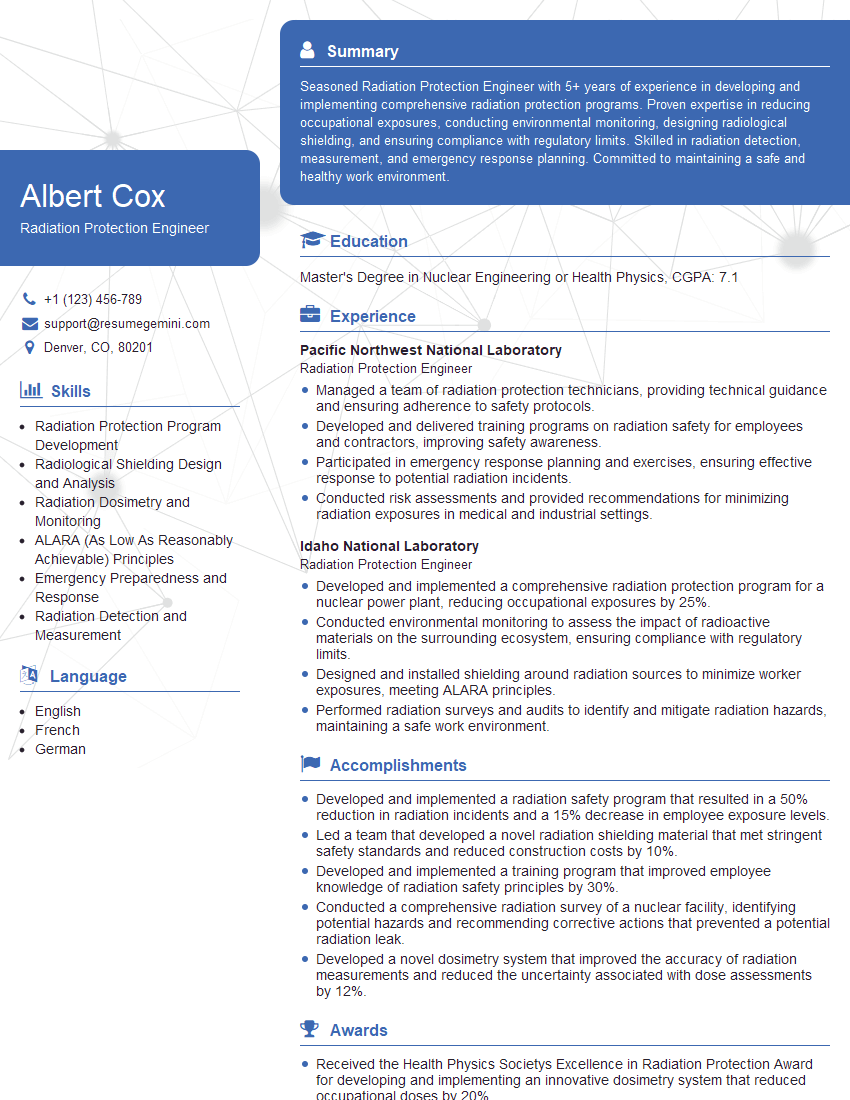
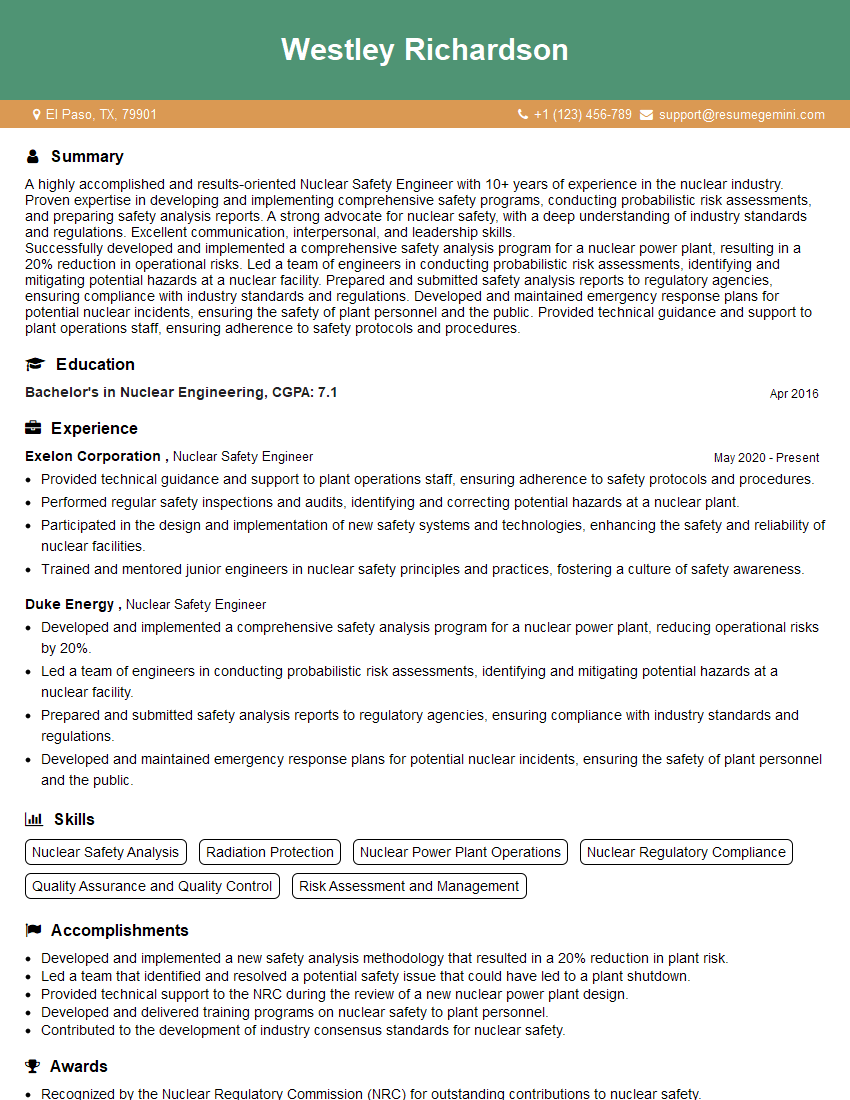
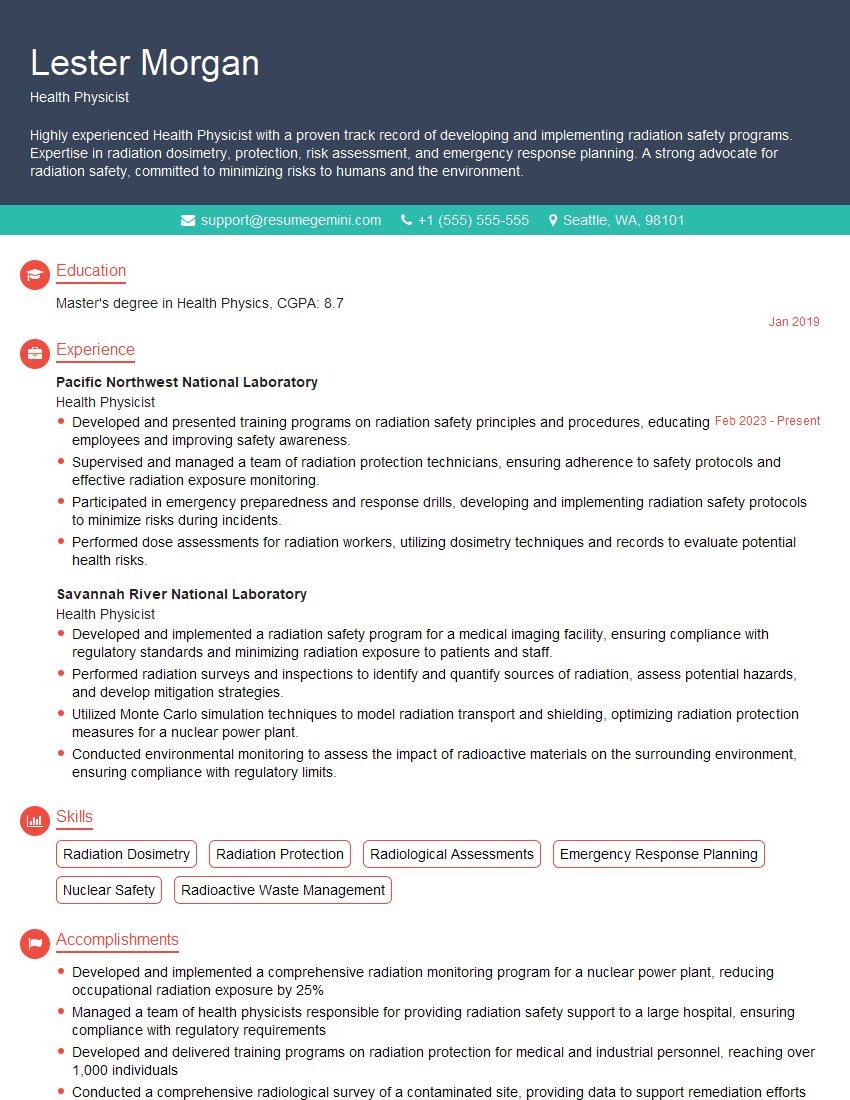
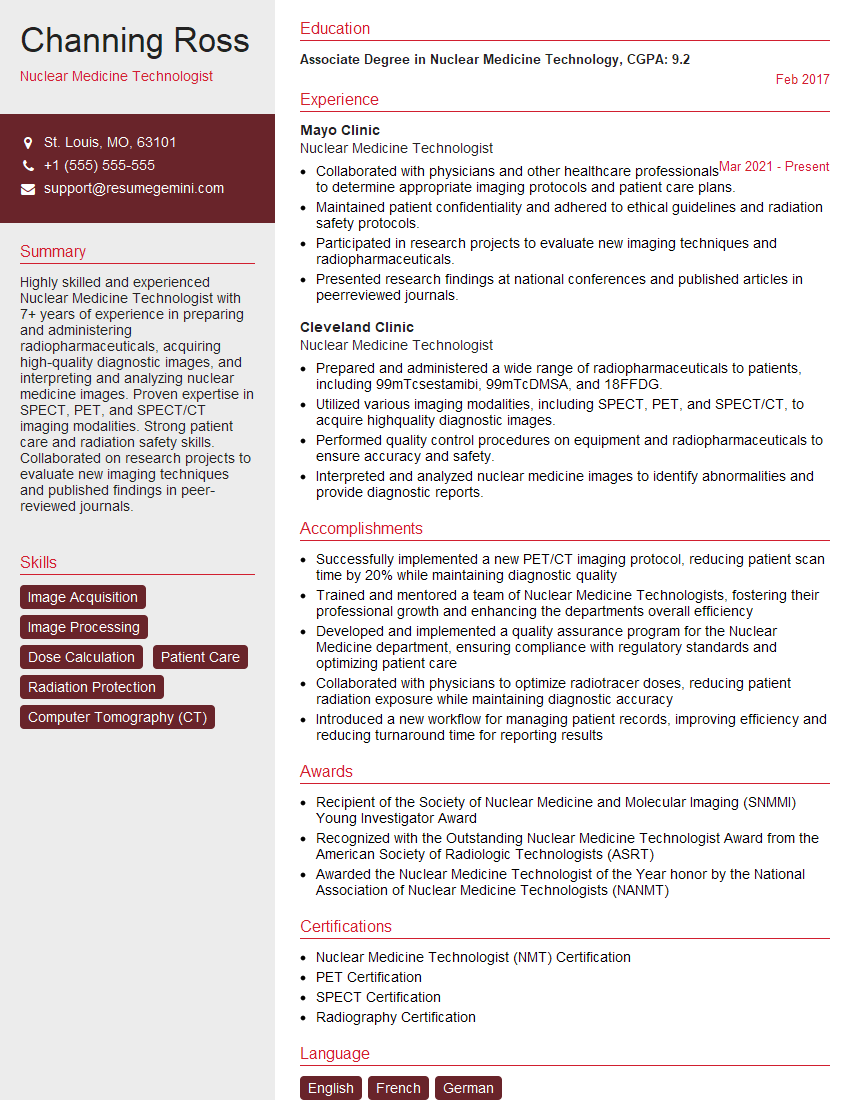
Mastering Radiation Protection Management Systems is crucial for career advancement in this vital field. A strong understanding of these principles opens doors to leadership roles and positions of greater responsibility. To maximize your job prospects, it’s essential to create a compelling and ATS-friendly resume that highlights your skills and experience effectively. ResumeGemini is a trusted resource that can help you build a professional resume that showcases your expertise. ResumeGemini provides examples of resumes tailored to Radiation Protection Management Systems, giving you a head start in crafting a document that truly represents your qualifications.

Explore more articles
Users Rating of Our Blogs
Share Your Experience
We value your feedback! Please rate our content and share your thoughts (optional).
What Readers Say About Our Blog
Very informative content, great job.
good