Feeling uncertain about what to expect in your upcoming interview? We’ve got you covered! This blog highlights the most important Continuous Learning and Self-Improvement interview questions and provides actionable advice to help you stand out as the ideal candidate. Let’s pave the way for your success.
Questions Asked in Continuous Learning and Self-Improvement Interview
Q 1. Describe your approach to identifying personal learning needs.
Identifying personal learning needs is a continuous process that involves a combination of self-reflection, feedback analysis, and goal setting. It’s not a one-time event, but rather a cycle of assessment and adjustment.
- Self-Assessment: I regularly reflect on my performance, identifying areas where I excel and areas needing improvement. This might involve journaling, reviewing past projects, or using self-assessment tools. For example, I might analyze my performance reviews to pinpoint skill gaps.
- Feedback Analysis: I actively solicit feedback from colleagues, mentors, and supervisors. This feedback, whether positive or constructive, offers valuable insights into my strengths and weaknesses. I look for patterns in feedback to highlight consistent areas for growth.
- Goal Setting: Based on self-assessment and feedback, I define specific, measurable, achievable, relevant, and time-bound (SMART) learning goals. For example, instead of saying ‘improve communication skills’, a SMART goal would be ‘Improve presentation skills by delivering two effective presentations to senior management by the end of the quarter’.
- Skill Gap Analysis: I compare my current skillset to the skills required for my current role and future aspirations. This helps me pinpoint areas where upskilling or reskilling is needed. Tools like competency models or skill matrices can facilitate this process.
This multifaceted approach ensures that my learning aligns with my professional development goals and addresses areas for improvement, leading to continuous growth.
Q 2. How do you prioritize learning objectives when faced with multiple competing demands?
Prioritizing learning objectives with competing demands requires a strategic approach focusing on impact and urgency. I employ the Eisenhower Matrix (urgent/important) to categorize tasks and learning objectives.
- Urgent and Important: These are immediate priorities that directly impact critical projects or deadlines. Learning objectives within this category, such as mastering a specific software used in an upcoming project, take precedence.
- Important but Not Urgent: These are long-term goals vital for career progression but not immediately time-sensitive. These are scheduled into my learning plan but may be tackled in stages, like acquiring a new programming language over several months.
- Urgent but Not Important: These are often distractions. I delegate these tasks where possible or streamline them to free up time for more important activities. Learning in this category would be avoided unless directly supportive of higher-priority tasks.
- Neither Urgent nor Important: These are time-wasters. I eliminate or postpone these activities to maximize my focus on high-impact learning objectives.
Furthermore, I regularly review my priorities, adapting my learning plan as new demands arise. Flexibility is key to successful prioritization in a dynamic environment.
Q 3. What learning methods have you found most effective, and why?
I utilize a variety of learning methods, each tailored to the specific learning objective. My most effective methods include:
- Active Recall: Testing myself regularly on the material I’m learning, using flashcards, practice questions, or teaching the concept to someone else. This technique forces me to retrieve information from memory, strengthening retention.
- Spaced Repetition: Reviewing material at increasing intervals. This method leverages the forgetting curve to optimize learning efficiency and long-term retention.
- Project-Based Learning: Applying new knowledge through practical projects allows me to solidify understanding and develop practical skills. This is particularly effective for technical skills.
- Mentorship and Collaboration: Learning from experienced individuals provides valuable insights and accelerates skill development. Discussing concepts with peers helps to solidify understanding and identify blind spots.
- Online Courses and Workshops: Structured learning platforms offer focused learning opportunities. I choose courses based on my learning style and the credibility of the provider.
The effectiveness of each method depends on the context. For theoretical concepts, active recall and spaced repetition are highly valuable, while project-based learning is crucial for practical skills.
Q 4. How do you measure the effectiveness of your learning strategies?
Measuring the effectiveness of my learning strategies involves a multifaceted approach focusing on both quantitative and qualitative measures:
- Performance Improvement: I track improvements in specific metrics relevant to the learning objective. For example, if I’m learning project management, I might track the number of projects completed on time and within budget.
- Knowledge Assessment: I use tests, quizzes, or simulations to assess my understanding of the subject matter. This helps me identify areas where further learning is needed.
- Skill Application: I seek opportunities to apply new skills in real-world scenarios and observe the outcomes. This allows me to see how well the learned skills translate to practice.
- Feedback Collection: I actively solicit feedback from colleagues, supervisors, and mentors to get an external perspective on my progress and areas for improvement.
- Self-Reflection: Regular journaling and reflection on my learning experiences provide valuable insights into my learning process and what works best for me.
Combining these approaches gives a holistic view of my learning effectiveness, allowing for continuous improvement in my strategies.
Q 5. Give an example of a time you failed to meet a learning goal. What did you learn?
I once set a goal to learn a new programming language within three months to contribute to a specific project. While I dedicated significant time, I underestimated the complexity of the language and didn’t build in enough time for thorough practice and troubleshooting. As a result, I didn’t meet my initial deadline.
My learning from this experience was twofold:
- Realistic Goal Setting: I learned the importance of setting more realistic and achievable timelines, breaking down complex goals into smaller, manageable steps.
- Effective Time Management: I improved my time management skills, prioritizing focused practice sessions and allocating time for debugging and problem-solving.
This failure highlighted the necessity of meticulous planning and realistic assessment of time and effort needed for complex learning objectives.
Q 6. How do you stay current in your field?
Staying current in my field requires a proactive and multifaceted approach:
- Professional Networks: I actively participate in professional organizations, attending conferences, webinars, and workshops. This provides opportunities to learn about the latest advancements and connect with experts.
- Industry Publications: I subscribe to relevant journals, magazines, and online publications to stay informed about new research, technologies, and trends.
- Online Learning Platforms: I regularly explore online courses, webinars, and tutorials offered by reputable institutions and industry leaders. This allows for continuous learning and upskilling.
- Mentorship and Peer Learning: I maintain a strong professional network, engaging in discussions and knowledge sharing with peers and mentors. This fosters continuous learning and provides different perspectives.
- News and Blogs: I follow relevant industry news and blogs to stay abreast of emerging trends and breakthroughs.
This combination of formal and informal learning ensures that my knowledge base remains up-to-date and relevant to the ever-evolving landscape of my field.
Q 7. Explain your process for seeking feedback on your learning and development.
Seeking feedback is a crucial aspect of continuous learning. My process involves several steps:
- Targeted Feedback Requests: I explicitly ask for feedback on specific aspects of my work or learning process, focusing on areas where I want to improve. This targeted approach ensures I receive relevant and actionable feedback.
- Diverse Feedback Sources: I seek feedback from multiple sources, including colleagues, supervisors, mentors, and even clients if applicable. This provides a more holistic and balanced perspective.
- 360-Degree Feedback: When appropriate, I utilize 360-degree feedback mechanisms to gather input from a wide range of individuals who interact with me, providing a comprehensive view of my strengths and weaknesses.
- Constructive Dialogue: I approach feedback sessions as opportunities for constructive dialogue, asking clarifying questions and expressing my willingness to learn and grow. I aim to create a safe and supportive environment for open communication.
- Actionable Implementation: After receiving feedback, I carefully analyze it, identifying actionable steps to address the areas for improvement. I create a plan to implement these changes and track my progress.
This structured approach ensures that feedback is not just passively received but actively used to refine my learning strategies and improve my overall performance.
Q 8. Describe a time you had to learn a new skill quickly. How did you approach it?
Learning a new skill quickly requires a strategic and focused approach. It’s not just about cramming information, but about efficient absorption and practical application. One instance involved mastering a new data visualization library, D3.js, for a project with a tight deadline. My approach involved a multi-pronged strategy:
- Deconstruction: I broke down the learning into smaller, manageable chunks. Instead of trying to grasp everything at once, I focused on mastering core concepts like selectors, scales, and axes first.
- Active Learning: I didn’t just passively read tutorials. I actively coded along with examples, experimented with different parameters, and built small, incremental projects to solidify my understanding. I found that hands-on practice was far more effective than simply reading documentation.
- Resource Prioritization: I identified the most reputable and concise resources – official documentation, well-regarded tutorials, and example code repositories – to avoid information overload. I prioritized quality over quantity.
- Targeted Practice: I focused my practice on the specific aspects of D3.js relevant to my project. This ensured that my learning directly addressed the project’s needs.
- Seeking Feedback: I sought feedback from colleagues on my early visualizations to identify areas for improvement and receive guidance on best practices.
This structured approach enabled me to become proficient enough in D3.js to complete the project successfully, within the given time constraints. The key was focused effort, iterative practice, and leveraging effective learning resources.
Q 9. How do you apply new knowledge and skills to your work?
Applying new knowledge and skills effectively involves deliberate integration into my workflow. It’s not enough to simply learn something; it needs to become a natural part of my process. For instance, after completing a course on advanced statistical modeling, I immediately applied the techniques to a project analyzing customer behavior. I:
- Identified Relevant Applications: I reviewed ongoing projects and identified opportunities to apply the new statistical methods, focusing on areas where they could significantly improve data analysis and insight generation.
- Incremental Integration: Instead of trying to overhaul existing processes, I started by applying the new techniques to a small, manageable portion of the project. This allowed me to test the efficacy of the new methods and identify any challenges before a full-scale implementation.
- Documentation and Sharing: I documented my approach, including the new statistical models and their application, to ensure the methods are reproducible and understandable by others on the team. I also shared my findings and the updated analytical approach with my team through presentations and written reports.
- Continuous Monitoring: I monitored the results and impact of using these advanced methods, making adjustments as needed based on the insights gained and feedback received.
This step-by-step approach ensures a smooth transition and minimizes disruption while maximizing the value of the newly acquired skills. Regularly reflecting on the effectiveness of the new skills allows for continuous refinement.
Q 10. What resources do you typically utilize for professional development?
My professional development strategy is multifaceted and relies on a combination of resources. I believe in a diverse approach to maximize learning efficacy.
- Online Courses (Coursera, edX, Udacity): These platforms offer structured learning paths and often include hands-on projects, aligning with my active learning style.
- Conferences and Workshops: Attending industry conferences and workshops provides valuable networking opportunities and exposure to the latest advancements in my field.
- Books and Articles: I regularly read books and articles on topics relevant to my field to stay current with research and best practices. I prefer a mix of academic literature and practical guides.
- Mentorship: I actively seek out mentors to gain insights and guidance from experienced professionals. Their feedback and advice are invaluable for my growth.
- Peer Learning: Engaging in discussions and collaborations with colleagues fosters shared learning and allows for the exchange of ideas and perspectives.
This combination ensures continuous learning across various formats and levels of engagement.
Q 11. How do you overcome challenges to your learning?
Overcoming learning challenges involves a proactive and adaptable approach. When encountering difficulties, I employ several strategies:
- Identify Root Cause: Before seeking solutions, I carefully analyze the specific challenge. Is it a lack of foundational knowledge, a misunderstanding of concepts, or a lack of practice?
- Seek Diverse Resources: If I’m struggling with a specific concept, I consult multiple resources – books, articles, online tutorials, and even different instructors – to gain a broader understanding.
- Break Down Complex Tasks: Large tasks can feel overwhelming. I break them into smaller, more manageable subtasks, making the overall learning process less daunting.
- Practice Active Recall: Regularly testing myself through active recall techniques, such as summarizing concepts or explaining them to others, helps solidify my understanding and identify knowledge gaps.
- Seek Help and Feedback: I’m not afraid to ask for help from mentors, colleagues, or online communities. Feedback is essential for identifying blind spots and refining my understanding.
This systematic approach ensures I can navigate challenging concepts and overcome obstacles effectively.
Q 12. Describe your personal learning style and how it impacts your approach to continuous learning.
My learning style is primarily kinesthetic and visual. I learn best through hands-on practice and visual aids. This impacts my continuous learning approach by emphasizing:
- Active Engagement: I prioritize active learning methods like coding projects, building models, and creating visual representations of concepts. Passive learning, like solely reading textbooks, is less effective for me.
- Visual Aids: I use mind maps, diagrams, and flowcharts to organize information and visualize complex relationships. This visual structure significantly aids my comprehension.
- Practical Application: I incorporate newly acquired knowledge into projects as soon as possible. This immediate application reinforces learning and helps me identify areas needing further clarification.
- Experimentation: I embrace experimentation and trial-and-error. I believe that actively applying knowledge and learning from mistakes is crucial for effective skill development.
By tailoring my learning process to my kinesthetic and visual preferences, I ensure that the information is processed and retained efficiently.
Q 13. How do you adapt your learning strategies based on different learning materials?
Adapting my learning strategies to different materials requires flexibility and awareness of my own learning preferences. I approach each learning material with a tailored strategy:
- Textbooks: For textbooks, I often use active reading techniques such as highlighting, note-taking, and summarizing chapters. I might also create mind maps or diagrams to visually represent key concepts.
- Videos: With videos, I prefer pausing frequently to take notes, replay difficult sections, and actively reflect on the content presented.
- Online Courses: Online courses often lend themselves well to my active learning style. I make sure to complete all the exercises and projects and participate in discussion forums.
- Articles: For articles, I prioritize skimming and scanning to identify key information. I also focus on understanding the overall argument or methodology presented.
This adaptable approach maximizes my ability to effectively extract knowledge from diverse sources.
Q 14. How do you incorporate self-reflection into your continuous learning process?
Self-reflection is crucial for continuous learning. It allows me to identify areas of strength and weakness, refine my learning strategies, and track my progress. I incorporate self-reflection through:
- Journaling: I regularly journal my learning experiences, noting what I learned, what challenges I encountered, and what strategies were effective (or not).
- Regular Reviews: I regularly review my notes, projects, and completed courses to reinforce my understanding and identify any gaps in knowledge.
- Feedback Analysis: I analyze feedback from colleagues, mentors, or online communities to identify areas for improvement and refine my skills.
- Goal Setting and Tracking: I set learning goals and track my progress towards achieving them. This allows me to see my growth over time and identify areas needing more attention.
This process of consistent self-assessment enables continuous improvement and enhances learning efficiency.
Q 15. How do you maintain motivation for continuous learning over the long term?
Maintaining long-term motivation for continuous learning requires a multifaceted approach. It’s not about willpower alone, but about cultivating a growth mindset and building sustainable habits.
- Intrinsic Motivation: Connect your learning to your passions and values. If you find learning genuinely enjoyable, it becomes self-sustaining. For example, if you’re passionate about data visualization, learning a new programming language like Python becomes a means to create beautiful and impactful charts.
- Goal Setting: Set SMART goals (Specific, Measurable, Achievable, Relevant, Time-bound). Breaking down large learning goals into smaller, manageable steps makes the process less daunting and provides a sense of accomplishment along the way. Instead of aiming to ‘master machine learning,’ focus on ‘completing a specific online course on linear regression within the next month.’
- Accountability and Support: Join a learning community, find a study buddy, or share your learning goals with a mentor. External accountability can provide the extra push you need when motivation wanes.
- Regular Reflection and Adjustment: Periodically review your learning progress, celebrate successes, and adjust your approach as needed. What worked well? What could be improved? This iterative process keeps you engaged and prevents burnout.
- Celebrate Small Wins: Acknowledge and appreciate your progress, no matter how small. This positive reinforcement fuels motivation and keeps you moving forward. Finishing a chapter, mastering a new concept, or completing a small project—all deserve recognition.
Career Expert Tips:
- Ace those interviews! Prepare effectively by reviewing the Top 50 Most Common Interview Questions on ResumeGemini.
- Navigate your job search with confidence! Explore a wide range of Career Tips on ResumeGemini. Learn about common challenges and recommendations to overcome them.
- Craft the perfect resume! Master the Art of Resume Writing with ResumeGemini’s guide. Showcase your unique qualifications and achievements effectively.
- Don’t miss out on holiday savings! Build your dream resume with ResumeGemini’s ATS optimized templates.
Q 16. Give an example of how you’ve applied continuous learning to solve a problem at work.
In my previous role, we faced challenges with inefficient data processing. Our team relied on manual methods, which were time-consuming and prone to errors. Recognizing this bottleneck, I decided to learn Python scripting. I dedicated evenings and weekends to online courses and tutorials, focusing specifically on data manipulation libraries like Pandas and NumPy.
Within three months, I developed a script that automated our data processing pipeline. This resulted in a 70% reduction in processing time and significantly reduced errors. This not only improved team efficiency but also freed up valuable time for more strategic tasks. The application of continuous learning in this instance showcased my initiative and commitment to problem-solving using practical and efficient methods.
Q 17. How do you integrate technology into your continuous learning strategy?
Technology plays a crucial role in my continuous learning strategy. I leverage various tools and platforms to enhance my learning experience and make it more efficient.
- Online Learning Platforms: Coursera, edX, Udacity, and LinkedIn Learning offer a wide range of high-quality courses across various subjects. I strategically choose courses aligned with my professional goals.
- Podcasts and Audiobooks: I use these during commutes or while exercising to learn new concepts and stay updated on industry trends.
- Knowledge Management Tools: Tools like Evernote and Notion help me organize notes, research materials, and learning resources, enabling efficient knowledge retrieval.
- Collaboration Platforms: Platforms like Slack and Microsoft Teams allow me to connect with other professionals, share insights, and participate in online communities focused on specific topics.
- Productivity Apps: Tools like Todoist and Asana help me manage my learning tasks and ensure consistent progress towards my goals.
Q 18. Explain the importance of seeking out mentorship or coaching for professional development.
Mentorship and coaching are invaluable for professional development. They offer a unique perspective and accelerate the learning process.
- Experience-Based Guidance: Mentors and coaches provide insights based on their own experiences, offering practical advice and avoiding common pitfalls.
- Personalized Feedback: They offer tailored feedback on your strengths and weaknesses, helping you identify areas for improvement and develop a targeted learning plan.
- Expanded Network: Mentors often introduce you to their professional network, opening doors to new opportunities and collaborations.
- Accountability and Support: They provide accountability and encouragement, helping you stay motivated and on track with your learning goals.
- Enhanced Self-Awareness: The process of reflection and feedback during mentorship enhances self-awareness, allowing for more effective personal and professional growth.
Think of a mentor as a seasoned navigator guiding you through unfamiliar waters, providing insights and shortcuts that save you time and effort.
Q 19. How do you ensure your learning aligns with organizational goals?
Aligning my learning with organizational goals is paramount. I achieve this through a few key strategies:
- Strategic Analysis: I carefully analyze the organization’s strategic plan, identifying key objectives and areas requiring improvement.
- Skill Gap Analysis: I assess my current skills and identify any gaps that need to be filled to contribute effectively to organizational objectives.
- Prioritization: I prioritize learning activities based on their relevance to the organization’s goals. What skills are most urgently needed? What will have the greatest impact?
- Performance Reviews and Feedback: I use performance reviews and feedback from managers and colleagues to guide my learning and ensure that it is directly addressing areas for improvement.
- Internal Resources: I actively seek out and utilize internal resources, such as training programs, mentorship opportunities, and knowledge sharing sessions, to acquire the necessary skills.
By aligning my learning with the organization’s needs, I not only enhance my personal development but also become a more valuable asset to the team.
Q 20. Describe a situation where you had to learn from failure.
In a previous project, I underestimated the complexity of integrating a new software system. My initial approach was overly optimistic, and the integration process faced significant delays and unexpected challenges.
This failure taught me the importance of thorough planning and risk assessment. I spent time researching best practices for software integration, learning about potential pitfalls, and developing a more robust plan. I also improved my communication skills, ensuring clear and consistent updates to stakeholders throughout the project. This experience fostered a more cautious and pragmatic approach to future projects, emphasizing proactive risk management and detailed planning.
Q 21. How do you leverage feedback to improve your learning process?
Feedback is crucial for improving my learning process. I actively seek out feedback from various sources and use it to refine my strategies.
- Multiple Perspectives: I seek feedback from mentors, colleagues, and even peers to gain a holistic understanding of my strengths and weaknesses.
- Constructive Criticism: I focus on constructive criticism, separating emotion from the feedback and focusing on actionable insights.
- Self-Reflection: After receiving feedback, I dedicate time to self-reflection, considering how to integrate the suggestions into my learning process.
- Iterative Improvement: I view feedback as an opportunity for continuous improvement, iteratively refining my learning strategies based on the input received.
- Documentation: I maintain a record of feedback received, tracking my progress and identifying patterns or recurring areas for improvement.
By actively seeking and incorporating feedback, I can ensure my learning process is efficient, effective, and aligned with my overall goals.
Q 22. What are some common obstacles to continuous learning, and how can they be overcome?
Continuous learning, while highly beneficial, often faces obstacles. These can range from time constraints and lack of motivation to cognitive biases and fear of failure. Let’s break down some common hurdles and how to overcome them:
- Time Constraints: Life is busy! The solution isn’t to magically create more hours in the day, but to strategically manage existing time. This involves microlearning (short, focused learning sessions), integrating learning into daily routines (listening to podcasts during commutes), and prioritizing learning activities like you would any other important task.
- Lack of Motivation: Sustained learning requires intrinsic motivation – a genuine interest in the subject. To cultivate this, connect learning to your goals, celebrate milestones, and find learning methods you enjoy (e.g., interactive courses, hands-on projects). Setting SMART goals (Specific, Measurable, Achievable, Relevant, Time-bound) can also significantly boost motivation.
- Information Overload: The sheer volume of information available can be paralyzing. The key is to curate your learning sources, focusing on reliable, relevant information. Use RSS feeds, curated newsletters, and trusted platforms to filter out the noise.
- Cognitive Biases: Our brains have shortcuts that can hinder learning. Confirmation bias (seeking information that confirms existing beliefs) and the Dunning-Kruger effect (overestimating competence in areas of low skill) are common culprits. Consciously challenge your assumptions, seek diverse perspectives, and embrace constructive feedback to mitigate these biases.
- Fear of Failure: This prevents many from stepping outside their comfort zones. Reframe failure as a learning opportunity. Embrace experimentation, view setbacks as data points, and focus on the learning process rather than solely on the outcome.
Q 23. How do you differentiate between effective and ineffective learning strategies?
Effective learning strategies actively engage the learner and promote deep understanding, while ineffective strategies often lead to superficial knowledge and poor retention. Here’s a comparison:
- Effective Strategies: These involve active recall (testing yourself), spaced repetition (reviewing material at increasing intervals), elaborative interrogation (asking ‘why’ questions), interleaving (mixing different subjects), and dual coding (combining visual and verbal learning). For example, instead of passively reading a textbook, I might use flashcards for active recall, create mind maps for visual learning, and explain the concepts to someone else to enhance understanding.
- Ineffective Strategies: Passive rereading, highlighting text without active engagement, and cramming are ineffective. These methods might provide a temporary illusion of understanding, but the knowledge fades quickly. Simply highlighting text without processing or applying the information doesn’t lead to retention.
The key difference lies in active engagement versus passive absorption. Effective learning involves actively processing and applying information, not just consuming it.
Q 24. What are your strategies for managing information overload in the context of continuous learning?
Managing information overload in continuous learning requires a strategic approach. Think of it like gardening: you can’t grow everything, so you focus on what’s most important and prune what’s not.
- Curate Information Sources: Follow only the most reliable and relevant experts, publications, and websites. Unsubscribe from unnecessary newsletters and limit your social media consumption related to learning.
- Prioritize and Filter: Focus on high-impact learning resources that directly support your goals. Use RSS feeds, content aggregators, and curated newsletters to bring the most relevant information to you.
- Employ Note-Taking Systems: Develop a system to capture key insights efficiently. Use mind maps, bullet points, or a digital note-taking application with tagging and search capabilities. The Zettelkasten method is an excellent example.
- Batch Process Information: Dedicate specific time blocks for processing new information, instead of constantly reacting to every new article or notification. Batching helps avoid context switching and improves focus.
- Regular Review and Purge: Periodically review your notes and delete or archive information that’s no longer relevant or useful. This keeps your learning materials organized and prevents overwhelming accumulation.
Q 25. How do you prioritize learning new skills versus deepening existing expertise?
The decision of whether to learn new skills or deepen existing expertise depends on several factors, including career goals, market demand, and personal interests. I utilize a framework that balances both:
- Identify Current Strengths and Weaknesses: A SWOT analysis can be useful here. Pinpoint areas where existing expertise can be enhanced and where acquiring new skills would be beneficial.
- Analyze Market Trends: Research industry demands and future-proof your skills by identifying emerging technologies or in-demand competencies.
- Consider Career Goals: Align learning with your short-term and long-term career objectives. If a specific skill is crucial for advancement, prioritize learning it.
- Allocate Time Proportionally: Don’t neglect existing strengths. Dedicate a portion of your learning time to deepening current expertise, ensuring that you remain a valuable asset in your current role. This might involve seeking mentorship, attending conferences, or pursuing advanced certifications.
- Embrace T-Shaped Skills: Aim for a T-shaped skillset – deep expertise in a specific area (vertical bar) and broad knowledge across related fields (horizontal bar). This balance prevents stagnation and enhances adaptability.
For example, I might focus on deepening my Python programming skills (existing expertise) while simultaneously learning data visualization techniques (new skill) to enhance my data analysis capabilities.
Q 26. Describe your preferred learning environment and why it is effective for you.
My preferred learning environment is a blend of focused solitude and collaborative interaction. I find that a quiet space free from distractions allows for deep concentration and optimal information processing. However, I also value the insights gained from collaborative learning and discussions.
- Solitude for Deep Work: I dedicate specific time blocks to focused learning, minimizing interruptions. This allows for deeper engagement with complex materials and facilitates better retention.
- Collaboration for Diverse Perspectives: I actively seek opportunities to discuss concepts with others. Engaging in collaborative projects, attending workshops, and participating in online forums provide invaluable perspectives and help solidify understanding. The exchange of ideas sharpens my thinking and identifies potential blind spots.
- Technology Integration: I use technology to enhance both solitary and collaborative learning. This includes utilizing online courses, digital note-taking apps, and communication tools for collaboration.
- Adaptability: I recognize that my ideal learning environment may need to adapt to different circumstances. Sometimes a coffee shop might provide the needed change of scenery, while other times a quiet library is essential.
The key is creating an environment that promotes both focused concentration and meaningful interaction.
Q 27. How do you determine which skills are most valuable to invest time in learning?
Determining which skills are most valuable requires a thoughtful assessment of several factors.
- Career Goals: What skills are needed to reach your desired career path? Research job descriptions and industry trends to identify in-demand skills.
- Market Demand: Analyze job market data and industry reports to identify high-demand skills. Sites like LinkedIn and Indeed provide valuable insights into skill trends.
- Personal Interests: Learning is more sustainable and enjoyable when it aligns with your interests. Consider skills that align with your passions and strengths.
- Transferable Skills: Focus on skills that are transferable across various industries and roles. These skills enhance your versatility and adaptability in a dynamic job market.
- Impact Assessment: Consider the potential impact of learning a specific skill on your career, personal growth, and overall life goals. Prioritize skills with high potential returns.
For example, if I were aspiring to be a data scientist, I would prioritize learning programming languages (Python, R), statistical modeling techniques, and data visualization tools, as these are highly valuable and in-demand skills in the field.
Q 28. What steps do you take to transfer knowledge gained through learning into practical application?
Transferring knowledge from learning into practical application is crucial for maximizing the return on your learning investment. It’s not enough to simply accumulate knowledge; you must actively apply it.
- Project-Based Learning: Engage in projects that directly apply the skills you’re learning. This provides hands-on experience and reinforces learning.
- Mentorship and Coaching: Seek opportunities for feedback and guidance from experienced professionals. Mentors can provide valuable insights and identify areas for improvement.
- Knowledge Sharing: Teach others what you’ve learned. Explaining concepts to others solidifies your understanding and helps identify knowledge gaps.
- Continuous Experimentation: Don’t be afraid to experiment and try new things. Embrace a growth mindset and view failures as learning opportunities.
- Regular Reflection: Reflect on your experiences and identify areas for improvement. Journaling, self-assessment, and feedback from others can be incredibly beneficial.
For example, after completing a course on digital marketing, I would create a marketing campaign for a hypothetical product or volunteer my skills to a non-profit organization to gain practical experience and apply what I’ve learned.
Key Topics to Learn for Continuous Learning and Self-Improvement Interview
- Growth Mindset: Understanding and embracing a growth mindset – the belief that abilities and intelligence can be developed through dedication and hard work. Practical application: Reflect on past experiences where you demonstrated a growth mindset, highlighting your learning and adaptation.
- Goal Setting and Achievement: Defining SMART goals (Specific, Measurable, Achievable, Relevant, Time-bound) for both professional and personal development. Practical application: Describe a time you set and achieved a challenging goal, detailing your process and strategies.
- Learning Strategies and Techniques: Exploring different learning styles and methods (e.g., active recall, spaced repetition, Feynman technique). Practical application: Explain how you identify your preferred learning style and adapt your approach based on the material.
- Self-Reflection and Feedback: Utilizing self-assessment tools and seeking constructive feedback to identify areas for improvement. Practical application: Discuss how you regularly assess your performance and use feedback to refine your skills and knowledge.
- Time Management and Prioritization: Effectively managing your time to balance learning, work, and personal life. Practical application: Provide an example of how you prioritized tasks to effectively manage your time and meet deadlines while pursuing continuous learning.
- Resourcefulness and Information Seeking: Proactively seeking out resources and information to expand your knowledge and skills. Practical application: Describe your approach to researching new topics and technologies.
- Adaptability and Resilience: Demonstrating the ability to adapt to change and bounce back from setbacks. Practical application: Share an example where you overcame a challenge or adapted to a new situation through learning and perseverance.
Next Steps
Mastering Continuous Learning and Self-Improvement is crucial for career advancement. It showcases your adaptability, commitment to growth, and proactive approach to problem-solving – highly valued attributes in today’s dynamic work environment. To significantly boost your job prospects, crafting an ATS-friendly resume is essential. ResumeGemini is a trusted resource to help you build a professional and effective resume that highlights your commitment to continuous learning and self-improvement. Examples of resumes tailored to this field are available to further guide you. Take the next step in your career journey – build a powerful resume that showcases your dedication to growth!

Knowledge Manager Resume Sample
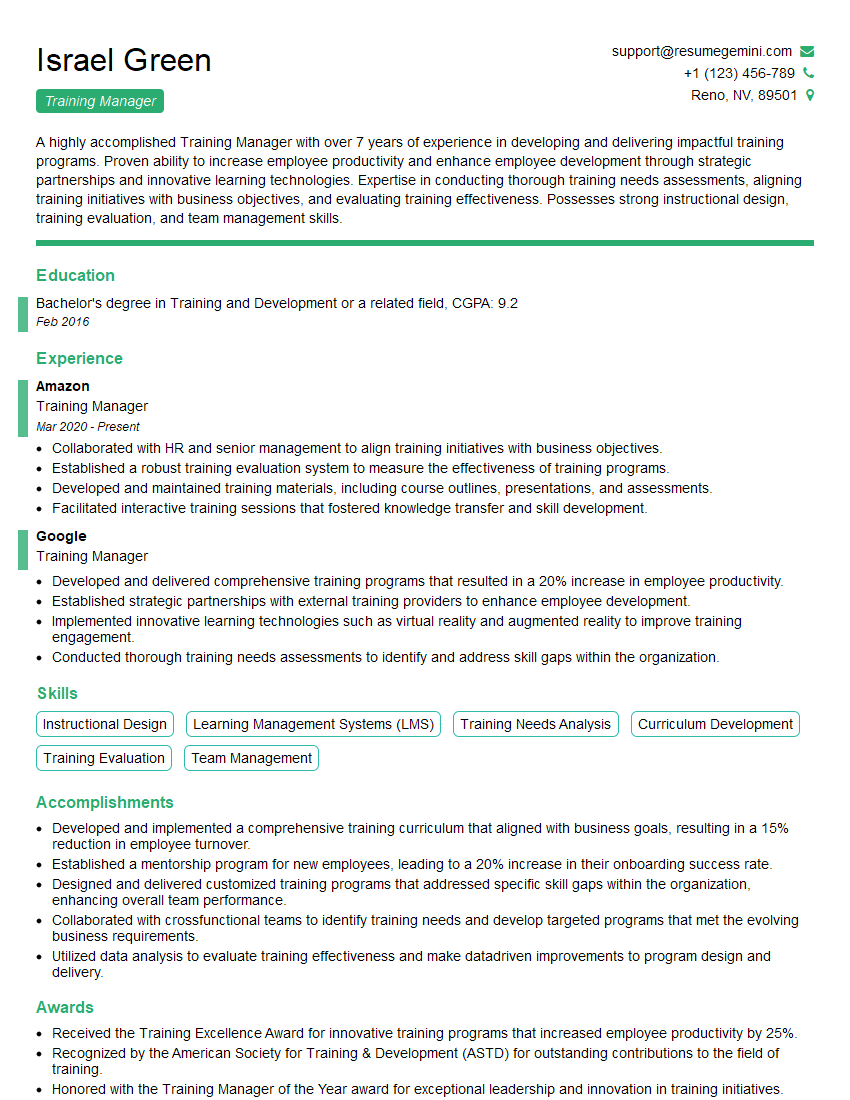
Training Manager Resume Sample
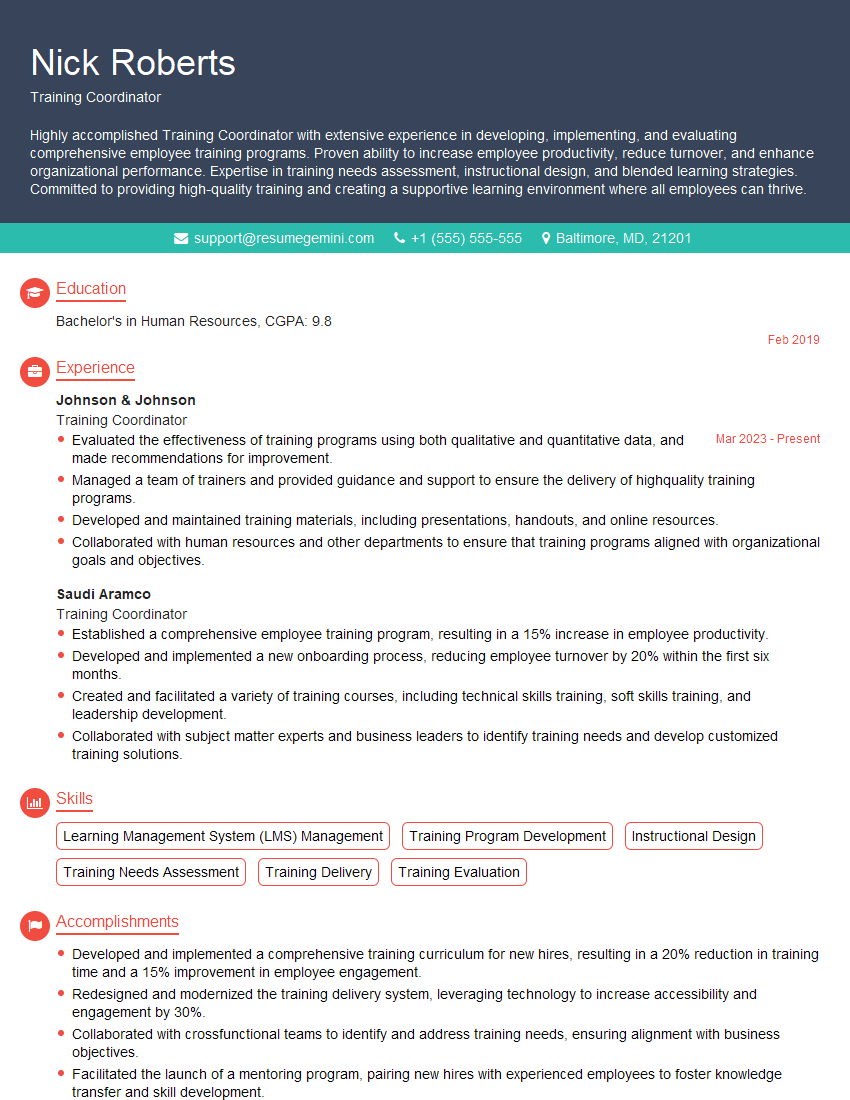
Training Coordinator Resume Sample
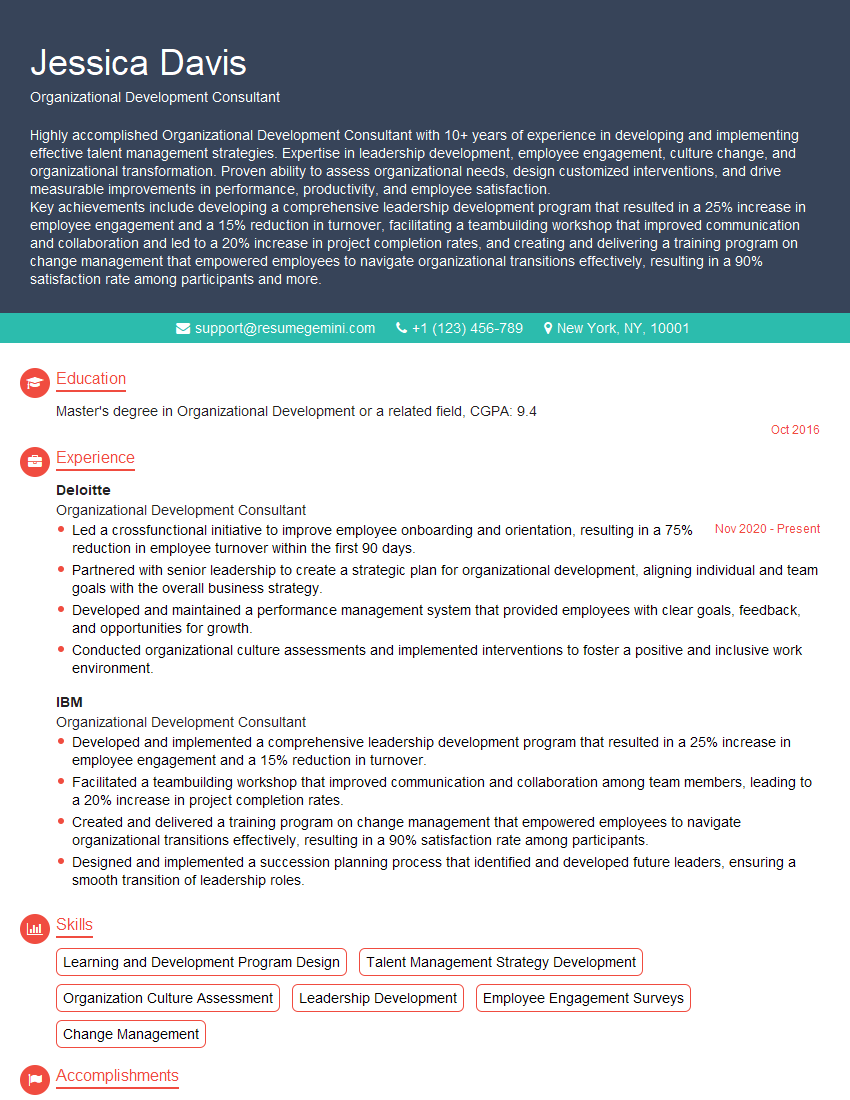
Organizational Development Consultant Resume Sample
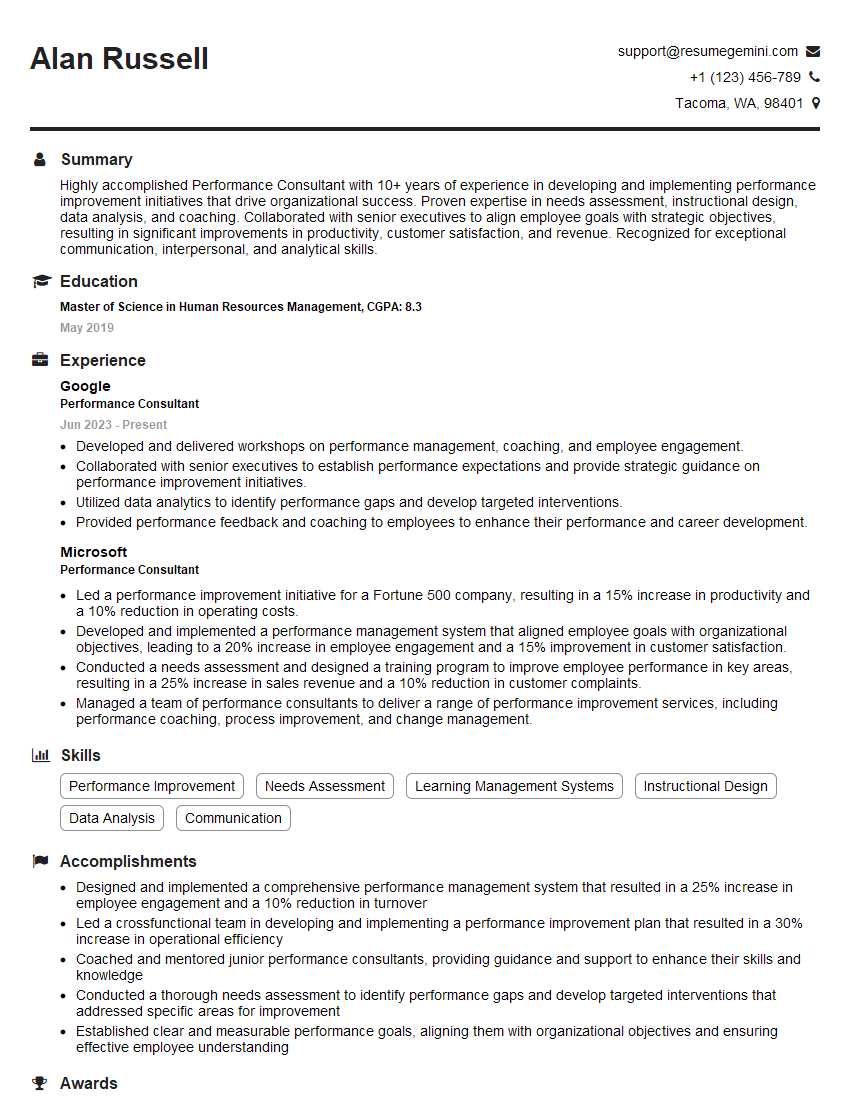
Performance Consultant Resume Sample
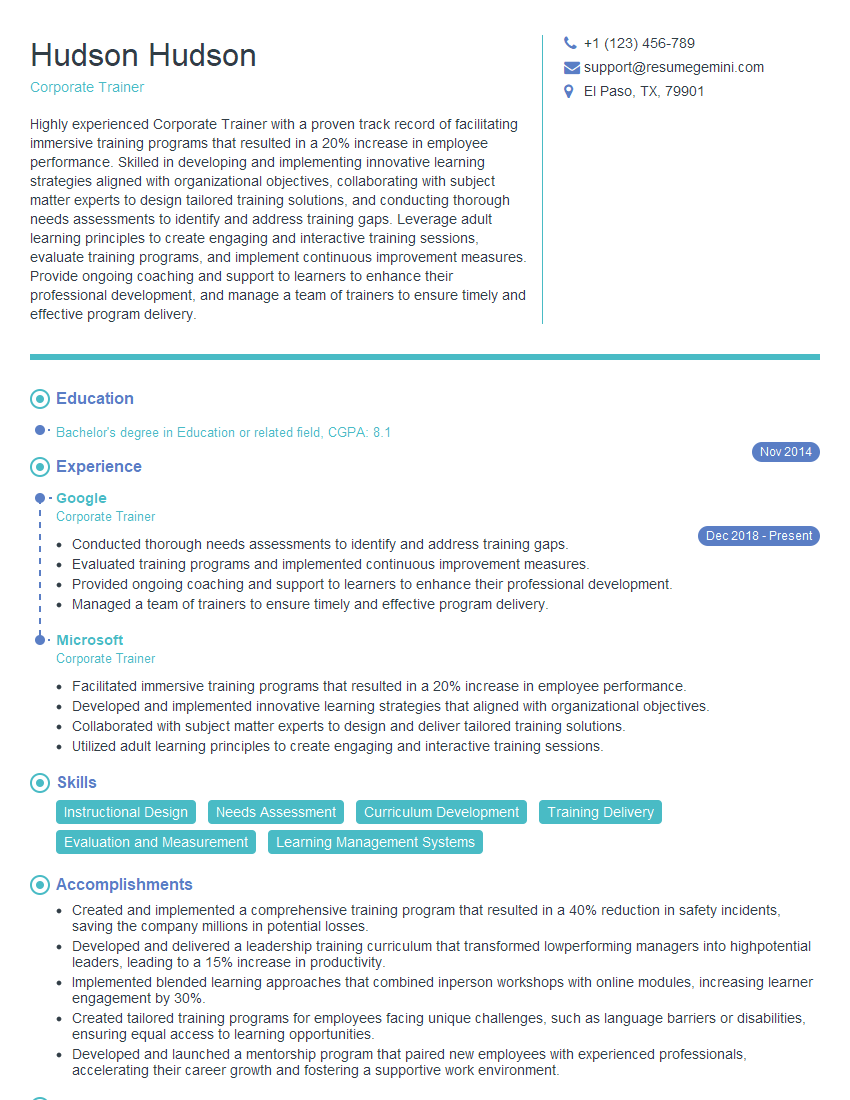
Corporate Trainer Resume Sample

Curriculum Developer Resume Sample
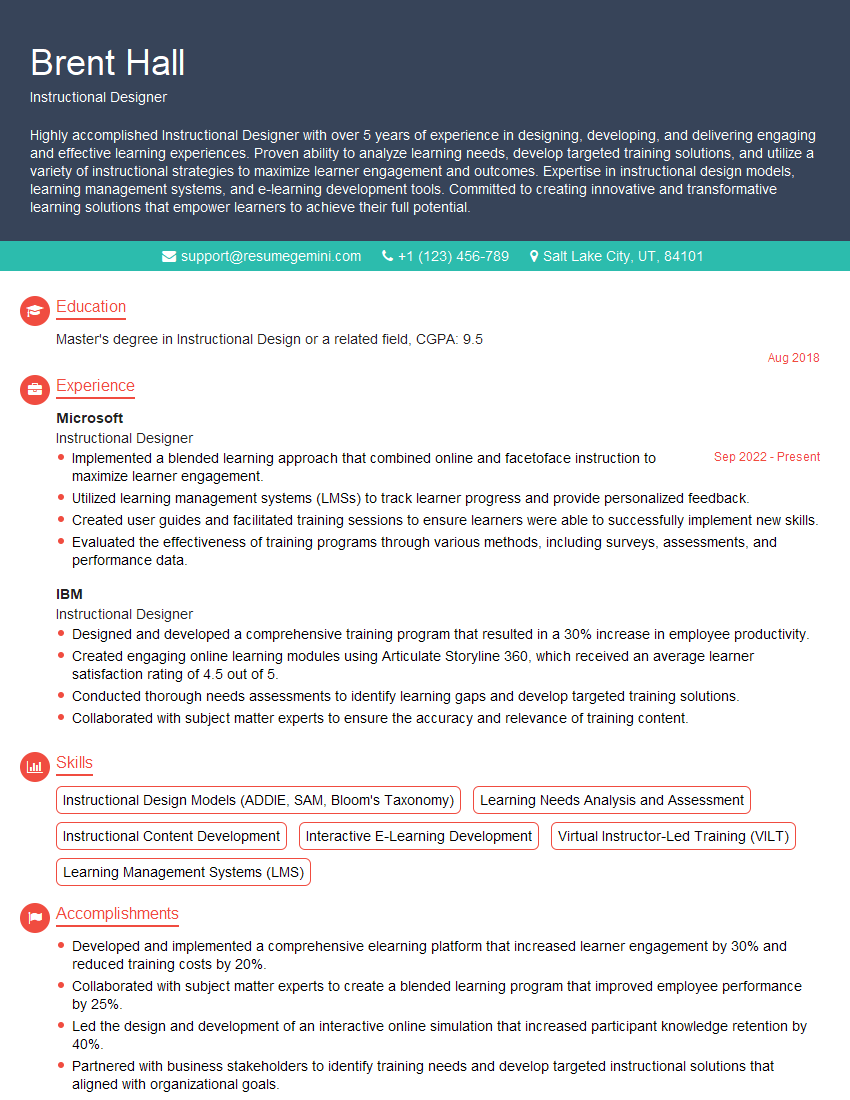
Instructional Designer Resume Sample
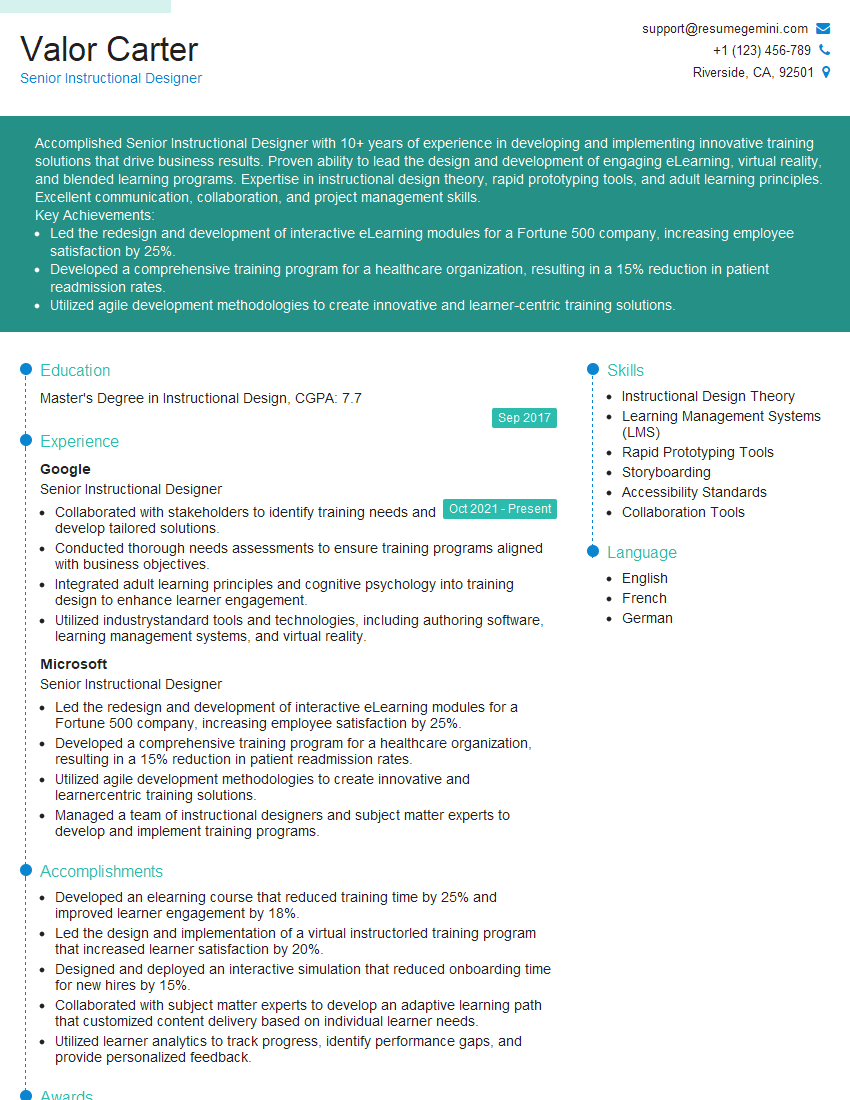
Senior Instructional Designer Resume Sample
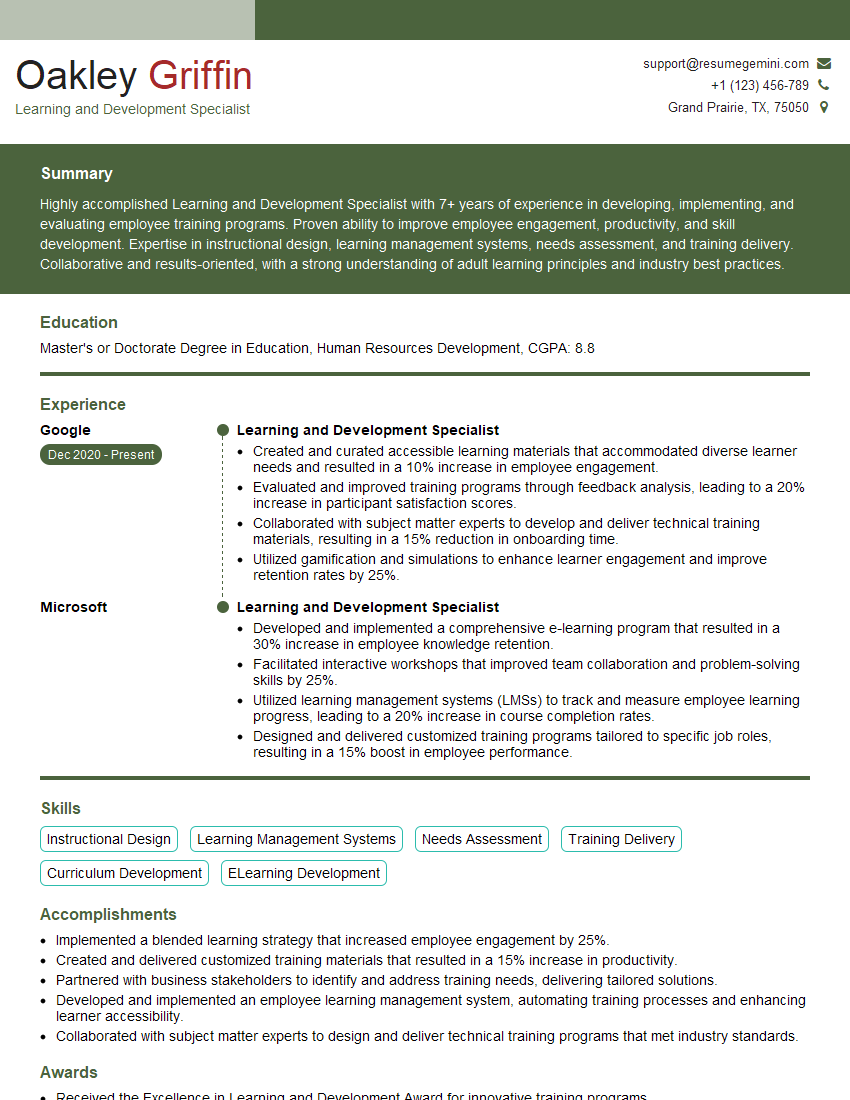
Learning and Development Specialist Resume Sample
Explore more articles
Users Rating of Our Blogs
Share Your Experience
We value your feedback! Please rate our content and share your thoughts (optional).
What Readers Say About Our Blog
Very informative content, great job.
good