Every successful interview starts with knowing what to expect. In this blog, we’ll take you through the top Budgeting and Project Management interview questions, breaking them down with expert tips to help you deliver impactful answers. Step into your next interview fully prepared and ready to succeed.
Questions Asked in Budgeting and Project Management Interview
Q 1. Explain the difference between a budget and a forecast.
While both budgets and forecasts are financial plans, they differ significantly in their purpose and timeframe. A budget is a detailed plan for how resources (typically money) will be allocated over a specific period, usually a fiscal year. It’s a formal document used for control and accountability, often approved by higher management. Think of it as a roadmap with pre-set milestones and resource allocations. A forecast, on the other hand, is a projection of future financial performance, often based on historical data, market trends, and assumptions. Forecasts are dynamic and can be updated frequently as new information becomes available. It’s a prediction, not a rigid plan. Imagine it as a weather prediction; it gives you an idea of what to expect, but the actual outcome may differ.
For example, a company’s budget might allocate $100,000 to marketing in Q1, with specific allocations to digital ads, social media, and print. The marketing forecast, however, might predict a $120,000 revenue generation from these marketing efforts based on previous campaign performance and market analysis. The budget sets the spending limit; the forecast anticipates the results.
Q 2. Describe your experience with different budgeting methods (e.g., zero-based budgeting, incremental budgeting).
Throughout my career, I’ve worked extensively with various budgeting methods. Incremental budgeting, the most common, uses the previous year’s budget as a base and adjusts it based on anticipated changes. It’s simple and quick but can lead to inefficiencies if previous budgets were poorly designed. I’ve successfully implemented this method in smaller projects with predictable costs. For example, if last year’s project X had a $50,000 budget, an incremental budget might increase it to $55,000 to account for inflation.
Zero-based budgeting (ZBB) requires justification for every expense item from scratch. Each budget line item starts at zero, demanding a thorough evaluation of its necessity and value. It’s more time-consuming but often reveals opportunities for cost savings and improved efficiency. I applied ZBB to a large-scale project where it led to a 15% reduction in overall costs by identifying and eliminating redundant tasks and resources.
I also have experience with activity-based budgeting, which allocates resources based on the activities needed to achieve specific goals. This method is particularly useful for projects with complex tasks and diverse resource requirements, which I leveraged during a complex software development project. This ensured that resources were allocated appropriately to the most critical tasks.
Q 3. How do you identify and mitigate budget risks?
Identifying and mitigating budget risks is crucial for project success. I use a risk assessment framework that involves:
- Identifying potential risks: This includes factors such as scope creep (unplanned expansion of project scope), cost overruns due to unforeseen circumstances (e.g., material price increases), resource availability issues, and schedule delays.
- Analyzing the likelihood and impact of each risk: A risk matrix is used to rate each risk based on its probability of occurrence and its potential negative impact on the budget.
- Developing mitigation strategies: For high-impact, high-likelihood risks, detailed mitigation plans are developed. This might include contingency reserves (allocating extra funds to cover unexpected expenses), using alternative suppliers, or implementing stricter change management processes.
- Monitoring and control: Regular monitoring of budget performance against the plan and reassessment of risks throughout the project lifecycle is essential. This allows for proactive adjustments to mitigation strategies as necessary.
For example, in a construction project, a risk might be inclement weather delaying the work. The mitigation strategy could involve securing a covered workspace or building in buffer time in the schedule.
Q 4. What are some common budget variances and how do you investigate them?
Common budget variances include cost overruns (actual costs exceed budgeted costs), cost underruns (actual costs are below budgeted costs), schedule delays impacting resource allocation, and scope creep adding unbudgeted work.
Investigating variances requires a systematic approach:
- Identify the variance: Determine the amount and type of variance.
- Analyze the cause: Investigate the root causes. Was it due to inaccurate estimations, unforeseen circumstances, changes in scope, or inefficient resource utilization? This often involves reviewing time sheets, purchase orders, and project documentation.
- Develop corrective actions: Implement measures to prevent similar variances in future projects. This might involve improving estimation techniques, strengthening project controls, or enhancing communication and collaboration.
- Document findings: Record the causes, impacts, and corrective actions taken to improve future project management.
For instance, a cost overrun on a software development project might stem from underestimated development time. Investigation might reveal a lack of clear requirements or poor task management leading to rework. Corrective action might involve clearer requirements gathering and improved project tracking software.
Q 5. How do you create a project budget?
Creating a project budget involves a multi-step process:
- Define the project scope: Clearly define all deliverables and tasks.
- Estimate resource needs: Identify all resources required, including personnel (with their respective hourly/daily rates), materials, equipment, and software.
- Estimate costs: Determine the cost of each resource. This may involve market research to determine material and equipment prices and internal discussions for personnel costs.
- Develop a work breakdown structure (WBS): Break down the project into smaller, manageable tasks. This allows for more accurate cost estimation.
- Allocate costs to tasks: Assign the estimated costs to each task in the WBS.
- Add contingency reserves: Include a buffer for unexpected costs or delays (typically 5-10%).
- Review and approve: The budget should be reviewed and approved by relevant stakeholders.
Throughout this process, I typically use bottom-up budgeting, starting with detailed task-level estimates and aggregating them to the project level. This ensures greater accuracy compared to top-down approaches.
Q 6. Explain your experience using project management software (e.g., MS Project, Jira).
I have extensive experience using various project management software, including MS Project and Jira. MS Project is excellent for managing complex projects with detailed scheduling and resource allocation needs. Its Gantt charts and critical path analysis features aid in tracking progress and identifying potential delays. I’ve used it extensively for large-scale projects requiring precise resource scheduling and cost control.
Jira, on the other hand, is a powerful tool for agile project management, particularly software development. Its ability to track tasks, bugs, and user stories in a flexible manner is invaluable in agile environments. I’ve used Jira’s Kanban boards and Scrum boards to manage sprints and track progress toward iterative project goals. I leverage its reporting features for tracking team velocity and identifying potential bottlenecks.
My proficiency in both tools allows me to adapt my approach to the specific project methodology and complexity.
Q 7. Describe your experience with earned value management (EVM).
Earned Value Management (EVM) is a project management technique used to measure project performance and predict future outcomes. It combines scope, schedule, and cost data to provide a comprehensive overview of the project’s health. Key EVM metrics include:
- Planned Value (PV): The budgeted cost of work scheduled to be done up to a specific point in time.
- Earned Value (EV): The value of the work actually completed up to a specific point in time.
- Actual Cost (AC): The actual cost incurred in completing the work up to a specific point in time.
By comparing these metrics, we can calculate key performance indicators (KPIs) such as:
- Schedule Variance (SV): EV – PV. A positive SV indicates the project is ahead of schedule; a negative SV indicates it’s behind.
- Cost Variance (CV): EV – AC. A positive CV indicates the project is under budget; a negative CV indicates it’s over budget.
- Schedule Performance Index (SPI): EV / PV. An SPI greater than 1 indicates the project is ahead of schedule; less than 1 indicates it is behind.
- Cost Performance Index (CPI): EV / AC. A CPI greater than 1 indicates the project is under budget; less than 1 indicates it is over budget.
I use EVM regularly to provide early warnings of potential problems, allowing for proactive intervention and mitigation. For example, a negative CV and CPI would signal cost overruns, prompting an immediate review of cost drivers and adjustments to the project plan.
Q 8. How do you handle scope creep in a project?
Scope creep, the uncontrolled expansion of project requirements, is a common project killer. My approach involves proactive prevention and reactive management. Prevention starts with a meticulously defined scope statement, clearly outlining deliverables, timelines, and acceptance criteria. This document serves as the contract between the project team and stakeholders. Regularly reviewing this statement with stakeholders ensures everyone remains on the same page.
When creep does occur (and it often does!), I employ a change management process. Any proposed changes are documented, assessed for their impact on the schedule, budget, and overall project goals, and formally approved through a change control board. This process ensures transparency and accountability. For example, if a client requests a new feature, we’d estimate the additional time and cost, present this to the client, and obtain formal approval before incorporating it into the project.
Ultimately, effective communication and stakeholder management are key to minimizing scope creep. Open channels of communication allow early identification and resolution of potential issues before they snowball.
Q 9. How do you manage competing priorities in a project?
Managing competing priorities is a constant juggling act in project management. My approach relies on prioritization techniques, clear communication, and proactive planning. First, I use a prioritization matrix, such as a MoSCoW method (Must have, Should have, Could have, Won’t have), to rank tasks based on their importance and urgency. This involves discussions with stakeholders to ensure alignment on priorities.
Transparency is crucial. I keep stakeholders informed about project progress and any potential conflicts arising from competing priorities. Regular status meetings and progress reports ensure everyone understands the current state and upcoming challenges. If necessary, I facilitate discussions to help stakeholders re-evaluate priorities based on available resources and project constraints.
For instance, if we’re facing delays, I’ll analyze the critical path and work with the team to identify tasks that can be delayed or adjusted without significantly impacting the overall project outcome. This might involve renegotiating deadlines with certain stakeholders, or reallocating resources from less critical tasks.
Q 10. Describe your experience with Agile project management methodologies.
I have extensive experience with Agile methodologies, particularly Scrum and Kanban. I’ve successfully led several projects using these frameworks, appreciating their iterative nature and adaptability. In Scrum, I’ve facilitated sprint planning, daily stand-ups, sprint reviews, and retrospectives, fostering collaboration and continuous improvement. The iterative nature of Scrum allows for course correction based on feedback, adapting to changing requirements efficiently.
With Kanban, I’ve implemented visual boards to track workflow, identify bottlenecks, and improve team efficiency. This approach helps visualize the project’s progress, making it easy to identify and address potential roadblocks. My experience includes using various Agile tools, such as Jira and Trello, for task management and collaboration.
For example, in a recent project, we used Scrum to develop a new software application. The iterative sprints enabled us to deliver functional increments frequently, gather user feedback early, and adjust our approach as needed. This iterative approach reduced risk and increased stakeholder satisfaction.
Q 11. What is your approach to conflict resolution within a project team?
Conflict resolution is a vital skill in project management. My approach is based on open communication, active listening, and finding mutually acceptable solutions. I start by creating a safe and respectful environment where team members feel comfortable expressing their concerns. I actively listen to all perspectives, ensuring everyone feels heard and understood. I avoid taking sides and instead focus on the issue at hand.
I employ collaborative conflict resolution techniques, such as brainstorming and negotiation, to find a solution that addresses the concerns of all parties. If the conflict persists, I might mediate the discussion, helping the parties find common ground. In extreme cases, I may need to intervene directly to enforce project rules and ensure the project’s success.
For instance, if two team members have a disagreement on the best approach to a particular task, I would facilitate a discussion where they present their viewpoints, explore the pros and cons of each approach, and collaboratively decide on the best solution. The focus is on finding a solution that works for the team and supports the project’s goals, not just winning an argument.
Q 12. How do you prioritize tasks in a project?
Prioritizing tasks is critical for efficient project execution. I use a multi-faceted approach combining various techniques. First, I define clear project goals and objectives. Next, I utilize prioritization matrices, such as MoSCoW or Eisenhower Matrix (Urgent/Important), to categorize tasks based on their importance and urgency. This provides a clear framework for ranking tasks.
Dependencies between tasks are also crucial. I create a Work Breakdown Structure (WBS) to break down the project into smaller, manageable tasks, identifying their interdependencies. This helps determine the order in which tasks should be completed to optimize the overall schedule.
Risk assessment is another key factor. Tasks with higher associated risks might require prioritization to mitigate potential negative impacts. Finally, I consider resource availability and constraints when scheduling tasks. For instance, a task requiring specialized skills might need to be prioritized to align with the availability of that resource. The overall goal is to optimize task execution to meet project goals efficiently.
Q 13. How do you track project progress and report on key metrics?
Tracking project progress and reporting key metrics is essential for effective project management. I use a combination of tools and techniques to achieve this. Project management software, such as Microsoft Project or Jira, allows me to track task completion, resource allocation, and deadlines. I regularly update the project schedule and highlight any deviations from the plan.
I define key performance indicators (KPIs) at the beginning of the project, such as schedule adherence, budget utilization, and quality metrics. These KPIs provide a clear picture of the project’s health. I regularly monitor these metrics and generate reports to communicate progress to stakeholders. Visual representations, such as Gantt charts and burn-down charts, effectively illustrate project progress and identify potential issues early.
For example, I might track the percentage of completed tasks, the actual cost versus the planned budget, and the number of defects identified in the software testing phase. Regular reporting keeps stakeholders informed and allows for timely intervention if necessary.
Q 14. Explain your experience with risk management in projects.
Risk management is a proactive process to identify, assess, and mitigate potential threats to project success. My approach involves a systematic process. First, I conduct a thorough risk assessment, identifying potential risks throughout the project lifecycle. This involves brainstorming sessions with the project team and stakeholders, reviewing past project experiences, and analyzing potential external factors.
Each identified risk is then assessed based on its likelihood and potential impact on the project. A risk register documents these risks, including mitigation strategies and contingency plans. I develop proactive mitigation strategies to reduce the likelihood or impact of the identified risks. Contingency plans are also developed for those risks that cannot be fully mitigated.
For example, if a key supplier might experience delays, we’d identify alternative suppliers or build buffer time into the schedule. Regular monitoring and reassessment of risks are crucial throughout the project to detect emerging issues and adjust strategies as needed. This proactive approach significantly reduces the probability of project failure.
Q 15. How do you communicate project status updates to stakeholders?
Effective communication is the cornerstone of successful project management. I tailor my communication strategy to the specific stakeholder and their needs. For instance, executive summaries with key performance indicators (KPIs) are suitable for senior management, while more detailed reports with action items are shared with project teams. My approach typically involves:
- Regular status meetings: These provide a forum for open discussion and address any concerns proactively.
- Visual dashboards and reports: I utilize tools like Gantt charts, burn-down charts, and progress reports to visually communicate project health and progress. These are easily digestible and quickly convey important information.
- Targeted communication: I don’t overload stakeholders with unnecessary information. I identify what each stakeholder needs to know and deliver it accordingly via email, presentations, or informal updates.
- Proactive issue management: I promptly address any risks or issues, ensuring transparency and preventing escalation. A timely heads-up is always better than a late surprise.
For example, during a recent software development project, I used a weekly email summary for executives highlighting key milestones and budget adherence, alongside more detailed bi-weekly meetings with the project team to address tactical challenges.
Career Expert Tips:
- Ace those interviews! Prepare effectively by reviewing the Top 50 Most Common Interview Questions on ResumeGemini.
- Navigate your job search with confidence! Explore a wide range of Career Tips on ResumeGemini. Learn about common challenges and recommendations to overcome them.
- Craft the perfect resume! Master the Art of Resume Writing with ResumeGemini’s guide. Showcase your unique qualifications and achievements effectively.
- Don’t miss out on holiday savings! Build your dream resume with ResumeGemini’s ATS optimized templates.
Q 16. Describe a time when you had to make a difficult decision regarding a project budget.
In a previous project, we faced an unexpected increase in the cost of raw materials, threatening to exceed our budget by 15%. This required a difficult decision: reduce scope, find cost-saving alternatives, or seek additional funding. After carefully analyzing the situation, I proposed a phased approach. We prioritized essential features, reducing the project scope by 10%, thereby mitigating the impact on the timeline. We also negotiated better rates with our suppliers and identified some internal efficiencies to absorb a portion of the increased costs.
This involved difficult conversations with the stakeholders, explaining the trade-offs and the rationale behind the decisions. Open and honest communication was crucial in maintaining trust and ensuring buy-in. We successfully delivered a slightly scaled-back project on time and within the revised budget.
Q 17. How do you handle budget overruns?
Budget overruns are a serious concern, but with a proactive approach, they can be effectively managed. My approach involves:
- Immediate investigation: Identify the root cause of the overrun – scope creep, unforeseen issues, inaccurate estimations, etc.
- Contingency planning: All projects should have a built-in contingency buffer. This helps absorb minor overruns without major disruptions.
- Cost-cutting measures: Explore options for reducing expenses, such as renegotiating contracts, optimizing resources, or re-evaluating less critical tasks.
- Stakeholder communication: Transparent communication is crucial. Inform stakeholders about the overrun, the reasons behind it, and the proposed mitigation strategies.
- Change management: If scope changes are necessary to remain within budget, formal change requests must be submitted, reviewed, and approved.
For example, if an unforeseen technical issue causes delays and extra labor costs, I’d immediately analyze the impact, propose solutions to stakeholders (perhaps utilizing existing contingency funds or adjusting the timeline), and present a revised budget for approval.
Q 18. How do you motivate and manage a project team?
Motivating and managing a project team requires a combination of leadership, communication, and empathy. I focus on creating a positive and collaborative work environment where team members feel valued and respected. My approach involves:
- Clear goals and expectations: Ensure everyone understands the project goals, their individual roles, and responsibilities.
- Regular feedback and recognition: Provide constructive feedback regularly and celebrate achievements to boost morale and motivation.
- Open communication: Encourage open communication and create a safe space for team members to share ideas and concerns.
- Empowerment and delegation: Empower team members to make decisions and take ownership of their tasks.
- Conflict resolution: Address conflicts promptly and fairly, focusing on finding solutions that benefit the team.
For example, I once used a team-building exercise to enhance collaboration among team members who were struggling to work effectively together. This resulted in improved communication and a more cohesive team.
Q 19. How do you ensure project deliverables meet quality standards?
Ensuring project deliverables meet quality standards requires a multi-faceted approach starting from the project’s inception. I employ these strategies:
- Defining clear quality standards upfront: Establish specific, measurable, achievable, relevant, and time-bound (SMART) quality criteria at the outset of the project.
- Quality checks and testing throughout the project lifecycle: Implement regular quality checks and testing at each stage of the project to identify and rectify issues early.
- Using appropriate tools and techniques: Utilize quality management tools such as checklists, risk assessments, and quality control charts to track and monitor quality.
- Team training and competency development: Ensure the team possesses the necessary skills and knowledge to perform their tasks to the required quality standards.
- Continuous improvement: Regularly review processes and identify areas for improvement to prevent future quality issues.
For example, in a recent web development project, we used a rigorous testing protocol including unit testing, integration testing, and user acceptance testing (UAT) to ensure a bug-free product launch. This prevented costly post-launch fixes and maintained high client satisfaction.
Q 20. Describe your experience with different project lifecycle methodologies (e.g., Waterfall, Agile).
I have extensive experience with both Waterfall and Agile methodologies. Waterfall, with its sequential phases (initiation, planning, execution, monitoring & controlling, closure), is well-suited for projects with clearly defined requirements and minimal expected changes. Agile, on the other hand, embraces iterative development and frequent feedback loops, making it ideal for projects with evolving requirements and a need for flexibility.
Example of Waterfall: A construction project where the blueprints are largely fixed and changes are costly and require formal approval.
Example of Agile: Software development where requirements can change based on user feedback throughout the development process. Using Scrum, for example, allows for sprints and daily stand-ups to adjust quickly to changes.
My choice of methodology depends on the project’s characteristics, including the complexity, size, and client’s expectations. Often, a hybrid approach incorporating elements from both methodologies proves most effective.
Q 21. How do you create a project schedule?
Creating a robust project schedule involves a structured approach. I typically follow these steps:
- Define tasks: Break down the project into smaller, manageable tasks.
- Sequence tasks: Identify the dependencies between tasks (e.g., task A must be completed before task B can start).
- Estimate task durations: Estimate the time required to complete each task, considering potential risks and uncertainties.
- Assign resources: Allocate resources (people, equipment, materials) to each task.
- Develop the schedule: Use project management software or tools (e.g., MS Project, Jira) to create a visual representation of the schedule, typically a Gantt chart.
- Baseline and monitor: Establish a baseline schedule and monitor progress against it regularly, making adjustments as needed.
I use critical path analysis to identify the longest sequence of tasks that determines the shortest possible project duration. This helps prioritize tasks and effectively manage resources. Regular review and updates are crucial to keep the schedule relevant and accurate throughout the project life-cycle.
Q 22. How do you manage dependencies between tasks in a project?
Managing task dependencies is crucial for successful project execution. It involves identifying and documenting the relationships between tasks, ensuring that one task must be completed before another can begin. Think of it like a recipe: you can’t add the icing (Task B) before baking the cake (Task A).
I use several methods to manage these dependencies, including:
- Precedence Diagramming Method (PDM): This visually represents tasks and their relationships using nodes and arrows. For example, a node might represent ‘Write Project Proposal,’ and an arrow pointing to another node labeled ‘Get Client Approval’ signifies that approval is dependent on the proposal.
- Gantt Charts: These charts provide a visual timeline of tasks, showing their start and end dates. Dependencies are clearly illustrated through task placement and potential delays easily spotted if one task is delayed. For example, if ‘Design the website’ is dependent on ‘Conduct User Research,’ a delay in user research directly pushes back the website design start date.
- Project Management Software: Tools like Microsoft Project, Asana, or Jira allow for detailed dependency mapping. These systems often have features to automatically calculate critical paths and alert you to potential scheduling conflicts.
Proactively identifying and addressing dependencies prevents bottlenecks and ensures the project stays on schedule. I regularly review and update these dependency maps to account for changes or unexpected delays.
Q 23. Explain your experience with resource allocation in projects.
Resource allocation is the process of assigning and managing project resources – people, equipment, materials, budget – effectively. My approach emphasizes optimizing resource utilization and minimizing conflicts.
In my previous role at [Previous Company Name], I managed a team of 10 developers working on a complex software project. We used a combination of techniques:
- Resource Leveling: We analyzed individual team member’s workloads and adjusted schedules to avoid over-allocation. If one developer was overloaded, we re-assigned some of their tasks to others with available capacity.
- Critical Path Analysis: Identifying the critical path (the sequence of tasks that determines the shortest possible project duration) helped us prioritize resource allocation to those crucial tasks. We focused our most skilled resources on these critical path activities to reduce risk.
- Time-boxing: We allocated specific time blocks to particular tasks. This helped manage expectations and ensured that resources were focused efficiently.
I also developed a system to track resource availability and utilization, allowing for proactive adjustments to meet changing project needs. This minimized downtime and kept the project on track, delivering it on time and within budget.
Q 24. How do you handle stakeholder expectations?
Managing stakeholder expectations is paramount for project success. It’s about clear communication, active listening, and setting realistic expectations from the outset.
My approach involves:
- Regular Communication: I maintain open communication channels – regular meetings, email updates, and project dashboards – to keep stakeholders informed about progress, challenges, and potential risks. This transparency builds trust and reduces uncertainty.
- Clearly Defined Roles and Responsibilities: I establish clear roles and responsibilities for all stakeholders, ensuring everyone understands their contributions and expectations. This eliminates confusion and reduces potential conflict.
- Managing Conflicts: I proactively address conflicts and concerns by fostering open dialogue and working collaboratively to find mutually acceptable solutions. I always strive to ensure that everyone feels heard and understood.
- Realistic Expectations: I ensure all project goals and deliverables are realistic and achievable. I work with stakeholders to define clear success criteria, so everyone is aligned on what success looks like.
By proactively managing stakeholder expectations, I foster trust, enhance collaboration, and mitigate potential risks, leading to a more successful project outcome.
Q 25. Describe your experience with project closeout procedures.
Project closeout procedures are critical for ensuring a project’s successful completion and for capturing valuable lessons learned. This involves a systematic process of finalizing activities, documenting results, and formally closing the project.
My approach includes:
- Final Deliverables Verification: I thoroughly review and verify that all planned deliverables have been completed according to specifications and client acceptance criteria. This usually involves sign-offs from key stakeholders.
- Financial Closure: I ensure all financial aspects of the project are finalized, including invoices, payments, and reconciliation of the project budget. This often involves creating a final project report comparing planned and actual costs.
- Documentation Archiving: I ensure that all project documentation, including meeting minutes, emails, reports, and design documents, is properly archived for future reference. This ensures a historical record of the project’s progress and decision-making process.
- Lessons Learned Review: I facilitate a lessons learned session with the project team to identify what worked well, what could be improved, and any challenges encountered during the project. This information is valuable for future projects.
- Formal Project Closure Meeting: I conduct a formal meeting with key stakeholders to officially close the project and celebrate achievements. This serves as a formal record of project completion and allows for final feedback from stakeholders.
A well-executed closeout provides valuable lessons learned, improves future project performance, and ensures all project stakeholders are satisfied with the outcome.
Q 26. How do you ensure project documentation is complete and accurate?
Ensuring complete and accurate project documentation is crucial for accountability, knowledge sharing, and future reference. I use a multi-faceted approach to ensure document quality.
My strategies include:
- Establish a Documentation Plan: From the project initiation phase, I define a comprehensive documentation plan specifying the types of documents needed, their format, owners, and completion deadlines. This plan is part of the project management plan.
- Version Control System: I utilize version control systems (e.g., Git) for collaborative documentation, ensuring that changes are tracked, allowing for easy access to previous versions and minimizing confusion.
- Regular Reviews and Audits: I conduct periodic reviews and audits of project documents to ensure accuracy, completeness, and consistency. This helps catch errors early and maintain data quality.
- Centralized Repository: All project documents are stored in a centralized repository (e.g., SharePoint, cloud storage) that is accessible to all authorized project team members. This eliminates version conflicts and ensures everyone has access to the latest information.
- Templates and Standards: I employ templates and style guides to ensure consistency in formatting and content across all project documents. This improves readability and understanding.
By implementing these measures, I create a reliable and comprehensive record of the project, fostering transparency and facilitating effective knowledge transfer.
Q 27. How do you measure the success of a project?
Measuring project success goes beyond simply meeting deadlines and staying within budget. It requires a holistic approach considering various factors.
My key metrics include:
- On-Time and On-Budget Delivery: These are fundamental measures, indicating the project’s efficiency and planning accuracy.
- Meeting Stakeholder Expectations: This involves evaluating stakeholder satisfaction levels through surveys, feedback sessions, or other means. Did the project deliver what the stakeholders wanted?
- Achieving Project Objectives: Did the project fulfill its intended goals and objectives? This often requires quantifiable results or metrics defined during the project planning stages.
- Return on Investment (ROI): This is a crucial metric, particularly for business-oriented projects. It measures the financial return relative to the investment made in the project.
- Quality of Deliverables: Were the deliverables of high quality, meeting the specified standards and expectations? This might involve user acceptance testing or quality assurance reviews.
I use a balanced scorecard approach, incorporating both quantitative and qualitative data to assess overall project success. A successful project delivers value to stakeholders, meets its objectives, and leaves a positive legacy.
Q 28. What are your salary expectations?
My salary expectations are commensurate with my experience and skills, and are in line with industry standards for a senior-level project manager with my background. I am open to discussing a specific salary range after learning more about the role and the company’s compensation structure. I am more interested in a mutually beneficial arrangement that fairly reflects my contributions and aligns with the company’s growth objectives.
Key Topics to Learn for Budgeting and Project Management Interview
- Budgeting Fundamentals: Understanding budgeting principles, types of budgets (e.g., operating, capital), and the budgeting cycle. Practical application: Explain how you’d create a budget for a new project, considering potential risks and contingencies.
- Project Planning & Scheduling: Mastering project initiation, planning, execution, monitoring, and closure. Practical application: Describe your experience with project management methodologies (e.g., Agile, Waterfall) and tools (e.g., MS Project, Jira).
- Cost Estimation & Control: Developing accurate cost estimates, tracking expenses, and managing variances. Practical application: Explain how you’d identify and address cost overruns in a project.
- Risk Management: Identifying, analyzing, and mitigating potential project risks. Practical application: Describe a situation where you proactively managed a project risk and its impact on the budget.
- Resource Allocation: Effectively allocating resources (human, financial, material) to maximize project success. Practical application: Explain your approach to resource allocation in a complex project with competing demands.
- Performance Reporting & Analysis: Creating and presenting clear and concise reports on project performance, budget status, and key metrics. Practical application: Describe your experience using data visualization to communicate project progress and budget performance.
- Stakeholder Management: Effectively communicating and managing expectations with stakeholders throughout the project lifecycle. Practical application: Explain how you’d handle conflicting priorities or stakeholder requests.
Next Steps
Mastering budgeting and project management skills is crucial for career advancement in today’s competitive landscape. These skills are highly sought after across various industries, opening doors to exciting opportunities and increased earning potential. To maximize your job prospects, focus on creating an ATS-friendly resume that effectively highlights your accomplishments and skills. ResumeGemini is a trusted resource to help you build a professional and impactful resume. We provide examples of resumes tailored specifically to Budgeting and Project Management roles to guide you in showcasing your expertise. Take the next step towards your dream job – build a compelling resume that gets noticed!
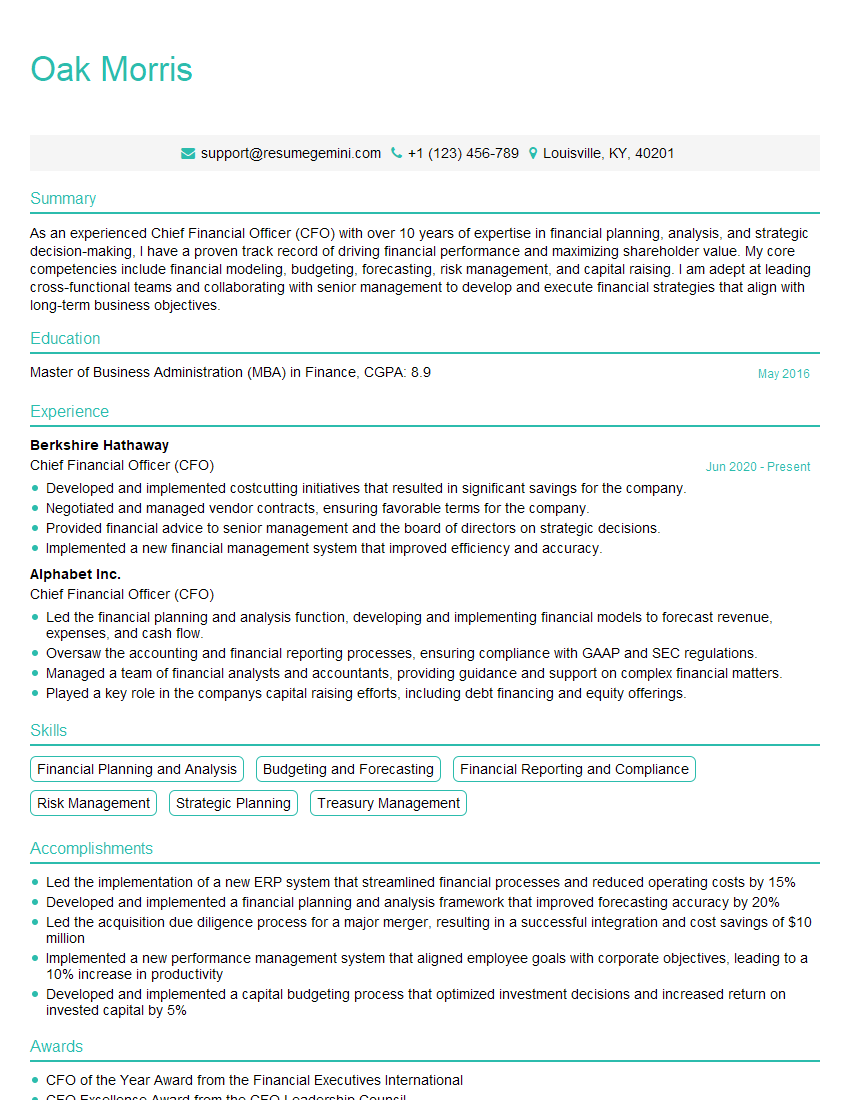
Chief Financial Officer (CFO) Resume Sample
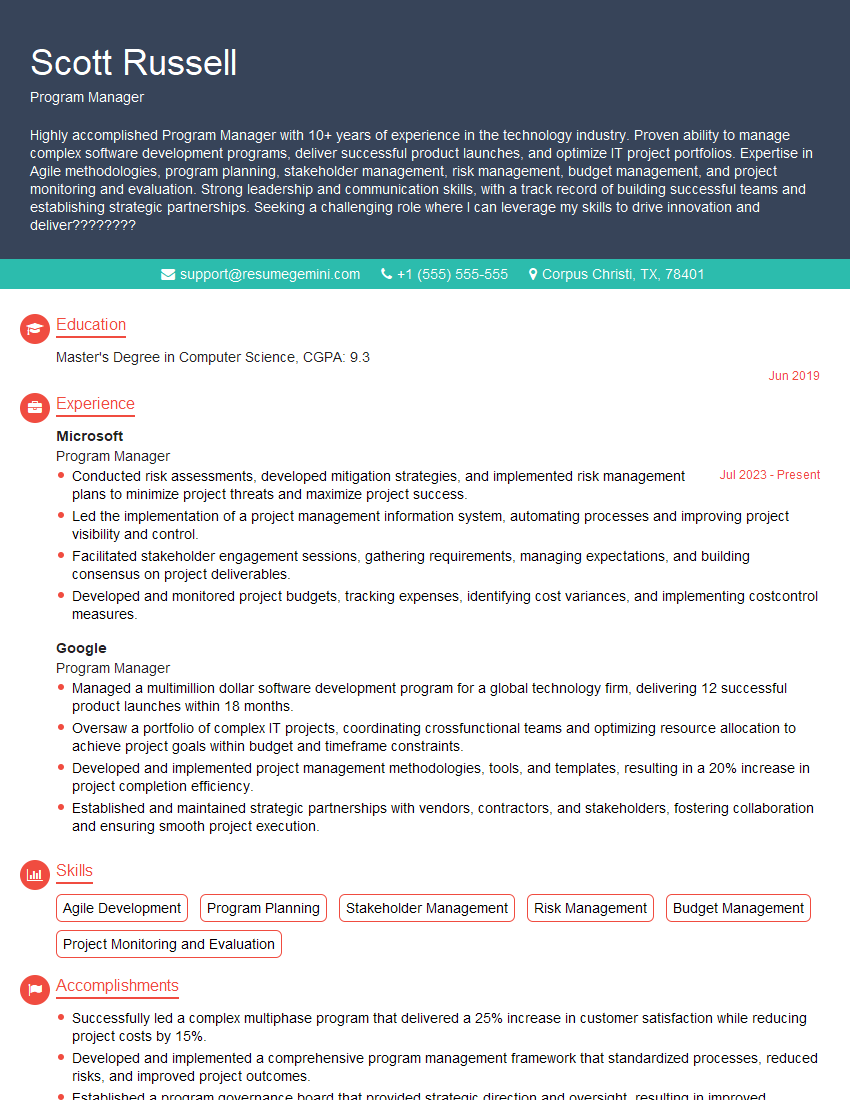
Program Manager Resume Sample
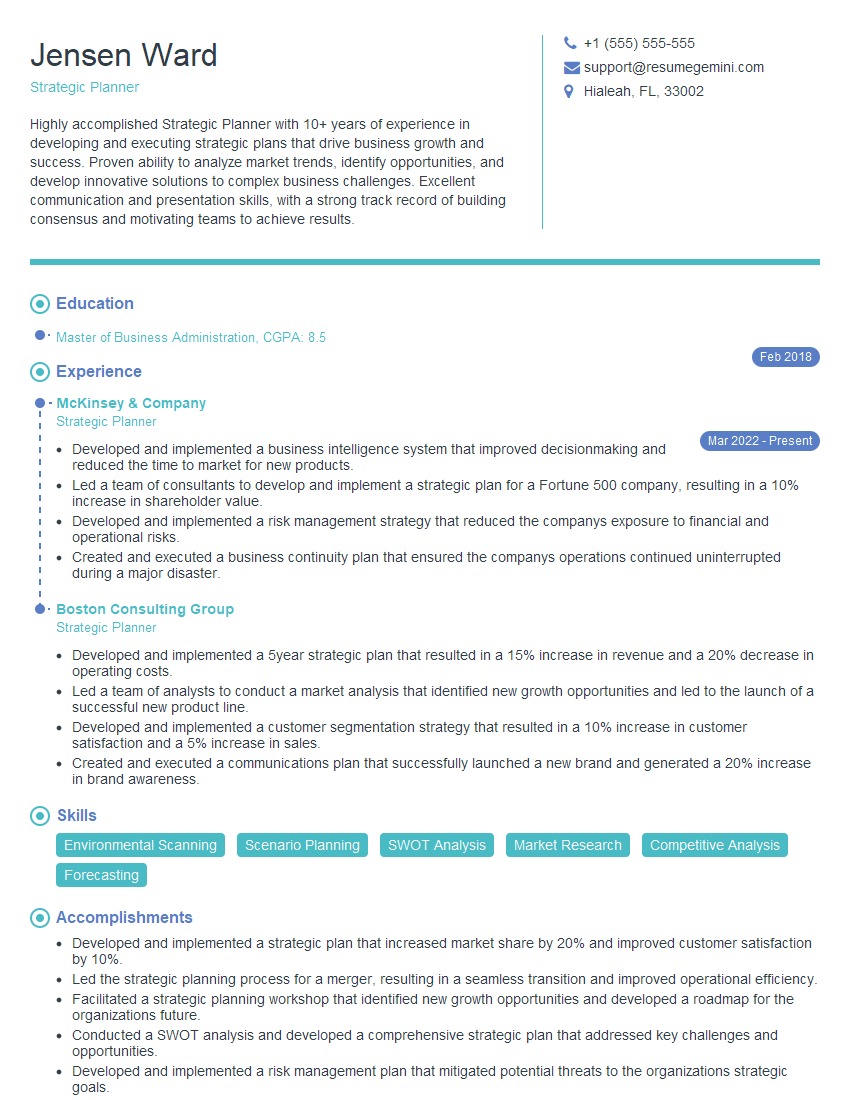
Strategic Planner Resume Sample

Operations Manager Resume Sample
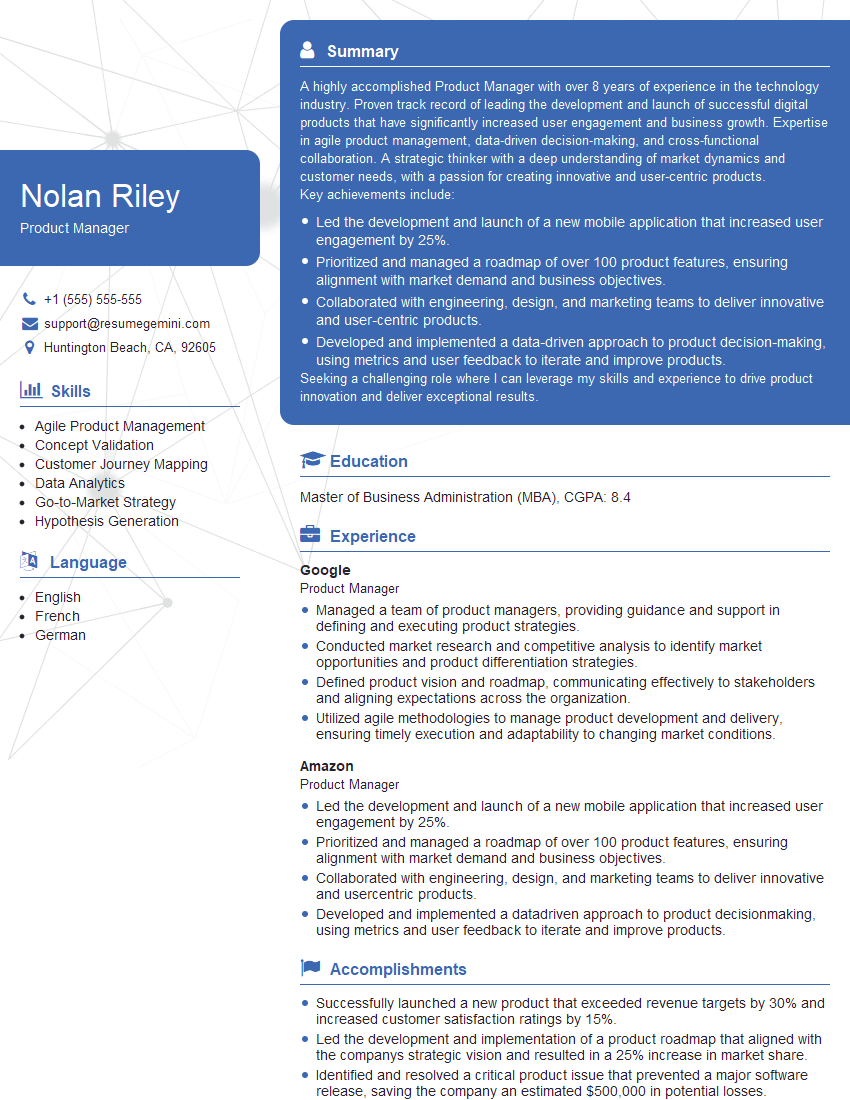
Product Manager Resume Sample
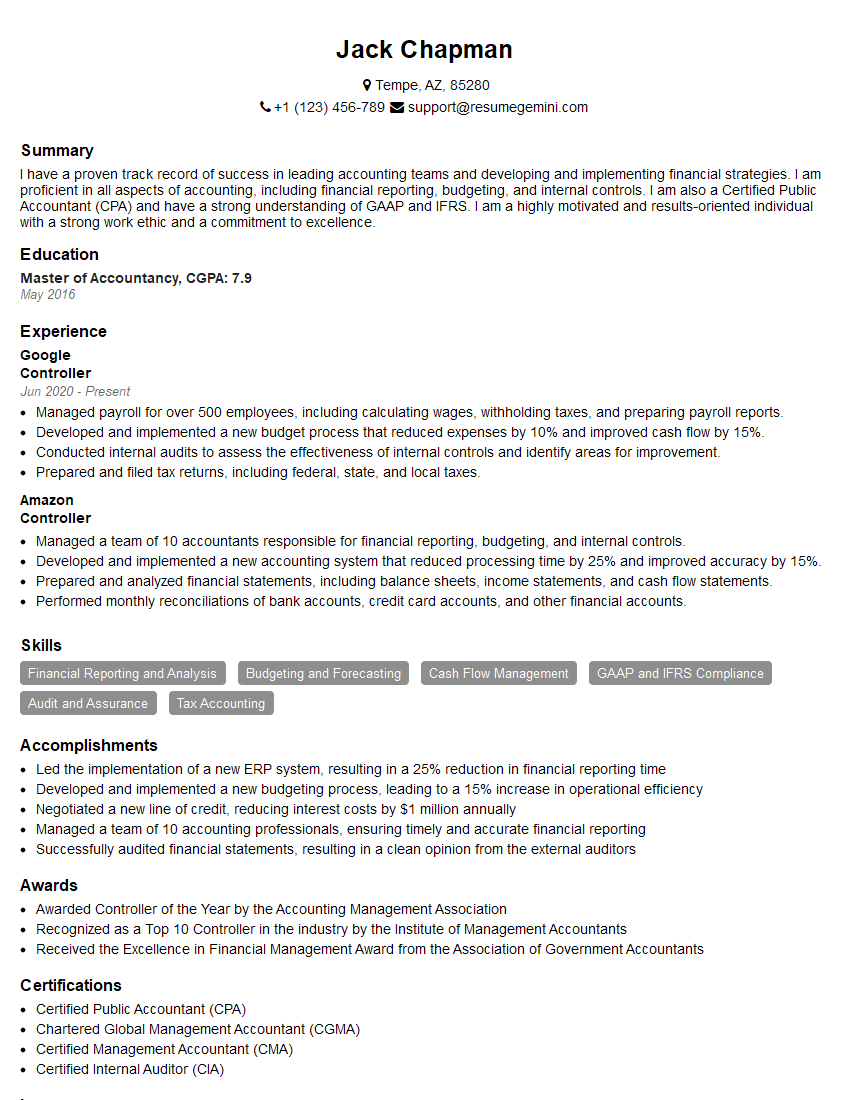
Controller Resume Sample
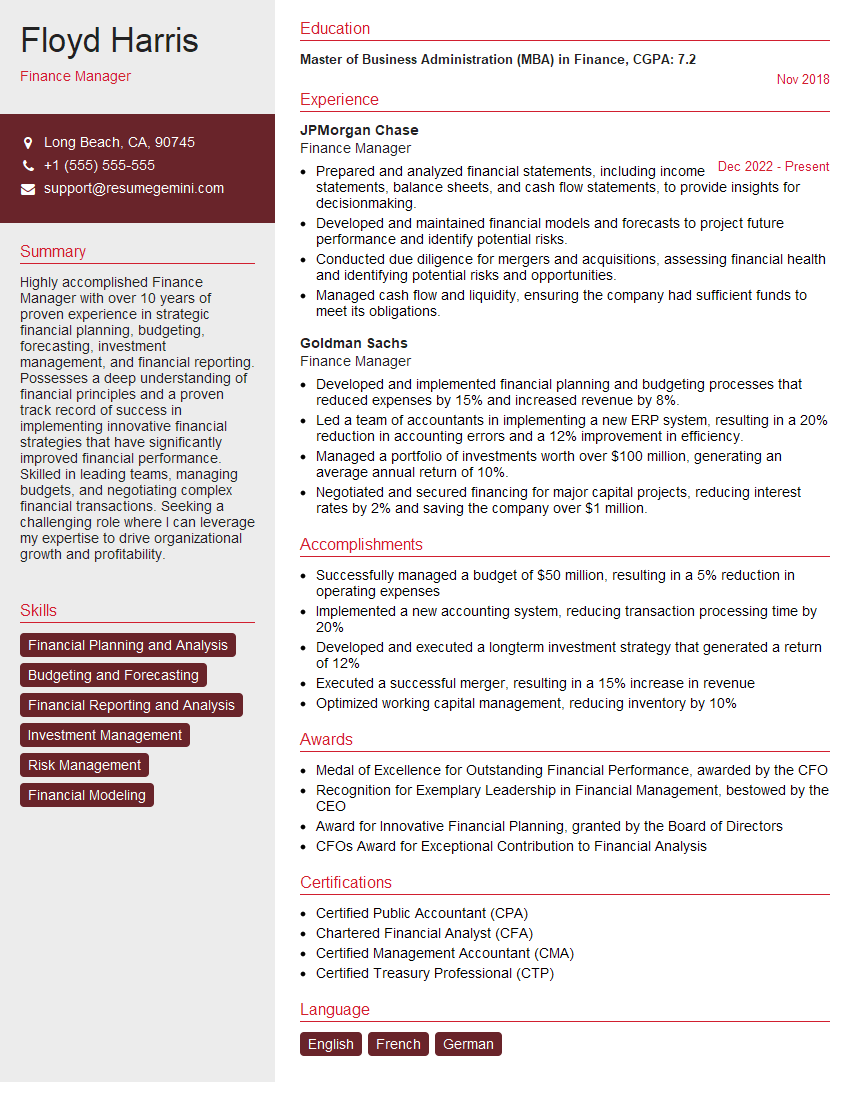
Finance Manager Resume Sample

Budget Manager Resume Sample
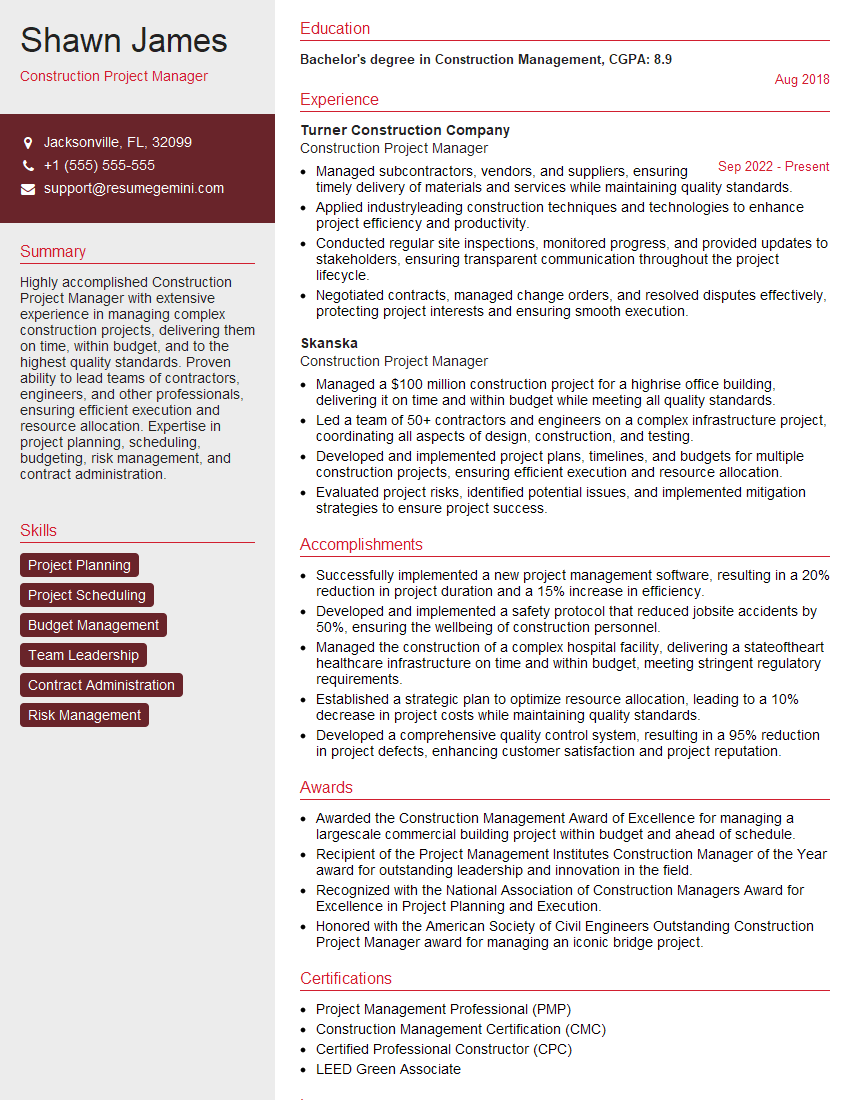
Construction Project Manager Resume Sample

Project Manager Resume Sample
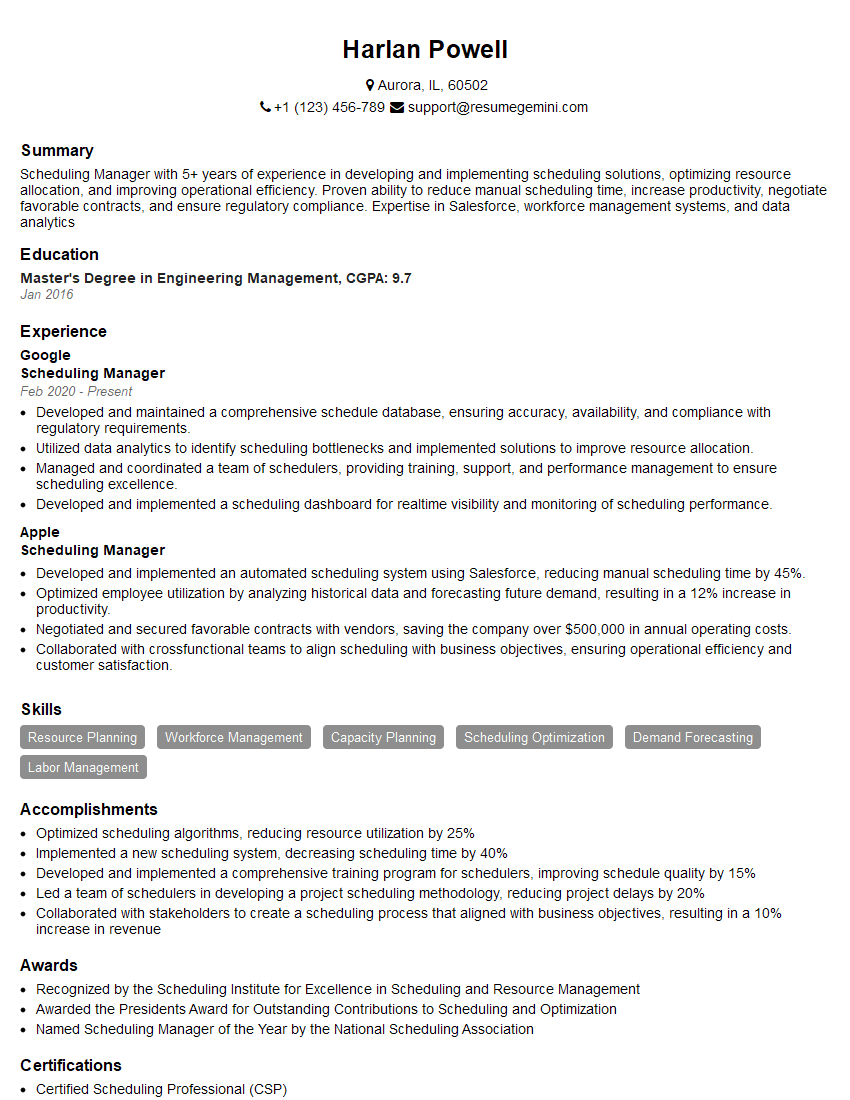
Scheduling Manager Resume Sample
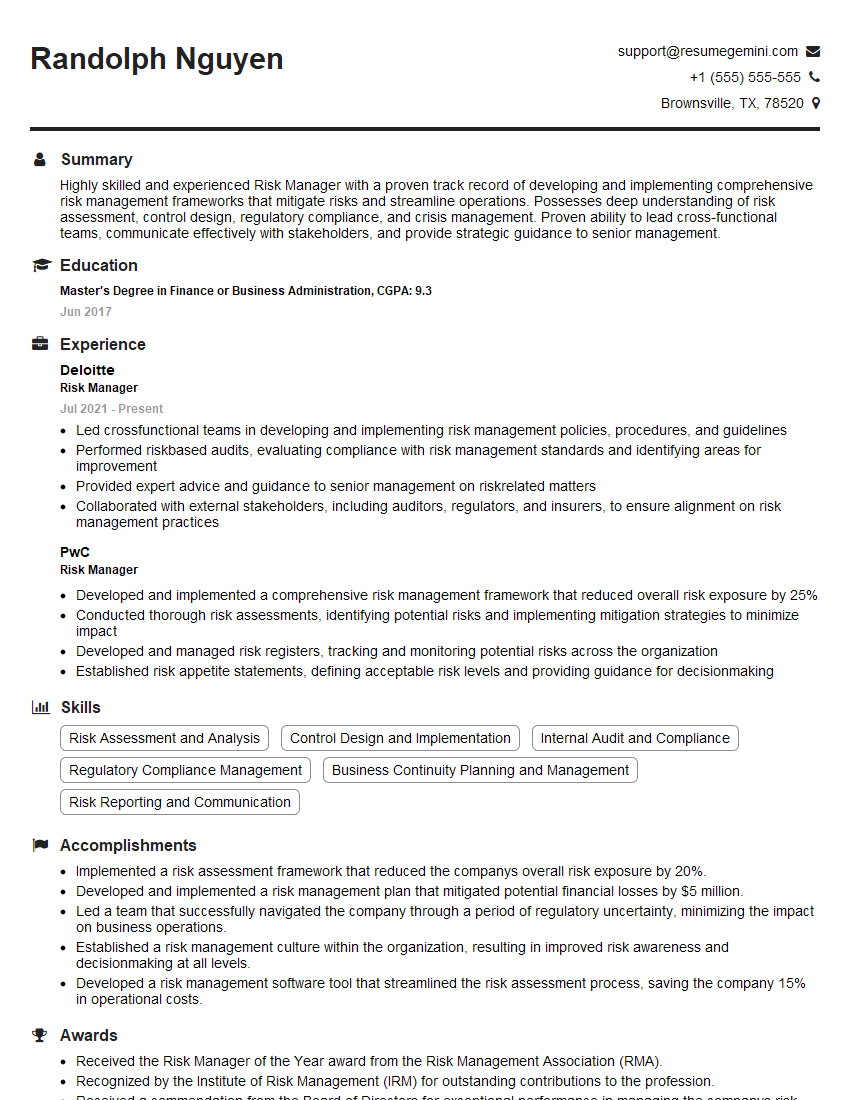
Risk Manager Resume Sample
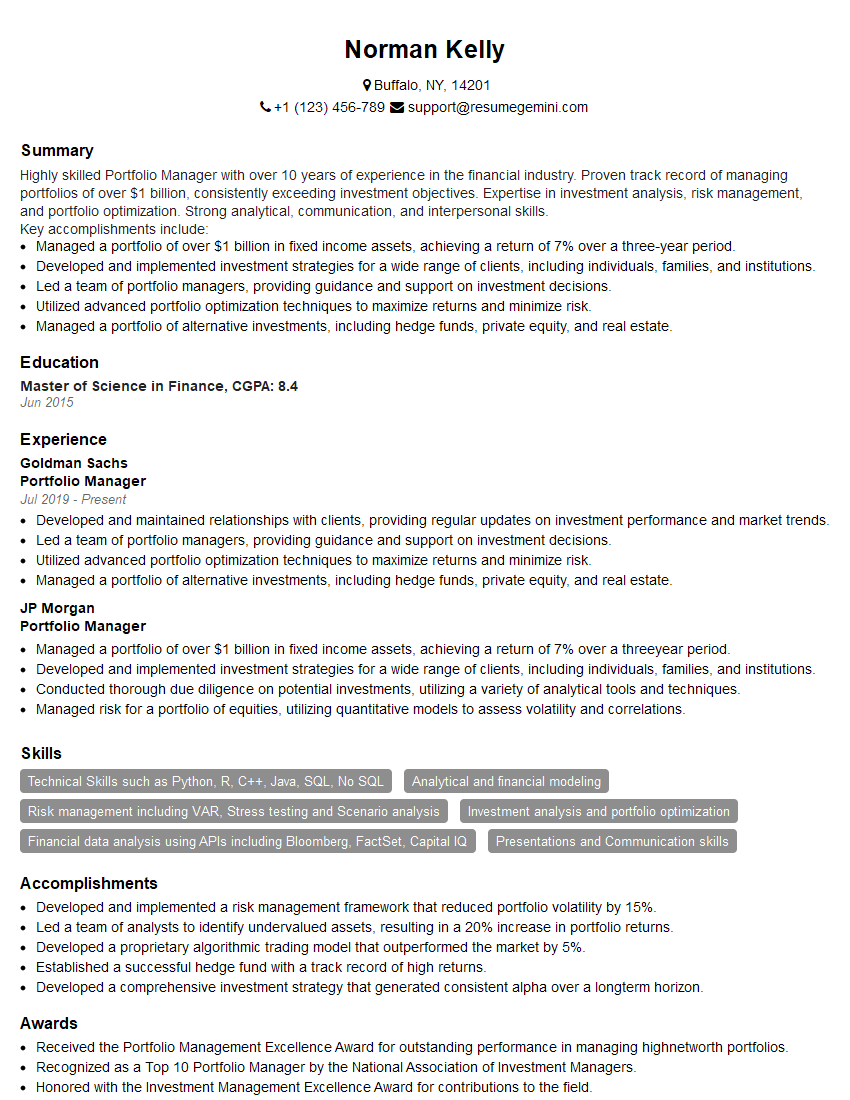
Portfolio Manager Resume Sample
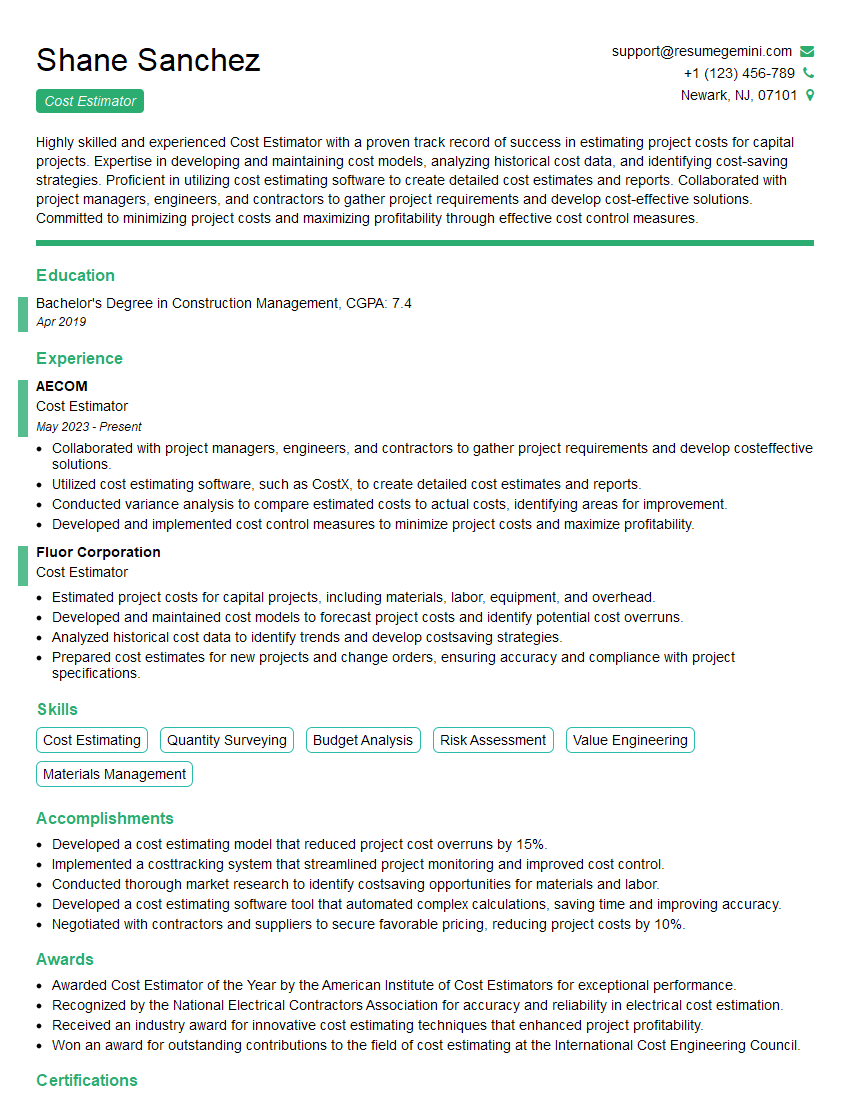
Cost Estimator Resume Sample
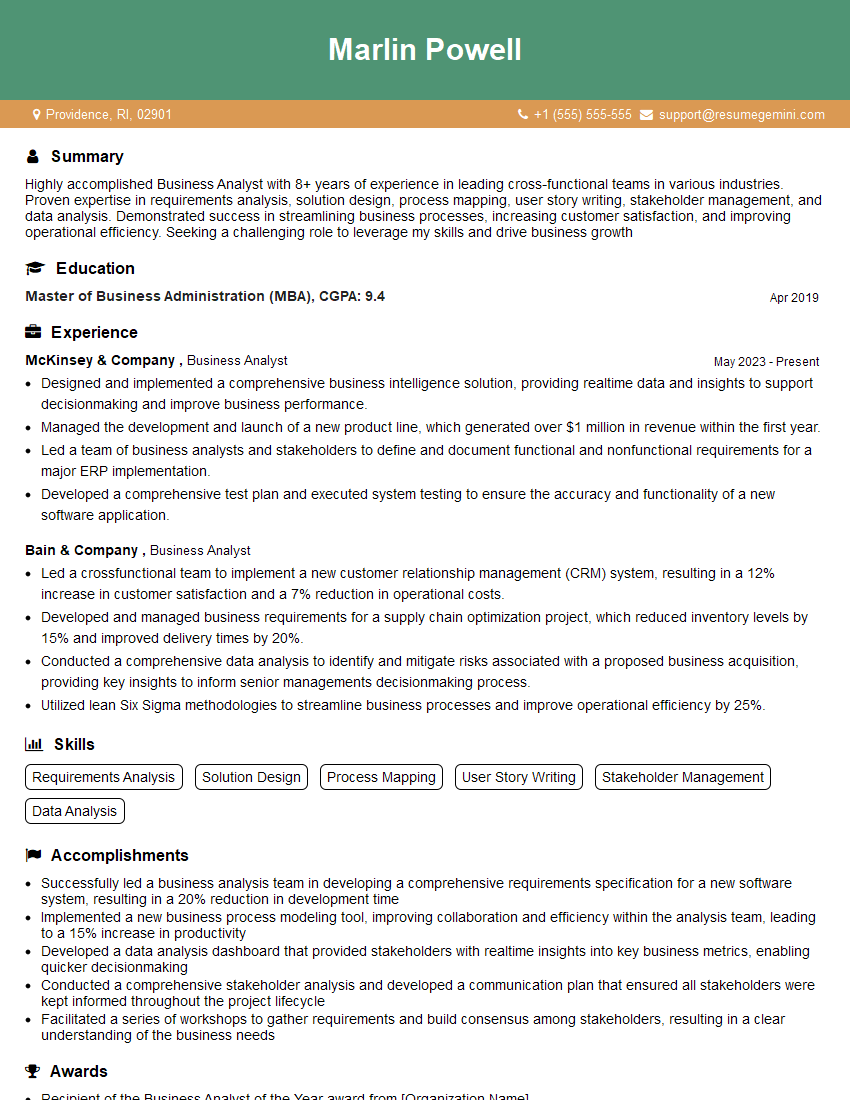
Business Analyst Resume Sample
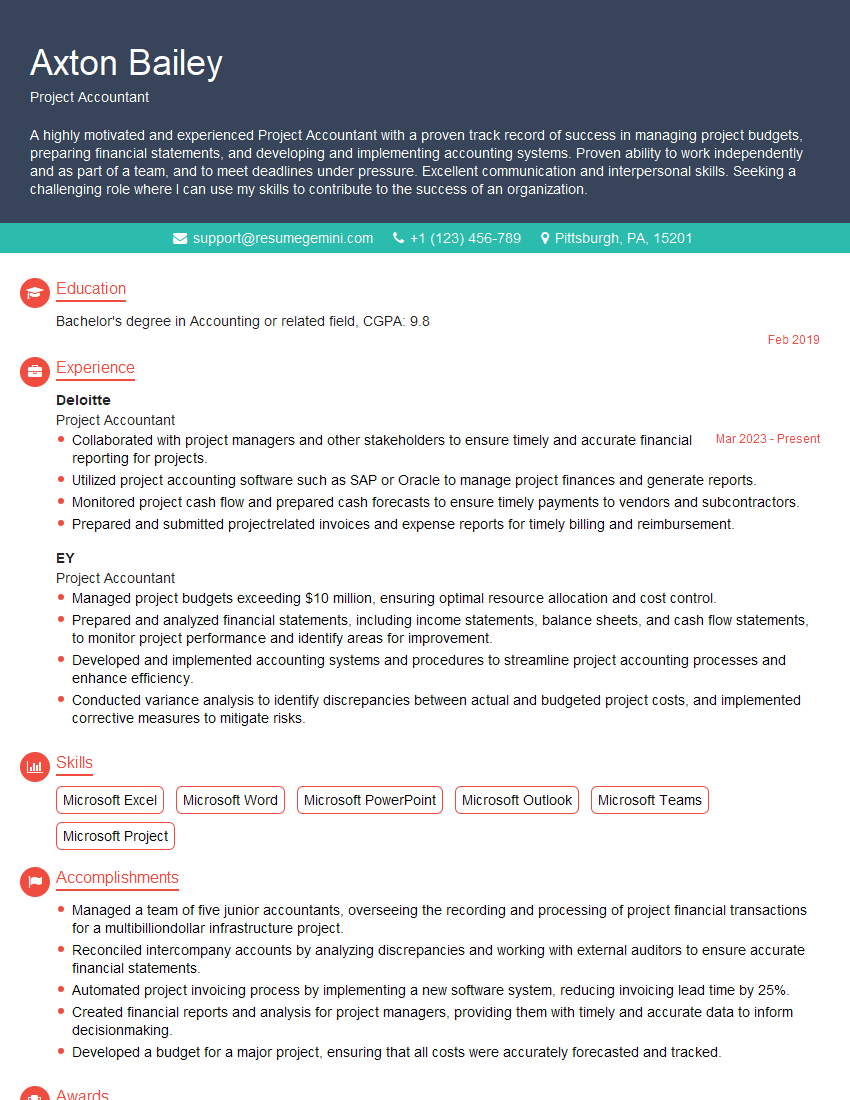
Project Accountant Resume Sample
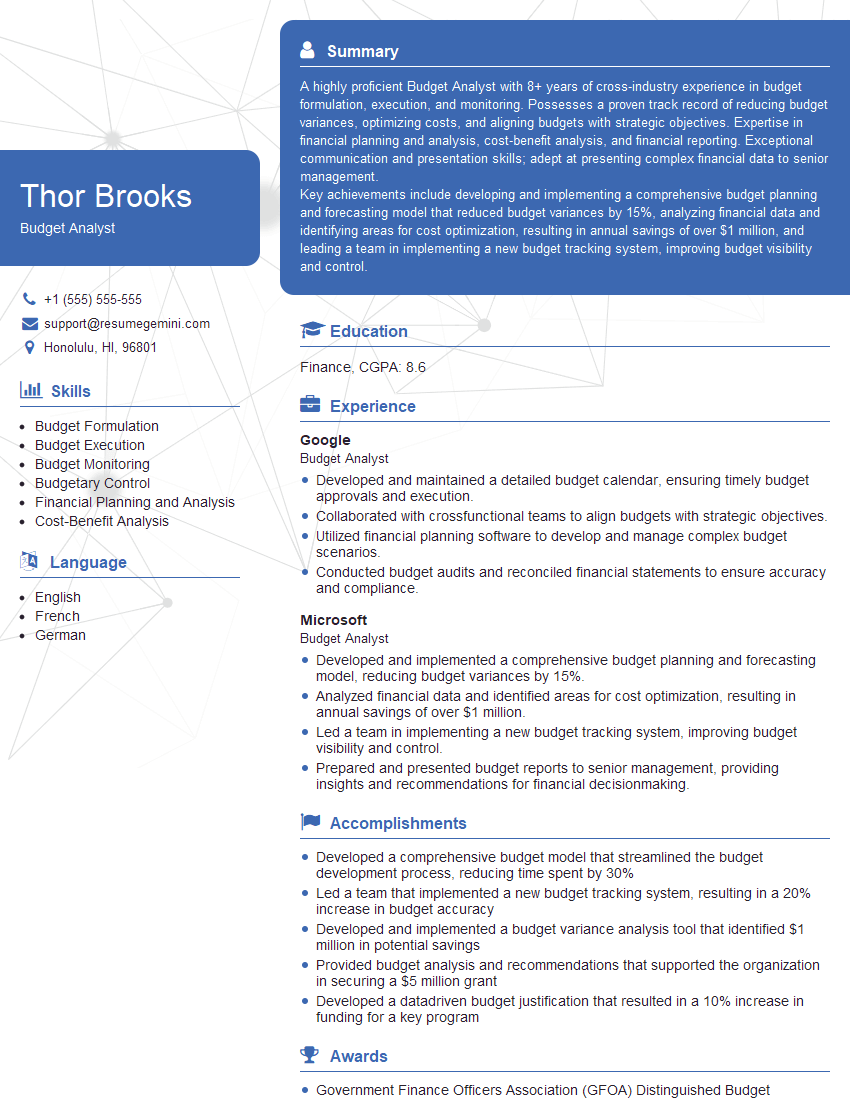
Budget Analyst Resume Sample
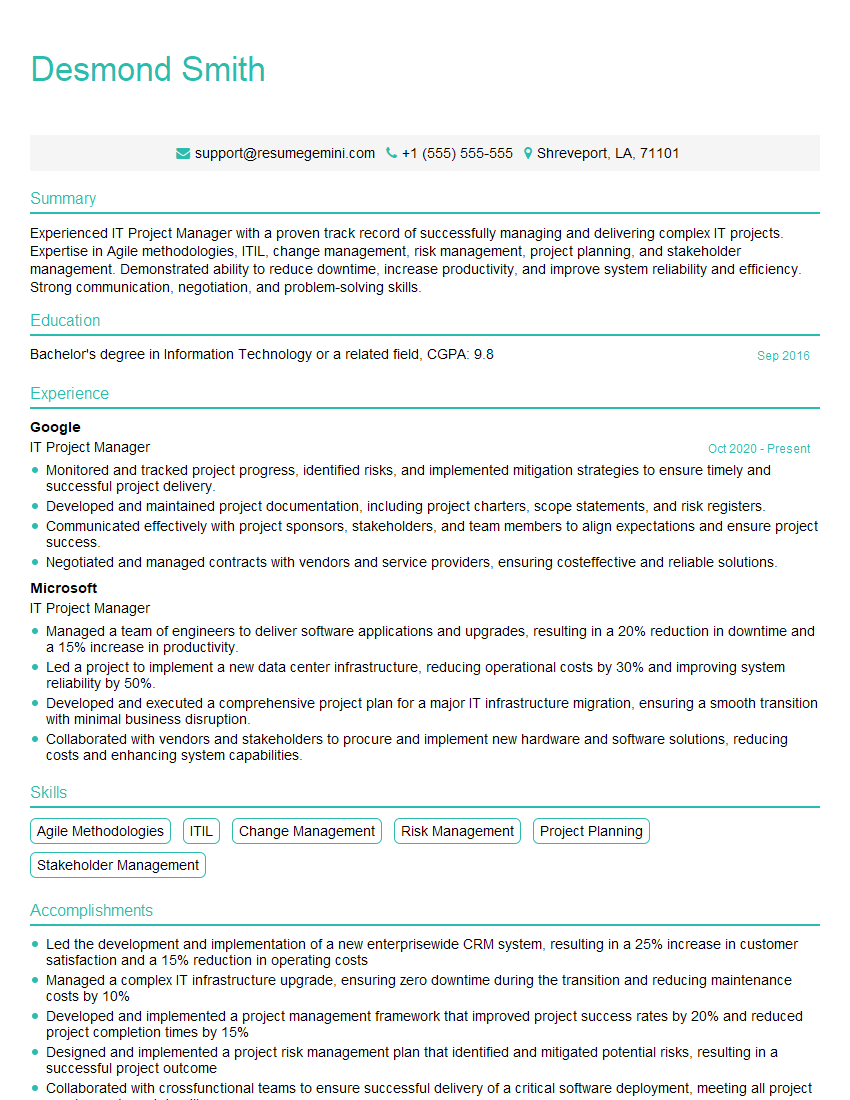
IT Project Manager Resume Sample
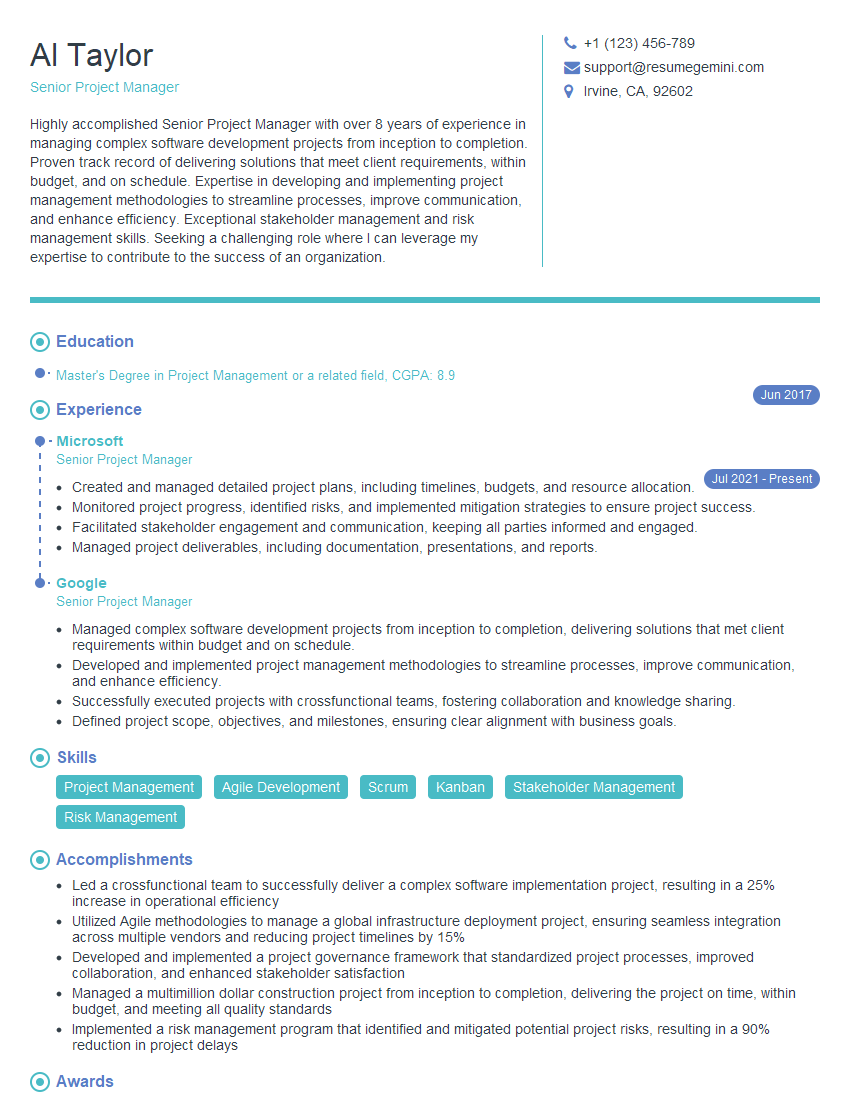
Senior Project Manager Resume Sample
- Chief Financial Officer (CFO)
- Program Manager
- Strategic Planner
- Operations Manager
- Product Manager
- Controller
- Finance Manager
- Budget Manager
- Construction Project Manager
- Project Manager
- Scheduling Manager
- Risk Manager
- Portfolio Manager
- Cost Estimator
- Business Analyst
- Project Accountant
- Budget Analyst
- IT Project Manager
- Senior Project Manager
Explore more articles
Users Rating of Our Blogs
Share Your Experience
We value your feedback! Please rate our content and share your thoughts (optional).
What Readers Say About Our Blog
Very informative content, great job.
good