Are you ready to stand out in your next interview? Understanding and preparing for Propagation Techniques (Seed, Cutting, Grafting) interview questions is a game-changer. In this blog, we’ve compiled key questions and expert advice to help you showcase your skills with confidence and precision. Let’s get started on your journey to acing the interview.
Questions Asked in Propagation Techniques (Seed, Cutting, Grafting) Interview
Q 1. Explain the process of seed germination, including factors influencing it.
Seed germination is the process by which a seed embryo emerges from its dormancy and develops into a seedling. Think of it like a tiny plant waking up from a long sleep! This process is initiated by imbibition, where the seed absorbs water, activating enzymes that break down stored food reserves. These reserves fuel the growth of the radicle (embryonic root) and plumule (embryonic shoot).
- Water: Essential for imbibition and activating metabolic processes.
- Oxygen: Needed for respiration, providing energy for growth.
- Temperature: Optimal temperatures vary by species, but generally need to be within a certain range for germination to occur.
- Light: Some seeds require light (photoblastic) for germination, while others are inhibited by it.
- Soil conditions: Well-drained soil with proper aeration is crucial to prevent fungal infections and ensure optimal oxygen availability.
For example, lettuce seeds germinate quickly in cool, moist conditions, while many desert plant seeds require a period of warmth and then a trigger like rain to break dormancy. Understanding these factors is critical for successful seed starting.
Q 2. Describe different seed sowing methods and when to use each.
Seed sowing methods depend on the seed size, species, and desired planting density. Here are a few common techniques:
- Direct sowing: Seeds are sown directly into their final growing position in the garden. This is suitable for fast-germinating seeds that don’t transplant well, like beans and peas. It saves time and reduces transplant shock.
- Broadcasting: Seeds are scattered evenly over the soil surface, often used for small seeds like clover or grass. This method requires careful raking to ensure proper soil contact.
- Drilling: Seeds are placed in rows at a specific depth and spacing using a seed drill or by hand. This ensures even spacing and simplifies weed control. Ideal for row crops like carrots and corn.
- Seed trays/pots: Seeds are sown in individual cells or trays, allowing for precise control over growing conditions. This is excellent for starting tender seedlings indoors before transplanting outdoors.
The choice of method depends on the plant species, the scale of planting, and available resources. For instance, large-scale commercial operations often employ drilling or specialized planting machinery, while home gardeners might opt for seed trays for better control and increased germination success rates.
Q 3. What are the advantages and disadvantages of using seeds for propagation?
Seed propagation offers several advantages but also has some drawbacks:
Advantages:
- Large-scale production: Seeds allow for rapid and cost-effective propagation of a large number of plants.
- Genetic diversity: Open-pollinated seeds maintain genetic diversity, leading to more resilient and adaptable plants.
- Disease avoidance: Seed propagation avoids the transmission of diseases present in the parent plant.
- Easy storage: Seeds can be stored for extended periods under proper conditions, preserving genetic resources.
Disadvantages:
- Dormancy: Some seeds require specific conditions to break dormancy and germinate, leading to delayed establishment.
- Slow growth: Seedlings often take longer to reach maturity compared to plants propagated through other methods.
- Germination rate variability: Not all seeds will germinate, resulting in potentially lower yields.
- Inconsistent results: Seedling uniformity may be less consistent than methods like cuttings or grafting.
For example, while a fruit grower might prefer grafting for faster fruit production and quality control, a landscape company might use seeds for large-scale planting of wildflowers to maximize cost-effectiveness and genetic diversity.
Q 4. Explain the process of hardwood cutting propagation.
Hardwood cuttings are taken from mature, dormant woody stems during the late autumn or winter. These cuttings are typically 6-12 inches long and taken from the current year’s growth. The process involves several key steps:
- Cutting selection: Choose healthy, disease-free stems with mature wood.
- Cutting preparation: Cuttings should be made with a sharp, clean blade, making a slanted cut at the base to maximize surface area for root development. Remove lower leaves to prevent rotting.
- Hormone application: Applying rooting hormone powder to the base of the cutting enhances root formation.
- Planting: Plant the cuttings in a well-draining medium, such as a mix of perlite and vermiculite, ensuring that the lower nodes are buried.
- Maintenance: Keep the cuttings consistently moist but not soggy. Provide appropriate light and temperature.
- Rooting: Root development typically takes several weeks to months.
Many deciduous shrubs and trees propagate well from hardwood cuttings, offering a simple and effective propagation method.
Q 5. Describe the process of softwood cutting propagation.
Softwood cuttings are taken from new, actively growing shoots in the spring or early summer. These cuttings are typically 4-6 inches long and have tender, succulent stems. The process is similar to hardwood cuttings, but the timing and handling are different:
- Cutting selection: Choose healthy, actively growing tips.
- Cutting preparation: Cut just below a node to promote root development. Remove lower leaves, leaving only a few at the tip for photosynthesis.
- Hormone application: Rooting hormone is recommended to promote faster rooting.
- Planting: Plant in a moist, well-draining propagation mix, ensuring adequate humidity.
- Maintenance: Keep the cuttings consistently moist and provide high humidity, often using a plastic humidity dome or propagator. Maintain appropriate light levels but avoid direct sunlight.
- Rooting: Roots typically develop within a few weeks.
Many herbaceous plants and some shrubs and trees easily propagate from softwood cuttings, offering a quick method for producing new plants from desired genotypes.
Q 6. What are the ideal conditions for rooting cuttings (temperature, humidity, light)?
Ideal conditions for rooting cuttings are crucial for success. These conditions vary slightly depending on the type of cutting (hardwood vs. softwood) and the plant species, but some general guidelines apply:
- Temperature: Generally, warm temperatures (around 70-75°F or 21-24°C) are optimal for rooting. Avoid extreme temperature fluctuations.
- Humidity: High humidity (around 80-90%) is essential to prevent cuttings from drying out before rooting occurs. This can be achieved using a plastic humidity dome or propagator.
- Light: Bright, indirect light is best. Avoid direct sunlight, which can scorch the tender cuttings. Some cuttings can tolerate lower light conditions.
Providing these optimal conditions significantly enhances the rooting rate and overall success of the propagation effort. Monitoring and adjusting conditions as needed is key to ensuring optimal results.
Q 7. Explain different types of grafting techniques (e.g., whip and tongue, cleft graft).
Grafting is a horticultural technique where tissues from two different plants are joined to grow together. Several grafting techniques exist, each suited to different plant types and sizes:
- Whip and Tongue Graft: This technique uses a diagonal cut on both the scion (desired plant part) and rootstock (base plant) to create interlocking surfaces. A tongue-like cut is then made on each, further enhancing the union. This is common for fruit trees with similar diameter stems.
- Cleft Graft: A vertical split is made in the rootstock, and the scion (with a wedge-shaped cut) is inserted into the split. This method is used when the rootstock is thicker than the scion, commonly used in older trees or larger rootstocks.
- Bud Grafting (T-budding): A small ‘T’ shaped incision is made on the rootstock, and a bud from the scion is inserted under the bark. This is a common method for propagating fruit trees.
- Approach Grafting: This involves grafting two plants while they are still growing in the ground by bringing their stems together and joining them. Once the union is successful, the scion and rootstock are separated.
The choice of grafting method depends heavily on the plant species, the size of the rootstock and scion, and the time of year. Successful grafting requires precise cuts, firm union, and appropriate post-grafting care to ensure the union heals and grows successfully.
Q 8. What are the factors to consider when selecting a rootstock for grafting?
Selecting the right rootstock is crucial for successful grafting. The rootstock provides the root system, influencing the overall characteristics of the grafted plant. Several factors need careful consideration:
- Disease Resistance: Choose a rootstock known for resistance to common diseases affecting the desired scion (the part of the plant being grafted). For instance, if you’re grafting apple trees susceptible to fire blight, selecting a rootstock with inherent fire blight resistance is vital.
- Hardiness/Climate Adaptability: The rootstock’s hardiness should match or exceed that of the scion. It determines the plant’s ability to withstand cold, heat, and other environmental stresses.
- Growth Habit and Size: Rootstocks influence the size and growth habit of the mature tree. Dwarfing rootstocks are used to create smaller trees suitable for home gardens, whereas vigorous rootstocks result in larger trees ideal for orchards.
- Soil Tolerance: Consider the rootstock’s tolerance to different soil types and conditions (e.g., salinity, drainage). This ensures optimal root development and nutrient uptake.
- Compatibility: The rootstock and scion must be compatible. Incompatible combinations will lead to poor graft union, failure to grow, or even plant death. This compatibility is often determined by the species or cultivar of both components. For example, apple rootstocks generally work well with apple scions, but grafting an apple scion onto a peach rootstock would fail.
- Fruit Quality and Yield: Certain rootstocks can influence the fruit’s size, quality, and yield. This effect can be subtle, but some rootstocks are known to enhance specific fruit characteristics.
Careful selection of the rootstock is a key step to producing healthy and productive grafted plants, maximizing yield, disease resistance and overall horticultural success.
Q 9. Describe the process of budding.
Budding, also known as bud grafting, is a propagation technique where a single bud, including a small piece of bark and cambium, is grafted onto a rootstock. It’s a common method for propagating fruit trees, roses, and other woody plants. Here’s the general process:
- Prepare the Budwood: Select healthy, dormant buds from the current season’s growth on desirable plants. These buds, also known as scions, are carefully removed.
- Prepare the Rootstock: Select vigorous, healthy rootstock of appropriate size. A T-shaped incision is typically made in the bark of the rootstock.
- Insert the Bud: Gently insert the bud (including its attached bark sliver) into the T-shaped incision of the rootstock. Ensure that the cambium layer of the bud makes good contact with the cambium layer of the rootstock. This is critical for successful union.
- Wrap and Secure: Secure the bud using grafting tape or rubber bands, ensuring the bud remains firmly in place and protected. The area above the bud should be exposed to sunlight.
- Monitoring and Aftercare: Regularly monitor the graft union. After a few weeks, the bud should start to grow, and the grafting tape can be removed. Protecting the grafted plant from excessive sunlight, wind, and frost is essential until established.
Different budding techniques exist (e.g., chip budding, T-budding), each adapted to different plant species and conditions. Successful budding relies on precise technique and appropriate timing, typically done in late summer or early autumn using dormant buds.
Q 10. What are some common problems encountered in cutting propagation, and how do you address them?
Cutting propagation, while relatively simple, faces challenges. Here are some common issues:
- Fungal and Bacterial Diseases: Damp conditions can lead to rot and other diseases. Sanitation is key; use sterilized tools and propagation media.
- Improper rooting hormone application: Incorrect concentration or application of rooting hormone can hinder root development. Follow the manufacturer’s instructions carefully.
- Insufficient moisture: Cuttings need consistent moisture to survive, but overwatering can lead to root rot. Maintain a moist but well-draining medium.
- Wilting: Cuttings might wilt due to water stress or excessive heat. Use a humidity dome or misting system to maintain humidity levels.
- Pest infestations: Insects or other pests can damage cuttings. Monitor regularly and treat promptly with appropriate insecticides or other methods.
- Poor choice of cutting type: The selection of the cutting (hardwood, softwood, herbaceous) should be appropriate for the plant species. Incorrect selection can lead to failure.
Addressing these challenges involves using clean tools and media, providing appropriate humidity and moisture levels, selecting the right propagation medium, and using rooting hormones correctly. Regular inspection and prompt treatment of any problems are also crucial for success.
Q 11. What are some common problems encountered in grafting, and how do you address them?
Grafting, while effective, faces several potential problems:
- Incompatibility: The scion and rootstock may be incompatible, preventing a successful union. This often shows as lack of growth or die-back at the graft union.
- Improper grafting technique: Incorrect cuts, improper alignment of the cambium layers, or poor wrapping can result in failure. Accurate knife work is essential for a successful graft.
- Disease or pest infection: The graft union can be vulnerable to infection. Sanitation and timely treatment of any disease or pest outbreaks are important.
- Environmental stress: Extreme temperatures, drought, or excessive moisture can hinder the graft union. Providing suitable environmental conditions is essential post-grafting.
- Graft failure: Sometimes the graft simply fails to take. The scion might die, or the union might not form correctly. Careful selection of both scion and rootstock, along with precise technique is key.
Addressing these involves using compatible plant material, employing the correct grafting techniques, maintaining appropriate environmental conditions, and ensuring proper sanitation before, during, and after grafting. Monitoring the graft’s health and prompt response to problems are essential.
Q 12. Explain the importance of sanitation in plant propagation.
Sanitation is paramount in plant propagation to prevent the spread of diseases and pests. Contaminated tools, media, or plant material can easily introduce pathogens, leading to widespread infection and significant losses. Think of it like a hospital—sterile conditions are essential.
Sanitation practices include:
- Sterilizing tools: Knives, shears, and other tools should be sterilized with alcohol or bleach solutions between each use.
- Using sterile media: Propagation media such as soil mixes or coco coir should be pasteurized or sterilized before use to eliminate unwanted organisms.
- Selecting healthy plant material: Only use healthy, disease-free plant material for propagation to avoid introducing pathogens.
- Maintaining a clean workspace: Keep the propagation area clean and free of debris to minimize the risk of contamination.
- Proper disposal of infected material: Any plant material showing signs of disease or pest infestation should be promptly removed and disposed of safely.
By adhering to strict sanitation protocols, propagators can significantly reduce the risk of disease and increase their chances of success.
Q 13. How do you select healthy plant material for propagation?
Selecting healthy plant material is the foundation of successful propagation. Compromised plant material will yield weak or diseased offspring. Here’s how to assess plant health:
- Visual inspection: Look for signs of disease or pest damage, such as spots, wilting leaves, or unusual discoloration. Healthy plants exhibit vigorous growth, deep green coloration, and no visible signs of damage.
- Check for vigor: Healthy plants exhibit strong growth, with firm, plump leaves and stems. Weak or stunted plants should be avoided.
- Assess root system: When possible, examine the root system. Healthy roots are well-developed, firm, and free of damage or rot.
- Source reputable suppliers: Obtaining plant material from certified and reputable sources minimizes the risk of introducing diseases or pests.
- Consider the age and maturity: The age and maturity of the plant material depend on the chosen propagation method. For example, cuttings are best taken from mature, but not overly aged, stems.
Using healthy, vigorous plant material significantly increases the chances of successful propagation, resulting in stronger, healthier offspring.
Q 14. Describe the role of plant hormones in propagation.
Plant hormones play a crucial role in plant propagation, influencing various processes such as cell division, root formation, and shoot development. They are often used to enhance rooting in cuttings or to stimulate growth in grafts.
Key hormones used in propagation include:
- Auxins (e.g., IBA, NAA): Promote root formation in cuttings. They are commonly applied as rooting powders or solutions.
- Cytokinins (e.g., BA, kinetin): Stimulate cell division and shoot development. They are sometimes used to improve bud break in grafting or to promote branching in cuttings.
- Gibberellins (GAs): Can stimulate stem elongation and flowering, although their use in propagation is less common than auxins or cytokinins.
The application method and concentration of these hormones are crucial for optimal results. Overuse can cause toxicity, while underuse may have minimal effects. Always follow manufacturer’s instructions and tailor the application based on the plant species and propagation method.
For example, a high concentration of auxins might be used for difficult-to-root hardwood cuttings, while a lower concentration might suffice for easy-to-root softwood cuttings. By strategically using plant hormones, propagators can significantly improve the success rate and efficiency of various propagation techniques.
Q 15. What are the benefits and limitations of tissue culture propagation?
Tissue culture, also known as micropropagation, is a powerful technique for rapidly multiplying plants from small pieces of tissue under sterile conditions. It offers several advantages, but also presents limitations.
- Benefits:
- Rapid multiplication: Produces thousands of plants from a single explant (a small piece of plant tissue) in a short time, ideal for rare or endangered species.
- Disease elimination: The sterile environment allows for the production of disease-free plants, crucial for commercial horticulture.
- Production of disease-resistant varieties: Genetic modification and selection can be done at the cellular level.
- Propagation of difficult-to-propagate plants: Works for plants that are difficult or impossible to propagate by other methods, such as those with low seed germination rates or those that do not root easily from cuttings.
- Year-round propagation: Independent of seasonal changes.
- Limitations:
- High initial investment: Requires specialized equipment, clean rooms, and trained personnel.
- Technical expertise required: Success relies on aseptic techniques and careful monitoring of environmental conditions.
- Potential for genetic variation: Although minimizing genetic variation is a primary goal, somaclonal variation (genetic changes that occur in tissue culture) can sometimes occur, negatively affecting the uniformity of the resulting plants.
- Susceptibility to contamination: A single contamination event can wipe out an entire culture.
- Cost per plant can be higher than other methods, especially for large-scale production.
For example, orchid propagation is highly reliant on tissue culture due to the challenges in seed germination and the difficulty in rooting cuttings for many orchid species.
Career Expert Tips:
- Ace those interviews! Prepare effectively by reviewing the Top 50 Most Common Interview Questions on ResumeGemini.
- Navigate your job search with confidence! Explore a wide range of Career Tips on ResumeGemini. Learn about common challenges and recommendations to overcome them.
- Craft the perfect resume! Master the Art of Resume Writing with ResumeGemini’s guide. Showcase your unique qualifications and achievements effectively.
- Don’t miss out on holiday savings! Build your dream resume with ResumeGemini’s ATS optimized templates.
Q 16. Explain how you would propagate a specific plant species using cuttings (specify the plant).
Let’s consider propagating a Coleus plant using stem cuttings. Coleus are easily propagated by this method due to their rapid growth and ability to easily root.
- Select healthy cuttings: Choose non-flowering, actively growing stems about 4-6 inches long. Ensure the stems are firm and free from diseases or pests.
- Prepare the cuttings: Make a clean cut below a node (the point where leaves or branches emerge from the stem). Remove the lower leaves to prevent rot, leaving a few top leaves to aid in photosynthesis.
- Dip in rooting hormone (optional): This encourages faster root development. Many commercial rooting hormone powders are available.
- Planting the cuttings: Plant cuttings in a well-draining potting mix, such as a mixture of peat moss and perlite. Ensure the nodes are buried slightly.
- Provide ideal conditions: Keep the cuttings moist and humid. Covering the pot with a clear plastic bag or dome will help maintain humidity. Place them in bright, indirect light. Avoid direct sunlight, which could scorch the cuttings.
- Monitor progress: Check regularly for signs of rooting and watering as needed. Once roots are established (this can take a few weeks), you can gradually acclimate the new plants to normal conditions.
- Transplanting: Once the roots have developed sufficiently, transplant the rooted cuttings into individual pots containing a suitable potting mix.
Remember, consistent moisture and humidity are vital for successful Coleus cutting propagation. Too much or too little water can lead to rot or wilting.
Q 17. Explain how you would propagate a specific plant species using grafting (specify the plant).
Let’s use apple trees as an example for grafting. Grafting is a technique that joins two plant parts together to form a single plant. It’s commonly used in fruit tree propagation to combine desirable traits, like disease resistance from a rootstock and high-quality fruit production from a scion.
- Select the scion and rootstock: The scion is a cutting taken from the desired apple variety that will bear fruit. The rootstock provides the root system and influences factors like tree size and hardiness. Compatibility between scion and rootstock is crucial for success.
- Prepare the scion and rootstock: Make a clean, angled cut on both the scion and rootstock (the most common methods are whip and tongue or cleft grafting). Ensure the cambium layers (the actively growing layer just below the bark) of both parts are in close contact for successful union.
- Join the scion and rootstock: Carefully fit the scion wood onto the rootstock wood, ensuring alignment of the cambium layers. This is often secured with grafting tape or rubber bands.
- Protect the graft union: Cover the graft union with grafting sealant to prevent moisture loss and disease infection.
- Plant the grafted rootstock: Plant the grafted rootstock in a suitable location, ensuring the graft union is above the soil line.
- Monitor growth and care: Water regularly and monitor growth. The scion should start growing after a few weeks, indicating successful grafting. Remove any growth from the rootstock below the graft union.
The success of apple grafting hinges on proper timing, clean cuts, and the alignment of the cambium layers. Different grafting methods are used depending on the size of the rootstock and scion.
Q 18. How do you manage pests and diseases in a propagation environment?
Pest and disease management in a propagation environment is crucial for maintaining healthy plants and preventing significant losses. A multi-pronged approach is recommended.
- Prevention: The best approach is prevention. This involves maintaining high hygiene standards in the propagation area, including sterilizing tools and work surfaces. Selecting disease-free planting materials and employing quarantine procedures for newly introduced plants are essential.
- Monitoring: Regularly inspect plants for signs of pests and diseases. Early detection allows for prompt intervention, preventing widespread damage. This involves carefully examining leaves, stems, and roots.
- Biological control: This involves using beneficial insects, fungi, or bacteria to control pests. This is an environmentally friendly approach that can reduce reliance on chemical pesticides.
- Chemical control: Use of pesticides or fungicides is sometimes necessary, but should be used judiciously and only after considering the environmental impact. Always follow label instructions carefully.
- Cultural practices: Good cultural practices play a significant role. These include providing proper ventilation, spacing plants appropriately to promote airflow, and ensuring optimal watering and fertilization to encourage plant health and resilience.
For example, using sticky traps to capture whiteflies or applying neem oil for aphids are common strategies in propagation settings. In case of fungal diseases, applying appropriate fungicides after accurate disease diagnosis is essential.
Q 19. What are the different methods for storing seeds?
Seed storage is critical for maintaining seed viability and preserving genetic resources. The method chosen depends on the species and the desired storage duration.
- Short-term storage (a few months): Seeds can be stored in cool, dry places, such as in airtight containers in a refrigerator.
- Medium-term storage (a few years): Low-humidity storage, often using silica gel desiccants, is commonly used to reduce moisture content, slowing down seed deterioration.
- Long-term storage (many years): For long-term preservation, cryopreservation (storage at ultra-low temperatures, such as -196°C in liquid nitrogen) is the most effective method, maintaining seed viability for decades or even centuries.
The ideal storage conditions vary depending on the seed type, but generally involve low temperatures, low humidity, and darkness to prevent germination and slow down seed aging.
Q 20. Explain the concept of seed stratification and its importance.
Seed stratification is a technique used to mimic the natural conditions seeds experience in their environment before germination. Many seeds require a period of cold, moist conditions to break dormancy and initiate germination. This is particularly common in temperate-climate species.
The process typically involves moistening seeds and placing them in a cold environment (e.g., refrigerator) for a specific period. The cold treatment breaks down inhibitors that prevent germination and promotes physiological changes necessary for successful sprouting.
Importance: Stratification significantly improves germination rates and uniformity for many species that have seed dormancy. Without stratification, these seeds might not germinate at all or germinate very poorly. It ensures more consistent and successful seedling production, reducing wasted resources and improving overall success rates in propagation.
For example, many tree and shrub species, such as dogwoods and maples, require stratification for optimal germination.
Q 21. What are the different types of plant growth regulators and their roles in propagation?
Plant growth regulators (PGRs), also known as phytohormones, are naturally occurring or synthetic compounds that influence various aspects of plant growth and development. They play a crucial role in propagation.
- Auxins (e.g., IBA, NAA): Primarily promote root development. Used in rooting powders to enhance cutting propagation.
- Gibberellins (GAs): Stimulate stem elongation, seed germination, and flowering. Used to overcome seed dormancy and improve germination rates.
- Cytokinins (e.g., BA, kinetin): Promote cell division and shoot growth. Used in tissue culture to enhance shoot multiplication.
- Abscisic acid (ABA): Inhibits growth and promotes dormancy. Its role in propagation is less direct, but it’s important for understanding overall plant physiology.
- Ethylene: Promotes senescence and fruit ripening. While not directly used to enhance propagation, its presence in high levels can negatively impact rooting and plant development.
The appropriate concentration and application method of PGRs vary significantly depending on the plant species and the propagation technique being used. Improper use can have detrimental effects on plant growth.
Q 22. How do you determine the optimal planting depth for different seeds?
Determining the optimal planting depth for seeds is crucial for successful germination. It’s not a one-size-fits-all answer; it depends on the seed size and species. Generally, the rule of thumb is to plant seeds at a depth about two to three times their diameter. Smaller seeds, like lettuce or impatiens, only need to be lightly covered with soil or even sown directly onto the soil surface. Larger seeds, like beans or sunflowers, require deeper planting to provide sufficient protection and access to nutrients. Think of it like this: a tiny seed needs less ‘earth’ to break through, while a bigger seed needs more ‘room’ to grow.
However, there are exceptions. Some seeds require light for germination (photoblastic seeds) and should only be lightly covered or sown on the surface. Always consult seed packets or reliable horticultural references for specific planting instructions. For example, tomato seeds are usually planted about ¼ inch deep, while sweet pea seeds prefer about 1 inch of soil coverage.
Q 23. Describe different methods for assessing cutting viability.
Assessing cutting viability before propagation is critical to maximizing success. We use several methods:
- Visual Inspection: Healthy cuttings have firm, plump stems, vibrant green leaves (or needles in conifers), and no signs of disease or damage. Wilted or discolored cuttings are likely non-viable.
- The Bend Test: Gently bend the stem of the cutting. A healthy cutting will bend slightly before snapping, while a weak cutting will snap immediately.
- Leaf Test: Firmly grasp a leaf and try to pull it away from the stem. In healthy cuttings, the leaf should be securely attached and some resistance should be felt.
- Water Absorption Test: Place the base of the cutting in water for a short period. If the cutting absorbs water and remains firm, it indicates higher viability.
Using a combination of these techniques helps make a well-informed decision on which cuttings to propagate.
Q 24. How do you evaluate the success of a grafting technique?
Evaluating the success of a grafting technique involves several key observations over time. Immediately after grafting, we look for signs of proper union – a snug fit between the scion (graft) and the rootstock (base plant).
- Union Callus Formation: A callus forms at the graft union; this is a sign of successful healing and joining. This usually takes a few weeks and visually appears as a slightly swollen area at the grafting point.
- Scion Growth: If the scion begins to produce new leaves or shoots, this strongly indicates a successful graft. The vigor of this growth also signifies success.
- Lack of Wilting: The scion should not show signs of wilting or discoloration, especially when compared to the surrounding foliage on the rootstock.
- Long-Term Survival: Successful grafts should demonstrate long-term survival and growth. Monitor the plant over several months to years to ensure the graft remains strong and productive.
A failed graft will likely show no callus formation, wilting of the scion, and ultimately, death of the scion.
Q 25. What are the best practices for maintaining humidity and temperature in a propagation unit?
Maintaining optimal humidity and temperature in a propagation unit is critical for successful propagation. Different species have different needs, but generally:
- Humidity: High humidity (around 70-90%) is usually essential for cuttings and seedlings to prevent desiccation (drying out). This is often achieved using propagation domes or misting systems. Consider placing trays of water near the propagation unit to raise humidity levels naturally.
- Temperature: The ideal temperature depends on the plant species, but generally, a range of 65-75°F (18-24°C) is suitable for many cuttings and seeds. Consistent temperature is more important than a specific temperature point. Avoid large temperature fluctuations.
Monitoring both humidity and temperature is crucial using accurate tools like hygrometers and thermometers. We also adjust ventilation as needed to prevent fungal diseases and mold growth.
Q 26. How would you troubleshoot a low germination rate?
Troubleshooting a low germination rate involves systematically checking several factors:
- Seed Viability: Ensure the seeds are fresh and of high quality. Old seeds or seeds stored improperly may have reduced viability. Use a seed viability test if unsure.
- Sowing Depth: Verify the planting depth was appropriate for the specific seed type. Too deep, and the seedling might not have the strength to emerge. Too shallow, and the seed may dry out.
- Soil Conditions: Check the soil for adequate drainage and aeration. Compacted soil hinders germination. The soil should also have the correct pH and nutrient levels for the plant species.
- Moisture Level: Make sure the soil is consistently moist but not waterlogged. Overwatering can lead to seed rot.
- Temperature: Check whether the environmental temperature aligns with the needs of the plant species. Too cold, and germination slows down or stops; too hot, and the seeds may be damaged.
- Light Requirements: Confirm the lighting conditions match the light requirements of the seeds; some require light, while others need darkness for germination.
By systematically reviewing these aspects, you can usually identify the cause and improve germination rates.
Q 27. How would you manage a problem with fungal growth in a propagation environment?
Managing fungal growth in a propagation environment requires a multi-pronged approach focusing on prevention and treatment:
- Sterilization: Sterilize all propagation materials, including pots, trays, and tools, using a suitable disinfectant to prevent the introduction of fungal spores.
- Good Air Circulation: Ensure good air circulation within the propagation unit to reduce humidity and minimize the risk of fungal growth. Avoid overcrowding.
- Proper Watering: Avoid overwatering, which creates a humid environment ideal for fungal pathogens. Water only when necessary and ensure proper drainage.
- Fungicide Application: In case of an outbreak, apply a suitable fungicide approved for use in plant propagation. Follow the manufacturer’s instructions carefully.
- Removal of Affected Plants: Quickly remove and dispose of any plants showing signs of fungal infection to prevent its spread. Sanitize the area thoroughly afterward.
Prevention is key. Maintaining a clean and well-ventilated propagation environment significantly reduces the risk of fungal issues.
Q 28. Explain the difference between sexual and asexual propagation.
Sexual and asexual propagation are two fundamentally different methods of plant reproduction.
- Sexual Propagation: This involves using seeds produced through the union of male and female gametes (pollen and ovule). It results in genetically diverse offspring, creating plants with unique traits, some of which might be superior to the parent plant. Examples include growing plants from seeds collected from tomatoes, peppers, or wildflowers.
- Asexual Propagation: This method involves creating new plants from vegetative parts of the parent plant, such as stems, leaves, or roots. The offspring are genetically identical clones of the parent plant. Examples include taking cuttings from a rose bush, grafting apple trees, or propagating succulents from leaves. This approach ensures uniformity in characteristics and often provides faster propagation than growing from seed.
The choice between sexual and asexual propagation depends on the desired outcome and the plant species involved.
Key Topics to Learn for Propagation Techniques (Seed, Cutting, Grafting) Interview
- Seed Propagation:
- Seed dormancy and germination requirements (temperature, moisture, light).
- Seed selection, cleaning, and testing for viability.
- Seed sowing techniques (direct sowing, transplanting) and seedbed preparation.
- Understanding factors affecting seed germination rate and success.
- Practical application: Designing a seed propagation plan for a specific species.
- Cutting Propagation:
- Types of cuttings (stem, leaf, root) and their suitability for different plants.
- Hormone application and its role in rooting.
- Environmental factors affecting cutting propagation (humidity, temperature, light).
- Substrate selection and preparation for optimal rooting.
- Practical application: Troubleshooting common problems encountered during cutting propagation.
- Grafting Propagation:
- Types of grafting techniques (whip and tongue, cleft, bud grafting).
- Scion and rootstock selection criteria (compatibility, desired characteristics).
- Grafting procedures and post-grafting care.
- Factors influencing graft success and union formation.
- Practical application: Identifying suitable scion and rootstock combinations for a specific plant.
- General Propagation Principles:
- Understanding plant physiology related to propagation.
- Disease and pest management in propagation.
- Sterilization techniques and their importance.
- Record-keeping and data analysis in propagation.
- Propagation techniques for various plant types (herbaceous, woody, etc.).
Next Steps
Mastering propagation techniques is crucial for a successful career in horticulture, agriculture, and related fields. A strong understanding of these methods demonstrates practical skills and theoretical knowledge highly valued by employers. To enhance your job prospects, focus on creating an ATS-friendly resume that effectively showcases your skills and experience. ResumeGemini is a trusted resource that can help you build a professional and impactful resume. Examples of resumes tailored to Propagation Techniques (Seed, Cutting, Grafting) are available to further assist you in this process.
Farm Manager Resume Sample

Greenhouse Manager Resume Sample

Horticulturist Resume Sample

Nursery Manager Resume Sample

Landscape Architect Resume Sample

Field Technician Resume Sample

Arborist Resume Sample
Botanist Resume Sample

Conservationist Resume Sample

Forestry Technician Resume Sample

Urban Forester Resume Sample
Agricultural Technician Resume Sample
Horticultural Therapist Resume Sample

Orchard Manager Resume Sample
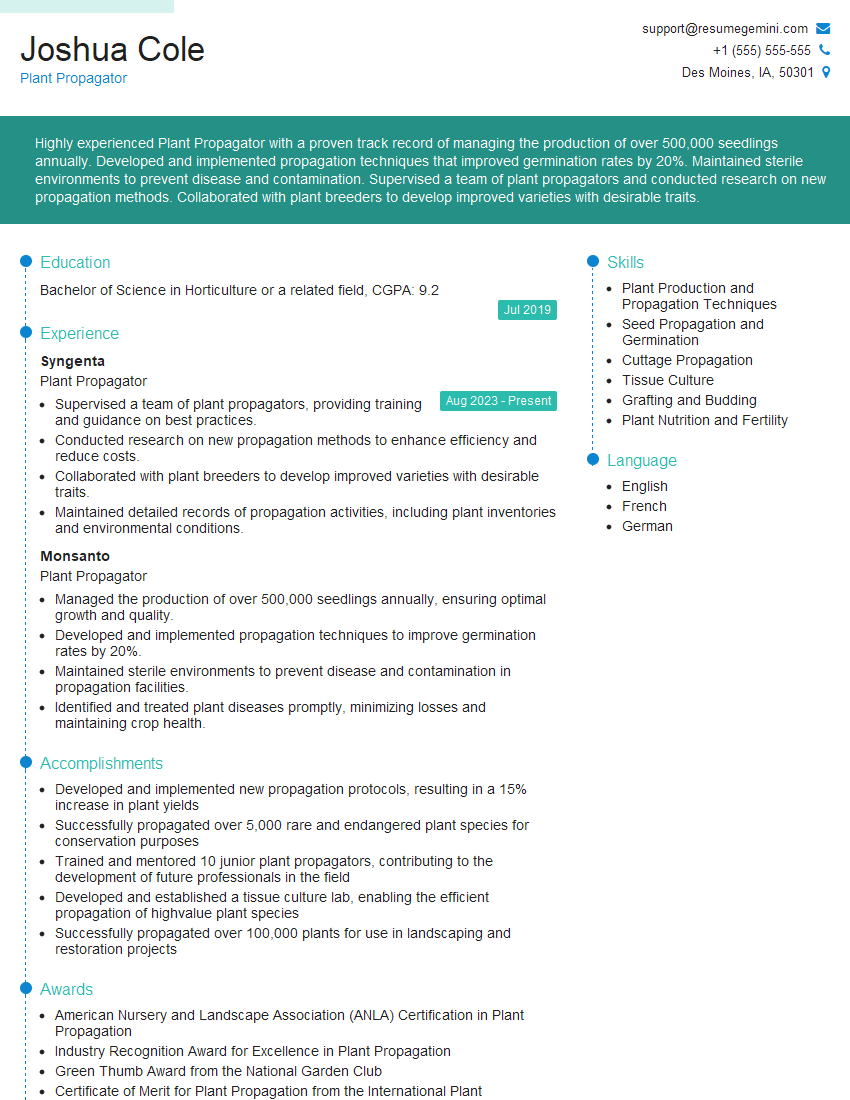
Plant Propagator Resume Sample
Explore more articles
Users Rating of Our Blogs
Share Your Experience
We value your feedback! Please rate our content and share your thoughts (optional).
What Readers Say About Our Blog
Attention music lovers!
Wow, All the best Sax Summer music !!!
Spotify: https://open.spotify.com/artist/6ShcdIT7rPVVaFEpgZQbUk
Apple Music: https://music.apple.com/fr/artist/jimmy-sax-black/1530501936
YouTube: https://music.youtube.com/browse/VLOLAK5uy_noClmC7abM6YpZsnySxRqt3LoalPf88No
Other Platforms and Free Downloads : https://fanlink.tv/jimmysaxblack
on google : https://www.google.com/search?q=22+AND+22+AND+22
on ChatGPT : https://chat.openai.com?q=who20jlJimmy20Black20Sax20Producer
Get back into the groove with Jimmy sax Black
Best regards,
Jimmy sax Black
www.jimmysaxblack.com
Hi I am a troller at The aquatic interview center and I suddenly went so fast in Roblox and it was gone when I reset.
Hi,
Business owners spend hours every week worrying about their website—or avoiding it because it feels overwhelming.
We’d like to take that off your plate:
$69/month. Everything handled.
Our team will:
Design a custom website—or completely overhaul your current one
Take care of hosting as an option
Handle edits and improvements—up to 60 minutes of work included every month
No setup fees, no annual commitments. Just a site that makes a strong first impression.
Find out if it’s right for you:
https://websolutionsgenius.com/awardwinningwebsites
Hello,
we currently offer a complimentary backlink and URL indexing test for search engine optimization professionals.
You can get complimentary indexing credits to test how link discovery works in practice.
No credit card is required and there is no recurring fee.
You can find details here:
https://wikipedia-backlinks.com/indexing/
Regards
NICE RESPONSE TO Q & A
hi
The aim of this message is regarding an unclaimed deposit of a deceased nationale that bears the same name as you. You are not relate to him as there are millions of people answering the names across around the world. But i will use my position to influence the release of the deposit to you for our mutual benefit.
Respond for full details and how to claim the deposit. This is 100% risk free. Send hello to my email id: lukachachibaialuka@gmail.com
Luka Chachibaialuka
Hey interviewgemini.com, just wanted to follow up on my last email.
We just launched Call the Monster, an parenting app that lets you summon friendly ‘monsters’ kids actually listen to.
We’re also running a giveaway for everyone who downloads the app. Since it’s brand new, there aren’t many users yet, which means you’ve got a much better chance of winning some great prizes.
You can check it out here: https://bit.ly/callamonsterapp
Or follow us on Instagram: https://www.instagram.com/callamonsterapp
Thanks,
Ryan
CEO – Call the Monster App
Hey interviewgemini.com, I saw your website and love your approach.
I just want this to look like spam email, but want to share something important to you. We just launched Call the Monster, a parenting app that lets you summon friendly ‘monsters’ kids actually listen to.
Parents are loving it for calming chaos before bedtime. Thought you might want to try it: https://bit.ly/callamonsterapp or just follow our fun monster lore on Instagram: https://www.instagram.com/callamonsterapp
Thanks,
Ryan
CEO – Call A Monster APP
To the interviewgemini.com Owner.
Dear interviewgemini.com Webmaster!
Hi interviewgemini.com Webmaster!
Dear interviewgemini.com Webmaster!
excellent
Hello,
We found issues with your domain’s email setup that may be sending your messages to spam or blocking them completely. InboxShield Mini shows you how to fix it in minutes — no tech skills required.
Scan your domain now for details: https://inboxshield-mini.com/
— Adam @ InboxShield Mini
support@inboxshield-mini.com
Reply STOP to unsubscribe
Hi, are you owner of interviewgemini.com? What if I told you I could help you find extra time in your schedule, reconnect with leads you didn’t even realize you missed, and bring in more “I want to work with you” conversations, without increasing your ad spend or hiring a full-time employee?
All with a flexible, budget-friendly service that could easily pay for itself. Sounds good?
Would it be nice to jump on a quick 10-minute call so I can show you exactly how we make this work?
Best,
Hapei
Marketing Director
Hey, I know you’re the owner of interviewgemini.com. I’ll be quick.
Fundraising for your business is tough and time-consuming. We make it easier by guaranteeing two private investor meetings each month, for six months. No demos, no pitch events – just direct introductions to active investors matched to your startup.
If youR17;re raising, this could help you build real momentum. Want me to send more info?
Hi, I represent an SEO company that specialises in getting you AI citations and higher rankings on Google. I’d like to offer you a 100% free SEO audit for your website. Would you be interested?
Hi, I represent an SEO company that specialises in getting you AI citations and higher rankings on Google. I’d like to offer you a 100% free SEO audit for your website. Would you be interested?