Interviews are more than just a Q&A session—they’re a chance to prove your worth. This blog dives into essential Ethics and Corporate Social Responsibility interview questions and expert tips to help you align your answers with what hiring managers are looking for. Start preparing to shine!
Questions Asked in Ethics and Corporate Social Responsibility Interview
Q 1. Define corporate social responsibility (CSR).
Corporate Social Responsibility (CSR) is a self-regulating business model that helps a company be socially accountable—to itself, its stakeholders, and the public. By practicing corporate social responsibility, companies can be conscious of the kind of impact they are having on all aspects of society, including economic, social, and environmental.
Essentially, it’s about a company going beyond simply complying with the law and actively contributing to the well-being of society and the environment. This can involve various actions like ethical sourcing, reducing their carbon footprint, supporting local communities, and promoting diversity and inclusion within their workforce. Think of it as a company’s commitment to being a good corporate citizen.
For example, a clothing company might implement CSR by sourcing its cotton from farms that practice sustainable farming techniques, reducing water consumption and pesticide use. This benefits the environment and the farmers, while also enhancing the company’s brand reputation.
Q 2. Explain the difference between ethics and compliance.
While both ethics and compliance are crucial for responsible business conduct, they are distinct concepts. Compliance focuses on adherence to laws, regulations, and industry standards. It’s about doing what is legally required. Ethics, on the other hand, goes beyond legal requirements and encompasses moral principles and values that guide a company’s behavior. It’s about doing what is morally right, even if it’s not legally mandated.
Think of it this way: compliance is the floor, the minimum standard of behavior. Ethics is the ceiling, representing the ideal and striving for excellence beyond the legal minimum. A company can be fully compliant with the law but still act unethically, for instance, by engaging in aggressive marketing practices that target vulnerable populations, even if those practices are technically legal.
A strong ethical culture, however, typically leads to better compliance as employees are more likely to follow rules and regulations if they believe in the company’s values.
Q 3. Describe a time you had to address an ethical dilemma at work.
In a previous role, I was part of a team launching a new product. We were under immense pressure to meet a tight deadline, and our initial cost analysis suggested we could source a key component from a supplier known for questionable labor practices. While using this supplier would have significantly reduced our production costs and helped us meet the deadline, it directly contradicted our company’s stated commitment to ethical sourcing.
I raised my concerns with my team and management, presenting data on the supplier’s practices and the potential reputational damage to our company. We explored alternative suppliers, although this meant a slight delay and increased costs. Ultimately, we chose a supplier with demonstrably ethical practices. While it involved some short-term challenges, the long-term benefits – maintaining our ethical standards, protecting our brand reputation, and fostering a positive work environment – significantly outweighed the initial difficulties. This experience reinforced the importance of prioritizing ethical conduct, even when facing significant pressure.
Q 4. What are the key components of an effective ethics program?
An effective ethics program requires several key components working in synergy. First and foremost is a strong code of conduct that clearly outlines the company’s ethical values and principles. This needs to be easily accessible and understandable to all employees. Beyond just a code, a company needs an ethics training program which ensures employees understand the code and how to apply it in real-world situations.
Further, an effective reporting mechanism is crucial. Employees must feel comfortable reporting ethical violations without fear of retribution. This typically involves a confidential reporting system, possibly an anonymous hotline or online platform. The company must also have a clearly defined process for investigating and resolving ethical complaints.
Finally, leadership commitment is paramount. Top management must actively champion the ethics program and demonstrate a commitment to ethical behavior at all levels of the organization. Without visible support from leadership, any ethics program will fall short of its goals.
Q 5. How do you measure the success of CSR initiatives?
Measuring the success of CSR initiatives requires a multifaceted approach. It’s not just about achieving targets; it’s about demonstrating impact and evaluating the long-term effects of the initiatives. Key Performance Indicators (KPIs) can track specific environmental and social goals, such as greenhouse gas emissions reductions or employee satisfaction scores. For instance, a company could track its waste reduction progress or the number of community engagement events it sponsors.
However, quantitative data alone is insufficient. Qualitative data, such as stakeholder feedback surveys and independent audits, can provide valuable insights into the overall effectiveness and impact of CSR initiatives. Measuring changes in brand reputation, customer loyalty, and employee engagement are also important indicators of CSR success. A combination of both qualitative and quantitative data paints a more complete picture of CSR performance.
Q 6. What are the main ESG (Environmental, Social, and Governance) factors?
ESG stands for Environmental, Social, and Governance. These three factors represent key sustainability issues that investors and other stakeholders consider when evaluating a company’s long-term value and impact.
Environmentalfactors encompass a company’s impact on the environment, including greenhouse gas emissions, water usage, waste management, and biodiversity.Socialfactors relate to a company’s relationships with its employees, customers, suppliers, and the wider community. This includes labor practices, human rights, diversity and inclusion, and community engagement.Governancefactors cover a company’s leadership, executive pay, board composition, and risk management practices. Good governance ensures ethical and transparent decision-making.
Companies increasingly report on their ESG performance, often using frameworks like the Global Reporting Initiative (GRI) or the Sustainability Accounting Standards Board (SASB) standards. Investors are increasingly incorporating ESG factors into their investment decisions, recognizing the significant financial and reputational risks associated with poor ESG performance.
Q 7. Explain the importance of stakeholder engagement in CSR.
Stakeholder engagement is critical for effective CSR. Stakeholders—including employees, customers, suppliers, investors, communities, and governments—are all impacted by a company’s actions. Meaningful engagement ensures that CSR initiatives are relevant, address actual needs, and create genuine value. It also fosters trust and strengthens relationships.
For instance, a company considering a new factory in a community should engage with local residents to understand their concerns about potential environmental or social impacts. Similarly, engaging with employees through surveys and focus groups can help identify issues related to diversity, inclusion, and working conditions. This collaborative approach ensures that CSR initiatives are responsive to stakeholders’ needs and enhance the overall positive impact of the company’s operations.
Q 8. How can a company integrate sustainability into its business strategy?
Integrating sustainability into a business strategy isn’t just about adding an ‘eco-friendly’ label; it’s about fundamentally reshaping how a company operates. It requires a holistic approach that permeates every aspect of the business, from product design to supply chain management.
Material Selection: Prioritize sustainable and ethically sourced materials. For example, a clothing company might switch to organic cotton instead of conventionally grown cotton, reducing pesticide use and water consumption.
Production Processes: Optimize manufacturing processes to minimize waste and pollution. This could involve adopting circular economy principles, designing products for durability and recyclability, and implementing energy-efficient technologies.
Supply Chain Transparency: Ensure ethical and sustainable practices throughout the supply chain. This involves rigorous audits of suppliers, fair labor practices, and traceability of materials.
Product Lifecycle Management: Consider the entire lifecycle of a product – from its creation to disposal. Designing for easy repair, reuse, and recycling can significantly reduce environmental impact.
Waste Management: Implement robust waste reduction and recycling programs. This includes reducing packaging, promoting reusable items, and partnering with waste management companies for proper disposal.
Carbon Footprint Reduction: Measure and reduce the company’s carbon emissions through energy efficiency measures, renewable energy adoption, and carbon offsetting initiatives.
Stakeholder Engagement: Involve employees, customers, and communities in sustainability initiatives. This fosters transparency, buy-in, and shared responsibility.
Ultimately, integrating sustainability should lead to long-term cost savings, enhanced brand reputation, increased customer loyalty, and improved investor relations. Think of it as a long-term investment, not just a cost.
Q 9. Describe your understanding of the UN Sustainable Development Goals (SDGs).
The UN Sustainable Development Goals (SDGs) are a collection of 17 interlinked global goals designed to be a blueprint to achieve a better and more sustainable future for all. They address the global challenges we face, including those related to poverty, inequality, climate change, environmental degradation, peace and justice. They are not merely aspirational; they provide a framework for action.
These goals are interconnected, meaning progress in one area often supports progress in others. For example, achieving gender equality (SDG 5) can contribute to economic growth (SDG 8) and improved health (SDG 3).
Examples of SDGs: No Poverty (SDG 1), Zero Hunger (SDG 2), Good Health and Well-being (SDG 3), Quality Education (SDG 4), Gender Equality (SDG 5), Clean Water and Sanitation (SDG 6), Affordable and Clean Energy (SDG 7), Decent Work and Economic Growth (SDG 8), Industry, Innovation, and Infrastructure (SDG 9), Reduced Inequalities (SDG 10), Sustainable Cities and Communities (SDG 11), Responsible Consumption and Production (SDG 12), Climate Action (SDG 13), Life Below Water (SDG 14), Life On Land (SDG 15), Peace, Justice, and Strong Institutions (SDG 16), Partnerships for the Goals (SDG 17).
Companies can align their business strategies with the SDGs by identifying which goals are most relevant to their operations and setting measurable targets for their contribution. This not only benefits society and the environment but can also create significant business opportunities and improve a company’s reputation.
Q 10. How would you address a situation where a company’s actions conflict with its stated values?
A discrepancy between a company’s actions and stated values is a serious ethical breach that erodes trust and damages reputation. Addressing this requires a multi-pronged approach:
Acknowledge and Investigate: The first step is to acknowledge the conflict openly and transparently. A thorough investigation should be conducted to understand the root causes of the discrepancy. This might involve interviewing employees, reviewing internal documents, and examining the decision-making processes involved.
Take Responsibility: The company needs to take full responsibility for its actions, without making excuses. This shows accountability and commitment to rectifying the situation.
Develop a Corrective Action Plan: Based on the investigation’s findings, a concrete corrective action plan must be developed. This plan should outline the steps to address the conflict, prevent recurrence, and restore trust.
Implement Changes: The corrective action plan must be implemented promptly and effectively. This might involve revising policies, procedures, or training programs. It could also necessitate changes in leadership or organizational structure.
Communicate Transparently: The company needs to communicate transparently with all stakeholders – employees, customers, investors, and the public – about the conflict, the corrective actions taken, and the steps being taken to prevent future incidents. This demonstrates commitment to ethical behavior and transparency.
Monitor and Evaluate: Once corrective actions have been implemented, it’s crucial to monitor their effectiveness and evaluate their impact. This continuous monitoring ensures that the company remains committed to its stated values.
For example, if a company publicly champions environmental sustainability but engages in environmentally damaging practices in its manufacturing, it needs to acknowledge the inconsistency, explain why it happened, take corrective action, and ensure transparency throughout the process. A failure to address such a conflict swiftly and effectively can lead to boycotts, legal repercussions, and reputational damage.
Q 11. What are some common ethical challenges in supply chain management?
Supply chain management presents several ethical challenges, often related to issues of human rights, labor standards, and environmental sustainability:
Labor Exploitation: This includes issues like child labor, forced labor, unsafe working conditions, and inadequate wages in factories and farms that produce goods for global companies.
Environmental Degradation: The extraction of raw materials, manufacturing processes, and transportation of goods can contribute to environmental pollution, deforestation, and resource depletion.
Corruption and Bribery: Companies might face ethical dilemmas related to bribery, corruption, and unethical business practices in some regions or with certain suppliers.
Lack of Transparency: Opaque and complex supply chains can make it difficult to track materials and ensure ethical sourcing.
Data Privacy and Security: The increasing use of technology in supply chains raises concerns about data privacy and security.
Addressing these challenges requires increased transparency, robust ethical sourcing policies, regular audits of suppliers, and collaboration with industry stakeholders to promote ethical and sustainable practices. Companies should prioritize ethical sourcing of materials and conduct thorough due diligence of suppliers.
Q 12. How do you ensure transparency and accountability in CSR reporting?
Ensuring transparency and accountability in CSR reporting is paramount to building trust with stakeholders. This requires a multi-faceted approach:
Materiality Assessment: Identify the key CSR issues that are most relevant to the company and its stakeholders. This helps focus reporting on the most important aspects.
Data Validation: Use reliable data collection methods and verification processes to ensure the accuracy and completeness of the information reported.
Third-Party Assurance: Consider engaging an independent third party to audit and verify the CSR report, adding credibility and ensuring objectivity.
Stakeholder Engagement: Involve key stakeholders in the reporting process, soliciting their feedback and ensuring that the report accurately reflects their concerns and priorities.
Clear and Concise Communication: Present the information clearly and concisely, using plain language and avoiding jargon. The report should be easily accessible and understandable to a broad audience.
Measurable Targets and KPIs: Set measurable targets and Key Performance Indicators (KPIs) to track progress towards CSR goals. This allows for objective assessment of performance.
Public Availability: Make the CSR report publicly available on the company website, ensuring accessibility to all stakeholders.
By following these steps, companies can enhance transparency and accountability in their CSR reporting, building greater trust with stakeholders and demonstrating their commitment to ethical and responsible business practices.
Q 13. What is the role of risk management in CSR?
Risk management plays a crucial role in CSR by identifying, assessing, and mitigating potential risks associated with a company’s social and environmental impacts. These risks can be financial, reputational, operational, or legal.
Reputational Risks: Negative publicity or consumer backlash due to unethical practices or environmental damage.
Operational Risks: Disruptions to operations due to resource scarcity, supply chain disruptions, or natural disasters.
Legal and Regulatory Risks: Fines or penalties for non-compliance with environmental regulations or labor laws.
Financial Risks: Decreased profitability due to higher costs associated with sustainable practices or damage to reputation.
Effective CSR risk management involves:
Identifying Potential Risks: Conducting regular risk assessments to identify potential social and environmental risks associated with the company’s operations.
Assessing Risk Likelihood and Impact: Determining the likelihood and potential impact of each identified risk.
Developing Mitigation Strategies: Developing strategies to mitigate identified risks. This might include implementing new policies, training employees, or investing in new technologies.
Monitoring and Review: Regularly monitoring and reviewing the effectiveness of mitigation strategies and updating risk assessments as needed.
By proactively managing CSR risks, companies can protect their reputation, improve operational efficiency, and enhance long-term sustainability.
Q 14. How can a company build a strong ethical culture?
Building a strong ethical culture requires a concerted effort and commitment from leadership and employees alike. It’s not a one-time project but an ongoing process of learning and improvement.
Leadership Commitment: Leaders must model ethical behavior and set a clear tone at the top. This involves communicating ethical expectations, demonstrating ethical decision-making, and holding employees accountable for ethical conduct.
Ethics Training and Education: Provide regular ethics training to all employees, covering relevant codes of conduct, policies, and best practices. This training should be interactive and engaging, encouraging employees to ask questions and share concerns.
Code of Conduct and Policies: Develop and implement a clear and comprehensive code of conduct and ethical policies that address relevant ethical dilemmas. These policies should be readily available and easily understandable.
Whistleblower Protection: Establish a robust system for reporting ethical violations, including protection for whistleblowers who report wrongdoing. This encourages transparency and accountability.
Ethical Decision-Making Frameworks: Provide employees with frameworks and tools for making ethical decisions in challenging situations. This could involve case studies, ethical dilemmas discussions, or decision-making models.
Open Communication and Feedback: Encourage open communication and provide opportunities for employees to voice their concerns and provide feedback on ethical issues. This creates a culture of trust and encourages ethical behavior.
Accountability and Consequences: Clearly define the consequences of unethical behavior and ensure consistent enforcement of ethical standards. This reinforces the importance of ethical conduct.
Cultivating an ethical culture is a continuous process. Regular review and improvement of ethical policies, training, and communication are crucial to ensure that the company maintains high ethical standards.
Q 15. Explain the concept of materiality in ESG reporting.
Materiality in ESG (Environmental, Social, and Governance) reporting refers to the significance of a particular ESG issue to a company’s business, strategy, and financial performance. It essentially asks: ‘What ESG factors are most important to our business and our stakeholders?’ Only issues deemed material need to be disclosed in ESG reports. This is crucial because it helps companies focus their efforts and reporting on what truly matters, avoiding irrelevant information that could dilute the impact of the report. Think of it like this: if a tiny scratch on your car is ‘material’ you’d report it to insurance, but a minor scuff on your shoe isn’t. Similarly, a company might consider carbon emissions material if they’re a significant cost driver or pose reputational risks, but perhaps less so if they’re a tiny fraction of their total impact.
Determining materiality involves a thorough assessment of both internal factors (company strategy, operations, value chain) and external factors (stakeholder expectations, industry standards, regulatory requirements). Common frameworks used to identify material issues include the Global Reporting Initiative (GRI) Standards and the Sustainability Accounting Standards Board (SASB) standards. These provide a structured approach, helping companies identify and prioritize issues that their stakeholders find important.
Career Expert Tips:
- Ace those interviews! Prepare effectively by reviewing the Top 50 Most Common Interview Questions on ResumeGemini.
- Navigate your job search with confidence! Explore a wide range of Career Tips on ResumeGemini. Learn about common challenges and recommendations to overcome them.
- Craft the perfect resume! Master the Art of Resume Writing with ResumeGemini’s guide. Showcase your unique qualifications and achievements effectively.
- Don’t miss out on holiday savings! Build your dream resume with ResumeGemini’s ATS optimized templates.
Q 16. How do you identify and assess ethical risks in a business?
Identifying and assessing ethical risks in a business requires a proactive and systematic approach. It begins with a thorough understanding of the company’s operations, its value chain, and its interactions with all stakeholders – employees, customers, suppliers, communities, and the environment. Ethical risks can stem from many areas, including:
- Supply chain practices: Are suppliers using child labor or engaging in environmentally damaging practices?
- Workplace issues: Are employees treated fairly and equitably regarding pay, safety, and diversity?
- Data privacy and security: Is customer data being handled responsibly and securely?
- Product safety: Does the company’s product pose any safety risks to consumers?
- Marketing and advertising: Are marketing claims truthful and not misleading?
- Environmental impact: Is the company’s environmental footprint sustainable and in compliance with regulations?
- Bribery and corruption: Are the company’s business dealings free from corrupt practices?
Assessing these risks involves considering the likelihood of the risk occurring and the potential impact if it does. This can be done through risk assessments, internal audits, stakeholder engagement, and scenario planning. For example, a company might use a risk matrix to score each risk based on likelihood and impact, prioritizing those with high scores for mitigation.
Q 17. What are some best practices for communicating CSR initiatives to stakeholders?
Communicating CSR initiatives effectively to stakeholders is crucial for building trust and demonstrating transparency. Best practices include:
- Transparency and honesty: Be open about both successes and challenges. Don’t try to hide any shortcomings.
- Targeted communication: Tailor your message to different stakeholder groups. What’s important to employees might be different from what’s important to investors or local communities.
- Use multiple channels: Utilize a variety of channels, including websites, social media, annual reports, sustainability reports, and direct engagement with stakeholders through meetings and surveys.
- Storytelling: Use stories and case studies to illustrate the impact of CSR initiatives. People connect with narratives better than data alone.
- Measurable results: Quantify the impact of your CSR initiatives whenever possible. Use data and metrics to demonstrate your achievements.
- Regular updates: Don’t just communicate once a year. Provide regular updates on progress and challenges.
- Feedback mechanisms: Establish mechanisms for gathering feedback from stakeholders. This will help improve your CSR initiatives and communications.
For example, a company might create a dedicated section on their website detailing their sustainability efforts, including progress reports and videos showcasing community projects.
Q 18. How can technology be used to enhance CSR efforts?
Technology plays a crucial role in enhancing CSR efforts. Here are some examples:
- Supply chain traceability: Blockchain technology can enhance transparency and accountability in the supply chain, ensuring ethical sourcing and fair labor practices.
- Data analytics: Data analytics can help identify environmental impacts, energy consumption, and areas for improvement in sustainability.
- AI-powered risk management: Artificial intelligence can be used to detect and assess ethical risks in real-time, enabling proactive mitigation strategies.
- Employee engagement platforms: Online platforms can facilitate employee engagement in CSR initiatives and provide a channel for feedback.
- Environmental monitoring: Sensors and IoT devices can monitor environmental conditions, enabling companies to track their impact and identify areas for improvement.
For instance, a clothing company could use blockchain to track the origin of its cotton, ensuring that it was ethically sourced and not produced using child labor. Similarly, a manufacturing company could use data analytics to identify energy-intensive processes and optimize its production to reduce its carbon footprint.
Q 19. Describe your understanding of corporate governance.
Corporate governance refers to the system of rules, practices, and processes by which a company is directed and controlled. It involves the balance of power between the board of directors, management, shareholders, and other stakeholders. Good corporate governance ensures that a company is run ethically, efficiently, and transparently. Key aspects of corporate governance include:
- Board composition and structure: A diverse and independent board is crucial for effective oversight.
- Executive compensation: Compensation packages should align with the company’s performance and long-term interests.
- Risk management: Robust risk management processes are essential for identifying and mitigating potential risks.
- Financial reporting and disclosure: Accurate and transparent financial reporting is crucial for building trust with investors.
- Shareholder rights: Shareholders’ rights should be respected and protected.
- Stakeholder engagement: Engaging with a wide range of stakeholders is important for understanding their concerns and expectations.
Effective corporate governance helps to prevent corporate scandals, improve financial performance, and build trust with stakeholders. Think of it as the framework that guides a company’s ethical conduct and operational efficiency.
Q 20. What is the role of whistleblowing in ethical organizations?
Whistleblowing plays a vital role in ethical organizations. It refers to the act of an employee or other insider reporting wrongdoing within an organization. A strong whistleblowing system is crucial for detecting and preventing unethical or illegal activities. It allows for the identification of issues that might otherwise remain hidden, contributing to a culture of accountability and ethical behavior. An effective whistleblowing system should:
- Guarantee anonymity and confidentiality: Employees must feel safe reporting wrongdoing without fear of retaliation.
- Provide clear reporting channels: There should be multiple channels available for reporting, including anonymous hotlines and internal reporting systems.
- Ensure a thorough and impartial investigation: All reports should be investigated promptly and objectively.
- Protect whistleblowers from retaliation: Strong protections are necessary to prevent retaliation against those who report wrongdoing.
Whistleblowing is not about ‘snitching’; it’s about protecting the organization and upholding its ethical values. It’s a crucial component of ethical organizations because it allows for self-correction and improvement. Without a robust whistleblowing system, unethical behaviors can fester and potentially cause significant damage to the organization and its stakeholders.
Q 21. How do you prioritize CSR initiatives when resources are limited?
Prioritizing CSR initiatives with limited resources requires a strategic and data-driven approach. Here’s a step-by-step process:
- Materiality assessment: Conduct a thorough materiality assessment to identify the most significant ESG issues affecting the business and its stakeholders. This ensures that resources are directed towards the most impactful initiatives.
- Stakeholder engagement: Engage with key stakeholders to understand their priorities and expectations. This helps align CSR efforts with stakeholder interests and ensure that resources are used effectively.
- Resource allocation framework: Develop a framework for allocating resources based on impact, feasibility, and alignment with business strategy. This could involve a scoring system or a prioritization matrix.
- Benchmarking and best practices: Research and benchmark against industry best practices and leading companies in the area. This can provide insights into effective approaches and resource allocation strategies.
- Measure and evaluate: Track and evaluate the impact of your CSR initiatives. This will help identify what’s working and what’s not, enabling better resource allocation decisions in the future.
- Phased implementation: Don’t try to do everything at once. Prioritize initiatives and implement them in phases, allowing for adjustments along the way.
For example, a small company might prioritize reducing its carbon footprint by focusing on energy-efficient equipment and reducing waste, before tackling more ambitious initiatives like investing in renewable energy sources. This phased approach allows for a more sustainable and impactful allocation of limited resources.
Q 22. How do you measure the impact of CSR on a company’s reputation?
Measuring the impact of Corporate Social Responsibility (CSR) on a company’s reputation is a multifaceted process requiring both qualitative and quantitative data. It’s not just about boosting numbers; it’s about building trust and demonstrating genuine commitment.
Quantitative Measures: These involve analyzing metrics such as brand perception surveys, social media sentiment analysis (tracking mentions and tone), customer satisfaction scores, media coverage analysis (positive vs. negative press), and investor ratings incorporating ESG (Environmental, Social, and Governance) factors. A rise in positive sentiment across these platforms indicates a positive CSR impact.
Qualitative Measures: These delve into the ‘why’ behind the numbers. This includes conducting focus groups to understand stakeholder perceptions, analyzing employee engagement surveys (measuring pride in the company’s social initiatives), examining case studies of specific CSR projects and their impact, and assessing the effectiveness of communication strategies around CSR efforts. For example, did a community outreach program genuinely improve the community’s well-being and build positive brand associations?
Reputation Indices: Reputable organizations regularly publish corporate reputation indices, ranking companies based on their overall reputation, often incorporating CSR performance. Tracking a company’s ranking over time provides a useful benchmark.
Ultimately, a holistic approach combining both quantitative and qualitative data is crucial for a comprehensive understanding of CSR’s impact on reputation. It’s about painting a complete picture, not just focusing on isolated metrics.
Q 23. Describe a time you had to navigate a difficult ethical decision involving a stakeholder.
During my time at a previous company, we faced a challenging ethical dilemma involving a key supplier. We discovered that they were employing practices that, while not explicitly illegal, fell significantly short of our own ethical sourcing standards. These practices involved suboptimal working conditions for their employees. We were heavily reliant on this supplier for a critical component of our product, and switching suppliers would have caused significant delays and cost overruns, impacting deadlines and potentially upsetting major clients.
To navigate this, I facilitated a multi-stakeholder meeting involving our legal team, procurement department, the supplier, and an ethical sourcing consultant. We presented the supplier with clear evidence of the concerning practices, highlighting the ethical implications and the potential reputational damage to both our companies if we continued our relationship. We worked collaboratively to establish a clear improvement plan with measurable milestones, including fair wage adjustments, improved working conditions, and regular audits. It required difficult conversations and compromise, but ultimately, the supplier agreed to implement the changes. This demonstrates the power of proactive engagement and collaboration in addressing ethical challenges and safeguarding stakeholder interests. While it involved some short-term financial implications, preserving our ethical reputation proved far more valuable in the long run.
Q 24. What is the business case for investing in CSR?
Investing in CSR isn’t just about ‘doing good’; it’s a strategic business imperative. There’s a strong business case built upon several interconnected pillars:
Enhanced Brand Reputation and Customer Loyalty: Consumers are increasingly conscious of a company’s ethical and social impact. A strong CSR profile attracts customers who value ethical practices and are more likely to remain loyal.
Improved Employee Engagement and Retention: Employees are more likely to be engaged and committed to a company that aligns with their values. This leads to increased productivity, reduced turnover, and lower recruitment costs.
Reduced Operational Risks: Proactive CSR practices can mitigate risks associated with environmental damage, labor disputes, and regulatory non-compliance, reducing potential fines and legal battles.
Increased Investor Confidence: Investors are increasingly incorporating ESG factors into their investment decisions. Companies with strong CSR profiles attract greater investment and often enjoy higher valuations.
Innovation and Competitive Advantage: CSR initiatives can stimulate innovation by encouraging companies to explore sustainable practices and develop new products and services that address societal needs.
In essence, a well-structured CSR program can generate tangible financial returns while also contributing to a more sustainable and equitable future. It’s a win-win for both the company and society.
Q 25. How do you stay informed about current trends in CSR and ethics?
Staying informed about current trends in CSR and ethics is essential for maintaining ethical leadership. I utilize a multi-pronged approach:
Professional Networks and Associations: Membership in organizations like the Business Roundtable or similar ethical business groups provides access to insights, publications, and networking opportunities with leading experts.
Industry Publications and Journals: Regularly reading publications focused on business ethics, sustainability, and corporate social responsibility keeps me updated on the latest research, case studies, and best practices. This includes both academic and industry-focused journals.
Conferences and Webinars: Attending conferences and webinars on CSR and ethics allows me to learn from leading practitioners and engage in discussions about emerging issues.
Online Resources and Databases: Utilizing online databases and reputable news sources to track trends and regulatory developments helps stay ahead of the curve.
Continuous Learning: I actively engage in professional development activities, including online courses and workshops, to deepen my knowledge and understanding of evolving ethical considerations.
This holistic approach ensures that my understanding of CSR and ethics is consistently current and relevant.
Q 26. What are the potential legal and financial ramifications of unethical business practices?
Unethical business practices can have severe legal and financial ramifications. The consequences vary depending on the severity and nature of the misconduct, but they can include:
Legal Penalties: Depending on the jurisdiction and the specifics of the unethical acts, companies can face hefty fines, legal settlements, and even criminal charges. Examples include violations of labor laws, environmental regulations, anti-trust legislation, or fraud.
Reputational Damage: Negative publicity surrounding unethical conduct can severely damage a company’s reputation, leading to loss of customer trust, decreased sales, and difficulty attracting and retaining talent.
Financial Losses: Beyond direct legal penalties, unethical practices can lead to decreased profitability, reduced shareholder value, and difficulty securing loans or investments. The cost of rectifying unethical behaviour can also be significant.
Regulatory Scrutiny: Unethical conduct can attract increased scrutiny from regulatory bodies, leading to more frequent audits and investigations. This increased oversight can incur substantial costs and administrative burdens.
Civil Litigation: Individuals and groups harmed by unethical business practices can file civil lawsuits, seeking compensation for damages.
Therefore, proactively establishing and upholding strong ethical standards is critical for mitigating these risks and ensuring long-term business sustainability.
Q 27. How would you implement a code of conduct within an organization?
Implementing a robust code of conduct requires a systematic and comprehensive approach:
Define Core Values and Principles: Begin by clearly articulating the organization’s core values and ethical principles that will underpin the code of conduct. These should reflect the company’s commitment to integrity, fairness, and social responsibility.
Develop a Comprehensive Code: Create a detailed code of conduct that covers a wide range of ethical dilemmas, including conflicts of interest, bribery, data privacy, harassment, and environmental responsibility. The code should be written in clear, concise language that is easily understandable to all employees.
Obtain Broad Input and Feedback: Before finalizing the code, seek input from various stakeholders, including employees from all levels, departments, and management. This ensures that the code is relevant, practical, and widely accepted within the organization.
Training and Communication: Conduct thorough training programs to educate employees on the code of conduct, its purpose, and its implications. The training should emphasize practical scenarios and interactive exercises to aid understanding and retention. Regularly communicate the code through various channels, including emails, intranet, and company newsletters.
Establish Reporting Mechanisms: Create a confidential and accessible reporting mechanism for employees to report any suspected violations of the code of conduct, ensuring that whistleblowers are protected from retaliation.
Enforcement and Accountability: Establish clear procedures for investigating and addressing violations. Consequences for violations should be clearly defined and consistently applied, ensuring transparency and fairness. Regularly review and update the code to reflect evolving ethical standards and business practices.
A successful code of conduct isn’t just a document; it’s a living, breathing part of the organizational culture, requiring ongoing commitment, education, and reinforcement.
Key Topics to Learn for Ethics and Corporate Social Responsibility Interview
- Ethical Frameworks: Understand different ethical theories (utilitarianism, deontology, virtue ethics) and their application in business contexts. Consider how these frameworks inform decision-making in complex scenarios.
- Stakeholder Theory: Explore the concept of identifying and prioritizing stakeholders (employees, customers, communities, shareholders, environment) and managing their competing interests responsibly.
- Corporate Social Responsibility (CSR) Strategies: Analyze various CSR approaches (philanthropy, environmental sustainability, ethical sourcing, community engagement) and their effectiveness in achieving business objectives and social impact.
- Environmental, Social, and Governance (ESG) Factors: Learn how ESG considerations are integrated into business strategy and risk management. Understand the reporting and disclosure requirements around ESG performance.
- Ethical Dilemmas & Case Studies: Practice analyzing real-world ethical dilemmas faced by organizations. Develop skills in identifying ethical issues, evaluating options, and justifying decisions using ethical frameworks.
- Corporate Governance & Compliance: Understand the role of corporate governance structures in promoting ethical conduct and compliance with laws and regulations. Explore concepts like board diversity and whistleblower protection.
- Sustainability Reporting & Impact Measurement: Familiarize yourself with frameworks for measuring and reporting on the social and environmental impact of business activities. Understand the importance of data-driven decision making in CSR.
- Supply Chain Ethics: Analyze ethical considerations in global supply chains, including labor practices, environmental impact, and human rights.
Next Steps
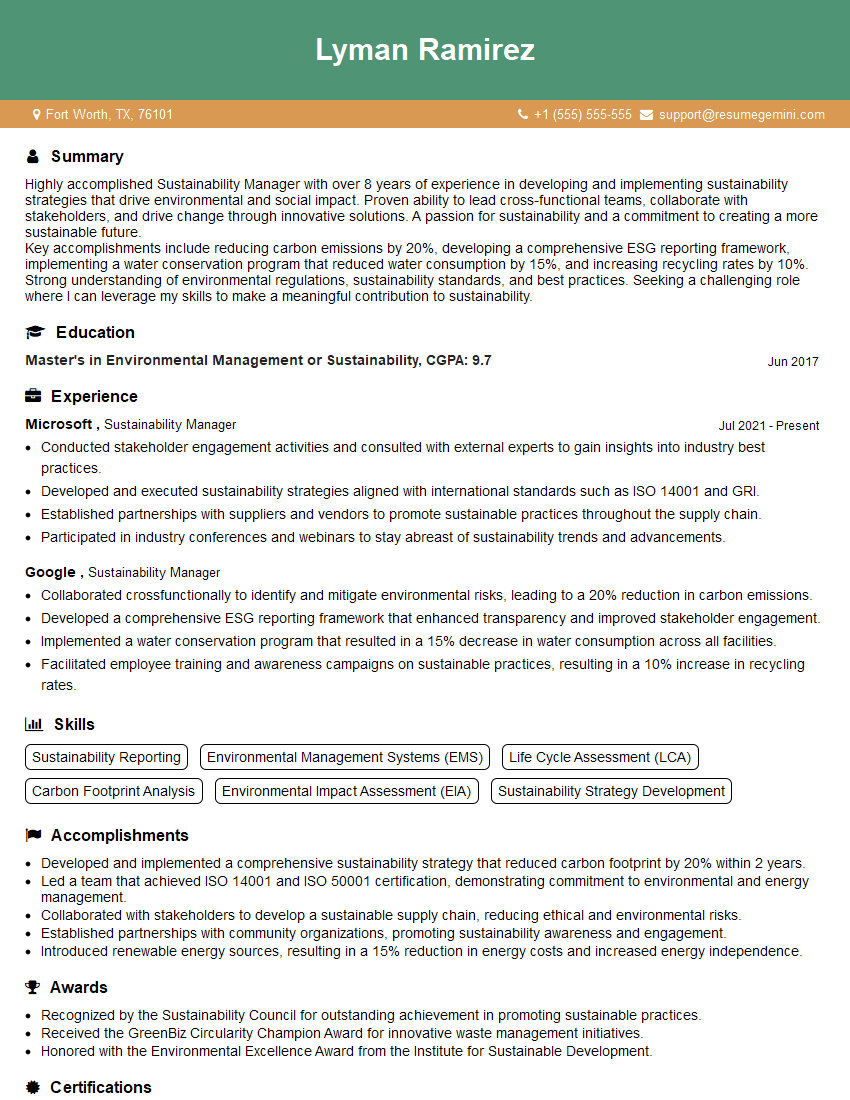
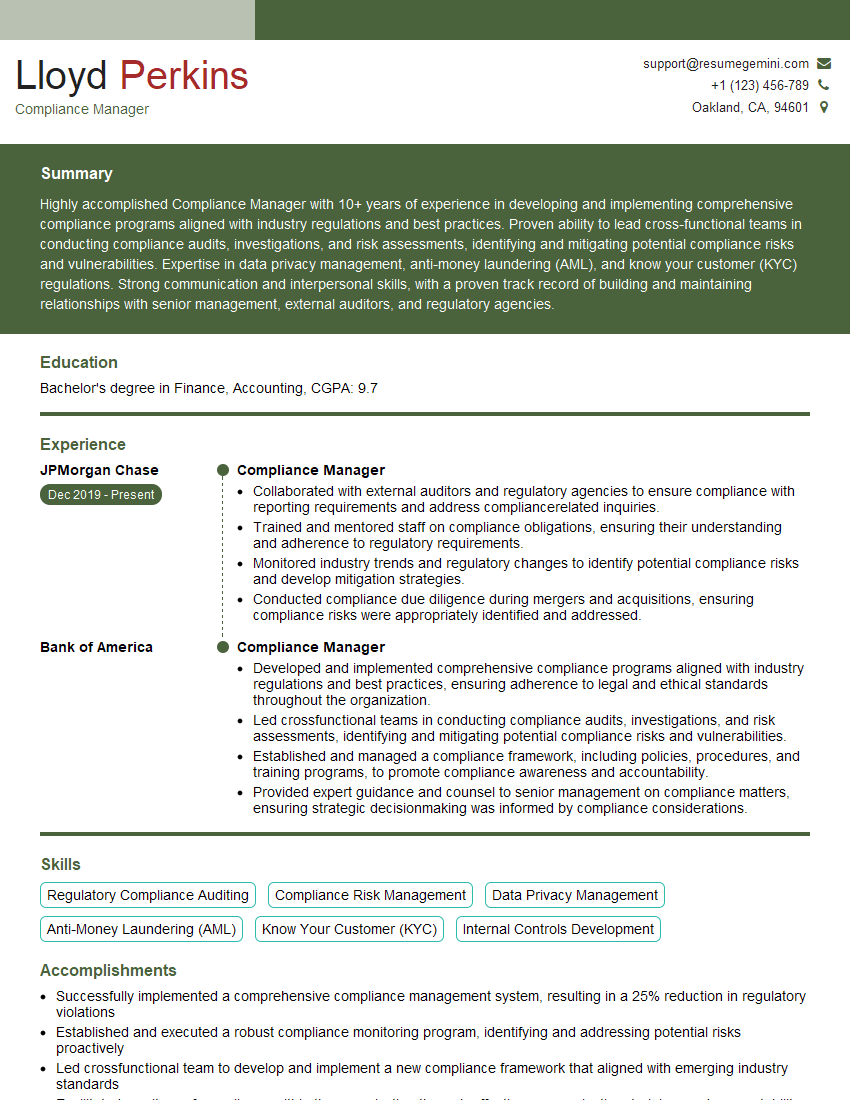
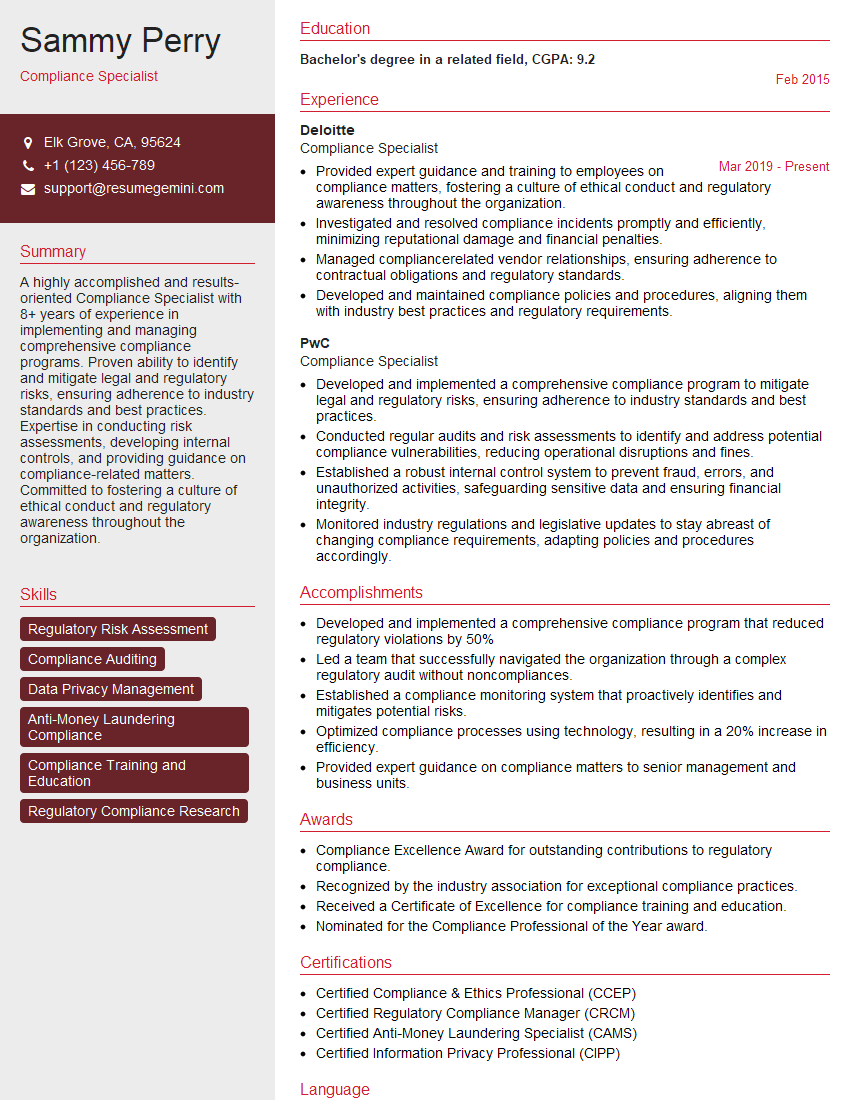
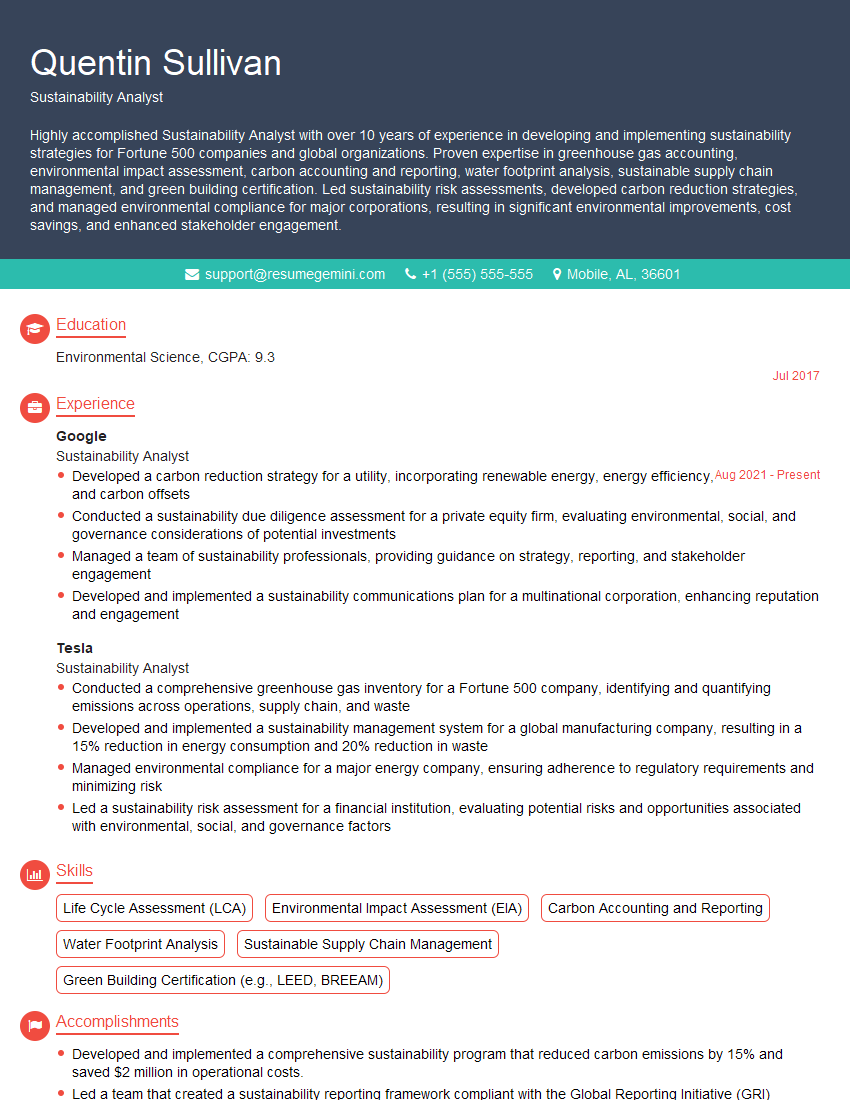
Mastering Ethics and Corporate Social Responsibility is crucial for career advancement in today’s business environment. Companies increasingly prioritize ethical and sustainable practices, making candidates with this expertise highly sought after. To significantly enhance your job prospects, creating an ATS-friendly resume is essential. This allows recruiters’ Applicant Tracking Systems to effectively identify and rank your application. We strongly recommend leveraging ResumeGemini, a trusted resource, to build a compelling and effective resume. ResumeGemini provides examples of resumes tailored to Ethics and Corporate Social Responsibility roles, helping you showcase your skills and experience in the best possible light. Invest time in crafting a strong resume – it’s your first impression and a crucial step in securing your dream job.

Explore more articles
Users Rating of Our Blogs
Share Your Experience
We value your feedback! Please rate our content and share your thoughts (optional).
What Readers Say About Our Blog
Very informative content, great job.
good