Interviews are opportunities to demonstrate your expertise, and this guide is here to help you shine. Explore the essential Farm Equipment and Machinery Operation interview questions that employers frequently ask, paired with strategies for crafting responses that set you apart from the competition.
Questions Asked in Farm Equipment and Machinery Operation Interview
Q 1. Describe your experience operating different types of tractors.
My experience encompasses a wide range of tractors, from smaller, versatile utility tractors ideal for orchard work and fieldwork requiring precise maneuvering, to large, high-horsepower row-crop tractors designed for extensive tillage and planting operations. I’ve operated both two-wheel-drive and four-wheel-drive models, becoming proficient in their unique handling characteristics. For example, I’ve used a John Deere 4020 for heavy-duty tasks like plowing and disking, where its power and stability were crucial. Conversely, I’ve utilized a Kubota BX23S for more delicate tasks in our vineyard, appreciating its maneuverability and compact size. My experience extends to operating tractors equipped with various implements, including loaders, backhoes, and mowers, which required adapting my operating techniques to each attachment’s specific demands.
I’m familiar with both manual and automatic transmission tractors, understanding the advantages and disadvantages of each in different working conditions. My experience also covers using tractors with different fuel systems – diesel being the most common in my experience – and understanding the importance of proper fuel management and maintenance to maximize efficiency and prevent costly repairs.
Q 2. Explain the preventative maintenance procedures for a combine harvester.
Preventative maintenance for a combine harvester is crucial for ensuring optimal performance, maximizing yield, and minimizing downtime. It’s a multi-faceted process that should be approached systematically. Think of it like regular check-ups for your own health – small preventative actions can prevent larger problems later.
- Pre-Harvest Inspection: Before the harvest season begins, a thorough inspection is vital. This includes checking all belts, hoses, and wiring for wear and tear. Lubricating all moving parts, inspecting the engine for leaks, and ensuring the cooling system is clean and efficient are also crucial. This preemptive approach can prevent unexpected breakdowns during the crucial harvest period.
- Daily Maintenance: Each day, after operation, clean the combine thoroughly, removing chaff, grain, and debris that can clog components or cause damage. Inspect the header for any damage and ensure proper operation. Regularly check fluid levels (engine oil, hydraulic fluid, coolant) and tire pressure.
- Regular Servicing: Scheduled servicing should follow the manufacturer’s recommendations. This often includes changing engine oil, filters (air, fuel, hydraulic), and lubricating key components. Inspecting the cutting cylinder, concave, and rotor (depending on the combine type) for wear is essential to ensure even threshing and separation. These regular check-ups help to catch small problems before they become larger, more expensive repairs.
- Post-Harvest Maintenance: After the harvest, a comprehensive cleaning and servicing is vital. This includes thoroughly cleaning the entire machine, removing all remaining grain and debris to prevent spoilage and infestation. Storing the combine in a dry, sheltered area also protects it from the elements and reduces the risk of corrosion.
Ignoring preventative maintenance can lead to costly repairs, decreased yields, and significant downtime during harvest season – a time when every hour counts.
Q 3. What are the common causes of engine overheating in farm machinery?
Engine overheating in farm machinery is a serious issue that can lead to costly repairs if not addressed promptly. Several factors contribute to this problem.
- Low Coolant Levels: Insufficient coolant reduces the engine’s ability to dissipate heat, leading to overheating. Leaks in the cooling system, such as cracked hoses or a radiator leak, are common causes.
- Clogged Radiator: Dust, debris, and insects can accumulate in the radiator, restricting airflow and reducing the radiator’s cooling efficiency. This is especially prevalent in dusty or harsh environments.
- Faulty Thermostat: A malfunctioning thermostat can prevent the coolant from circulating properly, leading to uneven temperature distribution and potential overheating.
- Faulty Water Pump: The water pump is responsible for circulating coolant. A worn or damaged water pump will hinder proper coolant circulation, leading to overheating.
- Fan Problems: A malfunctioning cooling fan, whether due to a broken belt or a faulty motor, will impede the air circulation necessary for cooling the engine.
- Engine Issues: Problems within the engine itself, such as low oil pressure, can contribute to increased heat generation and subsequent overheating. Similarly, a lack of proper lubrication leads to increased friction and heat.
Regular maintenance, including checking coolant levels and inspecting the cooling system components, is vital in preventing engine overheating. Addressing these issues swiftly is crucial to prevent catastrophic engine damage.
Q 4. How do you troubleshoot a malfunctioning planter?
Troubleshooting a malfunctioning planter involves a systematic approach, starting with the simplest checks and moving to more complex diagnostics. Think of it as a detective investigation, following a clear chain of evidence.
- Visual Inspection: Begin with a visual inspection of the entire planter, checking for any obvious issues such as broken parts, seed tubes clogged with debris, or damage to the seed metering mechanism. Look for any signs of wear and tear.
- Seed Metering Check: Inspect the seed metering mechanism, ensuring the seed plates are correctly installed and adjusted according to the seed type and planting rate. Check for any obstructions or damage.
- Seed Tube Check: Examine the seed tubes for blockages or damage. Clean any debris or obstructions.
- Downforce and Depth Settings: Verify that the downforce and planting depth settings are correctly adjusted for the soil conditions. Improper settings can result in inconsistent planting depth and poor seed-to-soil contact.
- Hydraulic System Check: If the planter is hydraulically driven, check the hydraulic fluid levels and inspect the hydraulic lines for leaks. A malfunctioning hydraulic system can affect planter operation.
- Electrical System Check: Examine the electrical system, particularly if the planter is equipped with electric motors or sensors. Check wiring connections, fuses, and any electrical components for proper functioning.
- Consult the Manual: If the problem persists, consult the planter’s manual for detailed troubleshooting guides and diagrams. The manufacturer’s documentation often provides specific solutions to common planter problems.
Using a methodical approach like this helps to efficiently isolate the problem and restore the planter to optimal operation. This is far more efficient than simply assuming a problem, and reduces unnecessary parts replacements and downtime.
Q 5. Describe your experience with GPS-guided agricultural equipment.
My experience with GPS-guided agricultural equipment is extensive. I’ve worked with various systems, from basic guidance systems that assist with straight-line driving to more advanced auto-steer systems that automatically control the tractor’s steering. These technologies have significantly improved the precision and efficiency of my work.
Specifically, I’ve used GPS-guided systems for planting, spraying, and fertilizer application. Auto-steer systems dramatically reduce overlap, saving on inputs like seeds, fertilizer, and herbicides. It also allows for increased accuracy, placing seeds or applying chemicals precisely where they are needed, maximizing yields and minimizing environmental impact. Additionally, I have experience with data management systems that collect and analyze the data from GPS-guided operations, providing insights into field performance and improving operational decisions. These allow for detailed mapping of field operations, helping to track productivity and make future adjustments to farming practices. The precision and data-driven nature of these systems enhance operational efficiency and overall profitability.
Q 6. What safety procedures do you follow when operating heavy farm machinery?
Safety is paramount when operating heavy farm machinery. My approach to safety is proactive, systematic, and encompasses several key aspects.
- Pre-Operational Checks: Before starting any machine, I conduct a thorough pre-operational check. This includes inspecting the machine for any damage or defects, ensuring all safety guards are in place and functioning, and verifying that fluid levels are correct. I also check all controls and their responses to ensure they are functioning correctly.
- Personal Protective Equipment (PPE): I always wear appropriate PPE, including hearing protection, safety glasses, and sturdy work boots. When necessary, I’ll also use gloves, and a hard hat when working close to overhead equipment.
- Awareness of Surroundings: I maintain constant awareness of my surroundings, paying attention to the location of other people, animals, and obstacles. I use signals appropriately to alert others of my actions. When working near roadways I also take extra precautions.
- Proper Operating Procedures: I adhere strictly to the manufacturer’s operating instructions for each machine. This includes understanding the machine’s limitations and operating it within those parameters. I will never operate a machine beyond my training and competency level.
- Emergency Procedures: I am familiar with emergency procedures for each machine and know how to react in case of a malfunction or accident. This includes knowing how to shut down the equipment safely and what steps to take to contact emergency services if needed.
Safety isn’t just a set of rules – it’s a mindset. Prioritizing safety ensures both my well-being and the efficient and productive operation of the machinery.
Q 7. How do you ensure the proper calibration of a fertilizer spreader?
Proper calibration of a fertilizer spreader is essential to ensure accurate and uniform application of fertilizer, maximizing yields and minimizing waste. This is achieved through a combination of steps.
- Check the Spreader’s Manual: The first step is to consult the manufacturer’s instructions for your specific spreader model. This guide will detail the specific calibration procedures and provide important information about settings and adjustments. Different spreaders have unique mechanisms and calibration processes.
- Prepare for Calibration: Choose a level and smooth area for calibration. Mark off a measured distance (usually 100-200 feet). Use a known quantity of fertilizer (a weighed amount is best), typically between 50 and 100 pounds, although specific recommendations are given in the spreader’s manual. Collect all necessary tools such as a scale, measuring tape, and a container for the fertilizer.
- Spread the Fertilizer: Spread the weighed amount of fertilizer over the measured distance, maintaining a consistent speed according to the manual. Maintain a steady walking pace across the marked area. If the spreader has a speed setting, make sure it’s set and consistent for testing.
- Collect and Weigh the Fertilizer: After spreading, collect the spread fertilizer and weigh it using the same scale to determine the amount of fertilizer actually applied.
- Adjust the Settings: Compare the actual amount of fertilizer spread to the target amount, calculating the spreading rate. Based on the difference, adjust the spreader settings (e.g., spinner speed, gate opening) to achieve the desired spreading rate. For example, if too much fertilizer was spread, adjust settings to reduce the spreading rate. Repeat steps 3-5 until the desired spreading rate is achieved within the margin of error that the spreader offers.
Accurate calibration minimizes fertilizer waste, optimizes plant growth, and protects the environment by preventing excess nutrient runoff. It’s a fundamental practice for responsible and efficient fertilizer management.
Q 8. Explain your understanding of different tillage methods and their associated equipment.
Tillage is the agricultural preparation of soil by mechanical agitation of the soil. Different methods aim to achieve various goals, such as seedbed preparation, weed control, and improved water infiltration. The choice of method depends heavily on soil type, crop, and climate.
- Conventional Tillage: This involves deep plowing to invert the soil profile. Equipment includes moldboard plows, which completely turn over the soil, and disk plows, which cut and mix the soil. This method can improve drainage but can also lead to soil erosion and compaction in the long run. I’ve used moldboard plows extensively on heavier clay soils to improve aeration before planting corn.
- Conservation Tillage: These methods minimize soil disturbance. Examples include no-till farming, where seeds are directly sown into the previous year’s residue; ridge-till, creating raised seedbeds; and strip-till, only tilling narrow strips where the crop will be planted. Equipment includes no-till drills, which plant seeds directly into undisturbed soil, and strip-till machines which cultivate only narrow strips. I’ve found conservation tillage to be significantly more sustainable, reducing erosion and improving soil health on lighter, sandy loam soils.
- Reduced Tillage: This is a middle ground, using less intensive tillage than conventional methods. Chisel plows, which break up compacted soil without fully inverting it, are commonly used. Reduced tillage offers a balance between soil health and seedbed preparation. I’ve used chisel plows in areas with high organic matter content to loosen soil and incorporate residue without excessive disturbance.
Q 9. Describe your experience with various types of harvesting equipment.
My experience with harvesting equipment spans a wide range of machinery, tailored to various crops. Proper operation and maintenance are crucial for efficient and high-quality harvesting.
- Combines: I’m proficient with various combine harvesters, from small-scale models for smaller fields to large, self-propelled units for high-volume harvesting of grains like wheat, barley, soybeans, and corn. Knowing how to adjust the settings for different crops and conditions is key; for example, I adjust the concave and cylinder speed on the combine to match the crop maturity and moisture content.
- Forage Harvesters: I’ve operated forage harvesters for harvesting silage crops such as corn and alfalfa. These machines chop and process the crop for storage as silage, and proper adjustment of the chopping length and kernel processor is vital for feed quality. Precision is paramount to ensure consistent chop length and efficient packing.
- Cotton Pickers: I have experience operating cotton pickers, specializing in the careful removal of cotton bolls from the plant while minimizing damage. Ensuring proper maintenance and cleaning of the picking mechanism is particularly important to prevent fiber contamination and maintain picking efficiency.
- Potato Harvesters: I understand the complexities of potato harvesting, including the process of digging, cleaning, and separating the potatoes from soil and debris. The operation requires careful adjustments depending on soil conditions and desired output quality.
Q 10. What are the key factors to consider when selecting the right tillage equipment for a specific soil type?
Selecting the right tillage equipment is crucial for optimal soil health and crop yields. Several factors must be considered:
- Soil Type: Clay soils require different equipment than sandy soils. Clay soils benefit from equipment that minimizes compaction, like chisel plows or no-till drills. Sandy soils, which are prone to erosion, may benefit from reduced tillage methods.
- Soil Conditions: Moisture content significantly impacts tillage. Dry soils can be more easily worked but can also be more susceptible to erosion. Wet soils can become compacted. I always check the soil moisture content before choosing the appropriate equipment and adjusting its settings accordingly.
- Crop Requirements: Different crops have different seedbed preparation needs. Some crops require a finer seedbed than others. For example, small-seeded crops like lettuce require finer tilth than larger seeded crops like corn.
- Erosion Concerns: In areas prone to erosion, conservation tillage practices are crucial. No-till or reduced tillage methods minimize soil disturbance and reduce erosion risk.
- Budget & Resources: The cost of equipment, fuel consumption, and labor costs must all be considered when choosing tillage equipment. No-till farming, for instance, can save on fuel and labor but requires a different set of machinery.
Q 11. How do you maintain the optimal tire pressure for different field conditions?
Maintaining optimal tire pressure is essential for minimizing soil compaction, maximizing fuel efficiency, and ensuring efficient traction. Tire pressure should be adjusted based on field conditions.
- Dry Conditions: Higher tire pressure is usually acceptable in dry conditions to minimize soil compaction and reduce slippage. I typically increase tire pressure by 5-10 PSI in dry fields compared to my normal setting.
- Wet Conditions: Lower tire pressure is preferred in wet conditions to increase the contact area with the soil, improving traction and reducing slippage. I typically reduce tire pressure by 5-10 PSI in wet fields compared to my normal setting. Too much pressure can increase slippage.
- Heavy Loads: When hauling heavy loads, higher tire pressure might be necessary to maintain stability and prevent tire damage. However, always keep soil conditions in mind; extreme pressure can still lead to soil compaction even when hauling heavy loads.
- Monitoring: Regular monitoring of tire pressure using a reliable pressure gauge is crucial. I check the tires daily before operation and adjust as needed based on field conditions and load.
Using a tire pressure monitoring system can help automate this process, particularly in large operations. It enables remote checking and alerts for irregular pressures.
Q 12. Explain the importance of regular lubrication in extending the lifespan of farm machinery.
Regular lubrication is vital for extending the lifespan of farm machinery. Lubricants reduce friction between moving parts, preventing wear and tear, reducing heat buildup, and protecting against corrosion.
- Reduced Wear and Tear: Lubricants create a protective film that reduces friction between metal components, significantly minimizing wear and tear on bearings, gears, and other moving parts. This reduces the need for frequent repairs and replacements, saving both time and money.
- Improved Efficiency: Reduced friction translates to more efficient operation, using less fuel and producing less heat. This is particularly crucial for high-powered machinery like tractors and combines. I’ve witnessed a significant decrease in fuel consumption in my own work after implementing a regular lubrication schedule.
- Corrosion Protection: Lubricants provide a barrier against moisture and other corrosive elements. This is critical in protecting components exposed to the elements during operation and storage.
- Extended Lifespan: By minimizing wear, reducing friction, and protecting against corrosion, regular lubrication significantly extends the lifespan of farm machinery. Proper lubrication can extend the service life of components by years.
Regular lubrication is best applied based on the manufacturer’s recommendations outlined in the machinery’s manual. Over-lubrication can be just as damaging as under-lubrication. I usually follow a scheduled preventive maintenance plan that includes routine checks and lubrication of all critical components.
Q 13. Describe your experience with hydraulic systems in farm equipment.
Hydraulic systems are integral to modern farm equipment, powering various functions such as lifting, steering, and implement control. My experience encompasses troubleshooting, maintenance, and operation.
- Implement Control: Hydraulic systems power various implements like plows, harrows, and seed drills, enabling precise control over their operation. Understanding the pressure settings and flow rates is critical for optimizing implement performance. For example, different attachments might require different hydraulic flow and pressure to operate correctly.
- Steering Systems: Many modern tractors use hydraulic power steering, making operation smoother and easier, especially during long working hours. Maintenance of the hydraulic fluid and components of the steering system is critical for safety and efficiency.
- Three-Point Hitch Operation: The three-point hitch system relies heavily on hydraulics, lifting and lowering implements. I’m skilled at adjusting the hydraulic pressure to lift and lower implements at appropriate speeds and maintaining adequate stability.
- Troubleshooting: I have experience troubleshooting hydraulic system problems, including leaks, low pressure, and component failures. Diagnosing issues involves carefully checking hydraulic fluid levels, pressure gauges, and identifying any external signs of leaks or malfunctions.
Safety is paramount when working with hydraulic systems. Always follow proper procedures to prevent injury from high-pressure fluid and moving components.
Q 14. How do you handle equipment breakdowns in the field?
Equipment breakdowns in the field are inevitable. My approach is systematic and prioritizes safety.
- Safety First: The first step is always to ensure the safety of myself and others. Turn off the machinery and assess the situation to avoid any further hazards. I ensure no one is in the immediate vicinity of the damaged machinery and try to move the machine to a safer place if possible.
- Initial Assessment: I then assess the nature of the breakdown, checking for obvious causes like fuel, electrical, or hydraulic issues. I’ll check fluid levels, electrical connections, and look for any signs of physical damage.
- Troubleshooting: Based on my assessment, I attempt basic troubleshooting. This might involve checking fuses, fluid levels, or simple repairs. My experience allows me to handle many minor breakdowns on the spot.
- Communication: If I can’t fix the issue myself, I immediately communicate with my supervisor or a mechanic, providing detailed information about the problem and location. Clear communication is crucial for efficient repair and minimizes downtime.
- Temporary Fixes: Sometimes, I can implement temporary fixes to get the equipment running until a permanent repair can be made, allowing me to resume work with minimal delays.
Preventive maintenance is key to minimizing breakdowns. Regular inspections, lubrication, and adherence to maintenance schedules are essential to prevent unexpected issues in the field.
Q 15. What is your experience with different types of balers?
My experience with balers encompasses a wide range of models, from small square balers ideal for hay production on smaller farms to large round balers suited for high-volume operations. I’m proficient in operating both conventional and high-density balers. I understand the intricacies of twine and net wrapping systems, and I’m adept at troubleshooting common issues such as knotters malfunctioning or bale density inconsistencies. For example, on one farm, we switched from a small square baler to a large round baler to significantly increase our hay-baling efficiency during peak season. This required understanding the different bale handling techniques and adjustments to the baler’s settings to achieve optimal density and consistent bale size.
I’ve also worked with different types of pick-up mechanisms, understanding the importance of proper adjustment for different crop types and field conditions. For instance, a pick-up mechanism needing adjustment for a swathed crop would differ from that of a windrowed crop.
- Small Square Balers: Excellent for smaller farms, easier storage and handling.
- Large Square Balers: High capacity, ideal for larger-scale operations.
- Round Balers: High capacity, suitable for various crops, different wrapping options (net, twine).
Career Expert Tips:
- Ace those interviews! Prepare effectively by reviewing the Top 50 Most Common Interview Questions on ResumeGemini.
- Navigate your job search with confidence! Explore a wide range of Career Tips on ResumeGemini. Learn about common challenges and recommendations to overcome them.
- Craft the perfect resume! Master the Art of Resume Writing with ResumeGemini’s guide. Showcase your unique qualifications and achievements effectively.
- Don’t miss out on holiday savings! Build your dream resume with ResumeGemini’s ATS optimized templates.
Q 16. Explain your understanding of fuel efficiency in farm machinery.
Fuel efficiency in farm machinery is paramount for economic viability. It’s not just about the upfront cost of fuel; it also impacts operational costs, environmental responsibility and overall profitability. Factors affecting fuel efficiency include the machine’s age and condition (regular maintenance is crucial), the type of engine (newer engines are typically more efficient), the operator’s skill (smooth operation reduces fuel consumption), and the working conditions (terrain, crop type, and weather). Imagine two tractors: an older model with poor maintenance will use significantly more fuel per acre than a newer, well-maintained model performing the same task.
Q 17. How do you manage fuel consumption to minimize operational costs?
Minimizing fuel consumption requires a multi-pronged approach. Firstly, regular maintenance is crucial. This includes timely oil changes, filter replacements, and addressing any mechanical issues promptly. A well-maintained engine runs more efficiently. Secondly, proper machine operation plays a significant role. Avoiding unnecessary idling, selecting appropriate gears for varying terrain, and maintaining optimal engine speeds dramatically reduce fuel consumption. I always assess the field conditions before beginning work, adjusting settings to minimize unnecessary strain on the machine. For instance, I’d select a lower gear on hilly terrain to avoid unnecessary engine revving.
Thirdly, using fuel-efficient technologies such as GPS guidance systems and auto-steer improves precision, reducing overlapping passes and overall fuel consumption. Finally, keeping tires properly inflated is vital; under-inflated tires increase rolling resistance and fuel usage.
Q 18. Describe your experience with crop spraying equipment and its calibration.
My experience with crop spraying equipment includes various types of sprayers, from smaller self-propelled sprayers to larger, tractor-mounted models. Calibration is critical to ensure accurate and even application of pesticides and herbicides. Improper calibration can lead to either insufficient control of pests and diseases or excessive chemical use, which is both ineffective and environmentally damaging. My calibration process begins with measuring the sprayer’s tank capacity and determining the spray boom width.
Next, I carefully measure the volume of spray solution delivered over a known distance at a specific speed. From these measurements, I calculate the application rate (gallons per acre or liters per hectare) and adjust the sprayer settings (pressure, speed, nozzle size) to achieve the desired application rate. I always conduct a thorough pre-spray check of the sprayer’s functionality including checking nozzle spacing, uniformity, and pressure consistency. After each calibration, I conduct a test run to validate the accuracy and make any necessary adjustments.
Q 19. What safety precautions do you take when working with pesticides and herbicides?
Safety is paramount when handling pesticides and herbicides. I always follow the manufacturer’s instructions carefully, wearing appropriate personal protective equipment (PPE), including gloves, eye protection, and a respirator, as specified on the product label. I ensure that the PPE is in good condition and fits properly. I also work in accordance with all relevant workplace health and safety regulations.
Before starting any spraying operation, I check the wind speed and direction. Spraying during high winds can result in drift, which is dangerous both for the environment and human health. I never spray when there is a risk of rain, and I always carefully dispose of any leftover pesticides or herbicides according to regulations. I’m well versed in first aid procedures for pesticide exposure. I actively participate in regular safety training to stay updated on best practices.
Q 20. Explain your understanding of different types of irrigation systems.
I’m familiar with various irrigation systems, each with its own advantages and disadvantages. These include:
- Flood Irrigation: Simple but inefficient, leading to water waste and potential soil erosion.
- Furrow Irrigation: Water flows in furrows between crop rows. Relatively inexpensive but can be inefficient.
- Drip Irrigation: Delivers water directly to plant roots. Highly efficient, reducing water waste and promoting healthier plant growth. This is my preferred method for many crops.
- Sprinkler Irrigation: Water is sprayed over the field. More efficient than flood or furrow but still prone to some water loss through evaporation.
- Center Pivot Irrigation: A system of sprinklers that rotate around a central pivot. Suitable for large, level fields.
The choice of system depends heavily on factors such as the type of crop, topography, water availability, and budget.
Q 21. How do you ensure the proper functioning of an irrigation system?
Ensuring proper irrigation system functioning involves regular inspections and maintenance. This begins with pre-season checks: checking for leaks in pipes, ensuring proper functionality of valves and pumps, and verifying the even distribution of water throughout the field. During the growing season, I regularly monitor water pressure, flow rate, and the overall health of the plants. Any signs of uneven watering, clogged emitters, or malfunctioning components are addressed promptly.
I also perform regular cleaning of filters and nozzles to prevent clogging. For more complex systems, data logging and remote monitoring are useful tools for identifying potential problems early. Finally, adjusting the system according to weather patterns and crop needs is crucial for optimizing water use efficiency. For instance, water requirements may change substantially depending on daily temperatures and rainfall.
Q 22. Describe your experience with livestock handling equipment.
My experience with livestock handling equipment spans over 10 years, encompassing a wide range of systems, from basic corral designs to automated sorting and weighing systems. I’m proficient in operating and maintaining various types of equipment, including hydraulic squeeze chutes, rotary gates, and electronic identification systems. I’ve worked with both small-scale operations using manual systems and large-scale farms utilizing advanced automated technologies. For example, on one farm, I implemented a new automated sorting system that reduced cattle handling time by 40%, improving animal welfare and increasing operational efficiency. This involved not only installing and configuring the equipment but also training staff on its safe and effective operation.
- Experience with hydraulic squeeze chutes for safe animal restraint.
- Proficiency in operating and maintaining various types of gates and panels.
- Knowledge of electronic identification (EID) systems for tracking and managing livestock.
- Skill in using automated sorting systems for efficient animal handling.
Q 23. How do you maintain the cleanliness and sanitation of livestock handling equipment?
Maintaining the cleanliness and sanitation of livestock handling equipment is crucial for animal health and welfare, as well as for preventing the spread of disease. My approach involves a multi-step process that focuses on both routine cleaning and thorough disinfection. After each use, I remove any manure, feed, or other debris using high-pressure water jets. Then, I apply a suitable disinfectant, ensuring appropriate contact time as per the manufacturer’s instructions. Regular inspection and preventative maintenance also play a crucial role. For instance, I regularly check for any damage to the equipment that could compromise sanitation, such as cracks or rust, and address these promptly.
- Regular cleaning and removal of manure and other debris.
- Application of appropriate disinfectants with correct contact time.
- Regular inspection and repair of damaged equipment.
- Proper storage to prevent recontamination.
Think of it like this: Just as you’d thoroughly clean and disinfect your kitchen after preparing food to prevent contamination, we maintain livestock handling equipment to protect animal health and prevent the spread of disease. Failing to do so can lead to significant health issues and financial losses for the farm.
Q 24. What is your experience with precision farming technologies?
My experience with precision farming technologies is extensive and includes hands-on experience with GPS-guided machinery, yield monitors, variable rate technology (VRT), and remote sensing. I’ve used GPS-guided tractors and sprayers to optimize planting and application, resulting in reduced input costs and improved yields. I’m also familiar with using yield monitors to collect data on crop performance, which is then used to inform subsequent management decisions. For example, I used yield mapping data to identify areas of low yield in a field and adjust fertilizer application rates in the following season, resulting in a 15% increase in yield in those specific zones.
- GPS-guided machinery operation (tractors, sprayers, planters).
- Yield monitoring and data analysis.
- Variable rate technology (VRT) application for fertilizers and pesticides.
- Remote sensing for crop health monitoring.
Q 25. Explain your understanding of data management in precision agriculture.
Data management in precision agriculture is critical for making informed decisions. It involves collecting, storing, processing, and analyzing data from various sources, such as GPS receivers, yield monitors, and sensors. This data can be used to create maps, identify trends, and improve farm management practices. The process typically begins with data acquisition from different sources, followed by cleaning and validation. Then, data analysis tools are used to extract meaningful insights that help farmers optimize their operations. For instance, we might use software to analyze yield data and create a variable rate fertilizer application map, ensuring that nutrients are precisely applied based on the specific needs of each zone in the field. This reduces input costs while maximizing yield.
Effective data management requires a robust system, often involving specialized software, to ensure data integrity and accessibility. It’s not just about collecting data; it’s about transforming raw data into actionable intelligence for better decision-making.
Q 26. Describe your experience with using various farm management software.
I have experience using a variety of farm management software packages, including AgLeader, John Deere Operations Center, and Farmworks. These programs allow me to manage various aspects of farm operations, from planning and planting to harvesting and record-keeping. I’m proficient in using these systems to track inputs, manage yields, generate reports, and create detailed farm maps. For instance, I utilize AgLeader to plan my planting operations, setting planting depth and seed rate based on soil conditions and previous yield data. The software then guides the tractor during planting, ensuring precision and efficiency.
- AgLeader for precision planting and field mapping.
- John Deere Operations Center for fleet management and data analysis.
- Farmworks for record keeping and financial management.
Each software package has unique features, but the common thread is their ability to centralize data, improve decision-making, and increase overall farm efficiency.
Q 27. How do you stay updated on the latest advancements in farm equipment and technology?
Staying updated on the latest advancements in farm equipment and technology is crucial for maintaining a competitive edge. I achieve this through a multi-faceted approach. I actively participate in industry conferences and trade shows, subscribe to relevant industry publications, and follow key players in the agricultural technology sector. Online resources, such as industry websites and webinars, also provide valuable information. Furthermore, I engage in ongoing professional development by attending workshops and training sessions offered by equipment manufacturers and agricultural universities. This continuous learning ensures I am always aware of the latest innovations and best practices in the field.
- Attending industry conferences and trade shows.
- Reading industry publications and following online resources.
- Participating in workshops and training sessions.
- Networking with other professionals in the field.
Q 28. Describe a time you had to troubleshoot a complex equipment issue. What was the solution?
During harvest season, the combine’s feeder house experienced a major malfunction—it completely jammed. This halted the entire operation, resulting in significant losses. After initially trying basic troubleshooting steps (checking belts and obvious obstructions), I identified that a foreign object (a large rock) had damaged the feeder house chain, causing the jam. This wasn’t immediately obvious due to the extensive damage. My solution involved a multi-step process:
- Diagnosis: Carefully disassembled the feeder house to identify the root cause – the severely damaged chain and the presence of the rock.
- Repair: Replaced the damaged chain section and cleared any remaining debris.
- Preventative Measures: Implemented a more thorough pre-harvest field inspection process to reduce the chance of similar incidents occurring.
- Documentation: Detailed the incident in maintenance logs for future reference and to highlight necessary improvements in safety and operation procedures.
This experience reinforced the importance of thorough diagnostics and preventative maintenance. A seemingly simple jam resulted from a significant mechanical failure, highlighting the need for comprehensive knowledge of the equipment’s inner workings and a systematic approach to troubleshooting.
Key Topics to Learn for Farm Equipment and Machinery Operation Interview
- Tractor Operation & Maintenance: Understanding different tractor types (e.g., wheel, crawler), their operating systems, routine maintenance checks (fluids, belts, tires), and troubleshooting common mechanical issues.
- Implement Operation & Adjustment: Knowing how to safely and efficiently operate various implements (e.g., plows, planters, harvesters), adjusting settings for optimal performance based on soil conditions and crop types, and recognizing signs of malfunction.
- Precision Agriculture Technologies: Familiarity with GPS guidance systems, auto-steer technology, yield monitors, and variable rate application systems. Understanding their practical applications for increased efficiency and reduced input costs.
- Safety Procedures & Regulations: Demonstrating knowledge of safe operating procedures, understanding relevant safety regulations and legislation, and emphasizing the importance of preventative maintenance for accident prevention.
- Crop Specific Machinery Operation: Understanding the unique operational requirements and maintenance needs of machinery used for specific crops (e.g., cotton pickers, combine harvesters). This includes recognizing and addressing crop-specific challenges.
- Problem-Solving & Troubleshooting: Ability to diagnose and resolve mechanical problems, make on-the-spot repairs when possible, and understand when to seek professional assistance. This includes explaining your troubleshooting process clearly.
- Record Keeping & Data Management: Understanding the importance of maintaining accurate records of equipment usage, maintenance, and yields. Experience with relevant software or data management systems is beneficial.
Next Steps
Mastering Farm Equipment and Machinery Operation is crucial for career advancement in the agricultural sector. Proficiency in these skills demonstrates your value to potential employers and opens doors to higher-paying positions and greater responsibility. To maximize your job prospects, create an ATS-friendly resume that highlights your skills and experience effectively. ResumeGemini is a trusted resource to help you build a professional resume that stands out. They provide examples of resumes tailored to Farm Equipment and Machinery Operation to guide you. Invest the time to craft a compelling resume – it’s your first impression on a potential employer.

Precision Agriculture Technician Resume Sample
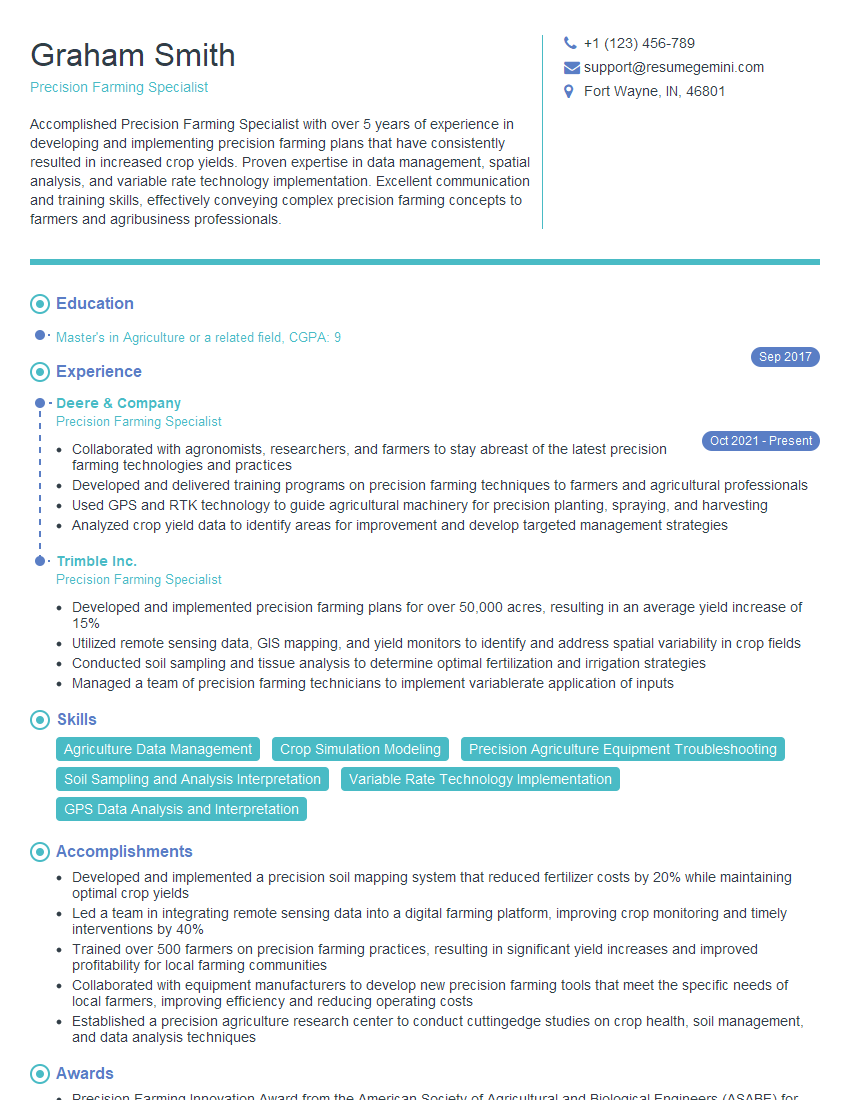
Precision Farming Specialist Resume Sample

Tractor Operator Resume Sample

Harvest Supervisor Resume Sample

Baler Operator Resume Sample

Combine Operator Resume Sample
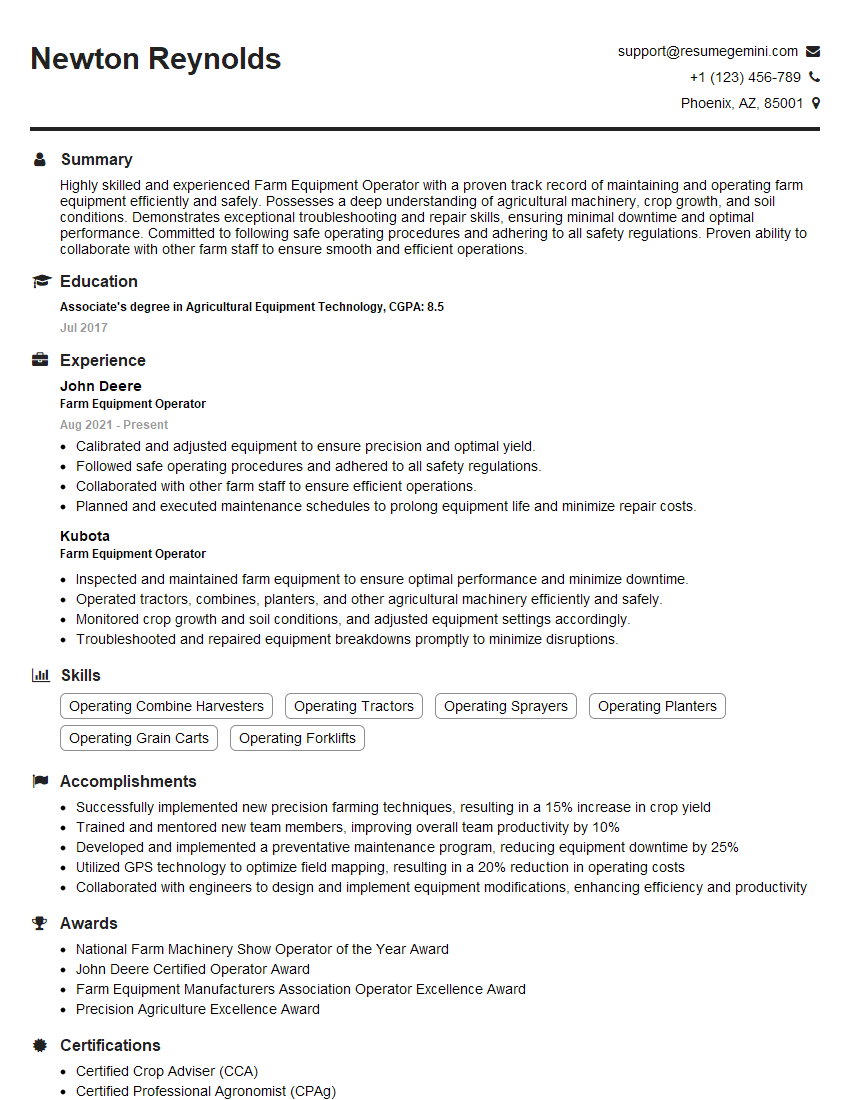
Farm Equipment Operator Resume Sample

Irrigation System Operator Resume Sample
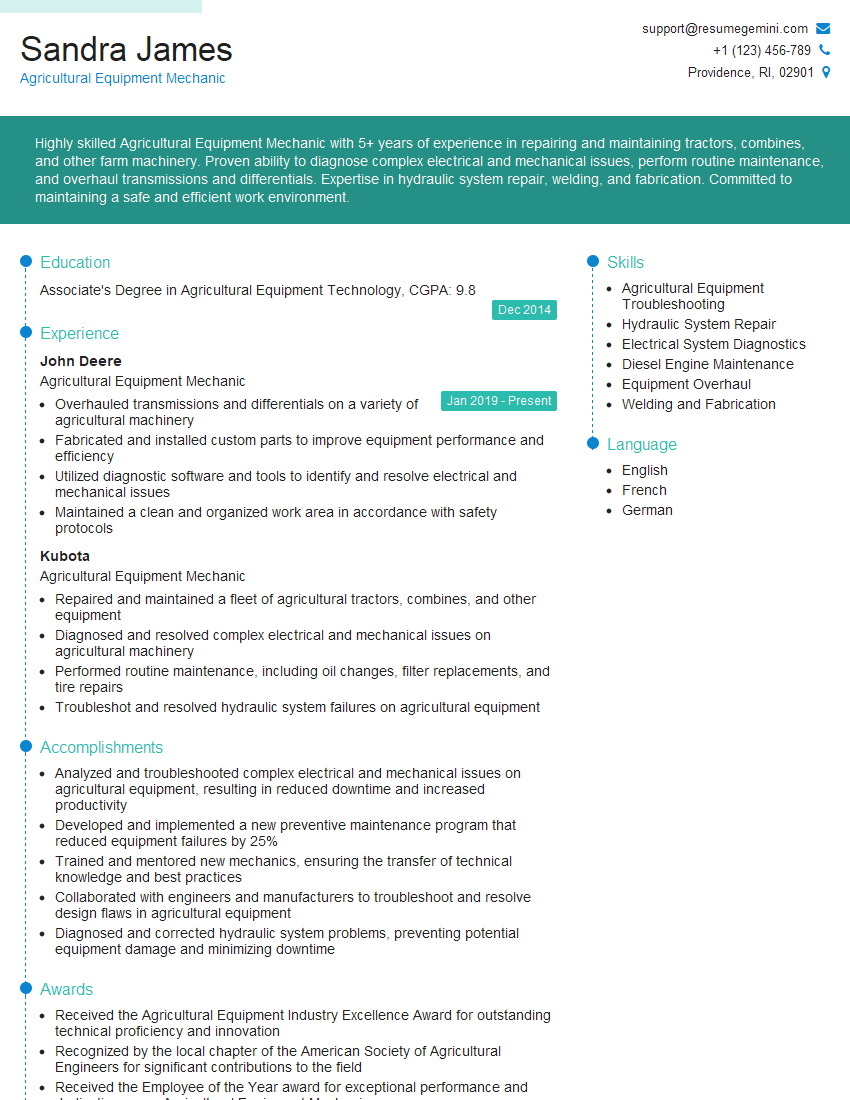
Agricultural Equipment Mechanic Resume Sample

Sprayer Operator Resume Sample
Explore more articles
Users Rating of Our Blogs
Share Your Experience
We value your feedback! Please rate our content and share your thoughts (optional).
What Readers Say About Our Blog
Very informative content, great job.
good