Interviews are opportunities to demonstrate your expertise, and this guide is here to help you shine. Explore the essential Repacking Techniques interview questions that employers frequently ask, paired with strategies for crafting responses that set you apart from the competition.
Questions Asked in Repacking Techniques Interview
Q 1. Explain your experience with different types of repackaging materials.
My experience encompasses a wide range of repackaging materials, selected based on product fragility, environmental considerations, and cost-effectiveness. I’ve worked extensively with corrugated cardboard boxes in various sizes and strengths, choosing the appropriate flute type (A, B, C, E, F) depending on the product’s weight and susceptibility to damage. I’m also proficient in using various fillers like bubble wrap, air pillows, foam peanuts, and shredded paper for cushioning. For more delicate items, I’ve utilized custom-fit inserts and foam trays to provide maximum protection. Beyond this, I’m experienced with using various types of tapes, including water-activated tape for increased security and strength, and plastic shrink wrap for bundling or creating tamper-evident seals. Finally, I’m familiar with using reusable containers, especially in situations where sustainability is a priority. The choice of material always depends on a careful risk assessment of the product and its journey.
Q 2. Describe your process for identifying damaged goods requiring repackaging.
Identifying damaged goods is a crucial first step. My process begins with a visual inspection, checking for dents, tears, punctures, or any other visible signs of damage on the packaging. I then carefully examine the product itself for any signs of breakage, cracks, or other damage. I also check for any signs of tampering or unauthorized opening. For items with multiple components, I check each part. If there’s any doubt, I conduct a more thorough examination, potentially even involving testing the functionality. For example, with electronics, I would test the power button or other key features. This rigorous assessment ensures that only genuinely damaged goods are flagged for repackaging, preventing unnecessary work and costs. I meticulously document all findings, including photographs, for traceability and audit purposes.
Q 3. How do you ensure the safety and security of products during repackaging?
Ensuring product safety and security during repackaging is paramount. My approach involves several key steps. First, I always work in a clean and organized environment to prevent contamination or accidental damage. Second, I use appropriate packaging materials, as discussed earlier, ensuring adequate cushioning and protection for each item. Third, I employ proper handling techniques, avoiding rough or careless movements. For fragile items, I might use specialized handling equipment like gloves or lifting aids. Fourth, I use tamper-evident seals and labels to indicate that the product has been repackaged and to deter theft or further damage. Finally, I maintain a clear chain of custody, documenting every stage of the repackaging process, ensuring complete traceability. Think of it like this: we’re treating each product as a precious artifact, ensuring its safe journey.
Q 4. What are your strategies for efficient and effective repackaging workflows?
Efficient and effective repackaging workflows are crucial for minimizing costs and maximizing productivity. My strategies focus on optimizing several aspects. I utilize standardized operating procedures (SOPs) to maintain consistency and ensure that each repackaging task is performed efficiently and safely. I also employ lean principles, such as eliminating unnecessary steps and movements. I implement a first-in, first-out (FIFO) system for materials to minimize waste and reduce the risk of using outdated packaging. Further, I utilize appropriate technology. This could involve barcode scanning for accurate inventory tracking or using specialized equipment like automated packing machines for higher volume repackaging. Regularly evaluating the workflow and making adjustments based on performance data ensures continuous improvement and maximum efficiency.
Q 5. How do you handle discrepancies between inventory and repackaged goods?
Discrepancies between inventory and repackaged goods are addressed through rigorous tracking and reconciliation processes. Every item is meticulously counted and documented before and after repackaging. We use barcode scanners and inventory management software to minimize human error and ensure accuracy. Any discrepancies are immediately investigated. Possible causes include errors in initial inventory counts, damage discovered during repackaging that wasn’t initially noted, or theft. A thorough investigation clarifies the root cause and corrective actions are implemented to prevent future occurrences. Detailed records are maintained to ensure accountability and provide a complete audit trail.
Q 6. What are your methods for preventing contamination during repackaging?
Preventing contamination is vital, particularly for food, pharmaceutical, or medical products. Our strategy involves maintaining a meticulously clean workspace, including regular cleaning and sanitization of all surfaces and equipment. Personnel wear appropriate protective clothing, such as gloves and hairnets, to prevent the introduction of contaminants. We use clean packaging materials that meet the required hygiene standards and are stored in a controlled environment. We use appropriate procedures for handling different types of products to avoid cross-contamination, such as designating separate work areas for different product types. The entire process adheres to strict hygiene protocols, ensuring product integrity and safety.
Q 7. Explain your understanding of different types of packaging equipment.
My understanding of packaging equipment includes a wide variety of technologies designed to improve efficiency and effectiveness. This ranges from simple hand tools, like tape dispensers and box cutters, to more complex automated systems. I’m familiar with semi-automatic strapping machines that provide secure banding for packages, automated case erectors and sealers that significantly speed up the packaging process, and automated packaging lines that integrate various machines for a fully automated workflow. I also have experience with specialized equipment like vacuum sealers for preserving products and air pillow machines for on-demand cushioning. The selection of equipment depends on factors like product type, volume, and budget. Choosing the right equipment is essential for optimizing the repackaging workflow.
Q 8. Describe your experience with automated repackaging systems.
My experience with automated repackaging systems spans over ten years, encompassing design, implementation, and troubleshooting. I’ve worked extensively with various systems, from simple robotic arms for palletizing to fully integrated lines incorporating automated case erecting, filling, sealing, and labeling. For instance, I oversaw the installation and commissioning of a high-speed shrink-wrapping system for a major food manufacturer, resulting in a 30% increase in throughput and a significant reduction in labor costs. This involved meticulous programming of the robotic arm to accurately pick and place items, careful calibration of the shrink-wrap tunnel, and rigorous testing to ensure consistent package integrity. Another project involved integrating a vision system with a robotic picker to handle irregularly shaped products, solving a significant challenge in automating the repackaging of a unique product line.
Q 9. How do you troubleshoot issues with packaging machinery during repackaging?
Troubleshooting packaging machinery requires a systematic approach. I typically start with a visual inspection to identify obvious issues like jammed sensors, damaged belts, or loose components. Then, I’ll consult the machine’s operational manual and diagnostic codes to pinpoint the problem. For example, a recurring error code might indicate a problem with a specific sensor needing recalibration or replacement. Next, I’ll assess the upstream and downstream processes to rule out issues originating outside the immediate machinery. Sometimes, a seemingly simple issue like incorrect product orientation can cascade into bigger problems. Once the root cause is identified, I prioritize repairs and follow all safety procedures before restarting the system. This often involves detailed documentation to prevent future occurrences. Think of it like a detective investigation—gathering clues, testing hypotheses, and systematically eliminating possibilities until the culprit is found.
Q 10. Explain your knowledge of relevant safety regulations in repackaging.
My understanding of safety regulations in repackaging is comprehensive. I’m well-versed in OSHA (Occupational Safety and Health Administration) standards, including lockout/tagout procedures for machinery maintenance, proper use of personal protective equipment (PPE) such as gloves, safety glasses, and steel-toed boots, and ergonomic principles to prevent repetitive strain injuries. I’m also familiar with food safety regulations (like the FDA’s Good Manufacturing Practices – GMP) when handling food products, ensuring appropriate sanitation and prevention of cross-contamination. A key aspect of my work is conducting thorough risk assessments, identifying potential hazards, and developing control measures, often involving creating and implementing standard operating procedures (SOPs) to ensure worker safety and compliance. For example, I’ve implemented color-coded systems for identifying hazardous areas and trained employees on proper emergency procedures.
Q 11. What are your strategies for minimizing waste during repackaging?
Minimizing waste is a crucial aspect of efficient repackaging. My strategies involve optimizing packaging material usage through careful selection of pack sizes, minimizing excess space, and using efficient packing patterns. I also employ lean manufacturing principles to eliminate unnecessary steps and reduce material handling. For instance, I’ve implemented a system for reusing packaging materials where feasible, reducing our environmental impact and cutting costs. Data analysis helps me track waste generation and identify areas for improvement. Investing in proper training for employees on optimal packing techniques is also essential. For example, I’ve found that proper training can significantly reduce the amount of damaged product due to improper packing which ends up in the waste stream. It’s a continual process of monitoring, measuring, and adjusting our methods to achieve maximum efficiency and minimal waste.
Q 12. How do you ensure compliance with quality standards in repackaging?
Ensuring compliance with quality standards is paramount. This involves implementing rigorous quality control (QC) checks at every stage of the repackaging process, from inbound material inspection to final product verification. I utilize statistical process control (SPC) methods to monitor key parameters like package dimensions, weight, and seal integrity. Documentation is essential—keeping detailed records of all QC checks and any deviations from standards. We utilize traceability systems to identify the source of any defects. For example, I’ve worked with companies requiring ISO 9001 or other industry-specific quality standards, requiring thorough documentation, regular audits, and a commitment to continuous improvement. Non-compliance is simply not an option and we have processes in place for corrective and preventative actions to deal with any issues quickly and effectively.
Q 13. Describe your experience with various repackaging methods (e.g., shrink wrapping, boxing, palletizing).
My experience encompasses a wide range of repackaging methods. I’m proficient in shrink wrapping, using both manual and automated systems to create secure and visually appealing packages. I’m also skilled in boxing, selecting the appropriate box size and type for the product, and using automated case erectors and sealers for high-volume operations. Palletizing is another key area of my expertise, ensuring stable and secure pallets that can withstand transport and storage. I’ve even worked with specialized methods such as vacuum sealing for sensitive products and custom-designed packaging for unique product shapes and sizes. The choice of method depends entirely on the product characteristics, customer requirements, and cost considerations. Choosing the wrong method can significantly affect efficiency and product quality.
Q 14. How do you prioritize tasks during a high-volume repackaging operation?
Prioritizing tasks during high-volume repackaging involves a combination of planning and flexibility. I use Kanban boards or similar visual management tools to track progress and identify bottlenecks. I prioritize urgent orders with tight deadlines, focusing on critical path activities that directly affect timely delivery. I leverage lean principles to streamline workflows, reducing delays and improving efficiency. During periods of peak demand, I utilize cross-training to ensure staff can adapt to changing needs. Communication is key—keeping team members informed of priorities and any changes in plans. A clear understanding of the constraints—whether machine capacity or manpower—allows me to adjust priorities as needed. Unexpected issues will always crop up but maintaining flexibility and a systematic approach is vital to keep the whole operation on schedule.
Q 15. Explain your experience with inventory management in a repackaging context.
Inventory management in repackaging is crucial for efficiency and profitability. It’s not just about knowing what you have; it’s about knowing where it is, when it needs repackaging, and how much needs to be done. Think of it like a well-oiled machine – each part needs to be in the right place at the right time.
In my previous role, we utilized a Warehouse Management System (WMS) integrated with our repackaging software. This allowed for real-time tracking of inventory levels, location within the warehouse, and the status of each item (e.g., ‘awaiting repackaging,’ ‘in progress,’ ‘completed’). We implemented a FIFO (First-In, First-Out) system to minimize product spoilage or expiration, especially important for perishable goods. We also conducted regular cycle counts to verify the accuracy of our inventory records and identify discrepancies. For example, we found a discrepancy in the count of a specific spice blend, revealing a minor labelling error that was quickly rectified. This proactive approach prevented larger issues down the line.
Accurate inventory management minimizes waste by preventing overstocking or stockouts and allows for efficient scheduling of repackaging activities, leading to cost savings and improved customer satisfaction.
Career Expert Tips:
- Ace those interviews! Prepare effectively by reviewing the Top 50 Most Common Interview Questions on ResumeGemini.
- Navigate your job search with confidence! Explore a wide range of Career Tips on ResumeGemini. Learn about common challenges and recommendations to overcome them.
- Craft the perfect resume! Master the Art of Resume Writing with ResumeGemini’s guide. Showcase your unique qualifications and achievements effectively.
- Don’t miss out on holiday savings! Build your dream resume with ResumeGemini’s ATS optimized templates.
Q 16. How do you handle rush orders or urgent repackaging requests?
Handling rush orders requires a flexible and adaptable approach. Prioritization is key. We use a combination of techniques to manage urgent repackaging requests. First, we assess the urgency and impact of the request, prioritizing orders based on deadlines and potential consequences of delays (e.g., missed shipments, upset clients). We often employ a ‘triage’ system, designating specific team members to handle urgent orders. A clear communication system is essential—keeping clients updated on progress and expected completion times.
Secondly, we optimize workflow to accommodate rush orders. This might involve adjusting our regular schedule, dedicating extra resources, or even bringing in temporary staff. For example, during a period of unusually high demand for our repackaged holiday gift sets, we temporarily hired additional personnel to support our existing team, ensuring prompt fulfillment.
Finally, we implement rigorous quality checks even under pressure, ensuring the high standards we maintain aren’t compromised by speed. While quick turnaround times are critical, maintaining quality is non-negotiable. A rush order with errors is far worse than a slight delay on a perfectly executed one.
Q 17. Describe your experience with different types of packaging labels and their application.
My experience encompasses a wide range of packaging labels, each with specific applications. This includes standard barcode labels for inventory tracking, GHS (Globally Harmonized System) compliant labels for hazardous materials, custom printed labels for branding and marketing purposes, and tamper-evident labels for security.
The application method varies depending on the label type and the substrate. We use thermal transfer printers for high-volume barcode label printing, ensuring clear and accurate data. For custom printed labels, we work with suppliers who can provide labels that meet our specific design and material requirements, ensuring a professional and eye-catching look. We also utilize various label applicators, from manual dispensers for smaller batches to automated labelers for high-speed production lines. For example, we use different adhesive types depending on the packaging material: strong adhesive for corrugated cardboard, and removable adhesive for delicate items. Maintaining a database of label specifications, along with clear internal procedures, ensures consistency and accuracy in label application across all repackaging activities.
Q 18. What are your strategies for optimizing repackaging processes for cost-effectiveness?
Optimizing repackaging processes for cost-effectiveness involves a multifaceted approach, focusing on efficiency and waste reduction. We evaluate each step in the process, identifying areas for improvement. This includes:
- Material selection: Sourcing cost-effective packaging materials without compromising quality or protection. We explore sustainable options where appropriate.
- Process streamlining: Analyzing workflow to eliminate unnecessary steps and optimize the layout of our repackaging area. For instance, reorganizing our workspace to minimize travel time between stations significantly improved efficiency.
- Technology adoption: Investing in automation and software solutions to increase throughput and reduce manual labor. This could involve automated label applicators or inventory management systems.
- Waste reduction: Implementing strategies to minimize material waste, such as using optimized packaging sizes and recycling programs.
- Negotiating better deals with suppliers: Building strong relationships with packaging material suppliers allows us to access bulk discounts.
Through a continuous improvement process, we are constantly evaluating our repackaging procedures, implementing changes based on data analysis and feedback, ensuring we remain competitive and cost-effective.
Q 19. How do you maintain accurate records of repackaged goods?
Maintaining accurate records is paramount for accountability, traceability, and efficient inventory management. We use a combination of manual and digital methods to track repackaged goods. Each repackaging event is meticulously recorded, including date, time, item details (SKU, lot number, quantity), and the employee responsible. This data is entered into our repackaging software, which integrates with our WMS, providing a single source of truth for inventory levels.
We also maintain physical records, such as batch sheets and quality control reports. For example, each batch of repackaged items is assigned a unique batch number, and a sample is retained for quality testing. This detailed record-keeping ensures we can trace the origin and history of any given item, crucial for quality control, recall management, and regulatory compliance.
Regular audits are conducted to verify the accuracy of our records, identifying and correcting any discrepancies. This proactive approach ensures the integrity of our data and minimizes errors.
Q 20. Describe your experience using repackaging software or systems.
My experience with repackaging software and systems is extensive. I’ve worked with several WMS and ERP systems integrated with specialized repackaging modules. These systems enable efficient tracking of inventory, automate label generation, and provide real-time visibility into the entire repackaging process. For example, one system I used allowed for customized reporting, enabling us to track key metrics such as repackaging time, error rates, and cost per unit. This data was instrumental in identifying areas for process improvement.
The software also facilitates communication and collaboration within the team, providing a centralized platform for task management and progress tracking. The ability to generate reports on demand is particularly useful for meeting internal auditing requirements and providing data-driven insights to management.
Proficiency in these systems is essential for optimizing the repackaging process and ensuring accuracy and efficiency. I am also comfortable learning and adapting to new systems as needed.
Q 21. How do you train others in proper repackaging techniques and safety procedures?
Training others in proper repackaging techniques and safety procedures is a vital aspect of my role. I use a multi-pronged approach, combining classroom instruction with hands-on training. We start with an overview of safety regulations and best practices, emphasizing the importance of proper lifting techniques, using protective equipment (PPE), and maintaining a clean and organized workspace. We cover specific procedures for handling various materials and packaging types.
Hands-on training is crucial. New employees work alongside experienced team members, learning by doing. We emphasize the importance of meticulous attention to detail, accuracy in label application, and maintaining quality control standards throughout the process. Regular quizzes and assessments are used to ensure understanding and competence. We also incorporate regular refreshers and updates on best practices and safety procedures to maintain a high level of proficiency and a safe work environment.
Documentation, including detailed standard operating procedures (SOPs) and visual aids, is an integral part of the training program, ensuring consistent practices across the team.
Q 22. What is your understanding of the impact of packaging on product shelf life?
Packaging plays a crucial role in extending a product’s shelf life. It acts as a barrier against environmental factors that can degrade the product. These factors include moisture, oxygen, light, temperature fluctuations, and physical damage. For example, a well-designed package for baked goods will incorporate materials that prevent moisture absorption (leading to staleness) and oxygen exposure (leading to rancidity). Similarly, light-sensitive products will require opaque or UV-blocking packaging. The choice of packaging materials and the design of the package itself – including things like seals and gas flushing – are all critical components influencing shelf life. Poor packaging can lead to rapid spoilage, increased waste, and significant financial losses.
Q 23. How do you adapt your repackaging techniques to different product types?
Repackaging techniques are highly adaptable and depend entirely on the product’s nature. Fragile items like glassware require cushioning and careful handling, potentially using specialized inserts within the packaging. Perishable foods necessitate temperature-controlled environments and packaging that maintains freshness, often involving modified atmosphere packaging (MAP) or vacuum sealing. Bulk items might need to be repackaged into smaller, more manageable units for retail sales, while liquids require leak-proof containers. For instance, repackaging loose tea into individual tea bags requires a completely different process and machinery than repackaging loose hardware components into labelled boxes. The key is to prioritize product protection and maintain its integrity during the repackaging process.
Q 24. Describe a situation where you had to improve an inefficient repackaging process.
In a previous role, we were repackaging large quantities of electronics components. The initial process was inefficient, involving manual sorting, labeling, and boxing, leading to high labor costs and slow throughput. To address this, we implemented a new system combining automated sorting machines with bar code scanning. This significantly reduced manual handling, minimizing the risk of damage and speeding up the entire process. We also redesigned the packaging to optimize space utilization within the shipping cartons, leading to lower shipping costs. The changes resulted in a 40% increase in throughput and a 25% reduction in labor costs. This experience underscored the value of process optimization and the effective use of technology in improving repackaging efficiency.
Q 25. Explain your understanding of different packaging types (e.g., corrugated boxes, plastic bags, etc).
Different packaging types each offer unique benefits and are suitable for varying products. Corrugated boxes provide excellent protection against impact and are cost-effective for many products. Plastic bags are lightweight and offer moisture resistance but may not provide sufficient protection against physical damage. Other common types include pouches (offering flexibility and sealability), rigid containers (for enhanced product protection), and blister packs (for individually packaged items). The selection of the optimal packaging type involves considering factors such as product fragility, weight, storage conditions, shipping requirements, and environmental concerns. For instance, using biodegradable packaging is becoming increasingly important for environmentally conscious businesses.
Q 26. How do you handle returns and damaged products that require repackaging?
Handling returns and damaged products requires a careful and systematic approach. First, we assess the damage and determine if the product is repairable or needs to be discarded. For repairable items, we carefully inspect them, cleaning and repairing any damage as needed. Damaged packaging is replaced, ensuring the product meets quality standards before being repackaged. We carefully document the return and repackaging process, including photographs of the damage and the steps taken to repair or replace components. For items beyond repair, we follow appropriate disposal procedures according to environmental regulations.
Q 27. How do you ensure that repackaged goods meet customer specifications?
Ensuring repackaged goods meet customer specifications requires rigorous quality control measures. This begins with clear communication with the customer regarding the exact requirements, including packaging materials, labeling, and any special handling instructions. Throughout the repackaging process, we implement regular checks at various stages to ensure adherence to the specifications. This may involve visual inspections, weight checks, and testing to ensure product integrity. We maintain detailed records of all quality control checks and any deviations from the specifications are thoroughly investigated and documented. A robust quality control system is fundamental to maintaining customer satisfaction and preserving the reputation of the business.
Q 28. Describe your experience with managing a team in a repackaging environment.
My experience managing a repackaging team has involved fostering a collaborative and efficient work environment. This includes clear communication of goals, delegating tasks effectively based on team member skill sets, and providing ongoing training and support. I prioritize safety through regular safety briefings and the implementation of appropriate safety procedures to prevent accidents and injuries. Performance is monitored through key metrics like throughput, error rates, and adherence to safety regulations. I believe in empowering team members to take ownership of their work and contribute to continuous improvement initiatives. Regular team meetings provide a platform for feedback, problem-solving, and the celebration of successes.
Key Topics to Learn for Repacking Techniques Interview
- Understanding Different Packaging Materials: Explore the properties and suitability of various materials like cardboard, plastic, bubble wrap, and foam for different products. Consider factors like durability, cost-effectiveness, and environmental impact.
- Efficient Packing Methods: Learn about various packing techniques, including optimal space utilization, cushioning methods to prevent damage during transit, and strategies for reducing packaging waste. Be prepared to discuss practical experience with specific methods.
- Safety and Ergonomics: Understand and articulate safe handling procedures for both products and packaging materials, minimizing risks of injury. Discuss ergonomic principles to ensure efficient and injury-free repackaging processes.
- Inventory Management and Repackaging Processes: Discuss your experience with inventory control systems, the importance of accurate record-keeping during the repackaging process, and strategies for optimizing workflow efficiency.
- Quality Control and Assurance: Describe your approach to ensuring the quality and integrity of repackaged goods. This includes inspecting for damage, verifying correct labeling and ensuring compliance with regulations.
- Problem-Solving and Troubleshooting: Be ready to discuss instances where you had to resolve issues related to damaged goods, inadequate packaging materials, or inefficient processes. Highlight your problem-solving skills and ability to find effective solutions.
- Compliance and Regulations: Demonstrate understanding of relevant health, safety, and environmental regulations concerning packaging and handling materials. Be prepared to discuss experience adhering to industry standards.
Next Steps
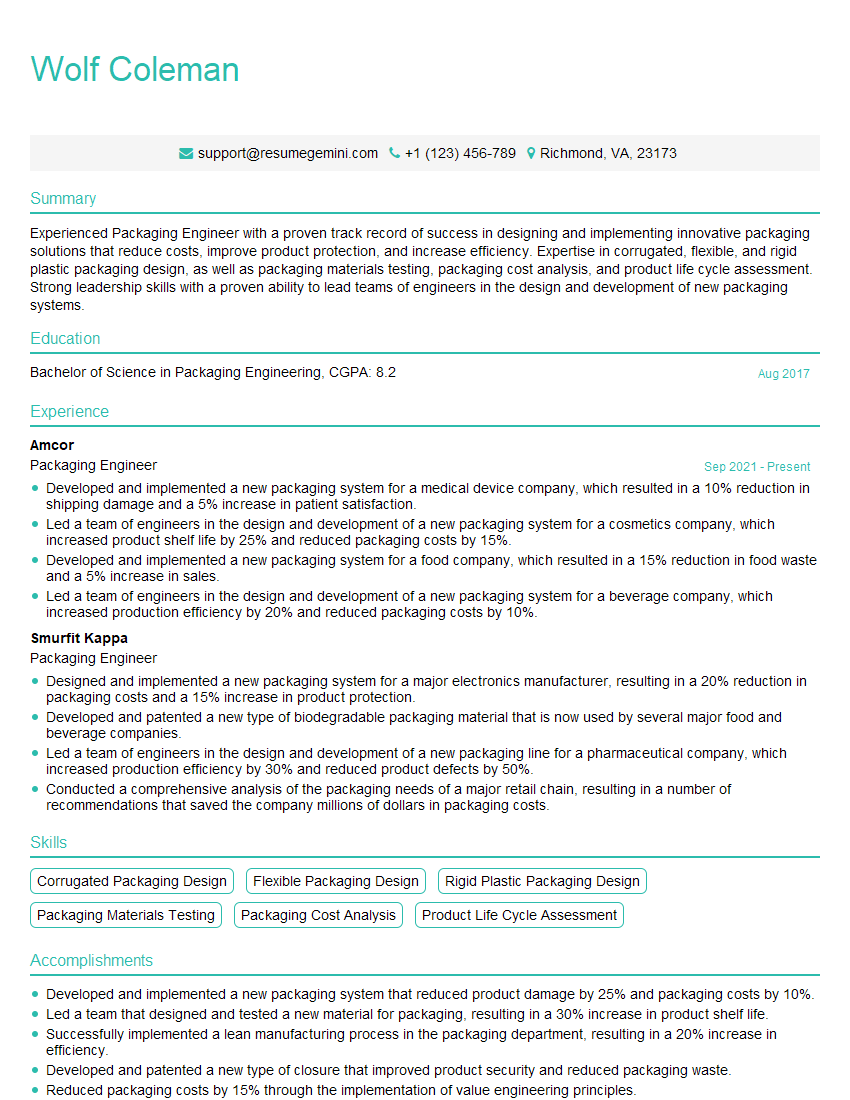
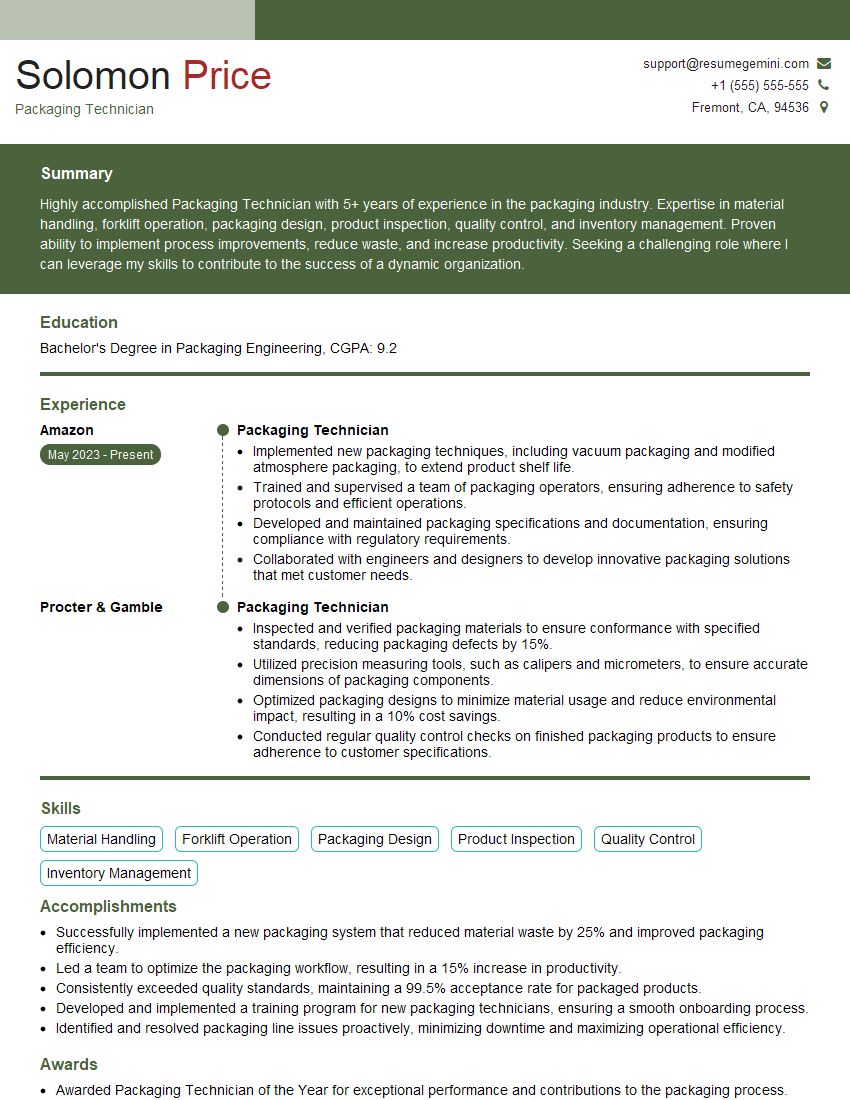
Mastering Repackaging Techniques opens doors to diverse and rewarding career opportunities in logistics, warehousing, and supply chain management. A strong understanding of these techniques showcases your practical skills and attention to detail, making you a highly valuable asset to any employer. To maximize your job prospects, it’s crucial to have an ATS-friendly resume that highlights your abilities effectively. We highly recommend using ResumeGemini to build a professional resume that truly captures your skills and experience. ResumeGemini offers examples of resumes tailored to Repacking Techniques, allowing you to create a compelling application that stands out from the competition.
Explore more articles
Users Rating of Our Blogs
Share Your Experience
We value your feedback! Please rate our content and share your thoughts (optional).
What Readers Say About Our Blog
Very informative content, great job.
good