The right preparation can turn an interview into an opportunity to showcase your expertise. This guide to Tile Work interview questions is your ultimate resource, providing key insights and tips to help you ace your responses and stand out as a top candidate.
Questions Asked in Tile Work Interview
Q 1. What types of tile are you most experienced with?
My expertise spans a wide range of tile types, but I’m most experienced with ceramic, porcelain, and natural stone tiles. Ceramic tiles are versatile and cost-effective, perfect for many applications. Porcelain tiles offer superior durability and water resistance, ideal for high-traffic areas or wet environments like bathrooms and kitchens. Natural stone, such as marble, granite, and travertine, adds a touch of elegance and luxury but requires specialized handling and sealing. I’ve also worked extensively with glass and mosaic tiles, each presenting unique installation challenges and aesthetic opportunities.
For example, I recently completed a project using large-format porcelain tiles in a modern kitchen, requiring precise cutting and meticulous leveling. Another project involved intricate mosaic work in a bathroom, demanding patience and artistic precision. This variety of experience allows me to adapt to diverse projects and client preferences.
Q 2. Describe your experience with different tile installation methods.
I’m proficient in various tile installation methods, including thin-set mortar application, which is the most common method for most tile types. This involves spreading a thin layer of mortar onto the substrate and adhering the tiles firmly. For larger format tiles or those requiring extra support, I use a modified thin-set method with back-buttering – applying mortar to the back of the tile as well. I also have experience with using a dry-set method for larger tiles or uneven surfaces, which employs a special cement system.
Furthermore, I’m skilled in installing tiles over existing surfaces using appropriate bond breakers and ensuring a proper adhesive bond. Each method necessitates a nuanced understanding of the materials and substrate to ensure a successful and long-lasting installation. The choice of method depends greatly on the tile type, substrate conditions, and project specifications.
Q 3. Explain your process for preparing a surface for tile installation.
Preparing the surface is critical for a successful tile installation. It’s the foundation upon which the entire project rests. My process begins with a thorough assessment of the existing surface for any cracks, loose debris, or unevenness. I then clean the surface thoroughly to remove dust, dirt, and any previous coatings that might compromise adhesion. For surfaces with significant imperfections, I’ll use appropriate self-leveling compounds to ensure a flat and stable base. This is particularly important for larger format tiles.
For example, on a concrete substrate, I might use a concrete grinder to remove any laitance (a weak layer of cement paste). On drywall, I would ensure it’s properly primed and sealed to prevent moisture absorption. The goal is to create a clean, level, and stable surface that maximizes tile adhesion and prevents future issues like cracking or tile failure.
Q 4. What tools and equipment are essential for tile installation?
Essential tools for tile installation include a tile cutter or wet saw (for precise cuts), a notched trowel (for spreading mortar evenly), a level (for ensuring straight lines), a rubber mallet (for gentle tile tapping), spacers (for maintaining consistent grout lines), a grout float (for applying grout), and a sponge (for cleaning excess grout). Safety gear, including safety glasses and gloves, is also essential. In addition, depending on the project’s complexity, I might use tools like a grinder, a diamond blade saw for cutting hard materials, and a laser level for larger projects ensuring precise alignment.
For example, using a wet saw ensures clean, precise cuts on ceramic and porcelain tiles, avoiding chipping. A laser level helps maintain consistent and perfectly level lines, especially crucial for large areas.
Q 5. How do you ensure proper grout spacing and application?
Maintaining consistent grout spacing is crucial for a professional-looking and structurally sound tile installation. I use plastic spacers of the appropriate size, inserted between tiles during installation. These spacers ensure uniform gaps for grout application. Once the tiles are set, I carefully remove the spacers before grouting.
Grout application involves using a grout float to press the grout into the joints at a 45-degree angle, ensuring complete filling. I then use a damp sponge to remove excess grout and clean the tile surfaces, working meticulously to prevent discoloration. The timing and method for cleaning excess grout are crucial, as different grout types have different setting times. Choosing the correct grout for the tile and application environment is also essential for durability and longevity.
Q 6. What are some common problems encountered during tile installation and how do you solve them?
Common problems include uneven surfaces leading to lippage (uneven tile height), improper grout application leading to cracking or discoloration, and cracking tiles due to poor substrate preparation. Uneven surfaces are tackled proactively by leveling the substrate. Improper grouting is addressed by regrouting or carefully cleaning and sealing the existing grout if needed.
Cracked tiles usually indicate underlying issues, like poor substrate preparation or inadequate support. I carefully investigate the cause before considering replacement or repair. For example, if lippage occurs, I might need to remove and reset tiles. If cracking stems from substrate movement, I will investigate and rectify the underlying cause before reinstalling the tiles. A systematic approach and a keen eye for detail are essential for diagnosing and rectifying these issues.
Q 7. How do you handle uneven surfaces before tile installation?
Handling uneven surfaces is paramount to a successful tile installation. My approach begins with a thorough assessment of the surface’s irregularities. Minor imperfections can often be addressed with thin-set mortar, which has some self-leveling properties. For more significant unevenness, I use self-leveling compounds. These are poured onto the surface and allowed to self-level, creating a smooth, flat base for tile installation.
The type of self-leveling compound selected depends on the nature and severity of the unevenness. For larger discrepancies, I may use a thicker compound and ensure proper curing time. This ensures the tiles have a stable and even base for adhesion, preventing issues such as lippage and cracking later on. Prioritizing proper substrate preparation is crucial in ensuring the longevity and aesthetics of the finished product.
Q 8. Describe your experience with cutting and fitting tiles.
Cutting and fitting tiles requires precision and skill. I’ve worked with a variety of tile types and sizes, from delicate mosaics to large-format porcelain slabs, using various tools including wet saws, angle grinders with diamond blades, and manual nippers. The process begins with careful planning, measuring, and marking the tiles to ensure a perfect fit. For intricate cuts, I use a wet saw to achieve clean, accurate lines, minimizing chipping. For more complex shapes, I might use a tile nipper for smaller adjustments. Fitting involves ensuring consistent grout lines and minimizing visible cuts wherever possible. For instance, on a recent bathroom renovation, I had to cut numerous tiles to fit around a curved shower niche. Using a combination of wet saw cuts and careful manual shaping, I achieved a seamless and aesthetically pleasing result. The key is patience and attention to detail.
Q 9. What safety precautions do you take during tile installation?
Safety is paramount in tile installation. My safety precautions include wearing safety glasses at all times to protect my eyes from flying debris during cutting. I always use a respirator to avoid inhaling silica dust generated during tile cutting, especially with natural stone. Durable work gloves protect my hands from sharp edges and abrasive materials. I ensure the work area is clean and well-lit to prevent accidents caused by tripping or falling. When working at heights, I always use appropriate safety harnesses and scaffolding. I also make sure to use the correct personal protective equipment (PPE) when working with specific tile adhesives or sealants, following the manufacturer’s instructions carefully. Proper storage of tools and materials is also crucial to prevent injuries.
Q 10. How do you calculate the amount of tile needed for a project?
Calculating tile quantity involves more than just measuring the area. I start by accurately measuring the length and width of the area to be tiled. This is then multiplied to find the square footage. Next, I account for waste. This includes cuts, breakage, and extra material needed for patterns or complex designs. Typically, I add 10-15% for standard projects, but this can increase for complex layouts or large-format tiles. For instance, if I’m tiling a 10ft x 10ft room, that’s 100 square feet. Adding 15% waste gives me 115 square feet. Finally, I always purchase slightly more than needed to account for unforeseen issues. It is better to have some extra than to run short during a project. Thinking ahead helps to maintain a smooth and efficient workflow.
Q 11. What is your experience with waterproofing techniques in tile installation?
Waterproofing is critical, especially in wet areas like bathrooms and showers. My experience includes using various waterproofing membranes, such as liquid-applied membranes and sheet membranes, before tiling. I follow the manufacturer’s instructions meticulously, applying multiple coats where necessary and ensuring complete coverage. I pay special attention to sealing corners and penetrations through the waterproofing layer, such as pipes or fixtures. The chosen membrane needs to be compatible with the type of tile adhesive used. The goal is to create a barrier against water penetration, preventing damage to the substrate and avoiding mold growth. A recent project involved installing a Schluter-KERDI shower system, a very reliable method for waterproofing. Properly waterproofing guarantees the longevity of the tiled area and prevents costly repairs.
Q 12. How do you handle different tile formats (e.g., large format tiles)?
Large-format tiles present unique challenges, requiring careful planning and execution. Precise measurements and cutting are critical to minimize waste. I use specialized tools like large-format wet saws and score-and-snap systems for these tiles. The increased weight requires extra attention to the substrate’s strength and proper adhesive application to prevent sagging or cracking. I often use a modified thin-set mortar that is optimized for large format tiles and create extra support as needed with additional backer board. Careful planning of the layout is also essential; precise spacing is critical to avoid adjustments mid-project and reduce breakage. It’s a more demanding process than working with smaller tiles, but the final result is often a striking aesthetic.
Q 13. What are your preferred grout types and why?
My preferred grout types depend on the application. For high-traffic areas or wet environments, I typically opt for epoxy grout due to its superior water resistance, durability, and stain resistance. For less demanding areas, a sanded grout is a cost-effective choice, offering good strength and aesthetic appeal. Unsanded grout is best suited for narrower grout lines and is typically used with smaller tiles. The color selection is crucial and should complement the tiles while considering maintenance requirements. I often consult with clients on the best grout option based on their budget, the tile style, and the intended use of the space.
Q 14. What are some common issues with grout and how do you address them?
Common grout issues include cracking, efflorescence (salt deposits), and staining. Cracking can be caused by improper mixing, inadequate substrate preparation, or insufficient expansion joints. Efflorescence can be addressed by cleaning the grout thoroughly and allowing it to dry completely. Staining is often caused by spills or dirt; regular cleaning with a suitable grout cleaner helps prevent this. Preventive measures are key: proper grout mixing, adequate curing time, and sealing the grout after installation greatly reduce the likelihood of these problems. For example, if I see grout cracking, I will investigate potential substrate issues such as movement or improper preparation. Addressing these issues upfront prevents long-term problems.
Q 15. Explain your experience with different types of tile adhesives.
My experience with tile adhesives spans a wide range, encompassing various types suited for different applications and tile materials. I’m proficient with modified thin-set mortars, which are the industry standard for most residential and commercial projects. These mortars contain polymers that enhance their bonding strength, water retention, and open time, making them ideal for larger format tiles and challenging substrates. I also have extensive experience with epoxy adhesives, known for their superior strength and waterproof nature. These are crucial for applications like swimming pools, showers, and areas with constant moisture exposure. For delicate tiles or specific installation needs, I’ve worked with various specialized adhesives, including those designed for glass, porcelain, and natural stone. Selecting the right adhesive is critical – a wrong choice can lead to cracked tiles, grout issues, or even complete installation failure. For instance, using a standard thin-set mortar for a glass tile backsplash would be a mistake, as it might not provide enough adhesion or flexibility.
- Modified Thin-set Mortar: Versatile, cost-effective, suitable for most tile types.
- Epoxy Adhesive: Superior bond strength and waterproof properties, ideal for wet areas.
- Latex-Modified Thin-set: Improved flexibility and workability.
Career Expert Tips:
- Ace those interviews! Prepare effectively by reviewing the Top 50 Most Common Interview Questions on ResumeGemini.
- Navigate your job search with confidence! Explore a wide range of Career Tips on ResumeGemini. Learn about common challenges and recommendations to overcome them.
- Craft the perfect resume! Master the Art of Resume Writing with ResumeGemini’s guide. Showcase your unique qualifications and achievements effectively.
- Don’t miss out on holiday savings! Build your dream resume with ResumeGemini’s ATS optimized templates.
Q 16. How do you ensure the longevity of a tile installation?
Ensuring the longevity of a tile installation involves meticulous attention to detail throughout the entire process, from substrate preparation to final cleaning. First, a properly prepared substrate is paramount. This means ensuring the surface is clean, level, and free from any dust, debris, or loose materials. Cracks or imperfections in the subfloor should be addressed before tiling commences to prevent issues later on. Second, the correct adhesive selection, as discussed previously, is critical. Using the wrong adhesive can drastically reduce the lifespan of the installation. Third, proper installation techniques—ensuring consistent coverage with the adhesive, precise tile spacing and alignment—are vital. Finally, appropriate grout selection and application, along with proper sealing, protect the installation from water damage and staining. I always use high-quality materials and follow manufacturer’s recommendations to ensure a robust and durable outcome. One project I remember involved installing porcelain tiles in a high-traffic commercial kitchen. By meticulously prepping the concrete subfloor and using a high-performance modified thin-set, the installation remained flawless even after years of heavy use.
Q 17. What is your experience with thinset mortar?
Thin-set mortar is the foundation of most tile installations. My experience encompasses various types, including modified and unmodified versions. Modified thin-sets, as mentioned earlier, offer improved performance due to the addition of polymers. I’m adept at mixing thin-set to the manufacturer’s specifications, ensuring the proper consistency for optimal adhesion and workability. I understand the importance of the proper water-to-powder ratio, as too much water will weaken the bond and too little will result in a difficult-to-work-with mixture. I can accurately determine the appropriate trowel size needed depending on the tile size and type; this is crucial to ensuring complete coverage and preventing voids under the tiles. Improper thin-set application is a major source of tile installation problems, leading to cracking, popping, and even complete failure. My experience ensures that I avoid these common pitfalls. For instance, using the wrong trowel size for large format tiles can result in insufficient coverage, leading to tile failure.
Q 18. Describe your process for cleaning and maintaining installed tiles.
Cleaning and maintaining installed tiles is crucial for preserving their appearance and extending their lifespan. Immediately after installation, I thoroughly clean the tiles, removing any excess grout and adhesive residue. For grout cleaning, I use a grout haze remover and a soft brush. For everyday cleaning, I recommend using a pH-neutral cleaner and a soft cloth or mop. Avoid abrasive cleaners or harsh chemicals, which can damage the tile surface. For tougher stains, I might use a specialized tile and grout cleaner, always testing it in an inconspicuous area first. Regular sealing of grout lines, particularly in areas prone to moisture, is critical to prevent staining and water damage. The frequency of sealing depends on the type of grout and the environment. For example, grout in a shower will require more frequent sealing than grout in a dry area. Proper maintenance, such as avoiding acidic spills and using protective mats, can go a long way towards preserving the quality of a tile installation.
Q 19. What is your experience with backer boards?
Backer boards are essential for creating a stable and durable substrate for tile installations, particularly in areas subject to moisture. My experience includes working with cement backer boards (CBU), which offer good strength and moisture resistance, and waterproof backer boards, which are specifically designed for wet areas such as showers. I’m experienced in properly installing backer boards, ensuring that the seams are properly taped and mudded to create a waterproof barrier. This involves the use of cement-based thinset to secure the boards to the studs and the application of a waterproof membrane over the joints. I understand the importance of ensuring proper ventilation to prevent moisture buildup and the potential for mold growth behind the tiles. Ignoring backer board installation or using inappropriate methods significantly jeopardizes the longevity of any tile project, leading to issues like cracking, water damage, and mold growth. Choosing the appropriate backer board for the environment is critical to project success. In a bathroom, a waterproof backer board is essential; in a living room, a CBU might suffice.
Q 20. What is your approach to troubleshooting tile installation issues?
Troubleshooting tile installation issues requires a systematic approach. I begin by carefully examining the affected area to identify the root cause. This might involve checking the substrate for unevenness or cracks, assessing the adhesive bond, examining the grout for flaws, or investigating potential water damage. Common issues include cracked tiles, hollow-sounding tiles (indicating poor adhesion), and grout problems like cracking or staining. The solution is dependent on the specific problem. For example, cracked tiles might require replacement, while hollow-sounding tiles may need to be removed and reinstalled with fresh adhesive. Grout problems may require cleaning, resealing, or even complete regrouting. My experience allows me to quickly diagnose problems and apply effective solutions. For instance, if I notice tiles popping up along a seam, I know to check for unevenness in the substrate or insufficient adhesive in the joint area. My methodical approach and problem-solving skills are essential for delivering high-quality results.
Q 21. How do you manage a tile installation project timeline?
Managing a tile installation project timeline requires careful planning and efficient execution. I begin by creating a detailed project schedule, factoring in the necessary steps: substrate preparation, backer board installation, tiling, grouting, and final cleaning. I estimate the time required for each stage based on the project’s scope and complexity. I then break down the project into manageable tasks, assigning specific timelines to each. Maintaining open communication with the client is key to keeping the project on schedule. Unexpected delays might occur due to material availability or unforeseen issues; in these cases, I adapt the schedule and communicate promptly with the client to manage expectations. Efficient workflow, proper material management, and a skilled team are vital in completing the project within the allocated timeframe. For example, in a large commercial project, I might coordinate several teams to work simultaneously on different areas to accelerate the overall process.
Q 22. Explain your experience working with different types of substrates.
Substrate preparation is paramount to successful tile installation. My experience spans a wide range of substrates, including concrete, plywood, backer board (like cement board and drywall), and even existing tile. Each requires a unique approach. For instance, concrete needs to be properly cleaned, primed, and assessed for cracks or imperfections that need repair before tiling. Plywood needs to be stable, with no movement or flexing, often requiring additional layers for reinforcement. Cement backer board is a favorite for wet areas, offering excellent water resistance, but must be correctly fastened and sealed. Working with existing tile requires careful consideration of bond strength; testing adhesion is crucial before proceeding. I’ve worked on projects where a combination of these substrates existed within a single space, requiring tailored solutions for each area. For example, in a bathroom remodel, I’ve had to work with concrete floors, cement board walls in the shower, and drywall in other areas, all requiring different preparation methods.
Q 23. How do you ensure proper ventilation during and after tile installation?
Proper ventilation is critical for preventing mold and mildew growth, especially in wet areas. During installation, I use exhaust fans to remove excess moisture from the air. This is especially important when using thin-set mortar, which requires specific moisture levels to cure properly. For example, in a bathroom remodel, I often have a powerful exhaust fan running throughout the day, effectively pulling out excess moisture and accelerating the drying process. After installation, I ensure that the area has adequate natural ventilation or continue to use exhaust fans until the thin-set is completely cured and the tile is fully dry. In situations with limited ventilation, such as a basement bathroom, dehumidifiers can be employed to control moisture levels and ensure proper drying of the tile and setting material.
Q 24. Describe your experience with installing tiles in wet areas (e.g., showers, bathrooms).
Wet area installations demand meticulous attention to detail. My experience includes numerous shower and bathroom tile projects. The key is waterproofing. I always install a waterproof membrane, such as a Schluter-KERDI system, before tiling in showers. This creates a barrier to prevent water penetration and protect the substrate from damage. The proper selection of tile is also crucial. Porcelain and ceramic tiles, especially those rated for wet environments, are preferred for their durability and water resistance. I’ve also worked with numerous natural stone options and have a strong understanding of the sealing processes required to protect them from water damage. Finally, ensuring proper drainage and slope in shower pans is essential to prevent water pooling. In one project, I had to correct a poorly sloped pan before tiling, demonstrating my ability to troubleshoot and solve issues before they become major problems.
Q 25. How do you handle customer requests or changes during a tile project?
Open communication is key to handling customer requests or changes effectively. I always encourage clients to discuss any changes as early as possible in the project. Before implementing any changes, I thoroughly discuss the implications of the change – both in terms of cost and project timeline – with the client. For example, if a client wants to change tile halfway through the project, I carefully assess the impact on existing work, material waste, and time constraints. This way, we can make informed decisions together, ensuring transparency and preventing misunderstandings. Proper documentation of all changes is maintained to avoid future disputes. My goal is always to deliver a project that meets the client’s vision while maintaining professionalism and integrity.
Q 26. What is your understanding of building codes related to tile installation?
I am well-versed in local and national building codes pertaining to tile installation. This includes understanding requirements for waterproofing in wet areas, proper substrate preparation, acceptable tile types, and methods for ensuring structural integrity. I understand the importance of maintaining proper spacing for expansion and contraction to prevent cracking. I regularly check local building codes before starting any project and ensure that my installation methods comply with all regulations. Non-compliance can lead to serious structural damage and safety issues; therefore, staying updated on building codes is a priority.
Q 27. What is your experience with using a tile saw?
I am proficient in using various tile saws, both wet and dry. I understand the importance of using the correct blade for different tile types, such as porcelain, ceramic, and natural stone. Safety is my top priority when operating a tile saw; I always wear appropriate safety gear, including eye protection, hearing protection, and a dust mask. Knowing how to properly maintain and clean the saw is critical for its longevity and optimal performance. I’ve used various models from basic manual saws to larger wet saws capable of cutting large format tiles. My experience allows me to select the appropriate saw for the job, ensuring efficient and precise cuts. Accurately cutting tiles is essential for achieving a professional-looking finish.
Q 28. How do you maintain a clean and organized worksite?
Maintaining a clean and organized worksite is essential for safety and efficiency. I implement several strategies, including daily cleanup at the end of each workday. Materials are stored neatly and organized; debris is removed regularly. Waste disposal is handled properly and according to local regulations. Protective coverings are used to safeguard existing surfaces from damage. This not only ensures a safe working environment but also leaves a clean and presentable space for the client when the project is complete. A well-organized site promotes efficiency as it makes finding tools and materials quick and easy.
Key Topics to Learn for Your Tile Work Interview
- Tile Selection and Material Properties: Understanding different tile types (ceramic, porcelain, natural stone), their properties (water absorption, durability, frost resistance), and appropriate applications for various settings (interior vs. exterior, high-traffic areas).
- Installation Techniques: Mastering various installation methods including thin-set mortar application, proper spacing and alignment, cutting and shaping tiles, and grouting techniques. Practical experience with different tile sizes and formats is crucial.
- Surface Preparation: Knowing how to properly prepare substrates for optimal tile adhesion, including leveling uneven surfaces, moisture mitigation, and primer application. This includes understanding the importance of proper substrate testing.
- Tools and Equipment: Familiarity with essential tools (wet saws, tile cutters, nippers, trowels, level) and their proper usage for efficient and accurate tile installation. Understanding safety procedures related to power tools is essential.
- Design and Layout: Understanding basic design principles, including pattern creation (running bond, herringbone, etc.), measuring and calculating tile quantities, and addressing design challenges (corners, transitions, cut tiles).
- Troubleshooting and Problem-Solving: Ability to identify and resolve common installation issues like lippage, cracking, grout issues, and efflorescence. Demonstrating practical solutions to these challenges is key.
- Building Codes and Regulations: Awareness of relevant building codes and industry standards related to tile installation and safety. This demonstrates a commitment to professional practices.
- Maintenance and Care: Understanding proper cleaning and maintenance procedures for different tile types to ensure longevity and aesthetics. This showcases attention to detail and long-term project success.
Next Steps
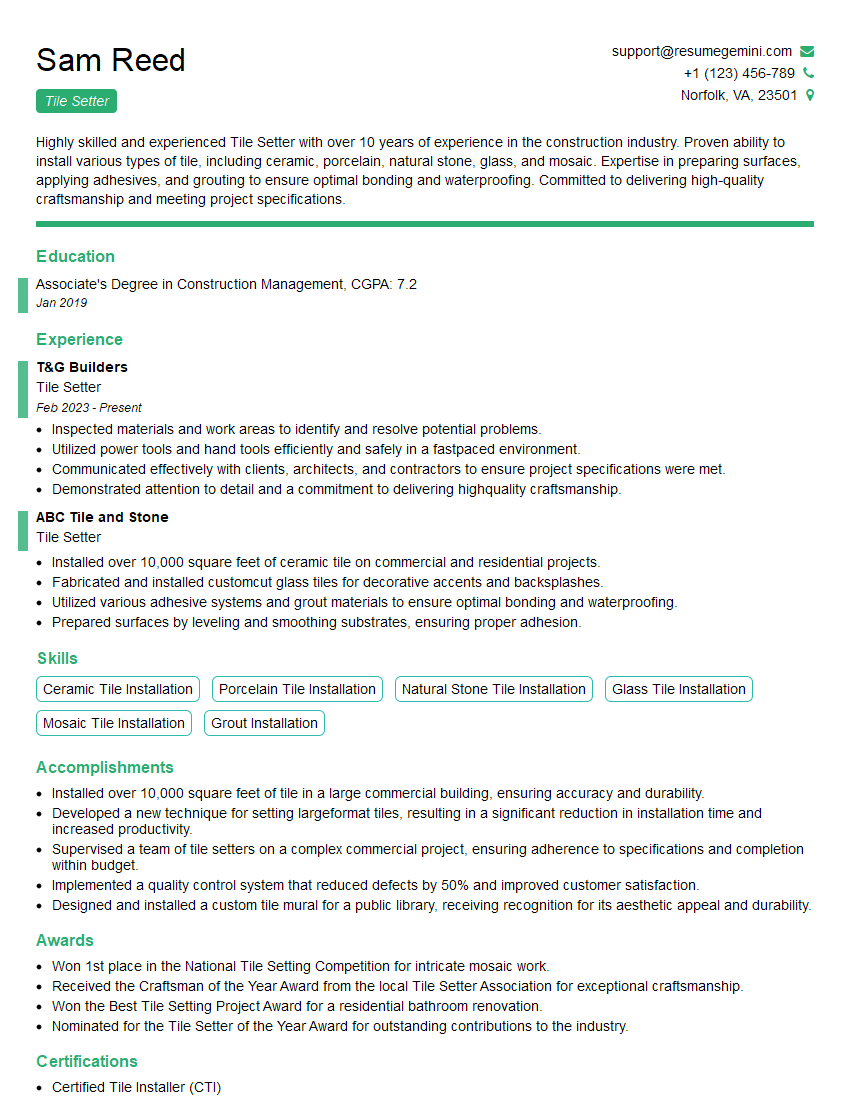
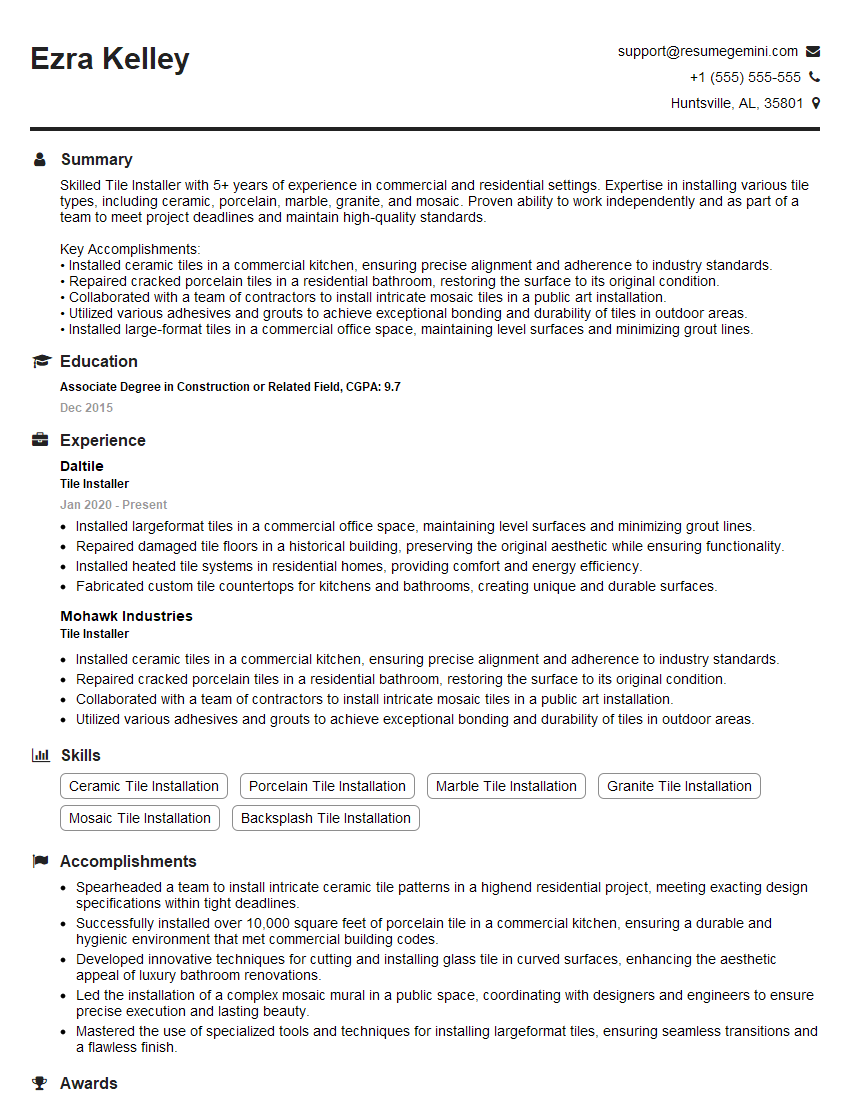
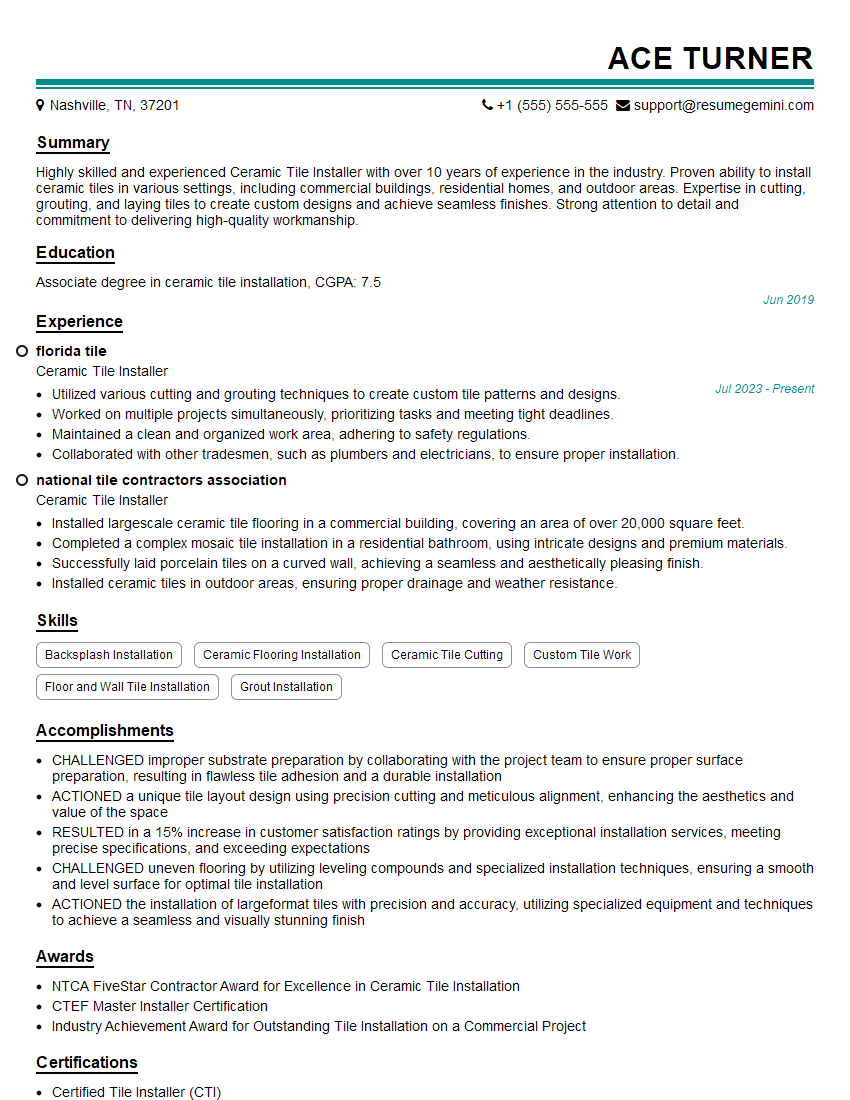
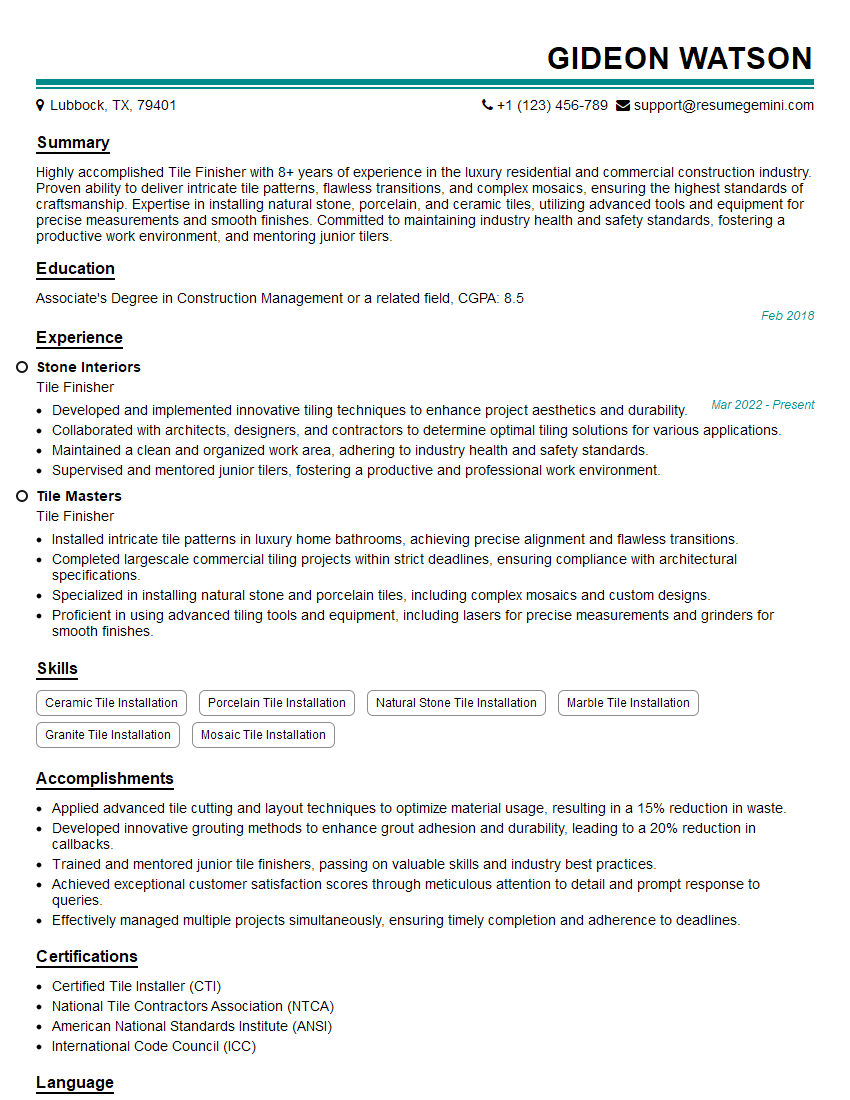
Mastering tile work opens doors to a rewarding career with diverse opportunities for growth. Whether you’re aiming for a specialized role or a leadership position, a strong foundation in tile installation and related knowledge is paramount. To maximize your job prospects, creating an ATS-friendly resume is crucial. ResumeGemini is a trusted resource that can help you build a professional resume that highlights your skills and experience effectively. Examples of resumes tailored to the tile work industry are available to guide you. Take the next step and invest in your career success today!
Explore more articles
Users Rating of Our Blogs
Share Your Experience
We value your feedback! Please rate our content and share your thoughts (optional).
What Readers Say About Our Blog
Very informative content, great job.
good