The right preparation can turn an interview into an opportunity to showcase your expertise. This guide to NACE Certification interview questions is your ultimate resource, providing key insights and tips to help you ace your responses and stand out as a top candidate.
Questions Asked in NACE Certification Interview
Q 1. Explain the different types of corrosion.
Corrosion is the deterioration of a material, usually a metal, due to a chemical or electrochemical reaction with its environment. There are many types, each with unique characteristics. Think of it like rusting, but much more complex.
- Uniform Corrosion: This is the most common type, where the corrosion occurs evenly across the entire surface. Imagine a piece of iron uniformly rusting. It’s predictable, relatively easy to manage, and often leads to a reduction in thickness.
- Galvanic Corrosion: This happens when two dissimilar metals are in contact in the presence of an electrolyte (like seawater). The more active metal corrodes preferentially. A classic example is steel and copper in contact; the steel will corrode faster.
- Pitting Corrosion: Localized corrosion that creates small holes or pits on the surface. This is insidious because the damage may not be immediately obvious but can lead to premature failure. Think of tiny holes appearing on a metal surface, leading to structural weakness.
- Crevice Corrosion: Corrosion concentrated in crevices or gaps where oxygen or other reactants are limited. Think of the gap between two bolted metal plates, where corrosion is concentrated.
- Stress Corrosion Cracking (SCC): This occurs when a metal is under tensile stress in a corrosive environment. It leads to cracking and failure, even if the corrosion rate is low. Imagine a pressure vessel experiencing stress and corrosion at the same time. This is catastrophic.
- Erosion Corrosion: This is a combination of corrosion and erosion. A moving fluid, like water or gas, accelerates the corrosion process. Think of a pipe carrying abrasive liquids that erode and corrode.
- Intergranular Corrosion: Corrosion that attacks the grain boundaries of a metal, weakening its structure. This often happens in certain alloys due to impurities or heat treatments.
Q 2. Describe the various methods used for corrosion prevention.
Preventing corrosion involves a multifaceted approach. We aim to break the corrosion chain, stopping or slowing the electrochemical reaction.
- Material Selection: Choosing corrosion-resistant materials like stainless steel, aluminum, or specialized alloys is a primary step. Selecting the right material for the specific environment is key.
- Coatings: Applying protective layers such as paints, polymers, or metallic coatings (galvanizing, for example) acts as a barrier. Think of painting your fence to prevent rust.
- Corrosion Inhibitors: Chemicals added to the environment to slow down or prevent corrosion. This works by forming a protective layer or modifying the electrochemical reactions. They’re like adding a chemical shield to protect metal.
- Cathodic Protection: This electrochemical method uses a sacrificial anode or impressed current to protect a metal structure. We will dive deeper into this later. Think of it as creating an electrical shield.
- Design Considerations: Careful design can minimize corrosion risks. For instance, avoiding crevices, ensuring proper drainage, and selecting appropriate fasteners are all important steps.
- Environmental Control: Controlling factors like temperature, humidity, and pH of the environment can mitigate corrosion. Drying a wet metal surface will reduce corrosion.
Q 3. What are the key components of a cathodic protection system?
A cathodic protection (CP) system prevents corrosion by making the protected structure a cathode in an electrochemical cell. It’s like creating a tiny electrical battery.
- Anode: The sacrificial metal that corrodes instead of the protected structure (e.g., zinc, magnesium). This actively protects the structure.
- Cathode: The structure being protected from corrosion (e.g., steel pipeline). This is the metal we want to protect.
- Electrolyte: The conductive medium (usually soil, water, or other solution) that allows the current to flow.
- Power Source (for impressed current CP): An external power source provides the current needed to protect the structure. Sacrificial anodes do not need this.
- Monitoring System: Essential for measuring the system’s effectiveness and detecting potential issues. Regular monitoring is critical to ensure ongoing protection.
Q 4. How do you identify different types of corrosion damage?
Identifying corrosion damage requires a combination of visual inspection, non-destructive testing (NDT), and potentially metallurgical analysis. It’s like being a detective.
- Visual Inspection: Examining the surface for signs of rust, pitting, cracking, discoloration, or other changes in appearance. This provides an initial assessment.
- NDT Methods: Techniques like ultrasonic testing (UT), magnetic particle inspection (MPI), and dye penetrant testing (PT) can reveal hidden flaws. They allow us to assess the severity of the damage without destroying the material.
- Metallurgical Analysis: Laboratory analysis of the corroded material can provide insights into the type of corrosion, the rate of attack, and the underlying causes. This analysis helps us understand what caused the corrosion.
The specific approach depends on the type of structure and suspected damage. For example, checking a pipeline might involve UT to detect wall thinning, while inspecting a bridge might use visual inspection and MPI to detect cracks.
Q 5. Explain the importance of NACE standards in corrosion control.
NACE International (now NACE International, a division of Amperox) standards provide a framework for consistent corrosion control practices, ensuring safety, reliability, and cost-effectiveness. They are like the instruction manual for corrosion control.
These standards cover various aspects, including:
- Materials Selection: Guidance on choosing materials appropriate for specific environments.
- Coating Applications: Detailed specifications and best practices for applying various coatings.
- Cathodic Protection Design: Standards for designing and installing effective CP systems.
- Corrosion Testing and Inspection: Procedures for assessing corrosion damage and measuring corrosion rates.
- Safety Procedures: Guidelines for working safely in environments with potential corrosion hazards.
By following NACE standards, engineers and technicians can minimize corrosion risks, improve the lifespan of structures, and avoid costly repairs or failures.
Q 6. What are the limitations of cathodic protection?
While highly effective, cathodic protection has limitations.
- High Initial Cost: Designing and installing a CP system can be expensive, especially for large structures.
- Limited Protection Area: CP systems have limited protection distances and may not protect all parts of a structure completely. This might require multiple anode placements.
- Hydrogen Embrittlement: In certain cases, CP can cause hydrogen embrittlement, making the protected metal more prone to cracking.
- Disbondment of Coatings: CP can lead to disbondment (detachment) of coatings from the protected metal, which could compromise protection.
- Environmental Concerns: The use of sacrificial anodes can introduce environmental issues if they are not disposed of correctly. Proper handling is critical.
Careful planning and monitoring are crucial to mitigate these limitations and ensure effective, sustainable corrosion protection.
Q 7. Describe different types of coatings and their applications.
Coatings are a crucial method of corrosion prevention. The choice depends on the environment and the metal being protected. Imagine them as a protective skin.
- Organic Coatings: Paints, varnishes, and polymers. These are typically less expensive but can be susceptible to damage or degradation over time. They offer ease of application but need regular maintenance.
- Inorganic Coatings: Metallic coatings like zinc (galvanizing), aluminum, or others applied via processes like hot-dip galvanizing, electroplating, or thermal spraying. They are more durable and offer good corrosion protection. Zinc galvanization is very common on steel structures.
- Ceramic Coatings: Provide excellent high-temperature resistance and chemical inertness but can be brittle and expensive. They are often used in extreme environments.
- Composite Coatings: Combinations of organic and inorganic materials, providing enhanced performance. These coatings offer tailored properties, combining the benefits of the different components.
The application method also influences performance. Hot-dip galvanizing provides complete coating coverage, while painting might require multiple coats for optimal protection.
Q 8. How do you select the appropriate coating for a specific environment?
Selecting the right coating is crucial for long-term protection. It’s like choosing the right clothes for different weather conditions – you wouldn’t wear a swimsuit in a blizzard! The process involves considering several environmental factors:
- Exposure Environment: Is it submerged, atmospheric, or buried? Submerged environments require coatings resistant to high humidity and salinity, while atmospheric environments might prioritize UV resistance and temperature fluctuations. Buried structures need coatings that can withstand soil chemicals and pressure.
- Severity of Exposure: This considers the concentration of corrosive agents (like salts, acids, or chemicals) and the temperature. A highly corrosive environment demands a more robust coating system than a mildly corrosive one.
- Substrate Material: The base material (steel, concrete, etc.) dictates the coating’s compatibility. Some coatings adhere better to certain materials. For example, epoxy coatings are widely used on steel.
- Regulatory Requirements: Specific industries or locations may have environmental regulations that limit volatile organic compounds (VOCs) or require specific coating types.
Example: For a steel pipeline buried in highly saline soil, a three-layer coating system might be necessary, including a primer for adhesion, a thick layer of high-build epoxy for corrosion protection, and a topcoat for abrasion and UV resistance.
Q 9. What are the common inspection methods for coatings?
Common inspection methods for coatings ensure their integrity and effectiveness over time. Think of it as a regular health check for your coating system!
- Visual Inspection: This is the simplest method, involving a careful examination for defects like blistering, cracking, discoloration, and delamination. It’s the first line of defense in identifying problems.
- Holiday Detection: This involves using a high-voltage probe to detect pinholes or holidays (small imperfections) in the coating, particularly important for protective systems. Think of it as finding tiny leaks in a protective barrier.
- Adhesion Testing: Tests like the pull-off or cross-cut adhesion test measure the bond between the coating and the substrate. A poor bond suggests potential failure.
- Thickness Measurement: Using devices like magnetic or ultrasonic thickness gauges, we can monitor the thickness of the coating to ensure it meets specifications and hasn’t deteriorated.
- Ultrasonic Testing (UT): UT can detect flaws beneath the surface of the coating, such as delamination or corrosion under the coating (CUC).
Example: A regular visual inspection of a bridge’s protective coating can identify areas needing immediate attention before minor damage escalates into major structural problems. Holiday detection is especially useful for pipelines.
Q 10. Explain the importance of surface preparation before coating application.
Proper surface preparation is paramount for optimal coating adhesion and performance. It’s like preparing the ground before planting a seed – without proper preparation, the seed won’t grow well!
Poor surface preparation leads to coating failure, such as premature blistering, peeling, or corrosion under the coating. The surface must be clean, dry, and free from contaminants that could prevent proper adhesion. Common surface preparation methods include:
- Cleaning: Removes loose debris, dust, grease, oil, salts, and other contaminants using methods such as water jetting, solvent cleaning, or abrasive blasting.
- Abrasive Blasting: Creates a roughened surface profile that increases surface area for better mechanical bonding, removing mill scale, rust, and other imperfections. Different blasting media (sand, steel grit, glass beads) are chosen based on substrate and coating requirements.
- Profiling: Quantifies the surface roughness, measured as the peak to valley height in micrometers, ensuring proper anchor points for the coating.
Example: If a rusty steel tank is coated directly without removing the rust, the coating will quickly peel due to poor adhesion. Thorough abrasive blasting followed by a suitable primer is critical for lasting protection.
Q 11. What are the different types of corrosion inhibitors?
Corrosion inhibitors are substances that slow down or prevent corrosion. They’re like a protective shield for your metal! There are various types:
- Passivators: These form a protective layer (passive film) on the metal surface, inhibiting further corrosion. Chromates were traditionally used, but concerns about their toxicity have led to the development of environmentally friendly alternatives.
- Scavengers (or Oxygen Scavengers): These react with and remove corrosive agents like dissolved oxygen from the environment, thus reducing corrosion rates. Sodium sulfite is a common example.
- Volatile Corrosion Inhibitors (VCIs): These are often used in packaging to protect metal parts from corrosion. They vaporize and form a protective layer on metal surfaces.
- Organic Inhibitors: A broad category including amines, imidazolines, and other organic compounds which are adsorbed on the metal surface and prevent corrosion.
Example: Using a corrosion inhibitor in a closed-loop cooling system prevents corrosion of the system’s metallic components, extending its lifespan and reducing maintenance costs. VCIs are used to protect metal parts during shipping and storage.
Q 12. How do you interpret a polarization curve?
A polarization curve is a graphical representation of the relationship between the potential (voltage) and current density of a metal in an electrolyte. It’s a powerful tool to understand a metal’s corrosion behavior!
The curve shows various regions, including the cathodic and anodic regions. The intersection of these regions defines the corrosion potential (Ecorr) and corrosion current density (icorr). A lower icorr indicates lower corrosion rate. Polarization curves can also reveal the effectiveness of corrosion inhibitors and the type of corrosion mechanism.
Interpretation: The corrosion potential indicates the metal’s tendency to corrode. A more negative corrosion potential indicates a higher tendency to corrode. The corrosion current density reflects the rate of corrosion. A shift in the curves in the presence of an inhibitor signifies its effectiveness in reducing the corrosion rate.
Example: Comparing polarization curves of a steel sample in seawater with and without a corrosion inhibitor demonstrates the inhibitor’s impact. The inhibitor will cause a shift in the curve, reducing both Ecorr and icorr, showing reduced corrosion.
Q 13. What are the key factors affecting the lifespan of a coating?
Many factors affect a coating’s lifespan. Think of it like caring for a plant—neglect leads to wilting!
- Coating Type and Quality: The selection of a suitable coating system based on environmental exposure is crucial. Poor-quality coatings are more susceptible to failure.
- Surface Preparation: As discussed earlier, thorough surface preparation ensures good adhesion and extends the coating’s life. Poor preparation leads to premature failure.
- Environmental Conditions: Harsh environments (high humidity, UV radiation, temperature fluctuations, chemical exposure) accelerate coating degradation.
- Application Method and Thickness: Proper application techniques and achieving the specified coating thickness are essential for optimal performance.
- Maintenance and Inspection: Regular inspection and timely maintenance address minor defects before they escalate into major problems.
Example: A coating system exposed to continuous UV radiation and temperature cycling will degrade much faster than one applied indoors and protected from the elements. Regular inspections can reveal small defects, allowing for timely repairs and preventing extensive damage.
Q 14. Describe your experience with different NACE standards (e.g., SP0169, SP0284).
I have extensive experience applying and interpreting various NACE standards, such as SP0169 and SP0284. These standards provide detailed guidance on best practices in corrosion control.
NACE SP0169: This standard outlines the recommended practices for the inspection of coatings on industrial facilities. I’ve used this standard numerous times during coating inspections, ensuring that my evaluations are thorough and consistent with industry best practices. This involves visual inspection, thickness measurement, holiday detection, and adhesion testing.
NACE SP0284: This standard details the control of internal corrosion in steel pipelines. My experience includes evaluating and recommending corrosion control strategies for pipelines based on this standard, considering factors such as pipeline material, operating conditions, and the aggressiveness of the transported fluid.
Beyond these, I’m also familiar with standards related to surface preparation (like NACE No. 1, No. 2, No. 3, No. 6, and No. 7), various coating types, and cathodic protection design.
In my previous role, I was instrumental in developing a comprehensive corrosion management program for a major petrochemical plant, relying heavily on several NACE standards to ensure the integrity of their assets and compliance with industry regulations.
Q 15. How do you deal with unexpected corrosion issues during a project?
Dealing with unexpected corrosion issues requires a systematic approach combining immediate action with thorough root cause analysis. Firstly, I’d prioritize safety, ensuring the affected area is secured and personnel are protected from hazards like leaking chemicals or weakened structures. Then, I’d conduct a thorough visual inspection to assess the extent of the damage and identify the type of corrosion.
Next, I’d employ appropriate non-destructive testing (NDT) methods such as ultrasonic testing (UT) or radiographic testing (RT) to determine the depth and severity of the corrosion. This data is critical for deciding on the best repair strategy. For example, if the corrosion is superficial, a simple cleaning and protective coating might suffice. However, if it’s more extensive, it might necessitate more complex repairs like welding or replacement of components.
Finally, a crucial step is investigating the root cause. This involves analyzing factors such as the environment (humidity, temperature, exposure to chemicals), material selection, design flaws, and maintenance practices. Addressing the root cause prevents recurrence. For example, if the corrosion is due to a design flaw that leads to water stagnation, the design must be revised. Detailed documentation of the entire process, from discovery to remediation and root cause analysis, is essential for future reference and prevention.
Career Expert Tips:
- Ace those interviews! Prepare effectively by reviewing the Top 50 Most Common Interview Questions on ResumeGemini.
- Navigate your job search with confidence! Explore a wide range of Career Tips on ResumeGemini. Learn about common challenges and recommendations to overcome them.
- Craft the perfect resume! Master the Art of Resume Writing with ResumeGemini’s guide. Showcase your unique qualifications and achievements effectively.
- Don’t miss out on holiday savings! Build your dream resume with ResumeGemini’s ATS optimized templates.
Q 16. Explain your understanding of electrochemical principles related to corrosion.
Corrosion is fundamentally an electrochemical process. It involves the oxidation of a metal, where the metal loses electrons, and a simultaneous reduction reaction, where another substance gains those electrons. This exchange of electrons creates an electric current, albeit a tiny one. Think of it like a tiny battery!
The electrochemical series helps predict the relative reactivity of metals. Metals higher on the series are more likely to corrode (anode) when in contact with metals lower on the series (cathode) in the presence of an electrolyte (like seawater or even just moisture). The difference in potential between these two metals drives the corrosion process. The rate of corrosion is influenced by factors such as the conductivity of the electrolyte, the surface area exposed, and the presence of inhibitors or accelerators.
For example, steel (iron) readily corrodes in the presence of oxygen and moisture because iron readily loses electrons (oxidation), while oxygen gains these electrons (reduction). The presence of chloride ions, like in seawater, significantly accelerates this process, forming pits and increasing the rate of corrosion. Understanding these electrochemical principles is critical for selecting appropriate materials, coatings, and corrosion protection strategies.
Q 17. What safety precautions do you take while performing corrosion inspections?
Safety is paramount during corrosion inspections. Before any inspection, I ensure I have the appropriate Personal Protective Equipment (PPE), including safety glasses, gloves (depending on the chemicals present), and potentially respiratory protection if there are hazardous fumes or dust. Working at heights requires harnesses and fall arrest systems. Confined space entry necessitates specific training and permits.
I always check the site for potential hazards before starting work, like electrical hazards or unstable structures. I also assess the integrity of existing protective measures and ensure they’re not compromised. During the inspection, I maintain awareness of my surroundings and avoid unnecessary risks. Regular communication with my team and the site supervisor ensures everyone is aware of my location and any potential risks. Detailed safety plans are prepared beforehand, incorporating risk assessments and control measures. All safety regulations and company procedures are meticulously followed.
Q 18. How do you document your inspection findings and communicate them to stakeholders?
Inspection findings are meticulously documented using standardized forms and digital reporting tools. This includes detailed descriptions of the corrosion type, location, severity (e.g., using depth measurements from NDT), and any associated damage. Photographs and videos are vital in providing visual evidence of the corrosion and its impact.
My reports include recommendations for repair or mitigation strategies. The level of detail and the language used are tailored to the audience. For instance, a technical report for engineers will include precise measurements and technical jargon, while a report for a non-technical stakeholder will be more concise and use simpler language. Clear, concise, and easily understandable communication is crucial. I utilize various methods, including written reports, presentations, and direct conversations, to ensure stakeholders fully understand the findings and recommendations.
Q 19. Describe your experience with different types of corrosion testing (e.g., wet-cell testing).
My experience encompasses various corrosion testing methods. Wet-cell testing is a common electrochemical technique where the corrosion rate of a material is determined by measuring the current generated in a cell containing the material as an electrode immersed in a corrosive electrolyte. This helps quantify corrosion rates under controlled conditions. I’ve also worked extensively with other methods, including:
- Salt spray testing: Accelerated corrosion testing that simulates the effect of salt-laden environments.
- Potentiodynamic polarization: Measures the corrosion potential and current density of a material to determine its corrosion resistance.
- Electrochemical Impedance Spectroscopy (EIS): Provides information about the protective properties of coatings.
- Visual inspection and NDT techniques: UT, RT, magnetic particle inspection (MPI) – these help determine corrosion extent in-situ on structures.
The choice of testing method depends on the specific application and the information required. For example, wet-cell testing is suitable for determining the corrosion rate of a material, while visual inspection is useful for assessing the extent of corrosion on a structure.
Q 20. Explain the difference between uniform and localized corrosion.
Uniform corrosion is a relatively predictable type of corrosion where the material degrades evenly across its surface. Think of a sheet of metal rusting uniformly. It is relatively easy to predict and account for in design because the degradation rate is consistent. This type of corrosion is often manageable through protective coatings or material selection.
Localized corrosion, on the other hand, is much more dangerous as it attacks specific areas of the material, leading to rapid and unpredictable failure. Examples include:
- Pitting corrosion: Creates small, deep pits on the surface.
- Crevice corrosion: Occurs in confined spaces where stagnant solutions can accumulate.
- Stress corrosion cracking: Caused by a combination of tensile stress and a corrosive environment.
Localized corrosion is more challenging to detect and mitigate because it can rapidly penetrate the material even while the overall surface may appear unaffected.
Q 21. What are the potential consequences of corrosion failure in various industries?
Corrosion failure can have devastating consequences across various industries, impacting safety, economy, and the environment. In the oil and gas industry, pipeline corrosion can lead to leaks, explosions, and significant environmental damage, resulting in substantial financial losses and potential loss of life. In the aerospace industry, corrosion on aircraft components compromises structural integrity, potentially causing catastrophic failures.
In civil engineering, corrosion of bridges, buildings, and other structures can lead to structural weakening and collapse, posing severe safety risks. In the automotive industry, corrosion of car bodies reduces their lifespan and affects their resale value. Similarly, corrosion in marine environments can damage ships and offshore platforms, causing significant operational disruptions. In the chemical industry, corrosion in processing equipment can lead to leaks of hazardous materials, causing environmental pollution and workplace accidents.
The consequences often go beyond immediate damage, including costly repairs, production downtime, environmental remediation, and, in severe cases, loss of life. Implementing effective corrosion management programs is crucial in minimizing these risks and ensuring safety and reliability across all industries.
Q 22. How do you determine the appropriate inspection frequency for corrosion monitoring?
Determining the appropriate inspection frequency for corrosion monitoring is crucial for effective asset management and safety. It’s not a one-size-fits-all approach; it depends on a multitude of factors. Think of it like this: a doctor doesn’t schedule yearly check-ups for everyone – the frequency depends on age, risk factors, and individual health. Similarly, corrosion inspection frequency is determined by a risk assessment considering several parameters.
- Severity of the environment: A highly corrosive environment (e.g., offshore platforms in saltwater) requires far more frequent inspections than a less corrosive one (e.g., a dry, indoor storage facility).
- Material properties: Different materials have varying corrosion resistances. Stainless steel, for instance, typically requires less frequent inspection than mild steel in the same environment.
- Inspection history: Past inspection results provide valuable insights. If previous inspections revealed significant corrosion or rapid degradation, increased inspection frequency is warranted.
- Consequence of failure: The potential impact of a component failure heavily influences the inspection schedule. A small crack in a non-critical part might justify less frequent checks than a similar crack in a crucial structural element.
- Operating conditions: Factors like temperature, pressure, and the presence of contaminants significantly impact corrosion rates and therefore inspection frequency.
Often, a risk-based inspection (RBI) methodology is employed to systematically evaluate these factors and determine the optimal inspection schedule. Software tools can assist in this process by modeling corrosion rates and predicting failure probabilities.
Q 23. Describe your experience with different types of corrosion mitigation techniques.
My experience encompasses a broad range of corrosion mitigation techniques, each suited to different scenarios. I’ve worked with:
- Coatings: From simple paint systems to advanced epoxy and polyurethane coatings, I’ve been involved in selecting, applying, and inspecting coatings to protect assets from environmental exposure. For example, I helped select a specialized three-layer coating system for a chemical processing plant operating in a highly acidic environment, preventing significant corrosion and extending the lifespan of the equipment.
- Cathodic protection: I have extensive experience designing and implementing both sacrificial anode and impressed current cathodic protection (ICCP) systems. A project I’m particularly proud of involved designing an ICCP system for an offshore pipeline, effectively mitigating corrosion and preventing catastrophic failure.
- Corrosion inhibitors: I’ve utilized various corrosion inhibitors, including organic and inorganic types, in different applications, such as water treatment systems and cooling towers. The key is selecting the right inhibitor compatible with the specific system and its operational parameters.
- Material selection: This is fundamental. Choosing corrosion-resistant materials from the outset eliminates the need for extensive mitigation strategies later on. For example, replacing carbon steel components with stainless steel or duplex stainless steel in a highly corrosive environment significantly reduced maintenance and replacement costs.
- Design modifications: I’ve also been involved in projects where design changes – such as improved drainage, better ventilation, or the use of corrosion-resistant fasteners – minimized corrosion issues. A classic example is the redesign of a pipe system to eliminate stagnant water pockets that were promoting corrosion.
My approach always emphasizes selecting the most cost-effective and environmentally friendly technique that achieves the desired level of protection.
Q 24. Explain the role of material selection in corrosion prevention.
Material selection is paramount in corrosion prevention; it’s the first line of defense. Choosing the right material can significantly reduce or even eliminate the need for expensive and complex corrosion mitigation strategies. It’s akin to choosing the right tool for a job – using a screwdriver to hammer a nail is inefficient and potentially damaging.
Consider these factors:
- Environment: The primary consideration is the specific environmental conditions – exposure to seawater, acids, alkalis, or other aggressive chemicals will necessitate different material choices.
- Required strength and other properties: The material must meet the mechanical requirements of the application. A high-strength steel might be necessary for a structural component, but it may be more susceptible to corrosion than a more corrosion-resistant but less strong alloy.
- Cost: Corrosion-resistant materials often have higher upfront costs. A cost-benefit analysis should weigh the initial investment against the long-term savings from reduced maintenance and extended lifespan.
- Maintainability: Ease of repair and replacement is important. While a material may offer superior corrosion resistance, its difficulty in welding or machining might offset this advantage.
Using appropriate selection charts and considering relevant standards such as NACE MR0175/ISO 15156 for sour service applications ensures a suitable material choice for the intended service life.
Q 25. How do you stay updated with the latest advancements in corrosion control technologies?
Staying updated in the rapidly evolving field of corrosion control requires a multi-pronged approach.
- NACE International Membership and Conferences: I’m an active member of NACE International (now NACE International, a part of the Association for Materials Protection and Performance, AMPP), attending their conferences and workshops to learn about the latest advancements and best practices. These events offer invaluable opportunities to network with other experts and learn from their experiences.
- Technical Journals and Publications: I regularly read peer-reviewed journals such as Corrosion and Materials Performance to stay abreast of new research and technological developments.
- Online Resources and Webinars: Numerous online platforms and professional organizations offer webinars, training courses, and articles on various aspects of corrosion control. These provide convenient and readily accessible learning resources.
- Industry Standards and Codes: I meticulously follow the updates and revisions of relevant industry standards and codes, such as those published by NACE International and other organizations, to ensure that my practices adhere to the latest safety and performance guidelines.
- Professional Development Courses: I actively participate in professional development courses and training programs to enhance my knowledge and skills in specialized areas such as RBI and advanced corrosion monitoring techniques.
Continuous learning is essential to maintain expertise in this dynamic field.
Q 26. Describe a challenging corrosion problem you faced and how you solved it.
One particularly challenging case involved unexpected pitting corrosion in stainless steel piping at a pharmaceutical plant. Initial inspections revealed localized pitting, leading to concerns about potential leaks and product contamination. This was particularly concerning as the plant operated under strict regulatory guidelines.
Our investigation focused on several factors:
- Water chemistry analysis: The analysis revealed high levels of chlorides in the process water, a known contributor to pitting corrosion in stainless steel.
- Metallurgical testing: Testing confirmed the stainless steel grade was indeed susceptible to pitting corrosion under the specific conditions.
- Flow analysis: We identified areas of stagnant water in the pipe system, which accelerated the corrosion process.
To resolve the problem, we implemented a multi-faceted approach:
- Improved water treatment: We implemented a more effective water treatment system to reduce chloride concentrations in the process water.
- Pipe flushing and cleaning: The entire pipe system was thoroughly cleaned to remove existing corrosion products.
- Cathodic protection installation: A sacrificial anode system was installed to provide additional protection against pitting corrosion.
- Operational changes: We implemented procedural changes to minimize stagnant water conditions in the system.
This combination of measures successfully mitigated the pitting corrosion, ensuring the safe and continuous operation of the pharmaceutical plant while staying within budget and schedule.
Q 27. What is your experience with risk-based inspection (RBI)?
Risk-based inspection (RBI) is a critical methodology in corrosion management. It shifts the focus from time-based inspections to a more data-driven approach. Instead of rigidly scheduled inspections, RBI assesses the risk of failure of individual components or systems and tailors inspection frequency accordingly.
My experience with RBI includes:
- Risk assessment and quantification: This is the cornerstone of RBI, involving identifying potential failure modes, assessing their likelihood, and estimating the consequences of failure. We usually use software for this, which allows the creation of risk matrices based on consequences of failure and probability.
- Inspection planning: Based on the risk assessment, we define the optimal inspection methods, frequency, and extent of inspections. For example, high-risk components might require more frequent and thorough inspections, using advanced techniques like ultrasonic testing, while low-risk components might only need visual inspections.
- Data analysis and reporting: I have extensive experience analyzing inspection data from various sources to update the risk assessment and ensure the RBI program remains effective. The results need to be documented and reported to stakeholders.
- Software utilization: I am proficient in using various RBI software packages to model corrosion rates, predict failure probabilities, and optimize inspection schedules. These programs typically require a good understanding of statistical analysis and corrosion mechanisms.
RBI helps optimize inspection resources and focus efforts on components and systems that pose the greatest risk. It’s a powerful tool for cost-effective asset management and safety.
Q 28. How familiar are you with different types of corrosion monitoring software/tools?
I’m familiar with a variety of corrosion monitoring software and tools, ranging from simple data loggers to sophisticated modeling packages. My experience includes:
- Data acquisition systems: I’ve utilized various data loggers and sensors to collect data on parameters such as temperature, humidity, pH, and electrical potential. This data informs the corrosion monitoring process.
- Corrosion modeling software: I’m proficient in using software packages that can simulate corrosion rates and predict the remaining lifespan of assets based on various inputs such as material properties, environmental conditions, and operational parameters.
- RBI software: As mentioned earlier, I’m familiar with several RBI software packages, many of which integrate corrosion monitoring data into their risk assessment models.
- Corrosion mapping software: This type of software allows visualization of corrosion data across large-scale structures, assisting in identifying areas of concern and optimizing inspection strategies.
The selection of software depends heavily on the specific application and the complexity of the corrosion problems being addressed. My choice is always based on the need for accuracy, reliability and ease of integration with other systems.
Key Topics to Learn for NACE Certification Interview
- Corrosion Fundamentals: Understanding the electrochemical principles behind corrosion, including anodic and cathodic reactions, and different types of corrosion (e.g., uniform, pitting, crevice).
- Corrosion Prevention and Control Methods: Practical application of various techniques such as coatings, inhibitors, cathodic protection, and material selection. Be prepared to discuss the pros and cons of each method in different scenarios.
- Materials Selection for Corrosion Resistance: Knowledge of different materials and their susceptibility to corrosion in various environments. This includes understanding material properties and their impact on corrosion resistance.
- Inspection and Testing Methods: Familiarize yourself with common non-destructive testing (NDT) techniques used to assess corrosion damage and the interpretation of inspection results. Think about practical applications of these methods in real-world scenarios.
- Corrosion Monitoring and Data Analysis: Understanding how to collect, analyze, and interpret corrosion data to assess the effectiveness of corrosion control measures and predict future corrosion behavior. This involves interpreting graphs and data sets.
- Safety in Corrosion Control: Understanding the safety procedures and regulations related to handling corrosive materials and implementing corrosion control methods. This includes relevant safety protocols and risk assessments.
- Case Studies and Problem Solving: Practice applying your knowledge to real-world corrosion problems. Consider how you would approach a corrosion issue in different industrial settings.
Next Steps
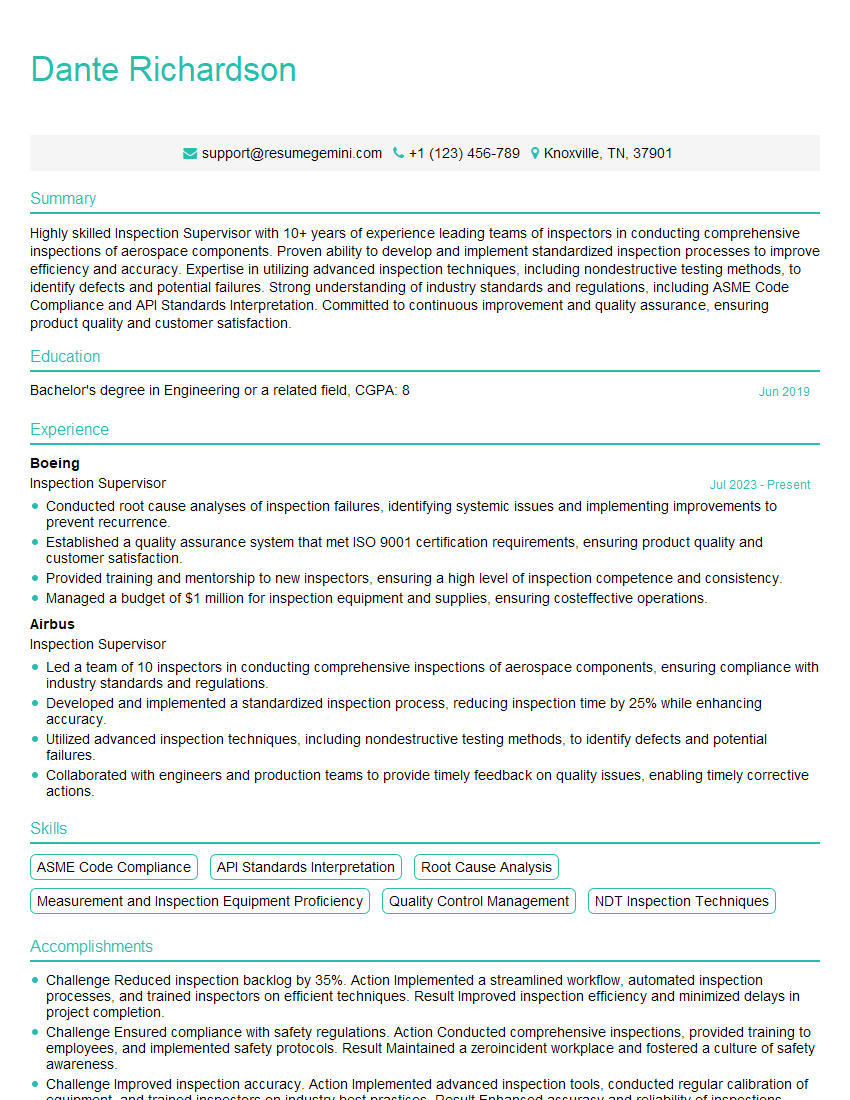
Mastering NACE Certification significantly enhances your career prospects in the corrosion engineering field, opening doors to higher-paying roles and greater responsibility. To maximize your chances of landing your dream job, it’s crucial to create a resume that effectively showcases your skills and experience to Applicant Tracking Systems (ATS). ResumeGemini is a trusted resource to help you build a professional and ATS-friendly resume that stands out from the competition. We provide examples of resumes tailored to NACE Certification to help guide you through the process. Invest time in crafting a compelling resume – it’s your first impression with potential employers.





Explore more articles
Users Rating of Our Blogs
Share Your Experience
We value your feedback! Please rate our content and share your thoughts (optional).
What Readers Say About Our Blog
Very informative content, great job.
good