Cracking a skill-specific interview, like one for Aerial Silks, requires understanding the nuances of the role. In this blog, we present the questions you’re most likely to encounter, along with insights into how to answer them effectively. Let’s ensure you’re ready to make a strong impression.
Questions Asked in Aerial Silks Interview
Q 1. Describe your experience with various aerial silks techniques (e.g., wraps, climbs, drops).
My experience with aerial silks encompasses a wide range of techniques, built over many years of dedicated practice and performance. I’m proficient in foundational skills like various wraps (e.g., basic wraps, figure-eight wraps, knee wraps), which are the building blocks for more complex movements. I’m also highly skilled in different climbing techniques, including foot locks, hip locks, and combinations thereof, allowing for efficient and safe ascents. My repertoire also includes a variety of drops, from controlled descents using friction and body positioning to dynamic drops that incorporate momentum and release. I’ve mastered many advanced techniques, including inversions, handstands, and intricate transitions between different positions in the silks. Think of learning aerial silks like learning a language – you start with simple words and sentences (basic wraps and climbs) and gradually build up to complex paragraphs and narratives (dynamic sequences and choreographies).
- Wraps: I’ve mastered a wide variety of wraps, allowing me to create fluid transitions and secure holds within the fabric.
- Climbs: I use a variety of climbing techniques, adapting my approach depending on the desired effect and the position I need to reach.
- Drops: I’m comfortable with various drop techniques, prioritizing safety and control, while also incorporating expressive, dynamic movement.
Q 2. Explain the importance of proper warm-up and cool-down routines before and after aerial silks practice.
Proper warm-up and cool-down are absolutely crucial for preventing injuries and maximizing performance in aerial silks. A dynamic warm-up, lasting around 15-20 minutes, focuses on increasing blood flow and preparing the muscles for the strenuous activity. This typically involves light cardio, like jogging or jumping jacks, followed by dynamic stretches that mimic the movements of aerial silks, such as arm circles, leg swings, and torso twists. This prepares the joints and increases range of motion. After practice, a thorough cool-down is essential, focusing on static stretches held for 20-30 seconds to increase flexibility and prevent muscle soreness. Ignoring these routines can lead to strains, pulls, or even more serious injuries. Think of it as tuning your instrument before playing a concert: a proper warm-up prepares your body to perform at its best.
- Warm-up: Dynamic stretches and light cardio increase blood flow and prepare muscles.
- Cool-down: Static stretches reduce muscle tension and improve flexibility.
Q 3. What are the key safety precautions you adhere to when working with aerial silks?
Safety is my paramount concern. Before each practice or performance, I meticulously inspect the silks for any fraying, tears, or weaknesses. I ensure the rigging is secure, using appropriate knots and checking the weight limit. I always work with a spotter, especially when attempting new or challenging moves. The spotter’s role is crucial – they provide support, help with corrections, and intervene in case of a fall. I also adhere to proper knot tying techniques and understand the limitations of my equipment. I teach my students to always be aware of their surroundings and to never push themselves beyond their capabilities. Safety is not an option; it’s the foundation of successful and enjoyable aerial silks practice.
- Equipment Inspection: Thoroughly check silks and rigging for any damage before use.
- Spotting: Always work with a qualified spotter, especially for advanced moves.
- Knots and Rigging: Correct knot tying and rigging are critical to preventing accidents.
- Risk Assessment: Constantly assess risk, knowing one’s limitations, and adapting technique when needed.
Q 4. How do you assess a student’s skill level and adapt your teaching accordingly?
Assessing a student’s skill level involves a combination of observation and communication. I start with a basic assessment of their physical fitness, flexibility, and upper body strength. Then, I observe their technique during simple exercises like climbs and basic wraps. I look for signs of proper body alignment, strength, and control. Crucially, I gauge their understanding of safety protocols and their comfort level. Based on this initial assessment, I adapt my teaching, tailoring my instruction to their skill level, offering modifications where necessary, and challenging them appropriately. I always emphasize building a solid foundation before progressing to more advanced skills.
- Physical Assessment: Evaluate fitness, flexibility, and strength.
- Technique Observation: Assess body alignment, control, and understanding of basic techniques.
- Safety Awareness: Evaluate understanding and adherence to safety protocols.
- Personalized Instruction: Adapt teaching to individual needs and skill levels.
Q 5. Describe your experience with creating and choreographing aerial silks routines.
Creating and choreographing aerial silks routines is a deeply creative and rewarding process. I begin by brainstorming a theme or concept, considering the music and the overall mood I want to convey. Then, I start selecting and sequencing moves, ensuring smooth transitions and incorporating variations in height, speed, and difficulty. I always prioritize the flow and narrative of the routine, ensuring it has a clear beginning, middle, and end. I pay close attention to both aesthetic appeal and technical precision. Often, my choreographies evolve organically, with inspiration coming from the fabric itself, the movement, and the musicality of the piece. The creative process is iterative—it involves refinement, practice, and incorporating feedback to optimize the final product. One recent choreography was inspired by the fluidity of water and resulted in a routine characterized by graceful, flowing movements.
Q 6. How do you handle unexpected equipment malfunctions or safety concerns during a performance or class?
Handling unexpected equipment malfunctions or safety concerns requires quick thinking and decisive action. My first priority is always the safety of myself and my students or audience. In case of a malfunction, I immediately stop the activity, assess the situation, and determine whether the equipment needs repair or replacement. If a safety concern arises, I take the necessary steps to address the problem, which may involve adjusting a position, securing equipment, or providing assistance. In performance situations, a well-rehearsed backup plan and clear communication with stagehands or other crew members are essential. A calm and collected approach is crucial to ensure safety and maintain confidence. In a recent performance, a minor rip appeared in one of the silks. My immediate response was to swiftly assess the situation, pause the routine, and signal for a replacement. I communicated this transparently to the audience. A prepared backup ensured that the show continued without incident.
Q 7. What is your experience with different types of aerial silks fabric (e.g., material, weight, length)?
My experience with different types of aerial silks fabrics is extensive. The choice of fabric significantly impacts the feel, drape, and overall performance. Factors like material (nylon, polyester, or blends), weight (measured in gsm – grams per square meter), and length are all critical. Heavier silks, for example, provide a more stable and secure grip, but are more challenging for beginners, while lighter silks allow for greater fluidity and ease of movement. The length affects the range of possible movements and the height you can achieve. I’ve worked with a variety of fabrics, gaining expertise in how each impacts technique and artistic expression. For example, a heavier silk might be better suited for powerful, dynamic movements, while a lighter one would be preferred for graceful, flowing choreography. Selecting the right fabric is crucial; it’s like choosing the right paintbrush for a particular painting style.
- Material: Nylon and polyester are common choices, each offering slightly different properties.
- Weight: Heavier silks offer more support but require more strength, while lighter silks allow for more fluidity.
- Length: The length of the silk impacts the range of possible movements and the height achievable.
Q 8. Explain your understanding of knotting techniques and their importance in aerial silks.
Knotting techniques are fundamental to aerial silks, ensuring safety and allowing for various moves. Understanding these knots is crucial for both setup and performance. Incorrect knotting can lead to serious injury.
Figure Eight Knot: A basic yet incredibly strong knot, often used for securing the silks to the rigging point. It’s easy to check for proper tightness and easily untied when needed.
Bowline Knot: Forms a fixed loop, excellent for creating secure anchor points within a routine. It’s less likely to slip under load than a simple overhand knot.
Clove Hitch: A quick and easy knot often used for temporarily securing the silks or creating intermediate anchor points. However, it’s crucial to use it correctly and double-check it frequently as it can loosen under strain.
For example, imagine trying to perform a drop without a securely tied Figure Eight knot – the consequences could be catastrophic. A thorough understanding of each knot’s strength, weaknesses, and application is paramount to safe and effective aerial silks practice.
Q 9. How do you maintain the safety and integrity of the aerial silks rigging system?
Maintaining the safety and integrity of the aerial silks rigging system is non-negotiable. It’s a combination of regular inspections, proper setup, and adherence to safety protocols.
Regular Inspections: Before every use, I meticulously check the silks for wear and tear, frayed fibers, or any signs of damage. The rigging hardware—carabiners, shackles, and anchor points—undergo equally rigorous scrutiny.
Proper Setup: I always ensure the silks are correctly and securely attached to the rigging point using the appropriate knotting techniques and rated hardware. I meticulously double-check everything before allowing anyone to use the silks.
Load Testing: Periodic load testing, often performed by a qualified rigger, verifies that the entire system can withstand the required weight. This ensures that the system remains safe and effective over time.
Maintenance Log: A detailed log of inspections, repairs, and load tests is crucial for traceability and preventative maintenance. This information is vital for identifying potential issues early.
One time, a slight fraying went unnoticed, resulting in a minor rip. Fortunately, we caught it during a pre-class inspection; it highlights the importance of consistent checks and prevents a potentially serious incident.
Q 10. Describe your experience working with diverse student populations (e.g., age, skill level, physical limitations).
I’ve had the pleasure of working with a wonderfully diverse student population, ranging from children as young as eight to adults in their sixties. Each group presents unique challenges and rewards.
Children: Require more patience, creative instruction, and a focus on fundamental skills and safety. Games and playful challenges are often incorporated into their lessons.
Adults: Often have specific goals, whether it’s improved fitness, stress relief, or performance-oriented training. Adapting the curriculum to meet their needs and expectations is key.
Students with Physical Limitations: I work closely with each individual to design a modified curriculum that accommodates their needs while still allowing them to experience the joy and benefits of aerial silks. This may involve using assistive devices or adapting poses to minimize strain.
For example, I adapted a routine for a student with a shoulder injury, focusing on leg strength and alternative holds to avoid stressing the affected area. The key is to be flexible and resourceful in tailoring the training to each student’s unique circumstances.
Q 11. What strategies do you employ to improve a student’s strength, flexibility, and technique in aerial silks?
Improving strength, flexibility, and technique is a holistic process. It’s not just about physical exercises; it’s about mindful training.
Strength Training: Incorporating strength training exercises, such as weightlifting, bodyweight exercises, and specific drills on the silks themselves.
Flexibility Training: Daily stretching routines, yoga, and Pilates are critical components. Focusing on specific muscle groups used in aerial silks is also essential.
Technique Refinement: This involves breaking down complex movements into smaller, manageable components, offering precise feedback, and using video analysis to identify areas for improvement. Repetition with consistent correction is key.
Progressive Overload: Gradually increasing the difficulty of exercises and routines to challenge the student and promote continuous improvement. This could mean holding a pose for a longer duration, adding repetitions, or progressing to more advanced maneuvers.
For instance, I might introduce a beginner to simple climbs and inversions before progressing to more complex wraps and drops. Regular assessments and adjustments to the training plan ensure consistent progress.
Q 12. How do you create a positive and supportive learning environment for students?
Creating a positive and supportive learning environment is paramount. It’s about fostering a sense of community and mutual respect.
Positive Reinforcement: Focusing on students’ strengths and progress, celebrating small victories, and providing constructive feedback to build confidence.
Open Communication: Encouraging students to share their concerns, goals, and any physical limitations. Creating a safe space for questions and feedback.
Teamwork and Collaboration: Encouraging students to support each other and learn from one another. This fosters a sense of community and shared growth.
Safe and Respectful Environment: Establishing clear rules and expectations to maintain a safe and respectful learning environment for all students.
I remember one student who initially lacked confidence. By focusing on her strengths, offering constant encouragement, and celebrating her achievements, I helped her build confidence and become a proficient aerialist.
Q 13. Explain your approach to injury prevention and first aid in relation to aerial silks.
Injury prevention and first aid are integral to aerial silks instruction. It’s a proactive approach combining training, safety precautions and knowledge of emergency procedures.
Warm-up and Cool-down: Thorough warm-ups and cool-downs are essential to prepare the body for activity and minimize muscle strain. These routines are carefully tailored to the specific requirements of aerial silks.
Proper Technique: Emphasizing proper technique throughout the lessons dramatically reduces the risk of injury. Consistent correction and feedback are crucial here.
Spotting and Assistance: Providing adequate spotting and assistance, especially when students are attempting more challenging moves, is key to safe training.
First Aid Knowledge: Having up-to-date first aid and CPR certifications is essential to respond effectively to any injuries. This includes understanding how to handle bruises, sprains, and other common aerial silks injuries.
Recently, a student experienced a minor ankle sprain. My immediate response using my first-aid training and a well-stocked kit prevented further injury and allowed for a quick recovery.
Q 14. What is your understanding of the biomechanics of aerial silks movements?
Understanding the biomechanics of aerial silks movements is crucial for effective teaching and injury prevention. It’s about understanding how the body moves and interacts with the fabric.
Leverage and Momentum: Many aerial silks movements rely on using leverage and momentum to perform various maneuvers efficiently. Teaching students how to utilize these principles is key.
Muscle Engagement: Specific muscle groups are engaged differently throughout different moves. Understanding these engagements helps in guiding students towards correct form, maximizing effectiveness, and minimizing the risk of injury.
Joint Stability: Proper joint alignment and stability are crucial for preventing injuries. This requires understanding the forces acting on joints during specific movements and teaching students to maintain correct posture and technique.
Body Awareness: Cultivating body awareness in students through feedback and observation is integral. Students need to understand how their body interacts with the silks and how to control movements for safety and effective execution.
For instance, I might explain how proper core engagement stabilizes the body during an inversion, preventing injuries and enabling smoother transitions. Understanding these biomechanical principles ensures safer and more efficient training.
Q 15. How do you adapt your teaching style to accommodate different learning styles?
Adapting my teaching style is crucial for effective learning. I believe in a multi-faceted approach, catering to visual, auditory, and kinesthetic learners. For visual learners, I demonstrate techniques repeatedly, using clear and concise visual aids like diagrams and videos. I also ensure that my explanations are accompanied by demonstrations, allowing students to see exactly what I mean. Auditory learners benefit from detailed verbal instructions and explanations. I break down complex movements into smaller, easily digestible steps, providing verbal cues and feedback throughout the learning process. For kinesthetic learners, hands-on practice is paramount. I incorporate plenty of individual and group practice time, focusing on repetition and personalized adjustments. I provide tactile feedback, guiding their bodies directly to correct posture and technique. I also offer alternative methods of learning; for example, a student who struggles with the verbal instructions might benefit from written instructions or a video to follow along with. I regularly assess student understanding and adjust my approach accordingly. This might involve adjusting the pace, using different teaching tools, or providing additional practice opportunities tailored to the individual student’s needs.
Career Expert Tips:
- Ace those interviews! Prepare effectively by reviewing the Top 50 Most Common Interview Questions on ResumeGemini.
- Navigate your job search with confidence! Explore a wide range of Career Tips on ResumeGemini. Learn about common challenges and recommendations to overcome them.
- Craft the perfect resume! Master the Art of Resume Writing with ResumeGemini’s guide. Showcase your unique qualifications and achievements effectively.
- Don’t miss out on holiday savings! Build your dream resume with ResumeGemini’s ATS optimized templates.
Q 16. Describe your experience with incorporating different styles of dance or movement into aerial silks routines.
Incorporating diverse dance styles enhances the beauty and artistry of aerial silks. I’ve successfully integrated elements from contemporary dance, ballet, and even yoga into routines. For instance, I’ve taught students to incorporate fluid contemporary movements during transitions between silk poses, resulting in a seamless flow. Ballet techniques, particularly in terms of posture and grace, have been invaluable in helping students achieve elegant lines and precise movements in the air. Yoga-inspired stretches and poses have not only improved students’ flexibility and strength but also helped them improve body awareness and control – essential for safe and graceful silk work. Recently, a student incorporated elements of capoeira, focusing on fluidity and momentum, into their routine, creating a truly unique and dynamic performance. I encourage experimentation and creativity, guiding students to discover how different movement styles can enrich their aerial silks performance.
Q 17. How do you handle student progress that is not meeting expected milestones?
When a student isn’t progressing as expected, I initiate a structured process. First, I conduct a thorough assessment, identifying specific areas where they’re struggling. This could involve observing their technique, asking questions about their understanding of the concepts, and assessing their physical capabilities. Based on this assessment, I adapt the learning plan. This might involve breaking down complex moves into smaller, more manageable steps, providing additional practice opportunities, or modifying the exercises to accommodate physical limitations. I also explore potential underlying issues, such as fear or lack of confidence. Open communication is key; I create a safe space where the student feels comfortable discussing any challenges they are facing. I might adjust the training schedule, offering more frequent sessions or focusing on building strength and flexibility before tackling more challenging skills. Finally, celebrating small victories and acknowledging their effort is crucial to boost morale and motivation. For example, if a student struggles with a specific move, focusing on improving one aspect of the move (e.g., grip strength) can be a motivating stepping stone.
Q 18. What are your preferred methods for providing constructive feedback to students?
Constructive feedback is vital for student improvement. I prioritize a positive and encouraging approach, focusing on what the student is doing well before addressing areas for improvement. I use the ‘sandwich method’: starting with a positive comment, followed by constructive criticism, and concluding with another positive statement. For example, I might say, ‘Your posture in the drop was beautiful, but you could improve your hand placement for a smoother transition. However, your strength and determination are amazing!’ I focus on specific behaviors and techniques rather than making general comments. I use clear and precise language, avoiding vague or subjective terms. I also encourage students to actively participate in the feedback process by asking them questions about their experience and understanding of the movement. Demonstration is often beneficial; I might show them how a slight adjustment can significantly improve the technique. Lastly, I ensure feedback is tailored to the individual student’s learning style and emotional needs.
Q 19. How do you ensure the proper maintenance and cleaning of aerial silks equipment?
Maintaining and cleaning aerial silks is crucial for safety and longevity. After each use, I inspect the silks for any damage, including fraying, tears, or weakening. I regularly clean the silks using a mild detergent and cold water, following the manufacturer’s recommendations. It’s important to avoid harsh chemicals or abrasive cleaners that can damage the fabric. I air-dry the silks completely, away from direct sunlight, to prevent fading or damage. I store the silks properly, rolled neatly and protected from dust and moisture. Regularly checking the rigging points, including carabiners and knots, is also crucial. I ensure that all hardware is in excellent condition, replacing any worn or damaged parts immediately. Proper maintenance also includes regular inspections of the hanging point and ensuring the rigging is capable of supporting the weight. A detailed log book that records cleaning, inspections, and repairs is important for safety and insurance purposes. Ignoring proper maintenance practices can lead to accidents and significant damage to the equipment.
Q 20. Describe your experience with performing aerial silks in front of an audience.
Performing aerial silks in front of an audience is both exhilarating and challenging. My experience ranges from small studio performances to larger events. The key is preparation and practice. I always rehearse extensively, focusing on precision, flow, and conveying emotion through the performance. Visual aspects are equally critical; the costume, lighting, and music all contribute to a powerful and captivating performance. I focus on connecting with the audience, aiming to create a shared emotional experience. Stage presence, in my opinion, is cultivated through confidence and engagement. Managing pre-performance nerves requires deep breathing exercises, focusing on the positive aspects of the performance, and visualizing a successful execution. I’ve learned to channel my nerves into energy, using them to enhance my focus and intensity during the performance. Post-performance, reflection is key; reviewing recordings and receiving feedback allow for continuous improvement and growth.
Q 21. How do you manage your own physical and mental well-being as an aerialist?
Maintaining physical and mental well-being is paramount for an aerialist. Physically, I prioritize a balanced training regime that includes strength training, flexibility exercises, and cardio. Rest and recovery are crucial; I ensure adequate sleep, listen to my body and take rest days when needed, and address any injuries immediately. Nutrition plays a significant role; a healthy diet provides the energy and nutrients needed to support training and prevent injuries. Mentally, mindfulness and stress-reduction techniques are vital. I practice yoga and meditation to manage stress and enhance focus. A strong support system is critical; I surround myself with positive people who encourage and support my goals. Regular self-reflection helps me evaluate my progress, identify areas needing improvement, and celebrate successes. Prioritizing mental health is equally important; recognizing signs of burnout and seeking professional support if needed are important aspects of maintaining longevity in this demanding profession. Setting realistic goals, celebrating achievements, and maintaining a healthy work-life balance are also vital for long-term well-being.
Q 22. What are your strategies for dealing with stage fright or performance anxiety?
Stage fright is a common experience, even for seasoned aerialists. My strategy involves a multi-pronged approach focusing on preparation, mental techniques, and physical conditioning. Preparation involves meticulous rehearsal, ensuring I’m completely familiar with my routine. This reduces the unknown and boosts confidence. Mentally, I practice mindfulness and visualization. I visualize myself performing successfully, focusing on the positive aspects of the performance, not the potential for mistakes. Deep breathing exercises before a show help manage physical symptoms of anxiety. Finally, consistent physical training builds stamina and control, which directly translates to greater confidence and reduces the feeling of being overwhelmed on stage.
Q 23. Describe a time you had to overcome a significant challenge while performing or practicing aerial silks.
During a performance of a new routine involving a complex drop sequence, I unexpectedly slipped during a transition. My immediate reaction was to maintain my composure and use my training to safely control my descent. Instead of panicking, I employed my emergency dismount techniques, which involved carefully adjusting my grip and using controlled movements to land safely. This experience highlighted the importance of constant risk assessment, having a backup plan, and the necessity of trusting your training, even under pressure. It also underscored the value of effective communication with my rigging crew for immediate support if needed. It reinforced the crucial point that perfection is not always achievable; adaptability and quick thinking are key to safe aerial work.
Q 24. How do you stay updated on the latest trends and advancements in aerial silks?
Staying current in aerial silks involves a combination of active engagement with the aerial community and continuous learning. I regularly attend workshops and conferences, both nationally and internationally, to learn new techniques and connect with other artists. I actively follow influential aerialists on social media platforms and subscribe to relevant online forums. This gives me exposure to innovative choreography, new apparatuses, and evolving safety standards. I also review professional journals and publications dedicated to circus arts and physical performance, looking for research and studies that address technique, safety, and injury prevention.
Q 25. How do you ensure that your aerial silks practice is inclusive and accessible?
Inclusivity and accessibility in aerial silks training is paramount. I ensure my classes and workshops cater to diverse body types, abilities, and experiences. This includes offering modifications to exercises to accommodate different physical limitations, using inclusive language, and creating a safe and welcoming environment for all participants, regardless of their background or skill level. I actively seek out and utilize equipment that is adaptable to various body sizes and abilities. For example, I ensure that my silks are available in a range of lengths and that I have equipment to adjust the rigging height for individuals of different heights. Furthermore, I believe in open communication and always encourage students to voice any concerns or limitations they might have.
Q 26. Describe your experience with risk assessment in aerial silks training or performance.
Risk assessment in aerial silks is an ongoing process. It begins with a thorough inspection of the rigging system, including the silks themselves, the anchor points, and all connecting hardware. This includes checking for wear and tear, proper knotting, and secure connections. Prior to each practice or performance, I conduct a dynamic assessment, testing the stability of the rigging and ensuring all components are functioning correctly. Furthermore, I carefully assess the routine itself, identifying potential hazards and developing strategies to mitigate them. This includes planning for emergency dismounts and having backup plans in place. Proper warm-up and cool-down routines are also vital, along with respecting my body’s limitations and avoiding overly ambitious moves before sufficient skill is developed.
Q 27. What are your thoughts on different types of rigging systems for aerial silks?
Several rigging systems are used for aerial silks, each with its advantages and disadvantages. The most common are static rigging systems, which utilize fixed anchor points, and counterweight systems that utilize a counterweight to help control the movement of the silks. Static systems are simpler and less expensive, but offer less flexibility in terms of movement. Counterweight systems provide a smoother and more controlled flight but demand more technical knowledge and often require more sophisticated setup and maintenance. Choosing the right system depends on factors such as the specific routine, venue limitations, available equipment, and the performers’ skill level. Safety is paramount in any decision. Proper training in the specific rigging system used is mandatory.
Q 28. Explain how you would develop a new aerial silks routine for a specific performance.
Developing a new aerial silks routine begins with defining the performance’s theme and objectives. I brainstorm ideas, sketching out potential movements and transitions. Then I select the music to inspire the choreography. Next, I break down the routine into smaller, manageable sections, focusing on the progression of difficulty and the overall flow. I experiment with different silk manipulations and transitions, ensuring fluidity and visual appeal. Throughout the process, safety is prioritized. I refine the routine through rigorous practice, progressively incorporating more complex elements only after mastering the basic movements. I refine the transitions, ensuring smooth and controlled shifts between movements and incorporate specific techniques for safety and visual impact. Finally, I run through full rehearsals, incorporating costumes and lighting, to ensure a cohesive and polished performance.
Key Topics to Learn for Your Aerial Silks Interview
- Fundamentals of Silk Handling: Understanding fabric properties, grip techniques, and safe handling procedures. This includes knowing how different silks behave and adapting your technique accordingly.
- Climbing and Footlocks: Mastering various climbing techniques, including efficient footlock transitions and secure holds. This translates to demonstrating proficiency in fundamental aerial skills and a commitment to safety.
- Wraps and Inversions: Proficiency in a range of wraps and inversions, demonstrating an understanding of body mechanics and weight distribution for effective execution and safe transitions. Be prepared to discuss different styles and their applications.
- Drops and Transitions: Understanding controlled drops and seamless transitions between poses and sequences. This showcases control, precision, and an awareness of safety protocols.
- Choreography and Sequencing: Demonstrating the ability to create and execute flowing sequences. This shows creativity, artistic vision, and the ability to connect movements in a dynamic and engaging way.
- Safety and Risk Management: Thorough understanding of safety procedures, risk assessment, and injury prevention techniques. This is crucial and demonstrates responsibility and professionalism.
- Improvisation and Adaptability: Discuss your ability to adapt to unexpected situations or challenges during a performance or rehearsal. This demonstrates problem-solving skills and quick thinking.
- Teaching Methodology (if applicable): If applying for a teaching role, prepare to discuss your teaching philosophy and methods for instructing students of varying skill levels.
Next Steps
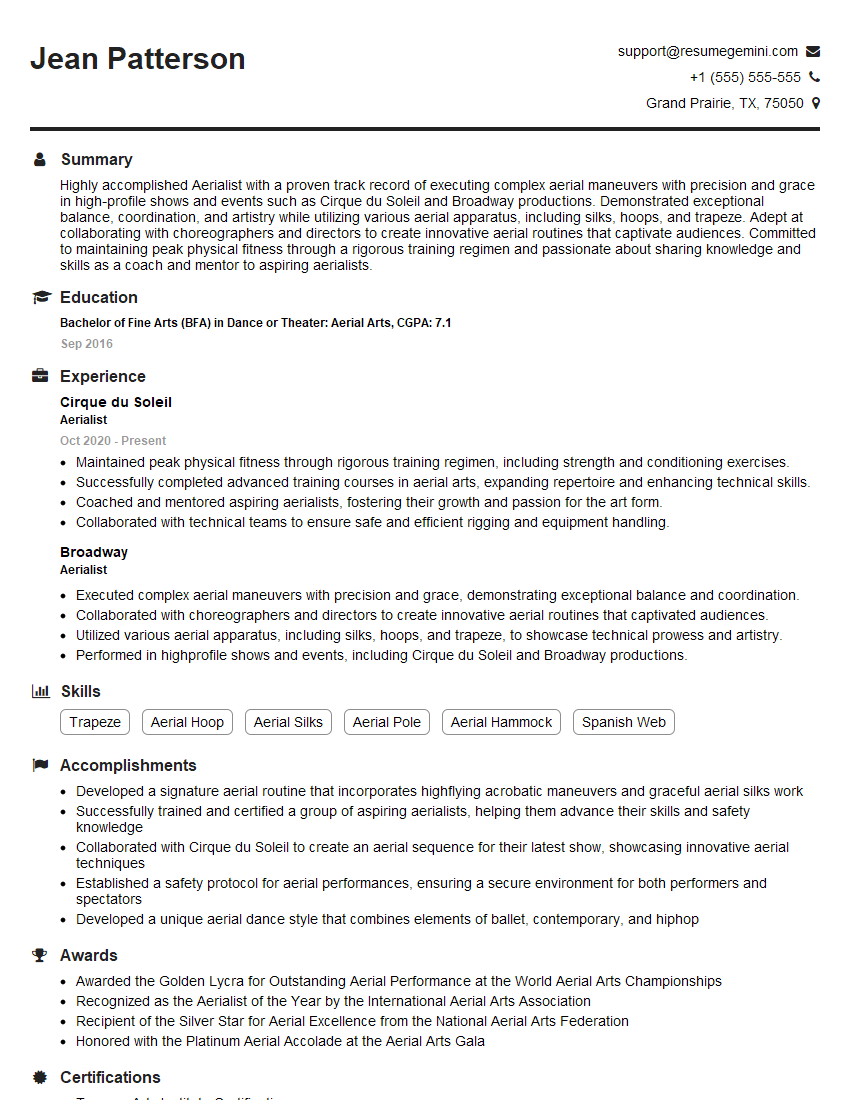
Mastering Aerial Silks opens doors to exciting career opportunities, from performance and teaching to choreography and fitness instruction. To make the most of your talent, crafting a compelling resume is essential. An ATS-friendly resume, optimized for applicant tracking systems, significantly increases your chances of landing your dream job. We highly recommend using ResumeGemini to build a professional and effective resume that highlights your unique skills and experience. ResumeGemini provides examples of resumes tailored specifically to Aerial Silks careers, helping you showcase your abilities to potential employers in the best possible light.
Explore more articles
Users Rating of Our Blogs
Share Your Experience
We value your feedback! Please rate our content and share your thoughts (optional).
What Readers Say About Our Blog
Very informative content, great job.
good