Cracking a skill-specific interview, like one for Van Dyke Brown, requires understanding the nuances of the role. In this blog, we present the questions you’re most likely to encounter, along with insights into how to answer them effectively. Let’s ensure you’re ready to make a strong impression.
Questions Asked in Van Dyke Brown Interview
Q 1. Describe the chemical composition of Van Dyke Brown.
Van Dyke Brown’s chemical composition isn’t precisely defined, as it’s a naturally occurring pigment with variable constituents. It’s primarily a complex mixture of organic materials, largely derived from decayed vegetation, particularly peat and other similar substances. Think of it like a naturally occurring compost, but with specific color properties. These materials contain humic acids, various organic polymers, and inorganic components that contribute to its characteristic dark brown hue. The exact proportions of these components fluctuate depending on the source and processing methods, leading to variations in shade and properties among different batches. It’s the intricate mix of these organic and inorganic materials that gives Van Dyke Brown its unique character, and unlike chemically synthesized pigments, it lacks a precisely defined molecular formula.
Q 2. What are the key differences between natural and synthetic Van Dyke Brown?
The main difference between natural and synthetic Van Dyke Brown lies in their origin and composition. Natural Van Dyke Brown, as the name suggests, is sourced from naturally occurring deposits of decayed organic matter. This naturally occurring mixture gives it a characteristic variation in shade and texture – no two batches are exactly alike. Synthetic Van Dyke Brown, on the other hand, attempts to replicate the color and properties of the natural pigment through carefully engineered mixtures. While synthetic versions aim to mimic the appearance of the natural pigment, they are composed of carefully selected and measured components, leading to greater consistency in color and characteristics. However, the precise composition of synthetic Van Dyke Browns varies depending on the manufacturer and the specific recipe used. Natural Van Dyke Brown, often possessing more subtle variations and a richer depth of color, is highly valued by artists and conservators, while the synthetic version offers a predictable and commercially readily available alternative.
Q 3. Explain the lightfastness properties of Van Dyke Brown.
Van Dyke Brown’s lightfastness is a significant concern for artists and conservators. It’s generally considered to have poor to moderate lightfastness, meaning it’s susceptible to fading or discoloration when exposed to prolonged sunlight or strong UV radiation. The degree of lightfastness can vary depending on the specific source and composition of the pigment. Natural Van Dyke Brown often exhibits more significant fading than synthetic versions, likely due to its complex and less-stable organic components. The fading is usually a gradual shift in hue, with a possible loss of intensity and even a change in color towards a reddish-brown or reddish-yellow. Therefore, artwork utilizing Van Dyke Brown should be protected from excessive light exposure to help preserve its original color. UV-filtering glass and careful storage conditions are vital to mitigating the lightfastness issues associated with this pigment.
Q 4. How does the age and source of Van Dyke Brown affect its properties?
The age and source of Van Dyke Brown significantly impact its properties. Older, naturally sourced Van Dyke Browns, particularly those from historical deposits, may exhibit a unique complexity and depth of color that is difficult to replicate. However, age can also lead to degradation of the organic components, resulting in instability and reduced lightfastness. Furthermore, variations in the source material (e.g., type of peat, soil conditions) lead to differences in color, texture, and chemical composition. A Van Dyke Brown from a bog in one region might possess a distinctly different shade and behavior compared to one from a different region. Proper identification and understanding of the source and age are therefore crucial for both artists and conservators, informing decisions related to handling, storage, and preservation.
Q 5. Discuss the challenges associated with using Van Dyke Brown in restoration projects.
Using Van Dyke Brown in restoration projects presents several challenges. Its poor lightfastness makes it unsuitable for areas exposed to high light levels. The variability in composition between different batches of the pigment, even within the same source, complicates efforts to match colors accurately. Additionally, the pigment’s organic nature can make it susceptible to degradation and chemical changes over time, potentially leading to further instability. Its tendency to bleed or migrate in some media can also complicate its use. Careful analysis and consideration are needed to determine if its inherent instability is acceptable for a particular restoration project. In many cases, a more stable synthetic alternative or a carefully selected matching color might be preferable to using historical Van Dyke Brown.
Q 6. How would you identify Van Dyke Brown in a mixed paint sample?
Identifying Van Dyke Brown in a mixed paint sample requires a multi-faceted approach. Microscopic examination can reveal the pigment’s characteristic granular texture and morphology. Chemical analysis, such as FTIR (Fourier-transform infrared spectroscopy) or pyrolysis-gas chromatography-mass spectrometry (Py-GC-MS), can identify the presence of specific organic compounds indicative of Van Dyke Brown. Comparing the color and its behavior under different solvents can also be helpful; for instance, solubility tests might show a different pattern of solubility in organic solvents than other pigments in the mixture. Experienced conservators and scientists often employ a combination of these techniques to confirm the presence and relative quantity of Van Dyke Brown in complex paint samples. In practice, it’s often a process of elimination and building confidence based on accumulated evidence.
Q 7. What are the common adulterants found in Van Dyke Brown?
Common adulterants found in Van Dyke Brown historically include various cheaper, readily available inorganic pigments, such as iron oxides (ochres) or manganese oxides. These were added to increase the pigment’s bulk or to adjust its shade. Depending on the era and geographical region, other organic materials may have been added as well. The intention behind such adulteration varied – from simply maximizing profits to unintentionally substituting readily available materials for the scarce natural Van Dyke Brown. Identifying these adulterants is crucial for understanding the historical context and ensuring the accuracy of analysis in conservation or art historical studies. The presence and type of adulterants can significantly affect the pigment’s properties and long-term stability, further highlighting the complexity of its analysis and characterization.
Q 8. Explain the process of preparing Van Dyke Brown for use in painting.
Preparing Van Dyke Brown for painting involves a few crucial steps, and the exact process can vary slightly depending on the source material and desired consistency. Traditionally, Van Dyke Brown was made from a naturally occurring asphaltum, but today, it is more commonly a synthetic pigment mimicking its properties. First, the pigment needs to be thoroughly ground. This is best done using a muller and slab, a traditional method ensuring a smooth, lump-free mixture. Then, you’ll need to mix it with a medium. For oil painting, linseed oil is the most common choice; for watercolors, gum arabic or a similar binder is used. The ratio of pigment to medium will depend on the desired opacity and consistency. A thicker mixture will result in a more opaque and textured finish, while a thinner mixture will produce a more translucent and delicate effect. The final step involves testing the mixture on a palette to ensure the desired color and consistency have been achieved. Remember, patience is key. Take your time to properly grind and mix the pigment, allowing it to settle and ensuring there are no dry lumps in your final mixture.
Q 9. Describe the different shades and hues achievable with Van Dyke Brown.
Van Dyke Brown’s beauty lies in its versatility. While it’s broadly classified as a brown, its nuances are quite extensive, influenced greatly by the light source and the medium it is mixed with. It can range from a warm, reddish-brown, reminiscent of burnt umber but often with a cooler undertone, to a much cooler, almost greyish-brown. The achieved shade can also vary considerably depending on the application technique, with thin washes yielding lighter, more transparent tones, and thicker impasto applications producing deeper, richer browns. Think of it like coffee; you can have a light latte, a strong espresso, or somewhere in between, all stemming from the same basic bean. The subtle shifts in value and hue within Van Dyke Brown make it an excellent pigment for nuanced underpainting or creating realistic shadows and earth tones.
Q 10. How does the application technique affect the appearance of Van Dyke Brown?
Application technique significantly impacts the final appearance of Van Dyke Brown. A thin wash will result in a transparent, almost watercolor-like effect, ideal for creating subtle atmospheric perspective or glazing over other colors. A thicker application, possibly using a palette knife for impasto, will give a much more textured, opaque result, perfect for building up depth and form. Using a dry brush technique can create a scratchy, broken texture, suitable for representing rough surfaces such as bark or stone. Scumbling, a layering technique where one color is partially scraped off to reveal the underlayer, can also create interesting effects with Van Dyke Brown, enhancing the complexity of the finished piece. Ultimately, experimentation is vital to unlock the full potential of this versatile pigment. The choice of brushes also affects the application; finer brushes will give more delicate strokes, whilst broader brushes will give more gestural effects.
Q 11. What are the compatibility issues of Van Dyke Brown with other pigments?
While Van Dyke Brown generally mixes well with many pigments, some compatibility issues can arise. Reactions can occur particularly when mixed with certain metallic pigments like lead white or certain blues. Certain chemical reactions can result in subtle shifts in hue or tone. It’s always advisable to conduct a test mix on a palette before applying it to your artwork. Some artists experience slight darkening or muddying of the mix when Van Dyke Brown is combined with certain yellows or bright oranges. This usually occurs when the brown pigment contains iron oxides, which can interact with other pigments at a molecular level and alter the overall shade. To prevent this, it’s best to thoroughly mix and let the mixture rest for some time before application to check for any unexpected changes in color.
Q 12. How would you address fading or discoloration in a painting containing Van Dyke Brown?
Addressing fading or discoloration in a painting containing Van Dyke Brown requires careful assessment of the problem’s extent. If the discoloration is minimal, perhaps due to age and exposure, retouching might be an option, however this should only be done by a professional conservator. However, significant fading might indicate a more serious issue that could be related to the quality of the original pigments or improper storage. Firstly, you should rule out environmental factors – extreme temperatures, excessive humidity, and direct sunlight can all contribute to deterioration. Secondly, a professional art conservator should be consulted. They have the expertise and equipment to accurately diagnose the problem and recommend an appropriate course of action, which may involve careful cleaning, stabilization, or even more drastic measures such as inpainting. Attempting to fix the problem yourself is risky and could cause further damage.
Q 13. What are the ethical considerations in sourcing and using Van Dyke Brown?
Ethical considerations surrounding Van Dyke Brown primarily relate to its historical sourcing from naturally occurring asphaltum. Traditionally, this asphaltum came from peat bogs, and harvesting it has been linked to environmental damage in some cases. Thus, using sustainable and ethically sourced alternatives is crucial. This means opting for high-quality synthetic Van Dyke Brown pigments that are produced without causing environmental harm. Checking the pigment’s certification and the manufacturer’s claims about sustainability is important. Choosing pigments produced with responsible manufacturing practices also minimises any negative impact on workers involved in the production process. By choosing ethically produced pigments, we can both protect the environment and support fair labor practices.
Q 14. Describe the historical use of Van Dyke Brown in art.
Van Dyke Brown enjoys a long and rich history in art. Its deep, earthy tones made it a favorite among artists throughout centuries. From the 17th century onwards, it was frequently used in oil paintings, particularly for underpaintings and creating shadows and darker areas of the landscape. Masters like Rembrandt van Rijn are known to have extensively used Van Dyke Brown to establish the foundational tones of their works. Its versatility allowed artists to achieve realistic depictions of soil, shadows, and dark clothing. Its use continued into the 18th and 19th centuries, although the precise composition and source of Van Dyke Brown have varied throughout history. The pigment’s ability to blend seamlessly with other colors and its capacity to create a wide range of earth tones contributed to its enduring popularity among artists.
Q 15. Compare the properties of Van Dyke Brown with other brown pigments.
Van Dyke Brown, historically a naturally occurring pigment, differs significantly from modern synthetic brown pigments in its composition and properties. Unlike synthetic browns which are often mixtures of iron oxides, phthalocyanines, or organic dyes, Van Dyke Brown is derived from the naturally occurring asphalts, usually from peat bogs or other decaying organic matter. This results in a unique color profile. Synthetic browns can range from warm, reddish-browns to cool, grayish-browns and possess consistent batch-to-batch color, whereas Van Dyke Brown exhibits a more variable, complex, and often subtly nuanced earthy tone due to its organic nature. Its transparency is generally higher than many synthetic brown pigments, allowing underlying layers to show through, imparting a depth and richness that is difficult to replicate artificially. Finally, lightfastness can also vary significantly; synthetic browns usually offer much better lightfastness.
- Van Dyke Brown: Complex, nuanced earthy tones, higher transparency, variable lightfastness, naturally occurring.
- Synthetic Browns: Consistent color, good lightfastness, various hues achievable through mixtures, manufactured.
Career Expert Tips:
- Ace those interviews! Prepare effectively by reviewing the Top 50 Most Common Interview Questions on ResumeGemini.
- Navigate your job search with confidence! Explore a wide range of Career Tips on ResumeGemini. Learn about common challenges and recommendations to overcome them.
- Craft the perfect resume! Master the Art of Resume Writing with ResumeGemini’s guide. Showcase your unique qualifications and achievements effectively.
- Don’t miss out on holiday savings! Build your dream resume with ResumeGemini’s ATS optimized templates.
Q 16. How does the particle size of Van Dyke Brown affect its performance?
The particle size of Van Dyke Brown directly impacts its performance in several key ways. Finely ground Van Dyke Brown will produce smoother, more even color with greater tinting strength. This is because smaller particles provide greater surface area for interaction with the binder, leading to better dispersion and a more uniform film. Conversely, coarsely ground Van Dyke Brown can result in a more textured, less uniform appearance with lower tinting strength. The larger particles may settle out more readily in suspension, leading to uneven color distribution, and potentially affecting the final artwork’s appearance. In practice, artists and manufacturers often select different particle sizes depending on the desired effect; a coarser grind might be chosen for a particular textural effect in impasto painting, while a fine grind is preferred for glazing techniques requiring subtle variations in color.
Q 17. What are the typical binder systems used with Van Dyke Brown?
Van Dyke Brown’s versatility allows it to be used with a wide range of binder systems, each impacting the final result. Traditional applications used linseed oil, a drying oil that forms a durable, flexible film ideal for paintings and varnishes. The use of linseed oil also creates a specific richness in the final color. Watercolor paints frequently incorporate gum arabic as a binder, giving a transparent, water-soluble effect. Acrylic binders offer a faster-drying, water-based alternative suitable for both fine art and industrial applications. The choice of binder influences not only the drying time and final film characteristics but also how the pigment interacts with light and the overall longevity of the artwork.
- Linseed Oil: Traditional, durable, flexible, slow drying.
- Gum Arabic: Water-soluble, transparent, used in watercolors.
- Acrylic Binder: Fast drying, water-based, versatile.
Q 18. Explain the role of Van Dyke Brown in creating specific color palettes.
Van Dyke Brown’s unique properties make it invaluable for creating specific color palettes. Its transparent nature allows it to be layered over other colors to create depth and richness, a technique frequently used in glazing. Its ability to interact with other colors makes it excellent for mixing earthy tones and creating complex, nuanced shades – for example, mixing with ochre creates deep, warm browns with a subtle red undertone, while mixing with umbers generates cooler, more muted browns. In historical painting, Van Dyke Brown played a significant role in creating atmospheric perspective and representing shadows and earth tones in landscapes. The subtle variations in tone offered by different batches of Van Dyke Brown allow for a great deal of control in adjusting a color palette depending on the desired mood and effect.
Q 19. How would you determine the authenticity of a Van Dyke Brown pigment?
Determining the authenticity of Van Dyke Brown pigment requires a multi-faceted approach. Simple visual inspection alone is insufficient. First, one should consider the source and provenance of the pigment – is there documented history verifying its origin? Chemical analysis is crucial; modern techniques such as X-ray fluorescence (XRF) and infrared spectroscopy (IR) can identify the elemental composition and organic components to distinguish it from synthetic imitations. Microscopic examination can reveal the characteristic morphology of naturally occurring Van Dyke Brown particles, which would differ from artificially produced pigments. Colorimetric analysis could provide a comparison with known samples from reliable sources. Lastly, historical context and the surrounding materials within the artwork can offer supporting evidence.
Q 20. What are the health and safety considerations when working with Van Dyke Brown?
While Van Dyke Brown itself is relatively non-toxic, health and safety considerations remain. Because some historical Van Dyke Browns were made from sources which might contain heavy metals or other contaminants, handling practices should prioritize precaution. Always use appropriate respiratory protection when handling dry pigments to prevent inhalation of dust. Wear gloves to avoid skin contact, especially with older, less purified samples. Ensure good ventilation in your workspace. Proper disposal of waste materials is also important. As with any pigment, a Material Safety Data Sheet (MSDS) from the supplier should be consulted before use to understand and mitigate any potential hazards. Proper practices minimize risks and ensure safety.
Q 21. Describe methods for analyzing the degradation of Van Dyke Brown over time.
Analyzing the degradation of Van Dyke Brown over time involves several analytical methods. Visual inspection can reveal changes in color, gloss, or cracking of the paint film. Microscopic analysis can detect changes in particle structure or the formation of degradation products. Colorimetry can quantify changes in the pigment’s color over time. Fourier-transform infrared spectroscopy (FTIR) can detect changes in the chemical composition of the pigment, possibly indicating oxidation or other chemical reactions. X-ray diffraction (XRD) can identify changes in the crystalline structure of the pigment. By combining these techniques, researchers can build a comprehensive understanding of the degradation processes and factors contributing to the aging of Van Dyke Brown, which contributes to the development of preservation strategies.
Q 22. How does environmental exposure affect the stability of Van Dyke Brown?
Van Dyke Brown’s stability is significantly impacted by environmental exposure. Think of it like an old photograph – prolonged exposure to light, moisture, and fluctuating temperatures can lead to its deterioration.
Light Exposure: UV light, a component of sunlight, can cause photodegradation, leading to fading and color changes. The pigment’s organic components are particularly susceptible to this. Imagine leaving a painting in direct sunlight for years; the Van Dyke Brown areas will likely fade noticeably.
Moisture: Excessive humidity promotes fungal growth and can cause the pigment to swell and crack, altering its texture and appearance. Imagine a painting stored in a damp basement; the Van Dyke Brown could suffer from mold and discoloration.
Temperature Fluctuations: Rapid and extreme temperature changes can cause physical stress on the pigment, potentially leading to cracking and flaking. This is similar to how repeated freeze-thaw cycles can damage concrete.
Pollutants: Airborne pollutants like sulfur dioxide can chemically react with the pigment, leading to discoloration and degradation. This is a concern particularly in urban environments or near industrial areas.
Q 23. What are the best practices for storing and handling Van Dyke Brown?
Proper storage and handling of Van Dyke Brown are crucial for its longevity. Think of it like storing fine wine – temperature, light, and humidity all play significant roles.
- Storage Environment: Keep the pigment in a cool, dry, and dark location. Ideally, the temperature should be relatively stable and humidity low to minimize degradation. A climate-controlled storage facility is optimal.
- Container: Store the pigment in an airtight, light-resistant container to further protect it from environmental factors. Think of using UV-protective packaging similar to what’s used for photographs.
- Handling: When handling Van Dyke Brown, wear gloves to avoid contaminating the pigment with oils or other substances from your skin. Always use clean tools and surfaces to prevent cross-contamination.
- Regular Inspection: Periodically inspect the pigment for any signs of degradation, such as color changes, mold growth, or cracking. Early detection can help in mitigating further damage.
Q 24. Explain the role of spectroscopy in the analysis of Van Dyke Brown.
Spectroscopy plays a vital role in the analysis of Van Dyke Brown, offering a non-destructive way to investigate its composition and identify its constituent components. It’s like a detailed fingerprint of the pigment.
Infrared (IR) Spectroscopy: IR spectroscopy can identify the organic components of Van Dyke Brown, helping to determine its source and authenticity. The unique vibrational frequencies of molecules reveal their identity.
Raman Spectroscopy: Similar to IR, Raman spectroscopy provides information about the molecular structure of the pigment, revealing details about the organic matter present and its state of degradation. Think of this as an alternative “fingerprint” technique.
X-ray Fluorescence (XRF) Spectroscopy: XRF can identify inorganic components, revealing the presence of any metallic impurities or additives that might be present. This provides a valuable insight into the pigment’s origins and manufacturing process.
By combining these techniques, a comprehensive analysis of Van Dyke Brown can be conducted, helping to verify its authenticity and assess its state of preservation.
Q 25. How can microscopy be used to characterize Van Dyke Brown?
Microscopy offers powerful tools for characterizing Van Dyke Brown at a micro-scale. Imagine zooming in on the pigment to see its fine details and structure.
Optical Microscopy: Provides visual information about the pigment’s morphology, particle size distribution, and the presence of any impurities or contaminants. This can help in determining the pigment’s quality and source.
Scanning Electron Microscopy (SEM): SEM generates high-resolution images, revealing the surface morphology of Van Dyke Brown particles in detail. Combined with energy-dispersive X-ray spectroscopy (EDS), it can provide elemental mapping of the sample, giving insights into the distribution of various elements.
Transmission Electron Microscopy (TEM): TEM can reveal the internal structure of the pigment particles, offering valuable information about its crystallinity and porosity. This technique provides the most detailed structural information.
By combining different microscopic techniques, a comprehensive characterization of Van Dyke Brown’s physical properties can be achieved.
Q 26. Discuss the use of chromatography in the identification of Van Dyke Brown.
Chromatography is particularly useful for identifying the organic components within Van Dyke Brown, allowing us to ‘separate’ the different molecules for analysis. Think of it like separating the different colors in a rainbow.
Gas Chromatography-Mass Spectrometry (GC-MS): GC-MS is a powerful technique for separating and identifying the volatile organic compounds present in Van Dyke Brown. It’s like sorting candies by color and then analyzing the composition of each candy individually.
High-Performance Liquid Chromatography (HPLC): HPLC is suited for analyzing the non-volatile organic compounds, providing more information about the complex organic material that constitutes the pigment. It complements GC-MS by analyzing the components that the gas chromatography misses.
These chromatographic techniques, when combined with spectroscopic analysis, contribute to a complete understanding of the pigment’s composition, helping to determine its authenticity and origin.
Q 27. What are the limitations of using Van Dyke Brown in contemporary art?
While historically significant, using Van Dyke Brown in contemporary art presents several limitations. It’s a bit like using an antique tool for a modern project – it might be charming but not always practical.
- Light Sensitivity: Its vulnerability to light fading limits its use in artworks intended for long-term display. Think of an outdoor mural – Van Dyke Brown might not be the ideal choice.
- Chemical Instability: Its susceptibility to environmental degradation means it may not be suitable for artworks exposed to harsh conditions or fluctuating environments. A painting stored in a humid environment might not fare well.
- Difficult Sourcing: The traditional source of Van Dyke Brown is no longer readily available, with many modern alternatives existing that are more chemically stable.
- Ethical Concerns: The historical use of certain materials raises ethical questions about sustainability and the impact of sourcing on the environment, particularly when sourcing from historical methods.
Q 28. Explain the potential for future research on Van Dyke Brown.
Future research on Van Dyke Brown holds significant potential. We can think of it as uncovering secrets of the past to improve practices for the future.
- Developing More Stable Analogues: Research could focus on developing synthetic analogues that retain the desirable aesthetic properties of Van Dyke Brown while possessing enhanced lightfastness and chemical stability.
- Advanced Analytical Techniques: The application of cutting-edge analytical techniques, such as hyperspectral imaging and advanced mass spectrometry, can provide even more detailed information about the pigment’s composition and degradation pathways.
- Understanding Degradation Mechanisms: Further research into the underlying degradation mechanisms of Van Dyke Brown can inform the development of effective conservation strategies for existing artworks containing this pigment.
- Sustainable Sourcing: Exploration of sustainable and ethical sources for authentic Van Dyke Brown, if possible, could address environmental and ethical concerns.
Key Topics to Learn for Van Dyke Brown Interview
Mastering Van Dyke Brown, in whatever context it applies to your field (e.g., pigment analysis, historical preservation, art restoration, etc.), requires a multifaceted approach. Success hinges on understanding both the theoretical underpinnings and practical applications.
- Composition and Properties: Deeply understand the chemical and physical properties of Van Dyke Brown, including its constituent materials and variations in composition.
- Historical Significance and Use: Explore the historical context of Van Dyke Brown’s use in art, architecture, or other relevant fields. Understand its evolution and changing applications over time.
- Analysis and Identification: Learn techniques for identifying and analyzing Van Dyke Brown samples, whether through visual inspection, scientific testing, or other methods. This includes understanding potential degradation and conservation methods.
- Practical Applications and Case Studies: Familiarize yourself with real-world applications of your understanding of Van Dyke Brown. Research and analyze specific case studies to deepen your comprehension.
- Problem-Solving and Critical Thinking: Prepare to discuss scenarios that require problem-solving skills related to Van Dyke Brown. This might involve analyzing issues of authenticity, conservation, or restoration.
- Relevant Technologies and Tools: Become familiar with any relevant technologies, tools, or software used in the analysis or application of Van Dyke Brown in your field.
Next Steps
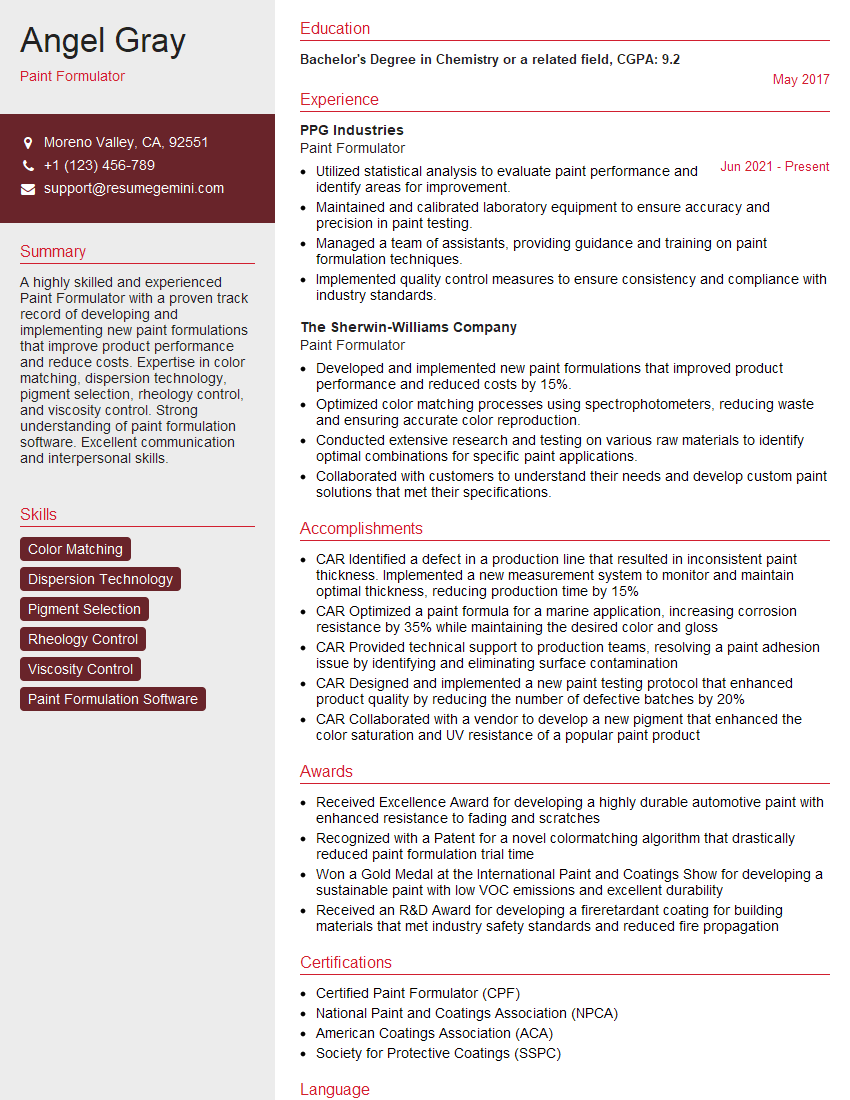
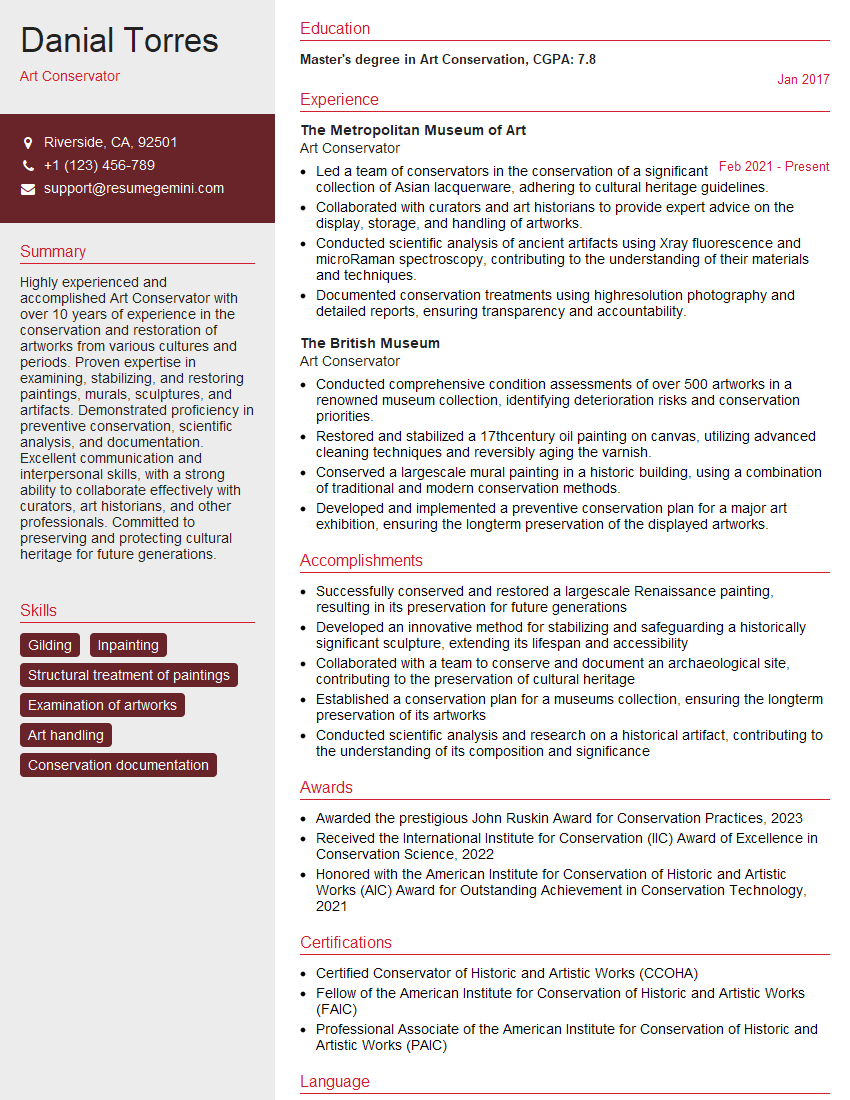
A strong understanding of Van Dyke Brown is a valuable asset, opening doors to exciting career opportunities and showcasing your expertise. To maximize your job prospects, it’s crucial to present your skills effectively. Creating an ATS-friendly resume is vital for getting your application noticed. ResumeGemini is a trusted resource to help you build a professional and impactful resume that highlights your Van Dyke Brown expertise. Examples of resumes tailored to this specific area are available to guide you. Take the next step toward your dream career – build a compelling resume that truly reflects your abilities.
Explore more articles
Users Rating of Our Blogs
Share Your Experience
We value your feedback! Please rate our content and share your thoughts (optional).
What Readers Say About Our Blog
Very informative content, great job.
good