Are you ready to stand out in your next interview? Understanding and preparing for Change Control Process Management interview questions is a game-changer. In this blog, we’ve compiled key questions and expert advice to help you showcase your skills with confidence and precision. Let’s get started on your journey to acing the interview.
Questions Asked in Change Control Process Management Interview
Q 1. Describe the Change Control Process lifecycle.
The Change Control Process lifecycle is a structured approach to managing changes to a system, project, or process. Think of it like a carefully orchestrated symphony – each instrument (step) plays its part to ensure a harmonious outcome. It typically involves the following stages:
- Identification: A change is identified, whether it’s a new feature request, a bug fix, or a security update. This could come from a user, a developer, or even a routine audit.
- Request: A formal change request is submitted, documenting the proposed change, its impact, and justification. This request often includes a detailed description, timelines, and responsible parties.
- Evaluation: The change request is reviewed by the Change Control Board (CCB) or a designated authority. This involves assessing the risk, impact, and feasibility of the change.
- Authorization: The CCB approves, rejects, or defers the change request. This decision is based on the evaluation and prioritization process.
- Implementation: The approved change is implemented. This might involve testing, deployment, and communication to stakeholders.
- Verification: After implementation, the change is verified to ensure it meets the requirements and doesn’t introduce any unintended consequences. This often involves rigorous testing and validation.
- Closure: The change request is formally closed, documenting the outcome and lessons learned. This helps track the effectiveness of the process and identify areas for improvement.
For example, imagine a software company implementing a new security patch. The entire process, from the identification of the vulnerability to the final verification of the patch’s effectiveness, follows this lifecycle.
Q 2. What are the key components of a Change Management Plan?
A comprehensive Change Management Plan is the roadmap for navigating changes successfully. It’s crucial for minimizing disruptions and maximizing positive outcomes. Key components include:
- Change Control Process: A detailed description of the steps involved in managing changes, including roles, responsibilities, and escalation procedures.
- Change Request Form: A standardized form for submitting change requests, ensuring consistency and completeness of information.
- Communication Plan: A strategy for communicating change-related updates to stakeholders, keeping everyone informed and engaged.
- Risk Assessment Methodology: A process for identifying and assessing potential risks associated with each change.
- Rollback Plan: A plan for reverting the change if it fails or introduces unintended consequences – essentially, a backup plan.
- Reporting and Metrics: A system for tracking and reporting on change requests, enabling continuous improvement of the change management process. Key metrics could include the number of changes implemented, average time to implement a change, and the success rate of changes.
- Roles and Responsibilities: Clearly defined roles and responsibilities for all individuals involved in the change management process.
Imagine constructing a building; the Change Management Plan is the blueprint that ensures the project stays on track, within budget, and meets all safety standards. Each component plays a critical role in the overall success.
Q 3. Explain the difference between emergency, standard, and normal changes.
These change categories represent different levels of urgency and impact:
- Emergency Changes: These are unscheduled changes required to address critical issues that significantly impact service availability, security, or safety. They demand immediate action and often bypass the standard change approval process, though post-implementation review is essential. Think of an immediate fix for a system outage affecting critical business operations.
- Standard Changes: Pre-approved changes that have been assessed for risk and impact. They typically have a defined process for implementation and require minimal review. Examples include routine software updates or hardware replacements that have been tested and proven safe.
- Normal Changes: These are changes that require a formal change request and go through the full change control process, including evaluation, authorization, implementation, and verification. They are typically less urgent than emergency changes but still require careful planning and execution. A new feature release in a software application would fall into this category.
It’s crucial to have clear guidelines for differentiating between these change types to ensure that critical changes are addressed promptly while maintaining a structured process for less urgent changes.
Q 4. How do you prioritize competing change requests?
Prioritizing competing change requests requires a structured approach, often involving a scoring system or a prioritization matrix. Key factors to consider:
- Urgency: How quickly does the change need to be implemented? Emergency changes always take precedence.
- Impact: What is the potential impact of the change on the business? High-impact changes, those affecting many users or critical systems, are usually prioritized.
- Risk: What are the potential risks associated with the change? Changes with high risk need more careful planning and consideration.
- Business Value: What is the potential benefit of the change? Changes that deliver significant business value are often given higher priority.
- Dependencies: Are there any dependencies between changes? Changes with dependencies might need to be sequenced accordingly.
One common method is to use a weighted scoring system, assigning points to each factor based on its importance. The change requests with the highest total score are prioritized first. For example, an emergency security patch would likely score highest on urgency and risk, pushing it to the top of the queue.
Q 5. What are the roles and responsibilities within a Change Control Board (CCB)?
The Change Control Board (CCB) is the decision-making body responsible for approving or rejecting change requests. Roles and responsibilities often include:
- CCB Chair: Oversees the meetings, facilitates discussions, and ensures decisions are made effectively. Often a senior management representative.
- Change Manager: Manages the change control process, prepares documentation, and presents recommendations to the CCB.
- Technical Representatives: Assess the technical feasibility and impact of proposed changes. This might involve developers, system administrators, or network engineers.
- Business Representatives: Assess the business impact of changes and ensure alignment with business objectives. This could be project managers, product owners, or business analysts.
- Security Representatives: Review changes from a security perspective, ensuring that they don’t introduce vulnerabilities.
Think of the CCB as a steering committee for changes, ensuring alignment across various departments and mitigating risks.
Q 6. How do you handle a change request that conflicts with existing project plans?
Handling a change request that conflicts with existing project plans requires careful negotiation and prioritization. Steps to follow:
- Assess the Impact: Evaluate the impact of both the change request and the existing project plans. What are the consequences of delaying or rejecting either?
- Negotiate and Compromise: Discuss with stakeholders involved in both the change request and the project to find a solution that minimizes disruption. This might involve modifying the change request, adjusting project timelines, or finding alternative solutions.
- Prioritize: Use a prioritization framework (as discussed in the previous question) to decide which takes precedence. This decision should be based on business value, risk, and urgency.
- Document Decisions: Clearly document the decisions made, including the rationale and any compromises reached. This helps maintain transparency and accountability.
- Communicate: Communicate the decision to all stakeholders, explaining the rationale and any implications.
For example, if a new feature request conflicts with a critical deadline, the project team might negotiate to postpone the feature request or break it down into smaller, less disruptive increments.
Q 7. Describe your experience using a Change Management tool (e.g., ServiceNow, Jira).
In my previous role at [Previous Company Name], I extensively used ServiceNow for change management. It streamlined our process significantly. I was responsible for configuring the system, creating workflows, and training users. Specific functionalities I utilized included:
- Change Request Management: Creating and managing change requests, tracking their status, and automating notifications.
- Workflow Automation: Automating approval processes and routing requests to appropriate stakeholders based on predefined rules. This significantly reduced manual effort and ensured consistency.
- Reporting and Analytics: Generating reports on change request metrics such as average resolution time, success rate, and overall volume. This helped identify areas for improvement in our process.
- Integration with Other Systems: Integrating ServiceNow with our incident management and problem management systems to provide a holistic view of IT operations. This helped us connect change requests to the problems they were addressing.
ServiceNow’s features, such as automated workflows and reporting dashboards, substantially improved efficiency and transparency in our change management process, leading to a reduction in unplanned downtime and improved overall system stability. The platform allowed us to move from a largely manual, paper-based process to a highly efficient, centralized system. I can provide specific examples of process improvements we achieved using ServiceNow if you’d like.
Q 8. How do you ensure compliance with regulatory requirements in change management?
Ensuring compliance with regulatory requirements in change management is paramount. It involves a multifaceted approach that integrates regulatory mandates directly into the change control process. This begins with a thorough understanding of all applicable regulations – whether it’s HIPAA for healthcare, GDPR for data privacy, or industry-specific standards. We need to identify the specific requirements relevant to the changes being implemented.
Next, we incorporate these requirements into our change request forms, checklists, and approval workflows. For instance, if a change impacts data security, the request must include a risk assessment addressing GDPR compliance, and potentially require approval from the data protection officer. Regular audits and reviews of our change management process against these regulatory requirements are critical to ensure ongoing compliance. We use a combination of documented procedures, automated checks within our change management system, and regular internal audits to maintain adherence. Documentation is key – every step must be traceable, ensuring we can demonstrate compliance if audited.
For example, in a recent project involving a software upgrade, we had to ensure compliance with PCI DSS (Payment Card Industry Data Security Standard) regulations. This involved meticulous documentation of all changes affecting payment processing systems, rigorous testing to confirm continued compliance, and comprehensive reporting on the entire process. Failure to comply could have resulted in significant financial penalties and reputational damage.
Q 9. What metrics do you use to measure the effectiveness of your change management process?
Measuring the effectiveness of our change management process relies on a balanced scorecard approach using a variety of key performance indicators (KPIs). We track both leading indicators (proactive measures) and lagging indicators (reactive measures).
- Leading Indicators: These predict future performance. Examples include the percentage of change requests completed on time, the average time to implement a change, the number of change requests rejected due to insufficient risk assessment, and the percentage of change requests that receive stakeholder buy-in before implementation.
- Lagging Indicators: These measure the outcome of the process. Examples include the number of change-related incidents, the mean time to recovery (MTTR) from change-related outages, the overall customer satisfaction rating post-change, and the cost of change implementation compared to the planned budget.
Regular monitoring of these KPIs allows us to identify bottlenecks, areas for improvement, and ultimately, refine the change management process for optimal efficiency and effectiveness. We utilize dashboards and reporting tools to visualize this data, making it easy to identify trends and make data-driven decisions.
Q 10. How do you communicate changes effectively to stakeholders?
Effective change communication is crucial for minimizing disruption and maximizing adoption. Our strategy utilizes a multi-channel approach tailored to the specific audience and the type of change. We leverage various communication methods including:
- Email: For formal announcements, updates, and detailed information.
- Intranet/Portal: To centralize information, FAQs, and training materials.
- Meetings: For interactive discussions, Q&A sessions, and addressing concerns directly.
- Training Sessions: To equip stakeholders with the knowledge and skills needed to adapt to the changes.
- Informal Communication: Utilizing team leads, mentors, or champions to ensure information reaches everyone.
The key is to be consistent, transparent, and proactive. Communication should begin well before the change is implemented, building anticipation and addressing potential concerns early on. We also strive for two-way communication, actively seeking feedback from stakeholders to improve our communication strategy and address any anxieties. In one instance, for a major system overhaul, we organized a series of town hall meetings to address employee anxieties about job security and provide hands-on training, significantly increasing acceptance rates.
Q 11. How do you manage stakeholder expectations during a change implementation?
Managing stakeholder expectations is a critical aspect of successful change management. It starts with clearly defining the scope, objectives, and timeline of the change right from the beginning. This involves actively engaging stakeholders early in the process to ensure their needs and concerns are understood and addressed.
We use a combination of techniques such as regular updates, progress reports, and feedback mechanisms to keep stakeholders informed and involved. Setting realistic expectations is also crucial, avoiding over-promising and under-delivering. When unexpected issues arise, we communicate them transparently and proactively, explaining the impact and outlining mitigation plans. This fosters trust and cooperation, even in challenging situations. Open dialogue and active listening are key to resolving concerns and ensuring stakeholder buy-in throughout the change lifecycle. For example, during a recent project to implement a new CRM system, we held regular stakeholder meetings to update them on progress and solicit their feedback. This led to adjustments in the system to meet their specific needs, resulting in a smoother transition and higher user adoption rate.
Q 12. What is your approach to risk assessment in change management?
Our approach to risk assessment in change management is systematic and thorough. We use a risk matrix that considers the likelihood and impact of potential risks, assigning a priority score to each. We identify potential risks throughout the change lifecycle, from initiation to closure.
We involve various stakeholders, including subject matter experts and operational teams in the risk identification process. The risk assessment typically involves:
- Identifying potential risks: This could include technical failures, security breaches, user resistance, or unforeseen dependencies.
- Assessing the likelihood and impact of each risk: We use qualitative or quantitative methods to determine the probability and severity of each risk.
- Developing mitigation strategies: This includes identifying actions to reduce the likelihood or impact of each risk, such as implementing preventative measures or contingency plans.
- Monitoring and reviewing risks: We continuously monitor risks throughout the change implementation and adjust our mitigation strategies as needed.
The output of this process is a comprehensive risk register that informs decision-making and guides the change implementation plan. This allows us to proactively manage potential problems, reducing the likelihood of negative consequences. For example, in a recent network upgrade, we identified the risk of downtime and developed a rollback plan to minimize disruption if problems arose.
Q 13. How do you handle change requests that are outside of your defined scope?
Handling change requests outside the defined scope requires a structured approach to avoid scope creep and maintain project stability. The first step is to formally document the request as a separate change request outside the original project scope. This ensures proper tracking and accountability.
Next, we assess the impact of this new request. This involves evaluating the technical feasibility, resource requirements, potential risks, and implications on the existing project timeline and budget. We then present this assessment, along with recommendations, to the appropriate stakeholders for review and prioritization. This may involve adjusting the original project plan, creating a new project, or rejecting the request if it doesn’t align with strategic priorities. Prioritization is key, considering factors like urgency, business value, and impact on other projects. We have a formal process for evaluating such requests, often using a weighted scoring system to ensure objectivity. If the request is accepted, a new change request is generated and followed through our standard change management procedure.
Q 14. Explain your experience with different change management methodologies (e.g., Agile, Waterfall).
My experience spans both Waterfall and Agile change management methodologies, and I recognize the strengths and limitations of each. Waterfall is well-suited for projects with clearly defined requirements and a stable environment. Its structured approach, with well-defined phases and deliverables, allows for meticulous planning and control. However, it can be less adaptable to changing requirements or unexpected challenges.
Agile, on the other hand, is ideal for projects with evolving requirements and a need for flexibility. Its iterative approach, with frequent feedback loops, enables quick adaptations to changing circumstances. The focus is on delivering value incrementally, allowing for continuous improvement and stakeholder engagement. However, it requires a high level of collaboration and communication, and can be less suitable for highly regulated or complex projects where rigorous documentation is essential.
In practice, I have often found a hybrid approach to be the most effective. We may use Agile principles for certain aspects of a change, such as development and testing, while maintaining a more structured Waterfall approach for aspects requiring greater control and regulatory compliance, such as security updates or infrastructure changes. Selecting the right methodology, or a combination of both, is highly context-dependent and requires a thorough understanding of the project’s unique characteristics and constraints. My approach is always to tailor the methodology to the specific needs of the change, optimizing for speed, efficiency, and adherence to regulatory requirements.
Q 15. How do you mitigate the impact of failed changes?
Mitigating the impact of failed changes requires a multi-pronged approach focusing on prevention, detection, and recovery. Prevention starts with a robust change control process itself – thorough testing, rigorous reviews, and well-defined approval workflows significantly reduce the risk of failures. Think of it like building a house: a strong foundation (process) minimizes the chance of collapse (failure).
However, even with the best planning, failures can occur. Effective detection involves implementing monitoring systems that identify anomalies or problems immediately after a change is deployed. This could include automated alerts, performance dashboards, or even manual checks by designated personnel. Imagine a smoke alarm – it detects the problem early, allowing for quicker response.
Finally, a well-defined rollback plan is crucial. This plan should outline the steps necessary to revert the system to its previous stable state. This might involve restoring from backups, deploying a previous version of software, or manually reversing the changes. Think of it as having a detailed instruction manual for rebuilding the house in case of an earthquake.
Beyond these technical aspects, communication is key. Keeping stakeholders informed throughout the process, especially during a failure, prevents misunderstandings and fosters trust.
Career Expert Tips:
- Ace those interviews! Prepare effectively by reviewing the Top 50 Most Common Interview Questions on ResumeGemini.
- Navigate your job search with confidence! Explore a wide range of Career Tips on ResumeGemini. Learn about common challenges and recommendations to overcome them.
- Craft the perfect resume! Master the Art of Resume Writing with ResumeGemini’s guide. Showcase your unique qualifications and achievements effectively.
- Don’t miss out on holiday savings! Build your dream resume with ResumeGemini’s ATS optimized templates.
Q 16. Describe a time you had to manage a high-pressure change situation.
During a major system upgrade for a large e-commerce client, we faced a critical failure just hours before their biggest sales event of the year. The new payment gateway, despite rigorous testing, experienced unexpected latency issues under high load. The pressure was immense, as a system outage would have meant significant financial losses for the client.
My immediate response was to activate our emergency change management plan. We formed a cross-functional team, bringing together developers, network engineers, and client representatives. We prioritized the most critical issues and implemented a phased rollback strategy: first, we disabled the new gateway and reverted to the older, stable system; simultaneously, the development team worked to identify and fix the root cause in the new gateway. We maintained constant communication with the client, providing transparent updates on progress and anticipated restoration times. Open communication was vital in preventing panic and building trust.
Ultimately, we restored full functionality within four hours, minimizing the impact on the sales event. The incident highlighted the importance of having a solid disaster recovery plan and a team that is prepared to respond effectively under pressure. We subsequently conducted a thorough post-incident review to identify weaknesses in our testing procedures and improve the resilience of our payment processing system.
Q 17. How do you ensure that changes are properly documented and auditable?
Proper documentation and auditability are paramount in change control. This ensures traceability, accountability, and the ability to learn from past changes. We achieve this through a combination of methods:
- Centralized Change Management System (CMS): A dedicated system (often software-based) records all changes, from initial request to final approval and implementation. This provides a single source of truth.
- Standardized Templates: Using consistent templates for change requests, impact assessments, and test results ensures uniformity and reduces ambiguity. These templates generally include fields for change ID, description, impact analysis, testing results, and approval signatures.
- Version Control: For code changes, version control systems like Git are essential. They track all modifications, allowing for easy rollback if necessary and facilitating collaborative development.
- Detailed Logs: System logs provide an audit trail of actions performed, including timestamps and user identities. This aids in identifying potential causes of failures or security breaches. Imagine a detailed record of every step taken in a surgery—critical for review and accountability.
- Automated Reporting: Generating regular reports on change activity allows for continuous monitoring and identification of trends, helping to improve the process over time.
By adhering to these practices, we ensure that all changes are properly documented and auditable, fostering a transparent and accountable environment.
Q 18. What is your approach to training end-users on new changes?
Training end-users is critical for successful change adoption. A poorly trained user can negate the benefits of even the best-implemented change. My approach is multi-faceted and involves:
- Needs Assessment: Understanding the user base, their technical skills, and their specific needs is crucial. This helps tailor training to their individual levels of understanding.
- Phased Rollout: Often, training is delivered in phases. A pilot group might receive training first to provide valuable feedback before wider deployment.
- Multiple Learning Methods: Different people learn in different ways. Using a variety of methods—videos, documentation, hands-on workshops, live webinars—increases comprehension and retention.
- Interactive Sessions: Sessions that encourage questions and practical exercises are more effective than passive lectures. Think of it like learning to ride a bike – hands-on experience is essential.
- Support Materials: Post-training access to reference guides, FAQs, and ongoing support channels ensures continued learning and problem-solving.
- Feedback Mechanisms: Gathering feedback after training helps identify areas for improvement and ensures that users feel heard and supported.
By employing a variety of techniques, we aim to ensure that all users are adequately trained and confident in using the new systems or processes.
Q 19. How do you handle resistance to change from team members?
Resistance to change is a common human response, and addressing it requires empathy and understanding. My approach involves:
- Open Communication: Clearly explaining the reasons behind the change, its benefits, and how it will impact the team is critical. Transparency builds trust and reduces uncertainty.
- Active Listening: Understanding the concerns and anxieties of team members is essential. Providing a safe space for feedback and addressing those concerns directly shows respect and empathy.
- Collaboration and Involvement: Whenever possible, involving team members in the change process empowers them and fosters a sense of ownership. This makes them active participants rather than passive recipients of change.
- Addressing Concerns: Valid concerns should be addressed promptly and effectively. This shows that their input is valued and their worries are taken seriously.
- Incentives and Recognition: Positive reinforcement, such as recognizing and rewarding early adoption, can motivate others to embrace the change.
- Leadership Support: Visible support from leadership can significantly influence team members’ attitudes toward the change, promoting a positive atmosphere.
Addressing resistance is not about forcing compliance, but about fostering a collaborative environment where team members feel understood and respected.
Q 20. How do you ensure that changes are rolled back effectively if necessary?
Effective rollback requires a well-defined plan developed *before* the change is implemented. This plan should be detailed, tested, and readily available. Key components include:
- Backups: Regular backups of the system are critical. These backups should be verified and readily accessible.
- Rollback Procedures: A step-by-step guide outlining how to revert the system to its previous state, including specific commands or actions.
- Testing: The rollback procedure itself should be tested regularly to ensure its effectiveness. This verifies that the rollback process works as expected and minimizes downtime during a real emergency.
- Communication Plan: A plan for informing stakeholders during a rollback, providing updates, and managing expectations.
- Post-Rollback Analysis: A plan to analyze the cause of the failure and implement preventive measures to avoid future recurrences.
The specific rollback mechanism will vary depending on the context – it could be a simple script, a restoration from backup, or a manual process. Regardless of the method, a well-defined, tested plan is essential to minimize the impact of a failed change.
Q 21. What are some common challenges in change control and how do you address them?
Common challenges in change control include:
- Inadequate Planning: Insufficient planning leads to unforeseen issues and increased risk. This can be mitigated by thorough impact assessments and risk analysis.
- Lack of Communication: Poor communication creates confusion and resistance. Regular updates and clear explanations are crucial.
- Insufficient Testing: Inadequate testing increases the likelihood of failures. Rigorous testing, including user acceptance testing (UAT), should be a core part of the process.
- Resistance to Change: Addressing resistance requires empathy, clear communication, and collaboration.
- Lack of Resources: Insufficient resources can hinder the change process. Appropriate allocation of budget, personnel, and time is critical.
- Unclear Roles and Responsibilities: Ambiguity in roles can lead to inefficiencies and errors. Clear definition of responsibilities and accountability is essential.
Addressing these challenges requires proactive planning, effective communication, a robust change management process, and a commitment to continuous improvement. Regular reviews of the process and feedback loops are crucial for adapting to changing circumstances and learning from past experiences.
Q 22. How do you measure the success of a change initiative?
Measuring the success of a change initiative goes beyond simply checking off a to-do list. It requires a multi-faceted approach, evaluating impact across various key performance indicators (KPIs). We need to define success beforehand, aligning it with the overall business goals. For instance, if the change aimed to improve customer satisfaction, we’d measure post-implementation satisfaction scores against pre-implementation scores.
- Financial Metrics: Did the change deliver the projected ROI (Return on Investment)? Did it reduce costs or increase revenue as anticipated? For example, a new software implementation might be measured by its impact on operational efficiency and cost savings.
- Operational Metrics: Did the change improve efficiency, reduce errors, or enhance productivity? For instance, tracking the number of support tickets before and after a system upgrade helps measure the impact on operational stability.
- User Adoption & Satisfaction: Did employees successfully adopt the new process or technology? Are they satisfied with the changes? Surveys and feedback sessions are crucial for gathering this data.
- Risk Mitigation: Did the change introduce new risks, or did it successfully mitigate existing ones? A successful change initiative will minimize unforeseen problems.
Ultimately, a successful change initiative is one that achieves its intended objectives, delivers the anticipated benefits, and leaves the organization stronger and more resilient.
Q 23. Describe your experience with implementing a new change management process.
In my previous role, we transitioned from a largely informal change management process to a more structured ITIL-aligned framework. The existing process lacked formal approvals, documentation, and risk assessment. This led to inconsistent implementation, unforeseen issues, and occasional service disruptions.
The implementation involved several key steps:
- Assessment & Planning: We started with a thorough gap analysis, identifying weaknesses in the existing process and defining the requirements for the new one. This included stakeholder interviews, process mapping, and identifying key tools for implementation.
- Training & Communication: Comprehensive training was provided to all stakeholders, emphasizing the importance of the new process and its benefits. Clear and consistent communication throughout the transition was crucial for building buy-in.
- Tool Selection & Implementation: We chose a change management software solution to streamline the process, automate tasks, and ensure compliance. Careful planning was essential to ensure a smooth integration with existing systems.
- Pilot Program: We implemented the new process on a smaller scale initially (a pilot project) to identify and address potential problems before full rollout. This allowed for iterative improvements based on real-world experience.
- Monitoring & Evaluation: After the full rollout, we monitored key metrics like change request completion times, incident rates, and user satisfaction to track the effectiveness of the new process. Regular reviews allowed for continuous improvement.
The outcome was a significant improvement in our ability to manage changes effectively, reducing risks and improving service stability. We saw a decrease in unplanned outages and an increase in stakeholder satisfaction.
Q 24. Explain your understanding of ITIL v4 and its impact on Change Management.
ITIL 4 provides a holistic framework for IT service management (ITSM), and its impact on Change Management is substantial. It moves beyond the traditional, siloed approach, emphasizing value streams and organizational agility. ITIL 4 highlights the importance of integrating Change Management with other ITSM processes like Incident, Problem, and Release Management to achieve seamless service delivery.
Key aspects of ITIL 4’s influence on Change Management include:
- Focus on Value: ITIL 4 stresses aligning changes with business value, ensuring that changes contribute directly to organizational goals. Changes are not merely implemented; their impact on value delivery is meticulously tracked.
- Increased Agility & Collaboration: ITIL 4 promotes a more agile and collaborative approach to change management, emphasizing quick response times and efficient collaboration between IT and business stakeholders.
- Risk-Based Approach: ITIL 4 emphasizes proactive risk management, integrating risk assessment and mitigation strategies throughout the change lifecycle. Higher-risk changes receive more rigorous scrutiny.
- Integration with Other Processes: ITIL 4 encourages the seamless integration of Change Management with other ITSM processes. This integrated approach prevents conflicts and ensures a smoother, more efficient service delivery.
In essence, ITIL 4 provides a more comprehensive and integrated approach to Change Management, emphasizing value, agility, and risk management.
Q 25. How do you balance the speed of change with the need for stability and control?
Balancing the speed of change with the need for stability and control is a crucial aspect of effective Change Management. It’s about finding the optimal pace that allows for innovation while minimizing disruption and risk. Think of it like driving a car: you want to go fast, but you also need to maintain control and safety.
Strategies to achieve this balance include:
- Prioritization: Employing a robust prioritization process, based on business value and risk, allows focusing on the most impactful changes first. Less critical changes can be scheduled for later.
- Phased Rollouts: Instead of a ‘big bang’ approach, implementing changes in phases (pilot projects, gradual rollouts) reduces the risk and allows for course correction along the way.
- Thorough Testing & Validation: Rigorous testing and validation in different environments (development, testing, staging) ensure stability and minimize unforeseen issues in production.
- Communication & Training: Clear and timely communication to all stakeholders minimizes confusion and resistance. Training empowers users to adapt to the changes effectively.
- Rollback Plan: Having a documented rollback plan for each significant change enables quick recovery in case of unforeseen issues. This instills confidence and reduces fear of disruption.
The key is to adopt a flexible and adaptive approach, constantly monitoring and adjusting the pace based on feedback and risk assessment.
Q 26. What is your experience with automating aspects of the Change Management process?
Automation plays a vital role in modern Change Management, increasing efficiency and reducing errors. In past projects, I’ve leveraged automation in several key areas:
- Change Request Submission & Tracking: Automating the submission and tracking of change requests through a service management tool reduces manual effort, ensures consistency, and provides better visibility into the process.
- Approval Workflows: Implementing automated approval workflows ensures that changes are reviewed and approved according to established policies and procedures, speeding up the process significantly.
- Automated Notifications & Reminders: Automated notifications and reminders keep stakeholders informed of the change request’s progress, reducing the need for manual follow-up. This also helps prevent delays.
- Reporting & Analytics: Automated reporting and analytics provide insights into the efficiency and effectiveness of the change management process, identifying areas for improvement.
For example, we used ServiceNow to automate change request workflows, reducing the average approval time from 2 days to less than 12 hours. The system automatically routed requests to the appropriate approvers, sent notifications to stakeholders, and generated comprehensive reports on change request performance. This resulted in a significant reduction in manual effort and improved efficiency.
Q 27. How do you handle conflicting priorities among different change requests?
Handling conflicting priorities among different change requests requires a structured approach that balances urgency, impact, and risk. It’s not simply about ‘first come, first served’.
The steps I would typically take are:
- Prioritization Matrix: Develop a prioritization matrix to assess each change request based on its urgency, impact, and risk. Factors like business value, dependencies, and potential disruptions are considered.
- Stakeholder Collaboration: Engage stakeholders to discuss and negotiate conflicting priorities. This often involves explaining trade-offs and reaching a consensus. Transparency is essential in this step.
- Dependency Analysis: Identify any dependencies between change requests. Sequencing changes to minimize conflicts and maximize efficiency is crucial.
- Escalation Process: Establish a clear escalation process for resolving deadlocks or disagreements. A change advisory board (CAB) can play a key role in making difficult decisions.
- Communication & Transparency: Maintain clear and consistent communication with all stakeholders, keeping them informed of decisions and rationale behind prioritization choices.
Remember, flexibility is key. While a formal prioritization process is needed, the ability to adapt to unexpected circumstances and changing business needs is also crucial for successfully navigating conflicting priorities.
Key Topics to Learn for Change Control Process Management Interview
- Understanding Change Control Processes: Defining the scope, purpose, and benefits of a robust change control process. Differentiate between emergency, standard, and minor changes.
- Change Request Management: Learning how to effectively document, categorize, and prioritize change requests. Understanding the impact analysis process and risk assessment.
- Workflow and Automation: Familiarize yourself with different change control workflows (e.g., linear, iterative). Explore the role of automation tools in improving efficiency and reducing errors.
- Stakeholder Management: Discuss the importance of communication and collaboration with stakeholders throughout the change lifecycle. Practicing effective negotiation and conflict resolution skills.
- Implementation and Monitoring: Detailing the steps involved in implementing changes, testing, and post-implementation reviews. Understanding key performance indicators (KPIs) and their application in monitoring the success of changes.
- ITIL Framework and Best Practices: Understanding the ITIL framework’s relevance to Change Management and its best practices for implementation and optimization.
- Problem Solving and Decision Making within Change Control: Develop your ability to analyze situations, identify root causes of issues, and propose effective solutions within the change control framework. This includes understanding different decision-making models and their application.
- Regulatory Compliance and Audits: Exploring the impact of regulatory compliance on change control processes and how to prepare for audits. Understanding relevant industry standards and regulations.
Next Steps
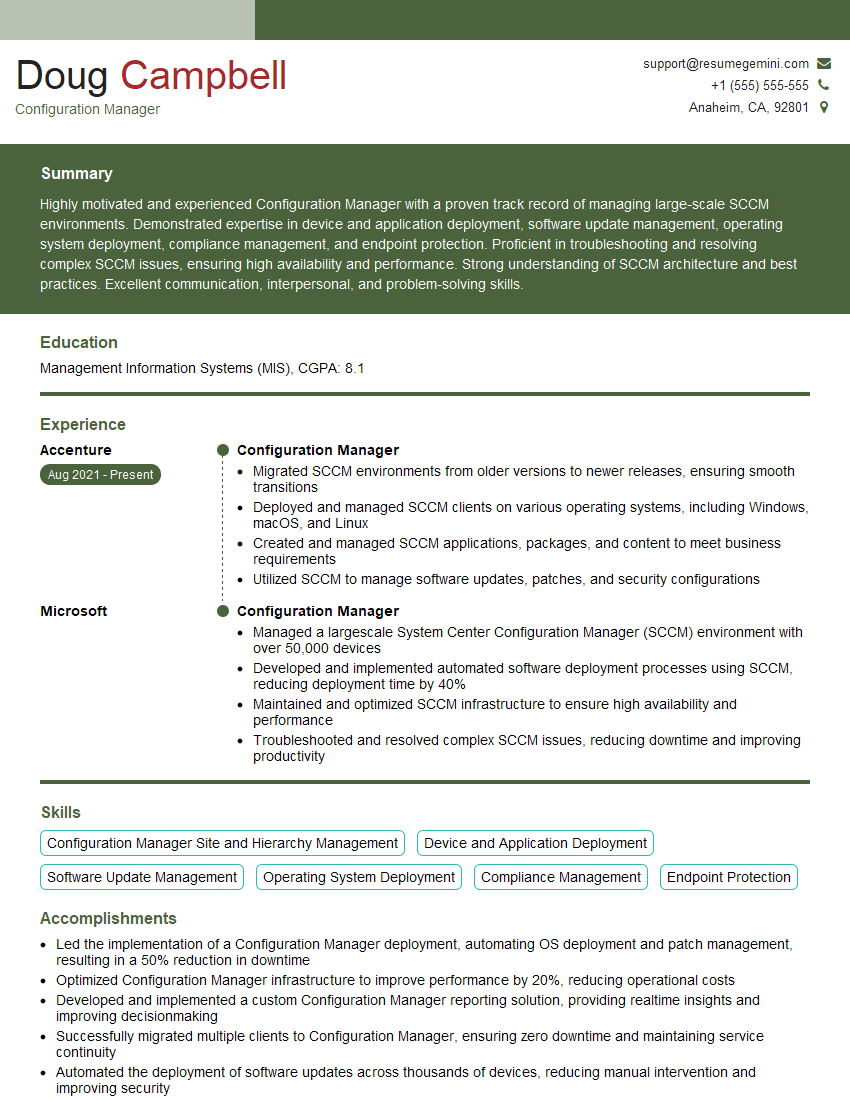
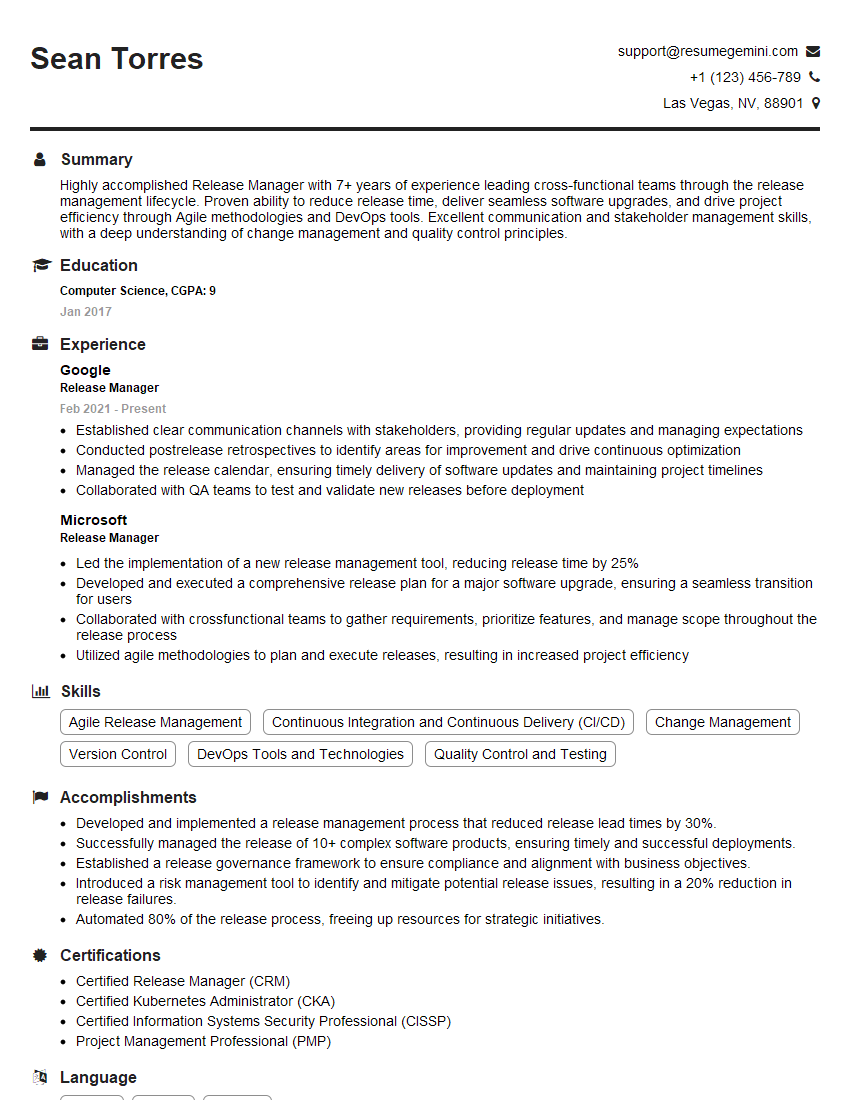
Mastering Change Control Process Management significantly enhances your career prospects in IT operations, project management, and various other fields requiring robust process management skills. It demonstrates your ability to manage risk, improve efficiency, and ensure smooth operations. To increase your chances of landing your dream role, create an ATS-friendly resume that showcases your expertise effectively. ResumeGemini is a trusted resource that can help you build a compelling and professional resume tailored to your specific skills and experience. Examples of resumes tailored to Change Control Process Management are available to guide you through the process.
Explore more articles
Users Rating of Our Blogs
Share Your Experience
We value your feedback! Please rate our content and share your thoughts (optional).
What Readers Say About Our Blog
Very informative content, great job.
good