Feeling uncertain about what to expect in your upcoming interview? We’ve got you covered! This blog highlights the most important Gravity Flow Irrigation System Design interview questions and provides actionable advice to help you stand out as the ideal candidate. Let’s pave the way for your success.
Questions Asked in Gravity Flow Irrigation System Design Interview
Q 1. Explain the principles of gravity flow irrigation.
Gravity flow irrigation relies on the simple principle of water flowing downhill due to gravity. It’s a passive system, meaning it doesn’t require pumps or other mechanical devices to move water. Instead, it leverages the natural slope of the land to distribute water from a source (like a reservoir or tank) to the fields. Think of it like water flowing down a gently inclined stream – the higher the source, the greater the flow.
The system typically involves a network of channels, pipes, and outlets strategically designed to deliver water to various parts of the field. The flow rate is primarily governed by the difference in elevation between the source and the field, along with the pipe size and friction losses within the system. Proper design ensures an even distribution of water across the field to avoid over-watering or under-watering.
Q 2. What are the advantages and disadvantages of gravity flow irrigation compared to other methods?
Advantages: Gravity flow systems are generally low-cost, reliable, and easy to maintain. They require minimal energy input since they rely on gravity. They are also environmentally friendly, reducing the need for electricity and minimizing the environmental footprint compared to energy-intensive pump systems. They are well-suited for small to medium-sized farms with gentle slopes.
Disadvantages: The main limitation is the reliance on topography. They are not suitable for flat lands or areas with significant elevation changes. The design and construction can be challenging for larger or complex terrains. The system might be susceptible to clogging or damage from debris. Water distribution might not be as precise as in some other systems, potentially leading to uneven watering.
Compared to pressurized systems (like sprinkler or drip irrigation), gravity systems offer lower initial investment but may have limitations in terms of control and even water distribution across the field, especially larger areas with varied topography. Compared to flood irrigation, it offers better water use efficiency but may require more careful planning and design.
Q 3. How do you determine the appropriate pipe size for a gravity flow system?
Determining the appropriate pipe size involves careful consideration of several factors. The primary factor is the desired flow rate, which is dictated by the area to be irrigated and the water requirements of the crops. We use the Hazen-Williams equation or Manning’s equation to calculate head loss due to friction within the pipes, taking into account the pipe material’s roughness coefficient, pipe length, and slope. This allows us to determine the minimum pipe diameter required to deliver the needed flow rate without excessive head loss.
For example, if we need to deliver 10 liters per second and our calculations show a 5cm pipe will result in too much head loss, we’d need to increase the diameter, perhaps to 7.5cm or more, to ensure sufficient flow without compromising pressure. Software packages dedicated to irrigation design greatly simplify these calculations, allowing for various scenarios and pipe materials to be tested. Safety factors are usually added to account for future expansion or potential issues.
Q 4. Describe the process of designing a gravity flow irrigation system for a specific site.
Designing a gravity flow irrigation system involves a systematic approach. It begins with a detailed site survey to determine the topography, soil type, and crop requirements. This involves creating contour maps and establishing a base elevation point. The next step is to determine the water source’s capacity and elevation. Then, we layout the main channel and lateral channels considering the slope and ensuring adequate flow rates. Careful consideration needs to be given to the layout of the field to minimize the length of channels and ensure even water distribution.
The design process then involves selecting appropriate pipe sizes and materials based on flow rate calculations. Outlet placement needs to be carefully planned to ensure even coverage. We will then create detailed drawings of the system, including channel dimensions, pipe sizes, and outlet locations. A comprehensive cost estimate needs to be prepared, considering materials, labor, and construction costs. Finally, the design is reviewed to ensure compliance with all relevant regulations and standards.
Q 5. How do you account for elevation changes in a gravity flow system design?
Elevation changes are crucial in gravity flow system design. The system relies on gravity, so a sufficient slope is required to ensure adequate flow. We account for elevation changes by carefully profiling the land and ensuring a consistent gradient along the main channels and laterals. Steeper slopes can lead to high flow velocities, increasing erosion and potential damage to the system. Conversely, very gentle slopes might lead to insufficient flow. Therefore, the design must carefully balance slope to maintain an optimal flow velocity.
We often use surveying techniques and digital elevation models (DEMs) to create detailed topographic maps, enabling precise calculations of the gradient at various points within the system. In situations with significant elevation differences, we may incorporate drop structures or other flow control devices to manage the flow rate and prevent erosion.
Q 6. What are the common types of outlets used in gravity flow irrigation?
Several outlet types are employed in gravity flow systems, each with its advantages and limitations. Common types include:
- Turnouts: These are simple structures that allow water to be diverted from the main channel to a lateral. They are typically gated structures to regulate water flow.
- Siphons: Used to convey water over low points in the terrain without the need for a high channel. They are self-priming devices and only require gravity to operate.
- Gates and Valves: These are used to control and regulate the water flow within the system, ensuring a uniform distribution of water across the field.
- Weirs: These structures create a controlled flow of water over a crest and can be used to measure the flow rate.
The selection of the appropriate outlet depends on the site-specific conditions, including the slope, soil type, and the desired flow rate. For instance, in areas with high water flow, we might employ sturdy gates and weirs to manage flow.
Q 7. How do you calculate the flow rate and pressure in a gravity flow system?
Calculating flow rate and pressure in a gravity flow system involves applying fundamental hydraulic principles. The flow rate is primarily determined by the cross-sectional area of the channel or pipe and the flow velocity. The velocity depends on the slope and the roughness of the channel’s surface. We typically use the Manning’s equation or Hazen-Williams equation to estimate the flow velocity, considering the channel geometry and roughness coefficient.
Pressure in a gravity flow system is generally low; the pressure head is directly related to the elevation difference between the water source and the point of interest. Pressure is usually not a major concern, but we need to consider potential cavitation issues or flow disruptions caused by changes in elevation. Specialized software and online calculators are widely available to assist in performing these calculations, allowing engineers to explore different scenarios before finalizing the design.
For example, Q = A * V, where Q is the flow rate, A is the cross-sectional area of the pipe, and V is the flow velocity (calculated using Manning’s or Hazen-Williams).
Q 8. Explain the concept of head loss in gravity flow irrigation.
Head loss in gravity flow irrigation refers to the reduction in water pressure and flow rate as water moves through the system. Think of it like water sliding down a hill – it starts fast, but slows down as it encounters friction and obstacles. This friction can be caused by several factors including the roughness of the pipes, bends in the system, and even the water’s own viscosity.
There are two main types of head loss: friction loss, which is due to the resistance of the pipe walls, and minor losses, which are caused by fittings, valves, and changes in pipe diameter. These losses are cumulative, meaning they add up along the length of the irrigation system. Accurate calculation of head loss is crucial for ensuring adequate water pressure at the furthest points of the system. Ignoring head loss can lead to insufficient water delivery, impacting crop yield and growth.
For example, a long, narrow lateral pipe with many bends will experience significantly higher head loss than a short, wide pipe with minimal fittings. We use equations like the Hazen-Williams equation or the Manning equation to calculate these losses based on pipe diameter, length, material, slope, and flow rate.
Q 9. How do you prevent waterlogging in a gravity flow irrigation system?
Preventing waterlogging in a gravity flow system is crucial for healthy plant growth and efficient water usage. Waterlogging occurs when the soil becomes saturated with water, suffocating plant roots and creating anaerobic conditions. We employ several strategies to mitigate this:
- Proper grading and land leveling: This ensures uniform water distribution across the field, preventing ponding in low-lying areas.
- Well-designed drainage system: Incorporating surface drains or subsurface drainage systems helps remove excess water from the field, preventing saturation.
- Optimized irrigation scheduling: Applying the right amount of water at the right time, based on soil type and crop requirements, minimizes over-irrigation.
- Use of porous or permeable materials: Selecting pipe materials and constructing channels that allow for some seepage can help reduce ponding.
- Soil analysis: Understanding soil texture and drainage capacity informs design decisions, allowing us to adjust the system accordingly. Clay soils, for instance, require more careful management than sandy soils.
Consider this scenario: a field with heavy clay soil is irrigated using a gravity system without proper drainage. Water will accumulate, leading to waterlogging and potential crop damage. However, with proper drainage and careful irrigation scheduling, we can prevent this issue.
Q 10. What are the different methods for measuring water flow in a gravity flow system?
Measuring water flow in a gravity flow system is essential for accurate irrigation management. Several methods are used, each with its own advantages and limitations:
- Flow meters: These devices, including magnetic flow meters and orifice plates, provide a continuous measurement of flow rate. They’re accurate but can be expensive.
- Weirs and flumes: These structures create a controlled flow over a known geometry, allowing for calculation of flow based on the height of the water above the weir or flume crest. They’re relatively simple and inexpensive but require accurate construction and calibration.
- Current meters: These devices measure the velocity of the water flow at a given point, and when combined with the cross-sectional area of the channel, can be used to estimate the flow rate. They are useful for open channel flows but less precise than flow meters.
- Time-volume measurements: This simple method involves measuring the time it takes to fill a container of known volume. It’s less precise for continuous monitoring but suitable for quick checks.
The choice of method depends on factors like budget, accuracy requirements, and the specific characteristics of the irrigation system.
Q 11. How do you design for proper water distribution in a gravity flow system?
Designing for proper water distribution in a gravity flow system involves careful consideration of several factors. The goal is to ensure that water reaches all parts of the field uniformly, minimizing areas of over-irrigation or under-irrigation.
- Uniform slope: The land needs to be graded to create a uniform slope for even water distribution. This may involve significant land leveling.
- Appropriate pipe sizing: Pipe diameters must be calculated to accommodate the required flow rate while minimizing head loss. Smaller pipes can lead to higher velocities and uneven distribution.
- Proper spacing of laterals: The spacing of lateral pipes needs to be optimized for even coverage. This will vary depending on soil type, crop requirements, and the emitter type.
- Check structures: These structures, such as drop structures or gates, regulate flow and ensure uniform distribution along the laterals.
- Flow control devices: Flow control valves or orifices can be installed at various points in the system to regulate flow to individual sections of the field.
A well-designed system uses a combination of these methods to achieve efficient and uniform water distribution. A poorly designed system might result in some areas receiving too much water while others are left dry.
Q 12. Describe the role of manifolds and laterals in a gravity flow system.
Manifolds and laterals are key components in gravity flow irrigation systems, working together to distribute water efficiently across the field. Imagine them as the arteries and veins of your irrigation system.
The manifold is the main distribution line that carries water from the source to the individual field sections. It’s usually a larger diameter pipe that runs along the upper end of the field. Think of it as the main artery carrying water to smaller branches.
Laterals are smaller diameter pipes that branch off from the manifold and run along the field rows. They deliver water to the individual plants or rows. They are like the veins distributing water to the individual leaves of the crop.
The design of manifolds and laterals is critical for ensuring uniform water distribution and minimizing head loss. Factors such as pipe diameter, length, slope, and the number of laterals all influence system performance.
Q 13. What are the factors to consider when selecting a suitable water source for gravity flow irrigation?
Selecting an appropriate water source is a fundamental step in gravity flow irrigation design. Several factors are critical:
- Water availability: The source must provide sufficient water volume to meet the irrigation requirements, considering seasonal variations and peak demands.
- Water quality: The water should be free of excessive sediment, salts, or other contaminants that could damage crops or clog the irrigation system. A water quality analysis is often necessary.
- Water elevation: The source needs to be situated at a sufficiently high elevation to provide adequate head pressure for gravity flow. The difference in elevation between the source and the furthest point in the field determines the available head.
- Accessibility: The source should be easily accessible for maintenance and repairs. This might include considerations of road access, proximity to power sources, etc.
- Cost and permits: The cost of obtaining water from the source, including any necessary permits and infrastructure, must be considered.
For instance, a mountain spring might be an ideal source due to its elevation and generally clean water, but it might require costly infrastructure for pipeline development. A nearby river might be more accessible, but water quality might require treatment.
Q 14. How do you assess the suitability of soil for gravity flow irrigation?
Assessing soil suitability for gravity flow irrigation involves determining its ability to infiltrate and drain water effectively. This influences design choices such as irrigation scheduling, lateral spacing, and the need for drainage systems.
- Infiltration rate: This determines how quickly water enters the soil. Slow infiltration rates indicate a need for longer irrigation times or more frequent applications to avoid runoff. A double-ring infiltrometer is commonly used to measure this.
- Soil texture: Sandy soils have high infiltration rates while clay soils have low infiltration rates. This affects the choice of irrigation method and scheduling.
- Drainage capacity: This refers to the soil’s ability to remove excess water. Poor drainage leads to waterlogging, so proper drainage solutions are crucial, particularly in clay soils.
- Soil depth: Sufficient soil depth is needed to store water and support plant roots. Shallow soils require more frequent and precise irrigation.
- Soil salinity: High soil salinity can affect crop growth and might necessitate using irrigation water with low salinity or adopting other salinity management strategies.
A thorough soil survey is essential before designing a gravity flow irrigation system. This will inform decisions related to irrigation scheduling, pipe spacing, and drainage requirements, ensuring efficient water use and optimal crop production.
Q 15. Explain the importance of proper land leveling in gravity flow irrigation.
Proper land leveling is crucial for efficient gravity flow irrigation. Imagine trying to pour water down a bumpy, uneven hill – some areas would flood while others stay dry. Similarly, uneven land leads to uneven water distribution in a gravity system. Leveling ensures that water flows smoothly and consistently across the field, maximizing water use efficiency and minimizing water waste. It also prevents waterlogging in low-lying areas and ensures uniform crop growth.
The degree of leveling needed depends on the slope of the land and the desired uniformity. For instance, a field with a gentle slope might only require minor leveling, while a steeper slope might require significant earthmoving. Laser-guided leveling techniques are commonly used to achieve high accuracy and consistency.
In a practical setting, a poorly leveled field can result in significant yield reduction due to uneven watering and stress on the crop. This not only translates to economic losses but also leads to inefficient use of valuable water resources.
Career Expert Tips:
- Ace those interviews! Prepare effectively by reviewing the Top 50 Most Common Interview Questions on ResumeGemini.
- Navigate your job search with confidence! Explore a wide range of Career Tips on ResumeGemini. Learn about common challenges and recommendations to overcome them.
- Craft the perfect resume! Master the Art of Resume Writing with ResumeGemini’s guide. Showcase your unique qualifications and achievements effectively.
- Don’t miss out on holiday savings! Build your dream resume with ResumeGemini’s ATS optimized templates.
Q 16. How do you design for erosion control in gravity flow irrigation?
Erosion control is paramount in gravity flow irrigation, especially in areas with sloping land. Uncontrolled water flow can easily erode topsoil, leading to soil degradation, nutrient loss, and sedimentation of channels. Here are some key design aspects for erosion control:
- Proper land grading: Gentle slopes minimize the velocity of water flow, reducing erosion potential.
- Vegetative buffers: Planting grass or other vegetation along channels and borders helps stabilize the soil and absorb excess water.
- Terracing: On steep slopes, terracing creates a series of level platforms, reducing the length and steepness of the slopes and slowing water flow.
- Check dams or drop structures: These structures are strategically placed along channels to reduce the velocity of water flow and prevent gully formation.
- Riprap lining: Channels can be lined with rocks or other durable materials to prevent erosion.
For example, in a hilly region, terracing would be essential to manage water flow and prevent soil erosion. Without proper erosion control, the system could severely damage the land over time, diminishing its agricultural value and impacting the environment.
Q 17. What are the common problems encountered in gravity flow irrigation systems?
Gravity flow irrigation systems, while simple in concept, can encounter various problems. Some common issues include:
- Uneven water distribution: This is often due to poor land leveling or inadequate channel design.
- Sedimentation: Soil particles can settle in channels, reducing their carrying capacity and requiring regular cleaning.
- Weed growth: Weeds can clog channels and reduce water flow.
- Erosion: As discussed earlier, improper design can lead to soil erosion.
- Seepage losses: Water can seep into the ground, reducing the amount reaching the fields.
- Waterlogging: Poor drainage can lead to waterlogged areas, damaging crops.
- Insufficient water supply: The water source might not provide enough water to meet the needs of the irrigated area.
Each of these problems can significantly impact crop yields and water use efficiency, highlighting the importance of careful design, construction, and maintenance.
Q 18. How do you troubleshoot problems in a gravity flow irrigation system?
Troubleshooting a gravity flow system involves a systematic approach. First, identify the problem – is it uneven water distribution, low flow, or something else? Then, inspect the system:
- Check the water source: Ensure adequate water supply and pressure.
- Examine the channels: Look for blockages, erosion, or sedimentation. Clear any obstructions.
- Inspect the structures: Check the condition of check dams, headgates, and other structures.
- Assess the land leveling: Identify areas where water flow is uneven.
- Measure water flow rates: Use flow meters to determine if the flow is consistent across different sections of the system.
For example, if water isn’t reaching the end of a furrow, the problem might be a blockage further upstream. Systematic inspection will help pinpoint the cause.
Q 19. What are the maintenance requirements for a gravity flow irrigation system?
Regular maintenance is crucial for the longevity and efficiency of a gravity flow system. This includes:
- Channel cleaning: Regularly remove sediment, weeds, and debris from channels.
- Structure inspection and repair: Check for damage to headgates, check dams, and other structures and repair as needed.
- Vegetation control: Control weed growth along channels and borders.
- Erosion control measures: Regularly inspect and maintain erosion control structures.
- Water source maintenance: Ensure the water source remains clean and free from obstructions.
Imagine a road – it needs regular maintenance to prevent potholes and ensure smooth traffic flow. Similarly, a gravity irrigation system requires regular maintenance to ensure smooth and efficient water delivery.
Q 20. How do you determine the appropriate irrigation schedule for a gravity flow system?
Determining the appropriate irrigation schedule involves considering several factors:
- Crop water requirements: Different crops have different water needs at various growth stages. Consult crop-specific data or research to find the evapotranspiration (ET) rates.
- Soil type: Soil texture affects its water holding capacity. Sandy soils require more frequent irrigation than clay soils.
- Climate conditions: Temperature, humidity, wind speed, and rainfall influence evapotranspiration rates.
- Field capacity and wilting point: These soil properties determine the available water content and the point at which plants wilt.
Tools like soil moisture sensors and weather data can be used to refine the irrigation schedule. For example, during hot and windy conditions, irrigation might be needed more frequently than during cooler and humid periods. A well-planned schedule ensures that crops receive the necessary water without over-irrigating or causing water stress.
Q 21. Explain the concept of water scheduling in gravity flow irrigation.
Water scheduling in gravity flow irrigation focuses on applying the right amount of water at the right time to meet crop needs efficiently. It’s not just about turning the water on and off; it involves careful planning based on the factors mentioned above. The goal is to maintain optimal soil moisture levels, preventing both water stress and waterlogging.
Effective water scheduling can:
- Increase crop yields: Crops receive the water they need for optimal growth.
- Reduce water waste: Minimize water application during periods of adequate rainfall or low ET rates.
- Improve water use efficiency: Maximize the amount of water that is actually used by plants.
- Protect water resources: Conserve water resources and reduce environmental impact.
Various scheduling techniques exist, including soil moisture monitoring, ET calculations, and even simple observation of crop appearance. Choosing the appropriate method depends on the specific needs and resources of the system.
Q 22. How do you estimate the water requirement for a specific crop using gravity flow irrigation?
Estimating water requirements for a specific crop in gravity flow irrigation involves a multi-step process that considers several key factors. It’s not a simple calculation, but rather a careful assessment.
1. Crop Water Requirement (ETc): This is the amount of water a crop needs to grow optimally under specific climatic conditions. We use reference evapotranspiration (ETo) data, often obtained from weather stations or specialized software, and multiply it by a crop coefficient (Kc) specific to the crop at its growth stage. Different crops have different water needs, and even the same crop needs varying amounts of water at different stages of its life cycle (e.g., a young corn plant needs less water than a mature one). For example, if ETo is 5 mm/day and Kc for corn is 1.1, then the crop water requirement (ETc) would be 5.5 mm/day.
2. Irrigation Efficiency (ηi): Not all the water you apply actually reaches the plant’s root zone. Some water is lost due to evaporation, deep percolation, and runoff. Irrigation efficiency accounts for these losses. A well-designed gravity flow system might have an efficiency of 70-80%, while a poorly designed one could be much lower.
3. Water Application Rate: This is the amount of water applied per unit area over a period of time, usually expressed in mm/day or inches/day. This rate must be carefully balanced – enough water to meet the crop’s needs without causing runoff.
4. Calculation: Finally, we can calculate the gross irrigation requirement (GIR):
GIR = ETc / ηi
For instance, if ETc is 5.5 mm/day and ηi is 0.75 (75%), then GIR = 7.33 mm/day. This is the amount of water you need to apply to the field to meet the crop’s needs, accounting for losses. This GIR then guides the design of the irrigation system, particularly the size of the channels and the flow rate required.
Remember, this is a simplified overview. A professional irrigation designer will utilize more sophisticated methods incorporating soil properties, weather forecasting, and field-specific factors for a more precise water requirement estimation.
Q 23. Describe the different types of check structures used in gravity flow irrigation.
Check structures are crucial in gravity flow irrigation systems for controlling the flow of water and ensuring even distribution among different parts of the field. They prevent over-irrigation in some areas and under-irrigation in others. Several types exist:
- Drop Structures: These are simple structures that create a drop in the water level, reducing flow velocity and preventing erosion. They’re often used for minor changes in elevation. Think of them as small waterfalls that gently decrease the water’s energy.
- Head Gates: These are gates that control the flow of water into irrigation channels. They can be manually operated or automated for precise control. They’re essential for directing the water where it’s needed and for regulating the flow rate.
- Turnouts: These structures divert water from the main channel into smaller lateral channels. They can be simple weirs (low dams) or more sophisticated structures with gates.
- Flumes: These are open channels of a specific shape designed to control the water flow rate. They are particularly useful for measuring the flow of water.
- Siphons: These structures use gravity to convey water over an obstacle, such as a low ridge, without the need for a pump. They require a certain amount of head to function effectively.
The choice of check structure depends on the specific site conditions, the size of the irrigation system, and the desired level of flow control.
Q 24. How do you ensure efficient water use in a gravity flow irrigation system?
Efficient water use in gravity flow irrigation systems requires a holistic approach that incorporates careful planning, design, and maintenance. Here are some key strategies:
- Precise Water Requirement Estimation: Accurate estimation of crop water needs, as discussed earlier, is foundational. Over-irrigation wastes water and can lead to problems like salinization.
- Proper System Design: This includes designing channels with the appropriate slope and size to minimize flow losses and ensure even water distribution. Proper sizing of the channels minimizes seepage and runoff.
- Regular Maintenance: A well-maintained system has fewer leaks, blockages, and erosions, thereby increasing efficiency. Regular cleaning of channels and timely repair of damaged structures are essential.
- Leveling the Field: A level field ensures even water distribution. Uneven terrain can lead to some areas receiving too much water and others not enough.
- Using Water-Saving Irrigation Techniques: Techniques like furrow irrigation, which directs water in furrows between crop rows, can be more efficient than flooding the entire field.
- Soil Moisture Monitoring: Regular monitoring of soil moisture helps avoid unnecessary irrigation. Sensors can be used to determine when supplemental irrigation is required.
- Choosing the right crops and planting densities: Consider crops with a high water use efficiency.
By implementing these measures, farmers and irrigation managers can significantly improve the efficiency of their gravity flow systems and reduce water waste.
Q 25. Explain the role of filter systems in gravity flow irrigation.
Filter systems play a crucial role in gravity flow irrigation by protecting the system from clogging and damage. Sediment, debris, and other particulate matter carried in the water source can accumulate in channels, pipes, and valves, restricting flow and reducing efficiency. Filters remove these particles, ensuring smooth operation of the system.
The type of filter used depends on the water source and the system’s requirements. Common filter types include:
- Screen Filters: These are simple filters that use mesh screens to remove larger debris. They are often the first line of defense.
- Sand Filters: These filters use a bed of sand to remove smaller particles. They are effective at removing silt and clay.
- Gravel Filters: These filters use layers of gravel of varying sizes to filter the water. They are cost-effective for removing larger debris.
Regular maintenance, including cleaning or replacing filter media, is essential to maintain their effectiveness. A clogged filter can seriously impede flow and compromise the entire system’s performance. Regular inspections are vital to identify any potential clogging or malfunction.
Q 26. What are the safety considerations for working with gravity flow irrigation systems?
Safety considerations are paramount when working with gravity flow irrigation systems. These systems involve moving water, potentially heavy structures, and sometimes hazardous chemicals (e.g., in water treatment). Key safety measures include:
- Personal Protective Equipment (PPE): Always wear appropriate PPE, including safety boots, gloves, and eye protection, especially during maintenance and repairs.
- Proper Training: Operators and maintenance personnel should be properly trained in safe operation and maintenance procedures.
- Hazard Identification and Risk Assessment: Conduct regular hazard identification and risk assessment to identify potential dangers and implement mitigation strategies. This includes assessing risks associated with moving water, exposed components, and potentially unstable terrain.
- Emergency Procedures: Establish clear emergency procedures in case of accidents, such as breaches or flooding.
- Child Safety: Ensure that irrigation canals and structures are properly fenced or secured to prevent accidents involving children.
- Lockout/Tagout Procedures: Implement lockout/tagout procedures when performing maintenance on any motorized components of the system, such as pumps, to prevent accidental starting.
Ignoring safety can lead to serious injuries or fatalities. A proactive approach to safety is crucial for the successful and sustainable operation of a gravity flow irrigation system.
Q 27. How do you design for accessibility and maintenance in a gravity flow irrigation system?
Designing for accessibility and maintenance is vital for the long-term success of a gravity flow irrigation system. Easy access simplifies regular inspection, cleaning, and repair, reducing downtime and increasing efficiency. Key considerations include:
- Channel Design: Channels should be wide enough and have gentle slopes to allow for easy access for cleaning and inspection. Avoid narrow, steep channels that are difficult to navigate.
- Road Access: Ensure good road access to all parts of the system, allowing vehicles to easily reach check structures and other components for maintenance.
- Check Structure Placement: Place check structures in easily accessible locations. This might involve some adjustments to the overall layout to provide better access to each component.
- Standardized Components: Use standardized components to simplify maintenance and reduce repair costs. Standardization also facilitates the availability of replacement parts.
- Clear Signage and Labeling: Clearly mark all critical components, channels, and safety features with signs and labels.
- Material Selection: Consider using durable and easily maintainable materials for channels and structures. Materials resistant to weathering and erosion will minimize the frequency of repair.
By incorporating these considerations during design, the long-term operation and maintenance of the system can be made much easier, more efficient, and safer.
Q 28. Discuss the environmental impact of gravity flow irrigation.
Gravity flow irrigation, while a relatively simple and low-energy technology, still has environmental impacts that must be considered. These can be both positive and negative:
- Water Consumption: While more efficient than some other methods, gravity flow can still consume significant amounts of water, particularly if not properly managed. This can deplete groundwater resources or affect downstream water availability.
- Soil Erosion: Improper design and management can lead to soil erosion, reducing soil fertility and polluting water bodies with sediment.
- Salinization: Over-irrigation can lead to the accumulation of salts in the soil, rendering it unproductive. This is a particular concern in arid and semi-arid regions.
- Habitat Loss: The construction of irrigation canals and other infrastructure can lead to habitat loss and fragmentation.
- Greenhouse Gas Emissions: Though typically lower than some other irrigation methods, there can be greenhouse gas emissions associated with water pumping (if any pumping is involved), fertilizer production, and transportation.
- Positive Impacts: On the other hand, carefully managed gravity flow irrigation can minimize energy consumption compared to pump-based systems and support sustainable agriculture if combined with good water management practices.
Mitigating negative environmental impacts requires careful planning, proper design, and responsible management practices, incorporating sustainable water management strategies and environmentally sensitive design choices. This includes adopting water-efficient irrigation techniques, choosing appropriate crops, and minimizing land disturbance during construction.
Key Topics to Learn for Gravity Flow Irrigation System Design Interview
- Topographic Surveys and Site Analysis: Understanding land slopes, contours, and drainage patterns for optimal system design. Practical application: Analyzing survey data to determine the feasibility of gravity flow irrigation in a given area.
- Water Source Assessment and Management: Evaluating water availability, quality, and potential limitations. Practical application: Calculating the required water storage capacity based on crop water requirements and system design.
- Pipe Sizing and Hydraulic Calculations: Determining appropriate pipe diameters and flow rates to ensure efficient water distribution. Practical application: Using the Hazen-Williams equation to calculate head loss in pipes of different sizes and materials.
- Canal Design and Layout: Planning the optimal layout of canals, ditches, and laterals to minimize construction costs and maximize water delivery. Practical application: Creating a detailed design plan with accurate measurements and specifications.
- Flow Control Structures: Understanding the function and design of structures like headgates, flumes, and weirs for regulating water flow. Practical application: Selecting appropriate flow control structures based on the specific needs of the irrigation system.
- System Maintenance and Troubleshooting: Identifying and resolving common problems like leaks, blockages, and sediment buildup. Practical application: Developing a maintenance schedule and outlining procedures for addressing potential system malfunctions.
- Environmental Considerations: Assessing the environmental impact of the system and incorporating sustainable practices. Practical application: Minimizing water waste and preventing soil erosion through appropriate design choices.
- Cost Estimation and Budgeting: Developing accurate cost estimates for materials, labor, and construction. Practical application: Creating a detailed budget and outlining potential cost-saving measures.
Next Steps
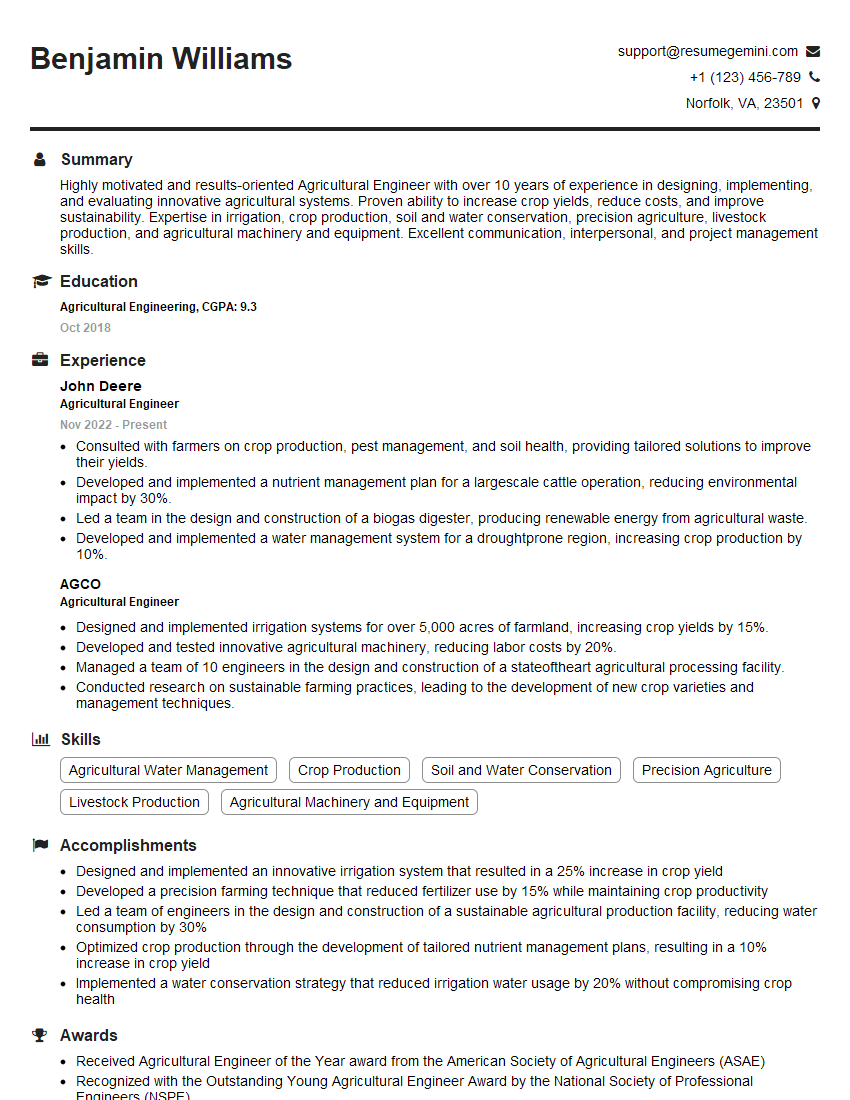
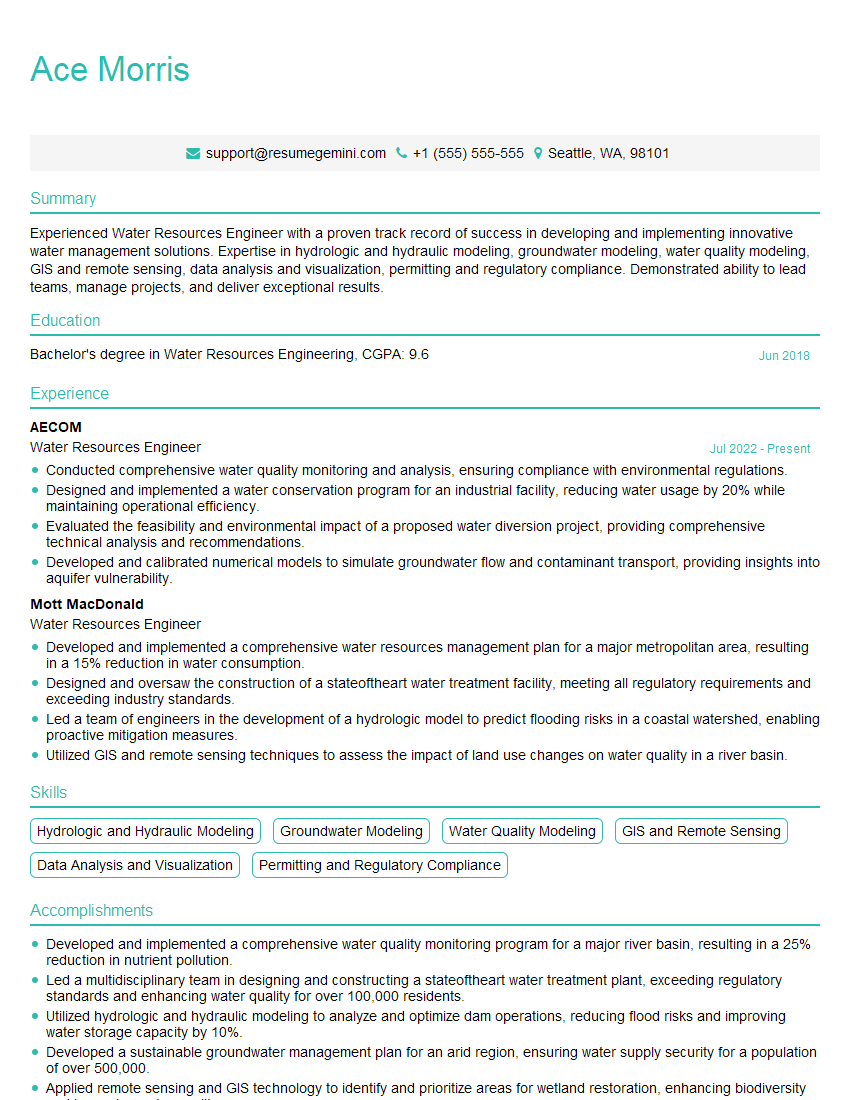
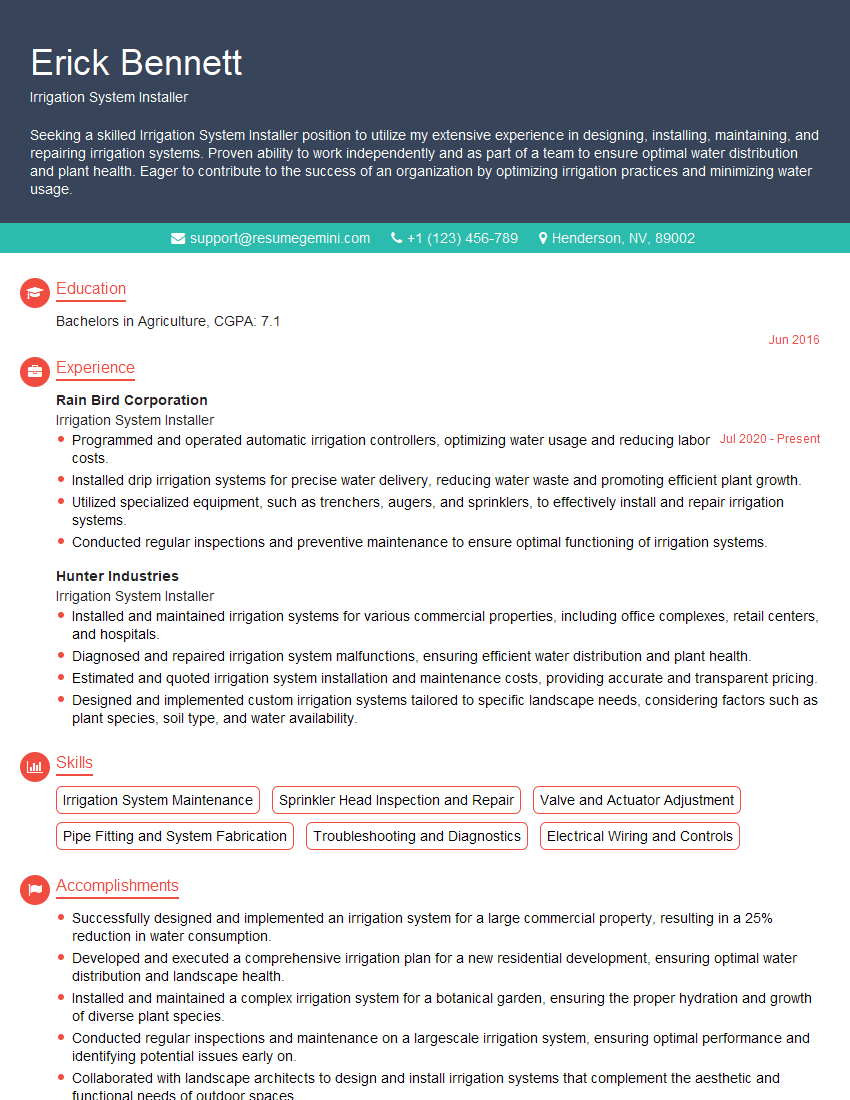
Mastering Gravity Flow Irrigation System Design is crucial for advancing your career in agricultural engineering, water resource management, or related fields. A strong understanding of these principles will significantly enhance your job prospects and open doors to exciting opportunities. To increase your chances of landing your dream job, focus on creating an ATS-friendly resume that showcases your skills and experience effectively. ResumeGemini is a trusted resource that can help you build a professional and impactful resume. We offer examples of resumes tailored to Gravity Flow Irrigation System Design to help you get started. Invest in crafting a compelling resume; it’s your first impression and a key factor in securing interviews.




Explore more articles
Users Rating of Our Blogs
Share Your Experience
We value your feedback! Please rate our content and share your thoughts (optional).
What Readers Say About Our Blog
Very informative content, great job.
good