Interviews are more than just a Q&A session—they’re a chance to prove your worth. This blog dives into essential Writing (Dialogue) interview questions and expert tips to help you align your answers with what hiring managers are looking for. Start preparing to shine!
Questions Asked in Writing (Dialogue) Interview
Q 1. Explain the importance of subtext in dialogue writing.
Subtext in dialogue is the unspoken meaning or implication behind the words spoken. It’s what the characters are *really* saying, even if they’re not explicitly stating it. Think of it as the iceberg – only a small part is visible (the literal words), while a much larger portion lies beneath the surface (the subtext).
Importance: Subtext adds layers of complexity and realism to dialogue. It allows characters to reveal their true feelings, motivations, and relationships without resorting to clunky exposition. It keeps the reader engaged, prompting them to actively participate in deciphering the meaning. A character saying "It's fine." with a tight jaw and averted gaze conveys much more than the literal meaning. The subtext might be anger, hurt, or resentment.
Example: Two friends arguing. One says, "I understand." The subtext, depending on tone and context, could range from genuine empathy to dismissive condescension. The reader interprets the subtext based on the context, character development, and the author’s subtle cues.
Q 2. How do you create believable and engaging dialogue for diverse characters?
Creating believable dialogue for diverse characters requires deep research and empathy. It’s about understanding different cultural backgrounds, social classes, ages, and individual personalities. Avoid stereotypes! Each character’s voice should be unique and authentic.
- Research: Immerse yourself in the world and culture of your characters. Listen to how people speak in real life, read literature and watch films featuring characters from diverse backgrounds.
- Distinct Voice: Give each character a unique vocabulary, sentence structure, and rhythm of speech. A street-smart teenager will speak differently than a university professor.
- Cultural Nuances: Incorporate subtle cultural references, idioms, and speech patterns that reflect the character’s background, but ensure these elements are not so obscure that they alienate the reader.
- Avoid Stereotypes: Don’t rely on tired stereotypes. Instead, create nuanced and complex characters with their own individual quirks and flaws.
Example: A character from a rural background might use more colloquialisms and simpler sentence structures compared to a character who grew up in a metropolitan area. A character who is highly educated might use more formal language and complex sentence constructions.
Q 3. Describe your process for writing realistic dialogue that avoids clichés.
Writing realistic dialogue that avoids clichés requires careful attention to detail and a willingness to experiment. My process involves several steps:
- Listen to Real Conversations: Pay close attention to how people actually speak – their hesitations, interruptions, and the way they naturally build upon each other’s statements. Avoid perfectly formed, grammatically correct sentences all the time; people use fillers, contractions and incomplete sentences.
- Focus on Subtext: Instead of explicitly stating information, let the subtext and the context of the situation reveal the character’s thoughts and feelings.
- Embrace Imperfection: Real conversations are messy and unpredictable. Don’t be afraid to include interruptions, false starts, and moments of awkward silence. Dialogue should feel natural, rather than forced or contrived.
- Read Aloud: Reading your dialogue aloud helps identify awkward phrasing or unnatural-sounding lines.
- Show, Don’t Tell: Instead of writing
"He was angry,"show his anger through his words, actions, and body language.
Example: Instead of "I love you," try something more nuanced like "I...I don't know what I'd do without you." This allows the emotion to be felt without being overly explicit, leaving space for the reader to interpret the subtext.
Q 4. How do you balance exposition with compelling dialogue?
Balancing exposition with compelling dialogue is a crucial aspect of narrative writing. Exposition (providing background information) should be woven organically into the dialogue, rather than presented as clunky info-dumps.
- Natural Integration: Don’t have characters suddenly start explaining the history of their family or the intricacies of a plot point. Instead, weave these details into the conversation naturally. A casual mention, a reminiscence triggered by an event, a discussion about a shared past – all can be used to integrate exposition.
- Character-Driven Exposition: Let characters reveal information about the world and the story through their conversations. This makes the exposition feel less like a lecture and more like a genuine interaction.
- Show, Don’t Tell (Again!): Use actions and reactions to demonstrate plot details, instead of relying on characters stating everything explicitly.
- Strategic Placement: Place exposition within scenes where it feels natural and relevant to the conversation, making it an integral part of the scene, not a separate entity.
Example: Instead of stating, "The war ended ten years ago and caused widespread devastation," have two characters discuss the lasting effects of the war on their lives and their community during a normal conversation. Their conversation indirectly reveals the necessary background information.
Q 5. How do you ensure your dialogue reveals character without being overly expository?
Revealing character through dialogue is far more effective than explicitly stating their traits. The key is to *show*, not *tell*.
- Word Choice: The words a character uses reveal their education, social class, and personality. A character’s vocabulary, slang, and grammatical style are all indicators of who they are.
- Speech Patterns: Does the character interrupt frequently? Are they verbose or concise? Do they hesitate or speak fluently? These patterns reveal much about their personality and their way of interacting with the world.
- Reactions and Responses: How does a character respond to other characters’ words and actions? Do they get easily frustrated, remain calm, or become defensive? Their reactions unveil their personality and values.
- Subtext and Body Language (Implied): Even though dialogue focuses on words, remember to describe the character’s nonverbal cues. A character’s tone, pauses, and even body language (described narratively) can significantly augment what is said.
Example: Instead of writing "John was a shy person," show his shyness through his hesitant speech, his tendency to avoid eye contact, and his brief, quiet responses.
Q 6. What techniques do you use to create a specific tone or mood through dialogue?
Creating a specific tone or mood through dialogue relies on several techniques:
- Sentence Structure and Length: Short, choppy sentences create a sense of urgency or tension, while longer, more complex sentences can convey a calmer, more contemplative mood.
- Vocabulary: The use of formal or informal language, technical jargon, or evocative imagery can greatly impact the overall tone.
- Figurative Language: Metaphors, similes, and other figures of speech add richness and depth to the dialogue, setting the emotional context.
- Dialogue Tags: While overusing dialogue tags can disrupt the flow, choosing the right tag (e.g., whispered, shouted, hissed, murmured) can significantly affect the tone and mood.
- Pacing and Rhythm: Fast-paced dialogue creates a sense of excitement, whereas slower, more deliberate dialogue can convey suspense or introspection.
Example: "Get out!" (shouted) creates a different tone than "Please, leave." (whispered). The choice of words and delivery method sets the specific mood and tone.
Q 7. How do you handle dialogue in different narrative structures (e.g., first-person, third-person)?
Handling dialogue in different narrative structures affects how you present the character’s thoughts and internal monologues alongside the dialogue.
- First-Person: The narrator’s voice is directly integrated into the dialogue. You can easily access the character’s thoughts and feelings, often blending them seamlessly with the spoken words. This can lead to stream-of-consciousness styles or inner reflections alongside external conversation.
- Third-Person Limited: You have access to one character’s thoughts and feelings, allowing you to incorporate their internal reactions to the dialogue. This can be shown through brief descriptions after dialogue or subtle shifts in the narrative voice.
- Third-Person Omniscient: You have access to the thoughts and feelings of multiple characters, enriching the dialogue by revealing what each character is thinking and feeling simultaneously. This allows for greater complexity, but requires careful management to avoid confusion.
Example:
First-Person: "I don't know what to say," I mumbled, my heart pounding. He just stared at me, and I knew, even before he spoke, he was angry.
Third-Person Limited: "I don't know what to say," she mumbled, her heart pounding. He just stared at her. She felt a wave of panic wash over her; she knew she'd made a mistake.
Third-Person Omniscient: "I don't know what to say," she mumbled, her heart pounding. He stared at her, his anger simmering beneath his controlled expression. He was disappointed, but more than that, he felt betrayed.
Q 8. Explain your understanding of pacing in dialogue and how to control it.
Pacing in dialogue refers to the speed and rhythm at which the conversation unfolds. It’s crucial for controlling the reader’s or viewer’s emotional response and maintaining their engagement. Fast pacing creates excitement and urgency, while slow pacing allows for introspection and character development. You control pacing through several techniques:
- Sentence length and structure: Short, sharp sentences create fast pacing, whereas long, complex sentences slow it down.
“Get out!”versus“I think it’s probably time for you to leave, considering the circumstances.” - Number of speakers: Rapid exchanges between multiple characters create a sense of energy, while dialogue dominated by a single character can feel more reflective and deliberate.
- Action and description: Interspersing dialogue with action beats and descriptive passages allows you to control the flow and prevent the conversation from feeling stagnant.
- Use of pauses and silences: Ellipses (…), dashes (—), and descriptions of characters’ hesitations or silences can dramatically alter pacing, suggesting tension, uncertainty, or emotional weight.
For example, a tense interrogation scene would benefit from rapid-fire dialogue and short sentences, while a romantic scene might employ longer, more lyrical exchanges interspersed with moments of silence.
Q 9. How do you write dialogue for different mediums (e.g., film, video games, novels)?
Dialogue writing varies across mediums due to differences in audience engagement and storytelling techniques.
- Film: Dialogue in film needs to be concise and impactful, often serving to advance the plot or reveal character. It prioritizes visual storytelling; the dialogue supports the visuals, not the other way around. Long, exposition-heavy monologues are generally avoided unless serving a specific dramatic purpose.
- Video Games: Video game dialogue often needs to be adaptable to player choices, branching into multiple conversational paths. It must be engaging, but also clear and easy to understand amidst other gameplay elements. The writing needs to work seamlessly with the game’s mechanics and narrative structure.
- Novels: Novels afford more freedom. Authors can employ longer, more descriptive passages of dialogue, explore nuanced internal thoughts through internal monologue, and use language more creatively. The pacing and style of dialogue can vary widely, depending on the genre and author’s preferences.
The key difference lies in the balance between showing and telling. In film, showing through visuals is paramount; in novels, the writer can tell through narrative voice and internal thoughts. Video games strike a balance between both.
Q 10. Describe your process for editing and revising dialogue.
My dialogue editing process involves several iterative steps:
- First Pass: I focus on clarity, ensuring each line serves a purpose and the conversation flows logically. I check for consistency in character voice and tone.
- Second Pass: I evaluate pacing and rhythm, making adjustments to sentence length and structure. I look for opportunities to add tension or heighten emotion through carefully placed pauses or actions.
- Third Pass: This is where I focus on the nuances of language. I refine the word choice, ensuring it’s authentic to the characters and avoids clichés. I check for authenticity and believability.
- Feedback and Revision: I seek feedback from beta readers or colleagues, paying close attention to their observations regarding dialogue’s impact and believability. I revise based on their input, often iterating through this process multiple times.
I also frequently read my dialogue aloud to catch awkward phrasing or unnatural rhythms. This helps me assess the flow and identify areas that need improvement.
Q 11. How do you incorporate conflict and tension into dialogue?
Conflict and tension in dialogue are essential for keeping the reader or viewer engaged. You can incorporate them by:
- Creating opposing viewpoints: Characters should have disagreements, conflicting goals, or differing perspectives on key issues. This creates immediate friction.
- Raising the stakes: The consequences of the conversation should be clear; characters should be fighting for something important to them. This increases tension.
- Using subtext: What characters don’t say can be just as impactful as what they do say. Subtext creates layers of meaning and unspoken conflict.
- Employing rhetorical questions: These can be used to challenge characters, highlight vulnerabilities, or create a sense of uncertainty.
- Building toward a climax: The conversation shouldn’t be static; the conflict should escalate to a point of resolution or further complication.
For example, a scene where two business partners argue over the future of their company, with the potential loss of everything hanging in the balance, would naturally incorporate conflict and tension.
Q 12. How do you write dialogue that is both believable and impactful?
Writing believable and impactful dialogue requires a deep understanding of your characters and their motivations.
- Character voice: Each character should have a distinct way of speaking, reflecting their personality, background, and education. Avoid making all your characters sound alike.
- Subtext and motivation: What a character says is often less important than why they say it. Explore their unspoken desires, fears, and anxieties through their dialogue.
- Naturalistic language: Avoid overly formal or artificial language. Use contractions, colloquialisms, and interruptions to create a sense of realism. Think about how people actually speak.
- Show, don’t tell: Let the dialogue reveal character traits and relationships, rather than explicitly stating them.
- Emotional resonance: The dialogue should evoke emotional responses in the reader or viewer. It should be memorable and impactful, conveying emotions effectively.
A good example is a scene in which a seemingly casual conversation between two friends reveals a deeper underlying conflict or a hidden secret through carefully chosen words and subtle nonverbal cues.
Q 13. Explain your approach to using dialects or accents in dialogue.
Using dialects or accents in dialogue requires careful consideration and execution. Overuse can be distracting and even offensive. Here’s my approach:
- Research and Authenticity: Thoroughly research the dialect or accent you want to use, ensuring accuracy and avoiding stereotypes. Listen to recordings of native speakers to get a feel for the nuances.
- Subtlety and Nuance: Avoid over-the-top portrayals. Focus on subtle linguistic features that suggest the dialect without being overwhelming. A few key words or phrases can be more effective than a complete transformation of speech.
- Context and Character: The dialect should be appropriate to the character’s background and location. It needs to fit within the narrative and enhance the story.
- Accessibility: Consider your audience’s understanding. If the dialect is too obscure, it might hinder comprehension. Try to strike a balance between authenticity and accessibility.
- Avoid Stereotypes: Be sensitive to the potential for perpetuating harmful stereotypes. Ensure your portrayal is respectful and avoids negative caricatures.
If unsure, err on the side of caution. A subtle suggestion is often more effective than a full-fledged dialect imitation.
Q 14. How do you ensure your dialogue flows naturally and avoids awkward phrasing?
Ensuring natural dialogue flow requires attention to several aspects:
- Vary sentence structure and length: Avoid monotony by using a mix of short and long sentences, simple and complex structures.
- Incorporate interruptions and overlaps: People don’t always speak in perfectly formed sentences. Allow for interruptions, overlaps, and trailing thoughts to make the conversation more realistic.
- Use contractions and colloquialisms: This adds informality and makes the dialogue sound more natural. Avoid overly formal language.
- Read aloud: Reading your dialogue aloud helps you identify awkward phrasing, unnatural rhythms, or repetitive sentence patterns.
- Show character personalities through speech: Each character should have a distinct way of speaking, reflecting their background, personality, and education.
- Use action beats: Intersperse dialogue with action and description to break up long stretches of conversation and provide visual context.
By paying close attention to these aspects, you can create dialogue that feels effortless and engaging, avoiding any awkwardness that can break the reader’s immersion.
Q 15. How do you incorporate humor effectively into dialogue?
Effective humor in dialogue hinges on understanding your characters and your audience. It’s not about forcing jokes, but weaving wit and humor into their natural speech patterns and interactions. Think about the types of humor that resonate: witty remarks, ironic observations, situational comedy, or even slapstick, depending on your genre and characters.
- Subtlety is key: A well-placed sarcastic comment can be far more effective than a broad, obvious joke.
- Character consistency: Humor should align with a character’s personality. A dry, sarcastic character wouldn’t suddenly tell knock-knock jokes.
- Context is crucial: A joke that works in one scene might fall flat in another. Make sure the humor fits the overall tone and pacing of your story.
Example: Instead of writing, “He told a hilarious joke,” try something like, “‘Did you hear about the restaurant on the moon? I heard the food was good but it had no atmosphere,’ he quipped, a smirk playing on his lips.” This shows, rather than tells, the humor.
Career Expert Tips:
- Ace those interviews! Prepare effectively by reviewing the Top 50 Most Common Interview Questions on ResumeGemini.
- Navigate your job search with confidence! Explore a wide range of Career Tips on ResumeGemini. Learn about common challenges and recommendations to overcome them.
- Craft the perfect resume! Master the Art of Resume Writing with ResumeGemini’s guide. Showcase your unique qualifications and achievements effectively.
- Don’t miss out on holiday savings! Build your dream resume with ResumeGemini’s ATS optimized templates.
Q 16. How do you create memorable and quotable dialogue?
Memorable dialogue often stems from clever wordplay, insightful observations, and strong emotional resonance. Quotable lines are often concise, impactful, and reflective of character traits or central themes.
- Use strong verbs and vivid language: Avoid clichés and overly simplistic phrasing. Choose words that create images and evoke emotion.
- Focus on subtext: What is unsaid can be just as powerful as what is said. Let the reader infer meaning from the characters’ tone, body language, and pauses.
- Embrace conflict and tension: Dialogue that reveals character flaws or underlying conflicts is inherently more engaging.
- Employ literary devices: Metaphors, similes, and other figurative language can add depth and memorability.
Example: Instead of “I’m angry,” try something like, “My blood’s boiling hotter than a dragon’s breath.” This is more evocative and memorable.
Q 17. How do you handle dialogue with multiple characters?
Managing dialogue with multiple characters requires careful planning and execution. You need to differentiate voices, avoid confusion, and ensure each character has a distinct role in the conversation.
- Distinct voices: Give each character a unique way of speaking – vocabulary, sentence structure, accent, etc.
- Tagging dialogue effectively: Use character names sparingly; overuse can disrupt the flow. Vary the placement of tags (e.g., before, after, or within dialogue). Use action beats to break up long stretches of dialogue.
- Establish clear relationships: The way characters speak to each other reveals their relationships. A boss will speak differently to their employee than they will to their friend.
- Avoid echo chambers: Don’t have characters repeatedly saying the same thing.
Example: Instead of: “John said, ‘It’s raining.’ Mary said, ‘It’s raining.’ Peter said, ‘It’s raining.'” Try: “John shivered, pulling his coat tighter. “Looks like rain,” he muttered. Mary nodded, her gaze fixed on the darkening sky. Peter, ever the optimist, chirped, “Perfect weather for a hot chocolate!”
Q 18. How do you balance dialogue with action and description?
The ideal balance between dialogue, action, and description is crucial for pacing and engagement. Too much dialogue can become tedious; too little can leave the reader feeling lost.
- Use action beats: Integrate small actions within dialogue to break it up and provide visual context. (e.g., “‘It’s not true,’ she whispered, her eyes darting nervously around the room.”)
- Strategic description: Use description to set the scene, establish atmosphere, and reveal character. But keep it concise and relevant to the dialogue.
- Vary the rhythm: Alternate between dialogue-heavy scenes and scenes with more action and description to maintain reader interest.
Example: Instead of a page of pure dialogue, break it up with descriptions of the characters’ expressions, their surroundings, or actions they take during the conversation.
Q 19. How do you ensure your dialogue avoids information dumping?
Information dumping, where characters explain vast amounts of backstory or exposition through dialogue, is a common pitfall. Readers want to discover information organically, not have it lectured to them.
- Subtle revelation: Weave information into the dialogue naturally. Let characters reveal details through their conversations, actions, and reactions.
- Show, don’t tell: Use action and description to convey information instead of relying solely on expositional dialogue.
- Use flashbacks sparingly: If necessary, use flashbacks or other narrative techniques to provide backstory, but keep them concise and focused.
- Break up information: Spread important information across multiple conversations or scenes to avoid overwhelming the reader.
Example: Instead of “As you know, my grandfather was a famous pirate who hid his treasure on a deserted island…,” subtly reveal the pirate’s legacy through mentions of a particular sword, a family heirloom map, or a mysterious old chest in the attic.
Q 20. Describe your experience writing dialogue for a specific genre (e.g., thriller, comedy, romance).
I have extensive experience writing dialogue for thrillers. The key is creating tension and suspense through sharp, concise exchanges. Dialogue needs to propel the plot forward and reveal crucial information piecemeal. Characters should be under pressure, their words reflecting their emotional states and the danger they face.
- Short, impactful sentences: Mimic the urgency and intensity of a thriller.
- Subtext and implication: Leave some things unsaid to build suspense.
- Use of silences: Pauses can be more effective than words in creating tension.
- Dialogue that reveals character under stress: How characters speak when their lives are on the line reveals their true selves.
Example: Instead of, “The killer is coming!” a thriller might use, “‘He’s here,’ she whispered, her hand trembling on the phone. Silence. Then a gasp.” This is far more effective in conveying tension and fear.
Q 21. How do you adapt your dialogue style to meet the needs of a specific project?
Adapting dialogue style depends heavily on the project’s genre, target audience, and overall tone. A children’s book requires simpler language and a lighter tone than a legal thriller.
- Research the genre: Analyze successful works in the chosen genre to understand typical dialogue styles.
- Consider the audience: Tailor your language and vocabulary to suit the reading level and interests of your target audience.
- Establish the tone: Determine whether the tone is serious, humorous, romantic, dramatic, etc., and adjust your word choice, sentence structure, and pacing accordingly.
- Be flexible: Be prepared to experiment and revise your dialogue to ensure it aligns with the project’s specific needs.
Example: If writing a historical fiction novel, you might adopt a more formal and less colloquial style than if you’re writing a contemporary young adult novel.
Q 22. How do you incorporate foreshadowing or hints into dialogue?
Foreshadowing in dialogue subtly hints at future events without explicitly revealing them. It creates intrigue and keeps the reader engaged. Think of it like dropping breadcrumbs along a trail. You can incorporate foreshadowing through seemingly insignificant comments, veiled threats, or recurring motifs within the conversation. For example, a character casually mentioning a ‘storm brewing’ could foreshadow a conflict later on. Another approach is to have a character express a worry or fear that directly relates to a later plot point. The key is to make the foreshadowing subtle enough to avoid being obvious but clear enough to be noticeable upon rereading or reflection.
Example: Instead of saying, “The villain will attack tomorrow,” try, “I’ve got a bad feeling about tomorrow… something big is coming.” This creates a sense of unease and subtly hints at an impending threat.
Q 23. How do you handle dialogue involving emotionally charged scenes?
Emotionally charged scenes require careful handling of dialogue. Overly dramatic or unrealistic dialogue can feel forced. Instead, focus on conveying emotion through subtext, pauses, broken sentences, and choice of words. Think about how real people react in intense situations – they might stammer, raise their voice, or become unusually quiet. Incorporate these nuances into your dialogue. Showing, not telling, is crucial. Instead of stating “She was angry,” portray her anger through her words and actions.
Example: Instead of: “I’m so incredibly furious with you!” try: “(Voice trembling) You… you did this? After everything?” This conveys the anger more effectively through the character’s tone and broken sentence structure.
Another important aspect is to avoid info-dumping during emotionally charged moments. The focus should be on the emotional experience and the characters’ reactions rather than plot exposition.
Q 24. How do you use dialogue to build suspense or mystery?
Dialogue can build suspense and mystery through withholding information, using ambiguity, and creating a sense of unease. This can be achieved through cryptic statements, red herrings, and contrasting perspectives. The characters’ dialogue should reveal just enough to keep the reader hooked while still leaving crucial details hidden.
Example: Instead of a character outright saying, “The killer is John,” create a scene where characters discuss suspicious behaviors observed in John, leaving the reader to draw their own conclusions (at least for a time).
Another strategy is to use dialogue to introduce seemingly unrelated details that later become crucial plot points. This creates a sense of mystery and encourages rereading. The use of ambiguous phrasing is key here; avoid absolute statements, prefer hints, implications, and uncertainties to keep the reader guessing.
Q 25. How do you use dialogue to develop relationships between characters?
Dialogue is a powerful tool for developing character relationships. The way characters speak to each other, their word choices, and their conversational dynamics reveal a lot about their relationship. Consider the following:
- Power dynamics: Who interrupts whom? Who controls the conversation?
- Intimacy: Do they use nicknames or formal titles? What topics do they discuss openly? What topics are avoided?
- Conflict: How do they resolve disagreements? Are they confrontational or avoidant?
- Shared history: Referencing past events through dialogue reveals the depth and history of their relationships.
Example: Two characters using casual nicknames and making inside jokes reveal a close friendship. Conversely, formal language and avoidance of personal topics suggest a formal or strained relationship.
Q 26. Explain your understanding of the difference between speech and dialogue.
While the terms are often used interchangeably, there’s a subtle but important difference. Speech is simply the act of speaking, while dialogue is a specifically crafted conversation between two or more characters, intended to serve a narrative purpose. Speech is naturally occurring, while dialogue is constructed.
Think of it this way: a person’s speech might be rambling and disorganized. Dialogue, however, needs to be clear, concise, and serve the story. Speech is realistic; dialogue is stylized realism.
Q 27. How do you incorporate silence and pauses effectively in dialogue?
Silence and pauses are incredibly powerful tools in dialogue, often more effective than words themselves. They can convey tension, contemplation, awkwardness, or even agreement. They can be used to build suspense or emphasize a point. Don’t be afraid to use ellipses (…) or descriptions of character reactions to show these moments of silence.
Example: “…” (A long pause, filled with unspoken tension between the characters) or “He stared at her, his jaw clenched, before finally replying.” This shows the pause and the character’s internal reaction. Use descriptions to show what’s happening *during* the silence, enhancing its impact.
Q 28. How do you ensure your dialogue is accessible to a wide audience?
Accessibility means ensuring your dialogue is understandable and relatable to a wide audience, regardless of their background or level of education. Avoid using overly complex language, jargon, or slang that only a specific group would understand. Keep sentences relatively short and direct. Use clear and simple vocabulary and avoid overly technical or formal language unless it’s appropriate for your characters’ context. Consider dialect and cultural variations carefully, ensuring they don’t alienate or stereotype.
Example: Instead of saying, “The quotidian drudgery of his existence weighed heavily upon him,” try, “His job was boring and he was tired of it.” The second option is more accessible and easy to understand for a broader audience.
Key Topics to Learn for Writing (Dialogue) Interview
- Character Voice and Development: Understanding how to create distinct and believable voices for your characters, reflecting their personalities, backgrounds, and motivations. Practical application: Analyze successful dialogue in published works to identify techniques used.
- Subtext and Implication: Mastering the art of conveying meaning beyond the literal words spoken, creating layers of depth and intrigue. Practical application: Practice writing dialogue scenes where unspoken emotions or intentions drive the conflict.
- Dialogue Structure and Pacing: Understanding how to structure dialogue effectively to build tension, reveal character, and advance the plot at a satisfying pace. Practical application: Experiment with different dialogue formats, such as short, sharp exchanges versus long, flowing conversations.
- Show, Don’t Tell (in Dialogue): Using dialogue to reveal character traits and advance the plot indirectly, rather than through exposition. Practical application: Rewrite a scene where character traits are explicitly stated, transforming it to reveal those traits through dialogue.
- Realistic vs. Stylized Dialogue: Understanding the difference between realistic conversational dialogue and more stylized or dramatic dialogue. Practical application: Analyze examples of different writing styles and consider their suitability for various projects.
- Conflict and Resolution through Dialogue: Utilizing dialogue to create conflict and drive the plot forward, culminating in satisfying resolutions. Practical application: Create short dialogues illustrating different methods of resolving conflict.
- Editing and Revision of Dialogue: Recognizing and addressing common issues in dialogue, such as clichés, unnatural phrasing, and inconsistencies in character voice. Practical application: Practice editing and revising your own dialogue, focusing on clarity, flow, and believability.
Next Steps
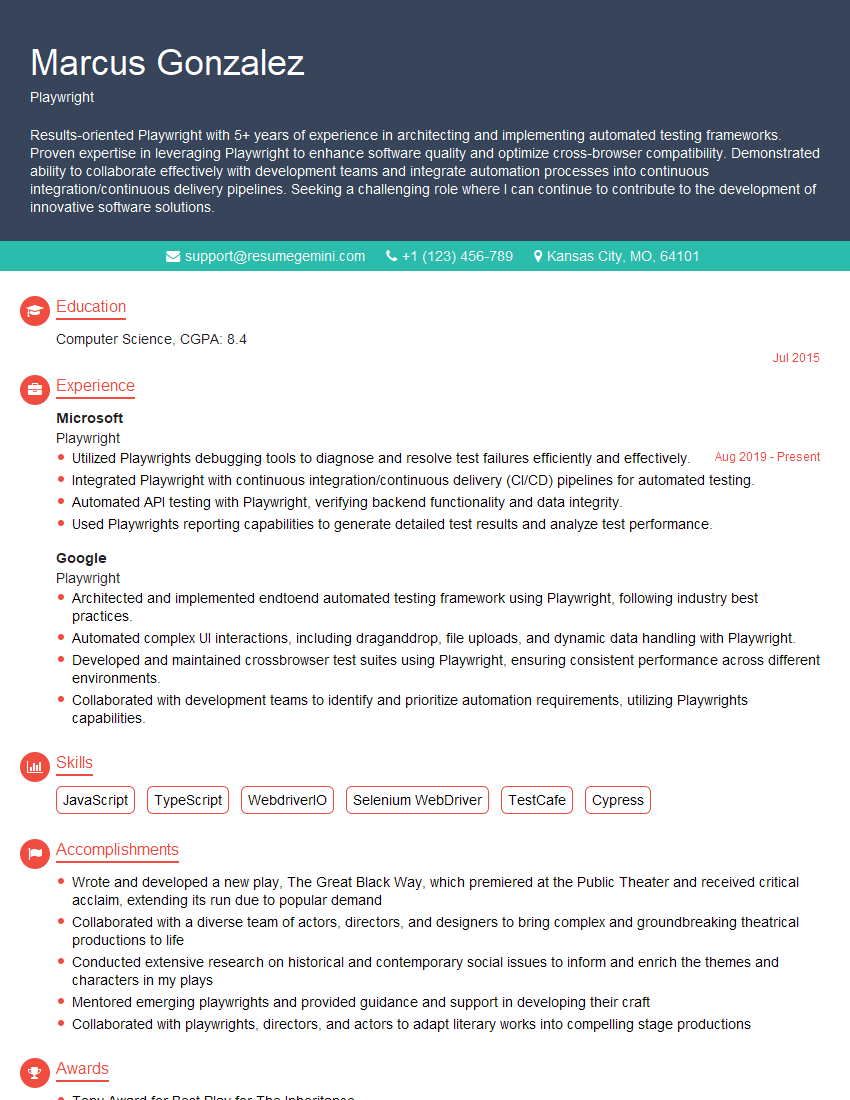
Mastering the art of writing compelling dialogue is crucial for success in many writing-related careers. A strong understanding of character, subtext, and pacing allows you to create engaging narratives and captivate your audience. To significantly enhance your job prospects, crafting an ATS-friendly resume is essential. ResumeGemini is a trusted resource to help you build a professional and effective resume that highlights your skills and experience. Examples of resumes tailored to Writing (Dialogue) positions are available to help you get started. Invest the time to perfect your resume – it’s your first impression on potential employers.
Explore more articles
Users Rating of Our Blogs
Share Your Experience
We value your feedback! Please rate our content and share your thoughts (optional).
What Readers Say About Our Blog
Very informative content, great job.
good