Every successful interview starts with knowing what to expect. In this blog, we’ll take you through the top Drawing (Line Art) interview questions, breaking them down with expert tips to help you deliver impactful answers. Step into your next interview fully prepared and ready to succeed.
Questions Asked in Drawing (Line Art) Interview
Q 1. What are your preferred line art techniques (e.g., hatching, cross-hatching, stippling)?
My preferred line art techniques revolve around effectively conveying form, volume, and texture. I frequently utilize hatching, cross-hatching, and stippling, each offering unique advantages. Hatching involves drawing parallel lines to create shading; cross-hatching overlays sets of parallel lines at angles to each other for deeper shadows. Stippling uses closely spaced dots to build up tone and texture. The choice depends on the desired effect. For instance, I might use hatching for a smooth gradient on a curved surface, cross-hatching for a textured surface like rough stone, and stippling for fine details like hair or fur. I also experiment with varying line density to achieve subtle variations in tone.
For example, imagine drawing a sphere. Using hatching, I could place closely spaced lines at the bottom, gradually spacing them out towards the top to simulate light and shadow. Cross-hatching would allow me to intensify the shading where needed, creating greater depth. Stippling would allow me to render delicate highlights or reflections on the sphere’s surface.
Q 2. Explain your process for creating a line art piece, from concept to final output.
My line art creation process is iterative and detail-oriented. It begins with a conceptual sketch, often done loosely on paper to explore composition and basic forms. I refine this sketch, clarifying lines and proportions. Then, I move to digital rendering, usually using a drawing tablet and software.
I start by establishing a strong underlying structure with clean lines. I use light sketches to place elements within the composition. I then gradually refine the details, building up layers of line work. This might involve creating different layers for each element or aspect (e.g., background, subject, and details). This layered approach provides flexibility during the process; I can adjust elements later without compromising other parts. Once the line work is complete, I often add a final layer of clean-up and adjustment before exporting the final image.
Consider a portrait. I’d begin with basic shapes for the head, face, and hair, progressively refining features like eyes, nose, and mouth. The final stages involve adjusting line weight, adding subtle details, and ensuring the overall composition is balanced and visually appealing.
Q 3. What software and tools are you proficient in for creating line art?
My proficiency spans both traditional and digital tools. Traditionally, I’m skilled with various pencils (graphite, charcoal), inks (pens, brushes), and fine-liner pens. Digitally, I’m proficient in Adobe Photoshop, Clip Studio Paint, and Procreate. These programs offer advanced tools for line control, layer management, and seamless integration with other digital art workflows.
Photoshop’s pressure sensitivity allows for nuanced line variations; Clip Studio Paint’s tools cater particularly well to comic art and manga-style line art; and Procreate offers a user-friendly interface ideal for quick sketches and detailed illustrations on mobile devices. The choice of software depends on the specific project’s needs and my preferred workflow.
Q 4. Describe your experience with different line weights and their application.
Line weight plays a crucial role in conveying depth, distance, and visual hierarchy within a piece. Thicker lines tend to draw attention, creating a sense of proximity and weight. Thinner lines recede into the background. This is an aspect of visual perception: thick lines seem closer, thin lines feel distant.
For example, in a landscape drawing, the foreground elements might be rendered with bolder lines, while those in the distance have thinner lines to emphasize perspective and depth. I utilize variations in line weight to guide the viewer’s eye, highlighting key features and creating a sense of flow within the piece. I often use a gradual shift in line weight rather than abrupt changes to maintain a sense of visual harmony.
Q 5. How do you approach creating consistent line quality in your work?
Maintaining consistent line quality is achieved through a combination of practice, technique, and tool selection. Using a steady hand is paramount; I often work slowly, focusing on smooth, controlled strokes. For digital work, consistent pressure on the stylus is key. I frequently zoom in on my work to ensure lines are clean and even.
Practice helps develop muscle memory and improves control. It’s also helpful to calibrate the pressure sensitivity of your stylus and the settings of your digital art software to match your preferred drawing style. Finally, selecting high-quality tools—pens with consistent ink flow, well-maintained brushes, or a responsive stylus—contributes significantly to consistent line quality.
Q 6. How do you handle complex perspectives and foreshortening in your line art?
Handling complex perspectives and foreshortening in line art requires a solid understanding of spatial relationships and geometric principles. I begin by constructing a foundational framework with simple shapes, accurately representing the object’s volume in three-dimensional space. Then, I overlay line work onto this structure to define forms and details.
For example, drawing a hand requires understanding how the fingers shorten and distort in perspective. I might start by sketching simple shapes like cylinders and ellipses to represent the individual fingers, then refine these shapes to reflect the foreshortening. Reference images and understanding basic perspective rules are invaluable for accurately depicting complex perspectives and foreshortening.
Q 7. Describe your workflow for incorporating color and texture (if applicable) in your line art.
My approach to incorporating color and texture in line art often involves a layered approach. Typically, I create the line art separately, keeping it clean and distinct from the coloring. I might use a separate layer for adding flat colors, then another layer for textures or shading. This non-destructive workflow allows for flexibility and easy adjustments.
For texture, I might use digital brushes that mimic various materials (e.g., rough paper, fabric, metal). I could also create custom textures in Photoshop or other software and apply them to the image. In some cases, I may use hatching and cross-hatching to suggest texture within the line art itself, supplementing it with color later. Color is added to enhance the mood and create visual interest. I consider how color can amplify form and shape, even in a line art piece. The layered approach ensures I can experiment with different coloring options without affecting the integrity of the line art.
Q 8. How do you ensure accuracy and detail in technical line art?
Accuracy and detail in technical line art hinge on a meticulous approach that combines precise observation with skilled execution. It’s less about artistic flair and more about faithfully representing the subject. Think of it like creating a technical drawing for engineering – every line needs to be intentional and in the correct place.
- Reference Material: I always start with high-quality reference images or models. For example, if I’m drawing a machine part, I’ll use detailed blueprints or even the physical object itself. This ensures the proportions and details are accurate.
- Construction Methods: I employ construction methods such as lightly sketching basic shapes (cubes, spheres, cylinders) to establish the underlying structure. This ‘skeleton’ acts as a foundation for more precise details, preventing distortion and ensuring accurate proportions.
- Tools and Techniques: The right tools are crucial. I’ll often use a combination of pencils (various hardnesses for different line weights), technical pens, and digital tools like vector graphics software. Digital tools allow for easy adjustments and corrections, vital for maintaining accuracy.
- Patience and Persistence: Achieving accuracy takes time and patience. I often refine my line art through multiple layers of sketching and inking, continuously evaluating and correcting any inaccuracies.
For instance, when drawing a detailed mechanical component, I might spend hours refining the curves and angles to ensure they perfectly match the blueprint, down to the millimeter.
Q 9. What is your approach to creating dynamic and expressive line work?
Dynamic and expressive line work goes beyond mere accuracy; it involves conveying movement, emotion, and energy through the lines themselves. This is achieved through variations in line weight, direction, and rhythm.
- Line Weight Variation: Thicker lines create a sense of weight and importance, while thinner lines suggest delicacy or distance. Varying the line weight along the contour of a form can imply three-dimensionality and movement.
- Line Direction: The direction of the lines guides the viewer’s eye and can suggest movement. Curved lines create a feeling of fluidity and grace, while sharp, angular lines convey energy and tension.
- Line Rhythm: Creating a consistent rhythm with your lines can create a sense of harmony and flow. Conversely, breaking the rhythm can add emphasis or surprise.
- Hatching and Cross-Hatching: These techniques involve using parallel lines or intersecting lines to create shading and texture, adding depth and dimensionality to the artwork. The spacing and direction of hatching and cross-hatching can dramatically influence the mood.
Imagine drawing a running figure: the lines depicting the legs and arms would be longer and more dynamic, with varying thicknesses to show muscle tension and movement, compared to the static lines used for the face.
Q 10. How do you balance simplicity and detail in your line art style?
Balancing simplicity and detail is a crucial aspect of effective line art. It’s about focusing on what’s essential while leaving out unnecessary clutter. Think of it as a process of editing and refining.
- Prioritize Key Features: Identify the most important aspects of your subject and focus your line work on those features. Less important details can be simplified or omitted altogether.
- Selective Detailing: Apply detail judiciously. Certain areas might warrant more intricate line work to create visual interest, while others can be left smoother or simpler.
- Suggestive Linework: Sometimes, implied detail is more effective than explicitly drawn detail. A few well-placed lines can suggest texture or form without needing to painstakingly render every element.
- Negative Space: Effective use of negative space (the empty areas around the subject) contributes significantly to both simplicity and clarity.
For example, when drawing a portrait, you might focus intricate details on the eyes and mouth – the most expressive features – while simplifying the hair and clothing with a few suggestive lines. This avoids making the drawing overly busy.
Q 11. Explain your understanding of anatomical proportions and figure drawing in relation to line art.
Understanding anatomical proportions and figure drawing is fundamental, even when creating stylized line art. While you may not draw anatomically perfect figures, a solid grasp of anatomy informs your artistic choices and allows for more believable and expressive poses and movements.
- Proportions: Knowing the average ratios of body parts (head-to-body ratio, limb lengths, etc.) helps create believable figures, even if you exaggerate them for stylistic effect.
- Musculature and Bone Structure: Understanding underlying musculature and bone structure helps you draw more convincing forms, even if the details aren’t explicitly shown. It’s the foundation that adds naturalness to your poses.
- Gesture and Pose: Solid anatomical knowledge helps capture the essence of a pose or gesture, making the figure look natural and dynamic. A strong understanding of how the body moves affects your choice of lines and their flow.
- Stylization: Even in highly stylized work, anatomical knowledge allows you to purposefully deviate from realism in a way that is believable and avoids anatomical errors that look awkward or off.
For instance, even in a cartoon style, understanding the ribcage and spine will help correctly position and draw arms and torso for believable poses. Even exaggerated character designs benefit from a solid base of understanding correct human proportions.
Q 12. What strategies do you use to effectively communicate emotion and mood through line art?
Communicating emotion and mood through line art is achieved primarily through line quality, composition, and subject matter.
- Line Quality: Sharp, angular lines can convey aggression or tension, while soft, curved lines suggest calmness or serenity. The thickness and weight of lines also matter. Heavy, dark lines convey strength or seriousness, while light, thin lines might suggest fragility or sadness.
- Composition: The arrangement of elements within the artwork influences mood. A chaotic composition might evoke anxiety, whereas a balanced composition can feel more peaceful. The placement of the subject within the frame also has a significant impact.
- Subject Matter: The choice of subject matter itself inherently carries emotional weight. A weeping figure evokes sadness, while a triumphant pose conveys joy. The details and the style you choose to depict your subject can enhance or contradict the primary emotion.
For example, drawing a character with sharp, jagged lines, hunched over with dark shading, will instantly communicate stress and anxiety much more effectively than the same character with soft, gentle lines and an open posture.
Q 13. Describe your experience with creating line art for different mediums (e.g., print, web, animation).
My experience spans various mediums, each with its own unique considerations for line art creation.
- Print: Line art for print often requires higher resolution and attention to detail to ensure the lines remain crisp and clear at the final printed size. Line weight needs to be carefully considered to account for potential bleed and printer limitations. I often work with vector graphics software for its scalability and ability to produce clean lines.
- Web: Web-based line art usually necessitates optimization for screen display. This often involves creating smaller file sizes without compromising visual quality. Using vector formats like SVG is beneficial, as they scale without pixelation. Additionally, considerations for color palettes and screen resolution become crucial.
- Animation: Line art for animation requires understanding of the animation process. The style must suit the frame rate and workflow, so efficient linework is key. The lines often need to be very clear and well-defined to allow for easy animation and avoid visual inconsistencies.
For instance, the line weight and line style would be significantly different for an illustration in a children’s book (print) versus an animation for a video game (web/animation). Print requires sharper, cleaner lines for reproduction, while animation prioritizes efficient line work that maintains clarity and avoids unnecessary detail that could slow down the workflow.
Q 14. How do you manage revisions and feedback on your line art projects?
Managing revisions and feedback is a critical part of the professional line art process. Effective communication and a structured approach are crucial.
- Clear Communication: I ensure that the client’s initial brief and my interpretation are clear and aligned. I actively seek clarification on any ambiguous aspects to prevent misunderstandings.
- Version Control: I meticulously track revisions and save multiple versions of my work. This allows for easy access to earlier versions, should changes need to be reverted.
- Organized Feedback: I encourage clients to provide feedback in a structured manner, perhaps using annotation tools or a detailed checklist. This ensures feedback is focused and actionable.
- Iterative Process: I view revisions as an iterative process of refinement. I actively incorporate feedback and re-evaluate the artwork, considering the overall goals.
- Professionalism: I maintain professionalism throughout the revision process, remaining responsive and ensuring a collaborative workflow.
For instance, if a client requests changes to the proportions of a character, I would create a new version reflecting the changes and clearly label it, allowing easy comparison with the previous iteration. This ensures transparency and efficient communication throughout the process.
Q 15. How familiar are you with industry-standard file formats for line art?
My familiarity with industry-standard file formats for line art is extensive. I routinely work with formats optimized for vector graphics, like .AI (Adobe Illustrator), .EPS (Encapsulated PostScript), and .SVG (Scalable Vector Graphics), which are crucial for maintaining crisp lines at any scale. For raster-based line art, I’m proficient with .PSD (Photoshop), .TIFF, and .PNG, choosing the appropriate format based on the project’s specific needs and final output destination. For example, .SVG is ideal for web applications due to its scalability and compatibility, while .AI provides the most flexibility for complex illustrations within Adobe’s Creative Suite. Understanding these nuances ensures seamless collaboration and optimal image quality.
Career Expert Tips:
- Ace those interviews! Prepare effectively by reviewing the Top 50 Most Common Interview Questions on ResumeGemini.
- Navigate your job search with confidence! Explore a wide range of Career Tips on ResumeGemini. Learn about common challenges and recommendations to overcome them.
- Craft the perfect resume! Master the Art of Resume Writing with ResumeGemini’s guide. Showcase your unique qualifications and achievements effectively.
- Don’t miss out on holiday savings! Build your dream resume with ResumeGemini’s ATS optimized templates.
Q 16. Explain your approach to managing deadlines and workloads in your line art work.
Managing deadlines and workloads effectively is paramount in line art. I utilize project management tools like Trello or Asana to break down large projects into smaller, manageable tasks. This allows for better time estimation and prevents feeling overwhelmed. I prioritize tasks based on urgency and importance, often employing the Eisenhower Matrix (urgent/important) to determine which tasks need immediate attention and which can be scheduled later. Regular self-assessments help me track progress and adjust my schedule as needed. For example, if I find a task is taking longer than anticipated, I’ll communicate proactively with clients and adjust the timeline accordingly. Open communication is key to avoiding last-minute rushes and ensuring high-quality work.
Q 17. Describe your experience with working collaboratively on line art projects.
Collaborative projects are a significant part of my experience. I thrive in team environments and have successfully collaborated on numerous line art projects, often involving other artists, designers, and writers. Effective communication, through regular check-ins, shared cloud-based files (like Google Drive or Dropbox), and version control systems (like Git for larger projects), is key to a smooth workflow. I am comfortable adapting my style to fit a cohesive project vision and openly contribute to brainstorming sessions, ensuring all team members feel heard and valued. For instance, on a recent project illustrating a children’s book, I worked closely with the writer to ensure the line art effectively conveyed the story’s tone and emotion.
Q 18. How do you address challenges in maintaining line consistency across large-scale projects?
Maintaining line consistency in large-scale projects requires meticulous planning and execution. I create a style guide at the outset, detailing line weight, style (e.g., clean, sketchy, textured), and overall aesthetic. Using consistent brushes and settings within my chosen software is crucial. Regular checks throughout the process, involving zoom-ins to scrutinize details, help identify any discrepancies. For exceptionally large projects, I might create master templates or use layers effectively to ensure uniformity. For instance, in a recent project involving a large, complex map, I created a template with preset line weights and styles, then replicated the template elements to maintain visual consistency across the entire map.
Q 19. How do you stay current with trends and advancements in line art techniques and technology?
Staying updated is crucial in any creative field. I actively follow prominent artists and illustrators on platforms like ArtStation and Instagram to observe new styles and techniques. I regularly explore tutorials on YouTube and Skillshare, experimenting with new software features and brushes. Attending online workshops and conferences, and participating in online art communities allow me to learn from others and gain insights into current trends. For example, recently I explored the use of AI tools to aid in the creation of textures and patterns within my line art workflow, enhancing my efficiency and creative possibilities.
Q 20. How do you incorporate client feedback into your line art creation process?
Client feedback is integral to the success of any project. I encourage open communication throughout the creative process. I provide regular updates and solicit feedback at key milestones, using collaborative platforms that allow for easy annotation and comment directly on the artwork. I actively listen to client concerns, carefully consider their suggestions, and incorporate them where they enhance the final product, while explaining my rationale if adjustments aren’t feasible. A collaborative approach ensures client satisfaction and leads to better results. For example, in a logo design project, initial client feedback led to significant refinement, resulting in a logo that better reflected the client’s brand identity.
Q 21. What is your approach to solving problems during the line art creation process?
Problem-solving is a daily part of my workflow. I approach challenges systematically. First, I clearly define the problem – is it a technical issue, a stylistic concern, or a workflow bottleneck? Then, I explore potential solutions by researching online resources, experimenting with different techniques, or consulting with colleagues. If the problem persists, I break down the task into smaller components and address them individually. Persistence and a willingness to learn are crucial for overcoming obstacles and creating high-quality artwork. For example, I recently overcame a challenge with complex perspective by creating detailed sketches and using 3D modeling software as a reference before translating it into my final line art.
Q 22. Describe a time you had to overcome a technical challenge in your line art work.
One significant challenge I faced involved creating intricate line art for a children’s book illustration. The publisher required incredibly fine lines, many barely visible to the naked eye, to achieve a delicate, almost watercolor-like effect. My usual workflow using a standard drawing tablet proved insufficient for this level of detail. The lines often appeared blurry or pixelated when scaled up for print.
To overcome this, I experimented with different approaches. I started by increasing the resolution of my canvas significantly, working at a much higher DPI (dots per inch) than usual. This allowed me to create the fine details without losing clarity. I also shifted to a more precise pen tool, calibrated to my tablet for maximum sensitivity. Furthermore, I incorporated layers strategically to isolate specific elements and refine each line individually without compromising the others. The result was a successful project, demonstrating the importance of adaptability and experimentation in overcoming technical hurdles.
Q 23. How do you ensure your line art is suitable for different reproduction methods?
Ensuring line art’s suitability across different reproduction methods hinges on understanding the limitations and strengths of each process. For instance, line art intended for print needs high resolution (typically 300 DPI or higher) and vector formats (like .AI or .EPS) are generally preferred to maintain crispness even when scaled. In contrast, line art for digital use, such as web graphics or animation, can often utilize lower resolutions while still appearing sharp. Raster formats (like .PNG or .JPG) can be appropriate here.
I always consider the final output when creating my line art. If it’s for print, I focus on creating clean lines with minimal anti-aliasing, carefully designing for potential issues like halftoning. For digital use, I might employ a slightly softer line style or incorporate anti-aliasing techniques to ensure a smooth appearance on different screens. Essentially, it’s about using the right tools and technique for the intended medium.
Q 24. How do you adapt your line art style to different project requirements?
Adaptability is crucial in line art. A style perfect for a whimsical children’s book might be completely inappropriate for a technical manual. My approach involves understanding the project’s brief meticulously – its target audience, intended mood, and overall style guide.
- Style Guide Adherence: If a style guide is provided, I carefully study it, replicating the specified line weight, texture, and level of detail.
- Mood and Audience: For a children’s book, I might opt for playful, curved lines and simpler forms. A scientific illustration might require precise, straight lines and detailed anatomical accuracy.
- Experimentation and Refinement: I often create several test pieces to explore different approaches, experimenting with line weight variations, hatching techniques, and overall aesthetic, before settling on the most suitable style.
Ultimately, adapting my style is a process of careful observation, experimentation, and a willingness to embrace different creative directions.
Q 25. Describe your process for creating a line art portfolio to showcase your skills.
Building a strong line art portfolio involves careful selection and presentation of your best work. It’s not just about quantity, but quality and diversity.
- Curated Selection: I begin by selecting a range of pieces showcasing different styles, techniques, and subjects. This demonstrates versatility.
- High-Quality Images: Each piece should be presented as a high-resolution image, ideally in a consistent style and format.
- Organization and Presentation: I use a professional portfolio website or a PDF document that’s easy to navigate. Clear titles, descriptions, and possibly brief statements about the project’s purpose are beneficial.
- Personal Branding: The portfolio should reflect your personal style and brand, giving a clear idea of your expertise and values.
- Updates: Regular updates with new, high-quality work keep the portfolio fresh and showcases ongoing development.
My aim is to create a visually stunning and informative portfolio that communicates my skills clearly and effectively to potential clients.
Q 26. What is your understanding of copyright and licensing in the context of line art?
Copyright and licensing are vital aspects of line art. Copyright protection automatically exists as soon as a work is created, granting the creator exclusive rights to reproduce, distribute, and display their artwork. Licensing allows others to use the artwork under specific terms and conditions, with the creator retaining ownership.
Common licenses include:
- Exclusive License: Grants the licensee exclusive rights to use the artwork for a specified period or purpose.
- Non-Exclusive License: Allows the licensee to use the artwork, but the creator can still license it to others.
- Creative Commons Licenses: Offer a range of options, allowing creators to specify how their work can be used and shared.
Understanding these legal aspects is crucial for both creators and users to ensure fair use and avoid infringement. I always clearly define the licensing terms for my work and ensure clients understand the implications before any usage occurs.
Q 27. How do you create effective line art compositions?
Effective line art compositions use visual elements to guide the viewer’s eye and create a compelling image. Key principles include:
- Rule of Thirds: Placing key elements along imaginary lines that divide the image into thirds can create a more balanced and dynamic composition.
- Leading Lines: Lines within the artwork can lead the viewer’s eye towards the focal point.
- Balance and Symmetry: Balancing the visual weight of different elements can create harmony and visual interest.
- Negative Space: Using empty space effectively enhances the impact of the main subject.
- Focal Point: A clear focal point draws the viewer’s attention to the most important element.
I usually begin with thumbnail sketches to experiment with different compositions before refining my final artwork. Understanding these principles allows me to create visually engaging line art that effectively communicates its intended message.
Q 28. How do you maintain a balance between artistic expression and technical accuracy in your line art?
Balancing artistic expression and technical accuracy in line art is a constant interplay. Artistic expression involves conveying emotion, style, and personality through the lines. Technical accuracy involves ensuring lines are clean, consistent, and precisely rendered according to the subject’s characteristics.
Think of it like a tightrope walk. Too much emphasis on artistic flair can lead to sloppy lines and a lack of precision. Overemphasis on technical accuracy can result in stiff and lifeless artwork. The best results come from finding a harmonious blend.
My approach involves:
- Strong Foundation: I start with careful observation and sketching, creating a solid technical foundation.
- Intentional Linework: Every line is purposefully placed, contributing to both the technical accuracy and artistic expression.
- Refining and Editing: I don’t shy away from editing and refining my work, striving for a balance between artistic style and precise representation.
This careful balance is what elevates line art from simple technical drawings to powerful works of art.
Key Topics to Learn for Drawing (Line Art) Interview
- Line Quality and Variation: Understanding how different line weights, textures, and styles (e.g., hatching, cross-hatching) impact the overall effect of your artwork. Practical application: Analyze master works and identify how line is used to convey form, texture, and emotion.
- Perspective and Composition: Mastering one-point, two-point, and three-point perspective to create depth and realism. Practical application: Develop a series of sketches demonstrating your understanding of perspective principles in various compositions.
- Figure Drawing Fundamentals: Understanding human anatomy and its application in line art, including gesture drawing, construction, and proportion. Practical application: Practice drawing from life or reference images, focusing on capturing the essence of the form through line.
- Material and Technique: Explore various drawing mediums (e.g., pencil, charcoal, pen and ink) and their unique characteristics. Practical application: Experiment with different mediums and techniques to develop a versatile skillset. Consider the implications of your chosen medium for the desired outcome.
- Conceptualization and Storytelling: Develop your ability to translate ideas and concepts into compelling line art. Practical application: Create a series of drawings that tell a story or express a specific theme using line as the primary artistic element.
- Digital Line Art Tools and Techniques: If applicable, demonstrate proficiency in relevant software (e.g., Adobe Illustrator, Procreate) and digital drawing techniques. Practical application: Develop a portfolio showcasing your digital line art skills and workflow.
Next Steps
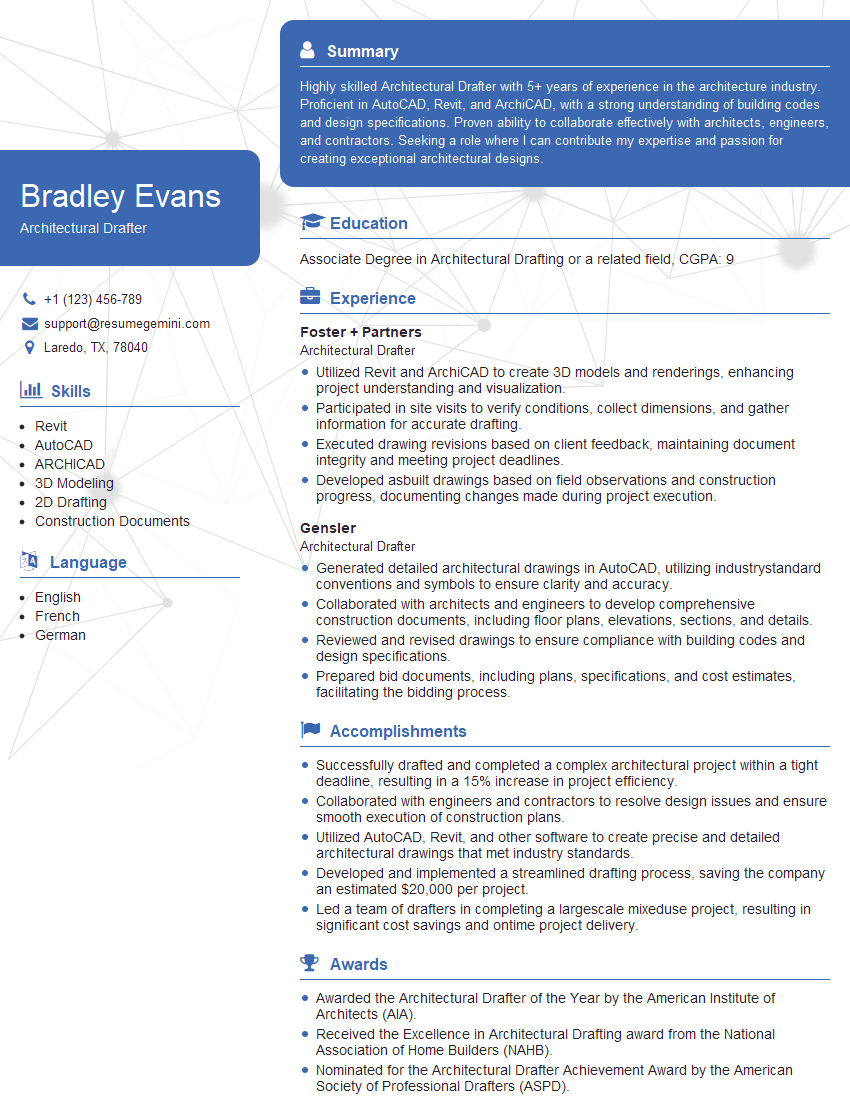
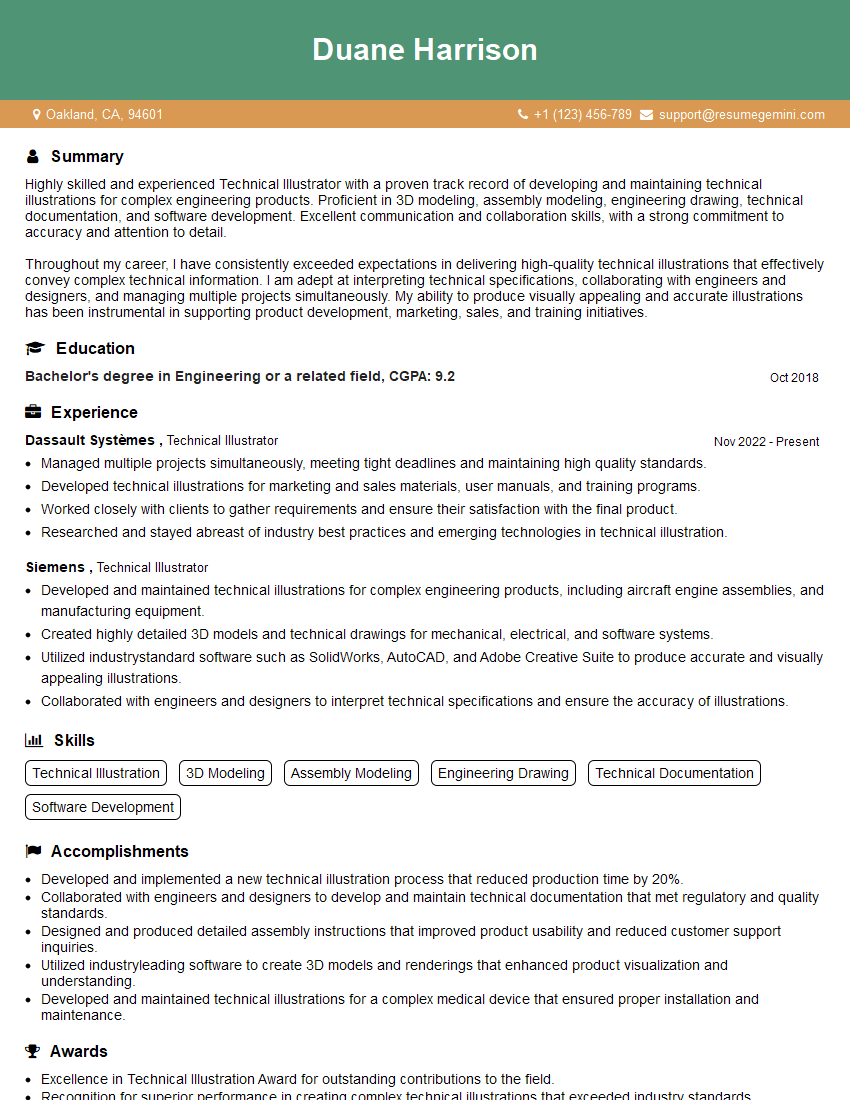
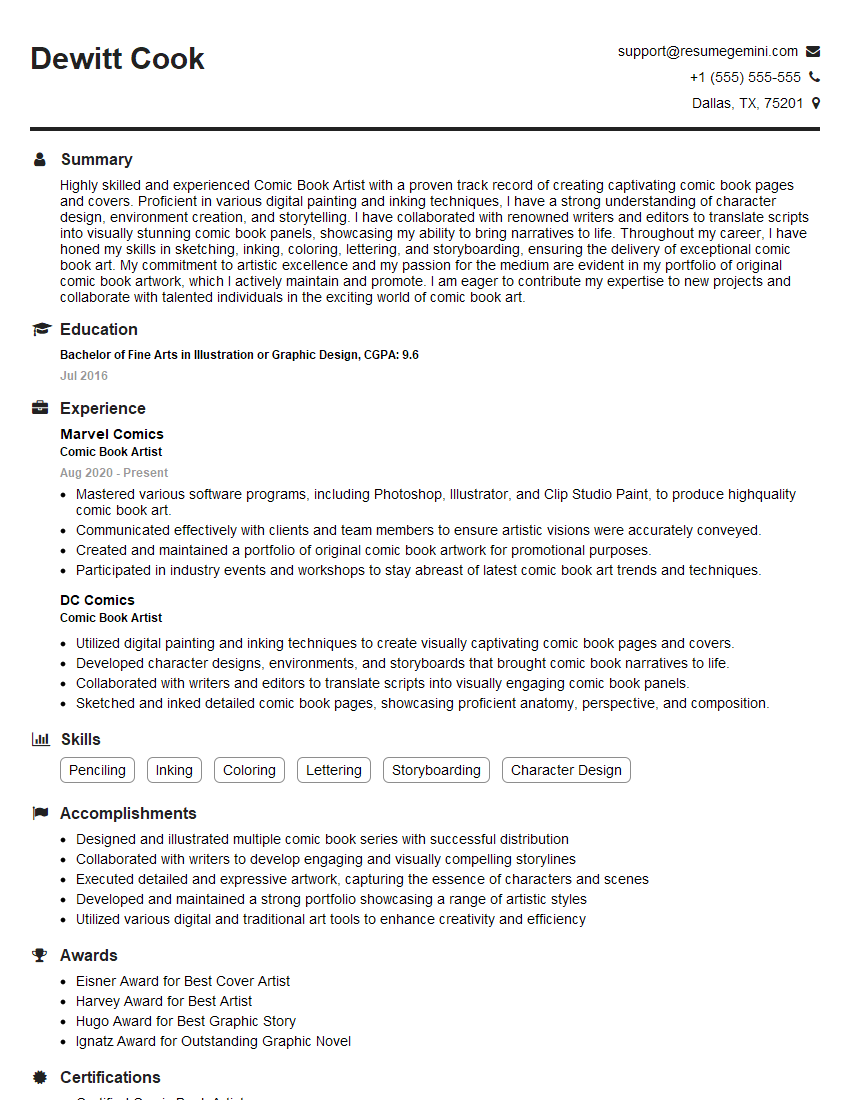
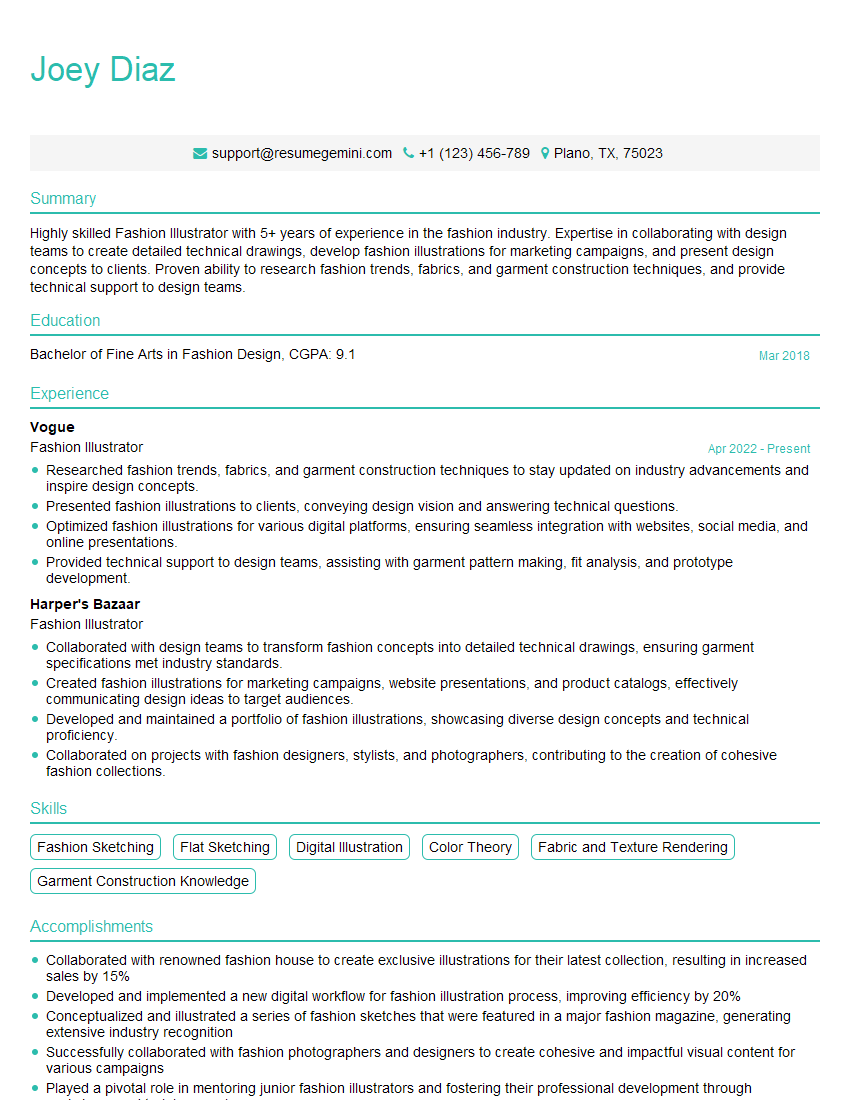
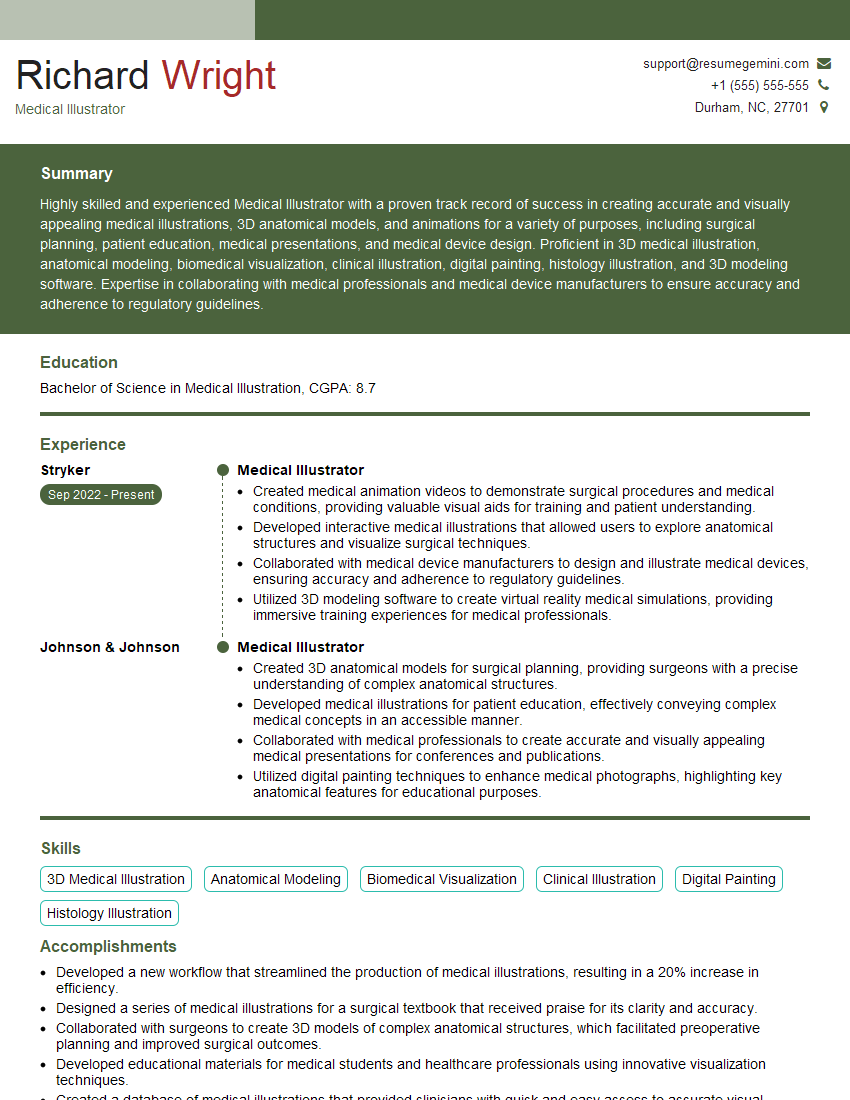
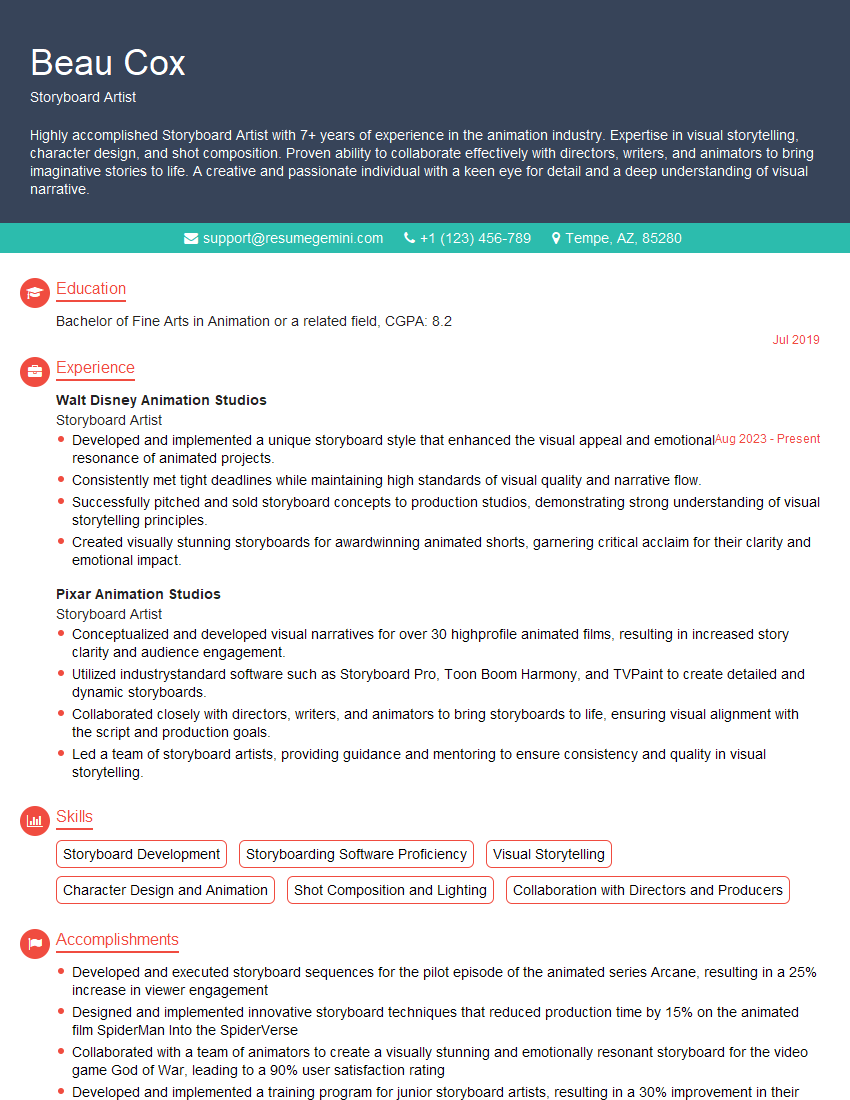
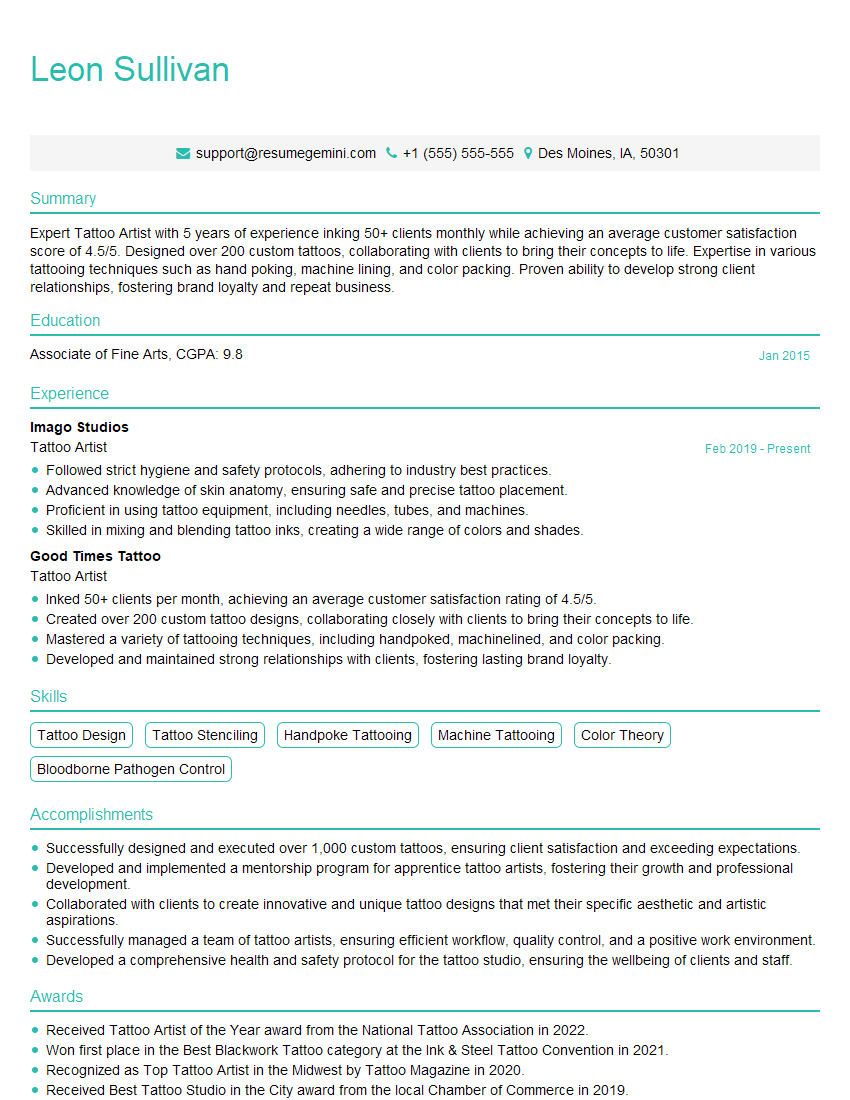
Mastering Drawing (Line Art) opens doors to diverse and exciting career paths, from illustration and animation to graphic design and concept art. A strong portfolio is essential, but showcasing your skills effectively requires a compelling resume. Creating an ATS-friendly resume is crucial for getting your application noticed. ResumeGemini is a trusted resource to help you build a professional and effective resume that highlights your unique talents. Examples of resumes tailored specifically to Drawing (Line Art) professionals are available to help guide you.
Explore more articles
Users Rating of Our Blogs
Share Your Experience
We value your feedback! Please rate our content and share your thoughts (optional).
What Readers Say About Our Blog
Very informative content, great job.
good