Feeling uncertain about what to expect in your upcoming interview? We’ve got you covered! This blog highlights the most important Work Plan Execution interview questions and provides actionable advice to help you stand out as the ideal candidate. Let’s pave the way for your success.
Questions Asked in Work Plan Execution Interview
Q 1. Describe your process for developing a detailed work plan.
Developing a detailed work plan involves a systematic approach to ensure clarity, efficiency, and success. It’s like creating a roadmap for a journey – you need to know your destination and the best route to get there.
- Define Objectives: Clearly articulate the goals and desired outcomes. What are we trying to achieve? For example, ‘Launch a new product by Q4’ is a good starting point, but needs more detail.
- Scope Definition: Identify all tasks required to achieve the objectives. Break down large tasks into smaller, manageable sub-tasks. For the product launch, this might include market research, design, development, testing, and marketing.
- Task Assignment: Assign responsibility for each sub-task to specific individuals or teams. This ensures accountability and avoids duplication of effort.
- Timeline & Dependencies: Estimate the time required for each task and establish dependencies between them (task A must be completed before task B can begin). Tools like Gantt charts are invaluable here.
- Resource Allocation: Identify and allocate necessary resources – people, budget, equipment, software – to each task. Consider potential constraints.
- Review & Refinement: The plan should be reviewed and refined by all stakeholders to ensure everyone is on the same page. This iterative process helps to identify potential issues early on.
For instance, in a recent software project, I used this process to develop a work plan that outlined the development stages, testing phases, and deployment schedule. This allowed the team to work collaboratively and efficiently, leading to on-time delivery.
Q 2. How do you prioritize tasks within a work plan?
Prioritizing tasks requires a strategic approach to ensure that the most important and urgent tasks are addressed first. I often use a combination of methods to prioritize tasks effectively.
- MoSCoW Method: This categorizes tasks into Must have, Should have, Could have, and Won’t have. This clearly defines priorities and helps manage scope creep.
- Eisenhower Matrix (Urgent/Important): This matrix helps to categorize tasks based on their urgency and importance, prioritizing those that are both urgent and important.
- Dependency Analysis: Prioritize tasks based on their dependencies. Tasks that are prerequisites for other tasks must be completed first.
- Value-Based Prioritization: Prioritize tasks based on their contribution to overall project goals. Tasks with the highest impact on the project’s success should be prioritized.
For example, in a marketing campaign, launching the main ad campaign (high impact, urgent) takes precedence over refining the social media strategy (important, but less urgent).
Q 3. What methods do you use to track progress against a work plan?
Tracking progress requires a combination of methods to provide a holistic view of the project’s health. Think of it like monitoring a patient’s vital signs – regular checks are crucial.
- Regular Status Meetings: Conduct regular meetings with the team to discuss progress, identify roadblocks, and adjust the plan as needed.
- Project Management Software: Utilize tools like Jira, Asana, or Monday.com to track task completion, monitor timelines, and visualize progress. These provide dashboards and reports for easy monitoring.
- Progress Reports: Generate regular progress reports to stakeholders, summarizing achievements, highlighting challenges, and forecasting future progress.
- Key Performance Indicators (KPIs): Define relevant KPIs to track the progress against critical project goals. For example, ‘Number of bugs fixed’ or ‘Percentage of features completed’.
In a past project, using a Kanban board within Jira allowed the team to visually track the workflow, identify bottlenecks, and ensure tasks moved smoothly through the development process.
Q 4. How do you handle unexpected delays or challenges during work plan execution?
Unexpected delays and challenges are inevitable in any project. The key is to have a plan in place to address them proactively and minimize their impact.
- Risk Assessment: Conduct a thorough risk assessment at the beginning of the project to identify potential challenges and develop mitigation strategies.
- Contingency Planning: Develop contingency plans to address potential delays or challenges. For example, having backup resources or alternative solutions ready.
- Communication: Open and transparent communication is crucial. Keep stakeholders informed of any delays or challenges and propose solutions.
- Problem Solving: Use problem-solving techniques to address challenges effectively. This may involve brainstorming, root cause analysis, or engaging subject matter experts.
- Replanning: If necessary, adjust the work plan to reflect the changes caused by the delay or challenge. This might involve prioritizing tasks differently or adjusting timelines.
For example, if a key supplier delays a crucial component, the contingency plan could involve using a secondary supplier or adjusting the timeline to accommodate the delay.
Q 5. Explain your experience with different project management methodologies (e.g., Agile, Waterfall).
I have extensive experience with both Agile and Waterfall methodologies, and I tailor my approach based on the specific project requirements.
- Waterfall: This is a linear approach where each phase (requirements, design, implementation, testing, deployment) must be completed before the next begins. It’s best suited for projects with well-defined requirements and minimal expected changes. I’ve used this in several large-scale infrastructure projects where changing requirements mid-stream would be highly disruptive.
- Agile (Scrum, Kanban): This iterative approach involves breaking down the project into smaller sprints or iterations, allowing for flexibility and adaptation to changing requirements. It’s ideal for projects with evolving requirements or where rapid feedback is crucial. I’ve successfully implemented Scrum in software development projects where adaptability and quick response to user feedback were paramount.
The choice between these methodologies depends on factors like project size, complexity, and client involvement. I am comfortable working within either framework, and I am also experienced in hybrid approaches combining elements of both.
Q 6. How do you measure the success of a work plan?
Measuring the success of a work plan involves assessing whether it achieved its intended objectives and assessing its overall effectiveness.
- On-Time Delivery: Was the project completed within the allocated time frame?
- Within Budget: Was the project completed within the allocated budget?
- Meeting Objectives: Did the project achieve its intended goals and objectives? This might involve qualitative and quantitative metrics.
- Stakeholder Satisfaction: Were stakeholders satisfied with the outcome of the project? Feedback surveys and interviews can help assess this.
- Lessons Learned: What were the key takeaways from the project execution? This helps improve future projects.
Success isn’t solely about delivering on time and within budget; it’s also about achieving the intended outcomes and learning from the process. In one project, we successfully delivered a mobile app on time and budget, but user feedback indicated some usability issues. While technically successful, we identified areas for improvement in future projects based on this feedback.
Q 7. What tools or software do you use for work plan management?
I utilize a variety of tools and software for work plan management, depending on project needs and team preferences.
- Microsoft Project: For detailed Gantt charts, resource allocation, and task scheduling, especially for larger, complex projects.
- Jira: For Agile project management, task tracking, bug tracking, and sprint management.
- Asana: A user-friendly tool for task management, collaboration, and progress tracking across teams.
- Monday.com: Another visual project management tool offering customizable dashboards and workflows.
- Google Sheets/Excel: Simple spreadsheets can be effective for smaller projects or for tracking specific metrics.
My choice depends on the project context and team familiarity. I’m proficient in using these tools to enhance collaboration, streamline workflows, and ensure effective project execution.
Q 8. Describe a time you had to revise a work plan due to changing circumstances.
Revising a work plan due to changing circumstances is a common occurrence in project management. It requires adaptability and a structured approach. Imagine you’re building a house, and suddenly a crucial building material becomes unavailable. You need to adjust your plan accordingly.
In one project, we were developing a new software feature with a deadline tied to a marketing campaign. Initially, the plan allocated two weeks for testing. However, midway through development, we discovered a critical bug that required more extensive testing than anticipated. To avoid missing the marketing launch, we held an emergency meeting with the team. We used a Gantt chart to visually assess the impact of the delay. We then identified tasks that could be streamlined or postponed (some marketing collateral could be released later, impacting campaign effectiveness marginally), re-allocated resources (adding a senior tester to the team), and ultimately compressed the remaining tasks without sacrificing quality. We documented these changes meticulously, communicated the revised timeline to stakeholders (see answer 2), and successfully launched the feature on time.
Q 9. How do you communicate work plan updates to stakeholders?
Communicating work plan updates effectively is vital for maintaining transparency and collaboration. It’s like keeping your team informed about a changing road map during a long journey. Clarity, consistency, and the right channels are key.
My approach involves a multi-pronged strategy. For minor updates, a concise email or a quick team meeting suffices. However, for significant revisions, I prefer more formal methods:
- Project Management Software Updates: Using tools like Asana, Jira, or Monday.com allows for real-time updates visible to all stakeholders. I add comments to affected tasks and send automated notifications.
- Formal Meetings: For major changes, I schedule meetings with relevant stakeholders to explain the reasons for the changes and answer questions. Meeting minutes are documented and distributed.
- Progress Reports: Regular progress reports with updated Gantt charts visually highlight the revised timeline and resource allocation. These reports are distributed to stakeholders and leadership.
The key is to choose the communication channel that best suits the magnitude of the change and the audience.
Q 10. How do you allocate resources effectively within a work plan?
Effective resource allocation in a work plan is akin to carefully distributing ingredients in a recipe – each component is crucial for the final product’s success. It requires considering the skills, availability, and capacity of your team members.
My approach involves several steps:
- Resource Inventory: First, I create a detailed inventory of available resources, including personnel, equipment, and budget. I assess each person’s skills and availability.
- Task Analysis: Next, I analyze each task within the work plan, identifying the required skills and estimated time needed.
- Resource Assignment: I then assign resources based on their skills and availability, prioritizing tasks based on criticality and dependencies. I use tools like resource allocation matrices to visually represent resource assignments.
- Capacity Planning: I also consider potential resource conflicts and ensure no one is overloaded. Regular monitoring allows for adjustments as needed.
For example, in a software development project, I would assign senior developers to complex tasks, while junior developers focus on less demanding tasks under the supervision of senior members.
Q 11. How do you identify and mitigate risks associated with a work plan?
Identifying and mitigating risks is crucial for successful work plan execution. It’s like anticipating potential hazards during a climbing expedition and having the right safety gear and strategies in place.
I utilize a proactive approach using a risk register:
- Risk Identification: I brainstorm potential risks with the team, considering factors like technical challenges, resource constraints, and external dependencies.
- Risk Assessment: I assess the likelihood and impact of each risk using a qualitative or quantitative method, prioritizing those with high likelihood and significant impact.
- Risk Mitigation Strategies: For each identified risk, I develop a mitigation strategy. This might include developing contingency plans, acquiring additional resources, or implementing quality control measures.
- Risk Monitoring and Control: I continuously monitor the identified risks and track the effectiveness of the mitigation strategies. Adjustments are made as needed.
For instance, if a key supplier is facing potential delays, a mitigation strategy could be to identify an alternative supplier or to build in buffer time into the schedule.
Q 12. Describe your experience with risk management in project execution.
Risk management is an integral part of my project execution experience. I’ve learned that proactive risk management is far more effective and less costly than reactive problem-solving.
In a previous project involving the implementation of a new CRM system, we anticipated potential resistance from employees unfamiliar with the new technology. To mitigate this risk, we implemented a phased rollout plan, accompanied by comprehensive training sessions and dedicated support staff. We also established a feedback mechanism to gather user input and address concerns promptly. This proactive approach ensured a smoother transition and significantly reduced disruptions.
In another project, we identified the risk of unexpected delays due to third-party dependencies. We addressed this by negotiating clear service-level agreements with our vendors, including penalty clauses for missed deadlines. This ensured timely delivery of essential components and reduced the potential impact of delays on our overall schedule.
Q 13. How do you manage dependencies between tasks in a work plan?
Managing task dependencies is like orchestrating a symphony – each instrument (task) needs to play its part at the right time for a harmonious outcome. Ignoring dependencies leads to delays and disruptions.
I use several techniques:
- Gantt Charts: Visualizing task dependencies using Gantt charts allows for a clear understanding of the sequencing of tasks and identifies critical paths.
- Dependency Lists: Creating a detailed list of each task and its dependencies, indicating predecessor and successor tasks. This ensures clear sequencing.
- Critical Path Analysis: Identifying the critical path – the sequence of tasks with the longest duration that determines the overall project completion time – helps prioritize tasks and mitigate delays.
- Project Management Software: Utilizing project management tools to automatically track and manage dependencies, providing alerts for potential conflicts.
For example, in a software development project, the testing phase cannot start until the coding phase is complete. These dependencies are clearly indicated in the project plan using the aforementioned techniques to ensure a smooth workflow.
Q 14. How do you ensure accountability for tasks within a work plan?
Ensuring accountability for tasks is about fostering ownership and responsibility within the team. It’s like having clearly defined roles in a basketball team – each player knows their position and responsibilities.
My methods include:
- Clearly Defined Roles and Responsibilities: Each team member receives a clear description of their assigned tasks, deliverables, and deadlines.
- Regular Check-ins: I conduct regular progress meetings and one-on-one check-ins to discuss progress, address roadblocks, and provide support.
- Progress Tracking: I utilize project management software to track individual task progress, deadlines, and resource allocation. This allows for transparent monitoring.
- Performance Feedback: I provide regular performance feedback, both positive reinforcement and constructive criticism, ensuring alignment with goals and expectations.
By establishing clear expectations and providing regular feedback and support, I ensure that each team member is accountable for their assigned tasks, leading to increased productivity and overall project success.
Q 15. What is your approach to conflict resolution during project execution?
My approach to conflict resolution is proactive and collaborative, focusing on understanding the root cause rather than assigning blame. I believe in open communication and creating a safe space for team members to express their concerns. My process typically involves:
- Active Listening: I start by listening carefully to all parties involved, ensuring everyone feels heard and understood. This often involves asking clarifying questions to uncover underlying issues.
- Identifying the Core Issue: Once I understand each perspective, I work to identify the actual problem driving the conflict, separating emotions from facts. For example, a disagreement about project deadlines might stem from unrealistic expectations or a lack of clear communication.
- Brainstorming Solutions: I facilitate a brainstorming session, encouraging all participants to propose solutions. This collaborative approach promotes ownership and buy-in.
- Negotiation and Compromise: We work together to find a solution that addresses everyone’s concerns, even if it involves compromise. This might include adjusting deadlines, re-allocating resources, or clarifying roles and responsibilities.
- Follow-up: After implementing the solution, I follow up to ensure the conflict is resolved and to address any remaining concerns. This prevents the conflict from resurfacing.
For instance, on a recent project, a conflict arose between the design and development teams regarding the feasibility of a certain feature. By facilitating open dialogue and understanding their respective constraints, we found a compromise that maintained the core functionality while simplifying the design, ensuring a timely delivery.
Career Expert Tips:
- Ace those interviews! Prepare effectively by reviewing the Top 50 Most Common Interview Questions on ResumeGemini.
- Navigate your job search with confidence! Explore a wide range of Career Tips on ResumeGemini. Learn about common challenges and recommendations to overcome them.
- Craft the perfect resume! Master the Art of Resume Writing with ResumeGemini’s guide. Showcase your unique qualifications and achievements effectively.
- Don’t miss out on holiday savings! Build your dream resume with ResumeGemini’s ATS optimized templates.
Q 16. How do you handle scope creep during project execution?
Scope creep, the uncontrolled expansion of project requirements, is a significant threat to project success. My strategy focuses on prevention and control. This involves:
- Clear Definition of Scope: Before project execution begins, I ensure a detailed and unambiguous project scope statement is created and approved by all stakeholders. This document serves as a contract and a benchmark against which changes are measured.
- Change Control Process: I establish a formal change control process for managing any proposed changes to the scope. This process involves documenting the change request, assessing its impact on time, cost, and quality, and obtaining approval from relevant stakeholders before implementation.
- Regular Scope Reviews: Throughout the project lifecycle, I conduct regular scope reviews to ensure the project remains on track and no deviations have occurred. This involves comparing actual progress to the approved scope.
- Communication and Transparency: Open and transparent communication with stakeholders is crucial to proactively identify and address potential scope creep. This includes regular updates, highlighting any potential issues and discussing proposed solutions.
For example, on a website development project, a client requested additional features after the initial scope was approved. Following our change control process, we assessed the impact, adjusted the timeline and budget accordingly, and obtained written approval before proceeding. This prevented any surprises and maintained a healthy project trajectory.
Q 17. How do you ensure quality control throughout the work plan execution?
Quality control is integrated into every phase of my work plan execution. I use a multi-pronged approach:
- Defining Quality Standards: At the outset, I work with the team to establish clear quality standards and metrics aligned with project objectives. This might involve defining acceptance criteria for deliverables or specifying testing procedures.
- Regular Inspections and Testing: I schedule regular inspections and testing throughout the project lifecycle. This ensures that defects are identified and corrected early, minimizing rework and costs.
- Process Monitoring and Improvement: I continuously monitor project processes and look for opportunities for improvement. This includes analyzing defects to identify root causes and implementing preventive measures.
- Using Quality Management Tools: I leverage quality management tools such as checklists, control charts, and Pareto analysis to identify and address quality issues effectively. This helps maintain consistency and improve overall quality.
- Team Training and Empowerment: I ensure the team is trained and empowered to take ownership of quality. This involves providing them with the necessary knowledge and tools to perform their tasks to the highest standards.
For example, in a software development project, we implemented a continuous integration and continuous delivery (CI/CD) pipeline to automate testing and deployment, significantly improving the quality and speed of our releases.
Q 18. What metrics do you track to monitor project performance?
To monitor project performance, I track a range of key metrics, categorized as follows:
- Schedule Metrics: These include percent complete, task duration variance, and critical path analysis to identify potential delays.
- Cost Metrics: This involves tracking actual costs against the budget, identifying cost overruns, and analyzing cost variances.
- Quality Metrics: These include defect rates, customer satisfaction ratings, and adherence to quality standards.
- Resource Metrics: I monitor resource allocation, utilization rates, and any resource conflicts to ensure efficient resource management.
- Risk Metrics: This involves tracking identified risks, their likelihood and impact, and the effectiveness of risk mitigation strategies.
I use project management software and dashboards to visualize these metrics, allowing for quick identification of issues and timely interventions. Regular reporting to stakeholders ensures transparency and facilitates proactive decision-making.
Q 19. Describe your experience with budget management in project execution.
Budget management is a critical aspect of project execution. My approach is based on meticulous planning, proactive monitoring, and effective control. This includes:
- Detailed Budgeting: I develop a detailed budget that breaks down costs into various categories (labor, materials, etc.), considering potential contingencies. This is usually done collaboratively with the team and finance department.
- Regular Budget Monitoring: I regularly compare actual expenditures against the budget, identifying any variances early. This allows for timely corrective actions.
- Cost Control Measures: I implement cost control measures such as value engineering, resource optimization, and efficient procurement strategies to minimize costs.
- Variance Analysis: I perform variance analysis to understand the causes of any cost overruns or underruns. This analysis helps to improve future budget forecasting and control.
- Reporting and Communication: I provide regular budget reports to stakeholders, keeping them informed about the project’s financial status. This ensures transparency and facilitates prompt decision-making.
For example, in a construction project, we identified a potential cost overrun due to unexpected material price increases. By proactively exploring alternative materials and negotiating with suppliers, we managed to stay within the allocated budget without compromising quality.
Q 20. How do you motivate team members to achieve work plan goals?
Motivating team members is key to achieving work plan goals. My approach focuses on creating a positive and supportive work environment where team members feel valued, engaged, and empowered. This includes:
- Clear Communication and Expectations: I ensure everyone understands their roles, responsibilities, and the overall project goals. Regular communication keeps everyone informed and aligned.
- Recognition and Appreciation: I consistently recognize and appreciate team members’ contributions, both big and small. This fosters a positive and supportive team environment.
- Empowerment and Ownership: I empower team members by giving them autonomy and ownership over their tasks. This boosts morale and increases their commitment.
- Providing Opportunities for Growth: I provide opportunities for professional development and skill enhancement. This shows that I value their growth and invest in their future.
- Team Building Activities: I organize team-building activities to foster collaboration, communication, and camaraderie. This strengthens team cohesion and improves morale.
For instance, recognizing a team member’s exceptional work on a critical task through public acknowledgment and a small bonus significantly improved their confidence and their team’s overall performance.
Q 21. How do you identify and address bottlenecks in work plan execution?
Identifying and addressing bottlenecks in work plan execution requires proactive monitoring and a systematic approach. My process typically involves:
- Identifying Bottlenecks: I use various methods to identify bottlenecks, including reviewing project schedules, analyzing task dependencies, and conducting regular team meetings. This could reveal things like resource constraints, dependencies waiting to be fulfilled, or process inefficiencies.
- Analyzing Root Causes: Once bottlenecks are identified, I conduct a root cause analysis to determine the underlying reasons for the delays. This might involve interviewing team members, reviewing project documentation, and using tools like fishbone diagrams.
- Developing Solutions: Based on the root cause analysis, I develop solutions to address the bottlenecks. This could involve re-allocating resources, adjusting schedules, simplifying processes, or providing additional training.
- Implementing Solutions and Monitoring: I implement the chosen solutions and closely monitor their effectiveness. This ensures the solutions address the problem and don’t create new issues.
- Continuous Improvement: I use lessons learned from addressing bottlenecks to improve future project planning and execution, preventing similar problems from recurring.
For example, in a manufacturing project, we identified a bottleneck in the assembly line. After investigating, we discovered it was caused by a shortage of a specific component. By expediting the component delivery and adjusting the assembly process, we successfully eliminated the bottleneck and restored the project timeline.
Q 22. How do you handle changes to project priorities during execution?
Handling shifting project priorities requires a proactive and flexible approach. It’s not just about reacting to change, but anticipating it and building resilience into the work plan from the outset. My process involves:
- Regularly reviewing the project’s goals and alignment with overall organizational strategy: This ensures we’re always clear on what’s truly critical.
- Maintaining open communication with stakeholders: Changes rarely happen in a vacuum. Frequent check-ins help me understand shifting priorities early on.
- Prioritization matrix: I use a matrix that weighs each task’s importance against its urgency, allowing for a data-driven approach to re-prioritization. This might involve a simple table or a more sophisticated tool like a MoSCoW method (Must have, Should have, Could have, Won’t have).
- Agile methodologies: Embracing iterative development and sprints allows for adjustments throughout the project lifecycle. We can adapt to new priorities more readily within a sprint cycle than in a rigid waterfall model.
- Risk management planning: Identifying potential changes ahead of time and developing mitigation strategies helps me anticipate and minimize disruption.
For example, in a recent marketing campaign, a competitor launched a similar product, requiring us to shift focus from brand awareness to competitive differentiation. Using the prioritization matrix, we reallocated resources and adjusted the timeline to emphasize messaging highlighting our unique selling points.
Q 23. Explain your experience with using Gantt charts or other visual project management tools.
Gantt charts are invaluable for visualizing project timelines and dependencies. I’ve extensively used Microsoft Project and other similar software to create and manage Gantt charts for projects of varying complexity. Beyond Gantt charts, I’ve also utilized:
- Kanban boards: For agile projects, Kanban boards provide a visual representation of workflow, allowing for easy tracking of tasks and bottlenecks. These are particularly helpful for managing multiple, concurrent tasks.
- Mind maps: Especially useful in the initial planning phases, mind maps help break down complex projects into smaller, manageable components and reveal hidden dependencies.
- PERT charts (Program Evaluation and Review Technique): For projects with significant uncertainty or risk, PERT charts help to visualize and manage potential delays.
The choice of tool depends on the project’s nature and complexity. For simple projects, even a spreadsheet can suffice. However, for large, intricate projects, a sophisticated project management software is essential for effective visualization and collaboration.
Q 24. Describe a time you successfully delivered a project under pressure.
During a website redesign project for a major client, we faced a critical deadline and a significant unexpected technical issue just weeks before launch. The primary hosting provider experienced a major outage, jeopardizing the entire launch. Under immense pressure, I:
- Assembled an emergency team: We immediately brought together key stakeholders, developers, and our backup hosting provider.
- Developed a contingency plan: We quickly shifted to our backup hosting provider, minimizing downtime.
- Prioritized critical tasks: We focused on restoring core functionalities first, postponing less critical aspects until after the launch.
- Communicated transparently: We kept the client informed every step of the way, managing expectations and maintaining trust.
Though we faced a setback, the timely execution of the contingency plan ensured we met the launch deadline, minimizing the impact on the client and preserving their confidence in our capabilities. This experience taught me the crucial role of proactive risk management and transparent communication in crisis situations.
Q 25. How do you ensure the work plan aligns with overall organizational goals?
Aligning the work plan with organizational goals requires a clear understanding of both. My approach involves:
- Strategic alignment: The project’s objectives should directly contribute to broader organizational goals. This requires thorough review of the organization’s strategic plan and key performance indicators (KPIs).
- Resource allocation: Resources – both human and financial – should be allocated in a manner consistent with the organization’s overall priorities.
- Communication & collaboration: Regular communication with senior management ensures the project stays aligned with evolving organizational priorities.
- Performance measurement: Using metrics that directly reflect organizational goals helps to track progress and make necessary adjustments.
For example, if the company’s goal is to increase market share by 15%, the work plan for a new product launch should include specific milestones and targets directly contributing to achieving that 15% increase, such as sales targets and market penetration metrics.
Q 26. What is your process for closing out a project after work plan execution?
Project closure is a crucial step often overlooked, yet essential for capturing lessons learned and ensuring a smooth transition. My process follows these steps:
- Formal sign-off: Obtain formal acceptance of deliverables from the client or stakeholders.
- Document completion: Complete all necessary documentation, including project reports, final budgets, and any other relevant materials.
- Team debrief: Conduct a post-project review with the team to identify successes, challenges, and areas for improvement. This is invaluable for continuous learning and future project planning.
- Knowledge transfer: Ensure that all relevant knowledge and information are properly archived and made accessible to future teams.
- Resource release: Formalize the release of resources, including personnel, equipment, and budget.
This rigorous process not only ensures proper closure but also provides valuable insights for future projects, fostering continuous improvement and preventing repetition of past mistakes.
Q 27. Describe your experience with different project reporting methodologies.
I’m experienced in various reporting methodologies, adapting my approach based on the project’s needs and audience. These include:
- Standard progress reports: These offer a concise overview of progress against the plan, highlighting key milestones and potential risks.
- Executive summaries: For senior management, these provide high-level summaries focusing on key results and overall performance.
- Burndown charts: Used in agile methodologies, these visually represent remaining work versus time, facilitating efficient tracking of progress toward sprint goals.
- Variance reports: These analyze deviations from the baseline plan, identifying areas needing attention and providing insights into potential corrective actions.
The key is to tailor the report to the audience and ensure clarity, accuracy, and timeliness. I always prioritize providing actionable insights rather than just presenting raw data.
Q 28. How do you adapt your work plan execution approach based on different project contexts?
Adaptability is key to successful work plan execution. My approach changes based on various factors including:
- Project size and complexity: Smaller projects may require simpler methodologies, while larger, more complex projects benefit from detailed planning and robust risk management.
- Project methodology (Agile, Waterfall, etc.): Each methodology requires a distinct approach to planning and execution. Agile methodologies emphasize iterative development and flexibility, while Waterfall follows a more linear approach.
- Team experience and expertise: A highly experienced team may require less oversight, while a less experienced team may need more structured guidance and support.
- Client expectations and communication styles: Regular communication and clear expectations are crucial for success. The specific communication style and frequency will depend on the client.
In essence, I tailor my approach to the specific context, ensuring the chosen methodology and processes are the most efficient and effective for achieving project objectives. Flexibility and continuous adaptation are paramount for navigating unpredictable elements inherent in any project.
Key Topics to Learn for Work Plan Execution Interview
- Understanding Project Scope and Objectives: Defining clear goals, deliverables, and success metrics. Practical application: Analyzing project requirements documents and translating them into actionable tasks.
- Task Breakdown and Prioritization: Decomposing large projects into smaller, manageable tasks and prioritizing them based on urgency and dependencies. Practical application: Utilizing project management methodologies like Agile or Waterfall to schedule and track progress.
- Resource Allocation and Management: Efficiently assigning resources (people, budget, tools) to tasks while considering constraints and risks. Practical application: Developing and monitoring resource utilization plans, addressing resource conflicts proactively.
- Risk Management and Contingency Planning: Identifying potential risks and developing mitigation strategies. Practical application: Conducting risk assessments, creating contingency plans to address potential delays or issues.
- Monitoring Progress and Reporting: Tracking progress against the plan, identifying deviations, and communicating effectively to stakeholders. Practical application: Utilizing project management software to track progress and generate reports, holding regular progress meetings.
- Problem-Solving and Decision-Making: Identifying and resolving issues that arise during project execution, making timely and informed decisions. Practical application: Applying problem-solving frameworks to analyze issues, develop solutions, and implement corrective actions.
- Communication and Collaboration: Effectively communicating with team members, stakeholders, and clients throughout the project lifecycle. Practical application: Utilizing various communication tools and techniques to ensure clear and timely information flow.
- Continuous Improvement: Analyzing project performance to identify areas for improvement and implementing changes for future projects. Practical application: Conducting post-project reviews and incorporating lessons learned into future project plans.
Next Steps
Mastering Work Plan Execution is crucial for career advancement in any project-oriented role. It demonstrates your ability to manage tasks effectively, deliver results, and contribute to organizational success. To significantly boost your job prospects, create an ATS-friendly resume that highlights your skills and experience in this area. We strongly recommend using ResumeGemini to build a professional and impactful resume. ResumeGemini offers a user-friendly platform and provides examples of resumes tailored to Work Plan Execution, giving you a head start in crafting your application materials.
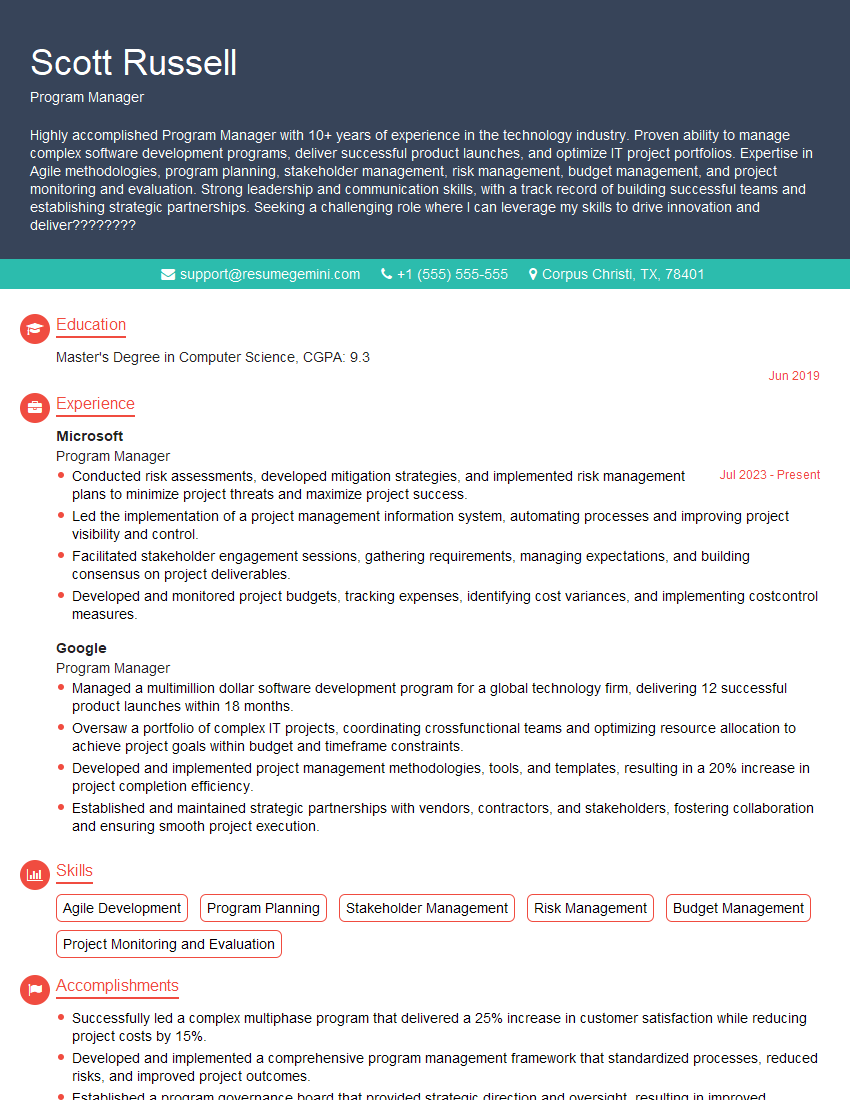
Program Manager Resume Sample
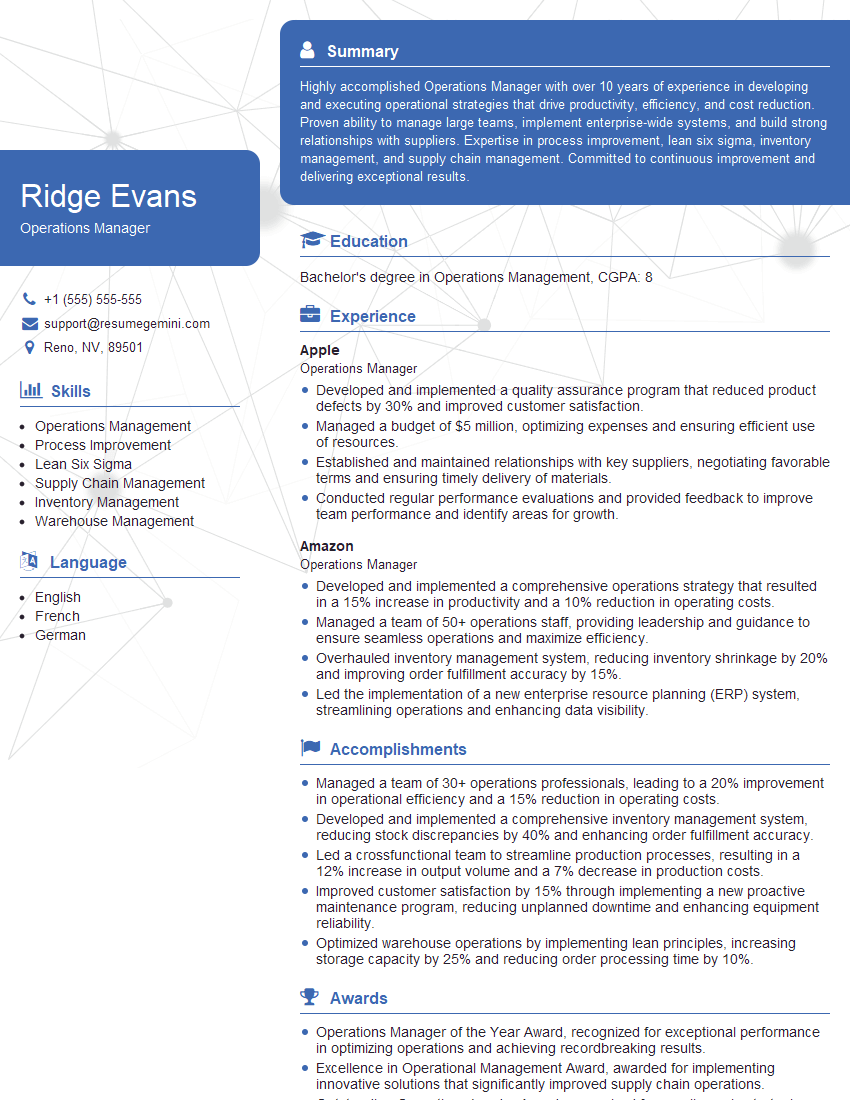
Operations Manager Resume Sample
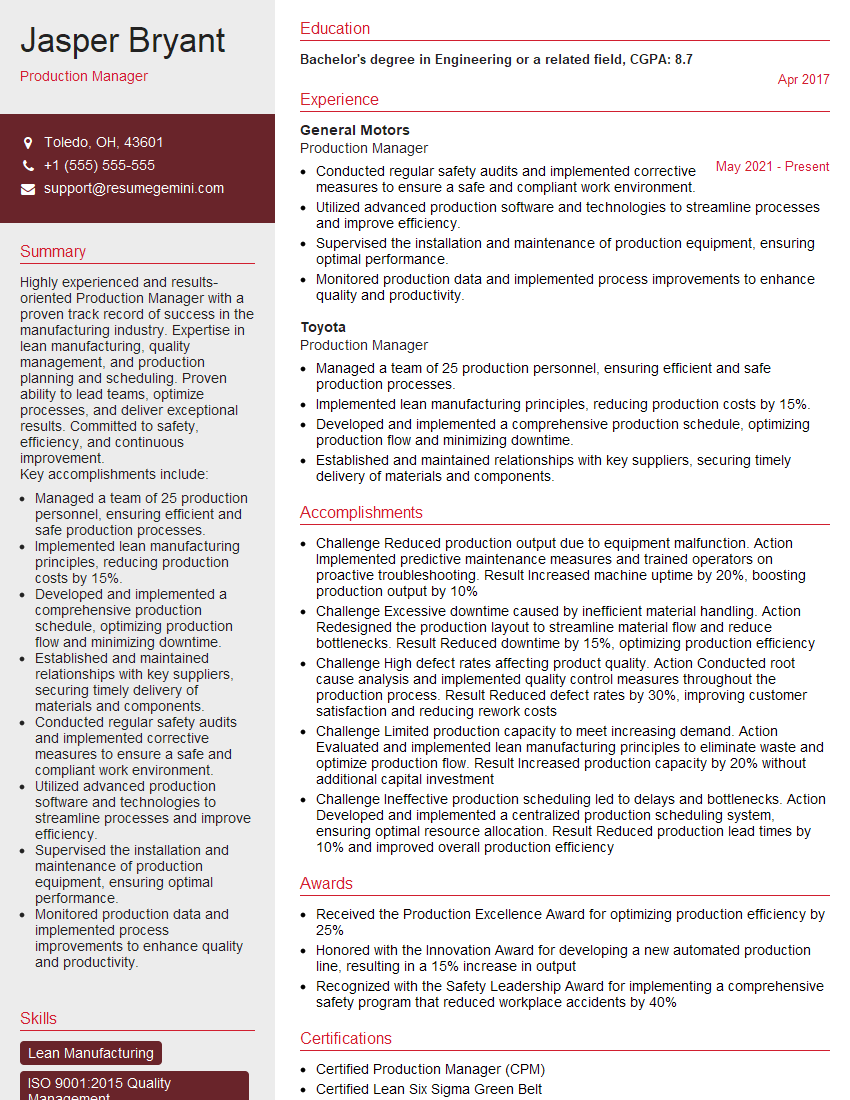
Production Manager Resume Sample
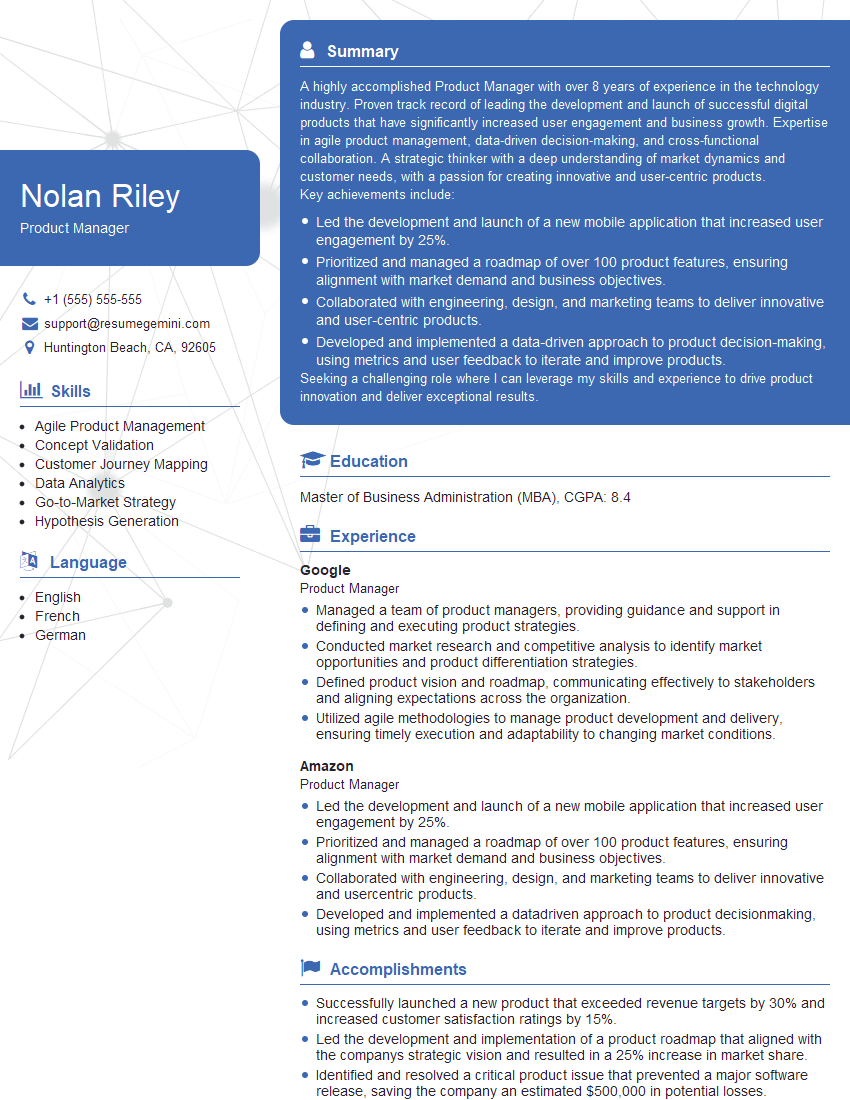
Product Manager Resume Sample
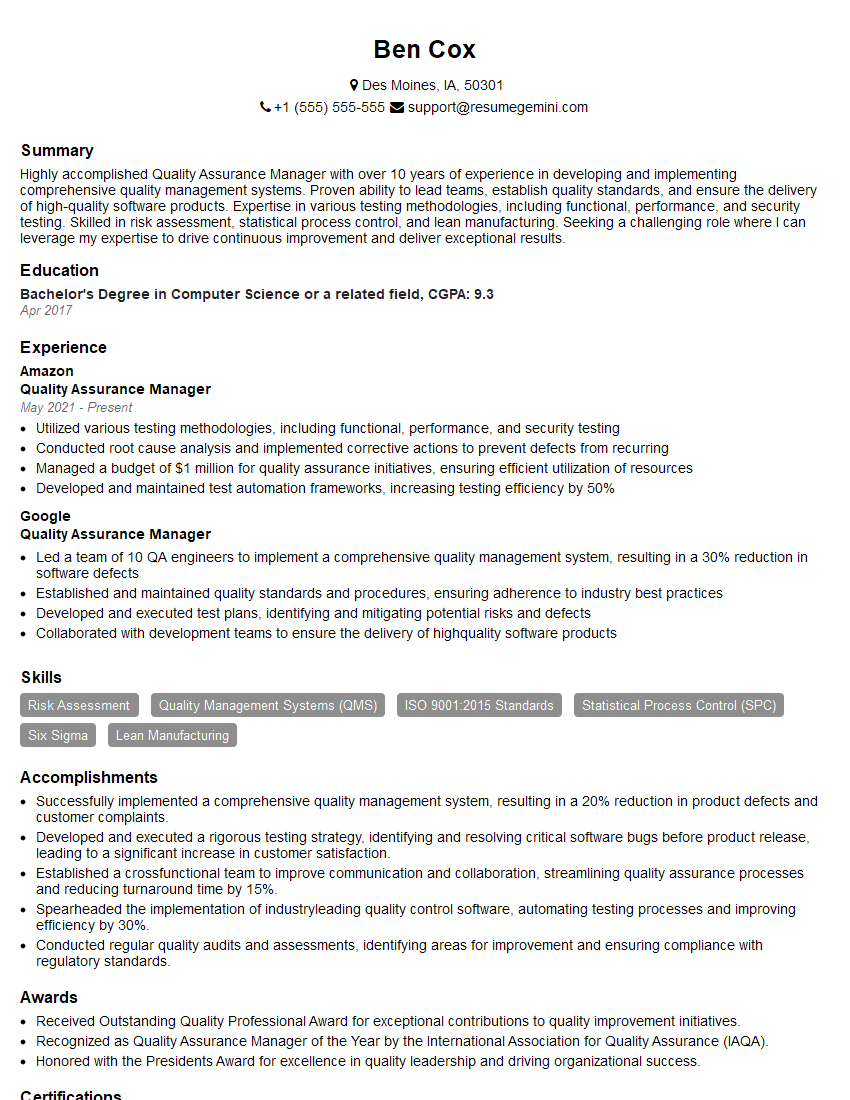
Quality Assurance Manager Resume Sample
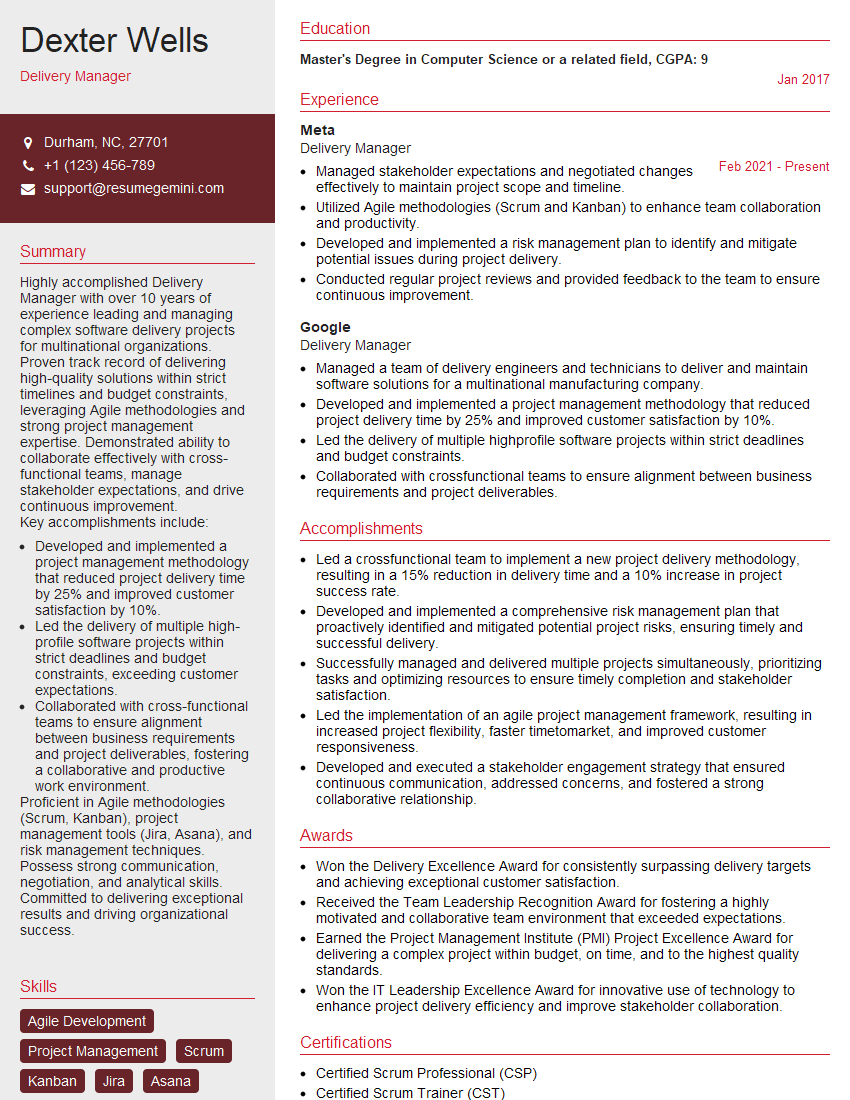
Delivery Manager Resume Sample
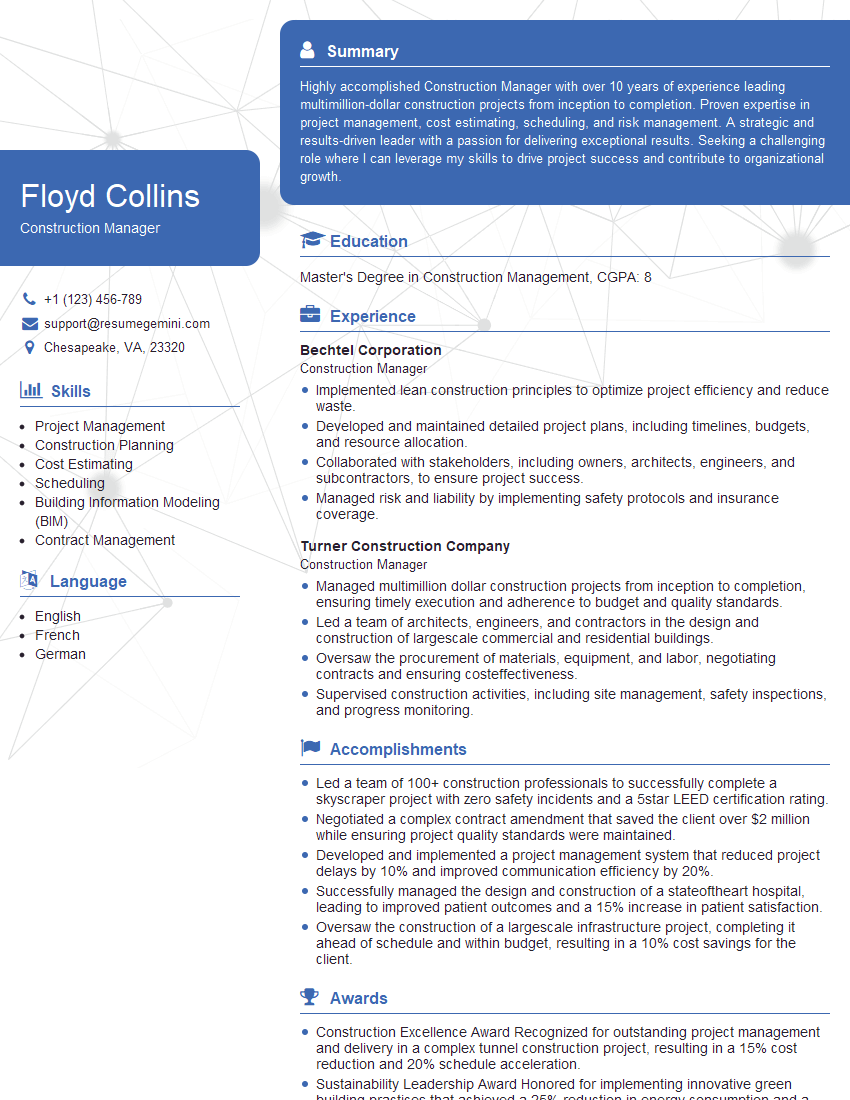
Construction Manager Resume Sample
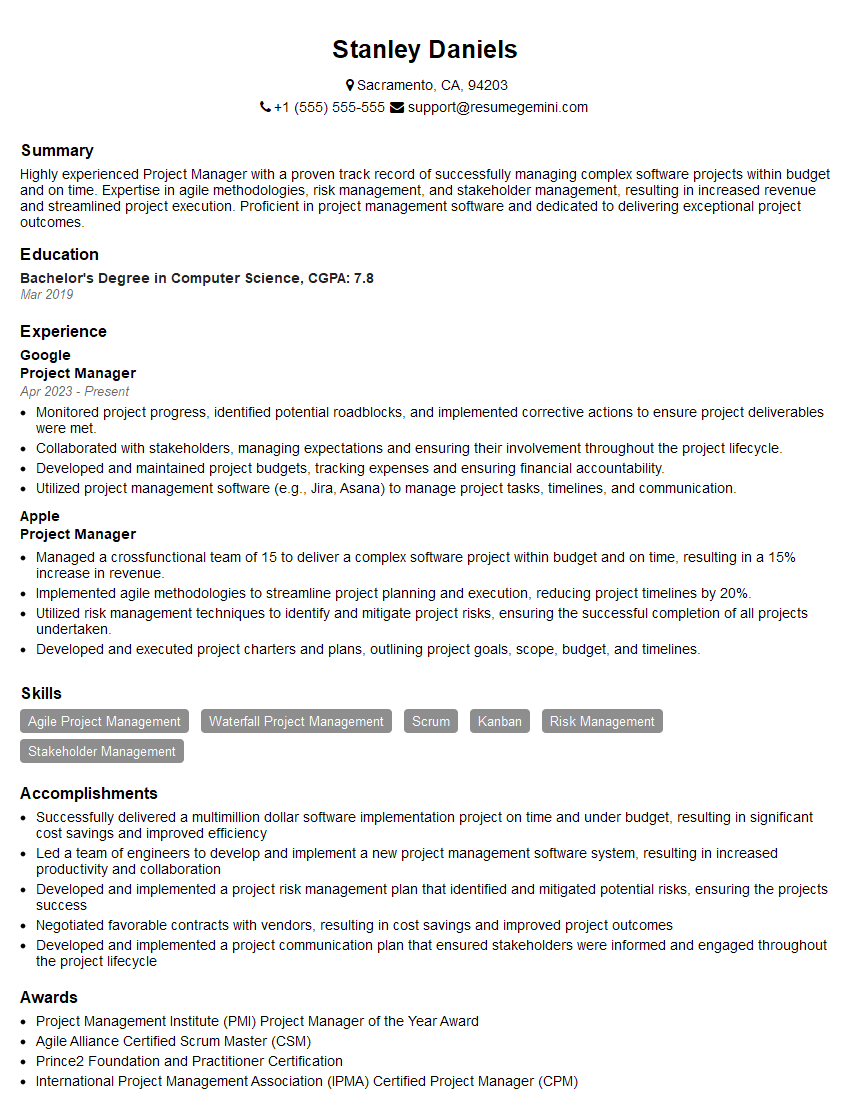
Project Manager Resume Sample
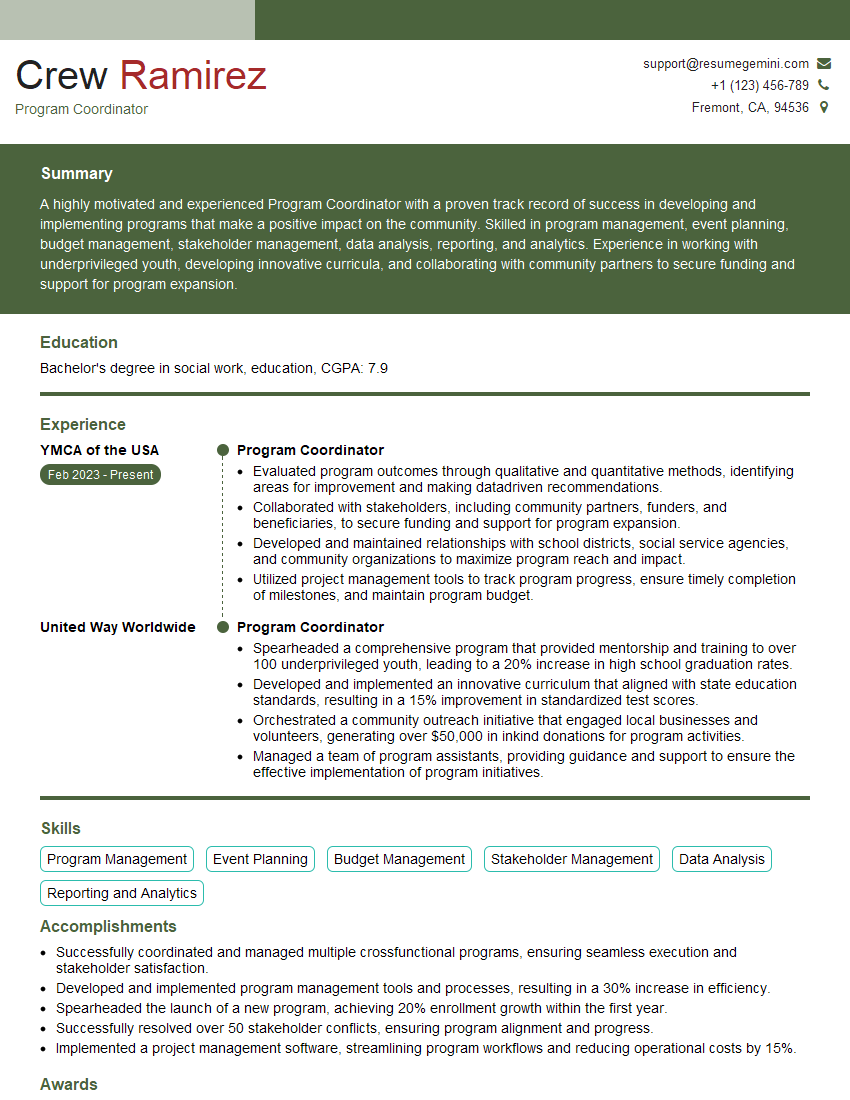
Program Coordinator Resume Sample
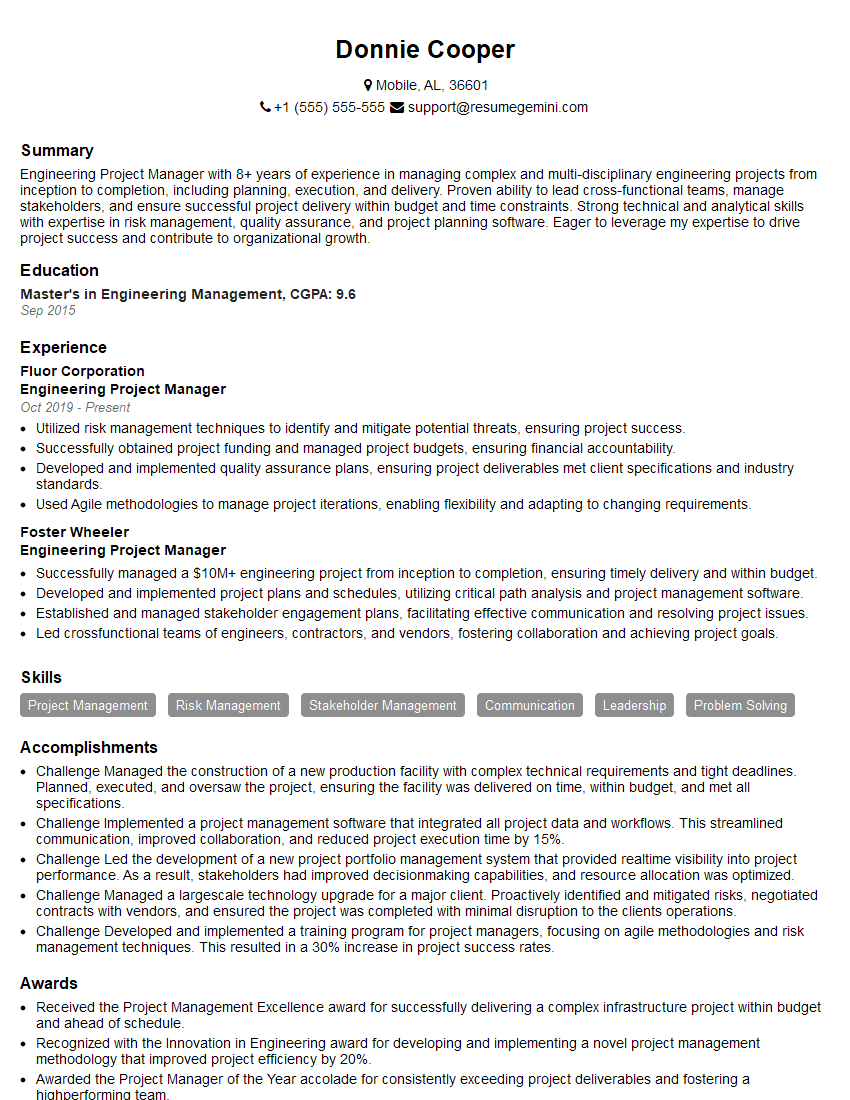
Engineering Project Manager Resume Sample
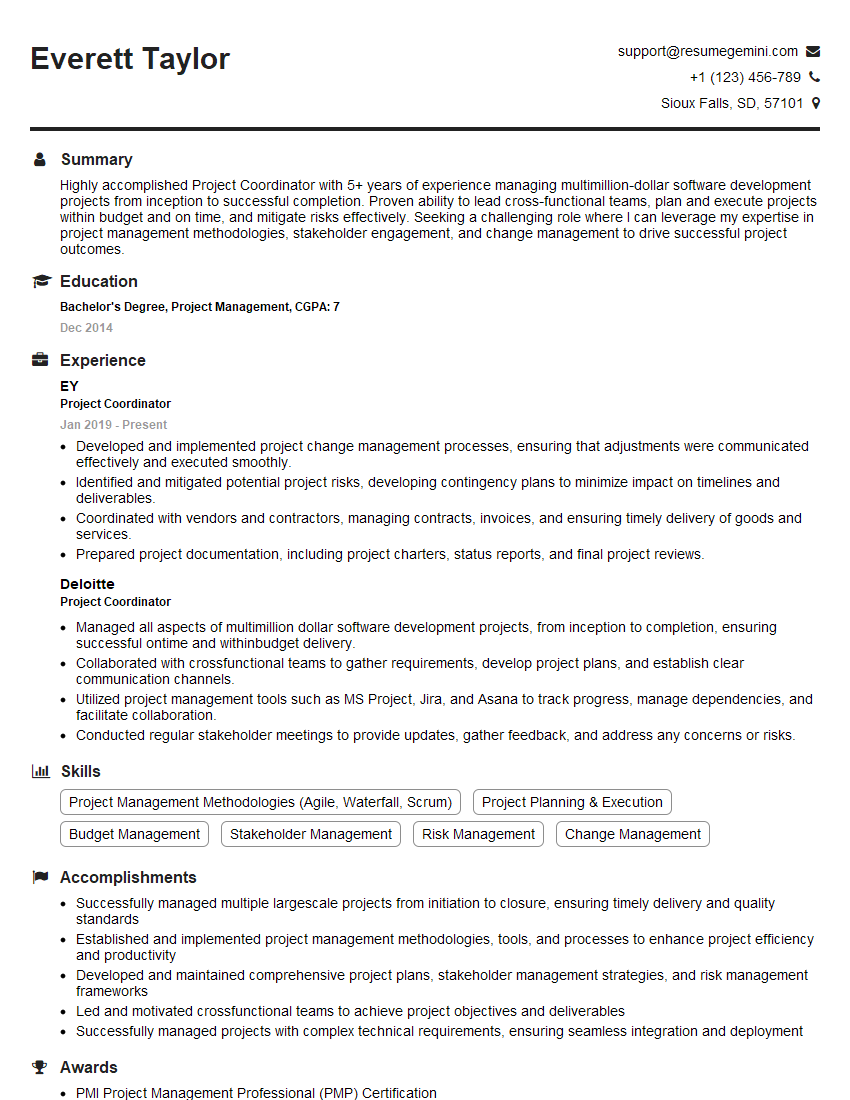
Project Coordinator Resume Sample
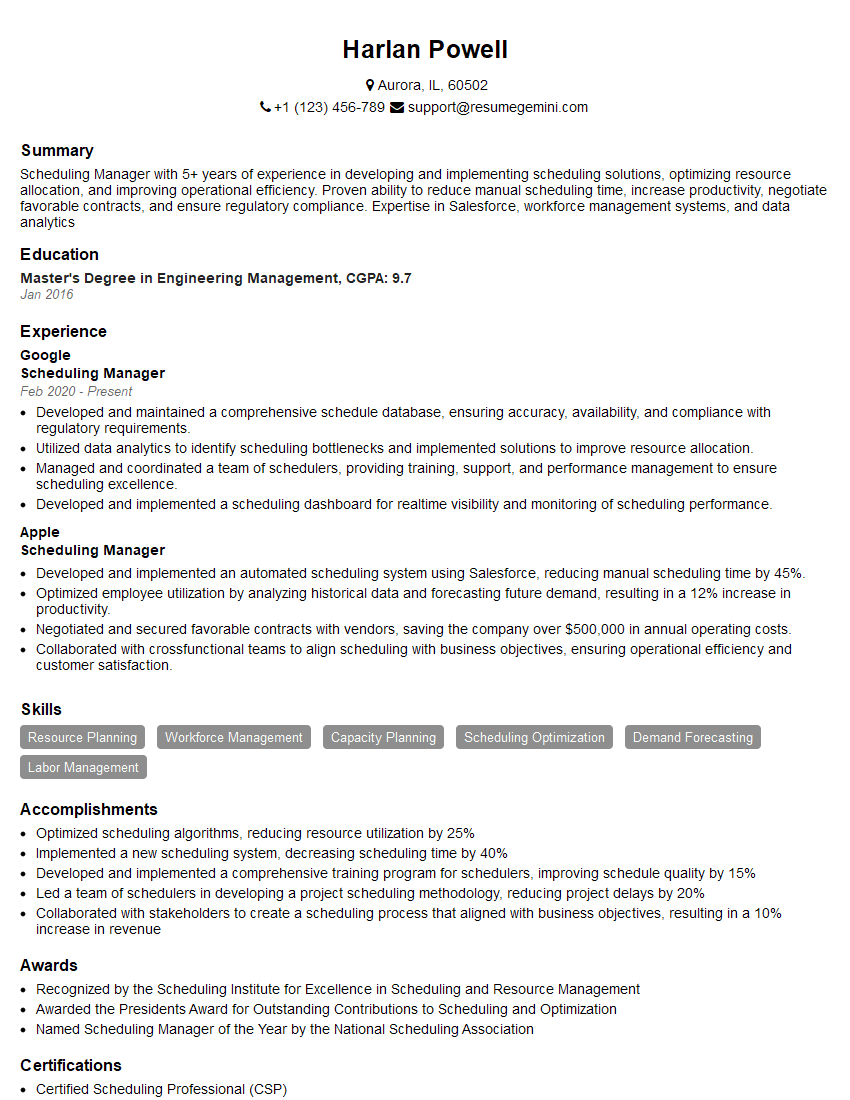
Scheduling Manager Resume Sample
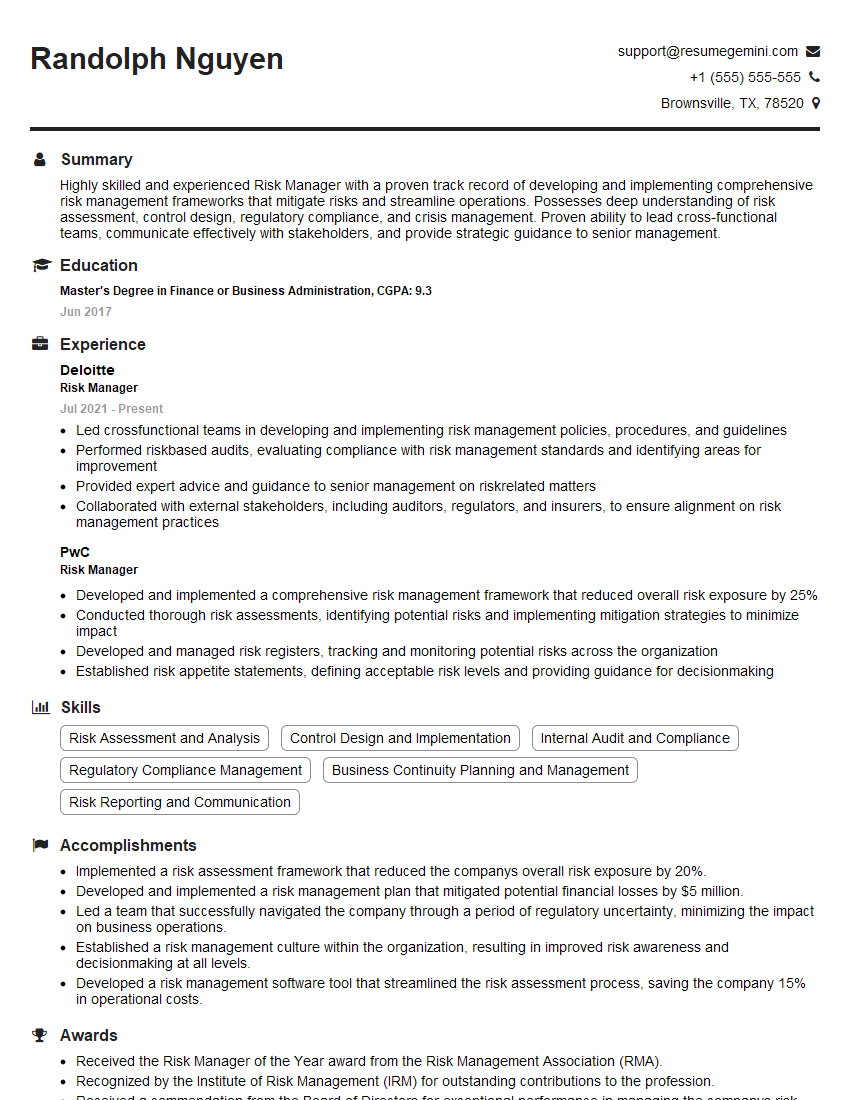
Risk Manager Resume Sample
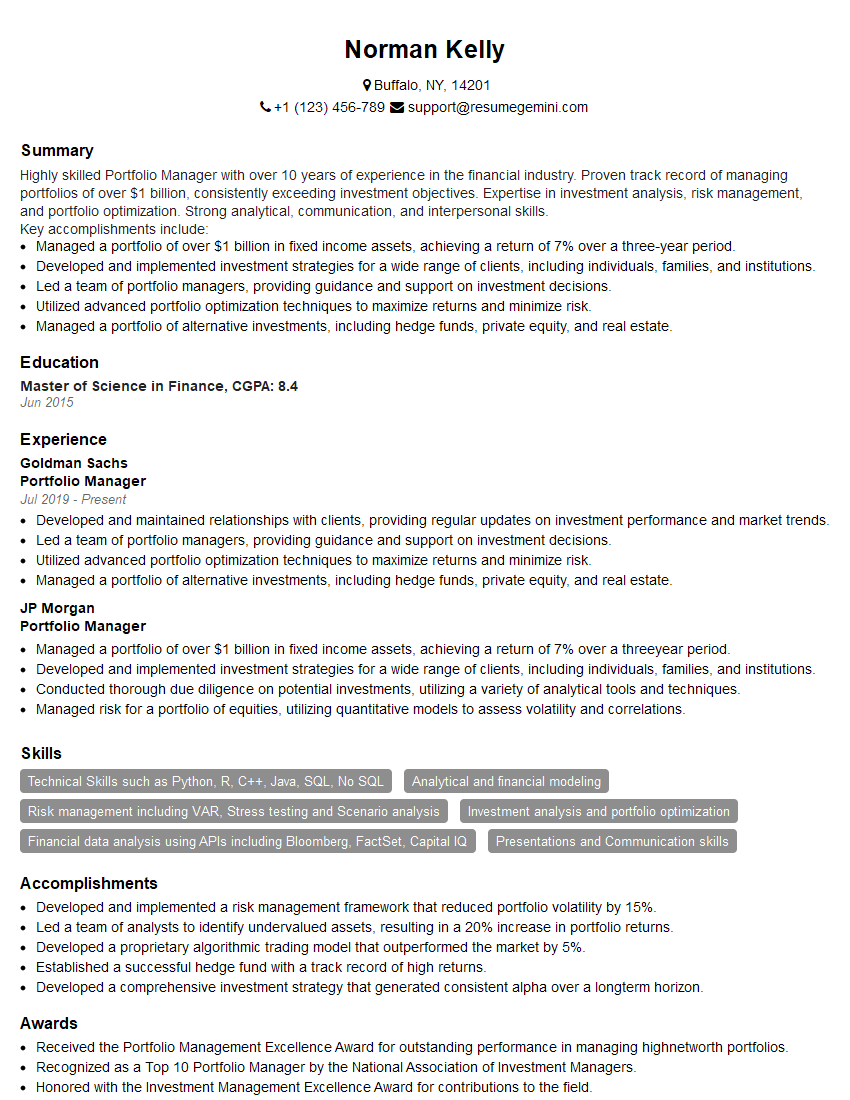
Portfolio Manager Resume Sample
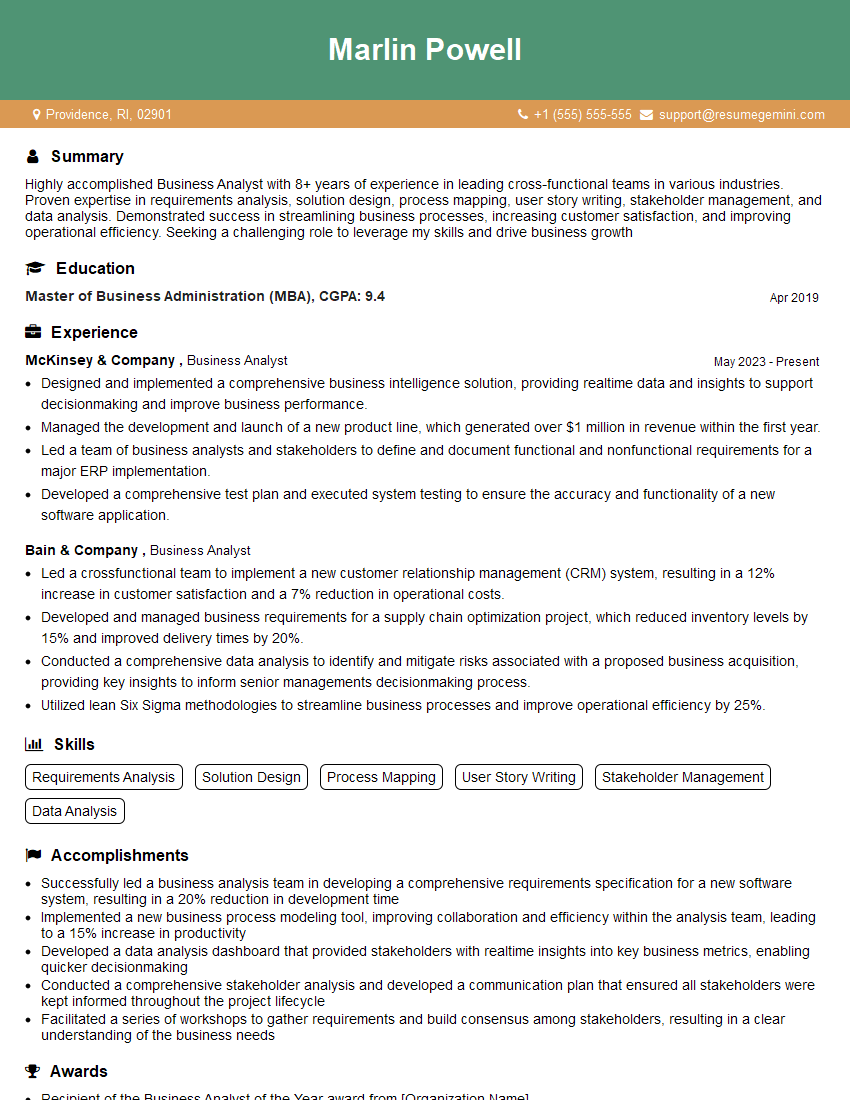
Business Analyst Resume Sample
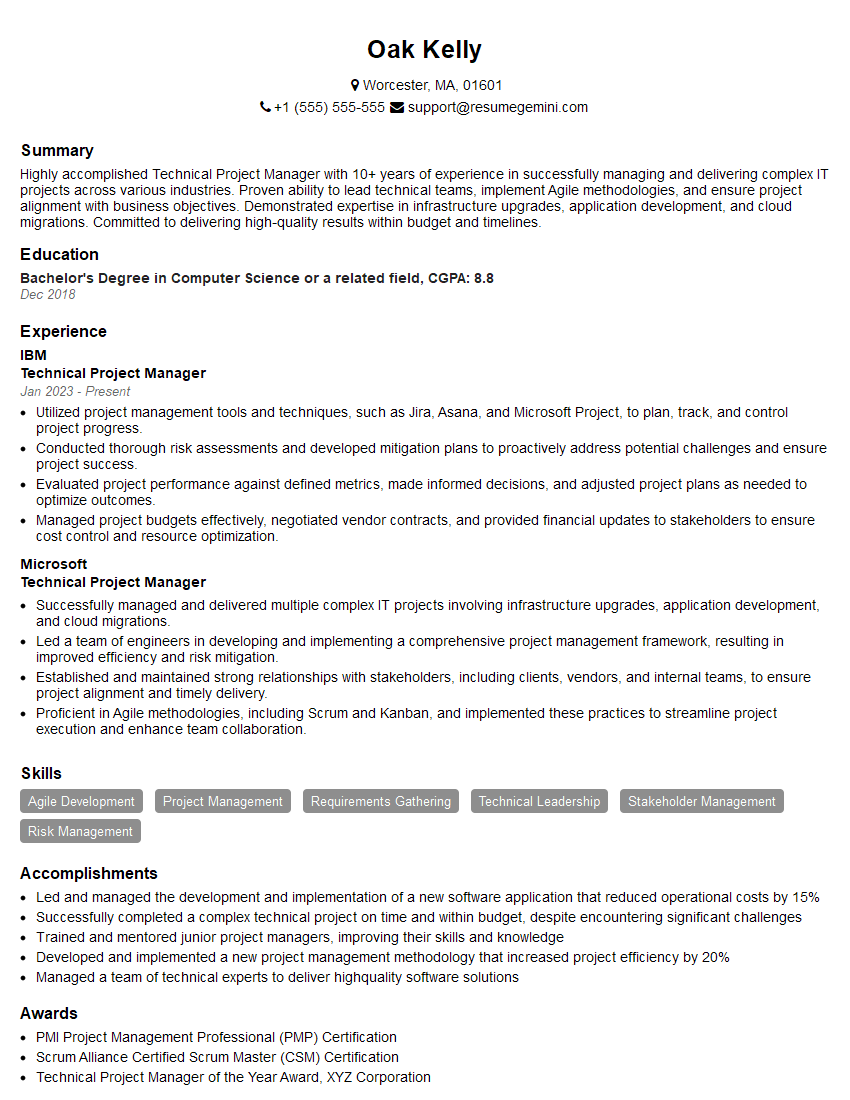
Technical Project Manager Resume Sample
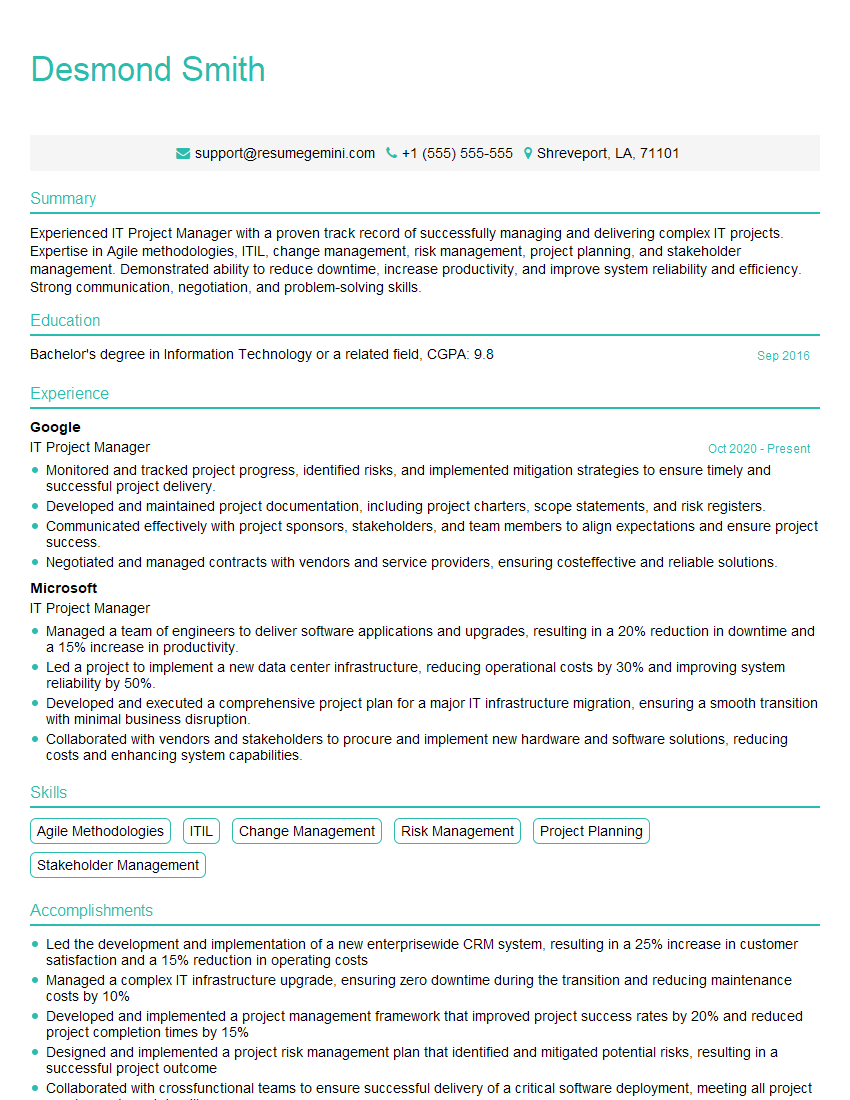
IT Project Manager Resume Sample
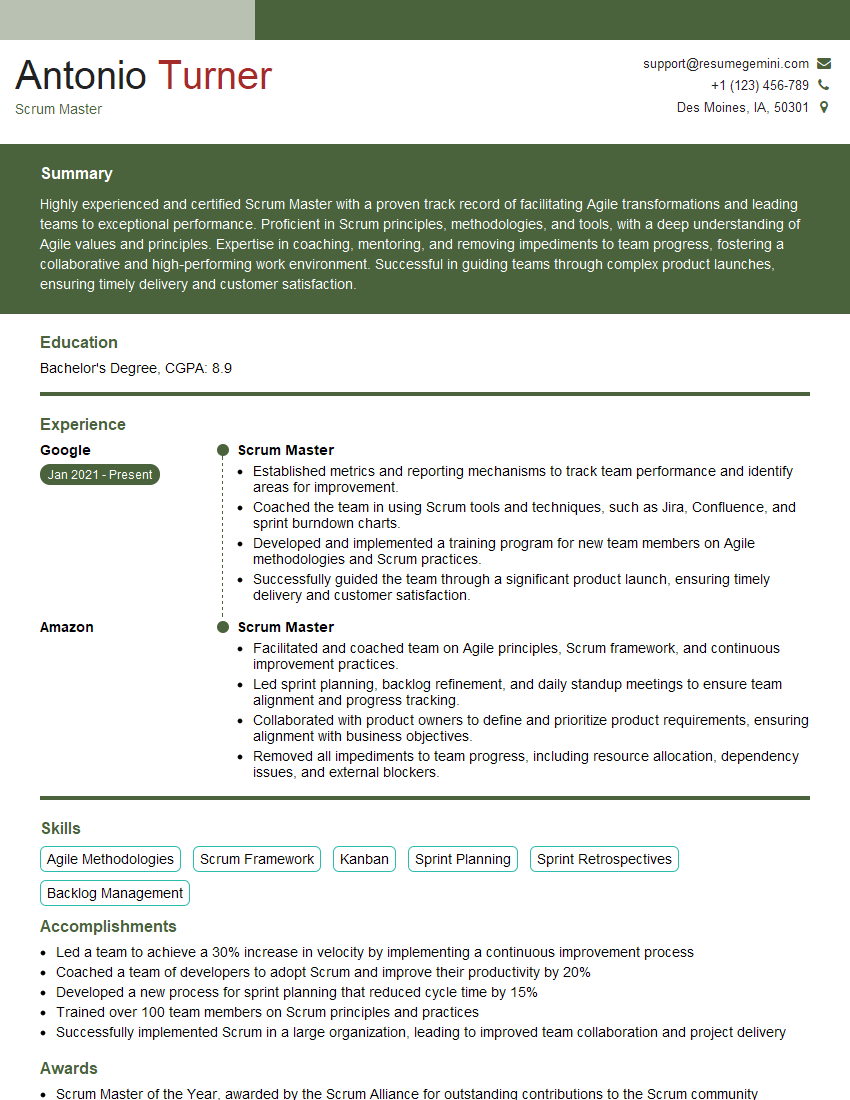
Scrum Master Resume Sample
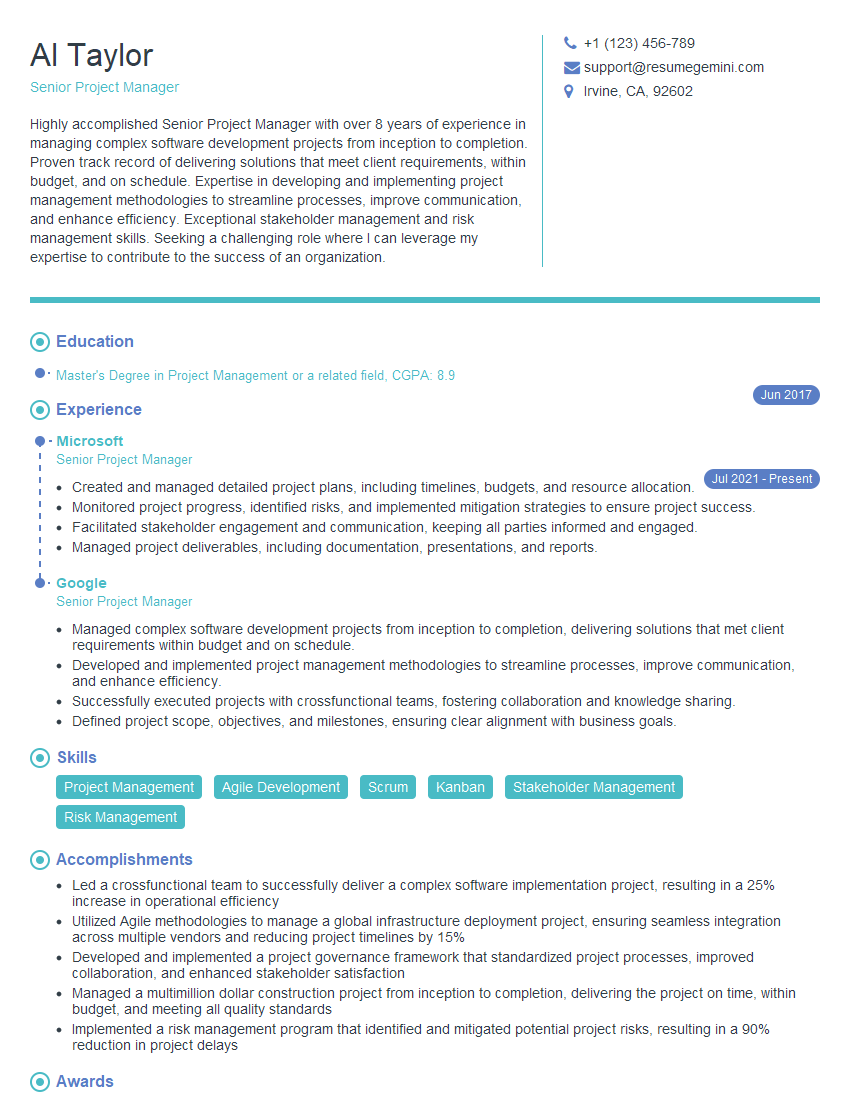
Senior Project Manager Resume Sample
- Program Manager
- Operations Manager
- Production Manager
- Product Manager
- Quality Assurance Manager
- Delivery Manager
- Construction Manager
- Project Manager
- Program Coordinator
- Engineering Project Manager
- Project Coordinator
- Scheduling Manager
- Risk Manager
- Portfolio Manager
- Business Analyst
- Technical Project Manager
- IT Project Manager
- Scrum Master
- Senior Project Manager
Explore more articles
Users Rating of Our Blogs
Share Your Experience
We value your feedback! Please rate our content and share your thoughts (optional).
What Readers Say About Our Blog
Very informative content, great job.
good