Interviews are more than just a Q&A session—they’re a chance to prove your worth. This blog dives into essential Sight-Reading and Aural Skills interview questions and expert tips to help you align your answers with what hiring managers are looking for. Start preparing to shine!
Questions Asked in Sight-Reading and Aural Skills Interview
Q 1. Describe your approach to sight-reading unfamiliar music.
Sight-reading is a skill honed through consistent practice. My approach involves a systematic process: First, I quickly scan the piece to identify the key signature, time signature, and overall range. This gives me a crucial framework. Then, I start by focusing on the rhythm, carefully reading the notes and rests, and mentally clapping or tapping the rhythm before I even attempt to play the melody. Next, I examine the melodic contour, paying attention to stepwise motion, leaps, and any repeated patterns. This helps me understand the overall shape of the melody. Finally, I start playing, focusing on accuracy and musicality, rather than speed. If I encounter a particularly challenging passage, I might slow down and practice that section separately before returning to the piece as a whole. Think of it like reading a book; you wouldn’t try to understand the whole story at once – you read it section by section. Regular practice with diverse musical styles is key to improving sight-reading ability.
Q 2. Explain the process of analyzing a musical score for harmonic structure.
Analyzing a musical score’s harmonic structure involves identifying the chords, their progression, and their function within the piece. I begin by identifying the key signature to determine the primary tonality. Then, I systematically analyze each chord, determining its root, quality (major, minor, augmented, diminished), and its function within the overall harmonic progression (tonic, dominant, subdominant etc.). I look for patterns in the chord progression – common ones include I-IV-V-I in major keys. I also consider the use of secondary dominants, borrowed chords, and other non-diatonic harmonies to understand any harmonic colour or dramatic effect. For example, a sudden shift to a minor chord in a major key piece might create a sense of tension. This process helps in understanding the underlying emotional structure and form of a piece. Think of it like deconstructing a sentence – the chords are like words, creating a meaningful phrase through their progression.
Q 3. How do you identify key signatures and time signatures quickly?
Identifying key and time signatures is almost instantaneous for me. Key signatures are learned through rote memorization; I instantly recognize the number of sharps or flats and correlate that to the key. Time signatures are equally quick to identify – the top number indicates the number of beats per measure, while the bottom number indicates the note value of each beat. For instance, 4/4 time means four quarter notes per measure, while 3/4 means three quarter notes. Years of experience have ingrained these patterns, making this a rapid process. It’s like instantly recognizing a friend’s face – you don’t consciously analyze every feature; you just know.
Q 4. How do you approach sight-reading in different musical styles?
Sight-reading various styles requires adaptability. While the fundamental process remains the same, the approach varies depending on the stylistic conventions of the piece. For example, Baroque music might feature complex counterpoint, requiring careful attention to independent melodic lines. Romantic music may utilize more chromaticism and unexpected harmonic changes, demanding heightened awareness of harmonic context. Jazz requires an understanding of improvisation and chord substitutions. My approach is to become familiar with the common characteristics and phrasing of each style through extensive listening and practice. The key is flexibility and a willingness to adapt my strategy to meet the demands of the particular style.
Q 5. Explain your method for identifying melodic intervals.
Identifying melodic intervals is crucial for understanding the shape and contour of a melody. I approach this by considering the distance between two notes, both in terms of steps and half steps. For example, a major second is two half steps apart, while a minor second is only one. I visualize these intervals on the staff, using my understanding of the diatonic scale to help me judge the distance quickly. Practicing interval recognition exercises, both aurally and visually, has significantly enhanced this skill. It’s similar to learning a new language; consistent practice is key to fluent recognition of intervals.
Q 6. How do you differentiate between major and minor chords aurally?
Differentiating between major and minor chords aurally relies on recognizing the characteristic intervals and sounds. Major chords have a bright, cheerful quality, largely due to the major third interval between the root and the third. Minor chords possess a darker, more somber quality, owing to the minor third. The most prominent difference lies in the third. Listening carefully for the characteristic sound of the third is key. I also listen to the overall harmonic context, as the surrounding chords can provide clues about the overall tonality and the function of individual chords. It’s like tasting different wines – you learn to appreciate the subtle differences in flavor profiles through consistent tasting.
Q 7. How do you approach sight-singing unfamiliar melodies?
Sight-singing requires both aural and visual skills. My approach starts by carefully analyzing the melody’s rhythm and melodic contour, much like the preparation for sight-reading. Next, I mentally solfege (sing the notes using solfege syllables – do, re, mi, etc.) the melody, determining the intervals between notes. Then, I sing the melody slowly and accurately, focusing on intonation and phrasing. Regular practice using solfege exercises and various vocal scales is critical in developing this skill. Like learning a new language, it requires constant practice and dedicated attention to detail.
Q 8. Describe your strategies for improving sight-reading accuracy and speed.
Improving sight-reading accuracy and speed is a journey requiring consistent, focused practice. My strategy involves a multi-pronged approach: Firstly, I emphasize rhythmic accuracy. I begin by meticulously practicing rhythmic patterns independently, using a metronome to ensure precision. This builds a strong foundation for accurate note placement. Secondly, I focus on interval recognition. I regularly drill intervals – major and minor seconds, thirds, etc. – to improve my ability to quickly identify melodic leaps. Thirdly, I work on harmonic awareness. Understanding the underlying harmony helps anticipate the direction of the melody and facilitates smoother sight-reading. Finally, I utilize graded materials, starting with simpler pieces and gradually increasing complexity. This systematic progression allows me to build confidence and develop technique. Regular, short practice sessions are far more effective than infrequent, lengthy ones. I also find that actively playing along with recordings of the pieces, even if I’m struggling at first, significantly improves my ability to internalize the music.
Q 9. How do you handle unexpected rhythmic complexities while sight-reading?
Unexpected rhythmic complexities can be daunting, but a methodical approach is key. My first step is to scan the entire measure before attempting to play. This provides a visual understanding of the rhythmic structure. I then break down the complex rhythm into smaller, manageable units, focusing on one rhythmic group at a time. Using a metronome and focusing on the subdivisions of the beat helps internalize the complex rhythmic patterns. For instance, if I encounter a complex tuplet, I’ll practice subdividing the beat into its constituent parts before playing the whole measure. I might also silently articulate the rhythm verbally or tap it on my leg to solidify my understanding before playing. This approach allows me to process the rhythmic complexities gradually, avoiding overwhelming myself and preventing mistakes.
Q 10. How do you identify and correct errors in your own sight-reading performance?
Identifying and correcting errors during sight-reading requires self-awareness and analytical skills. During practice, I make it a point to play slowly and deliberately, which aids in identifying errors. If I make a mistake, I stop, analyze why it happened (was it a misread note, a rhythmic misjudgment, or a harmonic misunderstanding?), and then correct it. Recording myself while sight-reading is immensely valuable. Listening back allows me to objectively assess my performance, pinpoint recurring errors, and identify areas needing improvement. Finally, I use aural feedback. By listening critically to what I’m playing, I can often hear if a note or rhythm is out of place, even if I don’t initially see the mistake on the page. This process combines visual and aural analysis, leading to more effective error correction.
Q 11. Explain the difference between consonance and dissonance.
Consonance and dissonance are fundamental concepts in harmony. Consonance refers to the combination of two or more notes that sound pleasant and stable to the ear. These intervals tend to be simple numerical relationships (like perfect fifths or major thirds). Think of the sound of a major chord – this is generally perceived as consonant. Dissonance, on the other hand, creates a sense of tension or instability. These intervals are often more complex and tend to ‘want’ to resolve to a consonant sound. A minor second or tritone are classic examples of dissonant intervals. The difference lies in the perceived stability: consonances sound complete, while dissonances demand resolution. Composers manipulate consonance and dissonance to create emotional impact and drive the musical narrative. For example, a piece might build tension through the use of dissonances before resolving to a consonant cadence, creating a sense of release.
Q 12. How do you aurally identify different types of cadences?
Aural identification of cadences relies on recognizing characteristic melodic and harmonic patterns. Authentic cadences conclude with a dominant chord resolving to a tonic chord (V-I). They feel conclusive and decisive, often creating a sense of finality. Plagal cadences (IV-I) are softer and less decisive. They often lack the dramatic tension of authentic cadences. Deceptive cadences create a feeling of expectation followed by surprise, as they involve a dominant chord resolving to something other than the tonic chord (often the vi chord). I listen for the harmonic progression, specifically the movement of the bass line and the resolution of the dominant seventh chord (if present). It’s also helpful to consider the context within the musical phrase – the preceding harmonic events often help solidify identification of the specific type of cadence. For example, a sudden shift to a less expected harmony, compared to a conclusive and satisfying resolution, helps differentiate a deceptive cadence.
Q 13. Explain the concept of voice leading and its importance in harmony.
Voice leading refers to the smooth and logical movement of individual melodic lines within a harmonic context. In essence, it’s the art of creating a connected and pleasing progression of voices or parts in a polyphonic texture. Its importance lies in achieving a sense of fluidity and coherence in the music. Poor voice leading can result in awkward leaps, parallel fifths or octaves, and a general lack of musical flow. For example, consider a chord progression where a note in the upper voice leaps awkwardly, creating a jarring effect. Effective voice leading would ensure that the melodic lines move smoothly and logically, creating a more seamless and pleasing progression of sounds. Careful voice leading contributes to clearer harmonic clarity and overall aesthetic appeal.
Q 14. How do you identify and analyze different musical textures?
Musical texture describes the way different melodic and harmonic lines interact. I identify different textures through several steps. Firstly, I determine the number of independent melodic lines present (monophonic, homophonic, polyphonic). Monophonic texture features a single melodic line, like a plainchant. Homophonic textures have a prominent melody supported by accompanying chords, which is the most common texture in Western music. Polyphonic textures have multiple independent melodic lines of equal importance, such as in a fugue. Secondly, I consider the relationship between these lines – are they imitative or independent? Is there a sense of counterpoint? This further refines my understanding of the texture. For example, a homophonic texture might become more complex if the accompaniment becomes more rhythmically or melodically independent, approaching a polyphonic texture. Finally, I consider the overall density and clarity of the texture. Is it transparent, allowing individual lines to be easily heard? Or is it thick and dense? These aspects collectively provide a detailed understanding of a piece’s texture.
Q 15. Describe your process for identifying and analyzing musical form.
Identifying and analyzing musical form involves understanding the overall structure and organization of a piece. Think of it like building a house – you need to understand the blueprint to know how the different sections fit together. My process begins with listening attentively to the entire piece to get a sense of its overall flow. Then, I identify recurring musical ideas (themes) and how they are presented throughout the piece.
I look for patterns in melody, harmony, rhythm, and dynamics. Common forms include binary (two-part), ternary (three-part), rondo (repetitive main theme), sonata form (exposition, development, recapitulation), and variations (a theme altered throughout). For example, in a binary form, you’ll often find a contrasting second section after the first.
I also note any transitions between sections, paying close attention to how the composer modulates (changes key) or uses rhythmic or harmonic devices to create contrast or build tension. I use a combination of aural analysis and written notation to map out the piece’s formal structure. Once I have identified the primary sections, I examine the internal structure of each, often observing smaller subsections and their interrelationship. This creates a clear map of the music’s architecture.
For example, recognizing a repeated A section followed by a contrasting B section then a return to A indicates a ternary (ABA) form. Understanding form is critical for both performance and comprehension, allowing for a deeper engagement with the composer’s intent.
Career Expert Tips:
- Ace those interviews! Prepare effectively by reviewing the Top 50 Most Common Interview Questions on ResumeGemini.
- Navigate your job search with confidence! Explore a wide range of Career Tips on ResumeGemini. Learn about common challenges and recommendations to overcome them.
- Craft the perfect resume! Master the Art of Resume Writing with ResumeGemini’s guide. Showcase your unique qualifications and achievements effectively.
- Don’t miss out on holiday savings! Build your dream resume with ResumeGemini’s ATS optimized templates.
Q 16. How do you differentiate between different instrumental timbres aurally?
Differentiating instrumental timbres aurally relies on a keen ear and a strong understanding of acoustics. Each instrument produces a unique sound quality, known as its timbre, determined by its physical properties (material, size, shape) and playing techniques. I listen for several key characteristics:
- Attack: How the note begins – sharp, gradual, percussive, etc.
- Sustain: How the note maintains its volume and tone – smooth, buzzy, resonant, etc.
- Decay: How the note fades away – quick, slow, vibrato, etc.
- Overtones: The subtle, higher-pitched tones accompanying the main pitch, which create the overall ‘color’ of the sound.
- Envelope: The overall shape of the sound’s volume over time.
For example, a flute’s sound has a bright, clear attack and a relatively quick decay compared to a cello’s warmer, more sustained sound with a slower decay. The buzzing of a clarinet is distinct from the smooth tone of a oboe. Furthermore, I consider the instrument’s range and its potential for vibrato or other expressive techniques. Practicing actively listening to a range of instruments in different contexts helps build this skill.
Q 17. How would you assess a student’s aural skills?
Assessing a student’s aural skills involves a multifaceted approach, combining formal tests with informal observation. I use a variety of methods:
- Interval Recognition/Identification: Asking students to identify intervals (e.g., major third, perfect fifth) played on an instrument or sung.
- Melody Dictation: Playing a short melody and having students write it down. This tests their ability to analyze pitch and rhythm.
- Rhythm Dictation: Similar to melody dictation but focusing solely on rhythmic patterns.
- Chord Recognition: Identifying major, minor, dominant, diminished, and augmented chords.
- Harmonic Analysis (Advanced): Recognizing progressions and analyzing functional harmony in a given excerpt.
I use progressively challenging exercises to gauge their level and understanding. I also observe their active listening habits and approach to problem-solving. A student’s ability to self-correct and identify areas of weakness is also a key indicator of their progress. Providing feedback is crucial, highlighting both strengths and areas for improvement, offering tailored exercises to target specific skill deficits.
Q 18. What strategies do you use to teach sight-reading effectively?
Effective sight-reading instruction requires a balanced approach combining technical skill building with strategic practice techniques. I start by ensuring a solid foundation in rhythm and pitch recognition. Students need to be able to quickly and accurately identify rhythmic values and intervals. I then introduce progressively challenging materials, beginning with simple pieces that focus on one or two specific concepts, such as specific rhythmic patterns or key signatures, and gradually increasing complexity.
My approach also includes:
- Hand-Eye Coordination Exercises: Practicing pointing to notes while playing strengthens the connection between seeing and playing.
- Chunking: Breaking down longer passages into smaller, manageable sections to improve accuracy.
- Metronome Use: Consistent tempo practice improves accuracy and reading speed.
- Repertoire Variety: Exposure to a wide range of styles helps develop adaptability.
- Active Listening: I encourage students to listen to recordings of their pieces, paying attention to phrasing, articulation, and dynamics, before attempting to sight-read. This improves their musical understanding and expectations of the music before they play.
Furthermore, providing ample opportunity for practice and providing constructive feedback after each attempt is essential. Regular quizzes using excerpts of unfamiliar music are crucial for assessing progress and solidifying skills.
Q 19. How do you adapt your teaching methods for students with different learning styles?
Catering to diverse learning styles is paramount in sight-reading instruction. I adapt my approach by incorporating various methods:
- Visual Learners: I use color-coding, diagrams, and visual aids to highlight patterns and relationships.
- Auditory Learners: I incorporate aural exercises, listening activities, and verbal explanations.
- Kinesthetic Learners: I encourage active participation through playing, conducting, and moving with the music.
I also offer choices in materials and methods to suit individual preferences. Some students may benefit from working with a simplified arrangement initially before moving to the original version, while others might prefer to dive straight into the original. I regularly check for understanding and adjust my approach according to the student’s response. Flexibility and personalized feedback are key to effectively supporting diverse learners. Regular discussions about their learning process are important so that I can understand their preferences and adjust the approach as needed.
Q 20. How do you assess a student’s sight-reading progress?
Assessing sight-reading progress is an ongoing process. I use a combination of:
- Formal Assessments: Regular sight-reading tests using unfamiliar excerpts of varying difficulty.
- Informal Observation: Observing students during practice sessions, noting their accuracy, speed, and musicality.
- Self-Assessment: Encouraging students to reflect on their performance and identify areas for improvement.
- Recording & Analysis: Recording students’ performances and using it as a tool for feedback, both technical and musical aspects are considered.
I use a rubric that outlines specific criteria (accuracy, rhythm, intonation, phrasing) to provide objective feedback. The focus isn’t just on accuracy, but also the student’s ability to interpret and express the music. Progress is not always linear, therefore understanding the context is important. There may be plateau periods, which should be addressed with patience and adjustments to the teaching plan.
Q 21. How do you address common sight-reading challenges among students?
Common sight-reading challenges include difficulties with rhythm, note recognition, unfamiliar key signatures, complex rhythms, and awkward fingerings or voicings. I address these by:
- Targeted Rhythm Drills: Practicing rhythmic patterns using rhythmic dictation, clapping, and playing exercises, focusing on areas where the student struggles.
- Key Signature Exercises: Using flashcards or games to strengthen recognition of key signatures and their associated sharps and flats.
- Technique Drills: Focusing on scales, arpeggios, and other technical exercises to improve fluency and finger dexterity.
- Interval Training: Working on recognizing and playing intervals to improve accuracy in identifying melodic contours.
- Breaking down complex passages: Dividing passages into smaller segments to gradually build confidence and accuracy.
- Strategic practice techniques: Teaching students how to utilize techniques such as chunking, focused listening, and slow practice to improve their overall sight-reading abilities.
Addressing these challenges involves a patient and tailored approach. Understanding the root cause of the problem and providing specific exercises to address it is key. Positive reinforcement and celebrating small victories help build confidence and motivate students to persist. Ultimately, consistent, focused practice is the most effective solution for overcoming sight-reading challenges.
Q 22. What resources do you use to enhance your own sight-reading skills?
Maintaining strong sight-reading skills requires consistent practice and a varied approach. I use a multi-pronged strategy.
Variety of Repertoire: I purposefully select pieces from diverse styles and periods – Baroque, Classical, Romantic, 20th-century, and even contemporary works. This broadens my familiarity with different harmonic languages, rhythmic patterns, and melodic contours.
Graded Difficulty: I work through graded exercises and etudes, progressively increasing the difficulty level. This allows me to gradually expand my technical capabilities and build confidence.
Focus on Weaknesses: I actively identify my weaknesses, such as specific rhythmic figures, intervallic leaps, or complex key signatures, and dedicate focused practice to improve those areas. This targeted approach is more effective than simply playing through pieces repeatedly.
Metronome Use: The metronome is crucial. I start slowly, focusing on accuracy and musicality, gradually increasing the tempo only when I can play cleanly and expressively. This builds rhythmic precision and stamina.
Analytical Approach: Before playing, I spend time analyzing the score. This involves identifying key changes, cadences, rhythmic complexities, and melodic patterns. Understanding the piece’s structure greatly aids in sight-reading efficiency and interpretation.
Recordings and Transcriptions: Listening to recordings of pieces before attempting to sight-read them helps me familiarize myself with the melodic and harmonic flow. Occasionally, I’ll even transcribe short sections to enhance my understanding of the composer’s style.
Q 23. Describe your experience with using technology to improve aural skills.
Technology has revolutionized aural skills training. I use a range of software and apps to enhance my skills and those of my students.
Music Notation Software: Software like Sibelius and MuseScore allows me to create and manipulate musical scores, enabling me to generate customized exercises tailored to specific aural skills needs (e.g., interval recognition, chord identification).
Aural Training Apps: Apps like Tenuto and Teoria provide interactive exercises for interval training, rhythm dictation, and melodic dictation. These apps offer immediate feedback, track progress, and adapt to the user’s skill level.
Audio Editing Software: Software like Audacity allows me to create and manipulate audio recordings for aural skills exercises. For instance, I can isolate specific musical segments, change tempo, or add noise to challenge students’ perception.
Online Resources: Many websites offer free or paid aural skills training resources, including ear-training exercises, tutorials, and quizzes.
Technology enhances efficiency by providing immediate feedback, individualized practice, and access to a vast library of resources. However, I always emphasize the importance of practicing with live instruments and engaging with music in its natural acoustic environment.
Q 24. How do you use solfège in your sight-reading and aural skills training?
Solfège (do-re-mi) is an indispensable tool in both sight-reading and aural skills. It acts as a bridge between written music and the sounds we hear.
Sight-Reading: When sight-reading, I often silently vocalize the solfège syllables alongside the notes, which helps me quickly internalize the melody and harmony. This mental singing enhances my comprehension of the musical structure and facilitates smoother execution.
Aural Skills: In aural skills training, solfège is crucial for accurately notating dictated melodies and harmonies. By singing the pitches in solfège, I can identify intervals, chords, and scales more readily and translate them onto the staff.
Interval and Chord Recognition: Using solfège helps to internalize intervals and chord qualities. For example, recognizing a ‘do-mi’ interval immediately identifies a major third, while ‘do-sol’ signifies a perfect fifth.
In essence, solfège provides a mental framework that strengthens the connection between written notation, sound, and musical understanding, improving both sight-reading and aural skills significantly.
Q 25. How do you explain complex musical concepts to non-musicians?
Explaining complex musical concepts to non-musicians requires clear, concise language and relatable analogies. I avoid technical jargon whenever possible.
Analogies: For example, to explain harmony, I might use the analogy of colors mixing to create new shades. Each chord represents a color, and their combination creates a unique harmonic palette.
Visual Aids: Diagrams, graphs, and simple musical examples are useful in illustrating concepts like musical form, rhythm, and melody.
Real-world Examples: Connecting music to everyday experiences helps build comprehension. For instance, explaining rhythm using the example of a heartbeat or the regular pulse of a train.
Active Listening: I encourage active listening and discussion to ensure understanding and address any misconceptions. I often use interactive exercises or short games to solidify understanding.
The key is to break down complex concepts into smaller, digestible parts, using a variety of approaches to cater to different learning styles.
Q 26. What is your preferred method for teaching rhythmic dictation?
My preferred method for teaching rhythmic dictation involves a multi-stage process that combines listening, analysis, and notation.
Preparation: We start with simple rhythms, gradually increasing complexity. I provide clear explanations of rhythmic notation and terminology.
Listening and Clapping: I play a short rhythmic excerpt, and students clap along to internalize the rhythm. Repeated listening is crucial.
Subdivision and Counting: We analyze the rhythm by subdividing beats and counting aloud. This helps break down complex rhythms into smaller, manageable units.
Notation: Students then notate the rhythm on staff paper, using appropriate note values and rests.
Feedback and Revision: I provide individual feedback and guidance, allowing students to revise their notation until they achieve accuracy.
Combined Practice: We gradually combine melodic and rhythmic dictation to prepare students for more holistic aural skills development.
This approach ensures a thorough understanding of rhythmic notation and the ability to accurately transcribe complex rhythms.
Q 27. Describe a time you had to improvise a solution to a sight-reading challenge.
During a performance, I was presented with a challenging piece I had never seen before – a complex, highly chromatic etude with unusual rhythmic groupings. My initial reaction was to focus on the basics.
Slow Start: I began by playing very slowly, focusing on accurate note reading and rhythmic precision. I did not get hung up on the nuances of interpretation yet. Accuracy came first.
Chunking: I broke the piece down into smaller, manageable sections, focusing on one section at a time. This reduced the overall cognitive load.
Landmark Identification: I identified key harmonic points and rhythmic landmarks in each section, to help me navigate through the challenging passages.
Adaptive Performance: While not ideal, I simplified some of the more challenging rhythmic intricacies, sacrificing some detail to ensure a largely accurate performance. I acknowledged to the audience that I was sight-reading the piece.
Although not a perfect performance, it demonstrated my ability to handle unexpected challenges with resourcefulness and resilience. I later spent time practicing the piece to solidify my understanding.
Q 28. Explain how you would prepare a student for a performance involving sight-reading.
Preparing a student for a sight-reading performance involves a comprehensive approach.
Regular Practice: Consistent, targeted sight-reading practice is essential. This should include varied styles, tempos, and levels of difficulty.
Technique Building: We work on fundamental techniques like finger dexterity, rhythmic accuracy, and efficient eye-hand coordination. Strong technique significantly improves sight-reading efficiency.
Analysis and Interpretation: I encourage students to analyze the score before playing – identify key changes, cadences, and melodic structure. This fosters efficient comprehension and informed musical expression.
Mock Performances: Simulating performance conditions helps reduce anxiety and build confidence. This could involve practicing in front of a mirror or performing for a small audience.
Mental Rehearsal: Visualizing the piece and mentally playing through it enhances performance preparedness. Mental rehearsal reduces performance-related tension and improves fluidity.
Relaxation Techniques: Practicing deep breathing exercises or mindfulness techniques can help to alleviate performance anxiety.
The ultimate goal is to build confidence and proficiency so that the student can approach sight-reading performances with composure and musicality.
Key Topics to Learn for Sight-Reading and Aural Skills Interview
- Rhythm and Meter: Understanding complex rhythmic patterns, syncopation, and meter changes. Practical application: Accurately transcribing and performing rhythms from unfamiliar scores.
- Interval Recognition: Identifying intervals (seconds, thirds, etc.) both melodically and harmonically. Practical application: Quickly analyzing chord progressions and melodic lines in sight-reading.
- Key Signatures and Scales: Fluently navigating different key signatures and their corresponding scales. Practical application: Efficiently interpreting and playing music in various keys without hesitation.
- Chord Recognition and Analysis: Identifying triads, seventh chords, and inversions by ear and in notation. Practical application: Understanding harmonic function and progression in sight-reading and aural transcription.
- Melodic Dictation: Accurately transcribing short melodic phrases heard aurally. Practical application: Demonstrating a strong understanding of pitch, rhythm, and melodic contour.
- Harmonic Dictation: Transcribing short harmonic passages, including chord progressions and voice leading. Practical application: Showing proficiency in analyzing and representing complex harmonic structures.
- Transposition: Understanding and performing musical passages in different keys. Practical application: Demonstrating adaptability and flexibility in musical interpretation.
- Improvisation (where applicable): Creating melodic and harmonic ideas within a given context. Practical application: Demonstrating creativity and musical fluency within established frameworks.
- Musical Style and Context: Recognizing stylistic features and historical contexts impacting musical notation and performance. Practical application: Demonstrating awareness of how style influences interpretation.
Next Steps
Mastering sight-reading and aural skills is crucial for career advancement in music. These skills are fundamental for various roles, showcasing your musical proficiency and adaptability. To maximize your job prospects, invest in creating a strong, ATS-friendly resume that effectively highlights these abilities. ResumeGemini is a trusted resource to help you build a professional and impactful resume. We offer examples of resumes tailored to showcase expertise in Sight-Reading and Aural Skills to help you get started.
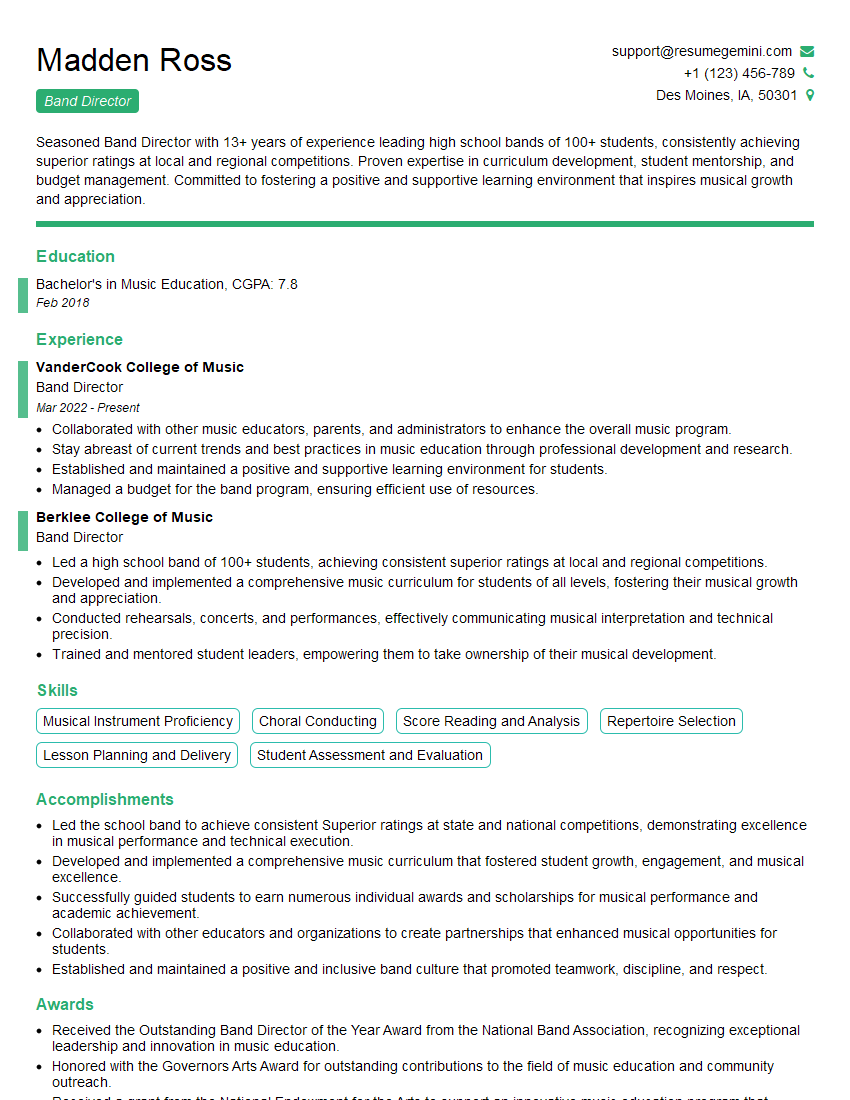
Band Director Resume Sample
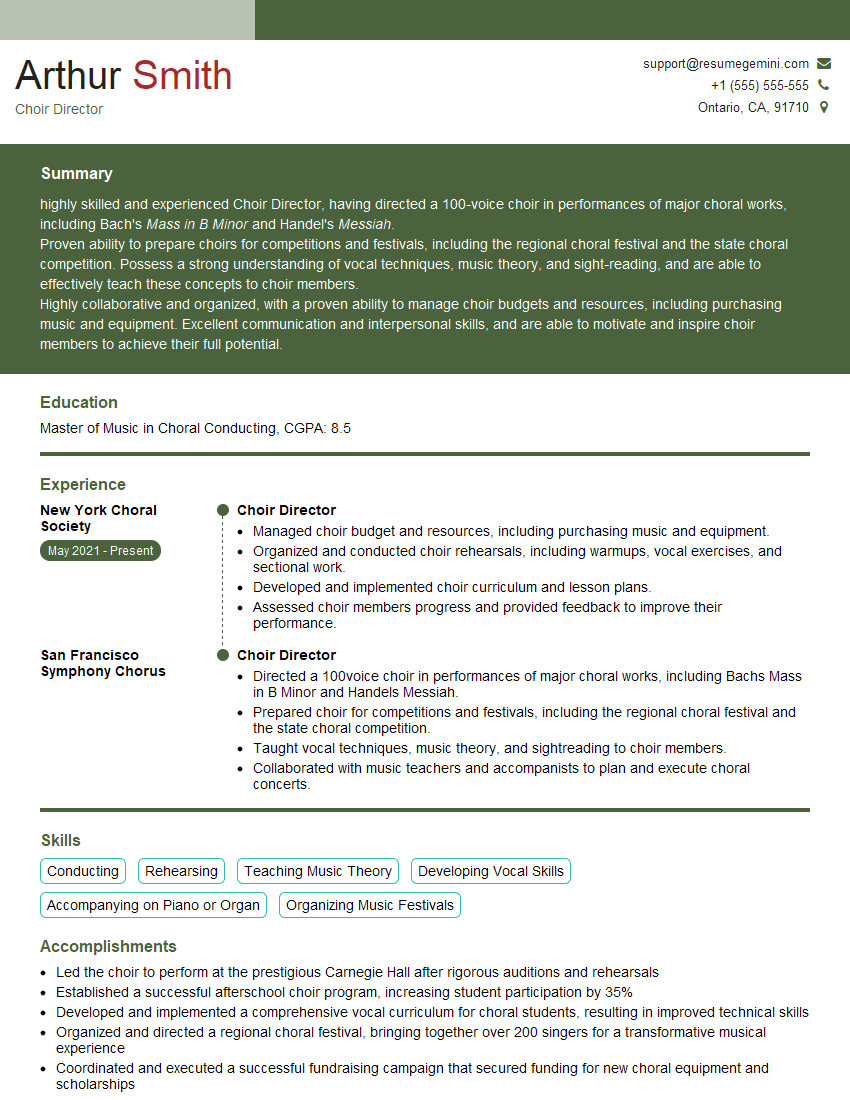
Choir Director Resume Sample
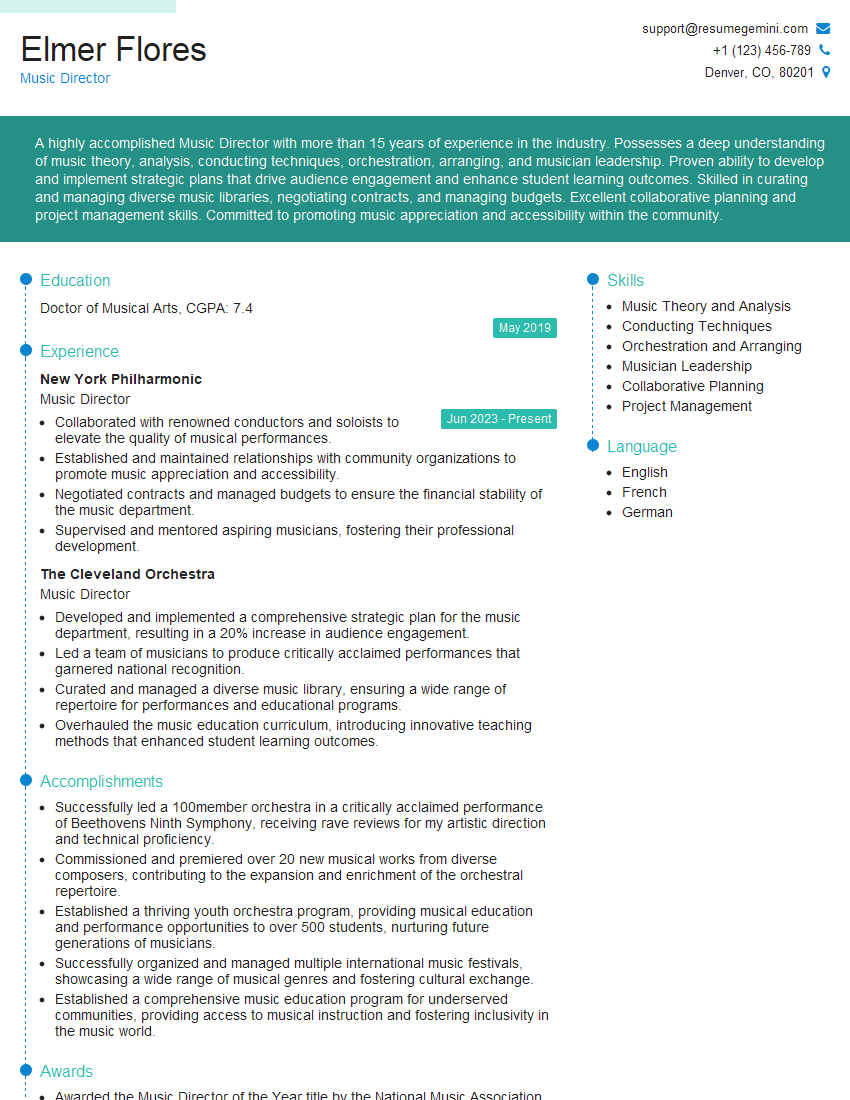
Music Director Resume Sample
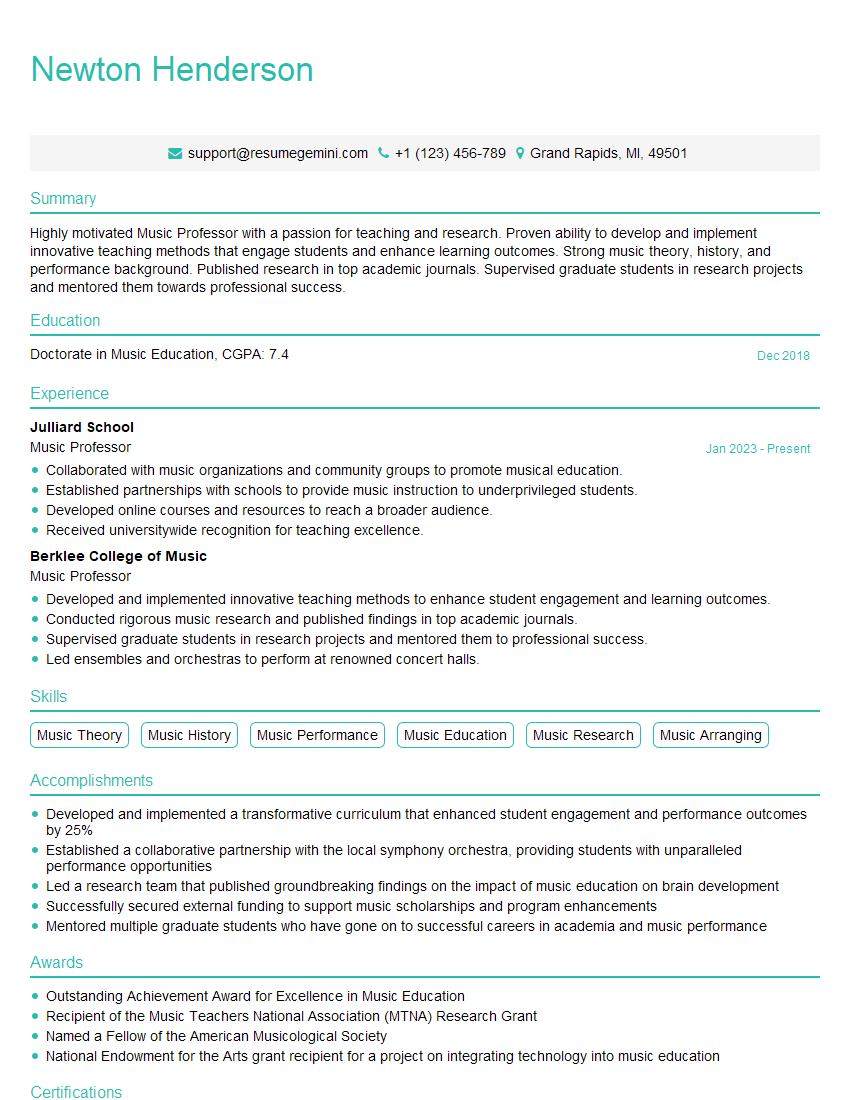
Music Professor Resume Sample

Music Teacher Resume Sample
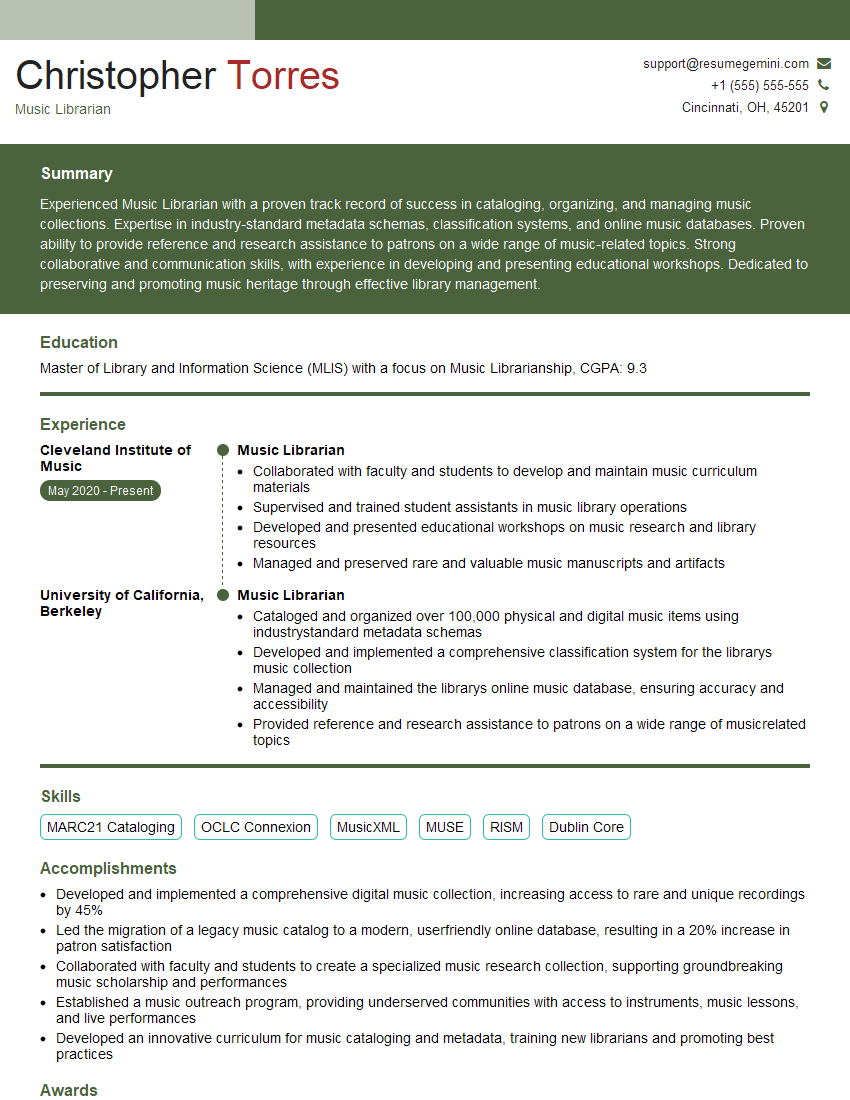
Music Librarian Resume Sample
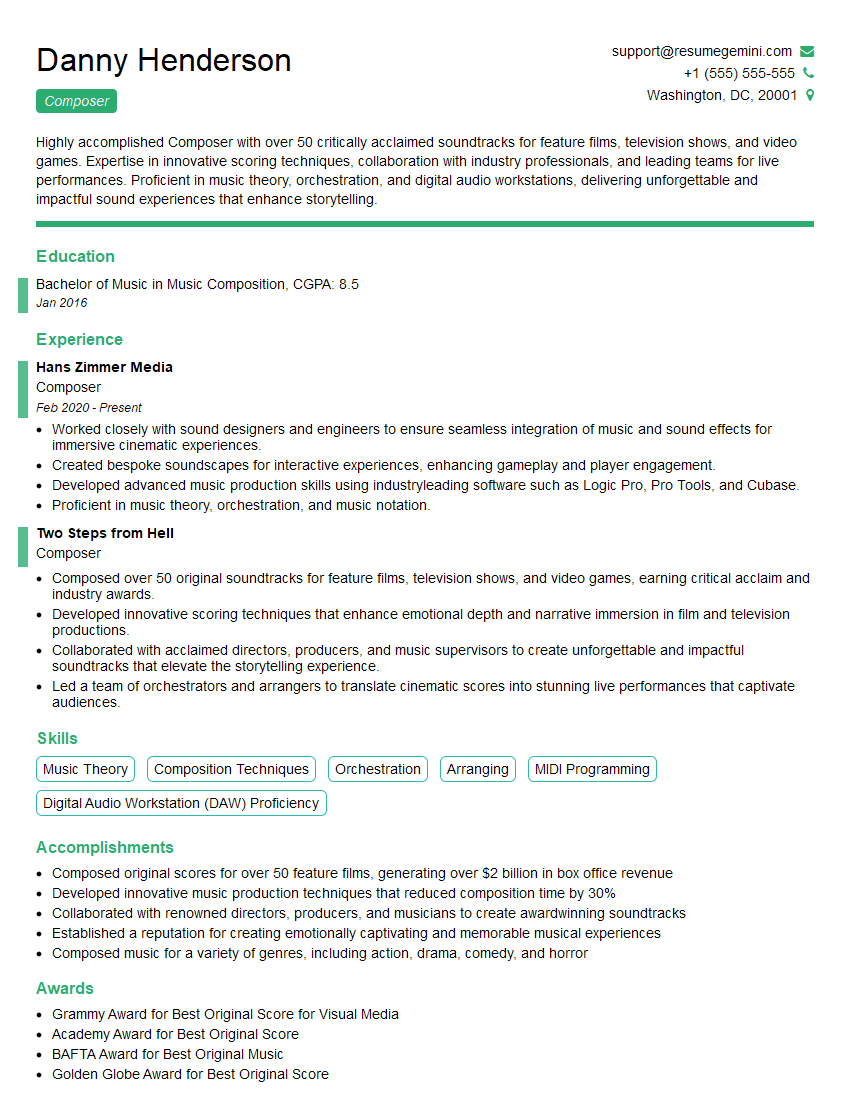
Composer Resume Sample
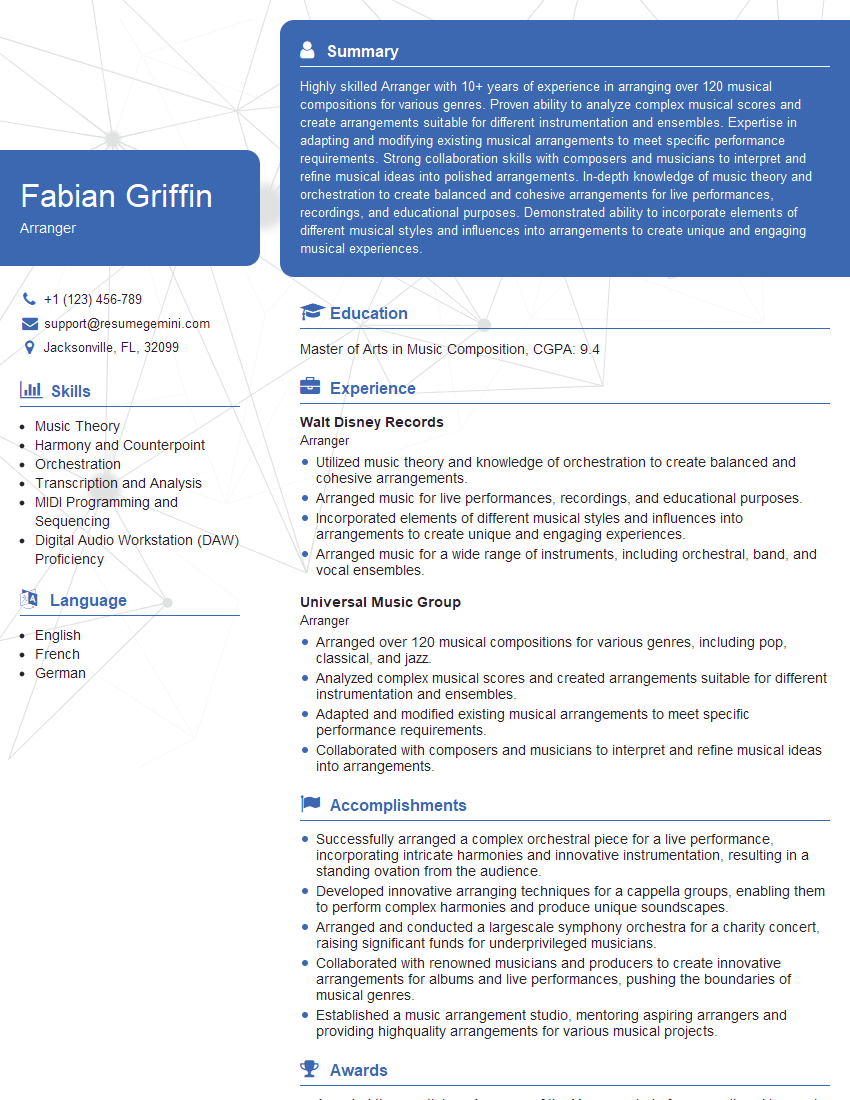
Arranger Resume Sample
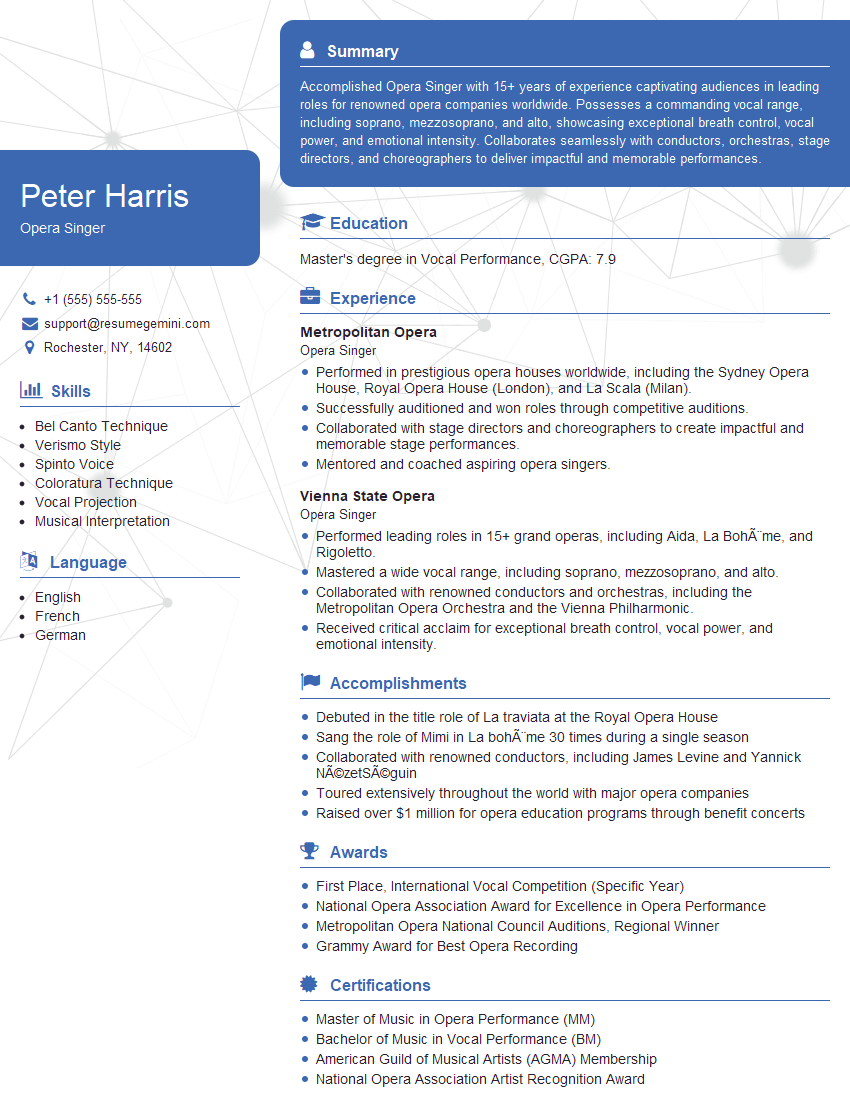
Opera Singer Resume Sample
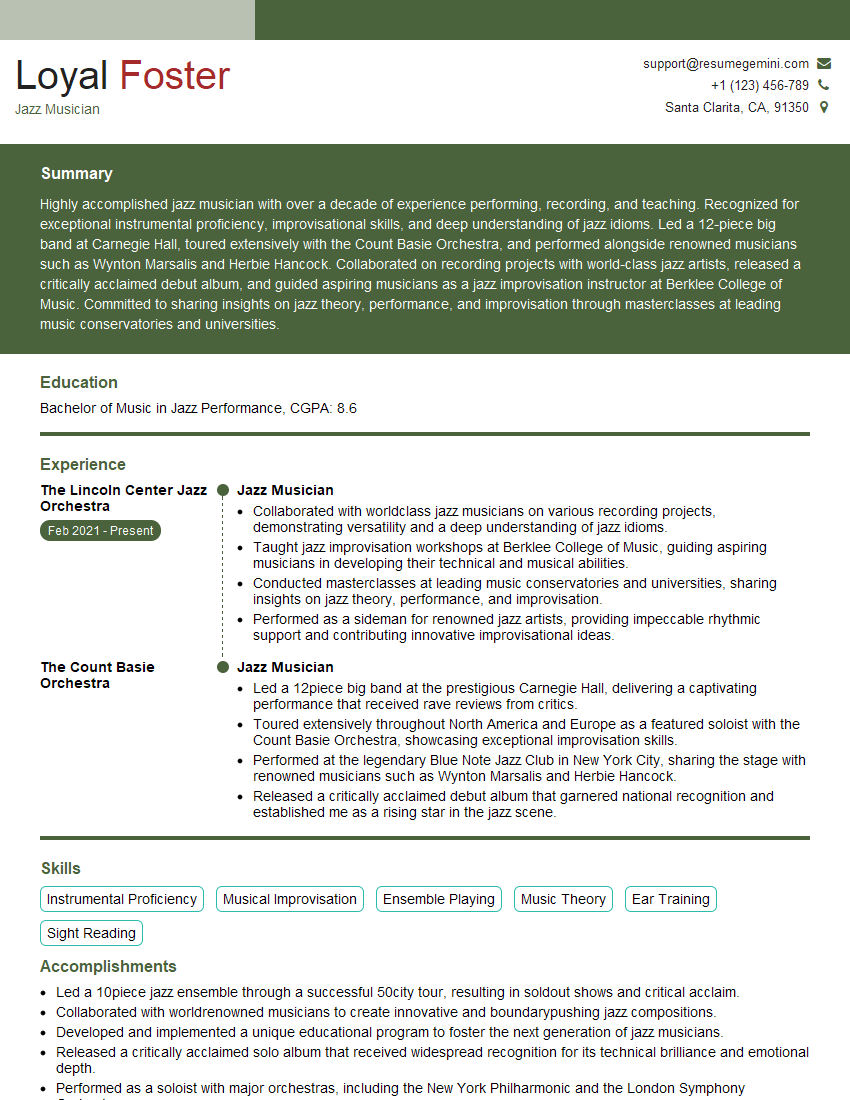
Jazz Musician Resume Sample
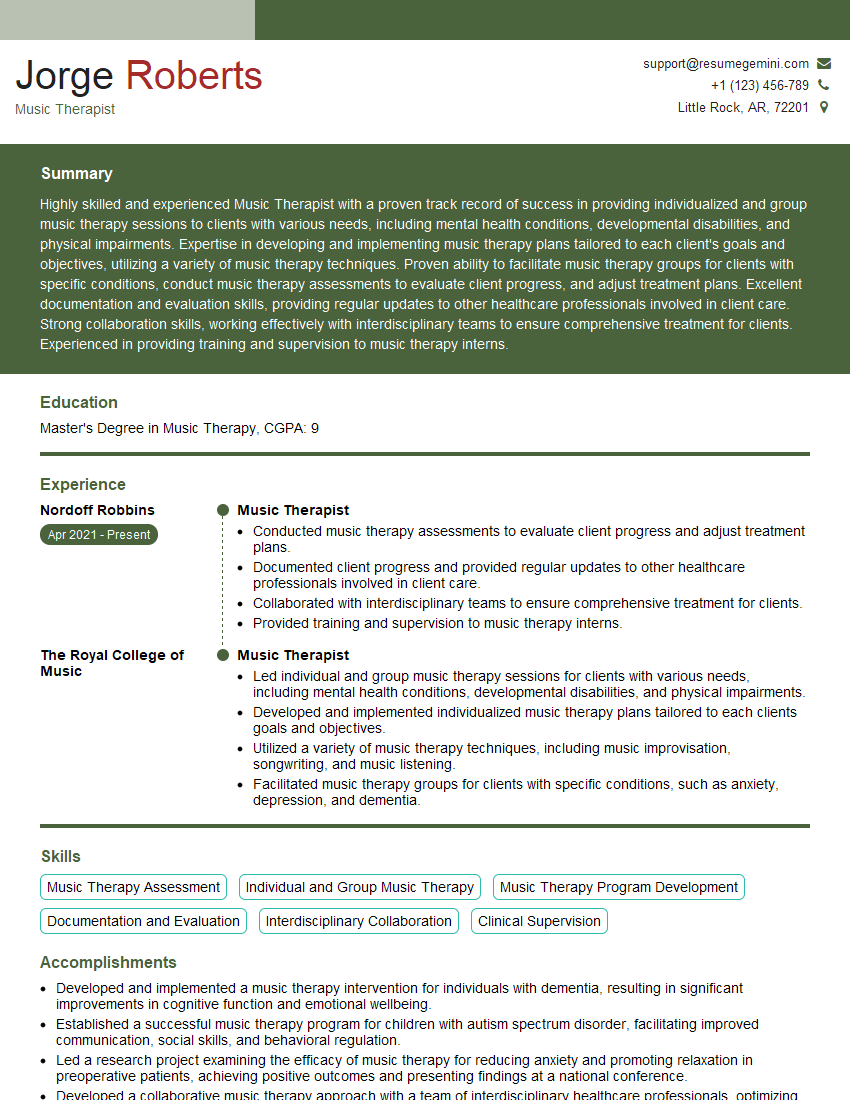
Music Therapist Resume Sample
Explore more articles
Users Rating of Our Blogs
Share Your Experience
We value your feedback! Please rate our content and share your thoughts (optional).
What Readers Say About Our Blog
Very informative content, great job.
good