Interviews are more than just a Q&A session—they’re a chance to prove your worth. This blog dives into essential Stagecraft and Production Management interview questions and expert tips to help you align your answers with what hiring managers are looking for. Start preparing to shine!
Questions Asked in Stagecraft and Production Management Interview
Q 1. Describe your experience with different stage rigging systems.
My experience encompasses a wide range of stage rigging systems, from traditional counterweight systems to more modern motorized and automated systems. I’m proficient in the safe operation and maintenance of each. For instance, I’ve extensively worked with counterweight systems, understanding the crucial role of proper weight distribution and the importance of regular inspections to prevent accidents. This involves knowing how to calculate line sets, ensure proper counterweight placement, and conduct thorough safety checks before each performance. I’ve also had significant experience with motorized rigging systems, which offer greater speed and precision, especially for complex flying effects. This includes programming cues using industry-standard software and troubleshooting any malfunctions. My experience also extends to smaller-scale rigging systems commonly used in smaller venues, demonstrating adaptability across various production scales.
I also have hands-on experience with various safety systems incorporated into modern rigging, like load cells and safety breaks. Understanding these systems is paramount to ensuring the safety of performers, crew, and the audience.
Q 2. Explain your process for creating a production schedule.
Creating a production schedule is a meticulous process that begins with a thorough breakdown of the script and design elements. First, I identify all the key scenes, special effects, and technical requirements. Then, I work backward from the performance date, meticulously scheduling rehearsals, tech rehearsals, load-in, and load-out. This often involves using a Gantt chart to visualize the timeline and dependencies between different tasks.
For example, costume fittings must occur before dress rehearsals, and set construction needs to be completed before lighting and sound setup can begin. I prioritize tasks based on their critical path – those crucial for the show’s success and which cannot be delayed. I build in buffer time to account for unexpected delays and allocate resources effectively. The schedule is then shared with all departments to ensure transparency and collaboration.
Regular updates and revisions are crucial. I utilize project management software to track progress, identify potential conflicts, and make necessary adjustments throughout the production process. The software allows team members to easily track their tasks and share updates.
Q 3. How do you manage conflicts between different production departments?
Managing conflicts between departments requires proactive communication and a collaborative approach. My strategy begins with establishing clear communication channels from the outset. Regular meetings involving representatives from all departments are crucial to discuss progress, address concerns, and resolve potential clashes. Open dialogue is key to identifying issues early, before they escalate into major problems.
For example, if the lighting department needs additional time for setup that conflicts with the set construction schedule, I facilitate a discussion between the heads of both departments to find a compromise. This might involve adjusting the schedules, re-allocating resources, or finding creative solutions. Ultimately, the goal is to find a solution that ensures the show’s quality without compromising anyone’s safety or workflow.
Mediation and problem-solving skills are invaluable in these situations, always prioritizing the overall success of the production while maintaining a professional and respectful environment for all involved.
Q 4. What software are you proficient in for stage management or design?
I’m proficient in several software applications crucial for stage management and design. My expertise includes Vectorworks for set and lighting design, allowing me to create detailed 2D and 3D models, lighting plots, and even renderings for visualizing the show. I also utilize QLab for cueing and triggering lighting, sound, and video, which offers an efficient and flexible platform for controlling complex shows. For scheduling and project management, I’m adept at using industry-standard tools like Microsoft Project and Asana, providing a structured approach to tracking tasks, deadlines, and resources.
Additionally, I possess a strong understanding of CAD software, including AutoCAD, which enhances my ability to collaborate effectively with architects and designers on projects involving complex stage structures. My software skills complement my practical experience, empowering me to efficiently execute productions of various scales.
Q 5. Describe your experience with budgeting and cost control in a production.
Budgeting and cost control are essential aspects of production management. My process begins with a detailed breakdown of all anticipated expenses, including materials, labor, rentals, and transportation. I collaborate closely with designers and other departments to develop realistic cost estimates for each element of the production. This involves researching vendors, comparing prices, and negotiating favorable rates.
Throughout the production process, I meticulously track expenses and compare them against the budget. I implement cost-saving measures where appropriate without sacrificing quality. This might involve exploring alternative materials, optimizing resource allocation, or negotiating better deals with suppliers. Regular budget reports are generated and shared with stakeholders to maintain transparency and ensure accountability.
For instance, on one production, by creatively re-purposing existing set pieces, we saved approximately 15% on material costs. This demonstrates my commitment to finding cost-effective solutions while upholding production standards.
Q 6. How do you handle unexpected technical issues during a performance?
Handling unexpected technical issues during a performance requires a calm, decisive, and proactive approach. My first step is to assess the situation quickly and accurately, identifying the nature and severity of the problem. This often involves close collaboration with the technical crew, utilizing the communication systems we have in place. Then, I implement a pre-determined contingency plan if one exists for that particular issue. If not, I work with the team to develop a quick, safe solution that minimizes disruption to the performance.
For example, if a lighting fixture malfunctions, we might have a backup fixture ready to be swiftly installed. Or, if a sound issue occurs, we may have an alternate audio source prepared. The key is to have a well-rehearsed team that can respond effectively and efficiently in a crisis. Clear communication between departments is vital in these situations to keep everyone informed and working towards a common goal – a smooth recovery with minimal audience disruption.
Post-performance, a detailed analysis of the incident is conducted to understand the root cause and implement preventive measures for future performances, thereby continuously improving our preparedness for unexpected events.
Q 7. Explain your understanding of health and safety regulations in a theatre environment.
Health and safety are paramount in a theatre environment. My understanding encompasses a broad range of regulations and best practices designed to protect performers, crew, and audience members. This includes, but isn’t limited to, adhering to fire safety regulations, ensuring proper electrical safety procedures, maintaining safe working practices for handling equipment like lighting and sound, and implementing risk assessments for all aspects of the production. I’m intimately familiar with relevant legislation such as OSHA standards, and I make sure all team members are aware of and trained in safety procedures.
Before each performance, I conduct thorough safety checks of the stage, ensuring all equipment is properly secured and functioning correctly. I make sure there are clearly designated emergency exits, appropriate fire suppression systems in place, and that emergency procedures are well-understood by all. Furthermore, I emphasize the importance of personal protective equipment (PPE) for those handling potentially hazardous materials or equipment. Creating a culture of safety and responsibility is an ongoing priority and is built into our daily workflow.
Q 8. How do you ensure clear communication within a large production team?
Effective communication is the backbone of any successful production. In a large team, this means implementing a multi-pronged approach. Firstly, I establish a clear hierarchy and communication chain, ensuring everyone understands their reporting structure and who to contact for specific issues. Secondly, I utilize various communication tools: daily production meetings are mandatory for key updates and problem-solving, while email and project management software (such as Asana or Monday.com) are used for detailed task assignments, progress tracking, and document sharing. Finally, I emphasize open communication – fostering an environment where team members feel comfortable raising concerns or seeking clarification. For example, during a recent large-scale musical production, we used a dedicated Slack channel for each department (lighting, sound, stage crew etc.), facilitating quick communication within specific teams, while maintaining a central channel for overall production updates. This prevented information overload and ensured clarity across the board.
Q 9. What is your experience with drafting and interpreting technical drawings?
I’m proficient in reading, interpreting, and drafting technical drawings, essential for stagecraft and production management. My experience encompasses a wide range of drawings, from architectural plans detailing set dimensions and load-bearing capabilities to detailed lighting plots specifying fixture positions, angles, and color schemes. I’m also familiar with CAD software, such as AutoCAD and Vectorworks, allowing me to create and modify drawings as needed. For instance, on a recent theatre production, I was responsible for reviewing the set designer’s plans, identifying potential safety hazards, and collaborating with the construction team to ensure the set was built to specifications and met safety regulations. My ability to interpret drawings swiftly ensures efficient construction, preventing costly delays and misinterpretations.
Q 10. Describe your experience with lighting console operation.
I possess extensive experience operating various lighting consoles, including ETC Ion, GrandMA2, and Chamsys MagicQ. My skills go beyond simply programming cues; I understand the principles of lighting design, color theory, and the practical considerations involved in achieving the desired visual effects. I can effectively program complex lighting schemes for both static and dynamic scenes, utilizing functionalities such as moving lights, followspots, and special effects. In one project, I was tasked with creating a dynamic lighting scheme for a fast-paced dance performance. I utilized the GrandMA2 console’s advanced features to precisely synchronize lighting cues with the choreography, creating a visually stunning and immersive experience. My experience extends to troubleshooting, ensuring that the entire lighting system is functioning correctly throughout the duration of a production.
Q 11. How do you manage the logistics of set construction and strike?
Managing the logistics of set construction and strike requires meticulous planning and coordination. This begins with a detailed schedule, outlining all construction phases, material procurement, and crew assignments. Close collaboration with the set designer, construction team, and stagehands is crucial to ensure seamless execution. I utilize project management tools to track progress, manage materials, and maintain an up-to-date inventory. The strike process follows a similar structured approach, with clear procedures to ensure efficient dismantling, safe material handling, and responsible waste disposal. For example, on a large-scale outdoor event, we utilized a comprehensive staging plan that minimized movement and optimized resource allocation, resulting in both a smooth and efficient build and strike.
Q 12. How familiar are you with different sound reinforcement systems?
My familiarity with sound reinforcement systems extends across various types and scales, from small-scale PA systems to large-scale concert sound rigs. I’m proficient in understanding system components, including microphones, mixers, amplifiers, speakers, and signal processing equipment. I’m knowledgeable about different speaker configurations, microphone techniques, and sound equalization strategies. My experience includes working with both analog and digital systems, and I understand the importance of sound system design principles, ensuring optimal coverage and clarity within the performance space. For example, I’ve recently worked on optimizing the sound system in a multi-purpose hall, calibrating the system to achieve even sound distribution throughout the auditorium.
Q 13. Explain your process for creating a detailed call sheet.
Creating a detailed call sheet involves more than simply listing names and call times. My process begins with a comprehensive understanding of the day’s schedule, including rehearsals, performances, load-in/load-out times, and any special events. I then organize the information logically, grouping individuals by department (e.g., actors, crew, technicians). Essential information such as contact details, specific duties, call times, and locations is clearly stated. The call sheet also includes critical information like the production’s title, date, venue, and contact person in case of emergencies. I always create multiple versions: one for the overall production team and separate, more concise versions for specific departments or roles. This ensures that everyone has access to the relevant information they need, optimizing efficiency. For a recent show, we incorporated a colour-coded system to easily highlight priority calls and potential conflict areas, ensuring the team remained well-informed.
Q 14. How do you prioritize tasks in a fast-paced production environment?
Prioritizing tasks in a fast-paced environment demands a strategic approach. I use a combination of methods: First, I identify time-sensitive tasks – those with immediate deadlines or significant consequences for subsequent tasks. Second, I leverage project management tools to visually represent tasks and dependencies (e.g., using Gantt charts). This allows for clear identification of critical paths and potential bottlenecks. Third, I actively involve my team in the prioritization process, ensuring that everyone understands the rationale behind the choices and enabling collaborative problem-solving. I also build in buffer time to accommodate unexpected delays and facilitate efficient course correction. For example, during a show with a last-minute set change, I quickly reassessed the schedule, re-prioritizing tasks to address the alteration while minimizing disruption to other aspects of the production. This resulted in minimal downtime and ensured the show went on smoothly.
Q 15. Describe your experience with working with different types of stage lighting equipment.
My experience with stage lighting encompasses a wide range of equipment, from traditional incandescent instruments to the latest LED fixtures. I’m proficient in using Fresnels (for soft, diffused light), ellipsoidal spotlights (for sharp, focused beams), PAR cans (for wash lighting), and cyclorama lighting (for background washes). I understand the principles of color mixing using gels and color temperature adjustments on LED fixtures. For instance, in a recent production of Hamlet, we used a combination of warm-toned Fresnels to illuminate the castle interiors, contrasting them with cooler-toned ellipsoidals to highlight specific characters during dramatic moments. Working with moving lights, like automated spotlights and wash lights, is another key skill, enabling dynamic lighting designs that shift with the narrative. I’m also familiar with lighting control consoles and programming software, allowing me to create complex cue sequences.
Beyond the equipment itself, I’m skilled in lighting plot design and execution, considering factors such as light spill, color saturation, and the overall mood the lighting should evoke. I understand the importance of safety regulations related to electrical power and the proper handling of lighting equipment.
Career Expert Tips:
- Ace those interviews! Prepare effectively by reviewing the Top 50 Most Common Interview Questions on ResumeGemini.
- Navigate your job search with confidence! Explore a wide range of Career Tips on ResumeGemini. Learn about common challenges and recommendations to overcome them.
- Craft the perfect resume! Master the Art of Resume Writing with ResumeGemini’s guide. Showcase your unique qualifications and achievements effectively.
- Don’t miss out on holiday savings! Build your dream resume with ResumeGemini’s ATS optimized templates.
Q 16. How do you troubleshoot audio equipment malfunctions?
Troubleshooting audio malfunctions requires a systematic approach. My process begins with identifying the source of the problem. Is it the microphone, the mixer, the speakers, or something else in the signal chain? I use a combination of visual inspection (checking cables for damage, ensuring connections are secure), listening tests (identifying distorted or absent sound), and using test equipment (like multimeters to check for power or signal continuity).
For example, if a microphone isn’t working, I’d first check the cable connection at both the microphone and the mixer. I’d then check the microphone’s battery or phantom power supply. If the problem persists, I might swap out the microphone for a known working one to isolate the issue. If the issue is with the mixer, I’d check input levels, gain settings, and the signal routing. Using a signal tracer could help me isolate a break in the cable or a faulty component. I always have a spare set of cables and essential components on hand to minimize downtime.
Documentation is crucial. After each troubleshooting event, I record the issue, the steps taken to resolve it, and the outcome in a logbook to aid in future problem-solving and prevent recurrence.
Q 17. What methods do you use to track inventory and equipment?
Inventory and equipment tracking is essential for efficient production management. I utilize a combination of methods, integrating physical and digital systems for comprehensive control. Each piece of equipment is tagged with a unique identifier (barcode or RFID tag). I use a database (spreadsheet or dedicated inventory management software) to record this information, including the equipment’s type, condition, location, and rental/purchase history. Regular physical checks are done to verify the database accuracy. This also allows us to generate reports for insurance purposes.
For example, in a recent large-scale musical, we employed a dedicated software solution with real-time tracking capabilities. This not only helped maintain an accurate inventory but also facilitated efficient equipment retrieval during load-in and strike. This minimized delays and prevented losses.
Q 18. How do you ensure the safety of performers and crew during a production?
Ensuring the safety of performers and crew is paramount. My approach involves proactive risk assessment and mitigation strategies. Pre-production planning includes a thorough risk assessment of the production space, identifying potential hazards such as tripping hazards, electrical hazards, and fire hazards. This involves creating comprehensive safety plans that address specific risks and establish procedures to prevent accidents. I regularly conduct safety briefings for crew members and performers, emphasizing the importance of adhering to safety guidelines, using appropriate Personal Protective Equipment (PPE) and reporting any potential safety concerns.
For instance, I always ensure that all power cables are properly secured and away from walkways. For productions involving pyrotechnics or special effects, I work closely with licensed professionals, ensuring that all necessary safety protocols are in place and strictly adhered to. Emergency procedures, including evacuation routes and communication protocols, are communicated clearly to all involved.
Q 19. What experience do you have with different types of sound effects and their implementation?
My experience with sound effects spans a wide range of techniques and technologies. I’m proficient in using both pre-recorded sound effects libraries and creating custom sound effects using audio editing software. I understand how to manipulate and layer sounds to create unique and immersive soundscapes, blending various effects to enhance the narrative. For example, in a recent theatre production, we used a combination of foley effects (live sound created during the performance) along with pre-recorded effects to create the sounds of a raging storm. This layering increased the emotional impact of the scene.
The implementation involves careful synchronization of sound effects with the action on stage, and appropriate placement and balance of the sounds within the overall audio mix. I’m also familiar with different types of audio equipment used for creating and playing sound effects, including sound effect players, digital audio workstations (DAWs), and audio mixers.
Q 20. How do you manage the expectations of different stakeholders in a production?
Managing stakeholder expectations is a crucial aspect of production management. I employ clear and consistent communication as a cornerstone of my approach. Regular meetings and updates (through email or project management software) are essential to keep all parties informed about the production’s progress, potential challenges, and any necessary adjustments. I always emphasize active listening and empathy in understanding the needs and concerns of different stakeholders, including the director, performers, designers, and the production team.
For example, in a recent project with conflicting artistic visions between the director and the set designer, I facilitated open communication, encouraging both parties to articulate their goals and concerns. By actively mediating and offering solutions, I was able to find a compromise that satisfied both parties and produced a successful outcome. Maintaining transparent communication prevents misunderstandings and builds trust.
Q 21. Describe your experience with different types of stage makeup and application.
My experience with stage makeup extends across various techniques and applications. I’m proficient in applying different types of makeup, including foundation, contouring, highlighting, and special effects makeup. I understand the importance of using high-quality, theatrical-grade makeup that is durable and long-lasting under stage lighting. I’m familiar with different types of makeup products (creams, powders, paints) and their application techniques. In a recent play, I created realistic aging effects for an older character using prosthetics and makeup techniques, transforming the actor convincingly. I also understand how to create character-specific looks, taking into consideration the character’s personality and the overall aesthetic of the production.
Hygiene is a top priority. I always sterilize all makeup applicators between uses, maintaining strict sanitary conditions to prevent the spread of infection among actors. I also know about makeup removal techniques and have experience in safely removing complex makeup effects.
Q 22. How familiar are you with various theatrical fabrics and their properties?
My familiarity with theatrical fabrics extends beyond simple recognition; I understand their properties deeply, impacting design, construction, and budget. For instance, knowing the drape of a velvet versus the sheerness of chiffon is crucial for costume design, and understanding the fire retardancy of certain fabrics is paramount for safety.
- Velvet: Luxurious drape, excellent for royalty or opulent scenes, but can be expensive and difficult to work with.
- Silk: Elegant sheen and drape, but delicate and requires careful handling. Perfect for period pieces or special occasions.
- Muslin: Inexpensive and versatile, often used for mock-ups and patterns, offering a practical approach during the design phase.
- Scrim: A semi-transparent fabric often used for creating illusions or diffusing light. It plays a vital role in scenic design.
- Fire Retardant Fabrics: Essential for safety in all productions; I prioritize choosing FR fabrics where appropriate, understanding the different levels of fire resistance.
This knowledge allows me to make informed decisions that optimize both the aesthetic and practical aspects of a production. I consider the fabric’s weight, texture, durability, and cost alongside its aesthetic qualities when selecting materials for a project.
Q 23. Describe your experience with costume design and construction.
My experience in costume design and construction spans over [Number] years, encompassing everything from conceptualization and drafting patterns to the final stitching and finishing. I’ve worked on productions ranging from small-scale independent theatre to larger professional productions.
My process usually begins with a thorough understanding of the character and the director’s vision. I then research appropriate historical periods or styles, sketching numerous design concepts before presenting them for approval. Once approved, I create detailed patterns, source fabrics, and oversee the construction, often collaborating with a team of skilled seamstresses.
For example, on a recent production of Hamlet, I designed and constructed period-accurate costumes for the main cast. This involved extensive research into Elizabethan fashion, sourcing appropriate fabrics, and meticulously crafting each garment to meet the high standards of historical accuracy while also ensuring comfort and practicality for the actors.
Q 24. Explain your process for creating a detailed prop list and sourcing props.
Creating a detailed prop list is a crucial step in production management. My process is methodical and begins long before the production even starts. It involves careful reading of the script and close collaboration with the director and set designer to fully understand the prop needs for each scene.
I start by creating a spreadsheet with columns for each prop: description, quantity, source (build, rent, purchase), status (ordered, acquired, in use), and budget. Once the list is finalized, I begin sourcing props. This can involve building props from scratch in our workshop, renting from prop houses, purchasing from online retailers, or borrowing from other theatres. I always prioritize cost-effectiveness and practicality, ensuring the props are functional, visually appealing, and safe to use.
For example, for a recent production of A Midsummer Night’s Dream, I sourced an elaborate set of fairy wings from a prop house, built rustic wooden furniture for the forest scenes, and purchased artificial flowers from a local craft store. Each prop’s origin and cost were meticulously tracked within the spreadsheet, allowing me to maintain a clear picture of the production’s budget.
Q 25. How do you handle challenging personalities or conflicts within a team?
Handling challenging personalities and conflicts within a theatre team is an inevitable part of the job. My approach is proactive, focusing on open communication, clear expectations, and conflict resolution strategies.
I believe in fostering a collaborative and respectful environment where everyone feels heard and valued. Addressing conflicts directly and calmly, using active listening techniques, is crucial. I focus on identifying the root cause of the disagreement rather than simply addressing the symptoms. In certain cases, mediation may be needed to find mutually beneficial solutions. Sometimes, setting clear boundaries is necessary to protect the production’s progress and maintain a positive working atmosphere.
For example, in one production, disagreements arose between the set designer and the lighting designer over the use of a specific stage area. I facilitated a meeting where both could express their concerns and find a compromise that satisfied both their artistic visions while respecting the production’s constraints.
Q 26. What is your experience with creating and maintaining a production database?
I have extensive experience creating and maintaining production databases using software like FileMaker Pro, Airtable, or Google Sheets, adapting the system to meet each production’s specific needs. The database serves as a centralized repository for all production-related information, ensuring efficient organization and accessibility.
The database typically contains information on: costumes, props, set pieces, personnel, scheduling, budgets, and contact information. For example, within the costume section, I may track individual costume components, actors assigned to specific costumes, alteration notes, and even images of the finished costumes. This allows for easy tracking and efficient management of all elements, reducing errors and confusion.
The database is designed for ease of use and accessibility by the whole team, ensuring transparent communication and streamlined workflows. Regular updates and backups are essential for data integrity and safeguarding critical production information.
Q 27. How do you ensure that a production runs smoothly within a specific budget?
Ensuring a production runs smoothly within a specific budget requires meticulous planning and continuous monitoring. This starts with a detailed budget breakdown at the outset, which I create by carefully estimating costs for every element: set construction, costumes, props, lighting, sound, labor, marketing, and so on.
Throughout the production process, regular budget tracking is essential. This involves comparing actual expenses against the projected budget, identifying any variances early on. I utilize software to track expenses, allowing me to foresee potential overruns and make adjustments before they become major issues. This may include finding cost-effective alternatives for materials or services, negotiating with vendors, and optimizing resource allocation.
For example, if the set construction costs exceeded the budget, I might explore alternative materials or simplify the set design without compromising the overall aesthetic or functionality. Transparent communication with the production team is also crucial, keeping everyone informed about the budget and potential challenges.
Q 28. Describe your experience with post-production tasks, such as strike and equipment return.
Post-production tasks, like strike and equipment return, are crucial for efficient production closure and prevent issues like lost or damaged equipment. My process is methodical and well-organized to minimize disruption and ensure accountability.
Immediately following the final performance, I create a detailed strike plan outlining a step-by-step procedure for dismantling the set, costumes, and props. This plan assigns responsibilities to team members, detailing the appropriate handling and storage of all equipment. Careful documentation of the condition of each item is essential before and after the strike. This aids in future rentals and ensures proper return of borrowed or rented items.
For example, each prop is inspected for damage before being returned to its original source. A complete inventory list is compared against what was originally borrowed or rented to ensure nothing is missing. All rented equipment is cleaned and packaged according to the supplier’s requirements, accompanied by the relevant paperwork. This thorough process ensures a smooth return, avoiding potential penalties and maintaining positive relationships with vendors.
Key Topics to Learn for Stagecraft and Production Management Interview
- Production Planning & Scheduling: Understanding timelines, budgeting, resource allocation, and the critical path method. Practical application: Developing a realistic production schedule for a theatrical performance, considering all aspects from set construction to lighting cues.
- Set Design & Construction: Knowledge of drafting, materials, construction techniques, and safety regulations. Practical application: Analyzing a set design and identifying potential challenges in its construction and execution.
- Lighting & Sound Design: Familiarity with lighting and sound equipment, design principles, and technical operation. Practical application: Troubleshooting technical issues during a live performance and implementing creative solutions.
- Budgeting & Cost Control: Mastering cost estimation, tracking expenses, and managing resources effectively. Practical application: Negotiating with vendors and finding cost-effective solutions without compromising quality.
- Crew Management & Teamwork: Effective communication, delegation, conflict resolution, and fostering a collaborative environment. Practical application: Motivating and coordinating a large team to achieve shared goals under pressure.
- Health & Safety Regulations: Thorough understanding of workplace safety procedures and risk assessment methodologies. Practical application: Implementing safety protocols on a set to prevent accidents and injuries.
- Technical Problem Solving: Ability to diagnose and resolve technical issues quickly and efficiently. Practical application: Developing contingency plans for unexpected problems during a live event.
Next Steps
Mastering Stagecraft and Production Management opens doors to exciting and fulfilling careers in theatre, film, television, and events. A strong understanding of these areas demonstrates valuable skills highly sought after by employers. To maximize your job prospects, creating a compelling and ATS-friendly resume is crucial. ResumeGemini is a trusted resource to help you build a professional resume that showcases your skills and experience effectively. We offer examples of resumes tailored specifically to Stagecraft and Production Management to help you get started. Invest time in crafting a strong resume – it’s your first impression and a vital step in securing your dream role.
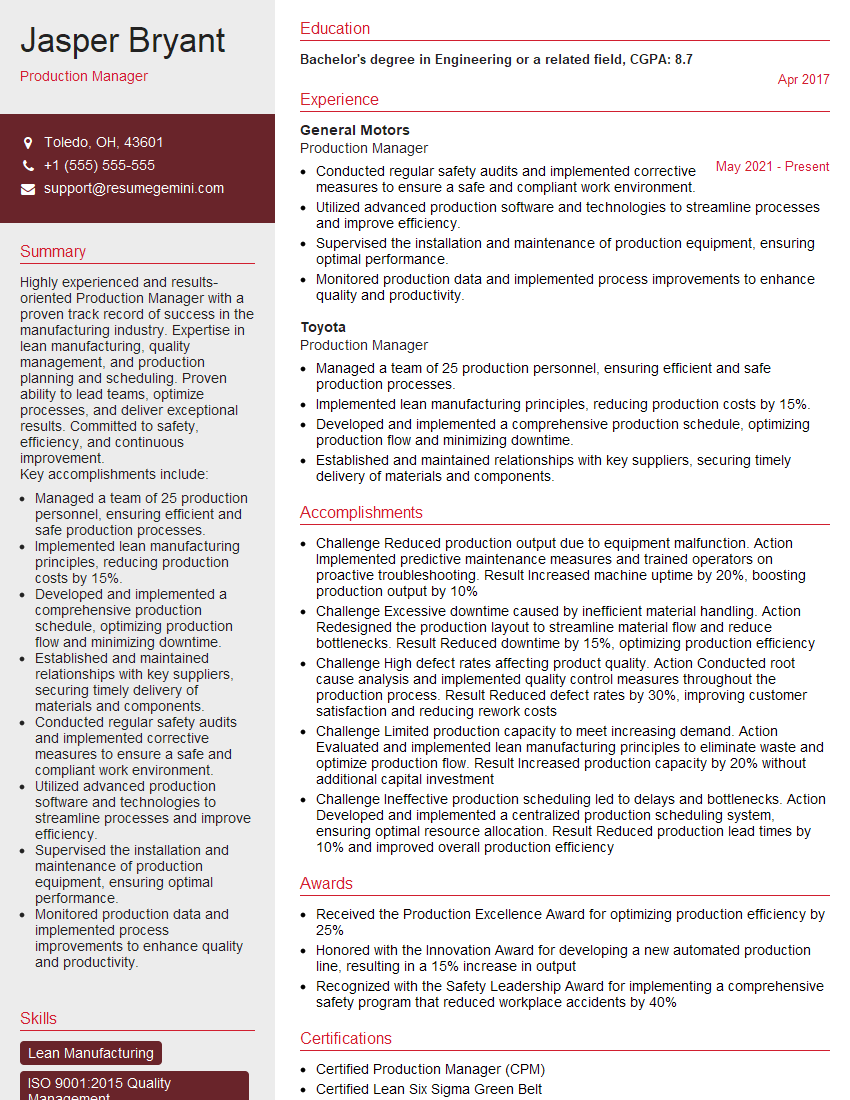
Production Manager Resume Sample
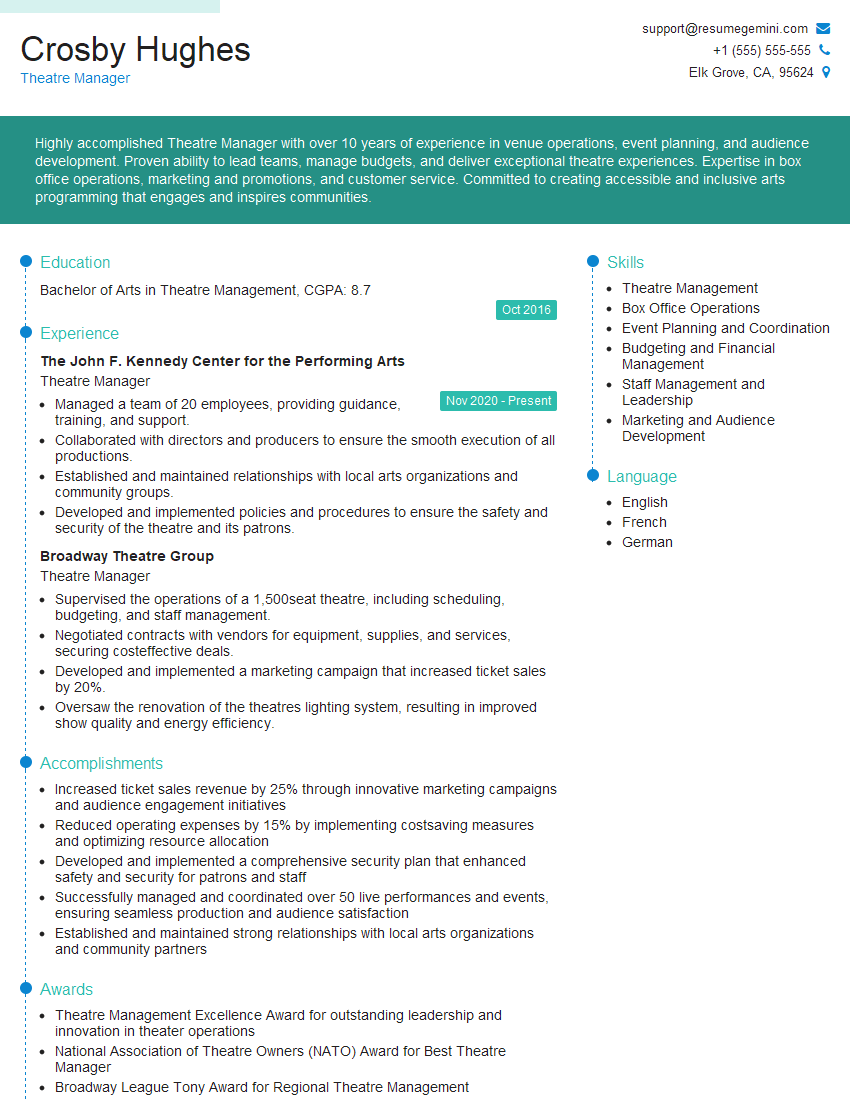
Theatre Manager Resume Sample
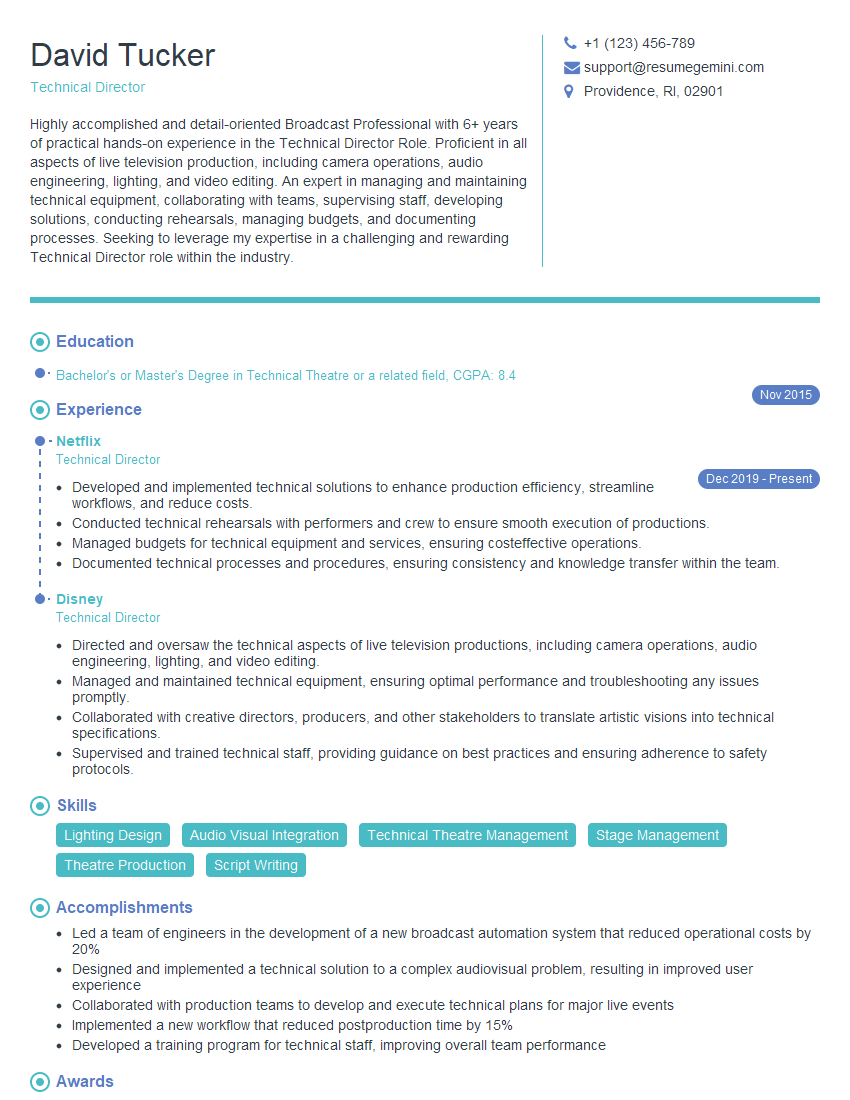
Technical Director Resume Sample

Production Coordinator Resume Sample
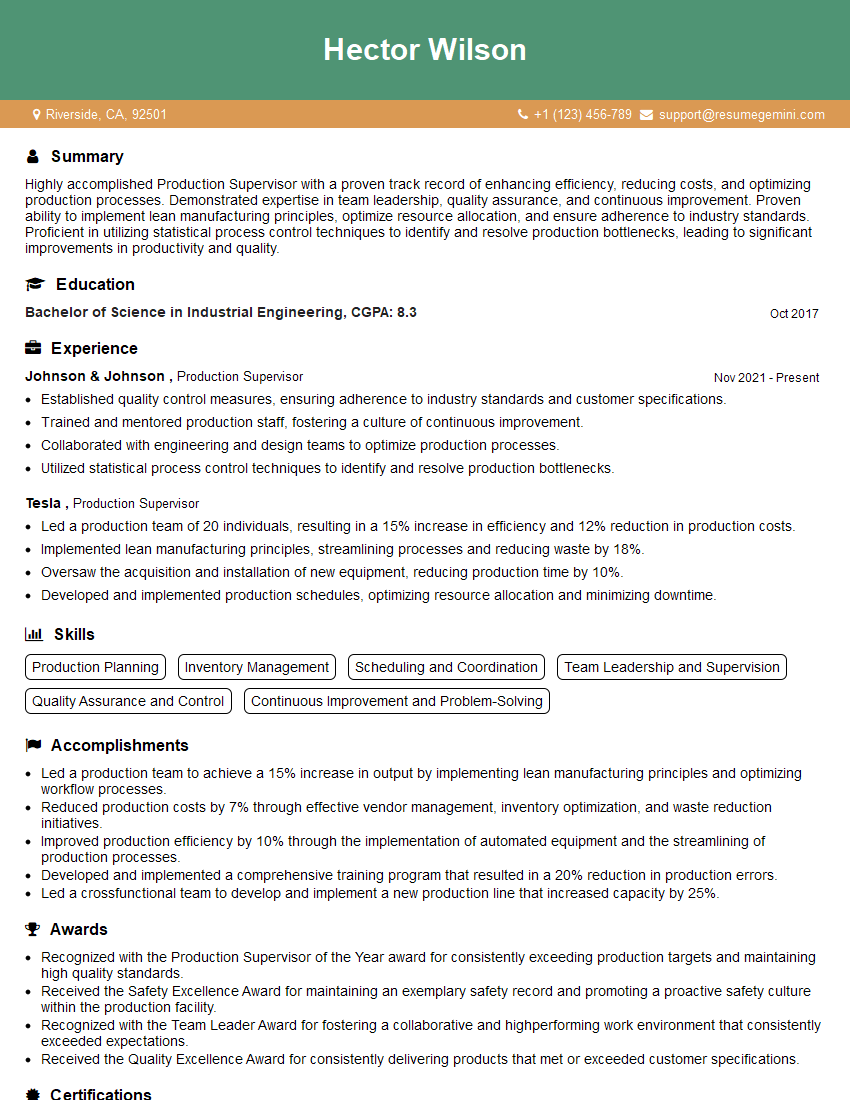
Production Supervisor Resume Sample
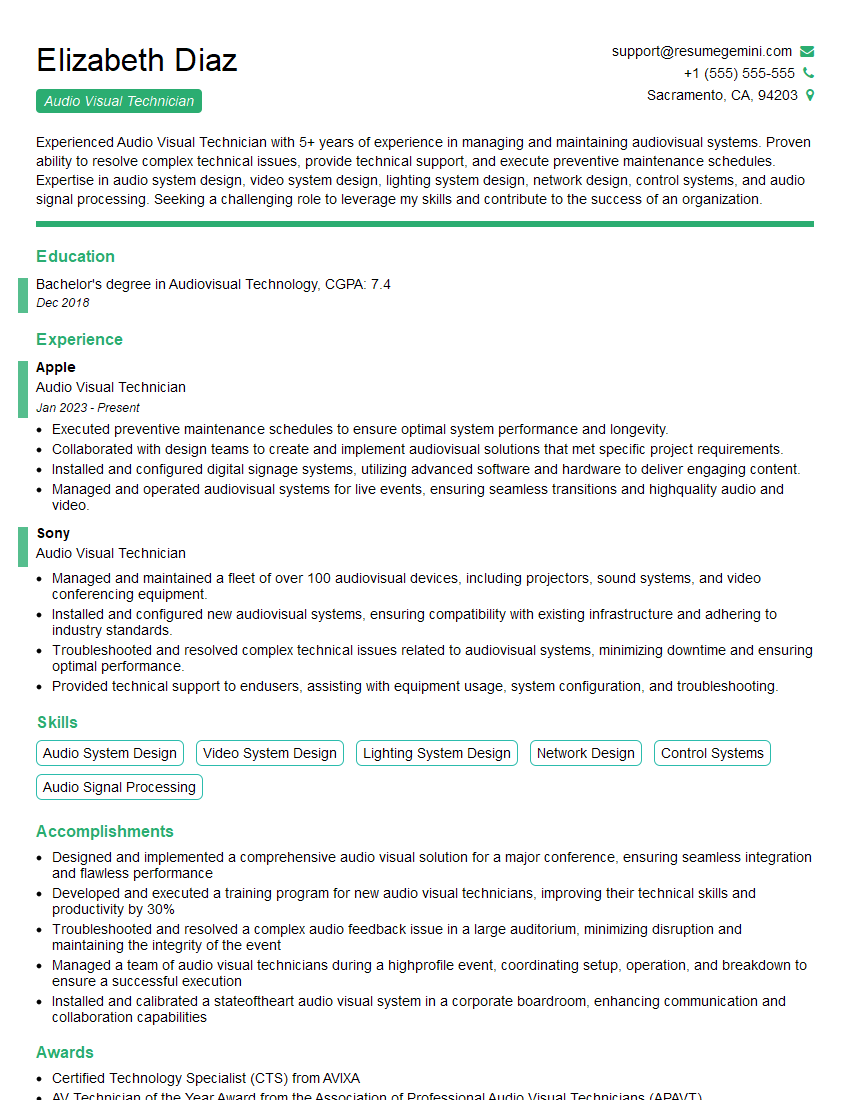
Audio Visual Technician Resume Sample
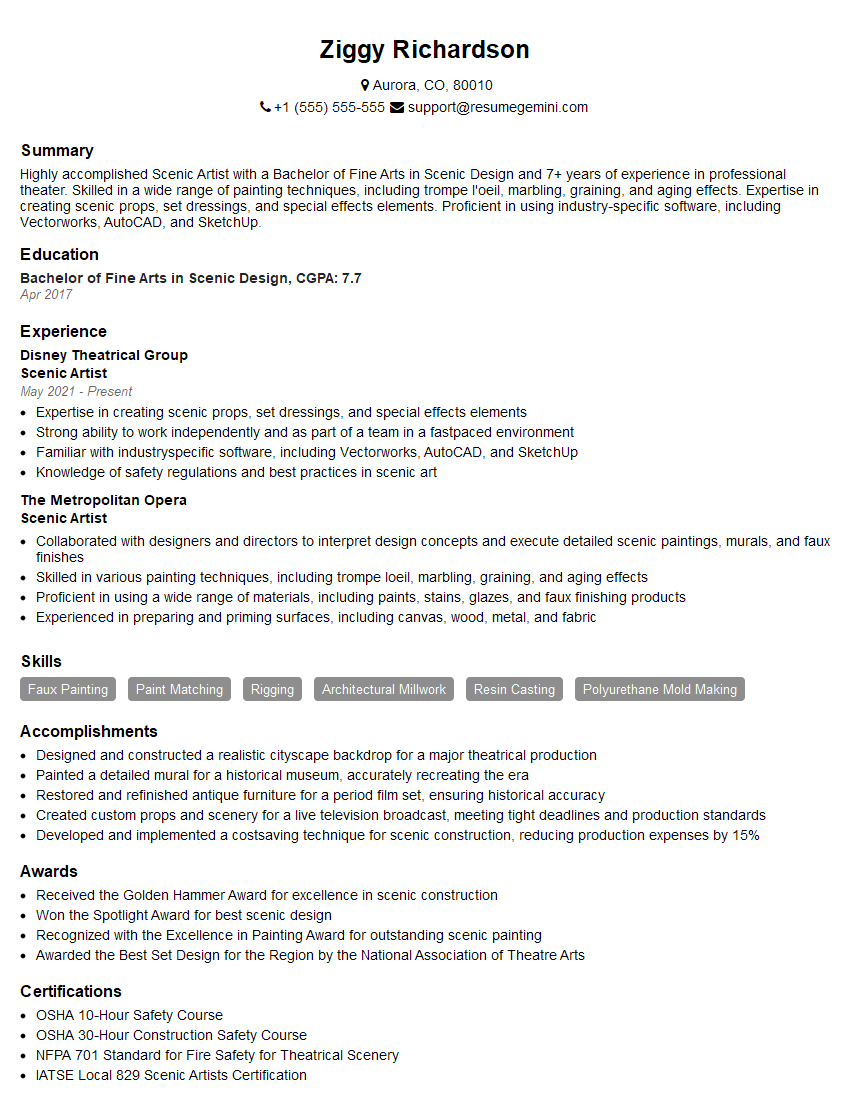
Scenic Artist Resume Sample
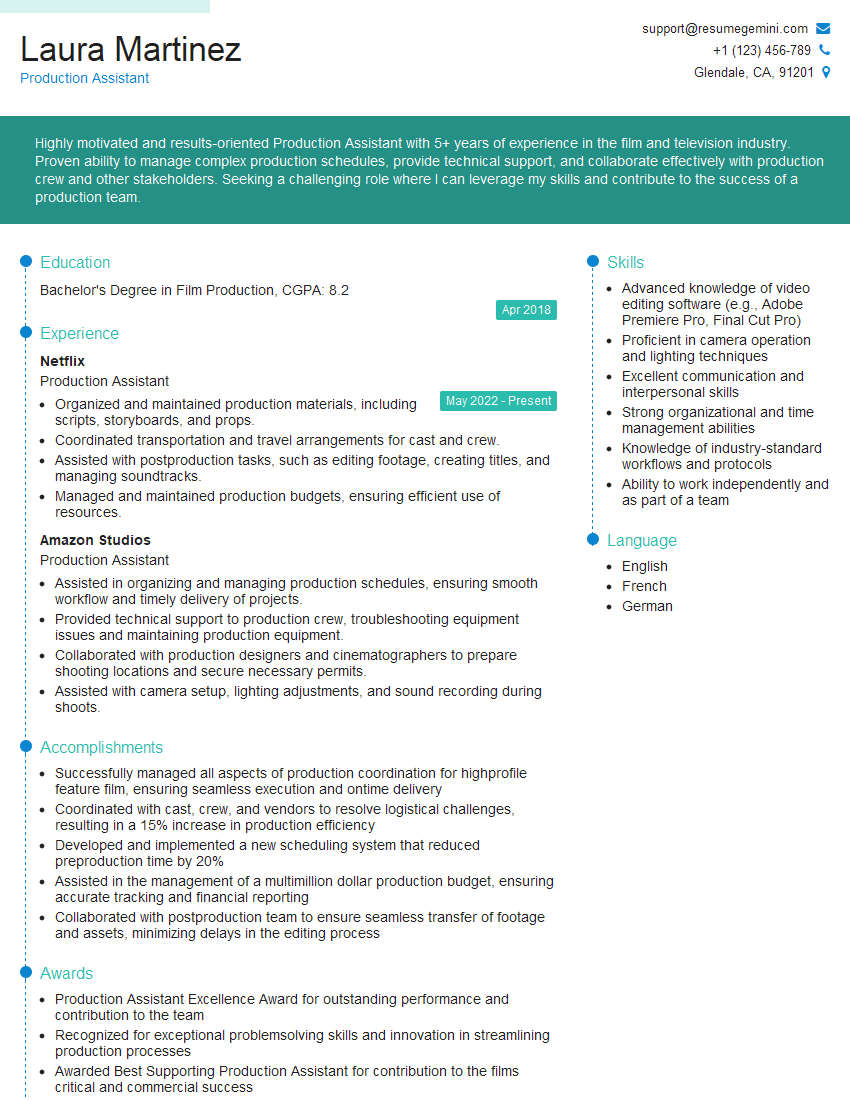
Production Assistant Resume Sample
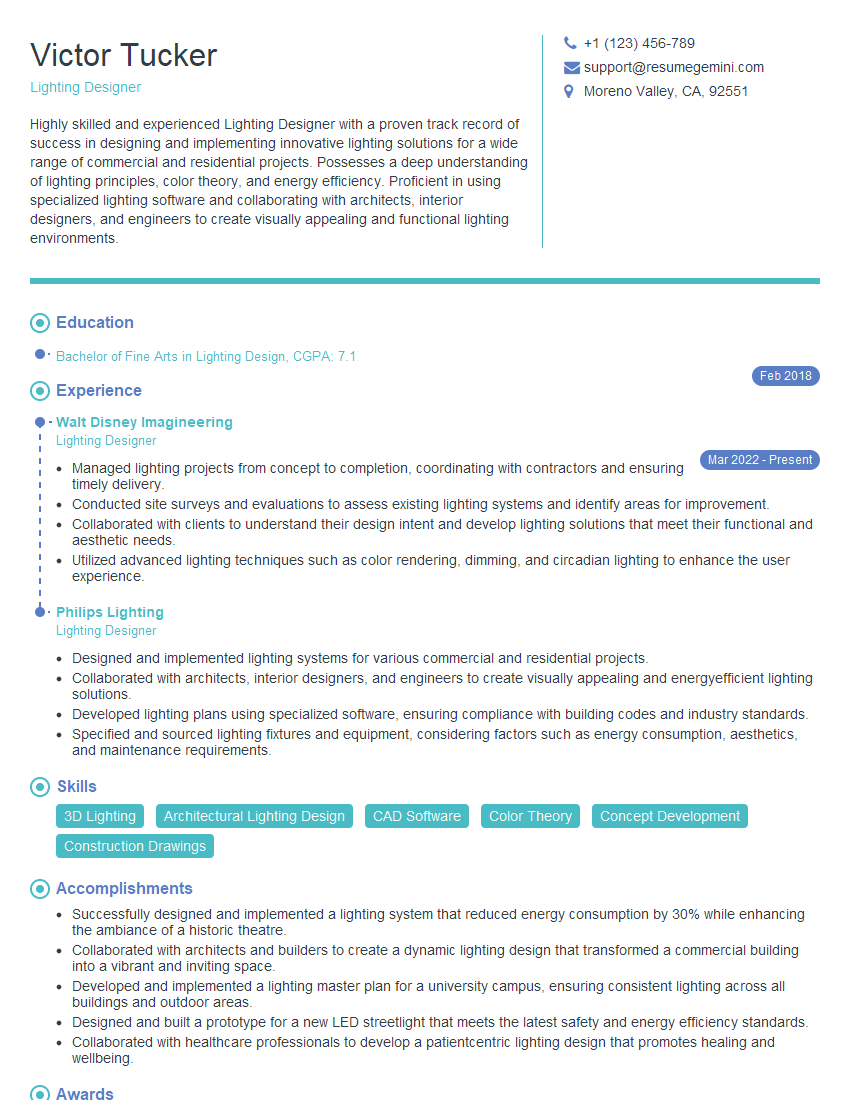
Lighting Designer Resume Sample
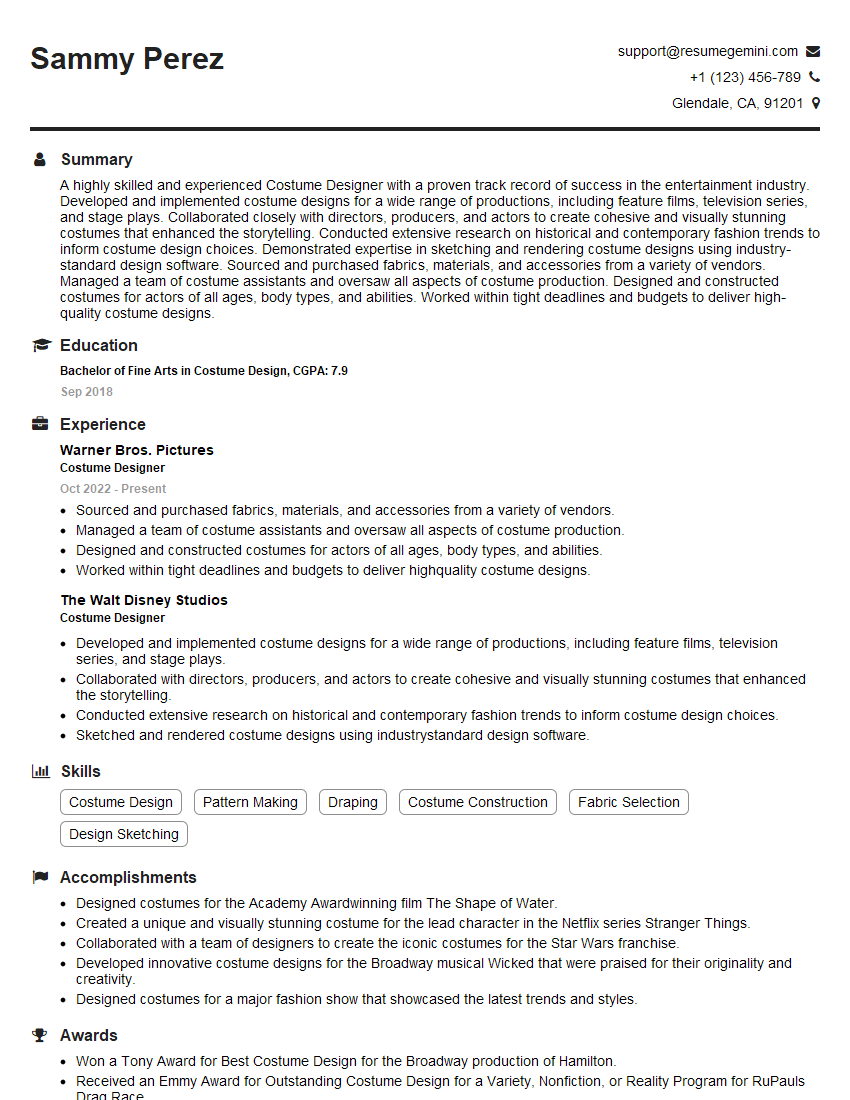
Costume Designer Resume Sample
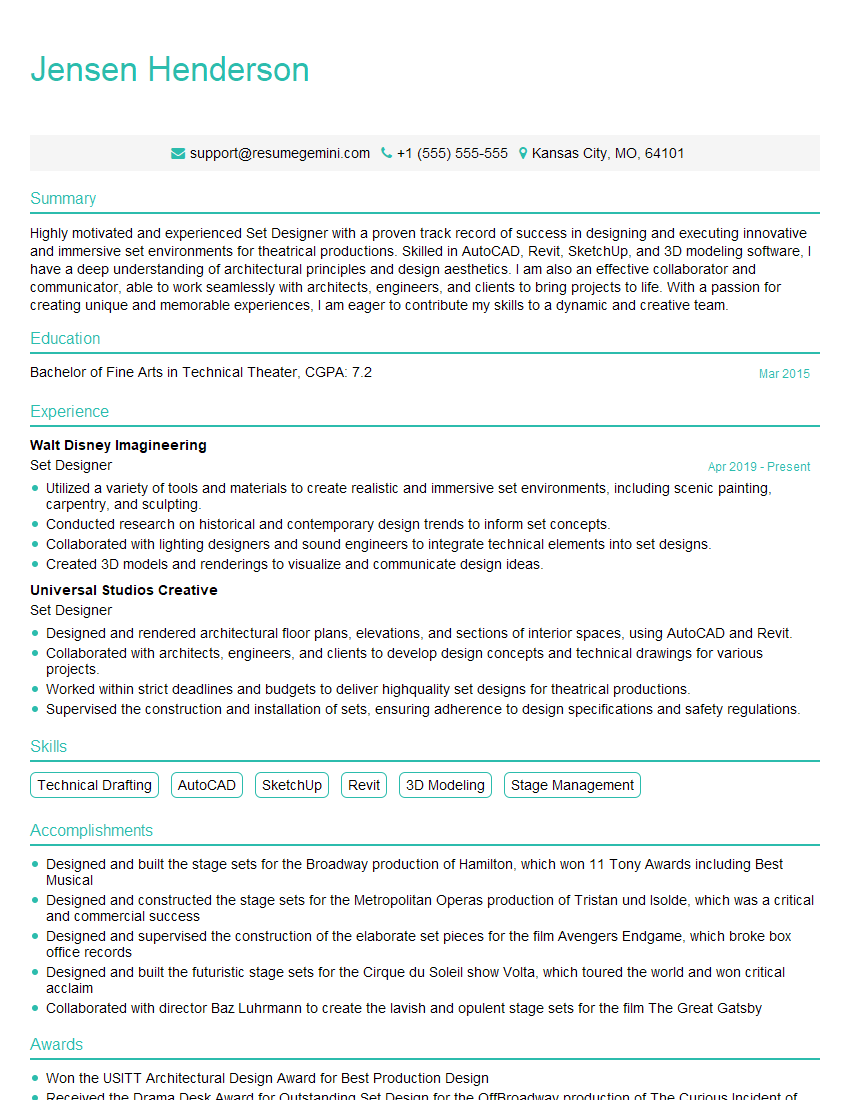
Set Designer Resume Sample
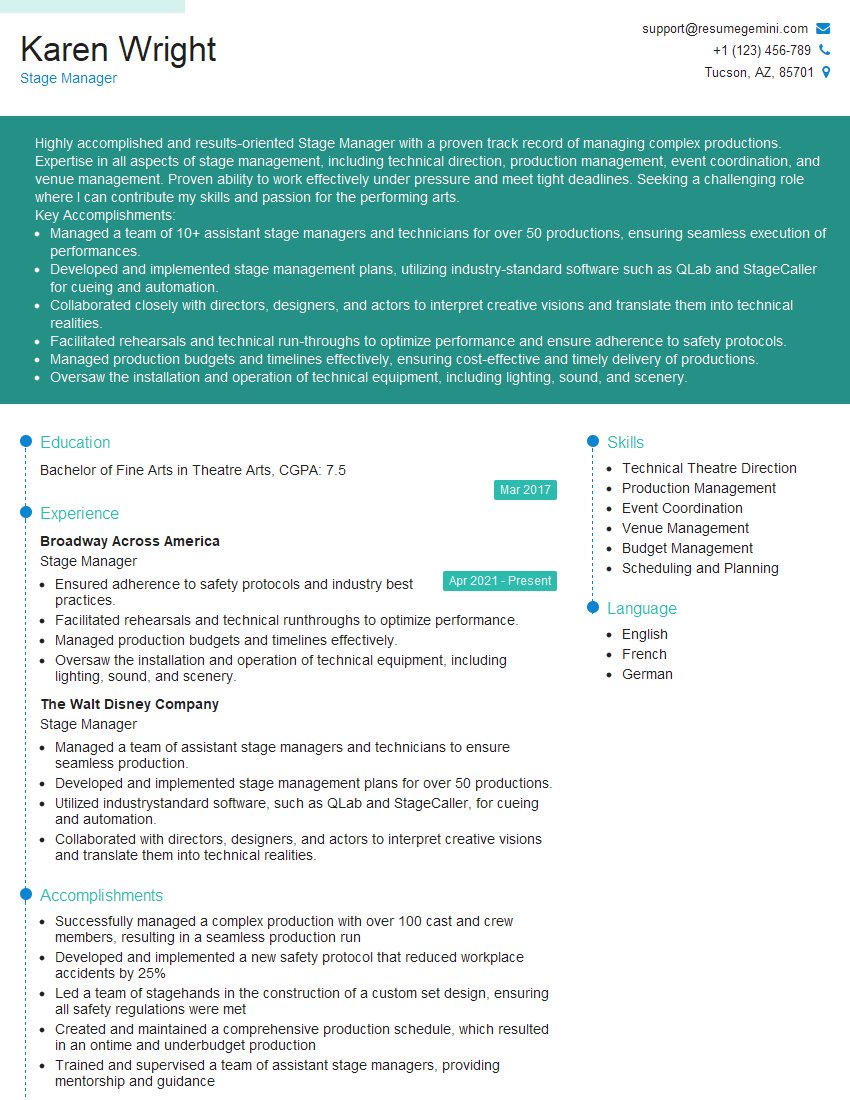
Stage Manager Resume Sample
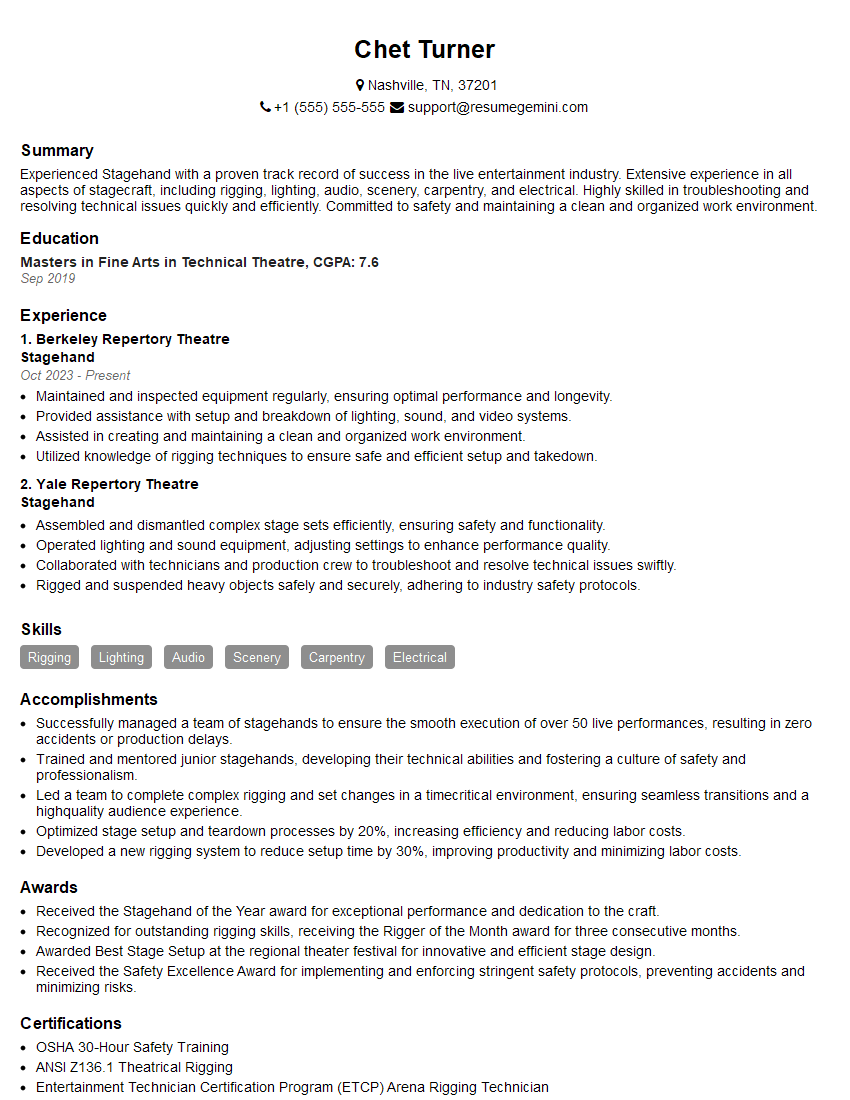
Stagehand Resume Sample
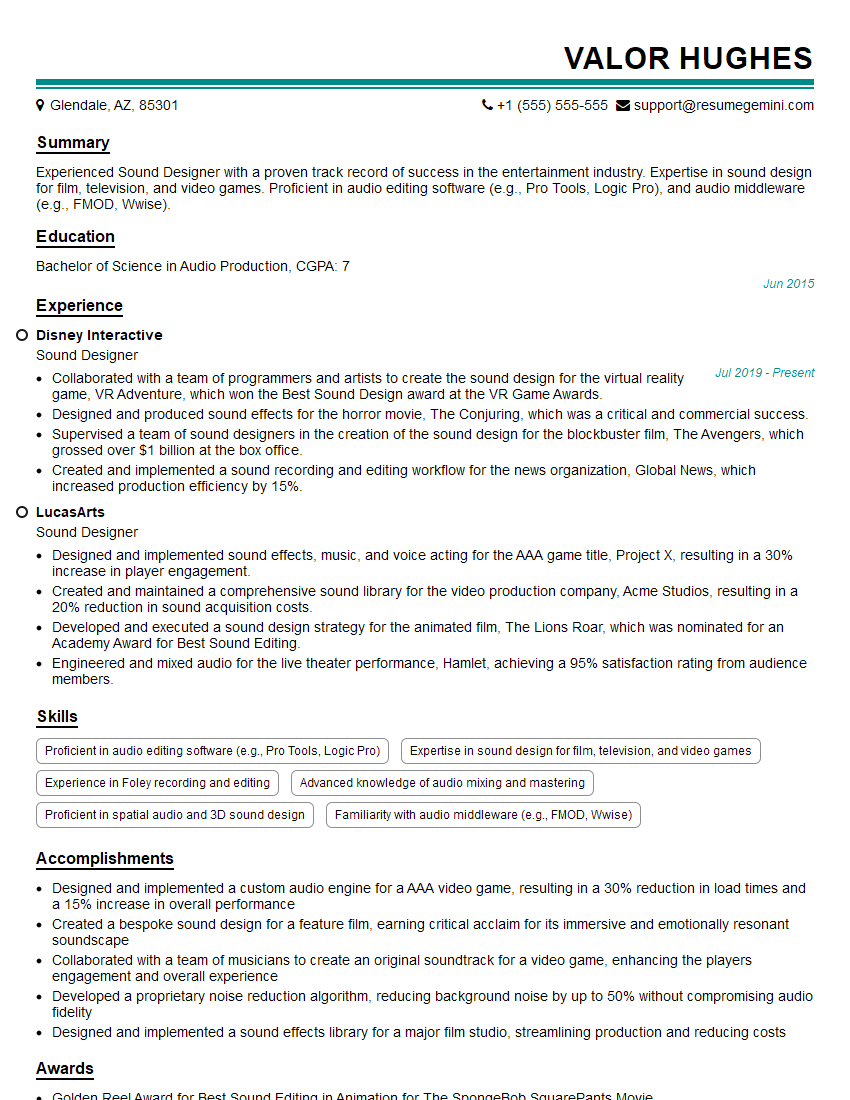
Sound Designer Resume Sample
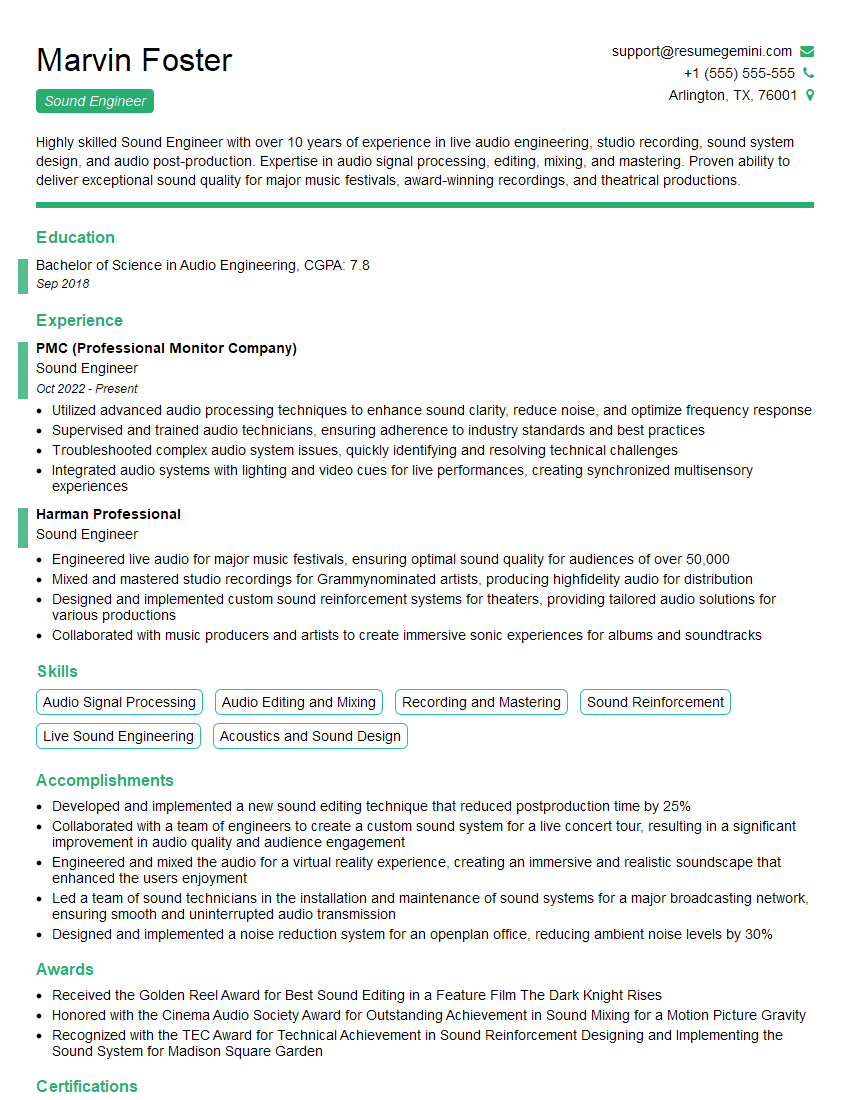
Sound Engineer Resume Sample
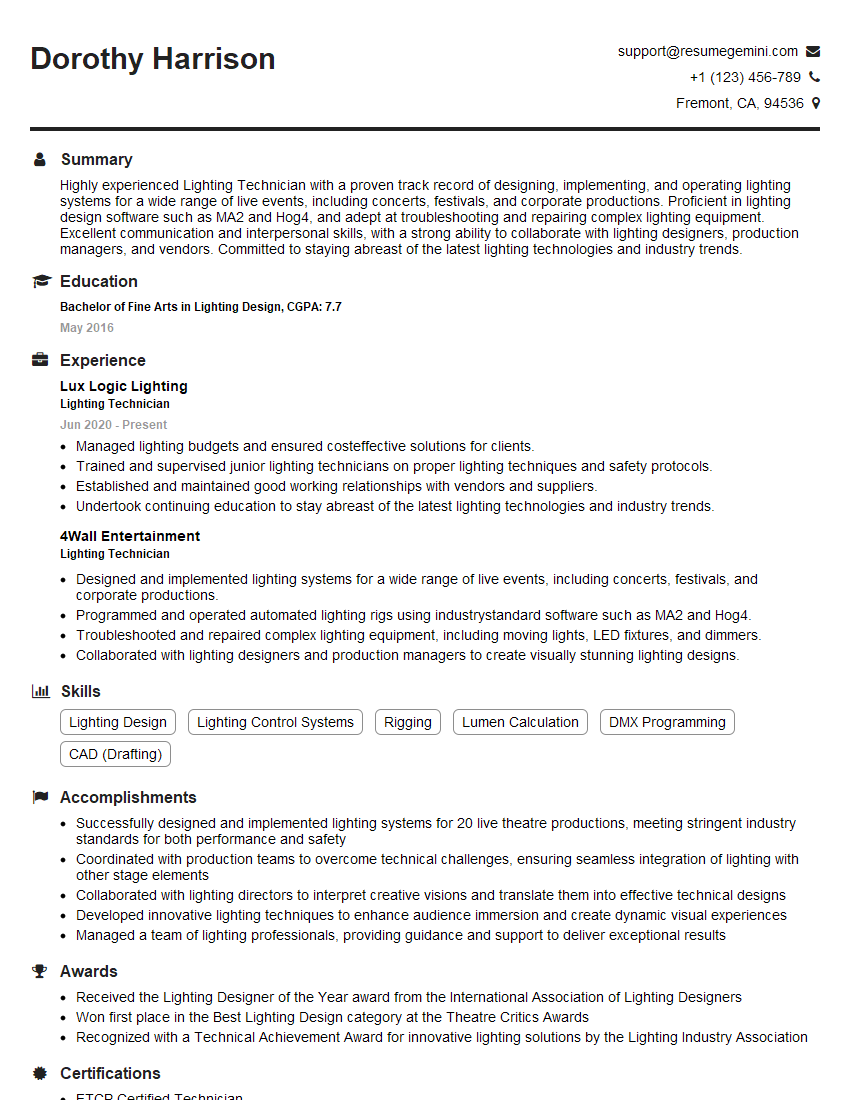
Lighting Technician Resume Sample
Explore more articles
Users Rating of Our Blogs
Share Your Experience
We value your feedback! Please rate our content and share your thoughts (optional).
What Readers Say About Our Blog
Very informative content, great job.
good