Cracking a skill-specific interview, like one for Grapevine Irrigation and Fertilization Practices, requires understanding the nuances of the role. In this blog, we present the questions you’re most likely to encounter, along with insights into how to answer them effectively. Let’s ensure you’re ready to make a strong impression.
Questions Asked in Grapevine Irrigation and Fertilization Practices Interview
Q 1. Explain the principles of deficit irrigation in grapevine cultivation.
Deficit irrigation in grapevine cultivation is a water management technique where vines receive less than their full irrigation needs, strategically applied during specific growth stages. It’s not about stressing the plants to the point of damage, but rather about subtly manipulating water availability to influence vine growth and fruit quality. The principle lies in the understanding that controlled water stress can improve grape concentration of sugars, anthocyanins (responsible for red color), and other flavor compounds, leading to higher-quality fruit.
For example, moderate water stress during berry ripening can encourage the development of more intense flavors and colors. However, severe water stress can negatively impact yield and fruit quality, leading to smaller berries and reduced overall production. Finding the right balance is crucial.
Careful monitoring of vine physiology and soil moisture is essential for successful deficit irrigation. This method requires a keen understanding of the vine’s water requirements at different stages, the soil’s water-holding capacity, and the prevailing climatic conditions.
Q 2. Describe different irrigation systems used in vineyards (drip, micro-sprinklers, etc.). What are the pros and cons of each?
Several irrigation systems are employed in vineyards, each with its own advantages and disadvantages:
- Drip Irrigation: This system delivers water directly to the root zone through a network of tubes and emitters.
- Pros: High water-use efficiency, reduced weed growth, precise water delivery.
- Cons: Higher initial investment cost, potential for emitter clogging, requires regular maintenance.
- Micro-sprinklers: These emitters deliver water in a small spray pattern, covering a larger area than drip irrigation.
- Pros: Less prone to clogging than drip, suitable for various soil types.
- Cons: Lower water-use efficiency compared to drip, potential for more water loss through evaporation and runoff.
- Sprinkler Irrigation: This system uses sprinklers to distribute water over a larger area.
- Pros: Relatively low initial cost, easy installation.
- Cons: Low water-use efficiency, potential for significant water loss, may not be suitable for all terrains.
- Surface Irrigation (Furrow Irrigation): Water is channeled along furrows between vine rows.
- Pros: Simple and inexpensive.
- Cons: Very low water-use efficiency, high water loss, potential for erosion.
The choice of irrigation system depends on factors like terrain, soil type, budget, water availability, and desired level of control.
Q 3. How do you determine the optimal irrigation schedule for a vineyard?
Determining the optimal irrigation schedule involves a multifaceted approach, combining soil monitoring, weather data, and vine physiological observations. No single method is universally applicable. Here’s a step-by-step process:
- Soil Monitoring: Regularly measure soil moisture using techniques like tensiometers, soil moisture sensors, or gravimetric methods (weighing soil samples).
- Weather Data: Monitor evapotranspiration (ET) rates using weather stations or weather models. ET is the combination of evaporation from the soil surface and transpiration from plants, indicating water loss from the vineyard.
- Vine Physiology: Assess vine water status by observing leaf wilting, leaf water potential, and stomatal conductance. These indicators provide insights into the plant’s water stress levels.
- Irrigation Scheduling: Based on soil moisture data, ET estimates, and vine physiological indicators, determine the appropriate irrigation frequency and amount. This often involves using irrigation scheduling software or empirical formulas.
- Irrigation Adjustments: Monitor the effectiveness of the irrigation schedule by tracking soil moisture, vine growth, and yield. Adjust the schedule as needed to optimize water use and maintain vine health.
For instance, a vineyard in a hot, arid climate may require more frequent and deeper irrigation compared to one in a cooler, humid region.
Q 4. How do soil type and climate influence irrigation strategies?
Soil type and climate significantly impact irrigation strategies. Soil type affects water infiltration, drainage, and water-holding capacity. For example, sandy soils drain quickly and require more frequent, but lighter irrigations, while clay soils retain water for longer periods and may need less frequent, but heavier irrigations. Climate influences evapotranspiration rates; hotter, drier climates lead to higher ET rates, necessitating more frequent irrigation.
A vineyard on sandy soil in a hot desert climate will demand a completely different irrigation strategy than one on clay soil in a cool, humid region. The former might require daily drip irrigation to minimize water loss, while the latter might require infrequent irrigation events. Understanding these interactions is vital for efficient water management and optimal vine health.
Q 5. What are the common methods for measuring soil moisture?
Several methods exist for measuring soil moisture, each with its advantages and limitations:
- Tensiometers: These devices measure soil water tension, an indirect measure of soil moisture. They are reliable and relatively inexpensive, but their range is limited, and they don’t work well in very dry soils.
- Soil Moisture Sensors: These sensors use various technologies (e.g., time-domain reflectometry (TDR), capacitance) to directly measure soil moisture content. They are more accurate and have a wider range than tensiometers, but are more expensive.
- Gravimetric Method: This involves collecting soil samples, weighing them, drying them in an oven, and weighing them again to determine the soil moisture content. It is simple and accurate, but it’s time-consuming and destructive.
- Neutron Probe: This device uses radioactive radiation to measure soil moisture content. It is suitable for large areas, but it requires specialized training and licenses due to safety concerns.
The choice of method depends on factors such as budget, accuracy requirements, soil type, and the size of the vineyard.
Q 6. Explain the role of fertigation in grapevine nutrition.
Fertigation, the application of fertilizers through the irrigation system, plays a crucial role in grapevine nutrition. It offers several advantages over traditional fertilization methods:
- Precise Nutrient Delivery: Nutrients are delivered directly to the root zone, maximizing uptake efficiency and minimizing losses.
- Improved Nutrient Use Efficiency: Reduces fertilizer waste by preventing runoff and leaching.
- Reduced Labor Costs: Combines irrigation and fertilization into a single operation.
- Improved Water Use Efficiency: Improved nutrient uptake can result in better water use by the plants.
- Enhanced Crop Quality: Proper nutrient management through fertigation improves fruit quality, yields and disease resistance.
For example, fertigation allows for tailored nutrient applications according to the vine’s needs at different growth stages, adjusting nutrient concentrations and ratios for optimal performance.
Q 7. Describe the nutrient requirements of grapevines at different growth stages.
Grapevines have varying nutrient requirements throughout their different growth stages:
- Dormancy: During dormancy, nutrient uptake is minimal, but proper potassium levels are important for winter hardiness.
- Budbreak and Shoot Growth: This stage requires high levels of nitrogen for vigorous shoot growth. Phosphorus is also crucial for root development.
- Flowering and Fruit Set: Potassium is important for flower development and fruit set. Boron is also essential for pollen germination and fruit development.
- Berry Development and Ripening: Potassium remains crucial for berry growth and sugar accumulation. Calcium plays a role in berry firmness and preventing fruit disorders.
- Leaf Senescence and Maturity: Nutrient uptake decreases as the vines prepare for dormancy. However, proper nutrient balance is still vital for efficient carbohydrate storage.
A well-planned fertigation program should provide the appropriate nutrients at each stage, optimizing vine growth, yield, and fruit quality. Soil testing, leaf analysis, and yield monitoring will help to inform the nutrient regimen.
Q 8. How do you diagnose nutrient deficiencies in grapevines?
Diagnosing nutrient deficiencies in grapevines requires a multi-pronged approach combining visual observation, laboratory analysis, and a thorough understanding of the vineyard’s soil and environmental conditions. Visual symptoms, while not always definitive, provide the first clues. For instance, yellowing leaves (chlorosis) can indicate a deficiency in nitrogen, magnesium, or iron, depending on the specific leaf pattern. Purple coloration in leaves may suggest phosphorus deficiency. Leaf tissue analysis is crucial for confirmation. Samples are sent to a lab for elemental analysis, providing precise measurements of nutrient concentrations. Soil testing is also vital, revealing the availability of nutrients in the soil itself, informing decisions about fertilization strategies. Understanding vine age, soil type, and the previous year’s management practices are all critical to interpreting the results accurately. For example, a high soil pH might limit the availability of iron, even if it’s present in the soil.
In short: Visual inspection + Soil testing + Leaf tissue analysis = Accurate diagnosis
Q 9. What are the different methods of applying fertilizers in vineyards?
Fertilizer application in vineyards employs several methods, each with its advantages and disadvantages.
- Broadcast application: This involves spreading fertilizer evenly across the vineyard floor. It’s a cost-effective method for large vineyards but can be inefficient, leading to nutrient loss through runoff or leaching.
- Band application: Fertilizers are placed in bands along the vine rows. This method minimizes nutrient loss and allows for better targeting of the root zone.
- In-furrow application: Fertilizer is applied directly into the irrigation furrows along with the water. It is efficient and directly targets the root system. However, precision is needed to avoid fertilizer burn.
- Fertigation: This involves injecting liquid fertilizer into the irrigation system. This is highly efficient, allowing for precise control over nutrient delivery and reducing labor costs. However, it requires specialized equipment and careful management to prevent clogging.
- Foliar application: Nutrients are sprayed directly onto the leaves. This is useful for correcting micronutrient deficiencies quickly, but the effects are short-lived, and efficacy depends on factors like leaf wetting and environmental conditions.
The optimal method depends on factors including vineyard size, soil type, water availability, and budget constraints.
Q 10. How do you calculate fertilizer application rates?
Calculating fertilizer application rates requires several factors to be taken into account. First, soil testing results are essential. They provide the baseline information on existing nutrient levels. Next, you need to determine the crop’s nutrient requirements based on expected yield, vine age, and variety. This information can be found in research literature or from extension services. Finally, you must consider the fertilizer’s nutrient content (N-P-K values). This is displayed on the fertilizer packaging. The calculation itself is done by determining the difference between the existing nutrient levels in the soil and the crop’s requirements and then converting it to the amount of fertilizer needed based on its nutrient concentration.
Example: Let’s say soil testing reveals a need for 100 lbs of nitrogen per acre, and you’re using a fertilizer that is 20% nitrogen. Therefore, you need 100 lbs / 0.20 = 500 lbs of fertilizer per acre.
This calculation is more complex for micro-nutrients and often involves consulting with a soil scientist or agricultural extension specialist.
Q 11. Explain the importance of soil testing in vineyard management.
Soil testing is fundamental in vineyard management as it provides a precise assessment of soil conditions, influencing key decisions related to irrigation and fertilization. The test reveals the levels of essential macronutrients (Nitrogen, Phosphorus, Potassium) and micronutrients (Iron, Zinc, Manganese etc.). It also determines soil pH, organic matter content, salinity, and texture. This information helps prevent nutrient deficiencies, optimizes fertilizer application rates, thereby minimizing waste and environmental impact, and can identify potential problems such as high salinity or compaction before they significantly affect vine health. Regular soil testing allows for adaptive management, tailoring nutrient inputs to actual needs rather than relying on generalizations. It’s a preventative measure that promotes sustainable vineyard practices and aids in maximizing yield and quality.
Q 12. Discuss the environmental impact of irrigation and fertilization practices.
Irrigation and fertilization practices in vineyards can have significant environmental impacts, both positive and negative. Over-irrigation can lead to waterlogging, reducing oxygen availability to roots and promoting anaerobic conditions. It also contributes to increased water usage, potentially depleting water resources. Excessive fertilizer application can cause nutrient runoff into water bodies, leading to eutrophication and harming aquatic life. Nitrate leaching contaminates groundwater, posing health risks. On the other hand, efficient irrigation techniques, like drip irrigation, conserve water. Precise fertilizer application based on soil tests minimizes nutrient losses and reduces the environmental footprint. Cover cropping can help improve soil health, reducing the need for chemical fertilizers and promoting biodiversity. Sustainable practices involve integrating these approaches to mitigate negative impacts while optimizing yield and quality. For example, using organic fertilizers and employing water-efficient irrigation methods.
Q 13. How do you manage salinity issues in vineyard soils?
Salinity issues in vineyard soils, characterized by high salt concentrations, are managed through a combination of strategies aimed at reducing salt accumulation and improving soil drainage. The first step is to accurately assess the extent of the problem through soil testing. Once salinity is confirmed, several mitigation strategies are possible. These include:
- Improved drainage: Installing drainage systems to remove excess water containing salts.
- Irrigation management: Employing techniques like leaching fractions to flush salts from the root zone, using higher quality irrigation water, and optimizing irrigation scheduling to avoid excessive water application.
- Soil amendments: Using organic matter to improve soil structure and water infiltration, enhancing salt leaching. Gypsum application can help displace sodium ions, reducing soil salinity.
- Salt-tolerant rootstocks: Selecting grapevine rootstocks that exhibit higher tolerance to saline conditions.
The specific management strategy depends on the severity of the salinity problem, the soil type, and available resources. Regular monitoring is crucial to assess the effectiveness of these measures and adapt accordingly.
Q 14. Describe your experience with water-efficient irrigation technologies.
My experience with water-efficient irrigation technologies is extensive. I have worked with various systems including drip irrigation, subsurface drip irrigation, and micro-sprinklers in different vineyard settings. Drip irrigation, in particular, has proven highly effective in conserving water and improving water use efficiency compared to traditional flood or furrow irrigation. Subsurface drip irrigation delivers water directly to the root zone, minimizing evaporation and surface runoff. This method also helps reduce weed growth. We’ve also had success implementing smart irrigation systems that employ soil moisture sensors and weather data to optimize irrigation schedules. This technology significantly reduces water waste and improves water stress management for the vines. Choosing the appropriate system depends on factors such as soil type, topography, vine spacing, and budget. However, data-driven approaches combined with water-efficient technologies are crucial for sustainable vineyard management in water-scarce regions.
Q 15. Explain how you would troubleshoot a malfunctioning irrigation system.
Troubleshooting a malfunctioning grapevine irrigation system requires a systematic approach. Think of it like diagnosing a car problem – you need to check the most likely causes first.
- Check the water source: Is there sufficient water pressure? Is the pump working correctly? A simple pressure gauge can quickly identify this. I once spent hours chasing a leak only to find a faulty pressure regulator at the well head.
- Inspect the main lines: Look for leaks, blockages, or breaks. A visual inspection and pressure testing are crucial here. Sometimes a simple clog from sediment can cause major issues.
- Examine the lateral lines and emitters: These are more prone to clogging, especially with fine-textured soils. Flushing the lines with a high-pressure cleaner can often resolve this. Different emitters have different cleaning needs; for instance, pressure-compensating emitters require a gentler approach.
- Verify the control system: Ensure timers, valves, and sensors are functioning correctly. A simple test is to manually operate each valve to see if it opens and closes properly. Modern systems often have diagnostic codes that pinpoint malfunctions.
- Observe the vineyard: Uneven watering patterns indicate problems with emitters, lateral lines, or the system’s overall design. Look for wilting plants as direct indicators of irrigation failure in specific areas.
By systematically checking each component, you can quickly pinpoint the problem and efficiently restore your irrigation system.
Career Expert Tips:
- Ace those interviews! Prepare effectively by reviewing the Top 50 Most Common Interview Questions on ResumeGemini.
- Navigate your job search with confidence! Explore a wide range of Career Tips on ResumeGemini. Learn about common challenges and recommendations to overcome them.
- Craft the perfect resume! Master the Art of Resume Writing with ResumeGemini’s guide. Showcase your unique qualifications and achievements effectively.
- Don’t miss out on holiday savings! Build your dream resume with ResumeGemini’s ATS optimized templates.
Q 16. What are your experiences with various types of drip emitters?
My experience spans a wide range of drip emitters, each with its own strengths and weaknesses. The choice depends on several factors, including soil type, water pressure, and vine spacing.
- Pressure-compensating emitters: These are excellent for uneven terrain, ensuring uniform water distribution regardless of elevation. They are, however, more expensive and more susceptible to clogging.
- Non-pressure-compensating emitters: These are less costly but require a more uniform pressure throughout the system, often requiring careful design for slopes. They are generally more robust and easier to clean.
- In-line emitters: These are integrated directly into the tubing and suitable for high-pressure systems, offering good flow rates and easier installation. However, they can be more prone to clogging than separate emitters.
- Drip tapes with integrated emitters: Convenient for large-scale operations, these offer lower initial installation cost, but replacement is more complex if damaged.
I’ve found that regularly monitoring emitter output and replacing faulty ones is crucial for maintaining efficiency and preventing irrigation inconsistencies. Choosing the right emitter type requires careful consideration of the specific conditions of the vineyard.
Q 17. How do you integrate pest and disease management with irrigation and fertilization practices?
Integrating pest and disease management with irrigation and fertilization is crucial for efficient and sustainable viticulture. Think of it as a holistic approach – addressing the needs of the plant as a whole.
- Targeted applications: Instead of broadcast spraying, use irrigation to apply pesticides and fungicides directly to the plant roots (fertigation). This reduces environmental impact and improves efficacy. For example, applying a systemic fungicide through drip irrigation can be highly effective against fungal diseases.
- Irrigation scheduling: Proper irrigation management can reduce humidity around the vines, thus minimizing fungal diseases. Avoid overhead irrigation, which can increase humidity and spread diseases.
- Nutrient management: Balanced fertilization strengthens plant resistance to pests and diseases. Fertigation can provide a precise nutrient balance that adapts to the plant’s stage of development and seasonal conditions. For instance, increased potassium during fruit development can boost disease resistance.
- Monitoring: Regular scouting for pests and diseases is crucial, allowing for timely interventions using irrigation-based or other approaches. Early detection minimizes the need for extensive treatments.
By integrating these aspects, you not only create a healthier vineyard but also significantly reduce reliance on broad-spectrum pesticides and improve resource efficiency.
Q 18. Describe the impact of rootstock selection on irrigation and fertilization needs.
Rootstock selection significantly impacts irrigation and fertilization needs. Different rootstocks have varying water and nutrient uptake capabilities.
- Drought-tolerant rootstocks: These reduce water consumption by having deeper, more extensive root systems. This translates to less frequent irrigation and possibly reduced water usage overall. However, they may require specific fertilization strategies to ensure adequate nutrient supply.
- Vigorous rootstocks: These might require more frequent irrigation and fertilization due to their higher nutrient demand and greater water transpiration. They often lead to increased yields but need careful management to prevent overgrowth and stress on the vine.
- Disease-resistant rootstocks: These can indirectly reduce the need for fungicides, contributing to a more sustainable approach. The management of these rootstocks usually requires careful observation and a soil test to determine nutrient deficiencies.
Understanding the characteristics of your rootstock is essential for optimizing irrigation and fertilization, maximizing yield, and minimizing environmental impact. A proper soil analysis before planting is key to informed decisions.
Q 19. How do you monitor the effectiveness of your irrigation and fertilization program?
Monitoring the effectiveness of an irrigation and fertilization program involves a multi-faceted approach, combining quantitative and qualitative assessments.
- Soil moisture monitoring: Using sensors or soil probes to measure soil moisture content at different depths allows for precise irrigation scheduling and avoids both overwatering and underwatering. I often use tensiometers in conjunction with weather data for this.
- Plant growth monitoring: Regularly assess vine growth, leaf development, and fruit size to gauge the effectiveness of fertilization. Visual indicators, such as leaf color and vigor, can be early warning signs of nutrient deficiencies or excesses.
- Yield monitoring: Tracking yields over time helps assess the overall success of the program. Comparing yields across different blocks or varieties with varying irrigation and fertilization regimes provides valuable insights.
- Nutrient analysis: Regularly conducting leaf analysis provides valuable information on nutrient status, indicating whether adjustments to the fertilization program are required. Soil analysis complements this by assessing overall soil health and nutrient availability.
- Water use efficiency: Calculating the amount of water used per unit of yield provides a measure of the program’s efficiency. Data logging and modern irrigation control systems can greatly simplify this.
By combining these approaches, a detailed understanding of the program’s impact can be developed, allowing for continuous improvement and optimization.
Q 20. What are the challenges of irrigating on steep slopes?
Irrigating steep slopes presents unique challenges, mainly related to water distribution and soil erosion.
- Water runoff: Water tends to run down the slope, leading to uneven water distribution and potential soil erosion. Contour irrigation and terracing are effective strategies to mitigate this. Precise leveling is crucial to the success of these methods.
- Erosion control: The force of water can easily erode soil on slopes, leading to nutrient loss and damage to the vines. Mulching, cover crops, and carefully designed irrigation systems can help to prevent this.
- System design: The irrigation system must be carefully designed to accommodate the slope. Shorter laterals and pressure-compensating emitters are often necessary to ensure uniform water distribution.
- Maintenance: Regular maintenance is critical to prevent blockages and leaks, which can exacerbate erosion and uneven watering on slopes. This often involves more frequent checks and cleaning compared to flat land.
Careful planning and implementation are crucial to overcome the challenges of irrigating steep slopes, ensuring both efficient water use and soil protection.
Q 21. How do you manage irrigation during periods of drought?
Managing irrigation during drought requires proactive planning and a flexible approach.
- Water conservation: Reduce water consumption by optimizing irrigation scheduling, using drip irrigation, and implementing water-saving technologies. This might involve employing soil moisture sensors and adjusting watering based on real-time data.
- Supplemental irrigation: During extended dry periods, supplemental irrigation may be necessary to prevent significant yield losses. Prioritizing the most sensitive stages of vine growth is crucial. For example, it may be necessary to water more deeply during flowering and fruit set.
- Rootstock selection: Choosing drought-tolerant rootstocks significantly improves resilience to drought conditions. This long-term solution requires careful planning before establishing the vineyard.
- Monitoring and adaptation: Regular monitoring of soil moisture, plant growth, and weather conditions is essential for adjusting irrigation strategies as needed. A flexible approach based on real-time observations is key to successful drought management.
- Water source management: During severe drought, access to alternate water sources might be explored. This could involve the use of water storage systems or negotiating with water suppliers.
Effective drought management minimizes yield losses while ensuring the long-term health of the vineyard. A strategic combination of short-term and long-term solutions ensures resilience.
Q 22. Discuss the principles of sustainable viticulture relating to water and nutrient management.
Sustainable viticulture centers around minimizing environmental impact while maximizing grape quality and yield. In water and nutrient management, this means optimizing irrigation and fertilization to meet the vine’s needs precisely, avoiding excess that leads to waste and pollution. It’s about working *with* nature, not against it.
- Efficient Irrigation: This involves using methods like drip irrigation, which delivers water directly to the roots, minimizing evaporation and runoff. Soil moisture sensors help determine when irrigation is truly needed, avoiding unnecessary watering. Deficit irrigation, carefully planned water stress, can even improve grape quality in some cases by concentrating sugars.
- Precision Fertilization: Instead of blanket applications, soil testing and leaf analysis guide the precise application of nutrients. This reduces fertilizer waste, minimizes nutrient runoff into waterways (causing eutrophication), and optimizes vine health and fruit production. Organic amendments like compost can also improve soil health, reducing the need for chemical fertilizers.
- Water Harvesting and Recycling: Techniques like rainwater harvesting and greywater recycling (after appropriate treatment) can supplement irrigation needs, reducing reliance on external water sources.
For example, I worked on a vineyard that switched from furrow irrigation to drip irrigation. This resulted in a 30% reduction in water usage and a marked improvement in grape quality due to consistent moisture levels. Similarly, precise fertilization based on soil and leaf analysis led to a 15% increase in yield while reducing fertilizer costs by 20%.
Q 23. Describe your experience with precision agriculture technologies in vineyard management.
My experience with precision agriculture technologies in vineyard management is extensive. I’ve utilized a range of technologies to optimize irrigation and fertilization, leading to improved efficiency and yield. This includes:
- Soil Moisture Sensors: These provide real-time data on soil water content, guiding irrigation decisions based on actual need, not just a schedule.
- Remote Sensing (e.g., NDVI): Satellite or drone imagery helps assess vine health and vigor, enabling targeted interventions. Variations in vegetation indices can point to nutrient deficiencies or water stress.
- Variable Rate Technology (VRT): This allows for precise application of fertilizers and other inputs based on the specific needs of different areas within the vineyard, using GPS-guided machinery. This is particularly helpful in vineyards with varying soil types or slopes.
- Weather Stations: Real-time weather data – temperature, rainfall, humidity – is crucial for predicting water needs and adjusting irrigation accordingly.
For instance, using NDVI data, we identified a nutrient deficiency in a specific block of a vineyard, allowing for targeted foliar fertilization that addressed the issue quickly and effectively. Without the remote sensing, the problem would have gone unnoticed, impacting yield and quality.
Q 24. How do you integrate data analysis into your irrigation and fertilization decisions?
Data analysis is integral to my irrigation and fertilization decisions. I use data from various sources to make informed choices that optimize vine health and productivity.
- Soil Analysis: Provides information on nutrient levels, pH, and other soil properties that influence nutrient availability. This guides the selection and amount of fertilizers needed.
- Leaf Analysis: Determines the nutrient status of the vines. Discrepancies between soil and leaf analysis can indicate nutrient uptake problems or other issues.
- Weather Data: Combined with evapotranspiration models (e.g., Penman-Monteith), weather data helps predict water requirements and schedule irrigation accordingly.
- Yield Monitoring: Historical yield data provides a baseline to track progress and adjust strategies as needed. Analyzing past performance helps anticipate challenges and adapt management practices.
I often use statistical software (e.g., R or Python) and spreadsheets to analyze this data and identify trends. For example, I might create a scatter plot to correlate soil nutrient levels with yield or use regression analysis to predict the optimal irrigation amount based on weather and soil moisture data. This data-driven approach significantly improves decision making, minimizing risk and maximizing return.
Q 25. What are the potential consequences of over-irrigation or over-fertilization?
Over-irrigation and over-fertilization have serious negative consequences, both environmentally and economically.
- Over-irrigation: Leads to waterlogging, reducing oxygen availability to roots and potentially causing root rot. It can also lead to increased leaching of nutrients, wasting fertilizer and contaminating groundwater. Excess water also promotes the growth of diseases and reduces fruit quality.
- Over-fertilization: Can cause salt buildup in the soil, damaging roots and reducing vine vigor. Excess nutrients can leach into waterways, causing eutrophication and harming aquatic life. Furthermore, excessive nitrogen can result in lush vegetative growth at the expense of fruit production and increase susceptibility to diseases.
For instance, a vineyard I consulted had experienced significant root rot due to over-irrigation. This resulted in reduced yield and increased disease pressure, significantly impacting profitability. Similarly, over-fertilization in another vineyard resulted in excessive vegetative growth, leading to poor fruit set and smaller berries.
Q 26. Explain your understanding of water rights and regulations regarding vineyard irrigation.
Understanding water rights and regulations is crucial for responsible vineyard irrigation. These vary significantly depending on location and legal frameworks. It usually involves obtaining permits to withdraw water from surface or groundwater sources and adhering to restrictions on water usage, particularly during periods of drought.
- Permitting: Obtaining the necessary permits to extract water from a specific source (river, aquifer, etc.) is essential and often involves proving that the water use is justifiable and won’t unduly impact other water users.
- Water Allocation: Many regions have systems for allocating water rights, often prioritizing certain uses (e.g., domestic use over irrigation) or implementing restrictions during periods of drought.
- Measurement and Reporting: Accurate metering of water usage and regular reporting to the relevant authorities is usually required to ensure compliance.
- Conservation Measures: Water-use efficiency measures, such as drip irrigation and soil moisture monitoring, are often encouraged or even mandated to minimize water consumption.
For example, in certain regions, vineyards may be required to use water-efficient irrigation techniques and report their water usage annually. Failure to comply can lead to penalties, including fines or suspension of water rights.
Q 27. How do you adjust irrigation and fertilization strategies based on yield goals?
Irrigation and fertilization strategies are directly influenced by yield goals. Higher yield targets necessitate more careful management of both water and nutrients.
- Increased Water Needs: Higher yields generally require more water to support increased biomass production. However, it’s crucial to avoid over-irrigation, as mentioned earlier. Precise monitoring and efficient irrigation methods are key.
- Nutrient Optimization: Higher yields demand a balanced supply of essential nutrients. Soil and leaf analysis help determine the optimal levels of each nutrient to support vigorous growth and fruit development without excess.
- Growth Stage Adjustments: Irrigation and fertilization needs change throughout the grapevine’s growth cycle. Water and nutrient requirements are higher during periods of rapid growth (e.g., shoot growth, fruit set) and less critical during other phases.
For example, if the goal is to increase yield by 15%, we would implement a strategy that includes precise irrigation scheduling guided by soil moisture sensors, combined with a customized fertilization plan based on soil and leaf analysis. The plan would also incorporate adjustments for different growth stages to optimize nutrient uptake and prevent imbalances.
Q 28. Describe your experience working with different types of soil amendments.
I have significant experience working with various soil amendments to improve soil health and optimize grapevine growth. Soil amendments modify soil properties such as structure, drainage, nutrient content, and water retention.
- Organic Matter: Compost, manure, and cover crops increase soil organic matter, which improves soil structure, water retention, and nutrient availability. Organic matter also supports a healthy soil microbiome.
- Gypsum: Improves soil structure and drainage, particularly in clay soils. It can help alleviate compaction and increase root penetration.
- Lime: Raises soil pH, which can be crucial for correcting acidity and improving nutrient availability. It also helps in the mobilization of some micro-nutrients.
- Biochar: A charcoal-like material produced from biomass pyrolysis. Biochar improves soil drainage, water retention, and nutrient retention. It can also enhance microbial activity.
In one vineyard, we used compost to improve soil structure and water retention, which reduced the frequency of irrigation and improved grape quality. In another case, the addition of gypsum improved drainage and root penetration in a compacted clay soil, leading to enhanced nutrient uptake and yield.
Key Topics to Learn for Grapevine Irrigation and Fertilization Practices Interview
- Water Requirements of Grapevines: Understanding evapotranspiration, soil moisture monitoring techniques (tensiometers, soil moisture sensors), and irrigation scheduling methods (drip irrigation, micro-sprinklers).
- Irrigation System Design and Management: Practical application of designing efficient irrigation systems, including considerations for topography, soil type, and vine spacing. Troubleshooting common irrigation problems like clogged emitters or uneven water distribution.
- Nutrient Management for Grapevines: Understanding the essential nutrients for grapevine growth (N, P, K, micronutrients), soil testing interpretation, and fertilizer application methods (foliar, fertigation).
- Fertilizer Types and Application Techniques: Comparing organic and inorganic fertilizers, understanding slow-release fertilizers, and the implications of different application methods on nutrient uptake and environmental impact.
- Integrated Pest and Disease Management (IPM): The role of irrigation and fertilization in influencing disease and pest pressure. Understanding how proper nutrient management can enhance vine health and resilience.
- Soil Health and its Impact on Irrigation and Fertilization: The importance of soil organic matter, soil structure, and drainage on water and nutrient availability. Practical approaches to improving soil health.
- Sustainable Irrigation and Fertilization Practices: Strategies for minimizing water and fertilizer use while maximizing vine productivity. Understanding water use efficiency and precision agriculture techniques.
- Troubleshooting and Problem Solving: Identifying and addressing nutrient deficiencies, correcting irrigation imbalances, and analyzing vine growth patterns to optimize practices.
Next Steps
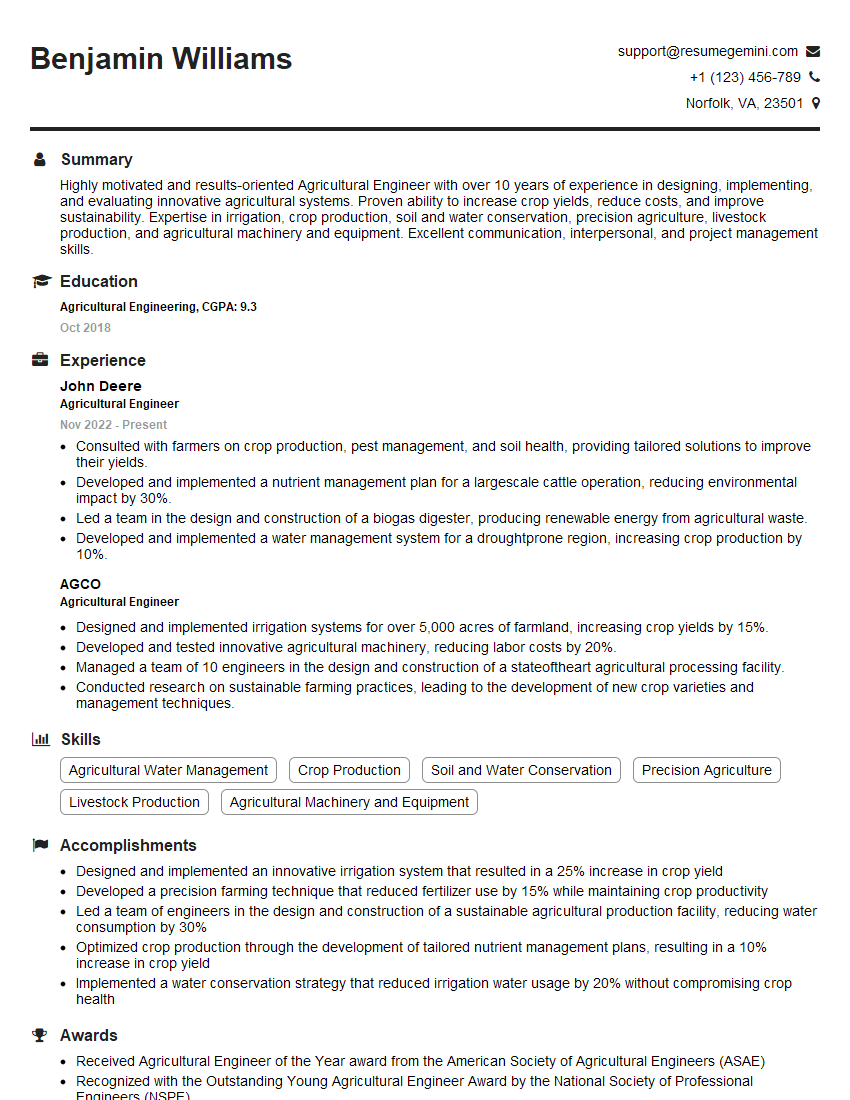
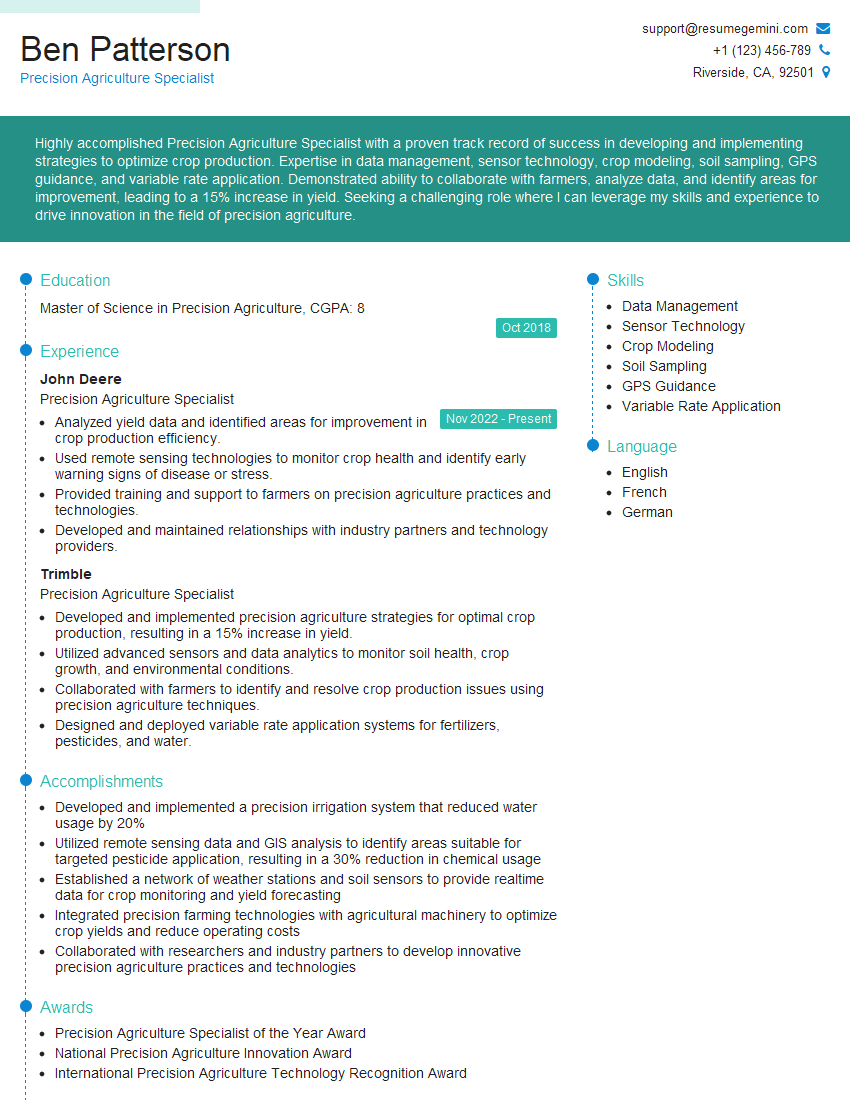
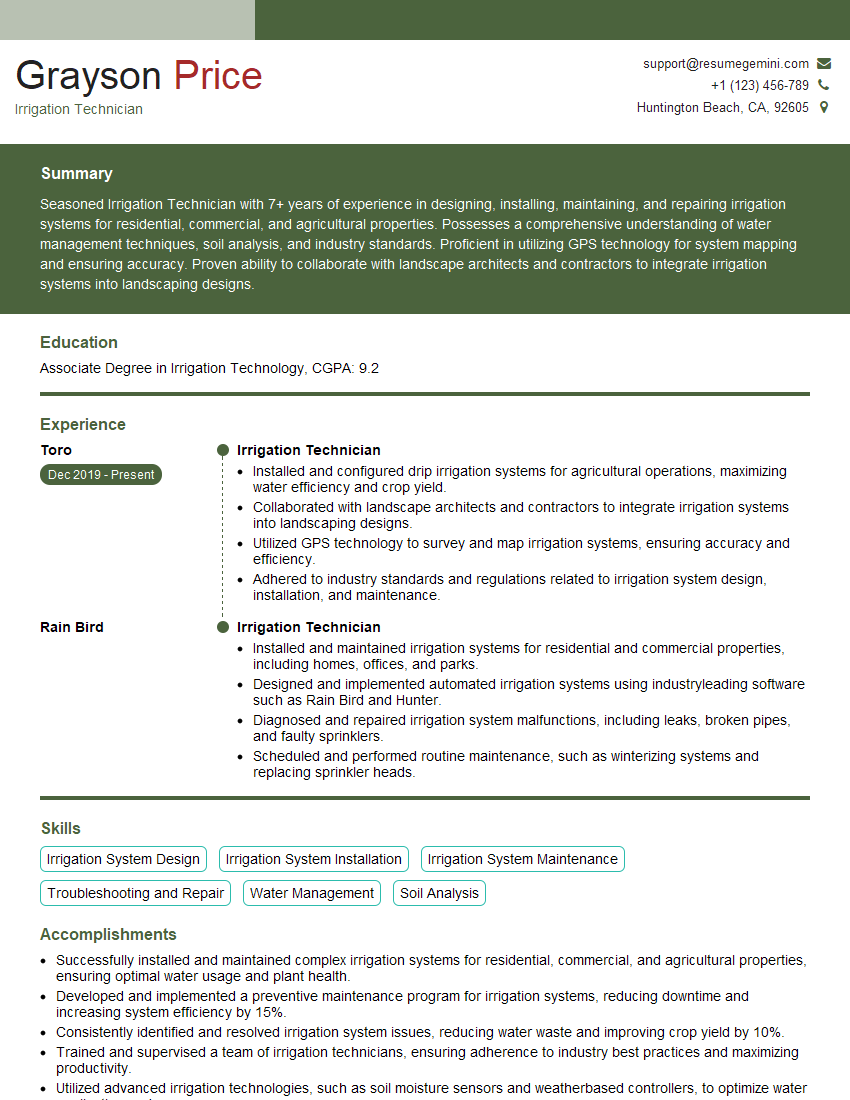
Mastering Grapevine Irrigation and Fertilization Practices is crucial for career advancement in viticulture and related fields. A strong understanding of these principles demonstrates valuable expertise to potential employers. To maximize your job prospects, create an ATS-friendly resume that highlights your skills and experience effectively. ResumeGemini is a trusted resource for building professional resumes that stand out. We provide examples of resumes tailored to Grapevine Irrigation and Fertilization Practices to guide you in showcasing your qualifications. Take advantage of these resources to elevate your application and secure your dream position.

Explore more articles
Users Rating of Our Blogs
Share Your Experience
We value your feedback! Please rate our content and share your thoughts (optional).
What Readers Say About Our Blog
Very informative content, great job.
good