Interviews are more than just a Q&A session—they’re a chance to prove your worth. This blog dives into essential Commissioning and New Music Performance interview questions and expert tips to help you align your answers with what hiring managers are looking for. Start preparing to shine!
Questions Asked in Commissioning and New Music Performance Interview
Q 1. Describe your experience with commissioning new musical works. What is your typical process?
Commissioning new music is a multifaceted process that involves identifying a composer, defining the scope of the work, negotiating a contract, managing the budget, and ultimately presenting the finished piece to an audience. My typical process begins with a clear artistic vision. This might stem from a thematic concept, a specific instrumentation, or a desire to explore a particular compositional style. I then develop a detailed commission brief, outlining these artistic parameters, the desired length and style of the piece, performance dates, and the expected budget. This brief serves as a crucial document throughout the entire process, ensuring clarity and transparency with the composer.
Next, I actively engage with the composer throughout the composition process, offering constructive feedback and addressing any concerns they may have. Regular check-ins are essential, perhaps monthly or bi-monthly, to monitor progress, discuss creative decisions, and resolve any potential challenges. Finally, I oversee the premiere performance, ensuring all logistical aspects are handled smoothly and the composer and performers have the support they need to deliver a stunning performance.
For example, I once commissioned a work for a string quartet that explored the relationship between nature and technology. The brief included specific details about the instrumentation, desired duration, and the conceptual direction. Regular meetings with the composer allowed for adjustments and ensured the final piece fulfilled both our artistic visions.
Q 2. How do you identify and select composers for commissioning projects?
Identifying and selecting composers is a crucial step, often requiring a combination of research, networking, and careful consideration. I begin by researching composers whose styles align with the project’s artistic goals. This involves listening to their existing works, reviewing their biographies and critical acclaim, and considering their compositional expertise. I also leverage my network of contacts within the music world, consulting with colleagues, conductors, and other musicians to gather recommendations and gain insights into potential candidates.
Once I’ve compiled a shortlist of promising composers, I meticulously review their portfolios, examining the range and depth of their work, paying close attention to their ability to meet the specific technical and artistic demands of the commission. I often reach out to composers to discuss the project in greater detail, allowing me to gauge their enthusiasm, their understanding of the brief, and their capacity to deliver a high-quality piece within the given timeframe and budget.
For instance, in one project, I chose a composer based on their impressive portfolio showcasing works specifically in microtonal music, perfectly aligning with the innovative approach we sought for that particular commission.
Q 3. Explain your approach to managing budgets for new music commissions.
Managing budgets for new music commissions requires meticulous planning and careful allocation of resources. The budget should be comprehensively detailed from the outset, outlining all anticipated costs, including the composer’s fee, performance fees for musicians, rehearsal costs, venue hire, marketing expenses, and any other relevant administrative fees. It is important to establish a clear and transparent budget breakdown for the composer, ensuring they understand the financial parameters of the project.
I always incorporate contingency planning into the budget, acknowledging the possibility of unforeseen expenses. Negotiating a fair and reasonable fee for the composer is paramount. This is done while considering factors such as the composer’s experience, the complexity of the work, and the performance opportunities it provides. Thorough documentation of all financial transactions, including receipts and invoices, ensures accountability and facilitates efficient financial management.
For example, when budgeting for a recent project, we allocated a significant portion to marketing and publicity, understanding that robust promotion is crucial for the success of a contemporary music performance.
Q 4. How do you negotiate contracts with composers and performers?
Negotiating contracts with composers and performers is a delicate yet essential process. I always strive to create mutually beneficial agreements that protect the rights and interests of all parties involved. A well-drafted contract clearly outlines the scope of work, performance dates, payment schedule, copyright ownership, and any other relevant terms. It’s crucial that all parties understand and agree to all contractual terms before signing.
Communication is key during the negotiation process. I encourage open dialogue, addressing any concerns or queries from the composer or performers promptly and professionally. I ensure that the contracts are legally sound and adhere to standard industry practices. This approach fosters trust and collaboration, laying a solid foundation for a successful working relationship.
In my experience, clear, well-defined contracts significantly reduce the potential for misunderstandings or disputes down the line, ensuring a smooth and productive collaboration.
Q 5. Describe your experience working with diverse musical styles and genres.
My experience encompasses a diverse range of musical styles and genres, from contemporary classical and minimalist music to experimental electronic soundscapes and cross-genre collaborations. This broad exposure allows me to appreciate the unique aesthetic qualities of each genre and to approach each commission with sensitivity and understanding.
Working with different musical styles has broadened my perspective and enhanced my ability to effectively support and champion diverse artistic voices. I’ve discovered that the core principles of artistic integrity, precise communication, and careful project management remain consistent across all genres. The adaptability and creative problem-solving skills required in working across such a broad spectrum are invaluable.
For example, I’ve had the pleasure of commissioning both a deeply lyrical piano concerto and a highly experimental piece using found sounds and electronic manipulation. In each case, my approach involved understanding the unique aesthetic and technical requirements of the genre and supporting the composer in their creative vision.
Q 6. How do you promote and market new music performances?
Promoting and marketing new music performances requires a multifaceted strategy. It starts with identifying the target audience and tailoring promotional materials to resonate with their interests. This involves creating compelling program notes, developing engaging social media campaigns, and distributing press releases to relevant publications and websites.
Collaboration with other arts organizations and venues can significantly extend reach and increase audience engagement. Targeted advertising on relevant online platforms and collaboration with local radio stations or podcasts can also prove effective. Pre-concert talks or artist meet-and-greets can generate excitement and increase attendance. Finally, high-quality photography and videography of the performance can be used to promote future events.
In a recent project, a visually stunning promotional video showcasing excerpts of the commissioned work, along with interviews with the composer and performers, resulted in a substantial increase in ticket sales.
Q 7. What strategies do you employ to ensure the success of a new music performance?
Ensuring the success of a new music performance requires careful planning and execution at every stage. This begins with a well-defined artistic vision, a meticulously crafted commission brief, and a thorough budgeting process. It’s crucial to select highly skilled and motivated performers, ensuring ample rehearsal time for them and offering the composer access to support and resources throughout the composition process. High-quality rehearsal facilities and excellent technical support during the performance are also essential.
Effective marketing and publicity play a crucial role in attracting audiences. Creating a welcoming and engaging atmosphere at the performance venue, offering engaging program notes, and providing opportunities for post-performance discussions further enhance the experience for the audience. Gathering feedback from audiences helps to improve future events and identify areas for improvement. Finally, documenting and archiving the performance for future reference is essential.
A successful new music performance not only provides a compelling artistic experience but also supports the creation and dissemination of new music, fostering a vibrant and diverse musical landscape.
Q 8. How do you handle challenges related to logistics and scheduling in new music productions?
Logistics and scheduling in new music productions are intricate puzzles requiring meticulous planning. I approach this by employing project management techniques, starting with a detailed timeline that accounts for every stage, from initial composer contact to the final performance. This timeline integrates crucial dates like deadlines for composition, rehearsal schedules, venue booking, marketing, and publicity.
For example, in a recent project involving a chamber orchestra, I created a Gantt chart outlining tasks with specific start and end dates, including contingency time for unforeseen delays. This allowed for clear communication with all parties involved – the composer, performers, venue management, and marketing team. Regular check-ins and progress reports are essential, allowing for proactive adjustments to the schedule as needed. I also prioritize clear communication channels and utilize collaborative tools to track progress and identify potential conflicts early on.
Furthermore, I consider factors like travel arrangements for performers, instrument availability (especially for unusual instruments often featured in new music), and potential technical requirements for the performance space. Proactive risk assessment and contingency planning are vital, so the project runs smoothly despite inevitable curveballs.
Q 9. What is your understanding of copyright and licensing in the context of new music commissions?
Copyright and licensing in new music commissions are paramount. The composer holds the copyright to their work unless otherwise specified in a contract. This grants them exclusive rights to reproduce, distribute, perform, display, and create derivative works. Before a piece can be performed publicly, a performance license is typically required from the composer or their publisher, outlining usage rights and payment terms. The license specifies where and when the work can be performed, often including details about recording, broadcasting, and potential digital distribution.
For example, if I commission a piece for a festival, I’ll negotiate a license with the composer that grants performance rights for that specific event. Negotiations typically include factors like the number of performances, the geographic location of performances, potential recordings, and of course, the composer’s fee. Understanding the nuances of copyright law, including fair use and limitations, is critical to ensuring compliance and avoiding legal issues. I always advise working with legal counsel to review any contract before signing to ensure all parties are protected.
Q 10. Describe your experience in securing funding for new music projects. What funding sources are you most familiar with?
Securing funding for new music projects often requires a multifaceted approach. I’m familiar with various sources, including individual patrons, grants from foundations (e.g., the National Endowment for the Arts, or state arts councils), corporate sponsorships, fundraising events, and crowd-funding platforms. Each source has specific application requirements and funding criteria.
For a recent project, I successfully secured funding through a combination of approaches. We received a grant from a local arts council, a significant donation from an individual philanthropist who was passionate about contemporary music, and smaller contributions from crowdfunding. A compelling project proposal, detailing the artistic merit, community impact, and clear budget are crucial in securing funding. Strong relationships with potential funders are also invaluable. I always tailor my proposals to the specific interests and priorities of each potential funder, emphasizing the alignment between the project’s goals and their values.
Q 11. How do you collaborate with composers throughout the compositional process?
Collaboration with composers is a vital and ongoing process. It begins with an initial discussion to define the scope of the commission: the type of work, instrumentation, desired length, and performance context. Regular check-ins throughout the composition process are key. I provide feedback based on my expertise in performance practice, audience expectations, and technical considerations. This ensures the piece is both musically compelling and practically feasible.
For instance, I might suggest modifications to enhance the work’s clarity or balance, given the specific acoustic properties of the performance venue. I’ll also facilitate communication between the composer and performers, arranging workshops or rehearsals where the composer can provide direct guidance and address any performance-related questions. Open communication, mutual respect, and a shared commitment to artistic excellence are the cornerstones of a successful collaborative process.
Q 12. Explain your approach to audience engagement and education related to new music.
Audience engagement and education are critical for new music’s success. My approach focuses on creating accessible and informative experiences. Pre-concert talks or interactive workshops introducing the composer and their work can effectively contextualize the piece. Program notes can be thoughtfully designed, avoiding overly technical language and providing engaging narratives about the composition process and creative intent.
I also incorporate interactive elements into performances – for instance, a Q&A session with the composer after the concert or a meet-and-greet opportunity. In addition, social media and online platforms offer effective channels for outreach and sharing information about the work and the performance. Creating visually appealing promotional materials and offering engaging content online can help cultivate excitement and anticipation among potential audiences.
Q 13. How do you evaluate the artistic merit of a proposed new musical work?
Evaluating the artistic merit of a proposed new musical work involves a multi-faceted assessment. I consider several factors. Firstly, the originality and innovation of the musical ideas are crucial. Does the work offer something fresh and compelling? Secondly, the compositional technique – its craftsmanship and skill in manipulating musical elements – is also important. Does it exhibit mastery of form, harmony, melody, and rhythm?
Thirdly, the piece’s overall coherence and impact are paramount. Does it possess a sense of structural integrity and convey a powerful emotional experience? Finally, its suitability for the intended performers and performance context also weighs in. Is it well-suited to the musicians’ capabilities, and does it resonate with the intended audience? My assessment involves both intellectual analysis and an intuitive response to the music’s emotional power and overall artistic expression. The process includes reviewing scores, listening to demos (if available), and, ideally, attending workshops or rehearsals.
Q 14. What are some of the challenges associated with commissioning and performing new music?
Commissioning and performing new music present unique challenges. One major challenge is financial: securing sufficient funding to cover the composer’s fee, rehearsal costs, performer fees, and venue rental. Another challenge is audience reception; new music often pushes boundaries, and audiences may require time to appreciate innovative or unfamiliar styles. Therefore, effective audience engagement and educational strategies are crucial for building appreciation.
Another aspect is the inherent risk associated with commissioning unknown composers. There is no guarantee that the resulting work will achieve widespread success, and it involves a leap of faith based on the composer’s promise and potential. Furthermore, logistical challenges including securing the right performance space with appropriate technical capabilities, finding talented and available musicians for specific demands of new music, and coordinating schedules can add significant complexity. Finally, the need for effective communication and collaboration among the composer, performers, and management team is paramount to overcome these challenges successfully.
Q 15. How do you handle artistic disagreements or conflicts during the commissioning process?
Artistic disagreements are inevitable in the creative process. My approach prioritizes open communication and mutual respect. I facilitate discussions where all parties – composer, performers, and myself as the commissioning agent – can openly express their perspectives and concerns. We start by clearly defining the project’s artistic goals and parameters at the outset. This includes agreeing upon a shared understanding of the musical style, instrumentation, performance expectations, and the composer’s vision. If disagreements arise, I act as a mediator, encouraging active listening and compromise. Sometimes, a compromise involves suggesting alternative solutions or exploring different approaches to achieve the desired artistic outcome. For instance, in one project, a disagreement arose over the tempo of a particularly challenging section. Instead of imposing a decision, we experimented with different tempos during rehearsals, allowing the composer and performers to hear the implications and eventually agree on a tempo that best served both the musicality and the performers’ capabilities. Ultimately, the goal is to find a collaborative resolution that reflects the artistic vision while ensuring a successful performance.
Career Expert Tips:
- Ace those interviews! Prepare effectively by reviewing the Top 50 Most Common Interview Questions on ResumeGemini.
- Navigate your job search with confidence! Explore a wide range of Career Tips on ResumeGemini. Learn about common challenges and recommendations to overcome them.
- Craft the perfect resume! Master the Art of Resume Writing with ResumeGemini’s guide. Showcase your unique qualifications and achievements effectively.
- Don’t miss out on holiday savings! Build your dream resume with ResumeGemini’s ATS optimized templates.
Q 16. What is your understanding of the role of technology in new music performance and composition?
Technology plays a transformative role in both new music composition and performance. In composition, software like Max/MSP, Ableton Live, and various notation programs (Sibelius, Dorico) have opened up vast new sonic possibilities. Composers can experiment with intricate algorithms, real-time sound manipulation, and incorporate electronics seamlessly into their scores. Furthermore, digital audio workstations (DAWs) allow for precise control over the recording and editing process, leading to a more refined final product. In performance, technology provides new ways to engage audiences. Interactive installations, projection mapping onto instruments, and sophisticated sound reinforcement systems are enhancing the concert experience. For example, I worked on a project where the composer utilized custom software to create a real-time visual representation of the music’s harmonic structure, projected onto a large screen behind the performers, adding an extra dimension to the audience’s understanding of the music. It’s crucial to balance these technological advancements with the preservation of the human element in musical performance, ensuring that technology enhances rather than overshadows the artistic expression.
Q 17. Describe your experience with different performance venues and their unique technical requirements.
My experience spans a wide range of performance venues, from intimate recital halls to large concert auditoriums and outdoor spaces. Each venue presents unique technical challenges. Intimate spaces often require careful microphone placement and amplification to ensure a balanced sound without compromising the acoustic intimacy. Larger halls demand a sophisticated sound reinforcement system capable of projecting the music clearly to all seats while maintaining a natural sound quality. Outdoor venues present additional challenges, including unpredictable weather conditions and the need for robust sound systems to combat ambient noise. For example, in one project at an outdoor amphitheater, we had to account for wind noise and the potential for feedback from the microphone system. We employed directional microphones and carefully calibrated the sound system to minimize these problems. Another project in a historic church required careful consideration of the space’s acoustics, which were uniquely resonant. This demanded nuanced adjustments to the balance of the ensemble and the microphone placement to avoid unwanted reverberation. I always thoroughly investigate a venue’s technical specifications and consult with its technical staff to ensure the performance is technically feasible and artistically successful.
Q 18. How do you manage risk in new music productions?
Managing risk in new music productions involves proactive planning and mitigation strategies. This begins with careful budgeting and securing adequate funding. Detailed risk assessments should be conducted, identifying potential problems such as venue availability, performer availability, unexpected technical difficulties, and copyright issues. Contingency plans should be developed to address these risks. For example, having backup musicians available, securing alternative venues, or purchasing insurance to cover potential losses are all important considerations. Open communication with all stakeholders – composers, performers, technicians, and the venue – is crucial for early identification and resolution of potential problems. A thorough rehearsal schedule helps to anticipate and solve potential performance issues. And finally, robust contractual agreements with all parties involved clearly define responsibilities and expectations, providing legal protection in case of unforeseen circumstances. Thorough preparation and clear communication are paramount in minimizing risks and ensuring a smooth and successful production.
Q 19. What is your approach to selecting repertoire for new music performances?
Selecting repertoire for new music performances involves balancing artistic merit with practical considerations. The primary criteria are artistic excellence and relevance. I look for works that demonstrate innovation, expressive power, and technical virtuosity. The selected pieces should ideally create a cohesive and engaging program. Factors like the performers’ abilities, the length of the concert, and the audience’s expectations play crucial roles in the selection process. The style and context of the pieces must complement each other. For example, I might pair a highly experimental electronic piece with a more traditional chamber work to create a diverse and engaging concert experience. Balancing established names with emerging composers is also a key part of my approach. This allows for exposure to new works alongside pieces from well-known figures, stimulating a rich and dynamic program that caters to both informed and new listeners.
Q 20. How do you assess the feasibility of a new music commission, considering factors such as budget and logistics?
Assessing the feasibility of a new music commission involves a multi-faceted approach. This begins with a detailed budget outlining all anticipated expenses – composer fees, performer fees, rehearsal costs, venue rental, printing scores, publicity, and any other relevant costs. The budget should account for potential contingencies. Logistics are equally crucial. This includes securing a suitable venue, negotiating contracts with the composer and performers, scheduling rehearsals, and coordinating with the technical staff. Other aspects, such as copyright and licensing issues, need to be considered to guarantee legal compliance. I carefully analyze the project’s scope and artistic goals to determine if it aligns with the available resources. If challenges arise, I might explore alternative funding options or adjust the scope of the project to make it financially and logistically feasible. For instance, if the initial budget is insufficient, I might seek additional grants or corporate sponsorships. Alternatively, I might suggest adjustments to the instrumentation or length of the composition to bring the project within the budgetary constraints.
Q 21. Describe your experience working with different types of performance ensembles.
My experience encompasses working with diverse ensembles, including orchestras, chamber groups, string quartets, vocal ensembles, and electronic music ensembles. Each ensemble possesses unique characteristics and requires a different approach. Orchestral projects necessitate coordinating with a large group of musicians, often demanding detailed score preparation and meticulous rehearsal planning. Chamber music requires a more intimate collaborative approach, emphasizing clear communication and individual attention to detail. Vocal ensembles necessitate a close understanding of vocal techniques and the specific demands of the vocal repertoire. Working with electronic music ensembles necessitates familiarity with the technical aspects of electronic music production and performance. For example, in a project with a contemporary string quartet, we focused on a highly collaborative process, encouraging the performers to provide feedback on the score and actively participate in shaping its interpretation. With an orchestral project, the approach required more formal structures and larger-scale organizational strategies. Adaptability and a deep understanding of each ensemble’s unique strengths and limitations are essential for successful collaborations.
Q 22. How do you maintain strong relationships with composers and performers?
Maintaining strong relationships with composers and performers is crucial for successful commissioning and performance of new music. It’s built on mutual respect, trust, and clear communication. I prioritize open dialogue, actively listening to their creative visions and concerns. I strive to understand their individual working styles and adapt my approach accordingly. This means being responsive to their needs, providing timely feedback, and acknowledging their contributions.
For example, when commissioning a piece, I engage composers early in the process, discussing the performance context, potential audiences, and any thematic or technical constraints. I also involve them in the selection of performers, if appropriate, to ensure artistic synergy. With performers, I foster a collaborative rehearsal environment that encourages exploration and experimentation, recognizing that performing new music often requires a higher degree of interpretive flexibility.
Regular check-ins, both formal and informal, and providing constructive feedback are integral to the process. Celebrating successes, both big and small, strengthens the bonds. This relationship-building fosters a supportive environment where creativity can thrive. Ultimately, my aim is to build long-term partnerships, creating a network of collaborators who trust my commitment to their artistic vision and their professional development.
Q 23. What are your views on the role of new music in the broader musical landscape?
New music plays a vital, albeit often challenging, role in the broader musical landscape. It acts as a vital catalyst for innovation and artistic growth. It pushes boundaries, questions established norms, and challenges audiences to engage with different sonic experiences. It’s the incubator of new musical languages, techniques, and ideas which, over time, often influence more established musical genres. Think of the way atonal techniques, initially shocking to audiences, have gradually become accepted and even integrated into mainstream compositions.
However, new music faces challenges regarding accessibility and audience engagement. The unfamiliar nature of contemporary styles can be a barrier to entry for many listeners. Therefore, effective commissioning and performance strategies must incorporate outreach and educational initiatives to introduce these works to a wider public. This might include incorporating pre-concert talks, interactive workshops, or engaging multimedia elements into presentations.
Moreover, new music should not exist in isolation. It needs active engagement with established traditions and other art forms. Cross-genre collaborations, multimedia presentations, and interdisciplinary works can create engaging experiences that break down barriers and appeal to broader audiences. The success of new music relies on a combination of artistic excellence, thoughtful presentation, and strategic outreach.
Q 24. What professional development activities have you undertaken to enhance your skills in commissioning and performing new music?
My professional development in commissioning and performing new music is an ongoing process. I regularly attend conferences and workshops focused on contemporary composition, performance practice, and arts management. This allows me to stay updated on the latest trends and best practices. I’ve also actively sought mentorship from experienced composers, performers, and arts administrators. This has been invaluable in gaining insight into different aspects of the field.
Furthermore, I’ve pursued independent study, delving deeper into specific composers and compositional techniques that interest me. Reading scholarly articles and books on new music theory and analysis has broadened my understanding. I’ve also actively engaged in self-reflection, critically analyzing my work to identify areas for improvement. It’s crucial to remain adaptable and responsive to the ever-evolving nature of the field. A commitment to lifelong learning is essential for maintaining a high level of expertise in this dynamic area.
Q 25. How do you adapt your strategies to different contexts and performance settings?
Adaptability is key to success in commissioning and performing new music. My strategies differ significantly depending on the context and performance setting. For example, a commission for a large symphony orchestra will require different approaches than a piece for a small chamber ensemble. Consideration of the venue, audience, and available resources are paramount. Audience demographics, the existing programming of a concert series, and the acoustical properties of a performance space all influence my decisions.
A piece intended for a large, formal concert hall might necessitate a more traditional approach to programming and presentation, whereas a work intended for a more intimate setting, such as a recital hall or alternative space, could incorporate experimental elements and more direct engagement with the audience. In less formal settings, I might incorporate pre-performance discussions, interactive components, or even informal Q&A sessions with the composer and performers to foster deeper audience engagement. The key is to ensure that the presentation of the work enhances the audience’s understanding and appreciation. Careful consideration of the setting informs every aspect of the project, from the selection of the repertoire to the design of the promotional materials.
Q 26. Describe a time you had to make a difficult decision related to a new music project.
One challenging decision involved a commissioned piece that, during rehearsals, revealed significant performance difficulties. The composer’s vision, while innovative, proved technically demanding beyond the capabilities of the performers, even after extensive rehearsal. We were faced with a choice: attempt a compromised performance that would likely fall short of the composer’s intentions or postpone the premiere to allow for more thorough preparation and potential revisions.
Postponing the premiere was the more difficult option, as it involved rescheduling the concert, potentially affecting other programming, and managing the disappointed expectations of both the composer and audience. However, ultimately, we decided that a delayed premiere which resulted in a successful and artistically fulfilling performance was the better choice. We engaged in open communication with all stakeholders, explaining the reasons for the postponement and the steps we were taking to address the challenges. This process demanded transparency and patience but, in the end, led to a far more successful premiere.
Q 27. How do you measure the success of a new music commission?
Measuring the success of a new music commission is multifaceted and goes beyond simply audience attendance figures. While box office numbers are relevant, they alone do not represent the holistic impact of a project. A more comprehensive approach considers several factors. Artistic merit is assessed through critical reviews, audience feedback, and the long-term impact of the work on the musical repertoire.
Audience engagement and the creation of meaningful experiences are also crucial measures. Did the performance stimulate thought, provoke emotions, and encourage discussion? Did the piece resonate with audiences in meaningful ways, beyond just appreciating the technical aspects of the music? The extent of audience interaction, such as post-concert discussions or educational programs, provides valuable insight. The composer’s satisfaction with the interpretation and presentation of their work is another critical factor.
Finally, long-term impact is essential. Does the work continue to be performed? Is it included in concert programs or educational materials? Does the commission contribute to the development of the composer’s career or introduce their music to a wider audience? These indicators provide a more nuanced evaluation of the project’s success and provide valuable data for future commissioning decisions.
Q 28. How do you stay current with trends and developments in contemporary music?
Staying current in contemporary music requires a multifaceted approach. I regularly attend concerts and festivals of new music both locally and internationally. This provides firsthand exposure to cutting-edge compositions and performance styles. I actively subscribe to relevant journals and online publications, keeping abreast of scholarly articles and critical reviews. I also follow composers and performers on social media and engage with online music communities.
Furthermore, I actively participate in professional networks and attend conferences related to new music. These events provide opportunities to engage with leading figures in the field, share ideas, and gain valuable insights. I also make a point of exploring different genres of contemporary music, moving beyond specific compositional styles or national schools. It is essential to develop a broad understanding of the range of creative practices and aesthetic approaches prevalent in contemporary music today. A commitment to continuous exploration and engagement is crucial for staying at the forefront of this ever-evolving field.
Key Topics to Learn for Commissioning and New Music Performance Interview
- Understanding the Commissioning Process: Explore the stages involved, from initial contact with composers to contract negotiation and budget management.
- Composer Relationships & Collaboration: Discuss strategies for building strong relationships with composers, effective communication, and navigating creative differences.
- Program Development & Curatorial Vision: Analyze the process of creating a cohesive and engaging program of new music, considering audience engagement and artistic merit.
- Budgeting & Funding for New Music: Understand the various funding sources, grant applications, and financial planning involved in commissioning and presenting new works.
- Legal Aspects of Commissioning: Familiarize yourself with copyright laws, contract negotiation, and the legal considerations surrounding commissioned works.
- Marketing & Audience Development: Develop strategies for promoting new music performances and engaging diverse audiences.
- Performance Practice & Contemporary Music Techniques: Demonstrate a strong understanding of performance practices relevant to new and experimental music.
- Technological Aspects of New Music Performance: Explore the use of technology in new music performance, including electronic instruments, sound design, and multimedia integration.
- Problem-Solving in Commissioning & Performance: Prepare examples showcasing how you’ve addressed challenges in similar contexts, such as budget constraints, scheduling conflicts, or unforeseen technical issues.
Next Steps
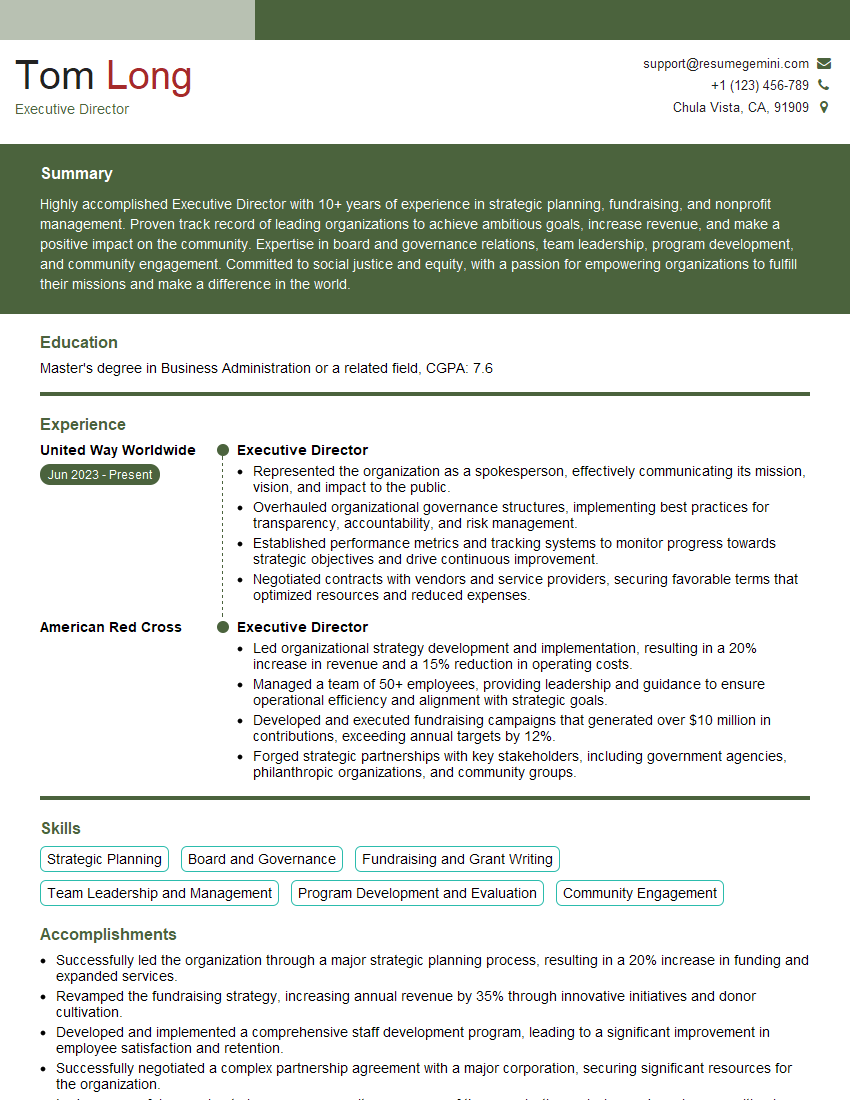
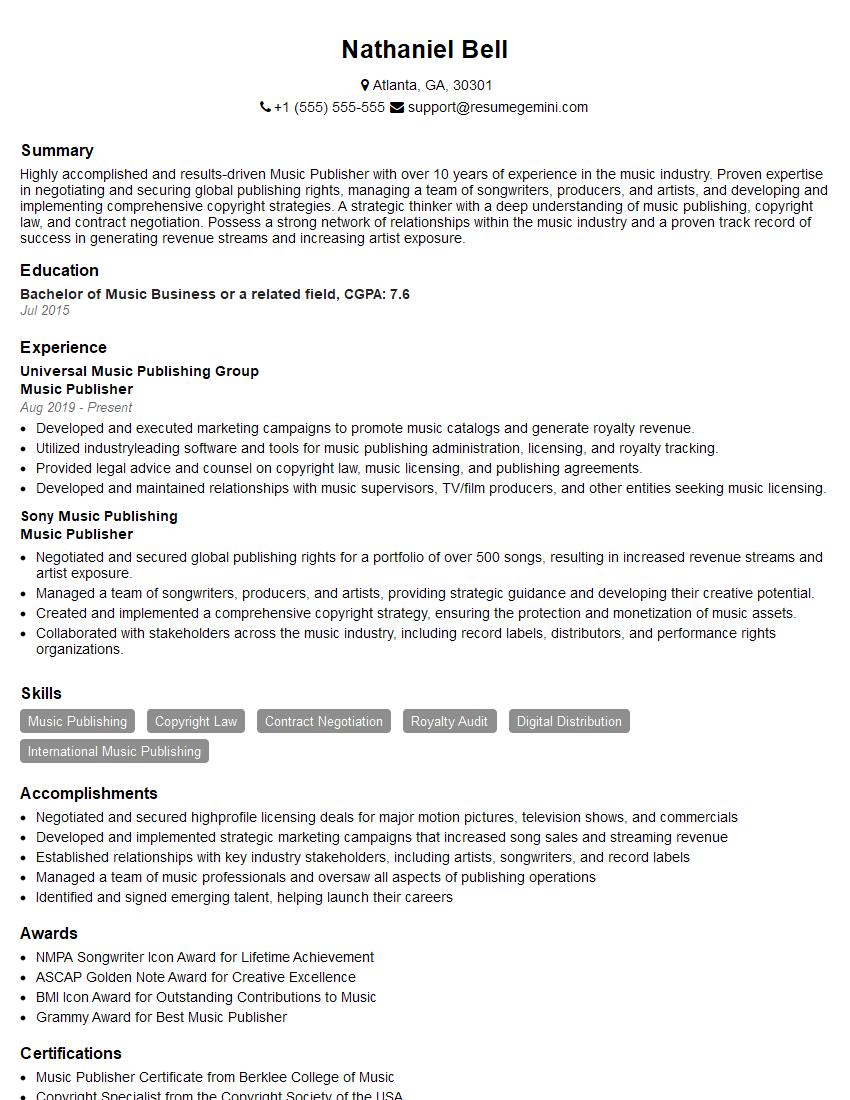
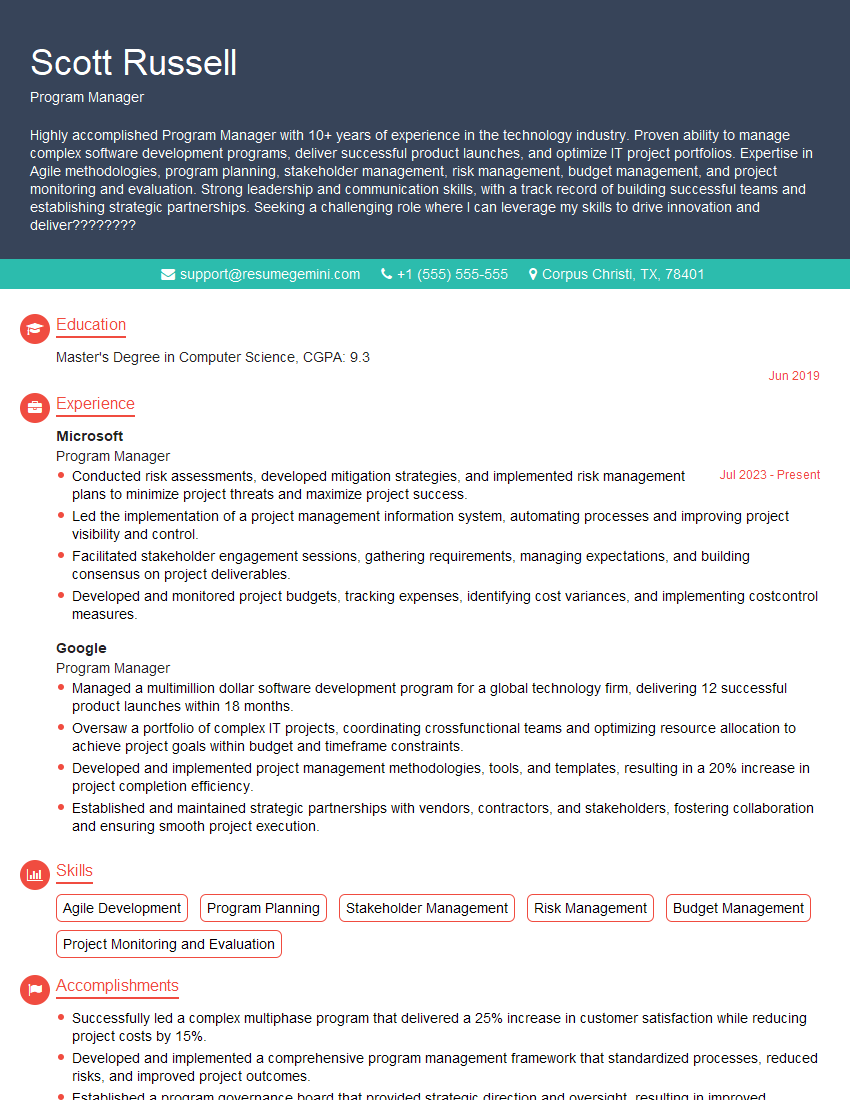
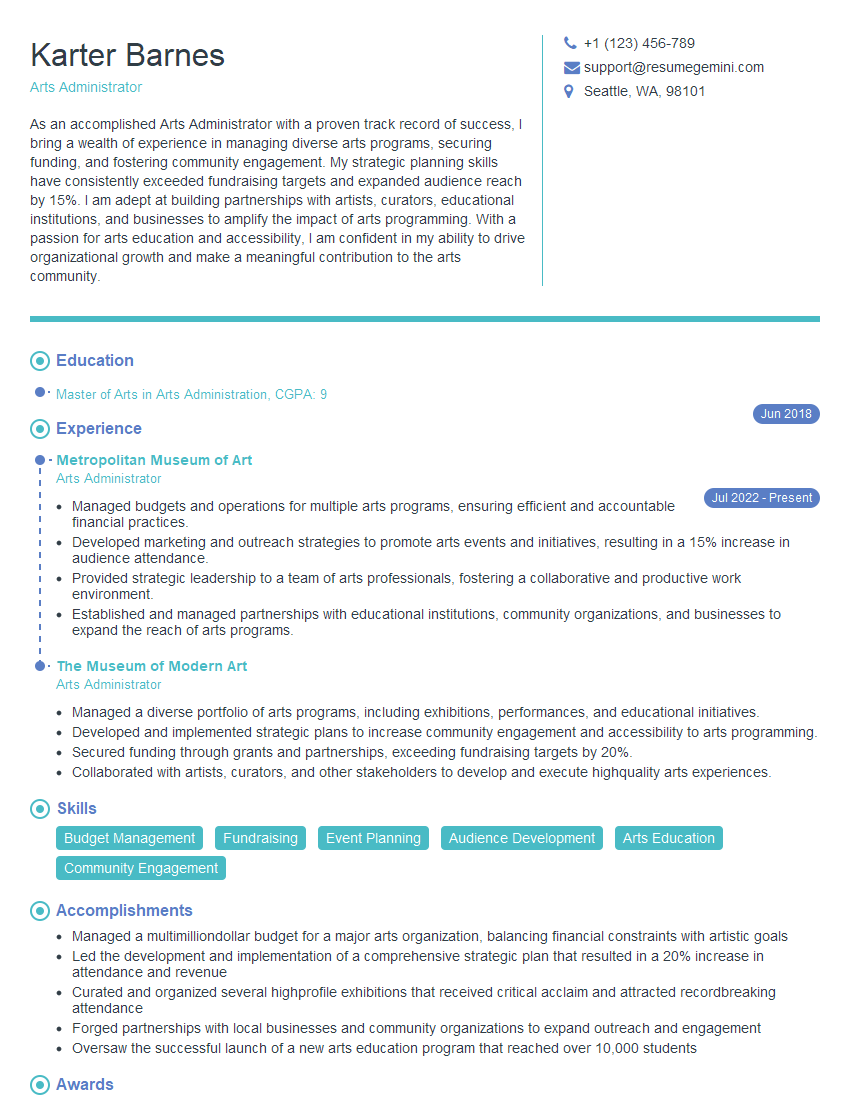
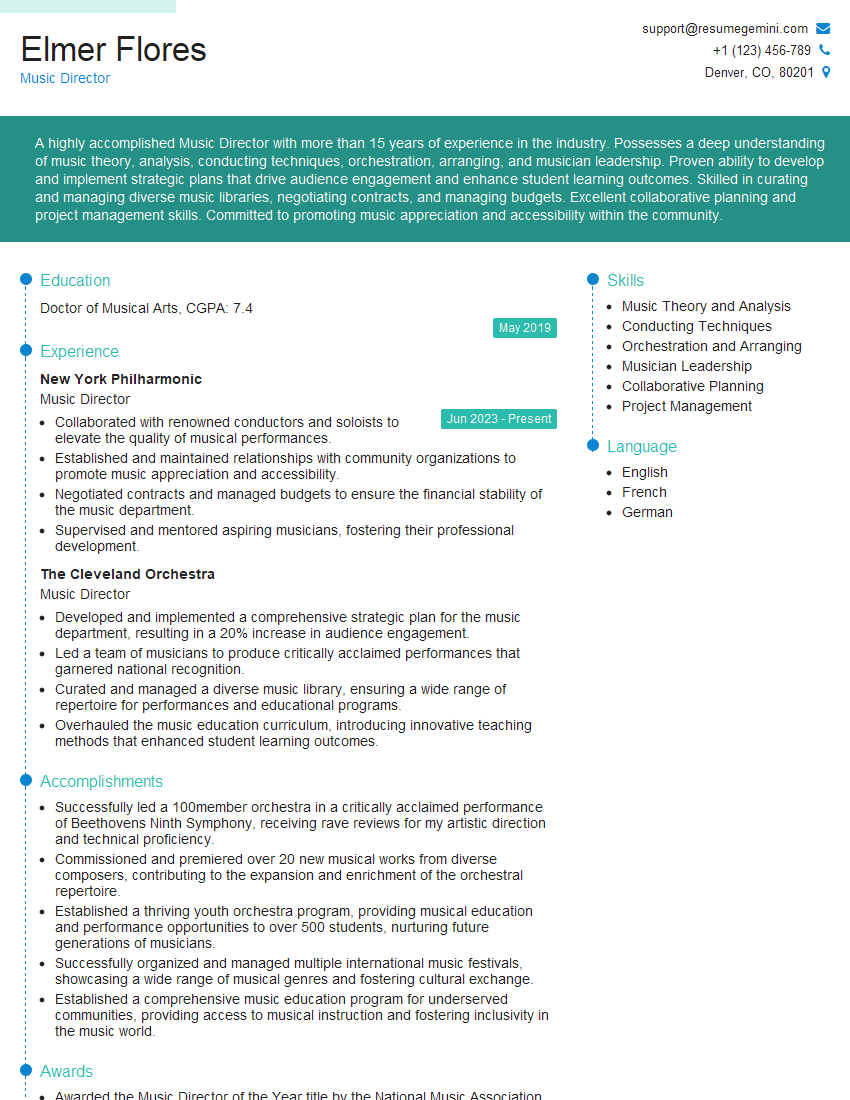
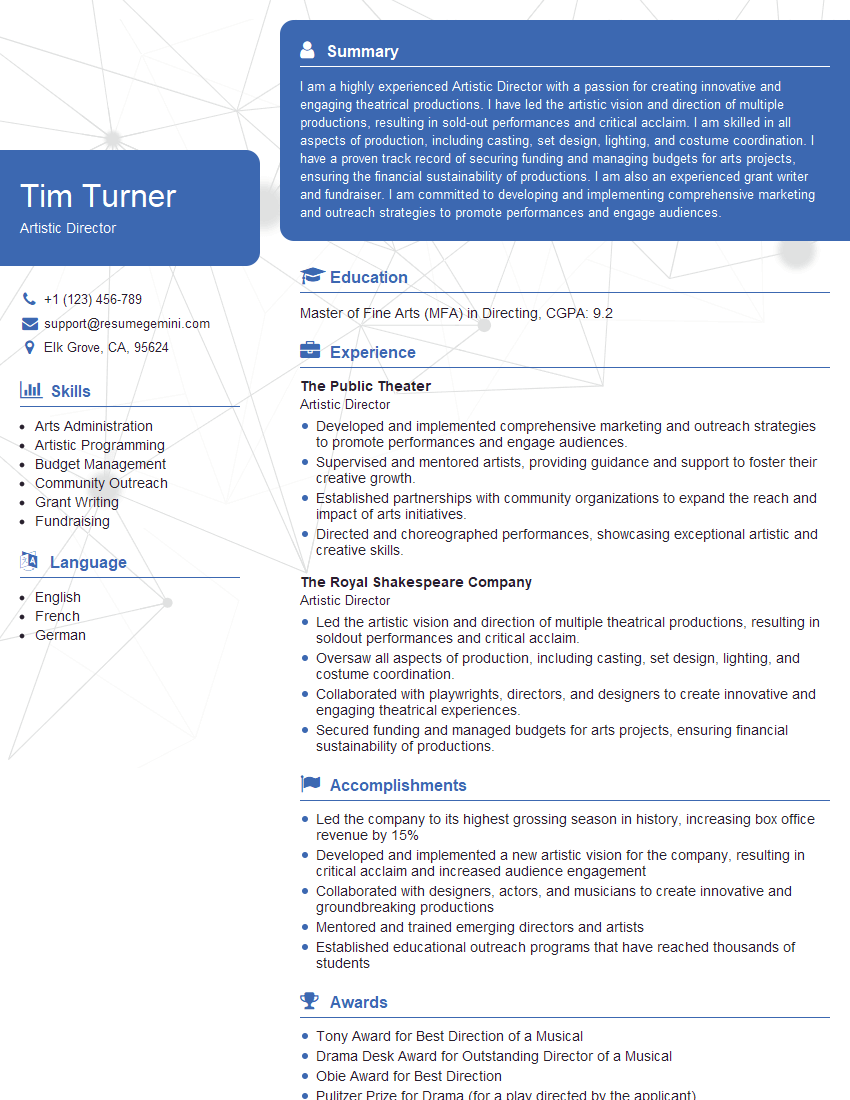
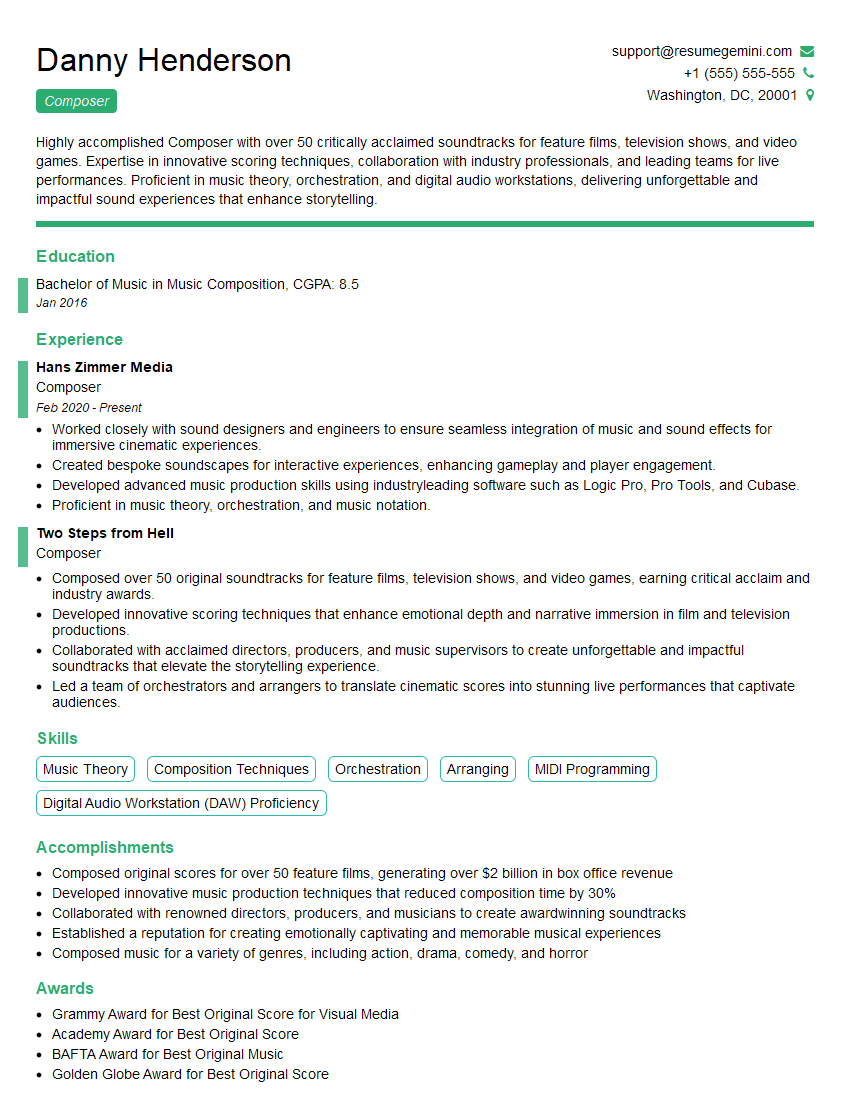
Mastering Commissioning and New Music Performance opens doors to exciting careers in arts administration, programming, and curatorial roles. To maximize your job prospects, creating a strong, ATS-friendly resume is crucial. ResumeGemini is a trusted resource that can help you build a professional and impactful resume tailored to the specific demands of this competitive field. Examples of resumes tailored to Commissioning and New Music Performance are available through ResumeGemini to guide you in crafting your own compelling application materials. Invest the time to showcase your skills and experience effectively – your dream job awaits!
Explore more articles
Users Rating of Our Blogs
Share Your Experience
We value your feedback! Please rate our content and share your thoughts (optional).
What Readers Say About Our Blog
Very informative content, great job.
good