Interviews are opportunities to demonstrate your expertise, and this guide is here to help you shine. Explore the essential Expertise in color calibration and profiling interview questions that employers frequently ask, paired with strategies for crafting responses that set you apart from the competition.
Questions Asked in Expertise in color calibration and profiling Interview
Q 1. Explain the difference between color spaces (sRGB, Adobe RGB, etc.).
Color spaces define the range of colors a device or system can reproduce. Think of it like a paint palette – each palette has a different selection of colors. Different color spaces have varying gamuts (the range of reproducible colors). sRGB (Standard Red Green Blue) is a widely used color space, optimized for web display and many consumer devices. Its gamut is relatively small, ensuring most devices can accurately display sRGB images. Adobe RGB, on the other hand, has a wider gamut, encompassing more colors, especially greens and blues. This makes it a preferred choice for professional photographers and printers who need a wider range of color reproduction. Other color spaces like ProPhoto RGB offer even larger gamuts but might not be fully represented by all devices, leading to potential color shifts during conversion.
For instance, a vibrant green leaf might be accurately reproduced in Adobe RGB but may appear slightly duller in sRGB because sRGB’s gamut doesn’t encompass that specific shade of green. Choosing the right color space depends entirely on your workflow and target output. If your images are destined for the web, sRGB is a safe bet. For print work, Adobe RGB or even wider gamuts might be necessary to capture the full richness of the colors.
Q 2. What is an ICC profile and how does it work?
An ICC (International Color Consortium) profile is a file that describes the color characteristics of a specific device, like a monitor, printer, or scanner. It acts as a translator, mapping the colors in a digital image to the colors the device can actually produce. Think of it as a recipe that tells the device how to mix its ‘ingredients’ (inks, light) to match the intended colors. The profile contains data about the device’s gamut, its color response curve, and other characteristics. When a device is profiled, the software uses the profile to compensate for the device’s inherent inaccuracies, ensuring colors appear more consistent across different devices.
For example, one monitor might produce a slightly warmer red than another. The ICC profiles will compensate for these differences, so the same digital image will look more similar on both monitors. Without ICC profiles, colors would vary drastically across different devices, making color management a nightmare for designers, photographers, and anyone working with color-critical projects.
Q 3. Describe the process of creating a custom ICC profile.
Creating a custom ICC profile involves using specialized hardware and software. The process generally starts by using a colorimeter or spectrophotometer to measure the color output of the device (e.g., a printer or monitor). This device measures the actual colors the device produces for a set of standard color patches. The measurements are then fed into profiling software which uses sophisticated algorithms to generate the ICC profile. The software analyzes the measured data and creates a mathematical model that maps the digital color values to the actual output of the device.
Different software packages exist for creating profiles. X-Rite i1Profiler and Datacolor Spyder are examples of popular professional options. The process requires careful attention to detail, ensuring the device is properly prepared (e.g., warmed up for monitors, paper type specified for printers) and that the measurements are accurate. A well-created profile significantly improves color consistency and accuracy. It’s crucial for print shops and professionals who require highly accurate color reproduction.
Q 4. What are the different types of color calibration devices?
Several devices facilitate color calibration, each with its strengths and applications. Colorimeters are relatively inexpensive and measure color using a single light sensor. They are suitable for monitor calibration but may be less accurate than spectrophotometers. Spectrophotometers, on the other hand, use multiple sensors to measure color more precisely, capturing data across a wider spectrum of wavelengths. They offer superior accuracy but usually come at a higher cost. They are often used for both monitor and printer profiling.
Beyond these, there are also specialized devices for measuring the color of printed materials, such as densitometers which measure the density of inks on paper. The choice depends on budget, required accuracy, and application (monitor calibration vs. printer profiling vs. print quality control). In a print shop, you might find all three types of devices.
Q 5. How do you troubleshoot a color mismatch between devices?
Troubleshooting color mismatches between devices requires a systematic approach. First, ensure all devices have up-to-date ICC profiles. If not, create or update the profiles using a colorimeter or spectrophotometer and appropriate software. Next, verify the color space used in the images and ensure consistency across all devices. If working with different applications (Photoshop, InDesign, etc.), make sure the color management settings are properly configured within each. For example, Photoshop’s color settings should match the profile of your monitor and output device.
If the problem persists, consider the viewing environment. Ambient light significantly affects how colors appear on a screen. Check for inconsistencies in the brightness and contrast settings of your monitors. Finally, if the mismatch involves printing, verify the paper type, ink levels, and printer settings (e.g., color management, resolution) as these are all significant factors influencing print color accuracy.
Q 6. What are the key factors influencing color accuracy in printing?
Color accuracy in printing is influenced by several intertwined factors. The quality and type of ink are paramount. Different inks have different color gamuts and will produce different results. The paper itself plays a critical role, as its absorbency, texture, and brightness impact how the ink is rendered. The printer’s settings, such as resolution, ink coverage, and color management settings, also significantly affect the final color output. Furthermore, the environmental conditions during printing, such as temperature and humidity, can slightly influence the accuracy. Calibration and profiling of both the printer and the monitor ensure consistency, along with accurate color management practices in pre-press.
For example, using a high-quality pigment ink on a smooth, bright white paper will generally yield better results than using dye-based inks on a textured, off-white paper. Careful attention to all these aspects ensures the printed output closely matches the onscreen representation.
Q 7. Explain the concept of gamut mapping.
Gamut mapping addresses the challenge of reproducing colors that are outside the gamut of the target output device. Imagine trying to paint a color that’s not available in your paint palette. Gamut mapping is like finding the closest available color substitute. When an image containing colors outside the output device’s gamut is processed, gamut mapping algorithms attempt to translate these out-of-gamut colors into the closest corresponding in-gamut color.
Several gamut mapping techniques exist, each with different approaches. Perceptual mapping aims to preserve the overall appearance and relationships between colors, even if individual colors are shifted slightly. Absolute mapping simply clips colors beyond the gamut, potentially leading to a loss of color information. Relative colorimetric mapping attempts to maintain the relative differences between colors. The choice of mapping method impacts the visual outcome and depends on the priorities of the user – preserving overall appearance or maintaining the exact relationships between specific colors.
Q 8. What are soft proofing and hard proofing?
Soft proofing and hard proofing are two crucial methods for evaluating color accuracy before final output. Think of them as a preview before printing a photograph: Soft proofing is a digital preview on your screen, while hard proofing is a physical test print.
Soft Proofing: This involves using your monitor and color management software to simulate how your images will look when printed on a specific device and using specific inks and paper. It’s a crucial step in ensuring your digital image matches your intended print output. You essentially ‘virtually’ print on your monitor, checking for color accuracy in a preview window.
Hard Proofing: This is a physical print made on the intended printing device, using the target paper and inks. It gives a definitive representation of your final output. It’s essential for high-stakes projects where perfect color consistency is vital.
Example: Imagine you’re designing a corporate brochure. Soft proofing would allow you to make adjustments to the design and colors on your screen before actually sending it to print. Hard proofing gives you the final visual validation to ensure it matches your expectations.
Q 9. How do you manage color consistency across different output devices?
Maintaining color consistency across devices is paramount for any serious color work. It requires a multi-faceted approach.
- Color Profiles: Accurate color profiles are essential. These profiles describe the color characteristics of each output device (printer, monitor, etc.). When printing an image, the color management system uses these profiles to translate the digital colors to their closest representation on the output device.
- Calibration: Regular calibration of all devices is critical. Monitors should be calibrated using a colorimeter or spectrophotometer. Printers should be maintained through regular cleaning and profile updates, and color calibration tests should be done regularly.
- Color Space Management: Utilizing a standardized color space such as sRGB or Adobe RGB ensures consistency across different devices and software. Converting images to a common color space before any editing or output helps achieve uniformity.
- Proofing: Combining soft and hard proofing methods provides a reliable way to verify color accuracy on all devices involved.
Example: If you’re a graphic designer, your workflow should include calibrating your monitor daily, creating color profiles for all printers used, and always saving images in a color space like Adobe RGB. This ensures your designs look as intended regardless of where they’re viewed or printed.
Q 10. What is Delta E and what is its significance in color management?
Delta E (ΔE) is a metric that quantifies the difference between two colors. It’s a crucial measure in color management, representing the perceived difference a human eye can detect. A smaller Delta E value indicates better color accuracy; a larger value indicates a noticeable color difference.
Significance: ΔE helps determine whether color discrepancies are acceptable for a specific application. For instance, a ΔE of less than 1 is generally imperceptible to the human eye, while a ΔE of 3 or more might be readily noticeable. Various ΔE formulas exist (e.g., ΔE 76, ΔE 94, ΔE 2000), each with its own strengths and weaknesses in capturing perceived color differences. ΔE 2000 is currently favored for its improved accuracy across a broader color range.
Example: In printing high-quality photographs, a ΔE of under 1 would be expected to ensure accurate reproduction of colors. However, in less critical applications, like a website’s color scheme, a slightly higher ΔE might be acceptable.
Q 11. Explain the difference between spectral and visual color measurement.
Spectral and visual color measurement both aim to quantify color, but they differ significantly in their approach.
Spectral Measurement: This technique measures the amount of light reflected or transmitted by a sample at different wavelengths across the visible spectrum. A spectrophotometer is used for this, providing detailed spectral data that describes the exact composition of the color. This detailed data allows for precise color reproduction.
Visual Measurement: This involves human observation and subjective assessment of color. Although less precise than spectral measurement, it accounts for the complexities of human perception and provides insights into how a color is actually perceived by the human eye under specific lighting conditions.
Key Difference: Spectral measurement is objective and quantitative, providing detailed spectral data. Visual measurement is subjective and qualitative, focusing on perceived color differences.
Example: Spectral measurement is used in industries requiring highly precise color reproduction, such as automotive paint, textile printing, and medical imaging. Visual measurement is often used in art or design where aesthetic considerations are paramount.
Q 12. What are the advantages and disadvantages of different color measurement instruments?
Various color measurement instruments cater to different needs and budgets. Here’s a comparison:
- Spectrophotometers: These offer high accuracy and detailed spectral data, providing precise measurements. They’re ideal for critical color matching applications. However, they’re usually expensive and require specialized training to operate effectively.
- Colorimeters: These provide color coordinates (like L*a*b*) and Delta E values. They’re more affordable and simpler to operate than spectrophotometers, but they lack the spectral detail provided by spectrophotometers. These are suitable for routine color quality checks.
- Densitometers: These devices measure the density of inks on a printed surface, typically used in the printing industry to control ink levels and ensure color consistency. They’re less versatile but cost-effective.
Advantages and Disadvantages Summary:
| Instrument | Advantages | Disadvantages |
|---|---|---|
| Spectrophotometer | High accuracy, detailed spectral data | Expensive, complex operation |
| Colorimeter | More affordable, easier operation | Less precise than spectrophotometer |
| Densitometer | Cost-effective, simple operation (specific applications) | Limited versatility, not suitable for all materials |
Q 13. Describe your experience with color calibration software.
I have extensive experience using a variety of color calibration software, including industry-standard packages like X-Rite i1Profiler, Datacolor SpyderX Pro, and Adobe Color Engine. My experience encompasses both monitor calibration and printer profiling.
I’m proficient in creating custom color profiles, troubleshooting calibration issues, and understanding the nuances of different color spaces and output methods. I can use these tools to create custom ICC profiles for various printers and monitors ensuring accurate and consistent color reproduction.
In one project, I used i1Profiler to create a custom ICC profile for a high-end inkjet printer. This resulted in a significant improvement in print quality and a reduction in color variations, improving client satisfaction.
Q 14. How do you maintain the accuracy of your color calibration equipment?
Maintaining the accuracy of color calibration equipment is crucial. This involves regular calibration and maintenance procedures.
- Regular Calibration: All devices, including spectrophotometers and colorimeters, need regular calibration using certified standards, usually provided by the manufacturer or a certified calibration lab. The frequency depends on usage, but a minimum of once per year, sometimes more frequently depending on the tool and environment.
- Cleaning: Regular cleaning of measuring heads, lenses, and other components is vital to prevent dust or debris from affecting measurements. Following the manufacturer’s cleaning instructions is crucial.
- Environmental Control: Maintaining a stable and controlled environment (temperature and humidity) is important as these can affect instrument accuracy. Fluctuations in temperature can subtly influence color readings.
- Verification: Periodically verifying the accuracy of measurements using certified color standards, such as those from X-Rite or GretagMacbeth, ensures the equipment is functioning correctly.
Neglecting these steps can result in inaccurate color measurements, leading to errors in color profiles and print outputs.
Q 15. What are some common color management challenges in different industries (e.g., print, web, photography)?
Color management challenges vary significantly across industries due to the differing output methods and required color accuracy.
- Print: The print industry faces challenges like gamut limitations (the range of colors a printer can reproduce), variations in ink and paper properties, and achieving consistent color across different printing presses. For instance, a vibrant Pantone color might appear subtly different on a commercial offset press than on a smaller digital printer. Careful profiling of each printer and substrate is crucial.
- Web: Web design confronts the challenge of color consistency across different devices (phones, tablets, laptops, monitors) with varying screen resolutions, color profiles, and brightness settings. Color reproduction is also impacted by the limitations of the RGB color space used on screens and potential variations in browser rendering engines. Using a well-defined color scheme based on a known color space such as sRGB and careful testing across a range of devices is vital.
- Photography: In photography, challenges include controlling for lighting conditions, camera sensor variations, and accurate color reproduction during image editing and printing. Lighting affects the raw color data captured, which needs correction using white balance and other tools, often introducing subjective judgment. Converting to a print-ready color space such as Adobe RGB or CMYK and careful soft-proofing are key steps.
Career Expert Tips:
- Ace those interviews! Prepare effectively by reviewing the Top 50 Most Common Interview Questions on ResumeGemini.
- Navigate your job search with confidence! Explore a wide range of Career Tips on ResumeGemini. Learn about common challenges and recommendations to overcome them.
- Craft the perfect resume! Master the Art of Resume Writing with ResumeGemini’s guide. Showcase your unique qualifications and achievements effectively.
- Don’t miss out on holiday savings! Build your dream resume with ResumeGemini’s ATS optimized templates.
Q 16. How do you handle color inconsistencies caused by different lighting conditions?
Handling color inconsistencies due to lighting involves a multi-step process. First, we must understand that different light sources have different color temperatures and intensities. This is precisely why color calibration is done under controlled lighting conditions, often using a light booth that meets a specific color temperature and intensity standard.
To address inconsistencies, I utilize color management tools and workflows that incorporate:
- White Balance Correction: This is a fundamental step in photography and image editing, adjusting the colors to reflect a neutral white point. Proper white balance ensures consistent color rendition regardless of the ambient light’s color temperature.
- Color Profiling: Creating a profile of the camera, monitor, and printer under the controlled lighting conditions allows the CMS to accurately translate colors between devices. It compensates for the device’s limitations and idiosyncrasies.
- Colorimetric Measurements: Using a spectrophotometer to measure and quantify the actual colors helps quantify discrepancies and objectively verify consistency across lighting changes. This objective data improves the color correction process.
For example, a photograph taken under warm indoor lighting will look different than one taken under cool daylight. Proper white balance correction aims to bring both images to a consistent, neutral color temperature.
Q 17. What is your experience with colorimetric data analysis?
I have extensive experience with colorimetric data analysis, utilizing tools and software such as spectrophotometers, colorimeters, and dedicated color management software (e.g., Adobe Color Engine, X-Rite i1Profiler). This involves interpreting data in various color spaces (XYZ, Lab, RGB, CMYK), understanding color difference metrics (ΔE), and using these data to create accurate color profiles and identify discrepancies in color reproduction.
For example, analyzing the spectral data from a spectrophotometer allows me to understand the precise color makeup of a sample and compare it to a target value to quantify the deviation. This analysis guides decisions regarding color corrections, ensuring accuracy and consistency throughout the production process.
I routinely use this analysis in troubleshooting situations, such as identifying the root cause of a color shift between a digital design and the final printed output. The data helps pinpoint if the issue lies with the monitor calibration, printer profile, ink consistency, or substrate properties.
Q 18. Explain the concept of black point compensation.
Black point compensation refers to adjusting the darkest point in an image to match the darkest point that the output device can reproduce. Different devices have different capabilities in rendering deep blacks; some may appear gray even when intended to be black. This effect varies depending on screen technology, printing technology, and ink characteristics.
Without black point compensation, deep shadows can appear lighter than intended, reducing image contrast and overall fidelity. Compensation ensures that blacks maintain their intended depth and richness. This adjustment takes place during profiling and is an integral part of achieving accurate color reproduction. This is usually handled automatically by the color management software, but understanding how it works is crucial for troubleshooting.
Think of it like setting a baseline for darkness – ensuring the ‘blackest black’ on your screen or print accurately reflects the intended value.
Q 19. What are the benefits of using a color management system (CMS)?
Implementing a Color Management System (CMS) offers several significant benefits:
- Color Consistency: A CMS ensures accurate color reproduction across different devices and media, from design to final output, minimizing discrepancies. This is vital to avoid visual surprises when, for example, a design viewed on a calibrated monitor looks markedly different in print.
- Workflow Efficiency: By automating color transformations, a CMS significantly improves the workflow, saving time and effort usually spent on manual color adjustments.
- Reduced Costs: Minimizing color errors leads to fewer reprints, remakes, and costly revisions, enhancing profitability and efficiency.
- Improved Accuracy: CMS allows for precise color control, ensuring that the final product adheres closely to the original design intent, which is particularly critical for design-sensitive industries.
- Client Satisfaction: Accurate color reproduction enhances professionalism, client satisfaction and builds trust in the quality of service.
Q 20. How do you ensure the accuracy of color reproduction in various output media?
Ensuring accurate color reproduction across various output media requires a holistic approach that considers the unique characteristics of each medium.
- Profiling: Creating accurate ICC (International Color Consortium) profiles for each device (monitor, printer, scanner) is crucial. This profile acts as a translation guide for the color management system.
- Soft-Proofing: This process simulates the appearance of the final output on a different medium using software. By previewing the work before actual printing, potential color issues can be identified and corrected early.
- Device Calibration: Regular calibration of monitors and other display devices ensures consistent and accurate color presentation. Using a calibrated spectrophotometer for this step is essential for the highest level of accuracy.
- Substrate Consideration: For print, the type of paper or other printing substrate significantly influences the final color. The CMS needs to be informed of this substrate through the profile for accurate color transformation.
- Color Space Selection: Choosing the appropriate color space (sRGB, Adobe RGB, CMYK) for the intended output is vital. Each color space has its own limitations and strengths in color reproduction.
For example, I’d use a different workflow for preparing an image for web display (sRGB) than for preparing the same image for fine art printing (Adobe RGB or CMYK, depending on the printer’s capabilities). The key is adapting the color management strategies to optimize for the unique attributes of each output medium.
Q 21. Describe your experience with different color correction techniques.
My experience encompasses a broad range of color correction techniques, both manual and automated, using various software tools. These include:
- White Balance Adjustment: Correcting color casts by adjusting the white point in an image to achieve neutral coloration.
- Hue/Saturation/Brightness Adjustments: Modifying individual color components using tools in photo editing software.
- Curves Adjustment: Non-linear adjustment to fine-tune color channels based on a graphical representation of tonal values.
- Channel Mixing: Adjusting the relative levels of individual color channels (Red, Green, Blue or Cyan, Magenta, Yellow, Black) to achieve specific color effects.
- Color Balancing: Subtle adjustments to create color harmony and balance across an image.
- Selective Color Correction: Targeting specific colors or areas of an image for focused adjustments.
- Color Grading: Applying a global look and feel using color-correction techniques for stylistic effects rather than pure color accuracy.
The choice of technique often depends on the nature of the image, the desired outcome, and the available tools. For example, while curves provide sophisticated control, simpler adjustments like hue/saturation may be adequate for straightforward corrections.
Q 22. What is your understanding of colorimetric principles?
Colorimetric principles form the foundation of color science. They govern how we perceive and measure color, focusing on the quantitative aspects rather than subjective interpretation. This involves understanding color spaces, color matching functions, and the relationships between different color models.
Fundamentally, it’s about translating the physical properties of light (wavelength and intensity) into numerical values that can be consistently reproduced across different devices and media. Key concepts include:
- Tristimulus values: Representing a color using three primary color components (e.g., red, green, blue). This is the basis of many color models.
- CIE color spaces: Standardized systems (like CIE XYZ and CIE LAB) that provide a consistent way to represent and compare colors, regardless of the device used to display or print them.
- Color matching functions: Describe how human vision perceives different wavelengths of light, forming the basis for how color spaces are defined.
- Color difference formulas: Mathematical equations (like ΔE) that quantify the difference between two colors, allowing for objective assessment of color accuracy.
Understanding these principles is crucial for accurate color reproduction in print, digital displays, and other applications. For instance, in printing, using accurate color matching functions ensures that the printed output closely matches the design intent on the screen.
Q 23. Explain your approach to troubleshooting color issues in a production environment.
My approach to troubleshooting color issues in a production environment is systematic and data-driven. I follow a structured process:
- Identify the problem: Precisely define the color discrepancy. Is it a problem with a specific device, a particular color, or across the entire workflow? This might involve comparing printed output to the digital source, checking for inconsistencies across different monitors, or analyzing client feedback.
- Isolate the source: This requires carefully analyzing each step of the color workflow – from the initial design, through color profiles, to the output device. This can involve inspecting the color profiles of monitors and printers, checking the color settings in design software, and reviewing any color transformations applied during the production process.
- Test and refine: Once the source is identified, I’ll conduct targeted tests to pinpoint the specific issue. For example, if the issue is with a printer, I might print test strips with various color settings to determine the optimal configuration. If it is with a monitor, I will recalibrate and profile it.
- Document and communicate: Once the solution is implemented and verified, I meticulously document the steps and findings for future reference and to communicate the resolution effectively to the team.
For example, I once encountered a situation where printed colors were significantly different from the on-screen design. By systematically investigating the process, I discovered that the incorrect color profile had been assigned to the printer. Changing the profile immediately resolved the problem.
Q 24. How do you stay updated with the latest advancements in color management technology?
Staying current in color management is vital. I actively pursue continuous learning through several strategies:
- Professional memberships: Organizations like the Society for Imaging Science and Technology (IS&T) offer access to cutting-edge research and industry events.
- Industry publications and conferences: I regularly read journals like Color Research & Application and attend conferences focusing on color science and imaging technology. This provides direct exposure to the latest advancements and best practices.
- Online resources and webinars: Numerous online platforms and webinars provide valuable insights into new color management technologies and software updates. These offer flexible, targeted learning opportunities.
- Vendor training and documentation: Keeping up-to-date with the software and hardware I use is critical, so I frequently engage with vendor-provided training and documentation.
By consistently seeking out new information, I can adapt my techniques to incorporate the latest improvements in color accuracy and efficiency.
Q 25. What are your preferred methods for validating color accuracy?
Validating color accuracy relies on a combination of tools and techniques. My preferred methods include:
- Spectrophotometers: These instruments precisely measure the spectral reflectance or transmittance of a color sample, providing objective data for comparison to target values. This allows for a quantitative assessment of color accuracy.
- Colorimeters: While less precise than spectrophotometers, colorimeters offer a more affordable way to measure tristimulus values and color differences (ΔE).
- Color target charts and test prints: These provide a visual assessment and help identify potential inconsistencies. They are useful for checking color consistency across multiple print runs or devices.
- Software solutions: Specialized color management software allows for simulating different output devices and visualizing color differences. This helps to predict potential problems before actual printing.
The choice of validation method depends on the specific application and required level of precision. For high-end printing, spectrophotometric measurements are essential, while for less demanding tasks, colorimeters or visual comparisons might suffice.
Q 26. Describe your experience with different color models (CMYK, RGB, LAB).
I have extensive experience with various color models, each suited for different applications:
- RGB (Red, Green, Blue): An additive color model used for displays like monitors and televisions. It’s based on the principle that combining different intensities of red, green, and blue light creates a wide range of colors.
- CMYK (Cyan, Magenta, Yellow, Key/Black): A subtractive color model used in printing. It works by subtracting colors from white light, with cyan, magenta, and yellow inks selectively absorbing certain wavelengths of light. Black ink (key) is often added to improve depth and reduce the amount of other inks needed.
- LAB (L*a*b*): A device-independent color model, making it ideal for color comparisons across various devices and media. It separates lightness (L*) from color channels (a* and b*), allowing for more intuitive color adjustments. It’s particularly useful in color management workflows as it allows for a consistent standard.
Understanding the strengths and limitations of each model is crucial. For instance, while RGB is excellent for screen-based work, CMYK is essential for print because of how pigments interact with light. LAB bridges the gap, offering a device-independent standard for comparing colors produced by different methods.
Q 27. How would you explain the concept of color calibration to a non-technical audience?
Imagine your computer screen showing a vibrant red, but when you print the image, the red is dull and different. Color calibration is like tuning your devices to ‘speak the same language’ about color.
It’s the process of adjusting your monitor, printer, or scanner so that the colors you see on screen closely match the colors printed or scanned. Think of it as fine-tuning your instruments for an orchestra – each musician (device) needs to be in sync to produce a harmonious result (accurate color reproduction).
This involves using specialized tools to measure the color output of your devices and creating profiles. These profiles act like instruction manuals, guiding the devices on how to accurately reproduce colors. Without calibration, you might experience inconsistent color representation leading to frustration and wasted time.
Q 28. What is your approach to managing color projects with tight deadlines?
Managing color projects with tight deadlines demands a structured and proactive approach. I prioritize efficiency and minimize potential delays by:
- Clear communication: Establishing open communication with all stakeholders (clients, designers, printers) early on ensures everyone is on the same page regarding color expectations and potential constraints.
- Prioritization: Identifying critical color decisions and focusing on those first. This prevents getting bogged down in minor details while the crucial aspects remain unresolved.
- Risk assessment: Proactively identifying potential color issues and implementing mitigation strategies. For example, if using a new printer, I would conduct thorough testing and validation well in advance of the deadline.
- Automation: Leveraging automation where possible. Color management software can streamline repetitive tasks, such as profile creation and color conversion, saving valuable time.
- Contingency planning: Having a backup plan in case of unexpected problems. This might include alternative color workflows or strategies for resolving potential discrepancies.
By anticipating potential problems and having a well-defined plan, I can manage color projects effectively even under tight deadlines. This proactive approach ensures the project remains on schedule and meets the client’s color expectations.
Key Topics to Learn for Expertise in Color Calibration and Profiling Interviews
- Color Spaces and Models: Understanding RGB, CMYK, LAB, and XYZ color spaces; their strengths and weaknesses; and when to use each one. Consider the transformations between these spaces and their impact on color accuracy.
- Calibration Devices and Techniques: Familiarity with spectrophotometers, colorimeters, and their use in profiling displays, printers, and scanners. Understanding different calibration methods and their effectiveness.
- ICC Profiles: Deep understanding of ICC profile creation, embedding, and management. This includes knowing how to interpret profile data and troubleshoot profile-related issues.
- Color Management Workflow: Understanding the entire process, from image capture to final output, including the role of color profiles at each stage. Be prepared to discuss best practices for maintaining color consistency throughout the workflow.
- Troubleshooting Color Issues: Practical experience in diagnosing and resolving color discrepancies, such as metamerism, gamut mapping issues, and color casts. This includes understanding the underlying causes and implementing appropriate solutions.
- Software Applications: Proficiency in color management software (e.g., profiling software, image editing software with color management capabilities). Be ready to discuss your experience with specific tools and their features.
- Industry Standards and Best Practices: Familiarity with relevant industry standards and best practices for color management in different applications (e.g., print, web, video).
Next Steps
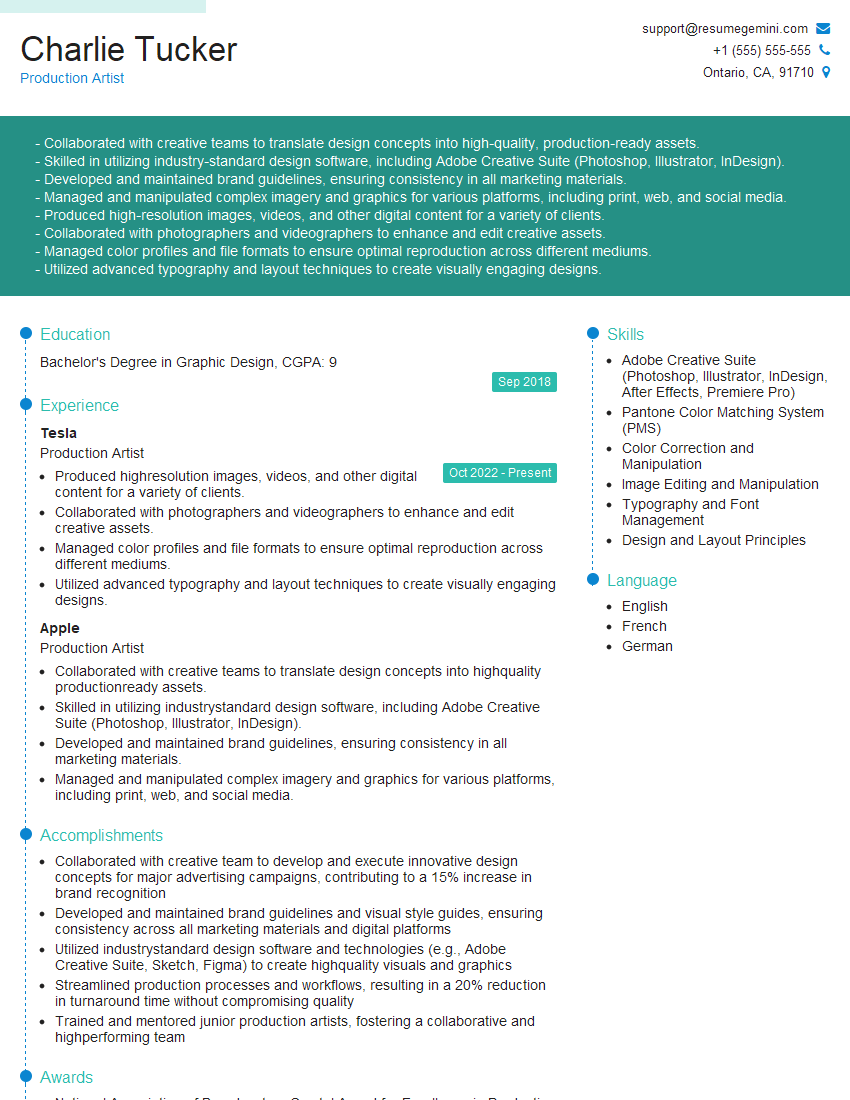
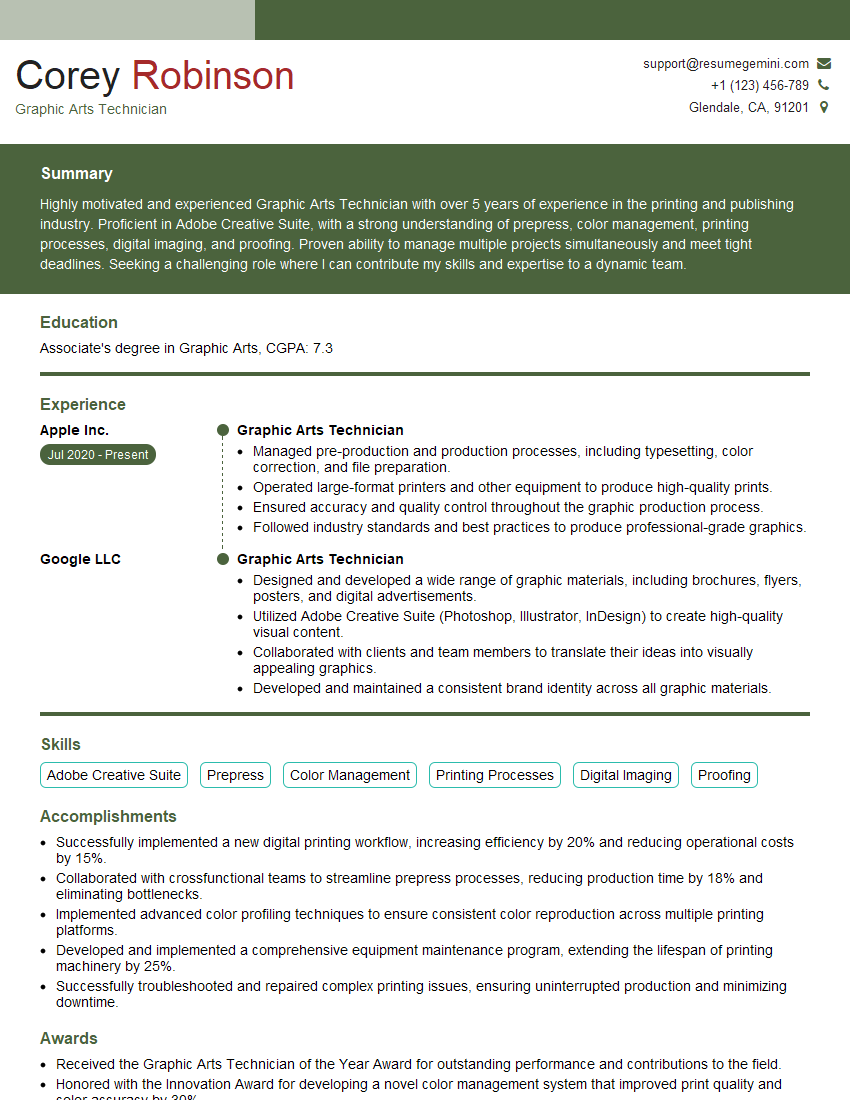
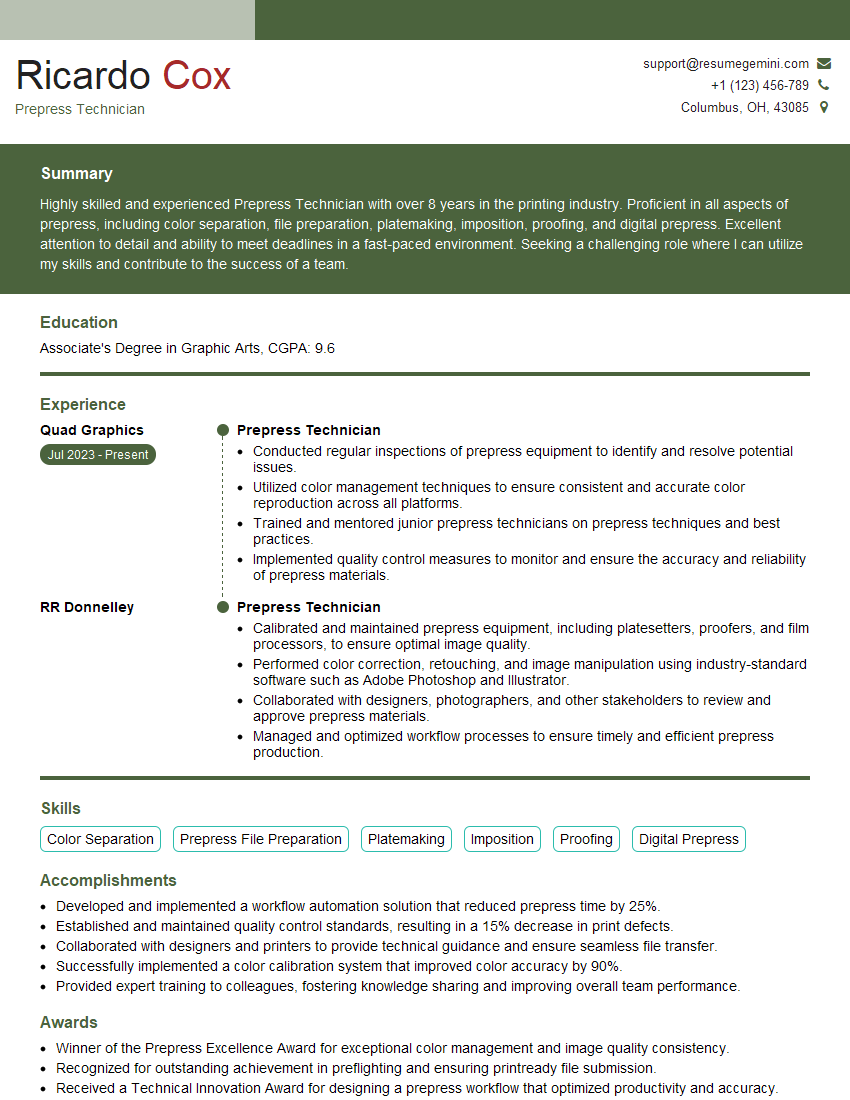
Mastering color calibration and profiling opens doors to exciting opportunities in various industries, including graphic design, photography, printing, and video production. A strong understanding of these concepts is highly valued by employers and significantly enhances your career prospects. To make the most of your job search, it’s crucial to create a resume that effectively highlights your skills and experience. An ATS-friendly resume is key to getting your application noticed. ResumeGemini is a trusted resource to help you build a professional and effective resume that showcases your expertise in color calibration and profiling. Examples of resumes tailored to this specialization are available within ResumeGemini to help guide your creation.
Explore more articles
Users Rating of Our Blogs
Share Your Experience
We value your feedback! Please rate our content and share your thoughts (optional).
What Readers Say About Our Blog
Very informative content, great job.
good