The thought of an interview can be nerve-wracking, but the right preparation can make all the difference. Explore this comprehensive guide to Operate concrete boom pumps interview questions and gain the confidence you need to showcase your abilities and secure the role.
Questions Asked in Operate concrete boom pumps Interview
Q 1. Describe the different types of concrete boom pumps.
Concrete boom pumps are categorized primarily by their boom type and placement of the pump unit. The boom itself is the articulating arm that extends and positions the concrete delivery point. There are:
- Truck-mounted boom pumps: These are the most common type. The pump is integrated onto a truck chassis, offering excellent mobility. The boom can reach various heights and distances, making them versatile for a wide range of construction projects.
- Trailer-mounted boom pumps: These are similar to truck-mounted pumps but are towed by a separate vehicle. They’re often preferred when a smaller footprint is needed at the job site or for projects requiring powerful pumps that are too heavy for standard truck chassis.
- Stationary boom pumps: These are larger, more powerful units designed to remain in a fixed location for prolonged periods. They’re ideal for large-scale projects needing high-volume concrete placement, like high-rise buildings or large-scale infrastructure projects. Their booms are often longer and can handle higher pressures.
- Line pumps (Not strictly boom pumps): While not technically ‘boom’ pumps, line pumps are often used alongside boom pumps or in situations where a boom pump isn’t feasible. They use a series of pipes and hoses to place concrete.
The choice depends on factors like site accessibility, project size, and the required pumping distance and height.
Q 2. Explain the process of setting up a concrete boom pump for operation.
Setting up a concrete boom pump is a multi-step process requiring precision and safety awareness. First, we thoroughly inspect the area to ensure a stable and level surface, free from obstructions. Next, we carefully position the pump, ensuring the outriggers are deployed correctly. Proper outrigger placement is crucial for preventing the pump from tipping. We then connect the power supply, the concrete delivery line (usually a high-pressure hose), and thoroughly check all connections for leaks or damage. Before initiating the pump, the system is primed to remove any air in the lines. This ensures a smooth and continuous flow of concrete. A crucial step involves communicating with the concrete supplier to coordinate the delivery timing and avoid any unnecessary downtime or concrete wastage. Finally, a test run with a small amount of concrete confirms everything is working as expected before full-scale pumping operations commence.
Q 3. How do you ensure the stability of a concrete boom pump during operation?
Stability is paramount when operating a concrete boom pump. We achieve stability primarily through proper outrigger placement. The outriggers need to be fully extended and firmly planted on a solid, level base. This distributes the pump’s weight evenly, minimizing the risk of tipping. The ground conditions are carefully assessed before positioning the outriggers. If the ground is soft or uneven, we may use ground mats or other stabilization techniques. The boom’s movements must be controlled and smooth to prevent sudden shifts in the pump’s center of gravity. Additionally, we monitor the pump’s operation continuously, watching for any signs of instability, such as unusual vibrations or uneven load distribution. During windy conditions, extra precautions are taken, and the boom operation may be adjusted accordingly to mitigate the wind’s effects. It’s always better to err on the side of caution and stop operation if any doubt regarding stability arises.
Q 4. What are the safety procedures you follow when operating a concrete boom pump?
Safety is the top priority. Before starting, a comprehensive pre-operational check is performed, verifying all components are in good working order. Personal protective equipment (PPE), including safety helmets, high-visibility vests, and safety boots, is mandatory. The work area is secured, ensuring only authorized personnel are present. Clear communication channels are established between the pump operator, the concrete placing crew, and other workers on site. We strictly adhere to all relevant safety regulations and site-specific safety procedures. Regular breaks are taken to avoid fatigue, a key contributor to accidents. Boom movements are always smooth and controlled, avoiding sudden jerks or rapid changes in direction. Emergency shut-off procedures are practiced regularly and understood by all personnel involved in the operation. In the event of any malfunction or emergency, the operation is immediately halted and proper safety procedures are followed. The concrete delivery area is also constantly monitored to prevent accidents related to the placement of the concrete.
Q 5. Explain the importance of regular maintenance for concrete boom pumps.
Regular maintenance is critical for preventing costly breakdowns and ensuring the longevity of the concrete boom pump. This includes daily checks of hydraulic fluid levels, hose connections, and the overall condition of the boom. Regular lubrication of moving parts is essential to prevent wear and tear. Scheduled servicing involves more thorough inspections, including hydraulic system flushes, filter replacements, and detailed inspections of all components. These tasks are performed to manufacturer specifications and any necessary repairs are addressed promptly. Proactive maintenance not only extends the life of the pump but also minimizes downtime and ensures the safety of personnel. We keep detailed records of all maintenance activities to track the machine’s health and predict potential issues. Following a robust maintenance schedule is cost-effective compared to dealing with unplanned breakdowns.
Q 6. How do you troubleshoot common problems encountered during concrete pumping?
Troubleshooting common problems requires a systematic approach. If the pump is not delivering concrete, we first check the power supply and hydraulic system pressure. Leaks in the lines are identified and repaired. Blockages are cleared using specialized cleaning tools. Problems with the concrete mix, such as being too dry or too wet, can hinder the pumping process. In these situations, we collaborate with the concrete supplier to adjust the mix appropriately. Overheating can occur due to prolonged use or insufficient lubrication; this requires addressing the root cause and allowing the pump to cool down. Unusual noises or vibrations can indicate mechanical issues that require immediate investigation and potentially professional servicing. A detailed log of all issues encountered, together with the troubleshooting steps taken, helps improve our response time and prevent recurring problems.
Q 7. Describe your experience with different types of concrete mixes and their impact on pumping.
Experience with different concrete mixes is crucial. The water content, aggregate size, and cement type significantly affect pumpability. A mix that is too dry can cause blockages and put excessive strain on the pump. Conversely, a mix that is too wet can lead to segregation and increased wear on the pump components. High-slump concrete is generally easier to pump, but there are limits to what the pump can handle. Different types of aggregates, their shape and size, have an impact on the friction within the pump and pipelines, which will affect how efficiently the concrete flows. I have worked with numerous mixes, from standard ready-mix concrete to specialized high-performance mixes used for demanding projects. Each mix requires careful assessment to select the appropriate pump settings and to prevent operational issues. Understanding the interaction between concrete properties and pumping equipment is essential for efficient and safe operation.
Q 8. What are the signs of a malfunctioning concrete boom pump?
Identifying a malfunctioning concrete boom pump relies on keen observation and understanding of its normal operation. Several signs indicate potential problems. These can be broadly categorized into operational issues, hydraulic problems, and mechanical issues.
- Operational Issues: Reduced pumping output, inconsistent concrete flow (pulsating or intermittent), difficulty in placing concrete at the desired location, or the boom struggling to move smoothly.
- Hydraulic Issues: Leaks of hydraulic fluid (check all lines and joints), unusual noises from the hydraulic system (high-pitched whine, grinding), overheating of the hydraulic system (indicated by high temperature readings and/or unusual smells), and sluggish or unresponsive boom movements.
- Mechanical Issues: Unusual vibrations or noises from the pump itself, the engine running rough or overheating, difficulty starting the engine, and any visible damage to the boom, pipes, or other components.
For example, if the boom consistently struggles to reach its full extension, this might point to problems in the hydraulic system or a mechanical issue within the boom’s extension mechanism. Similarly, if the pump struggles to push concrete, it could indicate insufficient pressure, blockages in the pipeline, or wear within the pump itself.
Q 9. How do you handle unexpected situations, such as a sudden stoppage of concrete flow?
A sudden stoppage of concrete flow is a serious event requiring immediate action. Safety is paramount. My first step would be to immediately shut down the pump to prevent further damage or injury. A thorough assessment is crucial before any actions are taken. Here’s how I would handle this:
- Safety First: Ensure the area is secured and personnel are clear of the boom and the discharge area.
- Identify the Cause: Check for obvious blockages in the delivery line (using the cleaning system if equipped), low concrete levels in the hopper, or problems with the pump itself (hydraulic pressure, engine issues). This often requires quickly checking pressure gauges, looking for any fluid leaks and assessing the engine performance.
- Troubleshooting: Based on the identified cause, I would undertake specific actions. This could range from clearing a blockage to resolving a hydraulic issue or investigating an engine problem. Often, a quick visual inspection to check for any obvious issues is the first step.
- Consult with the Team: If I cannot immediately identify and resolve the issue, I will communicate with the site supervisor and potentially the pump manufacturer’s service team for guidance.
- Documentation: Thorough documentation of the event, including the time of occurrence, the cause (if identified), and the actions taken, is crucial for both safety and analysis to prevent future occurrences.
For example, once I’ve checked the hopper level and confirmed there’s still concrete, I would visually inspect the delivery line for blockages before checking hydraulic pressure. In many cases, a simple procedure like carefully clearing a blockage, restarting and re-checking would suffice. But if the problem persists, I’d seek expert help.
Q 10. Explain your experience with cleaning and maintaining a concrete boom pump after use.
Cleaning and maintaining a concrete boom pump after use is crucial for its longevity and efficient performance. This is not just a matter of aesthetics; proper cleaning prevents concrete buildup, which can lead to blockages and damage. My cleaning procedure involves the following steps:
- Immediate Cleaning: Immediately after use, I would initiate the pump’s cleaning system to flush out the remaining concrete with water. This is crucial to prevent hardening within the system.
- Thorough Cleaning: I’d carefully inspect the boom, pipes and valves for any residual concrete. This might involve manual cleaning using high-pressure water and appropriate tools. Any hardened concrete needs to be carefully removed to prevent blockages.
- Lubrication: I would lubricate moving parts according to the manufacturer’s recommendations. This ensures smooth operation and prevents wear and tear.
- Inspection: A thorough visual inspection of the pump’s components would be carried out, checking for any signs of damage or leaks.
- Documentation: I maintain a detailed log of all cleaning and maintenance activities, including date, time, and any observations.
For instance, I always pay particular attention to the S-pipe, as this is a common area for concrete buildup. A systematic approach, combined with careful attention to detail, prevents major problems later on. Regular maintenance helps avoid costly repairs and downtime.
Q 11. What is your experience with different boom configurations and their applications?
I have extensive experience with various boom configurations, each suited to different job site needs. The configuration impacts reach, maneuverability, and the ability to pour concrete in challenging locations.
- Standard Boom: The most common configuration, offering a good balance of reach and maneuverability. Ideal for most construction projects.
- Folded Boom: These booms fold into compact configurations, which allow efficient transportation and operation in confined spaces. Great for urban construction or where access is limited.
- Multi-section Boom: These advanced configurations provide greater reach and flexibility, perfect for high-rise constructions or sites with obstacles limiting direct access. They also allow for more precise placement.
For example, working on a high-rise building, a multi-section boom with a long reach is essential for placing concrete at different levels efficiently. On the other hand, a smaller project in a tight urban area might necessitate a folded boom for maneuverability and ease of transportation.
Q 12. How do you calculate the required pumping pressure for different job sites?
Calculating the required pumping pressure is crucial to ensure efficient and safe concrete placement. The pressure needed depends on several factors:
- Horizontal Distance: Longer distances require higher pressure to overcome friction losses within the pipeline.
- Vertical Distance (Height): Greater heights demand significantly higher pressure to lift the concrete against gravity.
- Concrete Slump: The slump (consistency) of the concrete affects its flow characteristics. Higher slump concrete usually requires less pressure compared to low slump, more viscous mixtures.
- Pipe Diameter and Length: Smaller diameters result in greater friction losses, necessitating higher pressures. Longer pipelines also lead to increased pressure requirements.
While precise calculations often involve complex hydraulic formulas and specialized software, a general understanding of these factors is essential. Experienced operators develop a feel for pressure requirements based on site conditions and concrete properties. Manufacturers’ guidelines and data sheets are crucial references, as they provide details about maximum operating pressures for their specific pumps.
Q 13. What safety measures do you take to prevent concrete spills or leaks?
Preventing concrete spills and leaks is paramount for safety, efficiency, and environmental protection. My approach involves a multi-layered strategy:
- Pre-Pour Inspection: Before starting, I thoroughly inspect the entire system for any leaks or damage in hoses, pipes, valves, and couplings.
- Proper Hoses and Couplings: I ensure all hoses and couplings are correctly connected, and I utilize the appropriate type and size for the job, ensuring that they are properly sealed.
- Controlled Concrete Flow: I regulate the concrete flow rate to prevent overwhelming the system and causing spills. Slow and steady is safer and allows for accurate placement.
- Boom Positioning: Careful positioning of the boom is essential. It should be positioned safely, avoiding unintended contact with other structures or objects which could damage the equipment or cause leaks.
- Spill Containment Measures: Where appropriate, I will utilize spill containment measures, such as barriers or collection trays, to prevent accidental spills.
For instance, before starting the placement on a particularly challenging site, I will conduct a test pour into a designated container and check for any leakages. If I find any weak points, they will be addressed before concrete placement starts.
Q 14. Describe your experience with working at heights using a concrete boom pump.
Working at heights with a concrete boom pump requires strict adherence to safety protocols. My experience involves considerable training and a deep understanding of these safety procedures:
- Proper Training and Certification: I have the necessary training and certifications for operating a concrete boom pump, specifically focusing on safety practices at height.
- Regular Inspections: Before commencing work at height, I perform a thorough inspection of all equipment, including the boom stability and securing mechanisms.
- Fall Protection Measures: I use appropriate fall protection measures, such as harnesses and safety lines, whenever working at heights. The area below is also secured to prevent any risk to individuals if there is a fall.
- Safe Operating Procedures: I strictly adhere to the manufacturer’s operating instructions and any site-specific safety rules and procedures.
- Communication: Effective communication with ground crew is essential, ensuring everyone is aware of the boom’s movements and potential hazards.
For example, on a high-rise project, I never operate the boom without a properly secured harness and a clear communication strategy with ground personnel. This allows for a coordinated and safe work environment, helping to avoid any accidents or injuries.
Q 15. How do you ensure the efficient placement of concrete using a boom pump?
Efficient concrete placement with a boom pump relies on a coordinated approach involving careful planning, skilled operation, and effective communication. It’s like orchestrating a symphony – each movement must be precise and timed correctly.
Pre-Pour Planning: Before we even start, I meticulously review the blueprints to understand the pour sequence, the required concrete volume for each section, and the accessibility of the placement points. This allows me to optimize the boom’s reach and minimize unnecessary movements.
Strategic Boom Positioning: I position the boom pump strategically to minimize the reach required for each section, reducing potential strain on the boom and preventing concrete segregation (separation of aggregate from cement). Think of it like a painter carefully positioning their ladder to access every part of the wall efficiently.
Controlled Concrete Flow: I carefully regulate the concrete flow rate using the controls, avoiding sudden surges that can cause segregation or splashing. A smooth, steady flow ensures the concrete is placed uniformly and without air pockets. It’s like delicately pouring a fine wine – you wouldn’t want to rush the process!
Continuous Monitoring: Throughout the pour, I continuously monitor the concrete placement, checking for any signs of segregation or voids, and adjusting the boom’s position and flow rate as needed. This ensures a consistent and high-quality pour.
Career Expert Tips:
- Ace those interviews! Prepare effectively by reviewing the Top 50 Most Common Interview Questions on ResumeGemini.
- Navigate your job search with confidence! Explore a wide range of Career Tips on ResumeGemini. Learn about common challenges and recommendations to overcome them.
- Craft the perfect resume! Master the Art of Resume Writing with ResumeGemini’s guide. Showcase your unique qualifications and achievements effectively.
- Don’t miss out on holiday savings! Build your dream resume with ResumeGemini’s ATS optimized templates.
Q 16. Explain your understanding of concrete slump and its effect on pumping.
Concrete slump is a measure of its consistency, essentially how easily it flows. It’s measured by inserting a slump cone into a sample of freshly mixed concrete, then measuring the drop in height after the cone is removed. A higher slump value indicates a wetter, more fluid concrete, while a lower slump means it’s stiffer.
Slump significantly affects pumping. Concrete that’s too dry (low slump) can be difficult to pump, leading to blockages and equipment damage. It’s like trying to pump thick honey through a straw. Conversely, concrete that’s too wet (high slump) can lead to segregation, resulting in a weaker, less durable final product. It’s crucial to maintain an optimal slump range specific to the project, and I have extensive experience determining that range based on the mix design and project requirements.
Q 17. What is your experience with remote control operation of concrete boom pumps?
I have extensive experience operating concrete boom pumps with remote control systems. This technology significantly enhances efficiency and safety, especially in difficult-to-access areas or when working at heights. The remote control allows for precise manipulation of the boom without the operator needing to be in close proximity to potentially hazardous areas.
For example, I’ve used remote control systems to place concrete in high-rise building foundations, where traditional manual operation would have been impractical and unsafe. The remote control allows me to observe the placement area from a safe distance while maintaining complete control over the boom’s movements and the concrete flow.
Q 18. How do you communicate effectively with other members of the construction crew?
Effective communication is paramount on any construction site. With the boom pump crew, I utilize clear and concise language, avoiding jargon. Before starting a pour, I always confirm the placement plan with the foreman and the placing crew. I use hand signals and radio communication to coordinate movements, ensuring everyone is aware of the boom’s position and the flow of concrete.
I also proactively communicate any potential problems or delays. For instance, if I notice the concrete is becoming too dry or if there’s a potential blockage, I immediately inform the relevant personnel. Open and honest communication is essential for a safe and efficient operation.
Q 19. How do you comply with all relevant safety regulations and standards?
Safety is my top priority. I strictly adhere to all relevant OSHA and manufacturer’s safety regulations. This includes regular pre-operational checks of the boom pump, ensuring all safety devices are functional, wearing appropriate personal protective equipment (PPE), and maintaining a safe working distance from the boom and other equipment. I always ensure the area around the boom is clear of obstructions and personnel before starting a pour.
I also participate in regular safety training and am up-to-date on all relevant safety standards and procedures. I believe that safety isn’t just a set of rules; it’s a mindset, a commitment to ensuring everyone goes home safe at the end of the day. I frequently review safety protocols with my crew to reinforce best practices and address any concerns.
Q 20. What are the limitations of concrete boom pumps?
While incredibly versatile, concrete boom pumps have limitations. Their reach is limited by the boom’s length and configuration, making them unsuitable for extremely long or difficult-to-access areas. Furthermore, obstructions like overhead power lines or tight spaces can severely restrict their maneuverability. Pumping very high-slump concrete can lead to segregation issues, even with careful operation, and extremely stiff concrete can overload the pump system. Finally, ground conditions must be suitable to prevent instability of the truck-mounted pump.
Q 21. Describe your experience with different types of concrete placing equipment.
My experience extends beyond concrete boom pumps. I’ve worked with various concrete placing equipment, including conveyor belts, chutes, and placing buckets. Each method has its strengths and weaknesses. Conveyor belts are excellent for large, horizontal pours, while chutes are suitable for controlled vertical placement. Placing buckets are useful for precise placement in confined areas. My experience with these different methods allows me to assess the most efficient and appropriate technique for a given project, ensuring optimal placement and minimizing waste.
For example, on a recent high-rise project, we utilized a combination of boom pumps for high-reach placement and conveyor belts for large horizontal pours to maximize efficiency. Understanding the capabilities and limitations of each method is essential for successful project execution.
Q 22. How do you deal with difficult terrain or confined spaces during concrete pumping?
Operating a concrete boom pump in challenging terrain or confined spaces requires meticulous planning and execution. Safety is paramount. Before starting, I thoroughly assess the site, identifying potential obstacles like slopes, uneven ground, overhead obstructions, and limited access points. This involves checking for sufficient ground bearing capacity to avoid settling or tipping.
For difficult terrain, I might utilize outriggers strategically to maximize stability. In confined spaces, I would carefully maneuver the boom, using its articulating sections to reach the target area while avoiding collisions. Communication with the team is crucial; I’d establish clear hand signals and verbal communication protocols to ensure everyone understands the pump’s movements and potential hazards. Sometimes, using smaller pumps or even alternative methods like conveyor belts might be necessary depending on the severity of the constraints. I always prioritize safety, taking extra precautions to prevent accidents.
For example, on a recent project where access was limited to a narrow alleyway between buildings, I carefully positioned the truck, extending outriggers to achieve maximum stability, and used slow, deliberate movements to avoid hitting buildings or overhead power lines. Constant communication with the spotter and the placement crew ensured everyone’s safety.
Q 23. What is your experience with troubleshooting hydraulic system issues in a concrete boom pump?
My experience with troubleshooting hydraulic system issues in concrete boom pumps is extensive. I’m proficient in diagnosing problems related to leaks, low pressure, overheating, and malfunctioning components. My approach is systematic, starting with a visual inspection for obvious leaks or damage. I then check fluid levels, ensuring they are within the manufacturer’s specified range. If the problem isn’t immediately apparent, I carefully check pressure gauges, listening for unusual noises, and feeling for vibrations in the system.
I understand hydraulic schematics and use them to trace the flow of hydraulic fluid. Using diagnostic tools such as pressure gauges and temperature sensors, I can pinpoint the source of the issue. Common problems I’ve encountered include worn seals, damaged hoses, faulty valves, and issues with the hydraulic pump itself. I am skilled in replacing worn components and making minor repairs on-site, although major repairs typically require the intervention of a qualified mechanic. For example, I once successfully identified a small leak in a hydraulic hose during a job, preventing a significant loss of hydraulic fluid and ensuring uninterrupted operation by replacing the hose promptly.
Q 24. How do you maintain accurate records of concrete pumping operations?
Maintaining accurate records of concrete pumping operations is essential for efficiency, billing, and regulatory compliance. I use both digital and paper-based methods. Digitally, I typically use a tablet or a specialized concrete pumping software application to record key data points including: job site location, date and time, the type and quantity of concrete pumped, pump pressure, boom movements, and any maintenance performed. This data is regularly backed up and stored securely.
In addition to digital records, I maintain a paper logbook, keeping detailed notes on each pumping operation. This includes information on potential problems encountered, solutions applied, and any delays experienced. These paper logs serve as a backup and are useful for noting observations that may not always be captured by the digital system. Detailed records are important for ensuring transparency, accountability and providing data for future analysis and improvements in project planning.
Q 25. Describe a time you had to solve a complex problem related to concrete pumping.
On a high-rise building project, we encountered a challenging situation. A sudden, unexpected power outage halted the pumping operation mid-pour, leaving the boom partially extended and concrete partially solidified in the line. This situation risked damaging the pump’s hydraulic system and created a significant delay. My immediate priority was to prevent damage to the equipment.
First, I systematically followed the emergency shutdown procedures for the pump. Then, I coordinated with the electrical crew to restore power while simultaneously initiating a plan to clear the hardened concrete from the line. This involved carefully retracting the boom using the backup hydraulic system (powered by a separate engine), and then flushing the lines with water and a specialized cleaning agent. This was a time-consuming process but it prevented more extensive and costly damage. Through calm and methodical problem-solving, we successfully resolved the issue and minimized the overall project delay. Thorough cleaning and inspection after the event ensured the pump remained in optimal working order.
Q 26. What are the environmental considerations when operating a concrete boom pump?
Environmental considerations are always a top priority when operating a concrete boom pump. I strive to minimize the environmental impact of the operation. This includes careful management of concrete spills and waste. I ensure proper containment measures are in place to prevent concrete from contaminating soil or water sources. Any spills are immediately cleaned up using approved methods and any waste concrete is disposed of responsibly in accordance with local regulations.
Furthermore, I’m mindful of noise pollution, minimizing noise levels through appropriate operation and scheduling. I also ensure that the pump’s emissions are managed correctly, adhering to all relevant environmental regulations and using low-emission fuels where possible. Responsible operation, preventative maintenance, and adherence to regulations all ensure that our work minimizes the environmental footprint.
Q 27. How do you ensure the longevity and efficiency of the concrete boom pump?
Ensuring the longevity and efficiency of a concrete boom pump requires a proactive approach to maintenance and operation. This starts with adhering to the manufacturer’s recommended maintenance schedule, which includes regular inspections, lubrication, and fluid changes. I meticulously check hydraulic fluid levels and condition, looking for any signs of contamination or leaks. I also inspect hoses, lines, and other components for wear and tear. Early detection and timely repair of minor issues prevents major problems down the line.
Safe operation is also crucial. This involves operating the pump within its designed parameters, avoiding overloading, and ensuring that the boom is not subjected to excessive stress. I meticulously follow all safety procedures and utilize proper techniques to extend the pump’s lifespan. Regular cleaning of the pump after each job helps to prevent the buildup of concrete residue and corrosion, further contributing to a longer lifespan. By combining preventative maintenance with careful operation, the equipment’s longevity and efficiency can be significantly enhanced.
Q 28. What are your salary expectations for this role?
My salary expectations for this role are commensurate with my experience and skill set in operating concrete boom pumps, as well as the responsibilities and compensation offered by your company. I am open to discussing a competitive salary range based on the specifics of the position and benefits package. I am confident that my contributions will significantly benefit your operations.
Key Topics to Learn for Operate Concrete Boom Pumps Interview
- Pump Operation and Maintenance: Understanding the different types of concrete boom pumps, their components, daily pre-operational checks, routine maintenance procedures, and troubleshooting common mechanical issues.
- Safety Procedures and Regulations: Familiarity with OSHA and other relevant safety regulations pertaining to operating heavy machinery, including lockout/tagout procedures, proper PPE usage, and hazard recognition and avoidance on the job site.
- Concrete Placement Techniques: Mastering the art of accurately and efficiently placing concrete using the boom pump, understanding factors influencing placement (e.g., slump, weather conditions), and recognizing potential problems like segregation or bleeding.
- Hydraulic Systems and Troubleshooting: Basic understanding of hydraulic systems within the boom pump, identifying potential hydraulic leaks or malfunctions, and performing basic troubleshooting steps. Knowing when to call for professional assistance is crucial.
- Communication and Teamwork: Effective communication with the concrete crew, foreman, and other personnel on the job site; understanding the importance of teamwork and collaborative problem-solving.
- Job Site Awareness and Situational Assessment: Assessing job site conditions, identifying potential hazards, understanding the impact of weather on operation, and adapting the placement strategy accordingly.
- Regulatory Compliance and Documentation: Understanding and adhering to all relevant permits, licenses, and documentation requirements for operating the equipment and maintaining accurate records.
Next Steps
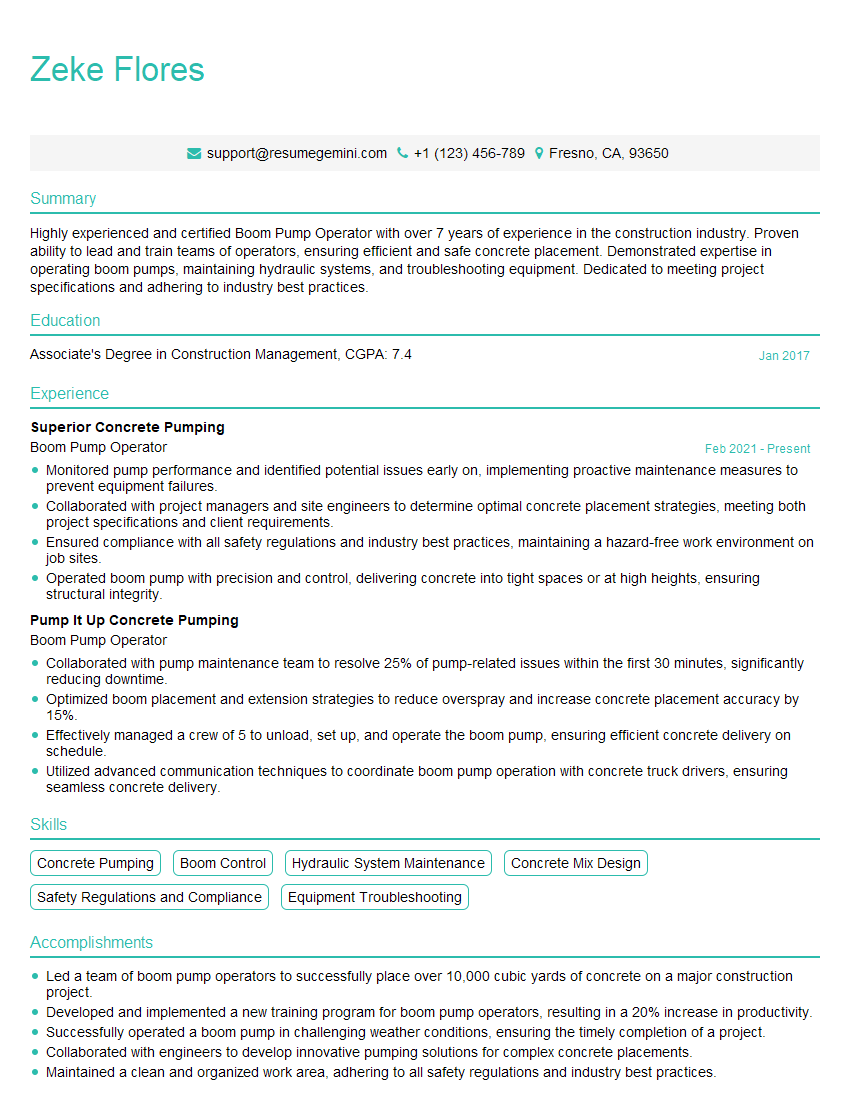
Mastering the operation of concrete boom pumps opens doors to rewarding careers in the construction industry, offering opportunities for advancement and specialized training. A strong resume is essential to showcasing your skills and experience to potential employers. Creating an ATS-friendly resume is key to getting your application noticed. ResumeGemini is a trusted resource that can help you build a professional, impactful resume tailored to the construction industry. Examples of resumes tailored to Operate concrete boom pumps are available, providing valuable templates and guidance to help you present your qualifications effectively.
Explore more articles
Users Rating of Our Blogs
Share Your Experience
We value your feedback! Please rate our content and share your thoughts (optional).
What Readers Say About Our Blog
Very informative content, great job.
good