Interviews are opportunities to demonstrate your expertise, and this guide is here to help you shine. Explore the essential Traffic Pattern Design interview questions that employers frequently ask, paired with strategies for crafting responses that set you apart from the competition.
Questions Asked in Traffic Pattern Design Interview
Q 1. Explain the different types of traffic control devices and their applications.
Traffic control devices are crucial for managing traffic flow and ensuring safety. They guide drivers, pedestrians, and cyclists, preventing conflicts and improving efficiency. Different types cater to various needs and situations.
- Traffic Signals: These use lights (red, yellow, green) to control the movement of vehicles at intersections. Adaptive traffic signal control systems optimize signal timing based on real-time traffic conditions, minimizing delays. For example, a busy intersection during rush hour would benefit significantly from an adaptive system.
- Traffic Signs: These communicate information to drivers, such as speed limits, lane usage, warnings of hazards (e.g., curves, school zones), and directional guidance. A clear and well-maintained signage system is fundamental for safe and efficient traffic flow. Think of regulatory signs dictating speed limits or warning signs alerting drivers to upcoming sharp turns.
- Pavement Markings: These include lane lines, crosswalks, stop lines, and other markings that guide drivers and delineate traffic lanes. These are often overlooked but are critical in organizing traffic and ensuring safety, especially in high-traffic areas. For example, clear crosswalks improve pedestrian safety by providing designated crossing points.
- Traffic Control Officers: Human personnel who manually direct traffic, particularly at construction sites or special events. Their presence is invaluable in managing complex and unpredictable situations. They can adapt to unexpected events in real-time, offering flexibility absent in automated systems.
- Rumble strips: These textured road surfaces provide tactile and auditory warnings to drivers, typically alerting them to lane departures or approaching hazards. They enhance safety by actively engaging drivers’ senses, particularly in areas with high accident rates.
Q 2. Describe your experience with traffic simulation software (e.g., VISSIM, SUMO).
I have extensive experience with both VISSIM and SUMO, utilizing them for various traffic modeling and simulation projects. VISSIM, with its advanced microscopic simulation capabilities, has been instrumental in analyzing complex intersection designs and evaluating the impact of different traffic management strategies. I’ve used it to model scenarios ranging from simple two-way intersections to large-scale freeway networks, incorporating various vehicle types and driver behaviors.
SUMO, on the other hand, offers a more open-source and flexible approach, allowing for greater customization and integration with other tools. I’ve leveraged its strengths in evaluating the impact of public transit systems and simulating large-scale urban traffic networks. A recent project involved using SUMO to optimize bus routing in a dense urban environment, considering factors like passenger demand and traffic congestion.
In both cases, my workflow typically involves defining the network geometry, setting up vehicle generation patterns, calibrating the model with real-world data, running simulations, and analyzing the results to identify bottlenecks and evaluate proposed improvements.
Q 3. How do you analyze traffic data to identify bottlenecks and inefficiencies?
Analyzing traffic data to pinpoint bottlenecks and inefficiencies is a crucial part of my work. It involves a multi-step process combining data collection, analysis, and visualization.
- Data Collection: This can involve various sources, including loop detectors, video cameras, GPS data from vehicles, and even social media posts reporting congestion. The type of data collected depends on the specific goals of the analysis.
- Data Processing and Cleaning: Raw traffic data often contains errors or inconsistencies. Data cleaning is crucial to ensure data accuracy and reliability before analysis. This involves handling missing data, outlier detection, and data transformation.
- Bottleneck Identification: We use various techniques to analyze the cleaned data, such as speed maps, density maps, and queue length analysis. A decrease in speed, high density, or the formation of long queues at specific locations usually indicates a bottleneck. Visualizations are incredibly helpful in this phase.
- Inefficiency Analysis: Once bottlenecks are identified, we analyze the underlying causes. For example, inadequate signal timing, insufficient lane capacity, or poorly designed geometry can contribute to inefficiencies. We often compare actual traffic flow with theoretical capacity to quantify the level of inefficiency.
For example, a recent analysis revealed that a particular intersection had significantly lower speeds during peak hours due to inadequate green time allocation for a high-volume approach. This led to the implementation of adaptive signal control, resolving the bottleneck and significantly improving traffic flow.
Q 4. What are the key performance indicators (KPIs) used to evaluate traffic flow?
Key Performance Indicators (KPIs) are essential for evaluating traffic flow and the effectiveness of traffic management strategies. Some of the most commonly used KPIs include:
- Average Speed: The average speed of vehicles over a given time period and location. Lower speeds indicate congestion.
- Travel Time: The time it takes to traverse a specific route. Increased travel times reflect inefficiency.
- Density: The number of vehicles per unit length of roadway. High density is indicative of congestion.
- Occupancy: The percentage of time a detector is occupied by vehicles. High occupancy usually corresponds to high density.
- Queue Length: The length of vehicle queues at intersections or bottlenecks. Long queues signify significant delays.
- Level of Service (LOS): A qualitative measure of traffic flow conditions, ranging from A (free flow) to F (extremely congested). LOS provides a concise summary of overall performance.
- Delay: The difference between the actual travel time and the free-flow travel time. High delay indicates significant congestion and inefficiency.
By monitoring these KPIs, we can assess the overall efficiency of the traffic system and identify areas requiring improvement.
Q 5. Explain the concept of traffic signal timing optimization.
Traffic signal timing optimization aims to synchronize traffic signals along a corridor or network to minimize delays, improve traffic flow, and reduce congestion. It’s a sophisticated process that considers various factors.
The optimization process typically involves:
- Data Collection: Gathering traffic data, including turning movements, vehicle volumes, and arrival patterns at each intersection.
- Model Development: Creating a model of the traffic network, representing the geometry, signal timing, and traffic demand.
- Optimization Algorithm: Employing algorithms, such as TRANSYT or SCOOT, to determine optimal signal timings that minimize delays and improve overall network performance.
- Simulation and Validation: Simulating the optimized signal timings to assess their effectiveness and refine the settings as needed. Real-world validation is crucial.
- Implementation and Monitoring: Implementing the optimized signal timings and continuously monitoring their performance to ensure ongoing effectiveness. Regular adjustments may be required.
Think of it like orchestrating a symphony. Each signal is an instrument, and the goal is to create a harmonious flow of traffic, minimizing disruptions and maximizing throughput. Effective optimization can significantly reduce congestion and improve travel times.
Q 6. Describe your experience with traffic calming measures and their effectiveness.
Traffic calming measures are designed to reduce vehicle speeds and improve safety in residential areas and other locations where pedestrian and cyclist safety is paramount. I’ve had extensive experience designing and evaluating the effectiveness of various traffic calming measures.
- Speed Bumps/Humps: These physical obstructions force drivers to slow down. They are effective but can be disruptive to emergency vehicles. Proper placement and design are essential.
- Narrowing of Roadways: Reducing the width of roadways forces drivers to slow down. This can also encourage safer driving behaviors.
- Chicanes: These are series of gentle curves that restrict speeds without completely blocking traffic. They are effective but can require significant space.
- Roundabouts: These intersections can significantly reduce accidents and improve traffic flow, but design is critical. They offer efficiency for all users, but are more complex and require more space.
- Raised Crosswalks: These provide improved visibility for pedestrians and drivers, forcing drivers to slow down. These are pedestrian-focused but also beneficial to traffic flow.
The effectiveness of these measures is evaluated through before-and-after studies, measuring changes in speed, accident rates, and pedestrian and cyclist behavior. For example, in a recent project, the implementation of speed humps resulted in a 20% reduction in average speeds and a 30% decrease in accident rates in a residential neighborhood.
Q 7. How do you incorporate pedestrian and bicycle traffic into traffic pattern design?
Integrating pedestrian and bicycle traffic into traffic pattern design is essential for creating safe and efficient multimodal transportation systems. It’s not just about adding bike lanes; it’s about creating a holistic design that prioritizes safety and accommodates all users.
- Designated Bike Lanes and Paths: Providing clearly marked and separated bike lanes or paths ensures the safety of cyclists and reduces conflicts with motorized vehicles. Protected bike lanes are increasingly favored for enhanced safety.
- Pedestrian Crosswalks and Signals: Designing safe and accessible crosswalks, including pedestrian signals with adequate crossing times, improves pedestrian safety and reduces conflicts with vehicles. Clearly marked crosswalks are critical.
- Shared-Use Paths: In some areas, shared-use paths may be appropriate, but careful design is essential to ensure that conflicts between pedestrians and cyclists are minimized. Clear signage and path separation features are needed.
- Traffic Signal Prioritization: Prioritizing pedestrian and bicycle movements during certain times or conditions, such as using pedestrian scramble phases, improves their safety and reduces delays.
- Transit-Oriented Development (TOD): Incorporating TOD principles, which focus on placing high-density development near transit stations, promotes walking and cycling and reduces reliance on private vehicles.
A well-designed multimodal system prioritizes all users and reduces conflicts between different modes of transport, creating a safer and more efficient transportation network. Designing for all users means considering the needs and vulnerabilities of each, resulting in a more equitable and effective system.
Q 8. What are the challenges of designing traffic patterns in urban areas?
Designing traffic patterns in urban areas presents a unique set of challenges due to the complex interplay of various factors. Think of it like a massive, ever-shifting puzzle where each piece represents a different aspect of the urban environment.
- High pedestrian and cyclist volumes: Balancing the needs of motorized vehicles with those of vulnerable road users requires careful consideration of protected crossings, dedicated lanes, and traffic calming measures.
- Conflicting land uses: Integrating traffic flow with residential areas, commercial centers, and public spaces requires creative solutions to manage congestion and ensure accessibility.
- Limited space: Urban areas often have narrow streets and limited space for expanding road networks. This necessitates optimization of existing infrastructure rather than simply building more roads.
- Existing infrastructure constraints: Working with older infrastructure, which may not be designed for modern traffic volumes or safety standards, presents significant challenges. For example, incorporating new technologies within older road networks may require significant retrofitting and coordination.
- Environmental considerations: Minimizing the environmental impact of traffic congestion through strategies like promoting sustainable transport modes and reducing vehicle emissions is crucial.
- Social equity: Ensuring equitable access to transportation for all residents, regardless of income or ability, is critical in urban planning. Designing traffic patterns needs to take into account the needs of all members of the community.
For example, designing a new light rail system necessitates careful planning to minimize disruption during construction and seamlessly integrate the system with existing traffic patterns, minimizing congestion at intersections.
Q 9. Explain your understanding of Level of Service (LOS) and its application.
Level of Service (LOS) is a qualitative measure describing the operational conditions of a traffic stream. Think of it like a rating system for how well traffic is flowing. It’s based on factors like speed, density, and delays, ultimately reflecting the quality of travel experience for drivers.
LOS is typically categorized from A to F, with A representing free-flow conditions and F representing extremely congested conditions. This system helps transportation engineers assess the effectiveness of various traffic management strategies and predict potential issues.
Application: LOS is applied throughout the traffic design process. During the planning phase, it helps to evaluate various design alternatives, guiding the selection of optimal solutions. After implementation, it can be used to monitor the performance of the designed traffic system, allowing for improvements or adjustments as needed. For instance, If a newly designed intersection consistently scores an F LOS during peak hours, it signals a need for redesign or the implementation of traffic signal optimization techniques.
Q 10. How do you account for future traffic growth in your designs?
Accurately forecasting future traffic growth is paramount in designing sustainable and effective traffic patterns. We can’t build for today’s traffic only; we must anticipate future demands. This involves a multifaceted approach:
- Population growth projections: Analyzing demographic data and trends to predict population increases and changes in land use patterns in the area.
- Economic forecasts: Understanding economic development and its impact on traffic generation, such as growth in employment or commercial activity, can significantly alter traffic flow.
- Transportation demand modeling: Employing sophisticated software and models (like four-step travel demand modeling) to predict future travel patterns based on population, economic projections and network improvements.
- Scenario planning: Exploring various future scenarios – best-case, worst-case, and most likely – helps to understand the range of potential traffic demands and plan accordingly.
- Phased implementation: Designing infrastructure that can accommodate future growth incrementally, rather than building for maximum capacity all at once, can help to mitigate both environmental and financial risks. This may include the design of roads with expandable lanes or a staged roll-out of improved public transport.
For example, when designing a new highway, we wouldn’t simply design it to current traffic loads. We’d use growth forecasts to project demand 20-30 years into the future and design it with capacity for that predicted volume, accounting for potential future developments in the area.
Q 11. Describe your experience with microsimulation modeling.
Microsimulation modeling is an indispensable tool in my toolbox. It’s like having a virtual city where we can simulate traffic flow under various conditions, allowing for ‘what-if’ scenarios without real-world disruption. I have extensive experience with various microsimulation software packages, such as VISSIM and AIMSUN.
I use microsimulation to model complex traffic scenarios, such as analyzing the impact of new signal timings, evaluating the effectiveness of different roundabout designs, assessing pedestrian safety at intersections, and predicting the impact of proposed infrastructure changes on traffic flow. The results provide quantitative data, such as delay times, queue lengths, and vehicle speeds, which then directly inform design decisions. For example, in a recent project, we used VISSIM to compare different signal phasing options at a complex intersection and found that a particular phasing scheme minimized delays by 15%, showcasing the power of accurate microsimulation modeling.
Q 12. Explain the different types of traffic studies (e.g., speed studies, turning movement counts).
Various traffic studies provide crucial data for informed traffic pattern design. Each study type addresses specific aspects of traffic behavior.
- Speed Studies: These measure vehicle speeds at different locations and times of day, providing insights into the overall flow of traffic and identifying areas with excessively high or low speeds. This data helps identify areas where safety improvements may be needed or areas which may benefit from speed reduction measures.
- Turning Movement Counts: These studies quantify the number of vehicles making left, right, and through movements at intersections. This information is fundamental for signal timing design and capacity analysis, ensuring that intersections operate efficiently and safely.
- Origin-Destination Studies: These determine where vehicles are originating from and where they are headed. This data is vital for understanding overall traffic patterns and for planning new road networks or transit systems. Origin-destination data is obtained through various methods including license plate surveys or GPS data gathered from in-vehicle units.
- Accident Studies: These analyze accident patterns to identify high-risk locations and contributing factors. This is critical for proactively improving safety and preventing future accidents. Accident data is often paired with traffic studies to identify trends and cause-and-effect relationships.
- Gap Acceptance Studies: These are used to analyze the behavior of drivers entering a traffic stream from a side street or driveway, quantifying how drivers perceive and accept gaps in traffic to safely merge.
The combination of these studies paints a comprehensive picture of traffic behavior, forming the foundation for effective and safe traffic pattern designs.
Q 13. How do you evaluate the safety implications of a traffic pattern design?
Safety is paramount in traffic pattern design. It’s not just about efficiency; it’s about protecting lives. We evaluate safety implications through several methods:
- Accident history analysis: Reviewing historical accident data to pinpoint high-risk locations and identify contributing factors.
- Microsimulation modeling: Simulating various scenarios to evaluate the potential for collisions under different conditions, such as different signal timings or roundabout designs.
- Safety audit: Conducting on-site inspections to identify potential hazards and evaluate existing safety measures. This often involves looking for design features that might contribute to crashes, such as poor sight lines at intersections or insufficient lighting.
- Application of safety performance functions: Using statistical models to predict accident rates based on design features like lane width, intersection geometry, and sight distance.
- Pedestrian and cyclist safety assessment: Specific analysis to evaluate the safety of vulnerable road users using techniques like conflict analysis or pedestrian simulation.
For example, a high number of accidents at a specific intersection might indicate a need for improved lighting, pedestrian crossings, or changes to the intersection’s geometry, such as implementing a roundabout.
Q 14. What are the best practices for designing roundabouts?
Designing effective roundabouts requires careful consideration of several factors. Roundabouts are a proven method for improving safety and reducing congestion at intersections, but only when designed correctly.
- Appropriate size and geometry: The size should be based on the traffic volume and the speed of circulating vehicles. The geometry needs to be designed to allow vehicles to navigate safely and smoothly without abrupt changes in direction.
- Clear sightlines: Drivers need sufficient sight distance to observe oncoming traffic and to safely enter and exit the roundabout.
- Appropriate entry and exit design: Entry and exit lanes must be properly designed to facilitate smooth merging and diverging traffic flows.
- Deflection islands: These are crucial for controlling speeds and guiding vehicles through the roundabout, preventing large turning radii which are dangerous for slower vehicles like bicycles.
- Appropriate pavement markings and signage: Clear and consistent markings and signage are essential for guiding drivers and minimizing confusion.
- Pedestrian and cyclist safety: Roundabouts can significantly improve safety for pedestrians and cyclists, but appropriate crossing designs, including refuge islands and clear signage are absolutely essential.
- Capacity analysis: The capacity of the roundabout should be assessed to ensure it can handle the projected traffic volume. This is commonly done using microsimulation modelling.
Poorly designed roundabouts can actually increase congestion and decrease safety. A well-designed roundabout, on the other hand, will greatly reduce accident rates, increase capacity, and enhance the overall flow of traffic. Proper consideration of the above mentioned factors ensures a safe and efficient design.
Q 15. Explain your experience with traffic signal phasing and coordination.
Traffic signal phasing and coordination is the art and science of optimizing traffic flow at intersections and along corridors. It involves carefully designing the sequence and duration of green, yellow, and red signals to minimize delays, improve safety, and enhance overall efficiency. My experience encompasses designing phases for various intersection types, from simple two-way stops to complex multi-lane roundabouts and utilizing various coordination strategies.
For instance, in a recent project involving a busy downtown intersection with high pedestrian and bicycle traffic, I designed a phasing plan that prioritized pedestrian crossings during off-peak hours and incorporated leading pedestrian intervals (LPIs) to give pedestrians a head start before vehicles are given a green light. During peak hours, the phasing prioritized vehicular movement while still ensuring adequate pedestrian crossing times. Furthermore, I coordinated the signals along the corridor using an actuated control system, which dynamically adjusts signal timings based on real-time traffic conditions, ensuring optimal flow throughout the network.
Another project involved optimizing signal timing on a major arterial road using a traffic responsive control system and advanced algorithms that predicted traffic patterns using historical data and real-time sensor inputs. This resulted in significantly reduced delays and improved overall travel times across the network.
Career Expert Tips:
- Ace those interviews! Prepare effectively by reviewing the Top 50 Most Common Interview Questions on ResumeGemini.
- Navigate your job search with confidence! Explore a wide range of Career Tips on ResumeGemini. Learn about common challenges and recommendations to overcome them.
- Craft the perfect resume! Master the Art of Resume Writing with ResumeGemini’s guide. Showcase your unique qualifications and achievements effectively.
- Don’t miss out on holiday savings! Build your dream resume with ResumeGemini’s ATS optimized templates.
Q 16. How do you address conflicts between different modes of transportation?
Addressing conflicts between different modes of transportation requires a holistic approach considering the needs and vulnerabilities of each. It’s not just about prioritizing one mode over another but about creating a safe and efficient system for all. My approach involves analyzing the existing infrastructure, understanding the volume and characteristics of each mode (pedestrians, cyclists, vehicles, and public transit), and designing infrastructure to accommodate their coexistence.
For example, in a project involving a busy street with significant bicycle and pedestrian traffic, we designed protected bike lanes separated from vehicular traffic by physical barriers, providing a safe and comfortable environment for cyclists. We also incorporated raised crosswalks to improve pedestrian visibility and safety, ensuring they had adequate time to cross before vehicles moved through the intersection. Dedicated bus lanes and transit signal priority further improved the efficiency of public transport systems.
Furthermore, the use of traffic calming measures such as speed humps and roundabouts can help to slow down vehicular traffic and create a safer environment for other modes. Data collection and analysis are crucial in understanding conflict points and ensuring design decisions are data-driven.
Q 17. Describe your experience with intersection design.
My intersection design experience covers a wide range of types, including simple intersections, complex roundabouts, and grade-separated interchanges. Designing safe and efficient intersections demands considering various factors, such as traffic volumes, geometric design, sight distances, pedestrian and cyclist needs, and the surrounding land use. The design process typically involves several steps, starting with site analysis and data collection, developing design alternatives, and conducting safety and operational analyses.
For instance, in a recent project, we were tasked with redesigning a high-crash intersection. We analyzed accident reports, traffic data, and site conditions to identify the causes of crashes. This analysis informed the design of the intersection improvements, including widening lanes, installing new signage, and redesigning the geometry of the intersection to eliminate conflict points and improve sight distance. After the redesign, we used simulation software to evaluate the effectiveness of the proposed design in reducing crashes and improving traffic flow. The simulation showed a significant reduction in expected accidents and delays.
I am proficient in using various design standards and guidelines, ensuring that the designs meet safety and operational requirements. I consider the use of different geometric configurations, such as channelization, to improve intersection operations and safety.
Q 18. What software and tools are you proficient in for traffic analysis and design?
Proficiency in various software and tools is essential for effective traffic analysis and design. I am proficient in several industry-standard software packages. These include Synchro/SimTraffic for signal timing optimization and traffic simulation, VISSIM for microscopic traffic simulation, and TransModeler for macroscopic traffic simulation and assignment. I also have experience with GIS software such as ArcGIS for data visualization and spatial analysis, and various spreadsheet programs for data processing and analysis.
Moreover, I am skilled in using various data collection methods including loop detectors, video image processing and Bluetooth sensors, which allow me to collect real-time and historical traffic data to inform the design process. This data-driven approach ensures that designs are realistic, effective, and meet the specific needs of the community.
Q 19. Explain your understanding of traffic volume and density.
Traffic volume and density are fundamental concepts in traffic engineering. Traffic volume refers to the number of vehicles passing a given point on a roadway during a specific time period, typically expressed as vehicles per hour (vph) or vehicles per day (vpd). Traffic density refers to the number of vehicles occupying a given length of roadway at a specific time, typically expressed as vehicles per mile (vpm) or vehicles per kilometer (vpk).
Understanding the relationship between volume and density is crucial for designing efficient transportation systems. For example, high traffic volume combined with low traffic density suggests that the roadway has sufficient capacity and that traffic flow is relatively free-flowing. Conversely, high traffic volume and high traffic density indicate that the roadway is congested and that traffic flow is significantly impeded.
These metrics are essential inputs for traffic models and simulations. They are used to predict traffic flow under different scenarios and to evaluate the effectiveness of various traffic management strategies.
Q 20. How do you incorporate environmental considerations into traffic pattern design?
Incorporating environmental considerations into traffic pattern design is crucial for sustainable transportation planning. My approach involves minimizing environmental impact through various strategies. This includes reducing vehicle emissions by optimizing traffic flow to minimize idling and stop-and-go driving, promoting active transportation such as walking and cycling through the provision of dedicated infrastructure, and reducing noise pollution through traffic calming measures and strategic roadway design.
For instance, in a recent project, we designed a bus rapid transit (BRT) system that reduced the need for private vehicles, resulting in a significant decrease in greenhouse gas emissions. The design included dedicated bus lanes, signal priority at intersections, and comfortable stations to encourage ridership. The use of noise barriers and sound absorbing pavement reduced noise pollution impacts on nearby residential areas.
Furthermore, selecting sustainable construction materials and implementing environmentally friendly construction practices during project implementation minimizes construction impacts. Assessing the environmental impacts of different design options, using life-cycle assessment methodologies, is another key element of my approach.
Q 21. Explain the difference between microscopic and macroscopic traffic simulation.
Microscopic and macroscopic traffic simulation models differ significantly in their approach to representing traffic flow. Microscopic simulation models simulate the movement of individual vehicles, taking into account their driver behavior and interactions with other vehicles. These models provide detailed information about individual vehicle trajectories and can be used to analyze specific events or situations, such as crashes or bottlenecks.
Macroscopic simulation models, on the other hand, represent traffic flow using aggregated variables such as flow, density, and speed. These models are less computationally intensive and are suitable for simulating large-scale networks or long-term traffic patterns. They provide overall performance metrics but lack the detail of microscopic models.
Think of it like this: microscopic simulation is like watching individual ants in an ant colony, while macroscopic simulation is like observing the overall movement of the entire colony. The choice between microscopic and macroscopic simulation depends on the specific objectives of the study and the available computational resources. For example, microscopic simulation is valuable for analyzing the performance of specific intersections or analyzing the effect of different traffic control strategies, while macroscopic simulation is more appropriate for large-scale network modeling or long-term traffic forecasting.
Q 22. How do you handle conflicting stakeholder interests during a traffic design project?
Handling conflicting stakeholder interests in traffic design requires a collaborative and diplomatic approach. It’s rarely a matter of simply choosing one side; rather, it’s about finding creative solutions that address everyone’s concerns as much as possible. I begin by clearly identifying all stakeholders – residents, businesses, commuters, transit agencies, and government departments, for example. Then, I conduct individual meetings to understand their priorities and concerns. This includes actively listening and acknowledging their perspectives, even if they seem at odds with others.
Next, I facilitate a workshop or series of meetings where stakeholders can openly discuss their needs and concerns in a structured environment. This can involve using tools like prioritization matrices or conflict resolution techniques. The goal is to find common ground and areas of compromise. For example, if residents are concerned about increased noise, while businesses need better access for deliveries, a solution might involve implementing quiet pavement, restricted delivery hours, or rerouting heavy trucks to less residential areas.
Finally, I document all agreements and compromises, ensuring everyone understands the final plan and its rationale. This often involves creating visually appealing presentations and reports that clearly articulate the trade-offs and benefits of the chosen design. Transparency and open communication are crucial throughout the process.
Q 23. Describe your experience with data collection and analysis for traffic studies.
Data collection and analysis form the bedrock of any successful traffic study. My experience spans various methods, from traditional techniques to leveraging cutting-edge technologies. I’ve extensively used traffic counters (both inductive loop detectors and video image processing systems) to gather volume data, speed data, and occupancy data at various locations and times. This includes both short-term (e.g., a single day) and long-term (e.g., an entire year) data collection periods to capture peak and off-peak conditions.
Beyond volume and speed, I incorporate data from other sources like GPS traces from smartphones (anonymized and aggregated), transit agency data on bus and train ridership, and even social media posts to understand public perception and traffic patterns. This comprehensive approach allows for a more nuanced understanding of traffic behavior.
Once data is collected, I utilize various software packages like Synchro, VISSIM, and TransModeler for analysis. This involves using statistical methods to identify trends, correlations, and outliers. For example, I might analyze peak hour factors, level of service (LOS) calculations, and turning movement counts to assess current conditions and predict future needs. Data visualization techniques, such as charts and maps, are crucial for presenting findings in a clear and understandable manner to both technical and non-technical audiences.
Q 24. How do you validate your traffic models?
Validating traffic models is critical to ensure their accuracy and reliability. A model that doesn’t accurately reflect reality is useless for decision-making. My approach involves a multi-faceted validation process. First, I compare model outputs (like predicted speeds, delays, and queue lengths) against real-world observed data collected during the study. A good model will show a strong correlation between these two sets of data. For example, if the model predicts an average speed of 30 mph and the observed average speed is around 32 mph, the model has reasonable accuracy.
Second, I use sensitivity analysis to evaluate the impact of different model parameters on the results. This helps identify the most crucial input variables and assess the model’s robustness. If small changes in the input lead to large variations in the output, it suggests a less reliable model. Third, I involve peer review, where independent experts assess the model’s methodology, data sources, and outputs. This ensures transparency and checks for biases or errors.
Finally, and perhaps most importantly, I utilize field verification. This might involve observing traffic flow at critical locations to ensure the model’s predictions align with on-the-ground observations. This iterative process of calibration and validation ensures that the model accurately captures the complexities of the traffic system.
Q 25. Explain your understanding of capacity and volume-to-capacity ratio.
Capacity and volume-to-capacity ratio (V/C ratio) are fundamental concepts in traffic engineering. Capacity refers to the maximum sustainable flow rate (often expressed in vehicles per hour) that a roadway or intersection can handle under given conditions. This is influenced by factors such as lane width, number of lanes, grade, signal timing, and driver behavior. Think of it like the maximum number of people that can comfortably fit into a room.
The volume-to-capacity ratio (V/C ratio) is the ratio of the actual traffic volume to the capacity. It’s a crucial indicator of the level of service (LOS). A V/C ratio of 0.8 means that the traffic volume is 80% of the capacity, while a V/C ratio of 1.2 implies that the traffic volume exceeds the capacity by 20%. A high V/C ratio typically leads to congestion, increased delays, and reduced safety. Lower V/C ratios indicate better traffic flow and operational efficiency. For example, a freeway segment designed for 2000 vehicles per hour (capacity) with an observed volume of 1600 vehicles per hour will have a V/C ratio of 0.8 (1600/2000), which might indicate an acceptable level of service, depending on other factors. Conversely, a V/C ratio of 1.5 would suggest significant congestion.
Q 26. What are some common mistakes to avoid in traffic pattern design?
Many common mistakes can undermine the effectiveness of traffic pattern design. One frequent error is neglecting to consider all modes of transportation. A design focusing solely on automobiles can disadvantage pedestrians, cyclists, and public transport users. This might result in unsafe conditions or discourage the use of sustainable transportation modes.
Another common pitfall is failing to adequately account for future growth. A design that works well today might become inadequate in a few years if the area experiences significant population or economic growth. Proper forecasting and planning for future conditions is vital. Similarly, ignoring the impact on surrounding areas is a mistake. A well-intended design might shift congestion to nearby roads if it doesn’t consider the wider network.
Finally, a lack of comprehensive data collection and analysis can lead to poor design decisions. Relying on intuition or anecdotal evidence instead of quantifiable data will likely yield suboptimal results. A robust data-driven approach is essential for effective traffic management.
Q 27. Describe your experience with adaptive traffic control systems.
Adaptive traffic control systems (ATCS) represent a significant advancement in traffic management. These systems dynamically adjust signal timings based on real-time traffic conditions, optimizing flow and reducing congestion. My experience involves working with several ATCS implementations, including those using SCOOT (Split, Cycle, and Offset Optimization Technique) and other similar algorithms.
These systems typically use sensors (like loop detectors or cameras) to gather real-time data on traffic volumes, speeds, and queue lengths. This data is then fed into a central controller that adjusts signal timings to prioritize traffic flow based on current needs. For instance, if congestion builds up on a particular approach, the system will automatically adjust the signal timing to give that approach more green time, thereby alleviating the bottleneck.
I have been involved in the design, implementation, and evaluation of ATCS projects. This includes selecting appropriate sensors, designing the communication infrastructure, configuring the controller software, and analyzing the system’s performance using key performance indicators (KPIs) such as average delay, stops, and travel time. ATCS offer significant benefits over traditional fixed-time signal systems, particularly in dynamic traffic environments.
Key Topics to Learn for Traffic Pattern Design Interview
- Fundamental Principles: Understanding the basics of traffic flow, capacity, and level of service. This includes familiarity with key performance indicators (KPIs) and their interpretation.
- Geometric Design Elements: Mastering the impact of lane configurations, intersections (roundabouts, signals), and roadway geometrics on traffic efficiency and safety. Consider practical applications like designing for different vehicle types and pedestrian needs.
- Traffic Simulation and Modeling: Gaining experience with software tools used for traffic simulation and modeling to predict traffic behavior and evaluate design alternatives. Understanding the strengths and limitations of various models is crucial.
- Microsimulation and Optimization Techniques: Explore advanced techniques like microsimulation to analyze detailed traffic movements and optimize design for specific scenarios. This includes understanding optimization algorithms and their application.
- Safety Analysis and Design: Understanding how to incorporate safety considerations into design, including conflict analysis and the application of safety performance functions.
- Sustainability and Environmental Impact: Familiarize yourself with sustainable design practices and the environmental impact assessment of different traffic pattern designs. This includes considering fuel consumption and emissions.
- Data Analysis and Interpretation: Developing the ability to analyze traffic data (counts, speeds, delays) to inform design decisions and evaluate the effectiveness of implemented designs. This includes understanding statistical methods and data visualization.
- Design Standards and Guidelines: Thorough understanding of relevant design standards and guidelines from authoritative sources (e.g., AASHTO, local agencies).
Next Steps
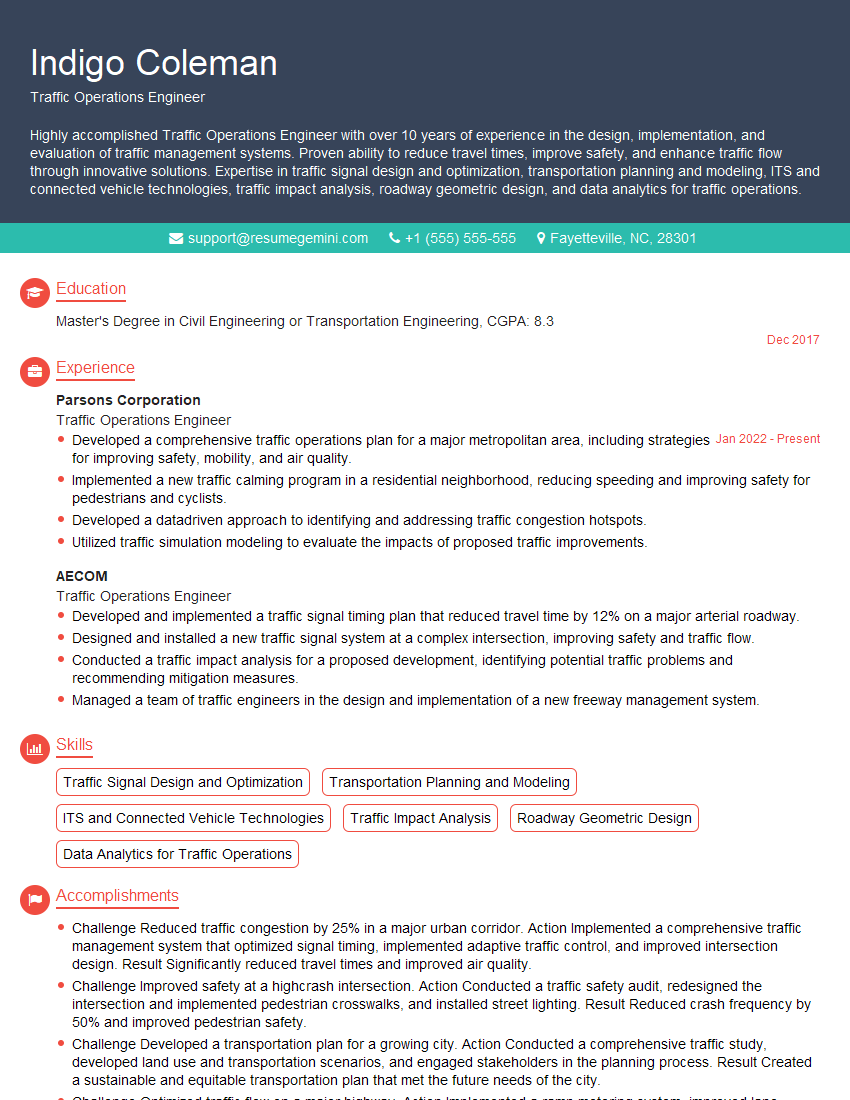
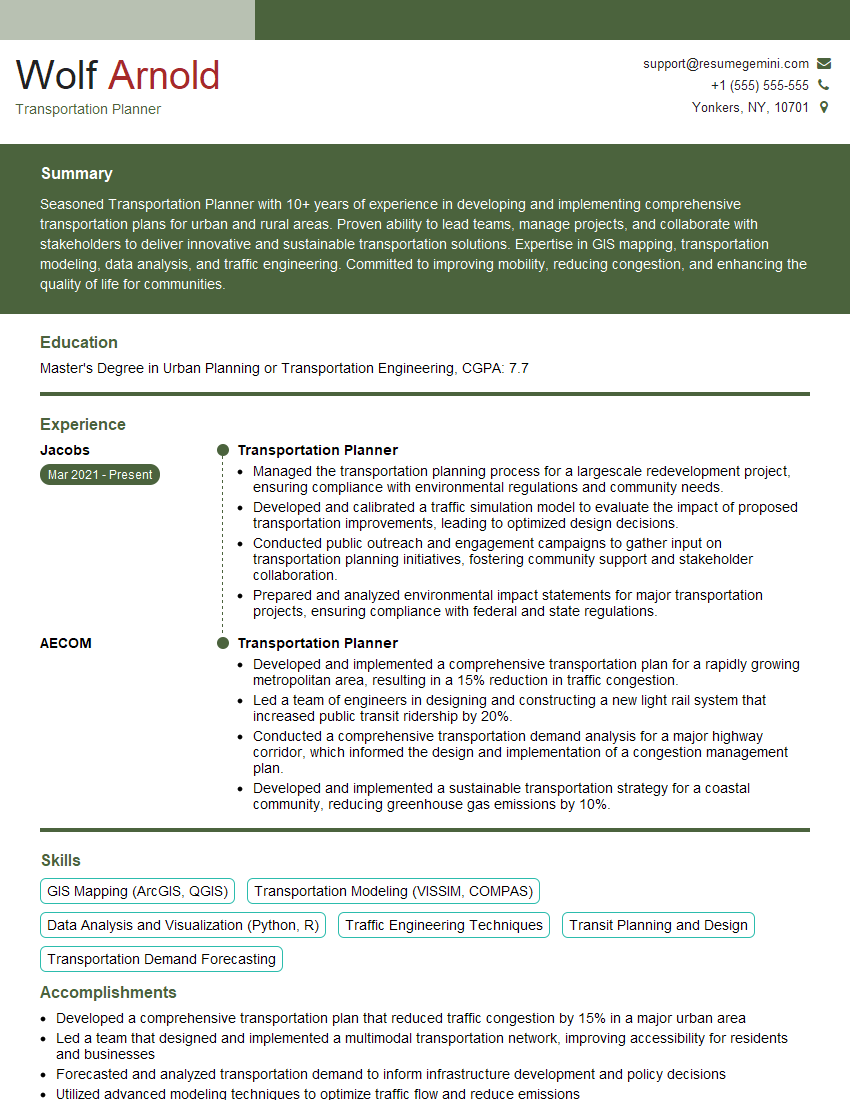
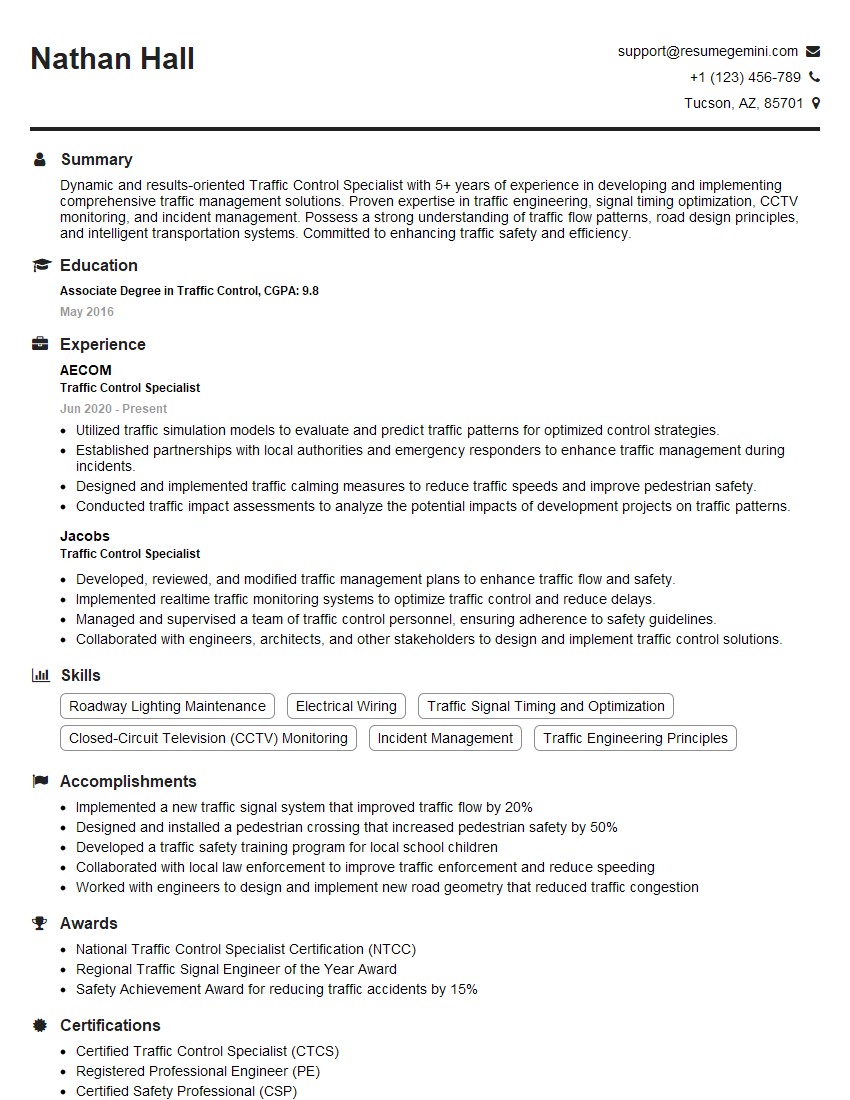
Mastering Traffic Pattern Design is essential for career advancement in transportation engineering and related fields. A strong understanding of these principles will open doors to exciting opportunities and allow you to contribute meaningfully to the design of safe, efficient, and sustainable transportation systems. To maximize your job prospects, crafting a compelling and ATS-friendly resume is paramount. ResumeGemini is a trusted resource that can help you build a professional resume that highlights your skills and experience effectively. Examples of resumes tailored to Traffic Pattern Design are available within the ResumeGemini platform to guide your creation process.
Explore more articles
Users Rating of Our Blogs
Share Your Experience
We value your feedback! Please rate our content and share your thoughts (optional).
What Readers Say About Our Blog
Very informative content, great job.
good