The right preparation can turn an interview into an opportunity to showcase your expertise. This guide to Marketing and Publicity Strategies interview questions is your ultimate resource, providing key insights and tips to help you ace your responses and stand out as a top candidate.
Questions Asked in Marketing and Publicity Strategies Interview
Q 1. Explain your experience with developing and executing marketing campaigns.
Developing and executing marketing campaigns involves a strategic, multi-step process. It starts with a deep understanding of the target audience, their needs, and their preferred communication channels. Then, we define clear, measurable objectives—for example, increasing brand awareness by 20% or driving a 15% increase in leads within a quarter.
Next, I develop a comprehensive marketing plan encompassing various strategies like content marketing, social media engagement, search engine optimization (SEO), email marketing, paid advertising (PPC), and potentially public relations activities. For each strategy, specific tactics are outlined, detailing the content, channels, and timelines.
For example, in a recent campaign for a sustainable clothing brand, we leveraged influencer marketing on Instagram, created engaging blog posts focusing on ethical fashion, and ran targeted Facebook ads to reach environmentally conscious consumers. We also implemented an email marketing sequence nurturing leads and driving sales. Throughout the campaign, rigorous tracking and analysis are crucial to ensure we’re on track to meet our objectives and make necessary adjustments. This iterative process ensures the campaign remains effective and efficient.
Q 2. Describe your approach to measuring the success of a marketing campaign.
Measuring campaign success requires a holistic approach that goes beyond simply looking at vanity metrics like social media likes. I focus on Key Performance Indicators (KPIs) directly linked to our campaign objectives. This could include website traffic, conversion rates (leads generated, sales closed), customer acquisition cost (CAC), return on investment (ROI), brand mentions, and changes in brand sentiment.
For instance, if the goal is to increase brand awareness, we’d monitor social media engagement (shares, comments, likes), media mentions, and website traffic from social media. If the goal is to drive sales, we’d track conversion rates and revenue generated. I utilize analytics platforms like Google Analytics, social media analytics dashboards, and CRM systems to collect and analyze data. This data informs future campaigns and ensures continuous improvement.
Regular reporting and dashboards are crucial for visualizing performance and identifying areas for optimization. A/B testing different creative assets or messaging allows us to understand what resonates best with the audience and further optimize campaign performance. The key is to track the right metrics, analyze the data effectively, and use the insights to refine future strategies.
Q 3. How do you stay current with the latest marketing trends and technologies?
Staying current in the ever-evolving marketing landscape requires a multifaceted approach. I regularly attend industry conferences and webinars, participate in online courses and workshops, and actively follow thought leaders and influencers through blogs, podcasts, and social media.
I also subscribe to relevant marketing publications and newsletters, which provide insights into the latest trends and best practices. Moreover, I actively participate in online marketing communities and forums, engaging in discussions and learning from my peers. This constant engagement ensures I’m aware of the newest algorithms, technologies, and strategies.
For example, I recently completed a course on AI-powered marketing automation, allowing me to integrate advanced automation tools into our marketing campaigns to improve efficiency and personalization. Keeping abreast of new developments is not just about keeping up; it’s about staying ahead of the curve and using innovation to gain a competitive advantage.
Q 4. What is your experience with content marketing and SEO?
Content marketing and SEO are two crucial elements of a successful marketing strategy. Content marketing focuses on creating high-quality, valuable content that attracts and engages the target audience. This content can take many forms, including blog posts, articles, videos, infographics, ebooks, and social media updates. The goal is to establish thought leadership, build brand awareness, and nurture leads.
SEO, or search engine optimization, involves optimizing website content and structure to improve its ranking in search engine results pages (SERPs). This increases organic (non-paid) visibility and drives qualified traffic to the website. I leverage keyword research tools to identify relevant keywords and integrate them naturally into the content. I also optimize website meta descriptions, title tags, and images for better search engine visibility.
For example, I recently developed a comprehensive content strategy for a technology company, creating a series of blog posts and case studies highlighting their innovative solutions. We incorporated targeted keywords throughout the content and optimized the website structure to improve organic search rankings, resulting in a significant increase in website traffic and leads.
Q 5. Describe your experience in building and managing a marketing budget.
Building and managing a marketing budget requires meticulous planning and allocation of resources. It begins with defining clear objectives and KPIs, which directly influence the budget allocation. I use a zero-based budgeting approach, starting with a blank slate and justifying each expense based on its contribution to the overall marketing goals.
I categorize expenses into different areas such as content creation, advertising, marketing technology (MarTech) tools, public relations, events, and salaries. I then allocate funds to each category based on its projected ROI and strategic importance. Regular monitoring and analysis of the budget are essential to track spending, identify variances, and make necessary adjustments. This might involve reallocating funds from underperforming areas to those yielding higher returns.
For example, when managing a budget for a small startup, I prioritized cost-effective strategies like organic social media marketing and content marketing over expensive paid advertising campaigns initially. As the business grew and revenue increased, we strategically shifted more funds toward paid advertising to accelerate growth.
Q 6. How would you handle a crisis that impacts your company’s brand reputation?
Handling a brand reputation crisis requires swift, decisive action and transparent communication. The first step is to acknowledge the issue promptly and take responsibility for any mistakes. A crisis communication plan should already be in place, outlining clear roles and responsibilities for handling such situations.
I would immediately assemble a crisis communication team comprising PR professionals, legal counsel, and senior management. We would then conduct a thorough assessment of the situation to understand the scope and potential impact. Next, I would develop a comprehensive communication strategy to address the issue transparently and empathetically. This might involve issuing a public statement, engaging with concerned parties on social media, and proactively addressing media inquiries.
For example, if a product defect caused harm to consumers, I would immediately issue a recall, communicate openly with affected customers, offer appropriate compensation, and publicly explain the steps being taken to prevent future incidents. The goal is to mitigate damage, regain trust, and protect the brand’s reputation.
Q 7. What are your strengths and weaknesses in marketing and public relations?
My strengths lie in my strategic thinking, data-driven approach, and ability to build strong relationships with stakeholders. I excel at developing and implementing comprehensive marketing campaigns that deliver measurable results. I am also proficient in various marketing technologies and analytics tools, allowing me to optimize campaigns and track performance effectively.
One area where I continually strive for improvement is delegating tasks more effectively. While I am comfortable handling multiple projects simultaneously, I recognize the value of empowering my team members and fostering a collaborative environment. I am actively working on improving my delegation skills through training and practical application, aiming for a more balanced workload and stronger team dynamics.
Q 8. Explain your understanding of the marketing funnel.
The marketing funnel is a visual representation of the customer journey, illustrating the stages a prospect goes through before becoming a customer and, ideally, a loyal advocate. It’s often depicted as a funnel because the number of potential customers decreases at each stage, reflecting the natural attrition rate.
The typical stages include:
- Awareness: The customer becomes aware of your brand or product, perhaps through an advertisement, social media post, or word-of-mouth.
- Interest: The customer shows interest in your offering; they might research your product, read reviews, or visit your website.
- Decision: The customer weighs the pros and cons of your product against competitors and decides whether to purchase.
- Action: The customer makes a purchase.
- Loyalty: The customer becomes a repeat customer and potentially an advocate for your brand.
Understanding the funnel helps marketers tailor their messaging and strategies to each stage. For example, at the awareness stage, you might focus on broad reach advertising, while at the decision stage, you might emphasize testimonials and case studies.
Example: Imagine selling artisanal coffee. Awareness might involve social media ads showcasing your brand’s aesthetic. Interest could be fueled by blog posts detailing the sourcing of your beans. Decision involves highlighting your unique roasting process and customer reviews. Action is the actual purchase, and Loyalty is achieved through a rewards program and personalized communication.
Q 9. How do you leverage social media for marketing and publicity?
Social media is a powerful tool for marketing and publicity, offering unparalleled reach and engagement opportunities. My approach leverages a multi-platform strategy, tailored to each platform’s strengths.
- Platform Selection: I identify the platforms where my target audience is most active (e.g., Instagram for visuals, LinkedIn for professionals, Twitter for real-time engagement).
- Content Strategy: I create a content calendar with diverse content formats—images, videos, stories, live streams—to maintain engagement and cater to different preferences.
- Community Building: I actively engage with followers, respond to comments and messages, and foster a sense of community. This builds brand loyalty and increases organic reach.
- Paid Advertising: I utilize targeted advertising campaigns to reach specific demographics and interests, maximizing ROI.
- Analytics and Optimization: I closely monitor key metrics—engagement, reach, website traffic—to refine our strategy and continuously improve performance. This ensures we are getting the best possible results from our social media efforts.
Example: For a new sustainable clothing brand, I’d use Instagram to showcase high-quality product photos, stories highlighting the ethical production process, and influencer collaborations. On LinkedIn, I might target fashion professionals with content focusing on the brand’s eco-friendly materials and commitment to fair labor practices.
Q 10. Describe your experience with influencer marketing.
Influencer marketing is a key strategy in my arsenal. It involves collaborating with individuals who have a significant and engaged following on social media or other platforms to promote your brand or product.
My approach focuses on strategic partnerships:
- Identifying Relevant Influencers: I carefully research influencers whose audience aligns with my target demographic and brand values. It’s not about the largest following, but the most relevant one.
- Campaign Development: I create tailored campaigns that reflect the influencer’s unique style and voice, ensuring authenticity and engagement.
- Performance Measurement: I track key metrics—reach, engagement, website traffic, sales—to assess the effectiveness of each campaign and optimize future collaborations.
- Relationship Building: I foster long-term relationships with influencers to build trust and ensure consistent, high-quality content.
Example: For a new skincare line, I might collaborate with beauty bloggers who already review skincare products. Instead of simply sending them free products, I’d develop a campaign around a specific product, providing them with detailed information and allowing them to create authentic reviews.
Q 11. What are some key metrics you use to evaluate the success of a PR campaign?
Evaluating the success of a PR campaign involves a multi-faceted approach that goes beyond simple media mentions. Key metrics I use include:
- Media Coverage: The number of media placements (articles, TV appearances, etc.), their tone and reach.
- Website Traffic: Analyzing website traffic increases stemming from PR activities helps quantify the campaign’s impact on brand visibility.
- Social Media Engagement: Monitoring social media mentions, shares, and conversations around the campaign.
- Brand Sentiment: Tracking the overall public opinion and perception of the brand after the campaign.
- Lead Generation: Measuring the number of qualified leads generated as a direct result of the PR campaign.
- Sales Impact: Quantifying the increase in sales attributable to the PR activities (more challenging but crucial for ROI calculation).
I use a combination of qualitative and quantitative data to get a holistic view of a campaign’s effectiveness. For instance, while a high number of media mentions is positive, it’s equally important to assess whether those mentions contributed to positive brand sentiment and increased sales.
Q 12. How do you build relationships with media contacts?
Building relationships with media contacts is essential for successful PR. It’s not about simply pitching stories; it’s about cultivating genuine relationships based on mutual respect and value.
- Identify Key Contacts: Research journalists, bloggers, and influencers who cover your industry and have an audience relevant to your brand.
- Personalize Your Outreach: Avoid generic emails. Tailor each pitch to the specific journalist and publication, demonstrating your understanding of their work and audience.
- Provide Value: Offer exclusive information, insights, or access that’s genuinely relevant and newsworthy.
- Build Rapport: Engage in regular communication—even outside of pitching—to build trust and credibility. Attend industry events and connect with journalists on social media.
- Be Responsive: Respond promptly to emails and requests, demonstrating professionalism and respect for their time.
Example: Instead of sending a mass email about a new product launch, I might personalize my pitch to a specific journalist, highlighting how the product aligns with their past coverage and offering an exclusive interview with the CEO.
Q 13. Explain your experience with email marketing and automation.
Email marketing and automation are vital for nurturing leads and building customer relationships. My experience encompasses various aspects, including:
- Segmentation: Dividing my email list into segments based on demographics, behavior, and preferences allows for personalized messaging.
- Automation: Using email marketing platforms (e.g., Mailchimp, ActiveCampaign) to automate welcome sequences, nurture campaigns, and abandoned cart emails increases efficiency and engagement.
- A/B Testing: Continuously testing different subject lines, email content, and call-to-actions to optimize open rates, click-through rates, and conversions.
- Analytics Tracking: Monitoring key metrics—open rates, click-through rates, conversion rates, unsubscribe rates—to assess campaign performance and refine strategies.
- Compliance: Ensuring compliance with email marketing laws and regulations (e.g., CAN-SPAM Act) to build trust and avoid penalties.
Example: For an e-commerce store, I’d use automation to send a welcome email series to new subscribers, follow-up emails to customers who abandoned their carts, and targeted emails promoting relevant products based on past purchases.
Q 14. How do you adapt your marketing strategy to different target audiences?
Adapting marketing strategies to different target audiences is crucial for maximizing impact. My approach considers several factors:
- Demographics: Age, gender, location, income, education, and other demographic factors influence preferences and consumption patterns.
- Psychographics: Values, lifestyle, interests, attitudes, and opinions significantly affect how audiences respond to marketing messages.
- Behavioral Data: Past purchasing behavior, website activity, and engagement with marketing materials provide valuable insights into preferences and needs.
- Platform Preferences: Different audiences may prefer different platforms (e.g., Facebook vs. Instagram vs. TikTok).
- Messaging and Tone: Adjusting language, imagery, and overall tone to resonate with specific audience segments.
Example: A marketing campaign for a fitness app would differ significantly for a young adult audience (emphasizing social features and trendy fitness trends) compared to an older audience (focusing on health benefits and ease of use).
Q 15. Describe your understanding of market research and competitive analysis.
Market research and competitive analysis are fundamental to successful marketing. Market research involves systematically gathering and analyzing information about a target market, including demographics, needs, preferences, and buying behavior. This helps understand the landscape and identify opportunities. Competitive analysis, on the other hand, focuses on understanding your competitors—their strengths, weaknesses, strategies, and market share. It helps you differentiate your offerings and identify potential threats.
For example, imagine launching a new coffee shop. Market research would involve surveying local residents about their coffee preferences, their frequency of coffee consumption, and their willingness to pay. Competitive analysis would involve studying existing coffee shops—their pricing, menu offerings, ambiance, and customer reviews—to understand their strengths and weaknesses and identify gaps in the market that your coffee shop can fill.
- Market Research Methods: Surveys, focus groups, interviews, online analytics, secondary data analysis.
- Competitive Analysis Methods: SWOT analysis, competitor profiling, market share analysis, benchmarking.
Career Expert Tips:
- Ace those interviews! Prepare effectively by reviewing the Top 50 Most Common Interview Questions on ResumeGemini.
- Navigate your job search with confidence! Explore a wide range of Career Tips on ResumeGemini. Learn about common challenges and recommendations to overcome them.
- Craft the perfect resume! Master the Art of Resume Writing with ResumeGemini’s guide. Showcase your unique qualifications and achievements effectively.
- Don’t miss out on holiday savings! Build your dream resume with ResumeGemini’s ATS optimized templates.
Q 16. How do you utilize data analytics to inform your marketing decisions?
Data analytics is crucial for making data-driven marketing decisions. I leverage various tools and techniques to analyze website traffic, social media engagement, campaign performance, and customer behavior. This allows me to identify trends, measure the effectiveness of different marketing strategies, and optimize campaigns for better results. For instance, I use Google Analytics to track website traffic, understand user behavior (e.g., bounce rate, time on site), and identify high-performing content.
I also use social media analytics dashboards to track engagement metrics like likes, shares, comments, and reach. This data informs content strategy, helps identify ideal posting times, and enables us to understand what resonates best with our audience. By analyzing this data, I can pinpoint areas for improvement and fine-tune strategies to improve ROI.
For example, if a particular ad campaign has a low click-through rate, I would analyze the data to understand why. Is the ad copy weak? Is the targeting incorrect? By identifying the root cause, I can make necessary changes to improve the campaign’s performance.
Q 17. What is your experience with A/B testing and optimization?
A/B testing (also known as split testing) is a crucial method for optimizing marketing campaigns. It involves creating two versions of a marketing asset (e.g., email subject line, website landing page, ad copy) and showing each version to a separate segment of your audience. By comparing the performance of both versions, you can determine which performs better and make data-driven decisions about your marketing strategy. Optimization is an iterative process of using data from A/B testing to continually improve campaigns.
For example, I once A/B tested two different email subject lines for a new product launch. One subject line was straightforward, while the other was more playful. The playful subject line had a significantly higher open rate, indicating that it was a more effective way to engage our audience. This led to a substantial improvement in the campaign’s overall performance.
- Tools: Google Optimize, Optimizely, VWO.
- Key Metrics: Click-through rate, conversion rate, bounce rate.
Q 18. Describe a time you had to overcome a significant challenge in a marketing project.
In a recent project for a non-profit organization, we faced a significant challenge: limited budget and a need to increase donations. Our initial social media campaign didn’t achieve the desired results. We analyzed the data and discovered that our target audience wasn’t engaging with the content. We needed a new approach.
To overcome this, we pivoted our strategy. We conducted in-depth market research to better understand our audience’s preferences and motivations for donating. We then developed a new content strategy focused on storytelling and highlighting the impact of donations with compelling visuals. We also implemented a more targeted advertising campaign focused on specific demographic segments. The result was a significant increase in donations and engagement.
This experience taught me the importance of adaptability and the power of data-driven decision-making in overcoming marketing challenges. It also reinforced the value of continuously monitoring campaign performance and making adjustments as needed.
Q 19. What is your experience with paid advertising (PPC, etc.)?
I have extensive experience managing paid advertising campaigns across various platforms, including Google Ads (PPC), Bing Ads, and social media platforms like Facebook and Instagram. My expertise encompasses keyword research, ad copywriting, audience targeting, budget allocation, campaign tracking, and performance optimization. I use a data-driven approach, constantly monitoring key metrics and adjusting bids and targeting parameters to maximize ROI.
For instance, I once managed a Google Ads campaign for a client selling handmade jewelry. Through meticulous keyword research and targeted advertising, we were able to increase website traffic by 40% and generate a significant lift in sales. This involved using negative keywords to exclude irrelevant searches, implementing remarketing campaigns to target previous visitors, and A/B testing different ad creatives to improve click-through rates.
Q 20. How would you develop a comprehensive marketing plan for a new product launch?
Developing a comprehensive marketing plan for a new product launch requires a strategic, multi-faceted approach. It typically includes these key steps:
- Market Research & Analysis: Understand the target audience, competitive landscape, and market potential.
- Product Positioning: Define the unique selling proposition (USP) and how the product differentiates itself from competitors.
- Target Audience Definition: Identify the ideal customer profile (ICP) including demographics, psychographics, and online behavior.
- Marketing Objectives: Set SMART (Specific, Measurable, Achievable, Relevant, Time-bound) goals.
- Marketing Channels: Select the most effective channels to reach the target audience (e.g., social media, email marketing, paid advertising, content marketing, public relations).
- Content Strategy: Develop compelling content to attract, engage, and convert the target audience.
- Budget Allocation: Allocate resources effectively across different marketing activities.
- Launch Plan: Outline a detailed timeline for all marketing activities leading up to and following the product launch.
- Monitoring & Evaluation: Track key performance indicators (KPIs) to measure the success of the marketing plan and make adjustments as needed.
This structured approach ensures a cohesive and effective launch strategy, maximizing the chances of achieving market success.
Q 21. Explain your experience with public relations writing and media outreach.
I have significant experience in crafting compelling press releases, media kits, and other public relations materials. I’ve also developed strong relationships with journalists and media outlets across various industries. My approach involves identifying key media outlets relevant to the client’s target audience and pitching them well-crafted press releases and story ideas that align with their editorial calendars.
For example, I recently secured coverage for a client in a leading national business publication by crafting a compelling narrative around their innovative new product. This involved extensive research to identify the right journalist and tailoring the pitch to their specific interests. Successful media outreach relies on strong writing skills, understanding the media landscape, and building relationships with journalists.
- Skills: Press release writing, media pitching, media relations, crisis communication.
- Tools: Cision, Muck Rack, PR Newswire.
Q 22. How do you use analytics to measure ROI for marketing campaigns?
Measuring the Return on Investment (ROI) of marketing campaigns requires a strategic approach that leverages analytics. It’s not just about looking at overall sales; it’s about attributing specific sales or leads to particular marketing activities. We start by defining clear, measurable goals for each campaign. This could be anything from increased website traffic and brand awareness to lead generation and ultimately, sales conversions.
Then, we use analytics tools like Google Analytics, social media analytics dashboards (Facebook Insights, Twitter Analytics), and marketing automation platforms to track key performance indicators (KPIs). These KPIs will vary depending on the campaign goals, but common ones include:
- Website traffic: Unique visitors, page views, bounce rate, time on site.
- Lead generation: Number of leads generated, conversion rates (from clicks to forms, etc.), cost per lead (CPL).
- Sales conversions: Number of sales attributed to the campaign, revenue generated, return on ad spend (ROAS), customer lifetime value (CLTV).
- Brand awareness: Social media engagement (likes, shares, comments), brand mentions, reach, sentiment analysis.
By tracking these metrics, we can analyze which channels and tactics are driving the most effective results. For example, if a social media campaign generates a high number of leads at a low CPL, we know it’s a successful strategy. We can then compare the cost of the campaign to the revenue generated to calculate a tangible ROI. A simple ROI formula is: (Revenue - Cost) / Cost * 100%. This allows for data-driven decision-making and optimization of future campaigns.
Q 23. How do you manage multiple projects and deadlines simultaneously?
Managing multiple projects and deadlines effectively requires a robust organizational system and strong time management skills. I utilize project management methodologies like Agile or Kanban, adapting them to suit the specific needs of each project. This often involves:
- Prioritization: I use frameworks like Eisenhower Matrix (urgent/important) to prioritize tasks based on impact and urgency.
- Detailed project planning: Creating detailed timelines, outlining tasks, assigning responsibilities, and setting realistic deadlines for each project.
- Regular progress tracking: Utilizing project management software like Asana, Trello, or Monday.com to monitor progress, identify potential roadblocks, and ensure timely completion.
- Effective communication: Maintaining clear and consistent communication with team members and clients to ensure everyone is aligned and informed.
- Delegation: Effectively delegating tasks to team members based on their strengths and expertise.
- Flexibility and adaptability: Recognizing that unexpected challenges may arise and having the flexibility to adjust plans accordingly.
For example, I might use a Kanban board to visualize the workflow of several concurrent projects, moving tasks through different stages (to-do, in progress, completed) and easily identifying any bottlenecks. The key is proactive management, not reactive firefighting. Regular check-ins and communication prevent small issues from becoming significant delays.
Q 24. Describe your experience with crisis communication management.
Crisis communication is about swift, decisive action to mitigate damage to a brand’s reputation during unexpected negative events. My experience involves developing and executing comprehensive crisis communication plans. This starts with identifying potential crises (product recalls, negative publicity, social media backlash). For each potential crisis, we develop a detailed response plan outlining key steps, including:
- Rapid Assessment: Quickly assess the situation, understanding its scope and potential impact.
- Internal Communication: Inform relevant stakeholders within the organization immediately.
- External Communication Strategy: Develop consistent messaging across all channels, addressing concerns honestly and transparently.
- Stakeholder Management: Proactively engage with key stakeholders (media, customers, investors) to manage expectations and maintain trust.
- Monitoring: Continuously monitor the situation and adapt the communication strategy as needed.
- Post-Crisis Review: Conduct a thorough review to identify lessons learned and improve future crisis response.
In one instance, a client faced a negative social media storm due to a product malfunction. We acted swiftly, acknowledging the issue publicly, offering immediate solutions, and working to restore customer trust through transparent communication and proactive engagement. The key is to show empathy, take responsibility, and demonstrate a commitment to resolving the situation.
Q 25. What are your thoughts on the ethical considerations in marketing and PR?
Ethical considerations are paramount in marketing and PR. Transparency, honesty, and respect for the audience are fundamental. We must avoid deceptive practices like misleading advertising, manipulating data, or exploiting vulnerabilities. Key ethical considerations include:
- Truthfulness and accuracy: Ensuring all marketing communications are truthful and not misleading.
- Fairness and equity: Treating all stakeholders fairly and avoiding discriminatory practices.
- Privacy and data protection: Respecting consumer privacy and adhering to data protection regulations (GDPR, CCPA).
- Transparency and accountability: Being transparent about marketing practices and taking responsibility for any mistakes.
- Social responsibility: Considering the social and environmental impact of marketing activities.
For example, we would never use hidden fees or manipulative tactics to drive sales. We ensure all claims are substantiated by evidence, and we maintain transparent communication with our clients about our practices. Ethical marketing builds trust and long-term relationships.
Q 26. Explain your familiarity with marketing regulations (e.g., GDPR, CCPA).
I am familiar with key marketing regulations such as the General Data Protection Regulation (GDPR) and the California Consumer Privacy Act (CCPA). These regulations aim to protect consumer data and empower individuals with control over their personal information. Understanding and complying with these regulations is crucial for any marketing professional.
GDPR focuses on the processing of personal data of individuals within the European Union (EU). Key aspects include:
- Consent: Obtaining explicit consent for data processing.
- Data minimization: Collecting only necessary data.
- Data security: Implementing appropriate security measures to protect data.
- Data subject rights: Granting individuals rights to access, rectify, erase, and restrict their data.
CCPA, applicable in California, grants consumers rights similar to GDPR, such as the right to know what data is collected, the right to delete data, and the right to opt-out of the sale of their data. We ensure compliance by implementing data privacy policies, obtaining consent when necessary, and utilizing tools to manage data collection and processing according to these regulations. Ignoring these regulations can lead to significant legal and financial penalties.
Q 27. How would you measure the success of a social media marketing campaign?
Measuring the success of a social media marketing campaign involves analyzing a range of metrics that align with the campaign’s objectives. These metrics can be broadly categorized into:
- Engagement: Likes, comments, shares, retweets, mentions, and overall reach. This indicates how much the audience is interacting with the content.
- Reach and Impressions: The number of unique users who saw the content and the total number of times the content was displayed.
- Website Traffic: Clicks from social media posts leading to the website, indicating effectiveness in driving traffic.
- Lead Generation: Number of leads generated through social media forms or calls to action.
- Brand Awareness: Increase in brand mentions, positive sentiment, and overall brand perception.
- Sales Conversions: Direct sales attributed to the social media campaign.
It’s essential to use a combination of quantitative and qualitative data. For example, we might analyze the number of leads generated (quantitative) and simultaneously examine the sentiment of comments and mentions to gauge audience perception (qualitative). By combining these approaches, we gain a holistic understanding of the campaign’s effectiveness. We also use A/B testing to optimize content and targeting for better results.
Q 28. How do you ensure brand consistency across all marketing channels?
Maintaining brand consistency across all marketing channels is crucial for building a strong brand identity and maximizing marketing impact. It ensures that your message, visuals, and overall tone of voice are consistent, regardless of the platform or medium.
Key strategies for achieving brand consistency include:
- Brand Style Guide: Creating a comprehensive style guide that defines brand elements such as logo usage, color palettes, fonts, typography, voice and tone, and messaging guidelines.
- Centralized Content Management: Using a central platform to manage and distribute marketing assets (images, videos, text) to ensure everyone uses the correct versions.
- Regular Brand Audits: Conducting regular audits across all channels to identify and address any inconsistencies.
- Team Training and Communication: Educating and training all team members on brand guidelines and expectations.
- Marketing Technology Stack: Using a cohesive marketing technology stack to streamline processes and ensure consistency in messaging across channels.
For example, a consistent brand voice might be professional and friendly across all platforms, using similar language and tone in blog posts, social media updates, email campaigns, and website content. Consistent visual elements such as logos and color schemes reinforce brand recognition. Consistency builds trust and helps differentiate your brand in a crowded marketplace.
Key Topics to Learn for Marketing and Publicity Strategies Interview
- Digital Marketing Fundamentals: Understanding SEO, SEM, social media marketing, email marketing, and content marketing strategies. Consider practical applications like developing a social media campaign or analyzing website traffic data to improve ROI.
- Public Relations and Media Outreach: Mastering press release writing, media pitching, building relationships with journalists, and managing media crises. Think about case studies illustrating successful media campaigns or crisis communications strategies.
- Brand Building and Management: Developing and implementing brand strategies, including brand positioning, messaging, and visual identity. Explore practical exercises such as creating a brand positioning statement or designing a marketing campaign centered around brand values.
- Marketing Analytics and Measurement: Utilizing key performance indicators (KPIs) to track campaign effectiveness, analyzing data to inform strategic decisions, and demonstrating a strong understanding of marketing ROI. Consider analyzing hypothetical marketing data to demonstrate your analytical skills.
- Marketing Budget Allocation and Management: Understanding the process of budgeting for marketing activities and justifying resource allocation based on strategic priorities and ROI projections. Practice creating a sample marketing budget and explaining your allocation decisions.
- Integrated Marketing Communications (IMC): Understanding how different marketing channels work together to create a cohesive and impactful brand message. Explore case studies showcasing successful integrated marketing campaigns.
- Crisis Communication and Reputation Management: Developing strategies for handling negative publicity and protecting a brand’s reputation. Consider how you would handle a hypothetical PR crisis.
Next Steps
Mastering Marketing and Publicity Strategies is crucial for career advancement in today’s competitive landscape. A strong understanding of these concepts will significantly boost your marketability and open doors to exciting opportunities. To maximize your chances of landing your dream role, creating a compelling and ATS-friendly resume is essential. ResumeGemini is a trusted resource that can help you build a professional and effective resume tailored to showcase your skills and experience. We provide examples of resumes specifically designed for candidates in Marketing and Publicity Strategies to help you get started. Invest in your future – build a standout resume today!
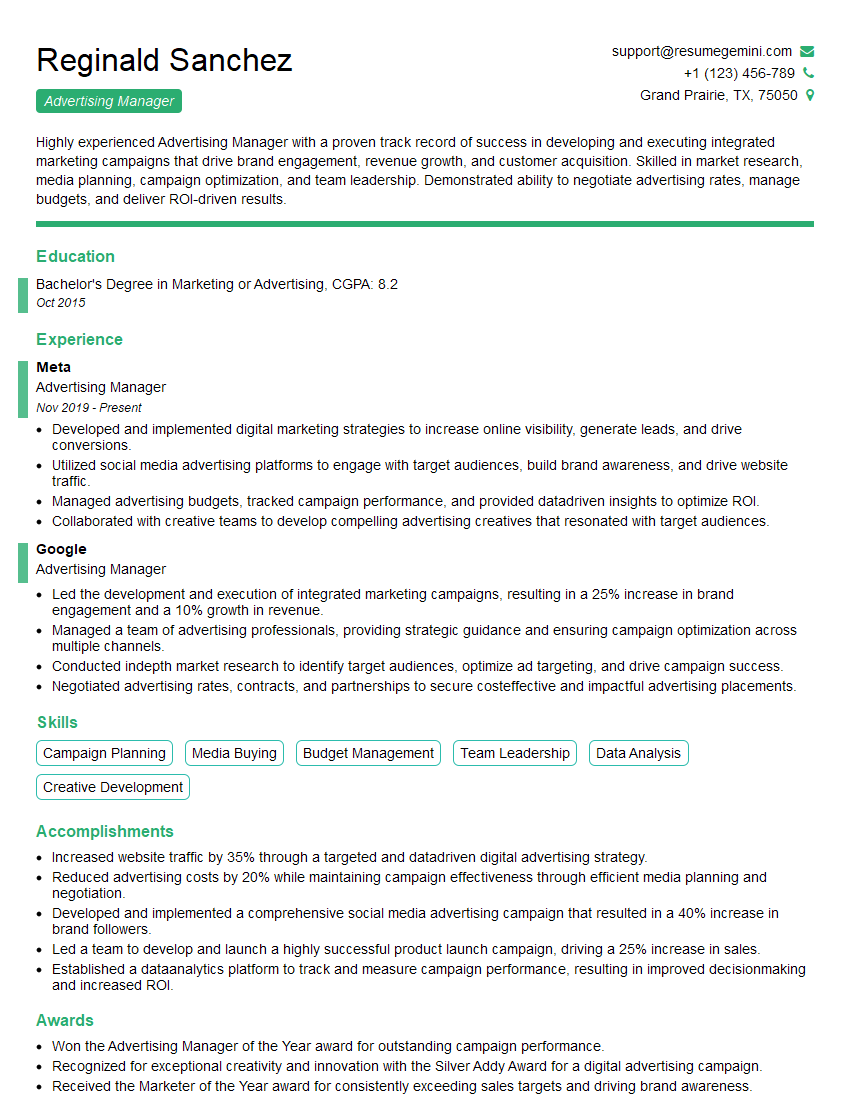
Advertising Manager Resume Sample
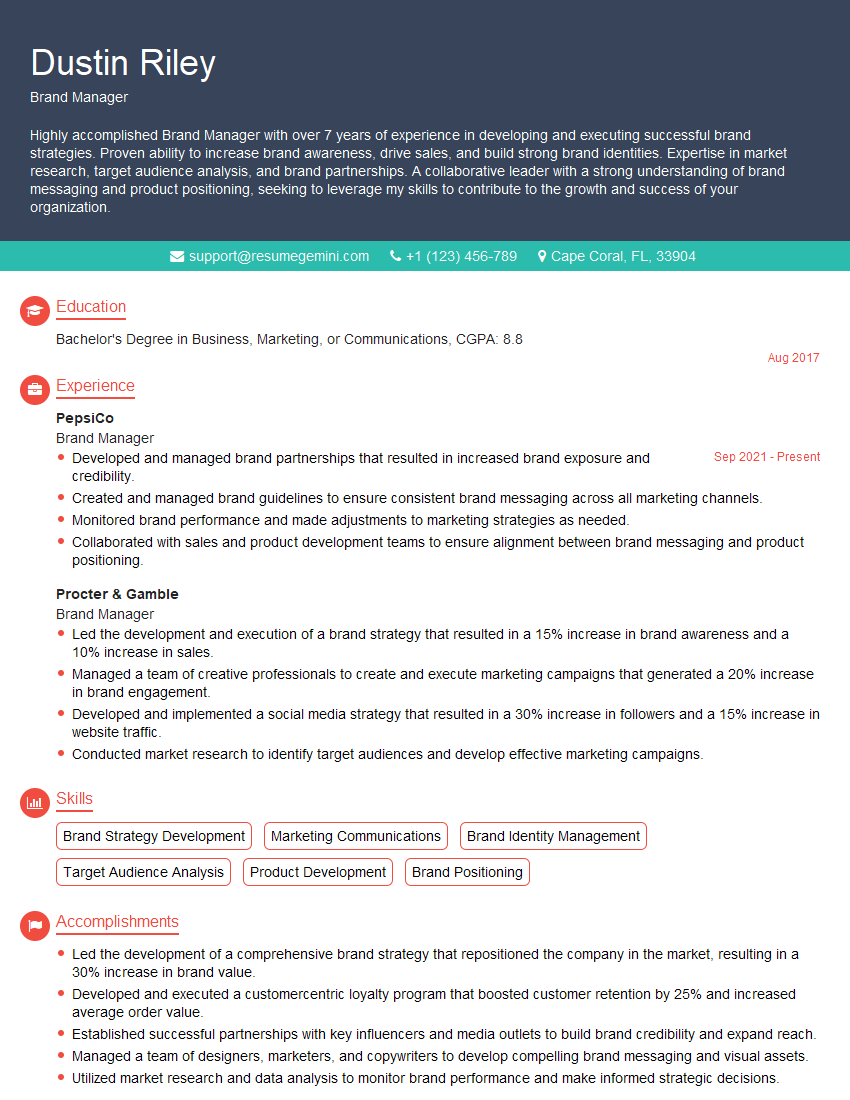
Brand Manager Resume Sample
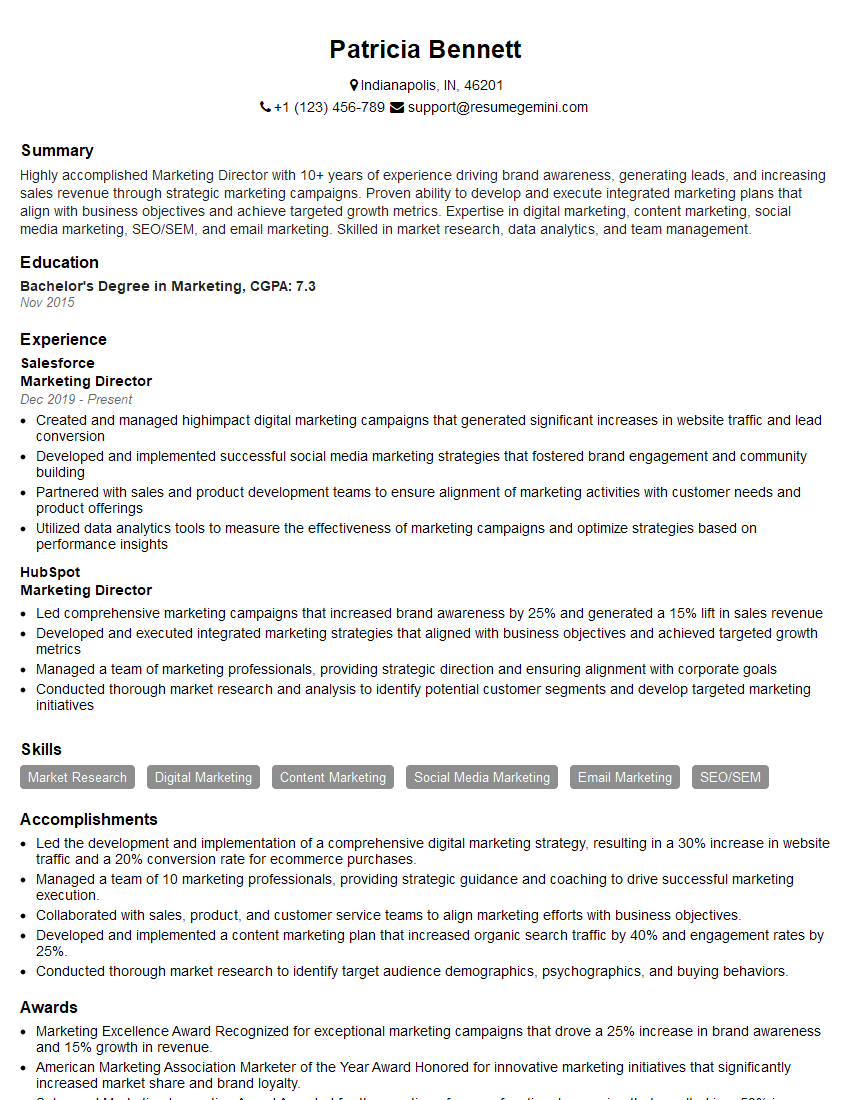
Marketing Director Resume Sample
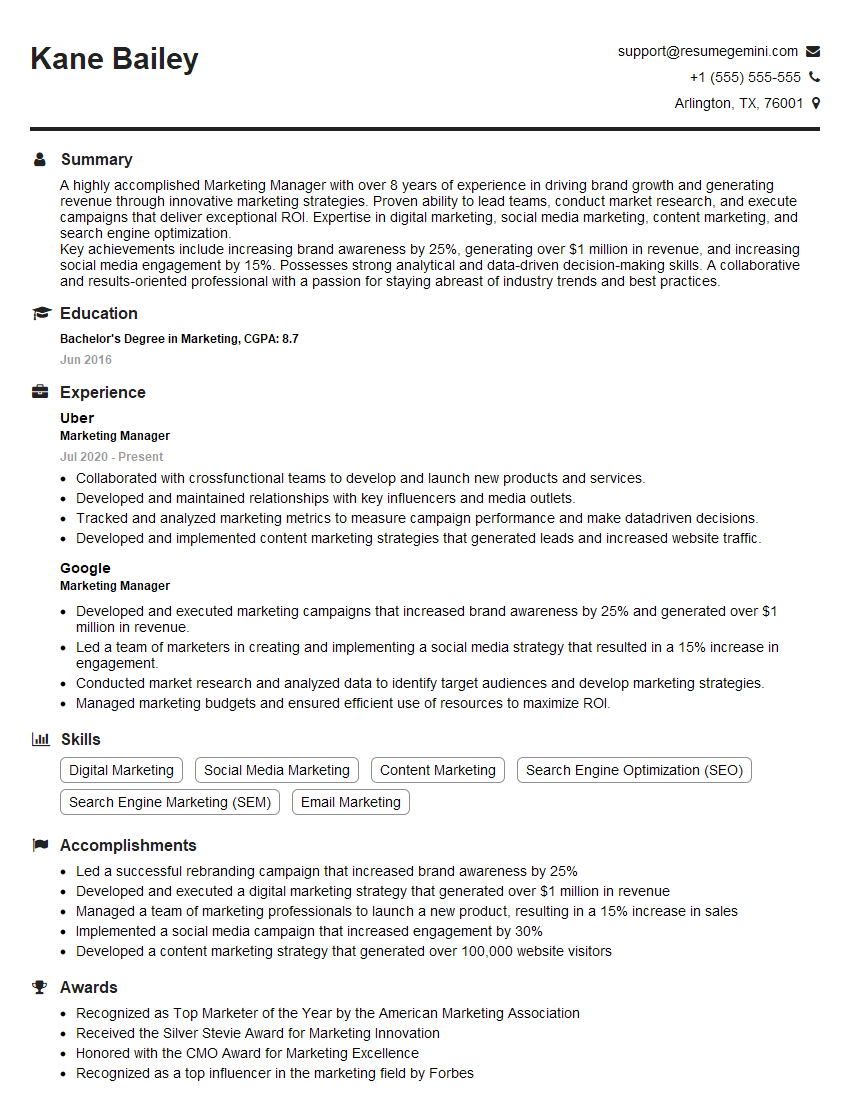
Marketing Manager Resume Sample
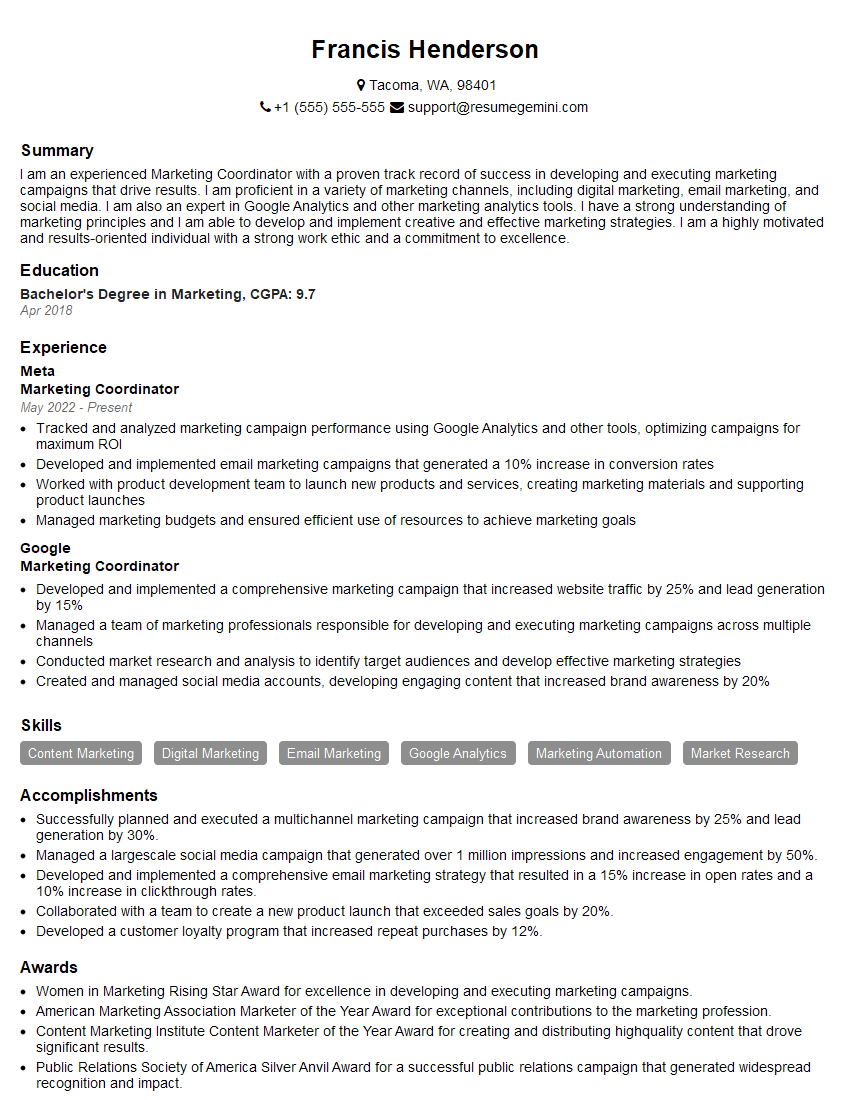
Marketing Coordinator Resume Sample

Communications Manager Resume Sample

Marketing Communications Manager Resume Sample
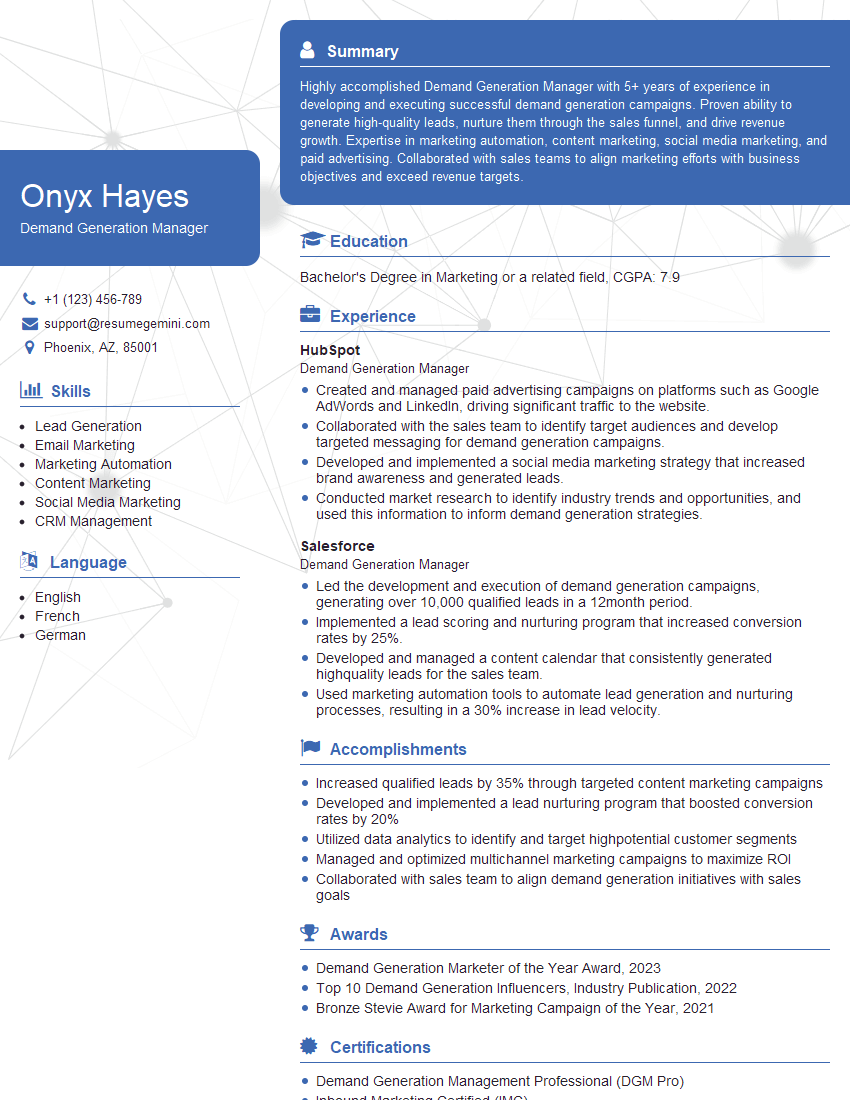
Demand Generation Manager Resume Sample
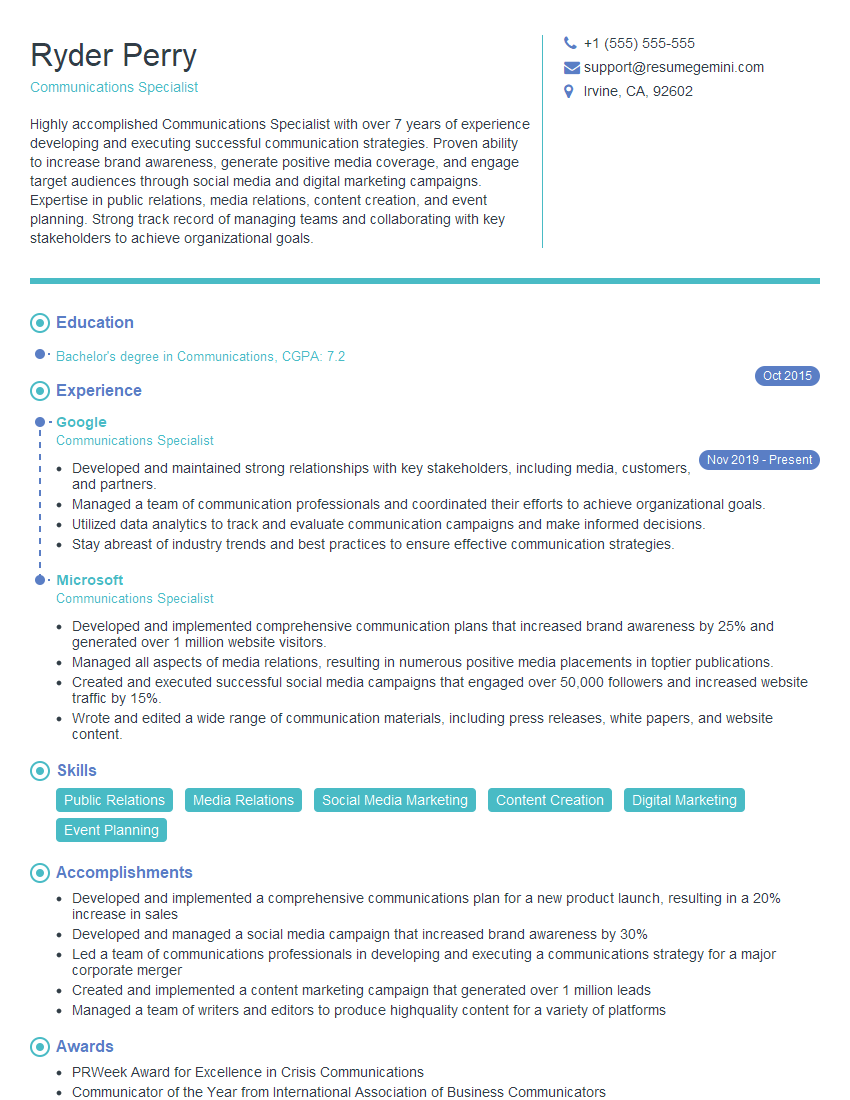
Communications Specialist Resume Sample
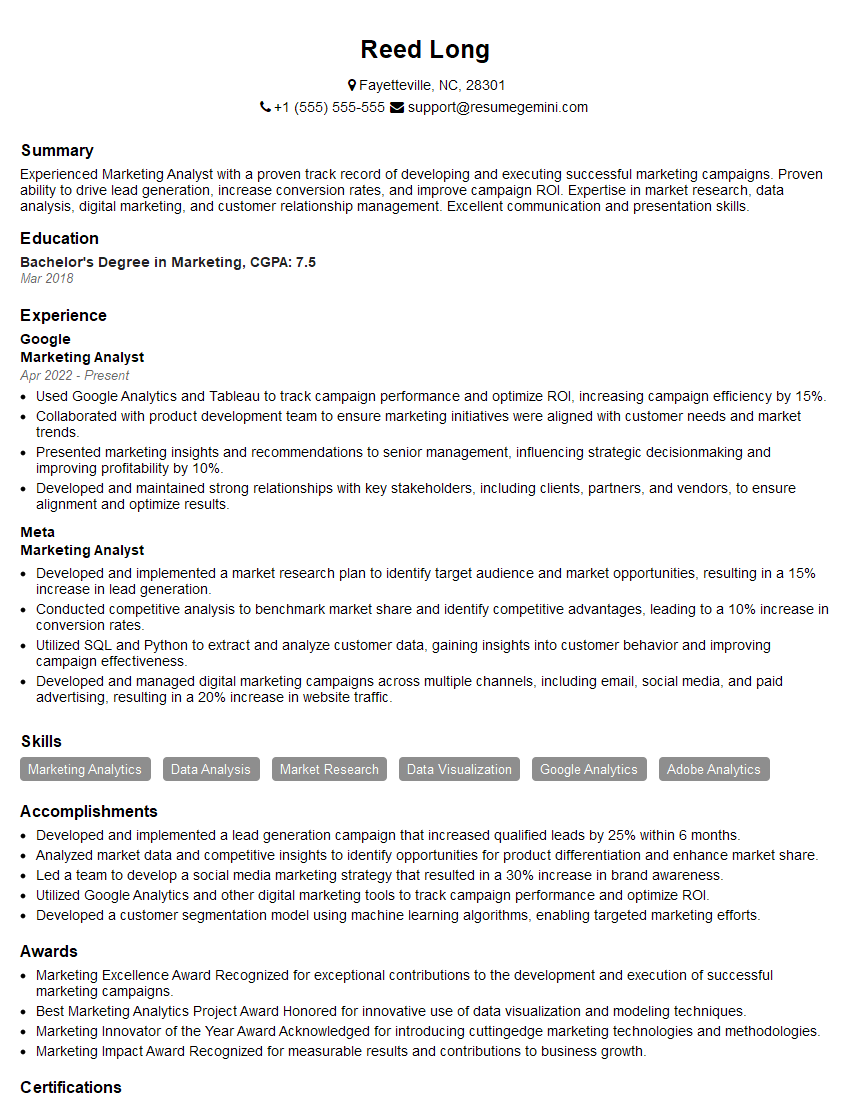
Marketing Analyst Resume Sample
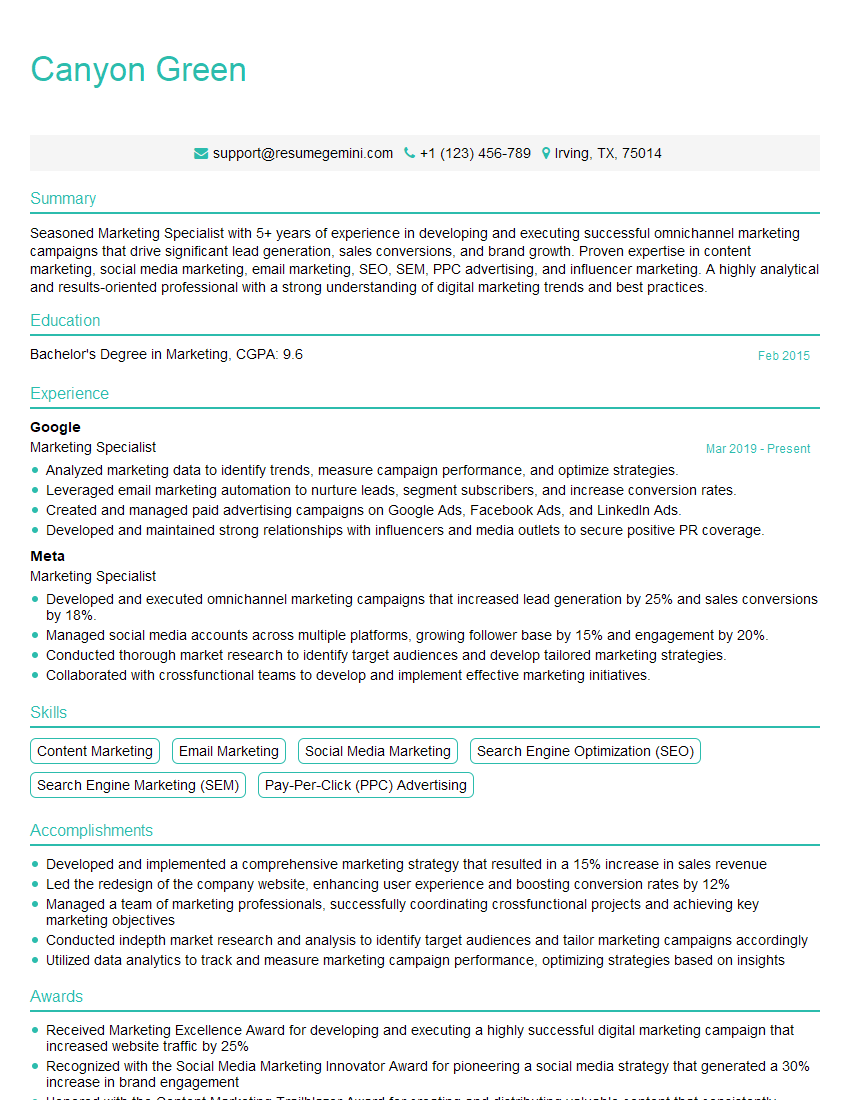
Marketing Specialist Resume Sample
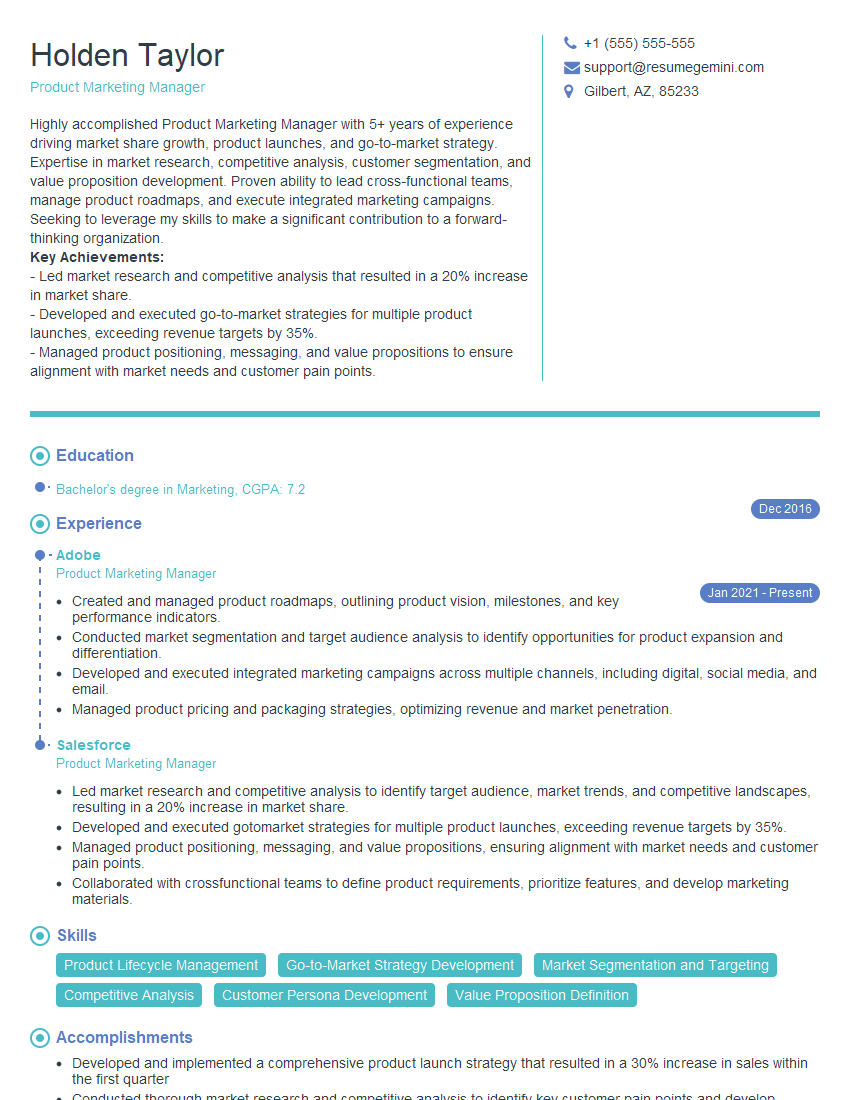
Product Marketing Manager Resume Sample

Social Media Manager Resume Sample
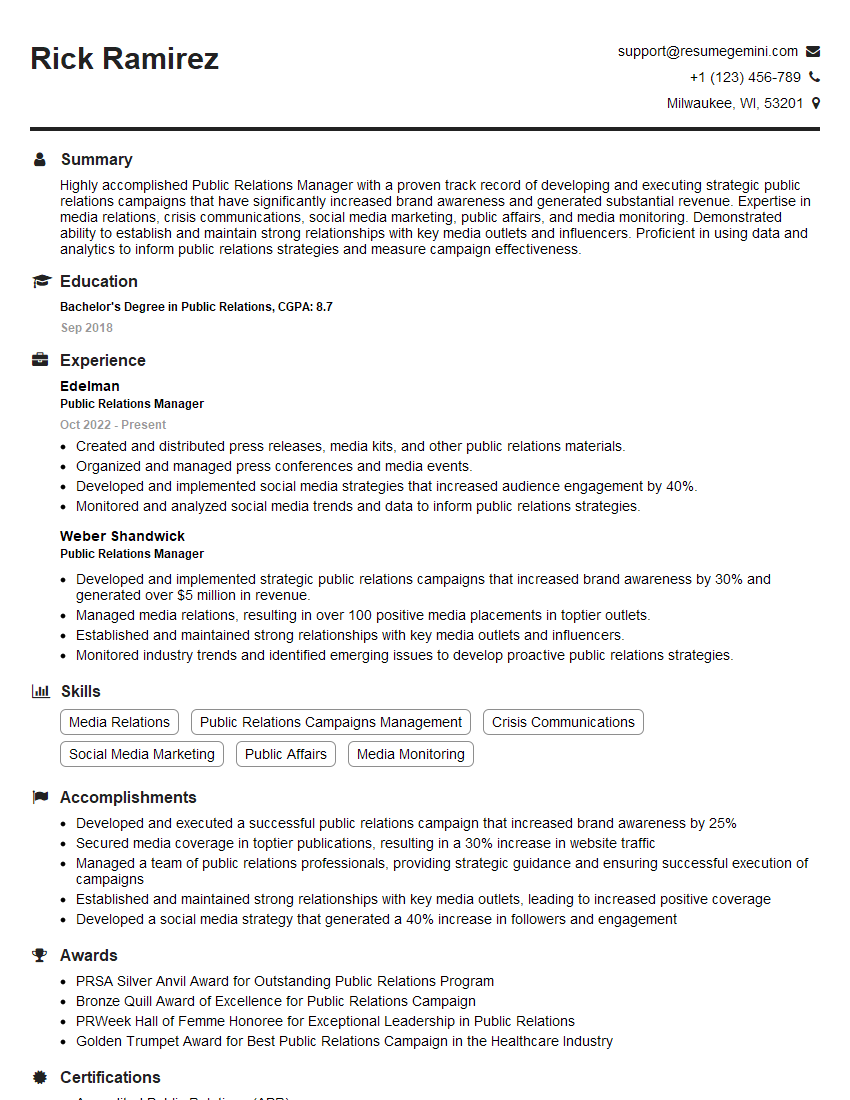
Public Relations Manager Resume Sample

Growth Hacker Resume Sample
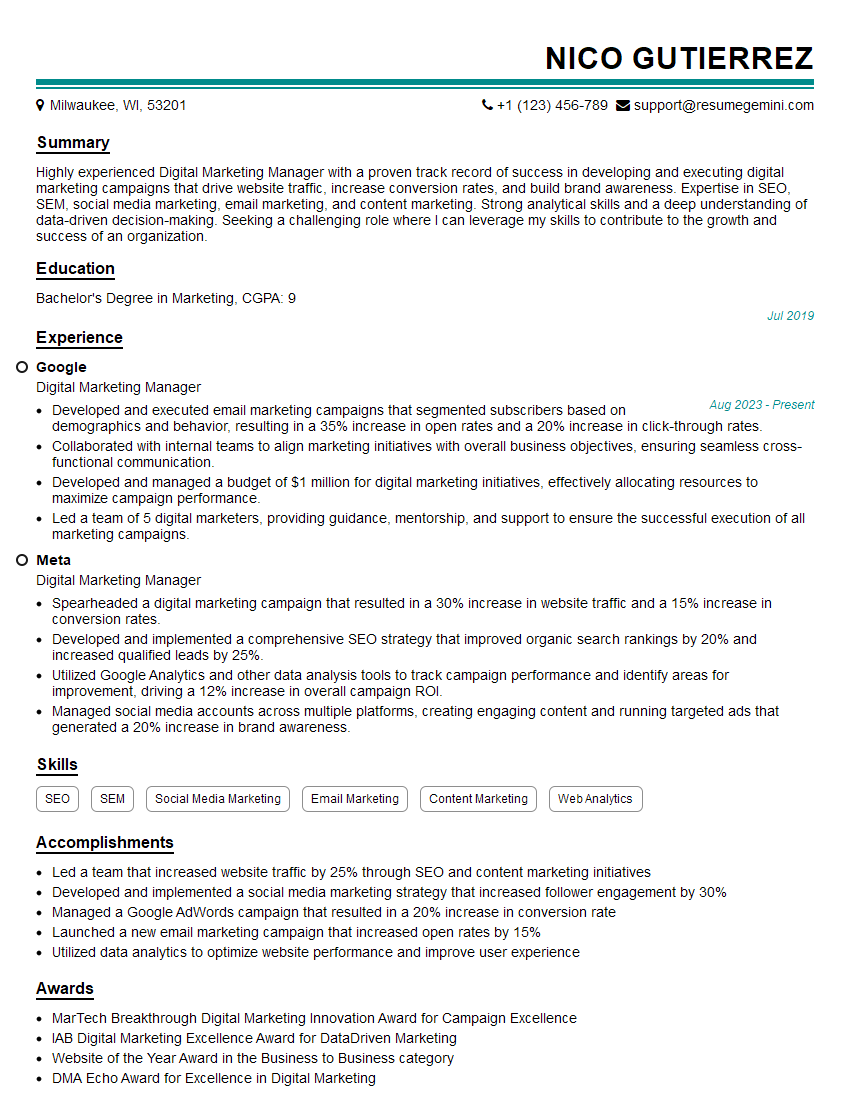
Digital Marketing Manager Resume Sample
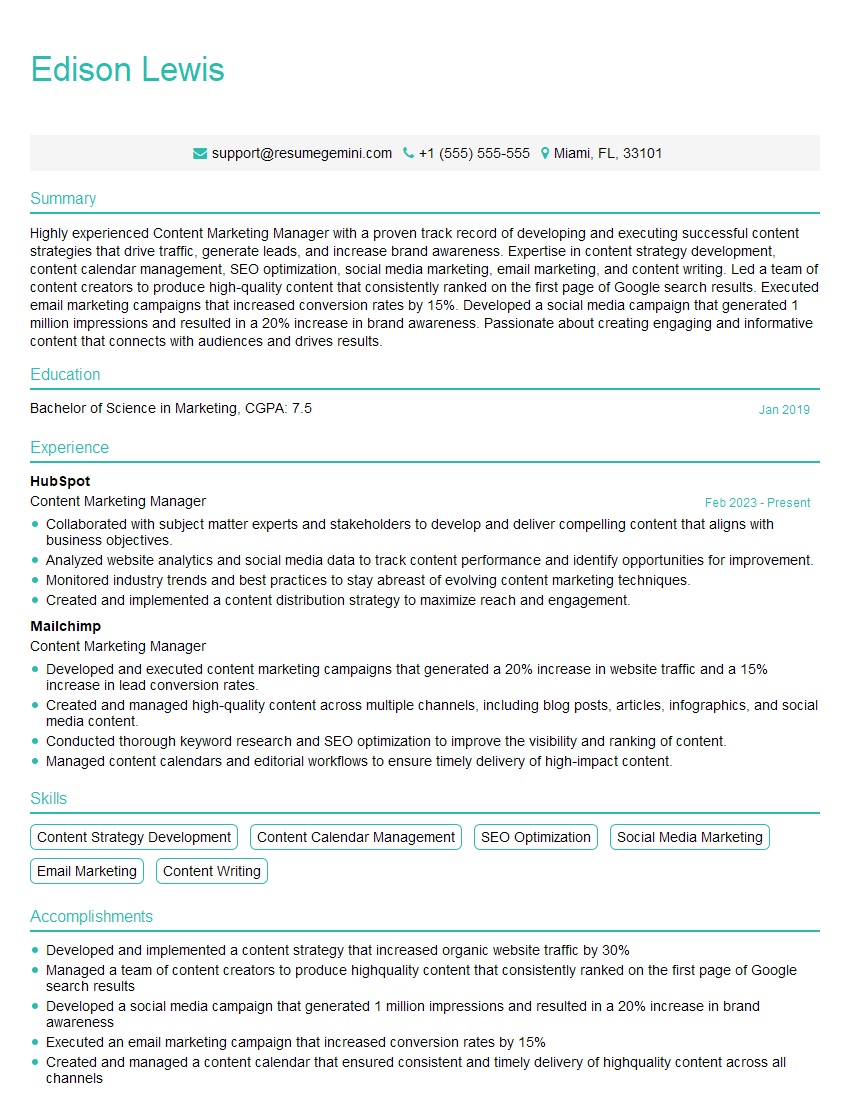
Content Marketing Manager Resume Sample

Influencer Marketing Manager Resume Sample
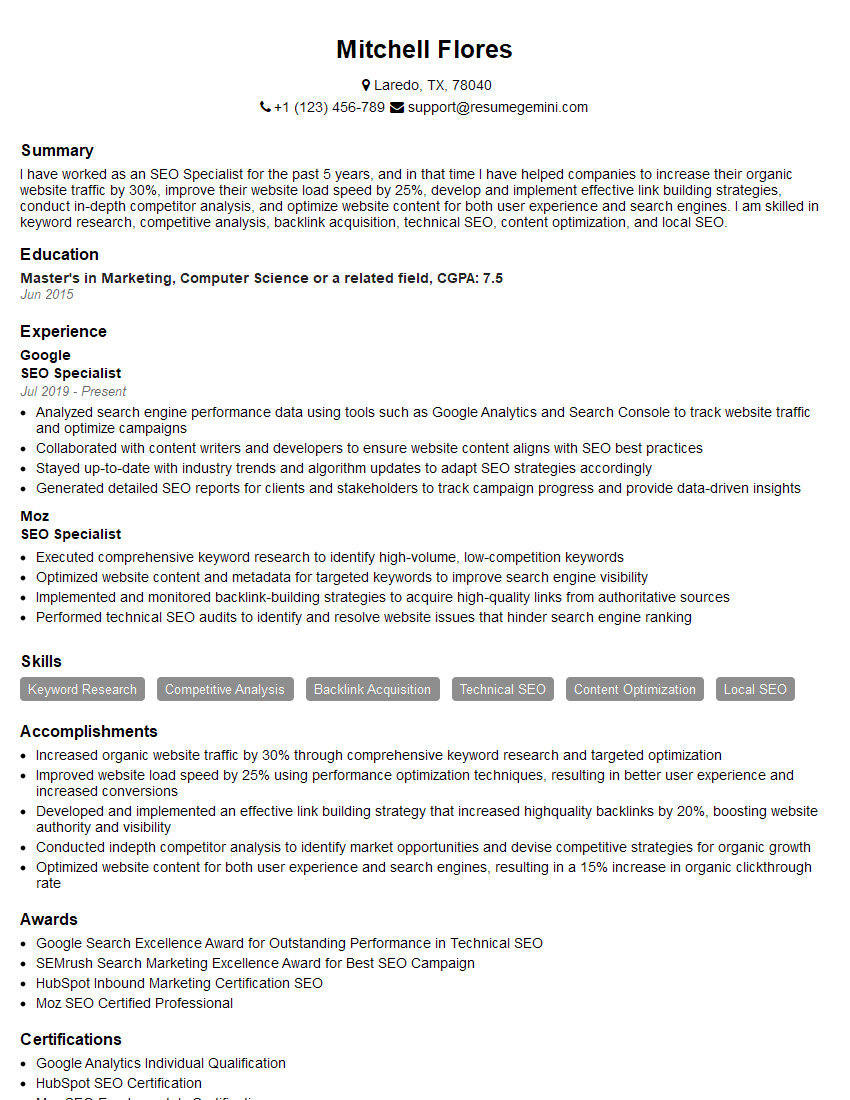
SEO Specialist Resume Sample
- Advertising Manager
- Brand Manager
- Marketing Director
- Marketing Manager
- Marketing Coordinator
- Communications Manager
- Marketing Communications Manager
- Demand Generation Manager
- Communications Specialist
- Marketing Analyst
- Marketing Specialist
- Product Marketing Manager
- Social Media Manager
- Public Relations Manager
- Growth Hacker
- Digital Marketing Manager
- Content Marketing Manager
- Influencer Marketing Manager
- SEO Specialist
Explore more articles
Users Rating of Our Blogs
Share Your Experience
We value your feedback! Please rate our content and share your thoughts (optional).
What Readers Say About Our Blog
Very informative content, great job.
good