The right preparation can turn an interview into an opportunity to showcase your expertise. This guide to Sustainable and Eco-Friendly Materials interview questions is your ultimate resource, providing key insights and tips to help you ace your responses and stand out as a top candidate.
Questions Asked in Sustainable and Eco-Friendly Materials Interview
Q 1. Explain the concept of Life Cycle Assessment (LCA) and its importance in sustainable materials selection.
Life Cycle Assessment (LCA) is a comprehensive methodology used to evaluate the environmental impacts of a product or material throughout its entire lifespan, from raw material extraction to end-of-life disposal. It’s crucial for sustainable materials selection because it allows us to compare the environmental performance of different options, going beyond simply looking at a single attribute like recyclability.
An LCA typically considers various impact categories, including greenhouse gas emissions, water usage, energy consumption, resource depletion, and waste generation. For example, comparing two seemingly ‘green’ materials like bamboo and recycled plastic, an LCA might reveal that the energy-intensive transportation of bamboo from a distant source negates some of its inherent advantages compared to locally sourced recycled plastic. By considering the full picture, we can make informed decisions that truly minimize environmental harm.
In practice, LCA data helps inform material choices in product design, supply chain optimization, and environmental policy making. Software tools and databases are used to collect and analyze data, enabling a standardized approach to environmental impact assessment.
Q 2. What are the key differences between biodegradable and compostable materials?
While both biodegradable and compostable materials break down naturally, there’s a key distinction: biodegradable materials decompose under specific conditions, often requiring a controlled environment (like an industrial composting facility), while compostable materials decompose under specific conditions, often requiring a specific environment (like a home composting pile or industrial facility) to fully decompose into carbon dioxide, water, biomass, and humus within a specific timeframe. Essentially, all compostable materials are biodegradable, but not all biodegradable materials are compostable.
Think of a plastic bag labeled ‘biodegradable’. It might break down eventually in a landfill, but it may take years and may not fully decompose. A compostable bag, on the other hand, should decompose completely within a reasonable time frame (months, not years) in a designated composting facility or home composting environment. Certification standards like ASTM D6400 and EN 13432 provide assurance regarding the true compostability of materials.
Q 3. Discuss the challenges and opportunities associated with scaling up the production of bio-based materials.
Scaling up the production of bio-based materials presents significant challenges but also exciting opportunities. One major hurdle is cost-competitiveness: bio-based materials often have higher production costs compared to their traditional counterparts. This is due to factors such as the need for sustainable farming practices, efficient processing technologies, and the sometimes lower yields of bio-based feedstocks.
Another challenge is ensuring consistent quality and supply. Agricultural production is inherently susceptible to factors like weather and disease, making it crucial to develop robust and reliable supply chains. Furthermore, land use and competition with food production are significant concerns that need careful management.
However, the opportunities are substantial. Increased demand for sustainable alternatives and technological advancements in bio-based material processing are driving innovation and cost reductions. The potential to create a circular economy, reduce reliance on fossil fuels, and improve biodegradability are compelling drivers for further development and investment in this sector.
Q 4. How do you assess the environmental impact of a material throughout its entire lifecycle?
Assessing the environmental impact of a material across its entire lifecycle requires a systematic approach, which is exactly what LCA provides (as discussed earlier). It involves a multi-stage process:
- Goal and Scope Definition: Clearly define the purpose of the assessment and the system boundaries (what’s included and excluded).
- Inventory Analysis: Quantify all inputs and outputs associated with the material’s lifecycle stages (e.g., raw material extraction, manufacturing, transportation, use, and disposal).
- Impact Assessment: Evaluate the environmental consequences of these inputs and outputs using various impact categories (e.g., global warming potential, acidification, eutrophication).
- Interpretation: Analyze the results and draw conclusions about the material’s overall environmental performance.
Often, specialized software is used to streamline the data collection and analysis involved. The results help identify ‘hotspots’ – stages with the greatest environmental impact – enabling targeted improvements throughout the material’s lifecycle.
Q 5. What are some common sustainable alternatives to traditional plastics?
Several sustainable alternatives to traditional plastics are emerging. These include:
- Bioplastics: Plastics derived from renewable biomass sources, such as corn starch or sugarcane. These can be biodegradable or compostable, depending on the type.
- Recycled Plastics: Using post-consumer or post-industrial plastic waste to create new products. This reduces reliance on virgin materials and minimizes landfill waste.
- Mushroom Packaging: Utilizing mycelium (the root structure of mushrooms) to create lightweight and biodegradable packaging materials.
- Seaweed-based Plastics: Exploring the potential of seaweed as a sustainable source for bioplastics.
- Paper and Cardboard: While not always a direct substitute for plastics, these materials offer sustainable alternatives in certain applications. Especially when recycled content is used.
The choice of the best alternative depends on the specific application and the material’s overall lifecycle performance. A critical consideration is always the end-of-life management of these alternative materials to ensure they are truly sustainable.
Q 6. Describe your experience with different types of recycled materials and their applications.
My experience with recycled materials spans various types and applications. I’ve worked extensively with post-consumer recycled (PCR) PET in textile production, creating durable and sustainable fabrics. The challenge lies in ensuring consistent quality and color, as PCR materials can have variations in their composition. I’ve also worked with recycled aluminum in packaging, where the high recyclability and ease of processing make it a strong choice for sustainable packaging solutions.
In contrast, working with recycled wood has presented different challenges, particularly regarding the potential presence of contaminants and the need for careful processing to ensure structural integrity in the final product. Each recycled material requires a specific approach tailored to its unique properties and potential limitations.
Q 7. What are some key indicators of a circular economy within a materials context?
Key indicators of a circular economy within a materials context include:
- High Recycling and Reuse Rates: A high percentage of materials being recycled or reused at the end of their life, minimizing waste sent to landfills.
- Design for Disassembly and Recyclability: Products designed for easy disassembly and separation of different materials, facilitating efficient recycling.
- Sustainable Sourcing of Raw Materials: Using renewable and sustainably sourced raw materials to minimize environmental impact.
- Reduced Material Consumption: Minimizing the amount of materials used in products through design optimization and efficient resource utilization.
- Product Life Extension: Strategies to extend the lifespan of products through repair, refurbishment, or remanufacturing.
- Waste Reduction and Valorization: Minimizing waste generation and finding ways to utilize waste streams as valuable resources.
These indicators demonstrate a shift from a linear ‘take-make-dispose’ model to a circular model, where materials are kept in use for as long as possible, reducing environmental impacts and maximizing resource efficiency.
Q 8. Explain the concept of embodied carbon and its relevance in construction materials.
Embodied carbon refers to the total amount of greenhouse gas emissions generated throughout a material’s entire lifecycle, from raw material extraction and manufacturing to transportation, installation, and ultimately, disposal or end-of-life management. In construction, it’s a significant concern because buildings are responsible for a large percentage of global carbon emissions. Understanding and reducing embodied carbon is crucial for achieving net-zero carbon goals in the built environment.
For example, the embodied carbon in concrete is substantial due to the energy-intensive cement production process. Manufacturing steel also contributes significantly. By choosing low-embodied-carbon alternatives like recycled materials or sustainably sourced timber, we can drastically reduce a building’s carbon footprint.
Assessing embodied carbon involves a Life Cycle Assessment (LCA), a standardized methodology to quantify environmental impacts. This process considers various stages of a material’s life and allows for comparative analysis of different material options.
Q 9. How do you evaluate the economic feasibility of using sustainable materials?
Evaluating the economic feasibility of sustainable materials requires a holistic approach, going beyond initial material costs. We need to consider the whole-life costs, encompassing factors like:
- Initial material cost: The upfront price of sustainable materials can sometimes be higher than conventional options.
- Installation costs: Some sustainable materials may require specialized installation techniques, potentially increasing labor costs.
- Maintenance costs: Durability and longevity are key. Sustainable materials often boast superior durability, leading to lower long-term maintenance expenses.
- Energy efficiency: Materials with high thermal performance can reduce heating and cooling costs significantly over the building’s lifespan.
- Lifecycle cost analysis: This technique sums up all costs throughout the product’s life cycle, providing a comprehensive economic picture.
- Potential incentives and rebates: Many governments offer financial incentives for using sustainable materials, significantly impacting the overall economic viability.
For instance, while bamboo might have a slightly higher initial cost than steel, its superior durability and lower maintenance needs can result in substantial savings over its lifespan. A thorough lifecycle cost analysis is essential for making informed decisions.
Q 10. What are some strategies for reducing waste generation during the manufacturing process?
Reducing waste during manufacturing requires a multi-pronged approach focusing on prevention, reuse, and recycling.
- Design for Manufacturing (DFM): Optimizing designs to minimize material waste during the manufacturing process. This involves considering efficient cutting techniques and maximizing material utilization.
- Lean Manufacturing Principles: Implementing techniques to eliminate waste in all forms, including excess inventory, defects, and unnecessary movements.
- Closed-loop systems: Designing systems where waste from one process becomes a valuable input for another, creating a circular economy model.
- Material recovery and recycling: Implementing efficient recycling systems to recover and reuse materials, reducing landfill waste.
- Waste audits and tracking: Regularly monitoring waste generation to identify areas for improvement and track progress toward reduction goals.
For example, a furniture manufacturer might switch to modular designs allowing for easy disassembly and part replacement, minimizing the waste generated when furniture reaches the end of its life. Similarly, implementing a closed-loop system to reuse wood scraps in the production of composite materials reduces overall waste and resource consumption.
Q 11. Discuss the importance of material selection in achieving sustainable design.
Material selection is paramount in achieving sustainable design. It directly impacts a building’s environmental impact, its durability, and its overall cost-effectiveness. Choosing sustainable materials contributes to reduced embodied carbon, decreased waste generation, and enhanced occupant health.
The selection process should involve a thorough assessment of the material’s environmental credentials, including its embodied carbon, its recyclability, and its sourcing practices. Consideration should also be given to the material’s performance characteristics, such as durability, thermal performance, and aesthetic qualities. For example, selecting timber from sustainably managed forests over materials with higher embodied carbon like concrete or steel will significantly reduce the project’s environmental footprint.
Using tools like Environmental Product Declarations (EPDs) can provide transparent and comparable data on a material’s environmental impact, facilitating informed material selection decisions.
Q 12. What are some innovative technologies that promote sustainable materials use?
Several innovative technologies are pushing the boundaries of sustainable materials use:
- 3D printing with bio-based materials: Creating complex shapes and structures using bio-based polymers or recycled materials, reducing waste and minimizing material usage.
- Self-healing materials: Extending the lifespan of materials by incorporating self-healing properties, reducing the need for replacements and repairs.
- Bio-based composites: Utilizing renewable resources like hemp, flax, or bamboo fibers to create strong and sustainable composite materials.
- Mushroom packaging: Utilizing mycelium (mushroom roots) to create biodegradable and compostable packaging alternatives.
- Advanced recycling technologies: Developing innovative techniques to recycle materials that were previously difficult to process, expanding recycling opportunities.
For instance, 3D-printed houses using bio-based materials can drastically reduce construction waste and embodied carbon compared to traditional construction methods. The use of self-healing concrete can extend the lifespan of infrastructure, reducing the need for frequent repairs and replacements.
Q 13. How can you ensure the traceability and transparency of sustainable materials sourcing?
Ensuring traceability and transparency in sustainable materials sourcing requires a robust system of documentation and verification.
- Chain-of-custody certification: Using recognized certification schemes (e.g., Forest Stewardship Council (FSC) for timber) to verify the sustainable origin and processing of materials.
- Blockchain technology: Leveraging blockchain to create a transparent and immutable record of a material’s journey from origin to finished product.
- Digital product passports: Providing detailed information about a material’s lifecycle, including its environmental impact and sourcing details, through a digital passport.
- Material passports: similar to digital product passports, but specifically focusing on materials. These passports often include information such as material composition, manufacturing process, environmental impact, and end-of-life options.
- Third-party verification: Employing independent auditing and verification bodies to ensure the accuracy and reliability of sustainability claims.
This level of transparency builds trust with consumers and stakeholders, fostering responsible sourcing practices and accountability within the supply chain.
Q 14. What are the key considerations for designing packaging for recyclability or compostability?
Designing packaging for recyclability or compostability requires careful consideration of materials, design features, and labeling.
- Material selection: Using readily recyclable or compostable materials like paperboard, recycled plastics, or biodegradable polymers. Avoiding multi-material packaging that hinders efficient recycling.
- Design for recyclability: Minimizing the number of different materials used and ensuring the package is easily disassembled for sorting. Clear labeling indicating recyclability or compostability greatly aids consumers.
- Minimalist design: Reducing excess packaging to minimize material use and waste. This could include using thinner materials or more compact designs.
- Compostability standards: Following recognized compostability standards to ensure the package decomposes properly in industrial composting facilities.
- Clear labeling: Providing clear instructions to consumers on how to recycle or compost the packaging, including appropriate recycling symbols or compostability certifications.
For example, using a fully recyclable paperboard box for a product, instead of a plastic tray wrapped in plastic film, greatly improves the chances of the packaging being successfully recycled. This also reduces the amount of packaging material needed.
Q 15. Describe your experience with different types of sustainable textiles.
My experience with sustainable textiles spans a wide range of materials, from plant-based options like organic cotton and hemp to innovative recycled fibers such as recycled polyester and Tencel. Organic cotton, for instance, is grown without harmful pesticides and fertilizers, minimizing its environmental impact. Hemp offers exceptional strength and durability while requiring less water and pesticides than conventional cotton. Recycled polyester, derived from plastic bottles, diverts waste from landfills and reduces reliance on virgin materials. Tencel, made from sustainably sourced wood pulp using a closed-loop process, is known for its softness and biodegradability. I’ve worked extensively with these materials in various applications, from apparel design to interior textiles, always considering their entire lifecycle, from cultivation to end-of-life management. A recent project involved developing a line of sustainable bedding using a blend of organic cotton and recycled Tencel, resulting in a product that’s both eco-friendly and comfortable.
Career Expert Tips:
- Ace those interviews! Prepare effectively by reviewing the Top 50 Most Common Interview Questions on ResumeGemini.
- Navigate your job search with confidence! Explore a wide range of Career Tips on ResumeGemini. Learn about common challenges and recommendations to overcome them.
- Craft the perfect resume! Master the Art of Resume Writing with ResumeGemini’s guide. Showcase your unique qualifications and achievements effectively.
- Don’t miss out on holiday savings! Build your dream resume with ResumeGemini’s ATS optimized templates.
Q 16. Explain the concept of material passports and their benefits.
Material passports are digital records that provide comprehensive information about a product’s entire life cycle. Think of it as a detailed ‘resume’ for a material, tracing its journey from raw material extraction to manufacturing, use, and eventual disposal. This information includes details on the material’s composition, its origin, manufacturing processes, energy consumption, and embedded carbon footprint. The benefits are significant. For consumers, material passports promote transparency and traceability, empowering them to make informed, sustainable purchasing decisions. For manufacturers, they facilitate compliance with environmental regulations, enhance brand reputation, and optimize supply chains. For recyclers, the detailed information allows for more efficient and effective material recovery and reuse. For example, a material passport for a building material would specify the cement type, aggregates used, and the energy consumed during production, allowing for easier identification and sorting at the end-of-life stage, improving recycling rates.
Q 17. How do you assess the toxicity of a material?
Assessing the toxicity of a material involves a multi-faceted approach. It’s not simply about a single test, but rather a comprehensive evaluation considering various factors. We employ several methods including:
- Chemical analysis: Identifying the specific chemical components present in the material.
- Toxicity testing: Evaluating the potential harm to human health and the environment through laboratory tests such as ecotoxicity assays (measuring effects on aquatic organisms) and human cell toxicity assays.
- Life cycle assessment (LCA): Analyzing the environmental impacts throughout the material’s entire life cycle, from raw material extraction to disposal, to identify potential points of toxicity.
- Material Safety Data Sheets (MSDS): Consulting readily available MSDS which provide information on the hazards associated with a material and safe handling procedures.
Q 18. What are some sustainable alternatives to traditional concrete?
Traditional concrete’s high carbon footprint and environmental impact have led to the development of several sustainable alternatives. These include:
- Geopolymer concrete: A cement-free alternative made from industrial by-products such as fly ash and slag, significantly reducing its carbon footprint.
- Mycelium composites: Utilizing mycelium, the root structure of fungi, as a binding agent for agricultural waste, creating lightweight, insulating, and biodegradable building materials.
- Hempcrete: A mixture of hemp fibers and lime, offering excellent insulation and carbon sequestration properties.
- Recycled aggregate concrete: Incorporating recycled materials like crushed concrete, glass, or plastic into the concrete mix, reducing the need for virgin materials.
Q 19. Describe your experience with the use of recycled content in product manufacturing.
My experience with recycled content in product manufacturing focuses on maximizing the use of post-consumer and post-industrial waste while maintaining product quality. I’ve worked on projects utilizing recycled plastics in furniture production, recycled paper in packaging, and recycled aluminum in construction materials. A successful example involved designing a line of outdoor furniture using recycled HDPE plastic lumber. This not only reduced reliance on virgin plastic but also resulted in a durable and weather-resistant product, demonstrating that recycled materials can offer comparable or even superior performance to virgin materials in specific applications. The key is careful material selection, thorough quality control, and innovative design to accommodate the unique characteristics of recycled materials.
Q 20. How can you ensure the quality and performance of recycled materials?
Ensuring quality and performance of recycled materials requires a rigorous approach, starting with careful sourcing and processing.
- Source verification: Establishing the origin and quality of the recycled materials is crucial. This often involves partnering with reputable suppliers who can provide detailed information about the material’s history and processing.
- Quality control testing: Thorough testing is essential to ensure the recycled material meets the required specifications for strength, durability, and other relevant properties. This may involve chemical analysis, mechanical testing, and visual inspection.
- Material characterization: Understanding the variability of recycled materials is vital. Variations in the composition or processing of recycled materials can affect their properties. We use sophisticated testing to characterize and categorize these materials to best suit our application.
- Design optimization: The design of the product needs to be optimized to accommodate the unique characteristics of recycled materials, potentially adjusting dimensions, joining techniques, or surface finishes.
Q 21. Discuss the role of government regulations and certifications in driving sustainable material use.
Government regulations and certifications play a vital role in promoting sustainable material use. Regulations such as emissions standards, waste management directives, and building codes incentivize the use of eco-friendly materials and discourage the use of harmful substances. Certifications like LEED (Leadership in Energy and Environmental Design) and Cradle to Cradle Certified™ provide independent verification of a material’s environmental performance, fostering trust and transparency within the marketplace. For example, stricter regulations on landfill waste might drive manufacturers to explore alternatives using recycled materials. Similarly, the demand for LEED-certified buildings motivates developers to source and use sustainable building materials. The combination of strong governmental policy and trusted certification programs is crucial for driving the market shift towards a more sustainable future. Clear labeling requirements also play a critical role, allowing consumers to easily identify and choose sustainable products.
Q 22. How do you incorporate sustainability considerations into your decision-making processes?
Sustainability is woven into every decision I make, from material selection to manufacturing processes. It’s not an afterthought; it’s the core principle guiding my work. I use a multi-criteria decision analysis (MCDA) approach, weighing factors like environmental impact, social responsibility, and economic viability. For instance, when choosing between two materials, I wouldn’t just look at cost. I’d assess their entire lifecycle: raw material sourcing, energy consumption during manufacturing, transportation emissions, end-of-life management (recycling, biodegradability), and potential toxicity. A tool like a life cycle assessment (LCA) becomes crucial here to quantify these impacts and compare options objectively.
This holistic approach ensures that sustainability isn’t compromised for short-term gains. We also prioritize materials with readily available recycled content or those derived from renewable sources, minimizing our reliance on virgin resources. For example, choosing recycled aluminum over virgin aluminum drastically reduces carbon emissions and resource depletion.
Q 23. What are your thoughts on the future of sustainable materials innovation?
The future of sustainable materials innovation is incredibly exciting! We’re moving beyond simply replacing conventional materials with ‘greener’ alternatives. The focus is shifting towards circular economy principles – designing materials for recyclability, compostability, or biodegradability. This means materials that can be easily disassembled, reused, or returned to the natural environment at the end of their life without harming ecosystems.
I foresee significant advancements in bio-based materials, including self-healing materials that extend product lifespan, and materials with enhanced functionalities like improved strength-to-weight ratios. Furthermore, advancements in material science will drive the development of innovative recycling technologies, closing the loop and minimizing waste. Think about bio-based polymers that can be readily composted, or advanced recycling processes that can reclaim high-quality materials from mixed waste streams. Artificial intelligence and machine learning will play a crucial role in optimizing material selection and design for maximum sustainability.
Q 24. How do you approach conflicts between sustainability goals and other business priorities?
Conflicts between sustainability goals and other business priorities are inevitable. The key is to find creative solutions that balance both. It’s not about choosing one over the other; it’s about integrating them. I employ a collaborative approach, engaging stakeholders from different departments to brainstorm innovative solutions.
For example, if a more sustainable material is more expensive, we might explore options like using a blend of sustainable and conventional materials to reduce the cost while still significantly improving the environmental profile. We could also consider design optimization to reduce material usage or find alternative manufacturing processes that reduce energy consumption and waste. Life-cycle cost analysis is essential here – looking beyond the initial purchase price to the total cost of ownership, including disposal and potential environmental liabilities. Transparency is crucial; educating stakeholders on the long-term benefits of sustainable choices often helps to overcome initial resistance.
Q 25. Describe a project where you successfully implemented sustainable materials. What were the key challenges and successes?
In a recent project for a furniture manufacturer, we replaced traditional wood-based particleboard with a bio-based alternative made from agricultural residues. The key challenge was matching the performance characteristics of the traditional material, particularly strength and moisture resistance. We overcame this through a combination of material science expertise and innovative manufacturing techniques.
We conducted extensive testing and material characterization to find the optimal composition of the bio-based composite. We also collaborated closely with the manufacturer to adapt their existing production lines to accommodate the new material. The success was threefold: We reduced reliance on virgin timber, lowered carbon emissions, and created a product with a lower environmental footprint. The key to success was collaboration, meticulous testing, and a willingness to embrace innovative solutions. The resulting furniture line is more sustainable and has met with significant consumer interest due to its eco-friendly profile.
Q 26. How do you stay updated on the latest trends and advancements in sustainable materials?
Staying current in this rapidly evolving field requires a multi-pronged approach. I regularly attend industry conferences and workshops, subscribe to specialized journals and newsletters (like those published by professional societies like the Society of Plastics Engineers), and actively participate in online communities and forums. I also closely follow the research published by leading universities and research institutions. Networking with colleagues and experts in the field is another invaluable resource. Following relevant industry thought leaders on social media and attending webinars are also helpful techniques to stay updated on the latest trends and advancements.
Q 27. Explain the differences between various bio-based polymers (PLA, PHA, etc.)
Polylactic acid (PLA) and polyhydroxyalkanoates (PHAs) are both bio-based polymers, meaning they’re derived from renewable biomass sources rather than petroleum. However, they differ significantly in their properties and production methods.
- PLA is typically produced from fermented sugars (often from corn starch or sugarcane). It’s relatively inexpensive to produce, but it’s not as strong or durable as some other bioplastics and has limited compostability; it requires industrial composting facilities.
- PHAs, on the other hand, are produced by microorganisms (bacteria) that ferment various substrates. They exhibit a wider range of properties depending on the type of PHA and the production method, making them suitable for different applications. Some PHAs are completely biodegradable in various environments, including home composting conditions.
The choice between PLA and PHA depends on the specific application. PLA is often suitable for disposable items, while PHAs find applications where strength, durability, and complete biodegradability are critical. Other bio-based polymers like polybutylene succinate (PBS) further expand the options, each with its own strengths and weaknesses in terms of properties, production costs, and environmental impact.
Q 28. What are some strategies for reducing the environmental impact of transportation of materials?
Reducing the environmental impact of material transportation is crucial for sustainable practices. Strategies include:
- Optimizing logistics: Efficient route planning, consolidated shipments, and the use of advanced transportation management systems can minimize fuel consumption and emissions. This includes careful consideration of the mode of transport: rail often has a lower carbon footprint than road transport for longer distances.
- Choosing sustainable transportation modes: Prioritizing rail, water, or electric vehicles over long-haul trucking reduces greenhouse gas emissions. Using ships for overseas transportation also helps reduce emissions per unit of cargo transported, although delivery times are significantly longer.
- Proximity sourcing: Locating manufacturing facilities closer to raw material sources and markets reduces transportation distances and associated emissions. This also minimizes the overall environmental impact of the entire supply chain.
- Lightweighting materials: Using lighter materials in packaging and product design reduces the overall weight of shipments, leading to lower fuel consumption and emissions during transportation. For example, using aluminum instead of steel can significantly reduce transportation costs and improve fuel efficiency.
By implementing these strategies, we can significantly reduce the carbon footprint associated with material transportation and contribute to a more sustainable supply chain.
Key Topics to Learn for Sustainable and Eco-Friendly Materials Interview
- Bio-based Materials: Understanding the lifecycle assessment of bioplastics, biocomposites, and other renewable resources. Explore their properties, limitations, and potential for scalability.
- Recycled and Upcycled Materials: Delve into the processes of material recovery, sorting, and reprocessing. Analyze the challenges and opportunities in creating high-value products from recycled materials. Consider applications in construction, packaging, and fashion.
- Circular Economy Principles: Master the core concepts of designing out waste, keeping materials in use, and regenerating natural systems. Discuss how these principles apply to material selection and product design.
- Life Cycle Assessment (LCA): Learn to conduct and interpret LCAs to evaluate the environmental impact of different materials throughout their entire lifecycle. Understand the various impact categories and their significance.
- Material Selection Criteria: Develop a strong understanding of the factors influencing material selection, including environmental impact, cost, performance, and availability. Be prepared to justify your choices based on sustainable principles.
- Sustainable Sourcing and Supply Chains: Explore responsible sourcing practices, including chain of custody certification and traceability. Discuss the importance of transparency and ethical considerations in material procurement.
- Emerging Sustainable Materials: Familiarize yourself with cutting-edge research and development in sustainable materials, such as mycelium composites, seaweed-based materials, and innovative bio-manufacturing techniques.
- Problem-Solving & Case Studies: Practice applying your knowledge to real-world scenarios. Prepare examples demonstrating your ability to identify and solve material-related sustainability challenges.
Next Steps
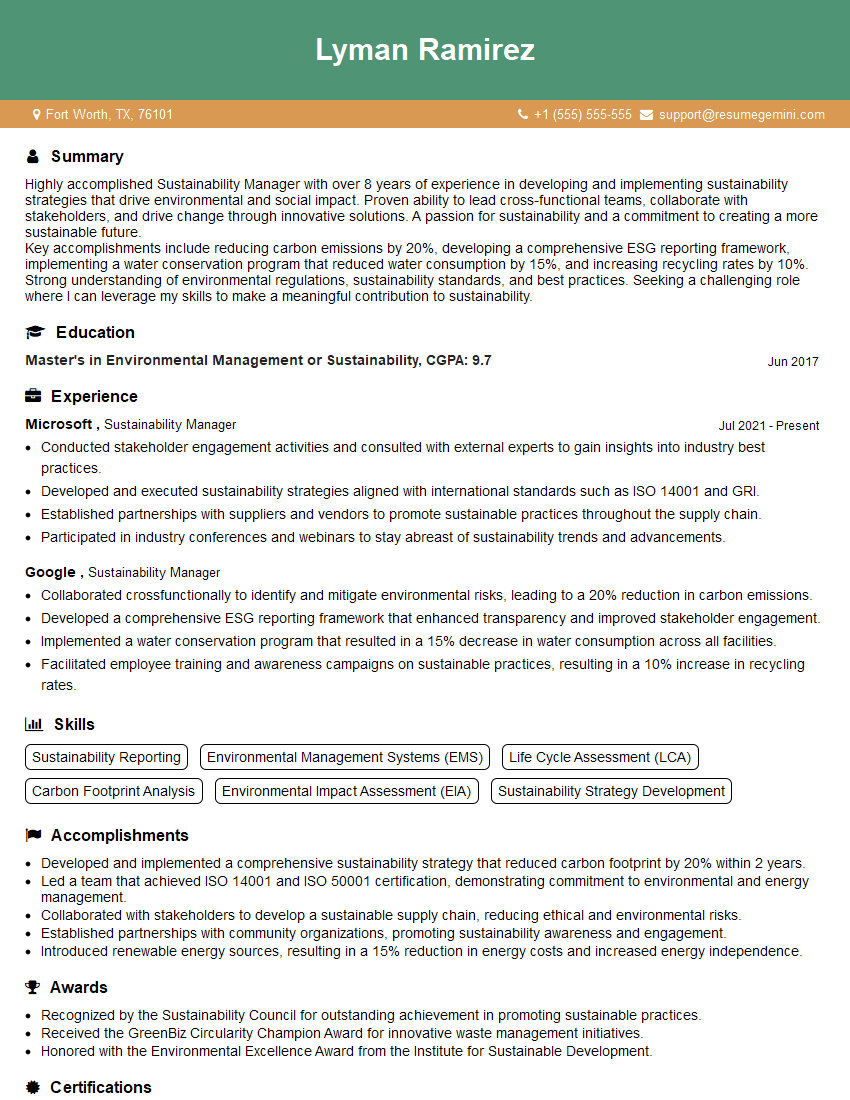
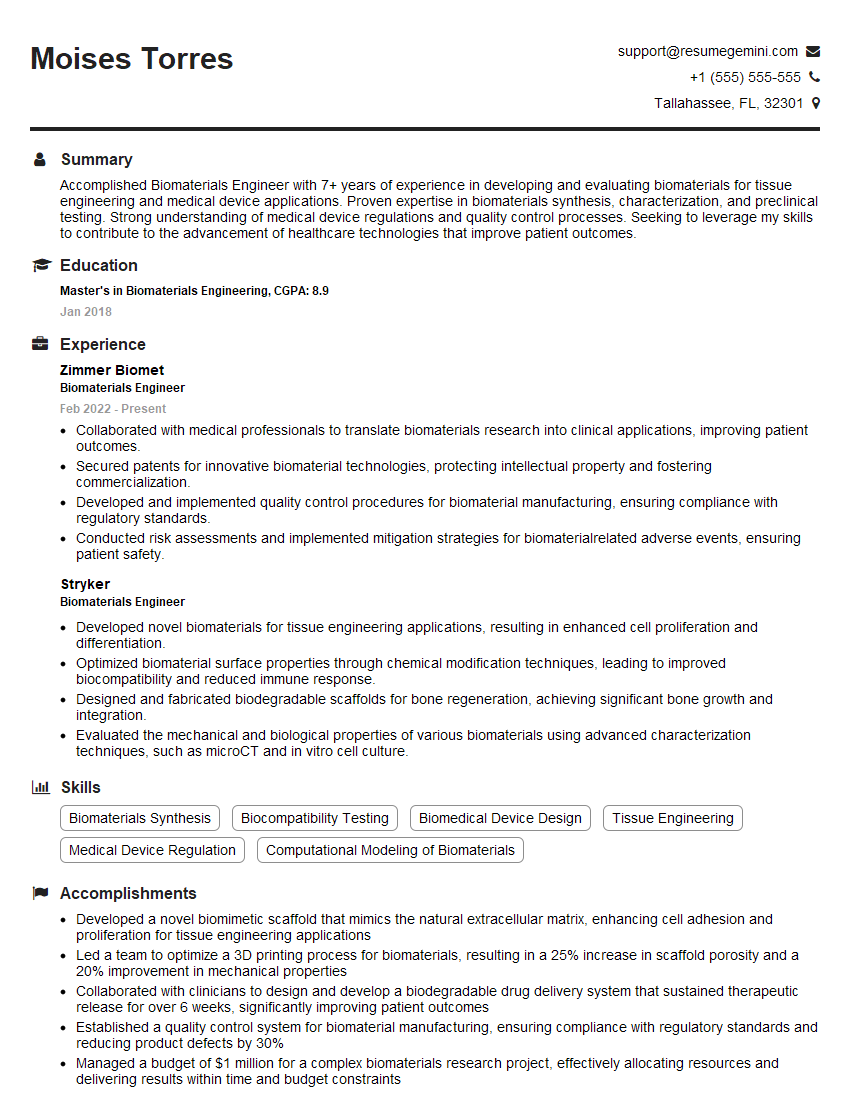
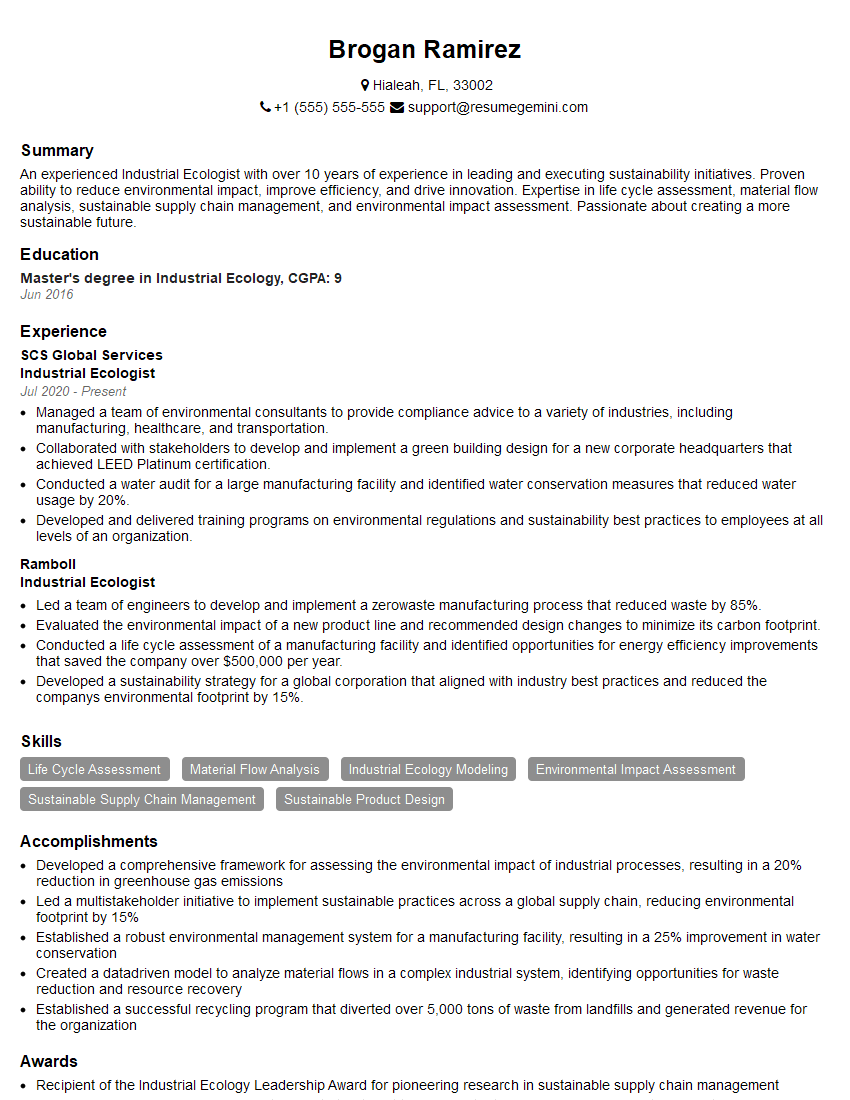
Mastering Sustainable and Eco-Friendly Materials is crucial for a successful career in a rapidly evolving industry. Demonstrating this expertise through a strong resume is key to securing your dream role. Creating an ATS-friendly resume significantly improves your chances of getting noticed by recruiters. ResumeGemini is a trusted resource to help you build a professional and impactful resume that highlights your skills and experience. They provide examples of resumes tailored to the Sustainable and Eco-Friendly Materials sector to help guide you. Take the next step in your career journey – invest in building a powerful resume that showcases your dedication to sustainability.
Explore more articles
Users Rating of Our Blogs
Share Your Experience
We value your feedback! Please rate our content and share your thoughts (optional).
What Readers Say About Our Blog
Very informative content, great job.
good