The thought of an interview can be nerve-wracking, but the right preparation can make all the difference. Explore this comprehensive guide to Sustainability and Environmentally Conscious Design interview questions and gain the confidence you need to showcase your abilities and secure the role.
Questions Asked in Sustainability and Environmentally Conscious Design Interview
Q 1. Describe your experience with Life Cycle Assessment (LCA) methodologies.
Life Cycle Assessment (LCA) is a comprehensive method for evaluating the environmental impacts of a product or service throughout its entire life cycle, from raw material extraction to disposal or recycling. It’s like a detailed environmental footprint analysis. My experience encompasses conducting LCAs using various software tools like SimaPro and GaBi, following the ISO 14040/44 standards. I’ve worked on LCAs for a range of products, from packaging materials to construction components, identifying hotspots of environmental impact like high energy consumption during manufacturing or significant greenhouse gas emissions during transportation. For example, in one project, we discovered that switching to recycled content significantly reduced the carbon footprint of a plastic product. This involved data gathering on material sourcing, manufacturing processes, transportation distances, product use, and end-of-life management, meticulously quantifying associated emissions and resource consumption. The results guided design modifications resulting in a 20% reduction in the overall environmental impact.
Q 2. Explain the principles of sustainable building design.
Sustainable building design prioritizes minimizing environmental impact throughout a building’s life cycle. Key principles include:
- Energy efficiency: Employing passive design strategies (optimal building orientation, natural ventilation, shading), high-performance building envelopes (insulation, glazing), and energy-efficient systems (HVAC, lighting).
- Water conservation: Implementing low-flow fixtures, rainwater harvesting, greywater recycling, and drought-tolerant landscaping.
- Material selection: Prioritizing sustainably sourced and recycled materials with low embodied carbon and minimal toxicity. For example, using reclaimed wood or bamboo instead of newly harvested hardwoods.
- Waste reduction: Minimizing construction waste through careful planning and material optimization, employing prefabrication techniques, and maximizing material reuse and recycling.
- Indoor environmental quality: Creating a healthy indoor environment through proper ventilation, natural light, and the use of low-VOC (volatile organic compound) materials.
- Site selection and development: Choosing appropriate sites to minimize land disturbance, preserving natural habitats, and utilizing sustainable site development practices.
A successful example is the Bullitt Center in Seattle, which achieved net-zero energy and water use through a holistic approach encompassing all these principles.
Q 3. How would you assess the environmental impact of a new product?
Assessing a new product’s environmental impact requires a structured approach. I’d begin with a preliminary screening to identify potential environmental hotspots. Then, a detailed LCA would be conducted, as described previously. This would involve:
- Defining the goal and scope: Clearly specifying the product, its functional unit, and the boundaries of the LCA.
- Inventory analysis: Quantifying all inputs and outputs associated with the product’s life cycle, including energy consumption, material use, emissions (greenhouse gases, air pollutants, water pollutants), and waste generation. This frequently involves collecting data from suppliers, manufacturers, and other relevant sources.
- Impact assessment: Evaluating the environmental significance of the identified inputs and outputs using various impact assessment methods. This step often involves using impact categories like climate change, acidification, eutrophication, and resource depletion.
- Interpretation: Analyzing the results to identify key environmental hotspots and suggest opportunities for improvement. This step is crucial for informing design modifications or material substitutions to lessen the product’s environmental impact.
Think of it as a detective investigation, carefully piecing together evidence to paint a clear picture of the environmental consequences of the product.
Q 4. What are the key considerations for designing a sustainable supply chain?
Designing a sustainable supply chain involves optimizing environmental, social, and economic aspects across the entire supply network. Key considerations are:
- Supplier selection: Choosing suppliers committed to sustainability, using ethical sourcing practices, and minimizing their environmental footprint.
- Transportation optimization: Minimizing transportation distances and emissions through efficient routing, utilizing alternative transportation modes (rail, sea), and optimizing packaging.
- Waste management: Reducing waste generation at all stages, promoting recycling and reuse of materials, and implementing responsible waste disposal methods.
- Material sourcing: Prioritizing sustainably sourced and recycled materials with low embodied carbon and minimal toxicity.
- Transparency and traceability: Ensuring transparency and traceability throughout the supply chain, allowing for monitoring and accountability.
- Collaboration and partnerships: Working collaboratively with suppliers, logistics providers, and other stakeholders to share best practices and drive collective improvements.
Imagine a network of interconnected nodes, each responsible for environmental stewardship. Effective management of these links is paramount.
Q 5. Discuss your understanding of LEED certification.
LEED (Leadership in Energy and Environmental Design) is a globally recognized green building certification system developed by the U.S. Green Building Council. It provides a framework for designing, constructing, and operating high-performance green buildings. My understanding encompasses the various LEED rating systems (Building Design and Construction, Interior Design and Construction, etc.), the different credit categories (Sustainable Sites, Water Efficiency, Energy and Atmosphere, Materials and Resources, Indoor Environmental Quality, Innovation, Regional Priority), and the rigorous documentation and verification process required for certification. I have experience in assisting clients achieve LEED certification by guiding them through the process, helping them select appropriate strategies, and preparing the required documentation. Achieving a LEED Gold or Platinum rating signifies a significant commitment to sustainability and often provides competitive advantages, including reduced operational costs and improved market appeal.
Q 6. How do you measure and track progress towards sustainability goals?
Measuring and tracking progress towards sustainability goals requires a systematic approach involving the following steps:
- Setting clear and measurable goals: Defining specific, measurable, achievable, relevant, and time-bound (SMART) goals related to various aspects of sustainability (energy consumption, water usage, waste generation, greenhouse gas emissions, etc.).
- Establishing a baseline: Measuring the current performance against the defined goals.
- Implementing monitoring systems: Establishing systems for collecting data on key performance indicators (KPIs) related to the goals.
- Regular data analysis: Regularly analyzing the collected data to assess progress and identify areas for improvement.
- Reporting and communication: Regularly reporting progress against the established goals to stakeholders and communicating any successes or challenges.
- Continuous improvement: Using the data and feedback to continuously improve performance and adjust strategies as needed.
Utilizing dashboards, software, and reporting tools is essential to visualize the progress and facilitate effective communication. For example, tracking energy consumption using smart meters and comparing it against previous years helps to demonstrate progress in energy efficiency.
Q 7. Explain different renewable energy sources and their applications.
Renewable energy sources harness naturally replenishing resources to generate electricity or heat. Examples include:
- Solar energy: Photovoltaic (PV) panels convert sunlight directly into electricity, while concentrated solar power (CSP) uses mirrors to concentrate sunlight to heat a fluid and generate electricity. Applications include rooftop solar panels for homes and businesses, large-scale solar farms, and solar thermal systems for water heating.
- Wind energy: Wind turbines convert wind energy into electricity. Applications include onshore and offshore wind farms.
- Hydropower: Dams and water turbines generate electricity using the force of moving water. Applications include large-scale hydroelectric dams and smaller run-of-river systems.
- Geothermal energy: Harnessing heat from the Earth’s interior to generate electricity or directly provide heating. Applications include geothermal power plants and geothermal heating systems.
- Biomass energy: Burning organic matter (wood, crops, agricultural residues) to generate heat and electricity. Applications include biomass power plants and biofuel production.
The choice of renewable energy source depends on factors like geographical location, resource availability, and environmental considerations. For instance, areas with abundant sunlight are suitable for solar energy, while regions with consistent winds are ideal for wind energy.
Q 8. Describe your experience with waste reduction strategies.
Waste reduction is paramount in sustainable design. My experience encompasses a multifaceted approach, focusing on both minimizing waste generation at the source and maximizing resource recovery. This includes implementing strategies like Design for Disassembly (DfD), which allows for easy component separation and material reuse at the end of a product’s life. I’ve also worked extensively on optimizing material selection to prioritize recycled content and biodegradable materials. For instance, in a recent project involving packaging design, we successfully reduced plastic waste by 40% by switching to a compostable alternative and redesigning the packaging to minimize material use. Furthermore, I’ve implemented lean manufacturing principles to reduce material waste during production and improve overall efficiency.
- Design for Disassembly (DfD): Designing products to be easily taken apart for repair, reuse, or recycling.
- Material Selection Optimization: Choosing materials with high recycled content or biodegradability.
- Lean Manufacturing: Minimizing waste and maximizing efficiency in the production process.
Q 9. How can circular economy principles be integrated into product design?
Circular economy principles, which emphasize reducing waste and maximizing resource utilization, can be deeply integrated into product design. This involves moving away from the traditional linear ‘take-make-dispose’ model to a cyclical one. Key strategies include:
- Design for Durability and Longevity: Creating products designed to last, minimizing the need for frequent replacements.
- Design for Remanufacturing and Repair: Designing products that can be easily repaired or remanufactured, extending their lifespan.
- Design for Recyclability and Compostability: Using materials that can be easily recycled or composted at the end of the product’s life.
- Modular Design: Designing products with interchangeable parts, allowing for easier repairs and upgrades.
- Product-as-a-Service (PaaS): Shifting from selling products to selling services, which encourages longer product lifespans and allows for material recovery at the end of service.
For example, a company might design a smartphone with easily replaceable batteries and modular components, making it easier to repair and extend its lifespan. This reduces the need for frequent replacements and minimizes e-waste.
Q 10. What are the challenges in implementing sustainable practices in a business?
Implementing sustainable practices in a business often faces significant challenges. These can be categorized into:
- Cost Barriers: Sustainable materials and processes can be more expensive upfront. However, long-term cost savings through reduced waste and resource consumption often outweigh these initial costs.
- Technological Limitations: Lack of readily available technologies for sustainable solutions in some sectors can be a major obstacle.
- Lack of Consumer Demand or Awareness: Consumers might not be willing to pay a premium for sustainable products, or they might lack awareness of the benefits.
- Regulatory Hurdles: Navigating complex environmental regulations can be time-consuming and resource-intensive.
- Internal Resistance to Change: Existing business processes and mindsets might resist the adoption of new, sustainable practices.
Overcoming these challenges requires a strategic approach, including investment in research and development, employee training, and engaging with stakeholders to build consensus and increase consumer awareness.
Q 11. How do you identify and prioritize environmental risks in a project?
Identifying and prioritizing environmental risks in a project requires a systematic approach. I typically employ a risk assessment framework that combines qualitative and quantitative methods. This involves:
- Identifying Potential Environmental Impacts: This includes assessing potential impacts on air, water, land, and biodiversity, considering the entire life cycle of the project.
- Assessing the Likelihood and Severity of Each Risk: This involves evaluating the probability of each risk occurring and the potential magnitude of its consequences.
- Prioritizing Risks Based on Likelihood and Severity: Risks are prioritized based on a matrix that combines likelihood and severity, allowing for focused mitigation efforts.
- Developing Mitigation Strategies: For high-priority risks, specific strategies are developed to reduce or eliminate the risk. This might include implementing stricter environmental controls, choosing alternative materials, or changing project designs.
- Monitoring and Review: Regularly monitor the effectiveness of mitigation strategies and adapt as needed.
For example, in a construction project, a potential environmental risk might be soil erosion during construction. By implementing soil erosion control measures such as silt fences and vegetative barriers, the risk can be mitigated.
Q 12. Describe your understanding of carbon footprint calculations.
Carbon footprint calculation involves quantifying the total greenhouse gas (GHG) emissions associated with a product, service, or activity. This is usually expressed in units of carbon dioxide equivalent (CO2e). The calculation process typically follows a life cycle assessment (LCA) approach, encompassing all stages from raw material extraction to disposal or recycling. Key steps include:
- Defining the Scope: Clearly defining the boundaries of the assessment, including the geographical area and time period.
- Data Collection: Gathering data on all relevant GHG emissions sources, including energy consumption, transportation, waste generation, and material production.
- Emissions Calculation: Applying emission factors to the data collected to calculate the total GHG emissions in CO2e.
- Reporting and Interpretation: Presenting the results in a clear and concise manner, and interpreting the findings to identify opportunities for emission reduction.
Software tools and databases are commonly used to support these calculations, making the process more efficient and accurate.
Q 13. How do you ensure compliance with environmental regulations?
Ensuring compliance with environmental regulations requires a proactive and multi-faceted approach. This involves:
- Understanding Applicable Regulations: Thoroughly researching and understanding all relevant environmental laws and regulations at local, national, and international levels.
- Developing and Implementing Compliance Programs: Creating comprehensive programs that outline procedures, responsibilities, and monitoring mechanisms to ensure compliance.
- Regular Monitoring and Auditing: Conducting regular environmental audits and monitoring to identify potential non-compliance issues early on.
- Record Keeping: Maintaining detailed records of environmental performance, including emissions data, waste management practices, and compliance activities.
- Training and Awareness: Providing employees with training on environmental regulations and best practices.
- Proactive Engagement with Regulatory Agencies: Maintaining open communication with regulatory agencies and proactively addressing any potential concerns.
Failure to comply with environmental regulations can lead to significant penalties, reputational damage, and legal action.
Q 14. Explain your approach to stakeholder engagement in sustainability projects.
Stakeholder engagement is critical for the success of any sustainability project. My approach emphasizes open communication, collaboration, and transparency. This involves:
- Identifying Key Stakeholders: Identifying all individuals and groups who are affected by or have an interest in the project, including employees, customers, suppliers, community members, and government agencies.
- Developing a Communication Plan: Creating a plan to effectively communicate project goals, progress, and results to all stakeholders.
- Establishing Two-Way Communication Channels: Utilizing various communication channels, such as meetings, surveys, workshops, and online platforms, to facilitate feedback and engagement.
- Building Trust and Relationships: Building trust and rapport with stakeholders through open and honest communication, active listening, and addressing concerns promptly.
- Collaborative Decision-Making: Involving stakeholders in decision-making processes to ensure that their perspectives are considered and that solutions are acceptable to all parties.
- Monitoring and Evaluation: Regularly monitoring stakeholder satisfaction and evaluating the effectiveness of the engagement process.
By actively engaging stakeholders, we can ensure that projects are socially and environmentally responsible and that they contribute positively to the community.
Q 15. What are the benefits of sustainable practices for businesses?
Sustainable practices offer numerous benefits for businesses, extending beyond simply doing good. They contribute to enhanced profitability, reduced operational costs, and a stronger brand reputation.
- Cost Savings: Implementing energy-efficient technologies, reducing waste, and optimizing resource usage directly translate to lower operational expenses. For example, switching to LED lighting can significantly reduce electricity bills.
- Increased Efficiency: Sustainable practices often lead to improved process optimization, resulting in higher productivity and reduced material waste. Lean manufacturing principles, for instance, minimize waste and maximize efficiency.
- Enhanced Brand Image and Reputation: Consumers are increasingly conscious of environmental issues and prefer companies committed to sustainability. A strong sustainability profile attracts customers, investors, and top talent.
- Reduced Risk and Compliance: Proactive environmental management minimizes the risk of fines and penalties associated with non-compliance with environmental regulations. It demonstrates responsible corporate citizenship.
- Innovation and Competitive Advantage: Embracing sustainable practices can drive innovation and create new market opportunities, leading to a competitive edge. Companies developing eco-friendly products and services often experience rapid growth.
In essence, sustainability is not just an ethical consideration but a strategic imperative for long-term business success.
Career Expert Tips:
- Ace those interviews! Prepare effectively by reviewing the Top 50 Most Common Interview Questions on ResumeGemini.
- Navigate your job search with confidence! Explore a wide range of Career Tips on ResumeGemini. Learn about common challenges and recommendations to overcome them.
- Craft the perfect resume! Master the Art of Resume Writing with ResumeGemini’s guide. Showcase your unique qualifications and achievements effectively.
- Don’t miss out on holiday savings! Build your dream resume with ResumeGemini’s ATS optimized templates.
Q 16. Describe your experience with sustainable material selection.
My experience with sustainable material selection involves a multi-faceted approach that prioritizes lifecycle assessment, material traceability, and responsible sourcing. I’ve worked on projects where we replaced traditional materials with recycled content alternatives, such as using post-consumer recycled plastics in furniture manufacturing, reducing reliance on virgin resources.
For instance, in a recent project designing a sustainable office space, we opted for rapidly renewable bamboo flooring instead of traditional hardwoods, significantly reducing the environmental impact. We also explored using reclaimed wood for certain elements, showcasing the potential for materials with embodied carbon already present in the environment.
My approach includes detailed research into material properties, sourcing options, end-of-life management strategies, and environmental impact data, including embodied carbon, water footprint, and toxicity assessments. This holistic analysis helps inform optimal selection for both environmental and functional requirements.
Q 17. How do you balance environmental sustainability with economic considerations?
Balancing environmental sustainability with economic considerations requires a strategic approach that views sustainability not as a cost, but as an investment in long-term value. It’s about finding economically viable solutions that minimize environmental impact.
- Lifecycle Cost Analysis: Instead of solely focusing on upfront costs, we conduct lifecycle cost analyses (LCA) to evaluate the total cost of ownership of different materials and technologies throughout their entire lifespan, from extraction to disposal. This helps identify options with lower long-term costs and reduced environmental burdens.
- Innovation and Efficiency: Investing in innovative, sustainable technologies can lead to long-term cost savings and environmental improvements. For example, using solar panels initially requires investment, but ultimately reduces energy costs.
- Circular Economy Principles: Adopting circular economy principles, such as reuse, repair, and recycling, minimizes waste and reduces the need for virgin materials, leading to both environmental and economic benefits.
- Green Financing and Incentives: Leveraging green financing options, tax incentives, and grants can offset the initial costs of implementing sustainable practices. Many governments actively support businesses investing in sustainability.
Ultimately, it’s about demonstrating that sustainable solutions are not only environmentally responsible but also financially sound, leading to a win-win scenario for both the planet and the bottom line.
Q 18. Explain your understanding of environmental justice.
Environmental justice focuses on the fair treatment and meaningful involvement of all people regardless of race, color, national origin, or income, with respect to the development, implementation, and enforcement of environmental laws, regulations, and policies.
It acknowledges that environmental hazards disproportionately affect marginalized communities. For example, low-income communities might be located closer to polluting industries, leading to higher rates of respiratory illnesses and other health problems. Environmental justice seeks to address these inequities by ensuring equitable distribution of environmental benefits and burdens.
My understanding emphasizes the need for participatory decision-making processes, where affected communities are actively involved in shaping environmental policies and projects that impact their lives. This ensures that their concerns and needs are adequately considered.
Q 19. Describe your experience with data analysis in the context of sustainability.
Data analysis plays a crucial role in driving effective sustainability initiatives. I’ve used data analysis extensively to track and measure environmental performance, identify areas for improvement, and demonstrate the effectiveness of sustainability programs.
For example, I’ve used R and Python to analyze energy consumption data to identify patterns and anomalies, pinpoint energy waste, and implement energy-saving strategies. I’ve also utilized SQL to manage and analyze large datasets related to waste generation, recycling rates, and greenhouse gas emissions.
Data visualization is also critical in communicating findings effectively. I frequently use tools like Tableau and Power BI to create dashboards and reports that clearly illustrate sustainability performance and progress towards targets. This allows for data-driven decision-making and accountability.
Q 20. How do you communicate complex sustainability concepts to different audiences?
Communicating complex sustainability concepts effectively requires tailoring the message to the specific audience’s background and level of understanding. I utilize a variety of techniques depending on the context.
- For technical audiences: I use precise language, data-driven arguments, and detailed analysis to present information. Technical reports, presentations, and peer-reviewed publications are suitable formats.
- For non-technical audiences: I simplify complex concepts using clear, concise language, analogies, and visual aids. Infographics, short videos, and storytelling are effective communication methods.
- For stakeholders: I focus on the relevance and impact of sustainability initiatives on their specific interests, whether it’s cost savings, risk reduction, or brand enhancement.
The key is to always be transparent and avoid jargon. Active listening and soliciting feedback are critical to ensuring the message is understood and resonates with the audience.
Q 21. Describe a time you had to overcome a challenge related to sustainability.
During a project involving the renovation of a historic building, we faced a significant challenge in balancing preservation with sustainability goals. The building’s historical significance restricted the use of many modern, energy-efficient materials and technologies.
We overcame this by employing a multi-pronged approach: We conducted extensive research to identify suitable sustainable materials compatible with the building’s historical integrity. We also engaged with historical preservation experts and building engineers to find innovative solutions that met both preservation and sustainability criteria. This involved using reclaimed materials wherever possible and integrating energy-efficient systems that minimized visual impact.
The project successfully demonstrated that sustainability and heritage preservation are not mutually exclusive. Through collaboration and creative problem-solving, we achieved a solution that honored the building’s history while minimizing its environmental impact.
Q 22. What is your understanding of embodied carbon?
Embodied carbon refers to the total greenhouse gas emissions associated with the extraction, manufacturing, transportation, and installation of building materials and products. Think of it as the ‘carbon footprint’ of the materials themselves, before they even start being used. It’s a crucial factor in evaluating the sustainability of a building or infrastructure project, as it represents a significant portion of a project’s overall carbon emissions. For example, the embodied carbon in steel is considerably higher than that of timber, due to the energy-intensive process of steel production. Understanding embodied carbon allows for informed material choices, leading to significant reductions in the overall carbon footprint of construction.
Q 23. How would you approach designing a sustainable transportation system?
Designing a sustainable transportation system requires a holistic approach, encompassing multiple modes and considerations. It begins with prioritizing public transportation through efficient and accessible networks like light rail, bus rapid transit, and improved cycling infrastructure. We need to encourage walking and cycling through safe and well-maintained pedestrian and bicycle paths. Next, we need to make electric vehicles more accessible and affordable. Incentivizing their use through charging infrastructure investments and tax breaks is essential. Finally, optimizing logistics and freight transportation is critical, including exploring alternative fuels and enhancing route efficiency to reduce emissions. Consideration must be given to the entire lifecycle, from material sourcing and vehicle manufacturing to end-of-life management and recycling.
Q 24. What are some key indicators of sustainability performance?
Key indicators of sustainability performance vary depending on the context (e.g., building, city, company), but some commonly used metrics include:
- Carbon Footprint: Total greenhouse gas emissions, measured in tons of CO2 equivalent.
- Energy Consumption: Measured in kilowatt-hours (kWh) per square meter, reflecting energy efficiency.
- Water Consumption: Liters per capita per day, revealing water usage efficiency.
- Waste Generation: Amount of waste produced, and its diversion rate (recycling, composting).
- Material Circularity: Percentage of materials reused, recycled, or recovered.
- Biodiversity: Species richness and abundance within a given area.
- Social Equity: Indicators measuring accessibility, affordability, and community engagement.
These metrics, when tracked and analyzed over time, provide valuable insights into the effectiveness of sustainability initiatives.
Q 25. Explain your experience with sustainable water management.
My experience in sustainable water management includes projects focused on rainwater harvesting and greywater recycling systems. In one project, we designed and implemented a rainwater harvesting system for a school, reducing its reliance on municipal water. The collected rainwater was used for irrigation and toilet flushing, significantly lowering water consumption. Another involved designing a greywater recycling system for a residential development, where wastewater from showers and sinks was treated and reused for toilet flushing and irrigation. This involved careful consideration of treatment technology, ensuring the treated water met safety standards. These projects highlighted the importance of local context, regulatory compliance, and community engagement in achieving successful water management solutions.
Q 26. How familiar are you with ISO 14001 Environmental Management System?
I am very familiar with ISO 14001, the internationally recognized standard for Environmental Management Systems. It provides a framework for organizations to manage their environmental responsibilities, improve environmental performance, and achieve compliance with applicable environmental legislation. My experience includes helping organizations implement and maintain ISO 14001 certification, encompassing aspects such as environmental policy development, environmental impact assessment, and internal audits. This standard helps organizations systematically identify, manage, and reduce their environmental impacts, promoting a culture of environmental responsibility.
Q 27. Discuss the role of technology in advancing sustainability.
Technology plays a pivotal role in advancing sustainability. For example, Building Information Modeling (BIM) allows for detailed analysis of a building’s energy performance and embodied carbon, optimizing design decisions early in the process. Sensors and data analytics monitor energy and water consumption, providing insights for operational improvements. Artificial intelligence (AI) optimizes transportation routes and logistics, reducing fuel consumption. Furthermore, advancements in renewable energy technologies like solar and wind power are crucial for decarbonizing our energy systems. The internet of things (IoT) enables smart grids and smart cities, enhancing resource efficiency and reducing waste. These technological advancements are instrumental in creating more sustainable and resilient systems.
Q 28. What are your thoughts on the future of sustainable design?
The future of sustainable design hinges on integrating environmental considerations into every stage of the design process, moving beyond simple compliance to actively pursuing regenerative solutions. We will see a growing emphasis on circular economy principles, minimizing waste and maximizing material reuse. Bio-based and bio-degradable materials will become more prevalent. Digital technologies will play an increasingly critical role in optimizing resource use, monitoring performance, and fostering transparency. Ultimately, the future of sustainable design relies on a collaborative effort between designers, engineers, policymakers, and the community, striving towards a future where environmental responsibility is not just an add-on but an integral part of our everyday lives.
Key Topics to Learn for Sustainability and Environmentally Conscious Design Interview
- Life Cycle Assessment (LCA): Understanding the environmental impacts of a product from cradle to grave. Practical application: Analyzing the carbon footprint of a building design.
- Sustainable Materials Selection: Choosing materials with minimal environmental impact, considering sourcing, processing, and end-of-life options. Practical application: Specifying recycled content in construction projects.
- Circular Economy Principles: Designing for durability, repairability, recyclability, and reuse to minimize waste. Practical application: Implementing a take-back program for electronic products.
- Green Building Certifications (LEED, BREEAM, etc.): Familiarity with various green building rating systems and their requirements. Practical application: Applying LEED principles to a building renovation project.
- Sustainable Design Strategies: Passive design, renewable energy integration, water conservation, and waste reduction strategies. Practical application: Designing a net-zero energy home.
- Environmental Regulations and Policies: Understanding relevant environmental laws and regulations at local, national, and international levels. Practical application: Ensuring compliance with building codes related to energy efficiency.
- Environmental Impact Assessment (EIA): Conducting assessments to predict and mitigate the environmental consequences of projects. Practical application: Assessing the impact of a new road on surrounding ecosystems.
- Sustainable Transportation and Mobility: Designing for reduced reliance on private vehicles and promoting sustainable transportation options. Practical application: Designing a neighborhood with excellent public transit access.
- Climate Change Mitigation and Adaptation: Incorporating strategies to reduce greenhouse gas emissions and adapt to the impacts of climate change. Practical application: Designing buildings that are resilient to extreme weather events.
- Stakeholder Engagement and Communication: Effectively communicating sustainability goals and engaging stakeholders throughout the design process. Practical application: Presenting a sustainability plan to a client or community group.
Next Steps
Mastering Sustainability and Environmentally Conscious Design is crucial for a thriving career in a world increasingly focused on environmental responsibility. This expertise opens doors to exciting opportunities and positions you as a valuable asset in any organization committed to a sustainable future. To maximize your job prospects, crafting an ATS-friendly resume is essential. ResumeGemini is a trusted resource to help you build a professional and impactful resume that highlights your skills and experience effectively. ResumeGemini provides examples of resumes tailored to Sustainability and Environmentally Conscious Design, making it even easier to showcase your qualifications to potential employers.
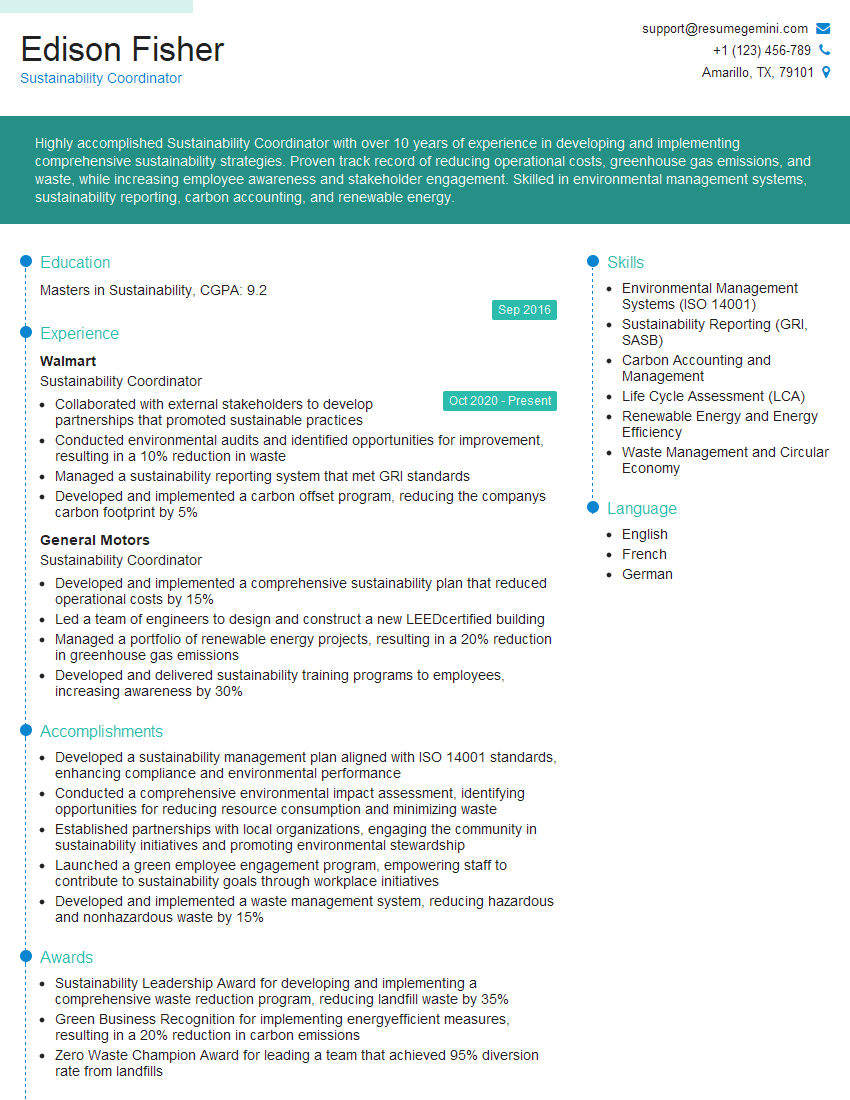
Sustainability Coordinator Resume Sample
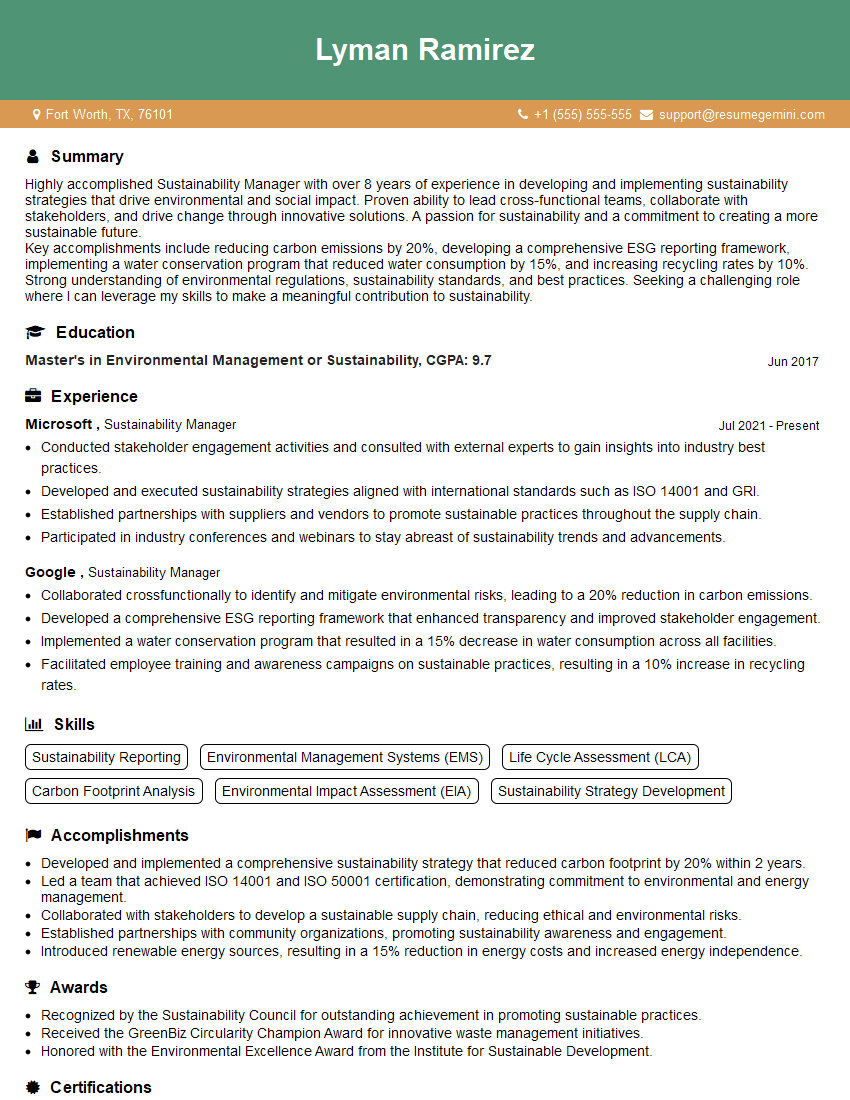
Sustainability Manager Resume Sample
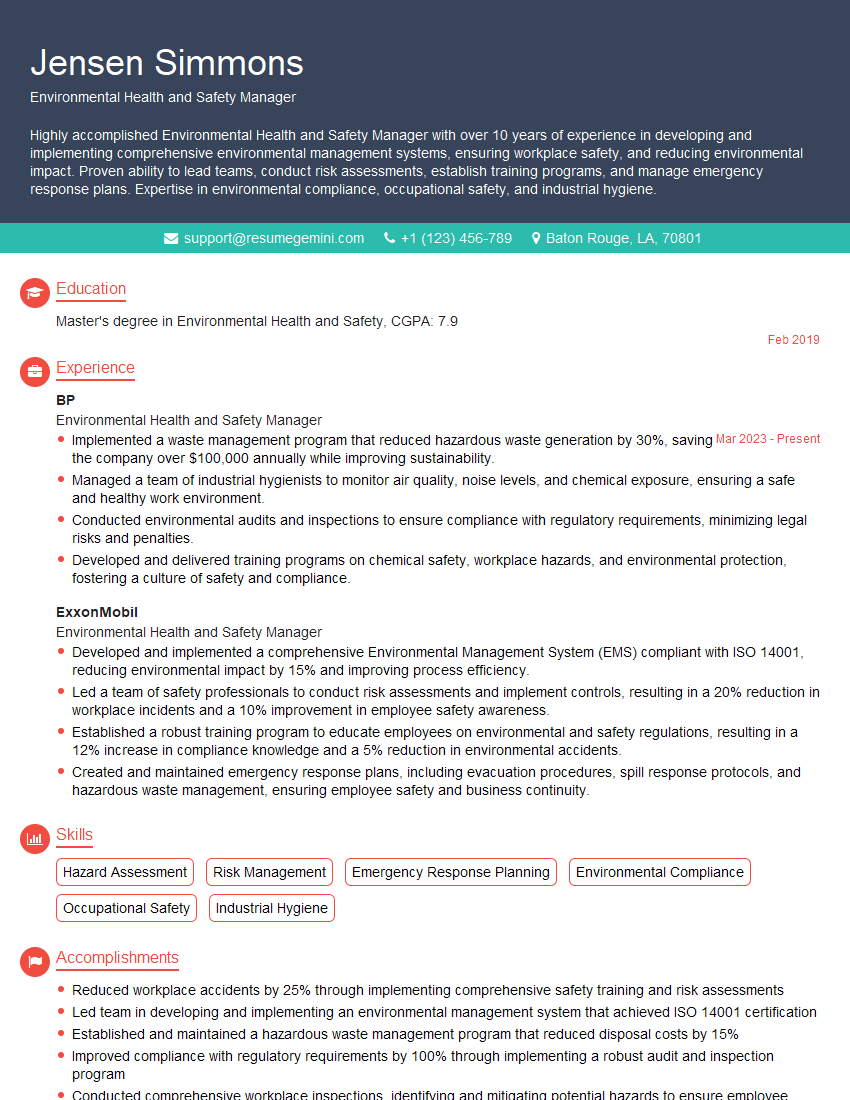
Environmental Health and Safety Manager Resume Sample
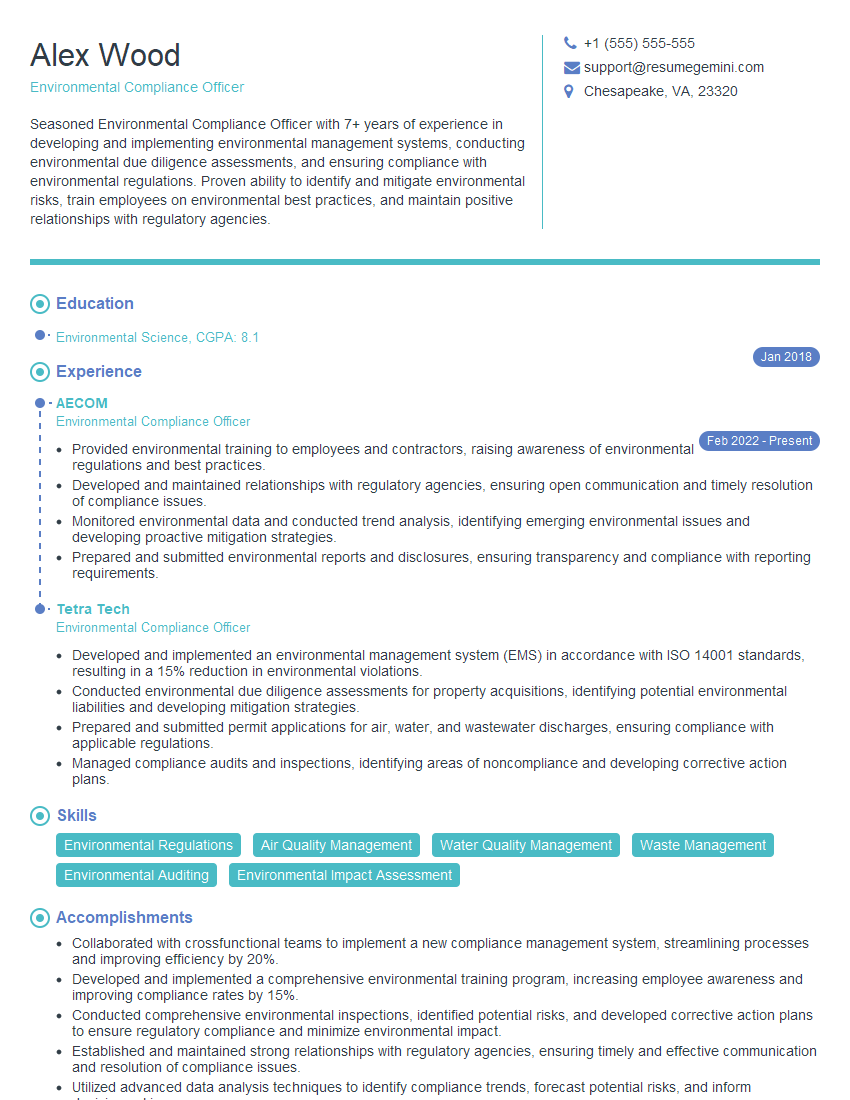
Environmental Compliance Officer Resume Sample
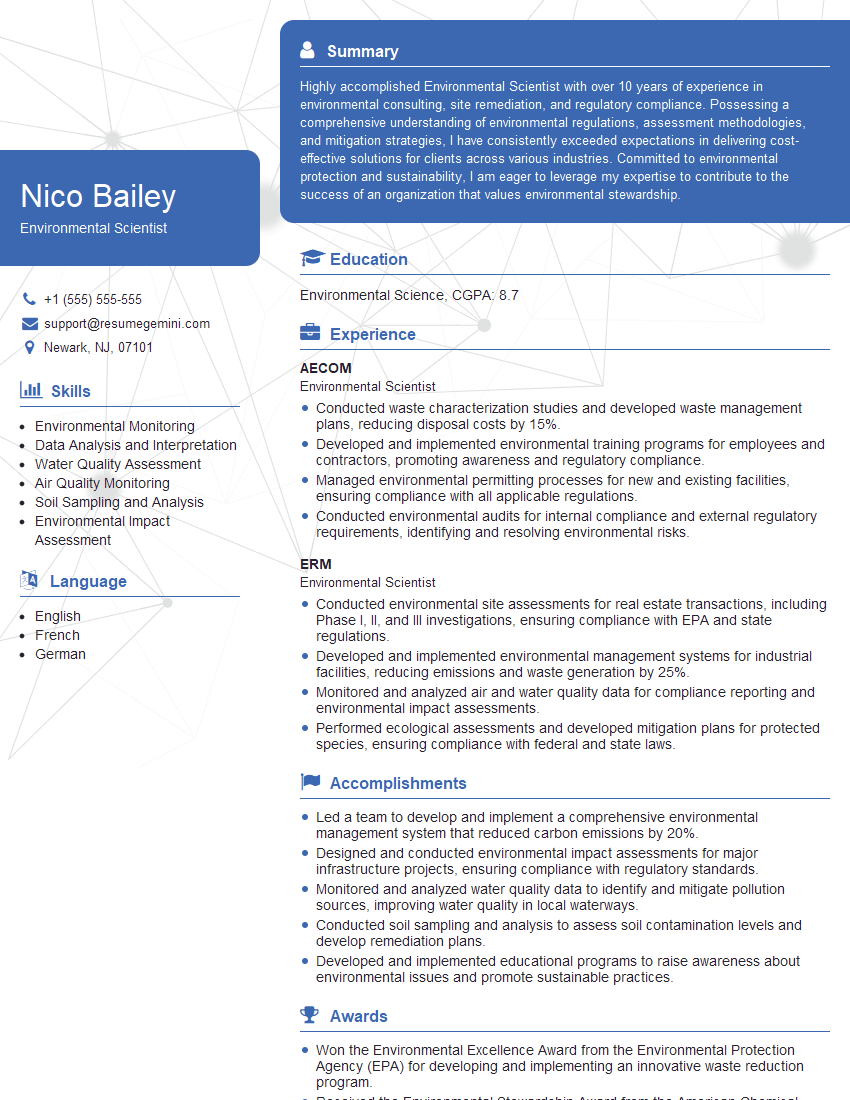
Environmental Scientist Resume Sample
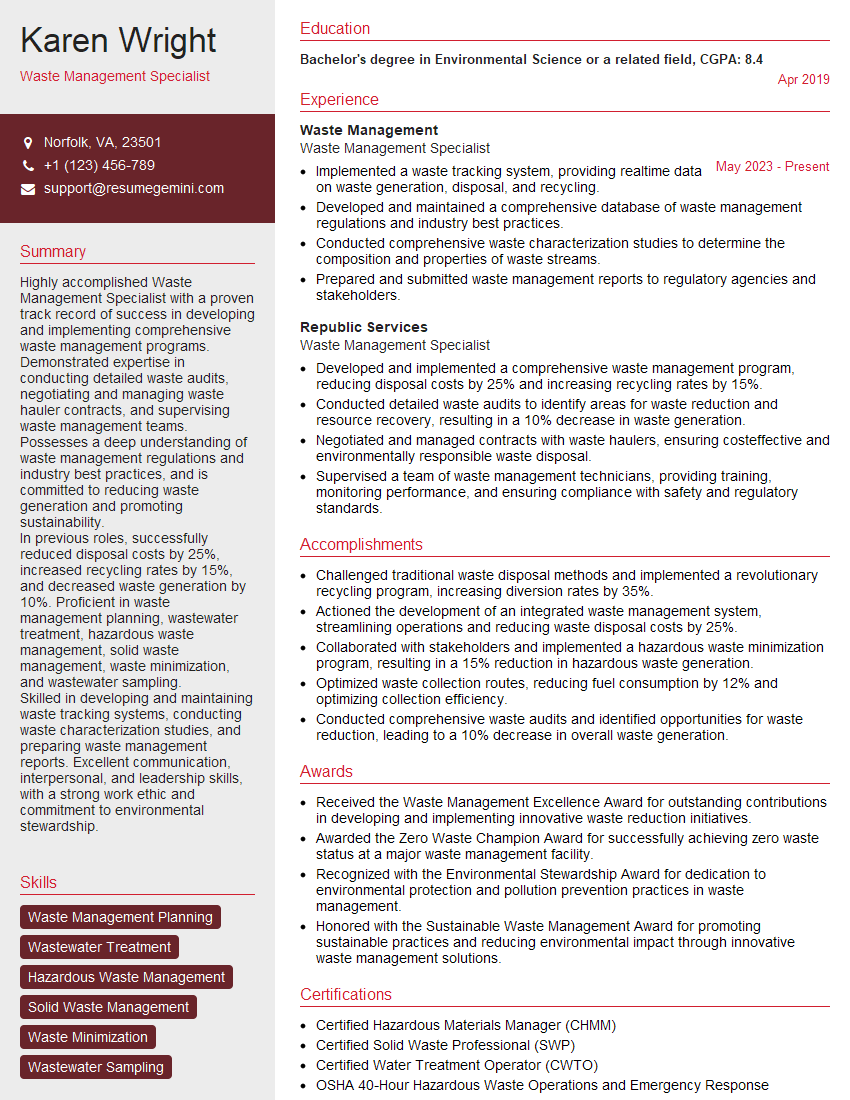
Waste Management Specialist Resume Sample
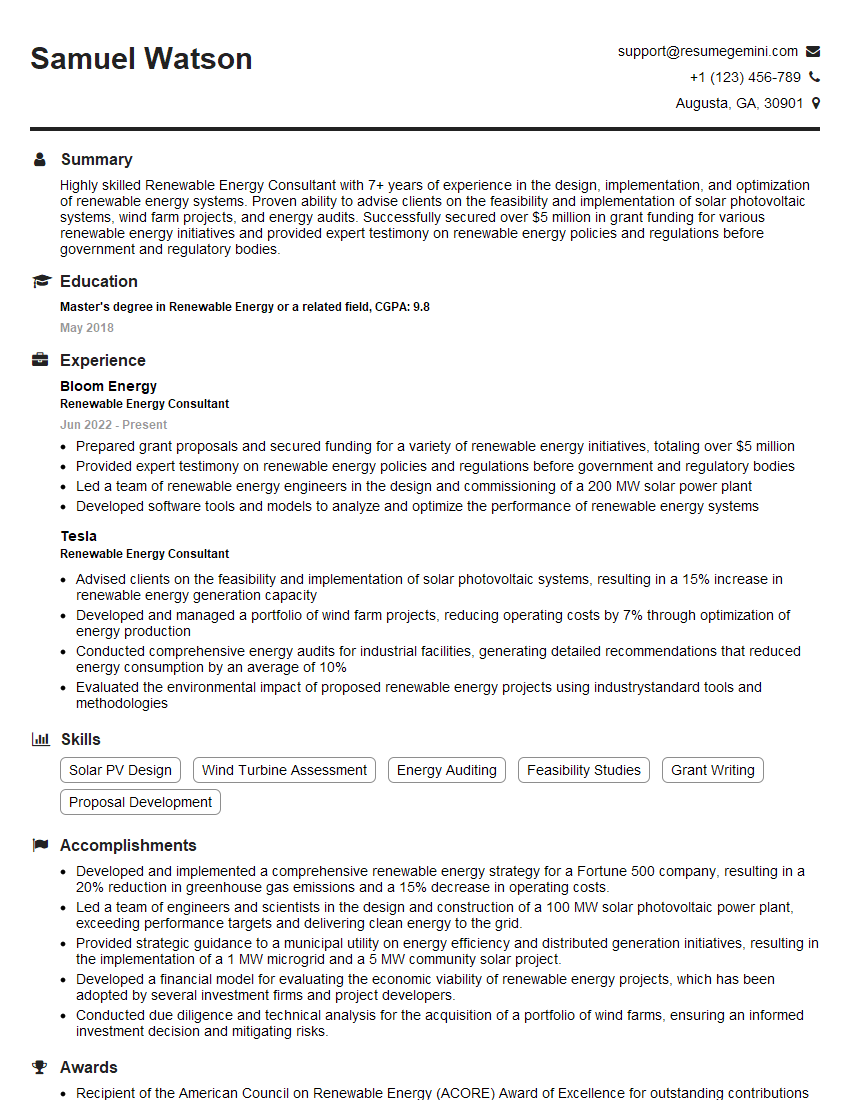
Renewable Energy Consultant Resume Sample
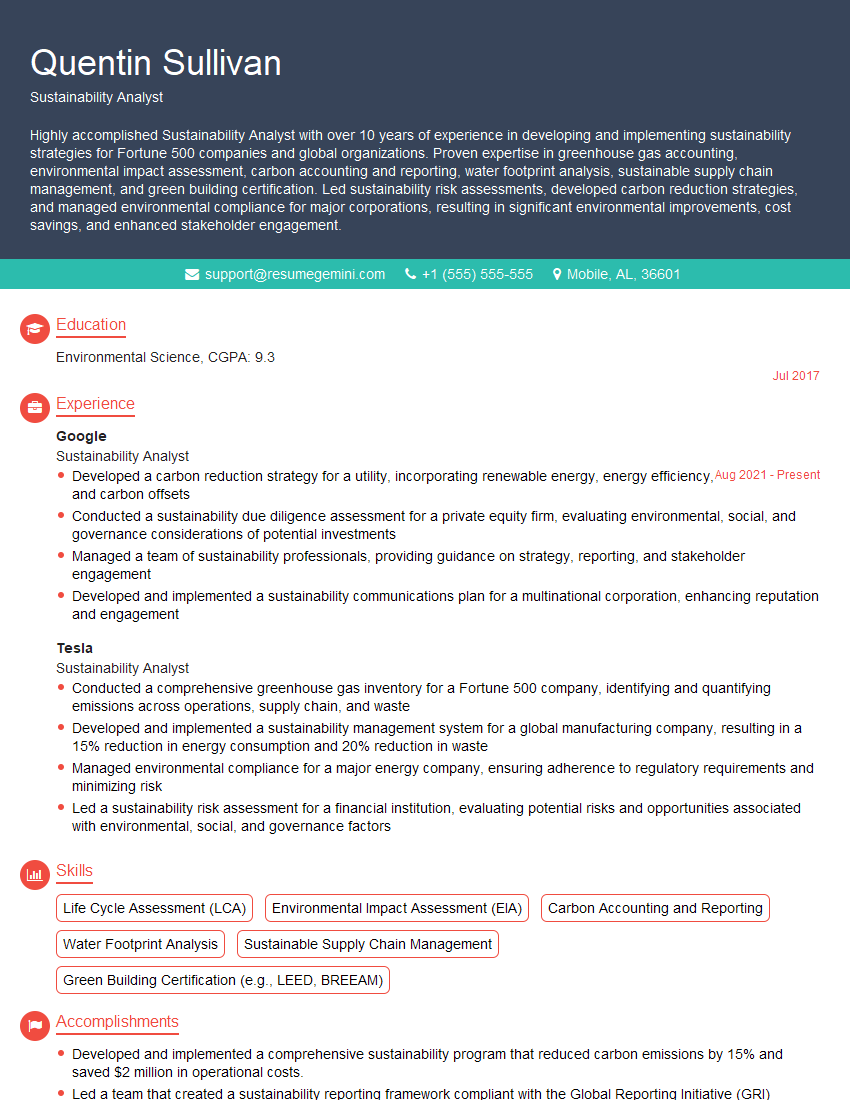
Sustainability Analyst Resume Sample
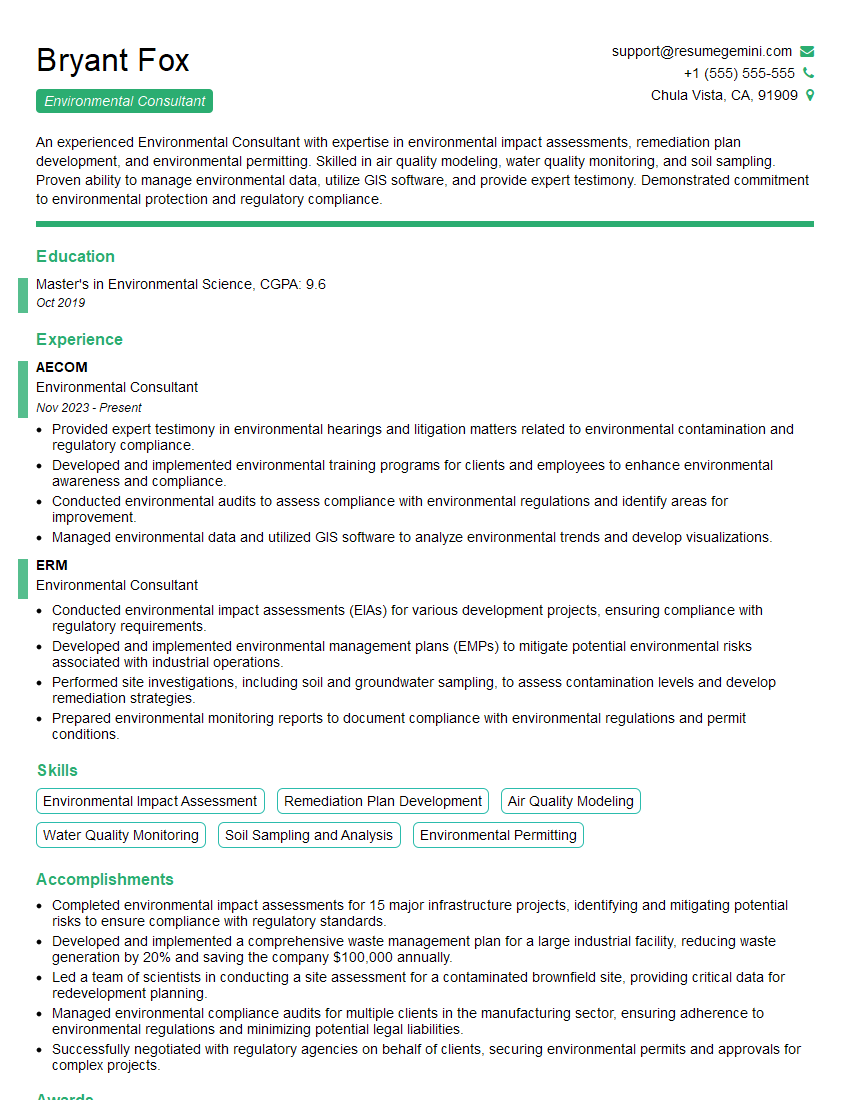
Environmental Consultant Resume Sample
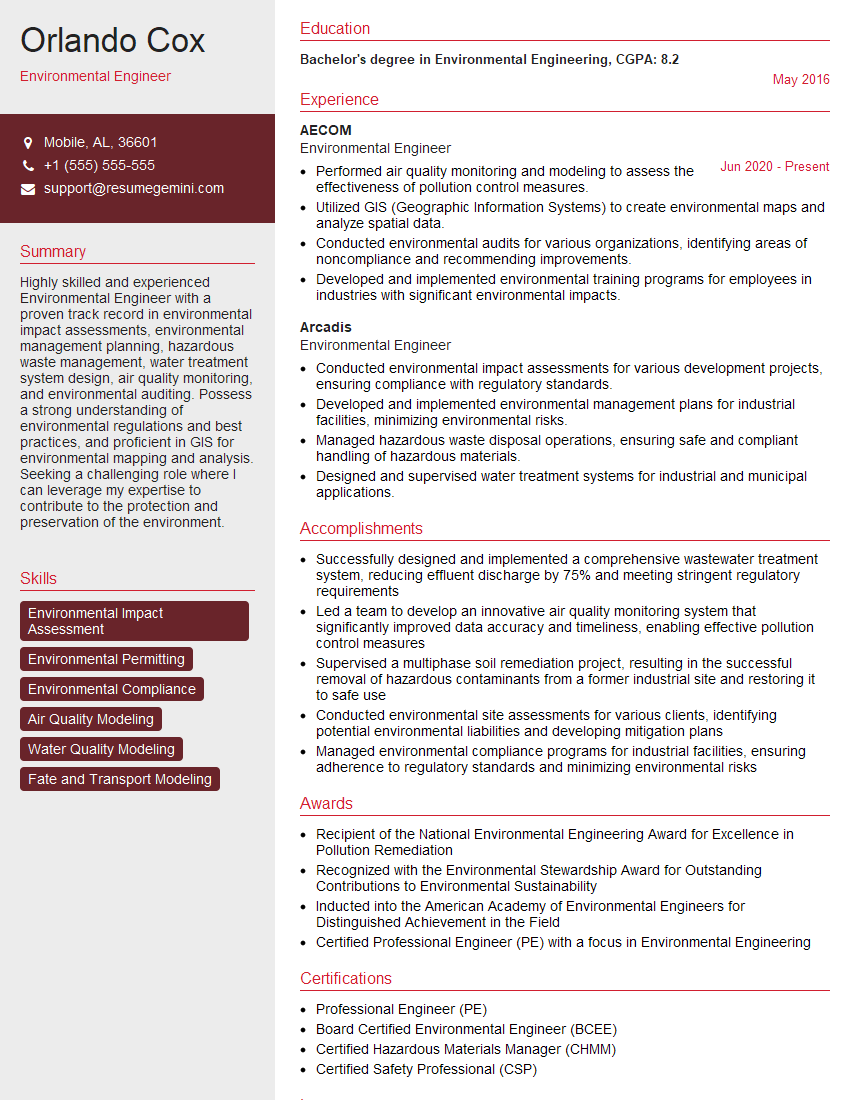
Environmental Engineer Resume Sample
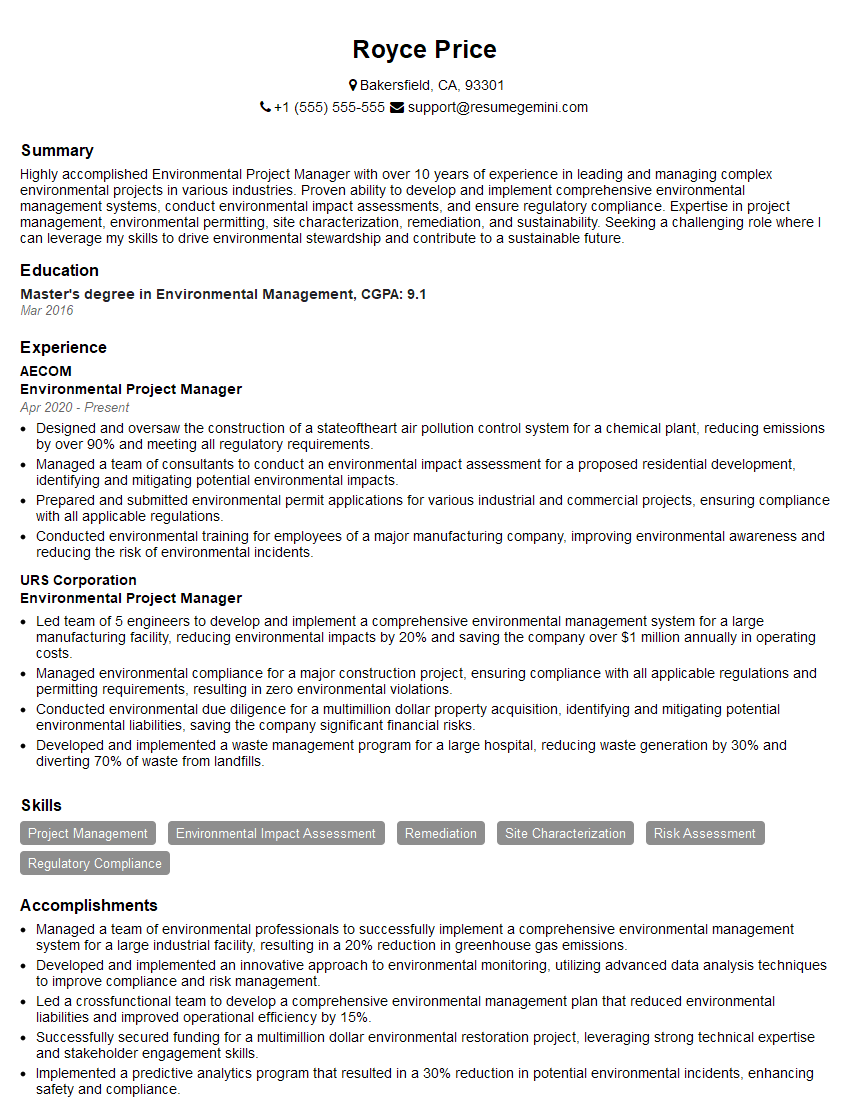
Environmental Project Manager Resume Sample
- Sustainability Coordinator
- Sustainability Manager
- Environmental Health and Safety Manager
- Environmental Compliance Officer
- Environmental Scientist
- Waste Management Specialist
- Renewable Energy Consultant
- Sustainability Analyst
- Environmental Consultant
- Environmental Engineer
- Environmental Project Manager
Explore more articles
Users Rating of Our Blogs
Share Your Experience
We value your feedback! Please rate our content and share your thoughts (optional).
What Readers Say About Our Blog
Very informative content, great job.
good