Interviews are opportunities to demonstrate your expertise, and this guide is here to help you shine. Explore the essential Plant Optimization and Efficiency Improvement interview questions that employers frequently ask, paired with strategies for crafting responses that set you apart from the competition.
Questions Asked in Plant Optimization and Efficiency Improvement Interview
Q 1. Explain your understanding of Lean Manufacturing principles and their application in plant optimization.
Lean Manufacturing focuses on eliminating waste and maximizing efficiency in production. It’s a philosophy, not just a set of tools, emphasizing continuous improvement. In plant optimization, we apply Lean principles by identifying and removing seven types of waste: Transportation, Inventory, Motion, Waiting, Overproduction, Over-processing, and Defects (TIMWOOD).
For example, in a previous role, we implemented a Kanban system to manage inventory flow. This drastically reduced lead times and warehouse space needed while ensuring materials were available when needed. Another example involved value stream mapping, which visually represented the entire production process, allowing us to pinpoint areas with excessive handling or waiting. By reorganizing workflows and implementing standardized work instructions, we reduced the overall production time by 15%.
Q 2. Describe your experience with Six Sigma methodologies and how you’ve used them to improve plant efficiency.
Six Sigma is a data-driven methodology focused on reducing process variation and defects. My experience involves using DMAIC (Define, Measure, Analyze, Improve, Control) to systematically address process inefficiencies. In one project, we identified a high defect rate in a specific assembly line. Using statistical process control (SPC) charts, we pinpointed the root cause to inconsistent material quality. By implementing stricter quality checks on incoming materials and adjusting the assembly process, we reduced the defect rate by 80%, resulting in significant cost savings and improved product quality.
Another project utilized Design of Experiments (DOE) to optimize a chemical process. By systematically varying process parameters, we identified the optimal settings, leading to a 10% increase in yield and a 5% reduction in energy consumption.
Q 3. How would you identify bottlenecks in a manufacturing process?
Identifying bottlenecks requires a multi-faceted approach. I typically start with a thorough process mapping exercise using tools like value stream mapping or flowcharting. This provides a visual representation of the entire process flow. Then, I analyze data from various sources, including production schedules, machine downtime logs, and quality control reports. I also conduct on-site observations to understand the actual workflow and identify any hidden bottlenecks. Looking for areas with high work-in-progress (WIP) inventory or long cycle times is crucial.
For example, a seemingly minor issue like a poorly designed workstation layout can lead to significant delays. Similarly, insufficient training or unclear work instructions can cause bottlenecks. Analyzing production data can reveal which machines or processes are consistently falling behind schedule. After identifying bottlenecks, I use techniques like Kaizen events to brainstorm solutions and quickly implement changes.
Q 4. What are the key performance indicators (KPIs) you would monitor to assess plant optimization success?
Key Performance Indicators (KPIs) are crucial for tracking plant optimization success. My focus is on a balanced scorecard approach, including financial, customer, internal process, and learning and growth perspectives. Specific KPIs I regularly monitor include:
- Overall Equipment Effectiveness (OEE): Measures the effectiveness of equipment utilization.
- Throughput Time: Tracks the time it takes for a product to move through the entire production process.
- Defect Rate: Measures the percentage of defective products produced.
- Inventory Turnover Rate: Indicates how efficiently inventory is managed.
- Production Cost per Unit: Tracks the cost-effectiveness of production.
- Employee Safety Incidents: A critical KPI reflecting the plant’s commitment to safety.
Regular review of these KPIs enables data-driven decision-making and allows for timely adjustments to optimization strategies.
Q 5. Explain your experience with root cause analysis techniques.
Root cause analysis is vital for solving persistent problems. I’m proficient in various techniques, including the 5 Whys, Fishbone diagrams (Ishikawa diagrams), and Fault Tree Analysis (FTA). The 5 Whys method involves repeatedly asking ‘why’ to uncover the underlying cause of a problem. Fishbone diagrams help visually organize potential causes related to a problem. FTA systematically analyzes potential causes of a failure.
For example, in one instance of frequent machine breakdowns, the 5 Whys revealed that insufficient lubrication was the root cause, stemming from inadequate training for maintenance personnel. Implementing a robust training program and clear preventative maintenance schedules resolved the issue. I find a combination of these techniques often provides the most comprehensive understanding of complex issues.
Q 6. How do you balance the cost of optimization initiatives with the potential returns?
Balancing the cost of optimization initiatives with potential returns requires a thorough cost-benefit analysis. This involves carefully estimating the implementation costs (including labor, materials, and software) and projecting the potential returns (increased productivity, reduced waste, improved quality). I use ROI (Return on Investment) calculations and Net Present Value (NPV) analysis to determine the financial viability of optimization projects.
Sometimes, smaller, quick-win projects can yield significant improvements before investing in more extensive and costly initiatives. Prioritization is key; focusing on projects with high potential ROI ensures resources are allocated effectively. For instance, a simple change in workflow might have a surprisingly high impact on efficiency before we embark on a more comprehensive automation project.
Q 7. Describe your experience with data analysis tools and techniques used in plant optimization.
Data analysis is the backbone of plant optimization. My experience encompasses various tools and techniques, including statistical software (like Minitab or JMP), spreadsheet software (Excel with advanced features like pivot tables and data analysis tools), and specialized Manufacturing Execution Systems (MES) software. I am comfortable working with large datasets to identify trends, patterns, and anomalies.
Techniques include descriptive statistics, regression analysis, time series analysis, and data visualization. I use these tools to analyze historical production data, machine performance data, and quality control data to identify areas for improvement and measure the effectiveness of optimization initiatives. For instance, using time series analysis, we predicted potential equipment failures and scheduled preventative maintenance, reducing unplanned downtime by 20%.
Q 8. How do you handle resistance to change during plant optimization projects?
Resistance to change is a common hurdle in plant optimization projects. It often stems from fear of the unknown, job insecurity, or a lack of understanding of the project’s benefits. My approach is multifaceted and focuses on proactive communication, collaboration, and demonstrating clear value.
- Proactive Communication: I initiate open and transparent dialogues with all stakeholders from the outset. This includes explaining the ‘why’ behind the optimization initiatives, clearly outlining the anticipated benefits (e.g., increased efficiency, reduced costs, improved safety), and addressing any concerns directly. I use various communication channels, tailoring my message to each audience (e.g., formal presentations for management, informal discussions with shop floor personnel).
- Collaboration and Participation: I actively involve stakeholders in the planning and implementation phases. This fosters a sense of ownership and reduces resistance. This can include forming cross-functional teams, soliciting feedback, and incorporating suggestions into the project plan.
- Demonstrating Value: I focus on demonstrating the tangible benefits of the optimization initiatives through data-driven analysis. This could include presenting pilot project results or creating simulations showing projected improvements. Concrete evidence helps build confidence and overcome skepticism.
- Addressing Concerns: I directly address any anxieties or concerns raised by employees, providing clear answers and reassurances. This may involve offering training opportunities, providing career development support, or clarifying the impact on job roles.
For example, in a previous project involving the implementation of a new scheduling system, I held several workshops with the production team to explain the system’s functionality and address their concerns regarding increased workload or the learning curve. This proactive approach significantly reduced resistance and ensured a smooth transition.
Q 9. What is your experience with implementing and managing change management processes?
My experience with change management processes is extensive. I’ve consistently used a structured approach that incorporates the following key elements:
- Needs Assessment: I begin by conducting a thorough assessment to identify the need for change, understanding the current state, and defining desired outcomes. This includes analyzing the existing processes, identifying pain points, and setting clear objectives and key performance indicators (KPIs).
- Planning and Communication: I develop a comprehensive change management plan, outlining clear timelines, roles, responsibilities, and communication strategies. This ensures everyone is aware of the plan and their role in its success.
- Implementation and Monitoring: During implementation, I monitor progress closely, tracking KPIs, addressing roadblocks, and making necessary adjustments. I use regular progress reviews and team meetings to maintain momentum and communication.
- Training and Support: I prioritize providing adequate training and support to all stakeholders. This ensures they possess the necessary skills and knowledge to effectively adapt to the new processes or technologies.
- Evaluation and Feedback: Post-implementation, I conduct a thorough evaluation to assess the effectiveness of the change initiative, gathering feedback from stakeholders. This feedback is vital in identifying areas for improvement and informing future projects.
I often leverage frameworks such as ADKAR (Awareness, Desire, Knowledge, Ability, Reinforcement) to structure my approach and ensure a holistic change management process.
Q 10. Describe a time you identified and implemented a significant improvement in plant efficiency.
In a previous role at a food processing plant, we were struggling with significant downtime due to bottlenecks in the packaging line. After analyzing production data and observing the line’s operation, I identified the main bottleneck as an inefficient labeling machine. The machine was outdated and prone to frequent malfunctions, leading to considerable production delays.
My solution involved a three-pronged approach:
- Improved Maintenance: We implemented a preventative maintenance schedule for the labeling machine, reducing unscheduled downtime significantly. This involved regular inspections, lubrication, and part replacements.
- Operator Training: We provided enhanced training to the packaging line operators on the machine’s operation and troubleshooting techniques, empowering them to address minor issues more effectively.
- Process Optimization: We analyzed the packaging process flow to identify areas for improvement. This led to a slight reconfiguration of the line, optimizing the flow of materials and reducing the strain on the labeling machine.
The combined effect of these improvements resulted in a 15% reduction in downtime on the packaging line, leading to a considerable increase in overall plant efficiency and a significant reduction in production costs. This success was documented and presented to senior management, reinforcing the value of data-driven optimization and proactive problem-solving.
Q 11. How familiar are you with different scheduling and production planning techniques?
I am very familiar with various scheduling and production planning techniques. My expertise includes:
- MRP (Material Requirements Planning): This technique helps manage inventory levels by planning the procurement of materials based on production schedules.
- Kanban: A lean manufacturing technique that uses visual signals to manage workflow and inventory levels, minimizing waste and improving efficiency.
- Lean Scheduling: Focuses on minimizing waste and maximizing value throughout the production process by focusing on flow, pull systems and continuous improvement.
- Finite Capacity Scheduling (FCS): This approach considers the limited capacity of resources, such as machines and labor, when creating production schedules, resulting in more realistic plans.
- Drum-Buffer-Rope (DBR): This technique is used to manage the constraints within a production process, focusing on optimizing the flow around the bottleneck.
My experience encompasses using both commercial scheduling software and developing custom solutions tailored to specific plant needs. I have successfully implemented these techniques in various settings, resulting in improved on-time delivery, reduced lead times, and optimized resource utilization.
Q 12. Explain your understanding of Total Productive Maintenance (TPM).
Total Productive Maintenance (TPM) is a philosophy that aims to maximize equipment effectiveness by involving all employees in maintenance activities. It shifts maintenance from a reactive to a proactive approach, preventing equipment failures and maximizing uptime.
Key elements of TPM include:
- Autonomous Maintenance: Empowering operators to perform basic maintenance tasks on their own equipment.
- Planned Maintenance: Implementing a preventive maintenance schedule to prevent equipment failures.
- Focused Improvement Activities: Utilizing problem-solving methodologies to identify and eliminate recurring equipment issues.
- Early Equipment Management: Actively participating in the selection and design of equipment to improve maintainability.
- Training and Education: Providing employees with the necessary training and skills to perform maintenance tasks effectively.
Successfully implementing TPM requires a significant shift in organizational culture, encouraging collaboration between maintenance and production teams. The benefits include reduced downtime, improved equipment lifespan, and a higher level of employee engagement.
Q 13. Describe your experience with different automation technologies and their application in plant optimization.
My experience with automation technologies is substantial. I’ve worked with a range of technologies, including:
- PLCs (Programmable Logic Controllers): Used for controlling and automating industrial processes.
- SCADA (Supervisory Control and Data Acquisition): Systems used for monitoring and controlling industrial processes from a central location.
- Robotics: Implementing robotic systems for tasks such as material handling, welding, and painting.
- Industrial IoT (IIoT): Leveraging sensors and data analytics to optimize plant operations.
- Machine Vision: Using computer vision systems for quality control and process monitoring.
In a past project, we integrated a robotic arm into a manufacturing line to automate a previously manual process. This reduced labor costs, improved consistency, and increased production output. The selection of automation technologies always depends on a thorough cost-benefit analysis and a careful consideration of the specific needs of the plant and the potential impact on the workforce.
Q 14. How do you ensure safety protocols are maintained during plant optimization projects?
Safety is paramount in all my plant optimization projects. My approach to ensuring safety protocols are maintained involves:
- Risk Assessments: Conducting thorough risk assessments at the beginning of each project to identify potential hazards and develop mitigation strategies. This includes reviewing safety data sheets (SDS) for all materials and equipment.
- Lockout/Tagout Procedures: Strictly adhering to lockout/tagout (LOTO) procedures to prevent accidental equipment startup during maintenance or repair activities.
- Personal Protective Equipment (PPE): Ensuring all personnel involved in the project wear appropriate PPE, such as safety glasses, gloves, and hard hats.
- Training and Communication: Providing comprehensive safety training to all project team members and communicating safety procedures clearly. This also includes regular safety briefings and toolbox talks.
- Incident Reporting and Investigation: Establishing a system for reporting and investigating any safety incidents, identifying root causes, and implementing corrective actions to prevent recurrence.
I always prioritize a safety-first culture, viewing safety not as a constraint but as an integral part of the optimization process. This approach leads to a safer work environment, reduced accidents, and a more productive and efficient plant.
Q 15. What are the challenges of implementing optimization strategies in a complex manufacturing environment?
Implementing optimization strategies in a complex manufacturing environment presents numerous challenges. Think of it like trying to tune a massive orchestra – each instrument (machine, process, worker) has its own nuances, and they all interact in intricate ways.
- Interdependencies: Changes in one area often impact others unexpectedly. Optimizing a single machine might bottleneck another downstream, negating the gains. For example, increasing the speed of a bottling line might overload the labeling station.
- Data Complexity: Manufacturing plants generate vast amounts of data from various sources – sensor readings, production logs, maintenance records – which needs to be integrated, cleaned, and analyzed. This is often a significant hurdle.
- Legacy Systems: Older systems might lack the necessary integration capabilities or data fidelity to support sophisticated optimization techniques. Upgrading or integrating these systems can be costly and time-consuming.
- Human Factors: Successful optimization relies on buy-in from workers. Resistance to change, lack of training, or insufficient communication can sabotage even the best-designed strategies. We need to ensure employees understand the benefits and are properly trained on new procedures.
- Dynamic Environments: Market demands, raw material availability, and equipment failures constantly shift the operating conditions, requiring adaptive optimization strategies.
Overcoming these challenges requires a holistic approach involving data analytics, process modeling, and effective change management. It’s crucial to adopt a phased approach, starting with smaller, targeted improvements before scaling up to larger, more complex projects.
Career Expert Tips:
- Ace those interviews! Prepare effectively by reviewing the Top 50 Most Common Interview Questions on ResumeGemini.
- Navigate your job search with confidence! Explore a wide range of Career Tips on ResumeGemini. Learn about common challenges and recommendations to overcome them.
- Craft the perfect resume! Master the Art of Resume Writing with ResumeGemini’s guide. Showcase your unique qualifications and achievements effectively.
- Don’t miss out on holiday savings! Build your dream resume with ResumeGemini’s ATS optimized templates.
Q 16. How do you prioritize optimization projects with competing demands and resources?
Prioritizing optimization projects involves a structured approach, similar to investing in a portfolio. We can’t afford to chase every potential improvement. A common framework I use involves a combination of quantitative and qualitative factors:
- Potential Return on Investment (ROI): This is a primary driver. We use data analysis and simulation to estimate the potential cost savings or revenue increase for each project. Projects with the highest ROI are prioritized.
- Risk Assessment: Some projects carry higher risks of failure or unforeseen consequences. We assess these risks and prioritize projects with lower risks or mitigation strategies in place.
- Alignment with Strategic Goals: We align projects with the overall business strategy. For example, if the goal is to improve product quality, projects focused on improving process control will be prioritized.
- Resource Availability: We consider available resources (budget, personnel, time) and prioritize projects that can be completed within those constraints. We might use a weighted scoring system to compare projects across these criteria.
- Urgency: Some issues, like impending regulatory deadlines or equipment failures, demand immediate attention and override other considerations.
Ultimately, creating a prioritized list involves a careful balance of these factors, often using a decision matrix to compare projects transparently and objectively.
Q 17. What is your experience with different simulation tools for process optimization?
My experience with simulation tools spans a range of software packages, each with its own strengths and weaknesses. For discrete event simulation, I’m proficient in Arena and AnyLogic. These are powerful tools for modeling complex systems with random events and queuing processes. For continuous process simulation, I’ve utilized Aspen Plus and gPROMS, particularly useful for chemical and biochemical processes.
In choosing a tool, the key considerations are the type of process being modeled, the level of detail required, and the available data. For example, Arena is well-suited for modeling a manufacturing line with discrete items moving through various stages, while Aspen Plus excels at simulating the chemical reactions and fluid dynamics within a reactor.
Beyond the specific software, the skill lies in constructing accurate models that reflect the real-world system. This requires a deep understanding of the process and the ability to collect and validate the necessary data. A poorly built model can be worse than no model at all, leading to inaccurate predictions and potentially disastrous optimization strategies.
Q 18. How would you approach optimizing a process with limited data?
Optimizing a process with limited data requires a different approach than when abundant data is available. Instead of relying solely on data-driven models, we need to employ a combination of techniques:
- Process Knowledge: We leverage the expertise of experienced operators and engineers to understand the process bottlenecks and potential areas for improvement. Their insights provide valuable hypotheses to test.
- Design of Experiments (DOE): DOE helps us systematically investigate the influence of various process parameters with a minimum number of experiments. This helps to build understanding efficiently.
- Data Augmentation: We can supplement limited data by using publicly available datasets or by creating synthetic data based on known relationships or assumptions. Care must be taken to ensure that augmented data aligns with reality.
- Simplified Models: Rather than building highly complex models, we utilize simpler models that require less data but still capture the essential aspects of the process. This allows us to obtain insights with the limited data available.
- Adaptive Optimization: Implementing an optimization approach that learns and adapts as more data becomes available is critical. We might start with a simple strategy and gradually refine it with newly acquired data.
Essentially, we need to be more creative and resourceful when data is scarce. Combining engineering judgment and strategic experimentation are key to making progress.
Q 19. How do you measure the ROI of a plant optimization project?
Measuring the ROI of a plant optimization project requires careful tracking of costs and benefits. It’s not simply about reducing expenses – we also need to consider increased productivity, improved quality, and reduced waste.
A comprehensive ROI calculation would include:
- Project Costs: This encompasses all expenses related to the project, including consulting fees, software licenses, equipment upgrades, training, and employee time.
- Cost Savings: This includes reductions in energy consumption, raw material usage, labor costs, waste disposal, and maintenance expenses.
- Revenue Increases: Improved product quality, increased production output, and reduced downtime can lead to higher revenue. We need to quantify these increases.
- Time Horizon: The ROI calculation should consider the time frame over which the benefits are realized. A project with high initial costs but substantial long-term savings might still have a positive ROI.
We often present the ROI using standard metrics like the payback period (time to recover initial investment) and the internal rate of return (IRR). Clear communication of these metrics to stakeholders is crucial for demonstrating the value of the optimization project.
Q 20. What is your experience with capacity planning and utilization optimization?
Capacity planning and utilization optimization are central to my work. Capacity planning is essentially forecasting future demand and ensuring the plant has the resources to meet it, while utilization optimization focuses on maximizing the efficient use of existing resources.
My approach involves:
- Demand Forecasting: We utilize various forecasting techniques (e.g., time series analysis, regression models) to predict future demand for products. This often involves collaborating with sales and marketing teams.
- Capacity Analysis: We analyze the capacity of existing equipment and infrastructure to determine if it’s sufficient to meet projected demand. This involves understanding bottlenecks and potential constraints.
- Resource Allocation: Based on demand forecasts and capacity analysis, we develop strategies for allocating resources (equipment, personnel, materials) efficiently. This might involve scheduling improvements, workforce optimization, or equipment upgrades.
- Simulation and Modeling: Simulation tools play a crucial role in testing different capacity plans and identifying potential bottlenecks or inefficiencies.
- Continuous Monitoring and Improvement: We continually monitor capacity utilization and adjust plans as needed. This ensures that the plant remains responsive to changing conditions.
A recent project involved optimizing a packaging line by implementing a new scheduling algorithm. This resulted in a 15% increase in throughput without requiring any additional equipment investment. This demonstrates the significant impact achievable through focused capacity planning and optimization.
Q 21. How familiar are you with different inventory management techniques?
I’m familiar with a wide range of inventory management techniques, from simple methods to sophisticated optimization algorithms. The choice of technique depends heavily on the specifics of the inventory items, demand patterns, and business priorities.
- Economic Order Quantity (EOQ): A classic model used to determine the optimal order quantity to minimize total inventory costs. It balances ordering costs and holding costs.
- Just-in-Time (JIT): Aims to minimize inventory levels by receiving materials only when needed. It requires close collaboration with suppliers and accurate demand forecasting.
- Material Requirements Planning (MRP): A more sophisticated technique used to plan the procurement and production of materials to meet specific production schedules.
- Kanban Systems: A visual system for managing inventory flows, commonly used in lean manufacturing environments. It relies on signaling mechanisms to trigger replenishment.
- Safety Stock Optimization: Determining the appropriate level of safety stock to buffer against demand variability and supply disruptions.
We often use software like SAP or Oracle to support inventory management. The selection of techniques and software depends on factors such as the industry, the complexity of the supply chain, and the desired level of automation.
Q 22. Describe your experience with energy efficiency improvements in a plant setting.
My experience with energy efficiency improvements in plant settings spans several years and various projects. I’ve consistently focused on identifying and eliminating energy waste through a multi-pronged approach. This includes implementing energy-efficient technologies like variable frequency drives (VFDs) on pumps and fans, optimizing HVAC systems through better control strategies and predictive maintenance, and improving insulation in critical areas. For example, in a previous role at a food processing plant, we implemented a comprehensive energy audit that revealed significant energy losses in the refrigeration system. By upgrading to a more efficient refrigeration system and implementing a more effective monitoring system, we achieved a 15% reduction in energy consumption, resulting in significant cost savings and a smaller environmental footprint. Another successful project involved implementing a smart lighting system that used sensors to optimize lighting levels based on occupancy and ambient light conditions, leading to a 20% reduction in energy use.
My approach always includes detailed data analysis to identify areas for improvement, coupled with a thorough understanding of the plant’s processes and equipment. I believe in combining strategic planning with hands-on implementation to ensure tangible results.
Q 23. Explain your understanding of value stream mapping.
Value stream mapping is a lean manufacturing technique used to visualize and analyze the flow of materials and information required to bring a product or service to the customer. It’s a powerful tool for identifying waste and bottlenecks in a process. Imagine a river – the value stream map shows the river’s flow, highlighting areas where the water (materials and information) flows smoothly and areas where it’s blocked or slowed down by rocks (waste). The map typically depicts each step in the process, including processing time, transportation time, inspection time, and waiting time. It clearly illustrates where value is added and where non-value-added activities occur, enabling targeted improvements.
I’ve used value stream mapping extensively to identify and eliminate waste in various manufacturing processes. For instance, in one project, we mapped the process of packaging a particular product. The map revealed a significant amount of waiting time between different stages of the process due to poor coordination between teams. By reorganizing the workflow and implementing a Kanban system, we significantly reduced waiting time and improved overall throughput.
Q 24. How do you ensure that optimized processes are sustainable over time?
Sustainability of optimized processes requires a multi-faceted strategy that goes beyond simply implementing changes. It involves embedding the improvements into the plant’s culture and processes. This requires:
- Standardized Work: Creating clear, documented procedures for optimized processes to ensure consistency and prevent deviations.
- Training and Empowerment: Thoroughly training employees on the new processes and empowering them to identify and address potential issues.
- Continuous Improvement Culture: Fostering a culture of continuous improvement through regular monitoring, data analysis, and Kaizen events to identify and address emerging problems.
- Technology Integration: Utilizing technology like SCADA systems and MES to monitor process performance and provide early warnings of potential deviations.
- Regular Audits and Reviews: Implementing regular audits and reviews to assess the effectiveness of the optimized processes and identify areas for further improvement.
For example, after implementing an optimized process, we establish regular meetings to review performance data and address any emerging issues. We also use visual management tools to track key metrics and communicate progress to the entire team, ensuring everyone is invested in maintaining the improvements.
Q 25. Describe your experience working with cross-functional teams to achieve plant optimization goals.
My experience working with cross-functional teams is extensive. Plant optimization projects inherently require collaboration between various departments like production, engineering, maintenance, and quality control. I’ve found that success hinges on clear communication, shared goals, and mutual respect. I’ve facilitated numerous cross-functional teams using various collaborative techniques, such as:
- Regular Meetings and Communication: Establishing clear communication channels and regular meetings to keep everyone informed and aligned.
- Shared Goals and Metrics: Defining shared goals and metrics to ensure everyone is working towards the same objectives.
- Conflict Resolution: Developing strategies for resolving conflicts and disagreements in a constructive manner.
- Collaboration Tools: Utilizing collaborative tools like project management software and shared document repositories to facilitate teamwork.
In one project, we formed a cross-functional team to address bottlenecks in our packaging line. By bringing together representatives from production, engineering, and maintenance, we identified and addressed various issues, including equipment malfunctions, inefficient workflow, and material handling problems. This collaborative approach led to a significant improvement in production efficiency and product quality.
Q 26. How do you stay current with the latest trends and technologies in plant optimization?
Staying current in plant optimization requires continuous learning and engagement with industry trends. I achieve this through several avenues:
- Professional Organizations: Active membership in organizations like the Institute of Industrial Engineers (IIE) provides access to publications, conferences, and networking opportunities.
- Industry Publications and Journals: Regularly reading industry publications and journals like Automation World and Control Engineering keeps me updated on new technologies and best practices.
- Conferences and Workshops: Attending industry conferences and workshops allows me to learn from experts and network with other professionals.
- Online Courses and Webinars: Participating in online courses and webinars offered by platforms like Coursera and LinkedIn Learning helps me stay abreast of advancements in relevant fields such as AI, machine learning, and predictive maintenance.
- Networking: Actively networking with other professionals in the field through online forums, industry events, and professional organizations.
I am particularly interested in the applications of AI and machine learning in predictive maintenance and process optimization, and I am actively pursuing opportunities to deepen my knowledge in these areas.
Q 27. What are your salary expectations for this role?
My salary expectations are in line with the market rate for a Plant Optimization specialist with my experience and skillset. Given my experience and accomplishments, I am targeting a salary range of [Insert Salary Range Here]. I am flexible and open to discussing this further based on the specifics of the role and the overall compensation package.
Q 28. Do you have any questions for me?
Yes, I do have a few questions. First, could you elaborate on the specific challenges the company is currently facing in terms of plant optimization? Second, what opportunities are there for professional development and advancement within the company? Finally, what is the company culture like, and how does it support teamwork and collaboration?
Key Topics to Learn for Plant Optimization and Efficiency Improvement Interview
- Process Optimization Techniques: Understanding Lean Manufacturing principles (Kaizen, 5S, Value Stream Mapping), Six Sigma methodologies (DMAIC), and their practical application in plant environments. Consider exploring specific tools like Poka-Yoke and Kanban.
- Data Analysis and Interpretation: Mastering data collection methods, statistical process control (SPC), and utilizing software like Minitab or similar for identifying bottlenecks and areas for improvement. Practice interpreting key performance indicators (KPIs) related to efficiency and output.
- Energy Efficiency and Sustainability: Familiarize yourself with energy audits, energy-saving technologies, and sustainable manufacturing practices. Be prepared to discuss strategies for reducing energy consumption and waste generation.
- Maintenance Optimization: Explore different maintenance strategies (predictive, preventive, reactive) and their impact on overall equipment effectiveness (OEE). Understand how to optimize maintenance schedules and reduce downtime.
- Supply Chain Optimization: Understand the role of efficient supply chains in plant optimization. Be prepared to discuss inventory management, logistics, and supplier relationships.
- Project Management in Plant Optimization: Demonstrate your understanding of project planning, execution, and monitoring within the context of plant improvement projects. Familiarize yourself with project management methodologies like Agile or Waterfall.
- Problem-Solving and Root Cause Analysis: Develop your skills in identifying root causes of inefficiencies using techniques like the “5 Whys” analysis or Fishbone diagrams. Practice articulating your problem-solving approach clearly and concisely.
- Safety and Compliance: Highlight your awareness of safety regulations and best practices within industrial environments. Understanding OSHA or equivalent regulations is crucial.
Next Steps
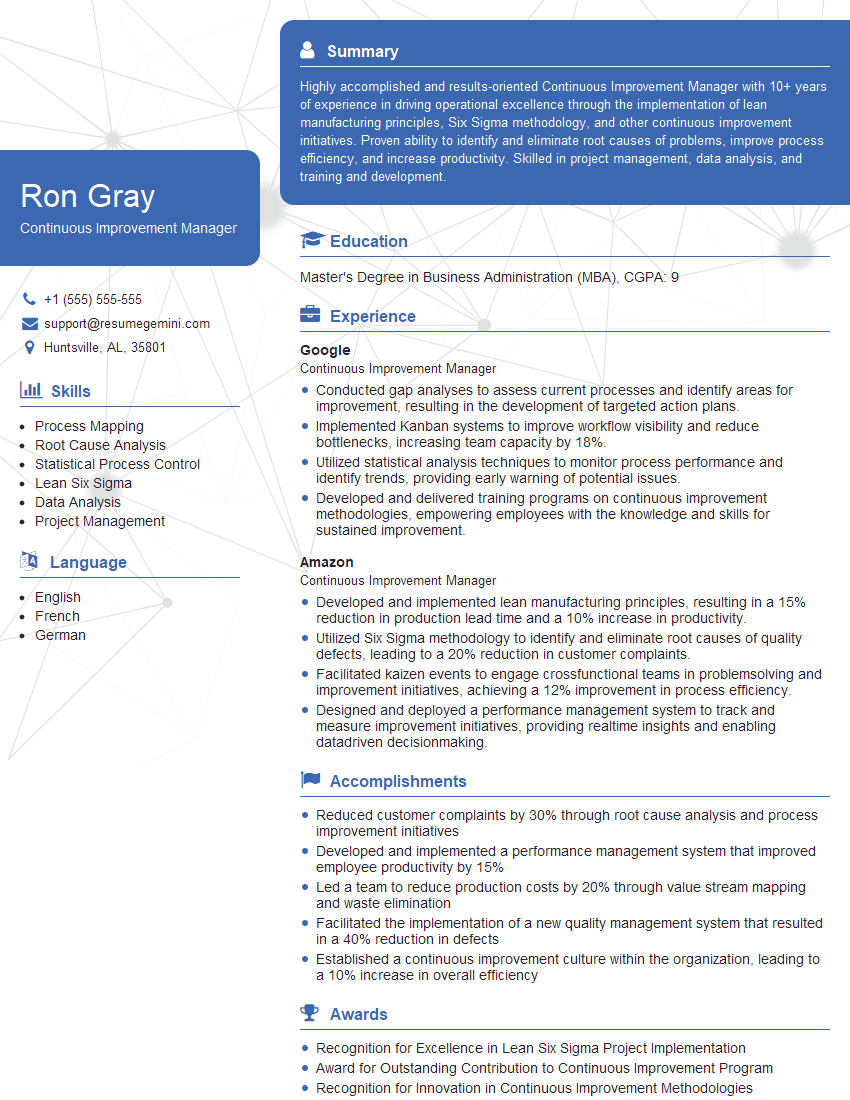
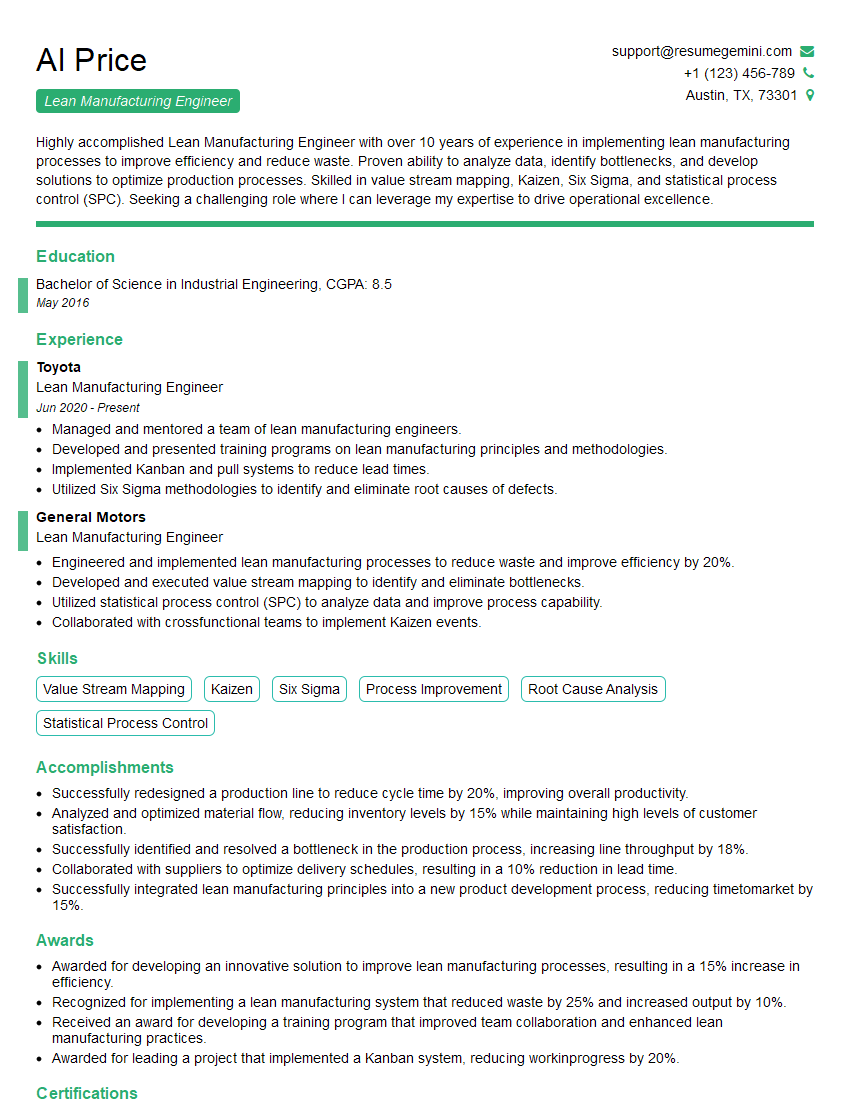
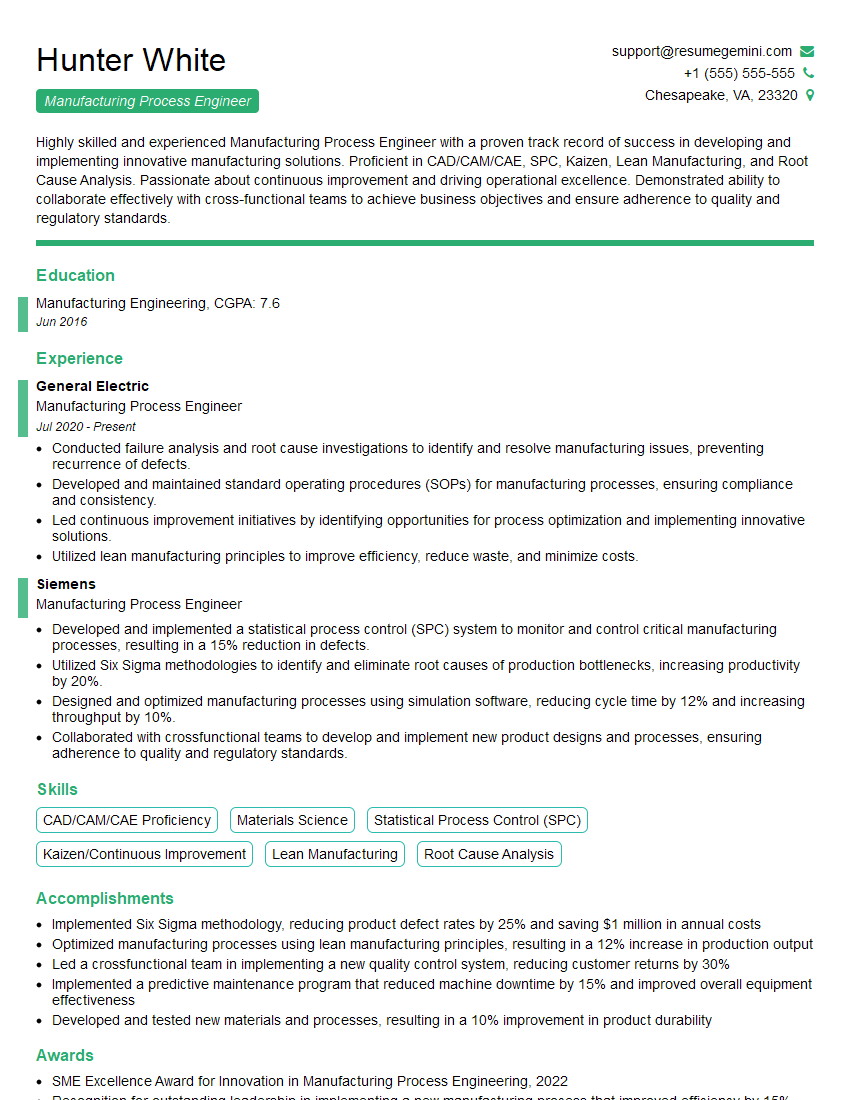
Mastering Plant Optimization and Efficiency Improvement significantly enhances your career prospects, opening doors to leadership roles and higher earning potential. A well-crafted, ATS-friendly resume is crucial for maximizing your job search success. ResumeGemini is a trusted resource that can help you build a compelling and effective resume, showcasing your skills and experience in the best possible light. Examples of resumes tailored specifically to Plant Optimization and Efficiency Improvement are available to guide you – leverage these resources to present yourself confidently to potential employers.

Explore more articles
Users Rating of Our Blogs
Share Your Experience
We value your feedback! Please rate our content and share your thoughts (optional).
What Readers Say About Our Blog
Very informative content, great job.
good