Preparation is the key to success in any interview. In this post, we’ll explore crucial Refrigerants and Refrigerant Systems interview questions and equip you with strategies to craft impactful answers. Whether you’re a beginner or a pro, these tips will elevate your preparation.
Questions Asked in Refrigerants and Refrigerant Systems Interview
Q 1. What are the key properties of common refrigerants (e.g., R-410A, R-134a, R-32)?
Refrigerants are substances used in refrigeration cycles to absorb heat from one location and release it at another. Key properties vary significantly, affecting their suitability for different applications. Let’s examine R-410A, R-134a, and R-32:
- R-410A (a zeotropic blend of R-32 and R-125): This is a widely used refrigerant in residential and light commercial air conditioning. Its key properties include a relatively high efficiency, moderate pressure, and zero ozone depletion potential (ODP). However, it has a significant global warming potential (GWP).
- R-134a (tetrafluoroethane): Previously popular in automotive air conditioning and some refrigeration systems, R-134a also boasts zero ODP. However, its GWP is also considerable, leading to its phasing out in many applications.
- R-32 (difluoromethane): A single component refrigerant, R-32 is increasingly popular as a replacement for R-410A. It offers good efficiency, lower GWP than R-410A, and is relatively less flammable. However, it’s mildly flammable, requiring specific safety measures.
The choice of refrigerant depends on factors like efficiency, safety, environmental impact, and system design compatibility. For example, R-32’s flammability necessitates modifications to system design to ensure safe operation, while the higher efficiency of R-410A might offset its higher GWP in certain applications.
Q 2. Explain the different types of refrigeration cycles (e.g., vapor-compression, absorption).
Refrigeration cycles are thermodynamic processes that transfer heat from a cold space to a warmer one. Two main types exist:
- Vapor-Compression Cycle: This is the most common type, found in refrigerators, air conditioners, and heat pumps. It involves four main stages: evaporation (heat absorption at low pressure), compression (increasing pressure and temperature), condensation (heat rejection at high pressure), and expansion (pressure drop and temperature decrease). Imagine it like a pump circulating a refrigerant that evaporates, absorbing heat from your fridge’s interior, then compresses, becoming hot, releases that heat outside, and then expands, cooling down to start the cycle anew.
- Absorption Cycle: This uses a refrigerant-absorbent solution to achieve refrigeration. Heat is typically applied to the solution, causing the refrigerant to evaporate and absorb heat. The refrigerant is then condensed and reabsorbed. Absorption systems are often used in situations where waste heat is available, making them suitable for renewable energy integration or specific industrial applications. They are generally less efficient than vapor-compression cycles but can be advantageous in specific contexts.
Q 3. Describe the process of refrigerant recovery and recycling.
Refrigerant recovery and recycling are crucial for environmental protection and responsible handling of refrigerants. The process involves:
- Recovery: This involves removing the refrigerant from a refrigeration system using specialized equipment. The goal is to capture the refrigerant in a clean and safe manner, minimizing environmental release.
- Recycling: This entails cleaning the recovered refrigerant to remove contaminants like moisture and oil. The cleaned refrigerant can then be reused in the same or a different system. This reduces the need for new refrigerant production, saving resources and reducing environmental impact.
- Disposal: If recycling isn’t feasible due to significant contamination, the refrigerant must be properly disposed of following local and national regulations. This usually involves specialized disposal facilities.
Imagine it like cleaning and reusing a valuable commodity rather than discarding it. Proper recovery and recycling minimize the release of harmful refrigerants into the atmosphere.
Q 4. How do you identify and address refrigerant leaks?
Refrigerant leaks can be detected through various methods:
- Visual Inspection: Look for signs of oil or frost around joints and connections.
- Electronic Leak Detectors: These devices use sensors to detect refrigerant escaping into the air.
- Pressure Testing: This involves pressurizing the system with nitrogen and observing for pressure drops.
- Ultrasonic Leak Detectors: These can detect high-frequency sounds produced by escaping refrigerant.
Addressing leaks requires careful isolation of the section of the system containing the leak, repair of the damaged components (often involving replacing seals or components), and then evacuation and recharging of the system with the appropriate refrigerant.
Q 5. What safety precautions are necessary when handling refrigerants?
Safety precautions when handling refrigerants are paramount due to potential hazards like flammability (e.g., R-32), toxicity, and asphyxiation. Crucial safety measures include:
- Proper Ventilation: Ensure adequate ventilation in the work area to prevent accumulation of refrigerant vapors.
- Personal Protective Equipment (PPE): Wear safety glasses, gloves, and appropriate respiratory protection.
- Training and Certification: Trained personnel should handle refrigerants; certifications are often required for handling specific refrigerants.
- Emergency Procedures: Understand emergency procedures in case of leaks or exposure.
- Following Safety Data Sheets (SDS): Always consult the SDS for the specific refrigerant being handled for detailed safety information.
Ignoring these safety measures can lead to serious health consequences or even fatalities.
Q 6. Explain the concept of ozone depletion potential (ODP) and global warming potential (GWP).
Ozone Depletion Potential (ODP): This measures a refrigerant’s ability to deplete the ozone layer. CFCs (chlorofluorocarbons) have high ODP values, while modern refrigerants like HFCs (hydrofluorocarbons) have ODP of zero. The ozone layer protects us from harmful UV radiation, so high ODP refrigerants are phased out.
Global Warming Potential (GWP): This indicates a refrigerant’s contribution to global warming. It’s a relative measure comparing a refrigerant’s heat-trapping effect to that of carbon dioxide (CO2). While many modern refrigerants have zero ODP, they may still possess significant GWP, driving the search for lower-GWP alternatives. For example, R-32 has a lower GWP than R-410A, making it a more environmentally friendly option, even though both have zero ODP.
Q 7. What are the environmental regulations concerning refrigerants?
Environmental regulations concerning refrigerants are stringent and constantly evolving. Key regulations aim to reduce the impact of refrigerants on the ozone layer and climate change. These regulations often involve:
- Phasedown of high-GWP refrigerants: Many countries are phasing out the use and production of refrigerants with high GWP values following international agreements like the Montreal Protocol and the Kigali Amendment.
- Recovery and recycling mandates: Regulations often mandate the recovery and recycling of refrigerants at the end of a system’s life to minimize emissions.
- Leak detection and repair requirements: Regular leak checks and prompt repairs are often legally mandated for systems containing high-GWP refrigerants.
- Certification and training requirements: Technicians who handle refrigerants are often required to be certified and trained to ensure safe and environmentally responsible handling.
These regulations vary by country and region, requiring businesses and individuals to stay updated on the latest requirements to ensure compliance.
Q 8. How does a pressure-temperature chart work in refrigeration diagnostics?
A pressure-temperature (P-T) chart is an indispensable tool for refrigeration diagnostics. It’s essentially a graph showing the relationship between the pressure and temperature of a specific refrigerant at different states (saturated liquid, saturated vapor, superheated vapor). Think of it as a refrigerant’s ‘fingerprint’. By measuring the pressure and temperature at various points in the refrigeration system, we can use the chart to determine the refrigerant’s state and identify potential problems.
For instance, if the low-side pressure is too low, the chart can help us determine if this is due to a refrigerant leak, a faulty expansion device, or insufficient refrigerant charge. Similarly, a high-side pressure that’s too high could indicate a condenser problem, a restricted flow, or a faulty compressor. The P-T chart provides a quick and reliable way to narrow down the potential causes of malfunctions.
Different refrigerants have their own unique P-T charts, so it’s crucial to use the correct chart for the specific refrigerant in the system. These charts are readily available from refrigerant manufacturers and refrigeration technology resources.
Q 9. Explain the function of different components in a refrigeration system (e.g., compressor, condenser, evaporator).
A refrigeration system works like a carefully orchestrated dance of heat transfer. Let’s look at the key players:
- Compressor: The heart of the system, the compressor is a pump that increases the pressure and temperature of the refrigerant vapor. Imagine it as a tireless worker, compressing the refrigerant to give it the energy needed to release heat later.
- Condenser: This component releases the heat absorbed by the refrigerant in the evaporator. Think of it as a radiator, dissipating the heat into the surrounding environment (usually air or water). The high-pressure, high-temperature refrigerant vapor condenses into a high-pressure liquid here.
- Expansion Device (e.g., capillary tube, expansion valve): This device reduces the pressure and temperature of the refrigerant, causing it to partially vaporize. This sudden drop in pressure and temperature is crucial for efficient heat absorption in the evaporator. Imagine it as a valve carefully controlling the refrigerant’s flow and energy.
- Evaporator: This is where the magic happens. The low-pressure, low-temperature refrigerant absorbs heat from the space being cooled, evaporating into a low-pressure vapor. This is the cold side of the system, where the cooling effect is produced. Think of it as a sponge soaking up heat.
These components work in a continuous cycle, transferring heat from the space being cooled to the environment, effectively providing refrigeration.
Q 10. Describe the principles of heat transfer in refrigeration systems.
Refrigeration systems rely on three fundamental principles of heat transfer: conduction, convection, and radiation. However, the primary mechanism is a combination of convection and phase change (evaporation and condensation).
- Convection: In the evaporator, warm air from the space being cooled comes into contact with the cold evaporator coils. Heat is transferred from the warmer air to the colder refrigerant through convection, causing the refrigerant to evaporate.
- Conduction: Heat transfer also occurs through conduction within the evaporator coils and the surrounding structure. Heat energy is transferred from the air to the surface of the evaporator coils, then through the coil material to the refrigerant.
- Phase Change: The most significant heat transfer occurs through the phase change of the refrigerant. The refrigerant absorbs a large amount of latent heat as it changes from a liquid to a vapor in the evaporator, creating the cooling effect. The reverse happens in the condenser – latent heat is released as the refrigerant changes from a vapor to a liquid.
- Radiation: While less significant than convection and phase change, some heat transfer can occur via radiation between the components and the surroundings.
Understanding these principles is key to optimizing the design and troubleshooting of refrigeration systems.
Q 11. What are the common causes of refrigeration system malfunctions?
Refrigeration system malfunctions can stem from a variety of issues. Some of the most common causes include:
- Refrigerant Leaks: Leaks reduce the refrigerant charge, leading to poor cooling performance or complete system failure.
- Compressor Failure: A faulty compressor can’t effectively circulate the refrigerant, resulting in insufficient cooling.
- Dirty Condenser Coils: Dust and debris buildup on the condenser coils hinder heat dissipation, causing reduced efficiency and high pressure.
- Clogged Filter-Dryer: A clogged filter-dryer restricts refrigerant flow, impacting cooling capacity.
- Faulty Expansion Valve or Capillary Tube: Malfunctioning expansion devices lead to incorrect refrigerant metering, impacting cooling performance.
- Electrical Problems: Issues with wiring, relays, or the compressor motor can prevent the system from operating correctly.
- Air in the System: Air in the refrigerant lines can significantly reduce cooling efficiency and lead to compressor damage.
Proper maintenance and regular inspections are vital for preventing many of these issues.
Q 12. How do you troubleshoot common refrigeration problems?
Troubleshooting refrigeration problems involves a systematic approach. Here’s a general procedure:
- Safety First: Always disconnect the power before working on any refrigeration system components.
- Gather Information: Note the symptoms (e.g., poor cooling, no cooling, unusual noises), when the problem started, and any recent maintenance.
- Check the Obvious: Inspect the condenser coils for dirt and debris. Ensure proper ventilation around the unit.
- Measure Pressures and Temperatures: Use gauges to check the high-side and low-side pressures and temperature readings at various points in the system and compare them to the refrigerant’s P-T chart. This helps to diagnose if the system is undercharged or overcharged.
- Inspect Components: Check for visual signs of damage or leaks on components such as the compressor, condenser, evaporator, and expansion device.
- Use Refrigerant Leak Detectors: If a leak is suspected, use electronic leak detectors to pinpoint its location.
- Check Electrical Components: Measure voltage, amperage, and check for continuity in electrical circuits to rule out any electrical problems.
- Consult the System’s Schematic Diagram and Service Manual: Refer to the system’s documentation for troubleshooting guidance.
If you lack the necessary expertise, it’s crucial to seek professional assistance to avoid further damage to the system or personal injury.
Q 13. What is the difference between high-side and low-side pressure in a refrigeration system?
The high-side and low-side pressures refer to the pressures in different parts of the refrigeration cycle. The high side is the part of the system operating at higher pressure and temperature, while the low side operates at lower pressure and temperature.
- High-Side Pressure: This is the pressure in the condenser and the liquid line. The refrigerant here is in a high-pressure liquid state.
- Low-Side Pressure: This is the pressure in the evaporator and suction line. The refrigerant here is in a low-pressure vapor or a mixture of liquid and vapor.
The difference in pressures drives the refrigerant through the system. Measuring these pressures is essential for diagnosing system problems. For instance, unusually high high-side pressure might point to a problem with the condenser, while unusually low low-side pressure could indicate a refrigerant leak or a faulty expansion device.
Q 14. What are the different types of expansion devices used in refrigeration systems?
Several types of expansion devices are used to regulate refrigerant flow and control the superheat in the evaporator:
- Capillary Tube: A simple and inexpensive device, the capillary tube is a small-diameter tube that restricts refrigerant flow based on its internal diameter and length. It’s commonly found in smaller systems.
- Thermostatic Expansion Valve (TXV): This is a more sophisticated device that senses the superheat of the refrigerant at the evaporator outlet and adjusts the flow to maintain a consistent superheat. It provides better control than a capillary tube and is frequently used in larger systems.
- Electronic Expansion Valve (EEV): An EEV uses an electronic controller to precisely regulate the refrigerant flow based on various system parameters such as temperature, pressure, and superheat. This provides the most precise control and is used in sophisticated systems and where optimal efficiency is crucial.
- Automatic Expansion Valve (AXV): An AXV uses pressure differences to regulate the refrigerant flow. Less common now, it is simpler than a TXV but less precise.
The choice of expansion device depends on factors such as system size, complexity, and required performance.
Q 15. Explain the role of refrigerant charge in system performance.
The refrigerant charge, essentially the amount of refrigerant within a refrigeration system, is crucial for optimal performance. Think of it like the blood in your body – the right amount ensures everything functions correctly. An insufficient charge leads to poor cooling capacity, increased energy consumption, and potential component damage. Conversely, an overcharge can cause high head pressure, leading to compressor overheating and potential failure. The ideal charge ensures efficient heat transfer, maintaining the desired temperature while minimizing energy use and maximizing the system’s lifespan.
Career Expert Tips:
- Ace those interviews! Prepare effectively by reviewing the Top 50 Most Common Interview Questions on ResumeGemini.
- Navigate your job search with confidence! Explore a wide range of Career Tips on ResumeGemini. Learn about common challenges and recommendations to overcome them.
- Craft the perfect resume! Master the Art of Resume Writing with ResumeGemini’s guide. Showcase your unique qualifications and achievements effectively.
- Don’t miss out on holiday savings! Build your dream resume with ResumeGemini’s ATS optimized templates.
Q 16. How do you calculate the appropriate refrigerant charge for a system?
Calculating the appropriate refrigerant charge isn’t a one-size-fits-all process; it depends heavily on the system’s specifications. Manufacturers usually provide the charge in their documentation, often expressed in kilograms or pounds. However, this is a starting point. Accurate calculation often involves several steps:
- System Volume: Determine the total volume of refrigerant within the system’s components (evaporator, condenser, lines).
- Refrigerant Density: Find the density of the refrigerant at the operating temperature and pressure. This information is available in refrigerant property tables or specialized software.
- Subcooling and Superheat: Ensure proper subcooling at the condenser outlet and superheat at the evaporator inlet. These are crucial for efficient operation and prevent liquid slugging.
- Weighing Method: The most accurate method is to evacuate the system completely, then carefully weigh the refrigerant as it’s charged. This requires specialized equipment and scales.
- Liquid Charging: Refrigerant is charged in liquid form and allowed to settle. The charge is then refined based on system performance parameters.
For example, if a system’s documentation states a charge of 5kg and the weighing method reveals only 4kg, then 1kg of refrigerant would need to be added, followed by testing to ensure the proper operating pressures and temperatures.
Q 17. What are the different types of refrigeration system controls (e.g., thermostats, pressure switches)?
Refrigeration system controls are essential for maintaining optimal operating conditions and protecting the system from damage. They act like the nervous system, monitoring and regulating various parameters. Common types include:
- Thermostats: These sense the temperature within the refrigerated space and cycle the compressor on and off to maintain the set point. They can be simple mechanical devices or sophisticated electronic ones with features like programmable settings.
- Pressure Switches: These monitor the high and low pressures within the system, shutting down the compressor if pressures exceed safe limits. This prevents damage to the compressor and other components.
- Solenoid Valves: These electrically controlled valves regulate the flow of refrigerant to and from the evaporator, optimizing efficiency and response to changing demands.
- Electronic Controllers: These advanced systems monitor and control multiple parameters, providing sophisticated control and data logging. They often integrate with building management systems.
- Expansion Valves (TXV): These regulate the flow of refrigerant into the evaporator, ensuring that the refrigerant is in the correct state (a mix of liquid and vapor) to perform efficient heat exchange. They’re crucial for maintaining superheat.
For instance, a high-pressure switch will shut down a system if the condenser pressure becomes too high, preventing potential damage to the compressor due to overheating.
Q 18. How do you interpret refrigeration system schematics?
Refrigeration system schematics are visual representations of the system’s components and their interconnections. They use standardized symbols to illustrate the flow of refrigerant and the interaction of various components. Understanding these diagrams is crucial for troubleshooting and maintenance. Interpreting them involves:
- Identifying Components: Learn the standard symbols for compressors, condensers, evaporators, expansion valves, and other components.
- Tracing the Refrigerant Flow: Follow the path of the refrigerant as it circulates through the system, noting changes in state (liquid, vapor, superheated vapor).
- Understanding Control Circuits: Identify the various control components and their interconnections. See how they influence the operation of the system.
- Analyzing Pressure and Temperature Points: Schematics often indicate pressure and temperature measurement points, providing vital information for diagnosis.
For example, by examining a schematic, we can determine the refrigerant’s flow path, identify potential points of restriction, and understand how the system’s control components interact to maintain the desired cooling.
Q 19. Describe your experience with different types of refrigeration systems (e.g., air cooled, water cooled).
My experience encompasses a wide range of refrigeration systems, including air-cooled and water-cooled systems, in various applications.
- Air-cooled systems are commonly used in smaller applications like domestic refrigerators or commercial freezers. Their simplicity makes them easy to maintain but their efficiency can suffer in higher ambient temperatures.
- Water-cooled systems are preferred in larger industrial settings or where high-efficiency cooling is paramount. Using water as a coolant improves efficiency compared to air and allows for higher capacity and more precise temperature control.
- Other systems I’ve encountered include those using different types of compressors (reciprocating, screw, centrifugal), various refrigerants, and diverse control strategies.
One memorable project involved troubleshooting a large industrial chiller using a water-cooled system. The challenge was identifying the cause of recurring compressor trips, which involved meticulous analysis of the system’s pressure and temperature readings and ultimately pinpointed a blockage within the condenser’s water circuit.
Q 20. What are the benefits and drawbacks of using different refrigerants?
The choice of refrigerant significantly impacts a system’s performance, environmental impact, and cost. Different refrigerants have unique properties:
- Ozone Depletion Potential (ODP): Older refrigerants like CFCs had high ODP, contributing to ozone layer depletion. Modern refrigerants have an ODP of 0.
- Global Warming Potential (GWP): This indicates the refrigerant’s contribution to climate change. Low-GWP refrigerants are preferred to minimize environmental impact.
- Thermodynamic Properties: Factors like boiling point, critical temperature, and specific heat capacity influence the system’s efficiency and operating pressures.
- Toxicity and Flammability: Some refrigerants are toxic or flammable, requiring extra safety precautions in handling and installation.
For example, R-134a was once widely used but has a relatively high GWP. Now, many systems are transitioning to lower GWP refrigerants like R-410A or natural refrigerants like ammonia or CO2, though these alternatives may present challenges in terms of system design or safety.
Q 21. How do you ensure the proper maintenance of refrigeration systems?
Proper maintenance is vital to extend the lifespan of refrigeration systems, ensure optimal performance, and prevent costly breakdowns. Key aspects include:
- Regular Inspections: Check for leaks, worn components, and signs of malfunction.
- Pressure and Temperature Monitoring: Regularly monitor key pressures and temperatures to identify potential problems early.
- Cleaning: Keep the condenser coils clean and free of dust or debris to ensure efficient heat transfer.
- Leak Detection: Use appropriate detection methods to identify refrigerant leaks promptly.
- Oil Management: Monitor oil levels and quality in compressors to maintain lubrication and prevent wear.
- Scheduled Maintenance: Adhere to a preventative maintenance schedule based on the manufacturer’s recommendations.
For example, neglecting to clean condenser coils can lead to reduced efficiency and increased energy consumption. Similarly, ignoring a small refrigerant leak can escalate into a major problem and potentially lead to system failure. A proactive approach to maintenance is significantly more cost-effective in the long run.
Q 22. Explain your experience with refrigeration system diagnostics and repair.
My experience in refrigeration system diagnostics and repair spans over 10 years, encompassing a wide range of systems – from small commercial units to large industrial chillers. My diagnostic approach is systematic, starting with a thorough visual inspection to identify any obvious issues like leaks, loose connections, or damaged components. I then utilize various tools, including pressure gauges, temperature sensors, and electronic leak detectors, to pinpoint the problem’s root cause. For example, a consistently high head pressure might indicate a condenser issue, such as fouling or a faulty fan motor. Conversely, low suction pressure could point towards a refrigerant leak or a compressor problem. Once the fault is identified, I implement the necessary repair, ensuring adherence to safety protocols and industry best practices. This often includes replacing faulty components, evacuating and recharging the system with the correct refrigerant, and testing the system’s performance to confirm functionality.
I also have experience troubleshooting control systems, including analyzing PLC (Programmable Logic Controller) data and diagnosing issues with sensors and actuators. This comprehensive approach allows me to identify and resolve a wide array of problems efficiently and effectively.
Q 23. How do you handle emergency situations involving refrigeration systems?
Emergency situations demand quick thinking and decisive action. My priority is always safety – both personal safety and the safety of those around me. In an emergency involving a refrigerant leak, for example, I would immediately shut down the system to prevent further refrigerant release and then proceed to contain the leak. This involves carefully isolating the affected section of the system and using leak detection equipment to pinpoint the source. Depending on the severity and type of refrigerant, I’ll follow the appropriate safety procedures, potentially involving evacuation of the area if necessary. I’ll then proceed with temporary repairs to stabilize the situation and contact the necessary personnel to arrange for permanent repairs. For instance, if the leak is in a hard-to-reach area, I might need to call in specialized technicians with specific equipment. Thorough documentation of the event, including photos and measurements, is crucial for future reference and analysis.
Q 24. Describe your experience working with various refrigeration system components.
My experience encompasses a wide array of refrigeration system components, including compressors (reciprocating, screw, scroll, centrifugal), condensers (air-cooled, water-cooled), evaporators (shell and tube, plate, finned tube), expansion valves (thermostatic, electronic), receivers, filters, and various control devices. I’m proficient in identifying different types of compressors and understanding their operational principles. For example, I know the difference in efficiency and application between a reciprocating compressor for smaller units and a screw compressor for large-scale industrial refrigeration. Similarly, I understand the design considerations and maintenance requirements of various condenser types, including the importance of proper air flow for air-cooled condensers and water flow for water-cooled condensers. I’ve worked extensively with different types of refrigerants and understand their properties, including their environmental impact. This broad understanding helps me quickly diagnose problems and implement effective solutions.
Q 25. How do you stay up-to-date with changes in refrigerant technology and regulations?
Keeping up with changes in refrigerant technology and regulations is crucial for a refrigeration technician. I actively participate in industry conferences and workshops, attending seminars and webinars that cover new refrigerants, regulations, and best practices. I’m also a member of relevant professional organizations, providing access to updated guidelines and information. I regularly consult industry publications and online resources to stay informed about the latest advancements and regulatory changes. For example, the phase-out of ozone-depleting refrigerants and the increasing adoption of low-GWP (Global Warming Potential) refrigerants has significantly influenced my work. I’m familiar with the safety handling procedures for different refrigerants and stay up to date on relevant regulations like EPA Section 608 certification and local environmental protection standards.
Q 26. What are your skills in using specialized refrigeration tools and equipment?
I am proficient in using a variety of specialized refrigeration tools and equipment, including:
- Refrigerant pressure gauges: For accurate measurement of system pressures to identify potential problems.
- Electronic leak detectors: For precise location of refrigerant leaks.
- Vacuum pumps: To evacuate air and moisture from the system prior to refrigerant charging.
- Refrigerant charging scales: To accurately measure the amount of refrigerant added to the system.
- Temperature sensors: To measure temperatures at various points in the system.
- Multimeters: To test electrical components and circuits.
- Refrigerant recovery and recycling equipment: For environmentally responsible handling of refrigerants.
I also have experience with specialized tools for specific tasks, such as brazing equipment for repairing refrigerant lines and specialized cleaning tools for evaporator coils.
Q 27. Describe a challenging refrigeration problem you solved and how you approached it.
One particularly challenging case involved a large commercial freezer that was experiencing inconsistent temperatures. Initial inspections revealed no obvious problems. I started with a thorough diagnostic process, systematically checking components such as the compressor, condenser, evaporator, and control system. I utilized pressure gauges, temperature sensors, and a multimeter to gather data. The problem wasn’t immediately apparent, but after analyzing the data, I noticed a slight but persistent fluctuation in the compressor’s discharge pressure. I suspected a problem with the expansion valve. Upon further inspection, I discovered internal damage within the expansion valve causing the inconsistent flow of refrigerant. This was a difficult repair as it involved replacing the expansion valve in a very confined space within the freezer. It required careful planning, precision, and knowledge of the system’s operation. After replacing the valve, evacuating, and recharging the system, the freezer returned to proper operation, demonstrating consistent temperatures. This experience highlighted the importance of systematic troubleshooting, careful data analysis, and attention to detail in solving complex refrigeration problems.
Q 28. Explain your understanding of energy efficiency in refrigeration systems.
Energy efficiency is paramount in modern refrigeration systems, significantly impacting both operational costs and environmental impact. My understanding encompasses several key areas: optimizing refrigerant charge, ensuring proper airflow around condensers and evaporators, using efficient compressors and expansion devices, and implementing proper insulation to minimize heat transfer. For example, overcharging a refrigeration system can significantly decrease efficiency, whereas undercharging can lead to compressor damage. Similarly, dirty condenser coils reduce heat dissipation, requiring the compressor to work harder and consume more energy. I’m familiar with different energy-efficient technologies like variable speed drives for compressors and electronic expansion valves that dynamically adjust to changing conditions. By implementing these measures and conducting regular maintenance, we can significantly reduce the energy consumption of refrigeration systems, contributing to both cost savings and environmental sustainability. I also apply best practices like using energy-efficient lighting and optimizing defrost cycles to maximize overall system performance and reduce energy use.
Key Topics to Learn for Refrigerants and Refrigerant Systems Interview
- Thermodynamic Principles: Understanding the thermodynamic cycles (e.g., vapor-compression cycle) and their application in refrigeration systems. This includes concepts like enthalpy, entropy, and pressure-temperature relationships.
- Refrigerant Properties: Knowing the properties of various refrigerants (e.g., R-134a, R-410A, ammonia), including their environmental impact (ODP and GWP), pressure-enthalpy diagrams, and selection criteria based on application requirements.
- Compressor Technologies: Familiarity with different types of compressors (reciprocating, scroll, centrifugal) and their operating principles, efficiency, and maintenance requirements.
- Expansion Devices: Understanding the function and operation of expansion valves (thermostatic expansion valves, capillary tubes, electronic expansion valves) and their impact on system performance.
- Heat Exchangers: Knowledge of different types of heat exchangers (evaporators, condensers) and their design considerations for optimal heat transfer.
- System Design and Analysis: Ability to analyze refrigeration system performance, identify potential issues (e.g., leaks, overheating), and troubleshoot common problems.
- Refrigerant Handling and Safety: Understanding safe handling procedures, leak detection methods, and regulations related to refrigerant use and disposal.
- Practical Applications: Discuss experience with various refrigeration systems (e.g., residential, commercial, industrial) and their specific design considerations.
- Troubleshooting and Problem Solving: Be prepared to discuss your approach to diagnosing and resolving issues in refrigeration systems, emphasizing your analytical and problem-solving skills.
- Emerging Technologies: Familiarize yourself with advancements in refrigerant technology, such as natural refrigerants and innovative system designs, demonstrating your commitment to staying current in the field.
Next Steps
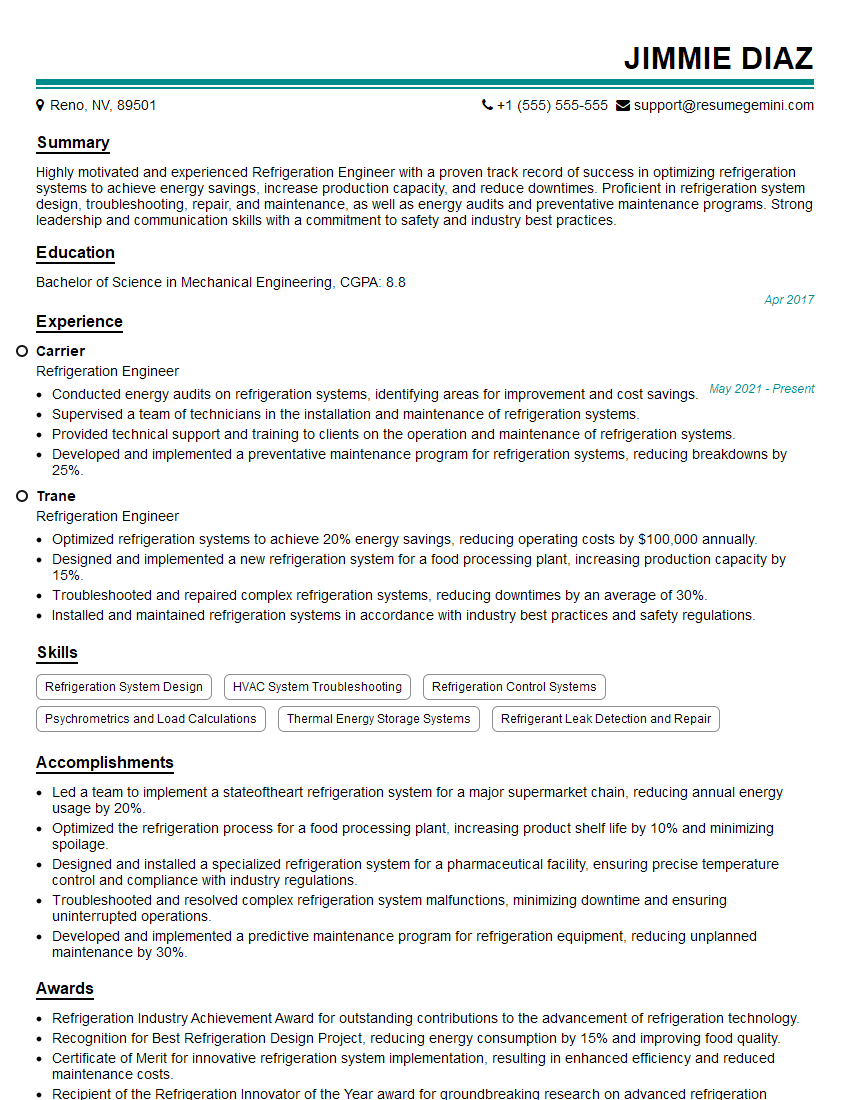
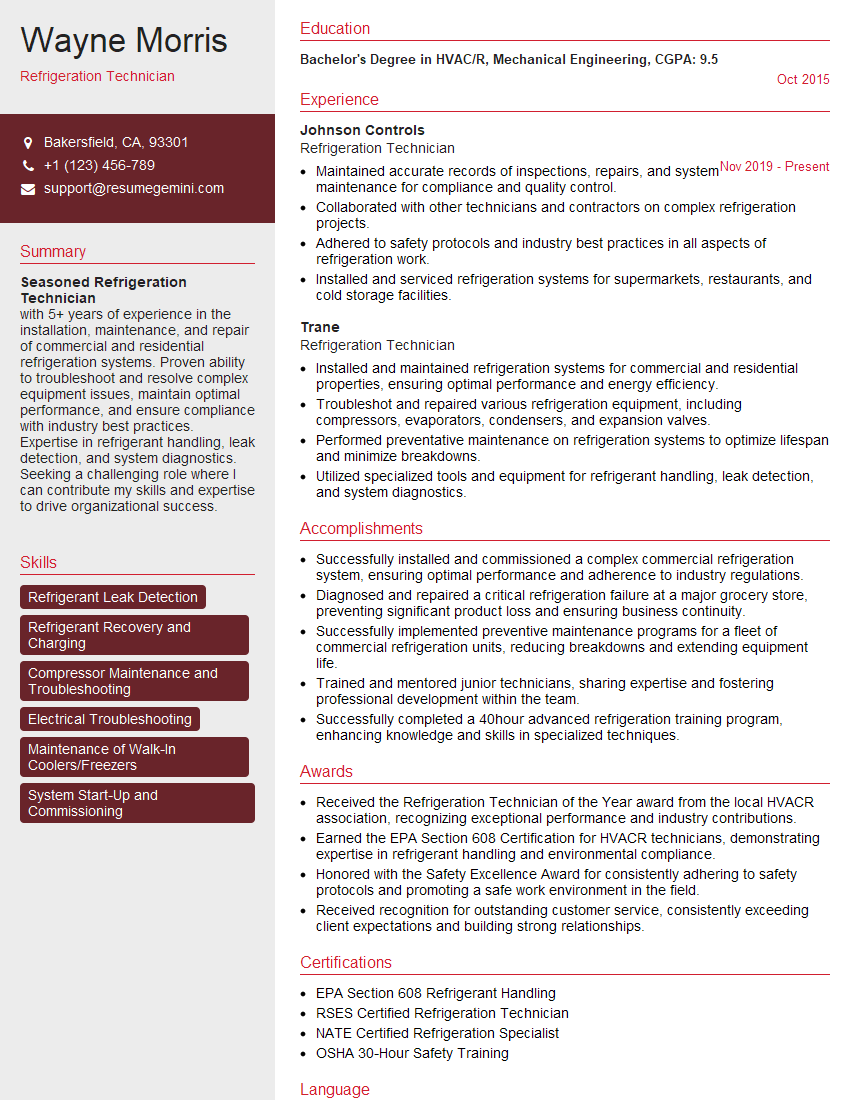
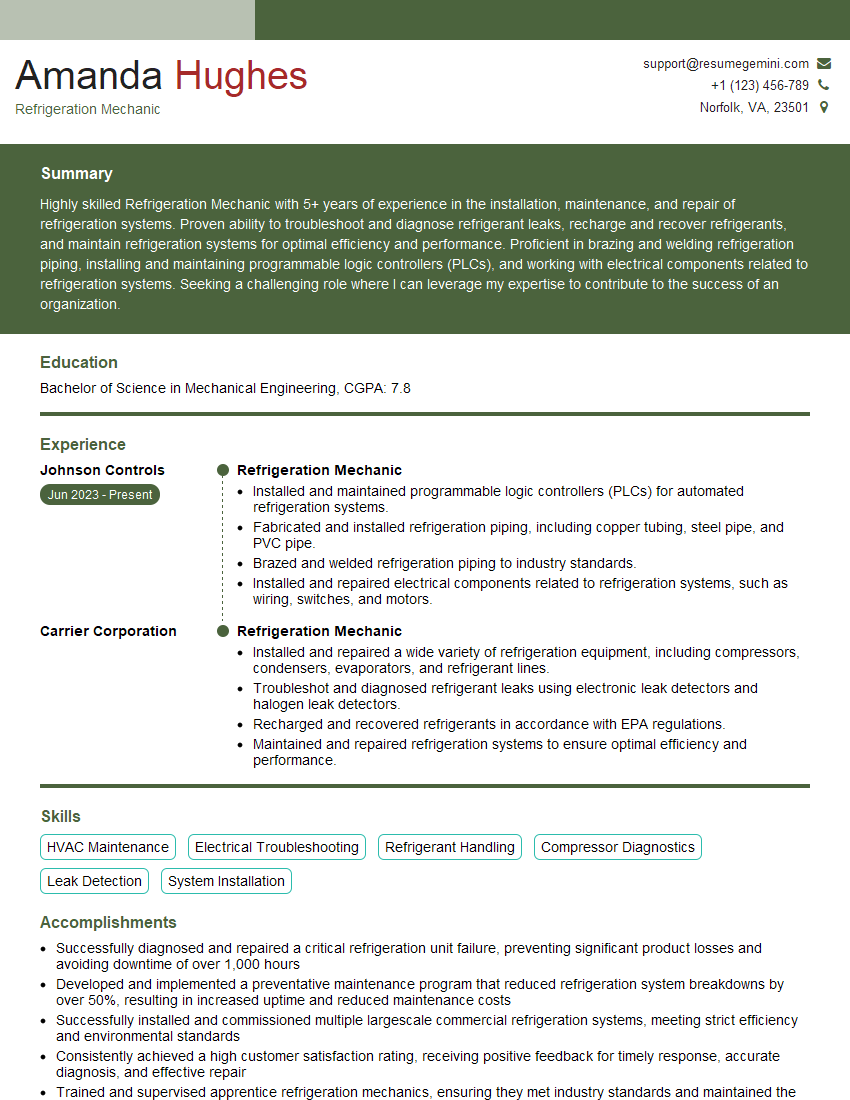
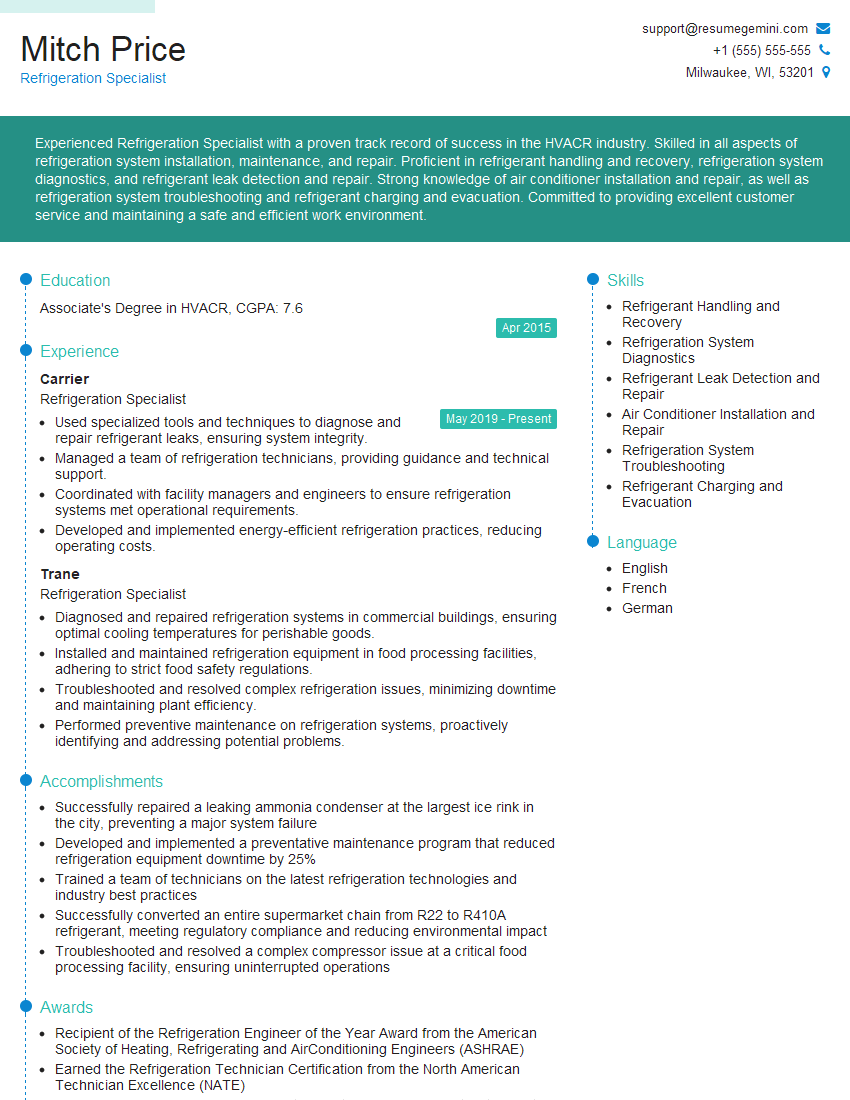
Mastering Refrigerants and Refrigerant Systems is crucial for career advancement in HVACR and related fields. A strong understanding of these concepts will significantly enhance your interview performance and open doors to exciting opportunities. To maximize your job prospects, create a compelling and ATS-friendly resume that showcases your skills and experience effectively. ResumeGemini is a trusted resource to help you build a professional resume that stands out. Examples of resumes tailored to the Refrigerants and Refrigerant Systems field are available to help guide your resume creation process.
Explore more articles
Users Rating of Our Blogs
Share Your Experience
We value your feedback! Please rate our content and share your thoughts (optional).
What Readers Say About Our Blog
Very informative content, great job.
good