Are you ready to stand out in your next interview? Understanding and preparing for Operate drilling equipment interview questions is a game-changer. In this blog, we’ve compiled key questions and expert advice to help you showcase your skills with confidence and precision. Let’s get started on your journey to acing the interview.
Questions Asked in Operate drilling equipment Interview
Q 1. Describe your experience operating various types of drilling equipment.
My experience encompasses operating a wide range of drilling equipment, from top drives and rotary tables on land rigs to mud pumps and drawworks on offshore platforms. I’ve worked with various drilling methods, including conventional rotary drilling, directional drilling, and underbalanced drilling. For instance, I spent three years operating a top drive system on a land rig in the Permian Basin, where precise control and efficient operation were paramount due to the complex geology. My experience also includes operating mud pumps on an offshore jack-up rig in the Gulf of Mexico, requiring a different skillset due to the unique challenges of offshore operations, like weather conditions and platform limitations. I am proficient in the operation and maintenance of a variety of drilling equipment including but not limited to: mud pumps, drawworks, top drives, rotary tables, and various types of drilling automation systems.
Q 2. Explain the process of setting up a drilling rig.
Setting up a drilling rig is a complex, multi-stage process that demands meticulous planning and execution. It begins with site preparation, ensuring a level and stable foundation. Next, the rig components are assembled, starting with the substructure and mast, followed by the derrick or mast and the installation of the drawworks, mud pumps, and other crucial systems. Think of it like building a giant, intricate machine. Each piece must be correctly positioned and connected. After the mechanical assembly, we connect the power sources, hydraulic and mud systems, and perform rigorous testing of each system individually and then integrated to ensure functionality before commencing drilling operations. Safety checks and inspections are performed throughout the entire setup process. For example, we would rigorously check the mud system for leaks before initiating circulation. Finally, a pre-spud meeting is held to review the entire setup and safety procedures before drilling commences.
Q 3. What are the safety procedures you follow when operating drilling equipment?
Safety is paramount in drilling operations. We adhere to strict safety protocols at every stage, from pre-job planning to post-job cleanup. This includes wearing appropriate PPE (Personal Protective Equipment), such as hard hats, safety glasses, steel-toed boots, and hearing protection. Regular safety meetings and toolbox talks reinforce procedures and address potential hazards. We also follow detailed emergency response plans and are trained in emergency shut down procedures for the rig. For example, before starting any operation we conduct a thorough risk assessment and perform regular equipment checks to identify potential hazards like broken equipment or leaks. I’ve been trained in advanced safety procedures such as well control and emergency response which allow me to handle unexpected situations swiftly and effectively. We maintain meticulous records of all safety measures undertaken.
Q 4. How do you maintain drilling equipment to prevent malfunctions?
Preventive maintenance is key to avoiding malfunctions and ensuring operational efficiency. This involves regular inspections, lubrication, and component replacements according to manufacturer’s recommendations. We maintain detailed logs of all maintenance activities, using a computerized maintenance management system (CMMS) in many cases. For example, daily checks on critical components like mud pumps and drawworks are conducted and any irregularities are addressed immediately. Addressing minor issues prevents them from escalating into major problems, saving time, money, and ultimately, preventing costly downtime and possible safety incidents. We also implement predictive maintenance practices, such as vibration analysis on critical equipment to catch potential issues early.
Q 5. What are the different types of drilling fluids and their purposes?
Drilling fluids, also known as mud, are crucial in drilling operations. They serve multiple purposes, including wellbore stability, carrying cuttings to the surface, controlling pressure, and lubricating the drill bit. Different types of mud are used depending on the formation being drilled and the specific challenges encountered. For example, water-based muds are commonly used in many applications, while oil-based muds are better suited for shale formations. Polymer muds provide excellent lubricity and other specialty muds can be used to deal with reactive formations or to improve wellbore stability. Each type has unique properties that make them suitable for particular situations. The selection of the right mud is crucial for efficient and safe drilling operations.
Q 6. Explain the concept of well control and its importance.
Well control is the process of managing the pressure within a wellbore to prevent uncontrolled flow of formation fluids (e.g., gas, oil, water). It’s critically important for safety and environmental protection. Loss of well control can lead to blowouts, which can result in significant damage to equipment, environmental pollution, and even loss of life. Well control techniques include using appropriate mud weights, maintaining proper hydraulics in the wellbore, and having readily available equipment and procedures for handling kicks (unexpected influx of formation fluids). Regular training and drills are crucial to ensure everyone on the rig is prepared to respond effectively to any well control event.
Q 7. How do you troubleshoot common drilling equipment problems?
Troubleshooting is a routine part of drilling operations. I approach problems systematically, starting with a thorough assessment of the symptoms, examining relevant data (pressure readings, mud logs, etc.), and conducting visual inspections. For instance, if the mud pump is underperforming, I would first check for obvious issues like leaks, blockages in the suction or discharge lines, or problems with the pump itself. I also consider operator input to help narrow the search. A systematic approach often involves a process of elimination to identify the root cause. My experience enables me to quickly identify and resolve a wide variety of issues, minimizing downtime and ensuring the safety of the operation. We maintain detailed records of troubleshooting procedures and their resolutions to aid in future problem-solving.
Q 8. Describe your experience with directional drilling techniques.
Directional drilling involves deviating from a vertical path to reach a specific subsurface target, often used to access multiple reservoirs from a single surface location or to avoid obstacles. My experience encompasses various techniques, including:
Rotary Steerable Systems (RSS): I’m proficient in using RSS tools, which utilize downhole motors and sensors to precisely control the wellbore trajectory. This involves real-time adjustments based on data from the directional drilling unit, optimizing the well path for maximum efficiency and reservoir contact.
Mud Motors: I have hands-on experience with mud motor drilling, which utilizes the circulation of drilling mud to power a downhole motor, allowing for directional control in challenging formations. I understand the importance of managing mud properties to maintain optimal motor performance and wellbore stability.
Measurement While Drilling (MWD) and Logging While Drilling (LWD): I’m experienced in interpreting MWD and LWD data to monitor wellbore trajectory, formation properties, and optimize drilling parameters in real-time. This allows for proactive adjustments to maintain the planned well path and enhance the overall drilling process.
For example, on one project, we utilized RSS technology to successfully navigate a complex fault zone, reaching the target reservoir without compromising wellbore integrity. This required precise control of the drilling parameters and a keen understanding of the geological challenges.
Q 9. What are the signs of a potential well blowout and how would you respond?
A well blowout is a catastrophic uncontrolled release of formation fluids (oil, gas, water) to the surface. Several indicators can signal an impending blowout:
Sudden increase in gas flow: A significant increase in the amount of gas returning to the surface in the mud, exceeding normal levels.
Rapid increase in pit volume: Noticeably higher mud volume in the mud pits, indicating a loss of mud circulation.
Changes in mud weight or properties: A decrease in mud density can indicate gas influx. Changes in viscosity or other mud properties should also raise concern.
Abnormal pressure readings: Higher-than-expected pressure readings during drilling operations.
Vibrations or unusual sounds from the rig floor: Noises or vibrations indicative of abnormal pressure or equipment malfunction.
My response to suspected blowout indicators would be immediate and systematic:
Shut down the pumps immediately: This action aims to stop the flow of formation fluids.
Activate the emergency shutdown systems: This includes closing the blowout preventer (BOP) stack to isolate the wellbore.
Initiate emergency procedures as outlined in the site’s emergency response plan: This involves evacuating personnel from the immediate area, contacting emergency services, and notifying relevant authorities.
Assess the situation: Once the well is secured, assess the causes of the near-miss, identify corrective actions and implement the necessary repairs.
In a real-world scenario, quick and decisive action is paramount in mitigating the risks associated with a potential well blowout.
Q 10. How do you ensure the safety of yourself and your crew during drilling operations?
Safety is the number one priority in drilling operations. I ensure crew safety through a multi-faceted approach:
Rigorous adherence to safety procedures: I strictly enforce safety regulations, conduct regular toolbox talks, and ensure all personnel are thoroughly familiar with the site-specific emergency response plan.
Proper use of personal protective equipment (PPE): I ensure that all crew members wear appropriate PPE such as hard hats, safety glasses, hearing protection, and flame-resistant clothing.
Regular equipment inspections: I participate in pre-operational equipment inspections, ensuring all equipment is functioning correctly and safely.
Hazard identification and risk assessment: I actively participate in identifying and mitigating potential hazards, and continuously improve safety protocols.
Promoting a strong safety culture: I create and foster a culture of mutual respect and accountability where safety concerns are raised without fear of reprimand.
Emergency response training: I ensure that all crew members are adequately trained in emergency response procedures, including the correct use of emergency equipment.
For instance, I’ve implemented a ‘buddy system’ on site where workers look out for each other’s safety and report any unsafe behaviour immediately. This created a positive shift in our safety culture, reducing near misses significantly.
Q 11. Explain your understanding of drilling parameters like RPM, WOB, and torque.
Drilling parameters are crucial for optimizing drilling performance and wellbore stability. Let’s define the key parameters:
RPM (Revolutions Per Minute): This refers to the rotational speed of the drill string. Higher RPMs can improve the rate of penetration (ROP) in softer formations but may also increase the risk of bit wear in harder formations.
WOB (Weight on Bit): This represents the weight applied to the drill bit, influencing the rate of penetration. Higher WOB can increase ROP but may also lead to excessive bit wear or downhole problems if not managed correctly.
Torque: This is the rotational force applied to the drill string. High torque can indicate problems such as a stuck pipe or a worn-out bit, and can result in downhole equipment damage.
The interplay between these parameters is crucial. For example, increasing WOB without increasing RPM might lead to high torque and reduced ROP, signifying a need for an adjustment of drilling fluids or bit selection. Conversely, too high RPM with low WOB can result in insufficient cutting action and ineffective drilling.
Q 12. How do you interpret drilling data to optimize drilling performance?
Interpreting drilling data is essential for optimizing drilling performance. I use a combination of techniques and data sources to achieve this:
Rate of Penetration (ROP) analysis: Monitoring ROP provides insights into the drilling efficiency. Consistent low ROP could indicate the need for a bit change, optimized drilling parameters or a formation change.
Torque and drag analysis: Monitoring torque and drag helps detect potential problems like bit wear, stuck pipe, or formation instability.
Mud logging data: Analyzing mud log data, including gas, cuttings, and mud properties, provides information on the formations being drilled and potential risks such as gas influx or formation instability.
MWD/LWD data: Interpreting MWD/LWD data allows for real-time monitoring of wellbore trajectory, inclination, and azimuth, enabling course corrections and operational efficiency.
For example, observing a sudden drop in ROP along with a significant increase in torque might indicate a change in the formation, requiring a change in bit type or drilling parameters.
By integrating all these data streams, I can develop a comprehensive understanding of drilling progress and apply necessary adjustments to optimize performance, minimize risks, and ensure cost-effectiveness.
Q 13. Describe your experience with different types of drilling bits.
My experience encompasses a wide range of drilling bits, each suited for specific geological conditions:
Roller cone bits: These bits are highly effective in hard, abrasive formations. I have experience with various types, including insert bits and milled tooth bits, each optimized for particular geological conditions.
Polycrystalline diamond compact (PDC) bits: These are ideal for softer formations and are more efficient in terms of ROP in many formations. I’m familiar with different PDC bit designs and their applications based on formation type and drilling parameters.
Diamond bits: These are used for drilling extremely hard rock formations and are typically used in the final drilling phase.
Selecting the appropriate bit is critical for optimizing drilling performance and reducing costs. For instance, using a roller cone bit in a soft formation would result in excessive wear and tear. Conversely, employing a PDC bit in extremely hard rock could lead to premature bit failure.
My experience includes evaluating bit performance data, including ROP, torque, and wear rates, to make informed decisions regarding bit selection and optimization.
Q 14. What are the environmental concerns related to drilling operations?
Drilling operations have significant environmental implications, and mitigating these impacts is crucial. Key environmental concerns include:
Wastewater management: Drilling operations generate significant amounts of wastewater, which may contain pollutants. Effective treatment and disposal of this wastewater are essential to prevent water contamination.
Air emissions: Drilling activities release greenhouse gases and other pollutants into the atmosphere. Utilizing best practices to minimize these emissions is vital.
Soil and land contamination: Spills or leaks of drilling fluids or hydrocarbons can contaminate soil and land. Implementing robust prevention and containment measures is paramount.
Noise pollution: Drilling operations are inherently noisy, impacting surrounding ecosystems and local communities. Mitigating noise pollution through noise reduction technologies is important.
Biodiversity impact: Drilling activities can disrupt ecosystems and impact biodiversity. Careful planning and environmental assessments are essential to minimize these effects.
I am committed to environmentally responsible drilling practices. This includes actively participating in environmental impact assessments, adhering to regulatory guidelines, and implementing best practices to minimize environmental impact throughout the entire drilling process.
Q 15. How do you manage the disposal of drilling waste?
Managing drilling waste disposal is crucial for environmental protection and regulatory compliance. It involves a multi-step process starting with proper segregation at the source. We categorize waste into different streams – drilling muds, cuttings, produced water, and other debris. Each stream requires a specific handling method.
For instance, drilling muds, often containing chemicals, are treated using various techniques like decantation, centrifugation, or chemical treatment to reduce the concentration of harmful substances before disposal. Cuttings, the rock fragments brought up during drilling, are usually disposed of in designated landfills after assessing their potential for environmental impact. Produced water, which contains hydrocarbons and other contaminants, undergoes rigorous treatment to meet discharge standards. Throughout this process, detailed records of waste volume, treatment methods, and final disposal locations are meticulously maintained to meet regulatory requirements and ensure accountability. We regularly review our waste management plan to incorporate best practices and stay abreast of evolving environmental regulations.
In one project, we successfully implemented a closed-loop mud system, recycling a significant portion of the drilling mud, thereby minimizing waste generation and reducing environmental footprint. This not only proved environmentally responsible but also economically beneficial by reducing the need to purchase fresh mud. This showcases the commitment to sustainable practices throughout the operational phase.
Career Expert Tips:
- Ace those interviews! Prepare effectively by reviewing the Top 50 Most Common Interview Questions on ResumeGemini.
- Navigate your job search with confidence! Explore a wide range of Career Tips on ResumeGemini. Learn about common challenges and recommendations to overcome them.
- Craft the perfect resume! Master the Art of Resume Writing with ResumeGemini’s guide. Showcase your unique qualifications and achievements effectively.
- Don’t miss out on holiday savings! Build your dream resume with ResumeGemini’s ATS optimized templates.
Q 16. What is your experience with different types of drilling rigs (e.g., land, offshore)?
My experience spans both land and offshore drilling rigs, providing me with a broad understanding of the unique challenges and operational requirements of each. On land, I’ve worked extensively with various rig types, from conventional top-drive rigs to automated systems. This involved hands-on experience with rig-up, rig-down procedures, and all aspects of daily operations. My experience includes managing teams and resources efficiently in diverse geographical locations and challenging environmental conditions, for example, working on a project in the harsh desert climate of the Middle East required careful planning for heat and dust mitigation.
Offshore drilling presented different complexities. I’ve worked on jack-up rigs and semi-submersible platforms, gaining familiarity with the stringent safety protocols, platform-specific equipment, and the intricacies of marine operations. The focus on safety and environmental protection is even more pronounced in offshore environments. I’ve been involved in emergency response procedures and incident investigations, reinforcing my commitment to safety. One challenging experience involved handling a sudden storm while operating a semi-submersible; the quick and decisive actions of the team minimized damage and ensured the safety of personnel.
Q 17. Describe your experience with preventative maintenance schedules for drilling equipment.
Preventative maintenance is the cornerstone of safe and efficient drilling operations. We utilize comprehensive, computerized maintenance management systems (CMMS) to track equipment inspections, repairs, and scheduled maintenance. Our schedules follow manufacturer’s recommendations but are often tailored to the specific needs of the well and rig conditions. For instance, critical components like the top drive, mud pumps, and draw works receive more frequent inspections and lubrication.
The CMMS allows us to generate customized reports on equipment health, highlighting potential issues before they escalate into major failures. We use these reports to proactively schedule maintenance, minimizing downtime and maximizing operational efficiency. Our approach emphasizes a preventative approach, rather than reactive, addressing potential problems before they affect production. For example, regular inspection of mud pump seals prevents leaks and costly repairs, while timely lubrication of the draw works improves its life and ensures smooth operation.
We also incorporate regular safety audits and training programs, incorporating lessons learned from previous experiences to further enhance our preventative maintenance regime. This includes both hands-on training for maintenance personnel and thorough documentation for effective knowledge transfer. This creates a continuous improvement cycle where we constantly review and refine our maintenance schedule to optimize operational efficiency and safety.
Q 18. What software or systems are you familiar with for monitoring drilling operations?
I’m proficient in several software and systems used for monitoring drilling operations. This includes well-established industry-standard platforms such as Schlumberger’s Petrel and Landmark’s OpenWorks, which are used for well planning and data visualization. These allow for real-time monitoring of drilling parameters like rate of penetration (ROP), weight on bit (WOB), and torque.
Furthermore, I have experience with drilling automation systems, which enhance efficiency and safety. These systems provide real-time feedback on critical parameters, allowing for automated adjustments to drilling parameters. In addition to these commercial packages, I’m familiar with proprietary software solutions used for data acquisition and analysis, and data management systems ensuring proper documentation and archival of data. I can extract meaningful insights from this data to optimize drilling parameters and improve decision-making.
Data integration and communication between different systems are critical. I have hands-on experience using data transfer protocols and APIs to ensure seamless data flow between different monitoring systems. This allows a holistic view of drilling operations, providing comprehensive information for both real-time operations and post-operation analysis.
Q 19. How do you handle unexpected equipment failures during a drilling operation?
Handling unexpected equipment failures requires a systematic approach combining rapid response, efficient troubleshooting, and a strong safety focus. The first step involves activating the emergency response plan, ensuring the safety of personnel and the containment of any potential hazards. Following this, we conduct a thorough assessment of the situation, identifying the root cause of the failure.
We use our expertise and diagnostic tools to identify the problem, prioritizing quick fixes where possible. This often involves a collaborative effort involving the drilling crew, maintenance team, and potentially external experts, if needed. Our focus is on minimizing downtime by efficiently identifying parts and implementing timely repairs. In some cases, temporary workarounds or alternative procedures might be implemented to keep the operation moving. Throughout the process, the situation is documented carefully, providing valuable data for future analysis and preventative measures to minimize similar occurrences.
For example, when a crucial mud pump failed during an operation, our quick response and collaborative effort resulted in a replacement pump being installed and operational within 12 hours. The thorough post-incident analysis identified a pattern of premature wear, leading to a change in maintenance procedures, improving reliability.
Q 20. Explain your experience with hydraulic systems in drilling equipment.
Hydraulic systems are critical to many drilling operations, powering components like the mud pumps, top drive, and draw works. My experience includes both preventative maintenance and troubleshooting of these systems. I understand the importance of regular fluid analysis to identify potential issues like contamination and wear. We use pressure gauges and flow meters to monitor the performance of hydraulic components, ensuring they operate within the specified parameters. Regular filtration and fluid changes help to extend the lifespan of hydraulic components.
Troubleshooting hydraulic system issues requires a methodical approach. This involves examining pressure readings, assessing fluid condition, and checking components for leaks or damage. We use diagnostic tools to identify faulty components and isolate the source of any problems. I’ve also worked with hydraulic schematics and system diagrams, enhancing my ability to diagnose and rectify complex hydraulic problems. In one instance, a malfunction in a top drive hydraulic system was successfully resolved by pinpointing a pressure regulator malfunction. A prompt replacement prevented extensive delays.
Safety is paramount when working with high-pressure hydraulic systems. I have a strong understanding of safety protocols, including lock-out/tag-out procedures to prevent accidental activation and reduce the risks during maintenance activities. This ensures safe working conditions throughout the operational and maintenance phase of the system.
Q 21. How do you ensure accurate measurement and recording of drilling data?
Accurate measurement and recording of drilling data are essential for well planning, operations optimization, and post-operation analysis. We utilize a variety of sensors and data acquisition systems to collect drilling parameters, including depth, rate of penetration (ROP), weight on bit (WOB), torque, and mud properties. These data are recorded using data acquisition systems, often integrated with drilling automation software.
The accuracy of this data is paramount, and we employ rigorous quality control measures, which include regular calibration of sensors and equipment, and data validation processes to ensure that the gathered data is reliable and consistent. Data is typically logged digitally and regularly backed up to prevent data loss. Data integrity is maintained through rigorous verification processes involving multiple personnel.
Data visualization tools allow us to interpret this data, providing insights into operational efficiency and enabling us to make data-driven decisions. We often analyze this data to identify trends, predict potential issues, and optimize drilling parameters for improved performance and cost-effectiveness. In one project, the analysis of drilling data revealed an inconsistency in the rate of penetration, leading to adjustments in the drilling plan that resulted in significant time and cost savings.
Q 22. Explain the importance of regular inspections and maintenance of drilling equipment.
Regular inspections and maintenance of drilling equipment are paramount for ensuring safe, efficient, and cost-effective operations. Neglecting this can lead to catastrophic failures, downtime, and significant financial losses. Think of it like a car – regular servicing prevents major breakdowns.
- Safety: Regular inspections identify potential hazards like worn-out parts, hydraulic leaks, or electrical faults, preventing accidents and injuries. For example, a cracked drilling pipe could lead to a catastrophic failure and potentially endanger the entire crew.
- Efficiency: Maintaining equipment in optimal condition maximizes drilling speed and reduces non-productive time. A well-maintained mud pump, for instance, will deliver consistent mud flow, reducing the risk of wellbore instability.
- Cost-Effectiveness: Preventive maintenance is far cheaper than repairing major equipment failures. Addressing a minor leak promptly prevents it from escalating into a costly repair involving downtime and specialized personnel.
- Regulatory Compliance: Regular inspections are often mandated by safety regulations and industry best practices, ensuring compliance and avoiding penalties.
A robust maintenance program includes daily checks, weekly inspections, and periodic overhauls, all documented meticulously. This involves visual inspections, functional testing, and sometimes even non-destructive testing (NDT) to detect hidden flaws.
Q 23. How do you communicate effectively with other members of the drilling crew?
Effective communication is crucial in a drilling crew, where teamwork is paramount. Miscommunication can lead to costly errors, delays, and even accidents. My approach centers on clear, concise, and respectful communication.
- Clear Instructions: I make sure my instructions are unambiguous, using precise language and avoiding jargon where possible. For instance, instead of saying ‘get that thing,’ I’d specify, ‘Retrieve the 17 1/2 inch drill collar from the staging area.’
- Active Listening: I actively listen to my team members’ concerns and feedback. This ensures everyone feels heard and valued, leading to a safer and more collaborative work environment.
- Regular Briefings: Pre-shift and post-shift briefings allow us to share information, coordinate tasks, and anticipate potential problems. These briefings are documented to maintain a record of all operations.
- Non-Verbal Communication: I am keenly aware of non-verbal cues – body language, facial expressions – to gauge understanding and address any concerns promptly.
- Technology: We utilize radios and other communication technologies to stay connected across the drilling site, ensuring rapid responses to unforeseen events.
Building trust and rapport is key. I actively encourage open communication, creating an environment where team members feel comfortable raising issues without fear of reprisal.
Q 24. Describe your experience working with different types of drilling formations.
My experience spans a variety of drilling formations, each presenting unique challenges. This includes soft formations, hard formations, and formations with complex geological features.
- Soft Formations (e.g., shale, clay): These formations can be prone to instability and cavings. Effective drilling practices in these formations include using appropriate mud weights, maintaining wellbore pressure, and potentially incorporating specialized drilling fluids.
- Hard Formations (e.g., sandstone, granite): These formations can be challenging to penetrate, requiring specialized drill bits and higher drilling parameters. Careful monitoring of bit wear and drilling parameters is vital to optimize performance and prevent premature bit failure.
- Complex Formations (e.g., fractured formations, high-pressure zones): These require careful well planning and real-time monitoring to mitigate risks. This might include pre-drilling geological surveys, pressure monitoring during drilling, and appropriate casing design to handle pressure variations.
In each instance, a thorough understanding of the geological characteristics and appropriate adjustment of drilling parameters (weight on bit, rotary speed, mud properties) is critical to ensure safe and efficient drilling operations. For example, drilling through a known high-pressure zone would require a carefully designed casing program to prevent wellbore blowouts.
Q 25. What are the common causes of stuck pipe and how are they addressed?
Stuck pipe is a major concern in drilling, causing significant non-productive time and potentially irreparable damage. Several factors can contribute to this.
- Differential Sticking: This occurs when the drill string gets stuck due to pressure differences between the wellbore and the surrounding formation. It’s often caused by improper mud weight or changes in formation pressure.
- Mechanical Sticking: This involves the drill pipe becoming physically stuck due to wellbore geometry issues like keyseats, dog legs, or obstructions. This can result from poor well planning or inadequate drill string design.
- Pack-off: This happens when cuttings or other debris accumulate around the drill string, preventing its movement. This can be a result of insufficient mud circulation or ineffective cleaning.
Addressing stuck pipe requires a systematic approach:
- Diagnosis: First, we determine the cause of the stuck pipe through detailed analysis of drilling parameters, mud properties, and wellbore conditions.
- Initial Attempts: We may attempt to free the pipe through weight-on-bit changes, rotation, or circulating mud.
- Advanced Techniques: If initial attempts fail, more advanced techniques like jarring, wash-overs, or milling operations might be necessary. In some extreme cases, specialized tools and expertise may be required.
- Wellbore Logging: After freeing the pipe, thorough wellbore logging is done to assess the damage and plan further operations.
Prevention is key. Proper well planning, meticulous drilling practices, and continuous monitoring of drilling parameters are all important to minimize the risk of stuck pipe.
Q 26. How do you handle emergency situations during drilling operations?
Emergency situations during drilling can range from minor equipment malfunctions to serious well control incidents. Effective emergency response is a matter of preparedness, training, and clear procedures.
- Emergency Response Plan: We adhere to a rigorously developed and regularly practiced emergency response plan that covers various scenarios including well control events, fires, equipment failures, and medical emergencies.
- Well Control: In the event of a kick (unexpected influx of formation fluids), we follow established well control procedures, utilizing specialized equipment and trained personnel to regain control of the well. This involves immediately shutting down operations and systematically closing the well to prevent a blowout.
- Fire and Safety: Our crew is thoroughly trained on fire prevention and suppression techniques. We have access to fire suppression equipment and emergency exits are clearly marked and regularly checked.
- Medical Emergencies: We have a well-stocked first-aid station and emergency medical services are readily available. All personnel receive regular safety training, including CPR and first aid.
Regular drills and simulations help us refine our response and ensure everyone understands their roles in an emergency. Effective communication during an emergency is crucial; clear and concise instructions help maintain order and prevent panic.
Q 27. What are the key performance indicators (KPIs) you monitor in drilling operations?
Key Performance Indicators (KPIs) are vital for monitoring and optimizing drilling operations. These metrics provide insights into efficiency, safety, and cost-effectiveness.
- Rate of Penetration (ROP): This measures the speed of drilling, indicating the efficiency of the process. A low ROP might indicate a need for bit change or adjustments to drilling parameters.
- Trip Time: This is the time spent running casing or drilling tools into and out of the well. Reducing trip time improves overall efficiency.
- Non-Productive Time (NPT): This indicates downtime due to incidents like stuck pipe or equipment failures. Minimizing NPT is crucial for reducing costs and improving overall performance.
- Mechanical Efficiency: This measures the actual drilling time compared to the total time spent on the well. A high mechanical efficiency shows effective drilling operations.
- Safety Incidents: The number of safety incidents (near misses and accidents) is a crucial KPI reflecting the safety culture and effectiveness of safety protocols.
- Cost per Foot: This measures the overall cost of drilling per unit of depth achieved, providing crucial insight into cost-effectiveness.
Regularly tracking and analyzing these KPIs allows us to identify areas for improvement, optimize drilling practices, and reduce operational costs.
Q 28. How do you stay updated on new technologies and best practices in drilling?
Staying updated on new technologies and best practices in drilling is essential for remaining competitive and ensuring safe and efficient operations. I employ several strategies:
- Industry Publications and Journals: I regularly read industry publications such as SPE (Society of Petroleum Engineers) journals and other relevant technical magazines to stay abreast of the latest advancements and research.
- Conferences and Workshops: I actively participate in industry conferences and workshops, networking with peers and learning about new technologies and techniques from presentations and discussions.
- Online Resources: I utilize online resources such as industry websites and specialized databases to access information on new equipment, software, and drilling techniques.
- Professional Development Courses: I continuously pursue professional development opportunities, attending training courses and workshops to enhance my skills and knowledge.
- Collaboration with Peers: I actively engage with colleagues and industry experts to share knowledge and learn from their experiences.
By continuously updating my knowledge, I can implement new and improved drilling techniques, improve safety procedures, and optimize drilling operations for enhanced efficiency and cost-effectiveness.
Key Topics to Learn for Operate Drilling Equipment Interview
- Drilling Equipment Mechanics: Understanding the fundamental principles of drilling equipment operation, including hydraulics, mechanics, and power systems. This includes preventative maintenance procedures and recognizing potential malfunctions.
- Safety Procedures and Regulations: Demonstrate thorough knowledge of all relevant safety protocols, emergency procedures, and industry regulations concerning drilling equipment operation. This includes risk assessment and mitigation strategies.
- Operational Techniques: Mastery of various drilling techniques, adapting to different geological conditions and optimizing drilling parameters for efficiency and safety. Be prepared to discuss your experience with different drilling methods.
- Data Interpretation and Analysis: Explain your ability to interpret data from drilling operations, such as drilling parameters, mud logs, and geological logs, to identify problems and make informed decisions. This includes troubleshooting common issues encountered during drilling.
- Troubleshooting and Maintenance: Showcase your expertise in identifying and resolving common malfunctions, performing routine maintenance, and conducting minor repairs on drilling equipment. Highlight your proactive approach to equipment care.
- Teamwork and Communication: Emphasize your skills in effective communication and teamwork within a drilling operation, highlighting instances where your collaboration contributed to successful project completion.
Next Steps
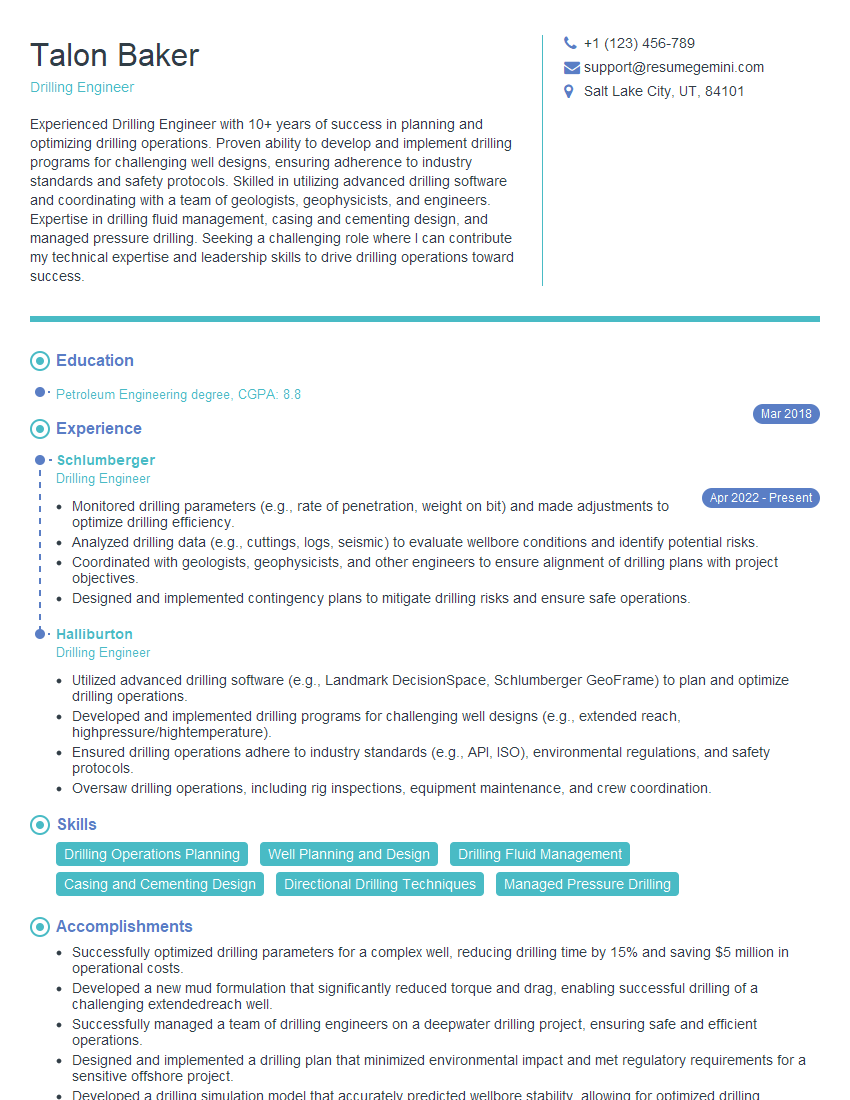
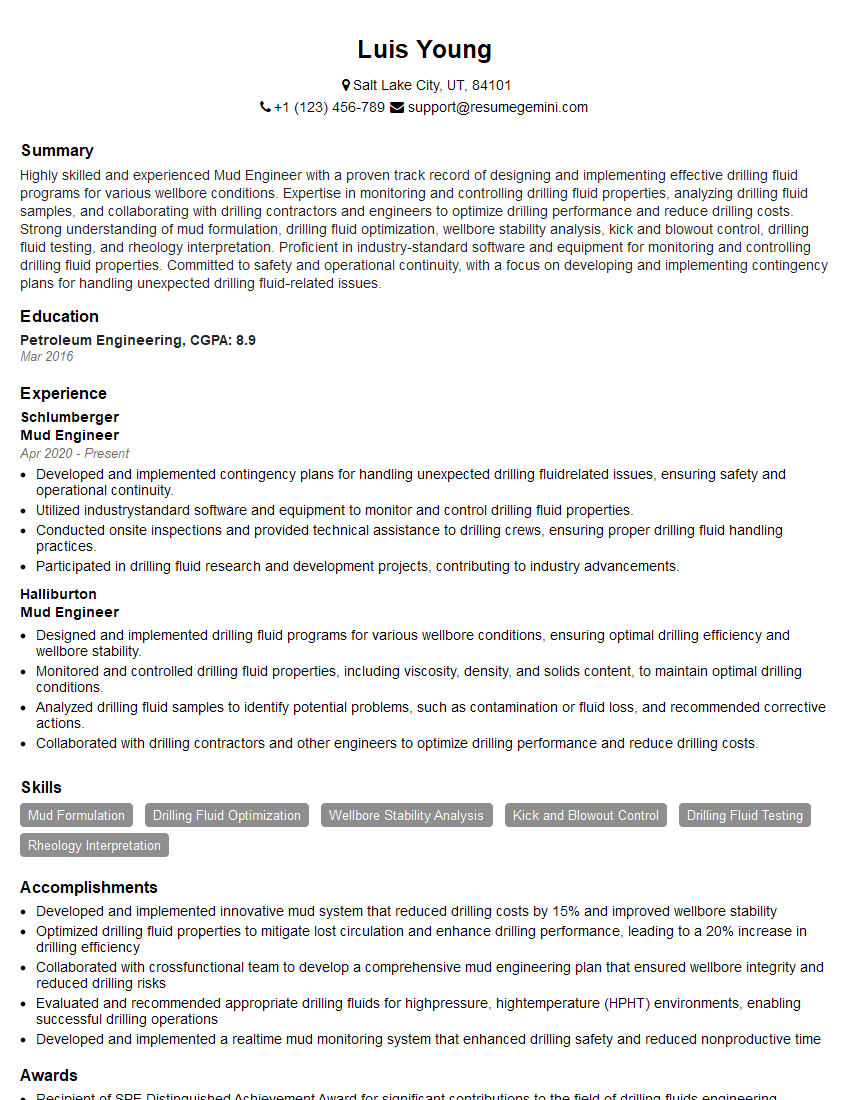
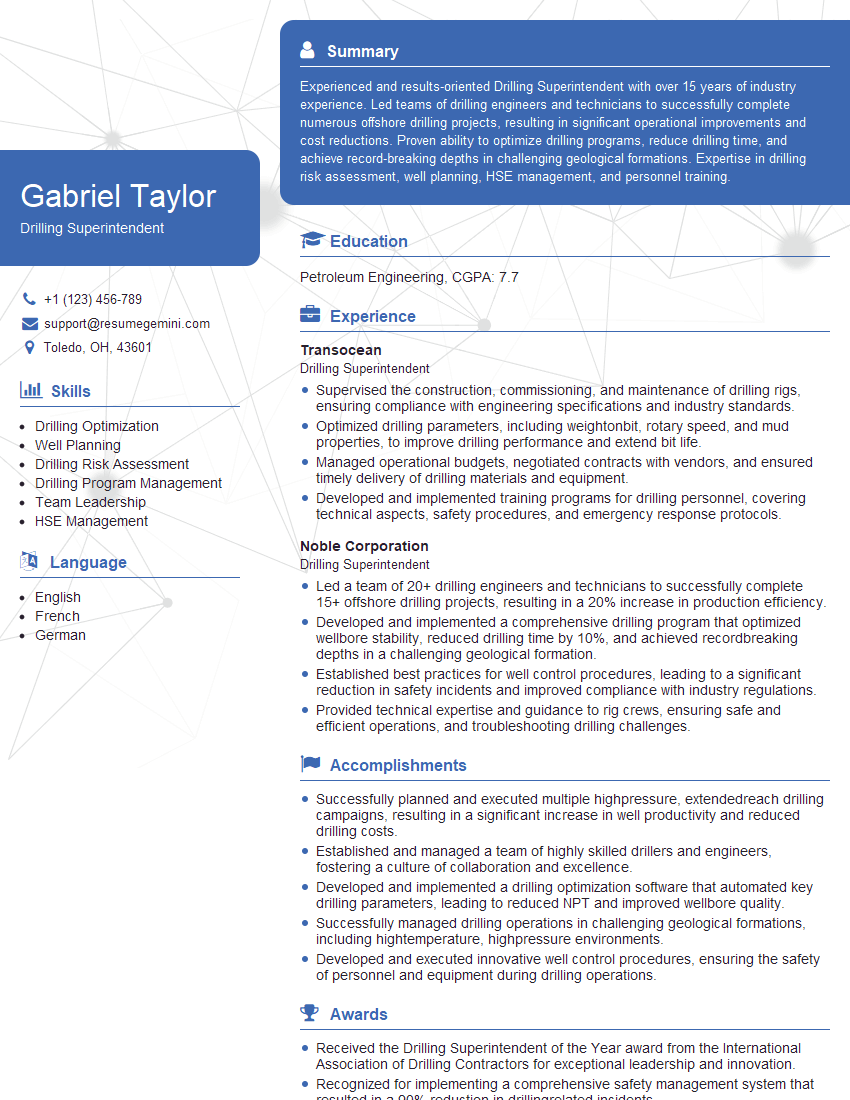
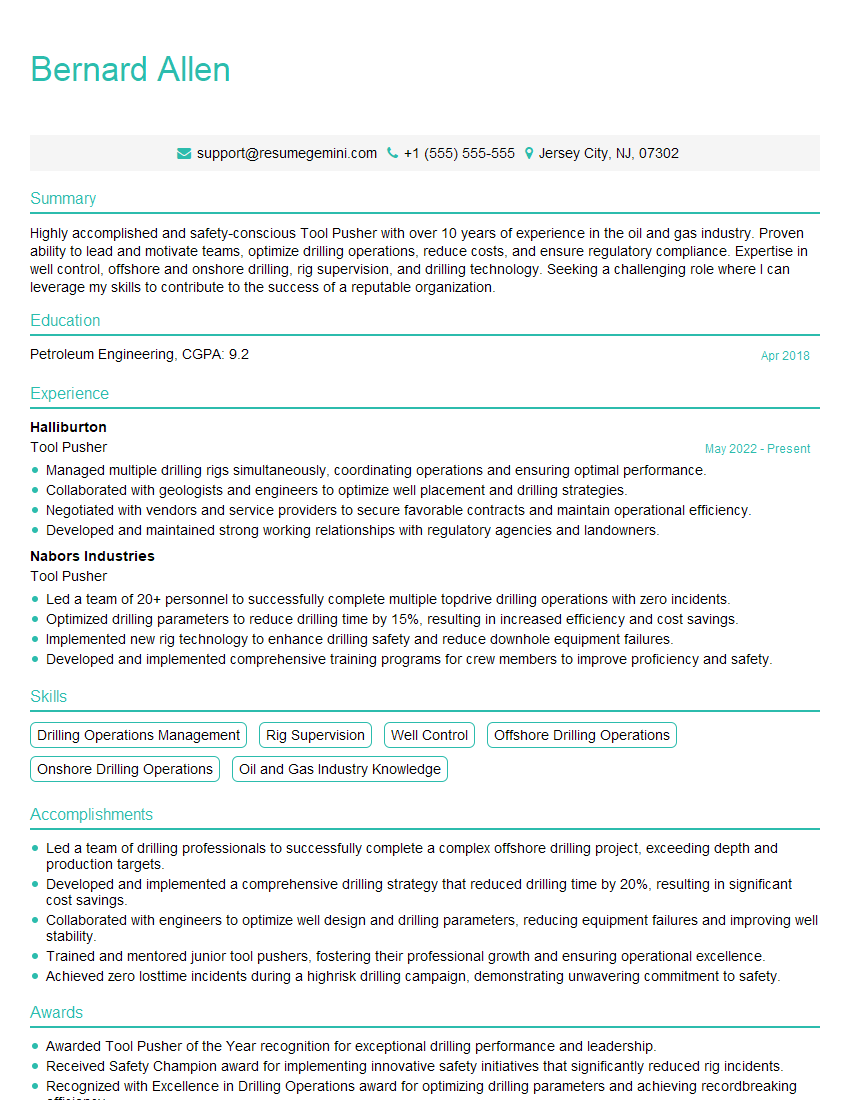
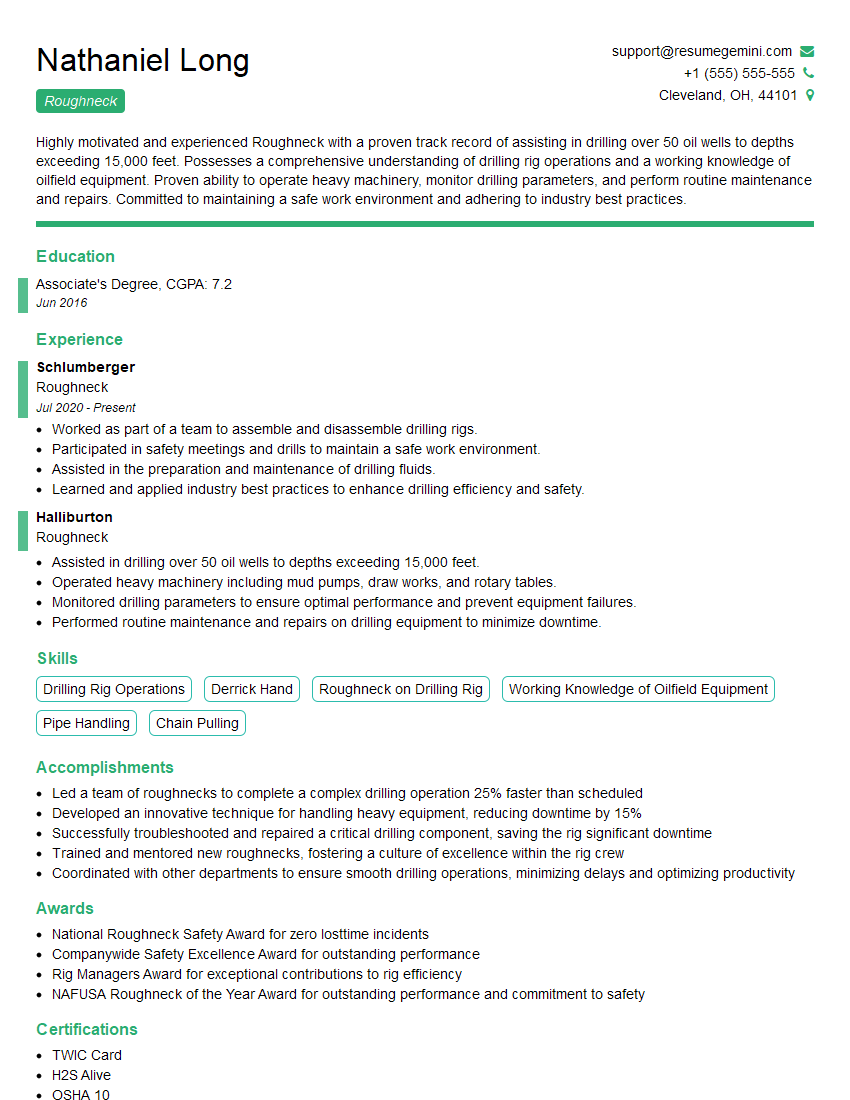
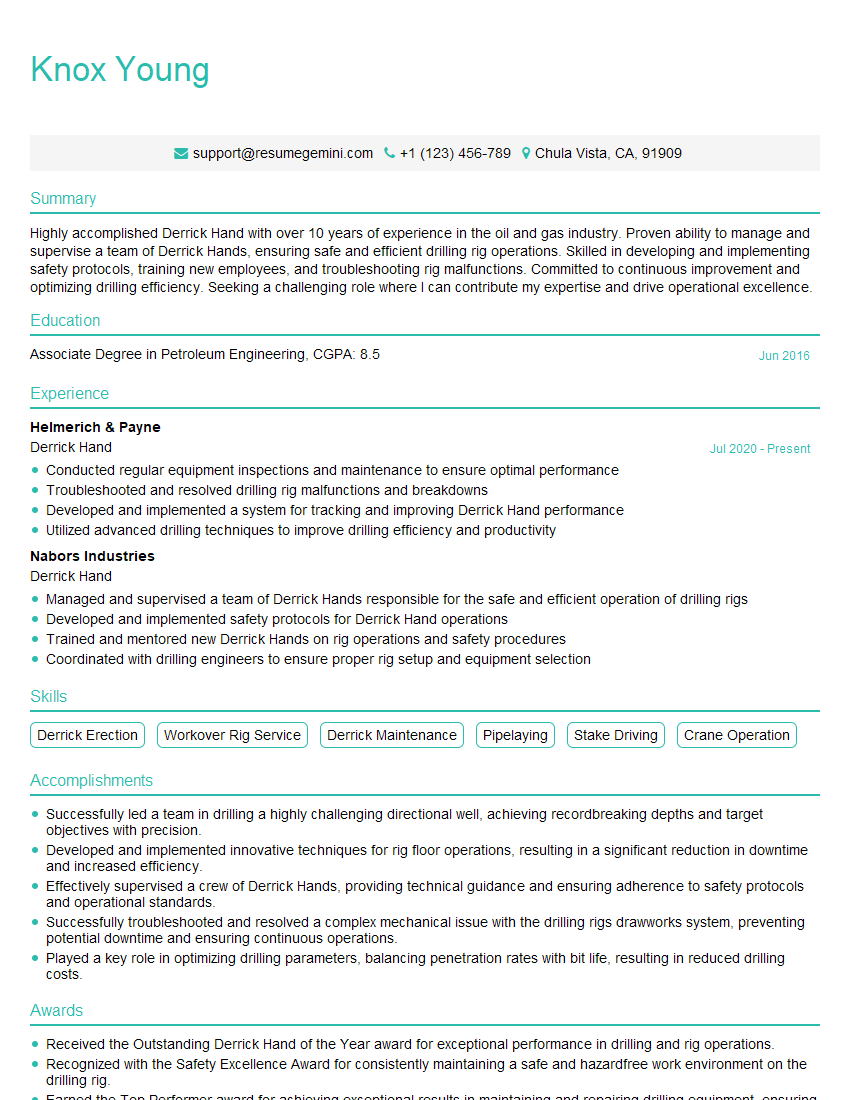
Mastering the operation of drilling equipment is crucial for career advancement in this dynamic and in-demand field. It opens doors to higher-paying roles with increased responsibility and opportunities for specialized training. To maximize your job prospects, create an ATS-friendly resume that highlights your skills and experience effectively. ResumeGemini is a trusted resource that can help you build a professional and impactful resume tailored to the specific demands of the drilling industry. Examples of resumes tailored to Operate drilling equipment are available to guide you. Take the next step towards your dream career today!


Explore more articles
Users Rating of Our Blogs
Share Your Experience
We value your feedback! Please rate our content and share your thoughts (optional).
What Readers Say About Our Blog
Very informative content, great job.
good