Unlock your full potential by mastering the most common Metallurgy and Materials Engineering interview questions. This blog offers a deep dive into the critical topics, ensuring you’re not only prepared to answer but to excel. With these insights, you’ll approach your interview with clarity and confidence.
Questions Asked in Metallurgy and Materials Engineering Interview
Q 1. Explain the difference between ferrous and non-ferrous metals.
The primary difference between ferrous and non-ferrous metals lies in their iron content. Ferrous metals contain iron as their primary constituent, exhibiting properties like high strength, ductility, and magnetism. Examples include steel (an alloy of iron and carbon), cast iron, and wrought iron. These materials are widely used in construction, automotive industries, and manufacturing due to their strength and affordability. Non-ferrous metals, conversely, lack iron in their composition. They often possess superior corrosion resistance, better electrical conductivity, and unique properties depending on their elemental makeup. Copper, aluminum, zinc, titanium, and gold are prime examples, utilized in electrical wiring, aerospace applications, and jewelry making, reflecting their diverse properties.
Q 2. Describe the process of steelmaking.
Steelmaking is a complex process transforming iron ore into steel. It begins with the reduction of iron ore in a blast furnace, converting iron oxides into molten pig iron containing impurities like carbon, silicon, manganese, and phosphorus. This pig iron then undergoes a refining process in a basic oxygen furnace (BOF) or an electric arc furnace (EAF). In the BOF, high-purity oxygen is blown into the molten iron, oxidizing the impurities and removing them as slag. The EAF uses electric arcs to melt scrap steel and other materials, allowing for more precise control over the alloying process. After refining, the molten steel is carefully controlled regarding its chemical composition and temperature before casting into various forms like ingots or slabs. The entire process emphasizes precise temperature control, oxygen management, and chemical analysis to achieve the desired steel grade.
For example, the amount of carbon influences steel’s hardness and strength: high carbon steel is harder and stronger but less ductile than low carbon steel.
Q 3. What are the common types of corrosion and how can they be prevented?
Corrosion is the deterioration of a material due to its reaction with its environment. Common types include:
- Uniform Corrosion: Even deterioration across the entire surface, like rust on a low-carbon steel surface exposed to moisture and oxygen.
- Pitting Corrosion: Localized attack resulting in small holes or pits, often seen in stainless steels in chloride environments.
- Crevice Corrosion: Corrosion concentrated in crevices or gaps, where oxygen access is limited. Think of bolts or rivets in marine applications.
- Galvanic Corrosion: Electrochemical corrosion between two dissimilar metals in contact, like steel and copper in a marine environment.
- Stress Corrosion Cracking: Corrosion cracking caused by simultaneous action of tensile stress and a corrosive environment, a potential failure mechanism in pipelines under pressure and corrosive soil.
Corrosion prevention involves various strategies such as:
- Protective Coatings: Paints, coatings, and plating protect the base metal from the environment.
- Corrosion Inhibitors: Chemicals added to the environment to slow down the corrosion rate.
- Material Selection: Choosing corrosion-resistant materials like stainless steels or non-ferrous metals.
- Cathodic Protection: Applying a protective current to make the metal less prone to oxidation.
- Design Considerations: Avoiding stagnant water, crevice formation, and galvanic couples in design.
Q 4. Explain the principles of heat treatment and its impact on material properties.
Heat treatment involves controlled heating and cooling of materials to alter their microstructure and, consequently, their mechanical properties. The principles involve manipulating the phase transformations within the material. For example, in steel, heating to the austenite region followed by controlled cooling can increase hardness and strength (quenching) or enhance ductility and toughness (annealing).
Annealing relieves internal stresses, improves ductility, and softens the material. Quenching rapidly cools the material to increase hardness and strength. Tempering partially relieves the internal stresses created by quenching, improving toughness. The specific heat treatment process depends on the material and the desired properties. For instance, a high-carbon steel knife blade might undergo quenching and tempering to achieve hardness and a degree of toughness, while a boiler component might be stress-relieved through annealing for improved resistance to cracking.
Q 5. Discuss the different types of crystal structures in metals.
Metals crystallize in various structures, the most common being:
- Body-Centered Cubic (BCC): Each atom is located at the center of a cube, with eight corner atoms. Iron (at room temperature), chromium, and tungsten exhibit this structure, leading to high strength but lower ductility compared to FCC.
- Face-Centered Cubic (FCC): Atoms are at the corners and the center of each face of a cube. Aluminum, copper, nickel, and austenitic stainless steels display this structure, often leading to high ductility and good corrosion resistance.
- Hexagonal Close-Packed (HCP): Atoms are arranged in a hexagonal pattern. Titanium, magnesium, and zinc have this structure, known for its high strength and good corrosion resistance, but lower ductility than FCC.
The crystal structure significantly impacts a material’s mechanical and physical properties. For example, the slip systems (planes along which atoms can easily slide past each other) are different in each structure, affecting their ductility and strength.
Q 6. How do you determine the mechanical properties of a material?
Determining the mechanical properties of a material requires various tests, depending on the specific properties of interest. These include:
- Tensile Testing: Measures tensile strength, yield strength, ductility, and modulus of elasticity by applying a uniaxial tensile load to a specimen.
- Compression Testing: Measures compressive strength by applying a uniaxial compressive load.
- Hardness Testing: Measures resistance to indentation using techniques like Brinell, Rockwell, or Vickers hardness tests.
- Impact Testing: Measures toughness or resistance to fracture under impact loads (Charpy or Izod tests).
- Fatigue Testing: Determines the material’s resistance to failure under cyclic loading.
- Creep Testing: Measures deformation under sustained load at elevated temperatures.
The choice of test depends on the intended application. For example, a material for a bridge might require tensile, fatigue, and impact testing to ensure its strength and durability under various loading conditions.
Q 7. What are the different methods of non-destructive testing (NDT)?
Non-destructive testing (NDT) methods evaluate materials without causing damage. Common techniques include:
- Visual Inspection: Simple observation to detect surface flaws or cracks.
- Liquid Penetrant Testing: Detects surface cracks by applying a dye that penetrates the crack and is then revealed by a developer.
- Magnetic Particle Testing: Detects surface and near-surface cracks in ferromagnetic materials using magnetic fields and ferromagnetic particles.
- Ultrasonic Testing: Uses high-frequency sound waves to detect internal flaws. It can image internal defects and measure wall thickness.
- Radiographic Testing (RT): Uses X-rays or gamma rays to detect internal flaws. Provides images of the material’s internal structure, similar to an X-ray of a human body.
- Eddy Current Testing: Uses electromagnetic induction to detect surface and near-surface flaws in conductive materials.
The selection of the appropriate NDT method depends on the material, the type of flaw being sought, and the accessibility of the material. For example, ultrasonic testing is ideal for inspecting thick components for internal flaws, while liquid penetrant testing is suited for detecting surface cracks in smaller parts.
Q 8. Explain the concept of phase diagrams and their applications.
Phase diagrams are graphical representations of the equilibrium relationships between different phases of a material system, typically as a function of temperature, composition, and pressure. Think of it as a map showing the different states a material can exist in under various conditions.
For example, a simple iron-carbon phase diagram reveals the different phases (austenite, ferrite, cementite) that form at varying carbon percentages and temperatures, which is crucial for understanding the heat treatment of steel. These diagrams are essential because they predict the microstructure of an alloy at different temperatures, allowing us to tailor material properties through controlled cooling or heating.
- Applications: Predicting microstructure, designing alloys with desired properties, controlling heat treatments (e.g., annealing, quenching, tempering), understanding phase transformations (e.g., solidification, eutectic reactions).
- Example: The iron-carbon diagram helps determine the appropriate heat treatment cycle for producing a steel with specific strength and ductility. By knowing the equilibrium phases, we can select the cooling rate that produces the desired microstructure, leading to the desired material properties.
Q 9. How do you select materials for a specific application?
Material selection is a critical process, involving considering the desired properties (mechanical, physical, chemical), the operating environment, cost, availability, and manufacturability. It’s a multi-step process often involving a systematic approach.
- Define Requirements: Clearly specify the application and required performance characteristics (strength, hardness, corrosion resistance, temperature range, etc.).
- Identify Candidate Materials: Based on the requirements, preliminary material classes can be identified (e.g., steel, aluminum, polymer). Consult material databases and handbooks.
- Narrow Down Options: Evaluate candidates against the essential requirements, considering factors like cost and availability. Prioritize the most crucial properties.
- Prototype and Test: Create prototypes from the shortlisted materials and conduct extensive testing under realistic conditions. This often involves mechanical testing, corrosion testing, or specific application-based tests.
- Final Selection: Choose the material that best meets the requirements and constraints, considering factors like manufacturing processes and long-term performance.
Example: Selecting a material for an aircraft component requires a material with high strength-to-weight ratio, excellent fatigue resistance, and good corrosion resistance. Aluminum alloys are a common choice due to their lightweight nature and good strength, while titanium alloys are selected when even higher strength and corrosion resistance are needed.
Q 10. Describe the process of casting metals.
Casting is a manufacturing process used to create metal parts by pouring molten metal into a mold, allowing it to solidify and then removing the solidified part. Different types of casting exist depending on the mold material and the process parameters.
- Sand Casting: Uses a sand mold, making it cost-effective for large, simple parts. It’s quite versatile.
- Die Casting: Employs reusable metal molds (dies) for high-volume production of complex, high-precision parts.
- Investment Casting (Lost-Wax Casting): A wax pattern is coated with ceramic, then melted out to leave a cavity. Precise and allows for intricate geometries.
- Centrifugal Casting: The molten metal is rotated in a mold, resulting in denser parts with uniform properties.
The process generally involves: mold preparation, melting the metal, pouring the molten metal into the mold, allowing solidification, and removing the casting from the mold. Post-processing steps might include cleaning, machining, and heat treatment.
Example: Engine blocks for automobiles are often produced via sand casting due to their size and relatively simple geometry, while intricate parts of a cell phone could be created using investment casting.
Q 11. Explain the difference between tensile strength and yield strength.
Tensile strength and yield strength are both measures of a material’s resistance to deformation under tensile load, but they represent different aspects of that resistance.
- Tensile Strength: The maximum stress a material can withstand before fracturing. It represents the ultimate strength of the material. Think of it as the point at which the material breaks.
- Yield Strength: The stress at which a material begins to deform plastically (permanently). It indicates the onset of permanent deformation. Beyond this point, the material will not return to its original shape after the load is removed.
In simpler terms: Imagine stretching a rubber band. The tensile strength is how much force you can apply before it snaps. The yield strength is the point where it starts to stretch permanently and doesn’t snap back to its original length when you let go.
Example: A high-tensile strength steel is desirable for applications requiring high load-bearing capacity, while a higher yield strength is preferred in applications where permanent deformation must be avoided (e.g., precise engineering components).
Q 12. What are the factors affecting the fatigue life of a material?
Fatigue life is the number of stress cycles a material can withstand before failure under cyclic loading. Many factors can influence it:
- Mean Stress: The average stress level during the cycle. Higher mean stress reduces fatigue life.
- Stress Amplitude: The variation in stress from the mean value. Larger amplitudes lead to shorter fatigue lives.
- Stress Ratio (R): The ratio of minimum to maximum stress in a cycle. Lower ratios (closer to -1) can be detrimental.
- Surface Finish: Surface imperfections act as stress concentrators, initiating cracks and reducing fatigue life.
- Material Properties: Factors such as yield strength, ultimate tensile strength, and ductility affect fatigue resistance. Some materials are inherently more resistant.
- Temperature: High or low temperatures can weaken the material, reducing fatigue strength.
- Corrosion: Corrosive environments accelerate crack initiation and propagation.
Example: Aircraft components experience cyclic loading during flight, making fatigue life a critical design consideration. Careful material selection, surface treatment, and design features to minimize stress concentrations are crucial to extend the fatigue life of these components.
Q 13. Explain the concept of creep in materials.
Creep is the time-dependent, permanent deformation of a material under sustained stress at high temperatures. It’s like a slow, continuous stretching of the material over time. Imagine a gummy bear under constant pressure – it slowly deforms over time.
Creep occurs because at elevated temperatures, atoms within the material have enough energy to slowly rearrange themselves, leading to deformation. This is significantly different from yielding, which is a more immediate plastic response.
Factors affecting creep: Temperature (higher temperature increases creep rate), applied stress (higher stress increases creep rate), material properties (some materials are inherently more creep-resistant), grain size (smaller grains can enhance creep resistance).
Example: Turbine blades in gas turbines operate at very high temperatures and experience significant stresses. Creep is a major concern in this application, and materials with excellent creep resistance (e.g., nickel-based superalloys) are crucial for their long-term performance.
Q 14. What are the different types of welding processes?
Welding is a fabrication process that joins materials, usually metals or thermoplastics, by causing coalescence. Many different welding processes exist, each with its own advantages and disadvantages.
- Fusion Welding: The base materials are melted and fused together. Examples include:
- Gas Metal Arc Welding (GMAW): Uses a consumable electrode and shielding gas.
- Gas Tungsten Arc Welding (GTAW): Uses a non-consumable tungsten electrode and shielding gas. Known for its high quality welds.
- Shielded Metal Arc Welding (SMAW): Uses a consumable electrode coated with flux.
- Resistance Welding: Uses electrical resistance to heat and fuse the materials. Examples include:
- Spot Welding: Creates localized welds for joining sheet metals.
- Seam Welding: Used to make continuous welds.
- Solid-State Welding: The materials are joined without melting. Examples include:
- Diffusion Bonding: Uses high pressure and temperature to create a diffusion bond.
- Friction Welding: Generates heat through friction between the materials.
The choice of welding process depends on factors like the material being welded, the joint design, the required weld quality, and cost constraints.
Example: GMAW is commonly used for large-scale construction projects due to its speed and efficiency, while GTAW is preferred for applications requiring superior weld quality and precision, such as aerospace components.
Q 15. Describe the principles of powder metallurgy.
Powder metallurgy is a fascinating process for creating metal parts from metal powders. Instead of melting and casting metal, it involves compacting finely divided metal powders into a desired shape and then sintering – heating them to a high temperature below their melting point – to fuse the particles together. This allows for the creation of complex shapes and unique material properties not easily achievable through traditional methods.
- Principle 1: Powder Production: The process begins with the creation of fine metal powders through methods such as atomization (breaking a molten metal stream into droplets), reduction of metal oxides, or mechanical alloying. The particle size and distribution are crucial for the final product’s properties.
- Principle 2: Powder Compaction: Next, the powder is compacted under high pressure in a die to form a ‘green compact,’ a preliminary shape of the desired part. This step is essential to achieve the required density and geometry before sintering.
- Principle 3: Sintering: This is the critical step where the green compact is heated in a controlled atmosphere to a high temperature. This causes the powder particles to bond together through atomic diffusion, increasing the density and strength of the part. The sintering conditions (temperature, time, atmosphere) are carefully controlled to optimize the final properties.
Example: Tungsten carbide cutting tools are often manufactured using powder metallurgy due to the high hardness and wear resistance achieved through the process. The fine tungsten carbide particles are mixed with a binder metal (like cobalt) and then compacted and sintered to create a very durable cutting tool.
Career Expert Tips:
- Ace those interviews! Prepare effectively by reviewing the Top 50 Most Common Interview Questions on ResumeGemini.
- Navigate your job search with confidence! Explore a wide range of Career Tips on ResumeGemini. Learn about common challenges and recommendations to overcome them.
- Craft the perfect resume! Master the Art of Resume Writing with ResumeGemini’s guide. Showcase your unique qualifications and achievements effectively.
- Don’t miss out on holiday savings! Build your dream resume with ResumeGemini’s ATS optimized templates.
Q 16. How do you analyze the microstructure of a material?
Analyzing the microstructure of a material involves examining its internal structure, including the arrangement of grains, phases, and defects, at a microscopic level. This reveals crucial information about its properties and processing history. It’s like looking at the ‘building blocks’ of the material to understand its overall strength, durability, and other characteristics.
- Optical Microscopy: This is the simplest method, using visible light to observe the microstructure at magnifications up to 1500x. Polishing and etching the sample is crucial to reveal the grain boundaries and phases.
- Scanning Electron Microscopy (SEM): SEM uses a focused beam of electrons to create high-resolution images, offering magnifications up to 100,000x or even higher. This is great for detailed analysis of surface features, grain size, and morphology.
- Transmission Electron Microscopy (TEM): TEM transmits electrons through a very thin sample, allowing for the visualization of crystallographic details at the atomic level. It’s particularly useful for investigating defects like dislocations and grain boundaries.
- Electron Backscatter Diffraction (EBSD): This technique identifies crystallographic orientation within a material and provides detailed information about grain size, texture, and phase distributions. It’s highly useful for studying the relationship between microstructure and mechanical properties.
Example: In failure analysis of a component, microscopy techniques are used to identify the type of fracture (ductile, brittle, fatigue), the presence of cracks or inclusions, and the overall microstructure contributing to the failure. This information helps determine the root cause and prevent similar failures in the future.
Q 17. Explain the role of alloying elements in modifying material properties.
Alloying elements are intentionally added to a base metal to modify its properties, making it stronger, tougher, more corrosion-resistant, or altering other desired characteristics. It’s like adding spices to a recipe to enhance its flavor and texture. The properties of the alloy depend not only on the type of elements added but also on their concentration.
- Increased Strength: Carbon in steel significantly increases its strength. The carbon atoms hinder dislocation movement within the iron crystal lattice, making it more resistant to deformation.
- Improved Corrosion Resistance: Adding chromium to steel forms a passive oxide layer on its surface, protecting it from corrosion (stainless steel). Nickel improves the corrosion resistance further, and molybdenum enhances the resistance in chloride environments.
- Enhanced Toughness: Nickel and manganese are common alloying elements in steel that improve its toughness and ductility, reducing the likelihood of brittle fracture.
- Specific Properties: Certain alloying additions create specific properties. For instance, adding rare earth elements can refine the grain size leading to enhanced mechanical properties.
Example: Adding small amounts of vanadium to steel can significantly improve its high-temperature strength and creep resistance, which makes it suitable for applications in high-temperature environments such as gas turbines.
Q 18. What are the challenges in processing advanced materials?
Processing advanced materials presents unique challenges compared to conventional materials. These materials often have complex compositions and microstructures, requiring sophisticated processing techniques and careful control of parameters.
- High Processing Temperatures: Many advanced materials, such as ceramics and intermetallics, require extremely high temperatures for processing, demanding specialized furnaces and equipment.
- Reactivity: Some advanced materials are highly reactive with their surroundings and require controlled atmospheres during processing to prevent undesirable reactions and contamination.
- Complex Microstructures: Achieving the desired microstructure in advanced materials is often challenging and can require innovative processing techniques like powder metallurgy, chemical vapor deposition, or directional solidification.
- Cost: Advanced materials often involve rare or expensive elements, leading to high processing costs. This needs careful consideration regarding cost-effectiveness.
- Scale-up Challenges: Scaling up the production of advanced materials from laboratory scale to industrial scale can be complex and require significant engineering efforts.
Example: Processing carbon fiber reinforced polymers (CFRP) requires precise control of fiber orientation, resin impregnation, and curing processes to ensure uniform distribution and high mechanical properties. Defects, such as voids or delamination, can severely reduce the strength and performance of the composite.
Q 19. Discuss the applications of nanomaterials in engineering.
Nanomaterials, materials with at least one dimension sized between 1 and 100 nanometers, exhibit unique properties due to their high surface area to volume ratio and quantum effects. This makes them highly suitable for various engineering applications.
- Electronics: Carbon nanotubes and graphene are used in advanced electronics due to their exceptional electrical conductivity and mechanical strength. They are used in transistors, sensors, and flexible displays.
- Biomedical Engineering: Nanoparticles can be used for drug delivery, targeting specific cells or tissues in the body. They can also be used for creating advanced biocompatible implants.
- Catalysis: Nanomaterials offer high surface areas, making them excellent catalysts in various chemical reactions. This can improve efficiency and reduce environmental impact in many industrial processes.
- Energy: Nanomaterials are used in batteries, solar cells, and fuel cells to improve their efficiency and energy storage capacity. For instance, nano-structured materials enhance the performance of lithium-ion batteries.
- Coatings: Nanocoatings offer enhanced protection against wear, corrosion, and scratching. They are used in various applications, from automotive parts to aerospace components.
Example: Titanium dioxide nanoparticles are used in sunscreens due to their high UV absorption capabilities, providing effective sun protection while being relatively transparent.
Q 20. Explain the concept of stress-strain curves.
A stress-strain curve graphically represents the relationship between the stress (force per unit area) applied to a material and the resulting strain (deformation) it undergoes. It’s a fundamental tool for understanding a material’s mechanical behavior under load. Think of it as the material’s ‘personality’ under stress.
- Elastic Region: In this region, the material deforms elastically, meaning it returns to its original shape after the load is removed. The slope of this region represents the Young’s modulus, a measure of the material’s stiffness.
- Yield Point: This is the point where the material starts to deform plastically, meaning the deformation is permanent. It signifies the onset of permanent changes in the material’s shape.
- Plastic Region: In this region, the material undergoes permanent deformation. The material continues to deform with increasing stress, but at a lower rate than in the elastic region. This region shows the material’s ductility (ability to deform before fracturing).
- Ultimate Tensile Strength: This is the maximum stress the material can withstand before it starts to neck (reduce in cross-sectional area) and eventually fracture. It reflects the material’s strength.
- Fracture Point: This is the point where the material breaks. The stress and strain at this point give information about the material’s toughness (resistance to fracture).
Example: Comparing the stress-strain curves of different steels can help engineers select the appropriate material for a specific application. A steel with high yield strength and ductility might be preferred for structural components, while a steel with high ultimate tensile strength might be chosen for high-strength applications.
Q 21. What are the different types of fracture in materials?
Fracture in materials refers to the separation of a solid into two or more pieces under the action of stress. The type of fracture is highly dependent on the material’s properties and the loading conditions. Understanding the different types is crucial for designing reliable and safe structures.
- Ductile Fracture: Characterized by significant plastic deformation before fracture. The fracture surface is usually rough and fibrous due to the extensive plastic deformation. Examples include necking and cup-and-cone fractures in ductile metals.
- Brittle Fracture: Occurs with little or no plastic deformation. The fracture surface is usually flat and crystalline, exhibiting cleavage planes. Examples include the fracture of glass or ceramics.
- Fatigue Fracture: Results from repeated cyclic loading, even at stresses below the yield strength. The fracture surface often exhibits characteristic striations or beach marks that indicate the progression of crack growth.
- Creep Fracture: Occurs at high temperatures and under sustained stress. The material slowly deforms over time, eventually leading to fracture. This is a concern in high-temperature applications like gas turbines.
- Intergranular Fracture: Fracture occurs along the grain boundaries. This can be caused by impurity segregation at grain boundaries or by weakening of the grain boundaries due to high temperatures or corrosive environments.
Example: The catastrophic failure of a pressure vessel might be due to brittle fracture at low temperatures or fatigue fracture due to cyclic pressure fluctuations. Microscopic examination of the fracture surface helps determine the type of fracture and its cause, guiding future design improvements.
Q 22. How do you assess the impact toughness of a material?
Impact toughness measures a material’s ability to absorb energy and resist fracture under impact loading. It’s crucial for applications where sudden shocks or impacts are expected, like car bumpers or aircraft components. We primarily assess this using the Charpy or Izod impact test.
In a Charpy test, a standardized notched specimen is struck by a pendulum hammer, and the energy absorbed during fracture is measured. A higher energy absorption indicates greater impact toughness. The Izod test is similar, but the specimen is fixed vertically instead of horizontally.
The results are usually presented as energy absorbed per unit area or as a transition temperature, where the material’s toughness significantly changes with temperature (e.g., ductile-to-brittle transition). This transition temperature is critical; operating a material below its transition temperature can lead to catastrophic brittle failure.
For example, consider designing a ship hull. Understanding the impact toughness of the steel used is essential to ensure the hull can withstand collisions with ice floes or other objects without catastrophic failure. The selection of a steel with a suitable impact toughness and a transition temperature well below the operating temperature is crucial for safety.
Q 23. Explain the process of metal forming.
Metal forming encompasses a range of processes that shape metals into desired forms by applying compressive forces. It relies on the plastic deformation of the metal, meaning the metal is permanently changed without fracture. The process can be hot (above the metal’s recrystallization temperature) or cold (below the recrystallization temperature).
- Hot forming allows for greater deformation and more complex shapes but requires energy-intensive heating processes. Examples include forging (hammering metal into shape), rolling (passing metal through rollers to reduce thickness), and extrusion (forcing metal through a die to create a specific profile).
- Cold forming produces better surface finishes and tighter tolerances but is limited in the extent of deformation possible. Examples include stamping (pressing metal into a die to create a shape), drawing (pulling metal through a die to reduce its diameter), and bending.
The choice between hot and cold forming depends on the desired properties, shape complexity, and cost considerations. For instance, creating a complex turbine blade often involves hot forging due to its ability to handle intricate shapes. On the other hand, producing a thin sheet metal component might use cold rolling and stamping for high precision and surface quality.
Q 24. Describe the different types of composite materials.
Composite materials combine two or more distinct materials with different properties to achieve a material with enhanced characteristics. The combination results in a synergistic effect, where the composite’s properties exceed those of its individual components.
Composite materials are broadly classified based on their matrix material:
- Polymer Matrix Composites (PMCs): These use a polymer resin as the matrix, reinforced by fibers like carbon fiber, fiberglass, or aramid fiber (Kevlar). PMCs are lightweight, strong, and relatively inexpensive, making them suitable for applications like aerospace components, automotive parts, and sporting goods.
- Metal Matrix Composites (MMCs): These employ a metal matrix (e.g., aluminum, titanium, magnesium) reinforced by ceramic particles or fibers (e.g., silicon carbide, alumina). MMCs offer high strength, stiffness, and temperature resistance, finding use in high-performance applications like aircraft engines and high-temperature structural components.
- Ceramic Matrix Composites (CMCs): These utilize a ceramic matrix reinforced by ceramic fibers. CMCs possess exceptional high-temperature strength, corrosion resistance, and thermal shock resistance. They are used in applications like heat shields, rocket nozzles, and gas turbine components.
- Carbon-Carbon Composites: These composites consist of carbon fibers in a carbon matrix. They offer exceptional high-temperature strength, high stiffness and low density but are brittle and expensive. Applications include high-temperature aerospace components, brake discs in high-performance cars and rocket nozzles.
The choice of composite material depends on the specific application’s requirements, balancing properties such as strength, stiffness, weight, cost, and temperature resistance.
Q 25. What are the ethical considerations in materials selection?
Ethical considerations in materials selection are paramount and go beyond simply choosing the material with the best mechanical properties. We must consider the entire lifecycle of the material, from sourcing raw materials to manufacturing, use, and disposal or recycling.
- Environmental Impact: The extraction and processing of materials can have significant environmental consequences, such as greenhouse gas emissions, water pollution, and habitat destruction. Selecting materials with low environmental impact, considering their recyclability and potential for reuse, is critical.
- Social Responsibility: The sourcing of raw materials must be ethically sound, ensuring fair labor practices, avoidance of conflict minerals, and responsible resource management.
- Human Health: The material’s potential toxicity during manufacturing, use, and disposal must be assessed. Harmful substances should be minimized or avoided. For instance, the use of lead in solder was phased out due to its toxicity.
- Economic Sustainability: The cost of materials and the implications for manufacturing processes should be carefully considered. Long-term economic sustainability should outweigh short-term cost savings that might compromise ethical considerations.
For example, when choosing a material for a medical implant, biocompatibility is paramount. The material must not cause adverse reactions in the body and should be easily degradable or recyclable after its function is completed. This ensures patient safety and minimizes potential environmental damage.
Q 26. Explain your experience with Finite Element Analysis (FEA) in materials engineering.
I have extensive experience utilizing Finite Element Analysis (FEA) in materials engineering. FEA is a powerful computational tool that allows us to simulate the behavior of materials under various loading conditions. This helps in predicting material performance, optimizing designs, and troubleshooting potential failures before physical prototypes are even built.
My experience includes using FEA software like ANSYS and ABAQUS to model stress, strain, displacement, and temperature distributions in complex geometries. I’ve applied this to various projects:
- Structural Analysis: Predicting the stress and strain in components subjected to mechanical loads, to ensure sufficient strength and avoid failure.
- Thermal Analysis: Simulating temperature distributions in components exposed to heat sources to design efficient cooling systems and prevent thermal stress.
- Fatigue Analysis: Assessing the cyclic loading behavior of components to predict their fatigue life and prevent failures due to fatigue cracks.
- Crashworthiness Analysis: Simulating impact scenarios to design safer and more resilient structures (e.g., vehicle crash simulations).
For instance, during the design of a new automotive chassis component, FEA enabled us to optimize the design for weight reduction without compromising strength, leading to fuel efficiency improvements. The ability to iterate designs quickly and efficiently using FEA saves both time and resources during the product development process.
Q 27. Describe a time you had to troubleshoot a material failure. What was your approach?
During a project involving a pressure vessel that experienced a catastrophic failure, my systematic approach to troubleshooting was crucial. Initially, visual inspection showed a crack propagating from a weld joint. The immediate conclusion could have been welding defect, but a thorough investigation was required.
My approach was as follows:
- Gather Data: We collected all available information – design specifications, manufacturing records, operational data, and images of the fracture surface.
- Visual Inspection and Macro-Analysis: Detailed visual inspection of the fracture surface revealed a brittle fracture with characteristic features, indicating a potential material issue.
- Microscopic Analysis: Metallurgical microscopy revealed the presence of micro-voids and inclusions within the weld metal, suggesting flaws in the welding procedure or subpar material quality.
- Mechanical Testing: We performed Charpy impact tests on samples taken from the weld zone and the base material, finding a significantly lower impact toughness in the weld zone, consistent with the brittle fracture.
- Chemical Analysis: Chemical analysis confirmed the correct material composition in both the weld metal and base material.
- Finite Element Analysis (FEA): FEA simulations, using the identified material properties and weld geometry, confirmed that the observed stress concentrations at the weld joint could have indeed initiated the brittle fracture.
Based on these findings, we concluded that the combination of stress concentration at the weld and low impact toughness of the weld metal were responsible for the failure. We then revised our welding procedures and implemented stricter quality controls to prevent future occurrences.
Q 28. What are your preferred methods for materials characterization and testing?
My preferred methods for materials characterization and testing depend heavily on the specific material and the information sought, but I utilize a range of techniques to ensure thorough analysis.
- Mechanical Testing: Tensile testing (determining strength, ductility, and Young’s modulus), hardness testing (measuring material resistance to indentation), impact testing (assessing impact toughness), fatigue testing (evaluating cyclic loading behavior), creep testing (studying deformation under constant stress at elevated temperatures).
- Microscopy: Optical microscopy (visualizing microstructure at low magnification), Scanning Electron Microscopy (SEM) (high-resolution imaging of surfaces and microstructures), Transmission Electron Microscopy (TEM) (analyzing the crystal structure at atomic level).
- Spectroscopy: Energy-dispersive X-ray spectroscopy (EDS) (determining elemental composition), X-ray diffraction (XRD) (analyzing crystal structure), etc.
- Thermal Analysis: Differential Scanning Calorimetry (DSC) (analyzing phase transitions), Thermogravimetric Analysis (TGA) (measuring weight changes with temperature).
For instance, to characterize a newly developed high-strength steel alloy, I might perform tensile testing to determine its yield strength and ductility, hardness testing to evaluate its surface hardness, and SEM with EDS to examine its microstructure and elemental composition. This multi-faceted approach provides a comprehensive understanding of the material’s properties.
Key Topics to Learn for Metallurgy and Materials Engineering Interview
- Phase Diagrams and Transformations: Understand equilibrium and non-equilibrium phase transformations, their kinetics, and their impact on material properties. Consider practical applications in heat treatments and alloy design.
- Mechanical Behavior of Materials: Master concepts like stress-strain relationships, tensile testing, hardness testing, fracture mechanics, and fatigue. Be prepared to discuss real-world examples of material failure and design strategies to prevent them.
- Crystallography and Defects: Develop a strong understanding of crystal structures, common crystal defects (point, line, planar), and their influence on material properties. Think about how these relate to material processing and performance.
- Corrosion and Degradation: Familiarize yourself with various corrosion mechanisms (galvanic, crevice, stress corrosion cracking), protective coatings, and methods to mitigate corrosion. Discuss practical applications in various industries.
- Material Selection and Design: Practice selecting materials based on specific application requirements, considering factors like cost, strength, weight, corrosion resistance, and manufacturability. Be ready to justify your choices.
- Processing and Manufacturing: Understand the principles behind various material processing techniques like casting, forging, rolling, machining, and powder metallurgy. Relate these processes to the final microstructure and properties of the materials.
- Advanced Materials: Depending on your specialization, prepare to discuss topics like composites, polymers, nanomaterials, biomaterials, or other advanced materials. Highlight their unique properties and potential applications.
- Material Characterization Techniques: Be familiar with common techniques used to analyze material properties such as microscopy (optical, SEM, TEM), X-ray diffraction, and spectroscopy. Understand the information each technique provides.
Next Steps
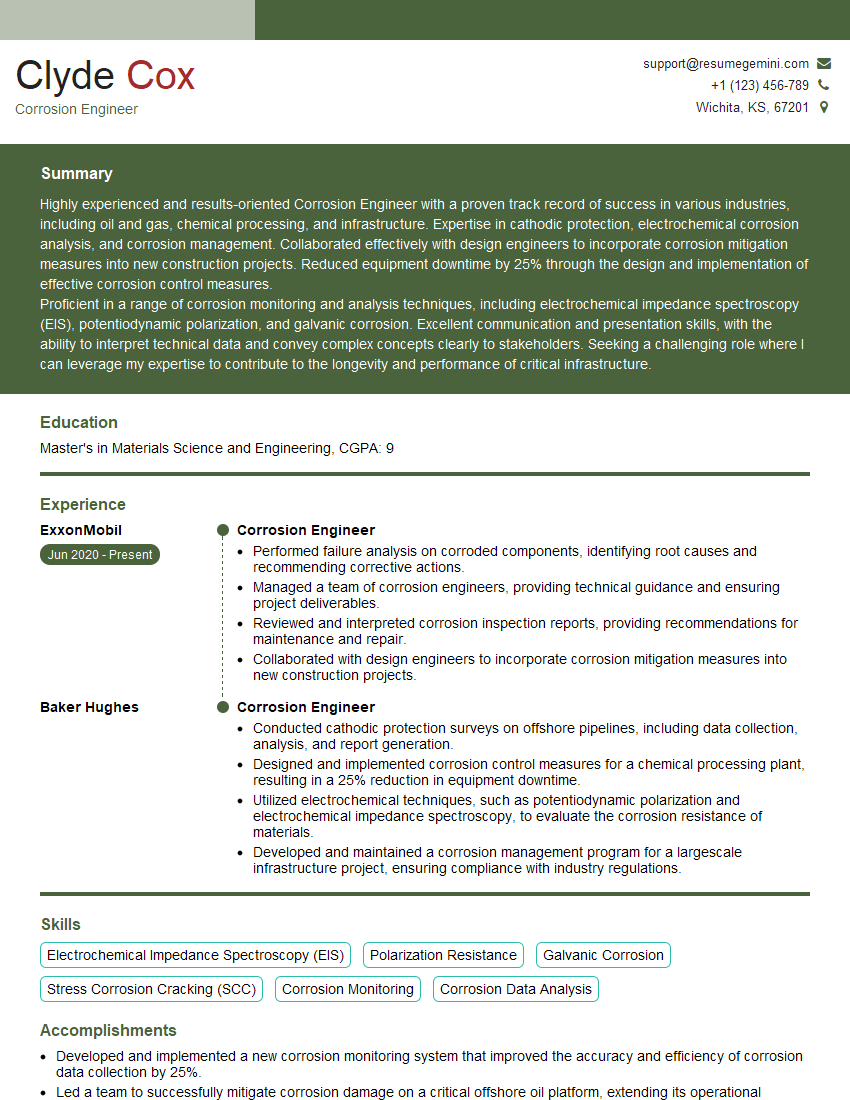
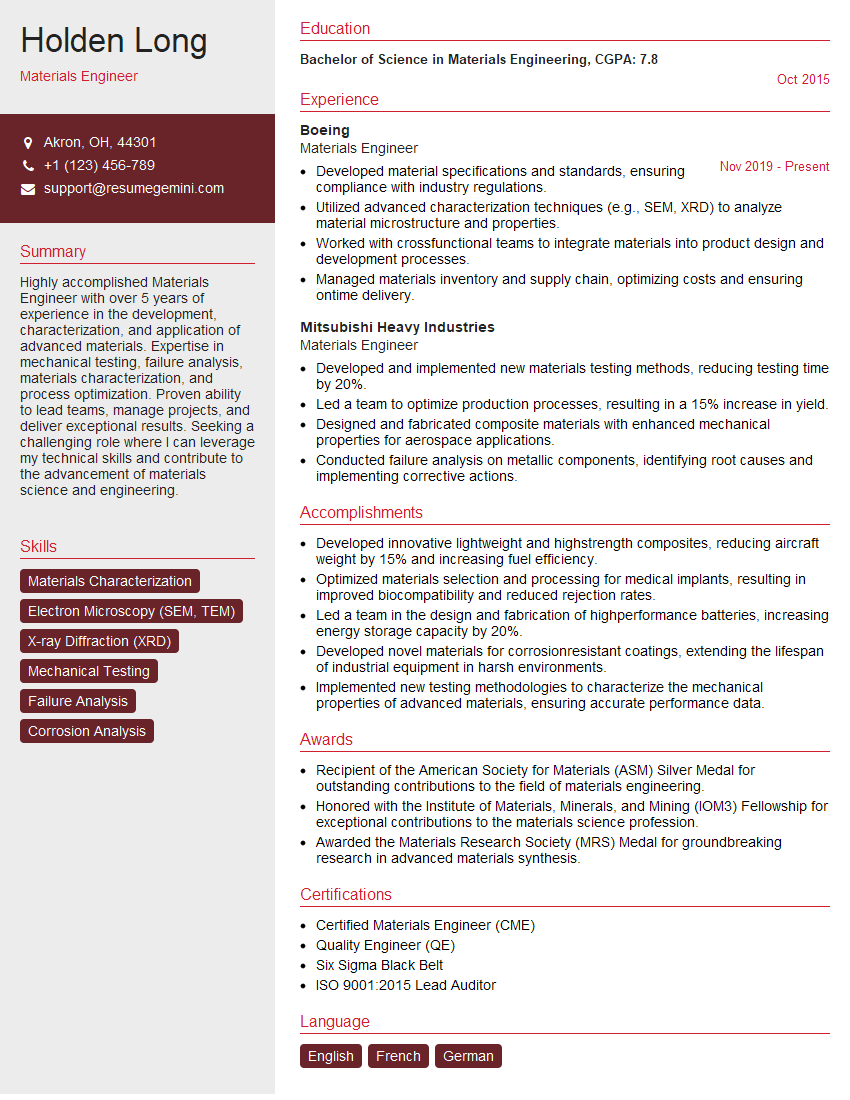
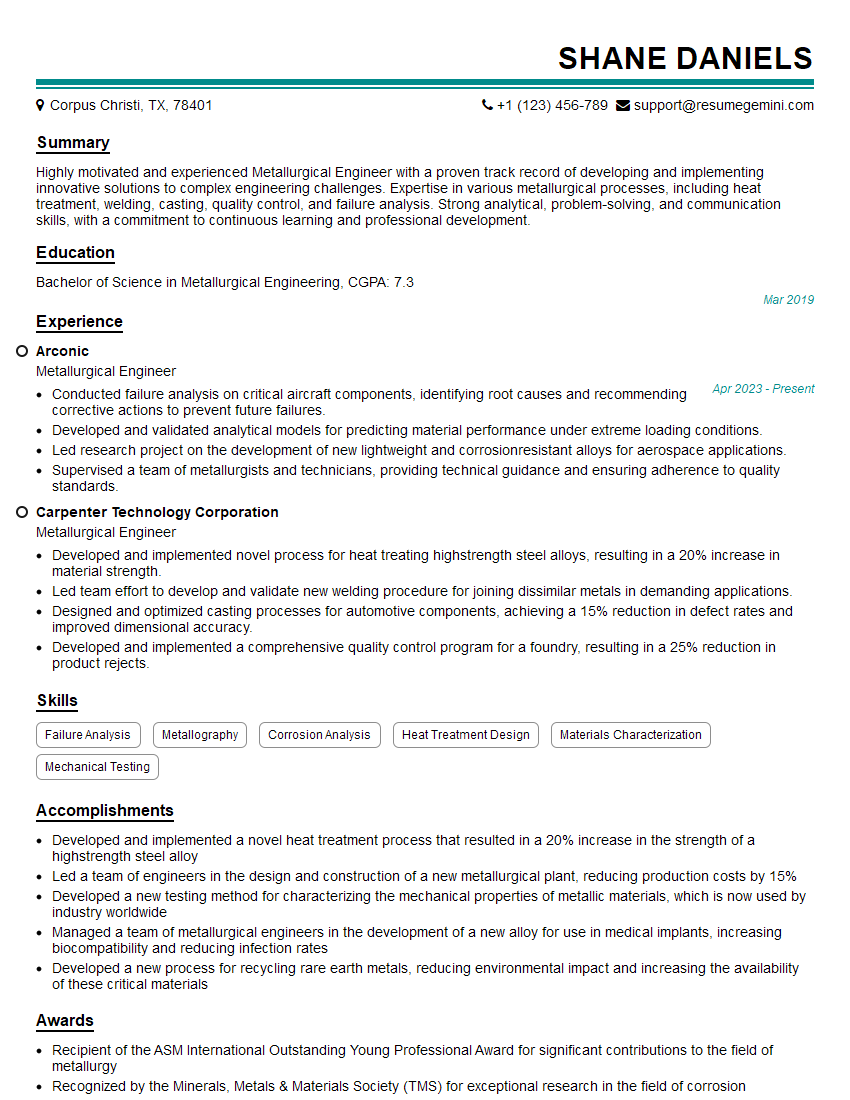
Mastering Metallurgy and Materials Engineering opens doors to exciting and impactful careers in diverse fields, from aerospace and automotive to biomedical and energy. A strong understanding of these principles is crucial for success in this competitive landscape. To significantly boost your job prospects, creating an ATS-friendly resume is essential. ResumeGemini can help you build a professional and effective resume that highlights your skills and experience in the best possible light. ResumeGemini offers examples of resumes tailored to Metallurgy and Materials Engineering, providing you with a valuable head start in your job search.



Explore more articles
Users Rating of Our Blogs
Share Your Experience
We value your feedback! Please rate our content and share your thoughts (optional).
What Readers Say About Our Blog
Attention music lovers!
Wow, All the best Sax Summer music !!!
Spotify: https://open.spotify.com/artist/6ShcdIT7rPVVaFEpgZQbUk
Apple Music: https://music.apple.com/fr/artist/jimmy-sax-black/1530501936
YouTube: https://music.youtube.com/browse/VLOLAK5uy_noClmC7abM6YpZsnySxRqt3LoalPf88No
Other Platforms and Free Downloads : https://fanlink.tv/jimmysaxblack
on google : https://www.google.com/search?q=22+AND+22+AND+22
on ChatGPT : https://chat.openai.com?q=who20jlJimmy20Black20Sax20Producer
Get back into the groove with Jimmy sax Black
Best regards,
Jimmy sax Black
www.jimmysaxblack.com
Hi I am a troller at The aquatic interview center and I suddenly went so fast in Roblox and it was gone when I reset.
Hi,
Business owners spend hours every week worrying about their website—or avoiding it because it feels overwhelming.
We’d like to take that off your plate:
$69/month. Everything handled.
Our team will:
Design a custom website—or completely overhaul your current one
Take care of hosting as an option
Handle edits and improvements—up to 60 minutes of work included every month
No setup fees, no annual commitments. Just a site that makes a strong first impression.
Find out if it’s right for you:
https://websolutionsgenius.com/awardwinningwebsites
Hello,
we currently offer a complimentary backlink and URL indexing test for search engine optimization professionals.
You can get complimentary indexing credits to test how link discovery works in practice.
No credit card is required and there is no recurring fee.
You can find details here:
https://wikipedia-backlinks.com/indexing/
Regards
NICE RESPONSE TO Q & A
hi
The aim of this message is regarding an unclaimed deposit of a deceased nationale that bears the same name as you. You are not relate to him as there are millions of people answering the names across around the world. But i will use my position to influence the release of the deposit to you for our mutual benefit.
Respond for full details and how to claim the deposit. This is 100% risk free. Send hello to my email id: lukachachibaialuka@gmail.com
Luka Chachibaialuka
Hey interviewgemini.com, just wanted to follow up on my last email.
We just launched Call the Monster, an parenting app that lets you summon friendly ‘monsters’ kids actually listen to.
We’re also running a giveaway for everyone who downloads the app. Since it’s brand new, there aren’t many users yet, which means you’ve got a much better chance of winning some great prizes.
You can check it out here: https://bit.ly/callamonsterapp
Or follow us on Instagram: https://www.instagram.com/callamonsterapp
Thanks,
Ryan
CEO – Call the Monster App
Hey interviewgemini.com, I saw your website and love your approach.
I just want this to look like spam email, but want to share something important to you. We just launched Call the Monster, a parenting app that lets you summon friendly ‘monsters’ kids actually listen to.
Parents are loving it for calming chaos before bedtime. Thought you might want to try it: https://bit.ly/callamonsterapp or just follow our fun monster lore on Instagram: https://www.instagram.com/callamonsterapp
Thanks,
Ryan
CEO – Call A Monster APP
To the interviewgemini.com Owner.
Dear interviewgemini.com Webmaster!
Hi interviewgemini.com Webmaster!
Dear interviewgemini.com Webmaster!
excellent
Hello,
We found issues with your domain’s email setup that may be sending your messages to spam or blocking them completely. InboxShield Mini shows you how to fix it in minutes — no tech skills required.
Scan your domain now for details: https://inboxshield-mini.com/
— Adam @ InboxShield Mini
support@inboxshield-mini.com
Reply STOP to unsubscribe
Hi, are you owner of interviewgemini.com? What if I told you I could help you find extra time in your schedule, reconnect with leads you didn’t even realize you missed, and bring in more “I want to work with you” conversations, without increasing your ad spend or hiring a full-time employee?
All with a flexible, budget-friendly service that could easily pay for itself. Sounds good?
Would it be nice to jump on a quick 10-minute call so I can show you exactly how we make this work?
Best,
Hapei
Marketing Director
Hey, I know you’re the owner of interviewgemini.com. I’ll be quick.
Fundraising for your business is tough and time-consuming. We make it easier by guaranteeing two private investor meetings each month, for six months. No demos, no pitch events – just direct introductions to active investors matched to your startup.
If youR17;re raising, this could help you build real momentum. Want me to send more info?
Hi, I represent an SEO company that specialises in getting you AI citations and higher rankings on Google. I’d like to offer you a 100% free SEO audit for your website. Would you be interested?
Hi, I represent an SEO company that specialises in getting you AI citations and higher rankings on Google. I’d like to offer you a 100% free SEO audit for your website. Would you be interested?