Feeling uncertain about what to expect in your upcoming interview? We’ve got you covered! This blog highlights the most important Optical Spectrometer Development interview questions and provides actionable advice to help you stand out as the ideal candidate. Let’s pave the way for your success.
Questions Asked in Optical Spectrometer Development Interview
Q 1. Explain the principle of operation of a UV-Vis spectrometer.
A UV-Vis spectrometer measures the absorbance or transmission of light through a sample as a function of wavelength in the ultraviolet (UV) and visible (Vis) regions of the electromagnetic spectrum. The principle rests on the interaction of light with matter: molecules absorb specific wavelengths of light corresponding to the energy required for electronic transitions. By measuring the amount of light absorbed or transmitted at various wavelengths, we obtain a spectrum that is characteristic of the sample’s chemical composition and concentration.
Imagine shining a rainbow of light through a colored solution. Certain colors will be absorbed more strongly than others, leaving a different color to pass through. A UV-Vis spectrometer quantifies this, plotting absorbance (or transmittance) against wavelength. This plot, called an absorbance spectrum, provides valuable information about the sample. For example, the presence of specific peaks at certain wavelengths indicates the presence of specific functional groups within the sample’s molecules.
Q 2. Describe the different types of optical spectrometers and their applications.
Optical spectrometers come in various types, each designed for specific applications. Some common types include:
- UV-Vis Spectrophotometers: As discussed previously, these are widely used for quantitative analysis of solutions, determining concentration of known substances, and studying the electronic structure of molecules.
- Near-Infrared (NIR) Spectrometers: These are utilized for analyzing samples in their natural state, like agricultural products or pharmaceuticals, due to NIR light’s ability to penetrate further. Applications include quality control and process monitoring.
- Fourier Transform Infrared (FTIR) Spectrometers: FTIR spectrometers are primarily used for identifying functional groups in molecules. They measure the absorption of infrared radiation, which causes vibrational changes in molecular bonds, providing a fingerprint spectrum unique to the substance.
- Raman Spectrometers: These spectrometers measure the inelastic scattering of light (Raman scattering), providing information about the vibrational modes of molecules. They are valuable for non-destructive analysis of solids, liquids, and gases.
- Atomic Absorption Spectrometers (AAS): AAS measures the absorption of light by free atoms in a gaseous state, allowing for the determination of elemental composition in samples. It is crucial in environmental and food safety analysis.
The choice of spectrometer depends on the specific analytical needs. For example, if you need to quickly quantify a known substance in solution, a UV-Vis spectrophotometer is ideal. If you’re identifying an unknown compound, FTIR might be more appropriate.
Q 3. What are the key components of an optical spectrometer?
A typical optical spectrometer comprises several key components working together:
- Light Source: Provides the radiation needed (e.g., deuterium lamp for UV, tungsten lamp for visible, or a laser for specific applications).
- Entrance Slit: Defines the width and height of the light beam entering the spectrometer, influencing resolution.
- Monochromator (or Polychromator): This is the heart of the spectrometer, separating the light into its component wavelengths. It typically includes a diffraction grating or prism.
- Detector: Transduces the light intensity at each wavelength into an electrical signal (e.g., photomultiplier tubes (PMTs), CCD arrays, photodiodes).
- Data Acquisition System: Processes the detector signals and displays the spectrum.
Furthermore, sample holders, optical fibers, mirrors, and lenses are often incorporated to optimize light path and sample interaction. The specific components and their configuration vary widely based on the instrument’s design and purpose.
Q 4. How does a diffraction grating work in a spectrometer?
A diffraction grating is a crucial component in many spectrometers, used for dispersing light into its constituent wavelengths. It’s essentially a surface with many closely spaced, parallel grooves (rulings). When light strikes the grating, it diffracts (bends) and interferes with itself. Constructive interference occurs at specific angles, determined by the grating’s spacing (groove density) and the wavelength of the light. This creates a diffraction pattern where different wavelengths are spatially separated.
The relationship between the angle of diffraction (θ), the wavelength (λ), the groove spacing (d), and the order of diffraction (m) is described by the grating equation: mλ = d sin θ
Imagine throwing pebbles into a pond. Each pebble creates ripples, and where the ripples overlap, you get bigger waves. Similarly, light waves interfere with each other after hitting the grating, and constructive interference at specific angles creates the spectrum. The finer the grating (smaller d), the better the separation of wavelengths.
Q 5. Explain the concept of spectral resolution in optical spectroscopy.
Spectral resolution refers to the ability of a spectrometer to distinguish between two closely spaced wavelengths or spectral features. It is usually expressed as the smallest wavelength difference (Δλ) that can be resolved. Higher resolution means the spectrometer can differentiate between finer details in the spectrum.
Think of it like distinguishing between two closely spaced musical notes. A high-resolution instrument can clearly separate the notes, while a low-resolution one might blend them together. In spectroscopy, high resolution is crucial for accurately identifying and quantifying components in complex samples with overlapping spectral features. Resolution is influenced by factors like the width of the entrance slit, the grating’s groove density, and the detector’s characteristics.
Q 6. How is wavelength calibration performed in an optical spectrometer?
Wavelength calibration is essential for accurate measurements in optical spectroscopy. It involves relating the detected signal (e.g., detector position) to the actual wavelength. This is typically done using a calibration standard—a substance with known spectral lines. For example, a low-pressure mercury or argon lamp emits light at very precise wavelengths.
The procedure involves measuring the spectrum of the calibration standard and comparing its known spectral lines to the measured positions. This creates a calibration curve relating detector position to wavelength. The curve is then used to convert the measured detector signals from unknown samples into accurate wavelength values. Regular calibration is necessary to ensure the accuracy of spectrometer measurements as the instrument’s components can drift over time.
Q 7. Describe different detector types used in optical spectrometers and their advantages/disadvantages.
Various detector types are employed in optical spectrometers, each with advantages and disadvantages:
- Photomultiplier Tubes (PMTs): These are highly sensitive detectors that amplify weak light signals. They are excellent for low-light applications but are less suitable for simultaneously detecting a wide range of wavelengths.
- Charge-Coupled Devices (CCDs): CCDs are solid-state detectors that can capture a wide range of wavelengths simultaneously, providing a complete spectrum in a single measurement. They offer high sensitivity and excellent linearity but can be more expensive than PMTs.
- Photodiodes: These are simple, inexpensive detectors, often used in applications requiring lower sensitivity. They usually detect only a single wavelength at a time.
- Silicon Photodiodes: A specific type of photodiode, offering good sensitivity in the visible range. These are frequently used in less demanding applications because of their cost-effectiveness and simplicity.
The selection of the optimal detector depends on factors such as the required sensitivity, the spectral range of interest, and the budget. For example, a PMT might be preferred for measuring weak fluorescence signals, whereas a CCD array is better for rapid spectral acquisition of a broad wavelength range.
Q 8. What are common sources of noise in optical spectrometers, and how can they be minimized?
Noise in optical spectrometers degrades the quality of spectral data, making accurate measurements challenging. Several sources contribute to this noise. Think of it like trying to hear a quiet whisper in a noisy room – the whisper (your signal) is difficult to distinguish from the surrounding sounds (noise).
- Thermal Noise (Johnson-Nyquist Noise): This arises from the random thermal motion of electrons in the detector and its circuitry. It’s essentially unavoidable and increases with temperature. Minimization involves cooling the detector (e.g., using thermoelectric coolers or liquid nitrogen) and using low-noise electronics.
- Shot Noise: This is inherent to the detection process itself. It’s related to the discrete nature of light – light consists of photons, and their arrival at the detector is a random process. The fluctuations in the number of detected photons contribute to shot noise. Minimizing this involves maximizing the light intensity reaching the detector, using high-quantum efficiency detectors, and careful design of the optical path.
- Dark Current Noise: This is a current produced by the detector even in the absence of light. It’s particularly problematic in low-light conditions. Cooling the detector significantly reduces dark current.
- Readout Noise: This arises from the electronics used to read the signal from the detector. It’s similar to the static or hiss you might hear in an audio system. Using high-quality, low-noise analog-to-digital converters (ADCs) helps to minimize readout noise.
- Environmental Noise: External sources like vibrations, temperature fluctuations, and electromagnetic interference can introduce noise. Shielding the spectrometer from these external factors helps to mitigate environmental noise. For example, vibration isolation tables can be used to reduce vibration-induced noise.
Minimizing noise requires a multifaceted approach that addresses each of these sources. Careful component selection, optimized design, and proper environmental control are crucial for obtaining high-quality spectral data.
Q 9. Explain the difference between absorbance, transmittance, and reflectance.
Absorbance, transmittance, and reflectance describe how light interacts with a material. Imagine shining a light through a colored glass – some light passes through (transmittance), some is absorbed (absorbance), and some might bounce off the surface (reflectance).
- Transmittance (T): The fraction of incident light that passes through a sample. It’s expressed as a percentage or a decimal between 0 and 1. A perfectly transparent sample has a transmittance of 1 (or 100%).
- Absorbance (A): The amount of light absorbed by a sample. It’s defined as the negative logarithm (base 10) of the transmittance:
A = -log10(T). Higher absorbance means more light is absorbed. - Reflectance (R): The fraction of incident light that is reflected by a sample. Like transmittance, it’s expressed as a percentage or a decimal between 0 and 1. A perfectly reflective surface has a reflectance of 1 (or 100%).
These three properties are related by the equation: T + A + R = 1 (or 100% if expressed as percentages). However, this equation holds true only when scattering is negligible. In real-world scenarios, scattering can significantly affect the measurements. Understanding these relationships is essential for interpreting spectral data obtained from different types of samples and experimental setups.
Q 10. How do you perform stray light analysis in a spectrometer?
Stray light is unwanted light that reaches the detector without passing through the sample. It’s like having a bright light shining on your instrument, making it difficult to see the faint signal of interest. Stray light analysis is critical because it can significantly distort spectral measurements, leading to inaccurate results. This can occur due to imperfections in optical components, scattering from surfaces, or diffraction.
Stray light analysis typically involves two approaches:
- Direct Measurement: This method involves blocking the main beam of light and measuring the residual signal reaching the detector. This residual signal represents the stray light. The measured stray light is often expressed as a percentage of the total signal.
- Indirect Measurement (using a cutoff filter): Here, a filter with a sharp cutoff wavelength is introduced into the optical path. The light intensity beyond the cutoff wavelength represents the stray light from shorter wavelengths. Comparing the measured intensity with the expected intensity of stray light reveals any deviation and allows for optimization.
Effective stray light reduction often necessitates careful attention to the optical design, using high-quality optical components with low scattering, incorporating baffles and light traps within the optical path, and using appropriate coatings to minimize reflections.
Q 11. What are the challenges in designing a high-resolution spectrometer?
Designing a high-resolution spectrometer presents several significant challenges. High resolution means the ability to distinguish between closely spaced spectral lines. This usually requires a trade-off between other parameters such as sensitivity, throughput, and cost.
- Diffraction Limit: The resolving power of a spectrometer is fundamentally limited by diffraction. To achieve higher resolution, one needs larger diffraction gratings or longer focal lengths, resulting in a larger and more expensive instrument.
- Aberrations: Optical aberrations (e.g., spherical and chromatic aberration) can broaden spectral lines and reduce resolution. Careful design and the use of high-quality optical components are essential to minimize aberrations.
- Detector Limitations: The detector’s pixel size and noise level can also limit resolution. High-resolution spectrometers require detectors with small pixels and low noise.
- Mechanical Stability: Even small vibrations or temperature fluctuations can affect the accuracy of high-resolution measurements. Robust mechanical design and precise temperature control are critical for achieving and maintaining high resolution.
- Cost: The stringent requirements for high-quality optical components and precise manufacturing make high-resolution spectrometers significantly more expensive than their lower-resolution counterparts.
Overcoming these challenges often involves sophisticated design techniques, such as the use of advanced optical elements (e.g., echelle gratings, Fabry-Perot interferometers) and advanced signal processing algorithms to improve signal-to-noise ratios and correct for aberrations.
Q 12. Explain the concept of signal-to-noise ratio (SNR) in spectroscopy.
The signal-to-noise ratio (SNR) is a crucial metric in spectroscopy. It quantifies the strength of the desired signal relative to the background noise. A higher SNR signifies cleaner, more reliable data. Imagine trying to find a specific star in the night sky – a high SNR is like having a clear, dark sky with the star shining brightly, while a low SNR is like trying to spot the star through a hazy, cloudy sky.
Mathematically, the SNR is often calculated as the ratio of the signal amplitude to the standard deviation of the noise: SNR = Signal Amplitude / Noise Standard Deviation. A high SNR (typically above 100) is desired for reliable spectral analysis. The SNR is influenced by several factors, including the light intensity, detector sensitivity, noise level of the electronics, and the integration time.
Improving the SNR can be achieved through techniques like averaging multiple measurements, using better detectors with lower noise, increasing the integration time (collecting light for a longer period), and employing various noise reduction algorithms in post-processing.
Q 13. How would you troubleshoot a spectrometer that is not giving accurate readings?
Troubleshooting a spectrometer that’s giving inaccurate readings is a systematic process. Here’s a step-by-step approach:
- Verify Calibration: First, check the spectrometer’s calibration. An improperly calibrated instrument will always produce incorrect readings. Follow the manufacturer’s instructions to recalibrate the instrument using a standard reference material.
- Inspect the Optical Path: Examine the optical path for any dust, dirt, or damage to the optical components. Even small amounts of dust can significantly affect the measurements. Clean the optics carefully or replace damaged components.
- Assess Light Source: Make sure the light source is functioning correctly. Verify the intensity and stability of the light source. A fluctuating light source will introduce noise and lead to inaccurate measurements.
- Check Detector Performance: Assess the detector’s performance. High dark current, low quantum efficiency, or damaged pixels can all contribute to inaccurate readings. Compare the detector’s response to a known standard.
- Evaluate Electronics: Ensure the electronics are functioning properly. Check for loose connections or faulty components. Use a test signal to verify the functionality of the ADC and other signal processing components.
- Analyze Software: Verify the software used for data acquisition and processing. Software bugs or incorrect settings can lead to inaccuracies. Update the software to the latest version or check the settings for any errors.
- Environmental Factors: Consider the environment. Temperature fluctuations, vibrations, and electromagnetic interference can all affect the spectrometer’s performance. Improve environmental control if needed.
If the problem persists, it might indicate a more serious hardware issue. At this point, consulting the manufacturer’s technical support or a qualified service technician is recommended.
Q 14. Describe your experience with different optical materials used in spectrometer design.
My experience encompasses a broad range of optical materials commonly employed in spectrometer design. The choice of material heavily depends on the specific application and the desired spectral range. Here are some examples:
- Fused Silica: Excellent transmission across a wide spectral range (UV to near-IR), making it a popular choice for many applications. It’s also relatively resistant to scratching and chemical attack.
- Calcium Fluoride (CaF2): Provides excellent transmission in the UV and mid-IR spectral regions. It’s frequently used in applications requiring high transmission in these regions, but it’s more susceptible to moisture.
- Magnesium Fluoride (MgF2): Often used for its good transmission in the UV and visible, especially useful as a coating on optics or prisms.
- Germanium (Ge): A crucial material for the mid-IR and far-IR regions due to its high refractive index and transmission in this range. However, it’s brittle and requires careful handling.
- Zinc Selenide (ZnSe): Another significant choice for the mid-IR region, often preferred to Germanium for its better mechanical properties and resistance to scratching.
- Sapphire: Suitable for UV to near-IR applications, boasting high hardness and chemical resistance, making it durable for demanding environments.
In my experience, selecting the optimal material requires a careful trade-off between transmission characteristics, mechanical properties, cost, and chemical resistance. For instance, while fused silica is a versatile choice, its UV transmission might not be sufficient for applications requiring deep UV spectroscopy. Choosing the right material is paramount for achieving optimal performance and reliability.
Q 15. What software packages are you familiar with for data analysis in spectroscopy?
Data analysis in spectroscopy heavily relies on robust software packages. My experience encompasses a wide range, including commercially available options like OriginPro, known for its powerful curve fitting and statistical analysis capabilities, and MATLAB, a versatile platform ideal for signal processing, algorithm development, and custom data visualization. I’m also proficient in open-source alternatives like Python with libraries such as NumPy for numerical computations, SciPy for scientific algorithms, and Matplotlib/Seaborn for creating publication-quality plots. Choosing the right software depends on the specific needs of the project; for instance, OriginPro might be preferred for its user-friendly interface when dealing with large datasets requiring quick analysis, while MATLAB and Python offer greater flexibility for complex algorithms and custom scripting.
For example, during a project involving Raman spectroscopy, I used Python with SciPy to perform peak fitting and baseline correction, significantly enhancing the accuracy of spectral data interpretation. The resulting analysis was then visualized using Matplotlib, creating clear, concise figures for presentation and publication.
Career Expert Tips:
- Ace those interviews! Prepare effectively by reviewing the Top 50 Most Common Interview Questions on ResumeGemini.
- Navigate your job search with confidence! Explore a wide range of Career Tips on ResumeGemini. Learn about common challenges and recommendations to overcome them.
- Craft the perfect resume! Master the Art of Resume Writing with ResumeGemini’s guide. Showcase your unique qualifications and achievements effectively.
- Don’t miss out on holiday savings! Build your dream resume with ResumeGemini’s ATS optimized templates.
Q 16. Explain your experience with designing and implementing optical alignment procedures.
Optical alignment is critical for optimal spectrometer performance. My experience includes designing and implementing procedures for various spectrometer configurations, from simple single-element designs to more complex multi-element systems involving multiple lenses, gratings, and detectors. The process typically involves a combination of iterative adjustments and precise measurements. I’ve used techniques such as knife-edge scanning to ensure accurate beam collimation and spatial alignment. For precise angular adjustments, I utilize micro-manipulators and motorized stages with sub-micron resolution.
For example, in one project involving a fiber-coupled spectrometer, I developed a step-by-step procedure combining visual alignment using a CCD camera with power meter measurements to maximize light throughput. This involved careful adjustment of fiber coupling to the spectrometer input and optimizing the grating angle. Rigorous documentation at each step ensured reproducibility and simplified troubleshooting. Furthermore, understanding the impact of environmental factors such as temperature and vibrations on alignment is paramount, and I incorporate measures to mitigate these effects.
Q 17. Discuss your experience with various optical components such as lenses, mirrors, and filters.
My experience with optical components is extensive, covering a wide range of lenses (including achromatic, aspheric, and diffractive), mirrors (both flat and curved, including reflective coatings optimized for specific wavelengths), and filters (bandpass, longpass, shortpass, and notch filters). I understand the impact of their properties – focal length, numerical aperture, reflectivity, transmission, and spectral characteristics – on the overall spectrometer performance. I’m familiar with different lens materials (e.g., fused silica, calcium fluoride) and their respective advantages and disadvantages depending on the application’s spectral range and environmental conditions.
For instance, I have experience selecting and integrating appropriate filters to eliminate unwanted wavelengths in fluorescence spectroscopy. Choosing the correct bandpass filter to isolate the emission signal from the excitation source is critical for accurate measurement. Similarly, in Raman spectroscopy, a notch filter is crucial to attenuate the intense Rayleigh scattered light.
Q 18. How familiar are you with different types of light sources used in spectroscopy?
Spectroscopy employs a variety of light sources, each with its unique properties. I’m familiar with several, including incandescent lamps (offering broad spectral coverage for applications like UV-Vis spectroscopy), deuterium lamps (strong UV output), halogen lamps (high intensity), LEDs (narrow spectral bandwidth, easily modulated intensity), and lasers (highly monochromatic, coherent light). The choice of light source greatly impacts the experimental design. For instance, a laser source is ideal for applications requiring high spectral resolution and sensitivity, such as Raman spectroscopy or laser-induced breakdown spectroscopy (LIBS), while a deuterium lamp is preferred for general UV-Vis absorption measurements.
I also have hands-on experience with more specialized light sources like supercontinuum lasers, which offer broadband output suitable for various spectroscopic techniques. Selecting the appropriate source requires a detailed understanding of the target analyte and the chosen analytical technique.
Q 19. Describe your experience with testing and validating spectrometer performance.
Testing and validating spectrometer performance is crucial to ensure accurate and reliable measurements. My approach involves several key steps, beginning with resolving power and wavelength accuracy assessments. I use standard calibration sources such as spectral lamps (e.g., mercury, neon) to determine the wavelength accuracy and resolution. Next, I evaluate the signal-to-noise ratio (SNR) using dark current measurements and repeated scans of a stable light source. Stray light is evaluated to ensure minimal unwanted light reaches the detector. Linearity assessment is crucial to determine the instrument’s response across its dynamic range.
For example, during the testing phase of a newly designed spectrometer, we performed rigorous measurements across various wavelengths using a calibrated tungsten halogen lamp to assess linearity and compared our results to a reference spectrometer. Any deviations were analyzed and corrected via software calibration.
Q 20. Explain your understanding of different calibration techniques for optical spectrometers.
Calibration techniques are critical for accurate spectrometer measurements. Common methods include wavelength calibration, using known spectral lines from a calibration source like a low-pressure mercury lamp or a laser. Intensity calibration involves using a calibrated light source with a known spectral irradiance to correct for variations in the instrument’s response. Dark current correction accounts for the signal generated by the detector in the absence of light. This is subtracted from all measurements. Furthermore, stray light correction involves identifying and accounting for light reaching the detector outside the intended optical path. This often requires careful design and alignment of optical components.
Advanced calibration techniques include using sophisticated mathematical models to correct for non-linearity in the instrument response. The choice of calibration method depends on the application and the level of accuracy required. For instance, in high-precision applications, a multi-point wavelength calibration is essential to account for variations in the spectrometer’s dispersion across the spectral range.
Q 21. How would you design an experiment to measure the spectral properties of a material?
To measure the spectral properties of a material, the experimental design depends heavily on the nature of the material and the desired information (e.g., absorption, emission, reflectance). A typical experiment might involve:
- Choosing the appropriate spectroscopic technique: UV-Vis absorption spectroscopy, fluorescence spectroscopy, Raman spectroscopy, etc., depending on the material and desired information.
- Selecting the light source: The choice depends on the technique and the material’s spectral features. For example, a deuterium lamp is suitable for UV-Vis absorption, while a laser is essential for Raman spectroscopy.
- Sample preparation: This is crucial and varies based on the material. Liquids may require dilution, while solids might need surface preparation or special holders.
- Data acquisition: The spectrometer captures the spectrum. Multiple scans are usually averaged to improve the signal-to-noise ratio. Appropriate integration times must be selected.
- Data analysis: The acquired spectrum is analyzed to determine the relevant spectral parameters – peak positions, intensities, band shapes, etc. Peak fitting and baseline correction techniques may be applied to extract quantitative information.
For example, to measure the absorption spectrum of a dye solution, one would use a UV-Vis spectrometer with a deuterium/halogen lamp. The sample is placed in a cuvette, and the absorbance is measured across a range of wavelengths. The resulting spectrum is then analyzed to identify the absorption maxima and calculate the molar absorptivity.
Q 22. Describe your experience with integrating spectrometers into larger systems.
Integrating spectrometers into larger systems is a core part of my expertise. It’s not just about plugging in a device; it’s about understanding the entire system’s needs and constraints. This involves careful consideration of factors like spectral range, resolution, sensitivity, data acquisition speed, and environmental conditions.
For example, I worked on a project integrating a miniature UV-Vis spectrometer into a handheld agricultural sensor. This required miniaturizing the spectrometer itself, designing a robust interface for data communication with the onboard microcontroller, and developing algorithms to compensate for variations in ambient light and temperature. We needed to balance size and power consumption against performance. The resulting system provided real-time analysis of plant health directly in the field. In another project, I integrated a near-infrared (NIR) spectrometer into a high-throughput process monitoring system for a pharmaceutical company. This involved designing custom optical fibers to deliver light efficiently to the sample and implementing advanced signal processing techniques to remove noise and artifacts from the spectral data. The outcome was improved real-time monitoring and control of the manufacturing process.
Each integration is unique. A common thread is always ensuring compatibility between the spectrometer’s output and the rest of the system’s input requirements, including data formats, communication protocols, and power requirements. Thorough testing and calibration are absolutely essential to ensure accurate and reliable performance.
Q 23. What are the safety precautions you would take when working with optical spectrometers?
Safety is paramount when working with optical spectrometers. The primary hazards stem from the light sources themselves, which can range from low-power LEDs to high-intensity lasers.
- Eye protection: Always wear appropriate laser safety eyewear rated for the specific wavelength and power of the laser used in the spectrometer. Never look directly into the light beam.
- Laser safety training: All personnel should undergo training on safe laser handling procedures. This includes understanding the potential hazards of laser radiation, proper alignment techniques, and emergency procedures.
- Enclosure design: Spectrometers should be enclosed to prevent accidental exposure to laser radiation. Interlocks or other safety mechanisms should be in place to shut down the laser if the enclosure is opened.
- High voltage: Some spectrometers utilize high voltage power supplies. Appropriate precautions should be taken to prevent electrical shock.
- Sample handling: Depending on the application, the samples being analyzed may also present safety hazards (e.g., toxic or flammable materials). Proper handling procedures should be followed.
Regular safety inspections and maintenance are crucial. The laser safety eyewear should be inspected periodically to ensure it is not damaged. The optical system should be checked regularly for any potential hazards such as loose components or damaged fiber optics.
Q 24. How familiar are you with Fourier Transform Infrared (FTIR) spectroscopy?
I’m very familiar with Fourier Transform Infrared (FTIR) spectroscopy. It’s a powerful technique for identifying and quantifying different chemical compounds based on their characteristic absorption of infrared radiation. The FTIR spectrometer uses a Michelson interferometer to measure the interference pattern of infrared light that has passed through a sample. This interferogram is then mathematically transformed using a Fourier transform to obtain the sample’s infrared spectrum.
My experience includes both using commercial FTIR instruments and working on the design and optimization of FTIR systems. I understand the intricacies of the interferometer’s alignment and calibration, spectral resolution, signal-to-noise ratio, and various data analysis techniques including spectral subtraction, curve fitting, and chemometrics. For example, I’ve used FTIR spectroscopy to identify components in various polymer blends and to monitor the curing process of different resins. FTIR is especially useful in identifying unknown substances or analyzing complex mixtures.
Q 25. Explain your experience with Raman spectroscopy.
Raman spectroscopy is another technique I have extensive experience with. Unlike FTIR, which measures the absorption of infrared light, Raman spectroscopy measures the inelastic scattering of light. The difference in energy between the incident and scattered light provides information about the vibrational modes of molecules, which can be used for identification and quantification.
I’ve worked with both dispersive Raman and Fourier-transform Raman spectrometers. My experience includes developing and implementing experimental protocols for various sample types, optimizing acquisition parameters, and analyzing Raman spectra using various data processing techniques. For example, I’ve used Raman spectroscopy to characterize nanomaterials, monitor chemical reactions in real time, and identify contaminants in food samples. I understand the importance of minimizing fluorescence interference, a common challenge in Raman spectroscopy, through techniques such as resonance Raman or time-resolved Raman.
Q 26. What is your experience with data processing and analysis techniques in optical spectroscopy?
Data processing and analysis are integral to optical spectroscopy. Raw spectral data often contains noise, artifacts, and baseline variations which need to be corrected before meaningful analysis can be performed.
My expertise includes a wide range of techniques: baseline correction (e.g., polynomial fitting, rubberband), smoothing (e.g., Savitzky-Golay filter), peak finding and integration, spectral subtraction, multivariate analysis (e.g., principal component analysis (PCA), partial least squares (PLS)), and spectral library searching. I’m proficient in using various software packages such as Origin, MATLAB, and specialized spectroscopic software. I also have experience in developing custom data processing algorithms for specific applications.
For instance, in one project involving the analysis of complex mixtures, we used PLS regression to build a predictive model that correlated the spectral data with the concentrations of various components. This allowed us to accurately quantify the components even in the presence of significant overlap in their spectra.
Q 27. Discuss your familiarity with various signal processing techniques applied to spectroscopic data.
Signal processing techniques are essential for enhancing the quality and interpretability of spectroscopic data. These techniques aim to remove noise, improve resolution, and extract relevant information from noisy signals.
- Noise reduction: Techniques such as moving average filtering, Savitzky-Golay smoothing, and wavelet denoising can effectively remove noise while preserving the spectral features.
- Baseline correction: Algorithms like polynomial fitting, asymmetric least squares smoothing, and iterative polynomial fitting are commonly used to correct for baseline drift and variations.
- Peak detection and integration: Algorithms for peak detection and integration are used to quantify the intensity and area of spectral peaks, providing quantitative information about the analyte.
- Fourier transforms: Fourier transforms are fundamental in FTIR spectroscopy and are used to convert interferograms into spectral data.
- Deconvolution: Deconvolution techniques can be used to improve the spectral resolution by separating overlapping peaks.
Selecting the appropriate signal processing technique depends heavily on the nature of the noise and the specific application. For example, in a noisy Raman spectrum, wavelet denoising may be more effective than simple moving average filtering. The choice often involves a trade-off between noise reduction and preservation of spectral features.
Key Topics to Learn for Optical Spectrometer Development Interview
- Spectrometer Optics: Understanding different optical designs (e.g., Czerny-Turner, Littrow), diffraction gratings, and their impact on resolution and efficiency. Consider the practical challenges of aligning and optimizing these systems.
- Detector Technologies: Familiarize yourself with various detector types (e.g., CCD, CMOS, PMT), their characteristics (sensitivity, noise, dynamic range), and how to select the appropriate detector for a specific application. Be ready to discuss signal processing techniques.
- Light Sources: Explore different light sources used in spectrometers (e.g., lasers, lamps, LEDs) and their suitability for various applications. Understand the trade-offs between power, stability, and spectral characteristics.
- Calibration and Data Analysis: Master the techniques used for calibrating spectrometers (wavelength calibration, intensity calibration) and processing the acquired spectral data. This includes understanding noise reduction, peak fitting, and spectral deconvolution.
- Signal Processing and Software: Gain a solid understanding of the software and algorithms involved in acquiring, processing, and analyzing spectral data. Familiarity with relevant programming languages (e.g., Python, MATLAB) is highly beneficial.
- Applications of Optical Spectrometers: Be prepared to discuss various applications of optical spectrometers in fields like environmental monitoring, medical diagnostics, materials science, and process control. Highlight your understanding of how the spectrometer’s design and capabilities are tailored to specific application needs.
- Troubleshooting and Problem-Solving: Develop your ability to diagnose and troubleshoot common issues in optical spectrometer systems. This includes identifying sources of noise, resolving alignment problems, and interpreting spectral artifacts.
Next Steps
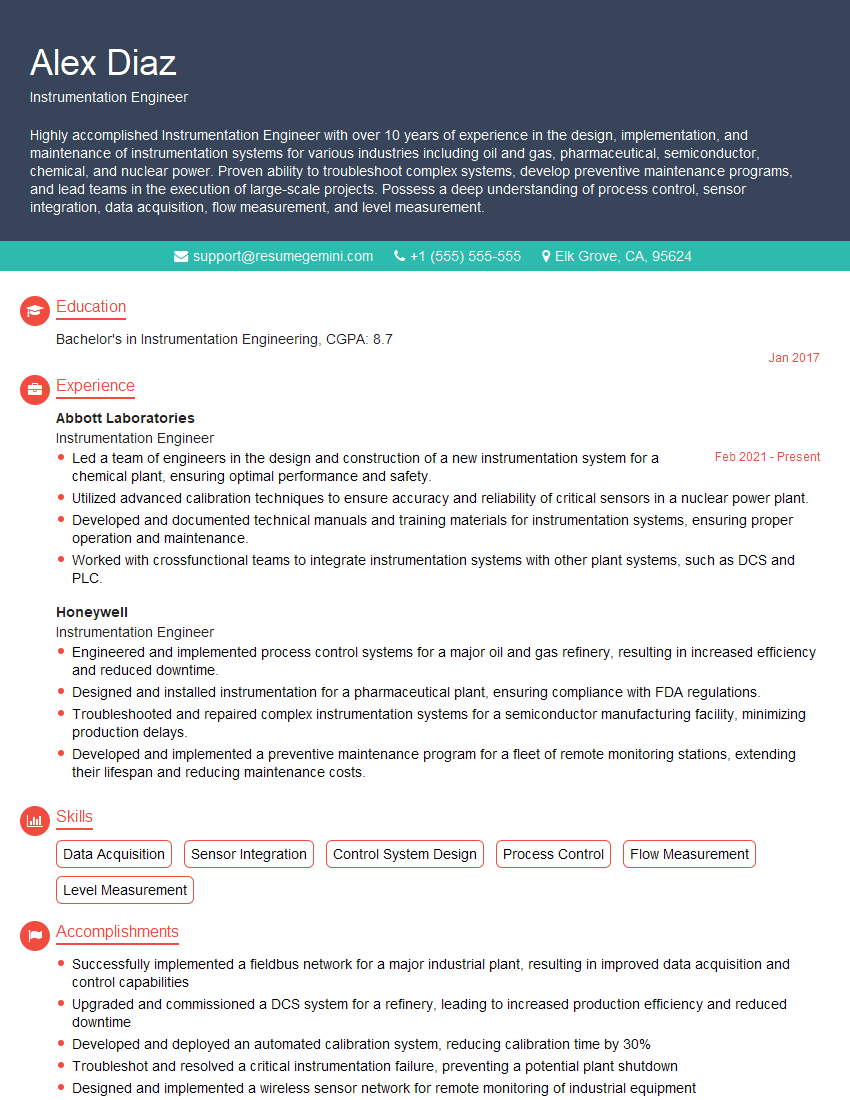
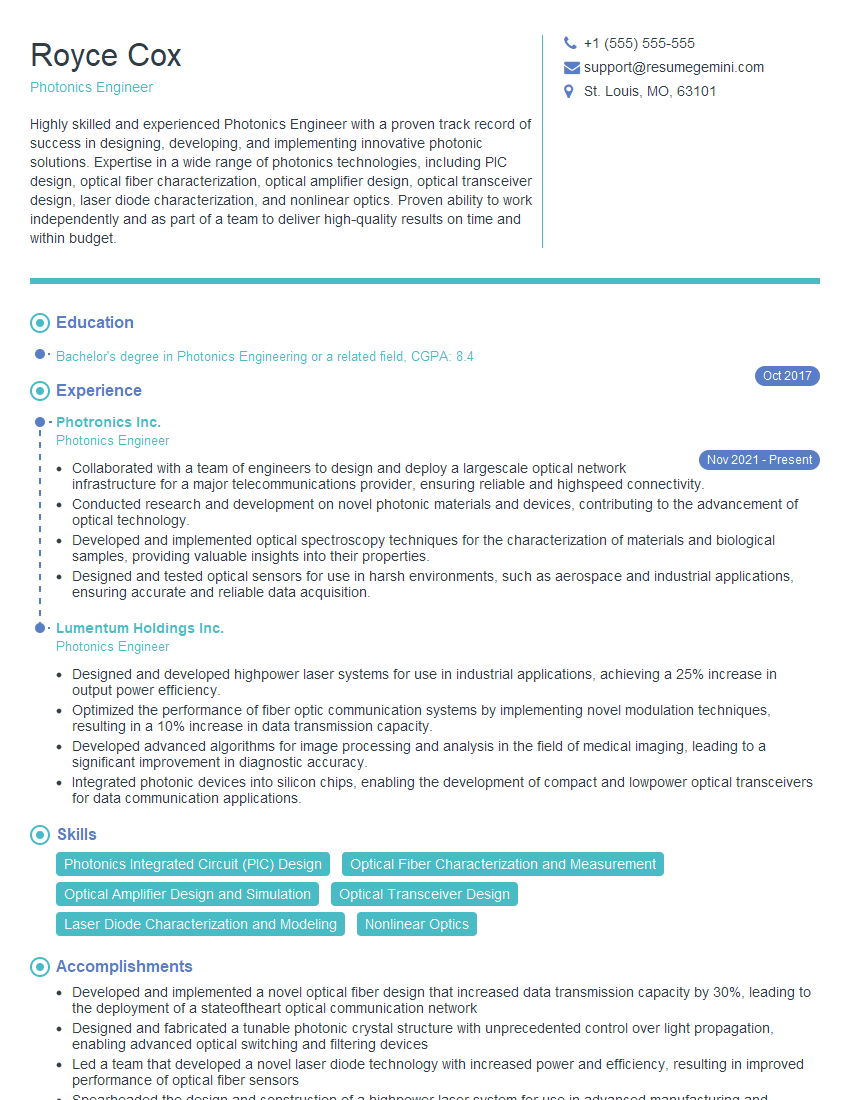
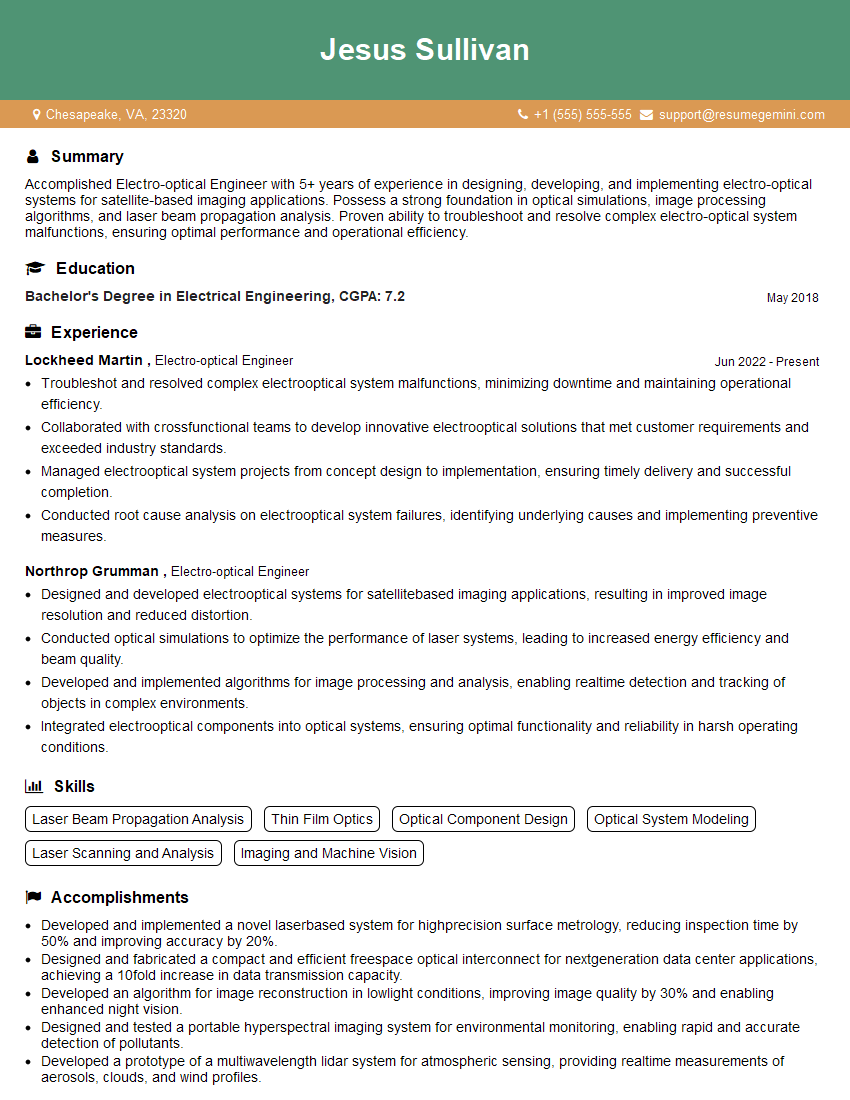
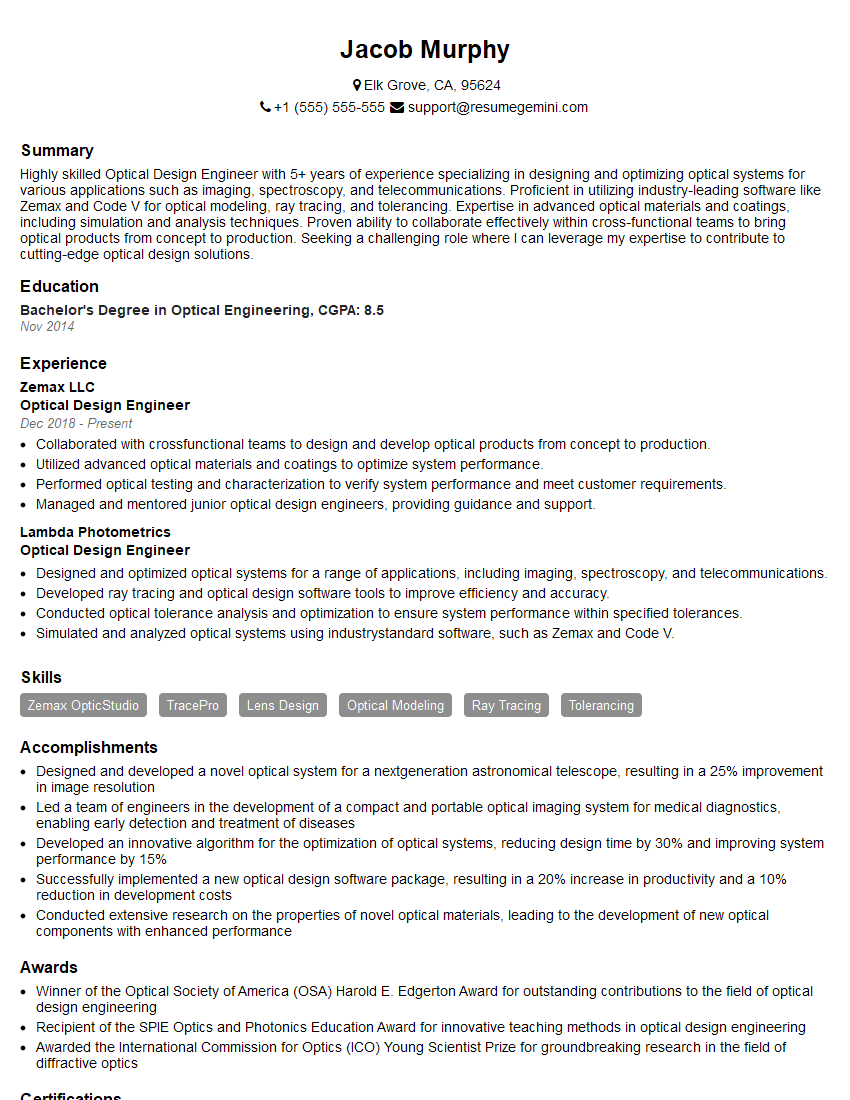
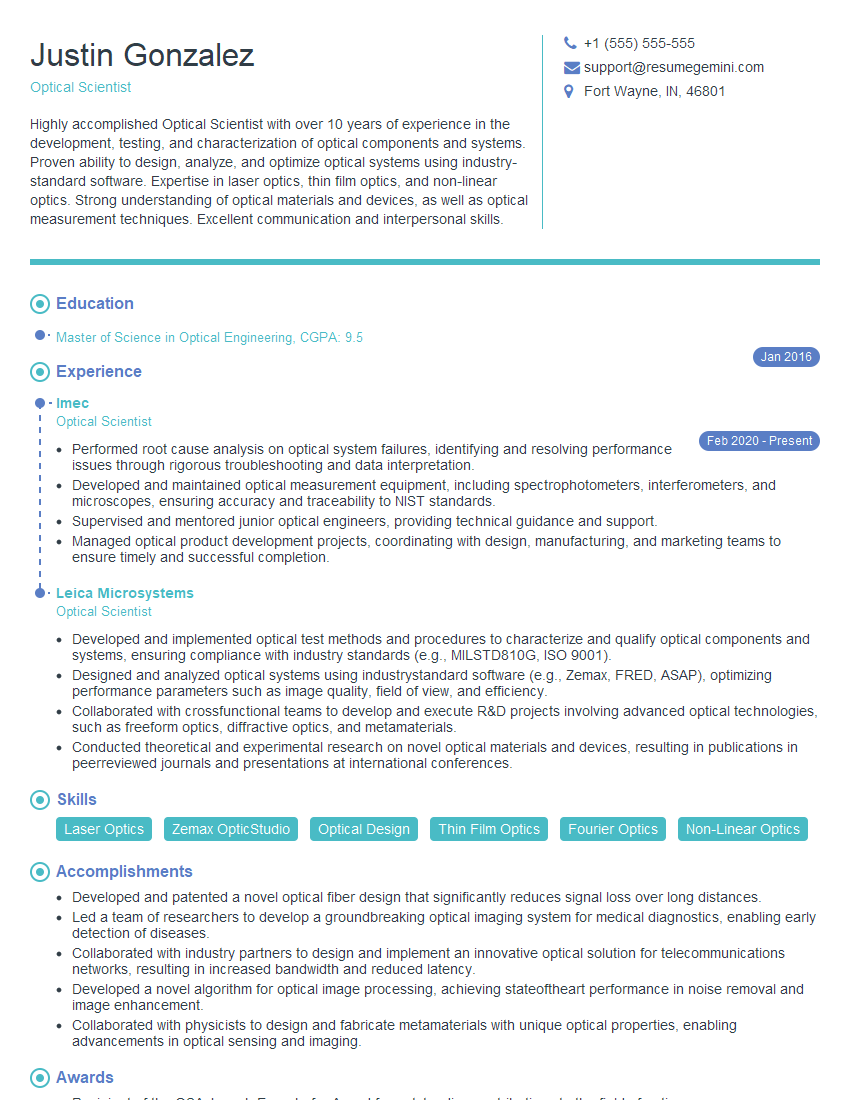
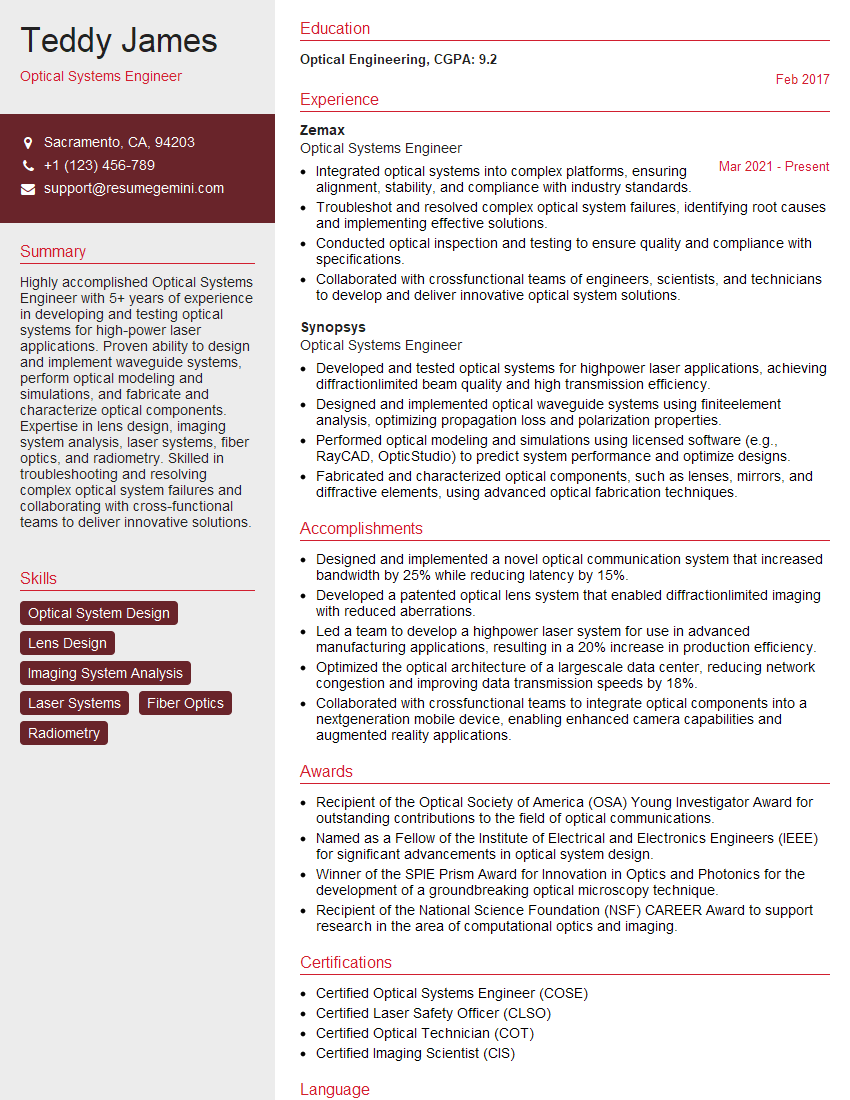
Mastering optical spectrometer development opens doors to exciting and impactful careers in various high-tech industries. Demonstrating your expertise through a strong resume is crucial for landing your dream job. Creating an ATS-friendly resume maximizes your chances of getting noticed by recruiters. We highly recommend using ResumeGemini to build a professional and effective resume that showcases your skills and experience in the best possible light. ResumeGemini provides examples of resumes tailored to Optical Spectrometer Development to help you get started. Take control of your career trajectory – invest time in building a compelling resume that truly reflects your capabilities.
Explore more articles
Users Rating of Our Blogs
Share Your Experience
We value your feedback! Please rate our content and share your thoughts (optional).
What Readers Say About Our Blog
Very informative content, great job.
good