The right preparation can turn an interview into an opportunity to showcase your expertise. This guide to Close Quarter Battle (CQB) interview questions is your ultimate resource, providing key insights and tips to help you ace your responses and stand out as a top candidate.
Questions Asked in Close Quarter Battle (CQB) Interview
Q 1. Describe the phases of a typical CQB operation.
A typical CQB operation can be broken down into several phases, though they often blend together fluidly depending on the situation. Think of it like a carefully choreographed dance, where each step is crucial for success.
- Planning and Briefing: This crucial initial phase involves meticulous mission planning, including target identification, route selection, communication protocols, and contingency plans. We’d study building layouts, potential enemy positions, and escape routes. A good brief is the foundation of a successful mission.
- Movement to Contact: This involves stealthy and controlled movement towards the objective. The team maintains situational awareness, utilizing cover and concealment to minimize exposure to enemy fire. We’d leverage things like shadows, terrain masking and even use of natural acoustics to move silently and strategically.
- Contact and Assault: This is the high-intensity phase where the team engages the enemy. Room clearing, tactical maneuvering, and precise fire control are paramount. A well-rehearsed assault plan, including designated roles and responsibilities for each team member is absolutely essential.
- Clearance and Consolidation: After neutralizing the threat, the team secures the area, searching for additional threats, casualties, and intelligence. This phase is about thoroughness and ensuring safety.
- Withdrawal and Debrief: Finally, the team executes a planned withdrawal, ensuring no one is left behind and carrying out a post-mission debrief to identify lessons learned and areas for improvement. This is crucial for continuous growth and refinement.
Q 2. Explain the principles of room clearing.
Room clearing is a highly dynamic and dangerous process that demands precision and teamwork. The principles revolve around controlled movement, minimizing exposure, and maximizing firepower. Think of it as a chess match against an unseen opponent.
- Speed and Violence of Action: This isn’t about rushing recklessly, but swiftly and decisively neutralizing threats. Hesitation can be fatal.
- Cover and Concealment: Use whatever’s available – walls, furniture, even small objects – to shield yourself from enemy fire. Remember, concealment doesn’t mean total invisibility but rather reducing your profile to the enemy.
- Communication: Constant, clear communication is the lifeblood of a successful room clearing. This ensures that everyone is aware of the situation and their role in it.
- Teamwork: Each member of the team has a specific role and task, working together in a coordinated effort. It’s a symphony of coordinated actions, each note vital for the overall success.
- Sectoring and Clearing: Systematically clear the room using a specific pattern, such as the ‘slice-the-pie’ technique. This technique involves a team member moving from cover to cover and systematically clearing a section of the room at a time. This methodical approach is more efficient than rushing headlong into the unknown.
Q 3. What are the different types of CQB formations?
CQB formations are selected based on the specific mission, environment, and enemy threat. The goal is to maximize firepower and cover while minimizing exposure. These formations are not set in stone; flexibility and adaptation are crucial.
- File Formation: A single-file line, ideal for navigating narrow corridors or hallways, providing mutual support.
- Wedge Formation: A V-shaped formation, providing enhanced coverage and firepower in wider spaces.
- Diamond Formation: Offers superior all-around protection and can be adjusted depending on the situation. Excellent for room clearing.
- Team Stack: Useful for room entry; members are positioned in a vertical stack to maximize speed and coordination while minimizing the frontal exposure to fire.
The choice of formation depends heavily on the immediate environment. A narrow hallway demands a file formation while a large room might call for a diamond or wedge.
Q 4. How do you prioritize targets in a CQB environment?
Target prioritization in CQB is a matter of life and death. It’s not just about eliminating the most immediate threat, but also about neutralizing those who pose the greatest risk to your team’s survival. This demands an immediate assessment of the threat.
- Immediate Threat: The individual actively engaging your team or posing an immediate danger takes top priority.
- Greatest Threat: This might be someone with a heavier weapon, a superior tactical position, or someone who commands others.
- Remaining Threats: After neutralizing the immediate and greatest threats, you systematically eliminate the rest.
Think of it like a triage system in medicine – you treat the most critical cases first.
Q 5. Explain the importance of communication in CQB.
Communication is absolutely essential in CQB. It’s the glue that holds the team together and ensures coordinated action. Effective communication is the difference between success and failure. In the chaos of a firefight, clear concise communication allows for precise maneuvering and eliminates confusion.
- Clear and Concise: Every word must count. There’s no time for ambiguity. Use code words or standard terminology for quicker understanding.
- Consistent: Maintain a continuous flow of information regarding enemy positions, friendly locations, and any changes in the situation. Every element helps paint a clearer picture.
- Controlled: Avoid unnecessary chatter that could reveal your position or disrupt the operation.
- Confirmatory: After receiving an instruction, confirming it to ensure clarity and avoid misunderstandings.
Q 6. Describe your experience with various CQB weapons and their limitations.
My experience encompasses a wide range of CQB weapons, each with its own strengths and weaknesses. The ideal weapon depends on the specific circumstances of the engagement.
- Submachine Guns (SMGs): Excellent for close-quarters combat, offering high rates of fire and maneuverability. However, effective range is limited.
- Shotguns: Devastating at close range due to their spread pattern, but limited range and slower reload speeds. Their short effective range and massive stopping power mean that they are best used for close quarters combat.
- Carbines: A good balance between range and maneuverability; useful for both CQB and medium-range engagements but potentially less maneuverable than SMGs in tighter spaces.
- Pistols: A last resort, used for self-defense when other weapons are unavailable or compromised. Their short range and relatively small capacity limit their effectiveness.
The choice of weapon should always align with the tactical situation and the expected range of engagement.
Q 7. What are the common challenges encountered during CQB operations?
CQB operations present numerous challenges, some predictable, some unexpected. Adaptability and training are crucial for mitigating these challenges.
- Limited Visibility: Darkness, smoke, and confined spaces drastically reduce visibility, increasing reliance on other senses and team coordination.
- Confined Spaces: Movement is restricted, limiting maneuverability and increasing the risk of friendly fire incidents.
- Close-Quarters Combat: The intense proximity of combatants necessitates rapid decision-making, precise fire control, and a high degree of situational awareness.
- High Stress Levels: The pressure and intense nature of CQB can cause stress, leading to errors in judgment and poor performance; training helps mitigate this.
- Unpredictability: The dynamic nature of CQB means unexpected developments are commonplace, requiring the team to adapt quickly and effectively.
Constant training, rigorous drills, and realistic scenario-based exercises are vital in addressing these challenges.
Q 8. How do you adapt your tactics based on the environment and enemy behavior?
Adapting CQB tactics hinges on understanding the environment and enemy behavior. Think of it like a chess game – your strategy must constantly evolve based on your opponent’s moves and the board’s layout.
- Environmental Adaptation: A narrow corridor demands different tactics than a large open room. In a tight space, you prioritize close-range weapons and movement techniques that minimize your profile. Open spaces might favor flanking maneuvers and the use of cover. The presence of obstacles like furniture, debris, or elevation changes significantly alters movement and engagement options.
- Enemy Behavior Adaptation: Are they moving in predictable patterns? Are they using cover effectively? Do they appear disciplined or disorganized? Recognizing these patterns informs your approach. For example, if enemies are consistently using a particular doorway, you might employ a flanking maneuver or a breaching tactic to gain the advantage. If they appear disorganized, a more aggressive approach might be warranted. If they’re highly disciplined, a more measured and stealthy approach may be necessary.
For example, during an operation in a multi-level building, we encountered heavy resistance on the first floor. Instead of a frontal assault, we used the stairwell to access the second floor, flanking the enemy from above and taking them by surprise. The environment dictated our movement, and the enemy’s initial actions helped determine our strategic response.
Q 9. Discuss your understanding of cover and concealment in CQB.
Cover and concealment are fundamental to CQB survival. Cover protects you from enemy fire; concealment hides you from enemy view. They are not interchangeable.
- Cover: Think of cover as a shield. It’s something that will physically stop bullets – a brick wall, a thick concrete pillar, a reinforced vehicle. The quality of cover depends on the caliber of the enemy weapon.
- Concealment: Concealment is about hiding your presence – bushes, shadows, camouflage netting. It doesn’t stop bullets, but it makes it harder for the enemy to spot you.
Imagine a scenario where you’re advancing down a hallway. A solid wall is excellent cover, while a stack of cardboard boxes provides concealment but would offer little to no actual protection from gunfire. Effective CQB uses a combination of both—seeking concealment to approach a position offering adequate cover before engaging the enemy.
Q 10. How do you handle unexpected situations during CQB operations?
Unexpected situations are the norm in CQB, not the exception. Maintaining adaptability and strong leadership is crucial.
- Improvise, Adapt, Overcome: Your pre-planned tactics will rarely survive first contact unchanged. You need to assess the new situation quickly, identify the problem, and devise a solution based on the resources available. This often involves adjusting your primary plan and implementing contingency plans.
- Communication is Key: Clear, concise communication with your team is critical during unexpected events. This allows for rapid coordination and the implementation of adaptive tactics.
- Decisive Action: Hesitation can be deadly. Make decisions based on the information you have, even if it’s incomplete. You can always refine your approach as you gather more data.
In one operation, we encountered an unexpected booby trap. Instead of panicking, we quickly assessed the threat, diverted our route, and alerted the team. By working together and adapting our approach, we successfully neutralized the threat and continued the mission without further incident.
Q 11. What are some common mistakes to avoid in CQB?
Several common mistakes can drastically reduce survivability in CQB:
- Lack of Situational Awareness: Failing to scan your surroundings and anticipate threats is a leading cause of casualties.
- Improper Movement Techniques: Exposing yourself unnecessarily during movement significantly increases your risk.
- Poor Communication: Miscommunication or lack of communication leads to confusion and potentially friendly fire.
- Ignoring Cover and Concealment: Exposing yourself to enemy fire without adequate cover is a recipe for disaster.
- Tunnel Vision: Focusing solely on the immediate threat and neglecting your surroundings.
- Not Utilizing Teamwork: CQB is a team effort. Failing to coordinate your actions with your team significantly increases the risk of failure.
Many of these mistakes stem from poor training and lack of realistic practice. Regular training focused on realistic scenarios helps mitigate these risks and reinforces proper procedures.
Q 12. Explain the importance of maintaining situational awareness in CQB.
Situational awareness (SA) in CQB is paramount. It’s your ability to understand everything happening around you – the enemy, your team, and the environment – and anticipate potential threats. It’s not just about seeing; it’s about understanding.
Think of it as having a 360-degree awareness of your surroundings, constantly processing visual, auditory, and even olfactory cues. This awareness informs your decisions, allowing you to react swiftly and effectively to changing circumstances. Losing SA can rapidly lead to being overwhelmed and ambushed. Maintaining SA requires constant scanning, communication, and active listening.
For instance, hearing a muffled sound from behind a wall might indicate an enemy’s position, even if you can’t see them directly. This subtle cue allows you to adjust your position and plan your approach accordingly. A lack of SA could result in a deadly ambush.
Q 13. Describe your experience with close-quarters marksmanship.
Close-quarters marksmanship (CQM) requires specialized training. It differs significantly from long-range shooting. Accuracy is crucial, but speed and control are paramount, often within arm’s reach of the adversary.
- Weapon Handling: Proficiency in weapon manipulation is key. This includes quick target acquisition, controlled bursts or single shots, and immediate transition to secondary weapon systems if necessary.
- Shooting Positions: Mastering various close-range shooting positions is essential. This may involve unconventional stances and shooting angles, based on the immediate environment and available cover.
- Mental Preparedness: CQM demands strong mental control under immense pressure. The ability to maintain composure and accuracy during high-stress engagements is crucial.
Years of rigorous training have honed my CQM skills. We practice engaging targets in confined spaces using various weapon systems, under conditions that simulate real-world scenarios. This training focuses on accuracy, speed, and adaptability under immense pressure.
Q 14. How do you conduct a threat assessment in a CQB environment?
Conducting a threat assessment in CQB involves a rapid yet thorough evaluation of potential dangers. It’s a dynamic process that constantly evolves based on new information.
- Immediate Surroundings: Begin by scanning your immediate environment. Identify potential enemy positions, cover, and obstacles.
- Enemy Capabilities: Assess the enemy’s weapons, tactics, and likely actions. Are they armed? What is their probable level of training?
- Team Status: Assess your own team’s position, capabilities, and readiness. Are there any casualties? Are all team members aware of the situation?
- Escape Routes: Always identify potential escape routes and secondary plans in case your primary approach fails.
A methodical and layered assessment allows you to develop the most effective response. A hasty judgment may lead to disastrous consequences in the chaotic reality of CQB. For example, noticing enemy movement behind a particular piece of furniture isn’t enough; you must assess the potential for an ambush, the available cover, and your options for neutralizing the threat before you act.
Q 15. What are the legal and ethical considerations related to CQB operations?
Legal and ethical considerations in Close Quarters Battle (CQB) are paramount. They dictate everything from the planning stages to the execution and aftermath of an operation. Legally, all actions must adhere to the laws of war, rules of engagement (ROE), and applicable domestic laws. This means strict adherence to proportionality – ensuring the force used is proportionate to the threat – and discrimination – targeting only combatants, avoiding civilian casualties. Ethical considerations build upon this legal framework, demanding that we always strive to minimize harm to non-combatants and uphold the dignity of all individuals, even enemies. For instance, the use of excessive force, even if technically legal, could have serious ethical ramifications and reputational damage. A thorough understanding and rigorous adherence to these guidelines are not just a matter of compliance but are also crucial for mission success and maintaining public trust.
Consider a scenario where a team needs to breach a building. Ethical considerations dictate that all possible steps be taken to minimize collateral damage. This might include employing less lethal options initially, providing warnings, or ensuring a clear escape route for civilians. Failure to do so could result in legal repercussions and damage the reputation of the involved forces.
Career Expert Tips:
- Ace those interviews! Prepare effectively by reviewing the Top 50 Most Common Interview Questions on ResumeGemini.
- Navigate your job search with confidence! Explore a wide range of Career Tips on ResumeGemini. Learn about common challenges and recommendations to overcome them.
- Craft the perfect resume! Master the Art of Resume Writing with ResumeGemini’s guide. Showcase your unique qualifications and achievements effectively.
- Don’t miss out on holiday savings! Build your dream resume with ResumeGemini’s ATS optimized templates.
Q 16. Discuss your knowledge of different breaching techniques.
Breaching techniques are crucial in CQB, categorized by the type of entry point and tools employed. There’s no single ‘best’ method; the optimal approach depends on the specific circumstances, including the building’s construction, intelligence gathered beforehand, and the threat level. Common techniques include:
- Ballistic Breaching: This involves using firearms, such as shotguns with breaching rounds or specialized breaching rifles, to create an entry point. It’s effective for rapid entry but carries the risk of collateral damage.
- Mechanical Breaching: This utilizes tools like battering rams, halligan bars, and breaching shotguns to force open doors and windows. It’s quieter than ballistic breaching but requires more time and physical effort.
- Explosives Breaching: This involves using controlled explosive charges to create openings. It’s the most destructive method, reserved for situations where other options are unsuitable, and requires highly specialized training.
- Non-Ballistic Breaching: This might involve using specialized tools to manipulate locking mechanisms or picking locks. It’s silent and precise, but only effective if the team possesses the necessary skills and knowledge of the locking system.
For example, a team facing a barricaded suspect in a flimsy wooden door might opt for a mechanical breach with a battering ram. Conversely, a heavily reinforced steel door in a high-risk situation might call for explosives breaching.
Q 17. Explain your understanding of CQB team dynamics and leadership.
Effective CQB team dynamics hinge on clear communication, trust, and specialized roles. A well-trained team operates as a coordinated unit, relying on each member’s specific skills. Leadership is critical; the team leader needs to be decisive, adaptable, and possess exceptional situational awareness. They must maintain clear communication, allocate tasks efficiently, and ensure the team remains cohesive and focused under pressure. This might involve clear hand signals, verbal cues, or a combination of both. Roles within a team typically include a pointman, who leads the breach, a rear security element, and individuals dedicated to specific tasks such as medical aid or communication.
Imagine a team breaching a room. The pointman leads the way, clearing angles and identifying hostiles. The rear security element covers the team’s rear, while other members address immediate threats or provide support. The leader’s role is to coordinate these actions, adapting the plan as the situation evolves. Effective leadership ensures the team works efficiently, reduces risks, and maximizes the chance of mission success. Training exercises simulating real-world scenarios are crucial for developing teamwork and communication skills.
Q 18. How do you conduct post-operation debriefings?
Post-operation debriefings are critical for analyzing performance, identifying areas for improvement, and extracting valuable lessons learned. They are conducted promptly after the operation, while the details are still fresh in everyone’s minds. A structured approach is vital, typically involving a neutral facilitator who guides the discussion. The focus should be on factual analysis and constructive feedback, avoiding blame. Key aspects include:
- Mission Analysis: Reviewing the objectives, planning process, and whether these were met.
- Action Review: Analyzing team actions, both successful and unsuccessful, pinpointing specific decision points and their consequences.
- Equipment Evaluation: Assessing the performance and reliability of weapons and equipment.
- Lessons Learned: Identifying improvements in tactics, techniques, and procedures.
- Team Cohesion: Addressing team dynamics and communication effectiveness.
For example, if a team experienced a communication breakdown during an operation, the debrief would identify the reasons behind it, proposing solutions like standardized hand signals or improved communication protocols for future operations.
Q 19. What are the different types of entry techniques used in CQB?
Entry techniques in CQB are diverse, chosen based on the specific situation. They range from dynamic entries, prioritizing speed and surprise, to more deliberate approaches that emphasize stealth and control. Some common entry techniques include:
- Dynamic Entry: A fast, forceful entry often involving breaching and immediate engagement of any threats.
- Stack Entry: A more controlled entry where the team enters in a structured formation, typically used in higher-risk situations.
- Slow Entry: A deliberate, stealthy entry used to gather intelligence or avoid alerting potential adversaries.
- Room Clearing Techniques: These cover methods for systematically clearing a room once entry has been achieved. Popular examples include the ‘slice-the-pie’ method and the ‘button-hook’ maneuver.
The choice of entry technique depends on factors such as the suspected threat level, the layout of the building, and the intelligence gathered prior to the operation. For instance, a suspected high-threat target might warrant a dynamic entry, whereas a potential hostage situation would likely require a more controlled and deliberate approach.
Q 20. Explain your understanding of weapon malfunctions and clearing procedures.
Weapon malfunctions are a serious concern in CQB, where time is critical and mistakes can be fatal. Every operator must be thoroughly trained in immediate action drills to address these situations. The process typically involves:
- Tap-Rack-Ready: This involves tapping the magazine to ensure it’s seated correctly, racking the charging handle to clear a potential malfunction in the chamber, and then checking if the weapon is ready to fire.
- Immediate Action Drills: These address potential malfunctions such as stovepipes, failures to feed, or failures to eject. Training emphasizes speed and efficiency in clearing the malfunction while maintaining situational awareness.
It’s crucial to practice these drills repeatedly until they become second nature. The consequences of a malfunction during CQB are severe, and effective clearing procedures can be the difference between life and death. A failure to address a malfunction quickly can lead to a loss of opportunity or place an operator in a life-threatening situation. Regular weapon maintenance is also essential in preventing malfunctions.
Q 21. How do you plan for and respond to casualties during CQB operations?
Planning for and responding to casualties during CQB is crucial. Pre-operation planning should include designated medics, casualty evacuation routes, and communication protocols. During the operation, maintaining situational awareness and prioritizing casualty care when feasible is important. First aid is administered immediately according to established medical protocols, and evacuation plans are enacted swiftly and efficiently to minimize the risk of additional harm. This may involve carrying the casualty, using a stretcher, or establishing a safe route for medical extraction. If the situation remains hostile, the team leader will need to make rapid decisions about the trade-off between tactical objectives and the immediate need to secure the casualty.
For instance, if a team member is injured during a room clearing, the team will need to quickly secure the area and establish a route to evacuate the injured member while continuing to manage the threat. Efficient communication will be critical for coordinating the evacuation and medical support.
Q 22. Describe your experience with non-lethal weapon options in CQB.
My experience with non-lethal weapon options in CQB is extensive. It’s crucial to understand that ‘non-lethal’ doesn’t guarantee no injury; the goal is to minimize harm while neutralizing a threat. Options range from less-lethal projectiles like rubber bullets and beanbag rounds, to impact weapons such as batons and expandable batons, to chemical agents like pepper spray or OC foam. The choice depends heavily on the specific situation, the threat level, and the environment. For instance, a confined space might limit the use of projectiles due to ricochet risks. In training, we extensively cover the appropriate use of force continuum, emphasizing de-escalation techniques before resorting to any weapon. I’ve personally used pepper spray effectively in several scenarios, always ensuring the safety of bystanders and documenting the event meticulously. The application of non-lethal weapons requires precision, controlled delivery, and a clear understanding of their limitations and potential unintended consequences. Regular training and proficiency testing are vital.
Q 23. Explain your understanding of risk mitigation strategies in CQB.
Risk mitigation in CQB is paramount. It’s a systematic approach to minimizing potential harm to both operators and civilians. It starts with thorough pre-planning, which includes intelligence gathering on the target location and potential threats. This involves understanding the building’s layout, potential escape routes, and the likely locations of hostiles. We utilize various techniques including building floor plans, 3D modeling, and even virtual reality simulations to rehearse scenarios. During execution, constant communication is key – maintaining situational awareness and adapting to changing circumstances. Teamwork, clear roles, and designated leaders are crucial for maintaining control and responding effectively to unforeseen events. Utilizing cover and concealment effectively, and understanding the principles of movement are equally vital. Regular training exercises, focusing on realistic scenarios and emphasizing decision-making under pressure, are essential to reinforce these strategies. For example, practicing moving as a team, while maintaining communication and coordinated fire, reduces exposure to danger. Post-operation debriefs provide critical feedback for continuous improvement.
Q 24. How do you incorporate technology into CQB planning and execution?
Technology plays an increasingly important role in CQB. Thermal imaging devices allow us to identify targets in low-light or no-light conditions, while night vision greatly enhances situational awareness. Body-worn cameras provide valuable documentation for after-action reports and potential legal review, ensuring accountability and transparency. Small, ruggedized tablets or smartphones enable access to real-time intelligence, building plans, and other crucial information. Even drones can be utilized for pre-operation reconnaissance, providing valuable aerial perspective of the target area. However, it’s critical to understand the limitations of technology. Electronic devices can malfunction, and reliance on them without maintaining fundamental CQB skills can be dangerous. We carefully integrate technology to enhance, not replace, our tactical proficiency.
Q 25. What are your thoughts on the use of body armor in CQB?
Body armor is a crucial element of CQB, offering protection against ballistic threats and blunt-force trauma. However, the type of body armor utilized is highly dependent on the specific mission parameters. In some situations, lighter, more mobile armor may be preferred to enhance agility and reduce heat stress in close quarters. Heavier armor offers superior protection but can impede movement. The design and material of the armor must allow for a wide range of motion, especially in tight spaces where flexibility is critical. We balance the need for protection with the need for mobility and consider the potential weight and heat buildup, especially in extended operations. Regular inspection and maintenance of body armor are also vital to ensure its effectiveness and longevity. It’s important to remember that body armor is not a guarantee of complete protection; it simply reduces the risk of serious injury. Proper training and tactical maneuvering still remain the primary defense.
Q 26. Describe your experience with different types of tactical lighting.
My experience with tactical lighting is extensive, as it’s an essential tool in CQB. Different lighting solutions serve specific purposes. Weapon-mounted lights offer immediate illumination of targets, but require careful handling to avoid unintended blinding of teammates. Handheld lights allow for more versatile use, and various beam patterns – such as flood or spot – can be used strategically. Infrared (IR) lights are essential for use with night vision devices, enabling covert operations while maintaining awareness. I’ve also worked with strobe lights, which can momentarily disorient a target, but careful application is needed due to the potential for negative physiological effects. Effective use of lighting involves understanding the interplay between light and shadow, using light to control the environment, and always prioritizing safety for both team members and civilians. Training includes techniques like aiming the light away from the eyes, employing momentary flashes, and coordinating illumination with team movements.
Q 27. How do you conduct a thorough search of a room?
A thorough room search in CQB follows a systematic approach, often utilizing the acronym ‘CLEARING’ or similar methodologies. This involves systematically clearing each area of the room, usually starting with the immediate entry area and moving methodically towards the opposite side. Each member of the team should have a designated area of responsibility, and communication is paramount. We utilize a combination of visual and tactile searches, ensuring no area is left unchecked. This includes checking behind doors, under furniture, and in any concealed spaces. We always maintain a high level of situational awareness, constantly scanning for potential threats, and always prioritize the safety of both team members and potential bystanders. The specific techniques used depend on the situation, but thoroughness and systematic approach are always key. Post-search verification is always a prudent measure to ensure nothing was missed.
Q 28. Explain your experience working under pressure in a CQB environment.
Operating under pressure in CQB is an unavoidable reality. Years of experience have taught me the importance of controlled breathing, maintaining focus, and adhering to established protocols. The key is to trust in your training. When things get intense, reverting to ingrained techniques and drills helps in maintaining composure and making sound decisions. Regular training exercises simulating high-stress scenarios – including the use of simulators and live-fire exercises – are critical for developing resilience and maintaining proficiency under pressure. Teamwork and clear communication are essential in these situations. By relying on the training and expertise of your team members, the pressure becomes more manageable. Post-incident debriefs serve as crucial opportunities for analysis, improving our responses and preparedness for future operations.
Key Topics to Learn for Close Quarter Battle (CQB) Interview
- Teamwork and Communication: Understanding effective communication strategies in high-stress, confined environments. Practical application: Describing your experience coordinating actions with teammates during CQB drills, emphasizing clear and concise communication under pressure.
- Weapon Handling and Tactics: Proficiency with various close-quarters weapons and tactical maneuvers. Practical application: Explaining your understanding of different weapon systems and how their characteristics inform tactical choices in CQB.
- Room Clearing Techniques: Mastering various room clearing procedures and adapting to dynamic situations. Practical application: Demonstrating knowledge of different techniques (e.g., single-person, two-person) and the rationale behind choosing one over another based on specific circumstances.
- Situational Awareness and Threat Assessment: Maintaining a high level of awareness in chaotic environments and rapidly assessing threats. Practical application: Providing examples of how you’ve identified and responded to potential threats in training scenarios or exercises.
- Breaching Techniques: Understanding and applying various breaching techniques for entry into confined spaces. Practical application: Discussing the advantages and disadvantages of different breaching methods and the safety protocols involved.
- Improvised Weapons and Resources: Understanding the potential use of improvised weapons and resources in a CQB situation. Practical application: Providing examples of resourcefulness and adaptability in CQB scenarios.
- Medical Procedures (First Aid/Trauma Care): Knowledge of basic first aid and trauma care in CQB scenarios. Practical application: Explaining your understanding of basic casualty care and how to respond to injuries within a confined environment.
Next Steps
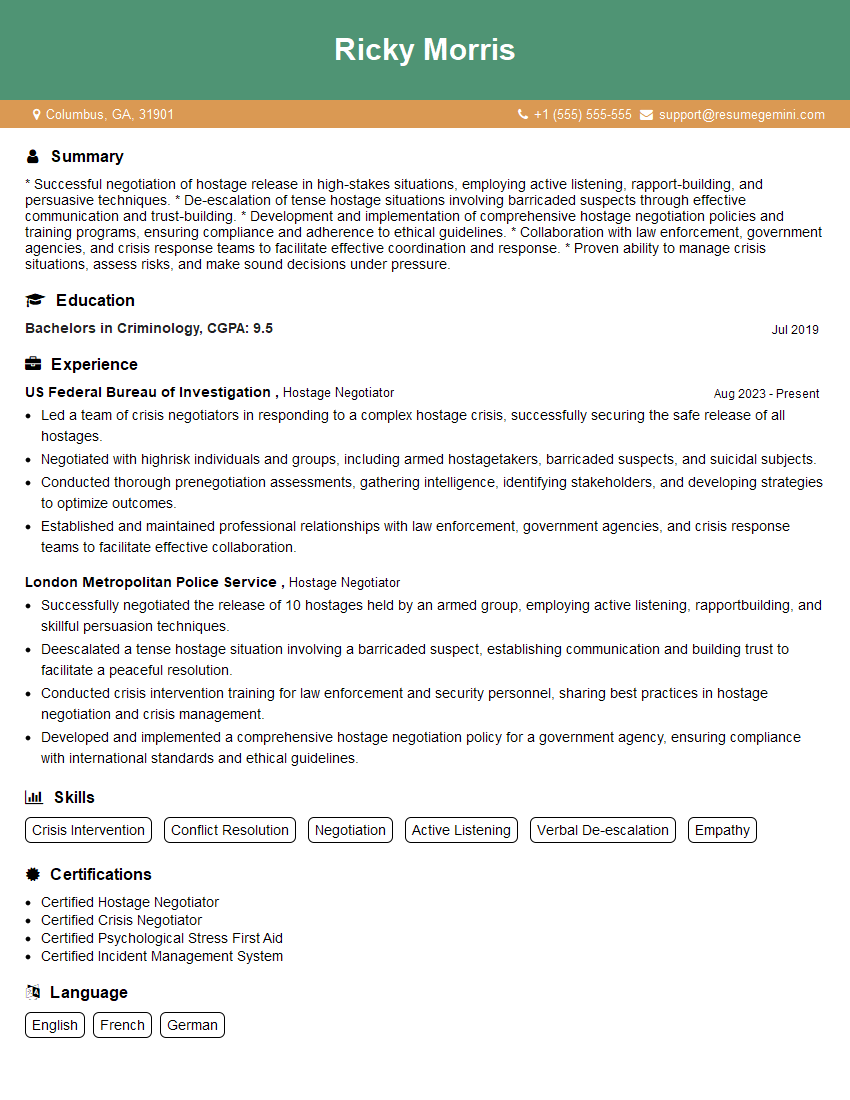
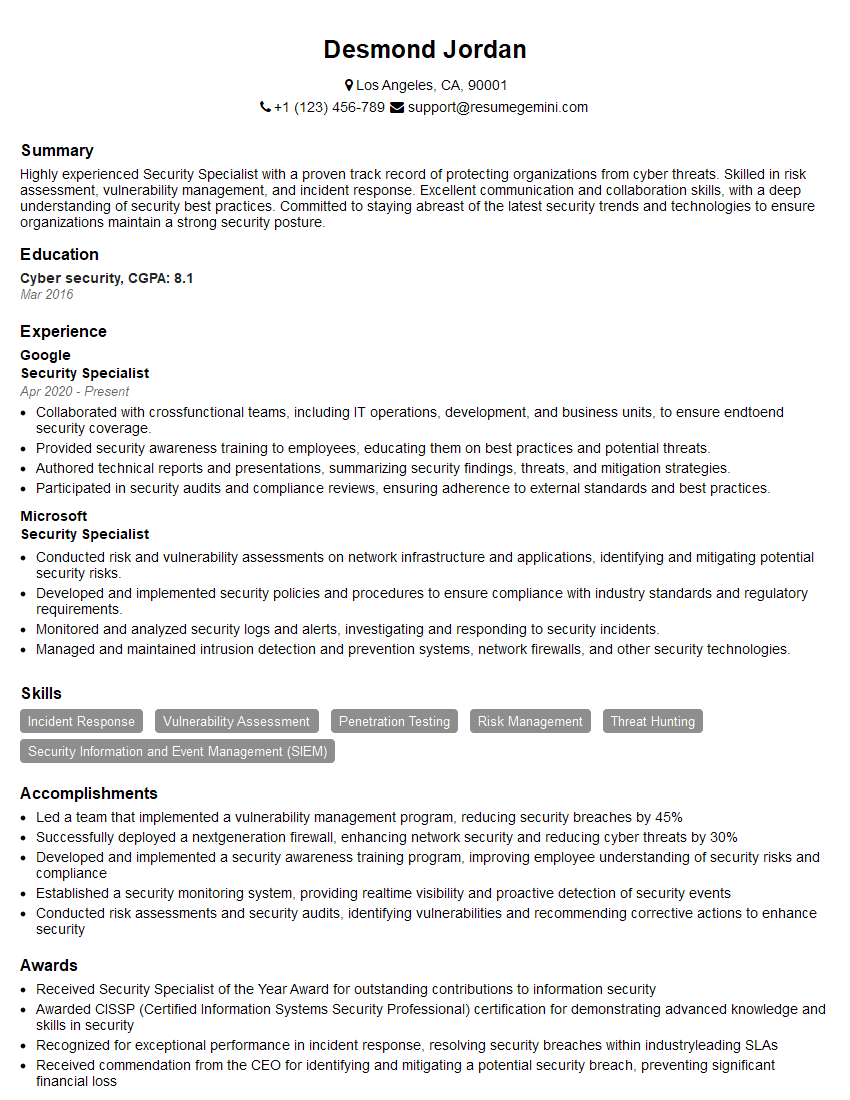
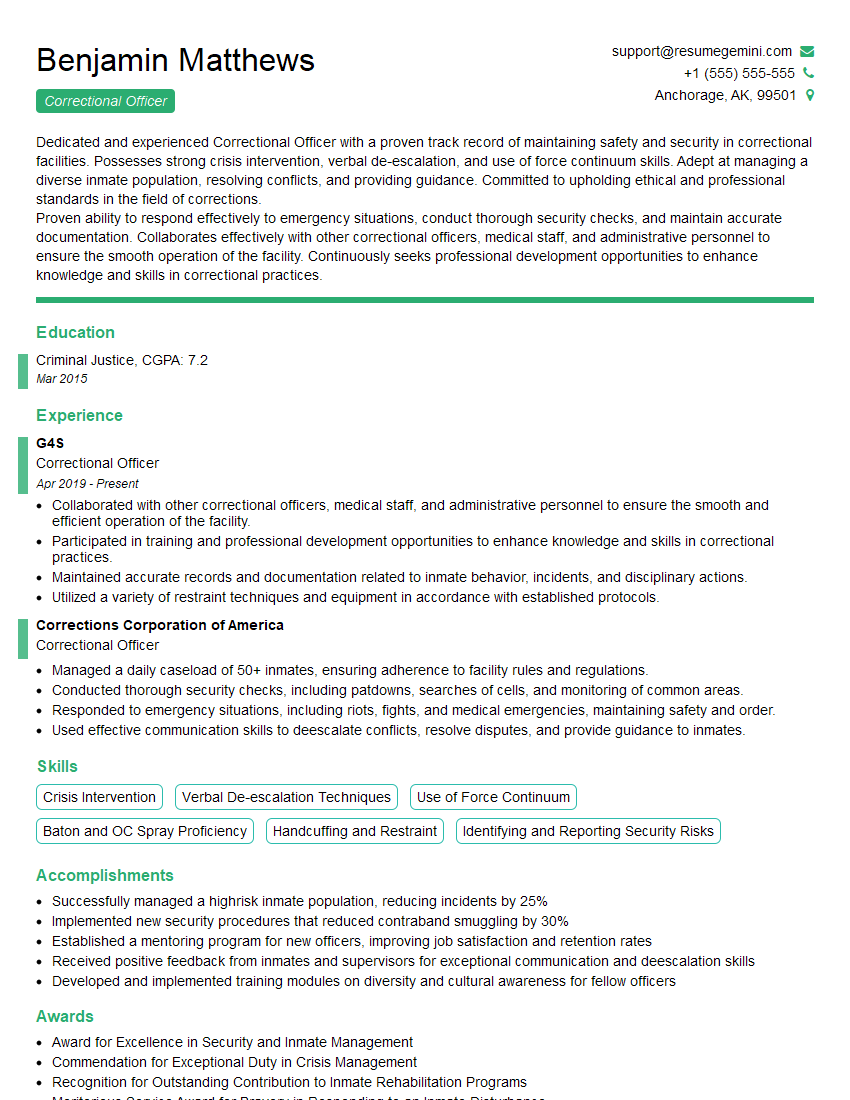
Mastering Close Quarter Battle (CQB) skills significantly enhances your value in demanding roles requiring tactical proficiency and teamwork. A well-crafted resume is crucial for showcasing your expertise and securing your desired position. To maximize your job prospects, create an ATS-friendly resume that highlights your CQB skills and experience effectively. ResumeGemini is a trusted resource for building professional resumes that stand out. Examples of resumes tailored to Close Quarter Battle (CQB) roles are available to help guide you through the process. Invest time in crafting a compelling resume – it’s your first impression and a key to unlocking career opportunities.
Explore more articles
Users Rating of Our Blogs
Share Your Experience
We value your feedback! Please rate our content and share your thoughts (optional).
What Readers Say About Our Blog
Very informative content, great job.
good