Are you ready to stand out in your next interview? Understanding and preparing for Regulatory Compliance (FDA, ISO, GxP) interview questions is a game-changer. In this blog, we’ve compiled key questions and expert advice to help you showcase your skills with confidence and precision. Let’s get started on your journey to acing the interview.
Questions Asked in Regulatory Compliance (FDA, ISO, GxP) Interview
Q 1. Explain the difference between 21 CFR Part 11 and Annex 11.
Both 21 CFR Part 11 and Annex 11 address the integrity of electronic records and signatures in regulated industries, but they apply to different geographical regions and have some key differences. 21 CFR Part 11 is a regulation by the US Food and Drug Administration (FDA) that governs electronic records and signatures in the United States. Annex 11, on the other hand, is a guideline issued by the European Medicines Agency (EMA) and applies to electronic records and signatures within the European Union.
- Scope: 21 CFR Part 11 is more specific and prescriptive, detailing requirements for system validation, access controls, audit trails, and electronic signatures. Annex 11 provides a more general framework, emphasizing the principles of data integrity and allowing for greater flexibility in implementation.
- Enforcement: 21 CFR Part 11 is legally binding and enforceable by the FDA. Non-compliance can lead to significant consequences, including warning letters, import alerts, and even product recalls. Annex 11, while not legally binding in itself, is often referenced by regulatory bodies during inspections and non-compliance can affect market authorization.
- Specific Requirements: 21 CFR Part 11 lists specific requirements, like the need for secure systems with audit trails, while Annex 11 focuses on the principles of data integrity, security, and reliability, allowing companies to select appropriate methods to meet those principles.
- Examples: A US-based pharmaceutical company must meticulously follow 21 CFR Part 11 for all its electronic records, ensuring that their systems meet the specific criteria outlined. Conversely, a company in the EU would need to adhere to Annex 11’s principles, demonstrating how their systems maintain data integrity and meet the guidelines for electronic signatures.
In essence, both aim to ensure the reliability and trustworthiness of electronic data, but they differ in their scope, enforceability, and level of detail.
Q 2. Describe your experience with CAPA (Corrective and Preventive Actions).
My experience with CAPA (Corrective and Preventive Actions) spans over [Number] years, encompassing various roles in [Mention Industries/Companies]. I’ve been involved in the entire CAPA lifecycle, from initial investigation and root cause analysis to implementation of corrective actions, preventive actions and verification of effectiveness.
I am proficient in using various methodologies for root cause analysis, including Fishbone diagrams (Ishikawa), 5 Whys, and Fault Tree Analysis. A recent example involved a deviation in a manufacturing process that led to slightly out-of-specification results. We initiated a thorough investigation, utilizing the 5 Whys technique to drill down to the root cause—a faulty sensor that wasn’t calibrated properly. This led to implementation of a new calibration schedule and additional sensor redundancy to prevent recurrence. Following the implementation of corrective actions we monitored the effectiveness of the CAPA through data analysis and trend reporting. The results were documented in a comprehensive CAPA report, which was reviewed and approved by appropriate management.
I understand the importance of a well-documented CAPA process, ensuring traceability and accountability throughout the entire lifecycle. My focus is always on preventing recurrence and improving the overall quality management system.
Q 3. How do you ensure compliance with FDA guidelines on data integrity?
Ensuring data integrity compliance with FDA guidelines requires a multi-faceted approach, focusing on ALCOA+ principles. ALCOA+ stands for Attributable, Legible, Contemporaneous, Original, Accurate and complete, along with the additional principles of Enduring and Available.
- ALCOA+ Implementation: Every data point must be attributable to a specific individual, recorded legibly, entered contemporaneously with the event, kept in its original form, and be accurate and complete. Its enduring nature should be ensured through robust archiving and backup systems. Finally, the data should always be readily available for review and audit.
- System Validation: We ensure that all systems used for data generation, recording, and storage are properly validated according to GxP guidelines. This involves thorough testing and documentation to prove that the systems consistently perform as intended.
- Access Controls: Strict access controls are crucial, limiting access to data based on roles and responsibilities. Audit trails provide a complete and auditable record of all activities related to data. This is often implemented through electronic signature systems that are validated in accordance with 21 CFR part 11.
- Training and Awareness: All personnel involved in data handling must receive comprehensive training on data integrity principles and procedures. This includes understanding the importance of ALCOA+ principles and the consequences of non-compliance.
- Regular Audits and Inspections: Regular internal and external audits help to identify potential weaknesses and ensure continued compliance with the requirements.
In summary, ensuring data integrity isn’t a one-time task, but a continuous process of careful planning, rigorous implementation, and ongoing monitoring and improvement.
Q 4. What are the key elements of a quality management system (QMS)?
A robust Quality Management System (QMS) is the foundation of regulatory compliance. It’s a structured system that ensures consistent product quality and regulatory compliance. Key elements include:
- Quality Policy and Objectives: A clearly defined quality policy that sets the direction for the organization and specific, measurable, achievable, relevant, and time-bound (SMART) objectives.
- Risk Management: A proactive approach to identifying, assessing, and mitigating potential risks that could impact product quality and regulatory compliance. This is often supported by risk assessments such as Failure Mode and Effects Analysis (FMEA).
- Document Control: A system for creating, reviewing, approving, distributing, and revising documents and records to ensure they are accurate, current and readily accessible. This includes defining the version control procedures.
- Change Control: A well-defined process for managing changes to procedures, processes, and systems to ensure that changes are controlled and don’t negatively impact product quality.
- Corrective and Preventive Actions (CAPA): A systematic approach to identifying, investigating, and addressing deviations from established procedures or specifications, focusing on both corrective actions (to fix existing issues) and preventative actions to avoid future recurrences.
- Internal Audits: Regular internal audits to assess the effectiveness of the QMS and identify areas for improvement. This is often performed based on a planned schedule and conducted by qualified internal auditors.
- Management Review: Periodic reviews by senior management to assess the performance of the QMS and make necessary improvements.
- Continuous Improvement: A commitment to ongoing improvement through regular monitoring, analysis, and implementation of improvement initiatives. This often utilizes tools such as process mapping, value stream mapping or lean manufacturing principles.
Think of a QMS as a living organism— constantly adapting and evolving to meet changing needs and maintain high standards.
Q 5. Explain your understanding of Good Manufacturing Practices (GMP).
Good Manufacturing Practices (GMP) are a set of guidelines that ensure the consistent quality of manufactured products, particularly in industries like pharmaceuticals, medical devices, and food. They encompass a wide range of practices that affect the entire manufacturing process.
- Facility and Equipment: GMP guidelines dictate the design and maintenance of facilities and equipment to prevent contamination and ensure that the manufacturing environment is suitable for producing high-quality products. This includes requirements regarding cleanliness, sanitation, pest control and equipment validation.
- Personnel: GMP guidelines cover personnel training, hygiene, and qualification to ensure that individuals involved in manufacturing have the necessary skills and understanding to perform their tasks correctly. This also covers the documentation of training, qualification and other relevant personnel aspects.
- Materials Management: GMP guidelines emphasize the proper handling, storage, and identification of raw materials, packaging materials, and other components to prevent errors and contamination.
- Manufacturing Process: GMP guidelines cover all aspects of the manufacturing process, from production and formulation to filling and packaging. This includes requirements around process validation, in-process controls and deviations management.
- Quality Control: GMP guidelines mandate comprehensive quality control testing throughout the manufacturing process to ensure product quality and identify any potential problems early on. This frequently involves environmental monitoring and a thorough testing regimen.
- Documentation and Record Keeping: GMP guidelines emphasize meticulous record-keeping to demonstrate compliance and provide traceability. This is vital for investigations and regulatory compliance.
Essentially, GMP is about producing safe, high-quality products consistently and reliably. Compliance with GMP guidelines is often mandatory, and non-compliance can result in serious consequences. Think of it as a comprehensive recipe for producing safe and effective products.
Q 6. Describe your experience with audits (FDA, ISO, etc.).
I have extensive experience participating in and leading audits across various regulatory frameworks, including FDA inspections, ISO 9001, and 13485 audits. My experience includes both internal and external audits.
During FDA inspections, I have supported the preparation of the documentation package, actively participated in the inspection process by providing clear and concise answers to the auditor’s questions, and promptly responded to any observations or findings. I’m familiar with the FDA’s focus on data integrity, manufacturing processes and quality systems.
For ISO audits, I have led the preparation and presentation of documentation, coordinated with various departments, and ensured that the company’s QMS met the ISO requirements. This included conducting internal audits and participating in the management review process.
My experience has taught me the importance of thorough preparation, clear communication, and proactive problem-solving. Effective communication with auditors is vital to ensure a successful audit.
Q 7. How do you handle deviations from established procedures?
Handling deviations from established procedures requires a systematic approach focusing on immediate corrective action, thorough investigation and preventative measures.
- Immediate Action: The first step is to address the immediate issue to prevent further impact. This might involve stopping the process, isolating affected materials, and notifying relevant personnel.
- Investigation: A thorough investigation is initiated to understand the root cause of the deviation. This often involves reviewing the manufacturing process, data records, and interviewing personnel. Appropriate methodologies for root cause analysis (like those mentioned previously) are used.
- Corrective Actions: Corrective actions aim to fix the immediate problem. This may include replacing faulty equipment, retraining personnel, or revising procedures.
- Preventative Actions: Preventative actions address the root cause to prevent recurrence. This could involve implementing new controls, improving processes, or enhancing training programs.
- Documentation: The entire process, from the initial deviation to the implementation of corrective and preventive actions, is meticulously documented in a deviation report. This report is reviewed and approved by appropriate personnel.
- Verification and Follow-up: Once corrective and preventive actions are implemented, their effectiveness is verified through monitoring and data analysis. Follow-up actions may be necessary to ensure that the issues have been truly resolved.
The overall goal is not just to fix the immediate problem, but to learn from the deviation, prevent recurrence, and improve the overall quality management system.
Q 8. What is your experience with validation and qualification processes?
Validation and qualification (V&Q) are critical processes ensuring that equipment, systems, and processes consistently perform as intended. Validation confirms that a system, process, or piece of equipment does what it is designed to do, while qualification ensures that the equipment or systems have the necessary attributes and capabilities. My experience spans various aspects of V&Q, including the development of protocols, execution of studies, data analysis, and report writing. For example, I’ve been involved in the validation of a high-performance liquid chromatography (HPLC) system used for drug potency testing, ensuring its precision, accuracy, and linearity. This involved writing and executing a detailed validation plan, including system suitability tests, linearity studies, and precision and accuracy assessments, followed by compiling a comprehensive validation report that documented the entire process and its results. In another project, I validated a computerized system used for manufacturing process control, focusing on aspects like audit trails, access control, and data integrity. These processes ensure that our products meet the stringent quality standards demanded by regulatory bodies like the FDA.
Q 9. Explain your understanding of risk assessment and mitigation in a GxP environment.
Risk assessment and mitigation are essential components of a robust GxP quality system. Think of it like this: a risk assessment is identifying potential hazards—what could go wrong?—and determining the likelihood and severity of those hazards. Mitigation involves developing and implementing plans to reduce the likelihood or severity of these risks. In a GxP environment, we use risk-based approaches to prioritize actions, focusing on the most significant threats to data integrity, product quality, and patient safety. For instance, in a pharmaceutical manufacturing setting, a risk assessment might identify the risk of cross-contamination. Mitigation strategies would then involve implementing strict cleaning validation procedures, utilizing dedicated equipment, and implementing a robust change control process to minimize the impact of any changes to the manufacturing process. We use tools like Failure Mode and Effects Analysis (FMEA) and risk matrices to systematically evaluate and categorize these risks.
Q 10. How do you ensure traceability in documentation and record-keeping?
Traceability in documentation and record-keeping is paramount to ensure regulatory compliance. This means establishing a clear and auditable chain of custody for all documents and records, allowing us to track any changes or modifications made throughout their lifecycle. We employ several methods to ensure this. Each document has a unique identifier, and all revisions are clearly controlled and documented. A robust electronic document management system (EDMS) is crucial. This allows for version control, secure access, and the ability to easily track who accessed, modified, or approved a specific document. Cross-referencing between documents is also key. For instance, batch records should clearly reference the manufacturing process document, and test results should refer to the corresponding batch records. These practices are essential for investigations and audits, allowing us to quickly reconstruct the history of a product or process, which is crucial if there’s ever a quality issue.
Q 11. Describe your familiarity with change control processes.
Change control is a formalized process for managing any modifications to systems, equipment, processes, or documentation. It ensures that changes are properly evaluated, approved, and implemented, minimizing the risk of unintended consequences. This process typically involves stages such as proposing the change, assessing the impact, obtaining approvals from relevant stakeholders, implementing the change, and verifying the effectiveness of the change. Each stage is documented and carefully controlled. For example, a change to a manufacturing procedure would necessitate initiating a change control request, undergoing a thorough risk assessment, and acquiring approvals from quality control, production, and regulatory affairs before implementation. Following the change, a verification process confirms that the change has not adversely affected product quality or compliance. This methodical approach guarantees that all modifications are deliberate, documented, and controlled, safeguarding quality and regulatory compliance.
Q 12. What is your experience with document control systems?
Document control systems are essential for managing the entire lifecycle of documents, from creation and approval to archiving and disposal. These systems ensure that only the most up-to-date and approved versions of documents are used. Features like version control, access control, and audit trails are key components. My experience includes working with both electronic and paper-based systems. Electronic document management systems (EDMS) provide better organization, version control, and access control. They are critical for maintaining data integrity, facilitating audits, and ensuring compliance. Regardless of the system, the key is to establish clear procedures for document creation, review, approval, distribution, and archiving. This includes defining roles and responsibilities for different document types, setting retention periods, and establishing procedures for managing obsolete documents.
Q 13. Explain your understanding of Good Documentation Practices (GDP).
Good Documentation Practices (GDP) are a set of principles that ensure that all records are accurate, complete, reliable, and readily retrievable. It’s about more than just filing; it’s about creating a clear and auditable trail of all activities. GDP covers aspects like authorship, review, approval, and retention of documents. For example, in a laboratory setting, GDP would encompass detailed methods, accurate data recording, clear chain of custody for samples, and well-maintained equipment logs. In manufacturing, it ensures detailed batch records, process parameters, and quality control results are carefully recorded, reviewed, and archived. The emphasis is always on maintaining data integrity, protecting against fraudulent activities, and being able to demonstrate to regulatory authorities that processes are consistently followed and products meet quality standards. Poor GDP practices can lead to regulatory failures, product recalls, and significant financial losses.
Q 14. How do you handle non-conformances and complaints?
Handling non-conformances and complaints involves a systematic approach to investigating the root cause, implementing corrective actions, and preventing recurrence. Upon receiving a non-conformance or complaint, we immediately initiate an investigation. This involves gathering all relevant information, identifying the root cause of the issue, and assessing the impact. This investigation is documented in detail. Then, we develop corrective and preventive actions (CAPAs) to address the root cause and prevent similar issues from happening in the future. These CAPAs are reviewed, implemented, and their effectiveness is verified. For example, if a non-conformance is identified during a quality control test, a thorough investigation would be conducted, including reviewing the batch record, testing the equipment, and interviewing personnel. Once the root cause is identified, a CAPA might include revising the manufacturing process, recalibrating equipment, or providing additional training to personnel. This systematic and documented approach ensures that non-conformances and complaints are effectively addressed, thereby improving product quality and ensuring regulatory compliance.
Q 15. Describe your experience with supplier audits and qualification.
Supplier audits and qualification are critical for ensuring the quality and reliability of materials and services used in regulated industries. My experience encompasses the full lifecycle, from initial supplier selection and risk assessment to ongoing performance monitoring and corrective actions.
I’ve led numerous audits, both on-site and remotely, leveraging established checklists tailored to specific regulatory requirements (e.g., FDA 21 CFR Part 820, ISO 13485). This involved reviewing supplier quality management systems, manufacturing processes, testing methodologies, and documentation, ensuring compliance with relevant regulations and specifications. For example, during an audit of a packaging supplier, I identified a gap in their change control process that could impact product sterility. We collaboratively developed a corrective action plan to address the issue, ensuring continuous improvement. Supplier qualification isn’t a one-time event; it’s an ongoing process. Regular performance reviews, monitoring of key quality indicators, and periodic re-audits ensure continued compliance and prevent potential risks.
I’m also experienced in developing and implementing supplier qualification questionnaires, conducting pre-audit assessments to identify potential issues early on, and utilizing risk-based approaches to prioritize audit resources effectively. My goal is always to build collaborative relationships with suppliers to ensure high-quality products and mutual success.
Career Expert Tips:
- Ace those interviews! Prepare effectively by reviewing the Top 50 Most Common Interview Questions on ResumeGemini.
- Navigate your job search with confidence! Explore a wide range of Career Tips on ResumeGemini. Learn about common challenges and recommendations to overcome them.
- Craft the perfect resume! Master the Art of Resume Writing with ResumeGemini’s guide. Showcase your unique qualifications and achievements effectively.
- Don’t miss out on holiday savings! Build your dream resume with ResumeGemini’s ATS optimized templates.
Q 16. What is your understanding of the principles of quality by design (QbD)?
Quality by Design (QbD) is a systematic approach to pharmaceutical development that begins with a thorough understanding of the desired product quality attributes and links them to the process parameters and material attributes that influence them. It’s about proactively designing quality into the product and process, rather than reacting to failures later on. Think of it as building a house with a precise blueprint, ensuring every component works harmoniously instead of hoping it all works out in the end.
The core principles of QbD include: understanding the critical quality attributes (CQAs) of the product, identifying critical process parameters (CPPs) that impact those CQAs, and employing a risk-based approach to control those parameters. This involves using scientific knowledge and data to understand the relationships between material attributes, process parameters, and product quality.
For example, in developing a new drug formulation, QbD would involve identifying the CQAs like drug release rate, dissolution profile, and particle size. We would then identify the CPPs such as mixing time, temperature, and the type of excipients. Experimental design and statistical analysis would then be used to optimize the process and establish design spaces within which the product consistently meets its quality attributes. This approach helps minimise variability and reduces the risk of product failures. This greatly improves efficiency, reducing the need for extensive testing and rework during development.
Q 17. How do you ensure compliance with ISO 9001, 13485, or other relevant ISO standards?
Ensuring compliance with ISO 9001 (Quality Management Systems) and ISO 13485 (Medical Devices) requires a robust and well-documented quality management system (QMS). My experience involves developing, implementing, and maintaining these systems, integrating them into daily operational procedures.
This includes:
- Developing and maintaining comprehensive quality manuals and procedures that align with the standards.
- Implementing internal audits to identify gaps and areas for improvement and corrective actions.
- Managing corrective and preventative actions (CAPA) to address identified non-conformances.
- Maintaining a documented management review process to assess the QMS’s effectiveness and identify opportunities for improvement.
- Ensuring traceability throughout the entire product lifecycle, from raw materials to finished goods.
- Implementing document control procedures to maintain current and approved versions of documents.
For example, during my work at [Previous Company Name], I implemented a new document control system which reduced document errors and improved internal audit scores by using an EDMS to track revisions and approvals, minimizing the risk of using outdated or unapproved documents. The key is a proactive approach, focusing on continuous improvement and preventative measures rather than solely responding to issues after they occur.
Q 18. Explain your experience with investigations and root cause analysis.
Investigations and root cause analysis are essential for identifying the underlying causes of deviations, non-conformances, and other issues. My experience includes leading and participating in numerous investigations, utilizing various methodologies, including the 5 Whys, fishbone diagrams, and fault tree analysis.
The process typically involves:
- Defining the problem clearly and collecting relevant data.
- Identifying potential contributing factors through brainstorming and data analysis.
- Using root cause analysis techniques to determine the underlying cause of the problem.
- Developing and implementing corrective actions to prevent recurrence.
- Verifying the effectiveness of the corrective actions.
- Documenting the entire investigation process thoroughly.
For instance, when a batch of product failed a critical quality test, we used a combination of 5 Whys and a fishbone diagram to uncover the root cause—a malfunctioning piece of equipment that was causing inconsistent mixing. This was documented in a detailed report, including the corrective and preventative actions implemented to replace the equipment and prevent similar issues. The effectiveness of the actions was then verified through subsequent batches and thorough documentation.
Q 19. How do you stay current with regulatory changes and updates?
Staying current with regulatory changes is crucial for maintaining compliance. I utilize several strategies to ensure I’m up-to-date:
- Subscription to Regulatory Newsletters and Databases: I subscribe to industry-specific newsletters and databases that provide updates on regulatory changes from agencies like the FDA and relevant ISO updates.
- Professional Organizations and Conferences: Active participation in professional organizations like [relevant professional organization names] allows access to updates and networking opportunities with other professionals in the field.
- Regulatory Agency Websites: Regular review of FDA, EMA, and other regulatory agency websites allows for direct access to guidance documents, announcements, and updates.
- Internal Training and Updates: I participate in and often lead internal training sessions to share knowledge and ensure the team is informed of current regulatory requirements.
This multi-faceted approach ensures that I’m not only aware of new regulations, but also understand their implications for our processes and products, allowing for proactive adjustments and prevention of compliance issues.
Q 20. Describe your experience with electronic data management systems (EDMS).
Electronic Data Management Systems (EDMS) are integral to maintaining compliance in regulated industries. My experience with EDMS includes selecting, implementing, and managing these systems to ensure data integrity, traceability, and regulatory compliance.
This includes:
- System Selection and Validation: Participating in the selection process, ensuring the system meets regulatory requirements (e.g., 21 CFR Part 11 compliance) and our organizational needs.
- User Training and Support: Training users on proper system usage, ensuring data is entered and managed correctly.
- Data Integrity Management: Implementing procedures to ensure data integrity, including audit trails, access controls, and data backups.
- System Maintenance and Upgrades: Overseeing system maintenance, upgrades, and validation activities to ensure ongoing compliance.
For example, I successfully implemented a new EDMS at [Previous Company Name], resulting in improved document control, reduced paper usage, and streamlined workflows, significantly improving efficiency and traceability. We ensured the system was validated to meet 21 CFR Part 11 guidelines, including electronic signatures and audit trail capabilities.
Q 21. What is your understanding of the differences between GMP, GLP, and GCP?
Good Manufacturing Practices (GMP), Good Laboratory Practices (GLP), and Good Clinical Practices (GCP) are all quality systems designed to ensure the reliability of data and the quality and safety of products or services, but they apply to different areas:
- GMP (Good Manufacturing Practices): Focuses on ensuring the quality of manufactured products, primarily in the pharmaceutical, medical device, and food industries. It covers all aspects of manufacturing, from raw material sourcing and production to packaging and distribution. Think of GMP as the quality system for making sure products are safe and consistently made to the specifications.
- GLP (Good Laboratory Practices): Applies to non-clinical laboratory studies that support the safety assessment of chemicals and pharmaceuticals. It ensures the reliability and integrity of the data generated during these studies. GLP essentially guarantees that all testing is accurate, consistent, and can be repeated reliably.
- GCP (Good Clinical Practices): Governs the design, conduct, performance, monitoring, auditing, recording, analyses, and reporting of clinical trials. It ensures the rights, safety, and well-being of trial participants and the reliability of the data. GCP focuses on protecting the people involved in clinical studies and making sure the results of those studies are trustworthy.
In essence, all three sets of guidelines aim to create consistent and reliable systems, but apply to different parts of the product or research lifecycle. A new drug, for example, would be developed under GCP (clinical trials), manufactured under GMP (drug production), and tested according to GLP (pre-clinical testing).
Q 22. Explain your experience with process mapping and flowcharting.
Process mapping and flowcharting are crucial for visualizing and optimizing workflows, especially in regulated environments like those governed by FDA, ISO, and GxP guidelines. I’ve extensively used tools like Visio and Lucidchart to create detailed process maps, flowcharts, and swim lane diagrams. My approach starts with understanding the process from end-to-end, identifying key steps, decision points, and responsibilities. For instance, in a pharmaceutical manufacturing setting, I mapped the entire process of batch record review, from initial data entry to final approval, highlighting potential bottlenecks and areas for improvement. This resulted in a 15% reduction in review time. In another project involving clinical trial data management, I created a flowchart depicting the data flow from site to database, identifying critical control points for data integrity. This facilitated better oversight and minimized data discrepancies. These visual aids serve not only as documentation but also as tools for training, audit preparation, and continuous improvement.
- Types of diagrams used: Flowcharts, swim lane diagrams, SIPOC diagrams (Suppliers, Inputs, Process, Outputs, Customers).
- Software utilized: Microsoft Visio, Lucidchart, draw.io
- Applications: Manufacturing process optimization, SOP development, risk assessment, audit preparation, training materials.
Q 23. How do you ensure the accuracy and reliability of testing methods?
Ensuring the accuracy and reliability of testing methods is paramount in GxP environments. My approach involves a multi-faceted strategy encompassing validation, verification, and ongoing quality control. Validation demonstrates that a method consistently produces accurate and reliable results within defined limits. This typically involves method qualification studies, including accuracy, precision, linearity, range, and robustness assessments. Verification confirms that the validated method is correctly implemented and performs as expected in the specific laboratory environment. Regular quality control measures such as running controls, performing calibration checks, and participating in proficiency testing programs further assure the reliability of the results. For example, in a microbiology lab, we validated a new sterility testing method using multiple replicates and different bacterial strains, documenting the process and demonstrating compliance with USP <71>. Any deviations from established procedures are immediately investigated and documented, demonstrating our commitment to data integrity.
- Method Validation: IQ (Installation Qualification), OQ (Operational Qualification), PQ (Performance Qualification)
- Quality Control: Control charts, trend analysis, calibration records, proficiency testing participation
- Data Integrity: ALCOA+ principles (Attributable, Legible, Contemporaneous, Original, Accurate + complete, consistent, enduring).
Q 24. Describe your understanding of quality metrics and reporting.
Quality metrics and reporting provide critical insights into the performance of systems and processes within a GxP compliant organization. Understanding and effectively utilizing these metrics is key to continuous improvement. I have experience with various metrics, including defect rates, cycle times, on-time delivery rates, and compliance metrics. I use dashboards and reports to visualize key performance indicators (KPIs) and identify areas needing improvement. For example, I developed a dashboard that tracked equipment downtime, identifying recurring issues that led to process improvements resulting in a 20% reduction in downtime. The selection of appropriate metrics depends heavily on the context, which is why I always tailor the KPI reporting system to a specific department and/or process. Reporting involves clear and concise communication of findings, using visuals like charts and graphs to enhance understanding. This data is then used for performance reviews, decision-making, and continuous improvement efforts. Regular review and updates of these metrics are essential, along with root cause analysis when deviations from targets are observed. Effective quality metrics reporting fosters a data-driven culture dedicated to continuous improvement.
- KPIs: Key Performance Indicators (e.g., defect rates, cycle times, on-time delivery)
- Reporting tools: Tableau, Power BI, Excel
- Data analysis techniques: Trend analysis, root cause analysis
Q 25. What is your experience with training and development in a GxP environment?
Training and development in a GxP environment are critical to maintaining compliance and ensuring consistent quality. I have extensive experience in designing, delivering, and documenting training programs for various roles, from manufacturing operators to quality control personnel. My approach emphasizes a blended learning approach, incorporating classroom training, online modules, and hands-on practical exercises. For example, I developed a comprehensive training program for a new manufacturing process, including theoretical training on the process and equipment, followed by simulated and actual hands-on training on the manufacturing floor. This included regular assessments and documented competency verification. The training materials are carefully designed to ensure clarity and understanding of regulatory requirements and company procedures. Post-training evaluations and ongoing competency assessments ensure that the training is effective and knowledge is retained. This proactive approach to training minimizes risks and ensures a workforce competent in their roles and fully aware of their responsibilities concerning GxP compliance.
- Training methodologies: Classroom, online modules, hands-on training, simulations
- Documentation: Training records, competency assessments, training matrices
- Regulatory compliance: Alignment with FDA, ISO, and GxP requirements.
Q 26. How do you handle conflicts or disagreements regarding compliance matters?
Conflicts or disagreements regarding compliance matters are inevitable, but handling them effectively is essential. My approach focuses on professional, collaborative conflict resolution. I encourage open communication and active listening to understand all perspectives. The goal is to reach a consensus based on scientific rationale and regulatory guidelines, using data and objective evidence as the basis for decision-making. For instance, I once facilitated a discussion between manufacturing and quality control regarding a batch release decision where differing interpretations of data existed. Through a structured process of reviewing the data together and referencing the relevant SOPs and regulatory guidelines, we were able to reach a mutually agreed-upon decision. If a consensus cannot be reached, escalation procedures are followed, involving management or other relevant stakeholders as necessary. Documentation of all discussions, decisions, and actions taken is maintained to ensure transparency and traceability. My focus remains on maintaining professionalism, fostering teamwork, and ultimately ensuring compliance.
- Conflict resolution techniques: Active listening, collaborative problem-solving, data-driven decision making
- Escalation procedures: Defined process for resolving issues that cannot be resolved at the initial level
- Documentation: Detailed records of all discussions, decisions, and actions taken
Q 27. Explain your understanding of the role of a quality unit/department.
The quality unit/department plays a vital role in ensuring compliance and maintaining quality in a regulated environment. It acts as an independent and objective body, ensuring that products and processes meet the required standards. Their responsibilities encompass various aspects of quality management, including developing and implementing quality systems, conducting audits, investigating deviations and CAPAs (Corrective and Preventative Actions), reviewing and approving documentation, and providing training. The quality unit is responsible for ensuring data integrity, monitoring key performance indicators, and facilitating continuous improvement initiatives. They also serve as a liaison with regulatory agencies. They essentially act as the guardians of quality, ensuring that the organization meets all applicable regulatory requirements. In essence, they are the internal watchdogs, ensuring quality and compliance are prioritized throughout the organization. They report directly to senior management, often to the CEO or another high level executive, to ensure independence and objectivity.
- Responsibilities: Quality system development, auditing, CAPA management, documentation review, training
- Regulatory compliance: Ensuring adherence to FDA, ISO, and GxP regulations
- Data integrity: Maintaining the accuracy, completeness, and reliability of data
Q 28. Describe your experience with implementing and maintaining a QMS.
Implementing and maintaining a Quality Management System (QMS) is a continuous process that requires a structured approach and strong commitment from the entire organization. My experience involves the development, implementation, and ongoing maintenance of QMS based on ISO 9001, ISO 13485, and 21 CFR Part 11 guidelines. This involves defining processes, establishing procedures, documenting workflows, implementing training programs, conducting internal audits, and managing corrective and preventative actions. For example, I led a project to implement a new QMS in a medical device company, starting with a gap analysis to identify areas needing improvement. This involved defining quality objectives, developing procedures, and establishing a document control system. The implementation included training all personnel on the new QMS and conducting internal audits to ensure compliance. Regular internal and external audits are a key element in maintaining the effectiveness of the QMS, highlighting areas for continued improvement. Ongoing review and updates are essential to adapt to changing regulations and organizational needs. This cyclical process ensures a robust and effective system, demonstrating a continual commitment to quality and compliance.
- QMS Frameworks: ISO 9001, ISO 13485, 21 CFR Part 11
- Implementation stages: Gap analysis, process mapping, procedure development, training, implementation, internal audit
- Maintenance: Regular audits, continuous improvement, updates to reflect changes in regulations
Key Topics to Learn for Regulatory Compliance (FDA, ISO, GxP) Interview
- FDA Regulations: Understanding 21 CFR Part 11 (electronic records), Good Manufacturing Practices (GMP), and relevant guidance documents. Focus on practical application in documentation, data integrity, and change control processes.
- ISO Standards (e.g., ISO 9001, ISO 13485): Grasping the core principles of quality management systems (QMS), including risk management, internal audits, and continual improvement. Practice applying these principles to real-world scenarios in a regulated environment.
- GxP Principles (GMP, GCP, GLP, GDP): Differentiate between the various GxP guidelines and their specific applications in pharmaceutical, clinical research, and other regulated industries. Prepare examples demonstrating your understanding of their interconnectedness.
- CAPA (Corrective and Preventive Actions): Mastering the process of investigating deviations, implementing corrective actions, and preventing recurrence. Be ready to discuss your approach to root cause analysis and effective CAPA implementation.
- Documentation and Record Keeping: Understanding the importance of accurate, complete, and auditable documentation. Prepare examples of how you ensure compliance with regulatory requirements in your documentation practices.
- Auditing and Inspections: Familiarize yourself with the audit process, including preparation, execution, and follow-up. Consider how you would respond to common auditor questions and findings.
- Risk Management: Understanding and applying risk management methodologies within a regulatory framework. Be prepared to discuss how you identify, assess, and mitigate risks related to regulatory compliance.
Next Steps
Mastering Regulatory Compliance (FDA, ISO, GxP) is crucial for career advancement in many high-demand industries. It demonstrates a commitment to quality, safety, and ethical practices, opening doors to leadership roles and significant professional growth. To maximize your job prospects, crafting an ATS-friendly resume is essential. ResumeGemini is a trusted resource that can help you build a professional and impactful resume, tailored to highlight your skills and experience in Regulatory Compliance. Examples of resumes specifically designed for Regulatory Compliance (FDA, ISO, GxP) roles are available to guide you.
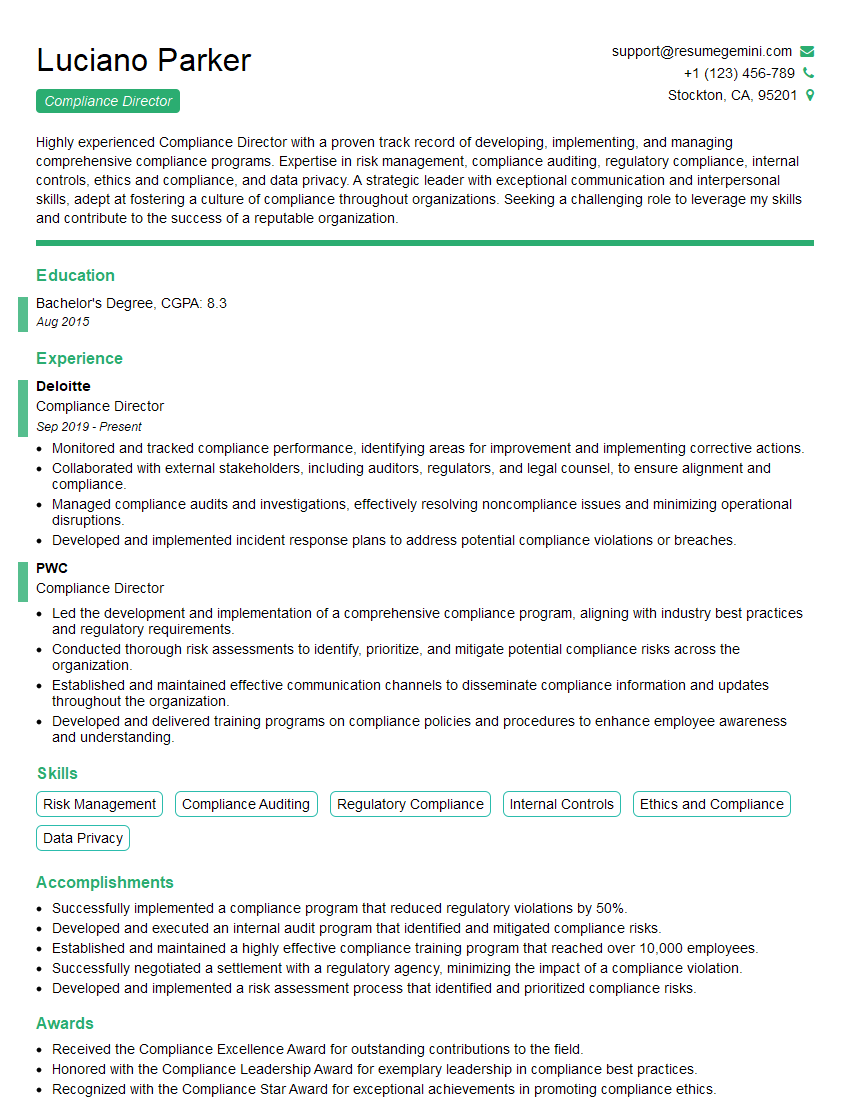
Compliance Director Resume Sample
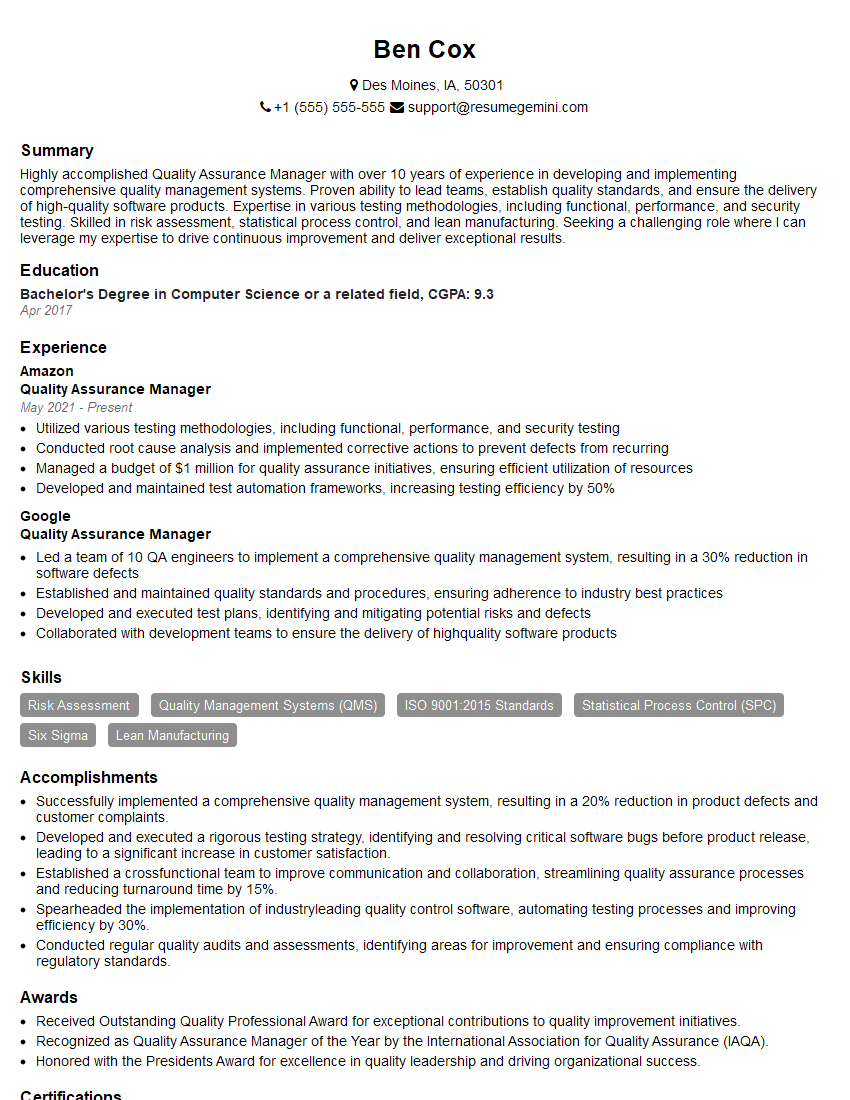
Quality Assurance Manager Resume Sample
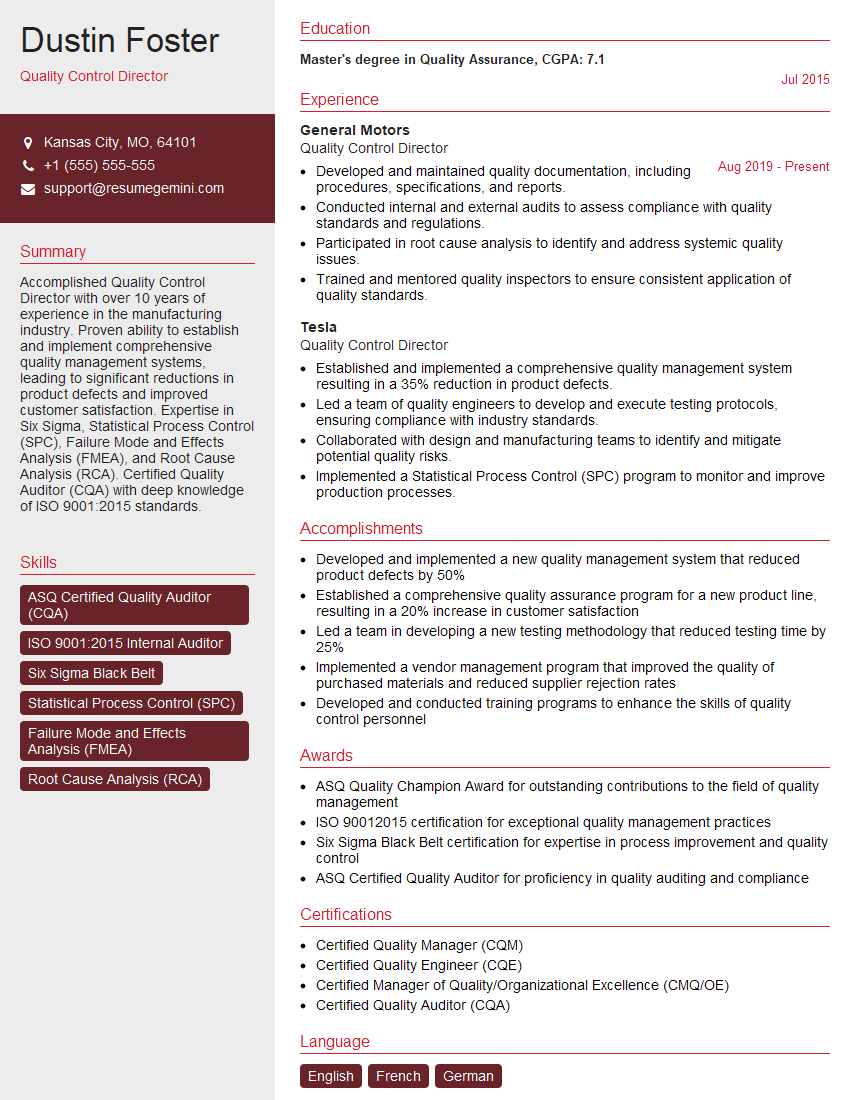
Quality Control Director Resume Sample
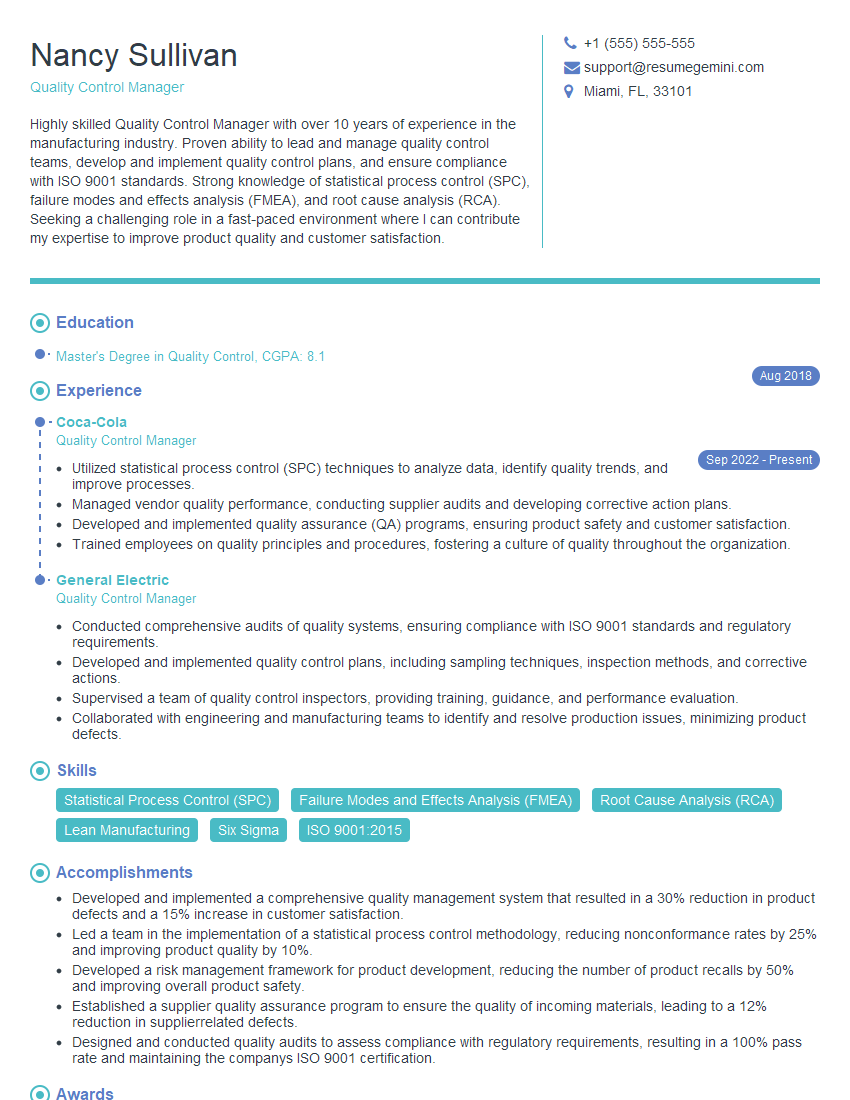
Quality Control Manager Resume Sample
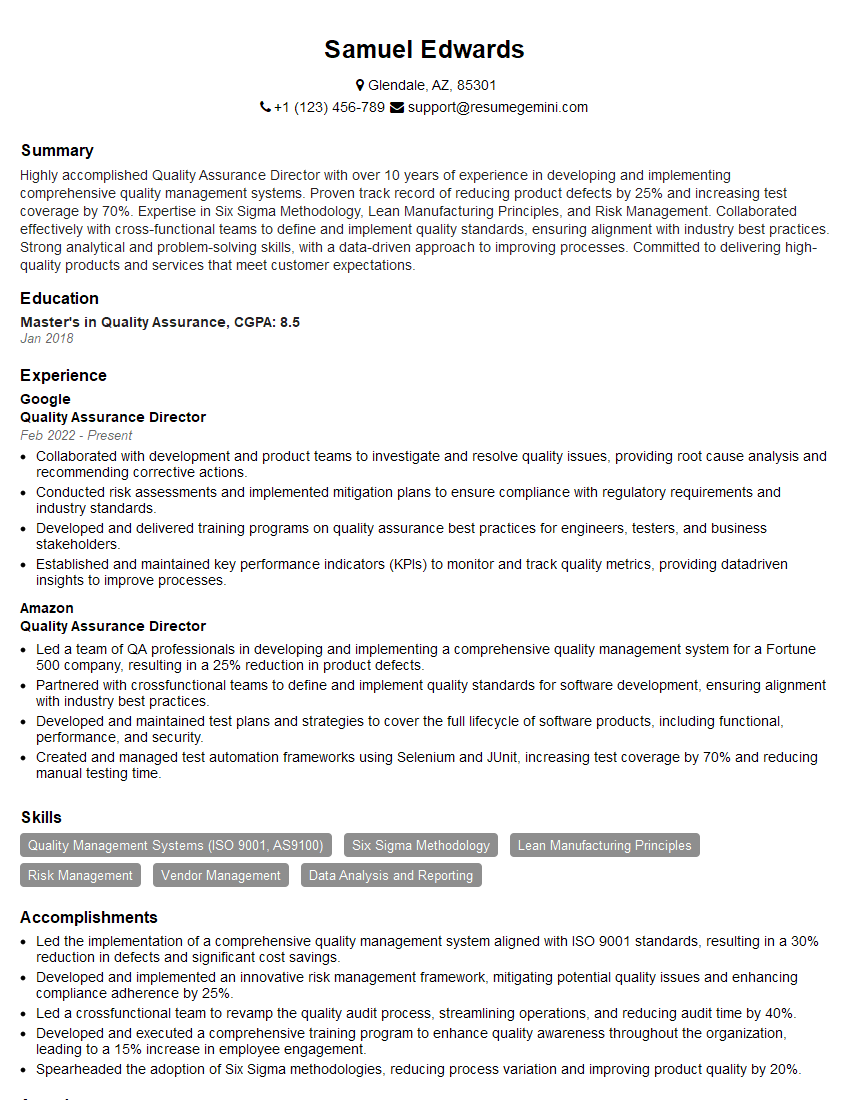
Quality Assurance Director Resume Sample
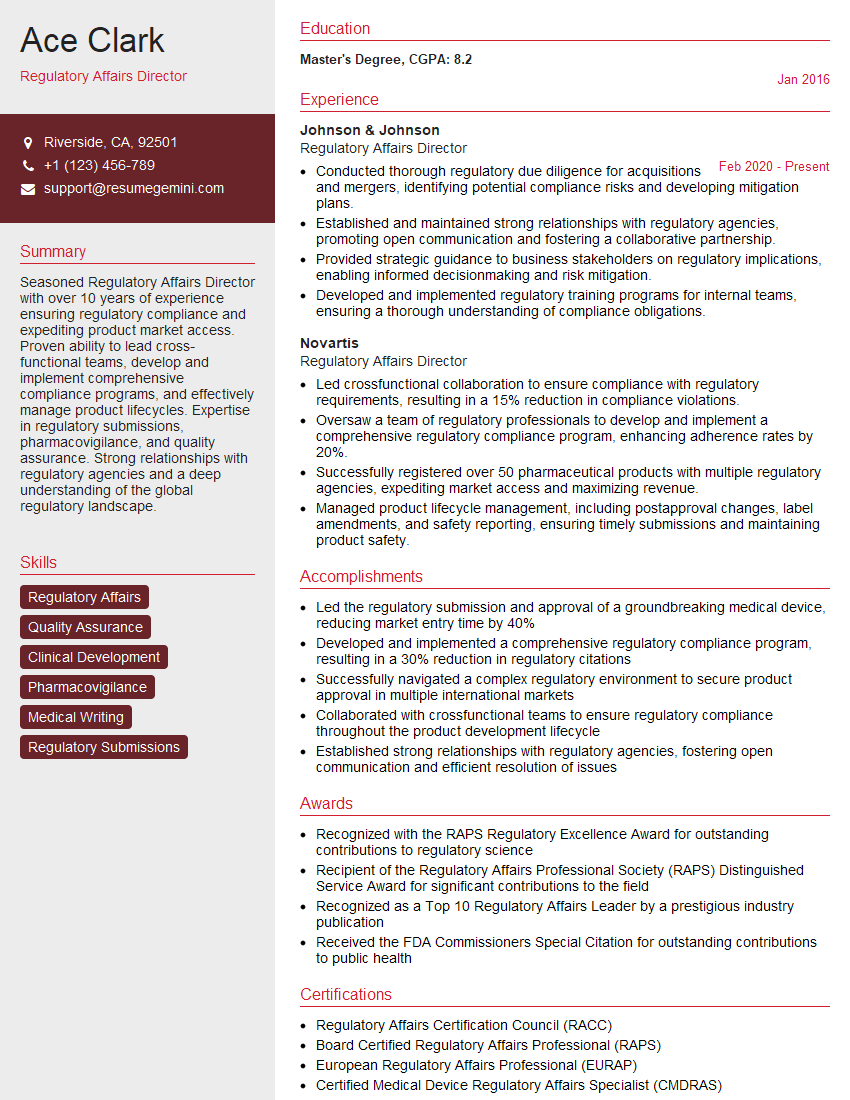
Regulatory Affairs Director Resume Sample
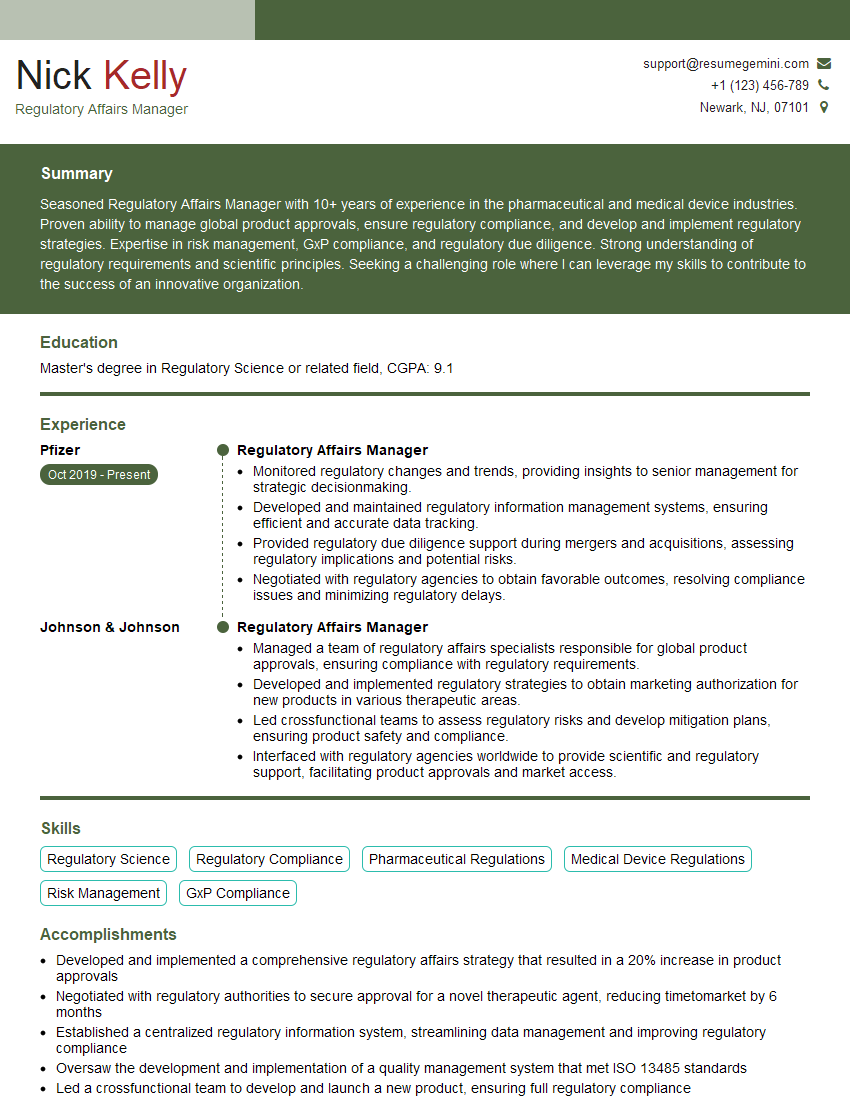
Regulatory Affairs Manager Resume Sample
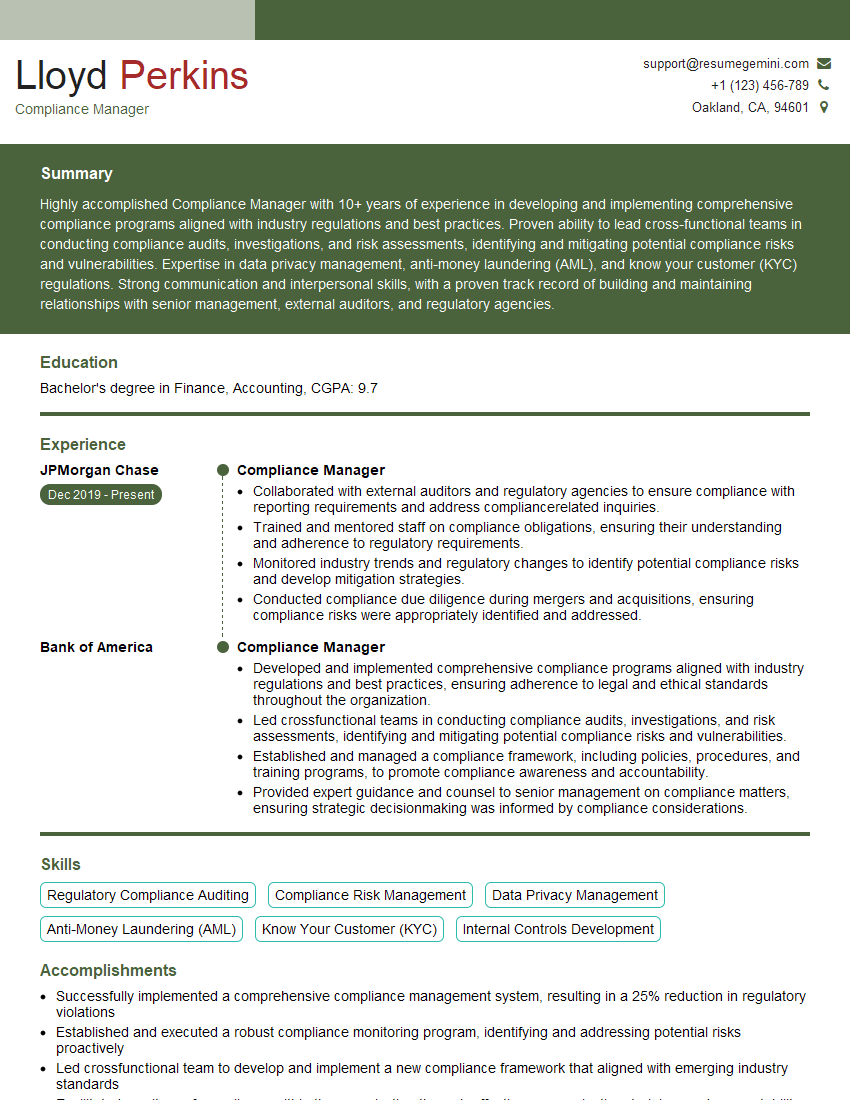
Compliance Manager Resume Sample
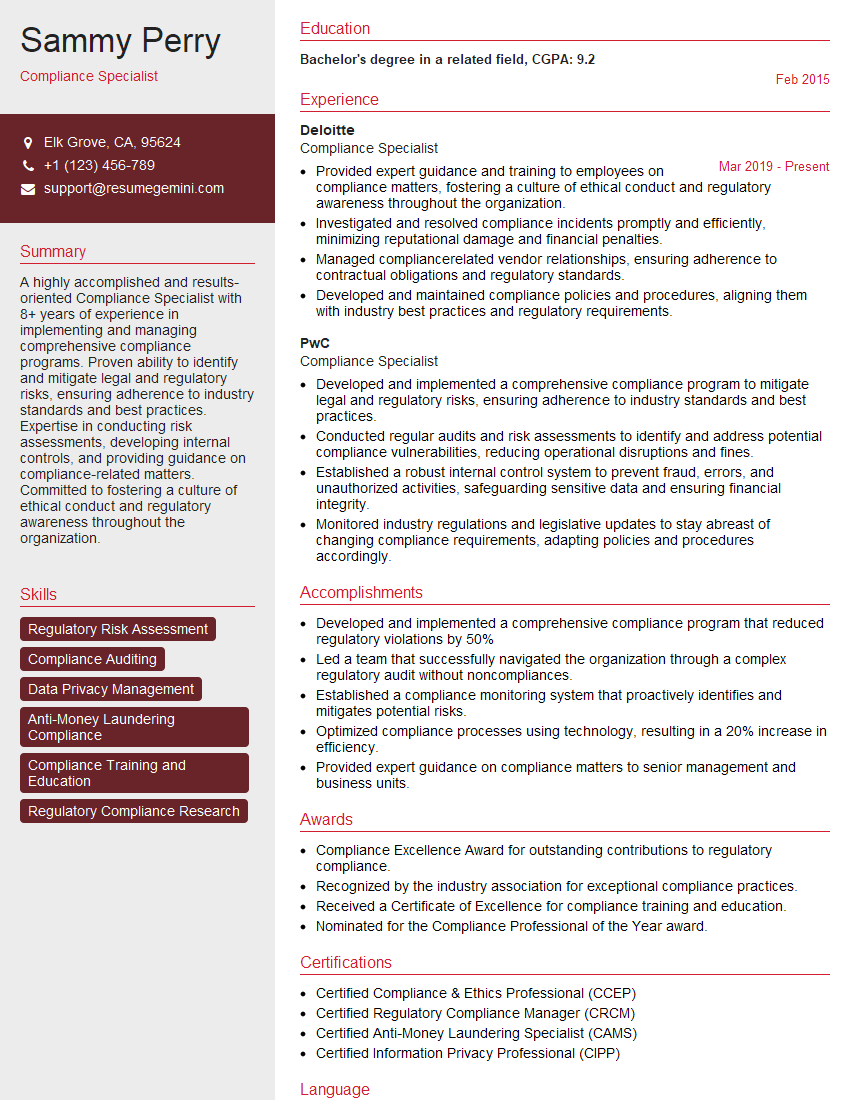
Compliance Specialist Resume Sample
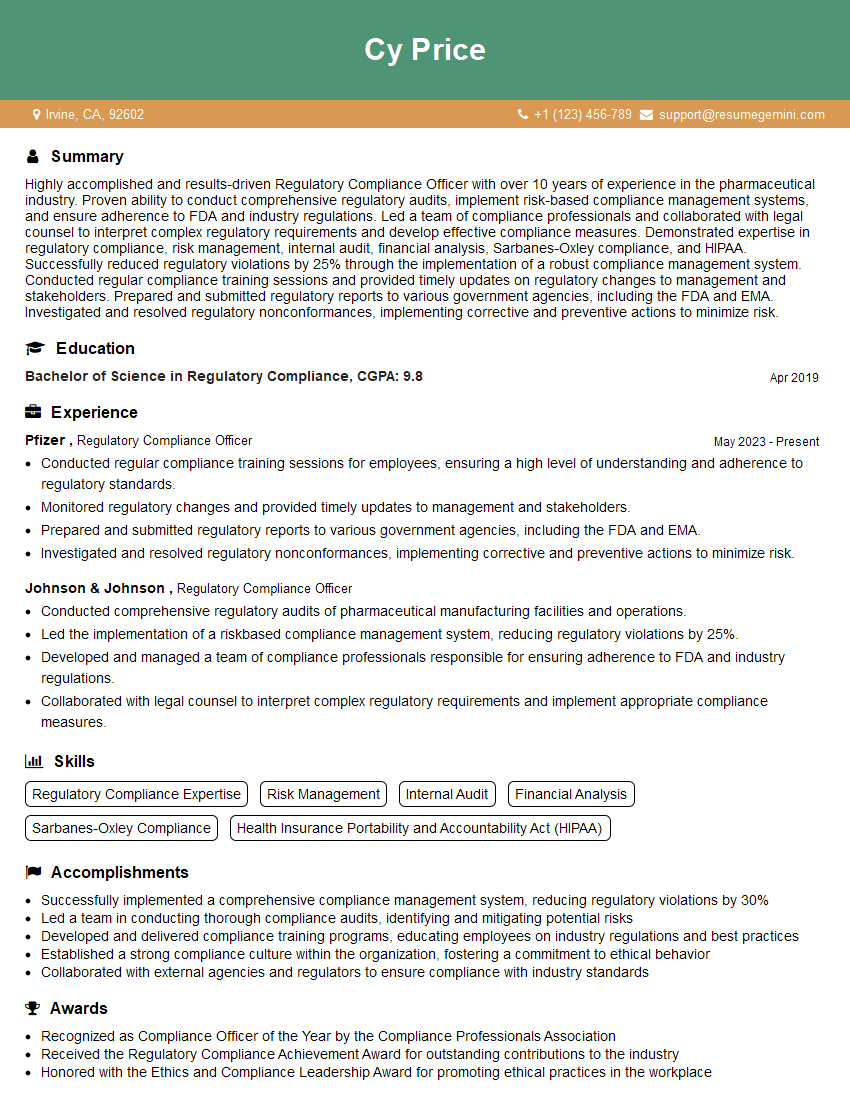
Regulatory Compliance Officer Resume Sample
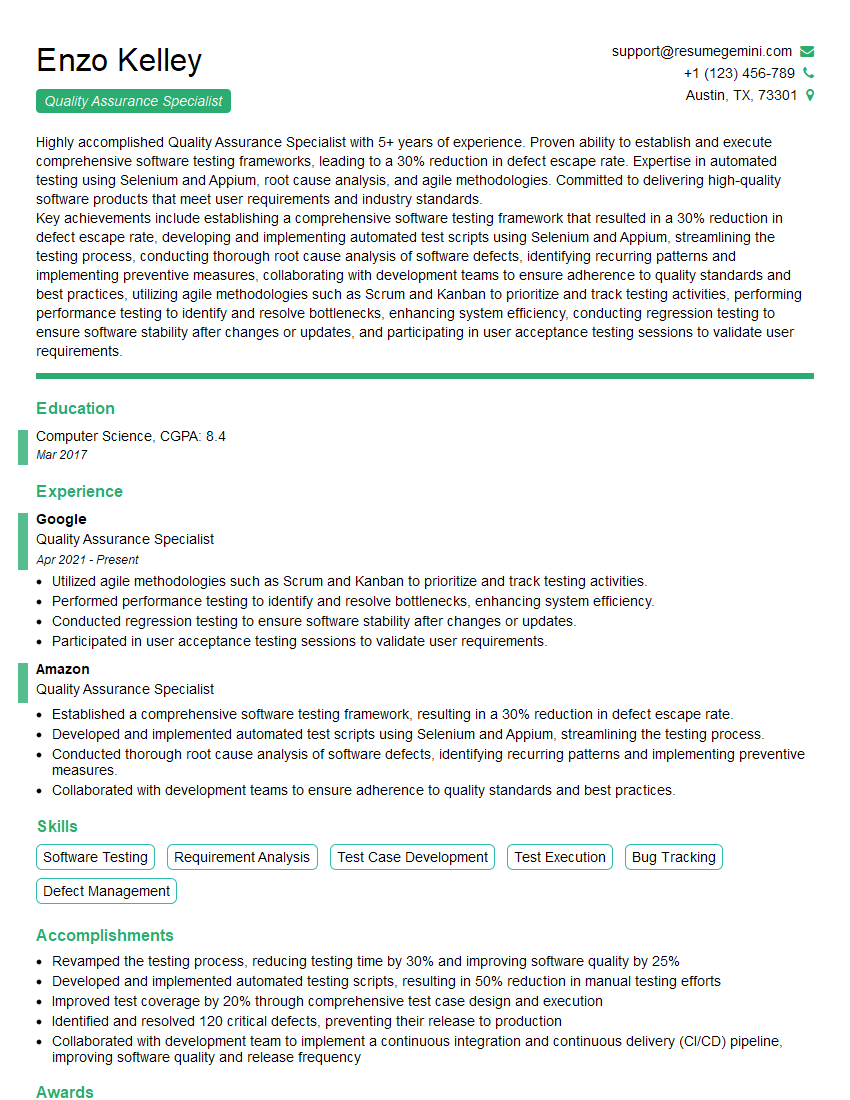
Quality Assurance Specialist Resume Sample
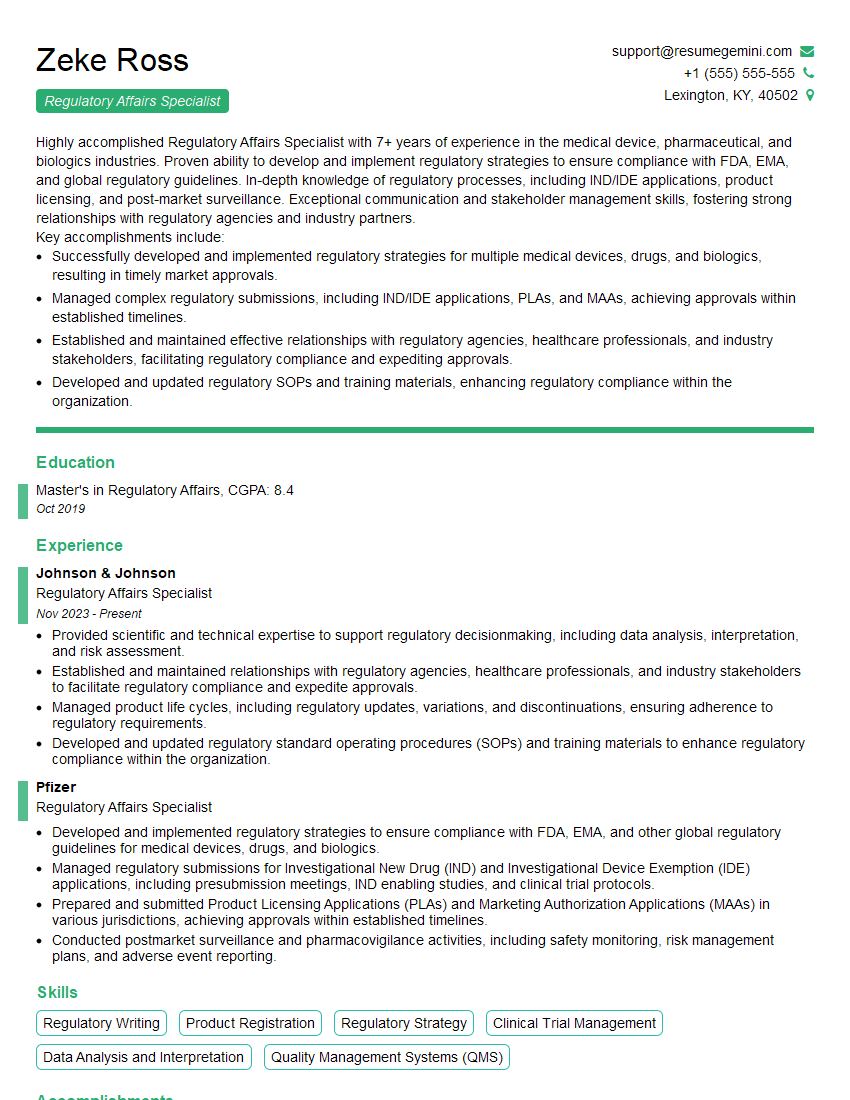
Regulatory Affairs Specialist Resume Sample
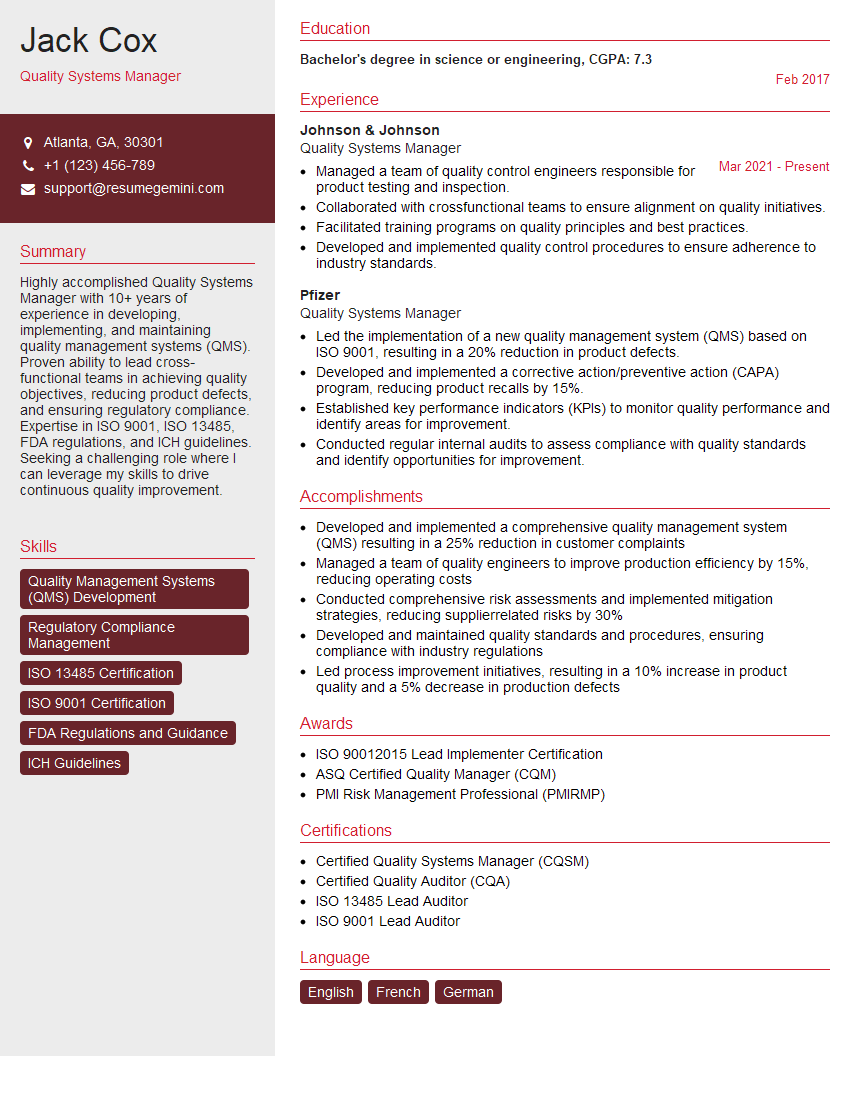
Quality Systems Manager Resume Sample
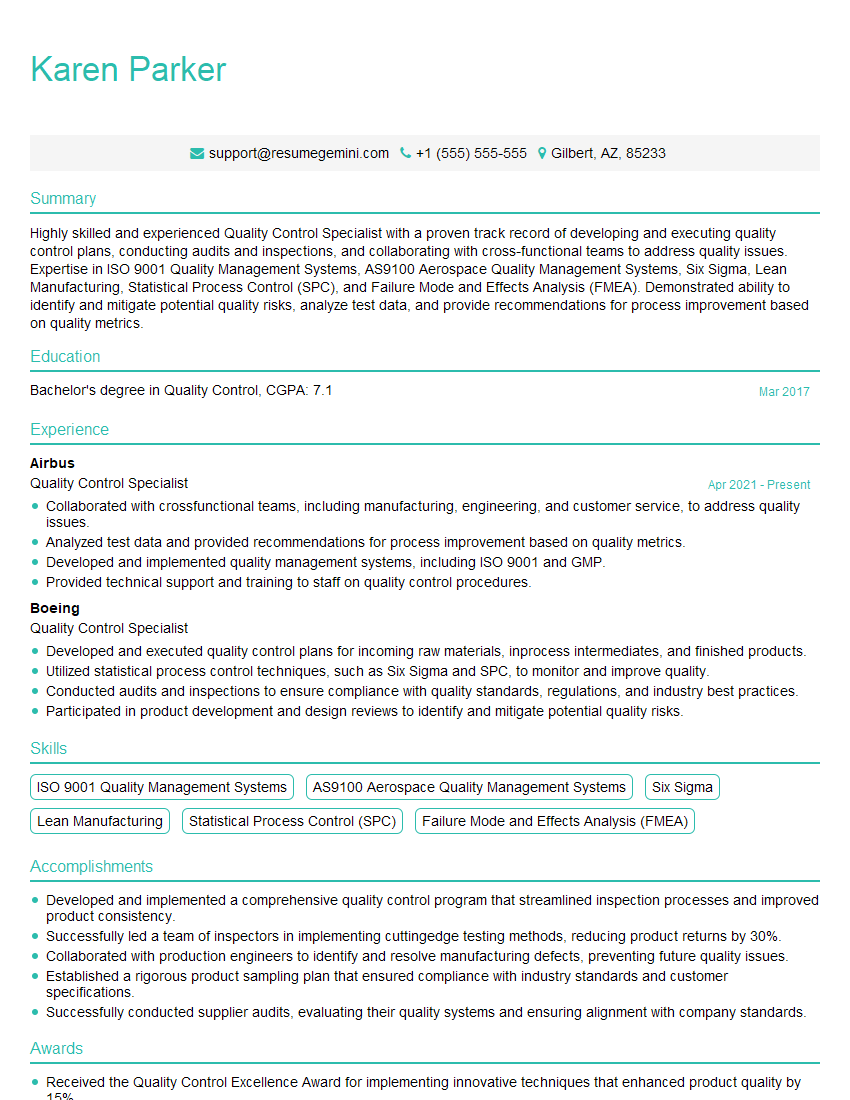
Quality Control Specialist Resume Sample
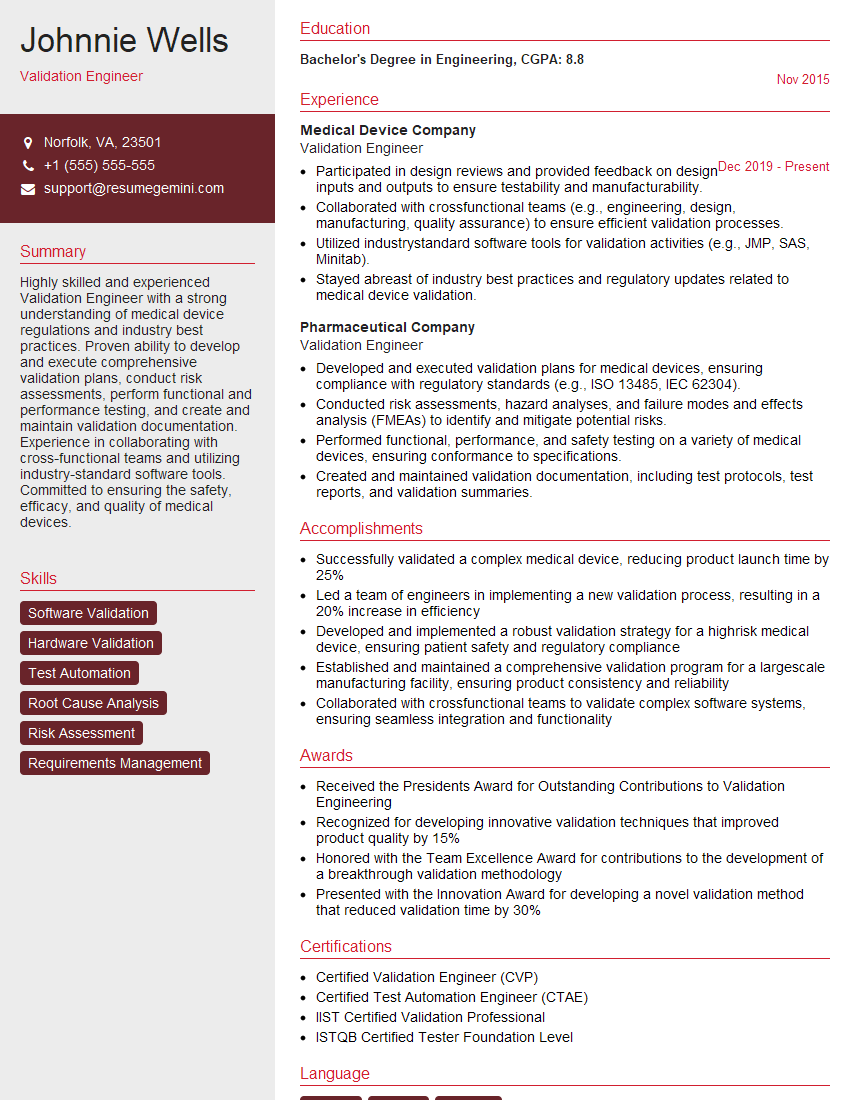
Validation Engineer Resume Sample
- Compliance Director
- Quality Assurance Manager
- Quality Control Director
- Quality Control Manager
- Quality Assurance Director
- Regulatory Affairs Director
- Regulatory Affairs Manager
- Compliance Manager
- Compliance Specialist
- Regulatory Compliance Officer
- Quality Assurance Specialist
- Regulatory Affairs Specialist
- Quality Systems Manager
- Quality Control Specialist
- Validation Engineer
Explore more articles
Users Rating of Our Blogs
Share Your Experience
We value your feedback! Please rate our content and share your thoughts (optional).
What Readers Say About Our Blog
Very informative content, great job.
good