The thought of an interview can be nerve-wracking, but the right preparation can make all the difference. Explore this comprehensive guide to Renewable energy technologies (e.g., solar PV, wind turbines) interview questions and gain the confidence you need to showcase your abilities and secure the role.
Questions Asked in Renewable energy technologies (e.g., solar PV, wind turbines) Interview
Q 1. Explain the difference between monocrystalline, polycrystalline, and thin-film solar cells.
Solar cells come in three main types: monocrystalline, polycrystalline, and thin-film. The key difference lies in their silicon crystal structure, which directly impacts their efficiency and cost.
- Monocrystalline silicon: These cells are made from a single, large silicon crystal, resulting in a uniform structure. This uniformity allows for higher efficiency (typically 18-22%) because electrons can move more freely. They are characterized by their distinctive black color and are generally more expensive due to the energy-intensive manufacturing process. Think of them as the ‘Ferrari’ of solar cells – high performance but a premium price.
- Polycrystalline silicon: These cells are made from multiple silicon crystals melted together, resulting in a less uniform structure with grain boundaries. These boundaries slightly impede electron flow, leading to slightly lower efficiency (typically 15-17%) compared to monocrystalline cells. They are typically less expensive to produce, making them a more budget-friendly option. Imagine them as a reliable, fuel-efficient car – good performance at a reasonable cost.
- Thin-film solar cells: Unlike the crystalline silicon cells, thin-film cells use a thin layer of photovoltaic material, often cadmium telluride (CdTe), copper indium gallium selenide (CIGS), or amorphous silicon, deposited on a substrate like glass or plastic. They are flexible, lightweight, and can be produced at lower costs. However, their efficiency is generally lower (typically 8-12%) than crystalline silicon cells. They are like a bicycle – very efficient in terms of materials, but with lower overall power output.
The choice between these types depends on factors like budget, available space, and desired energy output. For high-efficiency applications where cost is less of a concern, monocrystalline cells are preferred. For large-scale projects where cost is a major factor, polycrystalline or thin-film cells might be more suitable.
Q 2. Describe the working principle of a wind turbine, including its key components.
A wind turbine converts the kinetic energy of wind into electricity. This happens through a series of key components working in harmony:
- Rotor: This is the most visible part, consisting of blades attached to a hub. The blades’ aerodynamic design captures the wind’s energy and creates rotational force.
- Gearbox (or Multiplier): This increases the rotational speed of the rotor to a speed suitable for the generator. Think of it like a bike’s gears – it allows you to achieve a higher speed with less effort.
- Generator: This converts the mechanical rotation into electrical energy. Most wind turbines use induction generators or permanent magnet generators.
- Nacelle: This houses the gearbox, generator, and other essential components at the top of the tower.
- Tower: This elevates the rotor to capture higher-speed winds, further increasing efficiency.
The wind turns the rotor blades. The rotation is transferred to the gearbox, which speeds it up. The generator then converts this fast rotation into electricity, which is then fed into the grid via cables running down the tower.
Q 3. What are the different types of wind turbine designs and their advantages/disadvantages?
Wind turbines are broadly categorized into two main designs based on the axis of rotation:
- Horizontal-axis wind turbines (HAWTs): These are the most common type, with the rotor axis parallel to the ground. HAWTs are generally more efficient at higher wind speeds because of their ability to capture more wind energy. However, they require taller towers to clear obstacles and are more susceptible to yaw misalignment (being slightly off-center to the wind). Think of a traditional windmill you often see in illustrations.
- Vertical-axis wind turbines (VAWTs): These have a rotor axis perpendicular to the ground. VAWTs are less sensitive to wind direction changes, meaning they don’t require complex yaw mechanisms. They can also be shorter and potentially less expensive. However, their efficiency is generally lower than HAWTs, especially at high wind speeds. These are sometimes used in urban settings or where space is limited.
There are also variations within these categories, such as downwind HAWTs (blades rotate behind the tower) and different VAWT designs like Darrieus or Savonius turbines. The optimal choice depends on factors such as wind conditions, land availability, and budget constraints.
Q 4. How does solar irradiance affect solar PV system performance?
Solar irradiance, the amount of solar radiation received by a surface, is the most significant factor affecting solar PV system performance. Higher irradiance leads to higher power output. Think of it like turning up the brightness of a lightbulb; more sunlight, more electricity.
Irradiance levels fluctuate throughout the day and year due to weather conditions, time of day, and the sun’s angle. Cloudy days significantly reduce irradiance, resulting in lower energy production. The angle of the sun also influences irradiance; panels perform best when they are optimally angled towards the sun. This is why solar panel installations often involve tilting panels to maximize sunlight capture throughout the year.
PV system design must consider these variations. Accurate solar irradiance data, often obtained from weather databases, is critical for determining the optimal system size and expected energy production. Sophisticated simulations can forecast energy generation, accounting for the effects of varying irradiance.
Q 5. Explain the concept of capacity factor in the context of renewable energy generation.
The capacity factor represents the actual power generated by a renewable energy plant over a period of time, relative to its maximum possible output if it operated at full capacity continuously. It’s essentially the efficiency of the plant over time, expressed as a percentage.
For example, a wind turbine with a 1 MW capacity that generates 3000 MWh of electricity in a year has a capacity factor of approximately 34.2% (3000 MWh / (1 MW * 8760 hours/year) * 100%). A higher capacity factor indicates a more reliable and efficient power plant.
Capacity factors vary significantly depending on the renewable energy technology and location. Wind turbines, for example, typically have capacity factors ranging from 20% to 40% due to fluctuating wind speeds. Solar PV systems are similarly impacted by weather conditions and daylight hours, resulting in capacity factors often ranging from 15% to 25% in many regions. This is a key metric for investors and grid operators, as it helps assess the economic viability and reliability of renewable energy projects.
Q 6. What are the major challenges in integrating renewable energy sources into the power grid?
Integrating renewable energy sources into the power grid presents several significant challenges:
- Intermittency: Solar and wind power are intermittent sources; their output fluctuates depending on weather conditions. This unpredictability makes it challenging to maintain grid stability and reliability.
- Predictability and Forecasting: Accurate forecasting of renewable energy generation is crucial for grid management. While forecasting has improved, uncertainties remain, requiring backup power sources or demand-side management strategies.
- Grid Infrastructure: Existing grid infrastructure may not be optimally designed to handle the decentralized nature of renewable energy generation and its fluctuating output. Upgrades and smart grid technologies are necessary to accommodate renewable energy effectively.
- Distance from Load Centers: Renewable energy resources are often located far from major population centers and load centers. This requires extensive transmission infrastructure upgrades, which can be expensive.
- System Stability: The fluctuating nature of renewable energy can affect the frequency and voltage of the grid, requiring advanced control systems and possibly energy storage solutions to maintain stability.
Addressing these challenges requires a multifaceted approach involving advanced forecasting techniques, smart grid technologies, energy storage solutions, improved grid infrastructure, and effective policy frameworks.
Q 7. Describe various energy storage technologies and their suitability for renewable energy applications.
Various energy storage technologies are being developed and deployed to address the intermittency of renewable energy sources. The most prominent include:
- Pumped hydro storage: This is a mature technology that uses excess electricity to pump water uphill to a reservoir. When electricity is needed, the water flows downhill, turning turbines to generate power. It’s cost-effective for large-scale applications but geographically limited.
- Batteries (Lithium-ion, flow batteries): Lithium-ion batteries are widely used for smaller-scale applications, providing fast response times. Flow batteries are suitable for larger-scale applications and offer longer lifespans, although they are currently more expensive.
- Compressed air energy storage (CAES): This technology stores energy by compressing air. When energy is needed, the compressed air is released to drive a turbine. It’s suitable for large-scale applications, but efficiency can be a concern.
- Thermal energy storage: This technology stores energy as heat (e.g., molten salt) or cold, which can later be used to generate electricity. This is particularly relevant for concentrated solar power (CSP) plants.
The suitability of a particular storage technology depends on factors like cost, scale, response time, lifespan, and environmental impact. Hybrid approaches combining different technologies are also being explored to leverage the advantages of each while mitigating their limitations.
Q 8. Explain the concept of net metering and its impact on renewable energy adoption.
Net metering is a billing mechanism that allows renewable energy system owners, typically those with solar PV systems, to send excess electricity generated by their systems back to the power grid and receive credits on their electricity bill. Essentially, you’re selling your extra power to the utility company.
Its impact on renewable energy adoption is significant. By reducing or eliminating electricity bills for homeowners and businesses, net metering makes renewable energy systems more financially attractive. This incentive encourages broader adoption, accelerating the transition towards cleaner energy sources. For example, a homeowner with a solar panel system that generates more electricity than they consume during the day will see their meter run backward, accumulating credits that can be used to offset their electricity consumption during the evening or at night. This significantly lowers the upfront investment payback period, making solar more accessible to a wider range of consumers.
However, the effectiveness of net metering varies depending on the specific regulations implemented by different utilities and governments. Some jurisdictions offer very favorable net metering policies, while others may have restrictions or are phasing out the program altogether due to concerns about its impact on utility revenue and grid stability.
Q 9. How do you assess the suitability of a location for a wind farm or solar farm?
Assessing the suitability of a location for a wind or solar farm involves a multi-faceted approach encompassing various factors. For wind farms, crucial considerations include:
- Wind resource assessment: This involves measuring wind speed and direction at various heights using meteorological towers (met masts) over an extended period (at least a year). Sufficiently high average wind speeds are crucial for economic viability.
- Terrain analysis: Flat, open land is ideal, while hilly or forested areas can significantly reduce wind speeds and create turbulence.
- Grid connection: Proximity to the electricity grid is essential to minimize transmission losses and costs. Upgrades to the existing infrastructure might be necessary.
- Environmental impact: Assessments are required to determine the impact on avian life (birds), bats, and the surrounding ecosystem. This often involves bird and bat surveys.
- Regulatory approvals: Obtaining permits and licenses from relevant authorities (local, state, and federal) can be a lengthy process.
For solar farms, key factors are:
- Solar irradiance: High levels of solar radiation throughout the year are vital. This is usually determined using satellite imagery and historical weather data.
- Land availability: Large areas of flat, south-facing land are ideal (in the Northern Hemisphere; north-facing in the Southern Hemisphere).
- Land cost and ownership: Securing suitable land at a reasonable cost is crucial for project profitability.
- Grid connection: Similar to wind farms, close proximity to the transmission grid is essential.
- Environmental impact: Considerations include land use change, potential impacts on wildlife habitats, and water usage (for cleaning panels).
In both cases, a detailed feasibility study, integrating these factors, is conducted before proceeding with the project development.
Q 10. What are the environmental impacts of renewable energy technologies?
While renewable energy sources are generally cleaner than fossil fuels, they still have environmental impacts.
- Land use: Both wind and solar farms require significant land areas, potentially impacting natural habitats and agricultural land.
- Wildlife impacts: Wind turbines can pose a threat to birds and bats (through collision), while solar farms can alter wildlife habitats. Careful siting and mitigation strategies are needed.
- Material extraction and manufacturing: The manufacturing of renewable energy technologies requires resources and energy, leading to greenhouse gas emissions and pollution. For example, the production of solar panels involves the use of rare earth minerals and some potentially hazardous chemicals.
- Water usage: Some renewable energy technologies, like certain types of geothermal energy and concentrating solar power, can require considerable amounts of water for cooling and cleaning.
- Visual impact: The visual presence of wind turbines and solar farms can be a concern for some communities, leading to aesthetic impacts.
It’s important to note that the environmental impact of renewable energy technologies is generally much lower compared to fossil fuels, and ongoing research focuses on minimizing these impacts through technological advancements and sustainable practices.
Q 11. Describe different types of inverters used in solar PV systems.
Inverters are crucial components in solar PV systems, converting the direct current (DC) electricity generated by solar panels into alternating current (AC) electricity that can be used by homes and businesses or fed back into the grid. Different types of inverters exist, each with its own advantages and disadvantages:
- String inverters: These are the most common and cost-effective type. They connect to a series of solar panels (a string) and convert the combined DC output into AC. They are simple to install and maintain but have the disadvantage that a single faulty panel can affect the entire string’s performance.
- Microinverters: These are smaller inverters attached to individual solar panels, converting the DC power to AC at the panel level. This offers better performance and monitoring capabilities, as issues are isolated to single panels, but they are more expensive than string inverters. They also offer better performance in partial shading conditions.
- Power optimizers: These are DC-to-DC converters placed between panels and the inverter to maximize energy harvest in cases of shading or mismatch within a string. They boost the efficiency of string inverter systems.
- Central inverters: These are large inverters typically used in utility-scale solar farms. They are highly efficient but can be more susceptible to failure, potentially impacting large sections of the solar field.
The choice of inverter depends on the size and complexity of the solar PV system, budget, and specific performance requirements.
Q 12. Explain the importance of preventative maintenance for wind turbines.
Preventative maintenance for wind turbines is critical for ensuring safe and reliable operation, maximizing energy production, and minimizing downtime and repair costs. A well-structured maintenance program typically includes:
- Regular inspections: Visual inspections of the turbine’s components (blades, gearbox, generator, nacelle) are carried out at intervals based on manufacturer recommendations and operating conditions.
- Lubrication: Regular lubrication of bearings, gears, and other moving parts is crucial to reduce friction and wear.
- Gearbox maintenance: Gearboxes are complex components requiring periodic checks, oil changes, and potentially replacement of worn parts.
- Blade inspections and repairs: Blade inspections are necessary to detect cracks, damage from lightning strikes, or erosion. Repair or replacement may be needed.
- Generator maintenance: This involves checks for overheating, vibrations, and potential electrical issues.
- Condition monitoring: Sophisticated sensors and data acquisition systems monitor various parameters (vibration, temperature, oil condition) to detect anomalies that indicate potential problems before they escalate.
A well-planned preventative maintenance program can significantly extend the operational lifespan of wind turbines and prevent costly and disruptive failures.
Q 13. What are the common failures in solar PV systems and how are they diagnosed?
Solar PV systems can experience several common failures, often diagnosable using a combination of visual inspection, electrical testing, and thermal imaging.
- Faulty solar panels: Individual panels can fail due to defects, shading, or physical damage. These can be identified visually by examining for cracks, discoloration, or hotspots (detected using thermal imaging).
- Wiring problems: Loose or corroded connections in the wiring can cause power loss or short circuits. These are detected using multimeter tests.
- Inverter malfunctions: Inverters can fail due to overheating, aging components, or electrical surges. Error codes and diagnostic indicators from the inverter can help pinpoint the issue.
- Bypass diodes failure: When cells within a panel fail, bypass diodes prevent the entire panel from shutting down, but if diodes fail, the entire panel can be affected.
- Grounding issues: Poor grounding can lead to safety hazards and system malfunctions. Ground resistance testing is used to diagnose these problems.
Systematic troubleshooting, starting with visual inspection and followed by targeted electrical testing, allows for efficient diagnosis and resolution of most common solar PV system failures.
Q 14. Describe the role of a SCADA system in monitoring and controlling renewable energy assets.
Supervisory Control and Data Acquisition (SCADA) systems play a vital role in monitoring and controlling renewable energy assets, significantly improving their efficiency, safety, and performance. They gather data from numerous sensors located throughout the renewable energy system (wind farm or solar plant) and transmit this data to a central control center.
Key functions of SCADA in renewable energy:
- Real-time monitoring: SCADA systems continuously monitor key parameters like wind speed (for wind turbines), solar irradiance (for solar farms), power output, generator temperature, and vibration levels. This enables early detection of anomalies and potential problems.
- Remote control: Operators can remotely control various aspects of the renewable energy system, such as adjusting turbine blade pitch, switching inverters on or off, and optimizing power output based on real-time conditions.
- Data logging and analysis: SCADA systems collect and store vast amounts of data, which can be analyzed to optimize performance, identify maintenance needs, and improve overall efficiency. Predictive maintenance strategies are often based on SCADA data analysis.
- Alarm management: SCADA systems generate alerts when critical parameters exceed pre-defined thresholds, notifying operators of potential issues that require immediate attention.
- Performance reporting: Detailed reports on energy production, equipment performance, and maintenance activities are generated to track the efficiency and profitability of the renewable energy assets.
SCADA systems are essential for maximizing the uptime and profitability of renewable energy projects by enabling proactive maintenance and optimized operation.
Q 15. How do you calculate the energy yield of a solar PV system?
Calculating the energy yield of a solar PV system involves several factors. Essentially, you’re estimating how much electricity the system will produce over a specific period, typically a year. This calculation relies on understanding the solar resource available at the location, the system’s capacity, and efficiency losses.
Here’s a simplified approach:
- Determine the solar irradiance: This is the amount of solar energy reaching the Earth’s surface at a given location. This data is usually obtained from solar resource maps or meteorological databases and is expressed in kilowatt-hours per square meter per year (kWh/m²/year).
- Calculate the system’s rated power: This is the total power output of all solar panels in the system, usually measured in kilowatts (kW).
- Account for system losses: Real-world systems experience various losses, including those due to shading, soiling, temperature effects, and inverter efficiency. These losses typically range from 10% to 20%, and sometimes even higher depending on system quality and maintenance. This is usually incorporated as a derate factor (e.g., 0.8 or 0.9).
- Estimate annual energy production: The annual energy yield (in kWh) is calculated by multiplying the solar irradiance (kWh/m²/year) by the area of the solar panels (m²), the system’s rated power (kW), and the derate factor.
Example: Let’s say we have a 5 kW solar PV system in a location with an average annual solar irradiance of 1500 kWh/m²/year. Assuming a panel area of 25 m² and a derate factor of 0.85, the estimated annual energy yield would be: 1500 kWh/m²/year * 25 m² * 5 kW * 0.85 = 159,375 kWh/year
More sophisticated calculations use specialized software incorporating hourly solar irradiance data, panel angle optimization, and more detailed loss factors. This allows for more accurate predictions of energy production.
Career Expert Tips:
- Ace those interviews! Prepare effectively by reviewing the Top 50 Most Common Interview Questions on ResumeGemini.
- Navigate your job search with confidence! Explore a wide range of Career Tips on ResumeGemini. Learn about common challenges and recommendations to overcome them.
- Craft the perfect resume! Master the Art of Resume Writing with ResumeGemini’s guide. Showcase your unique qualifications and achievements effectively.
- Don’t miss out on holiday savings! Build your dream resume with ResumeGemini’s ATS optimized templates.
Q 16. Explain the concept of Levelized Cost of Energy (LCOE).
The Levelized Cost of Energy (LCOE) is a critical metric used to compare the overall cost-effectiveness of different electricity generation technologies, including renewable energy sources. It represents the average cost per unit of electricity generated over the entire lifetime of a power plant, taking into account all costs involved.
These costs include:
- Capital costs (e.g., initial investment in equipment and infrastructure)
- Operation and maintenance costs (e.g., regular maintenance, repairs, and staff salaries)
- Fuel costs (relevant for non-renewable technologies, negligible for solar and wind)
- Financing costs (e.g., interest payments on loans)
- Decommissioning costs (e.g., costs associated with dismantling the plant at the end of its life)
The LCOE is usually expressed in $/kWh or €/kWh. A lower LCOE indicates a more cost-effective technology.
Calculating LCOE involves discounting all future costs to their present value and dividing the total present value of costs by the total electricity generated over the project lifetime. The formula can be complex and often requires specialized software. A simplified representation is shown below, where the present value is represented by PV and the project lifetime by n years.
LCOE = (PV of Capital Costs + PV of O&M Costs + PV of Fuel Costs + PV of Decommissioning Costs) / Total Energy ProductionPractical Application: LCOE analysis is crucial for investors, policymakers, and developers in making informed decisions about energy project investments. It allows for a fair comparison of renewable energy options (like solar versus wind) with traditional fossil fuel-based power plants.
Q 17. What are the different types of grid connection schemes for renewable energy projects?
Grid connection schemes for renewable energy projects depend on the size and characteristics of the project. They aim to safely and efficiently integrate the renewable energy source into the existing electricity grid.
Common schemes include:
- Small-scale (residential/commercial): These typically involve direct connection to the low-voltage distribution grid via a single-phase or three-phase inverter. Simple and cost-effective for smaller systems.
- Medium-scale (community solar farms): These might involve a step-up transformer to increase the voltage before connecting to the medium-voltage distribution grid. More complex protection schemes are usually required.
- Large-scale (utility-scale wind or solar farms): These often necessitate high-voltage substations and extensive transmission lines to connect to the high-voltage transmission grid. This involves sophisticated control systems for grid stability and voltage regulation. The connection usually involves a step-up transformer at the site.
- Islanding systems (off-grid): In remote locations lacking grid access, renewable energy projects operate independently. This requires energy storage systems (like batteries) to manage power supply fluctuations. These systems require careful management of energy balance.
The choice of connection scheme depends on factors like the project’s size, location, grid infrastructure, and regulatory requirements. Detailed grid studies are necessary to ensure grid stability and security during integration.
Q 18. Describe the role of power electronics in renewable energy systems.
Power electronics play a vital role in modern renewable energy systems. They are essential for converting the variable DC output of solar panels and wind turbines into the AC power required by the electricity grid. They also facilitate grid integration and enhance system efficiency.
Key functions of power electronics in renewable energy systems include:
- DC-AC Conversion (Inversion): Inverters convert the direct current (DC) electricity generated by solar panels and wind turbines into alternating current (AC) electricity suitable for the grid.
- Maximum Power Point Tracking (MPPT): MPPT algorithms are implemented in inverters to optimize the power extraction from solar panels or wind turbines under varying conditions (e.g., changing sunlight intensity or wind speed).
- Voltage and Frequency Regulation: Power electronic devices help maintain the voltage and frequency of the electricity supplied to the grid, ensuring stability and reliability.
- Grid Synchronization: Power electronics ensure that the renewable energy source is synchronized with the grid, matching its voltage and frequency to the grid’s characteristics. This prevents damage to the equipment and disruption to the power system.
- Protection and Fault Management: Power electronic systems include protective circuitry to prevent damage from overcurrent, overvoltage, and other faults.
Examples of power electronic devices commonly used include inverters, rectifiers, and converters, often using technologies like IGBTs (Insulated Gate Bipolar Transistors) and MOSFETs (Metal-Oxide-Semiconductor Field-Effect Transistors).
Q 19. What are the safety regulations and standards associated with working on solar PV and wind turbine systems?
Safety regulations and standards for working on solar PV and wind turbine systems are stringent and vary by country and region. They aim to protect workers from electrical hazards, falls, and other potential dangers associated with these technologies.
Key aspects of these regulations include:
- Lockout/Tagout Procedures: Ensuring that power is completely isolated before any work is performed on electrical components.
- Arc Flash Protection: Implementing measures to protect workers from the potential for arc flash incidents—intense electrical explosions that can cause severe burns.
- Fall Protection: Using harnesses, lifelines, and other equipment to prevent falls from heights, especially when working on wind turbine towers or rooftops.
- Personal Protective Equipment (PPE): Requiring workers to wear appropriate PPE, such as safety glasses, gloves, hard hats, and insulated clothing.
- Training and Certification: Mandating proper training and certification for personnel working on these systems.
- Emergency Response Plans: Developing and implementing plans to address emergencies, such as electrical shocks or equipment malfunctions.
Specific standards and codes may include OSHA (Occupational Safety and Health Administration) regulations in the US, IEC (International Electrotechnical Commission) standards internationally, and other national or regional safety regulations. Adherence to these regulations is crucial to prevent accidents and ensure worker safety.
Q 20. Explain different types of wind turbine control systems.
Wind turbine control systems are crucial for optimizing energy capture, protecting the turbine from damage, and ensuring safe and reliable operation. Different control strategies are used, depending on the turbine type and operational requirements.
Key control systems include:
- Pitch Control: In larger wind turbines, the angle of the blades (pitch) is adjusted to regulate the power output. At high wind speeds, the pitch angle is increased to reduce the power captured, preventing overspeed.
- Yaw Control: This system orients the turbine’s nacelle (housing the main components) to face the wind, maximizing energy capture. Sensors constantly monitor wind direction, and motors adjust the nacelle’s position.
- Blade Pitch Control: This adjusts the pitch of individual blades to optimize energy capture at different wind speeds. Individual blade pitch helps to counteract aerodynamic imbalances.
- Collective Pitch Control: This is an overall pitch angle adjustment that applies to all blades simultaneously, mainly used for overall power regulation.
- Power Curve Control: This aims to maximize energy capture throughout the operational wind speed range. It adjusts the turbine’s rotational speed and pitch angle to follow the optimal power curve.
- Grid-Following Control: This ensures that the turbine’s power output matches the grid’s frequency and voltage requirements. This ensures proper synchronization with the electrical network.
Modern wind turbines employ sophisticated control algorithms and sensors to ensure optimal performance and safety. These systems utilize advanced computer control and monitoring systems, often including predictive maintenance capabilities to anticipate potential issues.
Q 21. How does the angle of incidence affect solar panel efficiency?
The angle of incidence is the angle between the sun’s rays and the surface normal (a line perpendicular to the solar panel’s surface). It significantly affects solar panel efficiency because the amount of sunlight absorbed by the panel changes with this angle.
Maximum efficiency is achieved when the angle of incidence is zero degrees (the sun’s rays are perpendicular to the panel’s surface). As the angle of incidence increases, the efficiency decreases due to several factors:
- Reduced surface area: When the angle is greater than zero, the sunlight is spread over a larger area of the panel, reducing the amount of light incident on each solar cell.
- Increased reflection: Sunlight striking the panel at an oblique angle experiences higher reflection from the panel’s surface, reducing the amount of light absorbed.
- Increased optical path length: The increased path length reduces the chance of light being absorbed within the cell.
Impact on System Design: To maximize efficiency, solar panels are often mounted at an angle that matches the latitude of the location, and they can be mounted with trackers to adjust the angle of the panels throughout the day to follow the sun’s path (solar trackers). This helps maintain a low angle of incidence throughout the day, maximizing energy harvest.
Even with optimal panel orientation, there will be variation in efficiency across the day due to the changing angle of incidence, which is why accurate yield estimation models consider the hourly variation in sunlight angle.
Q 22. What are the economic benefits and challenges of investing in renewable energy?
Investing in renewable energy offers significant long-term economic benefits, but also presents unique challenges. On the benefit side, we see reduced reliance on fossil fuels, leading to lower energy costs over the asset lifetime, especially as fossil fuel prices fluctuate. Renewable energy sources like solar and wind are becoming increasingly cost-competitive, even without government subsidies in many regions. Furthermore, there are considerable job creation opportunities across the entire renewable energy value chain, from manufacturing and installation to maintenance and operations. Finally, attracting investment in renewable energy can improve a nation’s energy independence and reduce its carbon footprint, contributing to a more sustainable future and potentially attracting environmentally conscious businesses and investors.
However, challenges exist. The intermittent nature of solar and wind power requires substantial investment in energy storage solutions or grid infrastructure upgrades to ensure consistent electricity supply. Initial capital costs for renewable energy projects can be high, although they’re decreasing, requiring upfront financing or subsidies. Furthermore, the permitting and regulatory processes for large-scale renewable energy projects can be lengthy and complex, creating delays and increasing costs. Finally, the land use requirements for some renewable technologies, like large-scale solar farms or wind farms, can raise environmental concerns about habitat loss or visual impacts, leading to public opposition in some cases. Effective project planning, sophisticated financial models, and community engagement strategies are crucial to mitigating these challenges.
Q 23. What are the different types of batteries used in renewable energy storage?
Many battery technologies are used for renewable energy storage, each with its strengths and weaknesses. Lithium-ion batteries are currently the dominant technology due to their high energy density, relatively long lifespan, and relatively fast charging times. They are widely used in residential, commercial, and grid-scale energy storage systems. However, they have limitations including cost, thermal runaway risk, and environmental concerns related to sourcing and recycling.
Lead-acid batteries are a mature technology, offering a lower cost per kilowatt-hour than lithium-ion, but with lower energy density and shorter lifespan. They’re often found in smaller-scale applications or as backup power systems.
Flow batteries, such as vanadium redox flow batteries, store energy in liquid electrolytes, offering long lifespans and high power capabilities, making them suitable for grid-scale applications where long duration storage is needed. However, they tend to have lower energy density than lithium-ion and higher capital costs.
Other emerging technologies include solid-state batteries, which promise enhanced safety and energy density, and sodium-ion batteries, which offer a more sustainable and potentially lower-cost alternative to lithium-ion. The choice of battery technology depends heavily on the specific application, considering factors like cost, lifespan, energy density, power output, and safety requirements.
Q 24. Explain the concept of power curve for wind turbines.
A wind turbine’s power curve illustrates the relationship between wind speed and the power output of the turbine. It’s a crucial tool for assessing a turbine’s performance and predicting energy yield. The curve typically shows a gradual increase in power output as wind speed increases until it reaches the rated power, which is the maximum power the turbine can generate under optimal conditions. Beyond the rated power, the power output remains constant, and at very high wind speeds, the turbine may shut down to prevent damage (cut-out speed). The curve also shows the cut-in speed, the minimum wind speed at which the turbine begins to generate power.
Imagine it like a car’s speed vs. fuel consumption graph: below a certain speed (cut-in), the engine doesn’t provide power. As speed increases, fuel consumption (effort) increases, generating power (speed). After a certain speed (rated power), you may not be able to increase speed much more irrespective of pushing the accelerator (higher wind speed).
Analyzing the power curve helps determine the turbine’s suitability for a specific site based on the prevailing wind speeds. A site with consistently high wind speeds would benefit from a turbine with a high rated power and a suitable cut-out speed. Conversely, a site with lower average wind speeds might require a turbine designed to efficiently capture energy at lower wind speeds.
Q 25. What are the different types of trackers used in solar PV systems?
Solar PV systems utilize trackers to optimize energy production by maximizing the sun’s exposure to the panels throughout the day. Several tracker types exist:
- Single-axis trackers: These rotate around a single axis, typically east-west, following the sun’s movement across the sky. They are cost-effective but less efficient than dual-axis trackers.
- Dual-axis trackers: These rotate around two axes, allowing them to accurately follow the sun’s position throughout the entire day. They provide the highest energy yield but are more complex and expensive than single-axis trackers.
- Fixed-tilt systems: These systems don’t move and are the simplest and most cost-effective. Their energy yield is lower than trackers, but they are suitable for locations with consistent sunlight patterns.
- Hybrid trackers: These combine aspects of single-axis and fixed-tilt systems, offering a compromise between cost and performance. For example, a system might tilt seasonally to optimize performance but not rotate daily.
The choice of tracker type depends on factors such as the site’s latitude, climate, cost considerations, and the desired energy yield. Dual-axis trackers typically offer the highest energy gain but at a higher initial cost, while single-axis or fixed-tilt systems are more cost-effective, yet yield less energy annually.
Q 26. How do you perform a site assessment for a rooftop solar PV installation?
A comprehensive site assessment for a rooftop solar PV installation is crucial to ensure optimal system design and performance. The assessment involves several key steps:
- Rooftop evaluation: This includes assessing the roof’s structural integrity, orientation (south-facing is ideal in the Northern Hemisphere), shading from trees, buildings, or other obstacles, and the available roof area. Detailed roof dimensions and a high-resolution imagery are needed.
- Shading analysis: Utilizing specialized software or tools, we determine the extent and duration of shading throughout the year. This helps optimize panel placement and system design to minimize shading losses.
- Energy consumption analysis: Reviewing past energy bills helps estimate the household’s energy consumption patterns, allowing for the design of a system that meets energy needs. This also determines the sizing and configuration of the solar PV system.
- Electrical system evaluation: Assessing the existing electrical system, including the service panel’s capacity, wiring, and grounding, is essential to determine if upgrades are needed to accommodate the new solar system. Sometimes, panel upgrades are required to accommodate the increased power generation from the solar PV system.
- Permitting and regulatory compliance: This step involves verifying local building codes, zoning regulations, and any required permits before installation. This may require consultation with local authorities and potentially a structural engineer to ensure compliance and safety.
Accurate site assessment ensures that the solar PV system is appropriately sized, efficiently placed, and complies with all safety and regulatory requirements, maximizing energy production and minimizing potential issues during and after installation. Detailed documentation and reports generated in the assessment stage are critical for the subsequent project phases.
Q 27. What are the different types of permits and approvals needed for a renewable energy project?
The permitting and approval process for renewable energy projects varies significantly depending on the project size, location, and technology. Generally, several key permits and approvals are required:
- Land use permits: These permits are necessary to ensure the project complies with zoning regulations and land use plans. This often involves environmental impact studies and potentially public hearings.
- Building permits: For projects involving the construction of buildings or structures, like solar farms or wind turbine bases, building permits are mandatory. These ensure compliance with building codes and structural requirements.
- Environmental permits: These permits address potential environmental impacts, such as habitat disturbance or water usage. They often involve environmental impact assessments and mitigation plans.
- Interconnection permits: These permits are needed to connect the renewable energy facility to the electricity grid. The utility company will typically review and approve interconnection plans to ensure grid stability and safety.
- Other permits: Depending on the location and project specifics, other permits may be required, such as access permits, right-of-way permits, or water usage permits.
Navigating the permitting process requires a thorough understanding of all applicable regulations and proactive engagement with regulatory bodies. Early engagement and clear communication are crucial to streamline the process and avoid delays. Experienced project developers will typically involve consultants experienced in regulatory compliance to ensure all necessary permits are obtained efficiently and effectively.
Q 28. Discuss your experience with renewable energy project financing.
My experience with renewable energy project financing spans various project stages and financing structures. I’ve been involved in securing funding for both utility-scale and distributed generation projects. My work includes developing comprehensive financial models, preparing detailed investment memorandums, and engaging with potential investors, including private equity firms, banks, and government agencies.
For example, I recently worked on a project that involved securing a blend of debt and equity financing for a large-scale solar farm. This required a detailed analysis of the project’s revenue streams, operating costs, and risk factors to develop a compelling investment case. We also had to prepare detailed financial projections, including sensitivity analysis to evaluate potential risks and opportunities. Successfully securing financing involved detailed presentations to potential investors, showcasing the project’s long-term viability and return on investment. The negotiations involved addressing investor concerns and tailoring the financing structure to meet their needs and risk tolerance. The successful closing of that project showcased the critical role of financial modeling, risk assessment, and effective communication in attracting capital for renewable energy projects.
Another project involved structuring power purchase agreements (PPAs) to provide long-term revenue certainty for a smaller-scale community solar project. This required a deep understanding of market dynamics and the regulatory framework governing PPAs. Successfully securing these PPAs involved negotiations with the utility company and community members to establish fair and mutually beneficial terms.
Key Topics to Learn for Renewable Energy Technologies (e.g., Solar PV, Wind Turbines) Interviews
Ace your next interview by mastering these key areas of renewable energy technologies. Understanding both the theory and practical applications will set you apart.
- Solar PV:
- Photovoltaic effect: Understand the fundamental principles of how sunlight is converted into electricity.
- Solar panel technology: Familiarize yourself with different types of solar cells (e.g., monocrystalline, polycrystalline, thin-film) and their characteristics.
- System design and optimization: Learn about the components of a solar PV system (inverters, batteries, trackers) and how to design efficient systems.
- Performance analysis and troubleshooting: Understand key performance indicators (KPIs) and common issues affecting solar PV systems.
- Wind Turbines:
- Aerodynamics of wind turbines: Grasp the principles of wind energy capture and the factors influencing turbine efficiency.
- Turbine design and components: Familiarize yourself with different turbine types (horizontal-axis, vertical-axis) and their key components (blades, gearbox, generator).
- Wind resource assessment: Understand how wind speed and direction are measured and analyzed for site selection.
- Grid integration and power control: Learn about the connection of wind turbines to the electricity grid and power regulation strategies.
- General Renewable Energy Concepts:
- Energy storage solutions: Understand different energy storage technologies (batteries, pumped hydro, etc.) and their applications in renewable energy systems.
- Grid stability and integration: Learn about the challenges and solutions for integrating intermittent renewable energy sources into the electricity grid.
- Life cycle assessment and environmental impact: Understand the environmental implications of renewable energy technologies throughout their lifecycle.
- Policy and regulations: Be aware of relevant policies and regulations related to renewable energy development and deployment.
Next Steps
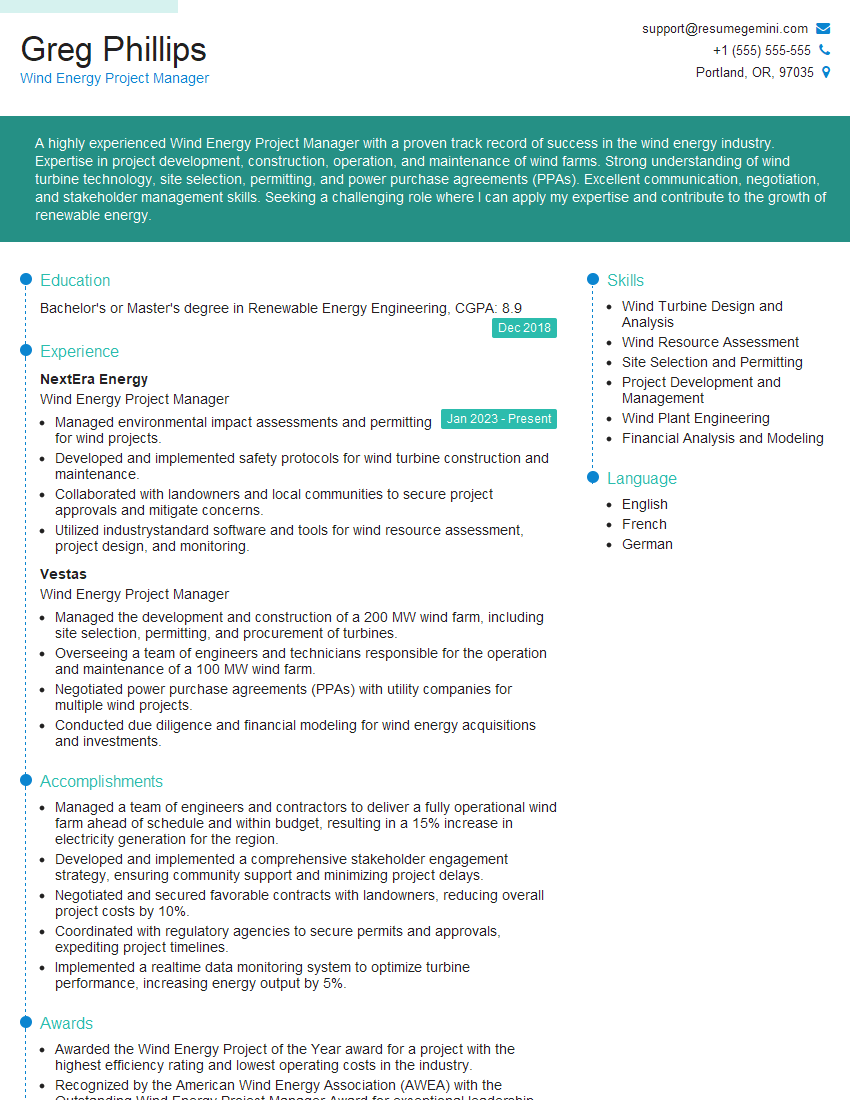
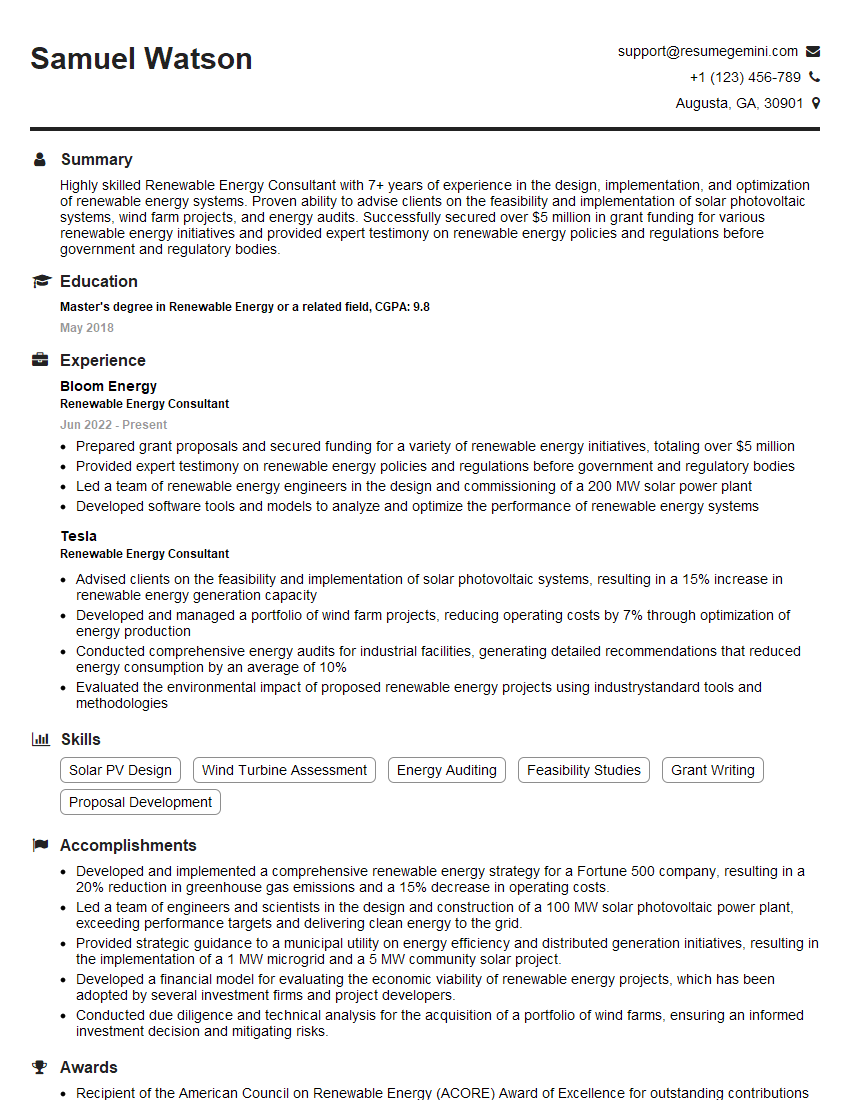
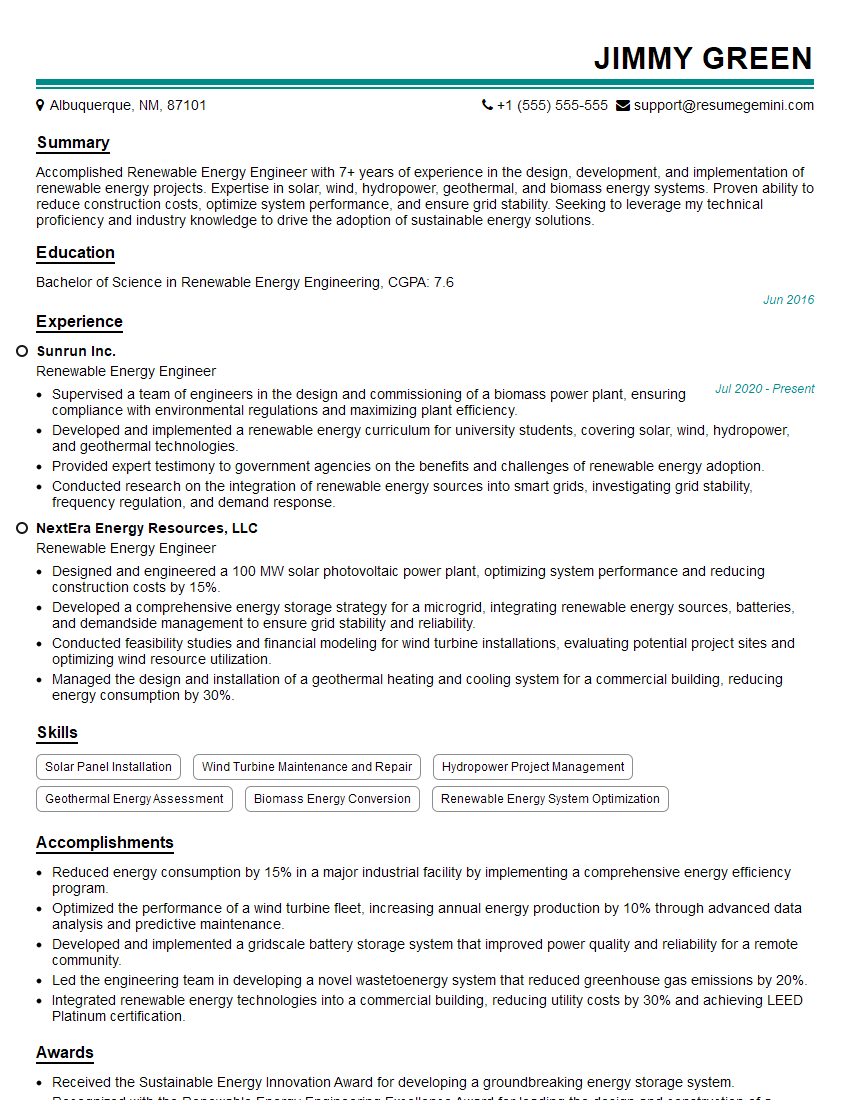
A strong understanding of renewable energy technologies is crucial for career advancement in this rapidly growing sector. To maximize your job prospects, create an ATS-friendly resume that highlights your skills and experience effectively. ResumeGemini is a trusted resource to help you build a professional resume that gets noticed. We offer examples of resumes tailored specifically to renewable energy technologies, including solar PV and wind turbine roles, to guide you through the process. Invest time in crafting a compelling resume—it’s your first impression!

Explore more articles
Users Rating of Our Blogs
Share Your Experience
We value your feedback! Please rate our content and share your thoughts (optional).
What Readers Say About Our Blog
Very informative content, great job.
good