Unlock your full potential by mastering the most common Collar Measurement and Fitting interview questions. This blog offers a deep dive into the critical topics, ensuring you’re not only prepared to answer but to excel. With these insights, you’ll approach your interview with clarity and confidence.
Questions Asked in Collar Measurement and Fitting Interview
Q 1. What are the standard methods for measuring collar size?
Accurately measuring collar size is crucial for a comfortable and well-fitting garment. There are two primary methods: the tape measure method and the existing garment method.
- Tape Measure Method: This involves using a flexible tape measure to determine the neck circumference. The tape should be held snugly around the base of the neck, just above the collarbones, ensuring it’s level and not pulled too tight or too loose. This measurement is then used to determine the appropriate collar size. For instance, a 15-inch neck measurement might correspond to a size 15 1/2 or 16 collar, depending on the brand and desired fit.
- Existing Garment Method: If you have a shirt with a well-fitting collar, you can use it as a guide. Lay the shirt flat, button it, and measure the inside collar width from one edge to the other. This measurement provides a good starting point for ordering a similarly sized collar. However, note that the fit can vary slightly between brands.
Both methods are important; the tape measure provides a more precise initial measurement, while using an existing garment provides a comparative measurement that accounts for personal preferences in fit and collar style.
Q 2. Explain the difference between a standard collar and a custom collar.
The key difference lies in customization and fit. A standard collar is mass-produced to fit average neck sizes, falling within a predetermined range of sizes. They offer convenience and affordability but may not provide a perfect fit for everyone. Think of off-the-rack shirts – they are designed for a general population.
A custom collar, on the other hand, is made to exact specifications based on individual neck measurements and preferences. This meticulous approach accounts for variations in neck shape, posture, and desired collar style, resulting in a superior fit and enhanced comfort. Imagine a tailor-made suit – the collar is specifically crafted to your unique anatomy.
In essence, standard collars offer practicality, while custom collars prioritize precision and personalization.
Q 3. How do you account for variations in neck circumference and collar style preferences?
Accounting for variations requires a combination of careful measurement techniques and a deep understanding of collar styles. For neck circumference, always take multiple measurements to ensure accuracy and average them out. For example, take three measurements – one at the beginning, middle, and end of the day, as slight swelling can occur throughout the day.
Regarding collar style preferences, it’s vital to consider the collar’s construction. A spread collar, for instance, will require slightly different measurements compared to a button-down or point collar, as the collar points add extra room. Client consultation is key. Discussing their preferred style (e.g., high, medium or low profile), desired fit (e.g. snug, loose), and the intended style of shirt (e.g. formal, casual) is essential for determining the appropriate collar sizing and ensuring client satisfaction.
Q 4. Describe the process of taking accurate collar measurements.
Taking accurate collar measurements involves meticulous attention to detail and proper technique. Here’s a step-by-step guide:
- Preparation: Ensure the individual is standing upright with good posture. A slightly loose shirt under the measuring tape ensures comfort and accuracy.
- Measurement: Use a flexible tape measure, wrapping it smoothly around the base of the neck, just above the collarbones. Make sure the tape is level and not twisted.
- Snugness: The tape should be snug but not constricting. It’s helpful to maintain the flexibility of the tape measure to avoid pinching, yet maintain a consistent snugness.
- Recording: Record the measurement in inches or centimeters to the nearest 1/8th of an inch. Take three measurements, averaging the result for better accuracy.
- Collar Style Consideration: Note the desired collar style. This helps determine adjustments needed for proper fit (e.g., spread collars often need slightly larger measurements).
It’s recommended to repeat the process several times to ensure consistency in the measurement readings.
Q 5. What are the common issues encountered during collar measurement?
Several issues can arise during collar measurement. Common problems include:
- Inconsistent measurements: This could be due to improper technique, such as holding the tape measure too loosely or unevenly.
- Incorrect posture: Poor posture can affect neck circumference, leading to inaccurate measurements.
- Variations in neck shape: Not all necks are perfectly round; variations in shape can impact the fit of the collar.
- Client discomfort: If the client is uncomfortable or tense, their neck muscles might contract, leading to a falsely small measurement.
- Measuring over clothing: Measuring over thick layers can lead to inaccurate results.
Careful attention to detail and clear communication with the client can help minimize these issues.
Q 6. How do you address inconsistencies in measurements?
Addressing inconsistencies requires a systematic approach:
- Re-measurement: Repeat the measurement process multiple times using the same method to ensure accuracy.
- Technique Review: Carefully check the measurement technique. Make sure the tape is level, snug but not tight, and the measurement is taken consistently at the same spot each time.
- Average Measurements: Calculate the average of multiple measurements to mitigate any individual errors.
- Collar Style Adjustment: Consider any potential impact of collar styles, such as spread collars potentially needing slightly larger sizes.
- Client Consultation: If inconsistencies persist, discuss the measurements with the client to ensure they are comfortable with the final size.
- Professional Opinion: If you still can’t find consistency, consider seeking advice from a seasoned professional tailor.
The goal is to obtain a reliable average, allowing for adjustments based on collar style and personal fit preferences.
Q 7. How do different collar styles impact fitting?
Different collar styles significantly impact fitting. A spread collar, with its wider points, requires a slightly larger neck measurement than a close-fitting button-down or a point collar. This is because the wider spread requires more fabric to accommodate the opening at the throat.
Similarly, a high-profile collar requires adjustments different from a low-profile collar. High-profile collars often appear larger, requiring measurements that allow for their height and may create the illusion of a larger collar size. Conversely, low-profile collars tend to sit closer to the neck, and the measurement adjustments would reflect that difference.
Therefore, understanding the nuances of different collar styles and their impact on neck measurement is critical for achieving an ideal fit. Each style necessitates a tailored approach, reflecting how the collar interacts with the neck and overall garment drape.
Q 8. How do you interpret a collar size chart?
Collar size charts provide a guide to finding the right collar size based on neck circumference. They usually present a table with neck measurements (in inches or centimeters) corresponding to collar sizes (e.g., 14.5, 15, 15.5, etc.). It’s crucial to understand that these are guidelines, not absolute rules. Different brands may have slightly varying sizing, so it’s important to refer to the specific brand’s chart.
Interpreting the Chart: First, accurately measure your neck circumference (explained in detail in question 3). Then, locate your measurement on the chart. The corresponding collar size is your starting point. However, you should always consider factors like the collar style (spread, button-down, etc.), fabric type, and personal preference for fit (snug or looser).
Example: If your neck measurement is 15 inches, and the chart indicates that a 15.5-inch collar corresponds to a size 16 shirt, that’s your initial size suggestion. But if you prefer a looser fit, you might choose a 16.5 collar. Conversely, if you prefer a tighter fit, a 15 collar might work better.
Q 9. What tools and equipment are essential for accurate collar measurement?
Accurate collar measurement requires precise tools. The most essential is a flexible measuring tape, preferably one made of cloth or soft material. A rigid tape can distort the measurement. You also need a mirror to ensure proper placement of the tape around the neck. For a truly professional assessment, a neck gauge could be beneficial; this specialized tool provides a more standardized measurement.
Optional but helpful tools: A helper can significantly improve the accuracy of the measurement, especially for self-measurements. A large, well-lit mirror aids visualization of proper tape placement. A notebook or digital record-keeping system helps document measurements.
Q 10. How do you ensure the accuracy of your measurements?
Accuracy is paramount in collar measurement. Here’s a step-by-step process to ensure precise results:
- Position the Tape: Wrap the measuring tape snugly around the base of your neck, just above the Adam’s apple. Ensure the tape is level and parallel to the ground.
- Maintain Comfort: The tape should be snug but not constricting. You should be able to comfortably breathe and swallow.
- Check Alignment: Look in the mirror to ensure the tape is straight and not twisted. A crooked tape will lead to an inaccurate reading.
- Read the Measurement: Note the measurement where the tape overlaps. Record the measurement in inches or centimeters, depending on the chart’s units. Round to the nearest half or quarter inch (or centimeter).
- Repeat the Measurement: For extra accuracy, take the measurement at least twice, preferably three times and average them. This helps account for potential slight variations.
Example: Measuring three times and getting 15.25, 15.5 and 15.2 inches means that averaging is 15.32 inches. A size 15.5 should be sufficient, given the margin of error.
Q 11. Explain the relationship between collar size and other garment measurements.
Collar size is intrinsically linked to other shirt measurements, particularly chest and shoulder sizes. Although not directly proportional, the relationship is important for overall garment fit. A larger chest typically requires a larger collar size, although there is no specific mathematical ratio, it often increases proportionally. A broader shoulder will usually imply the need for a slightly larger collar, primarily because the shirt’s overall construction has to accommodate a wider upper torso.
Example: A person with a 44-inch chest might comfortably wear a 16-16.5 inch collar, while a person with a 38-inch chest might be suited for a 15-15.5-inch collar. The correlation is not linear and depends on body shape.
Q 12. How do fabric types affect collar fitting?
Fabric type significantly influences collar fit and drape. Stiff fabrics like linen or cotton canvas will result in a more structured, less yielding collar, whereas softer fabrics like silk or jersey will provide a more flexible, draping collar. The fabric’s weight and thickness are also relevant—heavier fabrics can add bulk to the collar, potentially affecting comfort and appearance.
Example: A stiff linen shirt may need a slightly smaller collar size than a softer cotton shirt, because the linen’s lack of give will make a larger collar feel too tight.
Q 13. Describe how you would handle a customer with unusual neck and shoulder proportions.
Customers with unusual neck and shoulder proportions present a unique challenge. Instead of solely relying on standard size charts, I would conduct a thorough measurement of both neck and shoulder width. I would then assess the body shape and discuss the customer’s desired fit to make an informed decision. Often, a made-to-measure or custom-made shirt might be the best option to ensure a perfect fit.
Example: A customer with a very broad neck and narrow shoulders might find difficulty wearing standard-sized shirts. The collar would be too tight or gap significantly. In this instance, I might need to take additional measurements, adjusting the collar’s width and height to optimize fit and comfort.
Q 14. What are the implications of inaccurate collar measurements?
Inaccurate collar measurements lead to several negative outcomes. A collar that’s too tight will be uncomfortable, restrict movement, and create an unpleasant appearance. A collar that’s too large will gape and look sloppy, detracting from the shirt’s overall look and the wearer’s appearance. In both cases, it undermines the shirt’s purpose of providing both function and style.
Consequences: This can lead to customer dissatisfaction, returns, and negative reviews. In a professional setting, it can impact the reputation of a tailor or clothing store. Ultimately, accurate collar measurement directly relates to customer satisfaction and the business’s overall success.
Q 15. How do you communicate measurement data clearly and effectively?
Communicating collar measurement data effectively is crucial for accurate garment creation. I ensure clarity by using a standardized format, always including units (inches or centimeters), and providing multiple measurements where necessary. For example, I’d record “Neck circumference: 15.5 inches, Collar Point to Point: 17 inches” rather than just a single, ambiguous number. I also always double-check my work for accuracy before transmitting the data. Using clear and concise language avoids ambiguity, and I visually present the data in a way that’s easy to understand, often using a simple table or diagram, especially when dealing with complex measurements or multiple collar styles. This prevents misinterpretations and ensures the tailor or manufacturer understands the exact specifications.
Career Expert Tips:
- Ace those interviews! Prepare effectively by reviewing the Top 50 Most Common Interview Questions on ResumeGemini.
- Navigate your job search with confidence! Explore a wide range of Career Tips on ResumeGemini. Learn about common challenges and recommendations to overcome them.
- Craft the perfect resume! Master the Art of Resume Writing with ResumeGemini’s guide. Showcase your unique qualifications and achievements effectively.
- Don’t miss out on holiday savings! Build your dream resume with ResumeGemini’s ATS optimized templates.
Q 16. What is the importance of proper fitting in clothing?
Proper fitting in clothing is paramount; it directly impacts comfort, style, and the overall appearance of the garment. An ill-fitting collar, for instance, can look sloppy, feel uncomfortable, and detract from even the finest fabric. A well-fitting collar, however, sits comfortably against the neck without being too tight or too loose, enhancing the garment’s overall appeal and the wearer’s confidence. Proper fitting also ensures the garment functions as intended – a properly fitted shirt collar won’t gap open or choke the wearer. Think of it like a well-fitting shoe – comfortable, functional, and stylish. A poorly fitted collar is like wearing shoes that are too tight or too loose – uncomfortable and detracting.
Q 17. Describe your experience with different collar types (e.g., button-down, spread, point, etc.)
My experience encompasses a wide range of collar types. I’m proficient in measuring and fitting various styles, including button-down collars (varying in point length and spread), spread collars (from subtle to dramatic spreads), point collars (with differing point lengths and roll), and more specialized styles such as wingtip collars or mandarin collars. Each type requires specific measurements to ensure the correct fit. For example, a spread collar needs accurate measurements of the spread angle and point-to-point distance, while a button-down requires attention to the button spacing and overall collar height. Understanding the nuances of each collar type, from its construction to its intended drape, is key to providing accurate measurements and ensuring a perfect fit. I’ve worked with both bespoke tailoring and ready-to-wear brands, gaining experience across different manufacturing techniques and collar designs.
Q 18. How do you handle customer feedback regarding collar fit?
Customer feedback is invaluable. When addressing concerns about collar fit, I first actively listen to understand their specific issue. Is the collar too tight? Too loose? Does it gap? I’ll then ask clarifying questions to determine the precise problem. Visual aids like photos can be incredibly helpful. If possible, I’ll re-take measurements to compare them with the original data. Based on my analysis, I provide a solution, which might involve minor adjustments, a complete remake, or suggesting alterations. My goal is to address the issue efficiently and ensure customer satisfaction. I always document the feedback and the resolution to learn and improve my technique for future clients.
Q 19. What are some common fitting problems you have encountered and how did you resolve them?
Common fitting problems include collars that are too tight, resulting in discomfort and potential neck strain; collars that are too loose, causing gaps and a sloppy appearance; and collars that don’t lay flat, leading to an uneven appearance. For tight collars, I’d usually recommend slight alterations to increase the neck circumference. For loose collars, I might suggest adjusting the collar stand height or adding a small amount of interfacing for better structure. For collars that don’t lay flat, I investigate the underlying cause, it may be due to the collar’s construction, the underlying shirt’s fit, or improper interfacing. Each case requires a tailored solution, often involving adjustments to the pattern or construction techniques. Problem-solving involves careful analysis, attention to detail, and a willingness to collaborate with the client for a satisfactory outcome. A systematic approach, starting with thorough measurements and careful observation of the problem, is critical to finding the best solution.
Q 20. Describe your experience with different measurement tools.
My experience includes using various measurement tools, from flexible tape measures for accurate circumference measurements to rigid rulers for precise linear measurements. I’m also comfortable using specialized tools such as collar gauges which aid in achieving consistent collar sizes and ensuring proper shape. For highly precise measurements, particularly for bespoke work, I might use digital calipers to ensure accuracy down to fractions of an inch or millimeter. The choice of tool depends on the specific measurement required and the desired level of precision. Regular calibration and maintenance of these tools are crucial to ensuring accuracy and consistent results.
Q 21. How do you ensure consistency in measurements across multiple customers?
Consistency in measurements is crucial. I achieve this through a standardized measurement process. I always follow the same sequence of measurements, using the same tools and techniques for each client. I pay careful attention to posture and ensure the client is comfortable and relaxed to avoid variations in measurements. Regular self-checking and comparison against established standards help maintain accuracy. I also keep detailed records of all measurements, which assists in identifying and rectifying any inconsistencies. This disciplined approach ensures that regardless of the client or the day, the measurements remain consistent and reliable, leading to higher quality garments.
Q 22. How do you adapt your measurement techniques for different body types?
Adapting collar measurement techniques to different body types is crucial for achieving a comfortable and flattering fit. It’s not a ‘one-size-fits-all’ approach. I consider several factors, including:
- Shoulder Slope: A sloped shoulder requires a different collar placement and construction than a straight shoulder. For sloped shoulders, I might adjust the collar’s roll line to better conform to the natural curve. For straight shoulders, a more structured collar may be appropriate.
- Neck Circumference and Shape: Neck size is obviously crucial, but the *shape* of the neck is equally important. A shorter, thicker neck requires a different collar fit than a longer, thinner neck. I’ll adjust the collar height and width accordingly, often taking multiple measurements to ensure accuracy.
- Posture: Poor posture can significantly affect collar fit. I observe the client’s posture to determine the appropriate collar size and adjust the fit to compensate for any slouching or forward head posture. A slightly larger collar might be necessary to prevent discomfort.
- Body Build: A taller, broader individual will likely require a larger collar than a shorter, slimmer person. I take this into account when choosing the base pattern size and making adjustments during fitting.
For instance, I recently fitted a client with a very prominent Adam’s apple. A standard collar would have been uncomfortable, so I made adjustments to the collar stand height and created more ease in the neck area to prevent pressure points.
Q 23. What are the key considerations when fitting collars for different genders?
Gender differences play a significant role in collar fitting. While the basic principles of measurement remain the same, subtle adjustments are necessary:
- Neck Shape and Size: Generally, men tend to have larger and more muscular necks, requiring collars with greater circumference and perhaps a higher stand. Women’s necks often have a more delicate structure, necessitating a more refined collar fit and often lower collar stands.
- Collar Styles: Certain collar styles are more commonly associated with each gender; for instance, button-down collars are widely worn by both genders but the fit and construction may be slightly different based on gender specific preferences. More fashion forward or dramatically styled collars can be more gender-specific.
- Shoulder Width: Men often have broader shoulders than women, influencing the collar’s placement and overall garment fit. The collar needs to align correctly with the shoulder line to prevent strain or an uncomfortable feel.
- Fabric Choice: The drape and weight of fabric also influence fit. Lighter fabrics generally suit women’s wear, allowing for more delicate collar designs, while heavier fabrics might be preferred for men’s clothing and lead to adjustments in the collar’s stiffness.
It’s about understanding these nuances and tailoring the fit to the specific gender and individual preferences. For example, a men’s dress shirt collar needs a more structured and firm feel, while a women’s blouse collar can be softer and more flowing.
Q 24. Explain your understanding of collar grading and its significance.
Collar grading is the process of systematically adjusting a base collar pattern to create a range of sizes. This is crucial for mass production or when dealing with multiple clients needing different sizes. It ensures consistent fit and quality across different sizes. It involves proportionally increasing or decreasing the pattern pieces—collar stand, collar band, and the collar itself—while maintaining the overall shape and design integrity.
Grading involves precise calculations and techniques. It’s not simply enlarging or reducing the pattern; the curves and angles must be carefully adjusted to maintain the aesthetic appeal and fit. For example, simply enlarging a collar pattern might lead to a disproportionately large collar stand relative to the collar’s roll line, creating an unbalanced and awkward look. Software can automate this process, but expertise is still needed to check the software’s output and make any necessary manual tweaks.
The significance of collar grading lies in efficiency and consistency. Without it, creating multiple collar sizes would be time-consuming and prone to errors. It ensures that all sizes, from extra small to extra-large, possess the same quality and design characteristics.
Q 25. How do you troubleshoot fit issues related to collar size and shape?
Troubleshooting collar fit issues requires a systematic approach. I typically follow these steps:
- Identify the Problem: Is the collar too tight, too loose, gaping, riding up, or uneven? Pinpointing the specific issue is the first step.
- Examine the Measurement: Review the initial measurements to ensure accuracy. A simple measurement error can be the root cause. Re-measuring the client is crucial.
- Assess the Pattern: Check the collar pattern for any flaws or inconsistencies. Are the curves smooth and balanced? Does the collar lie flat?
- Analyze the Construction: Poor stitching, incorrect interfacing, or inadequate ease can all affect the fit. A detailed examination of the construction process can reveal the problem.
- Make Adjustments: Depending on the issue, adjustments could involve altering the collar stand height, collar band width, easing the curve, or adjusting the neck circumference.
For example, if the collar is gaping at the back, I may need to adjust the back neck curve. If the collar is too tight, I’ll adjust the neck circumference, adding more ease. Each adjustment requires careful consideration to avoid creating new issues.
Q 26. Describe your experience with using digital measurement tools.
I have extensive experience using digital measurement tools. These tools, such as 3D body scanners and digital measuring tapes, offer several advantages over traditional methods:
- Accuracy: Digital tools provide highly accurate and consistent measurements, minimizing human error.
- Efficiency: Measurements can be taken quickly, saving time and increasing workflow efficiency.
- Data Storage: Measurements are digitally stored, providing a readily accessible record for future reference or comparisons.
- Data Analysis: Advanced software can analyze the data to provide insights into body proportions and suggest optimal fit adjustments.
However, it’s important to understand the limitations. Digital tools require a degree of calibration and expertise. The quality of the measurements can also be affected by factors like the scanner’s accuracy and the client’s posture. While technology is invaluable, I believe that a skilled and experienced eye remains essential for interpreting the data and fine-tuning the fit.
Q 27. How do you maintain the accuracy of your measurement techniques over time?
Maintaining accuracy in collar measurement over time involves a multi-pronged approach:
- Regular Calibration: For digital tools, regular calibration is crucial. I follow the manufacturer’s guidelines meticulously to ensure the equipment is working optimally.
- Consistent Technique: Adhering to a consistent measurement technique is key. I use the same methods and tools each time, minimizing variations and ensuring reliability.
- Self-Assessment: Regular self-assessment of my techniques helps identify and correct any deviations. I frequently review my work and compare it to established standards and best practices.
- Continuing Education: Staying updated on the latest techniques and technologies ensures my skills remain sharp and aligned with industry standards. Regular training and workshops are vital.
- Peer Review: Seeking feedback from colleagues and mentors provides an external perspective and helps identify areas for improvement.
Maintaining accuracy is not simply about the tools; it’s about developing a keen eye for detail and building a consistent, reliable process. It’s an ongoing commitment to precision and excellence.
Q 28. How do you stay updated on industry best practices in collar measurement and fitting?
Staying updated on industry best practices is critical for any professional in this field. I employ several strategies:
- Professional Organizations: I actively participate in professional organizations related to apparel design and manufacturing, attending conferences, workshops, and seminars. These events provide opportunities to network with colleagues and learn about the latest advancements.
- Industry Publications: I subscribe to industry journals and magazines, keeping abreast of new research, techniques, and technologies.
- Online Resources: I regularly review relevant online resources, including industry blogs, websites, and online courses. This allows for continuous learning and access to a wide range of information.
- Networking: I actively network with other professionals in the field, exchanging ideas, sharing best practices, and learning from their experiences. Attending industry events greatly aids this process.
- Mentorship: Seeking guidance from experienced professionals provides valuable insights and helps me refine my skills and stay at the forefront of industry standards.
This commitment to lifelong learning ensures I remain proficient, adapt to emerging trends, and provide the highest quality service to my clients.
Key Topics to Learn for Collar Measurement and Fitting Interview
- Understanding Collar Styles: Learn to identify and differentiate various collar types (e.g., spread, point, button-down) and their construction techniques.
- Accurate Measurement Techniques: Master precise methods for taking neck and collar measurements, considering factors like fit preferences and garment styles.
- Fitting Principles: Understand the principles of proper collar fit, including ease, drape, and balance with the overall garment. Be able to explain how adjustments are made to achieve optimal fit.
- Fabric Selection & its Impact: Discuss how different fabrics affect collar drape and the considerations needed for proper fitting.
- Pattern Alterations & Adjustments: Demonstrate your ability to make adjustments to patterns to achieve desired collar fit and address common fitting issues.
- Troubleshooting Common Fitting Problems: Be prepared to discuss and solve problems like gaping collars, tight collars, or uneven collar points.
- Quality Control & Inspection: Explain your approach to inspecting finished garments for collar fit and quality, including identifying and correcting defects.
- Industry Standards & Best Practices: Demonstrate familiarity with relevant industry standards and best practices regarding collar measurement and fitting.
Next Steps
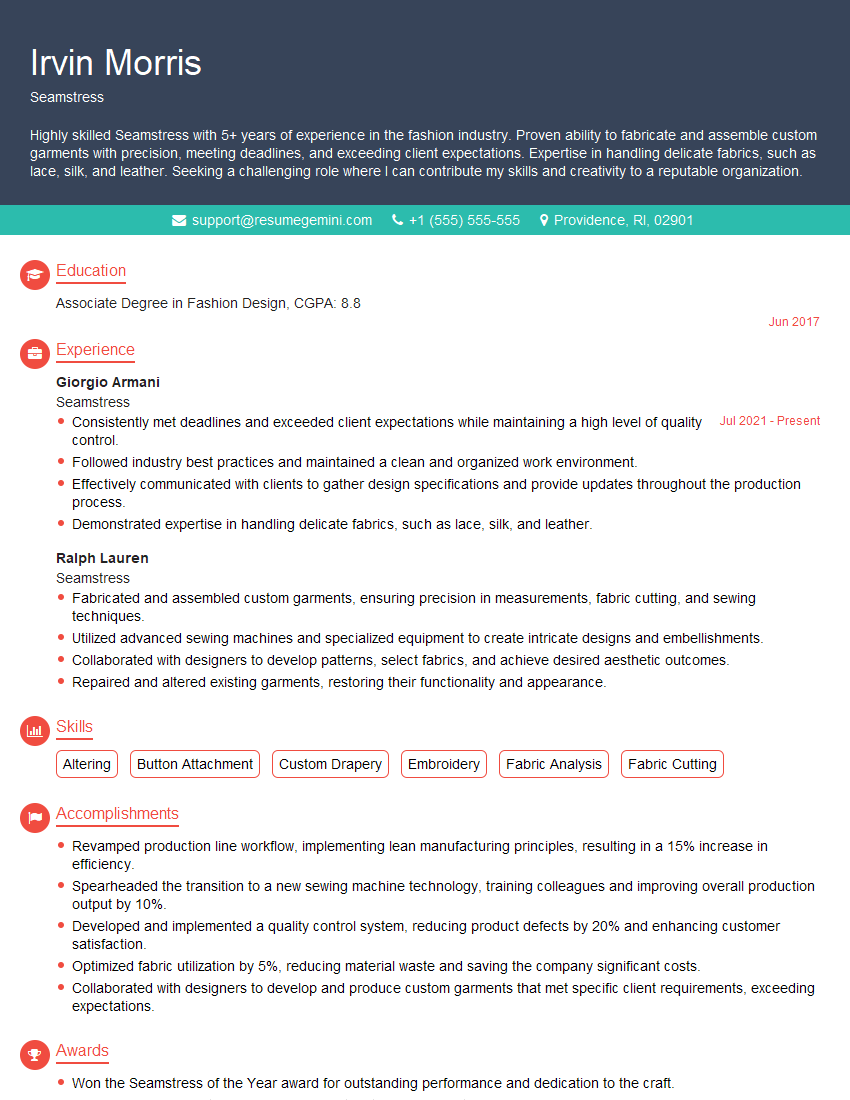
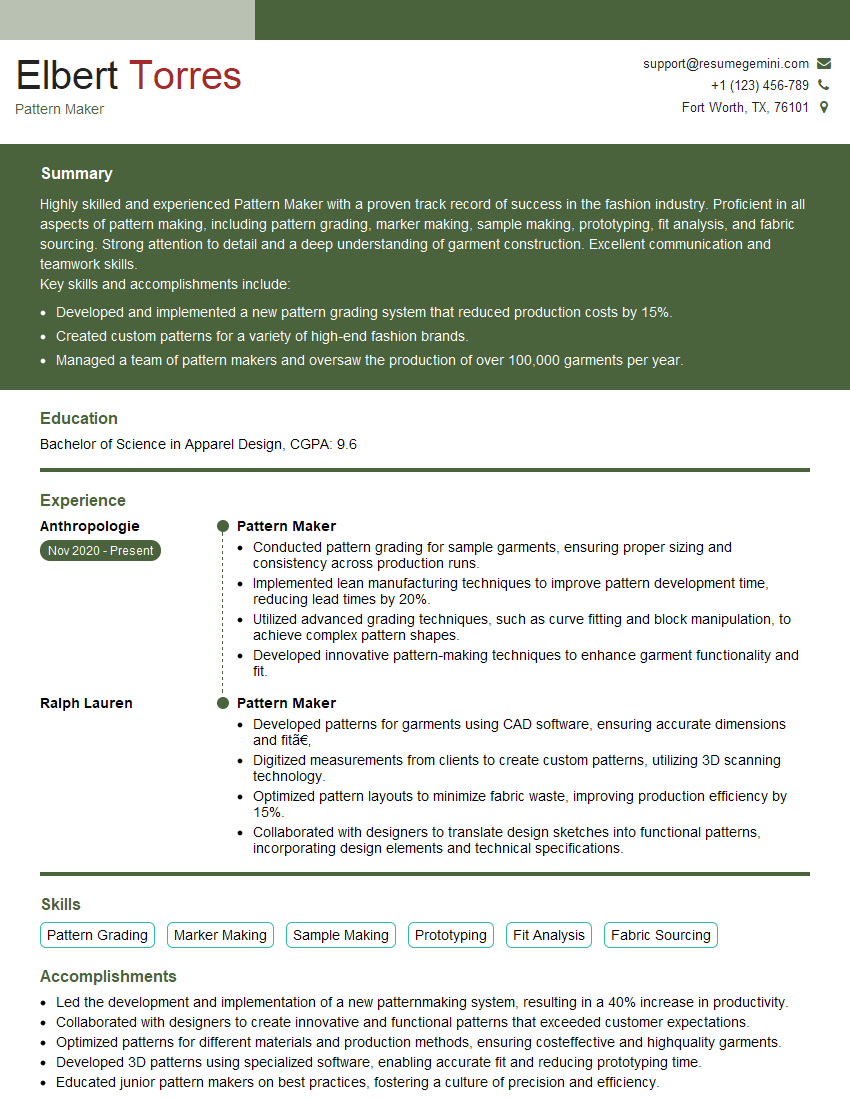
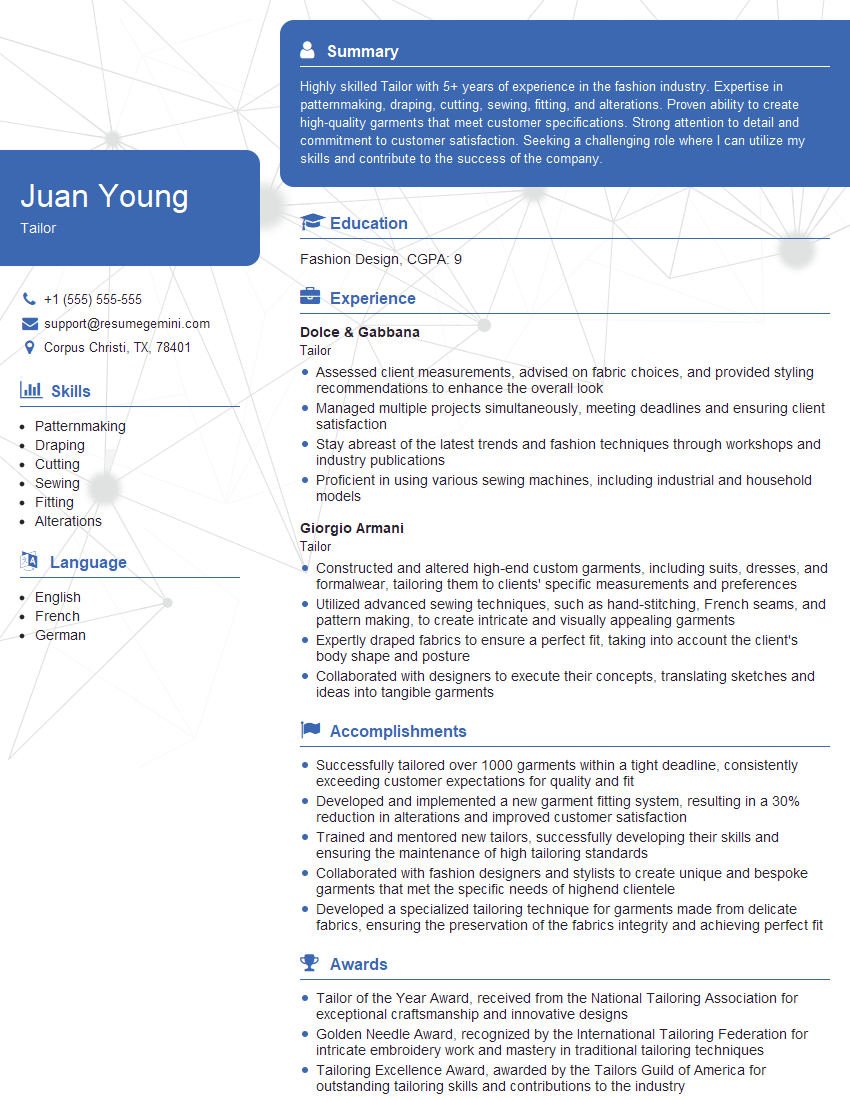
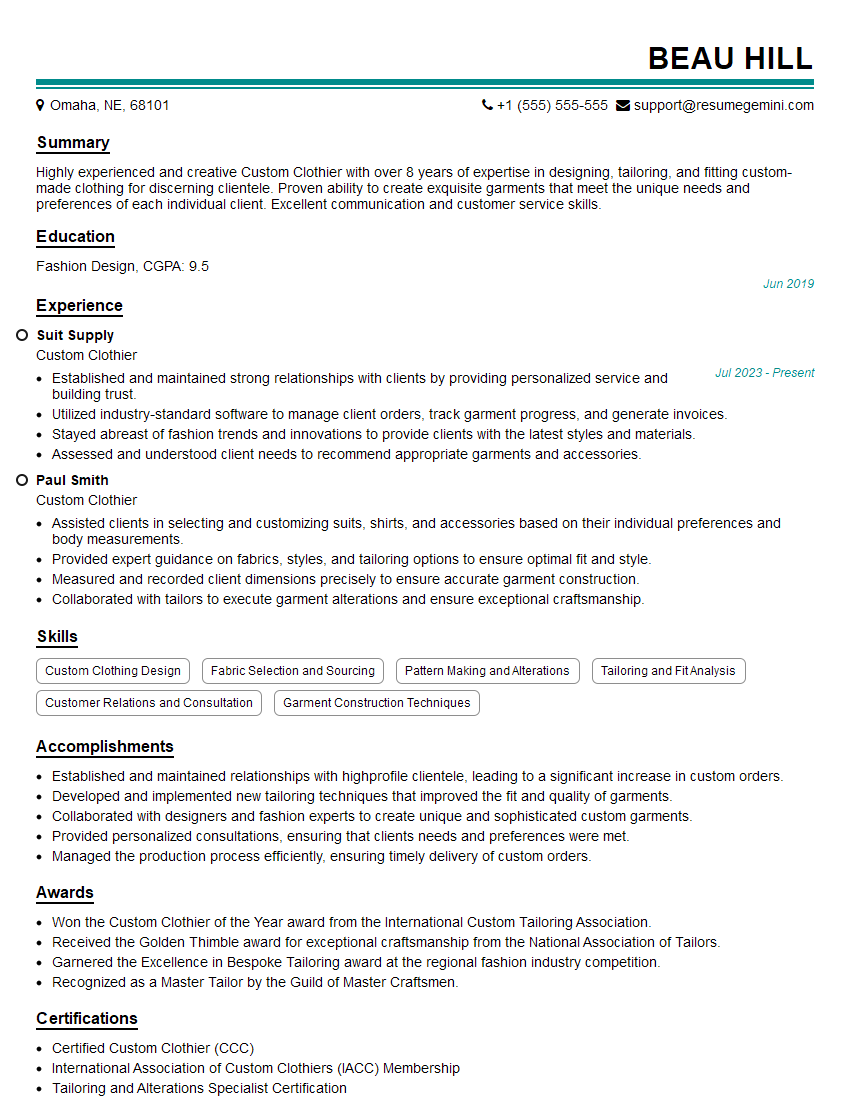
Mastering collar measurement and fitting is crucial for career advancement in the apparel industry, opening doors to specialized roles and higher earning potential. A strong resume is your first impression; make it count! Crafting an ATS-friendly resume increases your chances of landing an interview. We highly recommend using ResumeGemini to build a professional and effective resume tailored to highlight your expertise in collar measurement and fitting. Examples of resumes optimized for this specific skill set are available to help you get started.
Explore more articles
Users Rating of Our Blogs
Share Your Experience
We value your feedback! Please rate our content and share your thoughts (optional).
What Readers Say About Our Blog
Very informative content, great job.
good